Today we are going to start a series of exam preparation lessons…
We will:
- analyse exam questions
- plan essay answers
- write essay answers
Your homework for today was to revise the “Post-War Peace Treaties” topic…
1.
Let’s first make sure that you know which exam papers you need to answer in the GCSE History course…

Exams Explained. (2:00 minutes long)
So, for this coming end of year exam (in Year 10) you will do the following Exam Papers:

2.
It is very important that you know how to manage your time in the exams. Here is useful time management advice…
Time Management. (1:34 minutes long)
3.
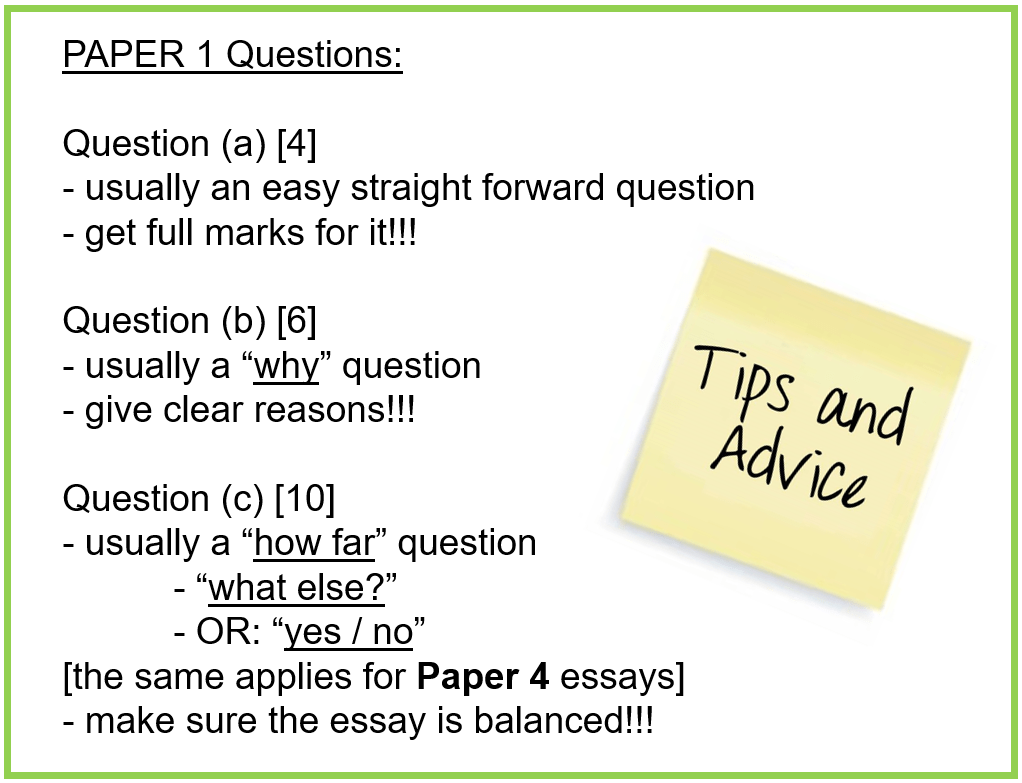
And, here are a few more bits of advice…
4.
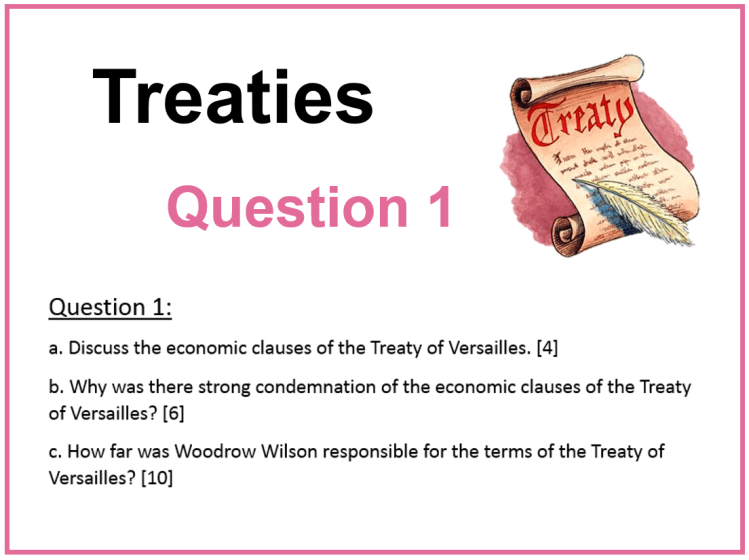
It is time to practice answering an exam question on the Post-War Peace Treaties… Navigate you way through the slides below and answer the questions given in the slides:
Here’s what you have to do:
1. Copy Treaties Q1 (a) at the top of the first paper sheet given to you in class:
Discuss the economic clauses of the Treaty of Versailles. (4)
2. Copy Treaties Q1 (b) at the top of the second paper sheet given to you in class. Then also copy the same question into your essay writing book, on the middle of a new page, so that you can plan the answer in your essay writing book:
Why was there strong condemnation of the economic clauses of the Treaty of Versailles? (6)
3. Copy Treaties Q1 (c) at the top of the third paper sheet given to you in class. Then also copy the same question into your essay writing book, on the middle of a new page, so that you can plan the answer in your essay writing book:
How far was Woodrow Wilson responsible for the terms of the Treaty of Versailles? (10)
5.

Now, analyse and plan Treaties Q2 (b) and (c) very quickly… See what needs to be done and write down a few ideas…
6.

Finish Treaties Question 1 (a,b,c), on paper for the next lesson!
It is very important that you hand this question in on time for assessment. If not, I will not be able to give you feedback on your answers!
(WordPress advertisements may appear below.)
 Best study methods