
Year 9A & Year 9B
Follow the order in which I give you instructions:
1.
Today you are going to finish watching “Flyboys”, our film study that is set in the First World War, about the young Americans who became France’s first fighter pilots, before the U.S. entered World War I.
2.
Previously…
Earlier on, during a battle, Rawlings’ machine gun jammed; Wolferd – the pilot he was chasing – flied beside him and saluted before banking away, sparing his opponent’s life. All but Higgins died during the process.
Rawlings killed Wolferd when the German dived after another American. Learning that German forces will invade Lucienne’s village, Rawlings single-handedly rescued Lucienne, her nephews, and niece. Unfortunately, Lucienne got injured…
3.
In this episode…
Rawlings is awarded the Croix de Guerre medal for bravery… Later he gets promoted to Squadron Leader. Lucienne is no longer there… And, after escorting another bomber run on the ammunition depot, Rawlings takes off to take revenge on the Black Falcon…!
4.

Now, watch “Episode 4” by accessing it in Schoology Materials. (This final “episode” is 34:21 minutes long.)
If, for some reason, it does not work, click on the square (at the top right) in the schoology page for “Episode 4” – then the video should work. (Make sure that you are logged into your school gmail account!) It looks like this:

5.
Recap…
So, while attacking a German Zeppelin, Reed Cassidy was mortally wounded by the Black Falcon, but crashed into the Zeppelin, destroying it. Newcomer, Porter was also sacrificed during the battle. Rawlings reunited with Lucienne before she left for Paris. Rawlings’ plane was presented with an eagle, Cassidy’s insignia, and he got promoted to Squadron Leader.
After escorting another bomber run on the ammunition depot, Rawlings took off to take revenge on the Black Falcon. During the battle Lowry is lost as he decided to commit suicide by shooting himself (after his plane caught fire). He was followed by Jensen, who saved Rawlings. Wounded and with his guns jammed, Rawlings evaded his enemy and fatally shot the Black Falcon with his pistol. Rawling, Jensen, Skinner, and Beagle survived the encounter and returned to base.
Jensen flied for the rest of the war; returning to Nebraska, he received a hero’s welcome. Skinner enlisted in the US Army but was kept from flying due to his race; he later joined the Airmail Service. Beagle married an Italian woman and started a flying circus. Rawlings went to Paris but did not find Lucienne. He built one of the largest ranches in Texas, but never flew again.
6.
GOOFS
-factual errors-
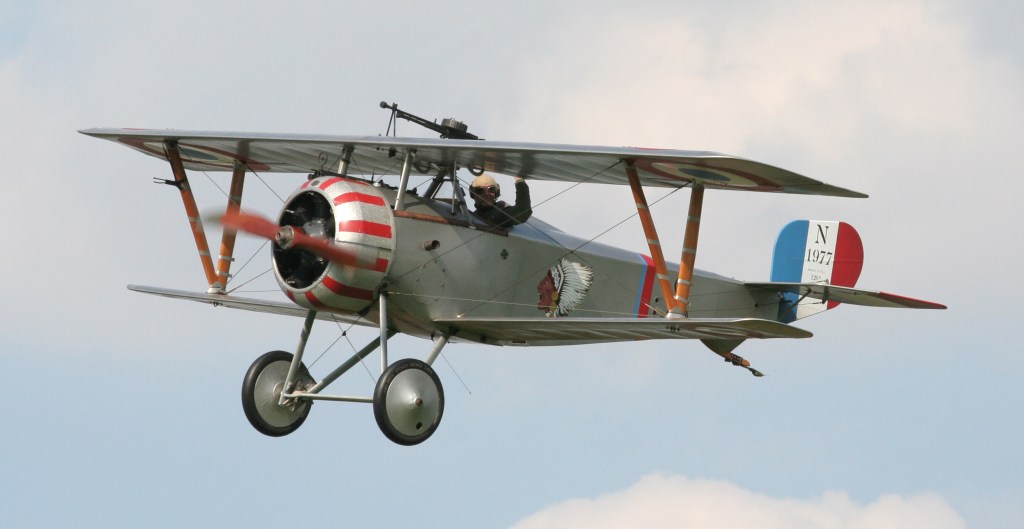
Fokker DR-1 triplanes were never used in the great quantities seen in the film. The filmmakers used them because they were easily distinguished from the allied biplanes, and didn’t want to leave viewers unsure as to who was on what side during these sequences.

The hammers the pilots are given to correct machine-gun jams look like finishing hammers for small nails.

When WW I pilots did take hammers aloft, they were mallets with large, heavy heads to exert the necessary force on a stuck charging handle.
WWI biplanes were not capable of the aerodynamic maneuvers shown in the movie. They would have stalled or crashed had they attempted those maneuvers in real life. The aerobatics shown would be tough even for modern fighter planes to accomplish.
6.
REVEALING MISTAKES
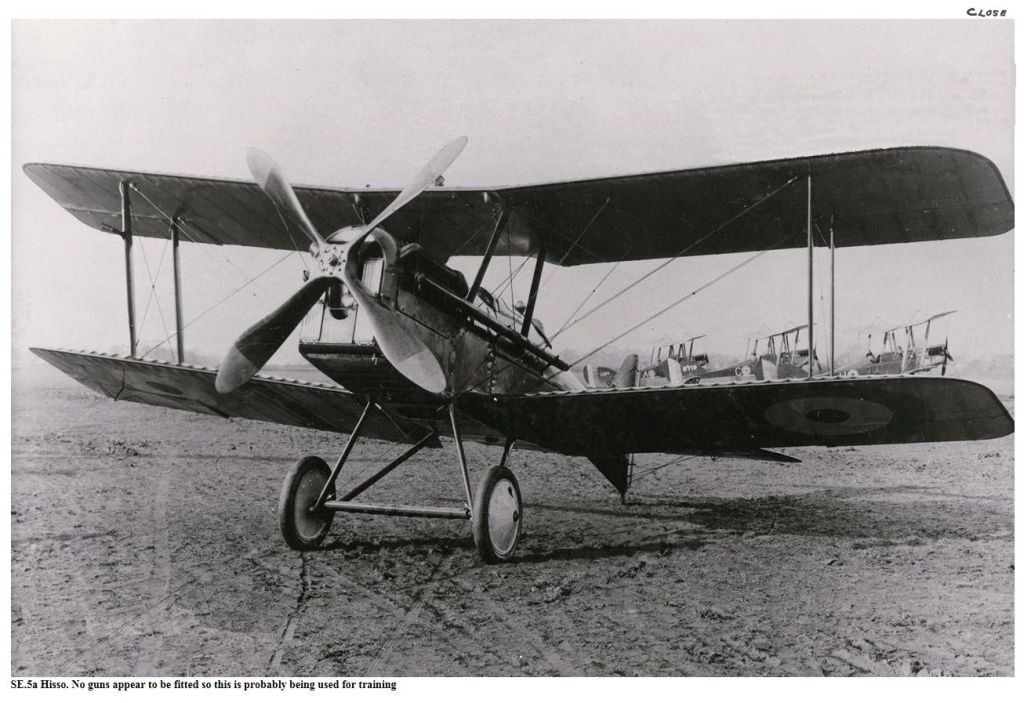
Visible in some shots are wheel brake assemblies on some of the aircraft. In actuality no WW1 fighter aircraft featured brakes on the wheels.
Based on Cassidy’s body position and the angle of attack from the Black Falcon, the first bullet that hits Cassidy in the left chest area should have gone through his glass windscreen, but it remains undamaged.
7.
QUOTES
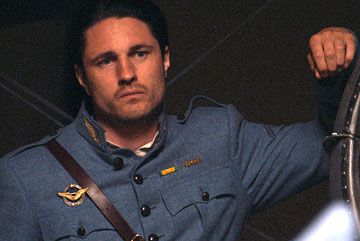
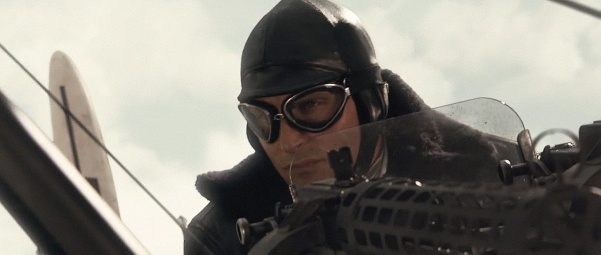
Some day it’ll just end. Everyone will go home, get on with their lives. Tall grass will cover the battlefields. And all the pilots we’ve lost won’t mean a damn thing.
REED CASSIDY
You still wanna rub my head for luck, Rawlings?
EUGENE SKINNER


None of us knows how much time we have left, and we can’t waste any of it grieving over things we can’t change.
REED CASSIDY
(after shooting down a German plane with his hook hand)
Beware the hook!
EDDIE BEAGLE
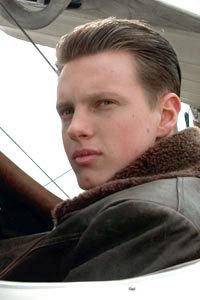

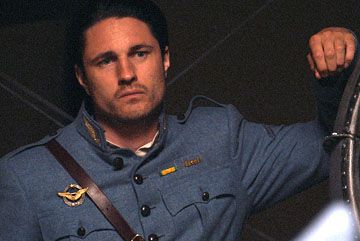
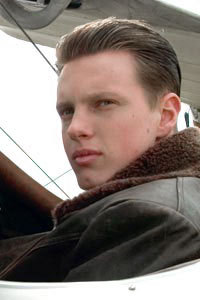
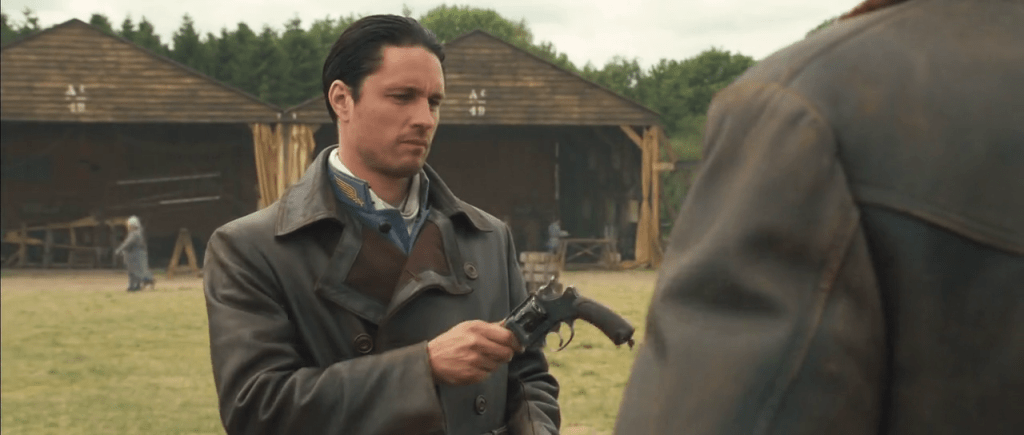
Blaine Rawlings: (wondering why Cassidy is offering a pistol) What’s this for?
Reed Cassidy: Plane catches fire you got three choices: You can burn with it all the way to the ground; You can jump several thousand feet; or you can take the quick and painless way out.
(HANDING GUN TO BEAGLE)
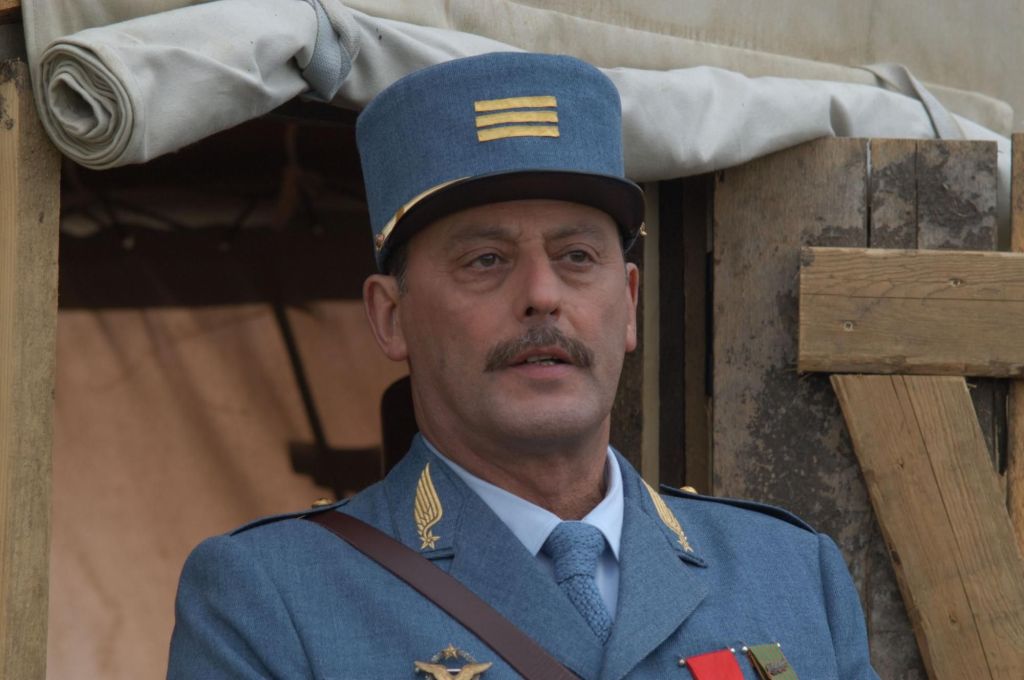
(presents Rawlings with a medal for heroism)
Congratulations, Rawlings…and don’t ever do that again!
CAPTAIN THENAULT
8.
More airplane GOOFS
-if you are interested-
-1-
The movie takes place in late 1916 and early 1917. The Fokker Dr.I triplane didn’t appear until September 1917. Likewise, the Bristol Fighter and SE5a weren’t available until after the time period depicted in the movie. Also, the paint schemes shown on the Dr.I triplanes are wrong. The crosses weren’t painted on the upper surfaces of the lower wing and the all-red paint scheme was only used on Manfred von Richtofen’s (the Red Baron’s) plane; however many of the planes in his unit were partly red. Correct German fighter planes for the time frame of the movie would have been the Albatros DI, DII, and DIII, and the Halberstadt DII.
-2-
In one scene Cassidy is being chased by a German fighter plane. He pulls up on the stick and gains altitude and slows way down so the German plane flies past him under him. WWI fighter planes were incapable of doing such a maneuver, they simply could not go fast enough and would stall.
-3-
The German airship “L 32” was built on 4th of August 1916 and carried out one reconnaissance mission for a naval attack against Sunderland and three bombing missions against England. Only one and a half month later – on 24th of September, British fighters shot it down. So there was never a mission performed against Paris or even France!
-4-
The top speed of the Fokker triplane is about twice the speed of the fastest Zepplins the Germans had in WW1, yet they are both going about the same speed in the movie.
9.
If available, complete the survey, in Materials in Schoology, called “End of Year Review”… Do this to the best of your ability – I value your input!

10.

And now, to end off today’s lesson, I want to share my favorite “History song” with you! This song was written by a South African songwriter, Christopher Torr and is sung by his wife, Laurika Rauch, who is a well known South African singer.
The song is unique – as you will discover – as the lyrics are almost entirely made up of the names of places…!! All the places mentioned in the song are places where famous battles and struggles occurred. (I am confident that you will recognize the significance of some of these places!) She also sings of a city where there will be peace and where the streets will be paved with gold and where no battles will occur… (The name of the song is “Hot Gates”, which is a place, in Greece, also known as Thermopylae, where a famous battle took place.) I hope you find this unique song as interesting as I do…
11.

Finally, in case you have not realized, you can access your marks if you click on “Grades” (on the menu on the left in the Schoology History course).
12.
I enjoyed teaching you, Year 9’s, and I wish you all of the best! Have a lovely summer holiday!

(WordPress advertisements may appear below.)
 Best study methods