Year 7A & Year 7B
Follow the order in which I give you instructions:
1.
Over the next few lessons you will watch a film that is set in Medieval times, when Feudalism was the norm in Europe and in England. There are a few things that you need to know before we start watching the film…

The film is an adventure-comedy about a peasant (called William Thatcher) who discovers that his master (Sir Ector) is dead. So, William then puts on his master’s armour to impersonate him at a jousting tournament. (If you do not know what jousting is, watch the short video below. It shows you that some people still do jousting today!)
2.

Knights of Valour: Full Contact Jousting. (2:39 minutes long)
3.

In the film, William wins the tournament and then decides to participate in more tournaments. However, only knights and nobles were allowed to take part in the tournaments, and not peasants. Therefore, William creates a new identity for himself, as a knight called Sir Ulrich von Liechtenstein.
There is a lot of jousting in the film, but there is also a bit of a love story: William meets a noble lady… which creates a slight problem, because she is a noble and he is a peasant, pretending to be a knight!
4.
You will all enjoy the film – even if you do not particularly like jousting! However, before you start with the first “episode” of the film, there are a bit more reading to do, in preparation…
You will understand the film better if you also know a bit about the Black Prince, Geoffrey Chaucer and the Canterbury Tales. So, read the following information with great attention:
So, what is The Canterbury Tales?
The Canterbury Tales is a collection of 24 stories written in Middle English by Geoffrey Chaucer between 1387 and 1400.
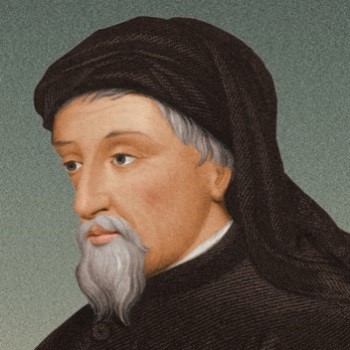
Who was Geoffrey Chaucer?
Geoffrey Chaucer (c. 1343 – 1400), known as the Father of English literature, is widely considered the greatest English poet of the Middle Ages. While he achieved fame during his lifetime as an author and philosopher, Chaucer also had an active career as a courtier. He is best known today for The Canterbury Tales.
Who was the Black Prince?
The Black Prince (1330-1376) was the eldest son of King Edward III of England, and the father of King Richard II of England. He had many other titles: He was also known as the first Duke of Cornwall, the Prince of Wales and the Prince of Aquitaine! And he was known as Edward of Woodstock! (He was called “Edward of Woodstock” in his early life, after his birthplace, but since the 16th century has been popularly known as “the Black Prince”.)
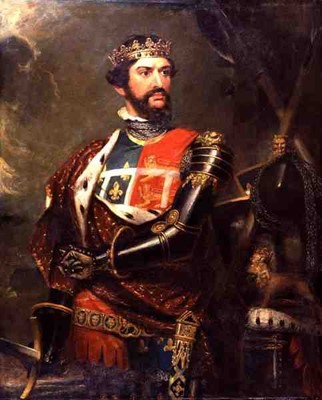
The origins of the name “Black Prince” are uncertain, though many believe it may come from Edward’s black shield, and/or his black armour. Or, maybe it comes from Edward’s brutal reputation, particularly towards the French in Aquitaine. (Edward was an exceptional military leader, and his victories over the French made him very popular in England during his lifetime.) Sadly, Edward died one year before his father, and so became the first English Prince of Wales that did not become King of England. The throne passed instead to his son Richard II, who was only a young boy when King Edward III died.
5.
Today we will watch the first “epidose” of the film. Make sure that you pay attention to all the information and that you concentrate when watching the film, as you may be tested on this at some point…
So, the film is set in Medieval times. Peasant, William Thatcher, creates a new identity for himself, as a knight called Sir Ulrich von Liechtenstein. (He did this, because he wanted to participate in more tournaments, but only knights and nobles were allowed to take part in the tournaments.)
6.
The following text gives more relevant background information:
The film that you are about to watch is a medieval adventure action film. It is told in an anachronistic style with many modern references. The film follows a peasant who pretends to be a knight, along with his companions, in the world of medieval jousting. William poses as a knight and competes in tournaments, winning accolades and acquiring friendships with such historical figures as Edward, the Black Prince of Wales and Geoffrey Chaucer. (The film takes its title from Chaucer’s “The Knight’s Tale” in his Canterbury Tales, though the plot is not similar.)
7.
It is very important to understand what you read. So, quickly look at the meanings of the following words: anachronistic, jousting and accolades.
- anachronistic – belonging to a period other than that being portrayed
- jousting – a medieval sporting contest in which two opponents on horseback fought
- accolades – an award given as a special honour or as an acknowledgement
8.

Read the following text which gives you a bit of an overview of the events in the first “episode” of the film:
At a jousting tournament in 14th-century Europe, young squires William Thatcher, Roland, and Wat discover that their master, Sir Ector, has died. If he had completed one final pass he would have won the tournament. Destitute, William wears Ector’s armour to impersonate him, winning the tournament and taking the prize.
Although only nobles are allowed in tournaments, William is now inspired to compete and win more prizes. Roland and Wat would rather take their share of coins and leave, but William convinces them to stay and train him to joust. Along the way to his first tournament in Rouen (in France), the three bumped into Geoffrey Chaucer, who is also destitute and agrees to forge the patent of nobility, a document to prove that the contestant is indeed a noble. This document was needed to allow William to enter, using the false name “Sir Ulrich von Liechtenstein” from Gelderland!
9.
Again, there are more words that you need to know the meanings of: squire, destitute, joust and forge.
- squire – a young nobleman acting as an attendant to a knight before becoming a knight himself
- destitute – extremely poor and lacking the means to provide for oneself
- joust / jousting – a medieval sporting contest in which two opponents on horseback fought
- forge – to falsify something in order to deceive
10.

Now, watch “Episode 1” by accessing it in Schoology Materials. (This “episode” is 23:34 minutes long.)
If, for some reason, it does not work, click on the square (at the top right) in the schoology page for “Episode 1” – then the video should work. (Make sure that you are logged into your school gmail account!) It looks like this:

11.
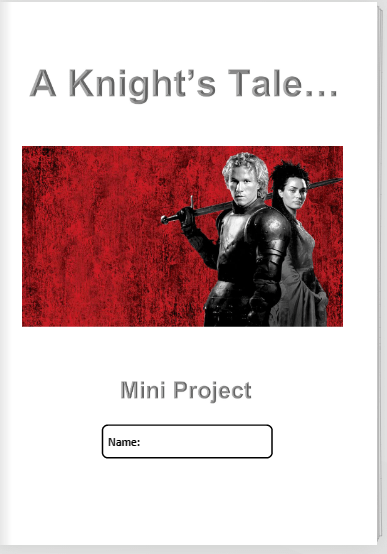
Now start working through your mini project booklet…
(Click on the booklet to access the online flipbook.)

12.

If available on Schoology, complete the “Quiz/Test” on “Feudalism”. It is “timed” and will take you no more than 7 minutes…! (You only get one attempt at this. Also, please note that quiz will expire… So, make sure that you do it in time!)
(WordPress advertisements may appear below.)
 Best study methods