(AN INTRODUCTION)
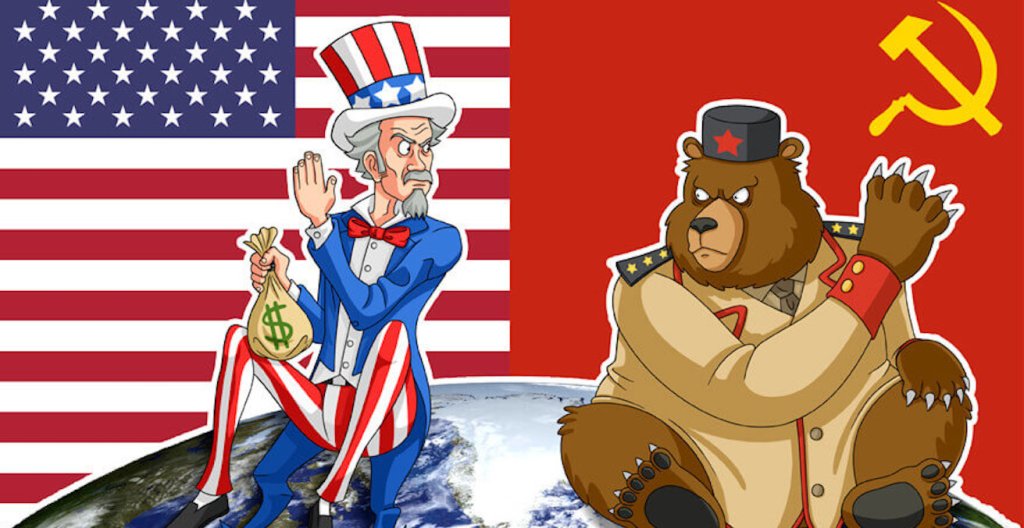
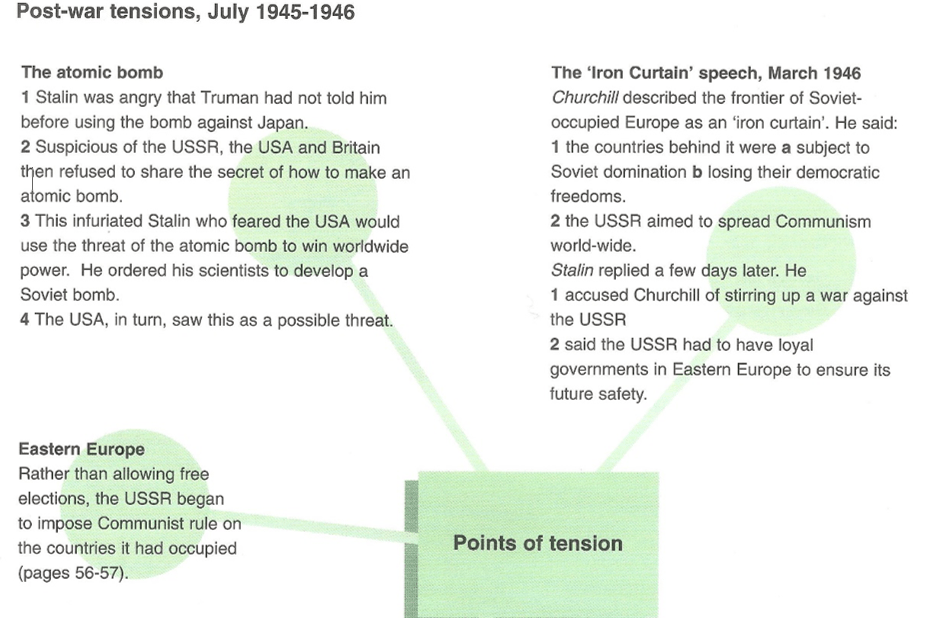
What was the Cold War?
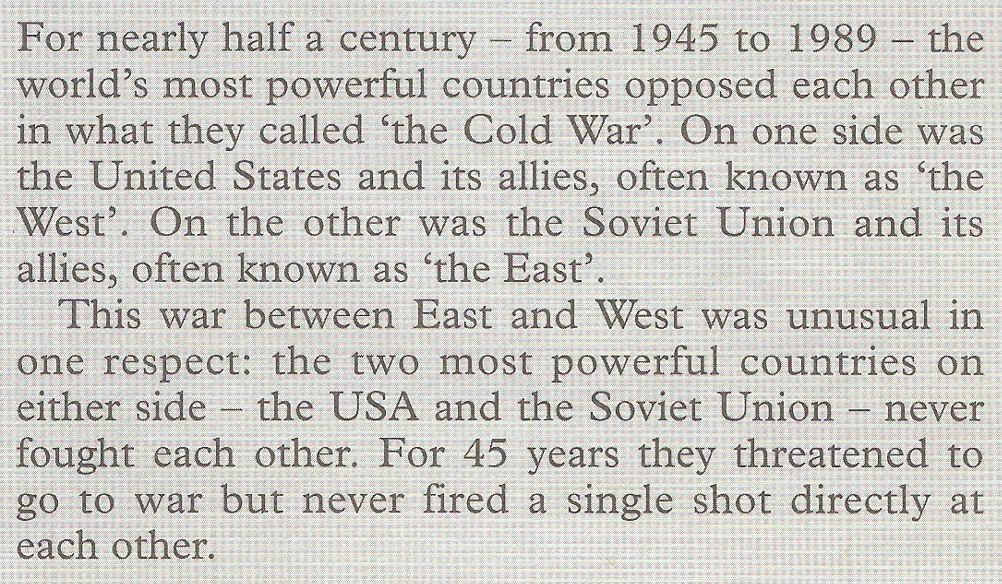
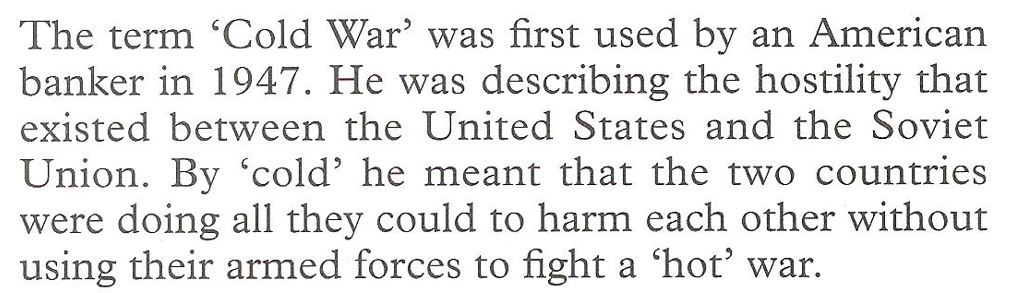

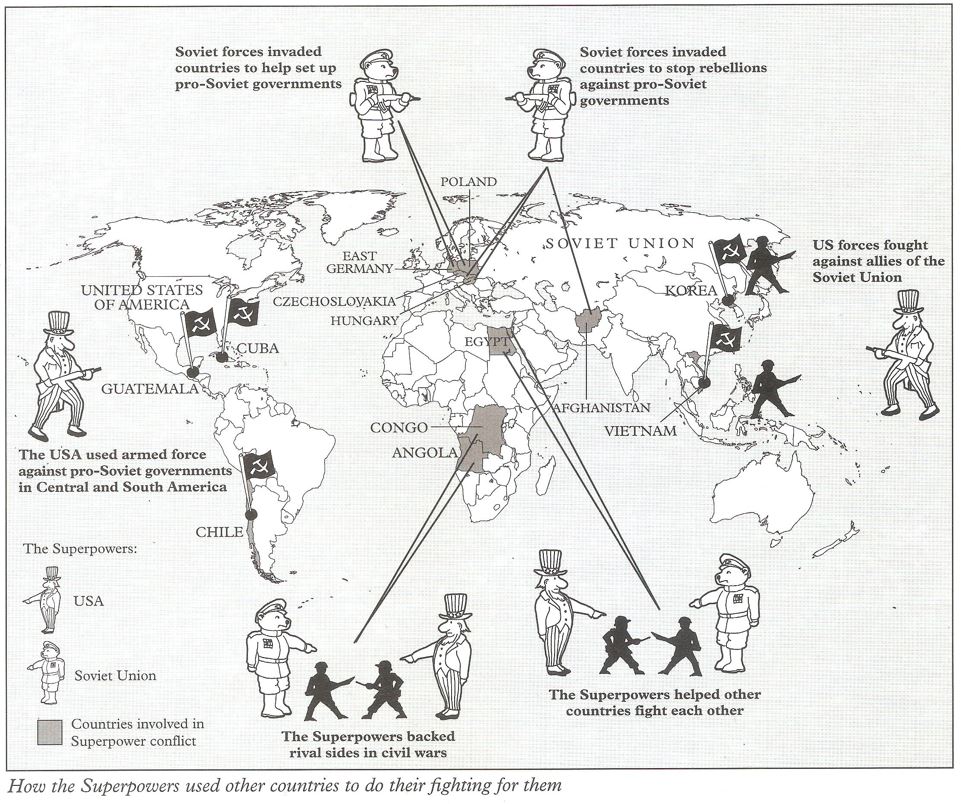
- The fought each other’s allies.
- They helped their allies to fight each other.
- They gave help to opposing sides in civil wars.
- The USA used armed force to get rid of pro-Soviet governments.
- The USSR used armed force to enforce pro-Soviet governments.
More characteristics of the Cold War:
The Super Powers also:
- fought a propaganda war, trying to damage each other’s reputation & improve their own
- competed in various fields
- used espionage to try to keep a step ahead of each other
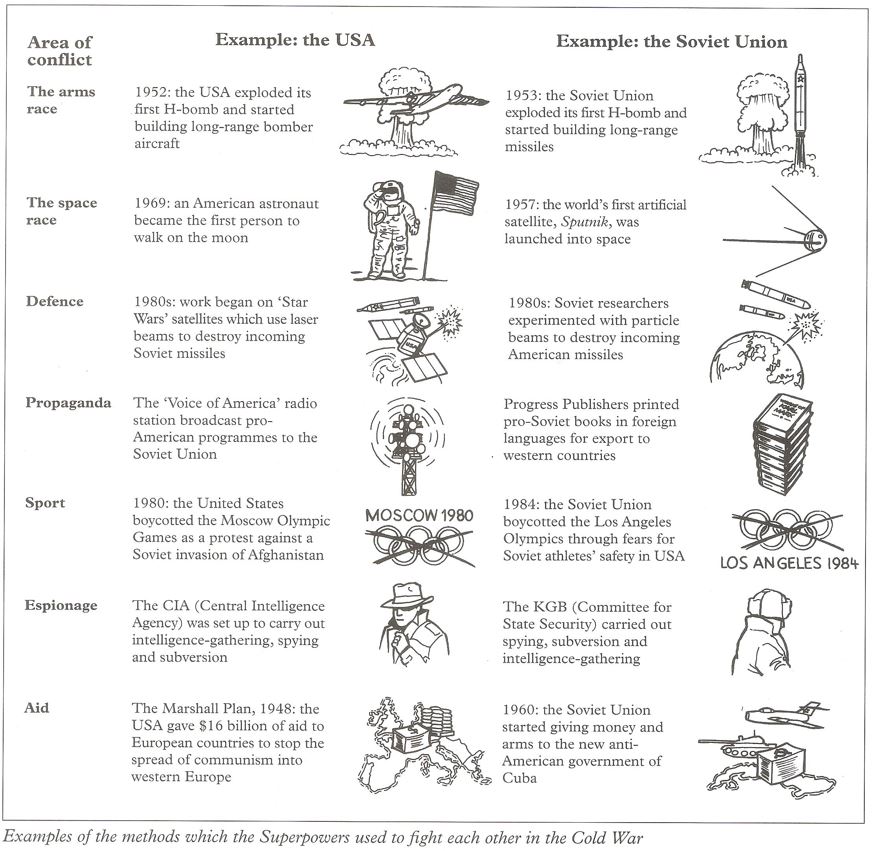
The Super Powers competed against each other – for example:
- arms race: to develop more and more powerful weapons
- space race: to see who can first land on the moon
- sciences: to advance science and technology
- sport: to receive most medals at the Olympic Games
The diagram below shows examples of methods used by the Super Powers to “fight” each other in the Cold War:
1.

Cold War Review. (7:16 minutes long)
2.
Look at the following video clip. It is a brief overview of the entire Cold War history:
(For the Paper 2 examination you do not have to know all these details.)
The Cold War Explained In 15 Minutes. (16:55 minutes long)
3.

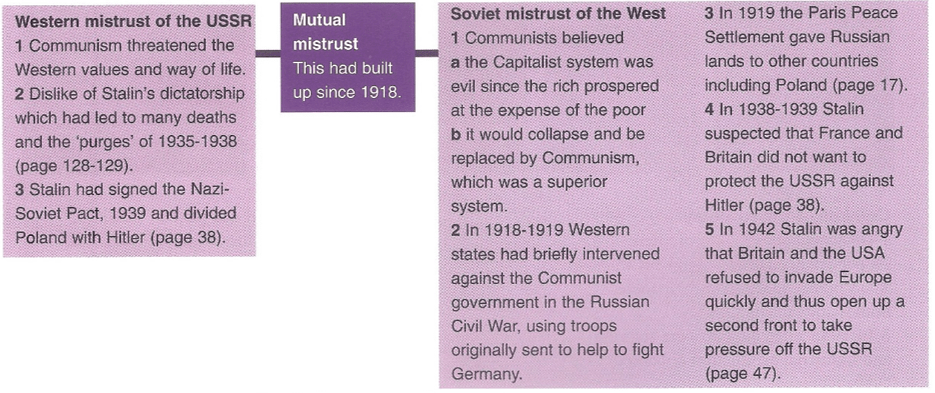
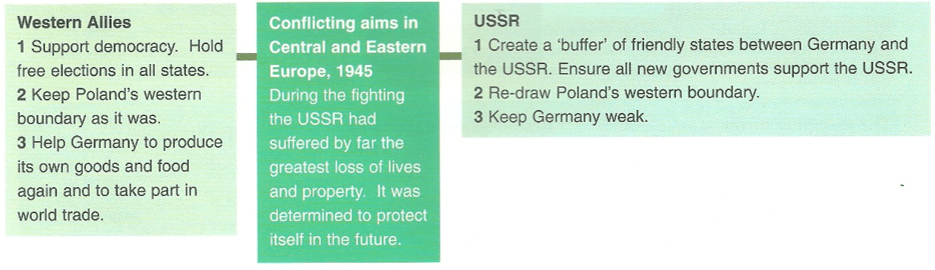
Super Power hostility was rooted in:
- mistrust (starting years before when Russia left WW1)
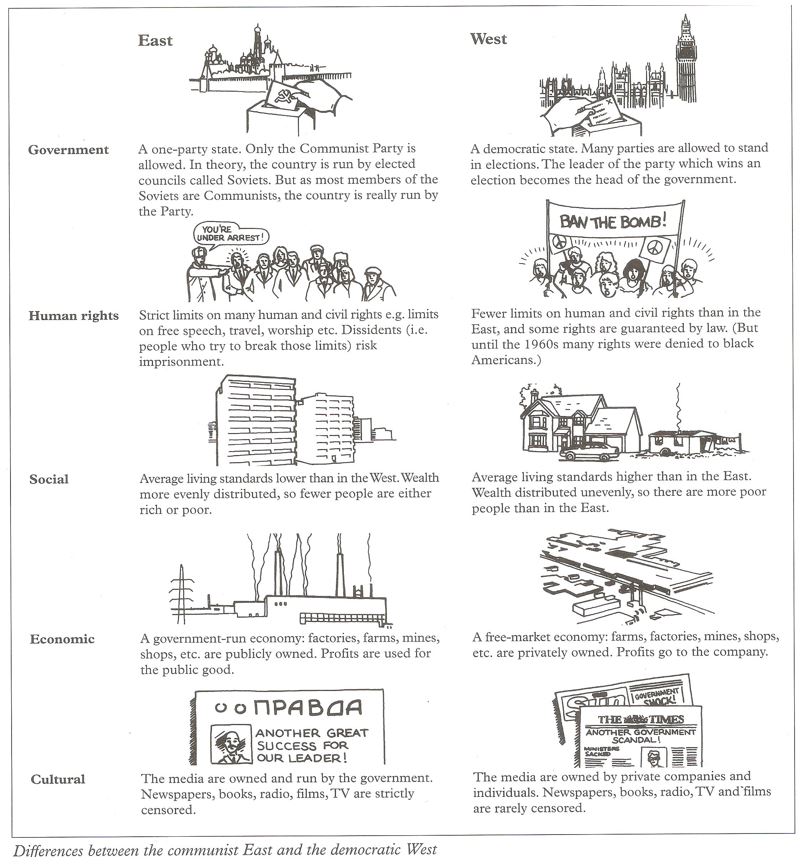
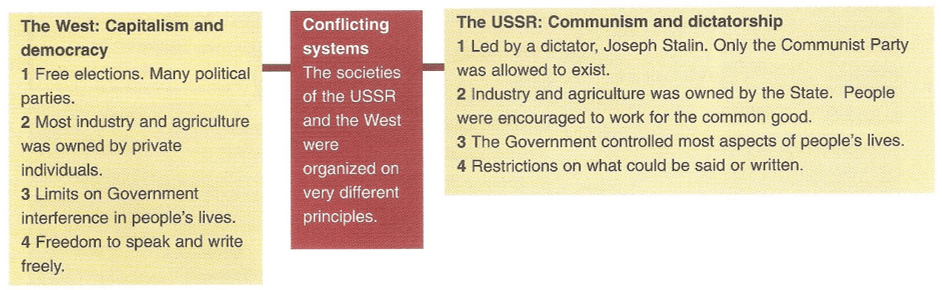
- contrasting political systems (democracy vs. dictatorship)
- contrasting economic systems (capitalism vs. communism)
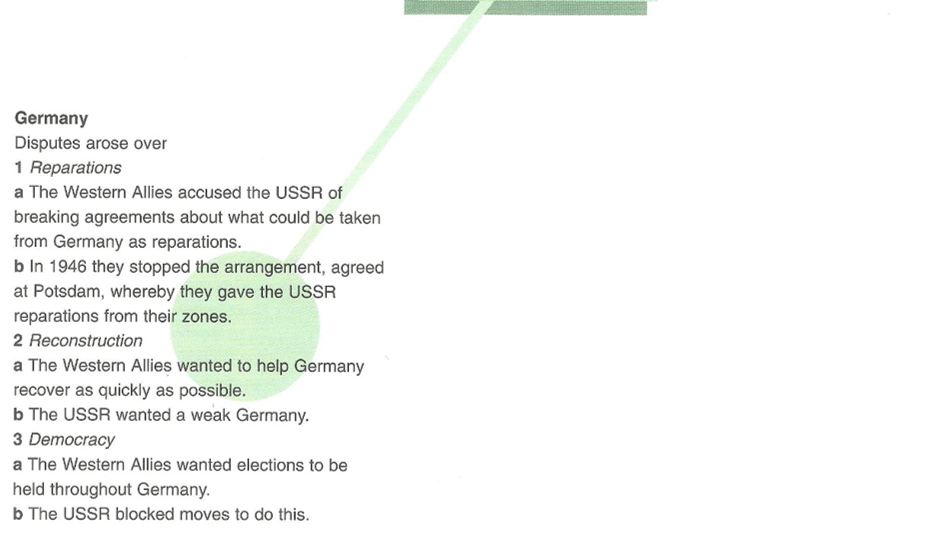
- fears of Russian expansion – post war doubts about each side’s intentions
The diagram below shows how life in East contrasted to life in the West:
4.
Ideological Differences – Capitalism vs Communism. (5:36 minutes long)
5.
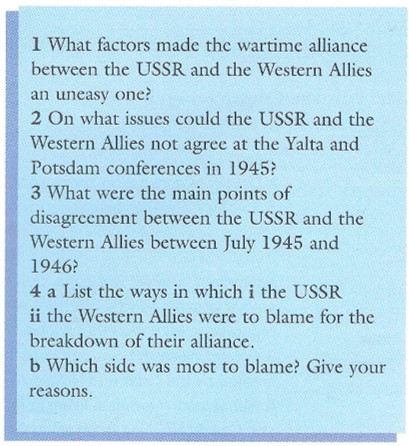
The following notes are relevant to this study…
Mason Notes

6.

Cold war background. (2:31 minutes long)
7.

Brooman
Chapters 1 & 2 (pages 2-5) are relevant to this study.
8.
From here onward – still under construction…


Add more relevant videos from: GCSE INTERNATIONAL RELATIONS ESSENTIAL PLAYLIST – YouTube


(WordPress advertisements may appear below.)
 Best study methods