
Today you are going to work on answering even more Paper 1 Exam Questions…!

We will use the following pages from your exam preparation Booklet:
- page 65
- page 70
- page 71
1.

Question 5
SECTION A: CORE CONTENT
The Versailles Treaty created disagreement and hostility.
(a) What did Wilson hope to achieve from the peace settlement of 1919–20? [4]
(b) Why did Clemenceau and Lloyd George disagree over how to treat Germany? [6]
(c) ‘The Treaty of Versailles was a fair settlement.’ How far do you agree with this statement? Explain your answer. [10]
Question 5 (a)
What did Wilson hope to achieve from the peace settlement of 1919–1920? [4]


Question 5 (b)
Why did Clemenceau and Lloyd George disagree over how to treat Germany? [6]
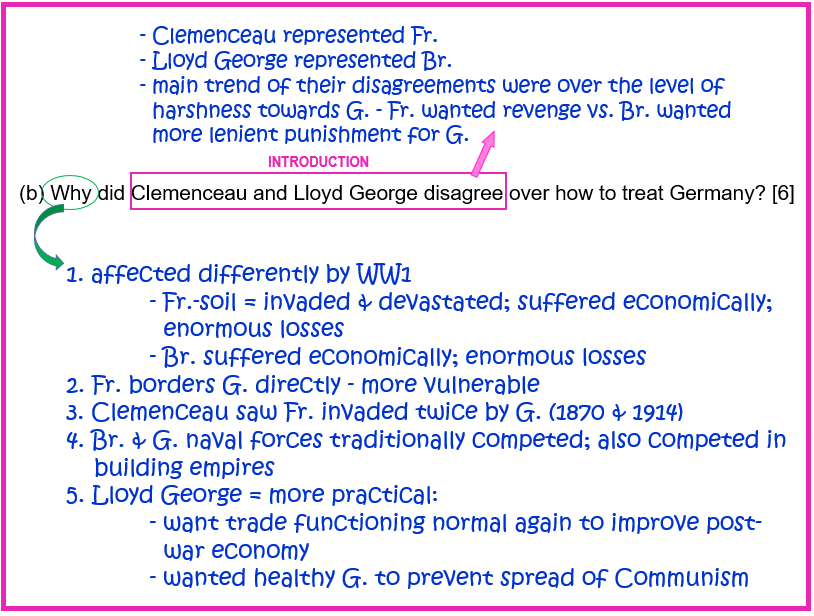

(It was made by students and may shed further light on how to answer this exam question.)
Exam Q on Big Three Disagreements. (2:03 minutes long)
Question 5 (c)
‘The Treaty of Versailles was a fair settlement.’ How far do you agree with this statement? Explain your answer. [10]

2.
Question 6
SECTION A: CORE CONTENT
Peace in Europe became increasingly threatened during the second half of the 1930’s.
(a) What did Hitler achieve by the Anschluss? [4]
(b) Why did Hitler want to take over Czechoslovakia? [6]
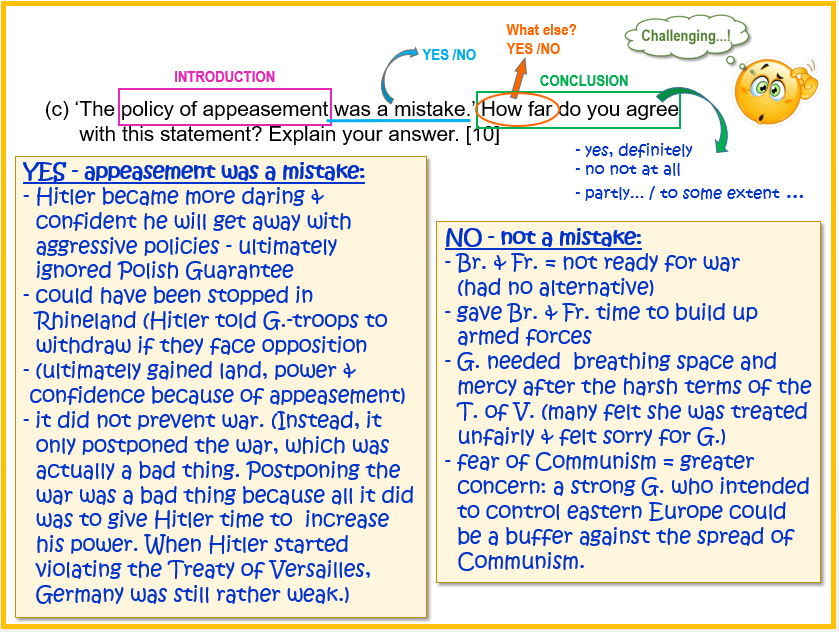
(c) ‘The policy of appeasement was a mistake.’ How far do you agree with this statement? Explain your answer. [10]
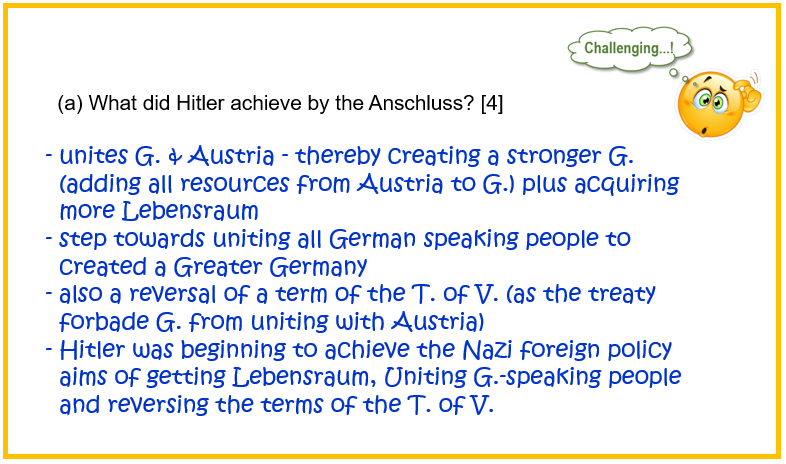
Question 6 (a)
What did Hitler achieve by the Anschluss? [4]
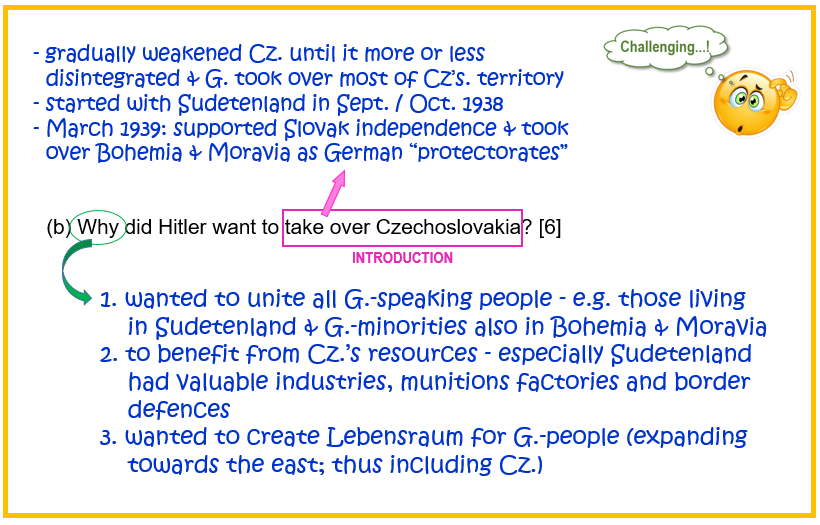
Question 6 (b)
Why did Hitler want to take over Czechoslovakia? [6]
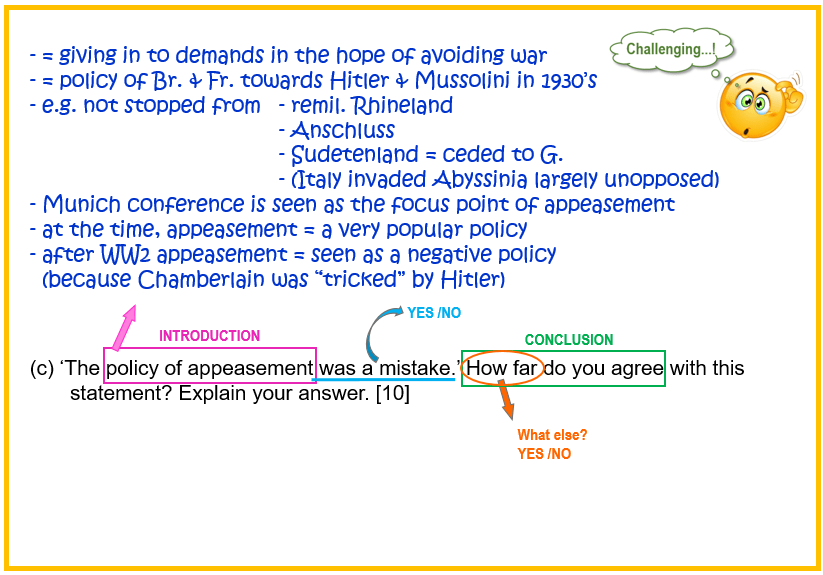
Question 6 (c)
‘The policy of appeasement was a mistake.’ How far do you agree with this statement? Explain your answer. [10]
3.
Question 13
SECTION B: DEPTH STUDIES
There was pressure for change in Russia in the early years of the twentieth century.
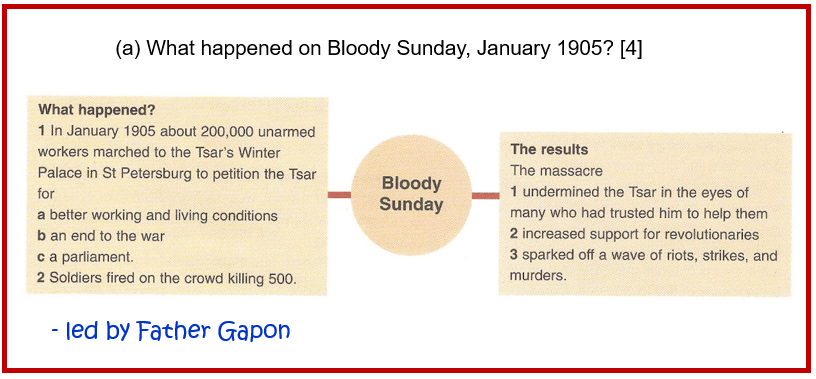
(a) What happened on Bloody Sunday, January 1905? [4]
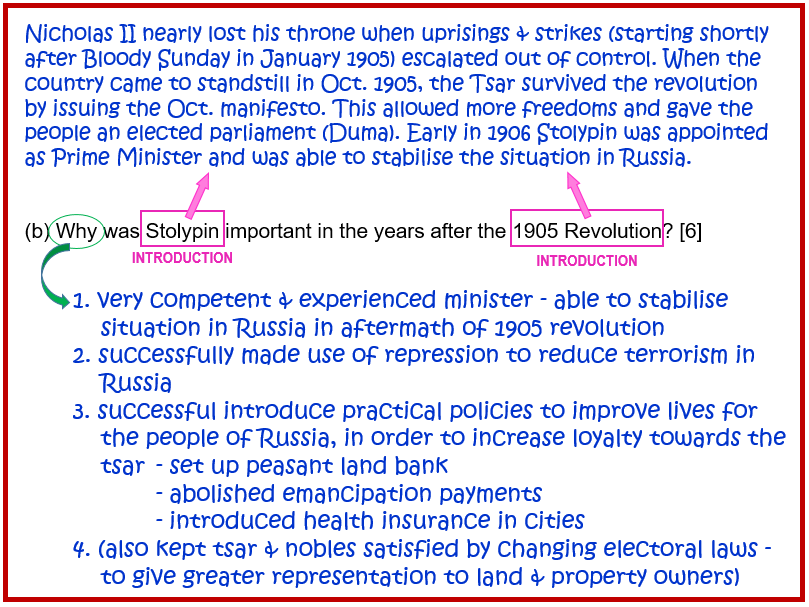
(b) Why was Stolypin important in the years after the 1905 Revolution? [6]
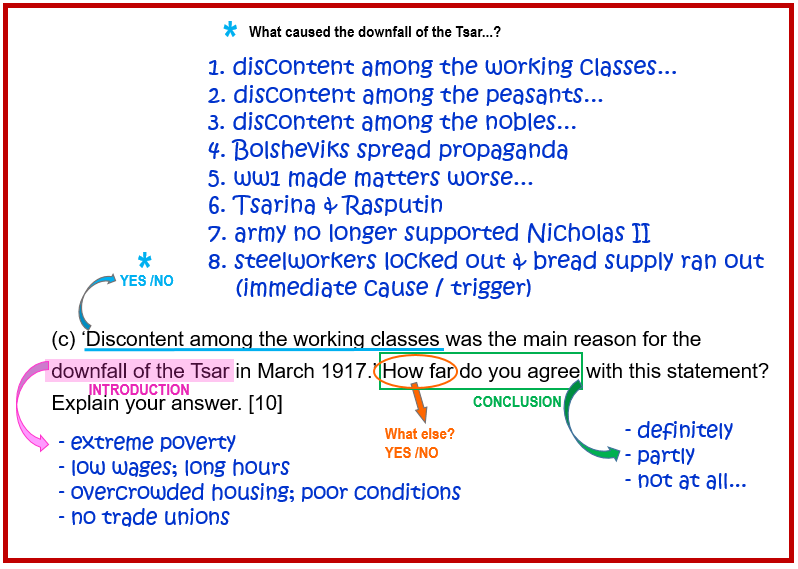
(c) ‘Discontent among the working classes was the main reason for the downfall of the Tsar in March 1917.’ How far do you agree with this statement? Explain your answer. [10]
Question 13 (a)
What happened on Bloody Sunday, January 1905? [4]
Question 13 (b)
Why was Stolypin important in the years after the 1905 Revolution? [6]
(It was made by students and may shed further light on how to answer this exam question.)
Exam Q on Stolypin. (2:50 minutes long)
Question 13 (c)
‘Discontent among the working classes was the main reason for the downfall of the Tsar in March 1917.’ How far do you agree with this statement? Explain your answer. [10]
4.
Question 14
SECTION B: DEPTH STUDIES
By 1929 Stalin was the supreme leader of the USSR.
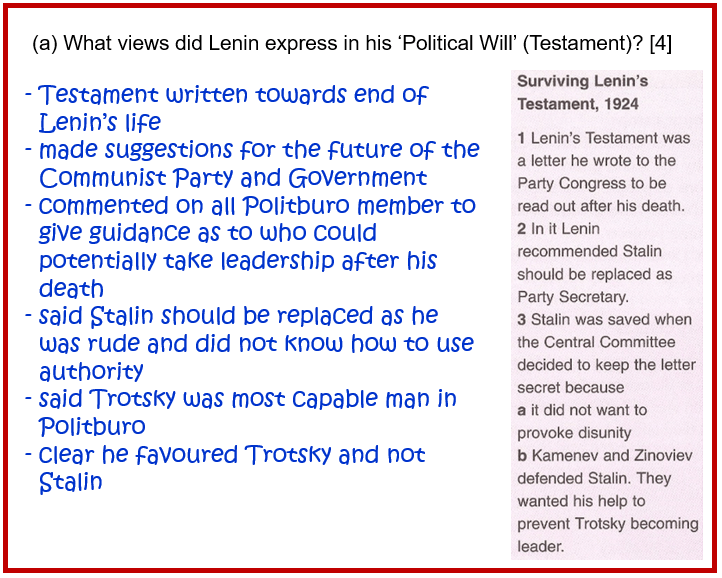
(a) What views did Lenin express in his ‘Political Will’ (Testament)? [4]
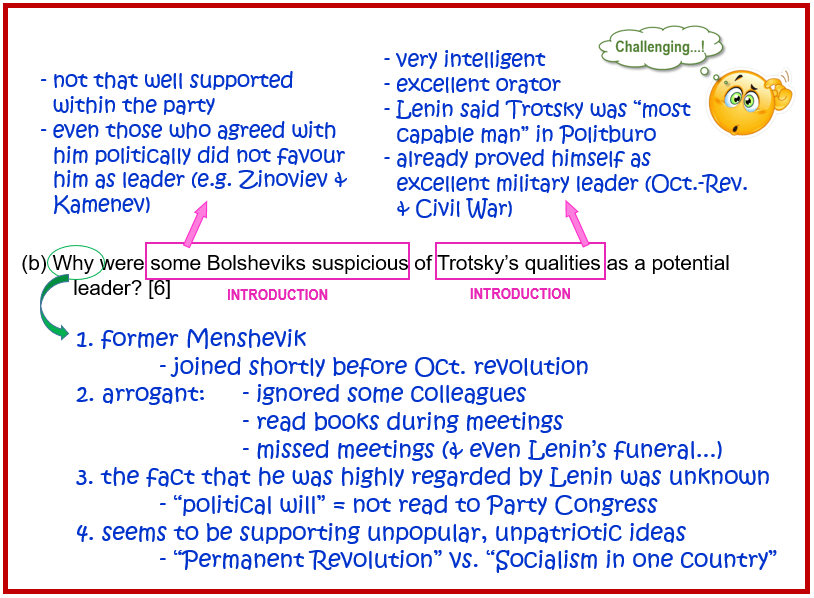
(b) Why were some Bolsheviks suspicious of Trotsky’s qualities as a potential leader? [6]
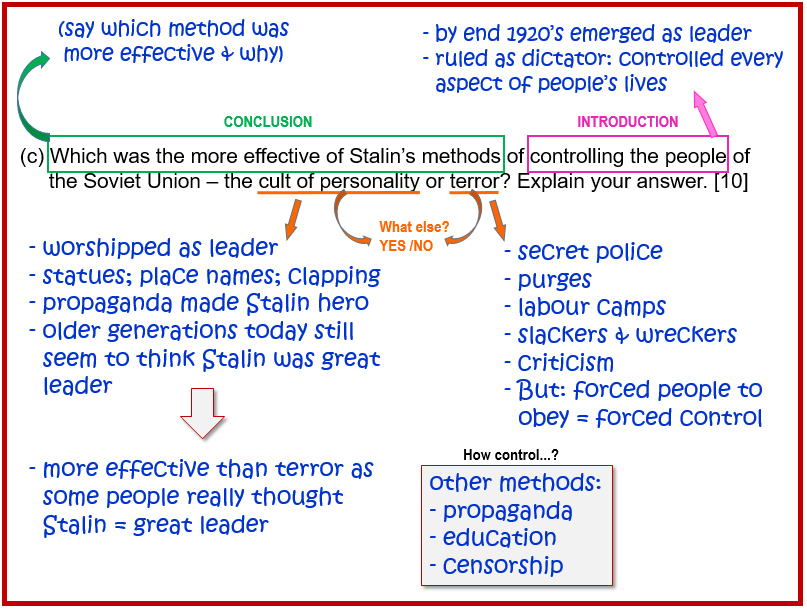
(c) Which was the more effective of Stalin’s methods of controlling the people of the Soviet Union – the cult of personality or terror? Explain your answer. [10]
Question 14 (a)
What views did Lenin express in his ‘Political Will’ (Testament)? [4]
Question 14 (b)
Why were some Bolsheviks suspicious of Trotsky’s qualities as a potential leader? [6]
Question 14 (c)
Which was the more effective of Stalin’s methods of controlling the people of the Soviet Union – the cult of personality or terror? Explain your answer. [10]
5.

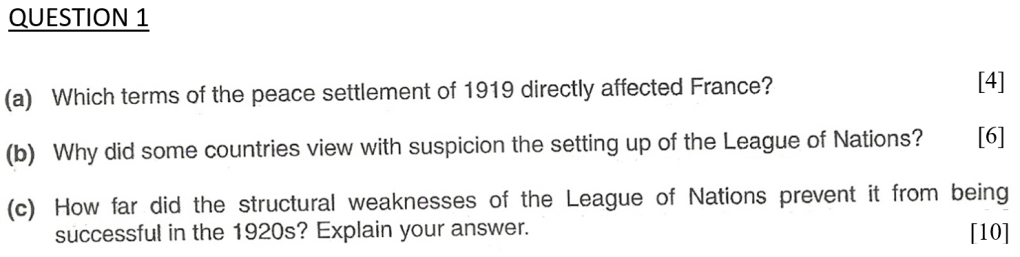
Question 1
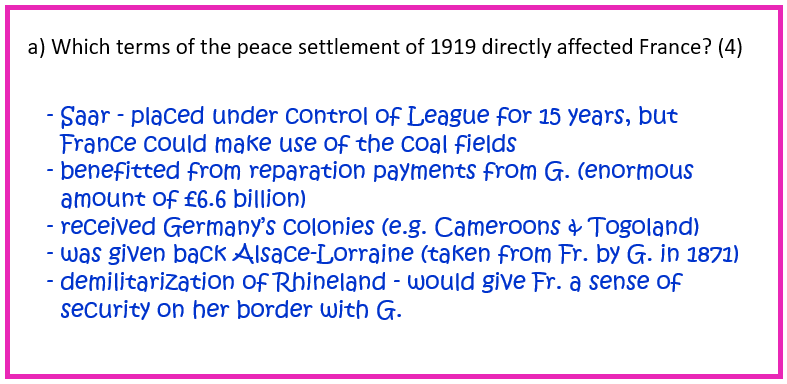
Question 1 (a)
Which terms of the peace settlement of 1919 directly affected France? [4]
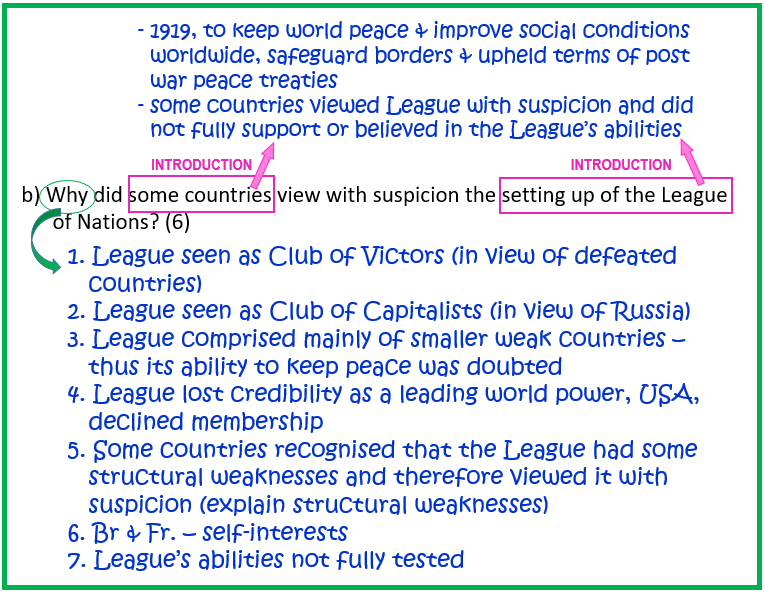
Question 1 (b)
Why did some countries view with suspicion the setting up of the League of Nations? [6]
(It was made by students and may shed further light on how to answer this exam question.)
Exam Q on League of Nations. (1:52 minutes long)
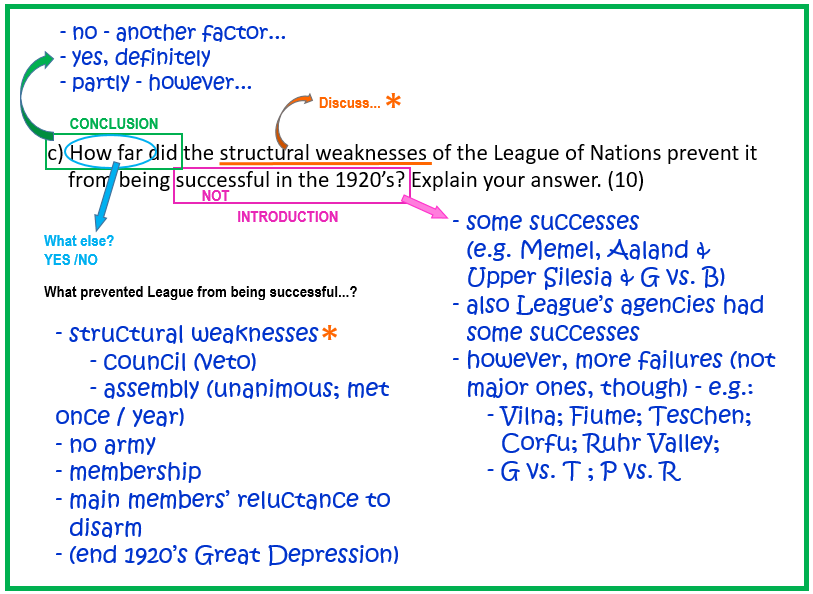
Question 1 (c)
How far did the structural weaknesses of the League of Nations prevent it from being successful in the 1920’s? Explain your answer. [10]
6.
Question 2
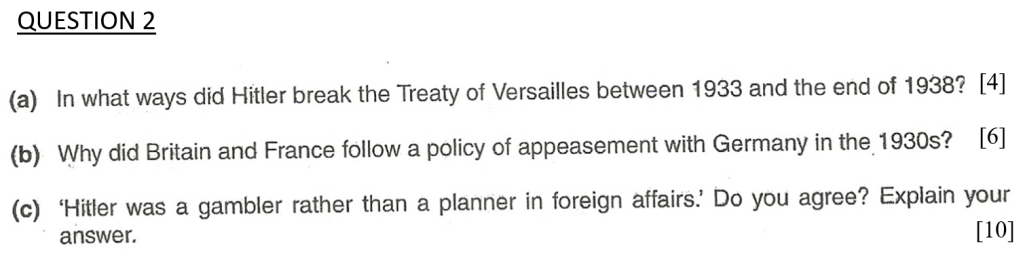
Question 2 (a)
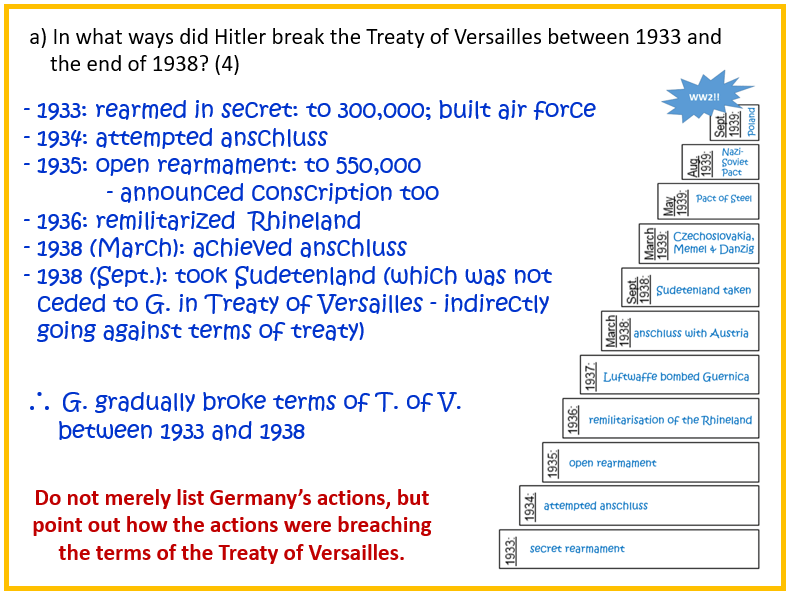
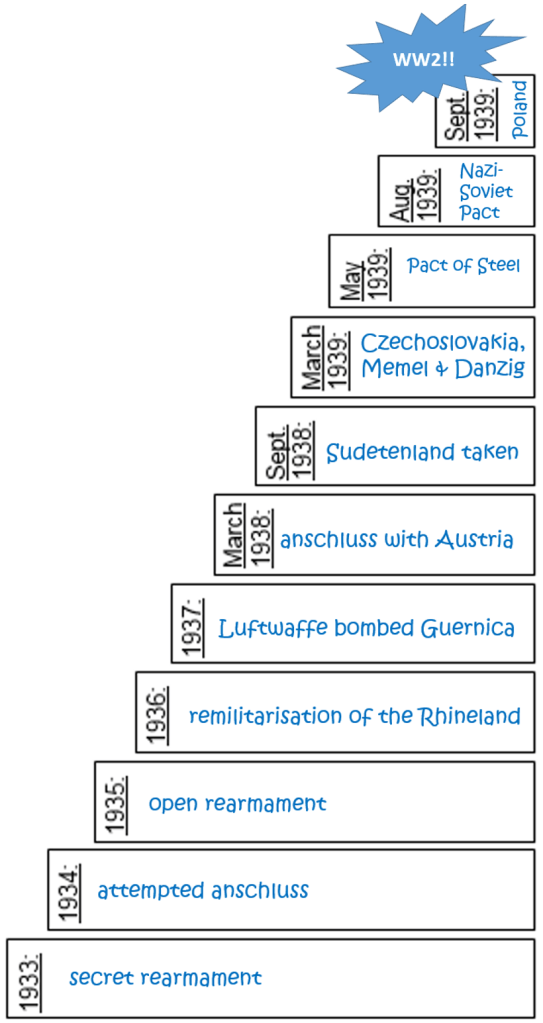
In what ways did Hitler break the Treaty of Versailles between 1933 and the end of 1938? [4]
Question 2 (b)
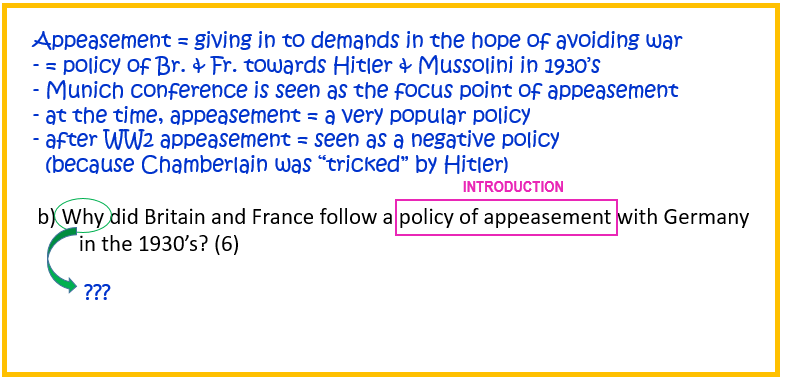
Why did Britain and France follow a policy of appeasement with Germany in the 1930’s? [6]

(It was made by students and may shed further light on how to answer this exam question.)
Exam Q on Appeasement (I). (1:45 minutes long)
(It was made by students and may shed further light on how to answer this exam question.)
Exam Q on Appeasement (II). (3:11 minutes long)
Question 2 (c)
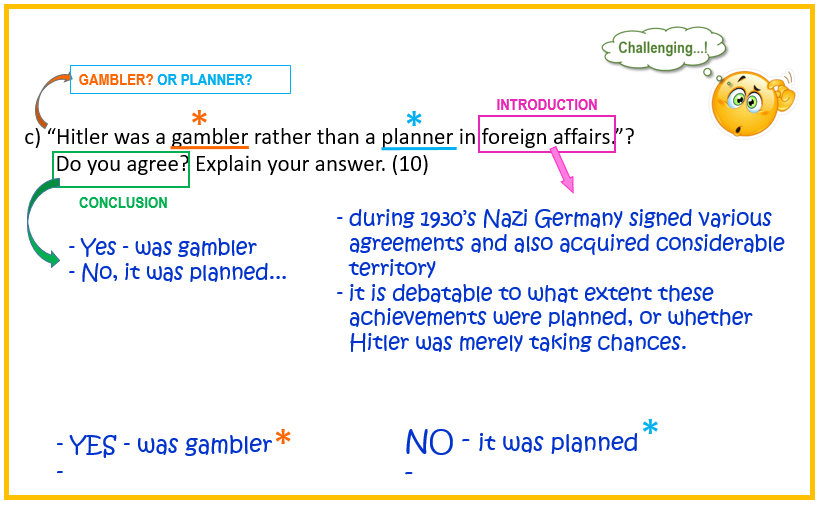
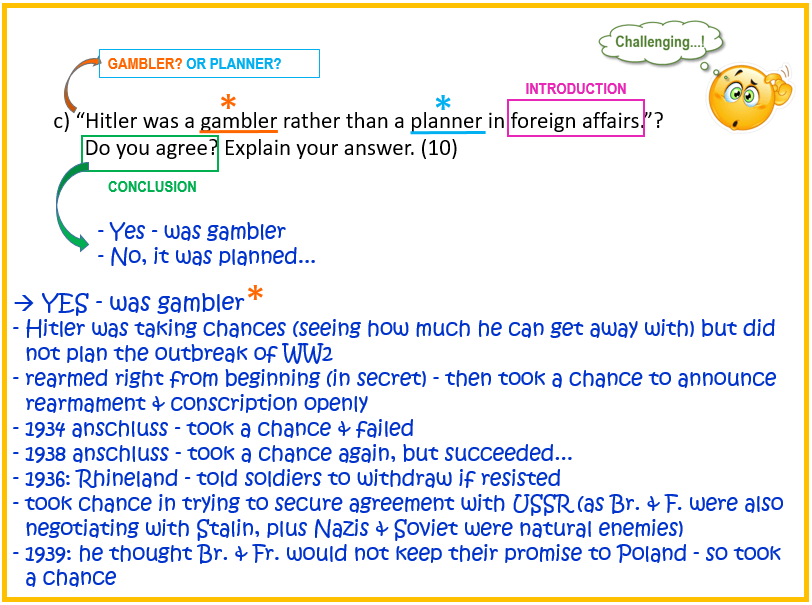
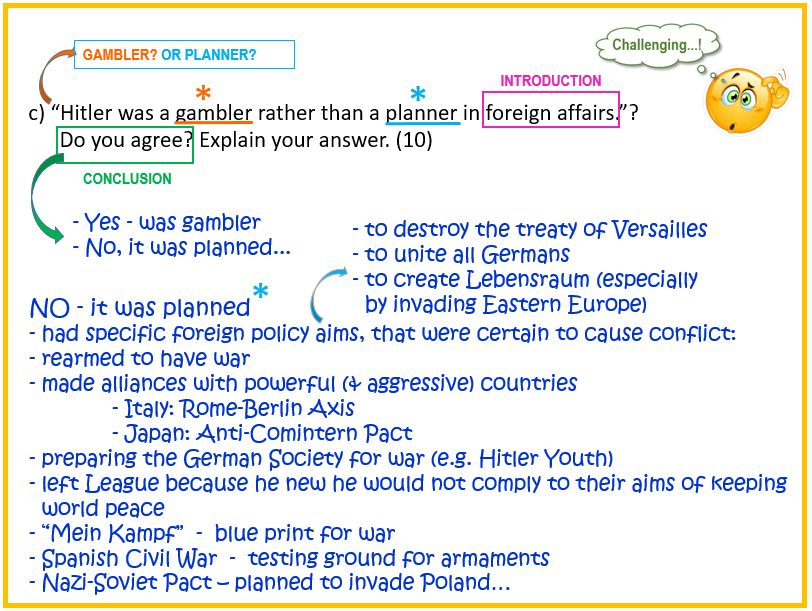
“Hitler was a gambler rather than a planner in foreign affairs.” Do you agree? Explain your answer. [10]
7.
Question 3
Question 3 (a)
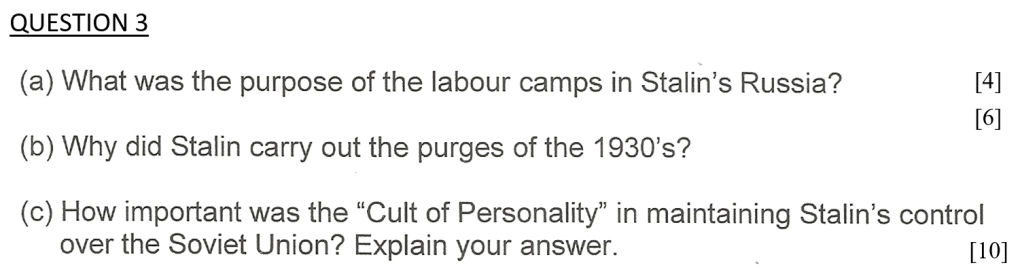
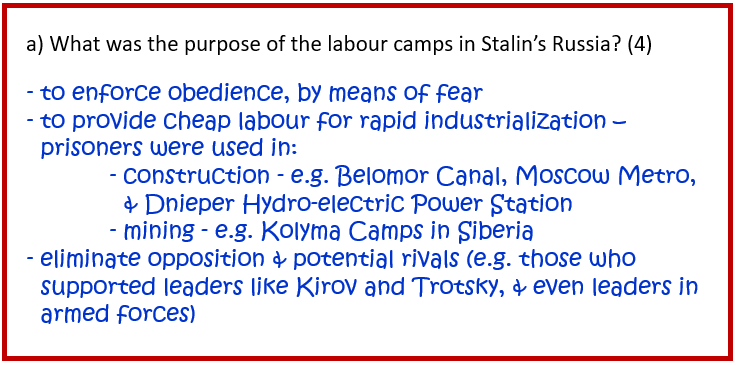
What was the purpose of the labour camps in Stalin’s Russia? [4]
Question 3 (b)
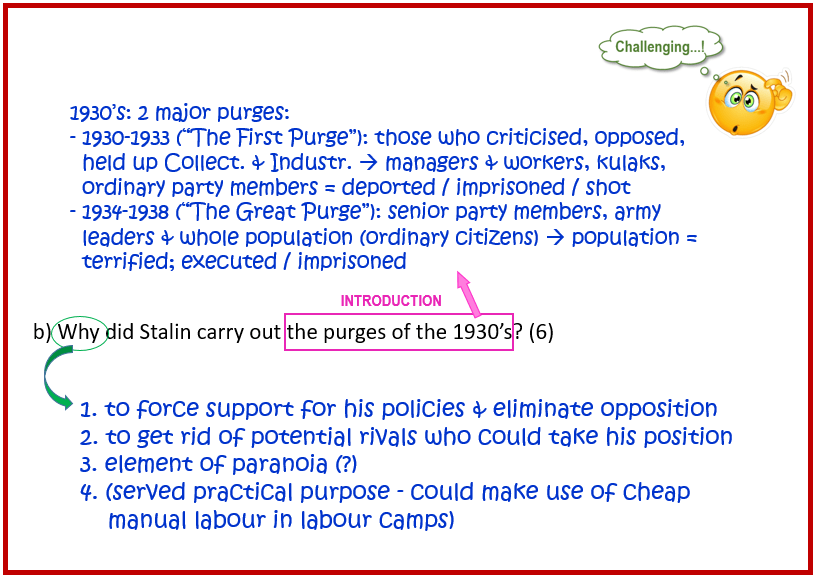
Why did Stalin carry out the purges of the 1930’s? [6]
(It was made by students and may shed further light on how to answer this exam question.)
Exam Q on the Purges. (2:09 minutes long)
Question 3 (c)
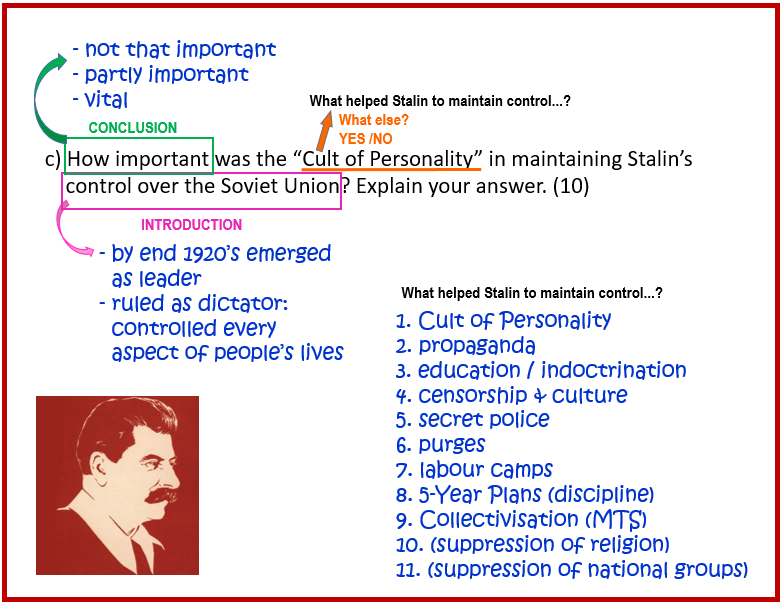
How important was the “Cult of Personality” in maintaining Stalin’s control over the Soviet Union? Explain your answer. [10]
8.
Question 4
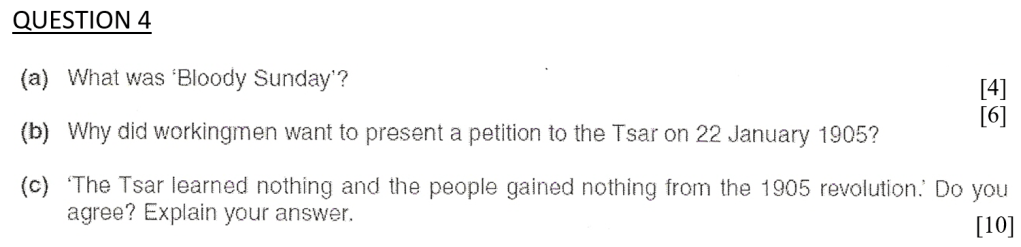
Question 4 (a)
What was “Bloody Sunday”? [4]
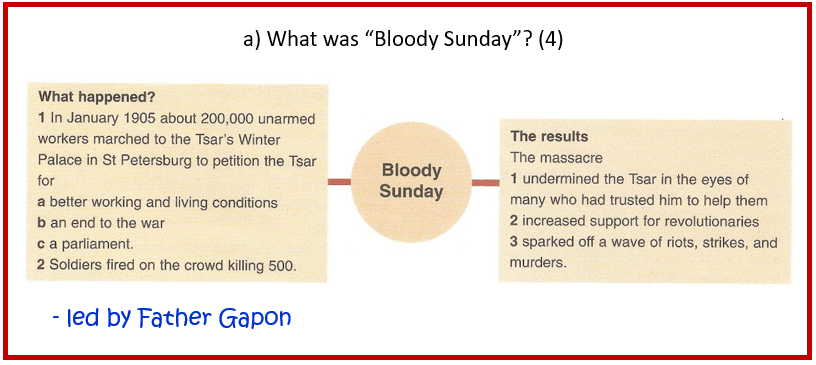
Question 4 (b)
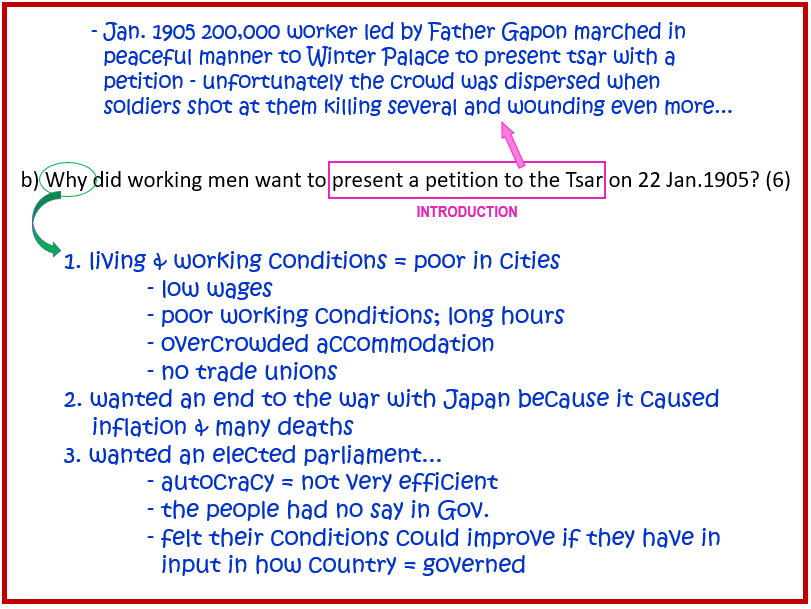
Why did workmen want to present a petition to the Tsar on 22 January 1905? [6]
Question 4 (c)
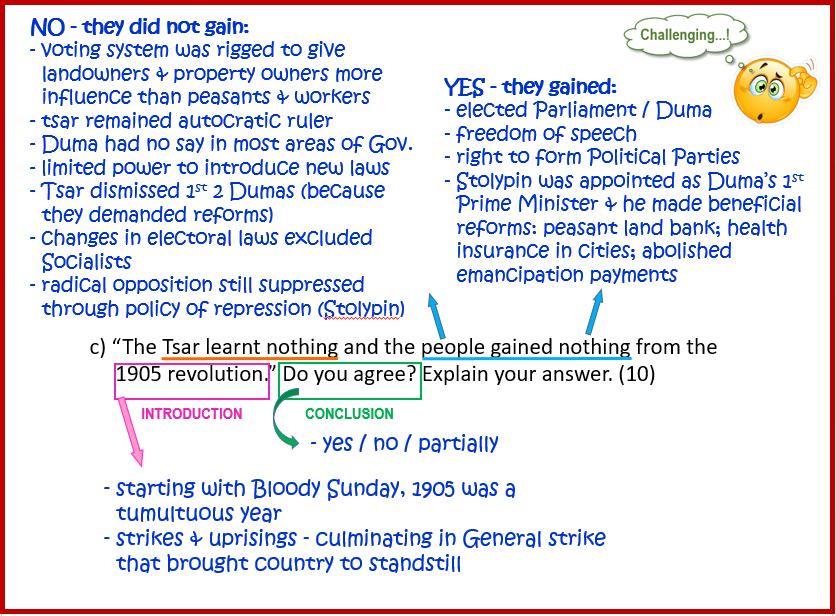
“The Tsar learnt nothing and the people gained nothing from the 1905 Revolution.” Do you agree? Explain your answer. [10]

9.

Question 5

Question 5 (a)
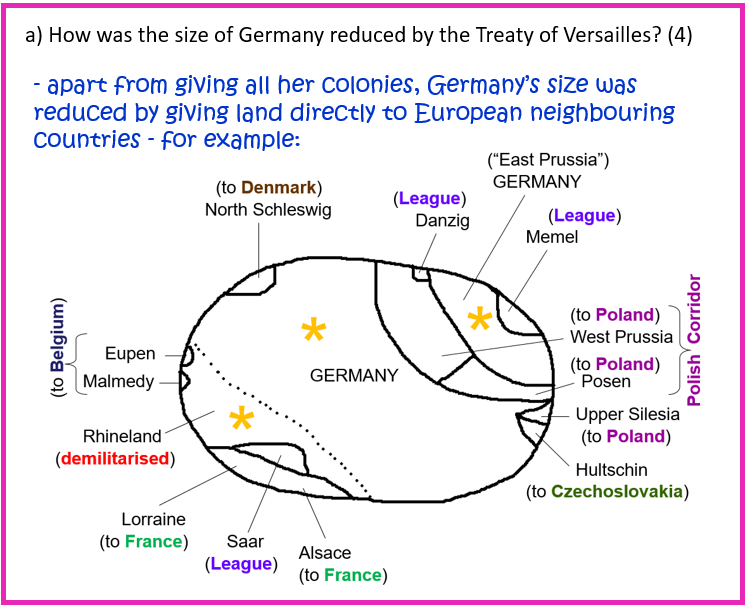
How was the size of Germany reduced by the Treaty of Versailles? [4]
Question 5 (b)
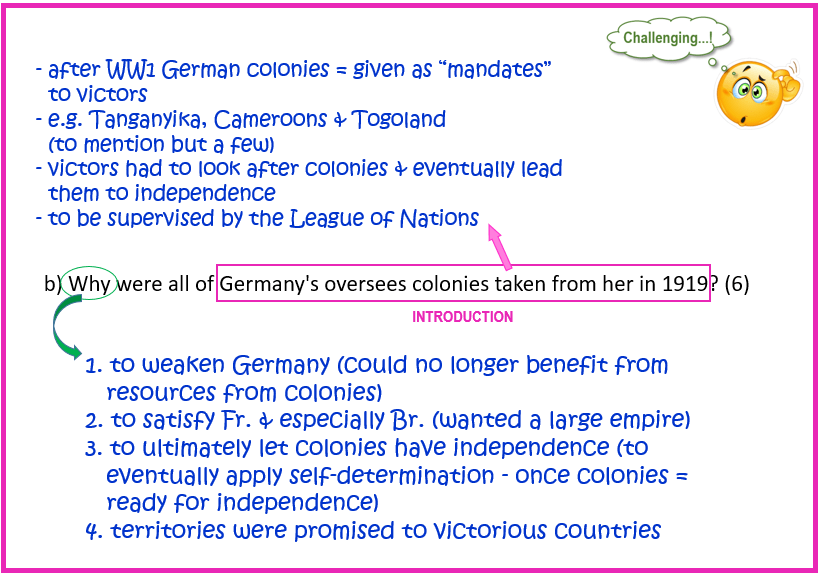
Why were all of Germany’s overseas colonies taken from her in 1919? [6]
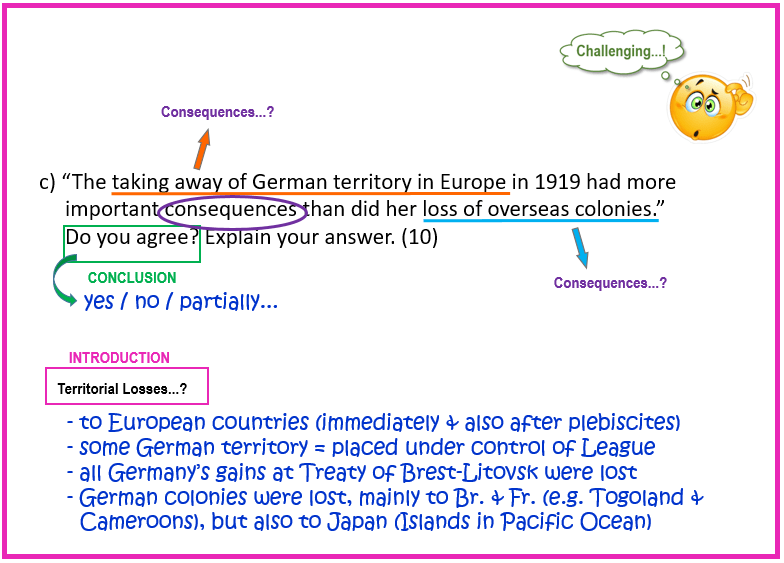
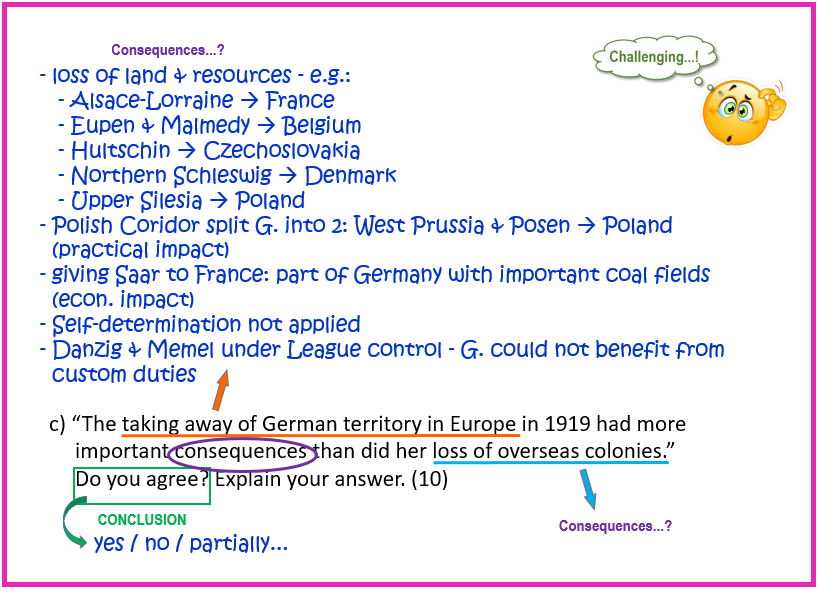
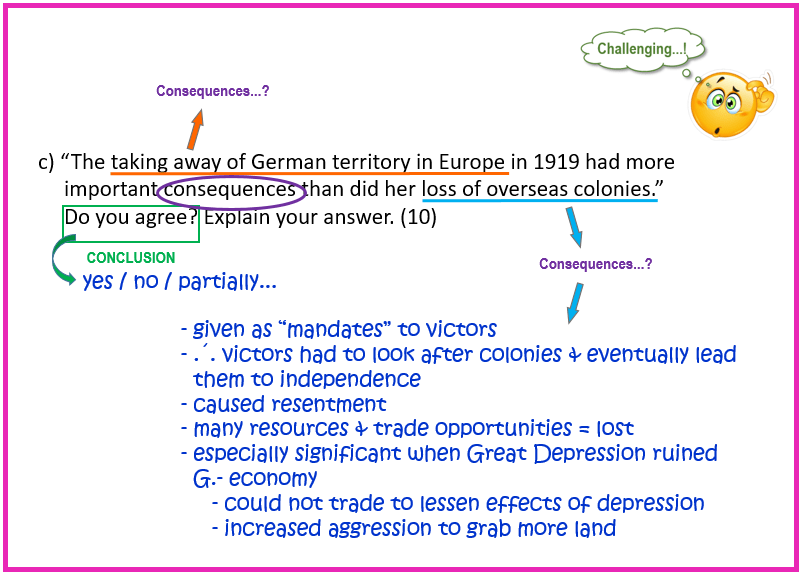
Question 5 (c)
“The taking away of German territory in Europe in 1919 had more important consequences than did her loss of overseas colonies.” Do you agree? Explain your answer fully. [10]
10.
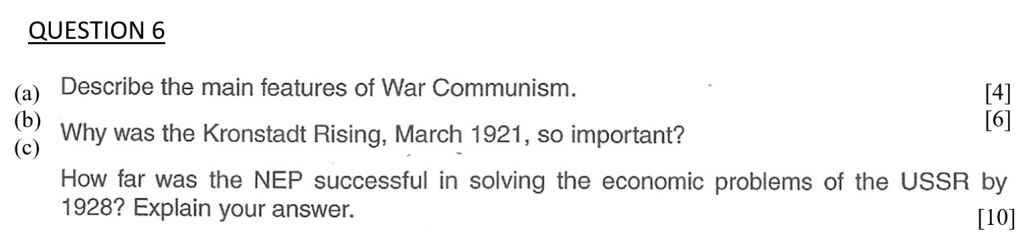
Question 6
Question 6 (a)
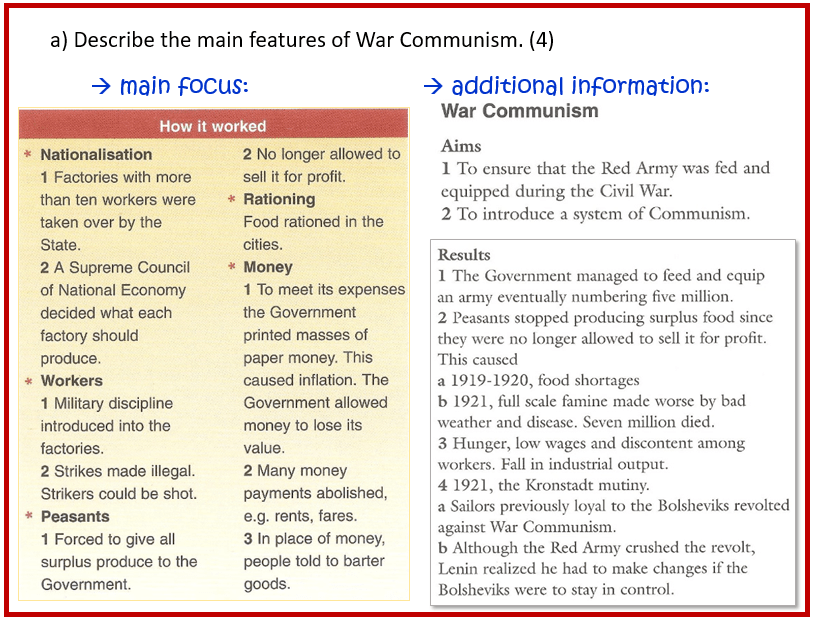
Describe the main features of War Communism. [4]
Question 6 (b)
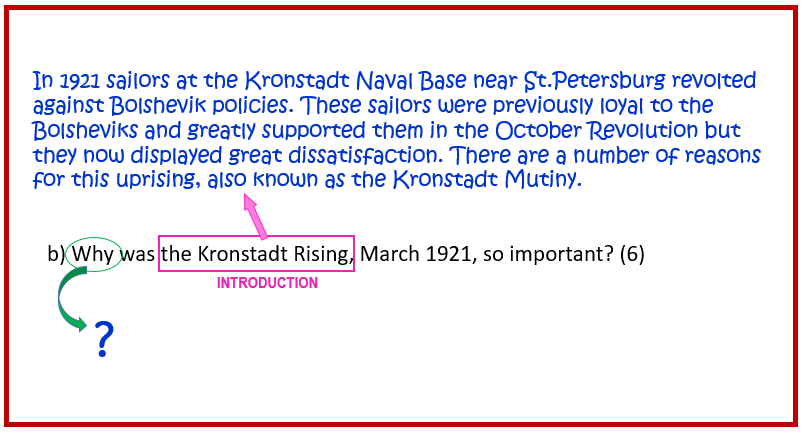
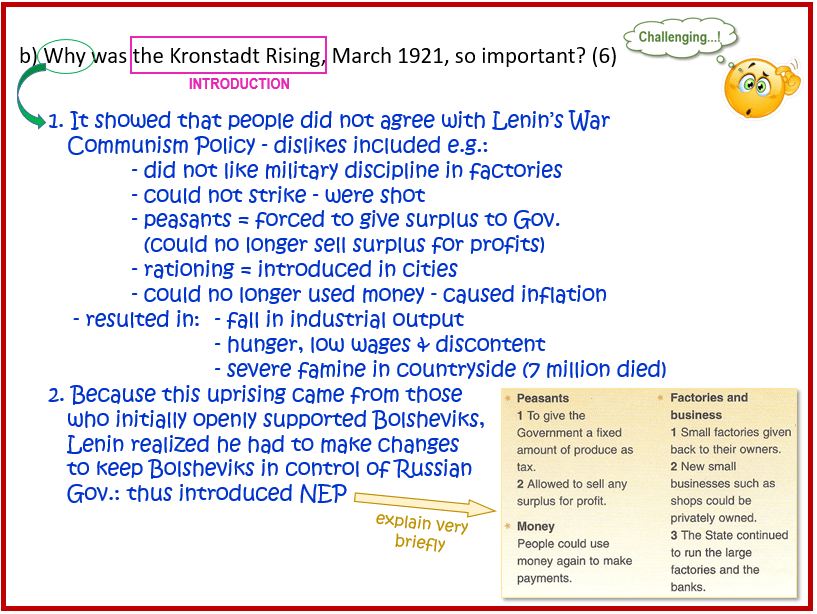
Why was the Kronstadt Rising, March 1921, so important? [6]
Question 6 (c)
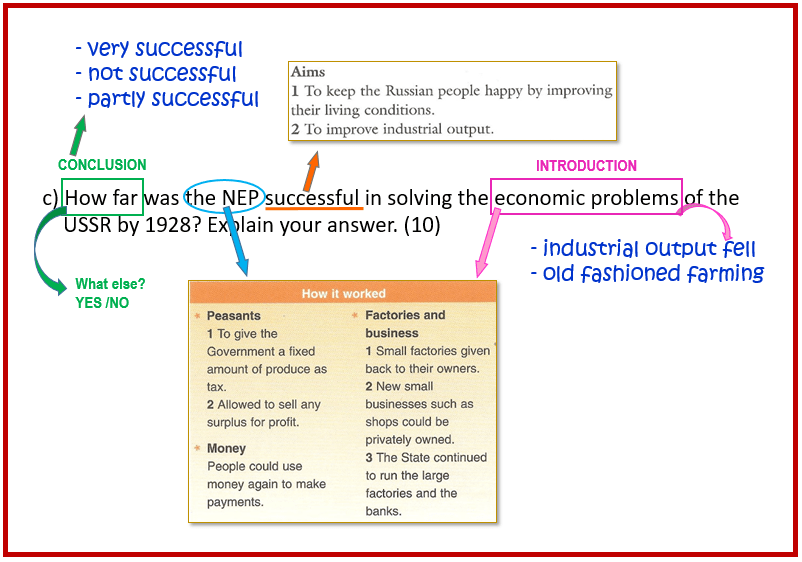
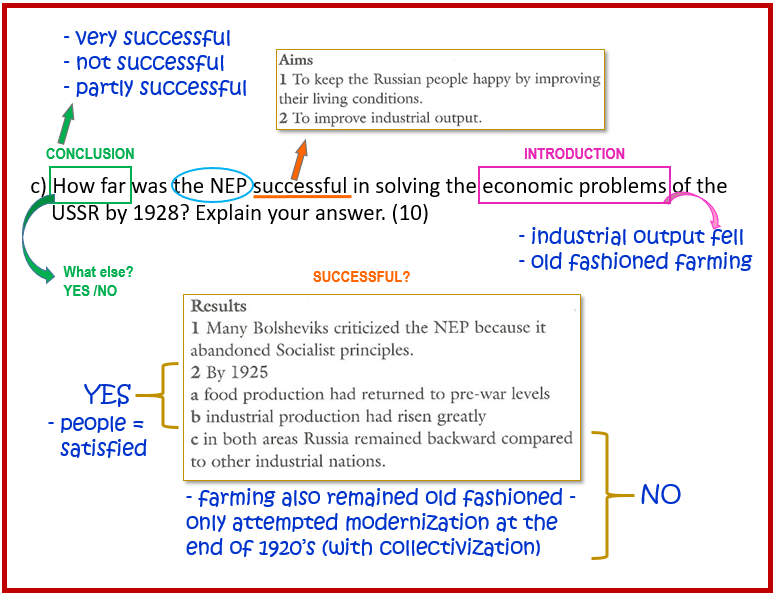
How far was the NEP successful in solving the economic problems of the USSR by 1928? Explain your answer. [10]
(WordPress advertisements may appear below.)
 Best study methods