

English Lessons

- to explore a cautionary tale
- to identify features used by writers
- to record our findings with relevant evidence
1.
Make a list of the sort of warnings that parents give their children.
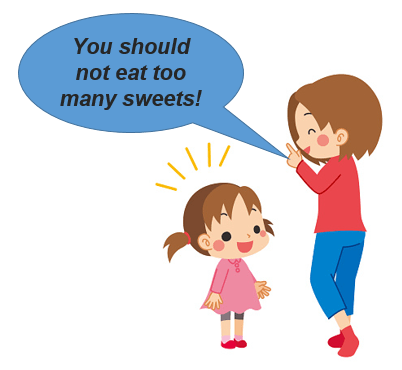
Thinking back to the poem we read last lesson, what warning do you think Jim’s parents would give?
2.
What is a cautionary tale?
cautionary tale: “a story that gives a warning”
For example, “Frankenstein” is a cautionary tale about the dangers of science.

The Frankenstein Story. (2:26 minutes long)
Is the poem about “Jim, the boy who ran away” a cautionary tale? (Explain your answer…)
3.
What do we mean by “the moral of the story”?

Morals are what you believe to be right and wrong.
Your morals are your ideas about right and wrong, especially how you should act and treat other people.
If moral is used as an adjective, it means good, or ethical.
So, the moral of a story is the lesson that story teaches about how to behave in the world. It is a teaching the author is trying to present.
The moral of a story usually revolves around the story’s theme. (The theme is the element of the story which carries the central idea in a story.)
4.
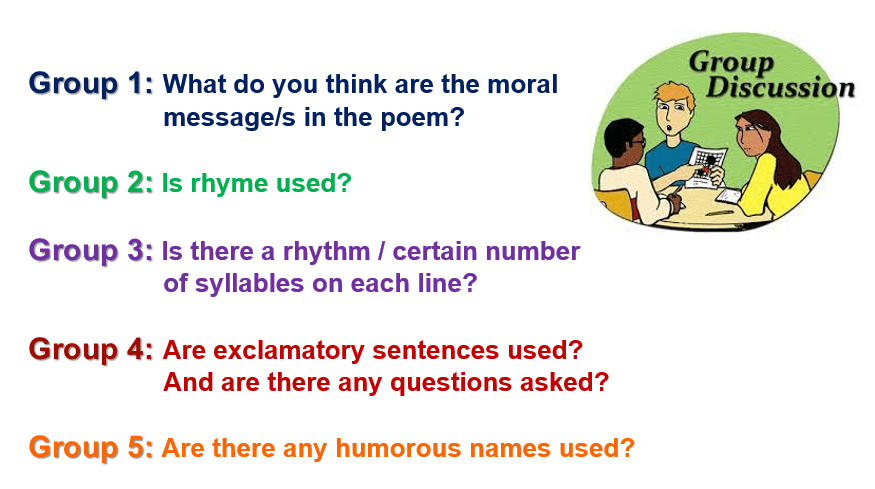
In groups, you are going to explore the text of the poem about “Jim, the boy who ran away”. You are going to examine how it had been put together by the writer.
Look for features used by the writer. Think also about why the writer has used these features in his poem?
What do we mean by features used by the writer?
- rhyme
- rythm
- exclamations
- questions
- humour
IMPORTANT:
You must use evidence from the poem to support your ideas!
5.
Share your ideas with the rest of the class.
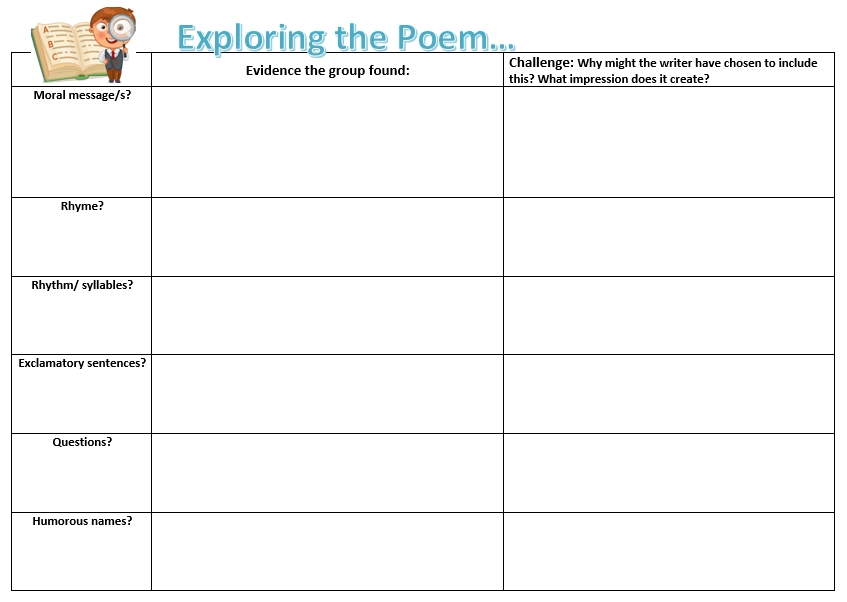
As we listen to each group’s ideas, fill in your table.
6.
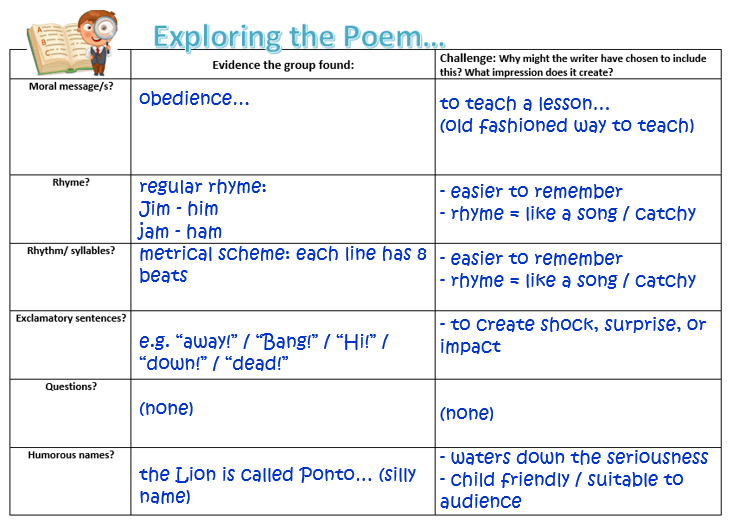
Here are some ideas that should have been raised:

7.
If there is still time, watch the rest of the cautionary tales from the previous lesson’s video.
Cautionary Tales for Children. (7:45 minutes long)
—TEXTBOOK—
You can access useful information in the Year 7 textbook!
—TEXTBOOK—

(WordPress advertisements may appear below.)
 Best study methods