

Today, you are going to….
- understand what cyberbullying is
- know how to respond to cyberbullying
- understand the seriousness of cyberbullying
- look at steps one can take to protect yourself from cyberbullies
1.


Cyber Security for kids. (4:09 minutes long)
2.
Have you ever heard of cyberbullying? What does it mean?
3.

What’s Cyberbullying? (1:44 minutes long)
4.

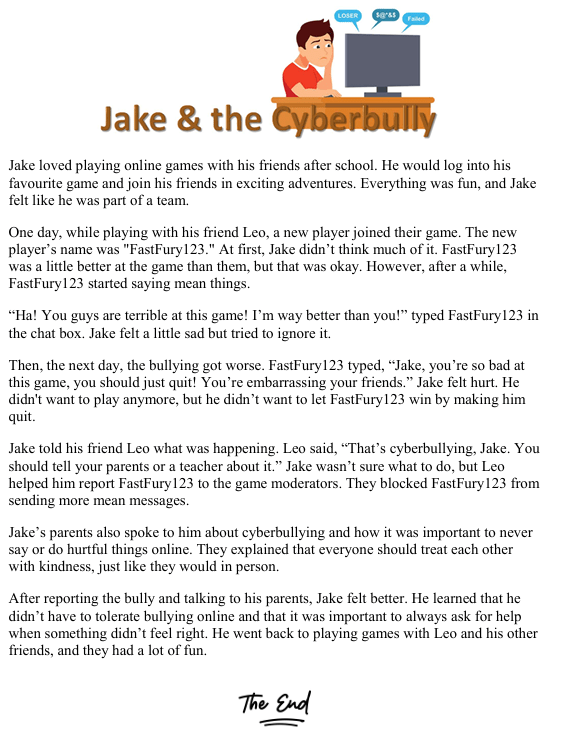
We will now read a few short stories about cyberbullying.
Story 1:
5.
Discussion Points:

This story helps us to understand what cyberbullying looks like, the impact it has, and how to respond appropriately.
Discussion Points for “Jake and the Cyberbully”
- How did Jake feel when he was being bullied online?
- Guide students to express how Jake might have felt: sad, frustrated, confused, and hurt.
- Help them understand that cyberbullying can cause feelings of loneliness.
- What did Jake do when he first saw the mean messages?
- Discuss the importance of ignoring bullies and not responding to their hurtful messages.
- Explore why Jake felt he couldn’t ignore the bullying at first.
- How did Jake’s friend Leo help him?
- Leo encouraged Jake to talk to a trusted adult and report the bully. Discuss how friends can help each other when they’re going through tough situations.
- What would you do if someone was bullying you online?
- Discuss what actions students should take: don’t respond to the bully, tell an adult, and report the bully.
- Why is it important to talk to an adult when you experience cyberbullying?
- Reinforce that adults can help solve problems and protect kids from cyberbullying.
- Do you think it’s okay to be mean to others online, even if you don’t see them in person? Why or why not?
Encourage students to think about empathy and treating others with kindness online, just like they would in real life.
6.
- It’s important to treat others kindly online.
- If you experience cyberbullying, tell a trusted adult.
- Don’t engage with bullies or respond to mean comments. Instead, report it.
7.
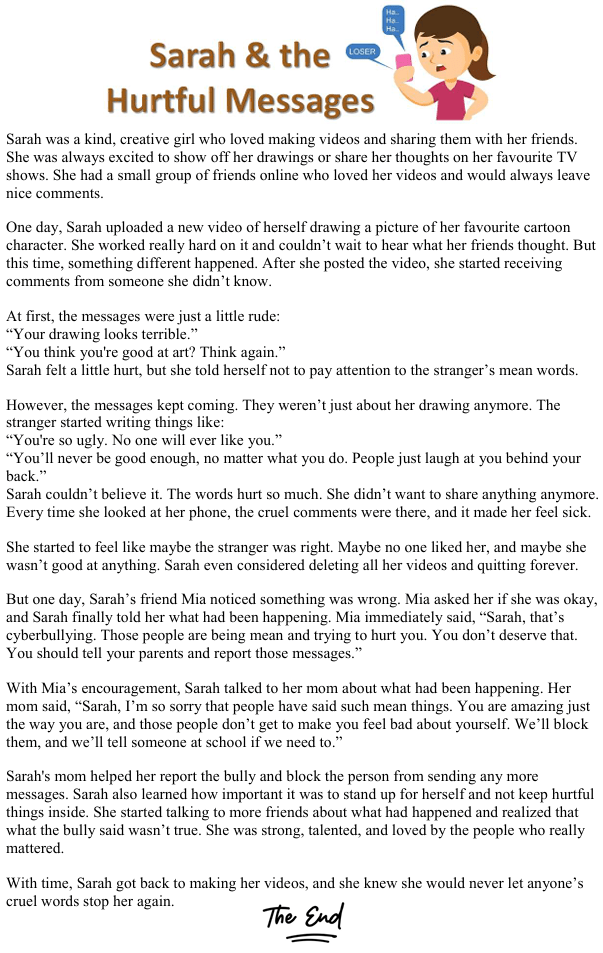
Let’s read another story about cyberbullying.
Story 2:
8.
Discussion Points:
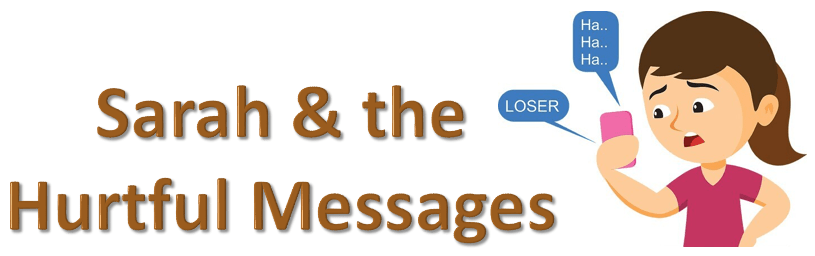
This story highlights a more severe instance of cyberbullying, with a focus on how it can impact a child’s emotions and self-worth. It also emphasizes the importance of talking to trusted adults, reporting the behavior, and recognizing that the bully’s words do not define the victim.
Discussion Points for “Sarah and the Hurtful Messages”
- How did Sarah feel when she started receiving mean messages from the stranger?
- Guide students to identify feelings like sadness, hurt, and confusion. Encourage empathy by asking how they would feel if something like that happened to them.
- What made Sarah stop wanting to share her videos or create new ones?
- Discuss how cyberbullying can make people feel like giving up on things they enjoy. Reinforce the idea that bullies want to make others feel bad, but their words don’t reflect the truth.
- How did Mia help Sarah when she found out about the bullying?
- Discuss how friends can support each other in tough situations, and why it’s important to tell someone you trust when you’re being hurt online.
- What advice would you give Sarah if she were a friend of yours?
- Have students share ideas of how they would comfort and encourage Sarah, such as reminding her of her talents, supporting her decision to report the bully, and helping her feel better.
- How did Sarah’s mom help her?
- Emphasize the importance of involving a trusted adult to stop bullying. Discuss how parents and teachers can help solve problems and keep children safe online.
- Why is it important to tell an adult and report a bully?
- Discuss how reporting helps protect the person being bullied and prevent the bully from hurting others.
- What would you do if you saw someone else being bullied online?
- Encourage students to stand up for others who are being bullied by telling an adult or offering kind words of support.
9.
- Cyberbullying can be really hurtful, but it’s never your fault.
- Always talk to a trusted adult when someone is being mean to you online.
- Don’t listen to bullies—what they say is not true. You are valuable and worthy of kindness.
- It’s important to report cyberbullying so it doesn’t happen to you or others.
10.

General Discussion Points for Both Stories…
These discussion points help students understand the seriousness of cyberbullying while also teaching them the steps they can take to protect themselves and others. 😊
- What is Cyberbullying?
- Help students define what cyberbullying is: using technology to be mean, hurtful, or threatening to others.
- How Can Cyberbullying Affect People?
- Discuss the emotional impact of cyberbullying: it can make people feel sad, angry, or even scared.
- Why Should We Always Be Kind Online?
- Reinforce the importance of kindness in the digital world, just like in person. Teach students to treat others how they would like to be treated.
- What Should You Do If You Are Cyberbullied?
- Have students share steps they would take if they were cyberbullied: stay calm, don’t reply to the bully, tell a trusted adult, and report the bully.
- What Should You Do If You See Someone Else Being Bullied?
- Discuss the importance of standing up for others and helping them feel safe by reporting the situation to an adult.
11.

Safer Kids Online | Hey PUG! – Cyberbullying. (2:16 minutes long)
Is it Cyberbullying? (3:11 minutes long)
Protect Yourself Rules – Cyber Bullying. (3:08 minutes long)
Cyberbullying – How to Avoid Cyber Abuse. (3:00 minutes long)
12.

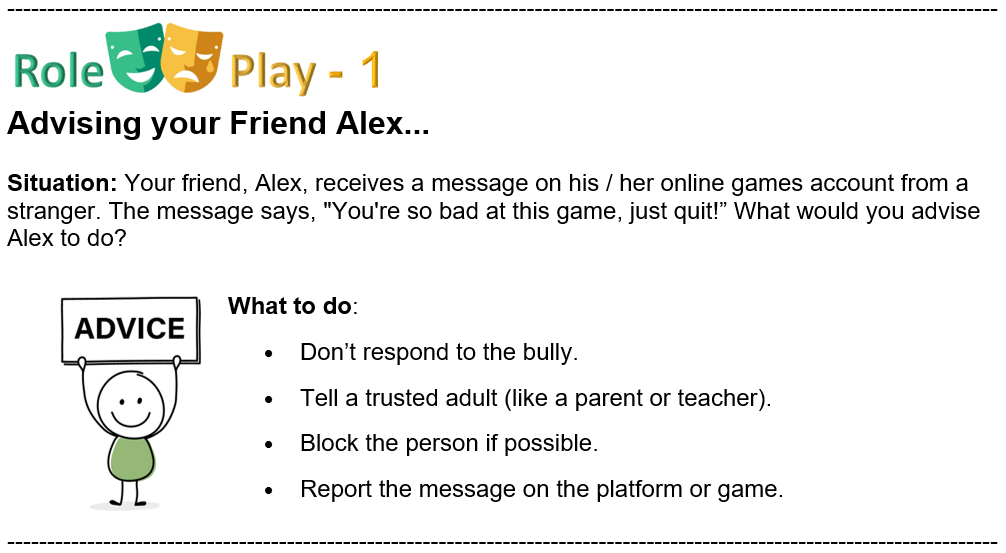
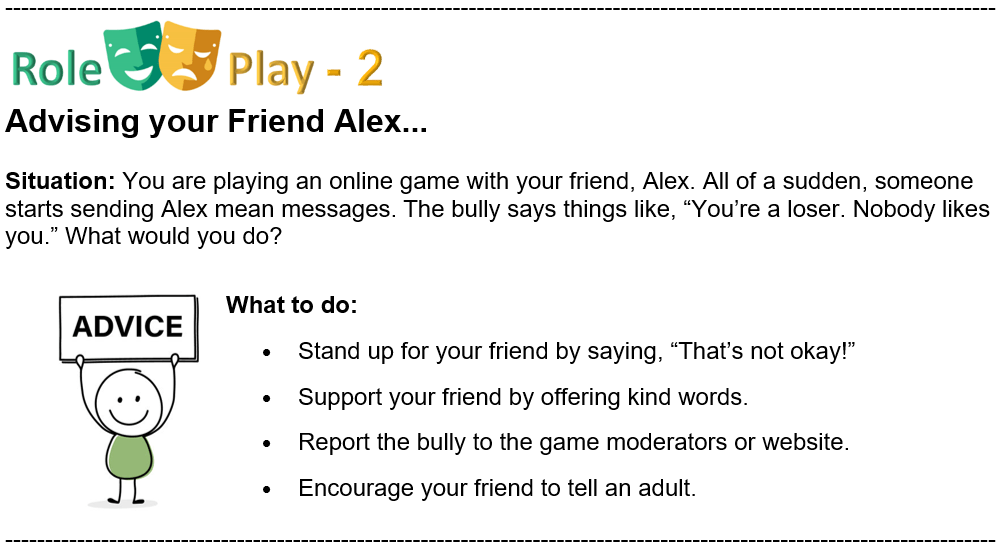
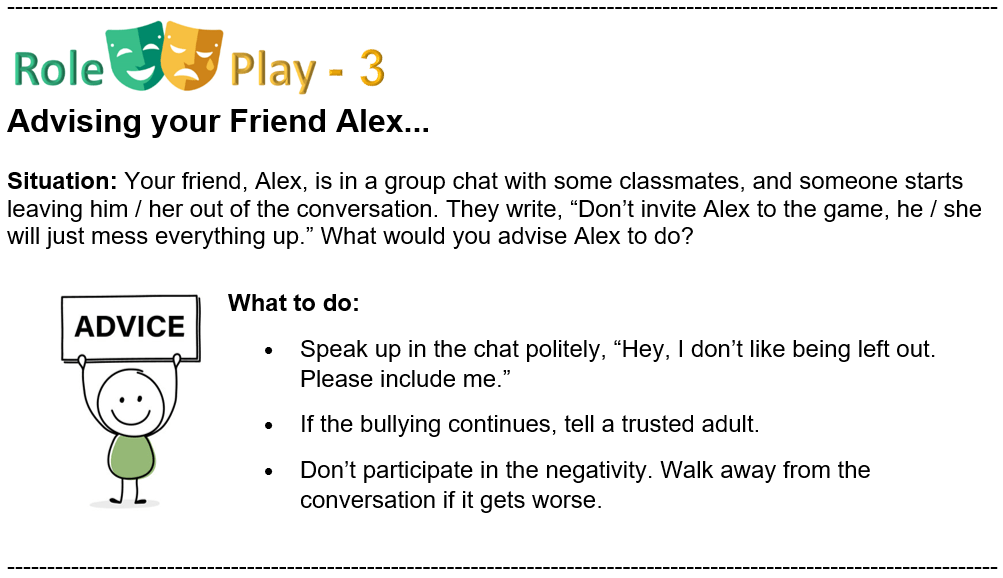
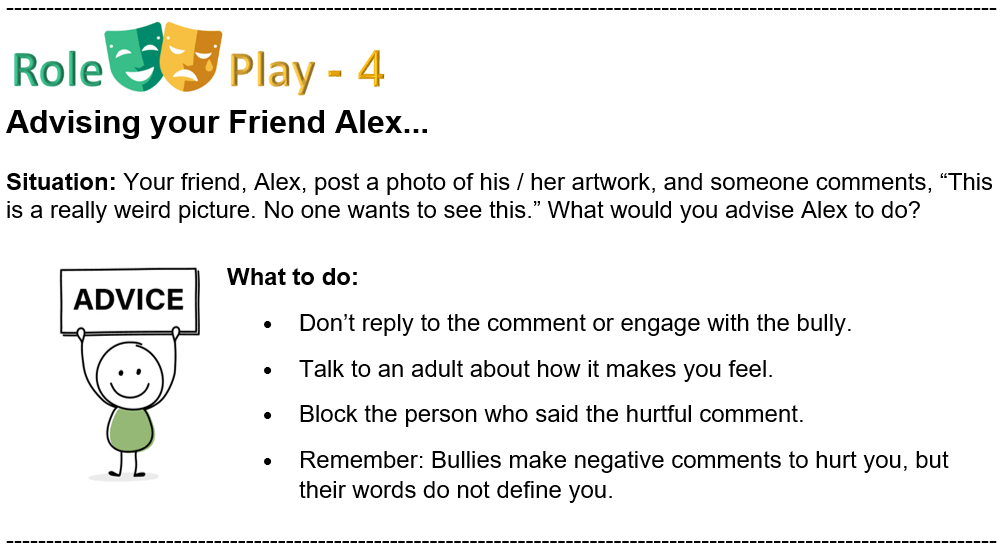
And now for a bit of role- play! You are going to role-play different scenarios, to practice (1) how to respond to a cyberbully, (2) how to report the behaviour, and (3) to seek help from an adult.
[Students act out different scenarios (e.g., receiving a mean message, seeing someone get bullied) and discuss what to do. These scenarios allow students to practice how they would respond to common cyberbullying situations. Encourage them to role-play different responses and discuss why those actions are helpful. You can also include follow-up questions to reflect on the feelings of the victim and the best ways to support them. Below are five role-play scenarios on cyberbullying, designed to help students practice different responses and discuss what to do when they encounter cyberbullying.]
13.
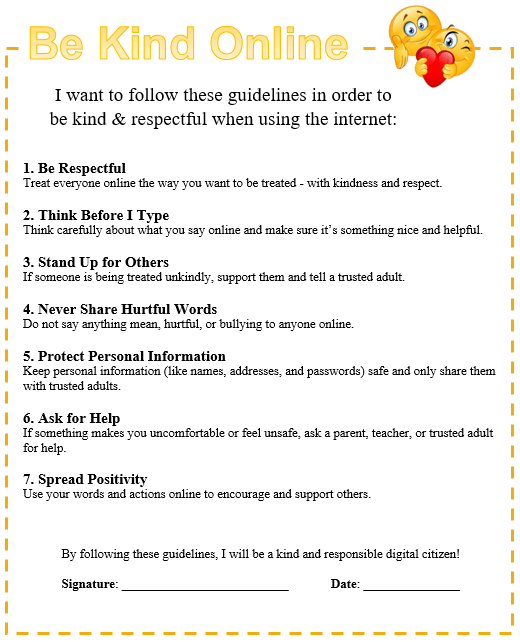
Finally, together, let’s make a class pledge to “Be Kind Online” .
Sign this pledge as a reminder of your commitment to kindness online. We can also display it in the classroom as a visual reference!
14.

Here are some awesome internet safety games that not only entertain but will also teach you essential online skills.

As you navigate through a virtual city, you will get pop-up questions at different points. By answering these questions, you do in an interactive quiz that helps you to learn essential internet safety skills.
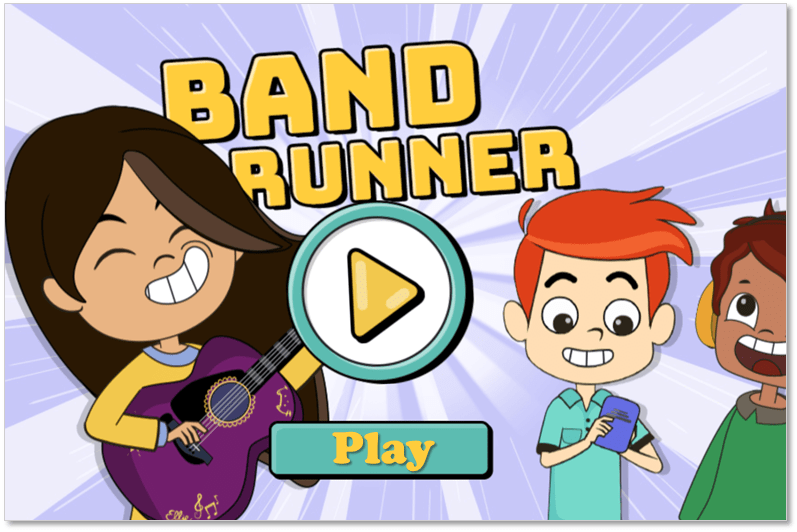
Band Runner blends fast-paced action with important safety lessons. You play as characters Alfie and Ellie. They run from potential dangers. You will help them recognize online predators and make quick, safe decisions.

(WordPress advertisements may appear below.)
 Best study methods