



(WordPress advertisements may appear below.)

FEEDBACK: Test 1 on Road to War
(to be finalized)
(WordPress advertisements may appear below.)

(1:37 minutes long)
(WordPress advertisements may appear below.)



(WordPress advertisements may appear below.)
FEEDBACK: Test 4 on League
(to be finalized)
(WordPress advertisements may appear below.)




(WordPress advertisements may appear below.)
Today you are going to examine how events in Spain brought Germany and Italy closer together…
1.
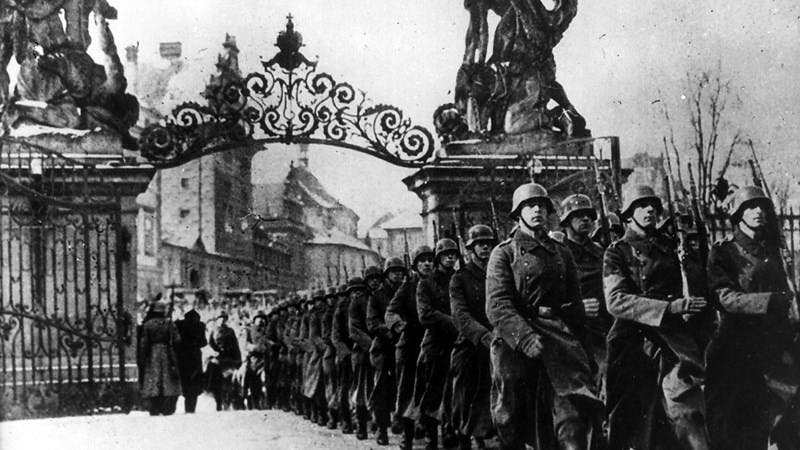
The Spanish Civil war started in July 1936 and lasted until March 1939. It had a profound impact, not only on Spain, but also on European relations in the 1930’s.

Spanish Civil War. (3:51 minutes long)
2.
Here is more on the bombing of Guernica…
Guernica Bombing, History Project. (7:29 minutes long)
3.

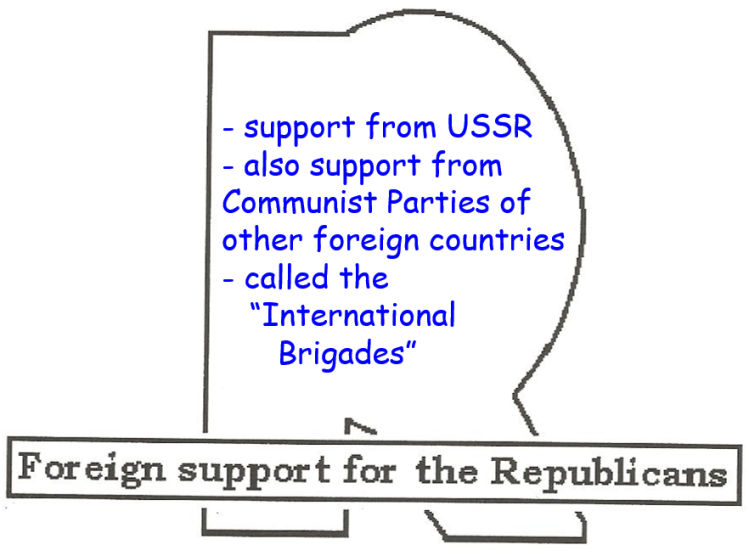
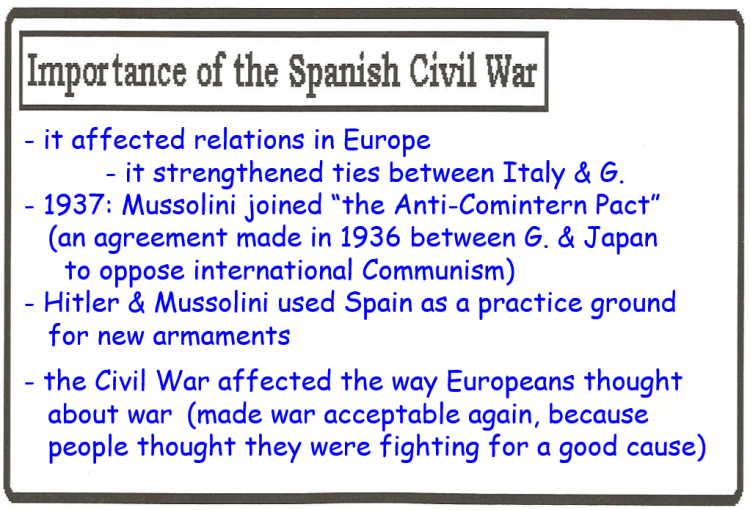
“Spain, Europe & the Axis”, p.15-16.
4.


5.

(Use the relevant spaces on pages 17-19 in your Road to War booklet…)
6.

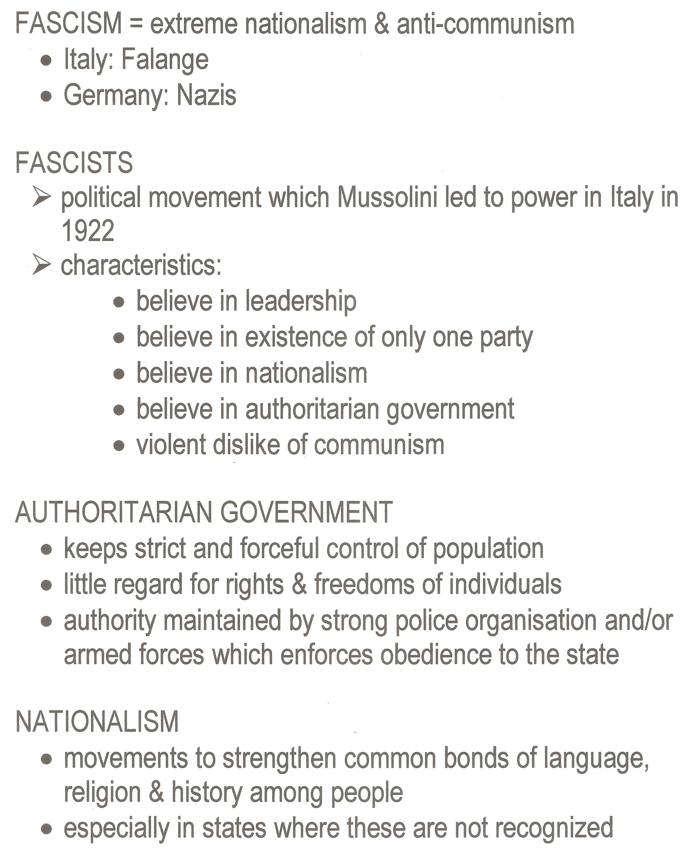
Read the information on page 14 on Fascism…

7.
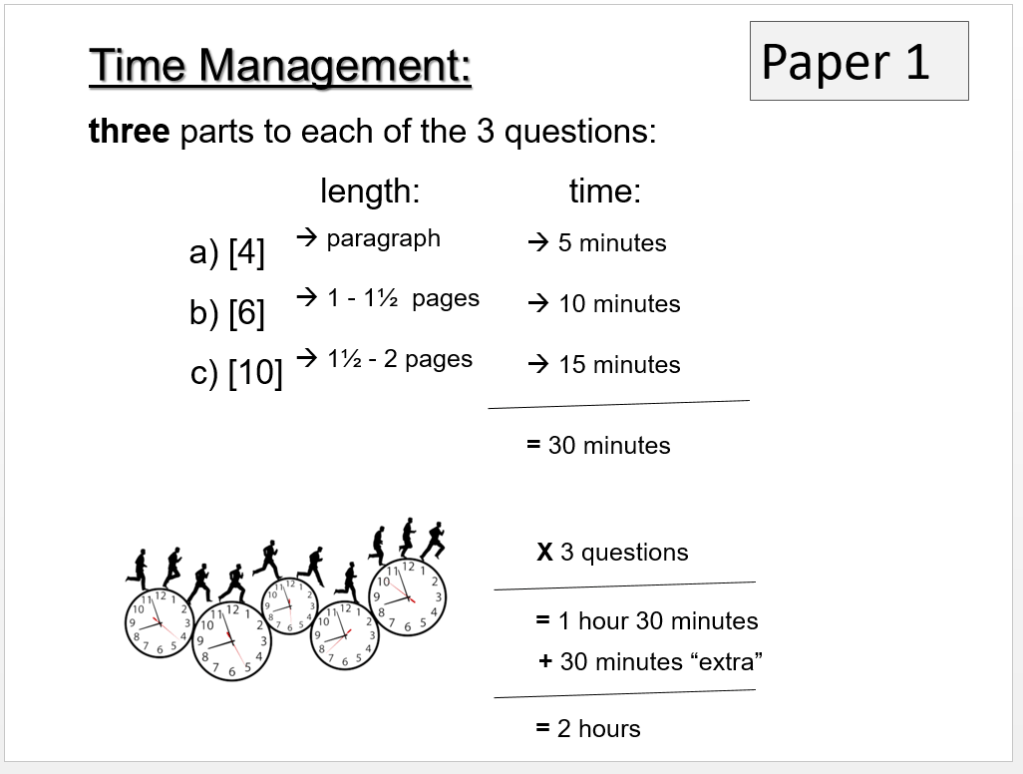
This is a perfect opportunity to remind you of the type of questions that you can expect to get in your Paper 1 examination, as well as the time that you should spend on each question:
8.

Below are typical Paper 1 exam questions, on the Spanish Civil War… Stick the questions (provided) into your book and carefully read through them. Then start by doing question (a).


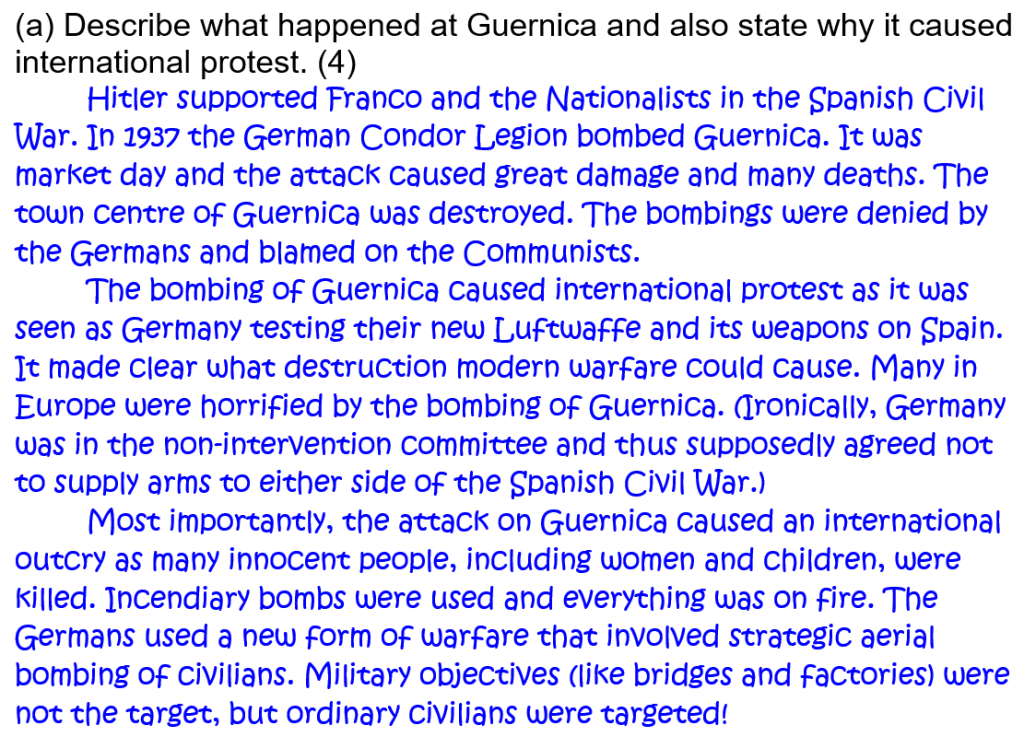
(a) Describe what happened at Guernica and also state why it caused international protest. [4]
Your answer should be about one paragraph long, or write a couple of short paragraphs.

This question should not take you long to answer. See if you can answer it in about 5 minutes!

IDEAS…
9.
If there is still time, plan question (b).
(b) Why did Germany and Italy help the Nationalist side in the Spanish Civil War? [6]

This is a “why-question”… You need to think of a number of reasons and then explain three or four of them in a paragraph. To start off, simply make a list of all the reasons that you can possibly think of.
What would be the next step?
Next, from your list, choose the most important reasons to explain in your essay answer. Then write the answer – it should be about one page long, but no longer than one and a half pages. This question should take you about 10 to 15 minutes to answer!

(You are not going to write the answer today – the aforementioned is simply advice on what would be the next step if you were required to write the essay answer.)
(WordPress advertisements may appear below.)
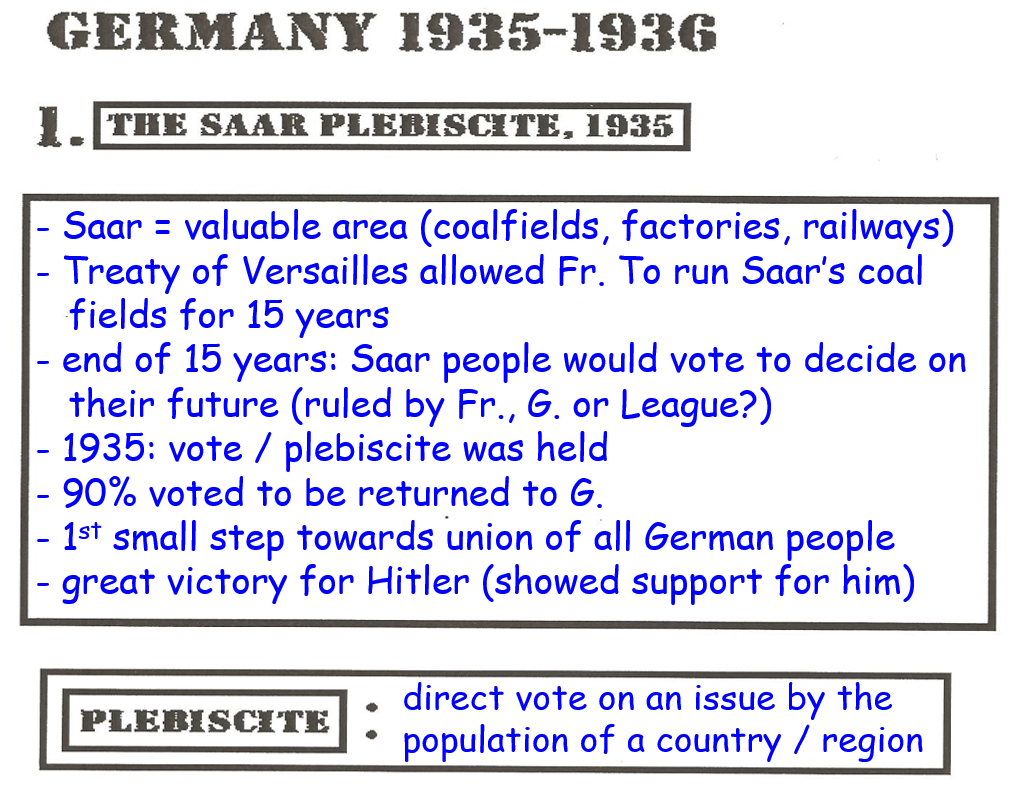
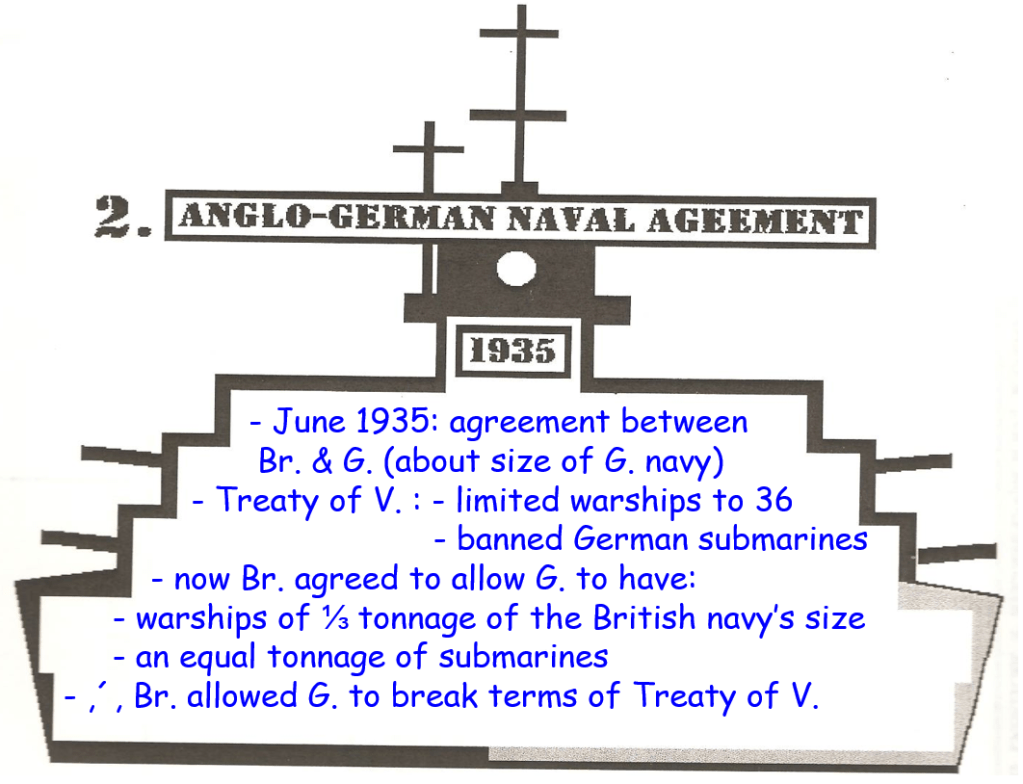
Today you are going to examine Germany’s actions in 1935 and 1936, when she experienced a couple of unexpected victories!
1.
Let’s see what Nazi Germany did in 1935 and 1936 that brought Europe closer to World War Two.

Germany – 1935. (1:43 minutes long.)
Germany – 1936. (2:14 minutes long.)
2.
“From the Saarland to the Rhineland, 1935-1936”, p.7-8.
3.



4.

(Use the relevant spaces on pages 9-11 in your Road to War booklet…)
5.
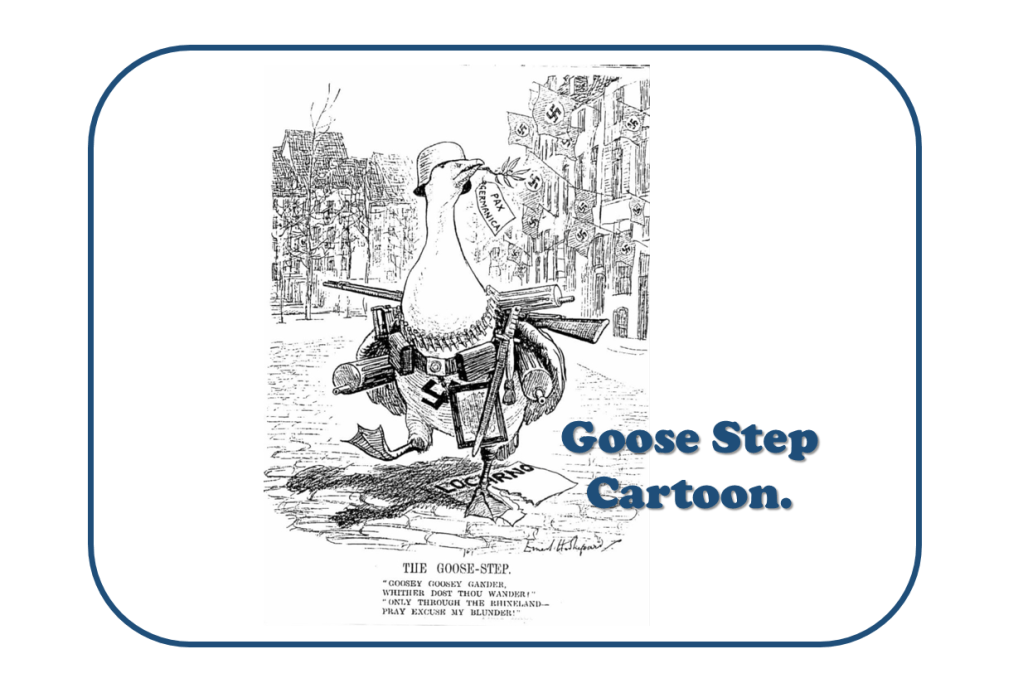
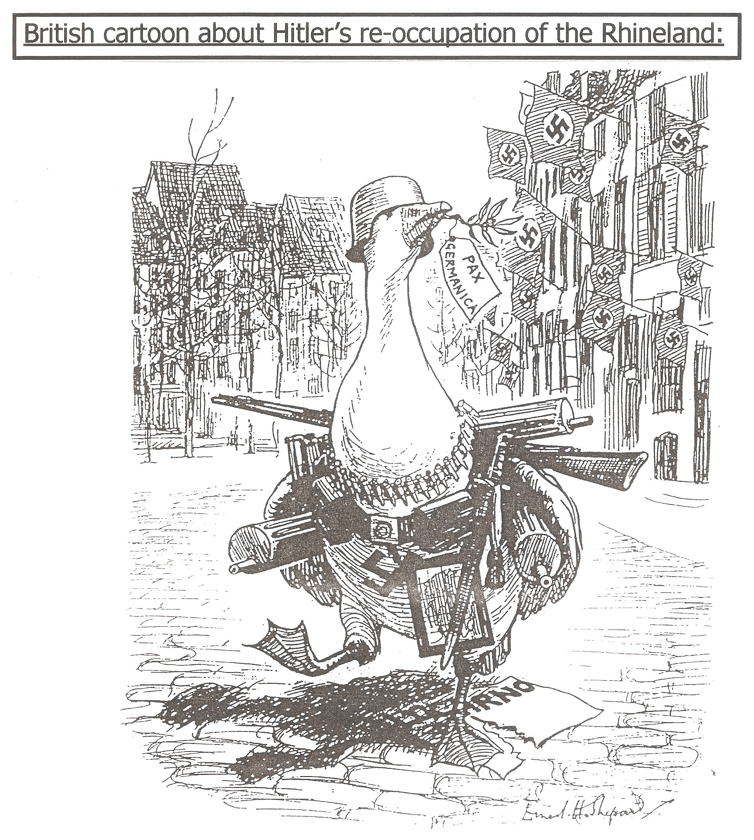
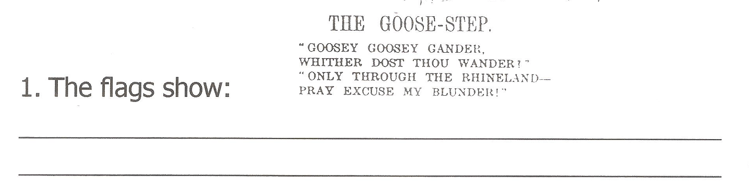
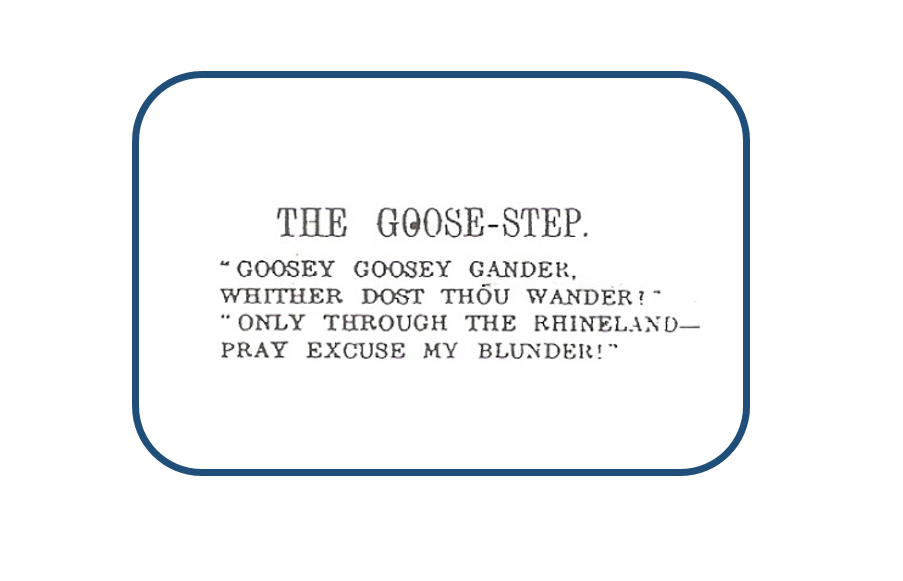
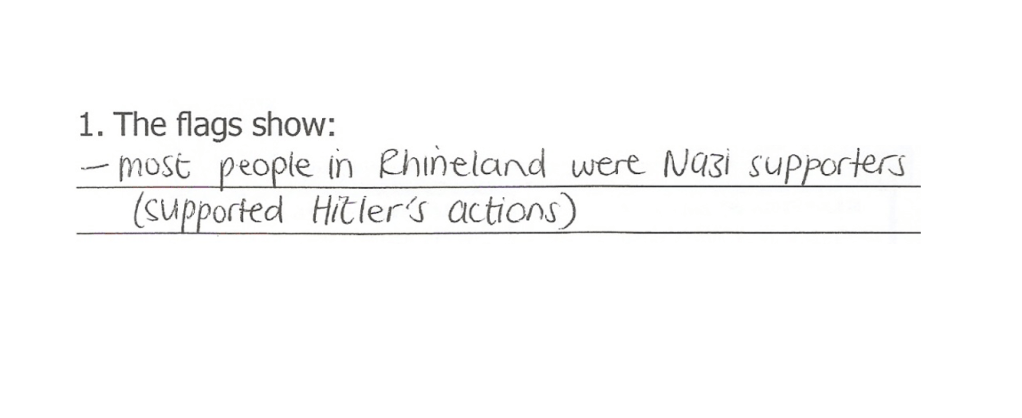
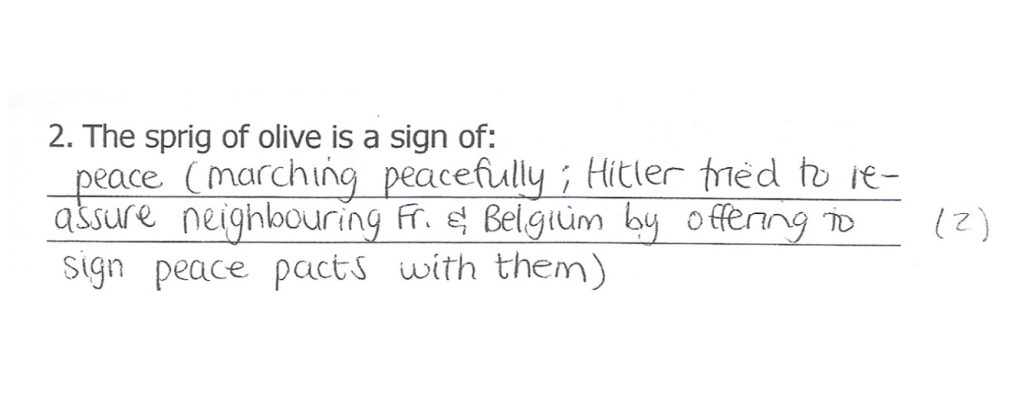
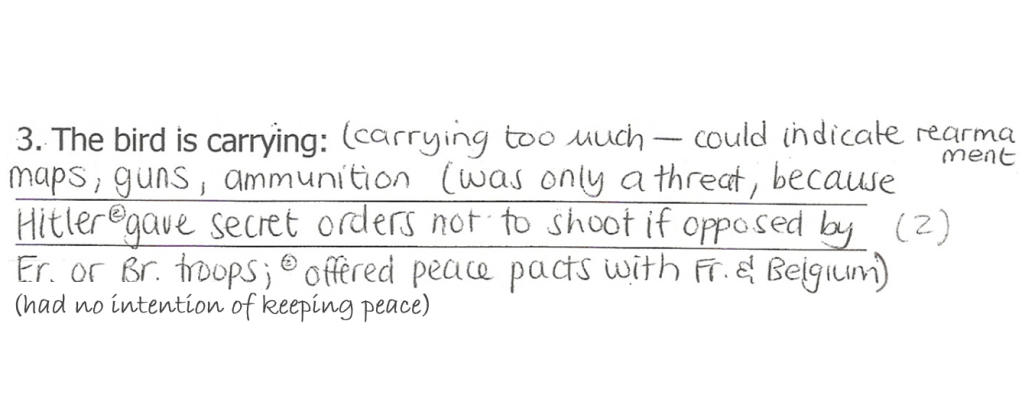
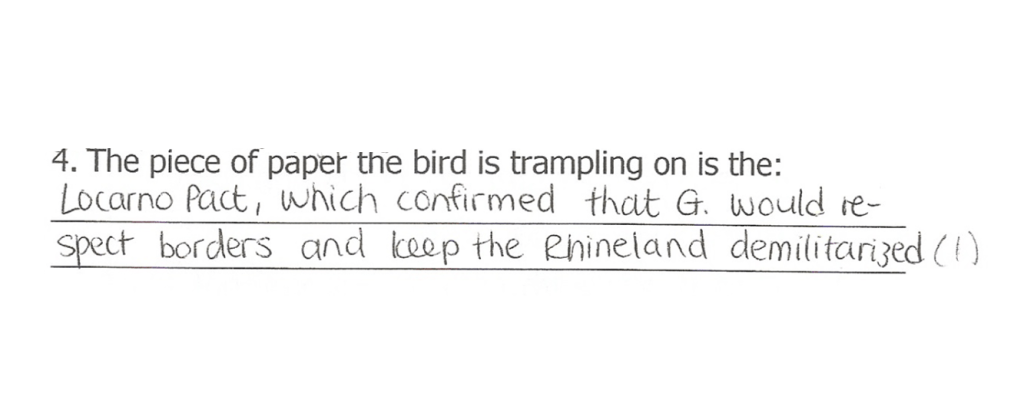
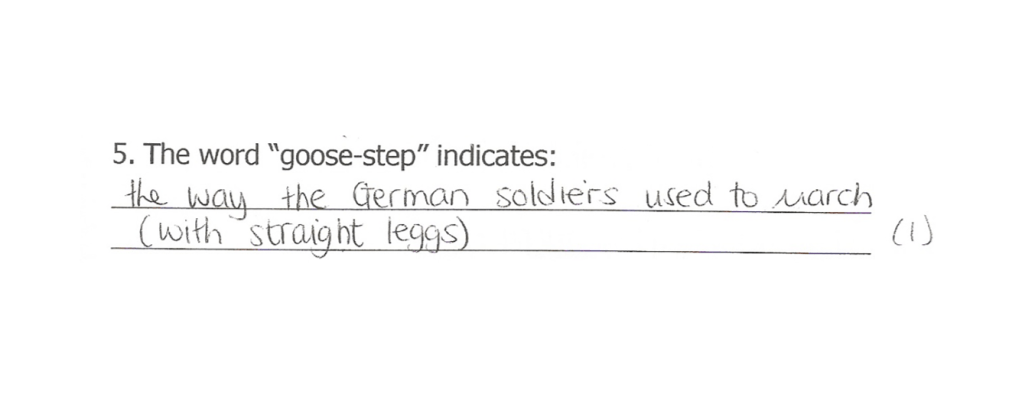
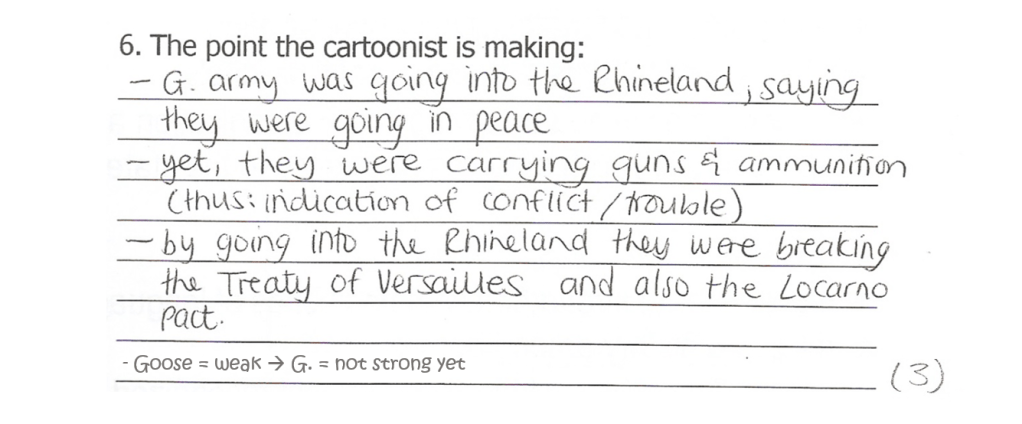
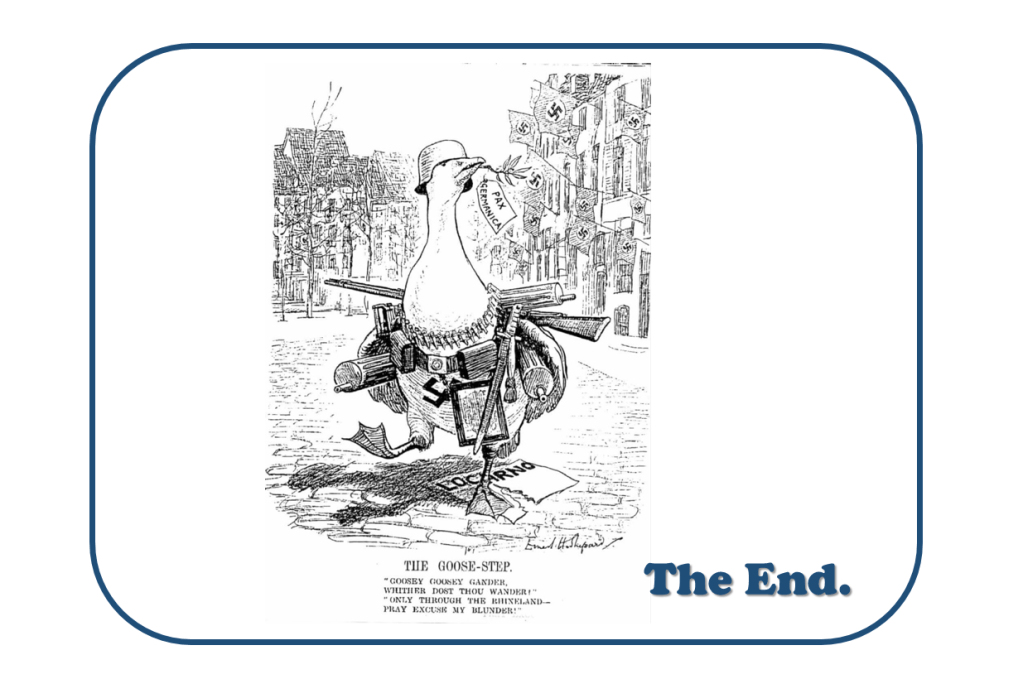
Examine the “Goose Step” Cartoon, on pages 12-13, and then complete the questions.

6.
Once completed, mark your answers on “The Goose Step” Cartoon.

7.

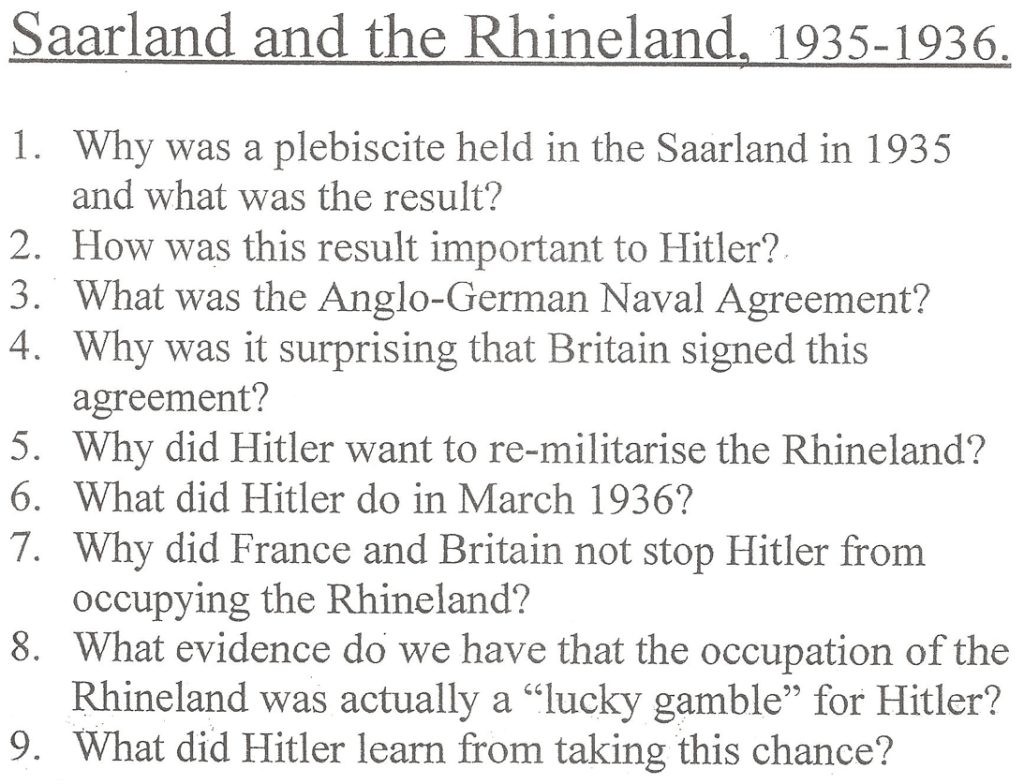
Answer the questions on:
“Saarland and the Rhineland, 1935-1936.”
(It is on page 69 of your Road to War booklet.)
8.
Road to War

Hitler’s Foreign Policy: Remilitarisation of the Rhineland 1936. (1:27 minutes long) [TEACHING]
Nazi Germany – Remilitarization – Life in Hitler’s Germany. (5:07 minutes long) [DRAMATIZATION]
The Occupation of the Rhineland 1936. (4:56 minutes long) [DOCUMENTARY]
(WordPress advertisements may appear below.)
Today you are going to continue with tasks on the revival of Germany.
Road to War
1.

Continue with the questions on page 2, started in the previous lesson (if still not completed).

2.

Is there any other task that you still need to complete? Make sure that your books are up to date…
3.
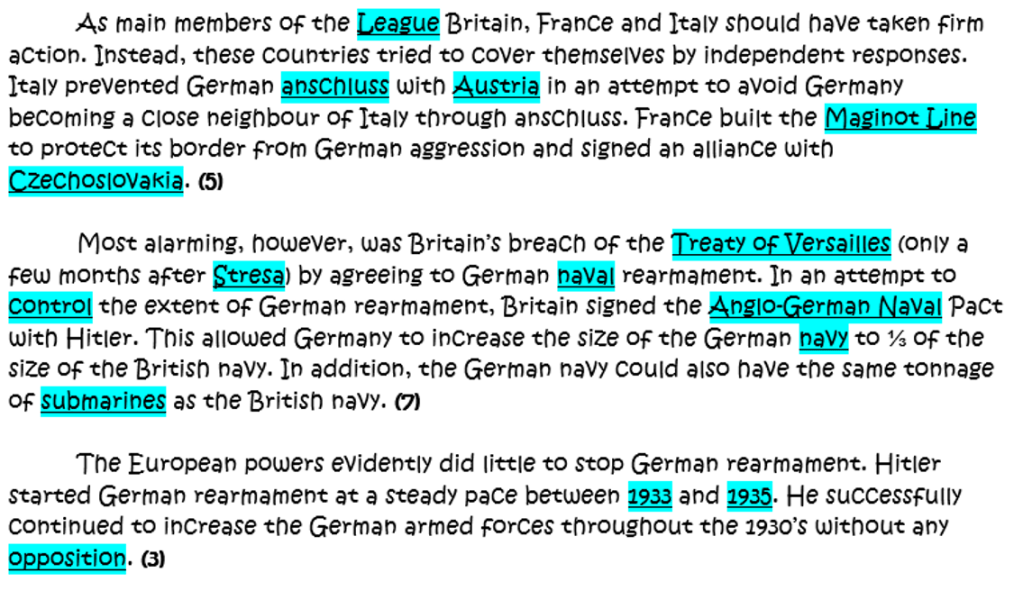
In the previous lesson you completed a fill-in task on German rearmament…


4.
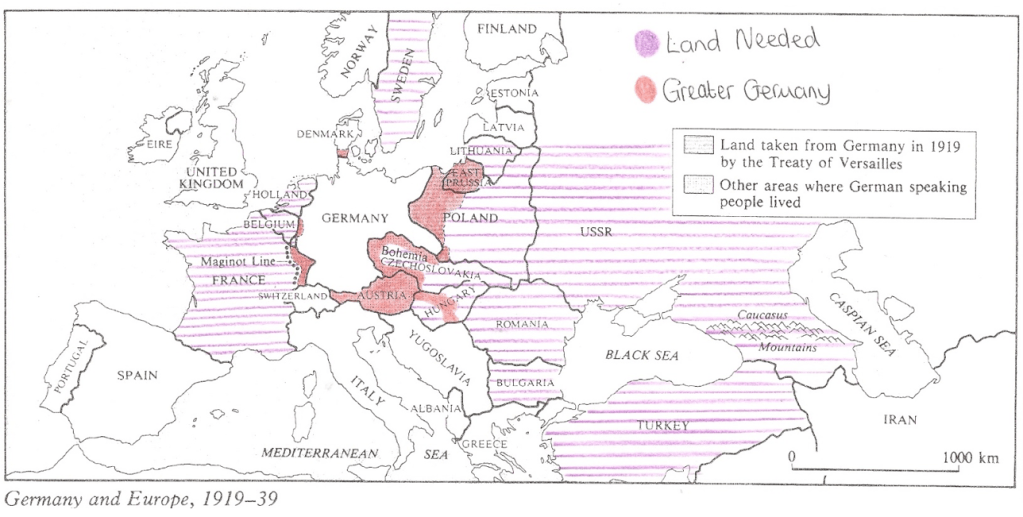
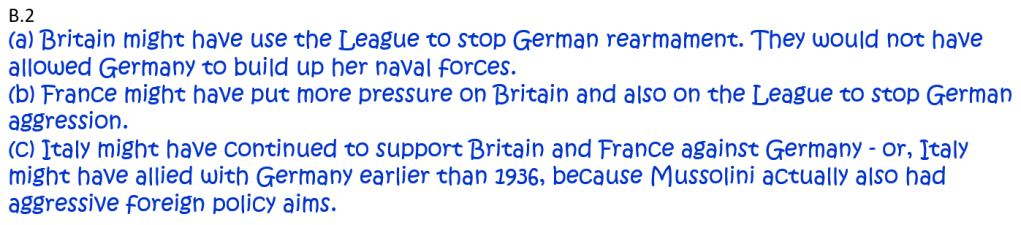
Once completed, mark your answers to the questions on page 2.






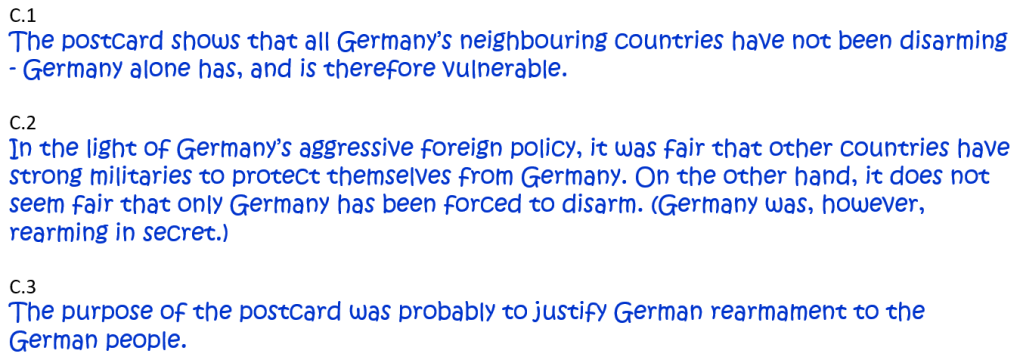
5.


MARK YOUR WORK WITH A PENCIL.
6.

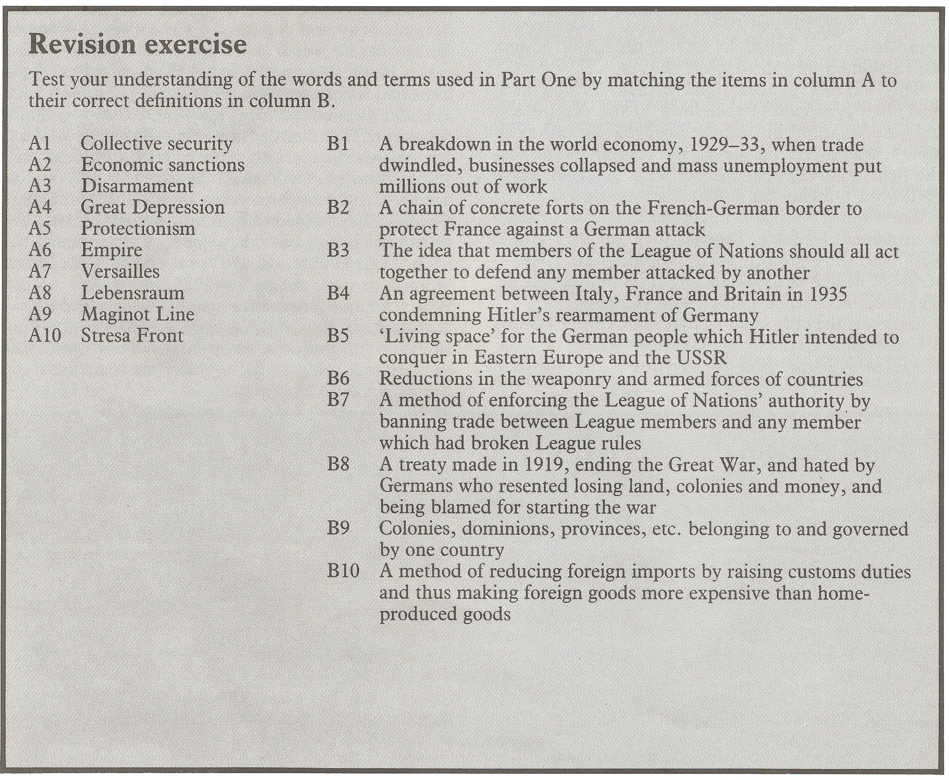
Complete the definitions on page 6.
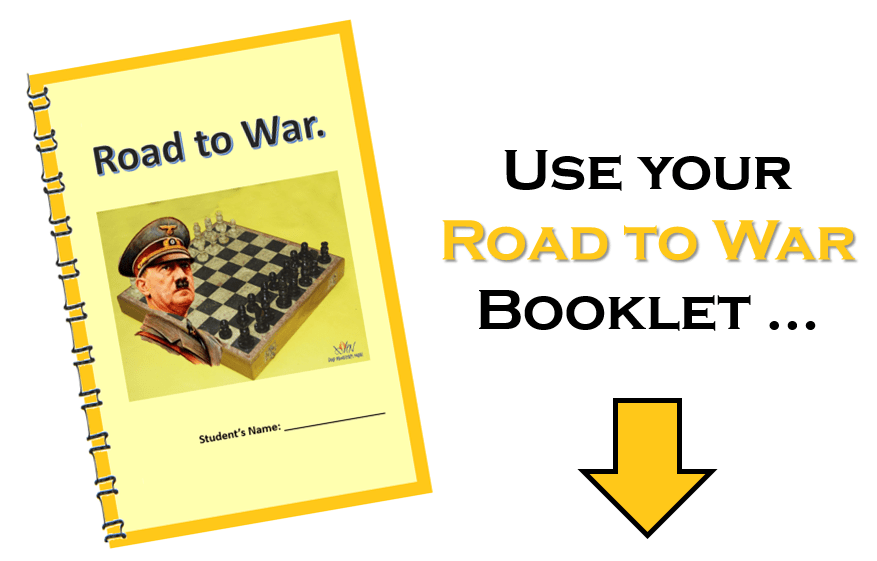

The Revision Exercise on page 5 will be useful… You will find the definitions on this page in your booklet!

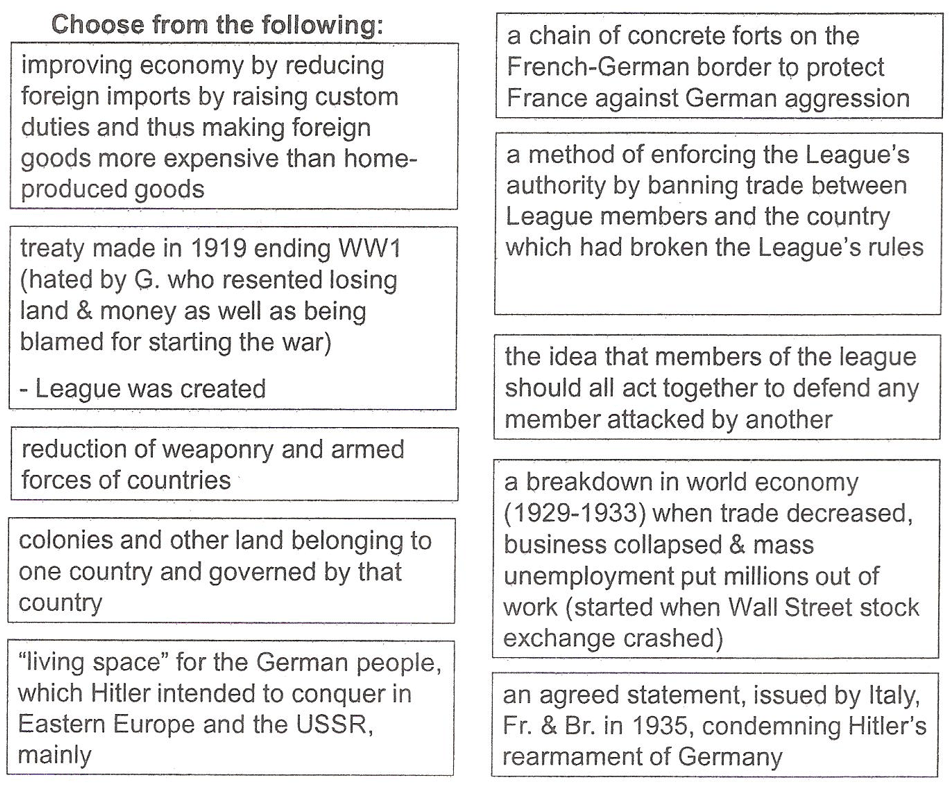
Use the cut-and-paste sheet (provided) to match the terminology and definitions.
7.

8.
Answer the questions on:
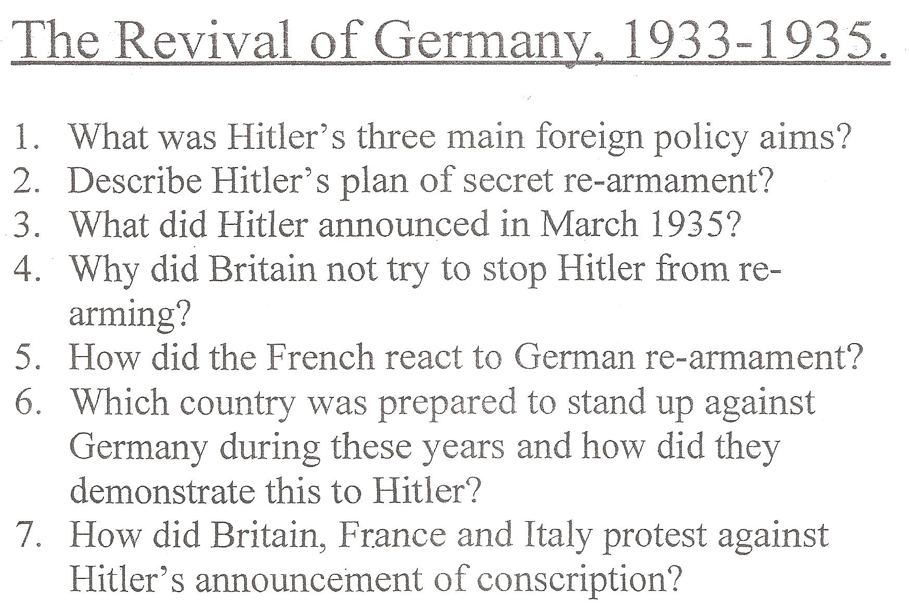
“The Revival of Germany, 1933-1935.”
(It is on page 69 of your Road to War booklet.)
(WordPress advertisements may appear below.)
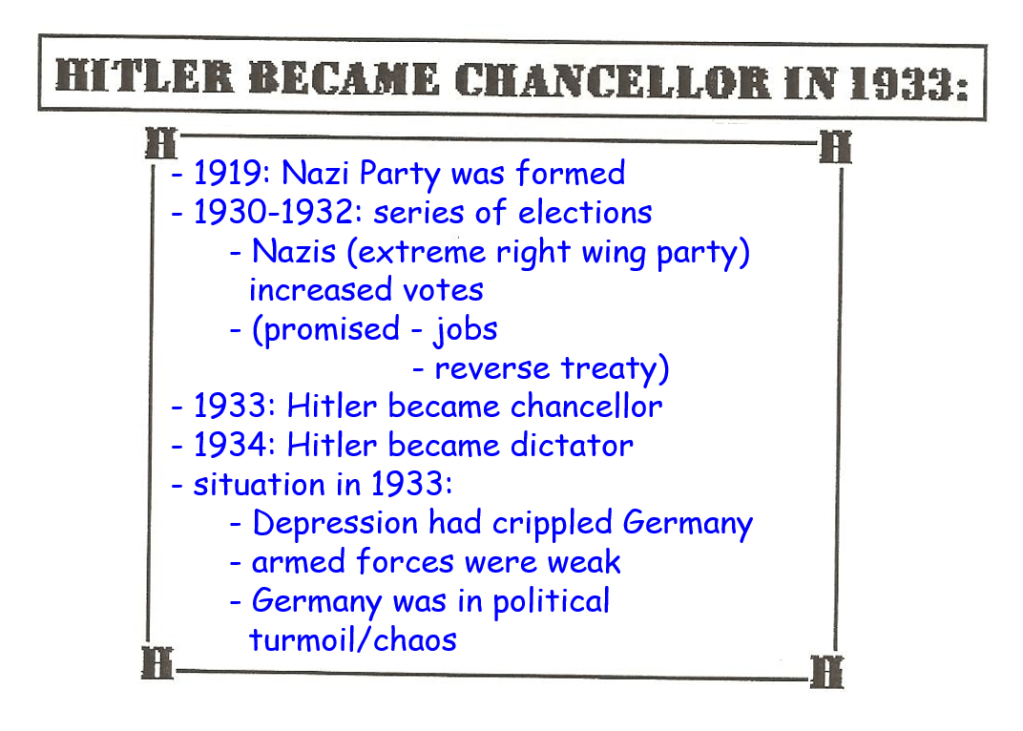
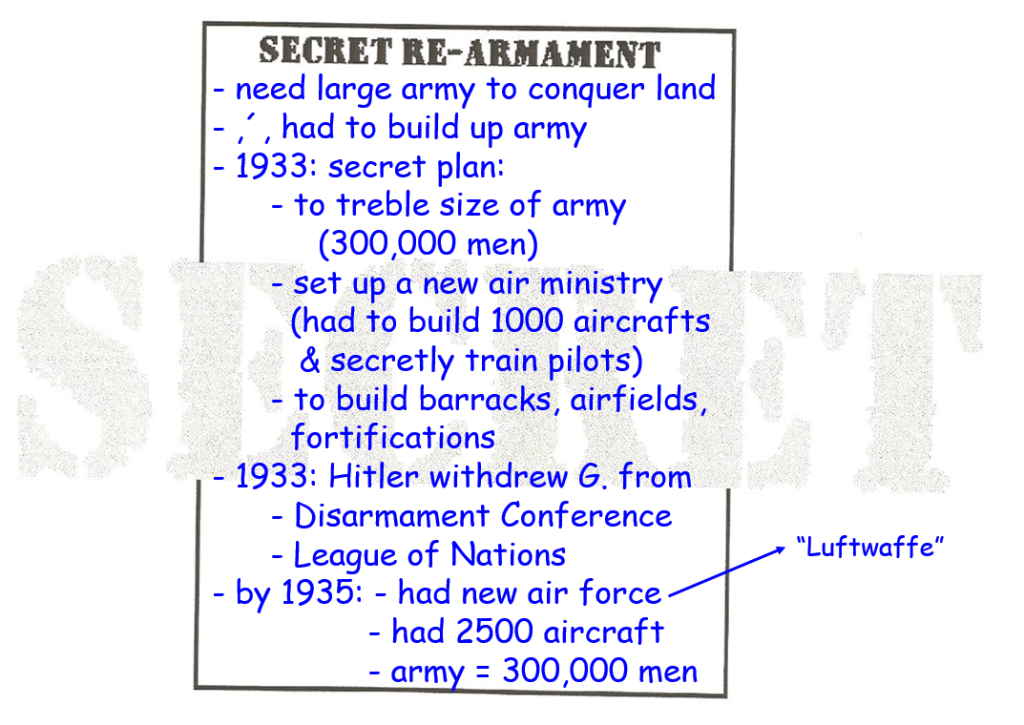
Today you are going to examine German rearmament under Nazi rule.
Road to War
1.
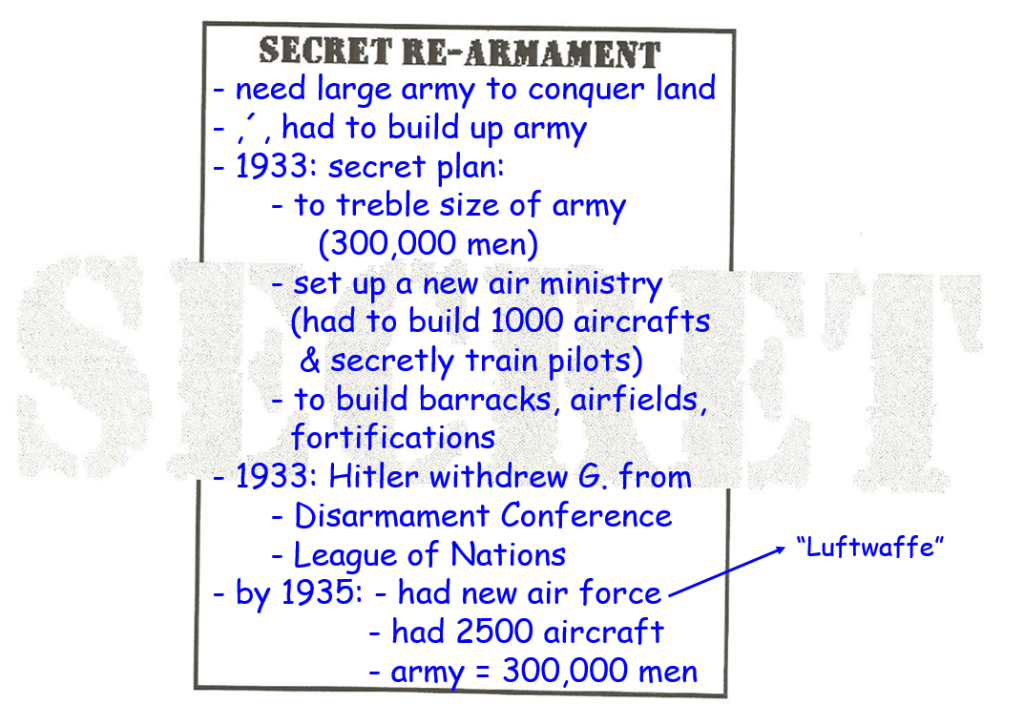
This first video explains how Hitler secretly started to rearm Germany as soon as he came to power…
Revival of Germany. (2:26 minutes long)
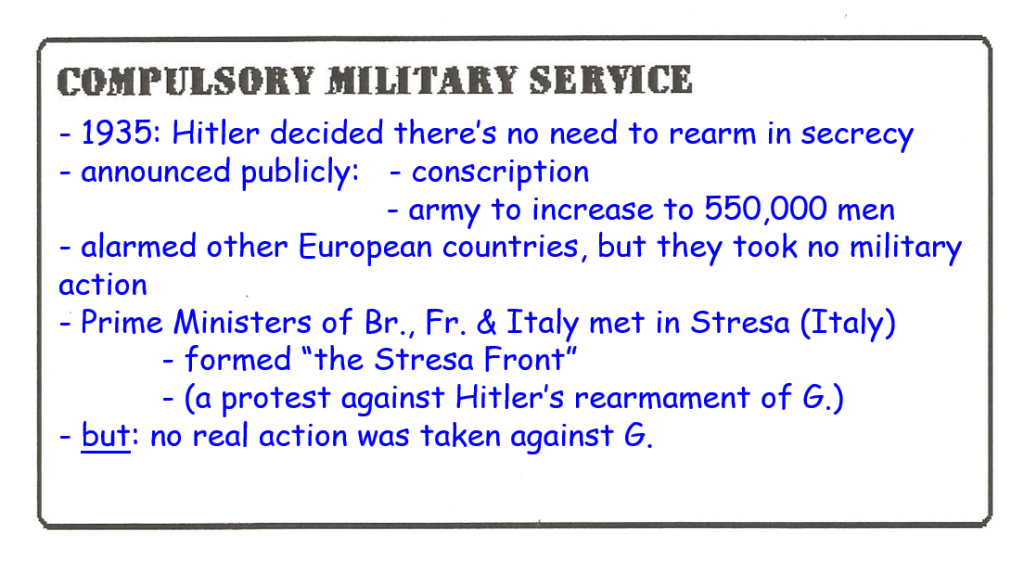
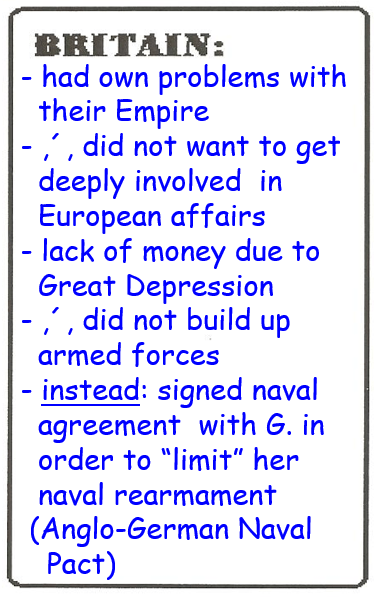
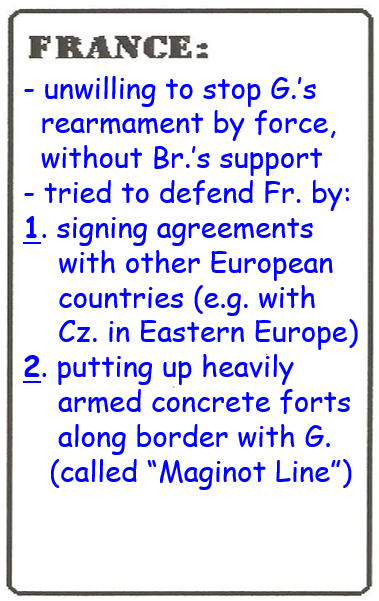
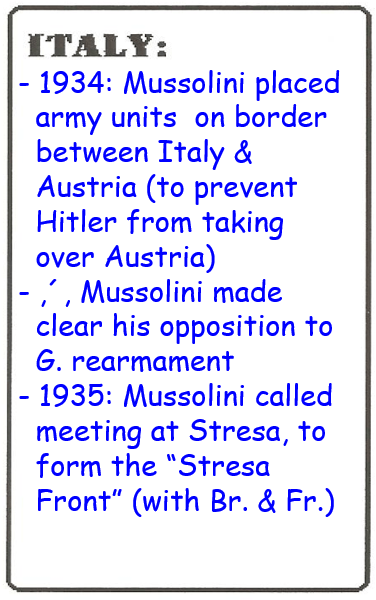
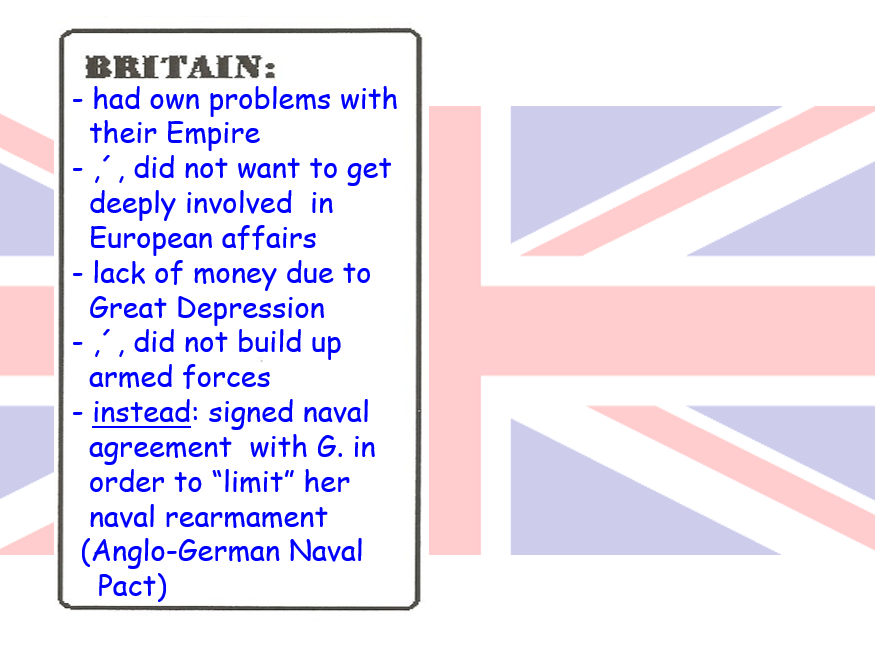
By 1935 Hitler felt it was no longer necessary to keep German rearmament a secret. The video below explains how Hitler proceeded to increase German armaments even further… It also discusses the reaction of European powers to German rearmament.
Rearmament & Reaction. (2:39 minutes long)
2.
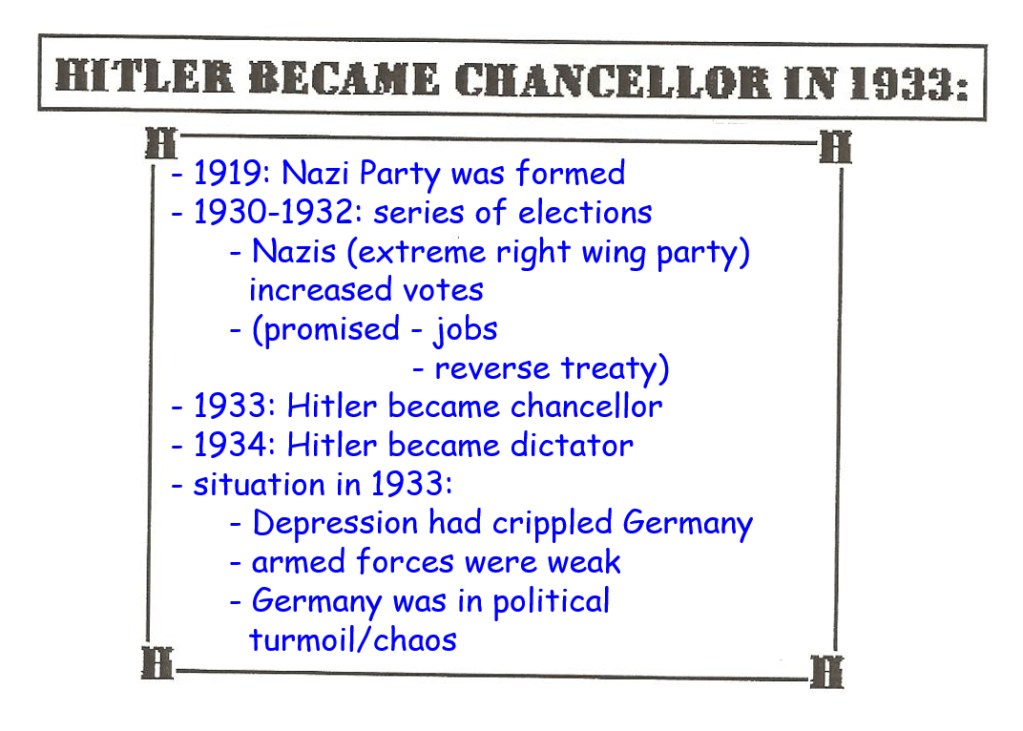
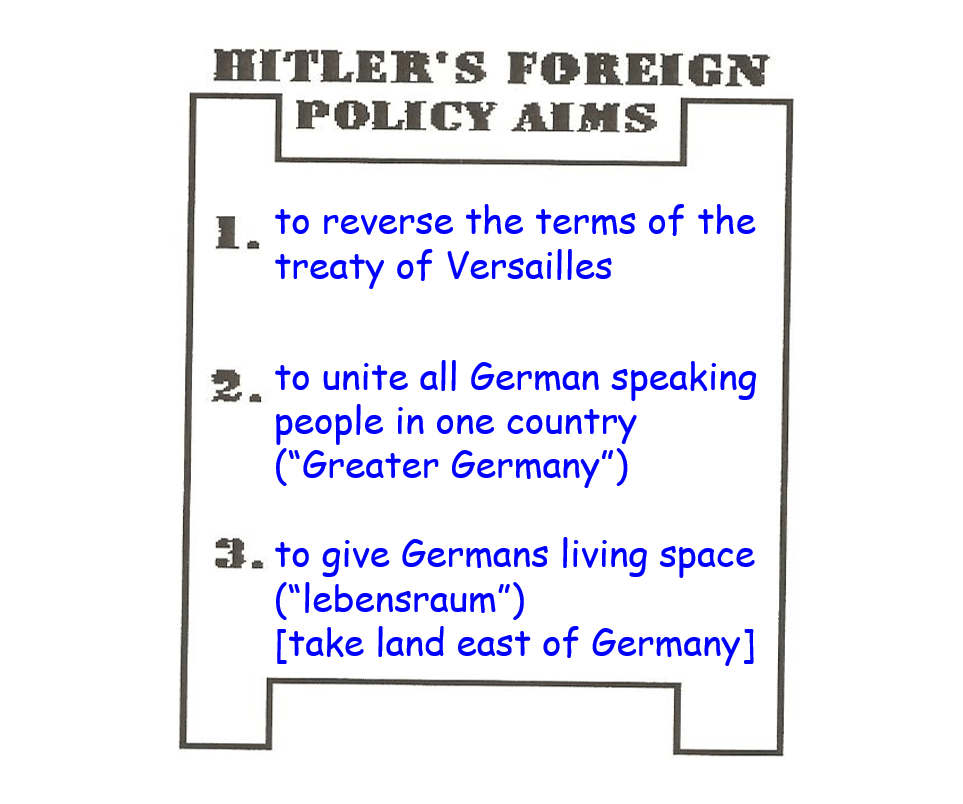
To recap information from the previous lesson, again read the information about the revival of Germany.
“The Revival of Germany, 1933-1935”, p.8-9.
3.
4.
Use p.3-4 in your Road to War booklet…

5.

Fill in the missing information in the essay (provided) on German Rearmament.
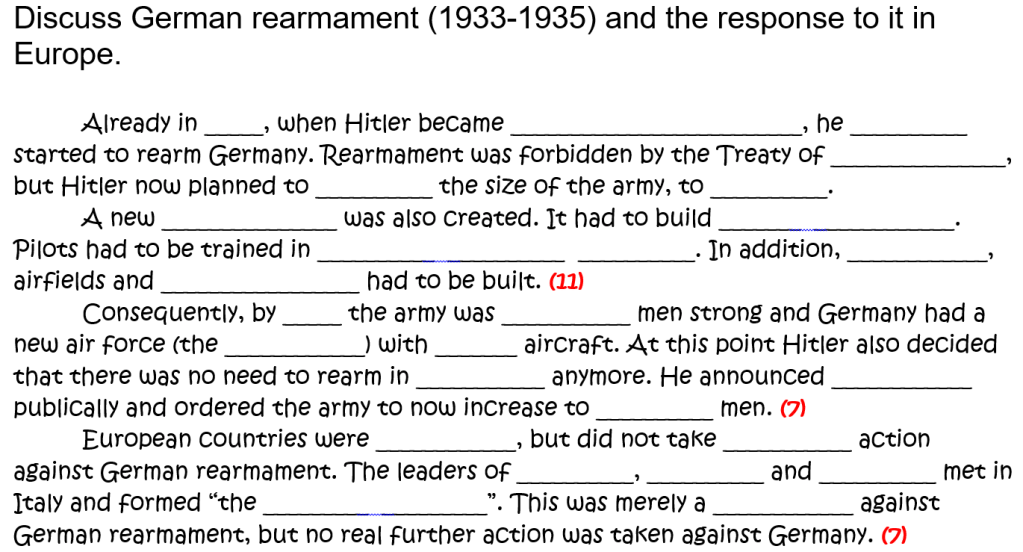
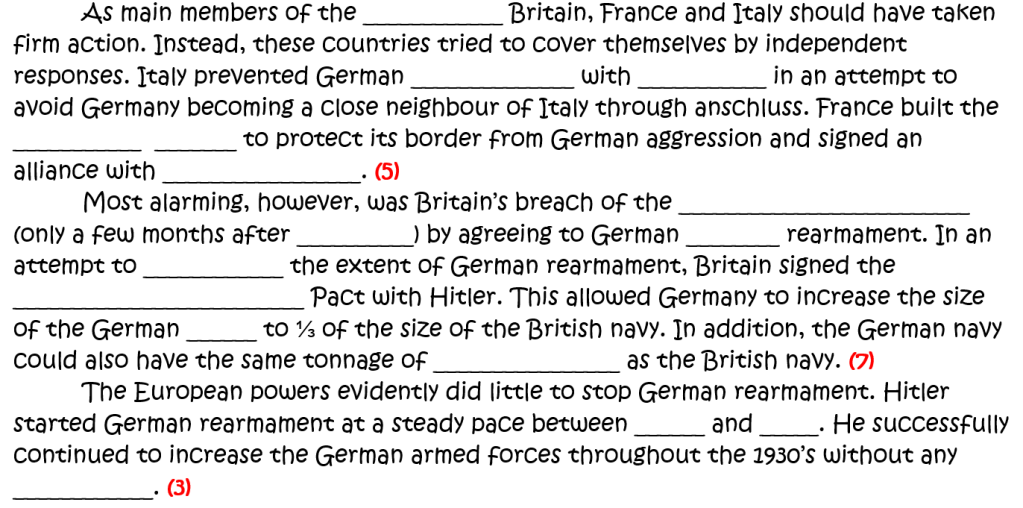
SOLUTION
6.
If there is still time, continue with the questions on page 2, started in the previous lesson (if not completed yet).
7.

1: GCSE History – Hitler & Versailles. (9:51 minutes long)
Hitler’s Foreign Policy Aims. (6:08 minutes long)
(WordPress advertisements may appear below.)
Today you we are going to start with a new topic:
The Road to War…
1.
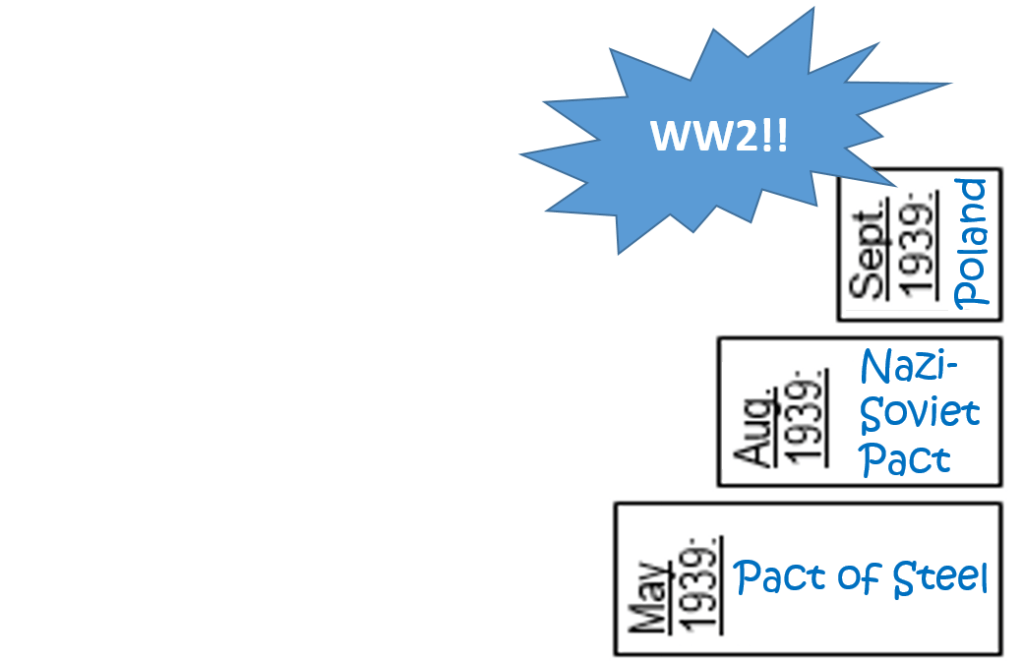
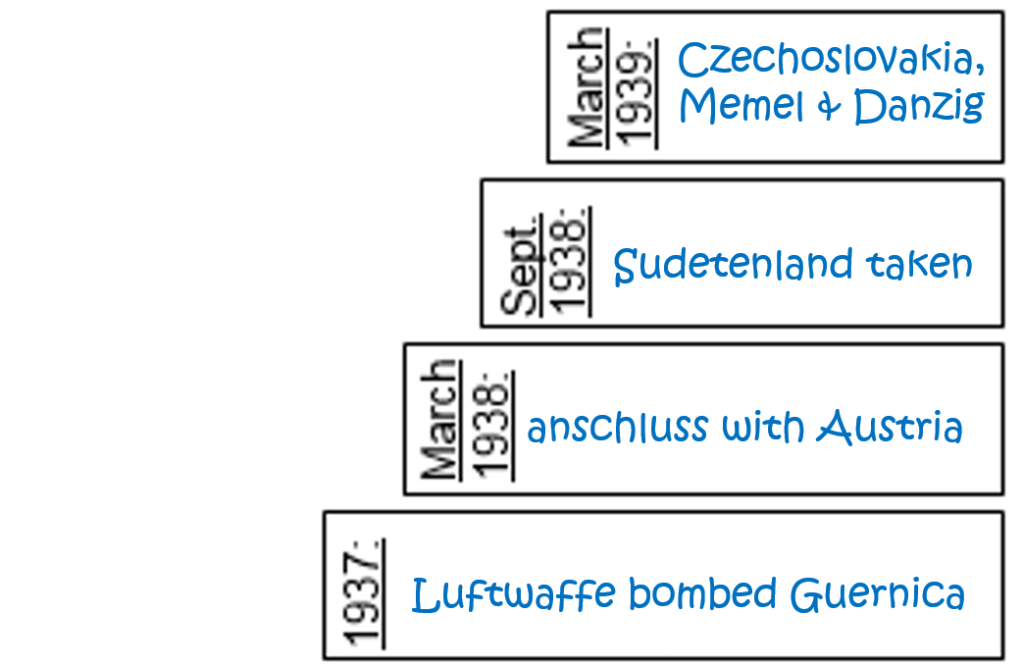
It gives a brief overview of the steps to WW2…
The video. (2:39 minutes long)
2.
(Remember, this is merely a brief overview… Ultimately, you need to know all the events in detail!)
3.
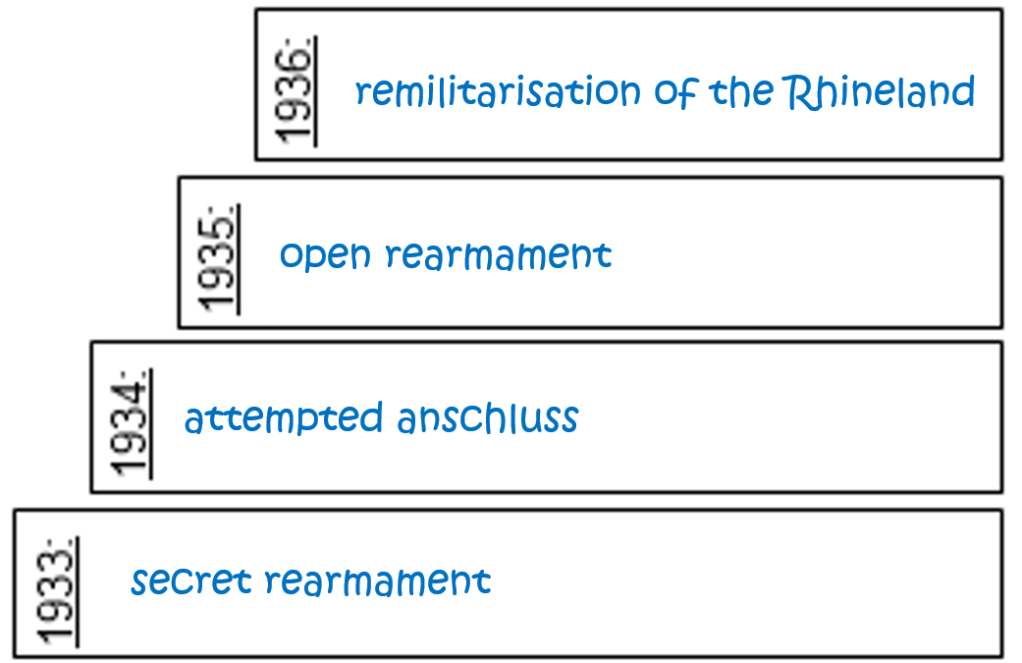
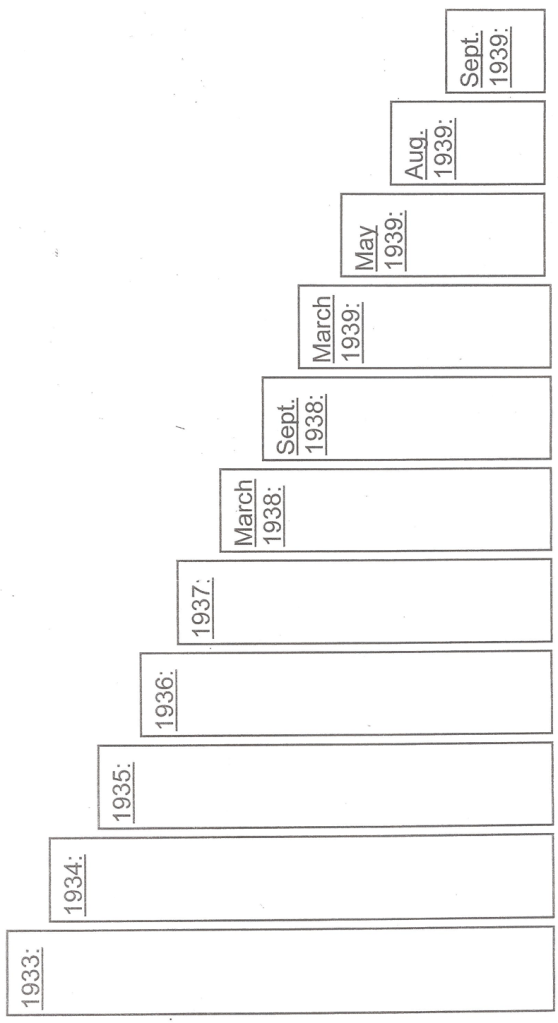
Complete the steps diagram (provided):
4.
Now, let’s see what you already know. Can you match the terms with their explanations…

Terminology and Places relevant to this topic…
Complete the Terminology table by cutting and pasting the relevant information in the corresponding places on the table.
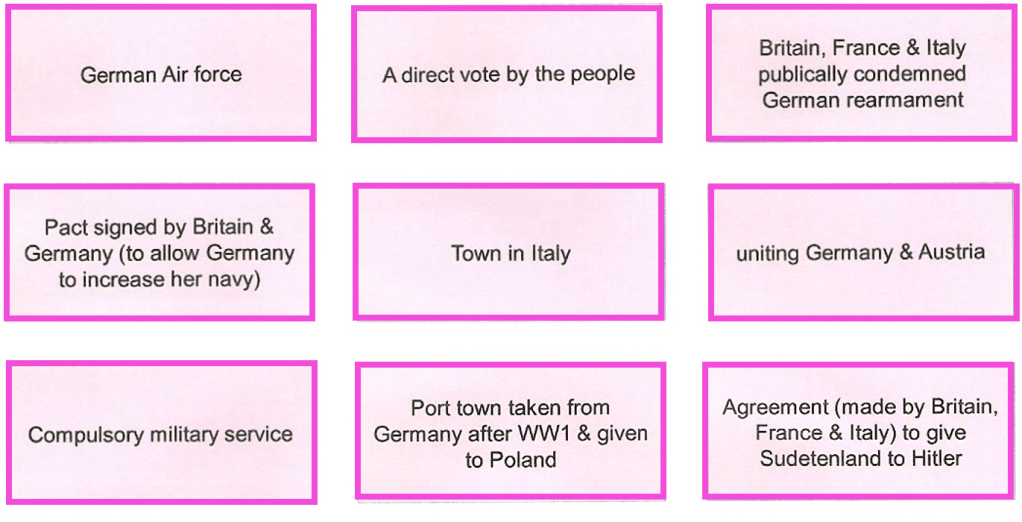
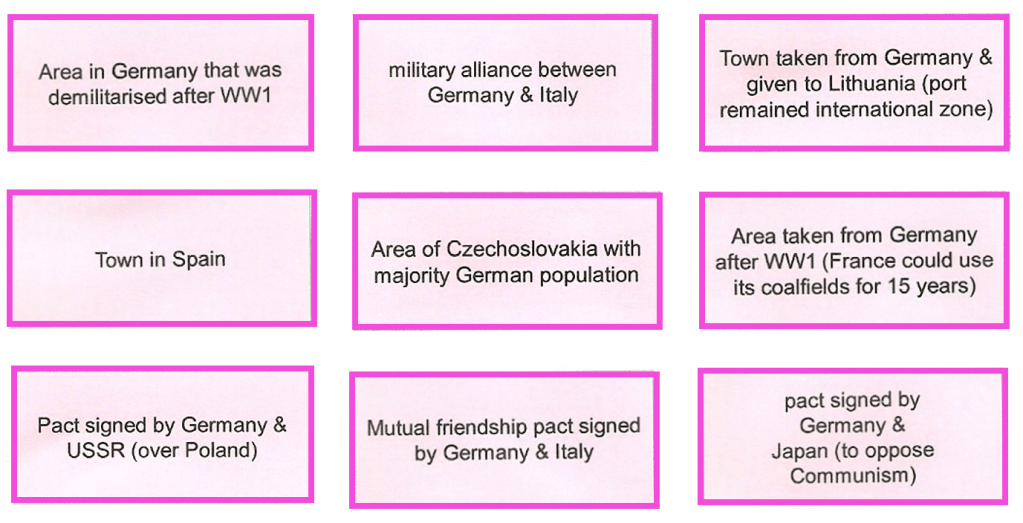
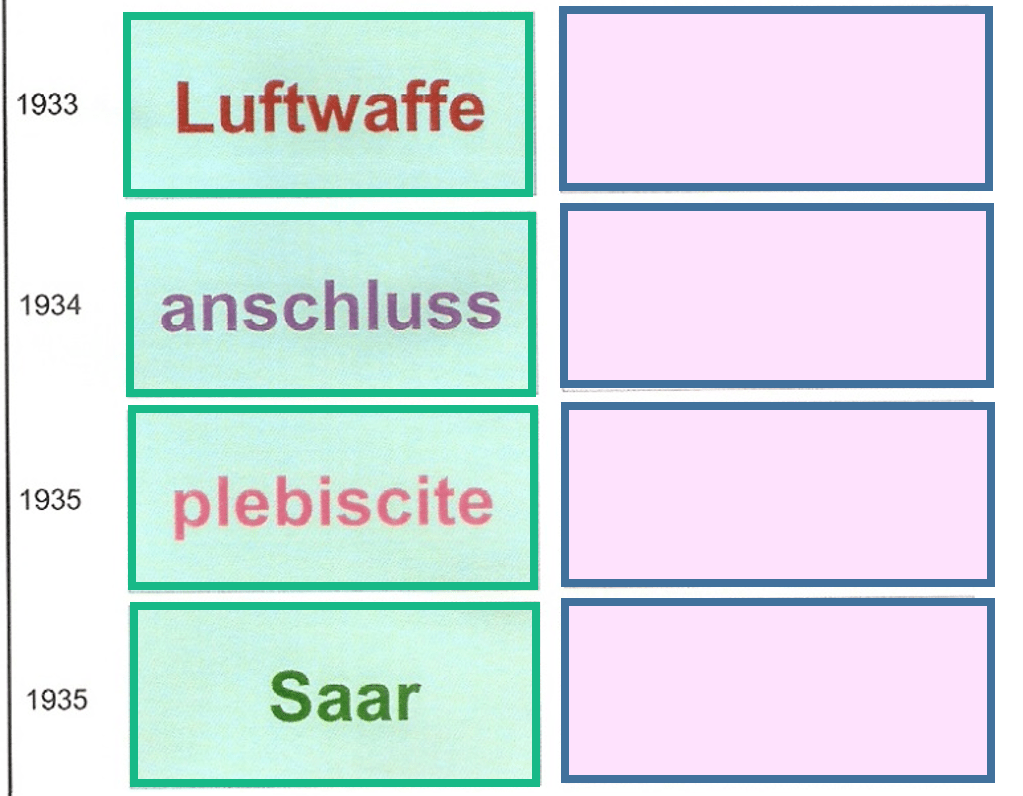
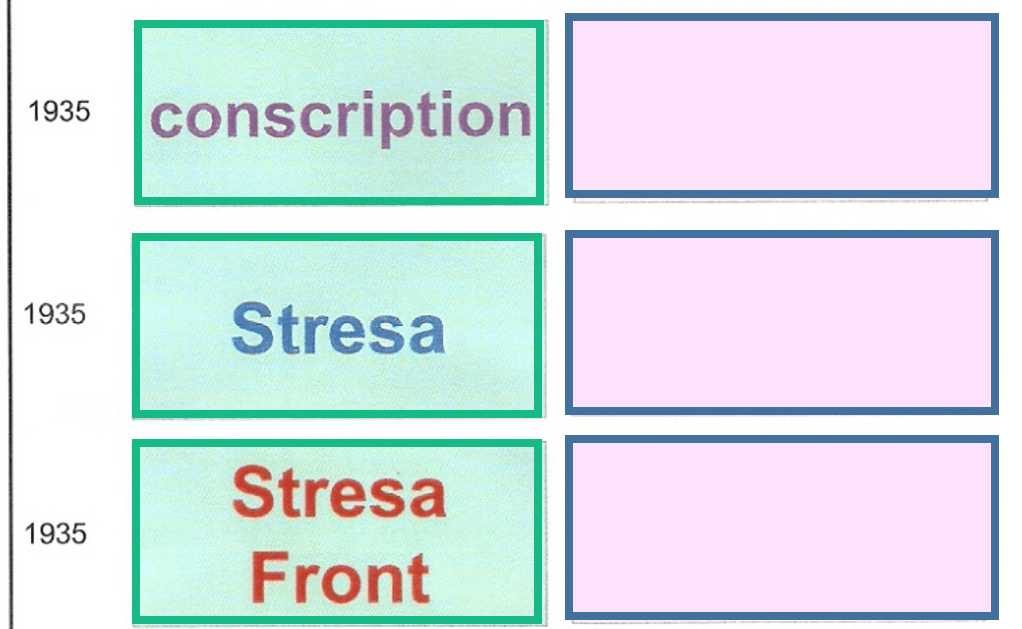
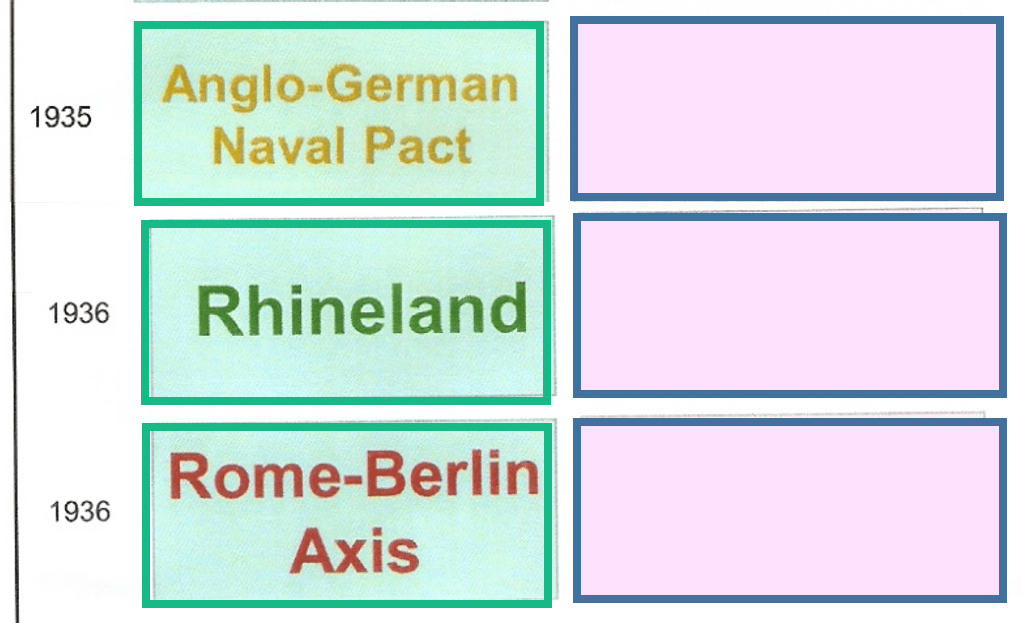
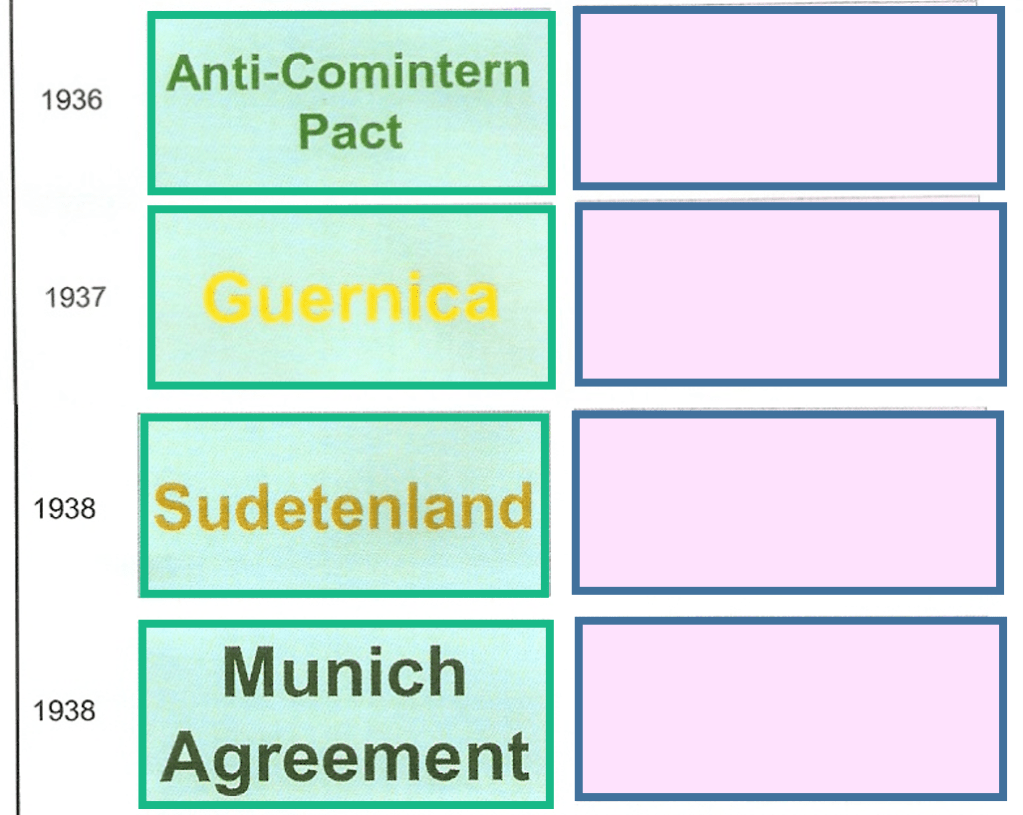
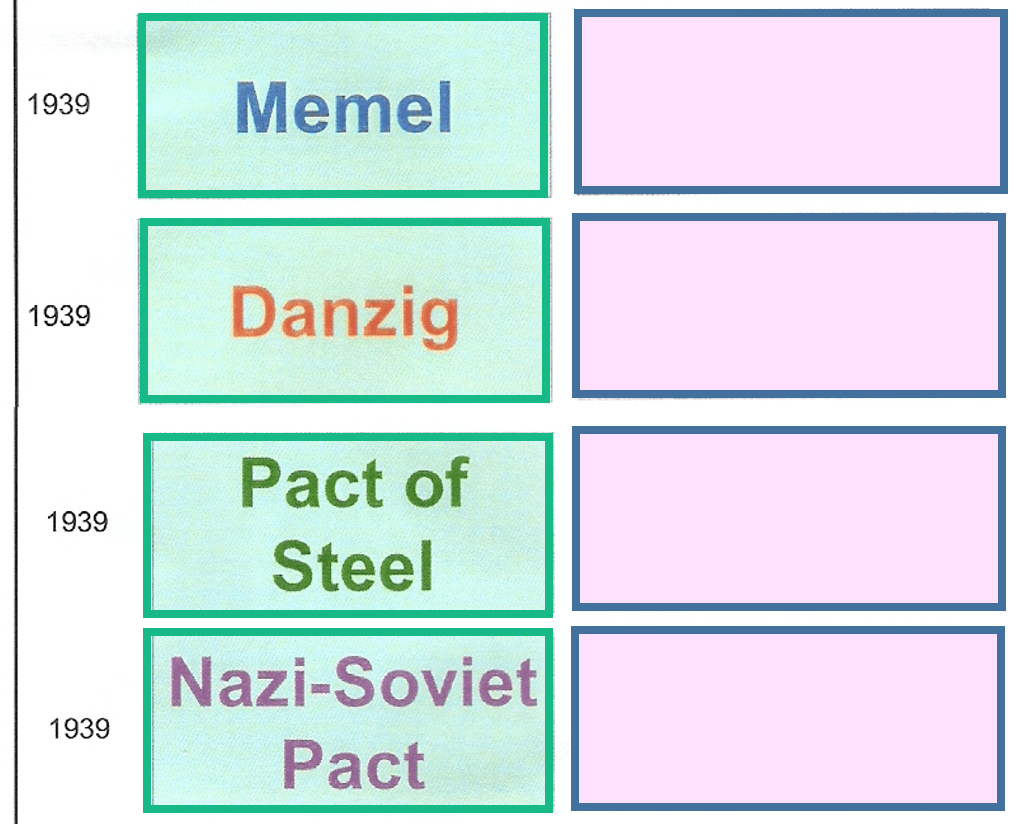
OR: complete the task online
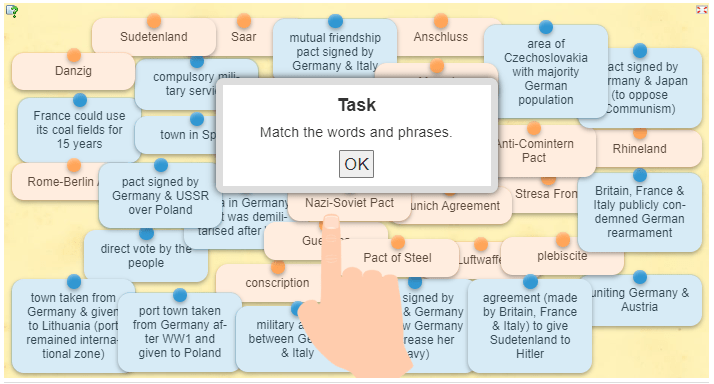
First see what you know by completing the matching task below.
(Click on OK to start.)
Then, click on the button below, to test yourself again:
5.


& mark your work with a pencil:
Road to War – Terminology & Places. (2:07 minutes long)
6.

The video below discusses Hitler’s foreign policy aims. His aims played a significant role in the events that led to the outbreak of World War Two in September 1939. (There is no presenter in this video – you need to read the information as the video plays…)
NAZI FOREIGN POLICY: Hitler’s foreign policy goals 1933. (4:55 minutes long)
7.
Read pages 1-2, “The Revival of Germany, 1933-35”.
8.

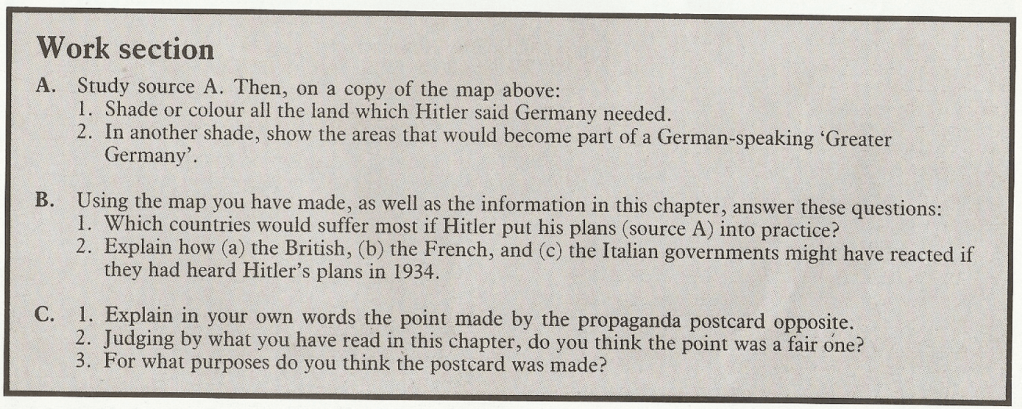
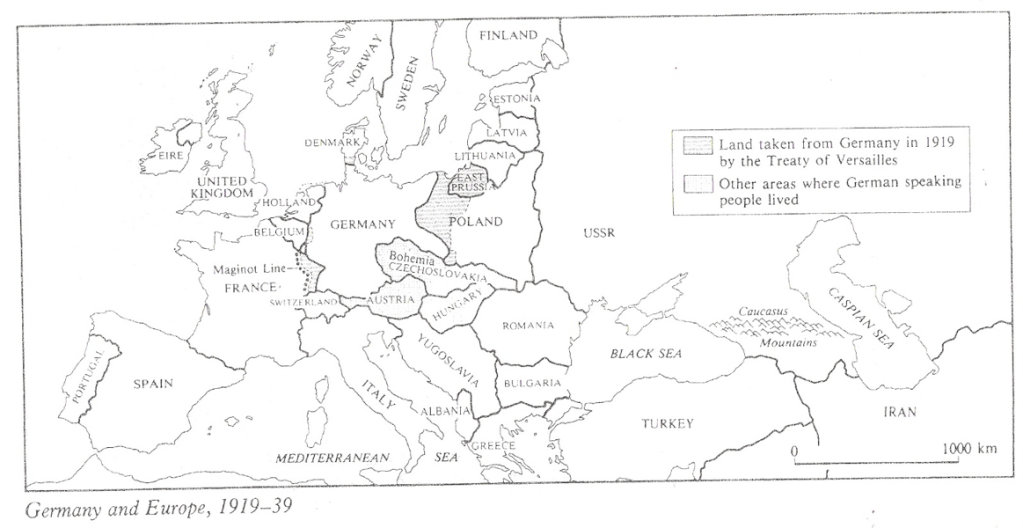
Complete the “Work section” on page 9 of your textbook.
Stick the map (provided) into your book and then follow the instructions on page 2.
(WordPress advertisements may appear below.)
Today you are going to mark some tasks about the League and its work in the 1930’s!
League of Nations
1.
Mark the following tasks:

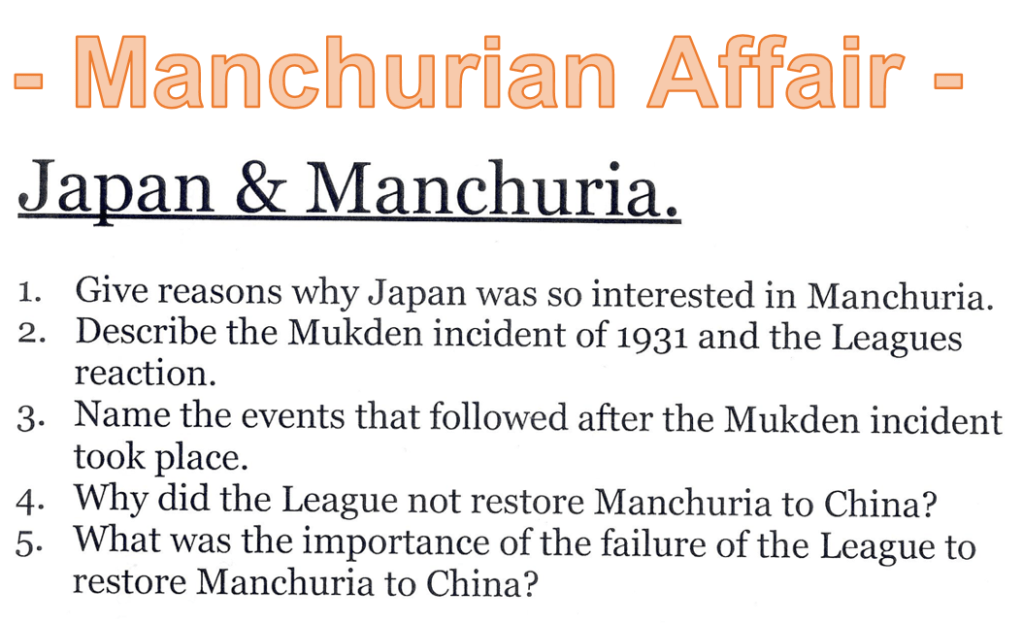
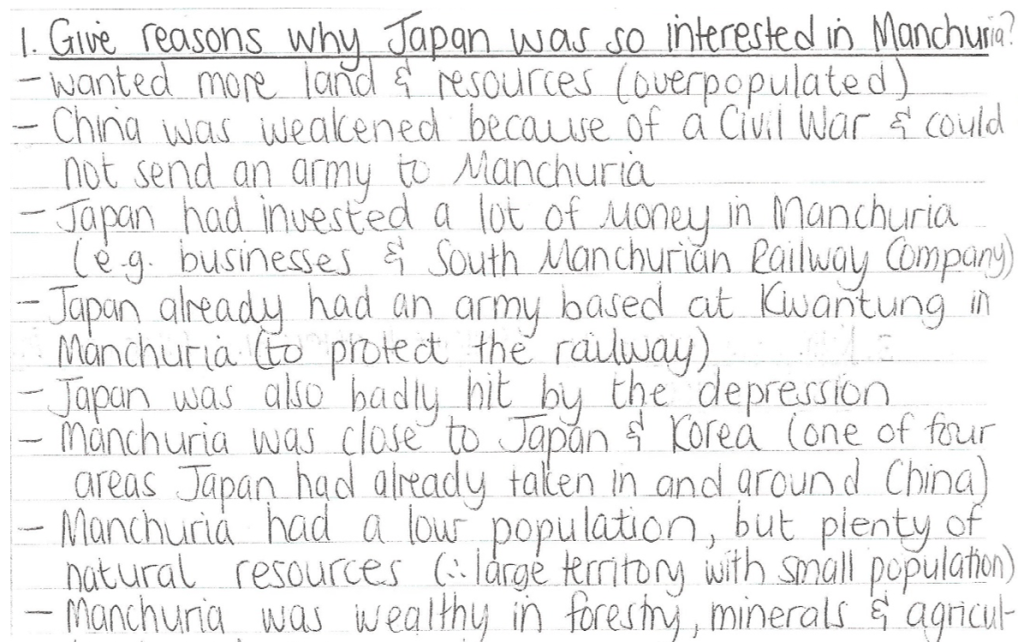
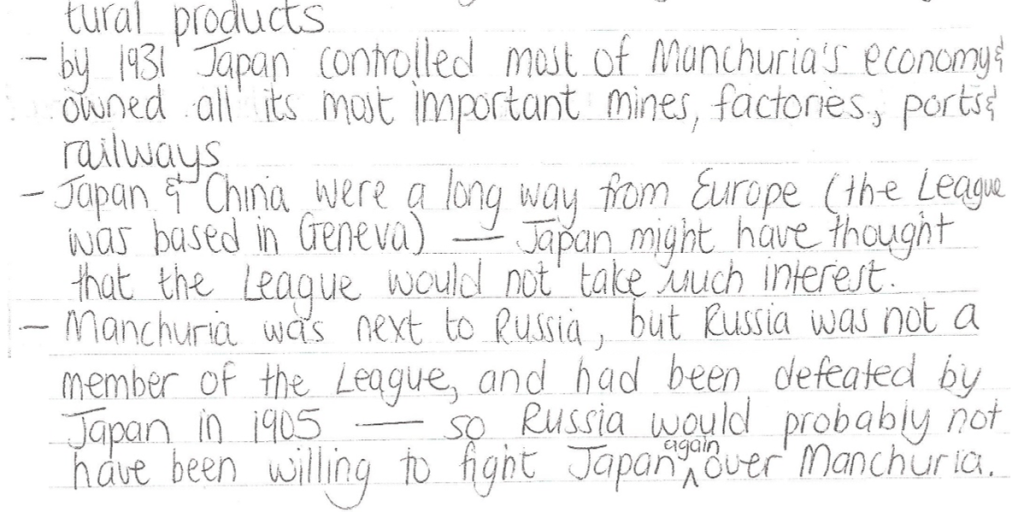
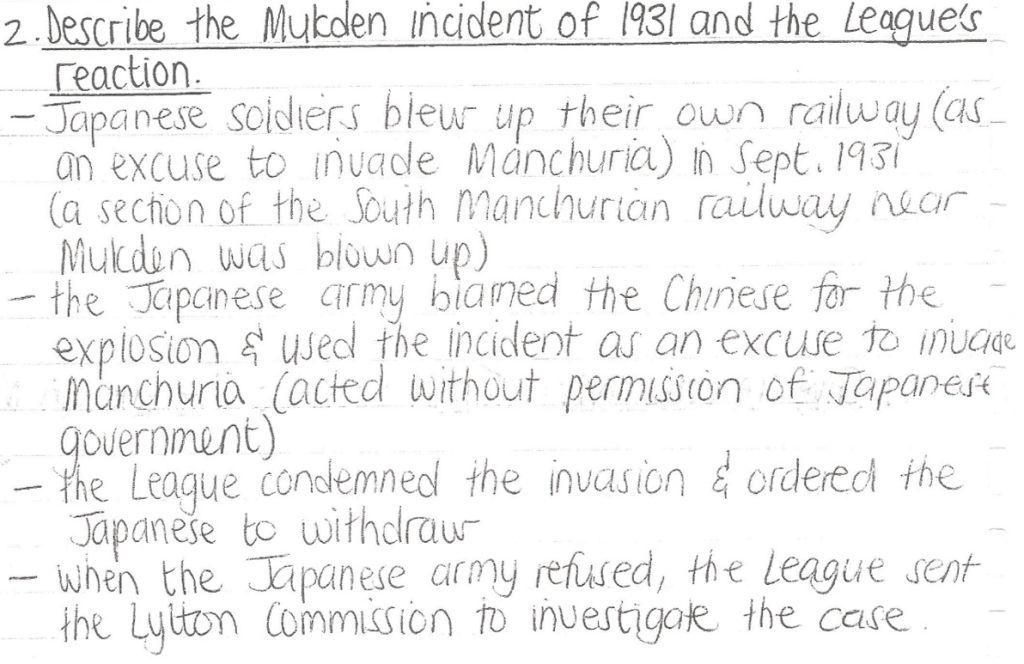
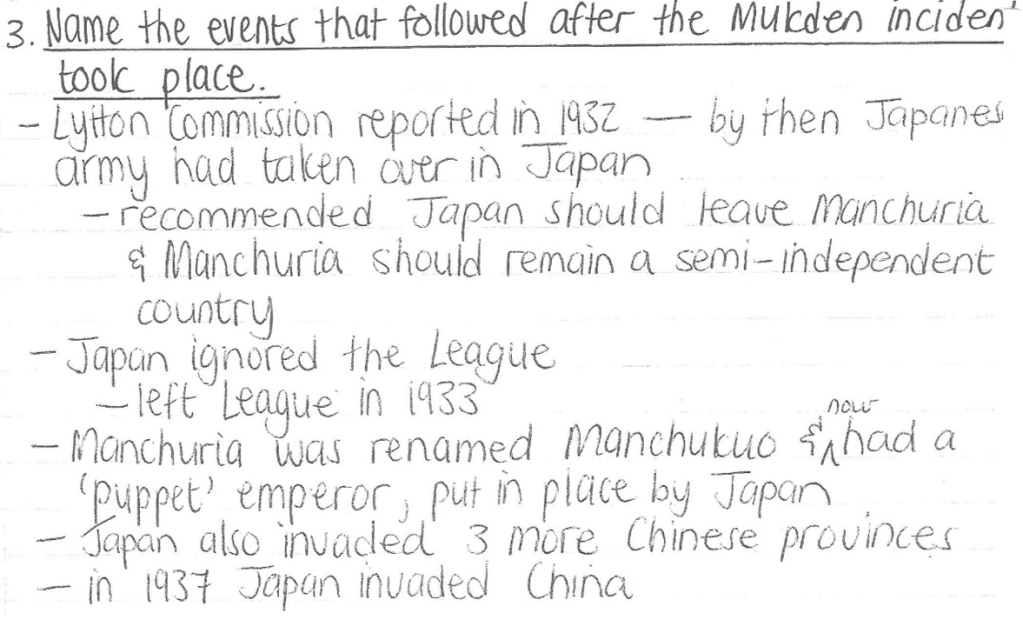

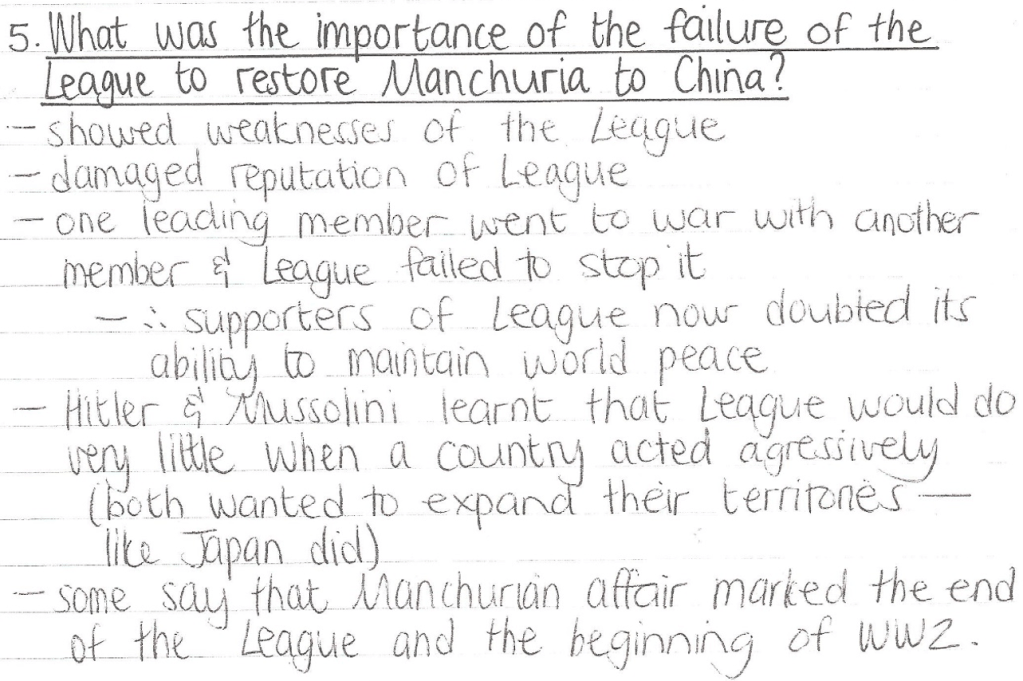
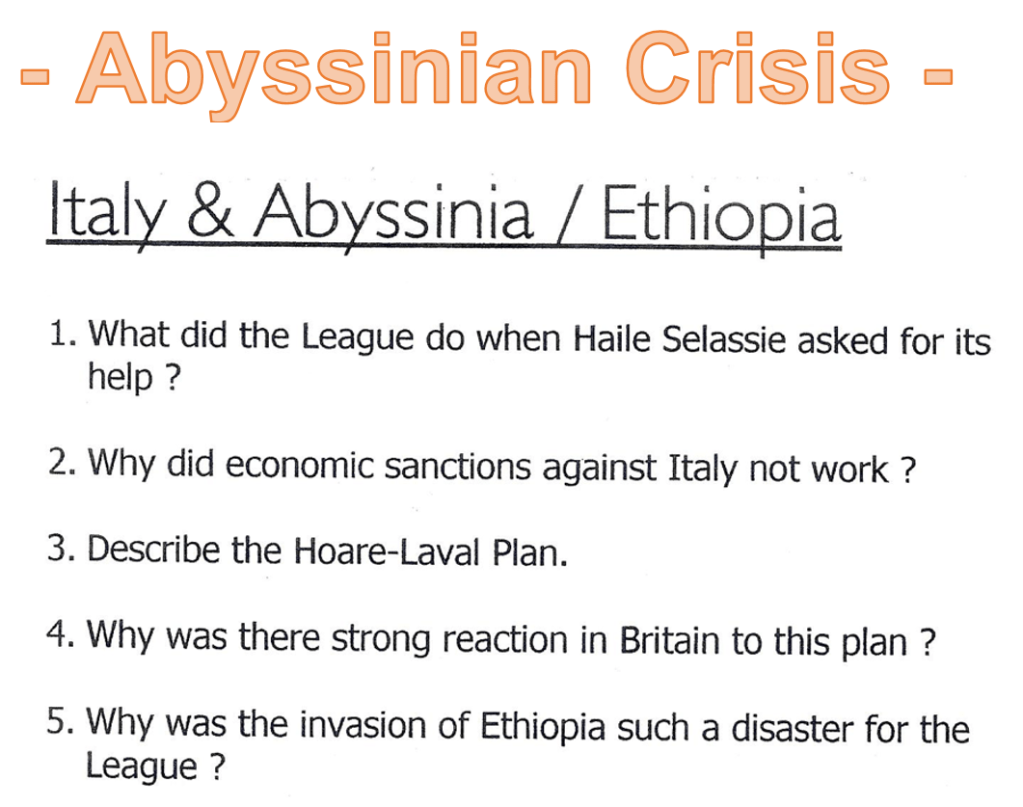
2.
MARK YOUR WORK WITH A PENCIL.
3.

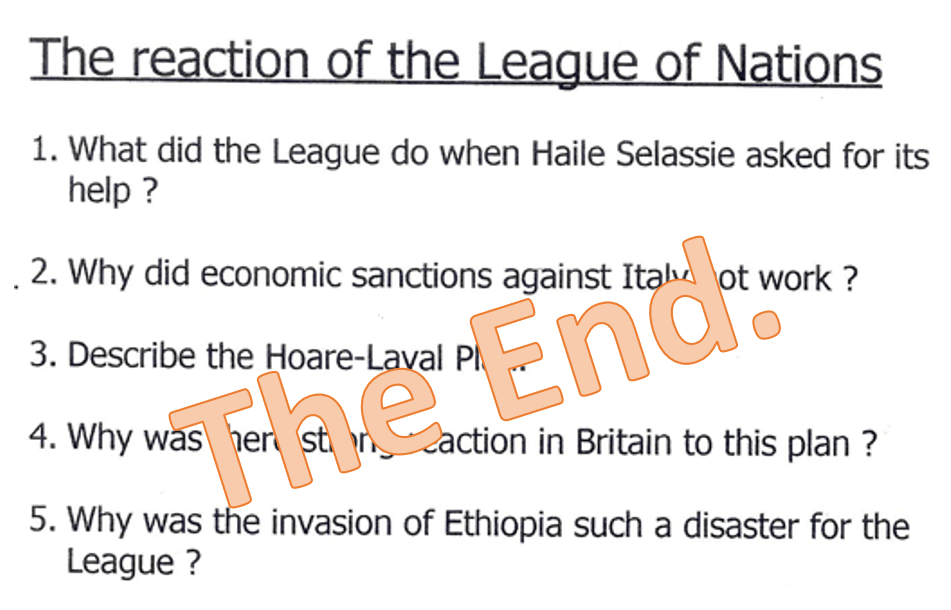
Below are typical 10-mark exam questions on The League of Nations. Will you be able to answer these questions?
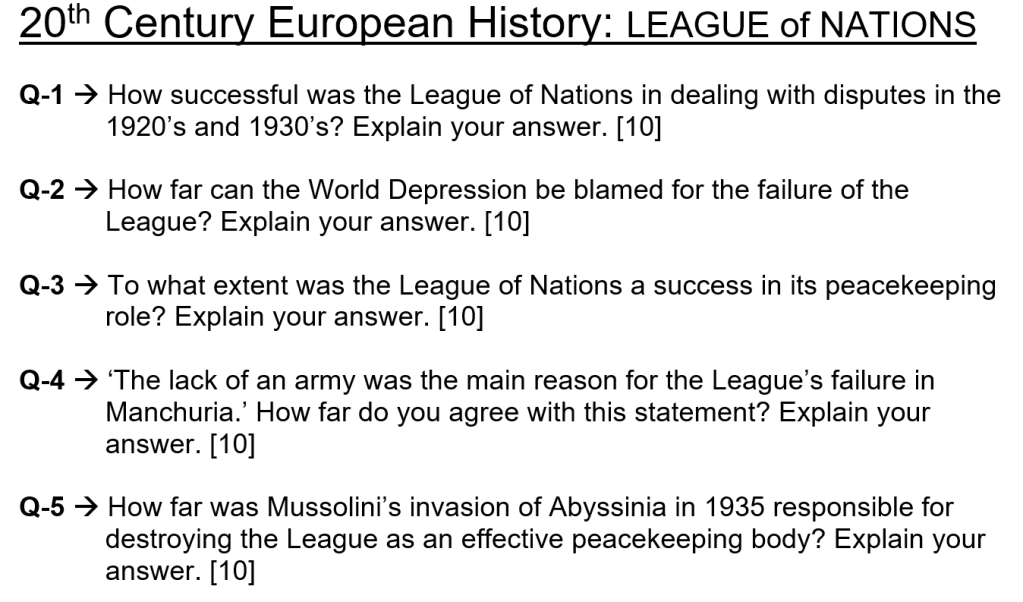
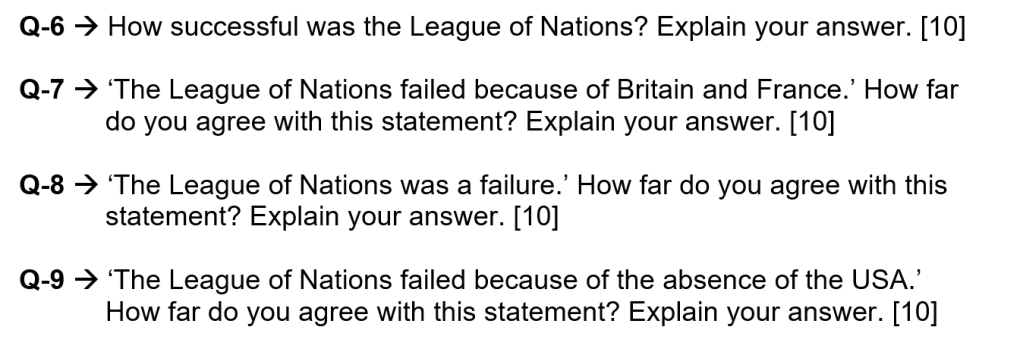

Page 38 in your League of Nations booklet gives some guidelines as to how to answer a question about the “How successful” the League was. (This page deals with the 1920’s, but one could also apply the same approach to the League’s successes and failures in the 1930’s.)
4.
Below are typical 6-mark exam questions on The League of Nations. Will you be able to answer these questions?
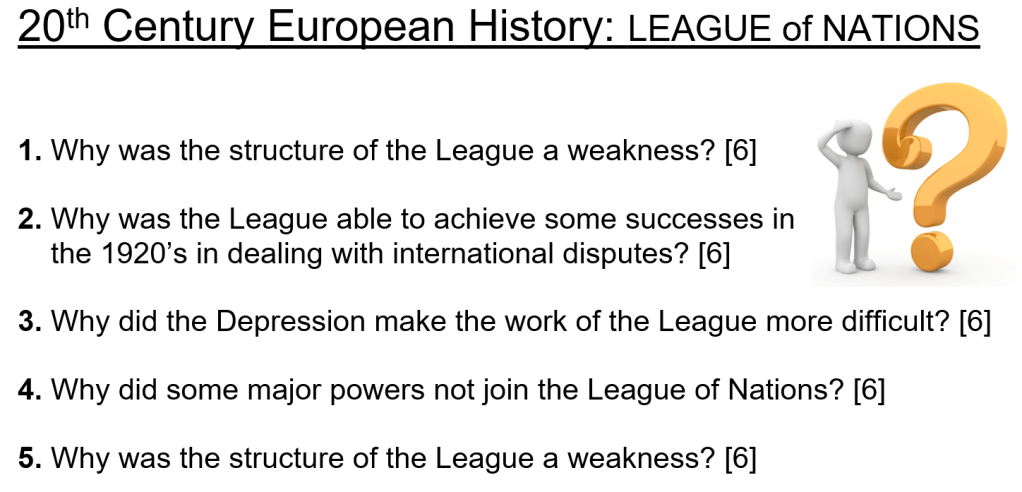
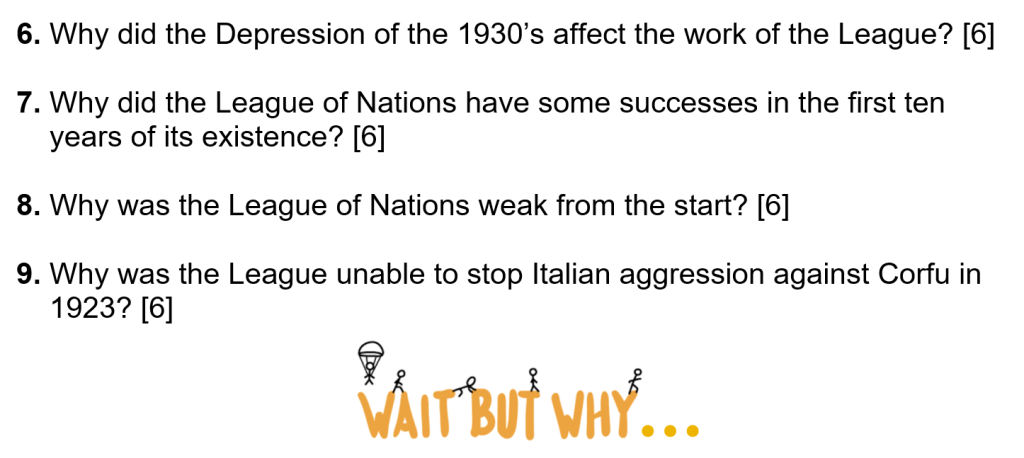
Pages 63-65 in your League of Nations booklet give some guidelines as to how to answer a question about “WHY” the League was a failure. (Remember that why-questions require clear reasons that are well explained!)
5.
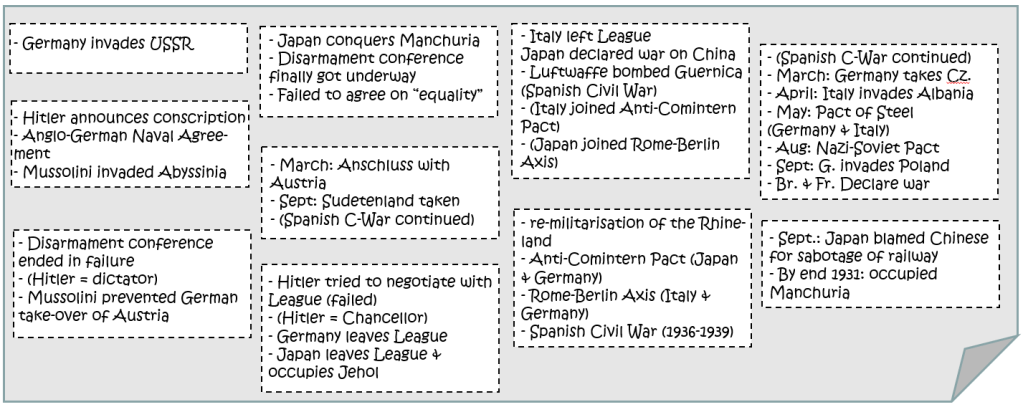
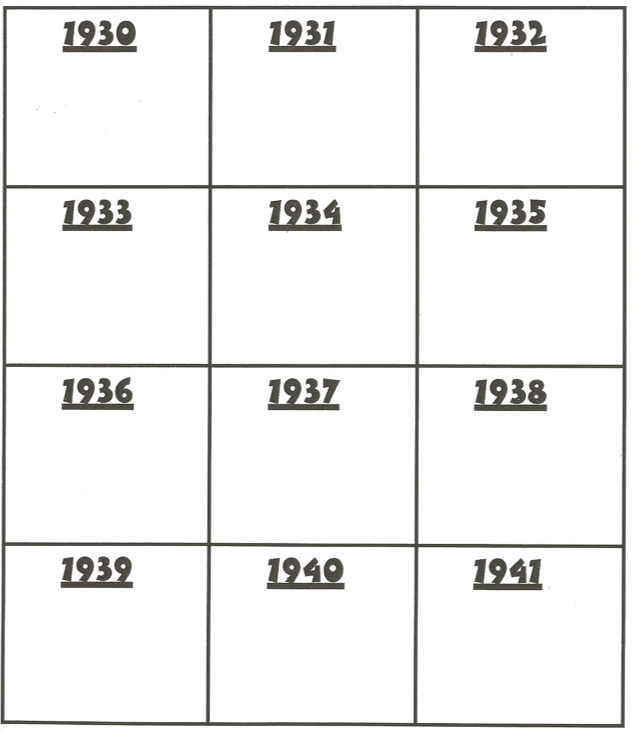
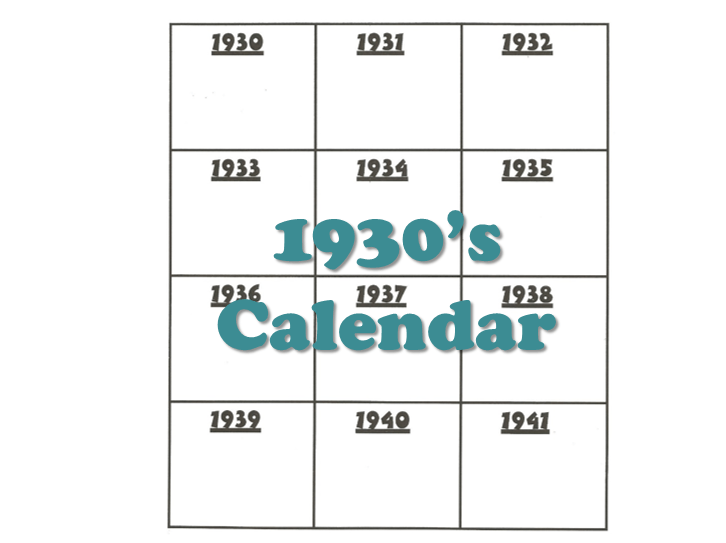
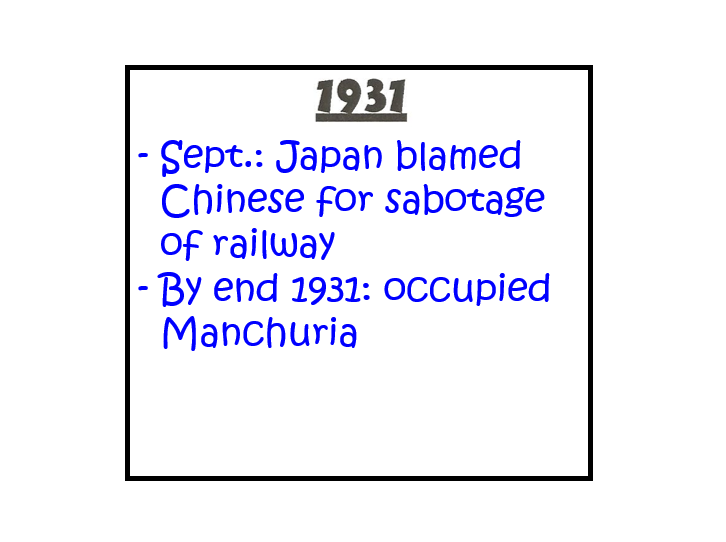
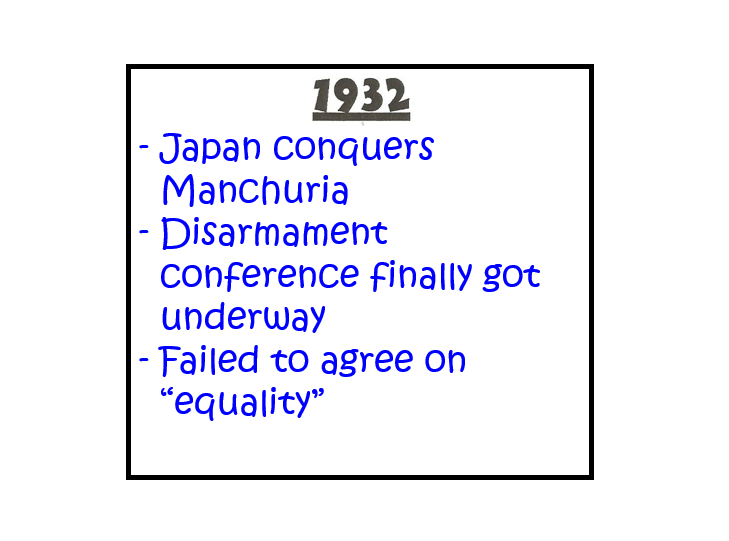
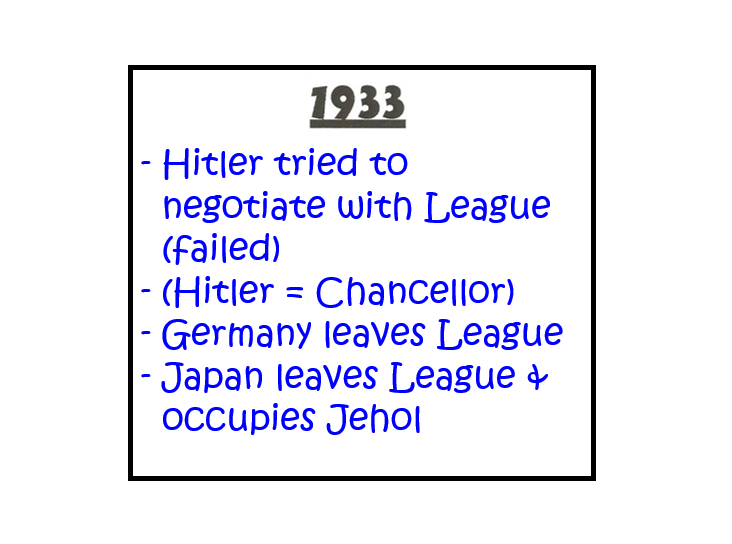
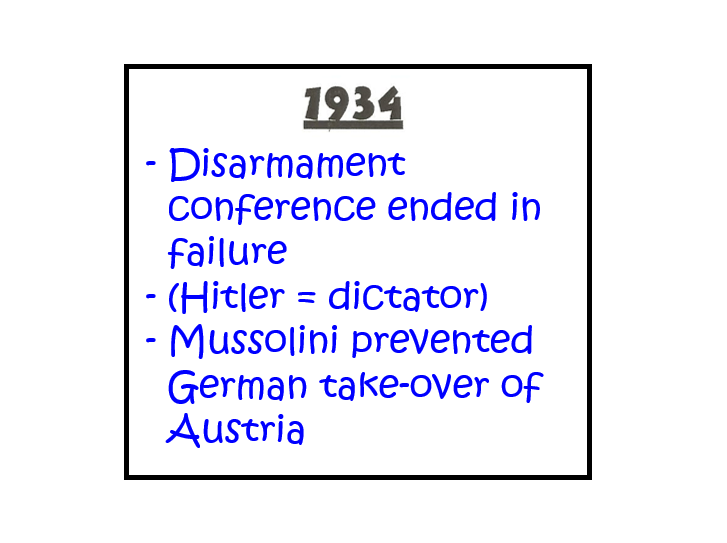
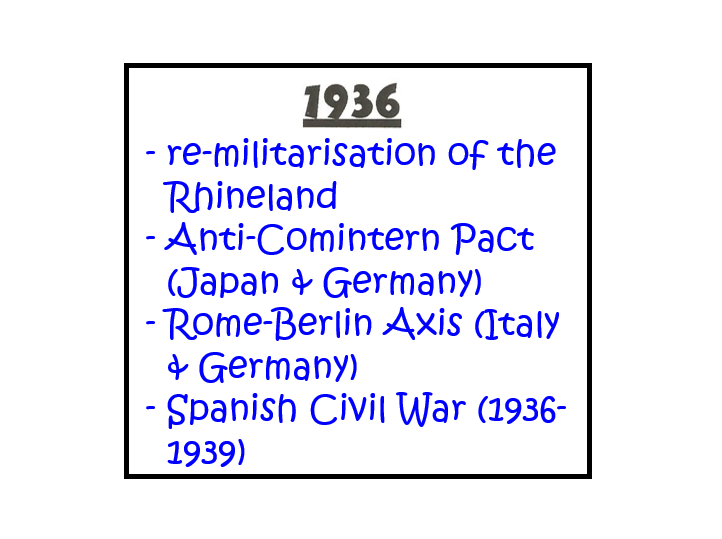
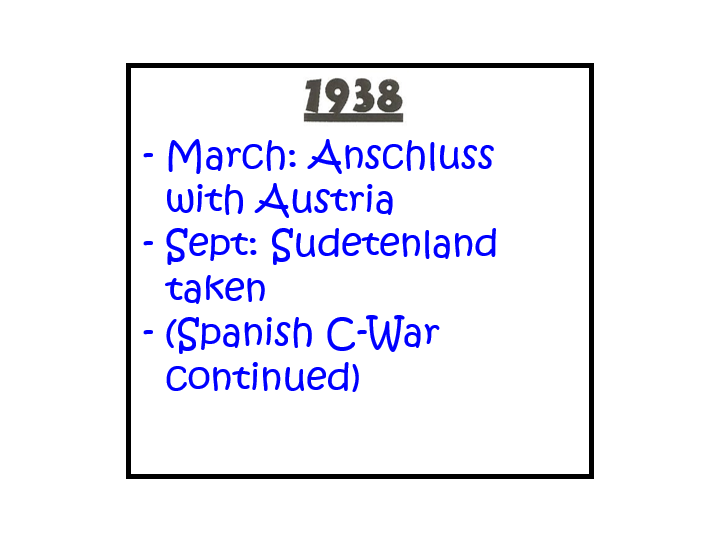
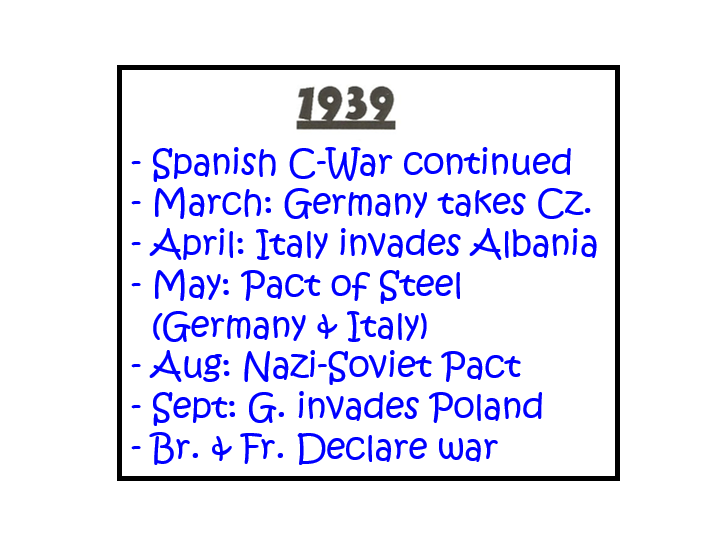
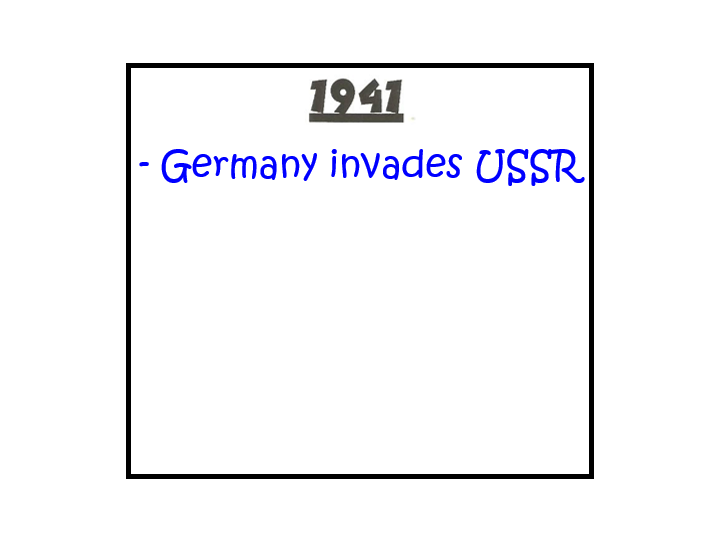
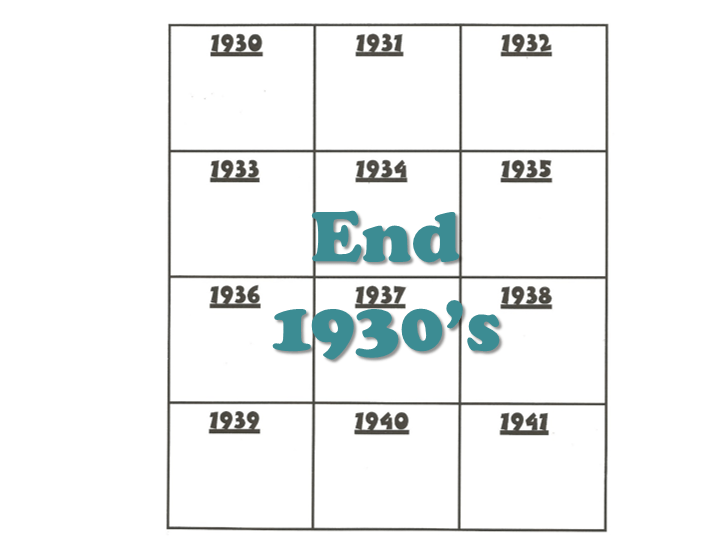
During the 1930’s the League faced major difficulties that ultimately led to the outbreak of war in September 1939… Let’s see how well you know the events of the 1930’s.
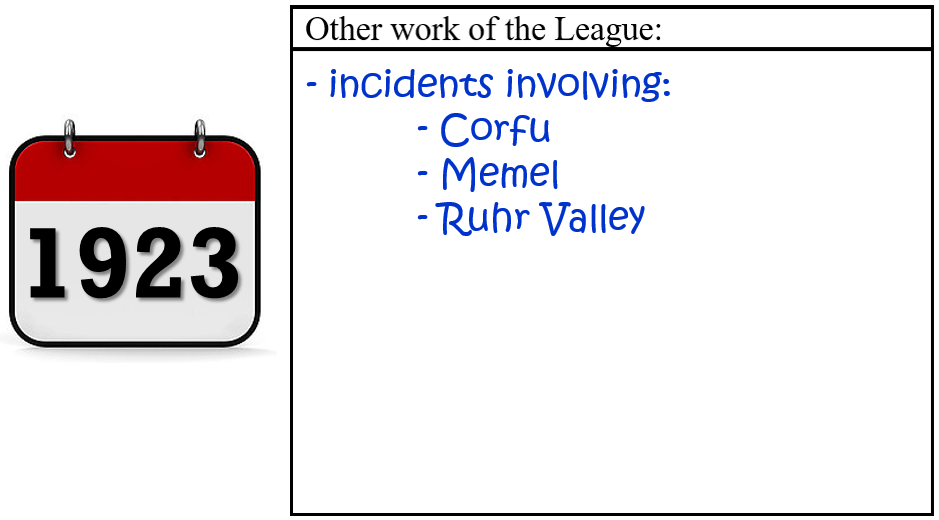
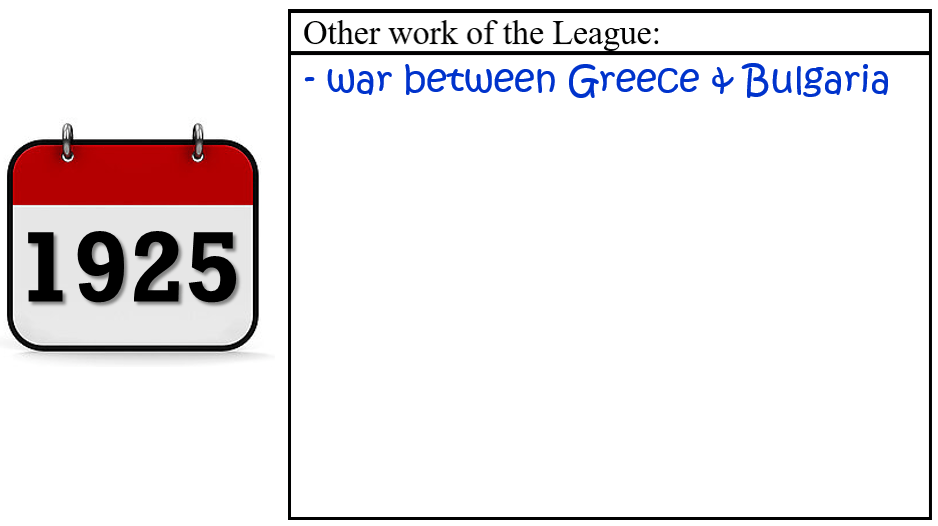
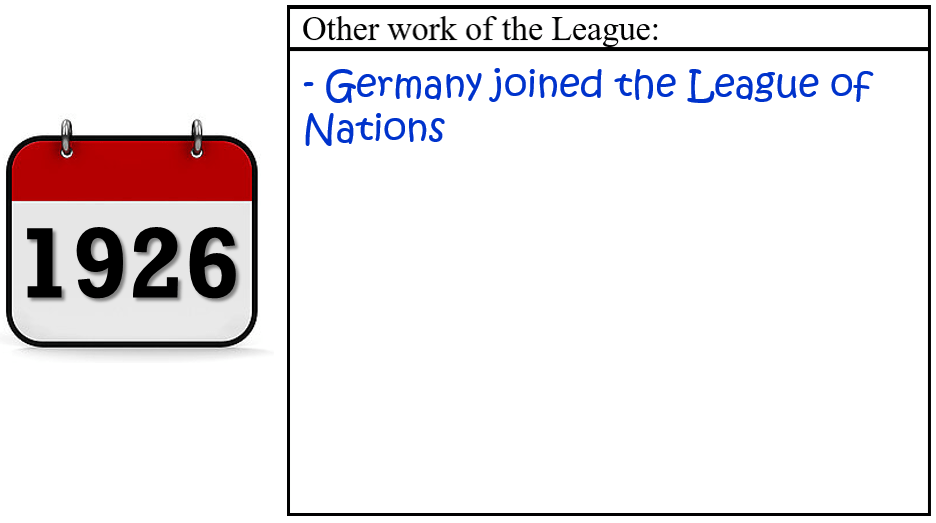
Fill in the 1930’s calendar on p.66 of your booklet by cutting and pasting the relevant information in the corresponding year on the calendar.
6.
7.
Did the League of Nations Ultimately Fail? (3:08 minutes long)
The League of Nations GCSE History Revision. (8:07 minutes long)
8.

This may be a bit of a cringy song, but it is a good overview as to why the League of Nations failed.
Failure of the League of Nations Song – GCSE History. (2:27 minutes long)
This next video is longer, but it seems to be a good final overview of the League in the 1930’s especially.
League of Nations – Successes and Failures – GCSE History. (8:25 minutes long)
(WordPress advertisements may appear below.)
(WordPress advertisements may appear below.)
FEEDBACK: Test 3 on League
(to be finalized)
(WordPress advertisements may appear below.)

(5:04 minutes long)
(WordPress advertisements may appear below.)


Completed Classwork is due:
(See Schoology.)
Make sure that you have completed Lesson 10 and Lesson 11 and that all work on “Life in Nazi Germany” and “Hitler’s Germany” is completed!!


Make use of the relevant “test pages” in your workbook if you get stuck…!

(WordPress advertisements may appear below.)

Completed Classwork is due:
(See Schoology.)
Make sure that you have completed Lesson 8 and that all work on pages 27-28 is completed as well as the Calendar and the Steps!!
Make use of the relevant “test pages” in your workbook if you get stuck…!
(WordPress advertisements may appear below.)
Completed Classwork is due:
(See Schoology.)
Make sure that you have completed Lesson 7 and that your Night of the Long Knives Answers are ready to submit!
Remember to give evidence from the cartoon for every statement that you make!
(WordPress advertisements may appear below.)
Homework – the Title Page is due:
(See Schoology.)
Make a title page for our topic on Nazi Germany. Use an A4 paper for this task. (Hand in your title page for marking. Only after it has been returned to you may you stick the title page into your purple book.)

Your title page on Nazi Germany must be visually attractive… Also check spelling before handing it in!
(WordPress advertisements may appear below.)
Today you are going to display your knowledge on the Manchurian Affair and the Abyssinian Crisis…
League of Nations
1.

First make sure that your book is up to date!
2.
Use the rest of the lesson to work on the following project:

Make two detailed posters that explain the League’s involvement in:
1) the Manchurian Affair
2) the Abyssinian Crisis.
Requirements: You need to make use of the pictures provided. Also carefully pay attention to the poster criteria for top grades…
Poster Criteria:
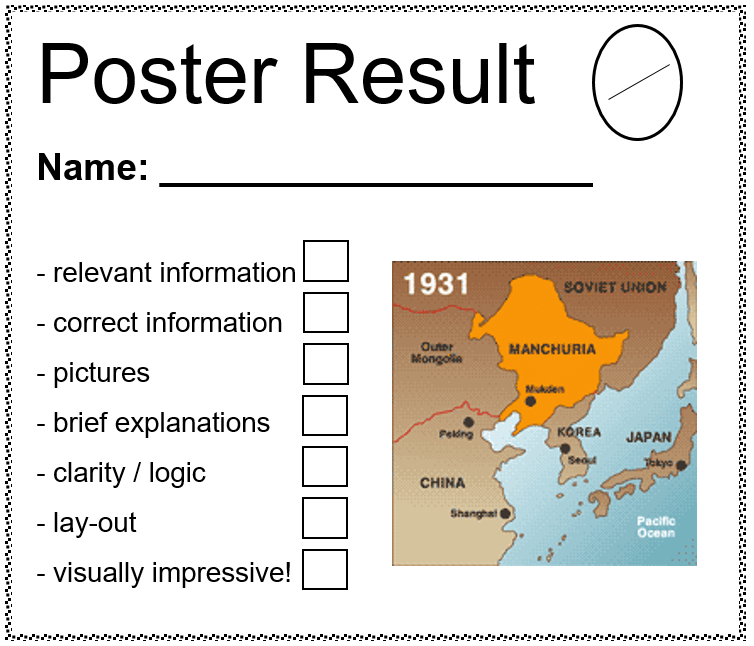
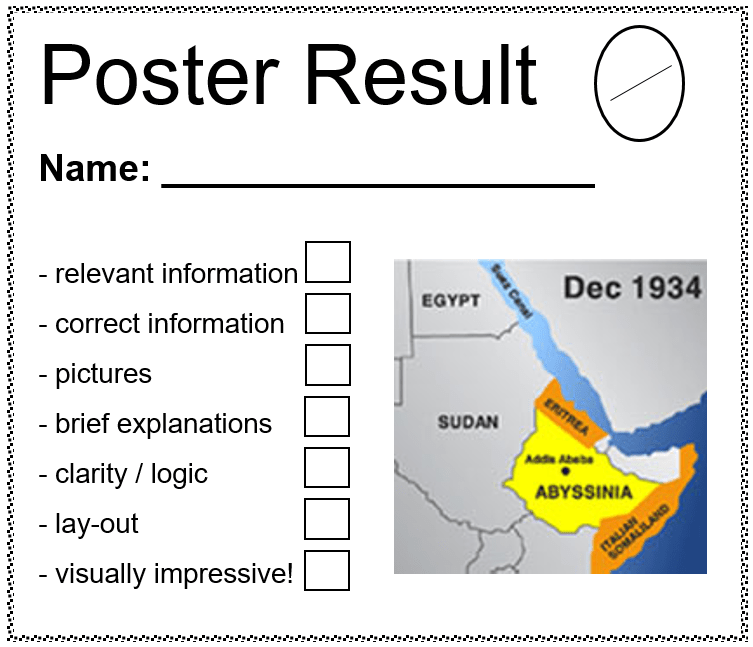
Manchurian Affair – pictures:
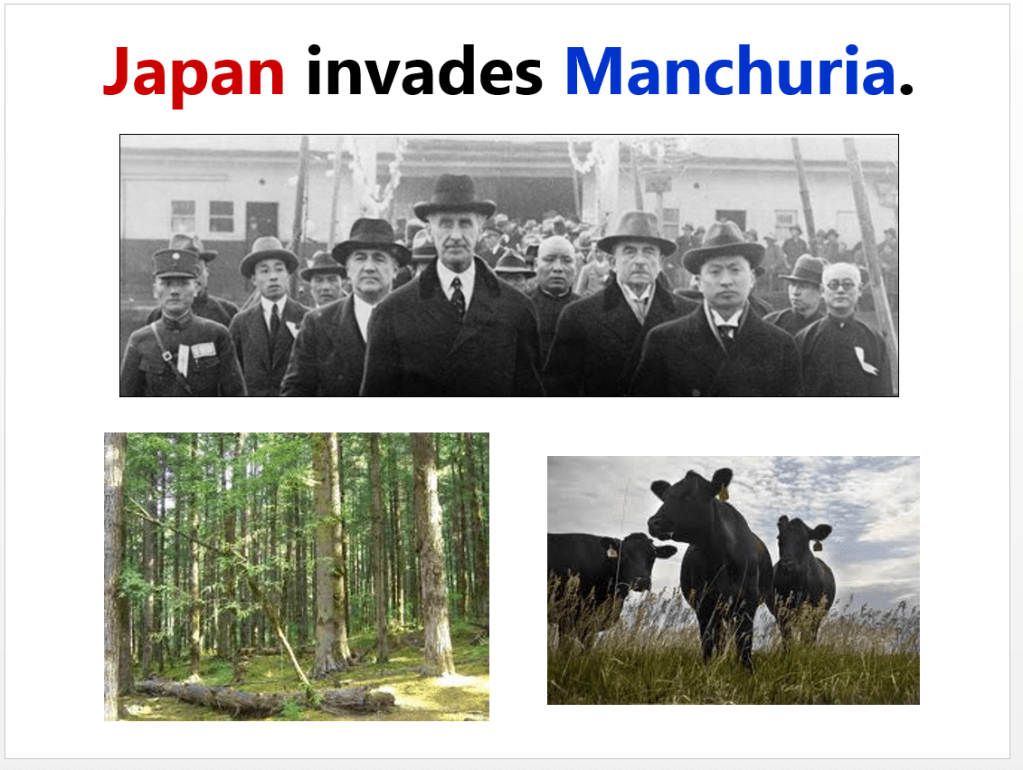
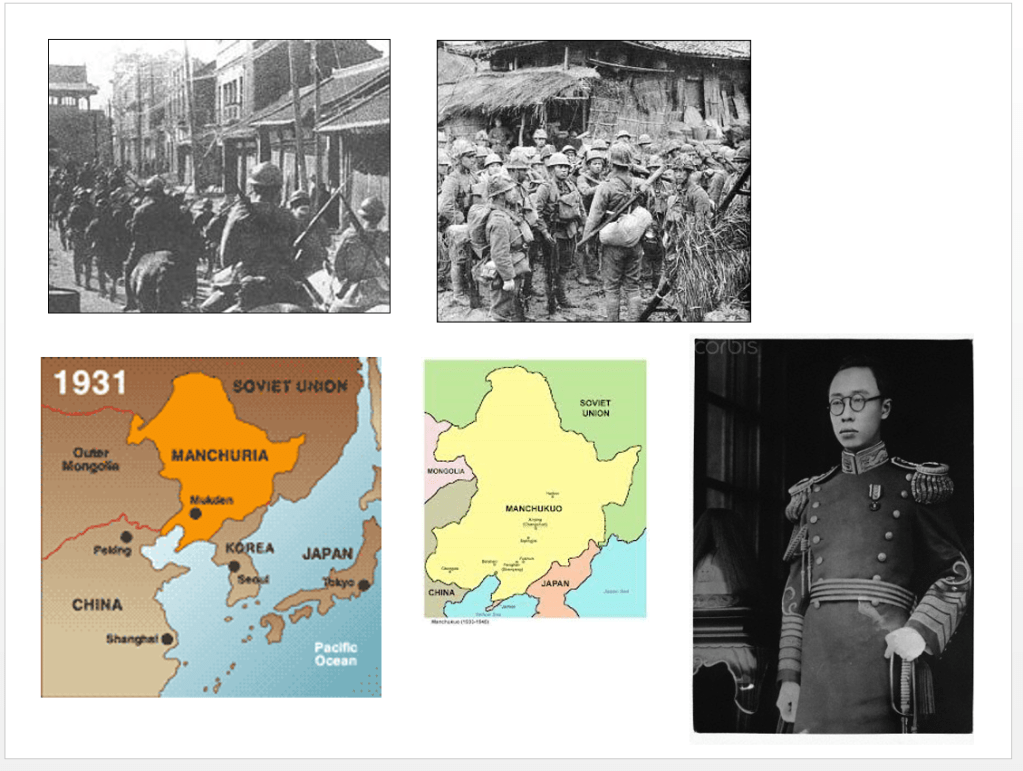

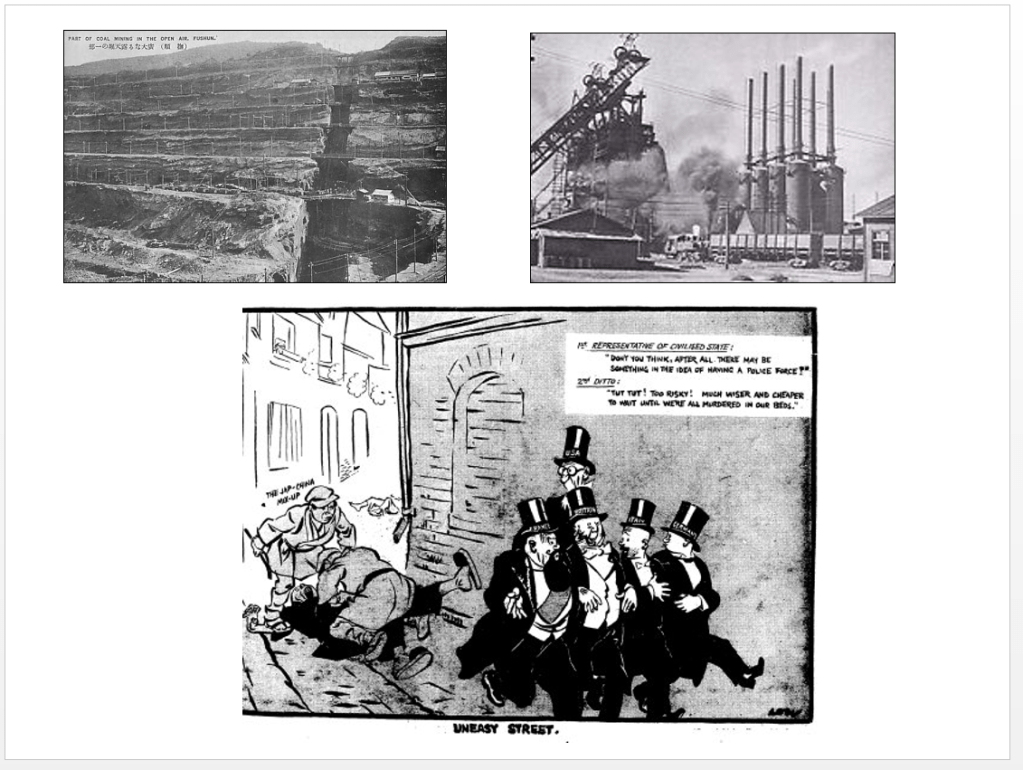
Abyssinian Crisis – pictures:
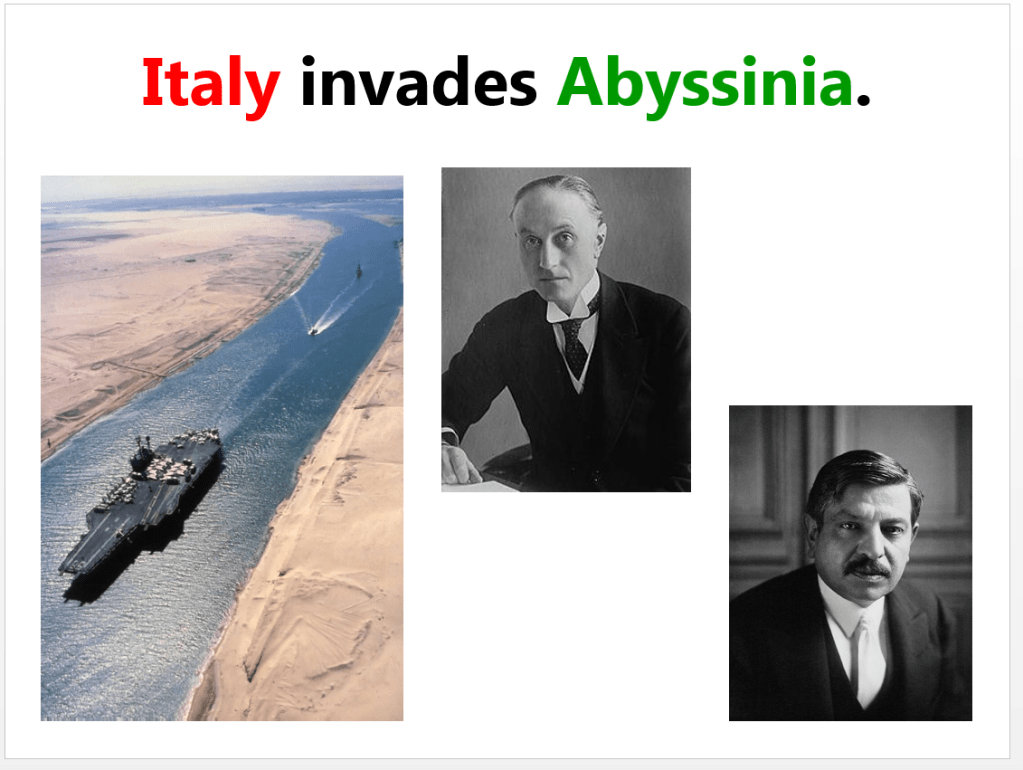
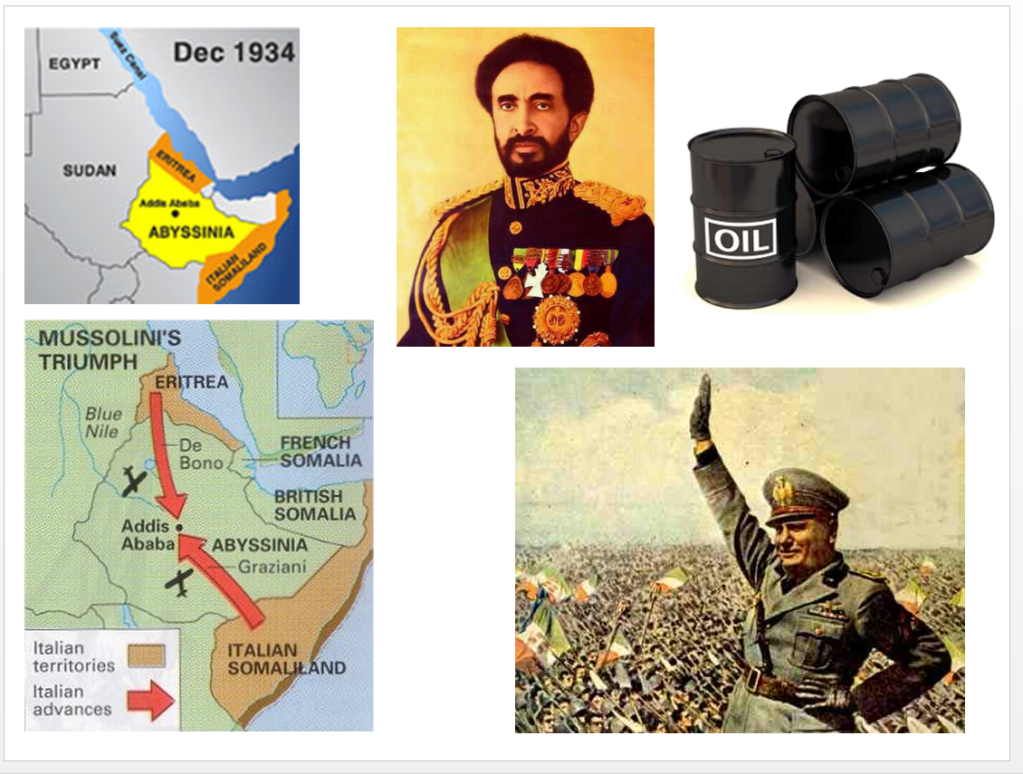
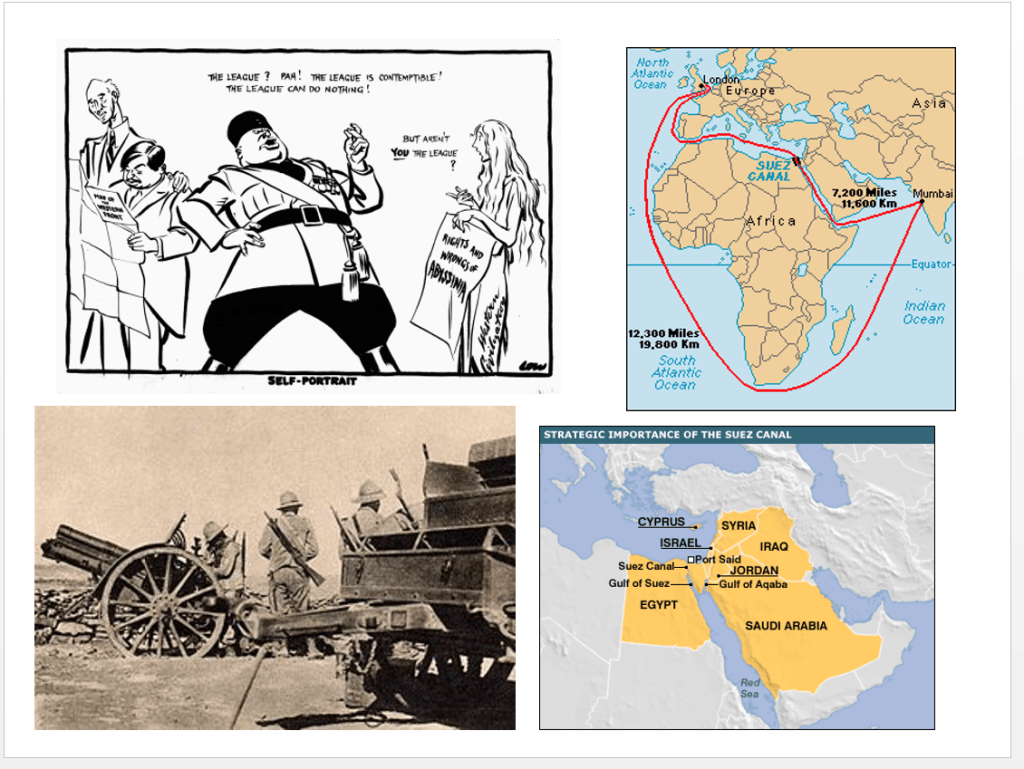
You get one week to do this project. (Remember, it is a GCSE project – make sure that you cover the details in sufficient depth!!)
Be creative, enjoy, and good luck!!!

(WordPress advertisements may appear below.)
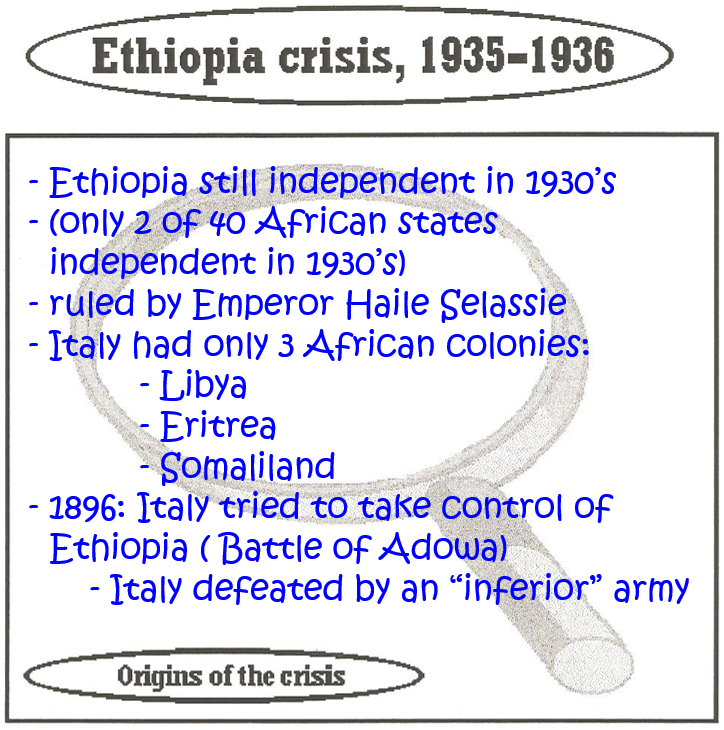
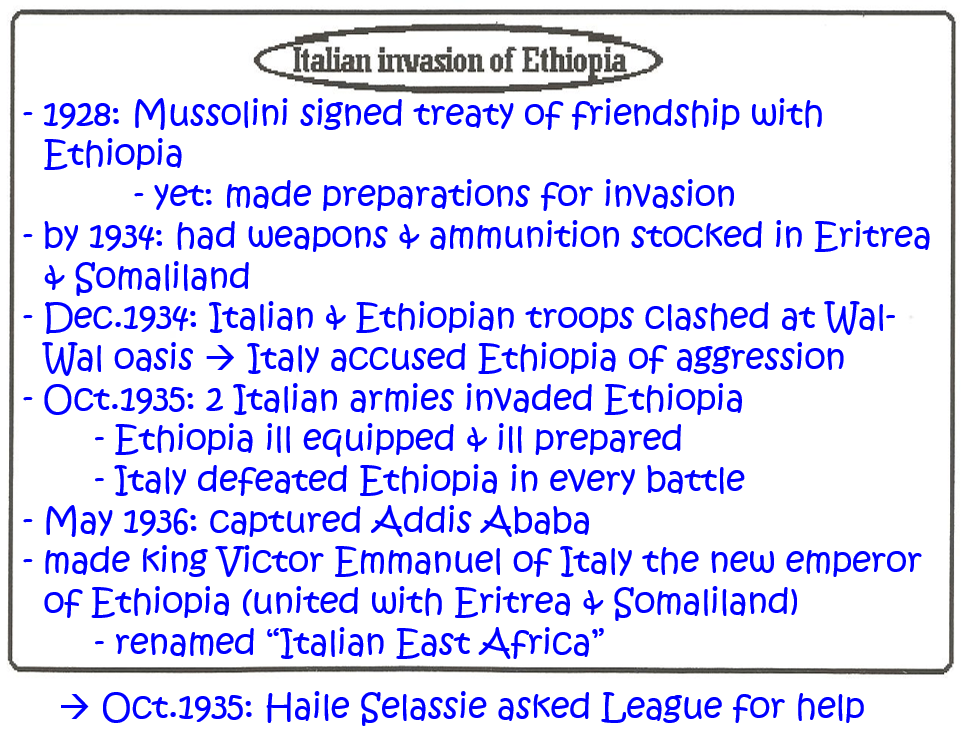
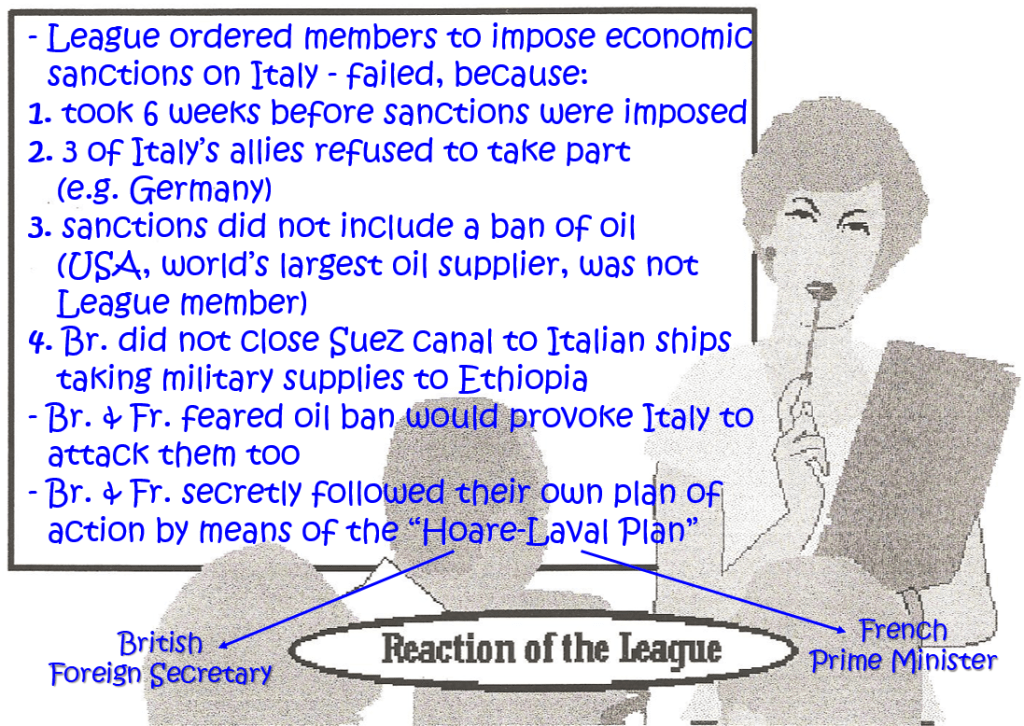
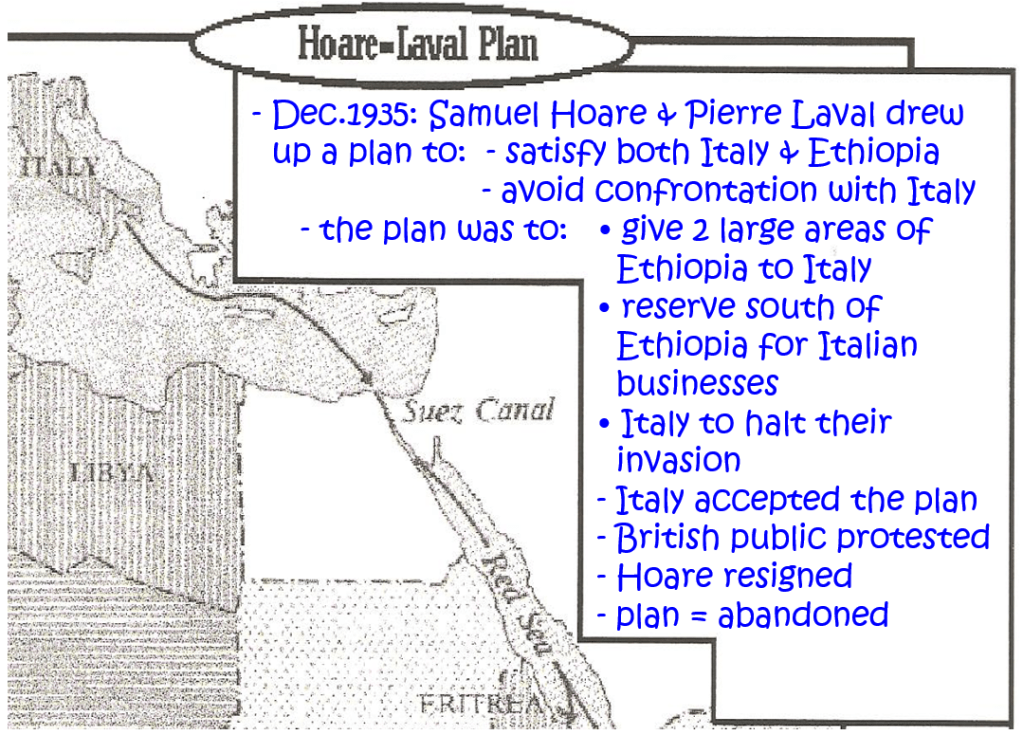
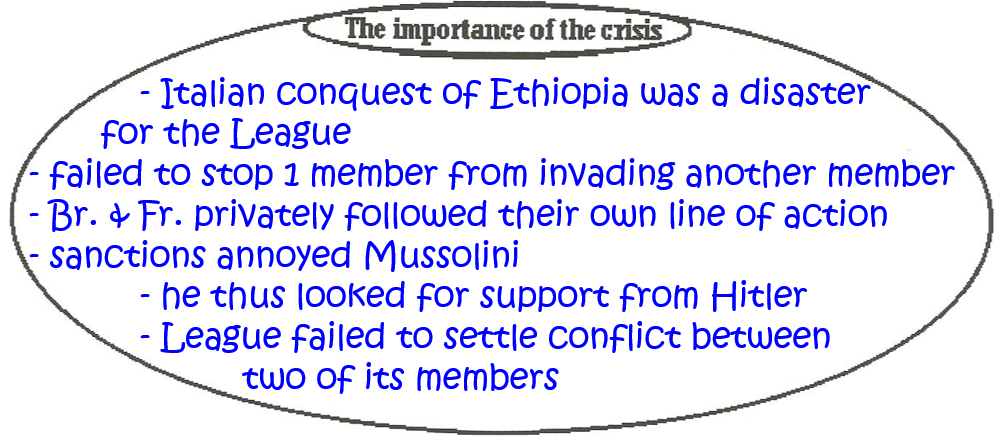
Today you are going to discover how Italy, a permanent member of the League of Nations, invaded Abyssinia and got away with it!
League of Nations
1.

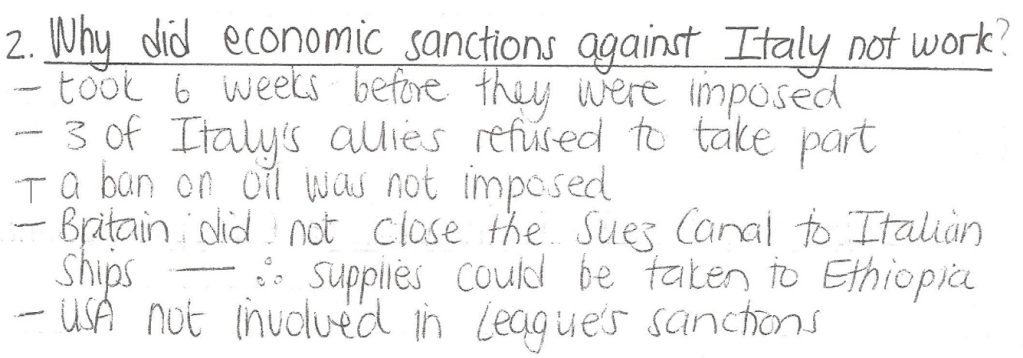
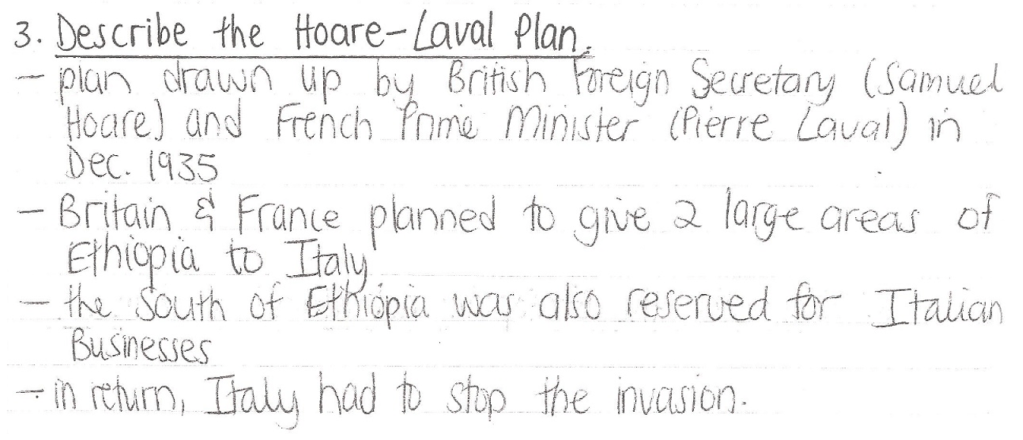
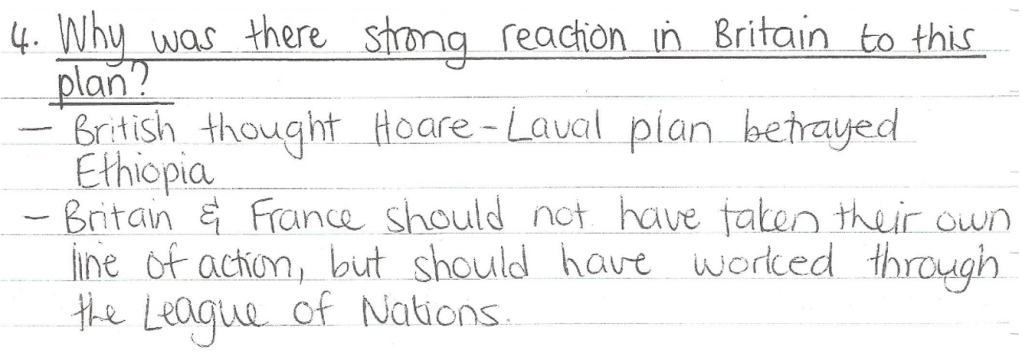
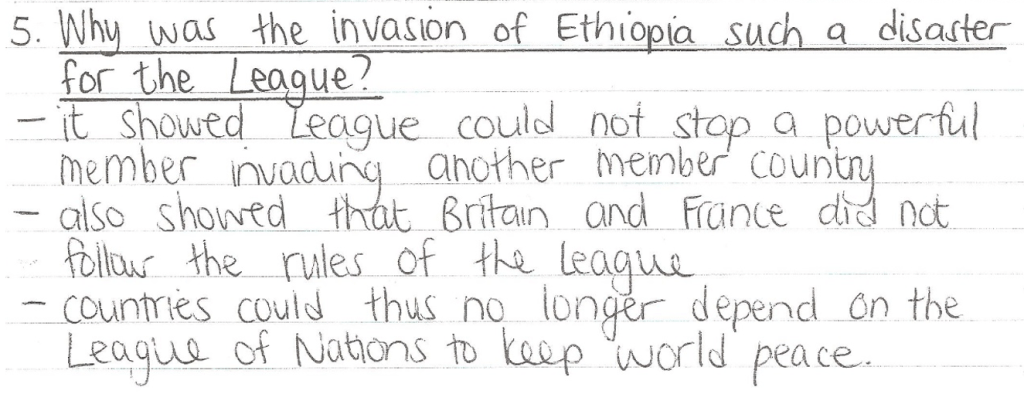
The Abyssinian Crisis, 1935-36. (13:09 minutes long)
2.
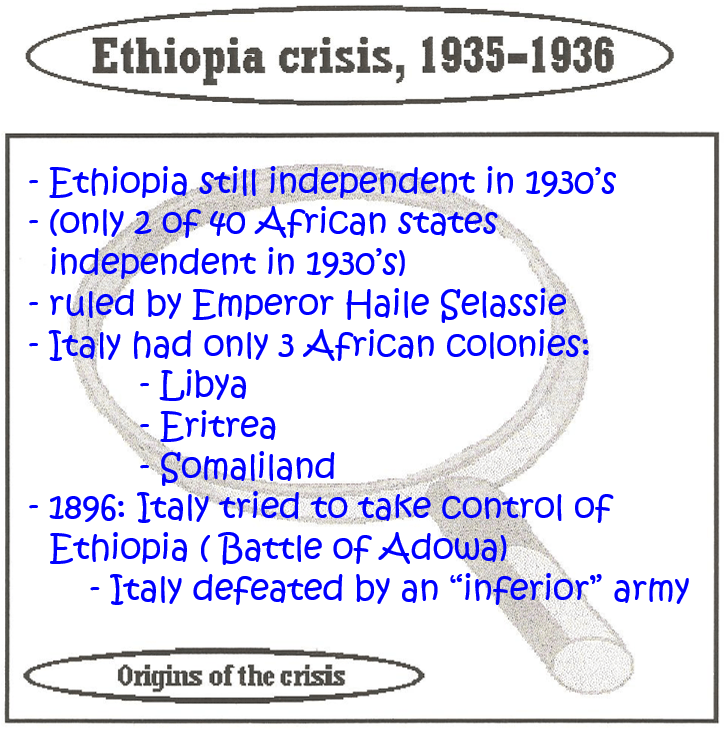
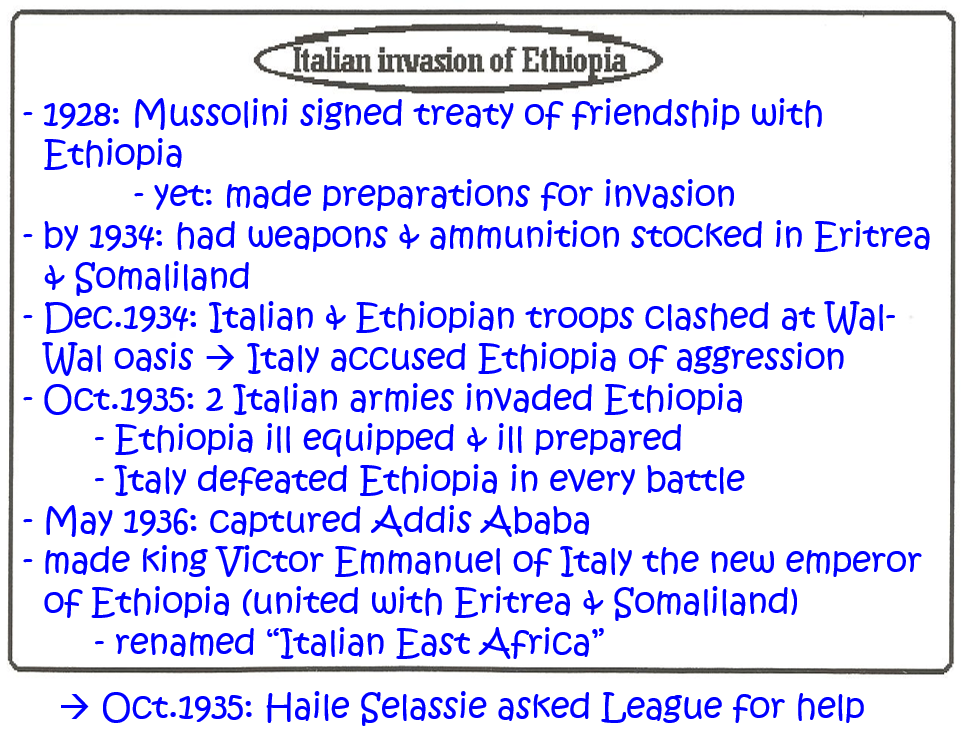
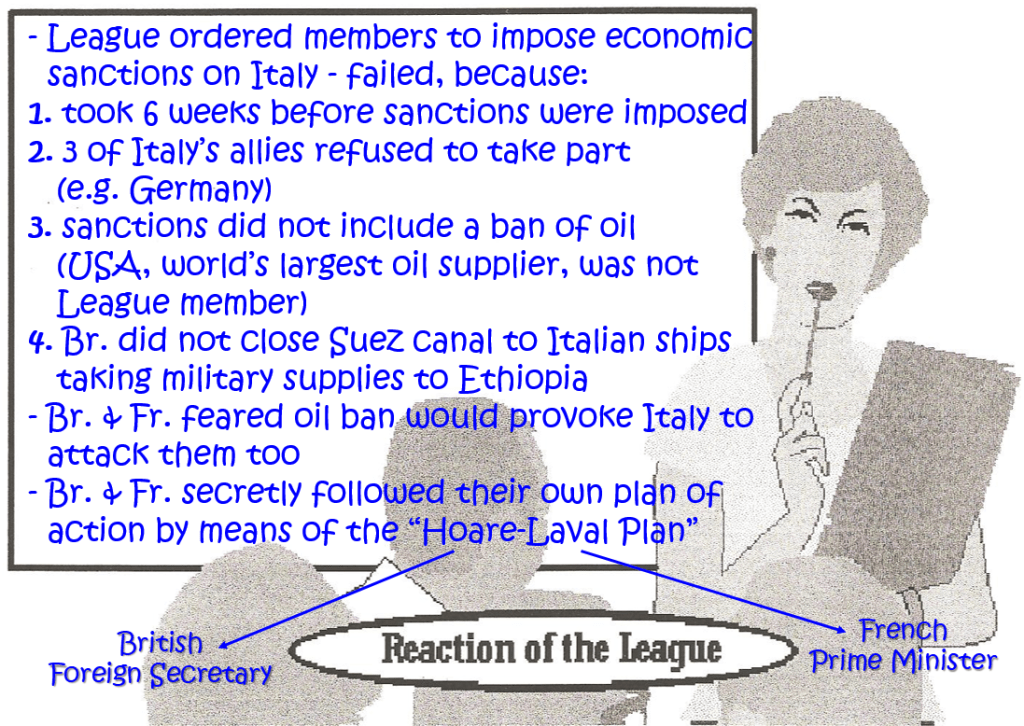
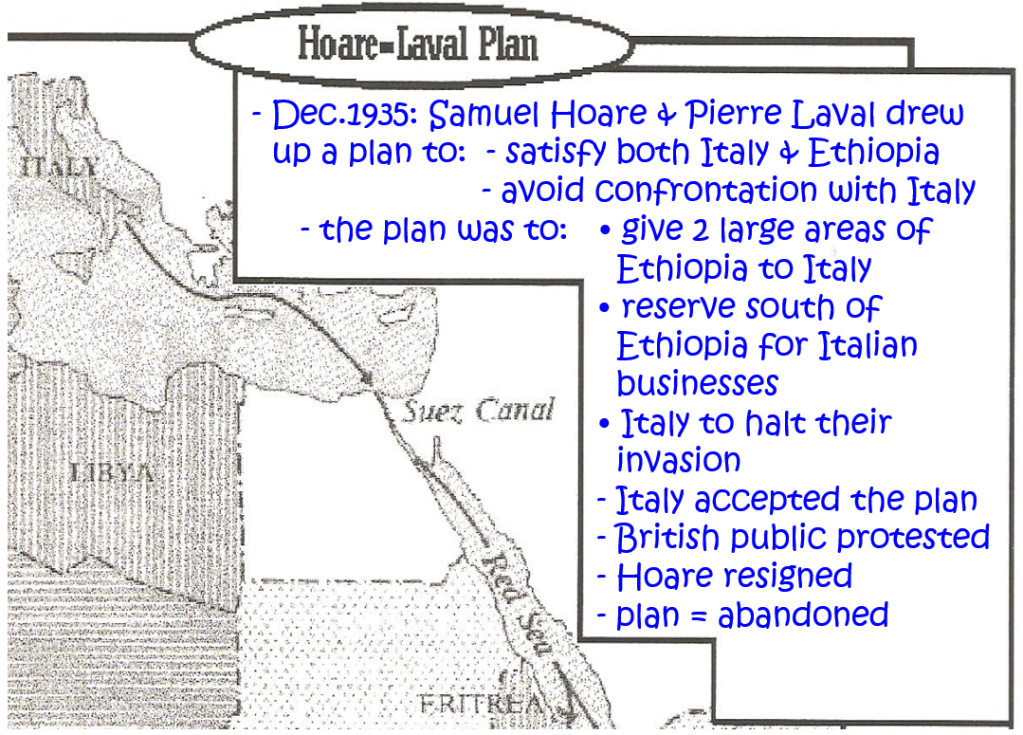
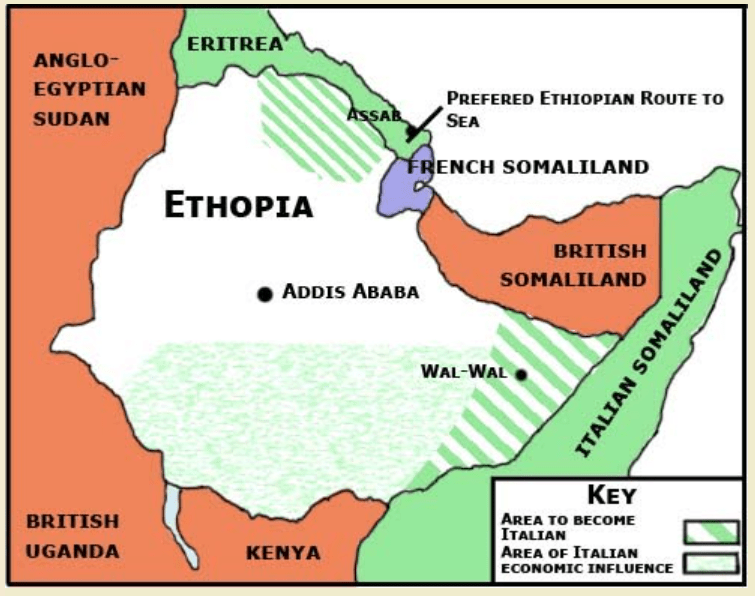
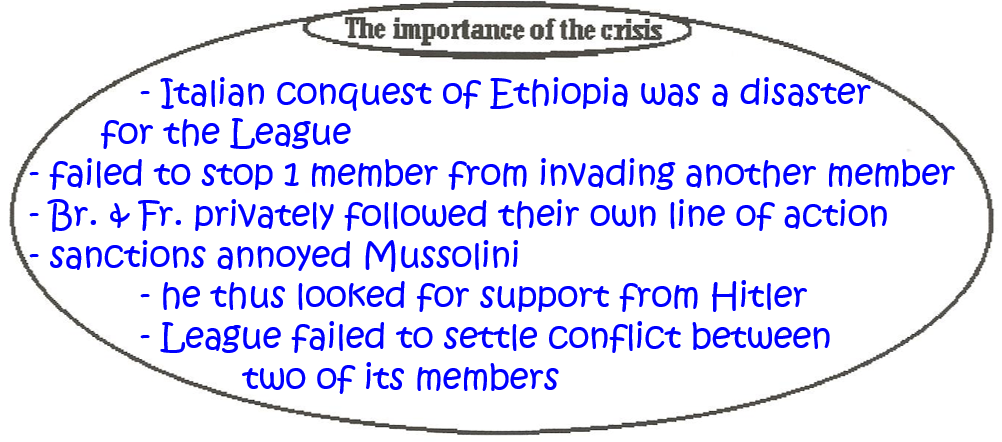
“The Ethiopia Crisis, 1935-36” (p.70-71).
3.
4.
Use page 72-74 in your League of Nations booklet…

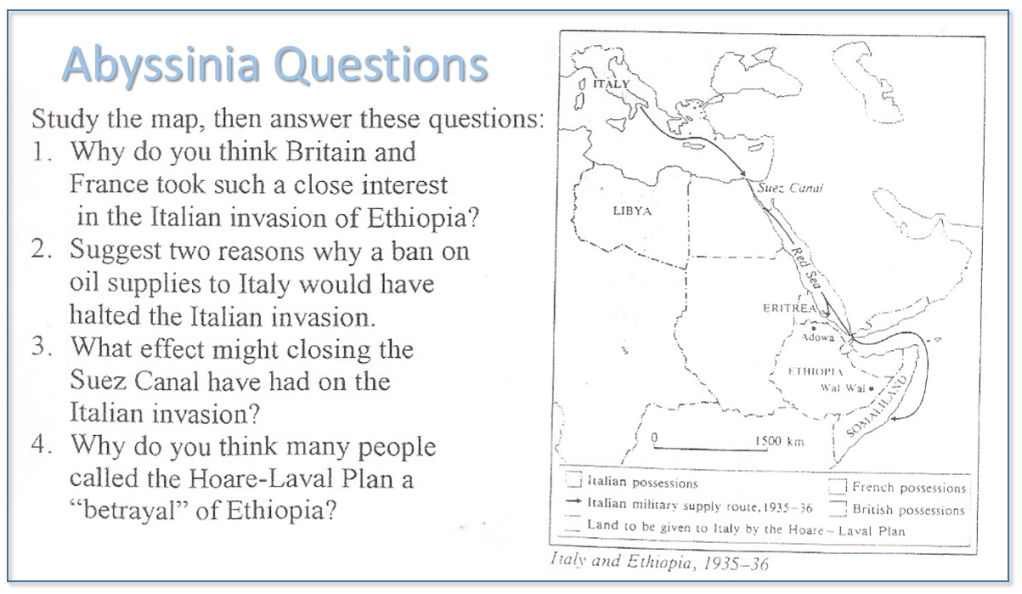
5.

(These questions are also on page 71 of your League booklet.)
You must answer in full sentences!

6.

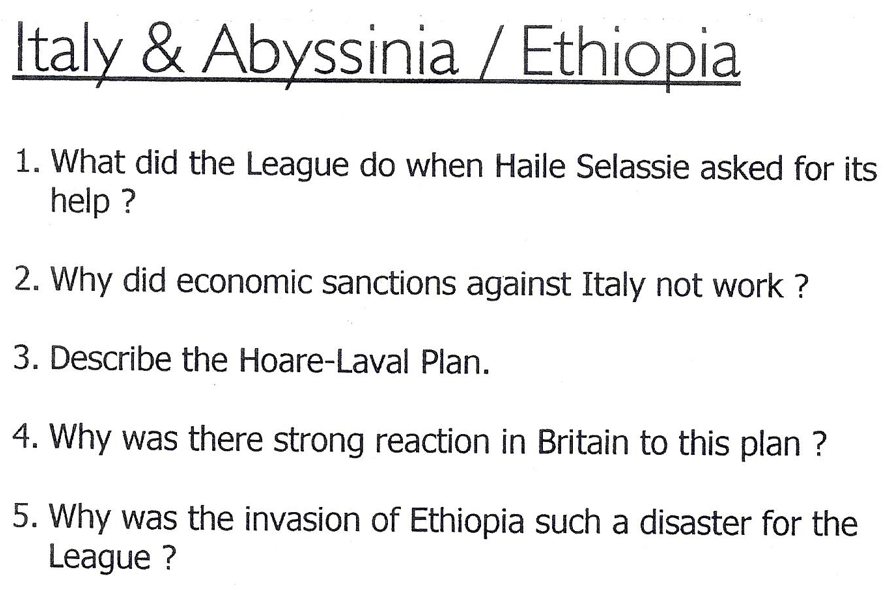
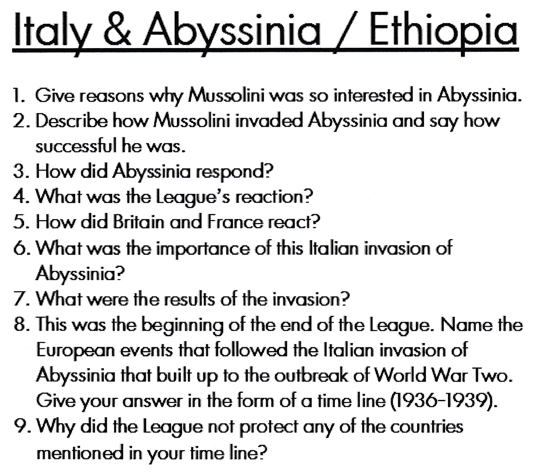
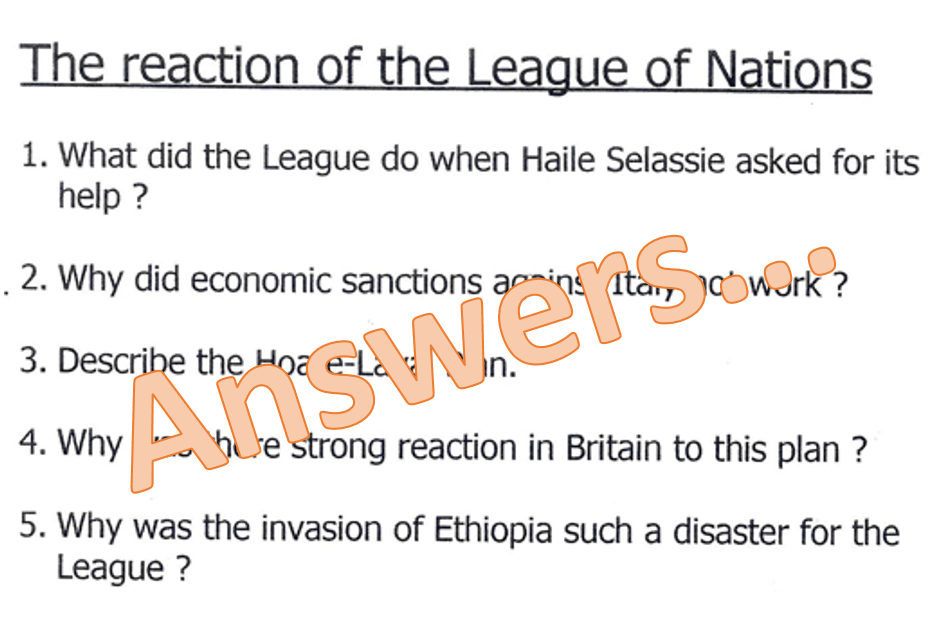
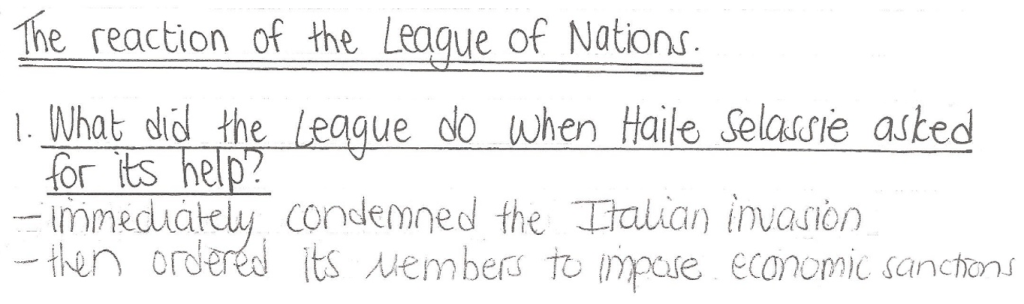
(Stick the questions on “Italy & Abyssinia / Ethiopia” (provided) into your book. Then answer the questions in point form. Or, you may do the “alternative task” as indicated below these questions.)
7.

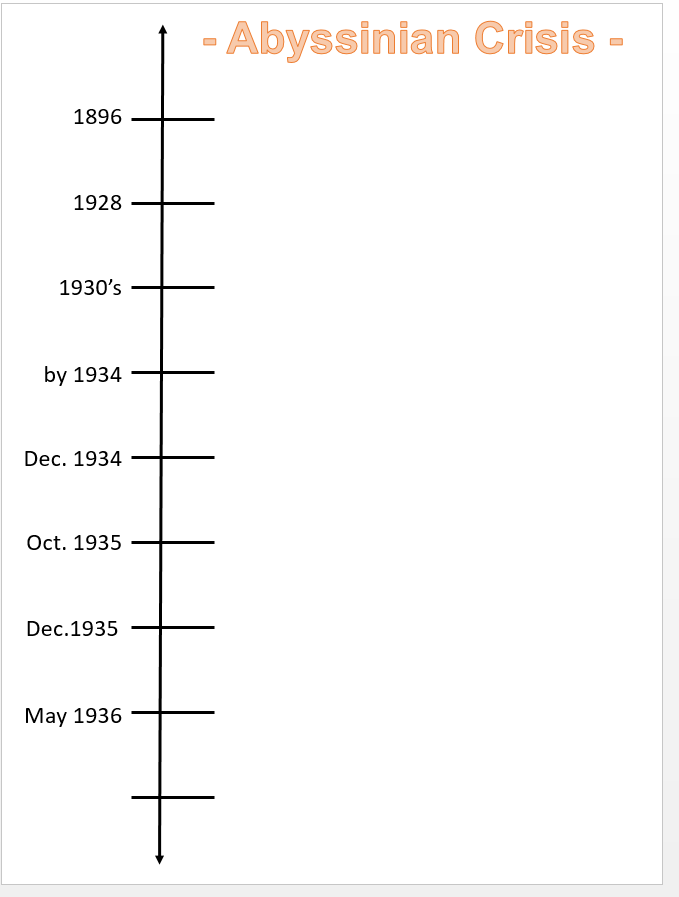
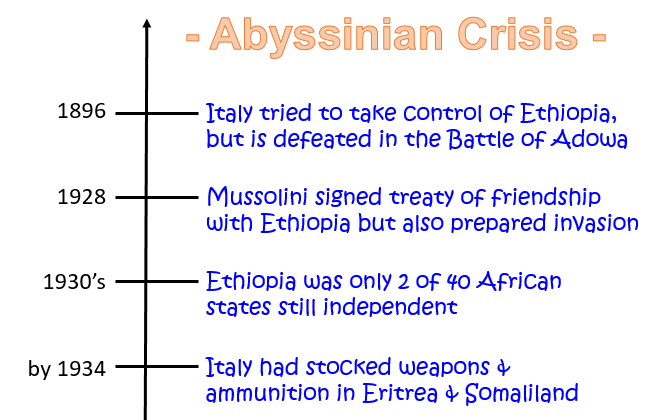
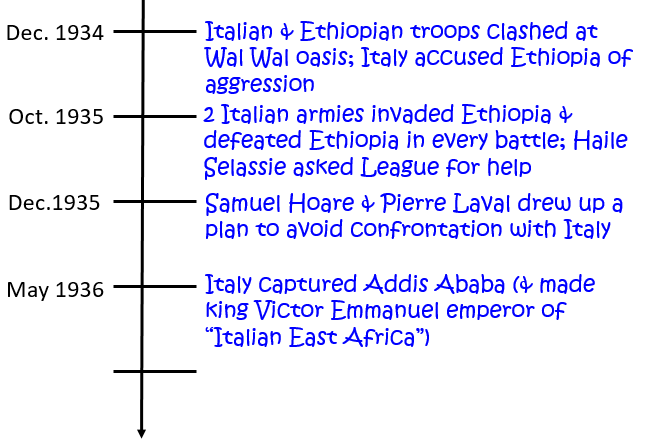
On p.75, fill in the timeline to show the most important events in the Abyssinian Crisis, relevant to your study… (Only look at the answers once you have completed your timeline…!!)
Answers:

8.
Disarmament and Abyssinia. (7:32 minutes long)
The following video shares additional (background) Information about Mussolini.
Mussolini. (7:37 minutes long)
(WordPress advertisements may appear below.)
Today you are going to discover how Japan, a permanent member of the League of Nations, invaded Manchuria and got away with it!
League of Nations
1.

The Manchurian Crisis, 1931-32. (11:36 minutes long)
2.
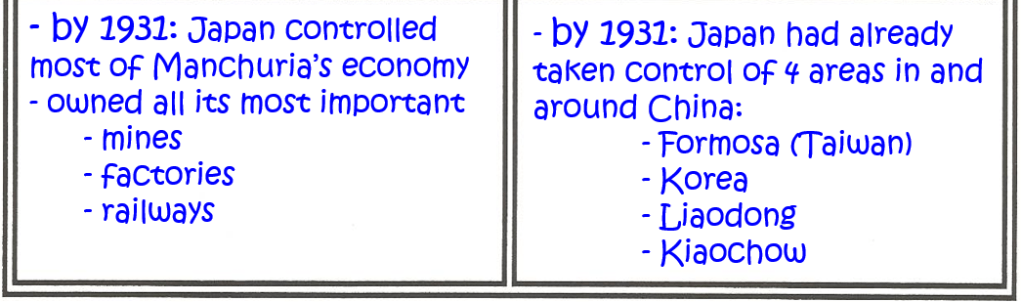
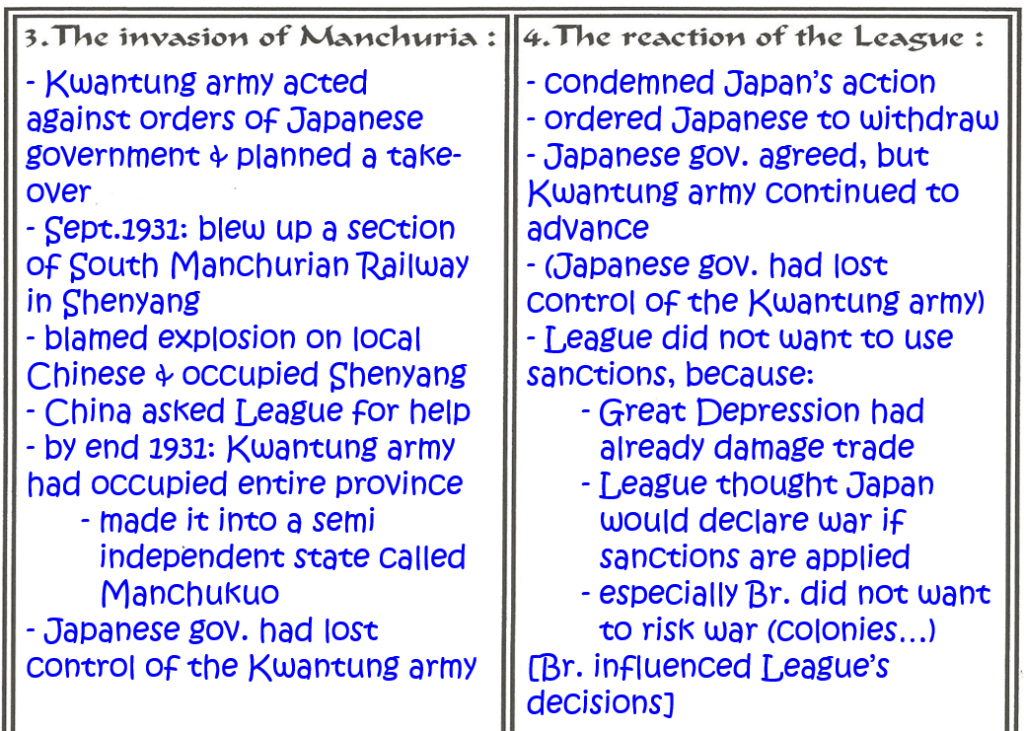
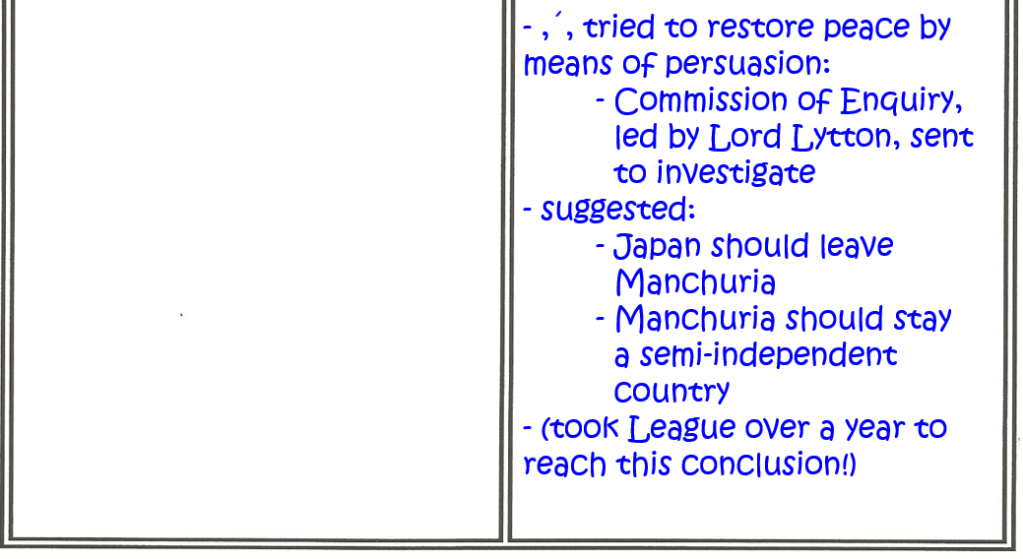
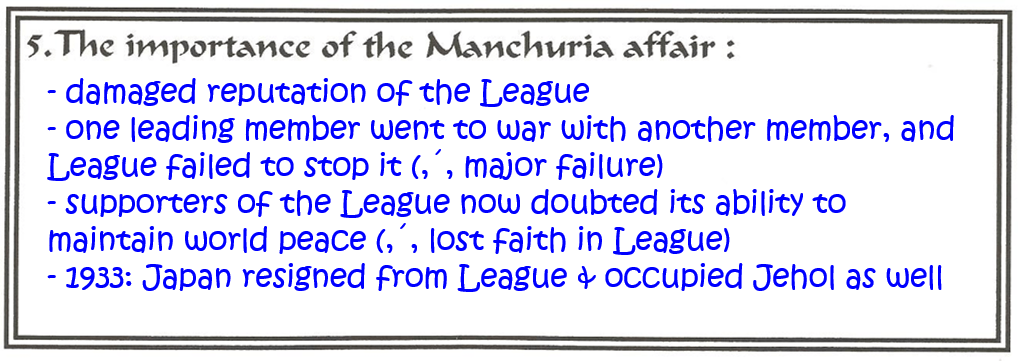
“Japan, Manchuria & the League, 1931-1933”, (p.46-47).
3.



4.
Take note of the following changes in place names:

5.
Use pages 48-49 in your League of Nations booklet…
6.

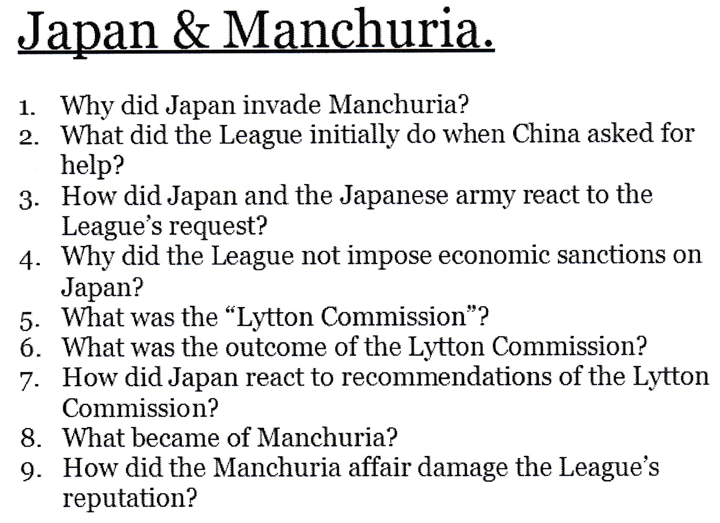
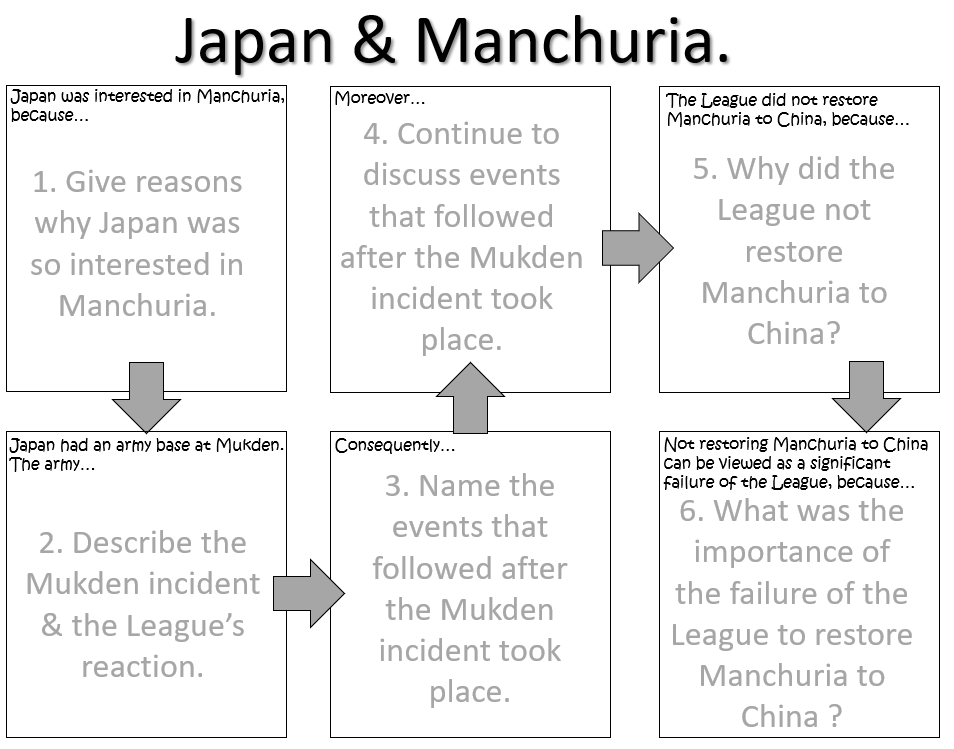
(Stick the questions on “Japan & Manchuria” into your book. (The same questions are also on p.68 of your book.) Then, answer the questions in point form. Or, you may do the “alternative task” as indicated below these questions.)


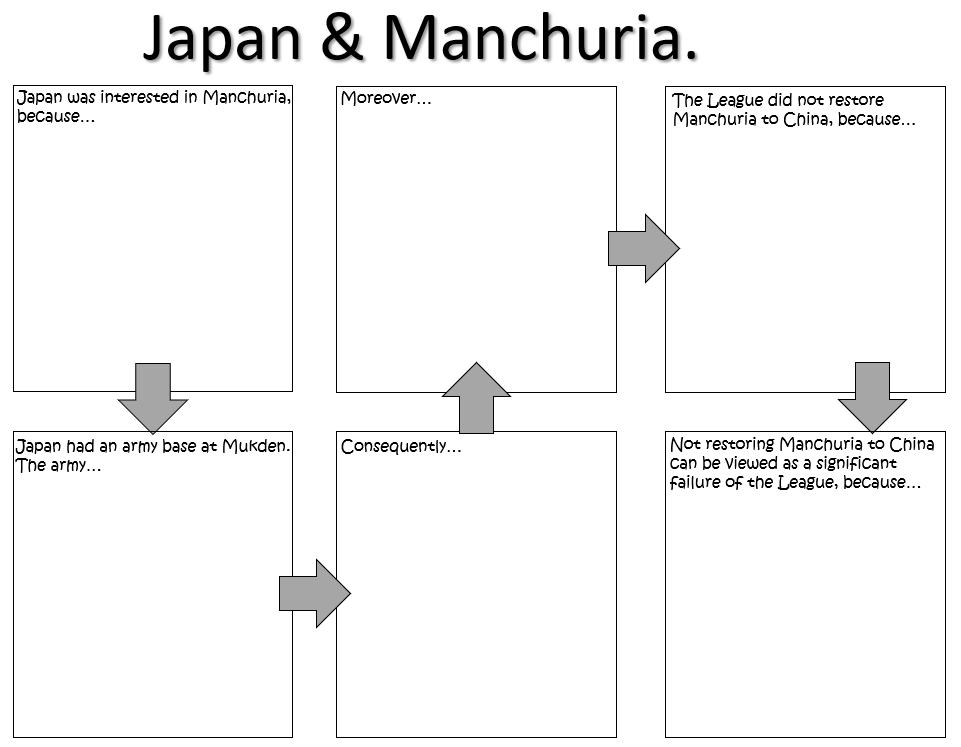
Use the worksheet (provided) to see if you can explain the Manchurian Affair briefly, yet thoroughly…


7.

(It is on p.64 in your League booklet.)

8.
Once completed, mark your answers for the above Questions.


9.
(It is on p.50-51 in your League booklet.)
10.
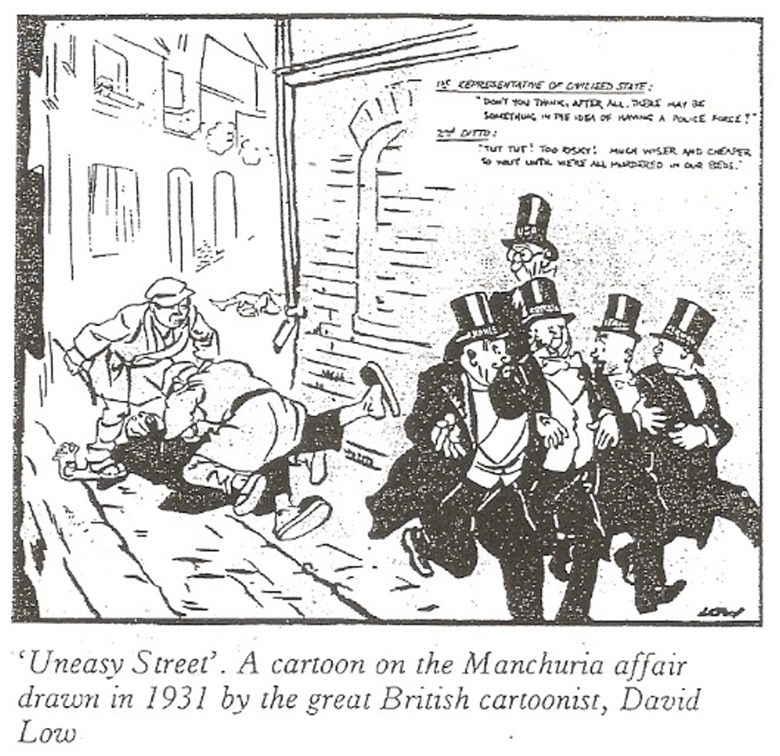
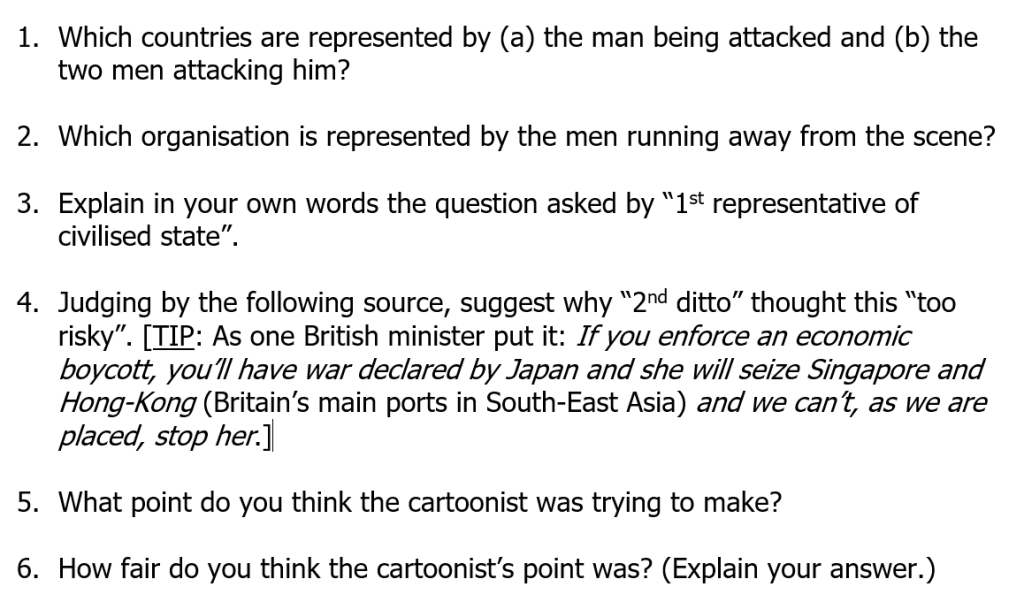
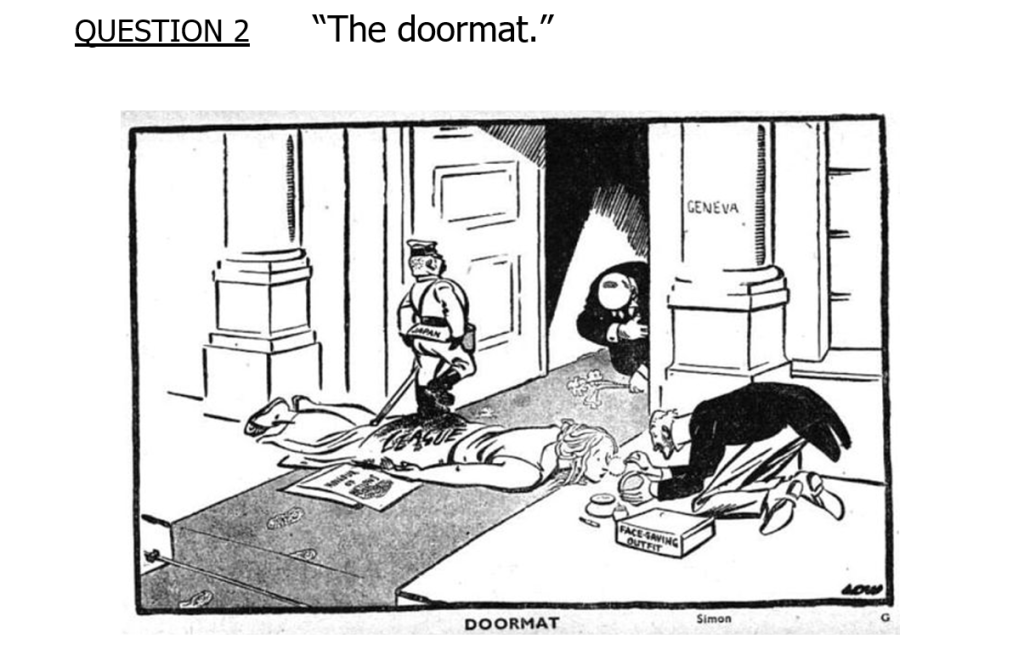
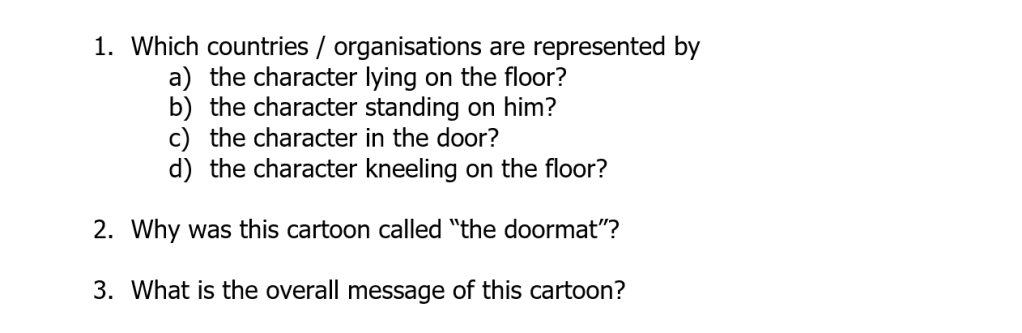
Once completed, mark your answers on the Cartoon Questions.
11.

Japan and the Manchuria Crisis.. (6:13 minutes long)
(WordPress advertisements may appear below.)
Today you are going to have a final look at the League and its work in the 1920’s!
League of Nations
We will look at:
1.
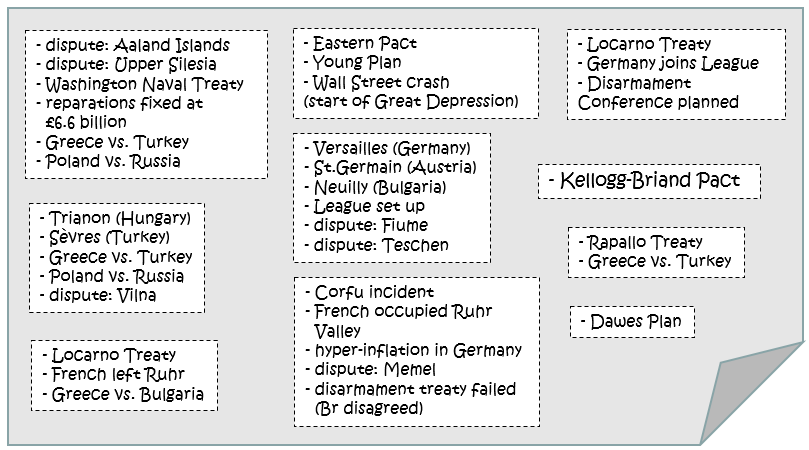
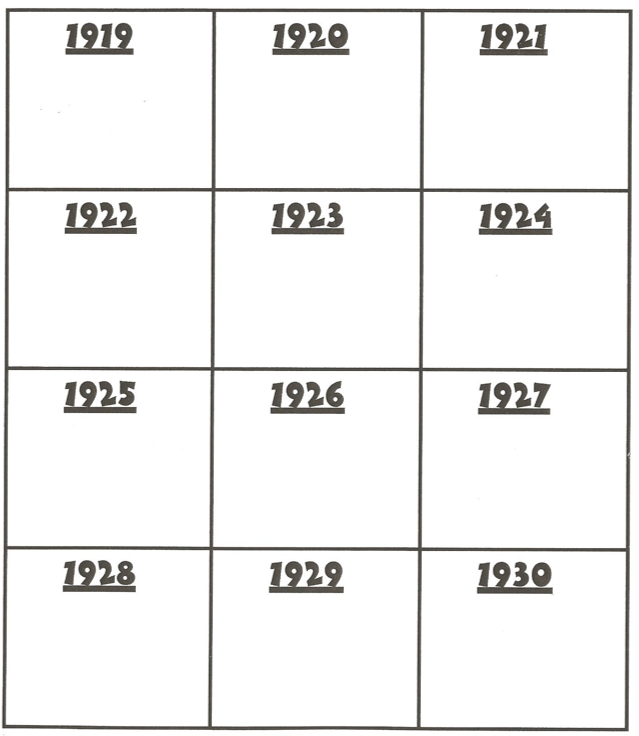
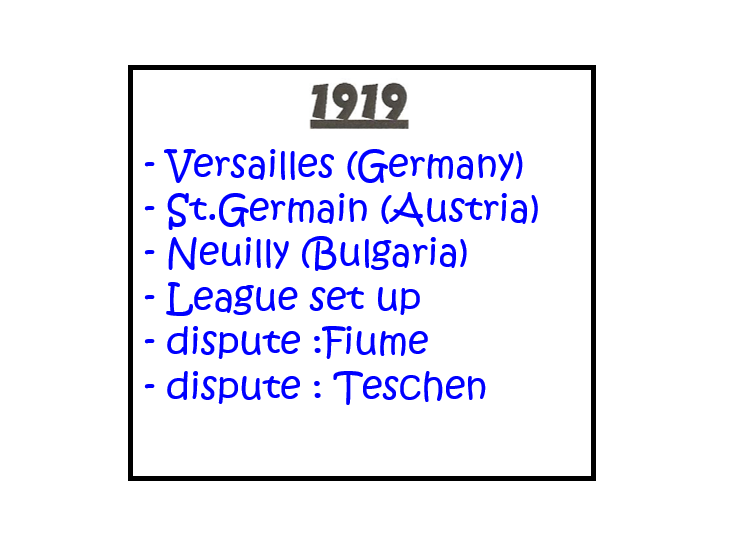
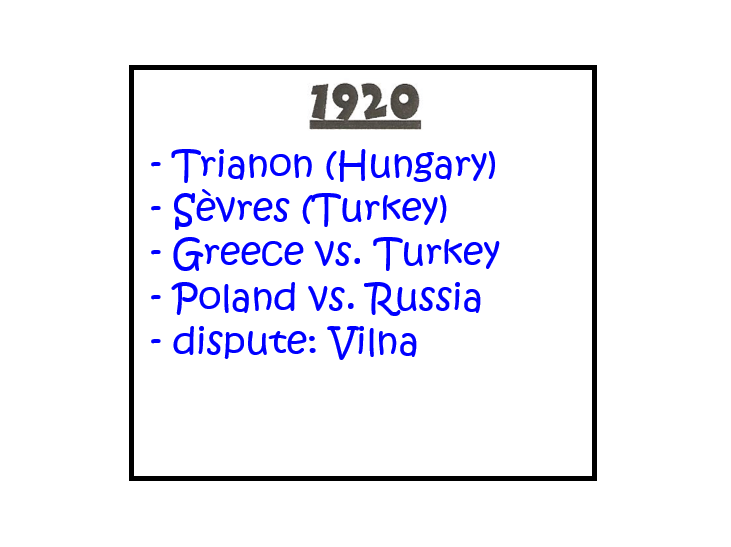
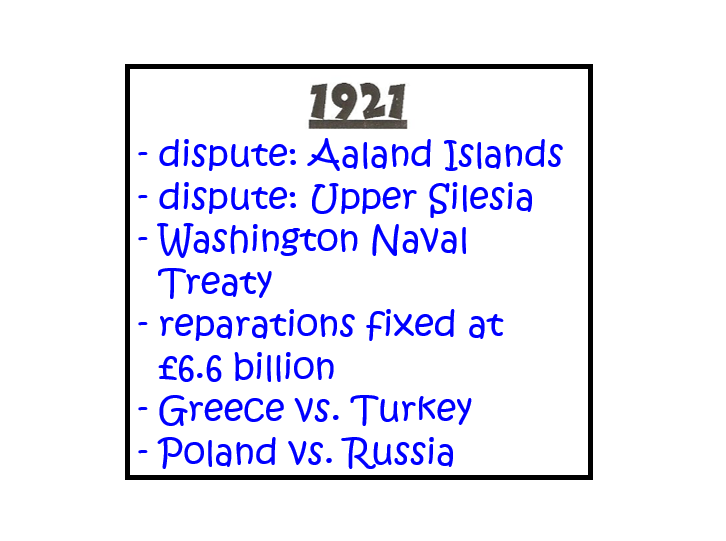
During the 1920’s there were a number of disputes as well as attempts to ensure lasting peace globally. Let’s see how well you know the events of the 1920’s.
Fill in the 1920’s calendar on p.39 of your booklet by cutting and pasting the relevant information in the corresponding year on the calendar.
2.
3.
Below are typical 4-mark exam questions on The League in the 1920’s.
Will you be able to answer these questions?

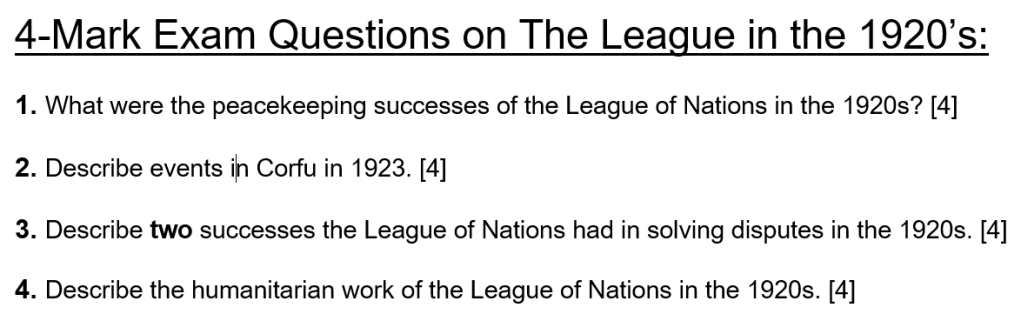

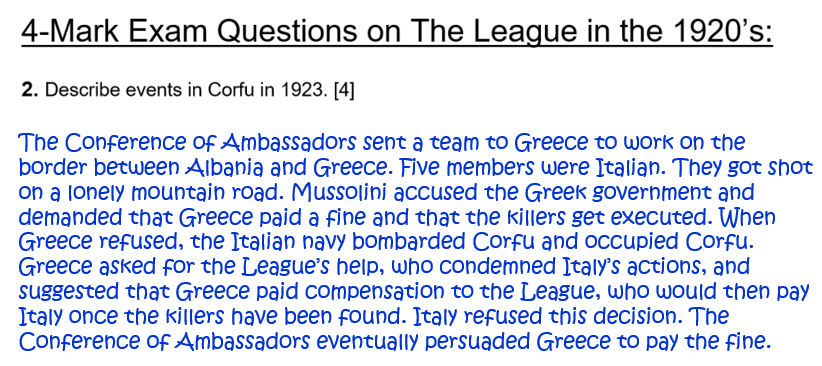
Complete Question 2.
(You should be able to answer this question in about 5 minutes!)

4.
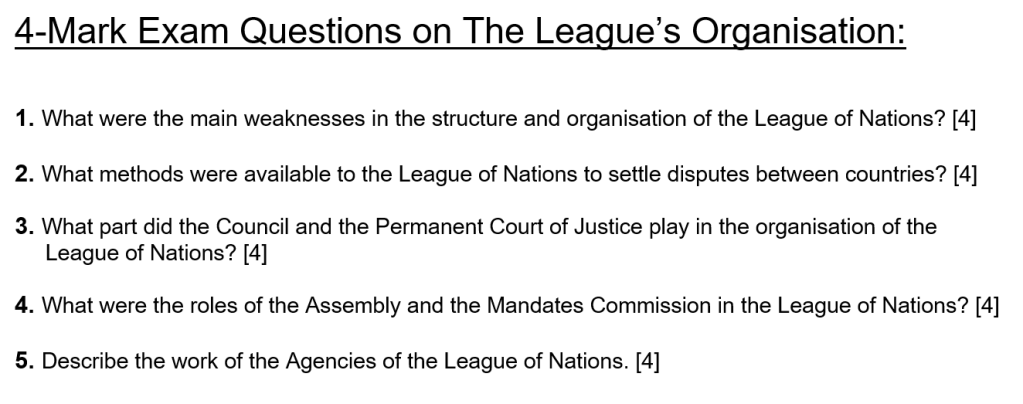
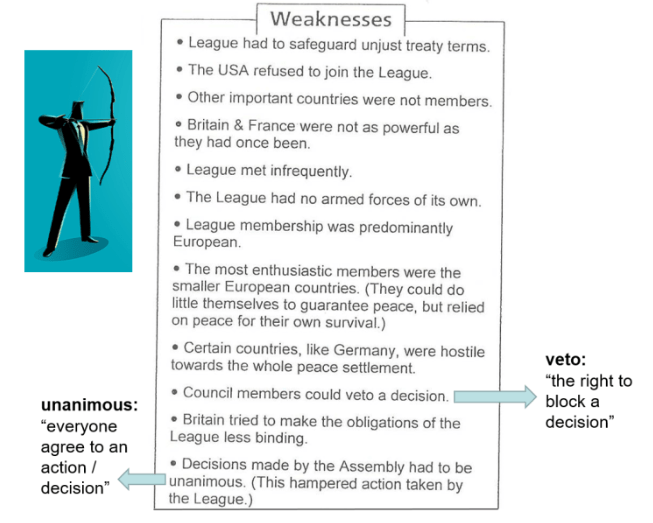
Below are typical 4-mark exam questions on The League’s Organisation.
Will you be able to answer these questions?
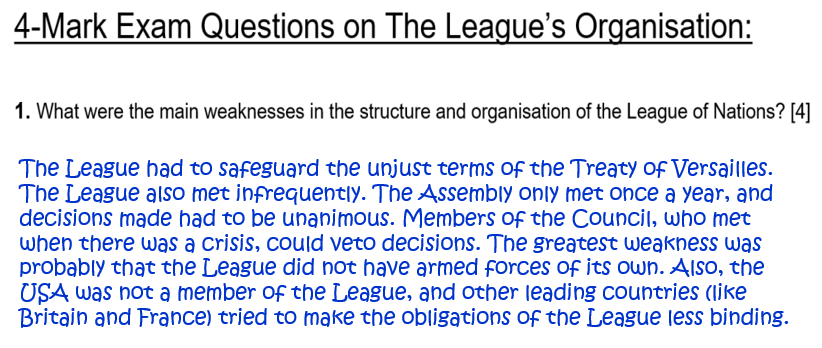
Complete Question 1.
(You should be able to answer this question in about 5 minutes!)

5.

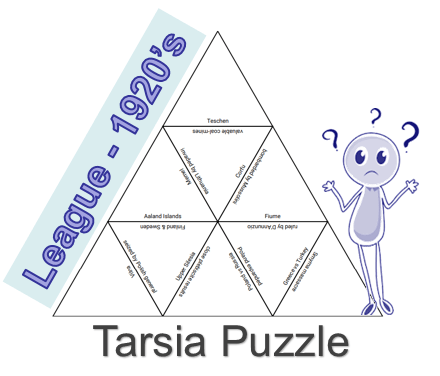
Complete the task below:
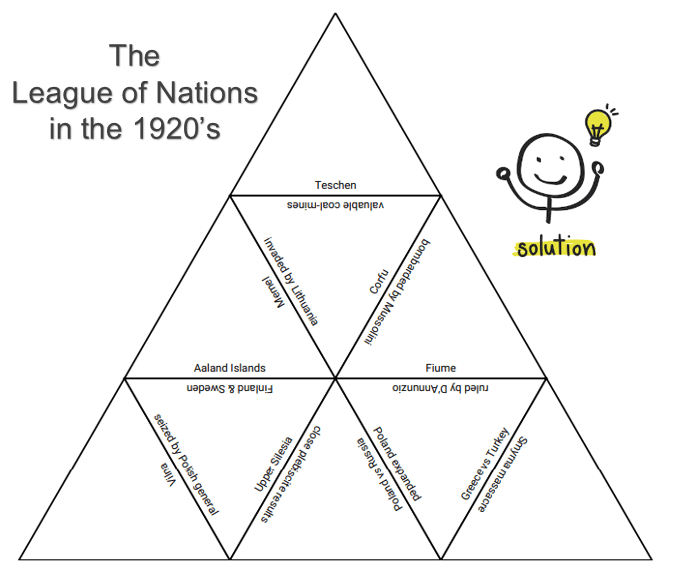
Recap what you learnt about the work of the League in the 1920’s by completing the Tarsia Puzzle.
(The puzzle pieces will be handed out to you.)
SOLUTION

(WordPress advertisements may appear below.)
FEEDBACK: Test 2 on League
(to be finalized)
(WordPress advertisements may appear below.)
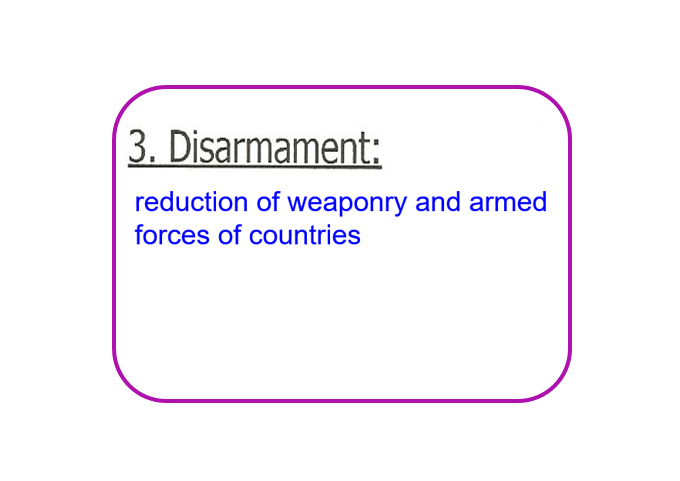
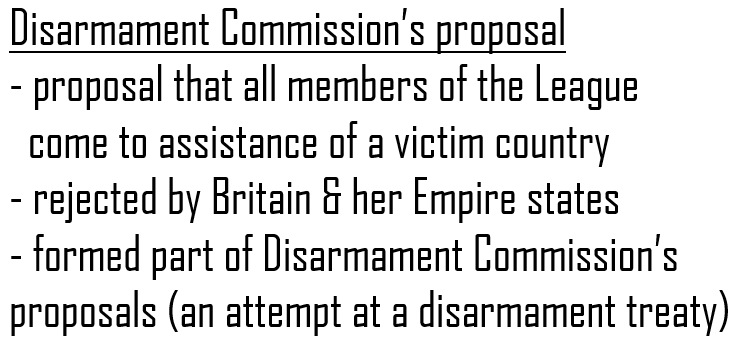
Today you are going to investigate the League’s attempts at encouraging disarmament…
League of Nations
1.
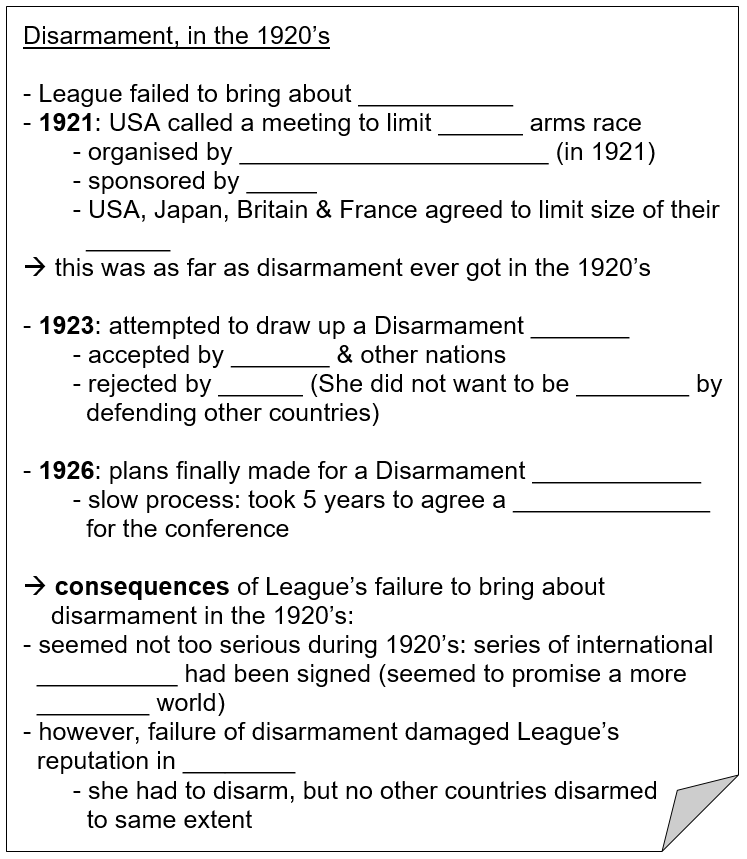
Disarmament in the 1920’s
“Disarmament in the 1920’s”, p.33-34.
2.


…about “Disarmament, in the 1920’s” … (p.77)
3.

(1:37 minutes long)
4.
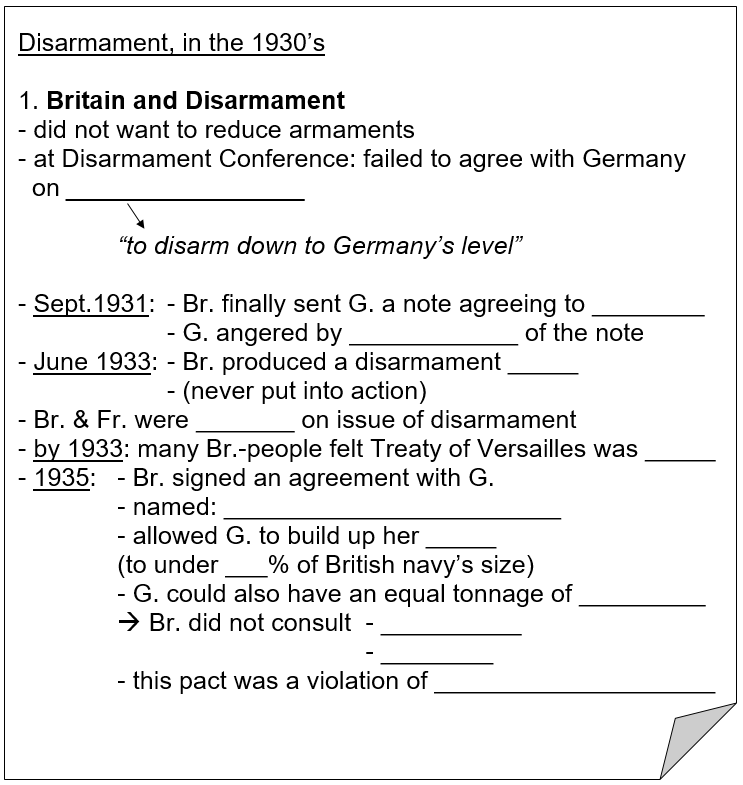
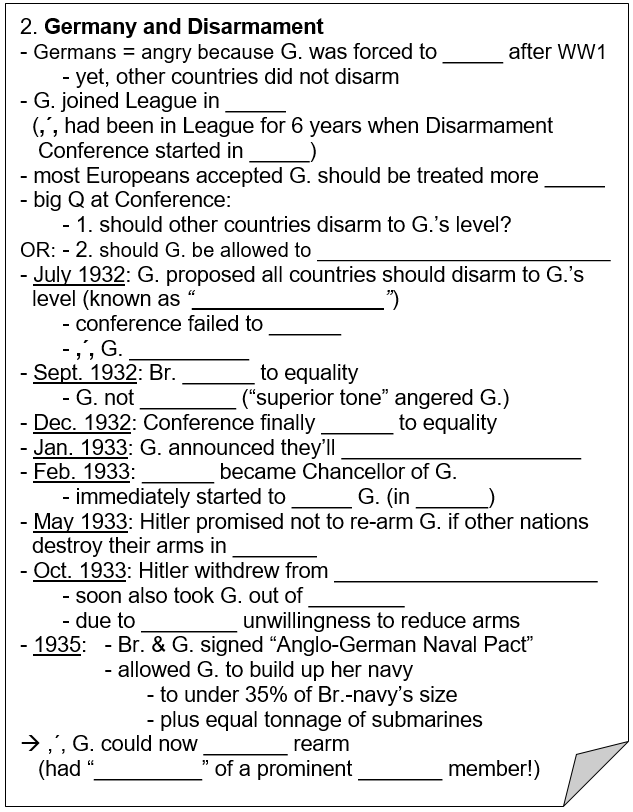
Disarmament in the 1930’s
“Why did disarmament fail in the 1930’s?”, p.78.
5.
…about “Disarmament, in the 1920’s” … (p.79-81)
Take note – these notes are divided into three parts:

6.
(6:05 minutes long)
7.

(WordPress advertisements may appear below.)
Today you are going to look at the Great Depression and how it impacted on international relations…
League of Nations
1.
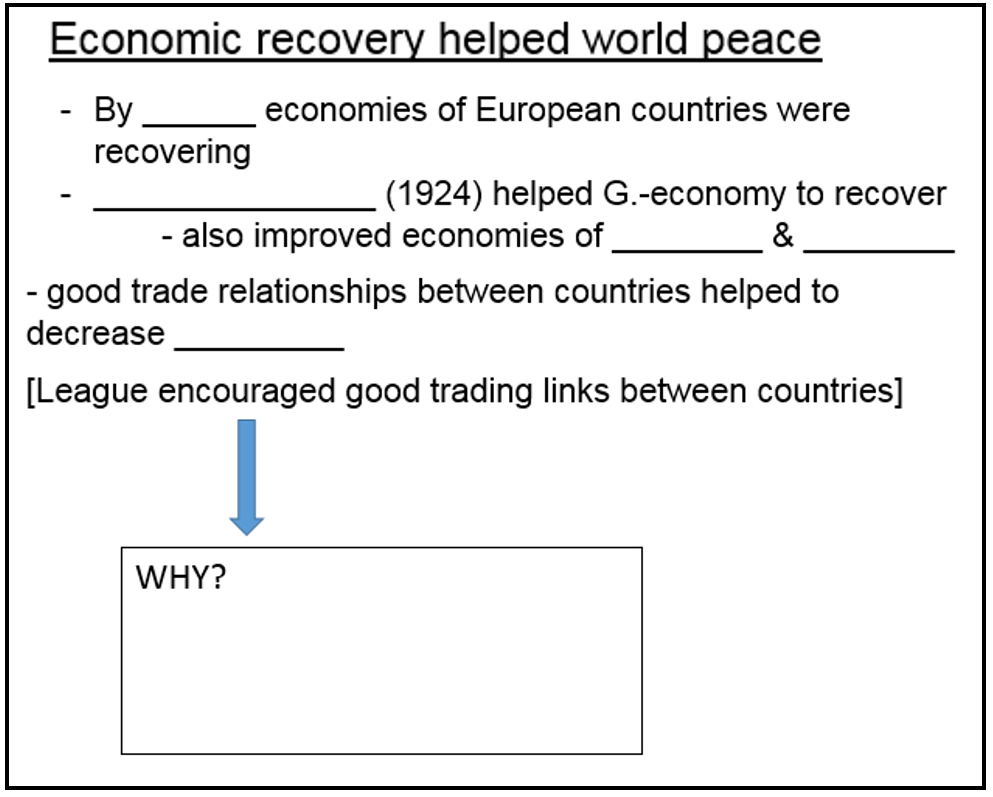
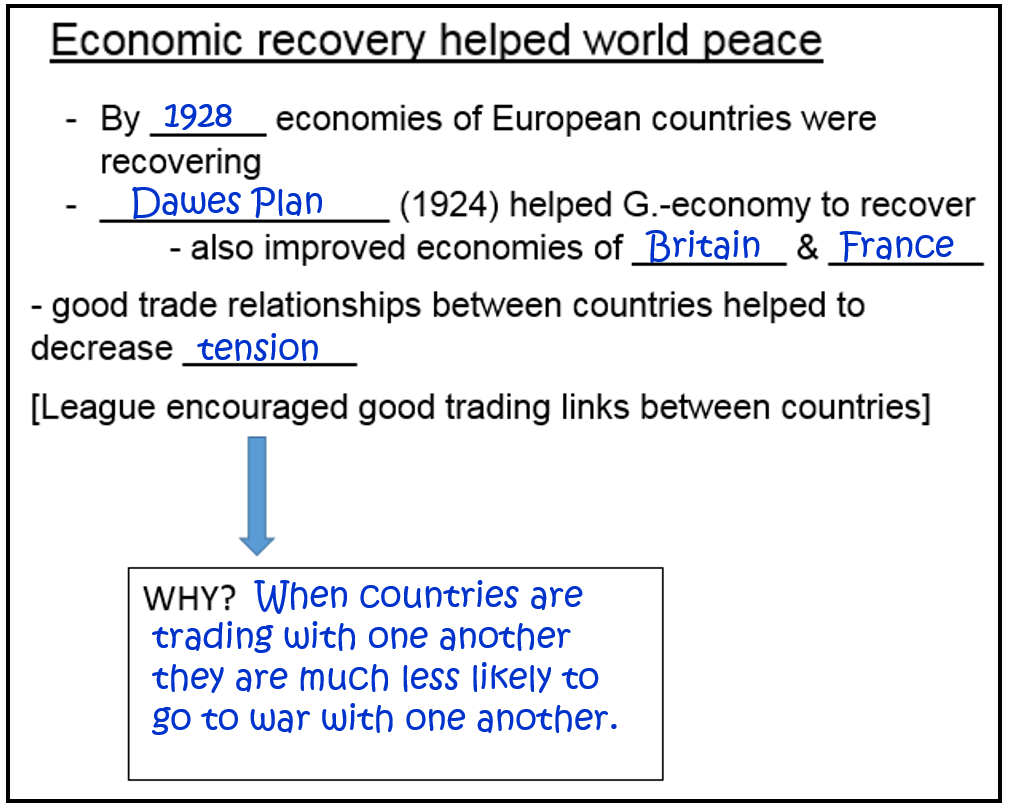
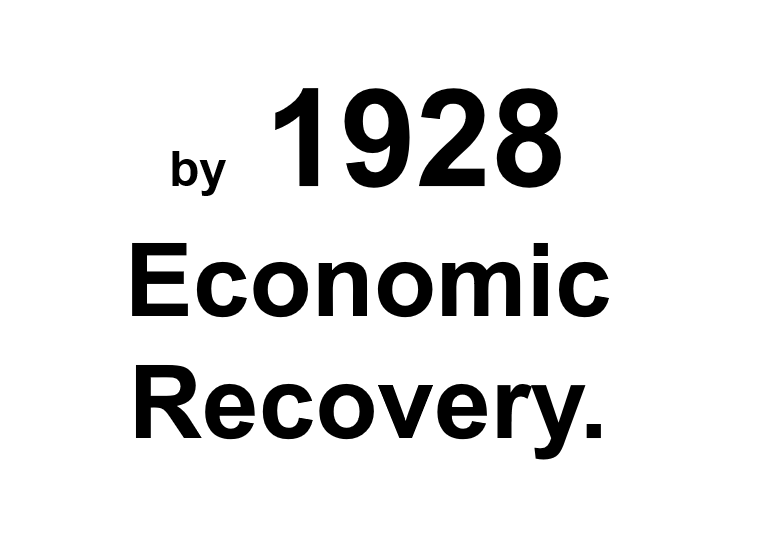
During the 1920’s people became hopeful that there may be lasting peace in Europe after all. Apart from International Agreements, the League’s good intentions and a general sense of goodwill and cooperation, economic recovery also contributed to world peace.
The following notes explain how “Economic recovery helped world peace”
Find the box below in your “League of Nations” booklet, p.50. Then fill in the missing information:
SOLUTION

2.

Also make brief notes on “Economic Recovery”, using the information on p.49-50…


3.
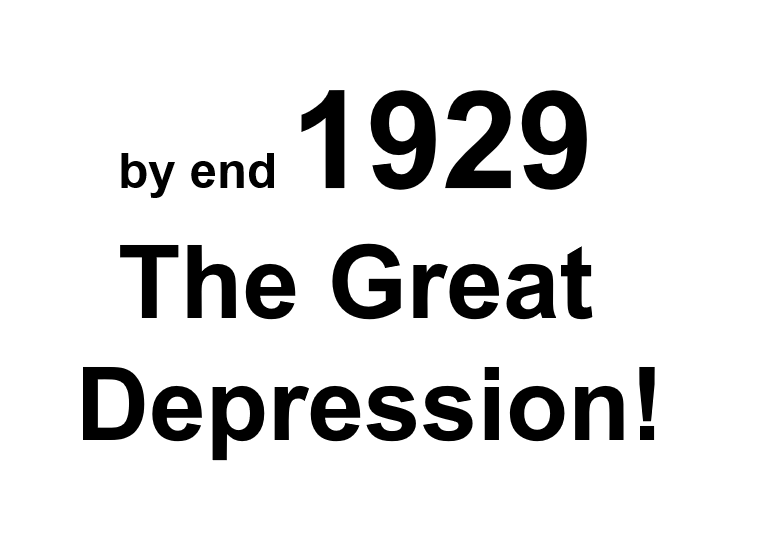
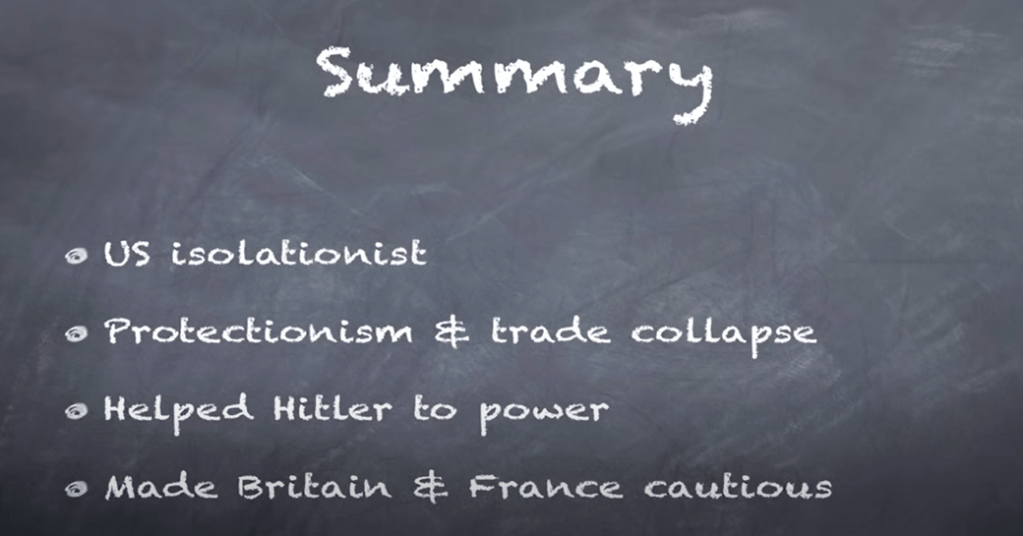
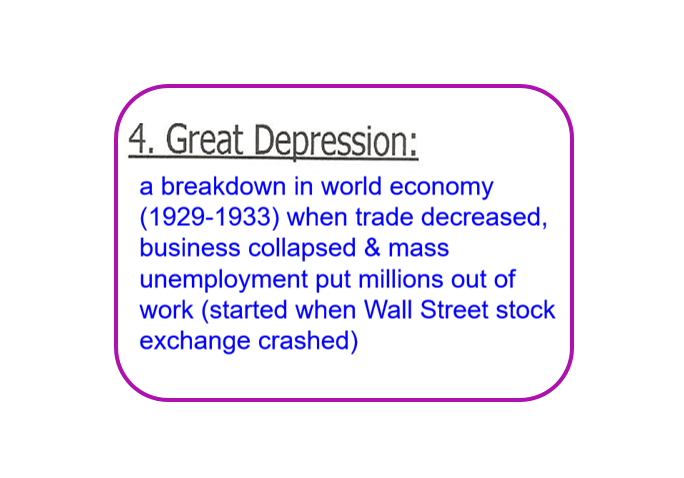
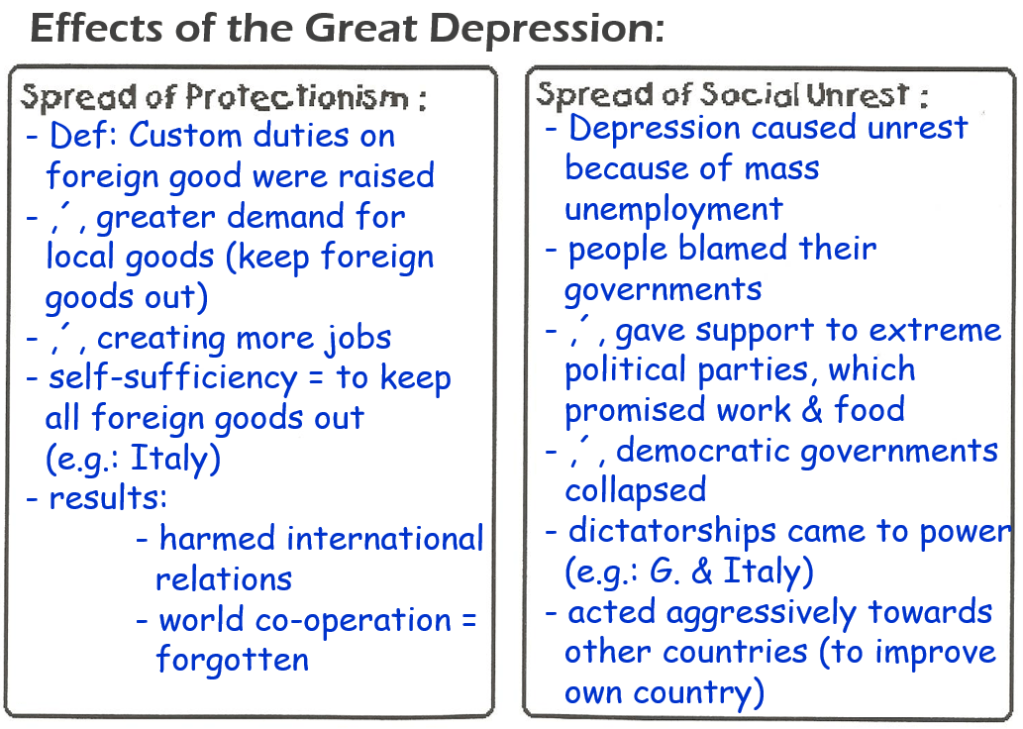
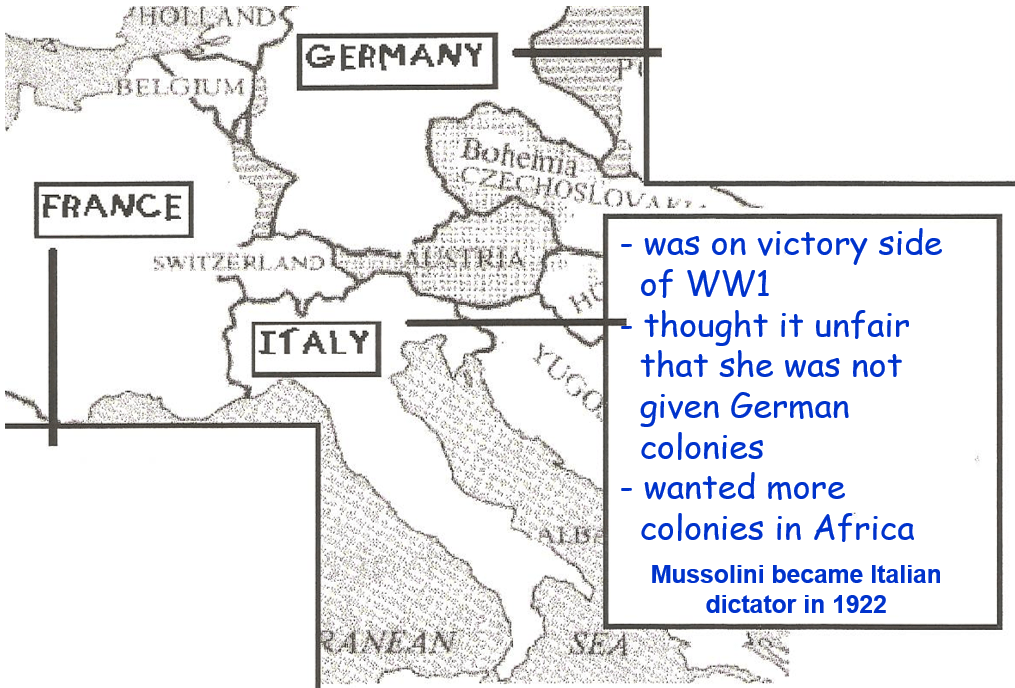
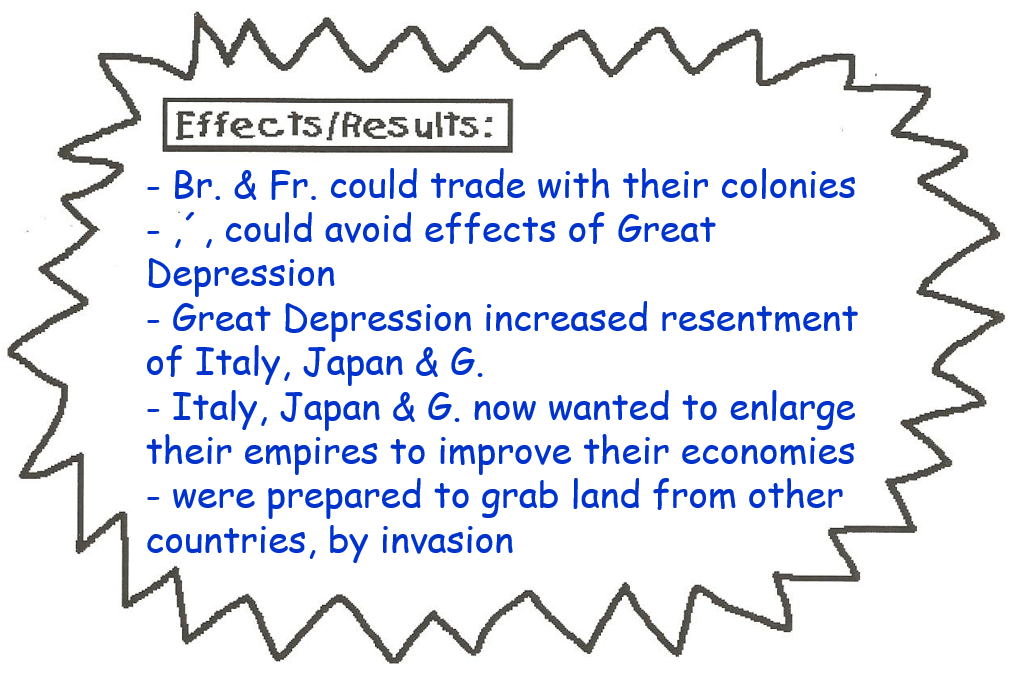
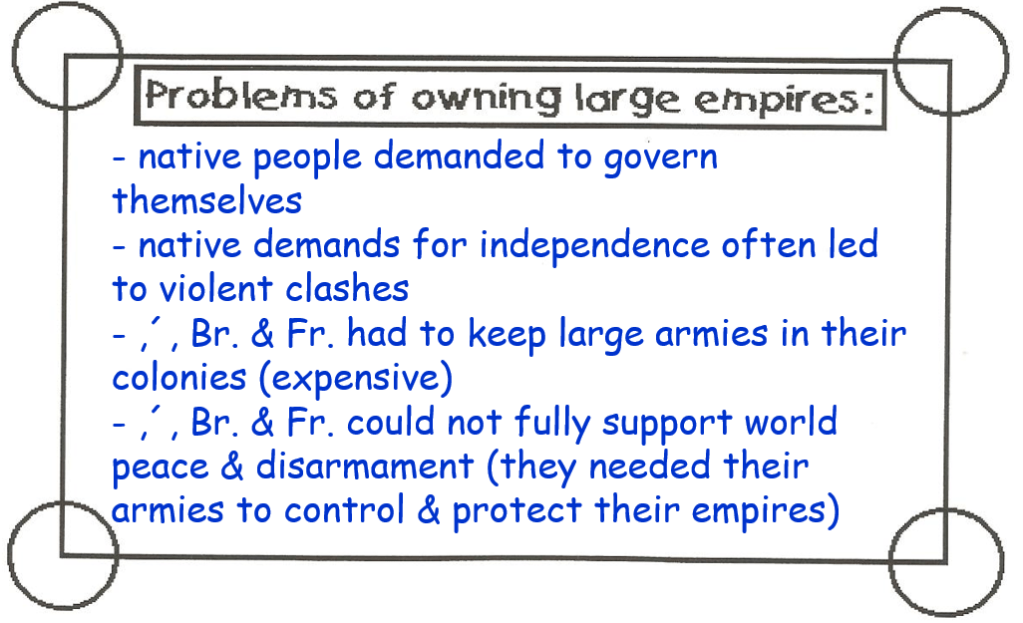
Unfortunately, the hopes for peace were soon dashed… In 1929 a worldwide economic depression started that had devastating consequences for world cooperation…

Important consequences of the Great Depression can be summarized as follows:
4.
Let’s examine what the Great Depression was all about – i.e.:
Below is a very short overview that answers all three questions above in brief!
The Great Depression explained in 2 minutes – What is The Great Depression and how it come about? (2:17 minutes long)
5.
Let’s look at the Great Depression in more detail by means of a few video clips that explains the stock market, its collapse and the impact it had on world economies…
The GREAT DEPRESSION in 4 Minutes. (3:42 minutes long)
How The Stock Exchange Works (For Dummies). (3:33 minutes long)
The Great Depression Explained in One Minute. (1:29 minutes long)
Wall Street Crash – Great Depression. (2:37 minutes long)
6.
“The Great Depression”, p.53-54.
7.
8.
Use pages 55-57 in your League of Nations booklet…
9.
Here is a final overview of the Great Depression and its significance…
The Great Depression & the League of Nations. (12:59 minutes long)
10.
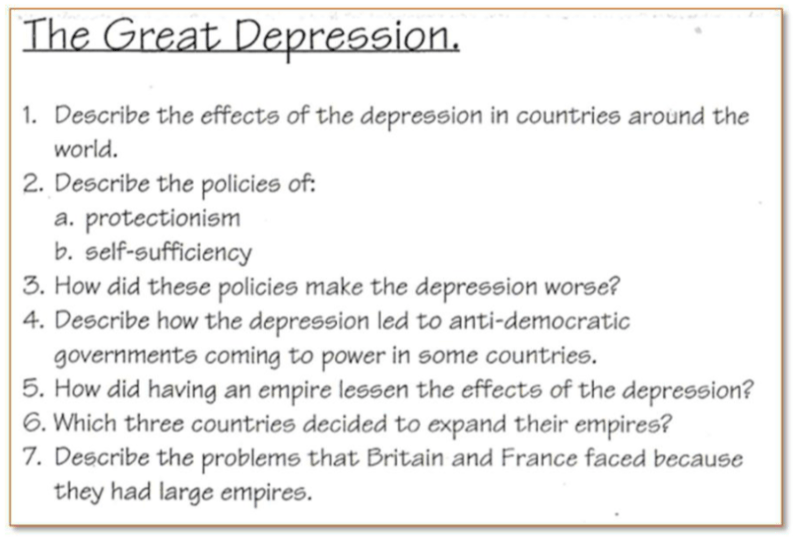
Answer the following questions:
The questions are also on p.52 of your “League of Nations” booklet.

11.

1929 Wall Street Stock Market Crash. (10:05 minutes long)
Teacher Talks – The Wall Street Crash – Watch, Revise, Repeat. (15:50 minutes long)
(WordPress advertisements may appear below.)
Today you are going revise why there was genuine hope for peace in Europe by 1929!
League of Nations
1.
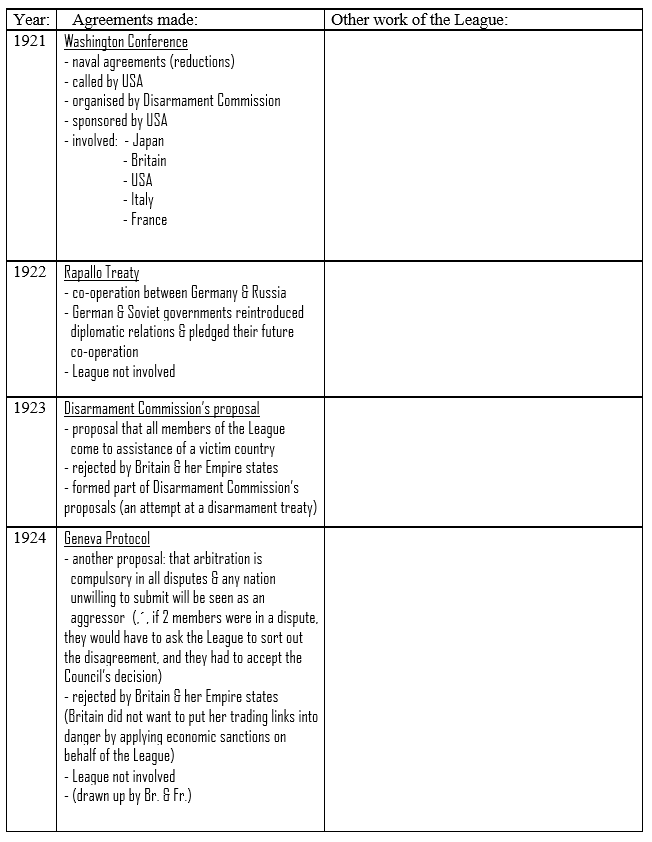
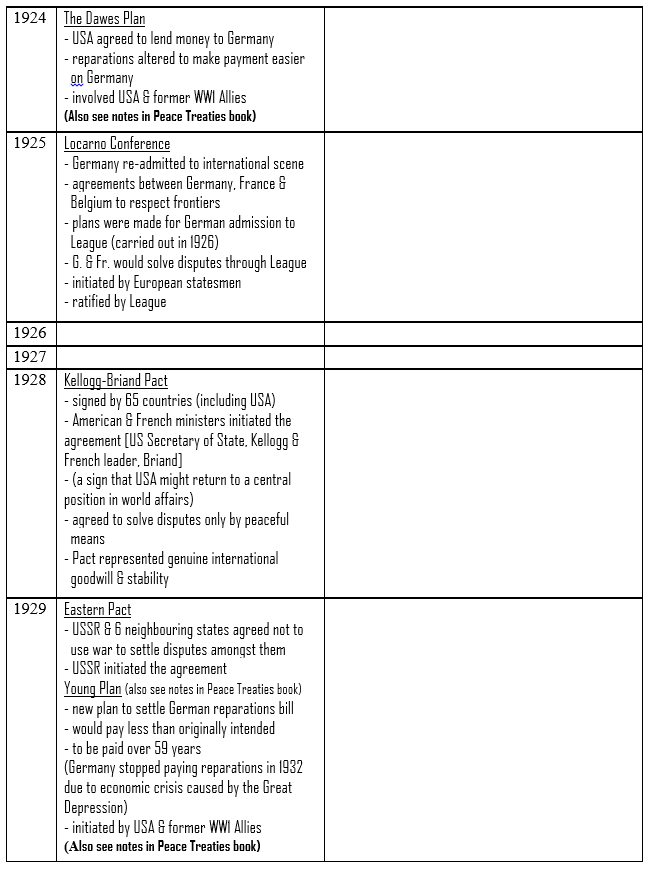
During the 1920’s there were a number of attempts to ensure lasting peace globally. Let’s see how well you know the international agreements of the 1920’s.
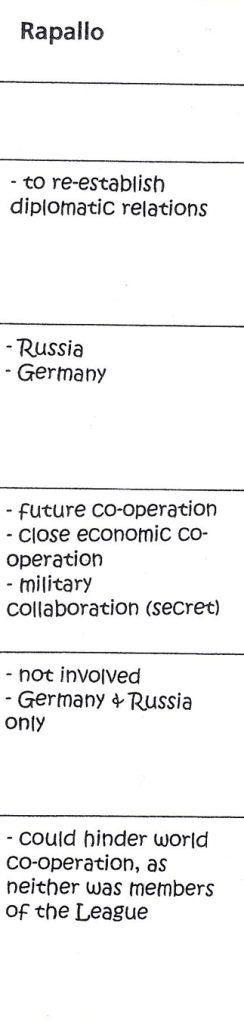
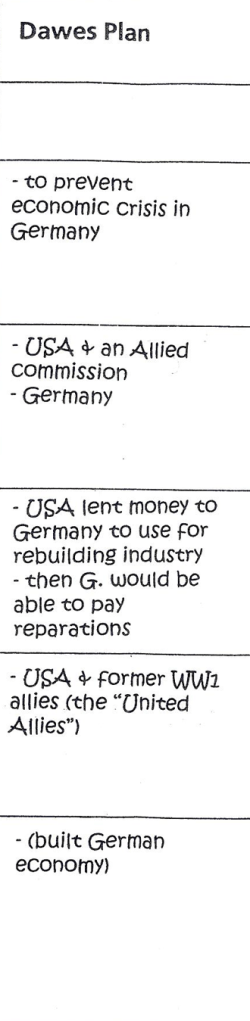
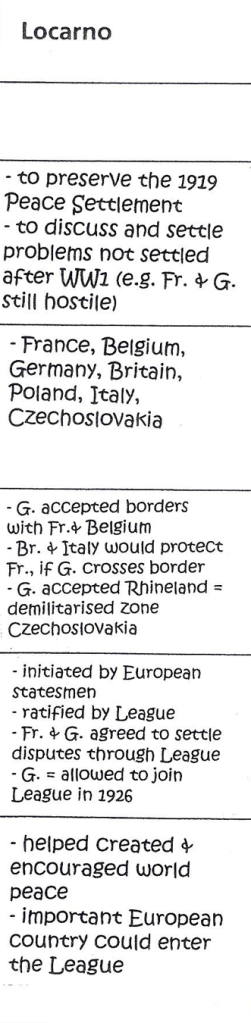
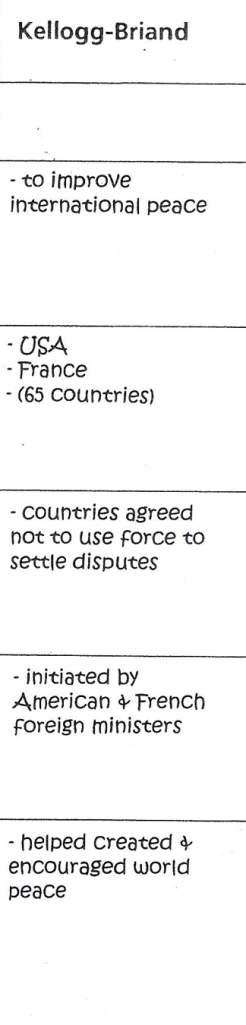
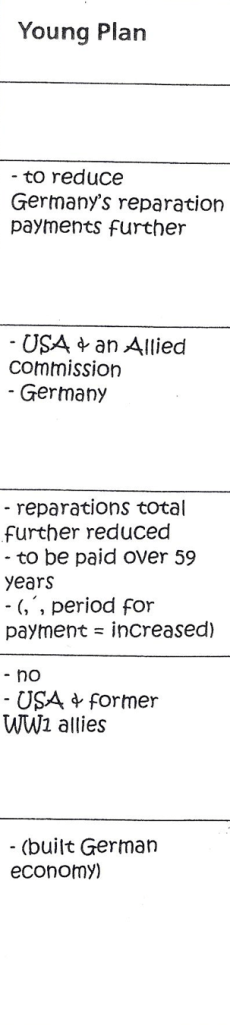
Fill in the table on “International Agreements” by cutting and pasting the relevant information (provided) in the corresponding places on the table. (You will find the table on p.46 in your League of Nations booklet.)
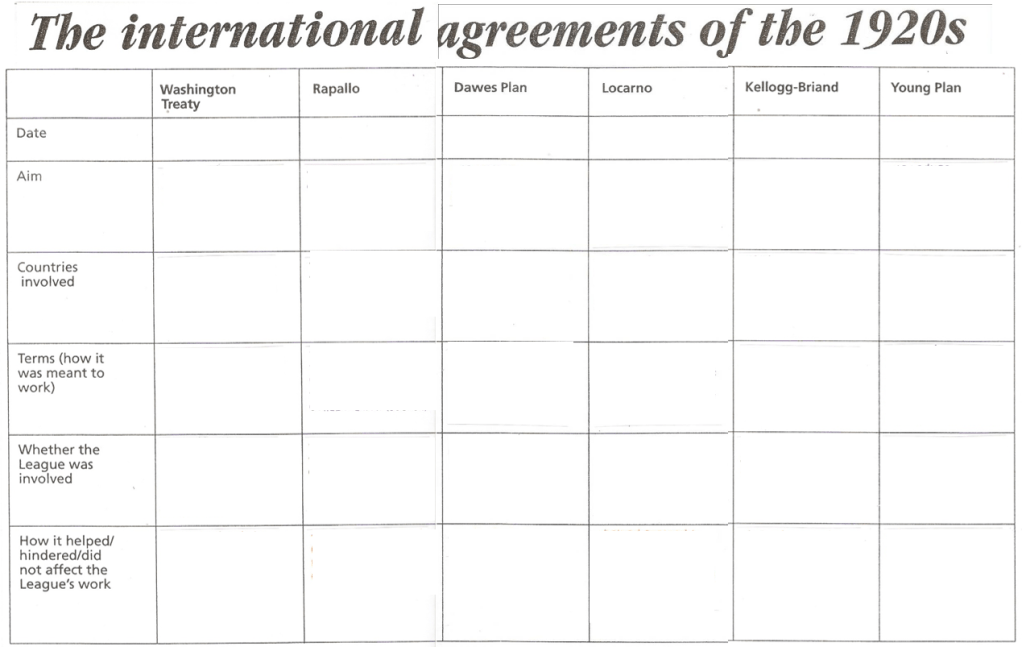
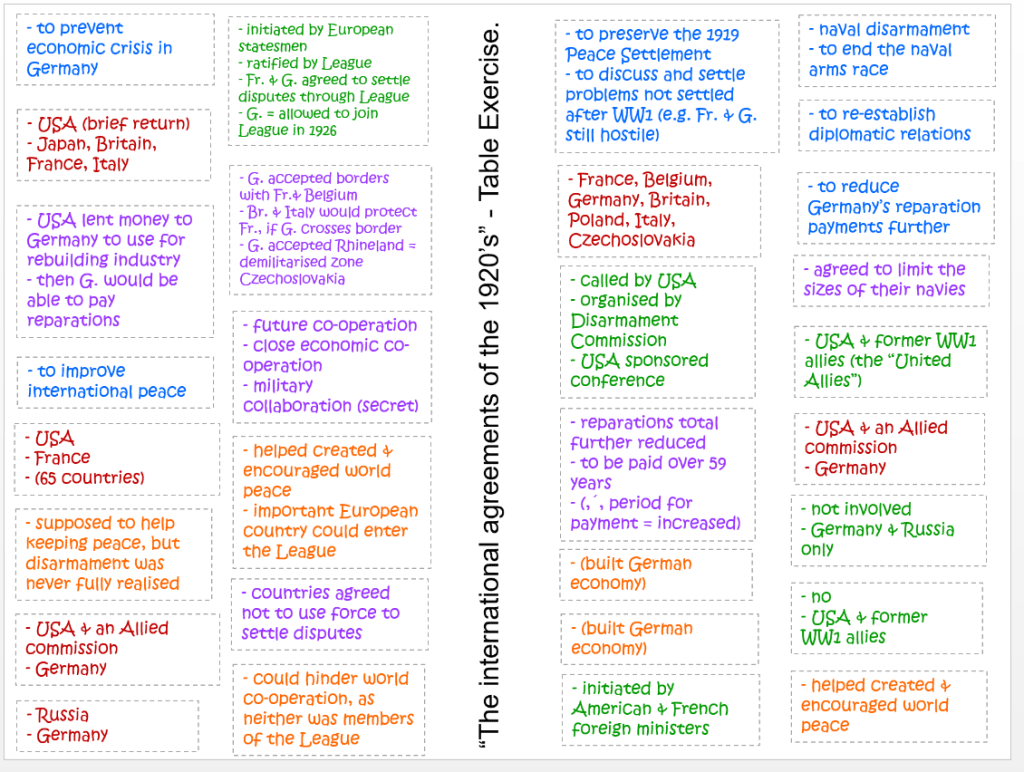
“Simplifier” Key:
Aim…
Countries involved…
Terms (how it was meant to work)…
Whether the League was involved…
How it helped / hindered / did not affect League’s work…
2.

First make sure that all the dates are correct:
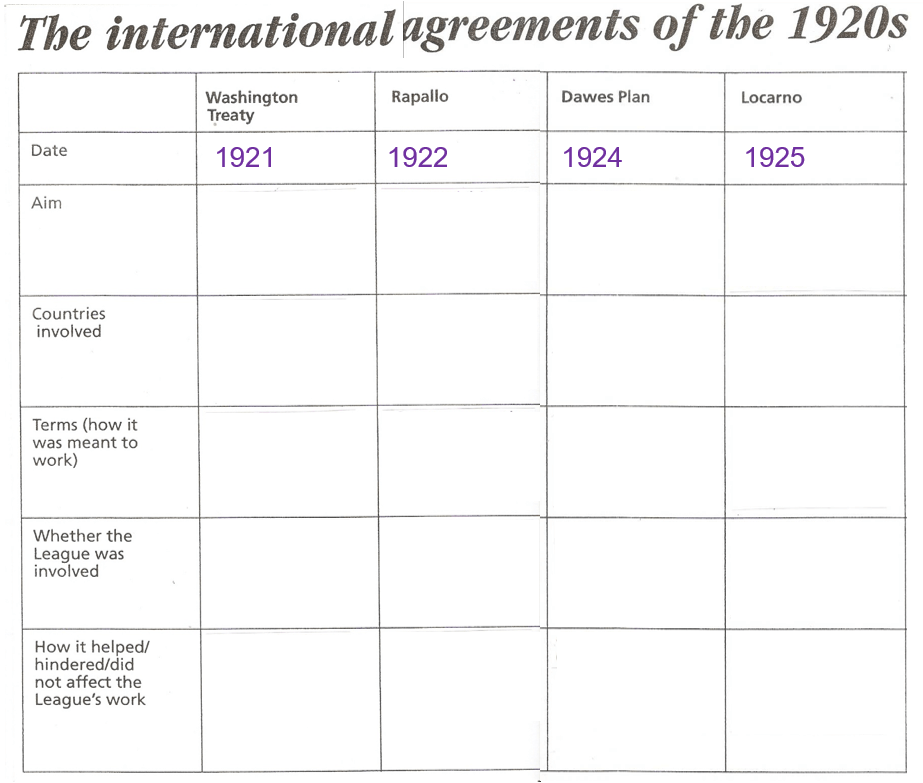
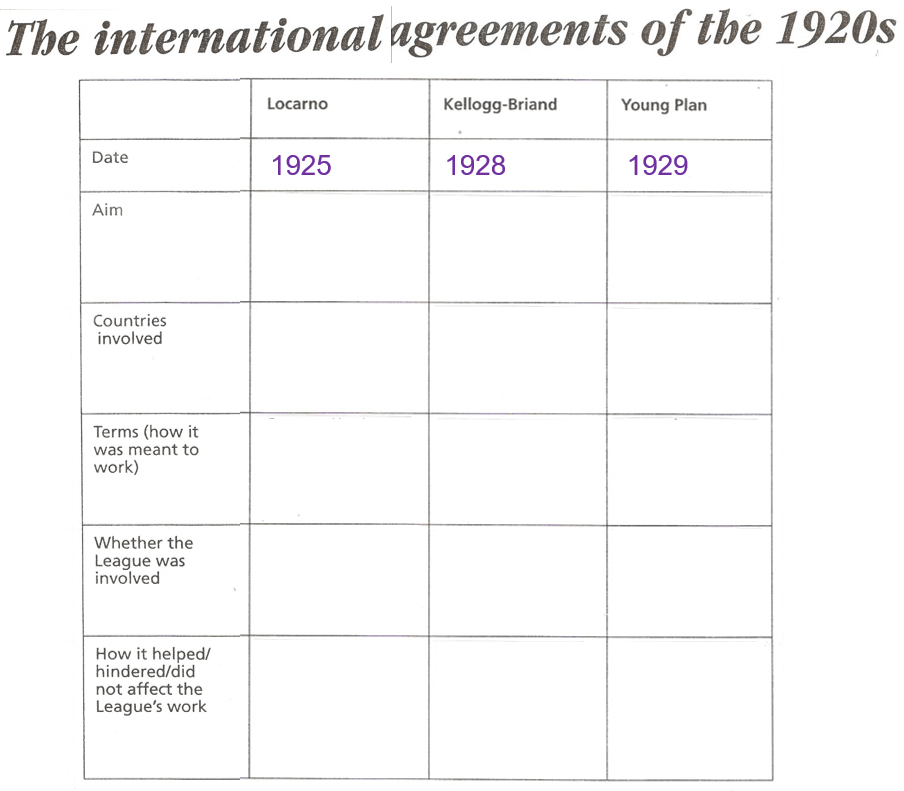
Now also correct the rest of the details…
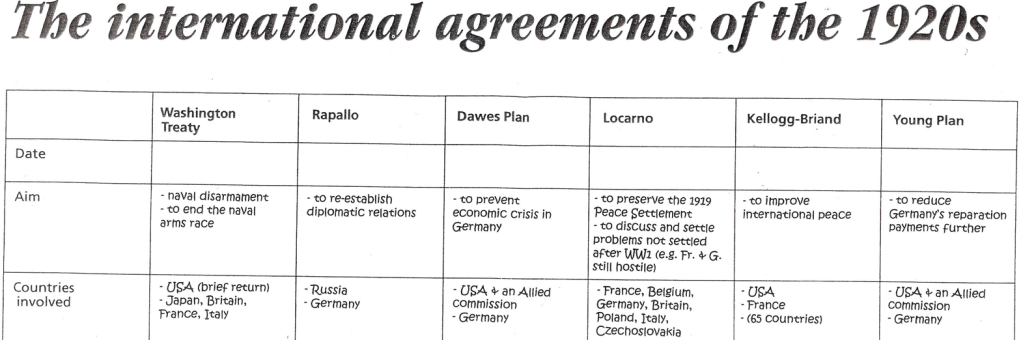
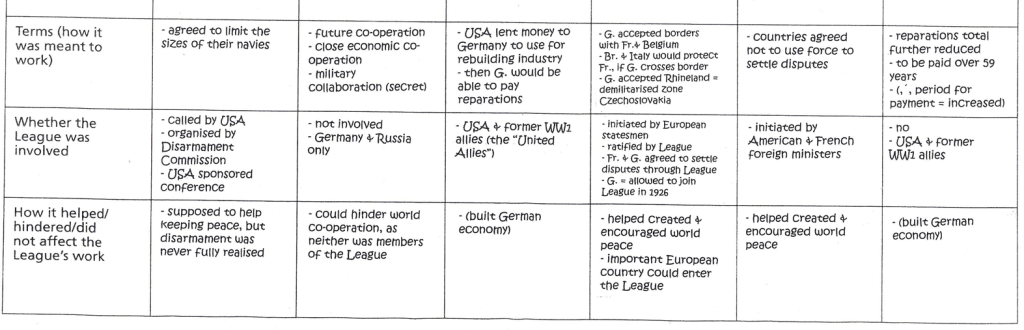
Enlarged details:
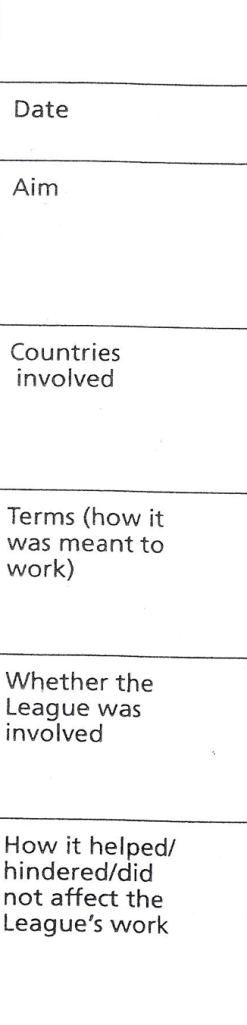
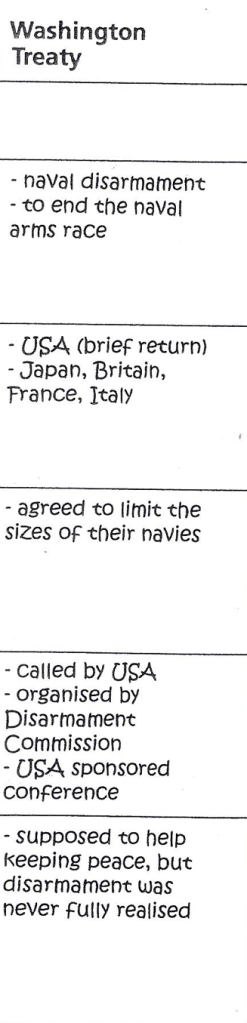
3.
Complete the following summary tasks in pages 47-52 your “League of Nations” booklet.

4.

As a reminder of the peace agreements made during the 1920’s, watch the following tutorial…
League of Nations & International Agreements. (11:08 minutes long)
5.
And what about disarmament in the 1920’s?
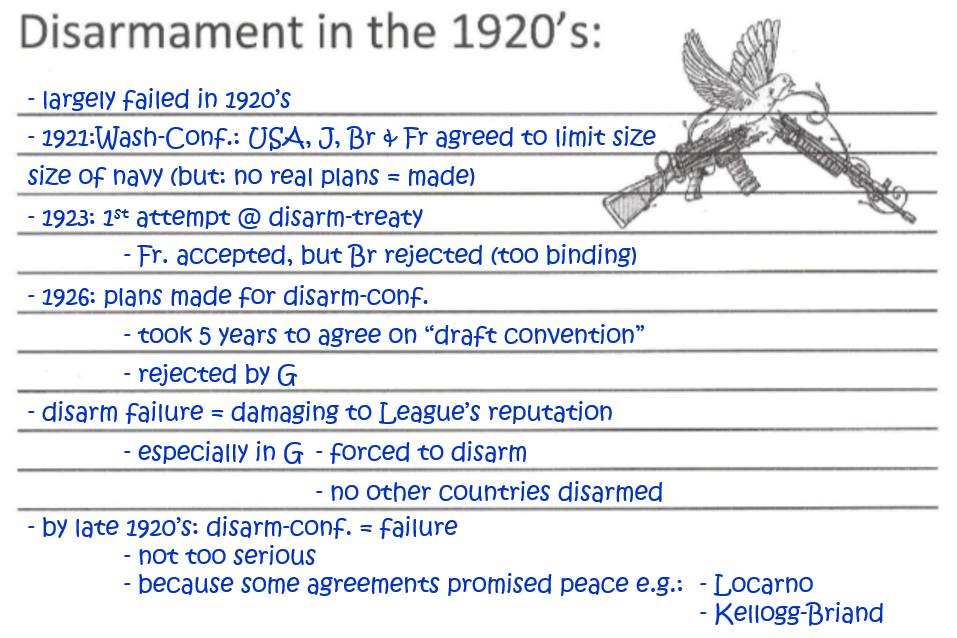
Complete the summary task on “Disarmament in the 1920’s” in your “League of Nations” booklet (p.33-34).

(WordPress advertisements may appear below.)
Today you are going examine why there was genuine hopes for peace in Europe by 1929!
League of Nations
1.
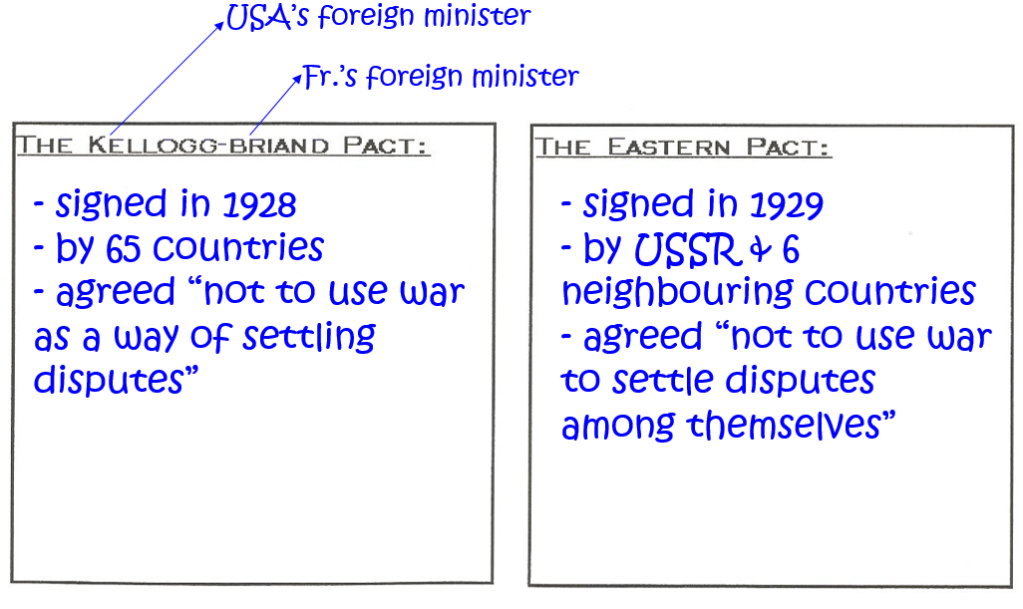
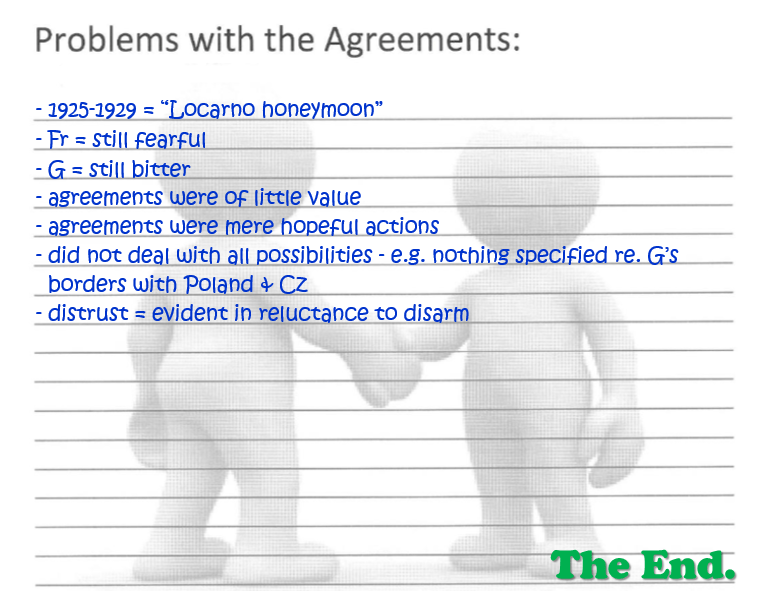
During the 1920’s there were a number of attempts to ensure lasting peace globally. These attempts did not always directly involve the League of Nations. Here are a few examples of such attempts.

2.
Let’s look at a few video clips that explain some of these agreements in more details.
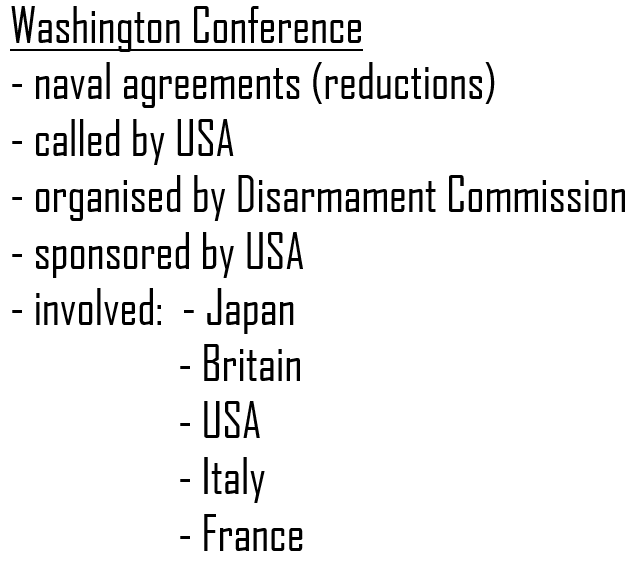
WASHINGTON NAVAL TREATY
End to All Wars? The Washington Naval Conference. (3:48 minutes long)
WASHINGTON NAVAL TREATY
What is Washington Naval Treaty? (1:49 minutes long)
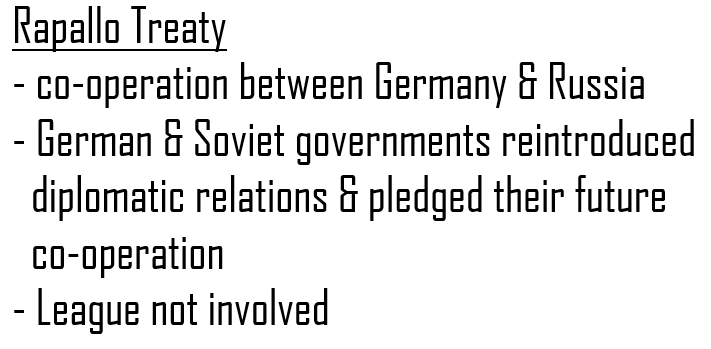
RAPALLO TREATY
The Treaty of Rapallo signed by Russia and Germany. (2:32 minutes long)
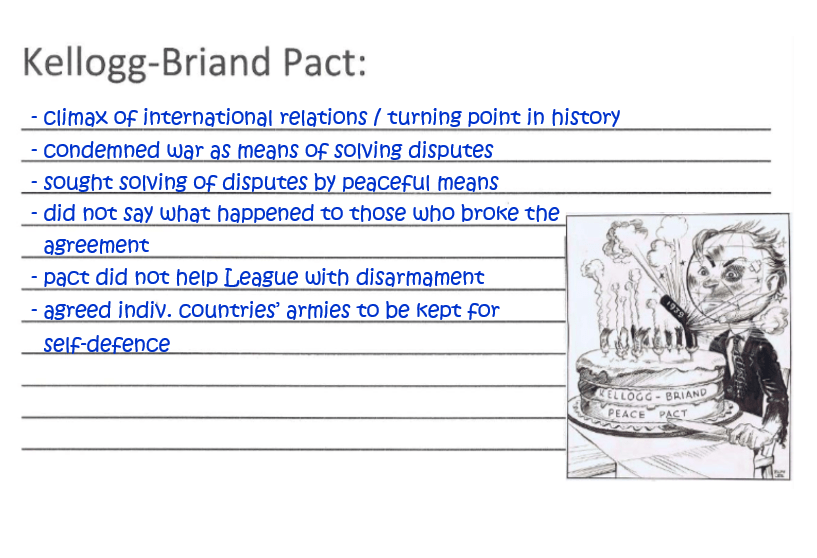
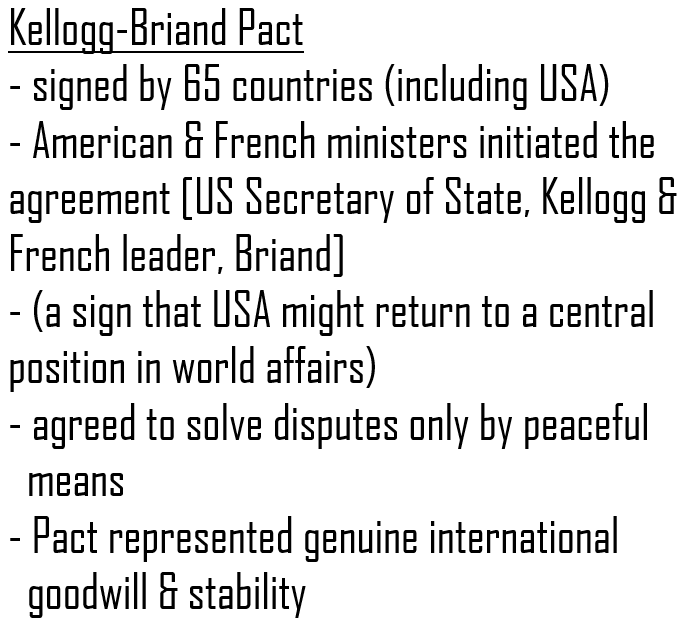
KELLOG-BRIAND PACT
The Kellogg-Briand Pact is signed. (2:38 minutes long)
KELLOG-BRIAND PACT
What is Kellogg–Briand Pact? (2:44 minutes long)
3.
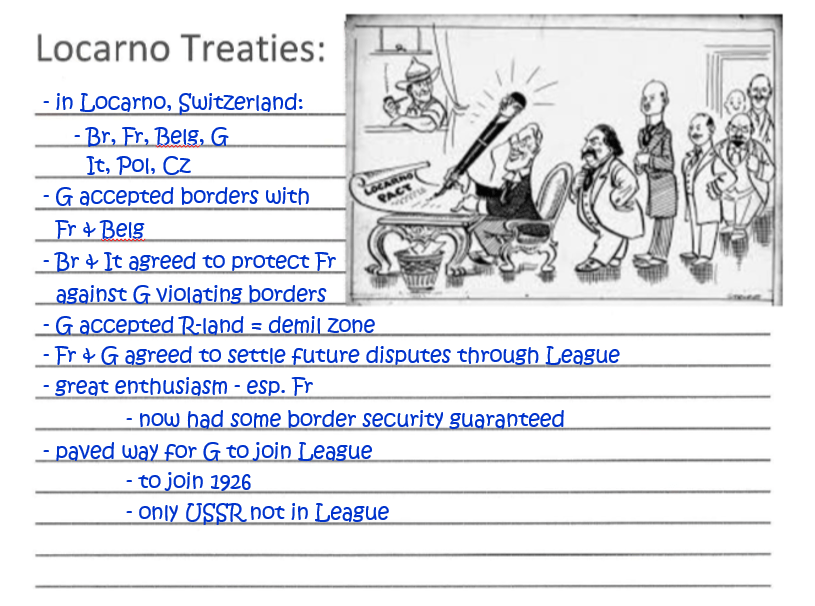
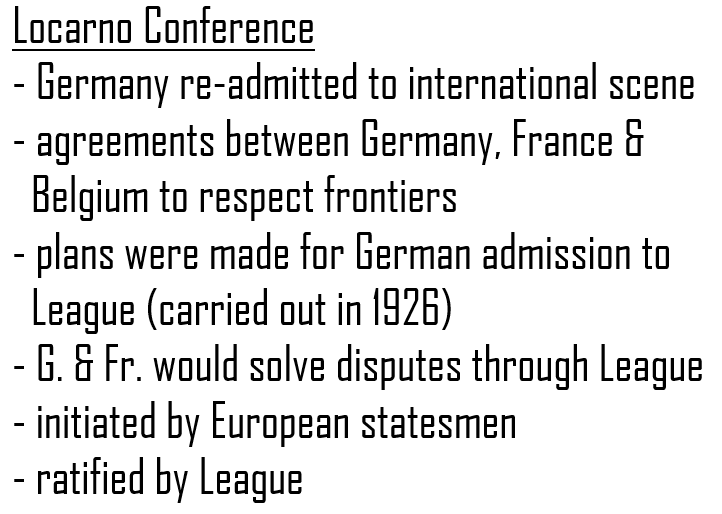
“Improving the Peace – Locarno & The ‘New Era’ “, p.40.
AND
p.44 (continuation of above article)
4.



5.
Use page 41 in your League of Nations booklet…
6.
(p.42-43)
7.
Once completed, mark your answers on the League of Nations Questions.
8.
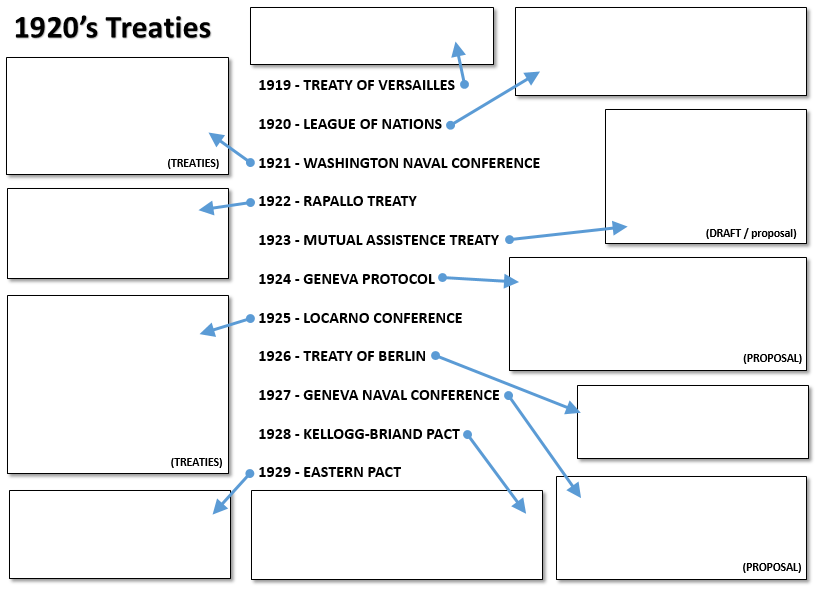
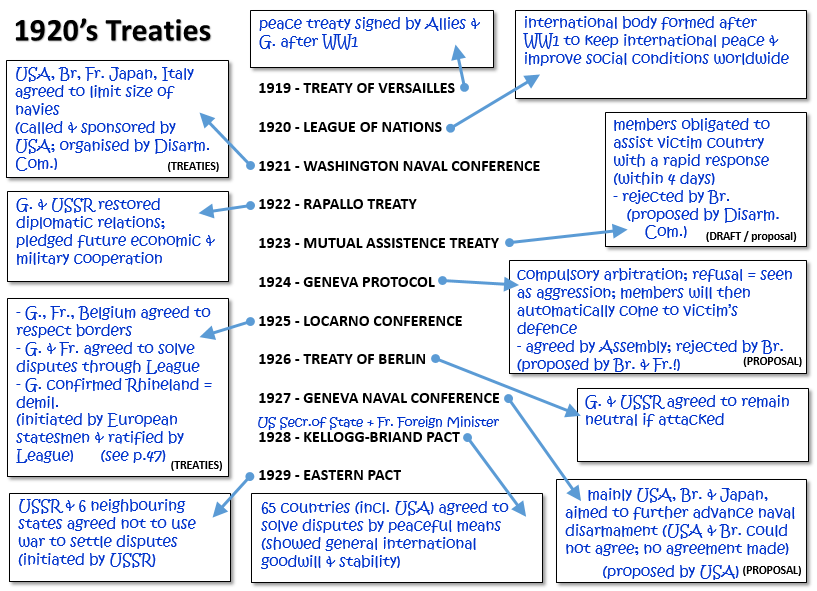
Complete the worksheet below to show all the agreements made (and attempted agreements) of the 1920’s:

(WordPress advertisements may appear below.)
Today you are going to complete some questions about the Disputes of the 1920’s…
League of Nations

1.
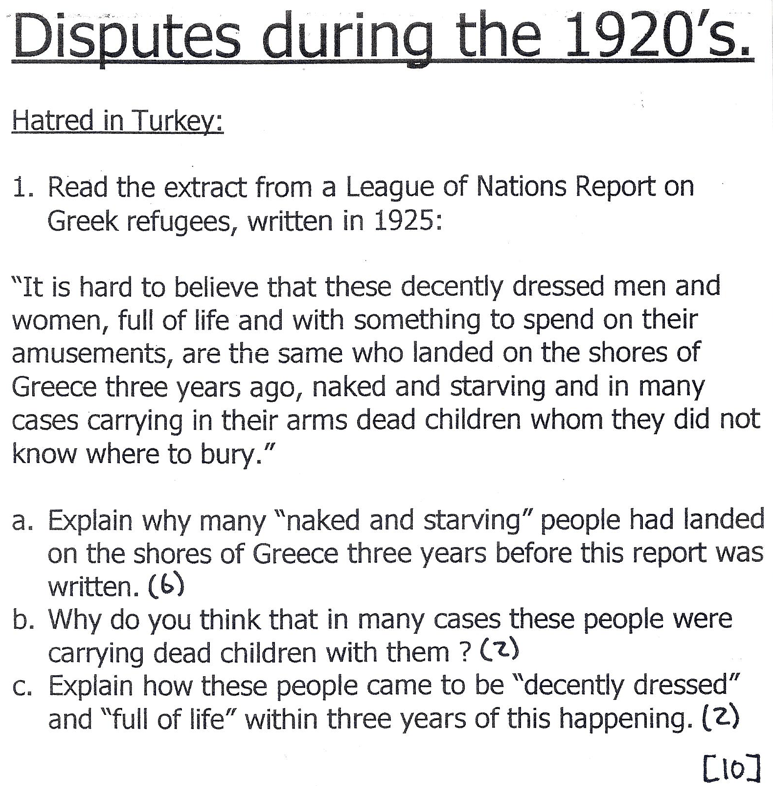
If not completed in the previous lessons, stick the worksheet on “Hatred in Turkey” (provided) into your book. (It is also on p.37 of your booklet.) Then answer the questions in full sentences.
2.
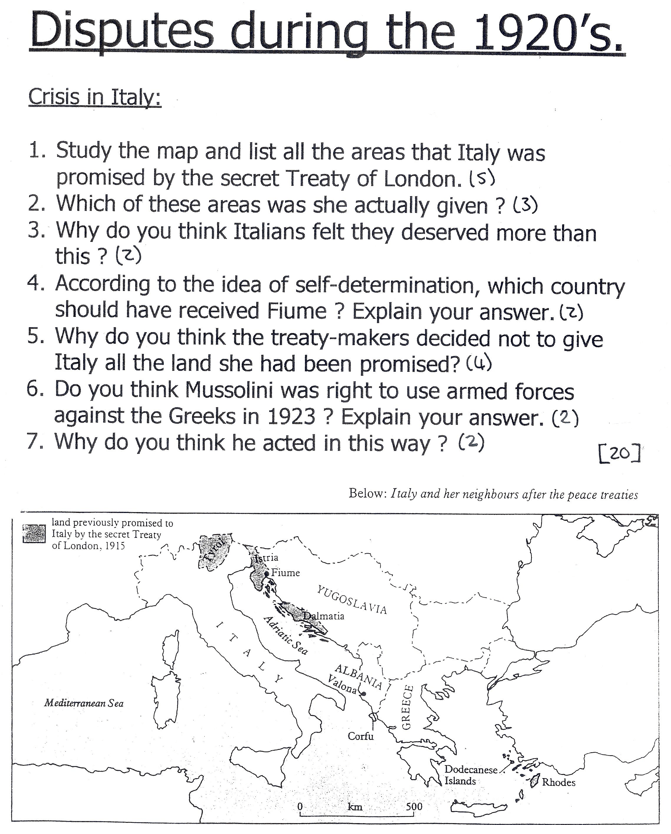
Stick the worksheet on “Crisis in Italy” (provided) into your book. (It is also on p.36 of your booklet.) Then answer the questions in full sentences.
3.
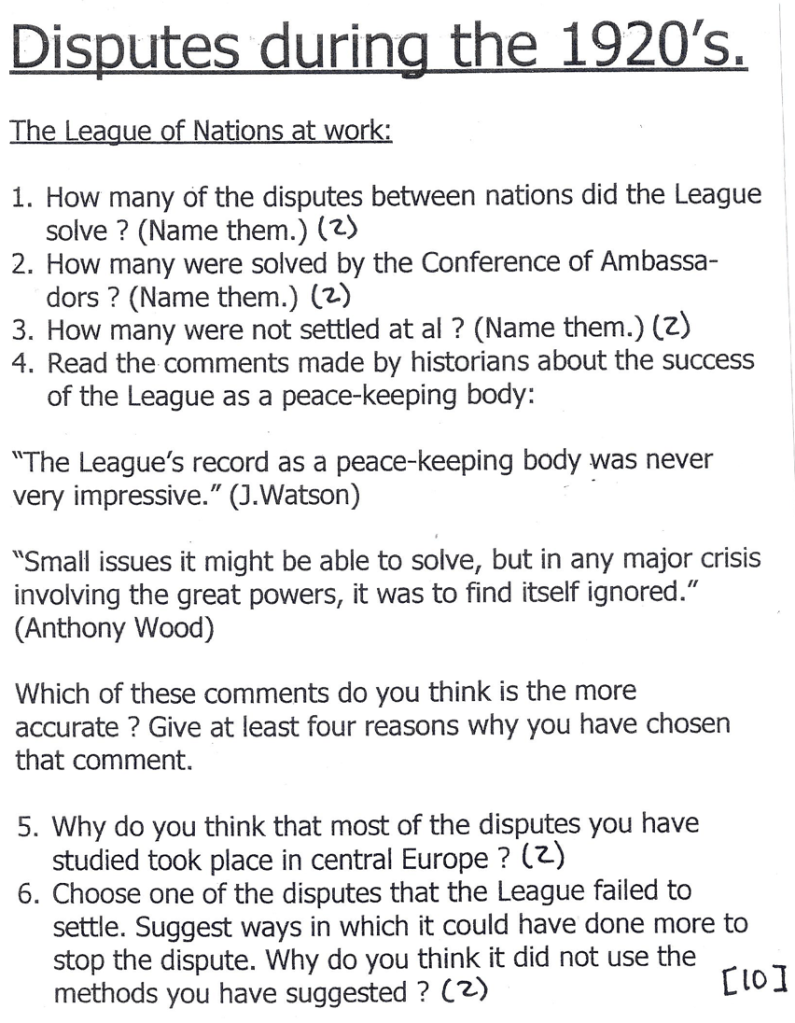
Stick the worksheet on “The League of Nations at work” (provided) into your book. (it is also on p.38 of your booklet.) Then answer the questions in full sentences.
4.

Once completed, mark all your answers on the “Disputes during the 1920’s” Questions.
5.
League of Nations in the 1920s. (12:15 minutes long)
6.

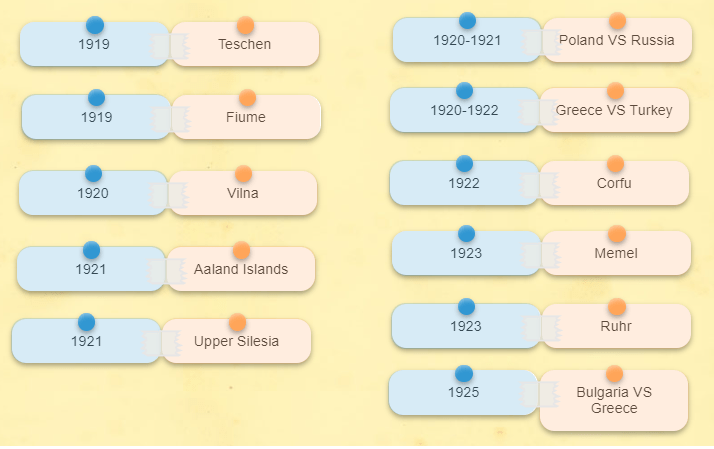
7.
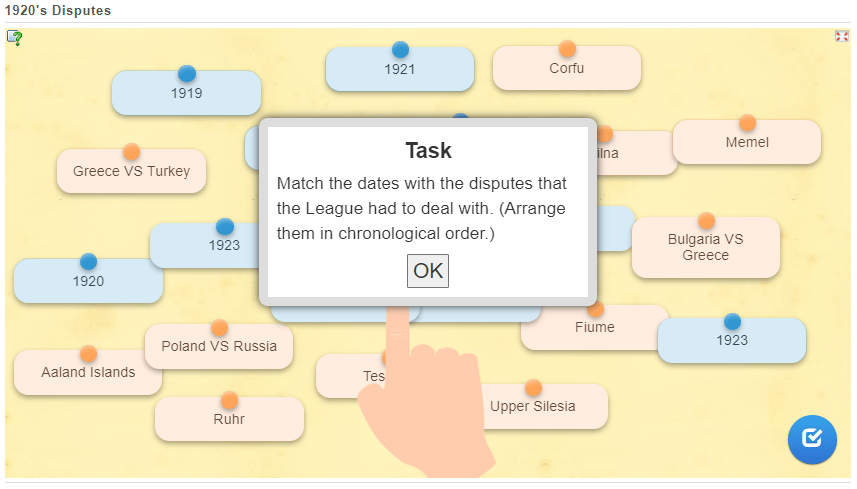
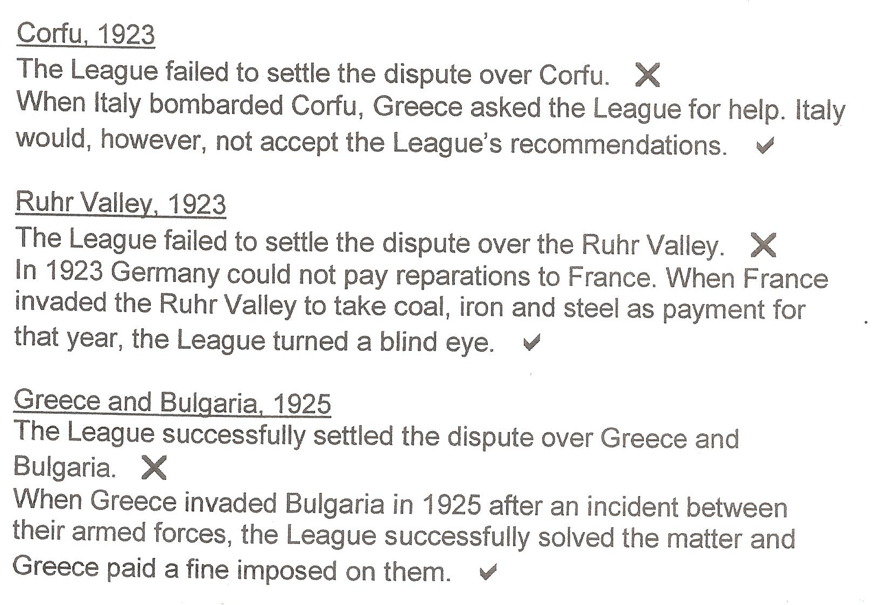
There is a right way and a wrong way to use the disputes… Carefully examine the information below:
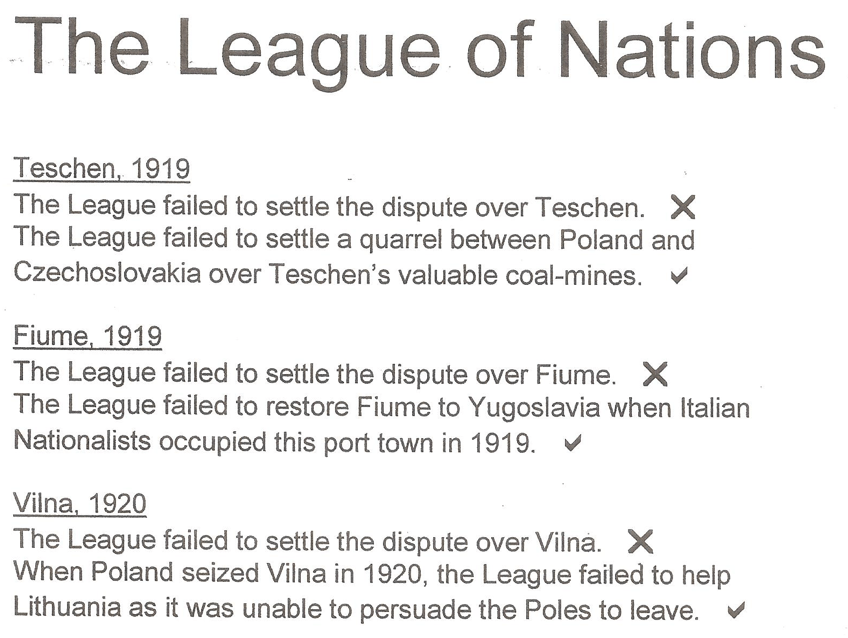
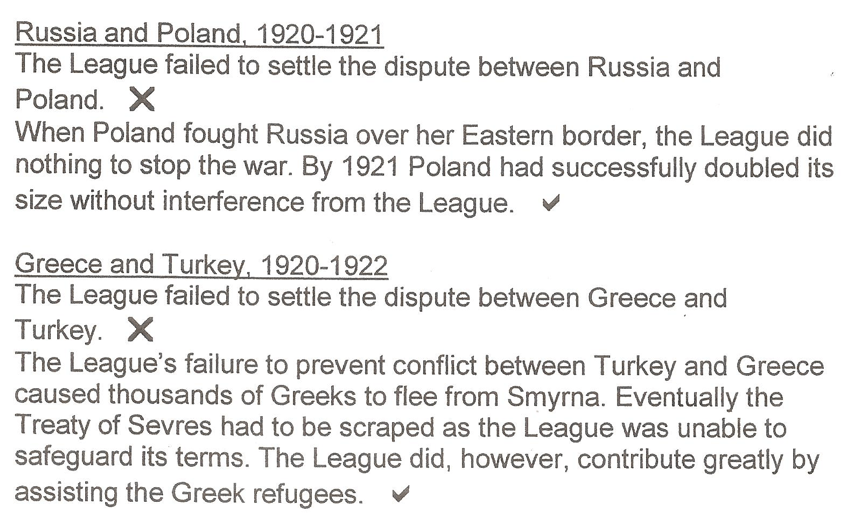
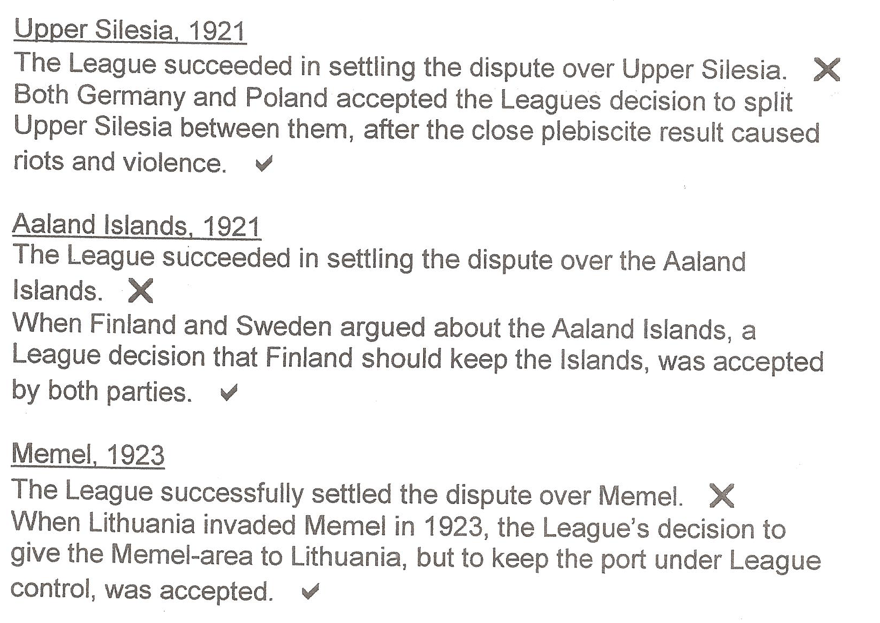
8.

The first video is about the disputes – explained on whiteboard by a teacher.
The League in the 1920s. (11:24 minutes long)
This id a cringy song…that is rather impressive at the same time, as it summarizes the 1920 disputes.
League of Nations in the 1920s Song – GCSE History. (2:05 minutes long)
(WordPress advertisements may appear below.)
Today you are going to continue to examine some of the first challenges that the League faced!
League of Nations
1.
1.
EIGHT: The Dispute over Memel

Dispute: Memel. (0:48 minutes long)
2.


3.
NINE: The Bombardment of Corfu
Dispute: Bombardment of Corfu. (1:14 minutes long)
4.
“Crisis in Italy: Challenges to the Treaty of Versailles.” (p.25)
5.
Make a note on your Disputes Article that the details for the dispute over Corfu can be found on p.25 in your League booklet.
6.
TEN: The Invasion of the Ruhr
Dispute: Invasion of Ruhr Valley. (1:45 minutes long)
7.
“Reparation and ruin in Germany.” (p.30-31)
8.

Make a note on your Disputes Article that the details for the dispute over the Ruhr Valley can be found on p.30-31 in your League booklet.
9.
Additional material on the French invasion of the Ruhr Valley…
POD: 11th Jan. 1923: French & Belgian troops occupy the Ruhr. (3:03 minutes long)
1923: The French Occupation of the Ruhr. (3:18 minutes long)
10.
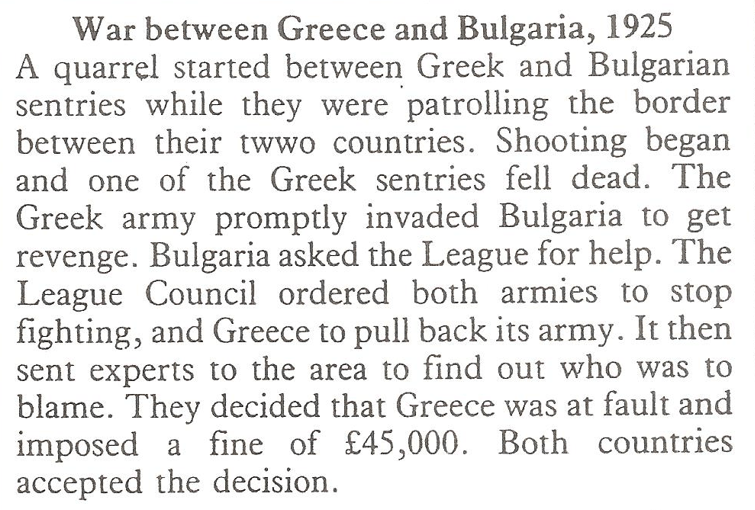
ELEVEN: War between Greece & Bulgaria
Dispute: Greece vs. Bulgaria. (0:51 minutes long)
11.

12.
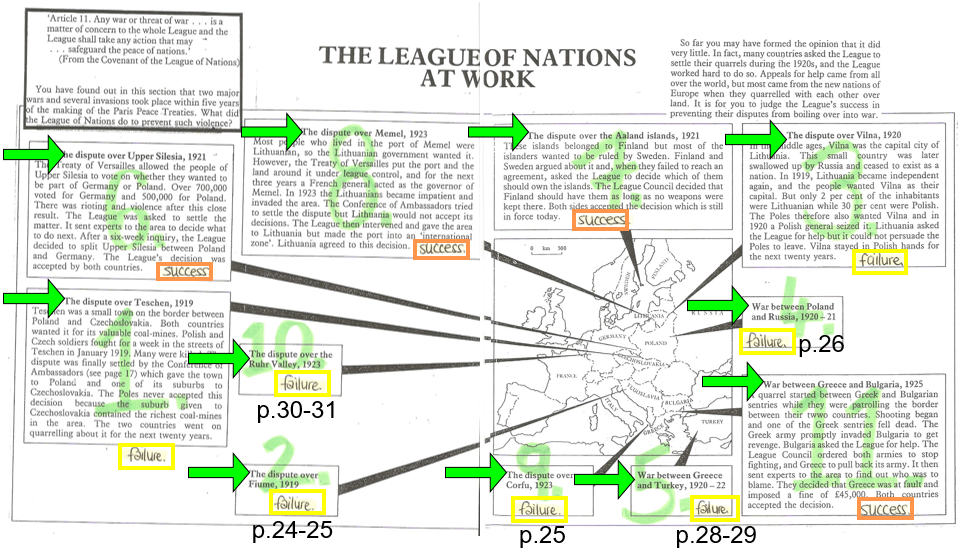
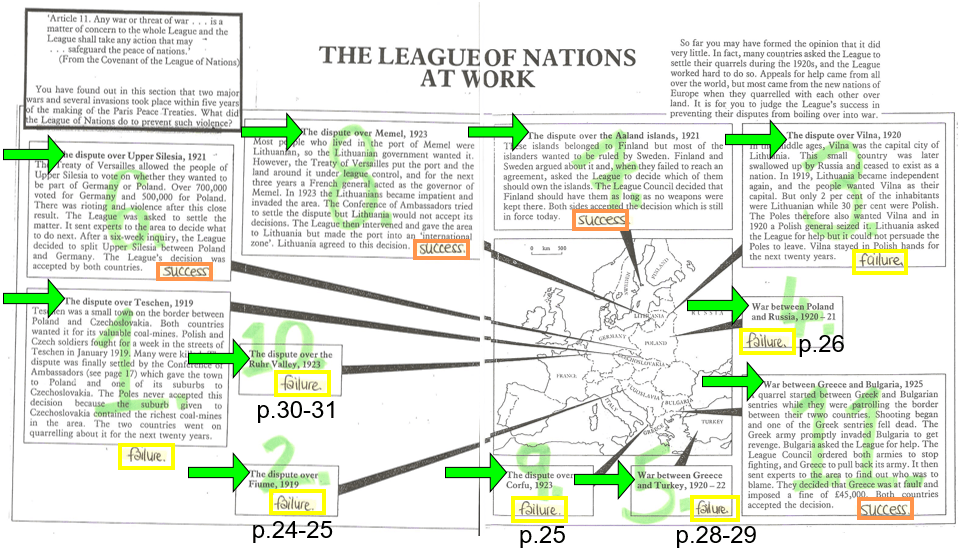
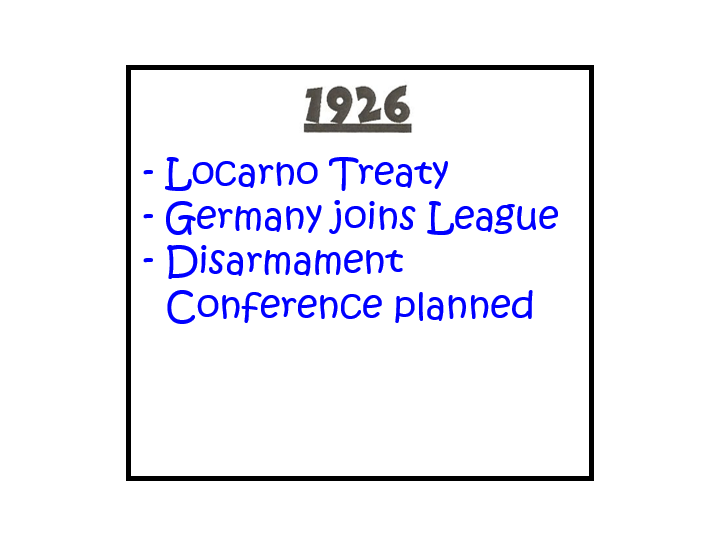
We have now looked at most of the major disputes that the League had to deal with in the 1920’s. Use your Disputes Article to indicate how many successes and how many failures there were for the League in the 1920’s. Also indicate relevant page numbers on the sheet. (See image below.)
13.

Complete the missing information on the following Disputes that the League had to deal with in the first 10 years of its existence:
Also complete the definition boxes on page 27.


15.
If there is still time in this lesson, stick the worksheet on “Crisis in Italy” (provided) into your book. Then answer the questions in full sentences.
16.
Make a Tarsia Puzzle on the Disputes of the 1920’s, using the link below. (You need to use the “9-triangle template” for this task.)
INSTRUCTIONS
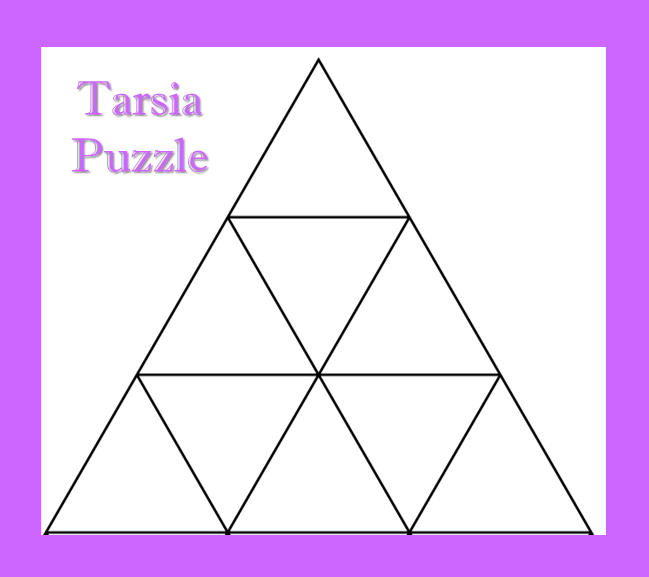
If you want to do this manually, download the template.
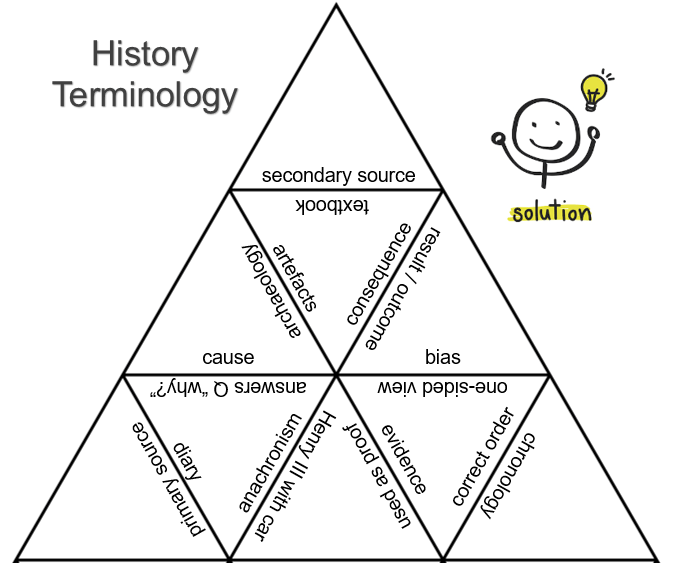
Alternatively, first familiarize yourself with the concept by doing this easy Tarsia Puzzle on History terminology before you start to make your own Tarsia on the Disputes of the 1920’s. (The puzzle pieces will be handed out to you.)

SOLUTION
(WordPress advertisements may appear below.)
Today you are going to examine some of the first challenges that the League faced!
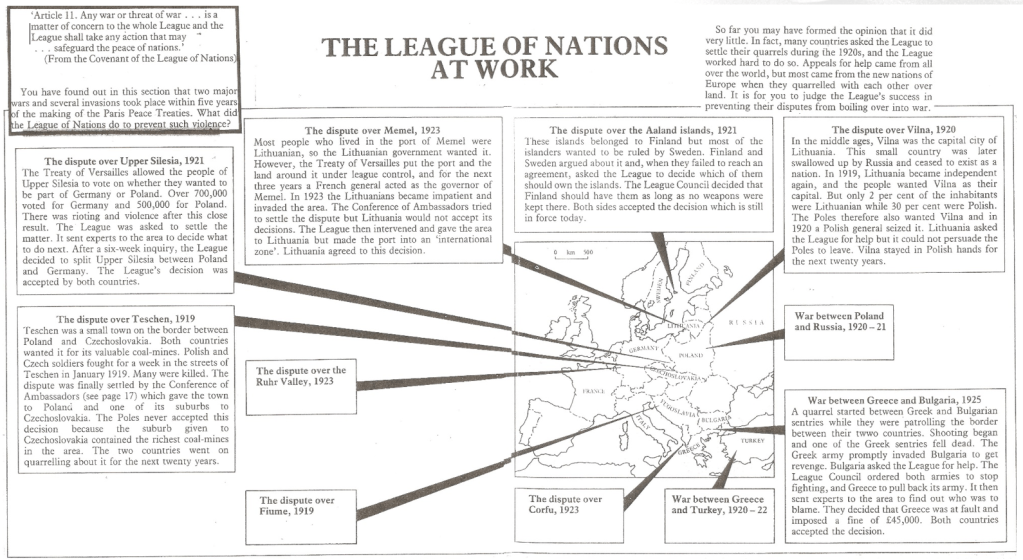
League of Nations at Work
“Any war or threat of war… is a matter of concern to the whole League and the League shall take any action that may… safeguard the peace of nations.”
(from the Covenant of the League of Nations)
1.
Look at the diagram (on p.16-17) on “The League of Nations at work”.
It shows some of the disputes that the League had to deal with in the first 10 years of its existence.
2.
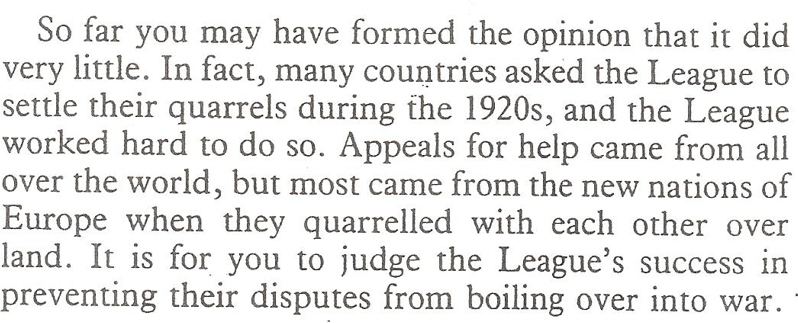
Read the introductory paragraphs on this article about…

The League of Nations at Work:

3.
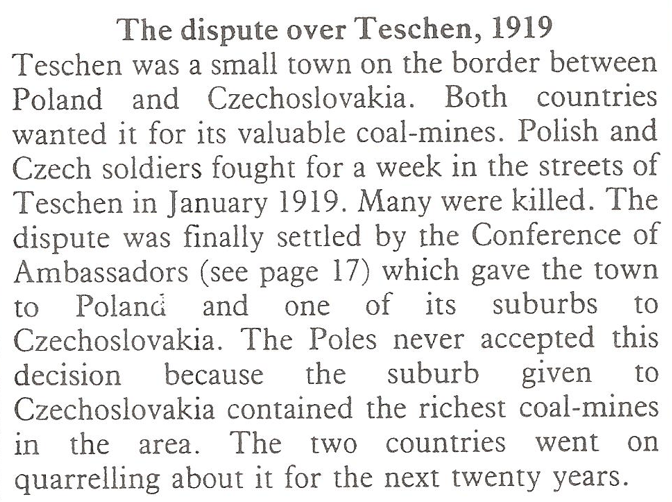
We will now look at each of the disputes individually, starting with:
ONE: The Dispute over Teschen
Dispute: Teschen. (1:06 minutes long)
4.

5.
TWO: The Dispute over Fiume
Dispute: Fiume. (1:10 minutes long)
6.
“Crisis in Italy: D’Annunzio and Fiume.” (p.24, first column)
7.
Make a note on your Disputes Article that the details for the dispute over Fiume can be found on p.24 in your League booklet.
8.
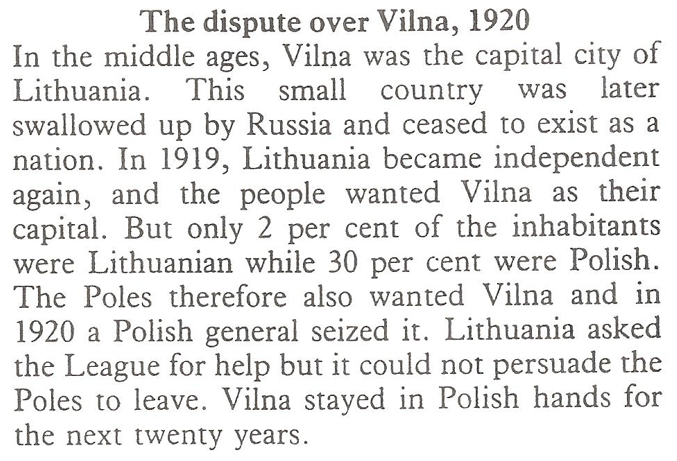
THREE: The Dispute over Vilna
Dispute: Vilna. (0:37 minutes long)
9.
10.
FOUR: War between Poland & Russia
Dispute: Poland vs. Russia. (0:48 minutes long)
11.
“War in Poland, Wars in Russia.” (p.26)
12.
Make a note on your Disputes Article that the details for the War between Poland & Russia can be found on p.26 in your League booklet.
13.
FIVE: War between Greece & Turkey
Dispute: Greece vs. Turkey. (2:02 minutes long)
14.
“Hatred in Turkey.” (p.28)
15.
Make a note on your Disputes Article that the details for the War between Greece & Turkey can be found on p.28 in your League booklet.
16.
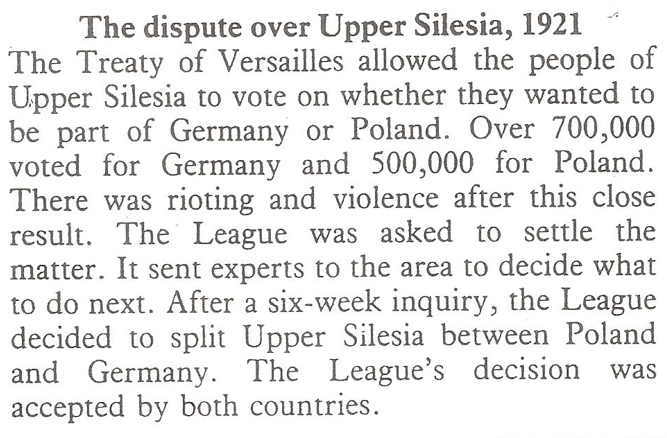
SIX: The Dispute over Upper Silesia
Dispute: Upper Silesia. (0:47 minutes long)
17.
18.
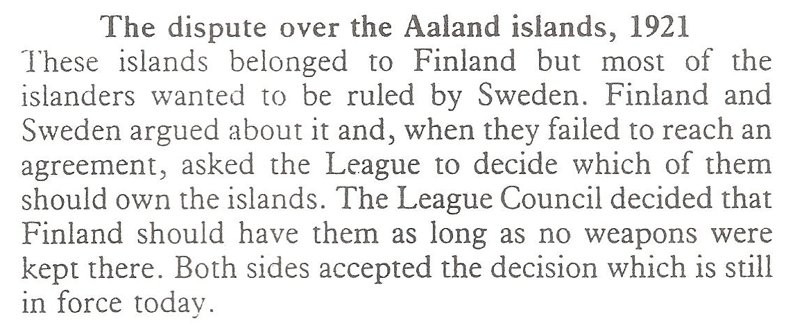
SEVEN: The Dispute over the Aaland Islands
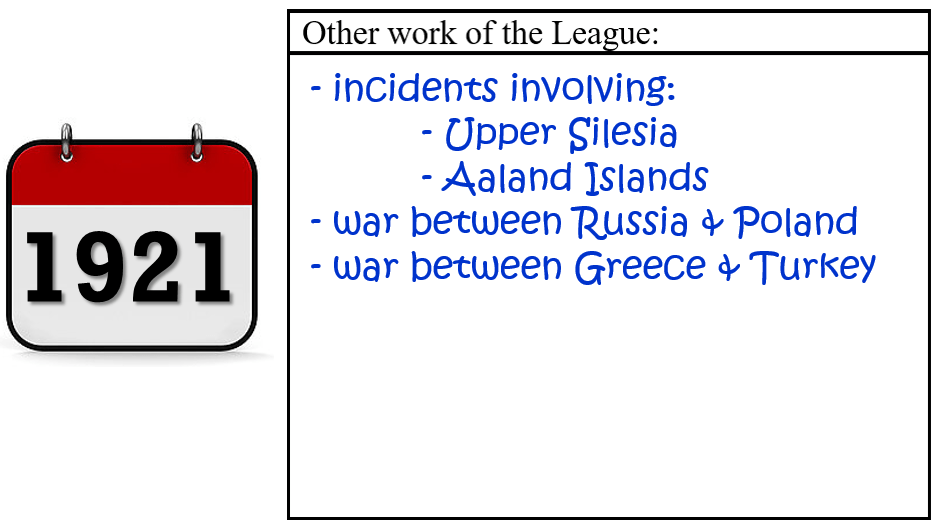
Dispute: Aaland Islands. (0:59 minutes long)
19.
20.
Complete the missing information on the following Disputes that the League had to deal with in the first 10 years of its existence:


22.
If there is time in this lesson, stick the worksheet on “Hatred in Turkey” (provided) into your book. Then answer the questions in full sentences.
(WordPress advertisements may appear below.)
Today you are going to answer some Questions about the League of Nations to consolidate what you know about the League so far.
League of Nations
1.
Stick the worksheet on the League of Nations (provided) into your book. Then answer the questions in point form.
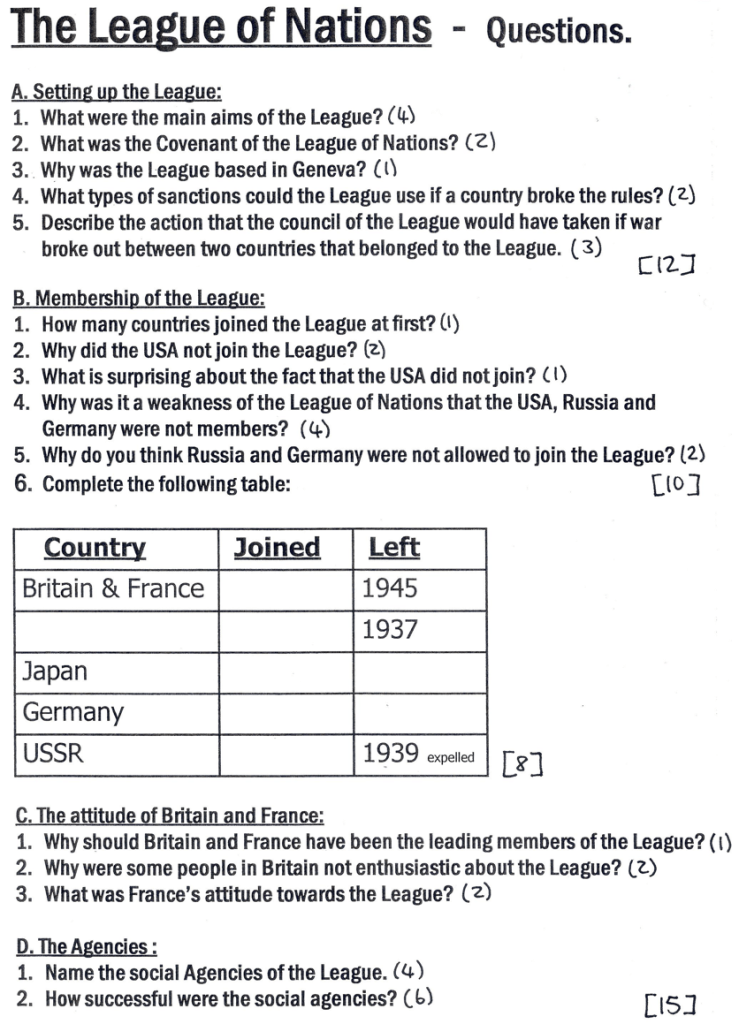
For the last question, instead of writing how successful the League was, rather make a list of examples where the League’s social work was NOT successful, as this will be a more challenging (and more useful!) exercise…
2.

Once completed, mark your answers on the League of Nations Questions.
3.
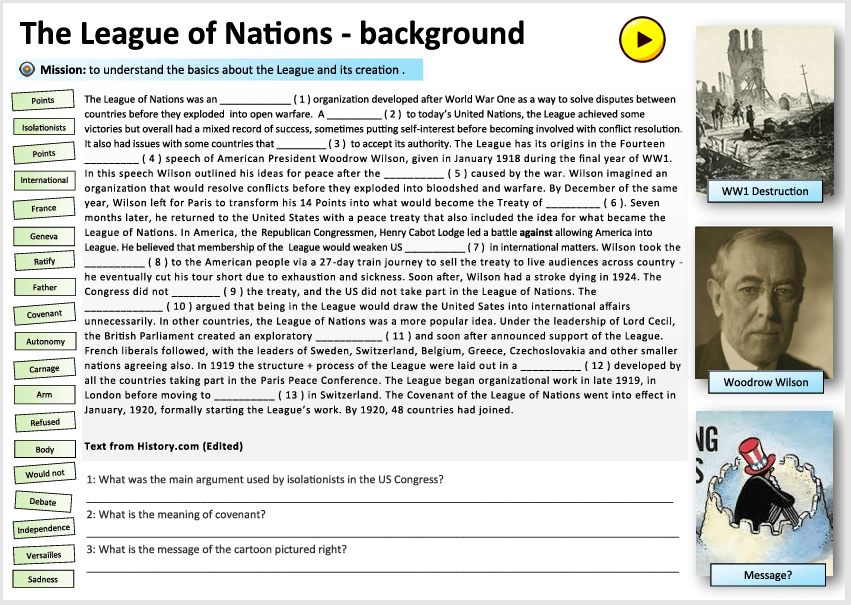
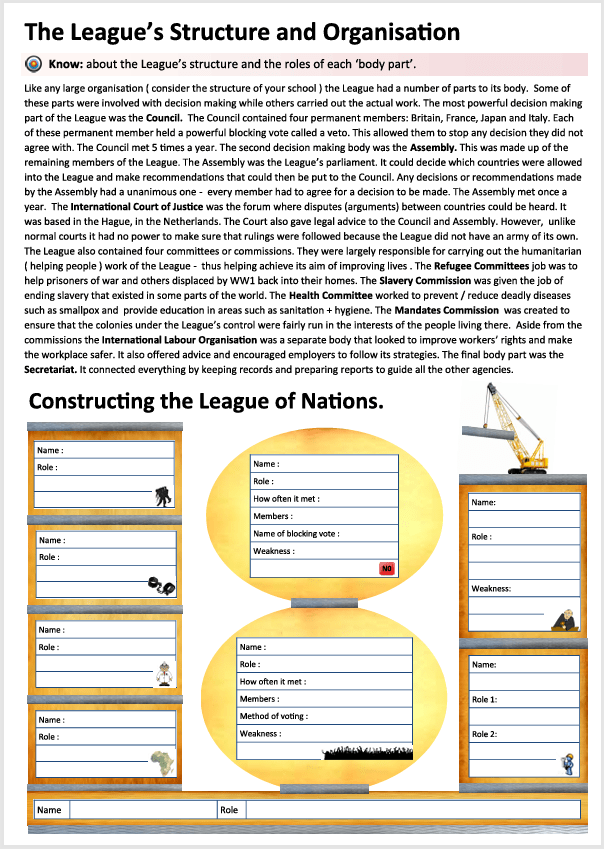
Additional Revision Tasks:
BACKGROUND

STRUCTURE
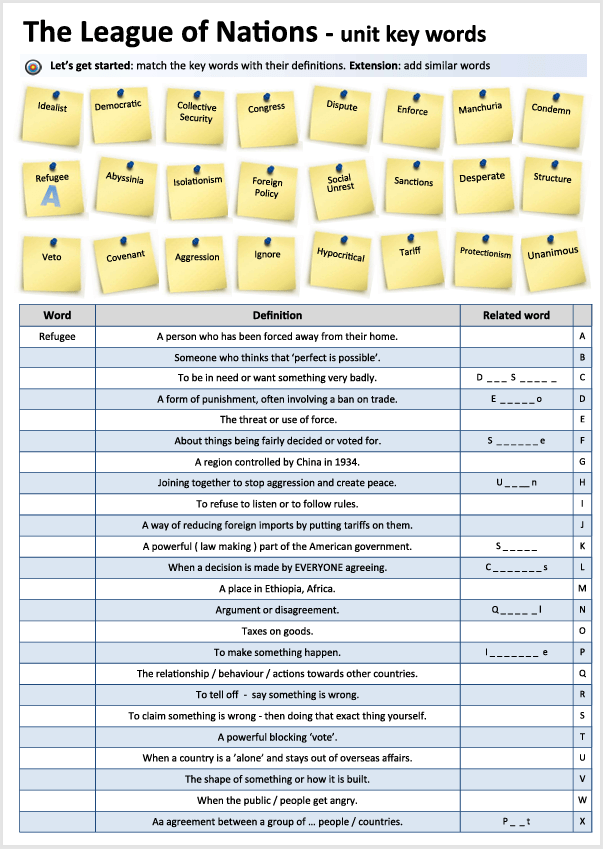
KEY WORDS
(WordPress advertisements may appear below.)

Answers to Homework Tasks will be posted shortly…
Answers to Homework Tasks will be posted shortly…
Answers to Homework Tasks will be posted shortly…
Answers to Homework Tasks will be posted shortly…
Answers to Homework Tasks will be posted shortly…

































 Best study methods