Follow the order in which I give you instructions:
1.
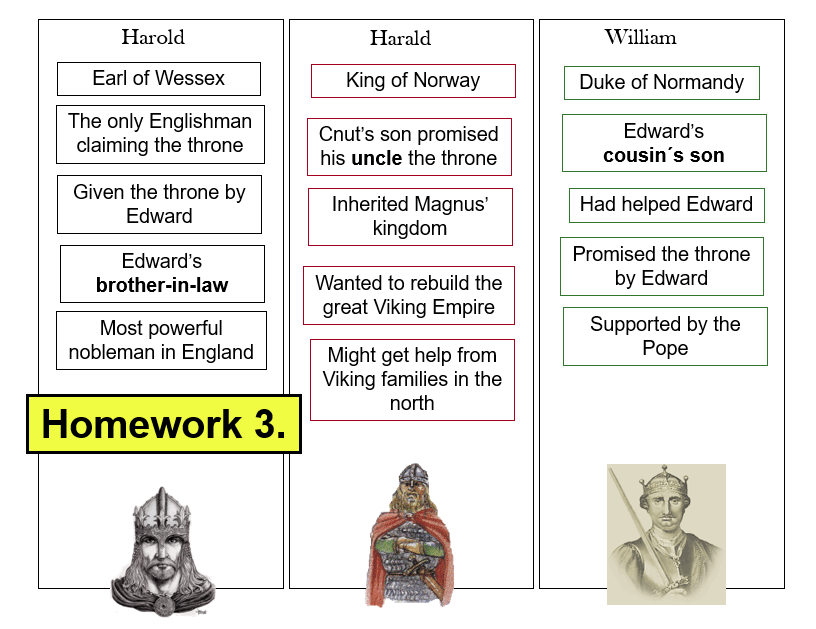
Mark the following task with a pencil:
2.
A teacher explains “How William controlled England”. (7:28 minutes long)
A teacher explains “How William dealt with rebellion in the North”. (7:19 minutes long)
Finally, another short video about William, Duke of Normandy. (2:14 min long)
3.
And now you need to do a bit of extra reading on “William I”….
4.
Next, do Homework Task-5 NOW (as classwork) in your Homework Book.
This Task is source questions on William, Duke of Normandy. You need to answer the questions in great detail. Each question is worth 5 marks!! (Each answer must be about ½ page long!)
5.
Take a picture of Homework Task-5 (p.62-64), to send to me before the end of the lesson!
[If you still do not know how to send a photo in Schoology, look at the document (in Schoology) on “How to send a photo”. ]
6.
If there is still time, do the following as an Extension Task: Watch the video on William the Conqueror – Duke of Normandy. It starts with events in the early 1050’s. (9:31 minutes long)
William the Conqueror – Duke of Normandy. (9:31 minutes long)
7.
Send me a private message on Schoology (use the same mail-thread!!!) to confirm thatyou have completed all the tasks as instructed today! Remember to send the photo too!
Take a photo of your completed table on Nazi Laws (p.56) to send to me.
[If you still do not know how to send a photo in Schoology, look at the document (in Schoology) on “How to send a photo”. ]
2.
And now you are going to do a bit of extra reading….
3.
Fill in the correct vocabulary in the table on p.69 of your Workbook.
4.
Watch the video that gives you detailed information about the Ghettoes:
The Ghettoes. (16:19 minutes long)
5.
Do Homework Task 1 (p.55-57) NOW (as class work) in your Homework Book.
6.
Send me a private message on Schoology (use the same mail-thread!!!) to confirm that you have completed all the tasks as instructed today! Remember to send the photo too!
Watch the following videos to learn more about Olaudah Equiano…
Olaudah Equiano in 60 seconds. (1:22 minutes long)
Olaudah Equiano, The African – PodCast. (5:27 minutes long)
3.
Watch the following videos to learn more about John Newton…
John Newton and the story behind the song “Amazing Grace”. (3:16 min long)
Amazing Grace: John Newton’s Story. (6:50 min long)
4.
1. See if you can fill in brief information on the spider diagram on “what was it like to be a slave” (at the top of p.75).
2. Fill in the names of the two people (in the middle of p.75).
3. Write a short paragraph to say who John Newton was (at the bottom of p.75).
5.
Next, you need to do a bit of reading, to see how slavery came to an end…. So, read p.76. In particular, look for ways in which abolitionists campaigned for an end to slavery.
6.
And to conclude, on p.76 in your Workbook, use the box to make a list of “ways in which abolitionists campaigned”. (In other words, what methods did they use to campaign against slavery?)
7.
Send me a private message on Schoology (use the SAME mail-thread!!!) to confirm that you have completed all the tasks as instructed today.
A Reminder… An effective way to answer a Why-Question is to do the following:
This strategy can also be applied to the creation of an explainer video that explains “why”. Each step (in the diagram above) represents a scene in the video.
2.
Now consider these Why-Questions on the Russian History (Tsarist Russia):
ONE:
Why did revolution break out in Russia in 1905? [6]
TWO:
Why was Stolypin important in the years after the 1905 Revolution? [6]
THREE:
Why did many Russians feel bitterness towards Tsar Nicholas II after the 1905 Revolution? [6]
3.
You will each make a video answer to one of the above questions, using the PowerPoint template in Schoology. This is how the template works:
4.
Use the template to make a video answer to one of the above Why-Questions. Here is what you have to do:
1. Download the PowerPoint “Why-Question-Template” – it is in “Materials” in Schoology.
2. Use the template to write the answer / script in PowerPoint.
[Remember, in PowerPoint, one needs to follow the same strategy / pattern (as shown in the diagram above), with a slide for each step. In other words… each step mentioned above (in the diagram) is a slide (in PowerPoint). And each slide (in PowerPoint) will be a scene (in the video).]
3. Upload the script to Mysimpleshow.
4. Then make the video.
As always, I will be online in case you need to ask a question or need help.
5.
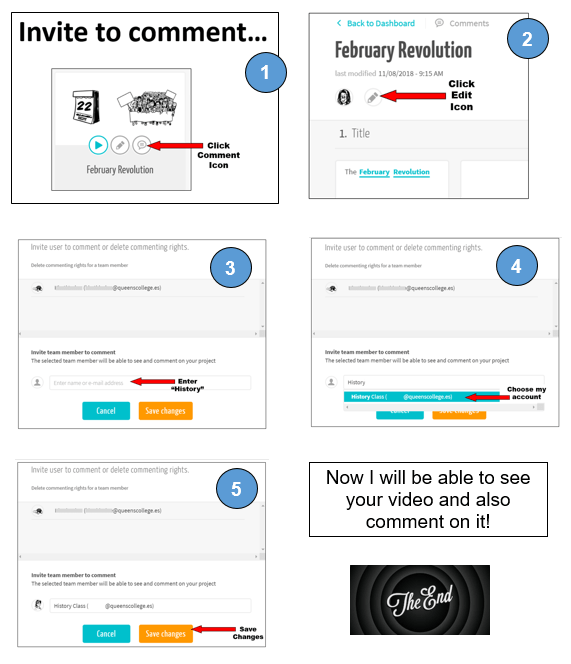
Remember to “invite” me to this new video. You can do so even if you have not completed the video yet – in other words while still working on it.
6.
Once completed, please send me a message in Schoology (use the SAME mail-thread…) to confirm that you have finished the work as set for today.
Follow the order in which I give you instructions:
1.
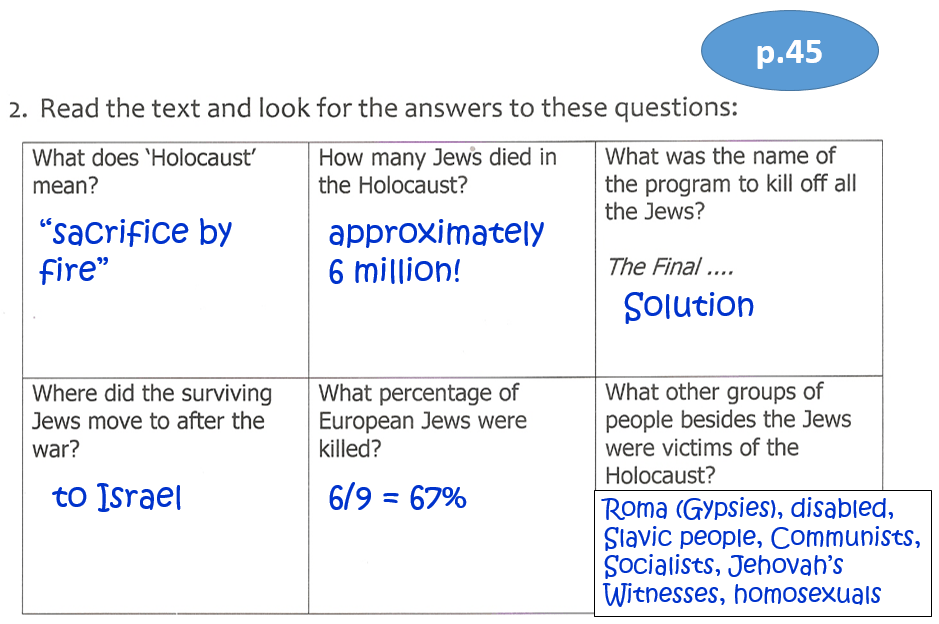
Mark the following tasks with a pencil:
Introduction to the Holocaust – Task 2, p.45.
Introduction to the Holocaust – Task 3, p.45.
2.
And now for a bit of reading about the Holocaust….
3.
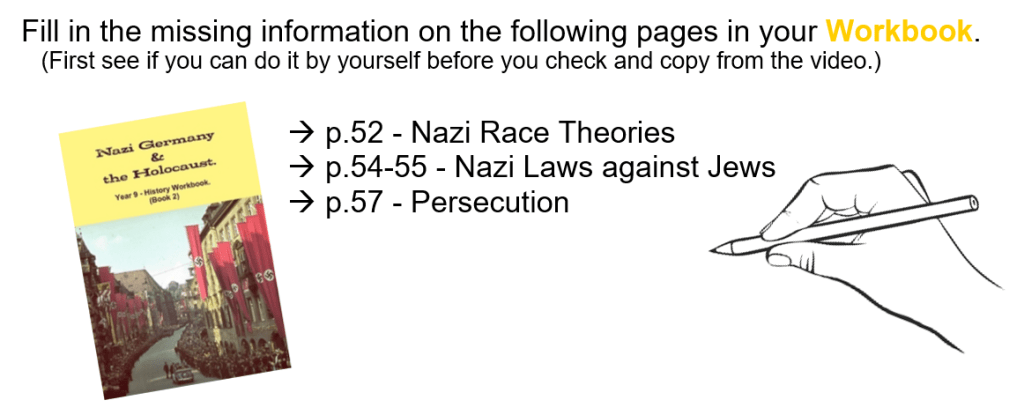
Watch the following video about Nazi Race Theories, Nazi Laws against the Jews and Persecution. (4:50 minutes long)
4.
Complete the notes on pages 52, 54, 55 and 57 in your Workbook – here is what you have to do:
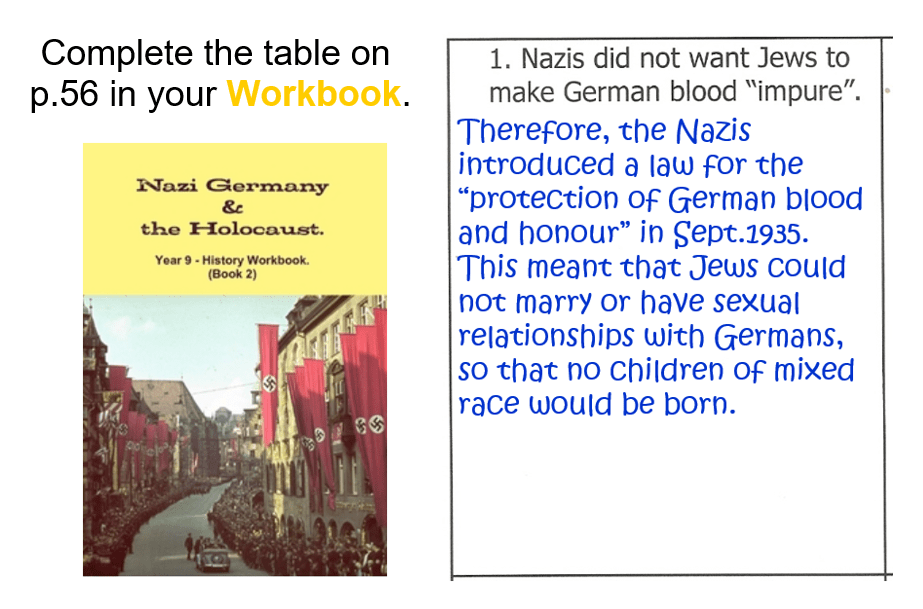
5.
Complete the table on p.56 in your Workbook. You have to say how the Nazis used their anti-Jewish laws to achieve the aims mentioned in each of the 4 boxes. I have done the first one for you, as an example. (You can just copy down the first one.)
6.
Send me a private message on Schoology (use the SAME mail-thread!!!) to confirm that you have completed the tasks as instructed today!
Today you are going to spend the first part of the lesson watching important video material. These videos will help you to do the second part of the lesson – so pay attention and concentrate as you watch the videos!
1.
The Middle Passage. (1:54 minutes long)
More on the Middle Passage. (2:34 minutes long)
Life Aboard a Slave Ship. (4:14 minutes long)
Atlantic Slave Trade. (5:38 minutes long)
Slave Auction. (3:03 minutes long)
Plantation Life. (2:09 minutes long)
Forms of Rebellion. (3:01 minutes long)
The Maroons. (2:40 minutes long)
2.
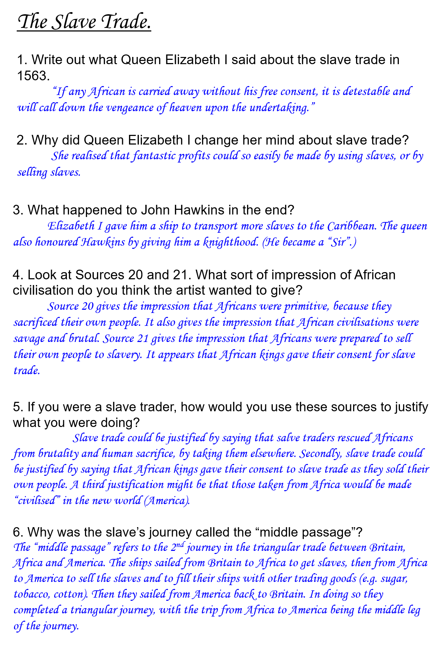
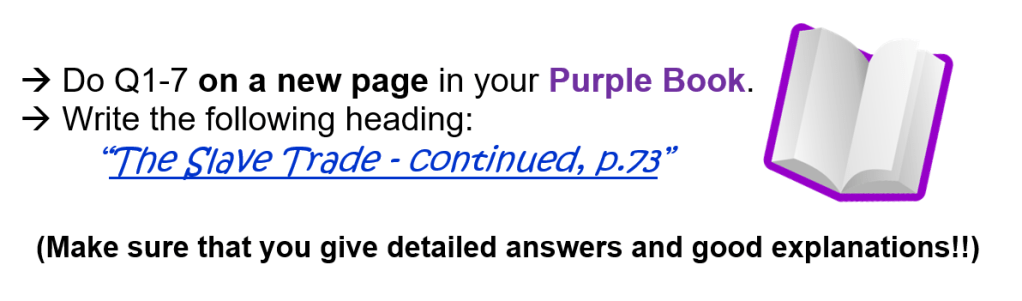
Do all the Questions on “The Slave Trade – continued”. (These questions are at BOTTOM of p.73.) You can get the answers from the videos that you have just watched, or from your textbook. If you really get stuck, a little research on Google should help! (I have noticed that some of you do not write headings when you do work in your exercise books – make sure that you carefully follow the instructions below!)
3.
Send me a private message on Schoology (use the SAME mail-thread!!!) to confirm that you have completed the tasks as instructed today.
Follow the order in which I give you instructions:
1.
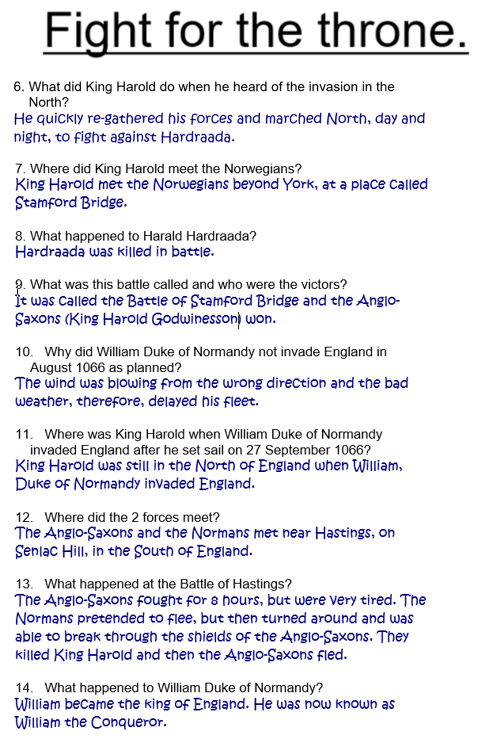
Take a photo of Q.1-5 of “Fight for the Throne” (p.69), to send to me.
[If you still do not know how to send a photo in Schoology, look at the document (in Schoology) on “How to send a photo”. ]
2.
Mark the following tasks with a pencil:
3.
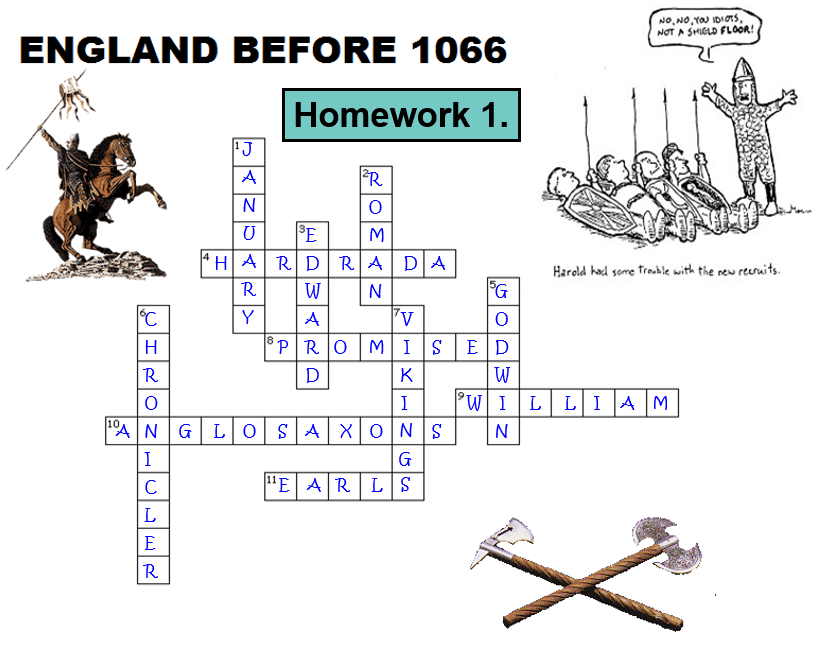
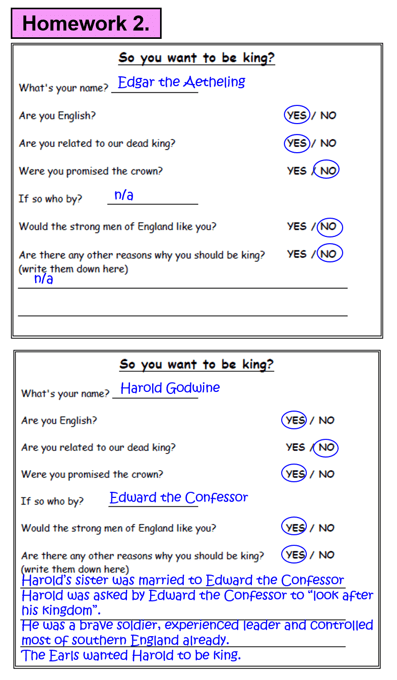
Do the following task NOW (as class work) in your Homework Book:
4.
Watch this video to find out what happened to English society after the Norman Conquest? (3:35 minutes long)
5.
And finally, you are going to do a bit of reading to see what happened after the Norman Invasion… (If this is a little complicated, don’t get concerned! It will all become clear in the next lesson.)
6.
Send me a private message on Schoology (use the same mail-thread that we have been using previously!!!) to confirm that you have completed the tasks as instructed today and send the photo, if you have not done so already.
You have all successfully created your first explainer video!
1.
Now I need you to “invite” me to comment on your video. This needs to be done so that I have access to your videos, to view and comment. Here is how you do it:
2.
Now, to come back to the Why-Questions… An effective way to answer a Why-Question is to do the following:
This strategy can also be applied to the creation of an explainer video that explains “why”. Each step (in the diagram above) represents a scene in the video.
3.
Over the next few lessons you are going to make videos of a number of Why-Questions.
The easiest way to write a script for such an explainer video is to write the script in PowerPoint and then to upload the script to Mysimpleshow. So, in PowerPoint, one needs to follow the same strategy / pattern (as shown in the diagram above), with a slide for each step.
In other words… each step mentioned above (in the diagram) is a slide (in PowerPoint). And each slide (in PowerPoint) will be a scene (in the video).
So, again, I have written a script for you (using the steps in the diagram) to the following question:
“Why did Nicholas II survive the 1905 revolution?”.
You need to download my PowerPoint script (that answers this question) – it is in “Materials” on Schoology. Then make the video. (As from the next lesson onwards, you will be writing your own scripts and make your own videos from scratch! So, this is a last practise session!)
As always, I will be online in case you need to ask a question or need help.
4.
Also “invite” me to this new video. You can do so even if you have not completed the video yet – in other words while still working on it.
5.
Once completed, please send me a message in Schoology (use the SAME mail-thread…) to confirm that you have finished the work as set for today.
Today you are going to begin working on answering Why-Questions…! But… before we look at Why-Questions, let’s just have a quick look at How-Far-Questions again.
1.
Recently, you wrote an answer to the following question:
“Hatred of Rasputin was the main reason for revolution in March 1917.” How far do you agree with this statement? Explain your answer. (10)
Look at the following video clip – as a brief analysis and plan for the essay:
10-mark Russian History Question. (2:09 minutes long)
2.
Next, read this as an example of an essay answer to the same question:
In March 1917 Tsar Nicholas II learnt that the army no longer supported him. He was overthrown and a Provisional Government took control of Russia. This marked the end of the Romanov Dynasty. Russia was now a democracy.
Hatred of Rasputin, main advisor to the crown, and faith healer to Alexi, was one of the reasons for this revolution. Rasputin gave poor advice to the Tsar and Tsarina. On his advice, important ministers were dismissed from government. Even military decisions were made based on Rasputin’s guidance, often with catastrophic results!
Moreover, ordinary Russians did not understand why Nicholas II associated with Rasputin, who was well known as a drunkard and a womanizer. This association damaged the Tsar’s image.
Nobles close to the Tsar disliked Rasputin’s influence and eventually murdered him, but a lot of damage was already inflicted and Tsarist rule became very unpopular.
However, there were more reasons for the 1917 March revolution. The Tsar failed to address longstanding discontent: Peasants and workers lived in great poverty and had no land of their own. Workers received low wages and were also very poor. Nobles had no say in the government.
Russia’s involvement in WW1 made conditions in Russia even worse. She suffered great defeats, which caused a loss of morale. Shortages caused inflation and increased suffering.
In addition, Nicholas and Alexandra’s incompetence brought revolution closer. Nicholas would not allow the Duma any powers to make laws. He also joined the Battlefront and left Alexandra in charge of ruling the country. She relied on Rasputin’s advice. This fuelled rumours that Alexandra and Rasputin were German spies. There were also rumours about her and Rasputin having an affair.
All these factors worked together to cause the March 1917 Revolution, and not only hatred for Rasputin. Ultimately, it was the fact that the army no longer supported Nicholas II, that was probably the most immediate reason for the Russian revolution of March 1917.
3.
Now, look at the animated explainer video that answers exactly the same question, but in video format:
“Hatred of Rasputin was the main reason for revolution in March 1917.” How far do you agree with this statement? Explain your answer. (10)
So, this is a How-Far-Question, where more than one argument is presented.
This question requires of you to give “points for” and “points against” the given statement and to ultimately give an evaluation, that concludes the answer. These are typical requirements of a How-Far-Question.
4.
Now, let’s look at the requirements of a Why-Question!
Why-Questions call for clear reasons, that are very well explained. That is why the making of an explainer video can be so useful in organising the answer to a Why-Question – because you have to clearly formulate the reasons and then clearly explain each one of them!
5.
To help you with the structure of Why-Questions you are going to make a few animated explainer videos, using the online video tool Mysimpleshow:
What is Mysimpleshow? ( 1:07 minutes long)
6.
So, how will it work?
You need to join the Mysimpleshow Team Account. An invitation has been sent to your school Gmail account. Open your Gmail account and then follow these steps to sign up to the Mysimpleshow Team Account:
Open Account and Join Classroom. (1:57 minutes long)
7.
Next you will have to familiarize yourself with the Mysimpleshow video creation tool. For this purpose you need to watch the following videos that briefly show you how to use Mysimpleshow for the first time. (These videos include various steps in the video creation process – you may need to pause the videos as you work through each of the steps…)
This video shows briefly how to login to Mysimpleshow and how to start a new video project by giving the new video a title… (0:53 minutes long)
This video shows briefly how to upload a script (created in PowerPoint) to create a Mysimpleshow explainer video, and what needs to be done in order to edit visuals when creating the explainer video… (1:19 minutes long)
This video shows briefly what needs to be done in order to finalize the video that you have created in Mysimpleshow… (1:24 minutes long)
8.
Now you are going to practise video creation…! You are going to make a short video on “Why is the study of History Important?” You do not have to write a script for this video – I have posted a script (written in PowerPoint) for you to use. So, download the PowerPoint document that has been posted on Schoology, in “Year 11 History Course – Materials”. Then, follow the steps, as explained in the videos above, to create the Mysimpleshow explainer video. (Seeing that your are already logged into the account, you can start at “Step 2”.)
9.
Once completed, please send me a message in Schoology (use the SAME mail-thread…) to confirm that you have finished the work as set for today.
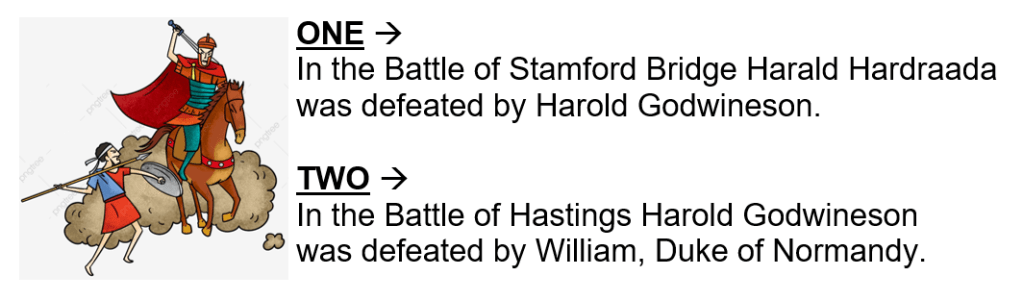
By now you should have noted that there were two major Battles in 1066:
Today, you will mainly watch videos during this lesson… This is to help you to get a good understanding of the battles that took place in 1066.
Follow the order in which I give the instructions:
1.
Watch the following video clips that explain
The Battle of Stamford Bridge:
The Warrior on the Bridge. (3:12 minutes long)
The next video is not for the faint-hearted! (7:36 minutes long)
The next video is very good, but you need to concentrate!!! (10:15 minutes long)
2.
Watch the following video clips that explain
The Battle of Hastings:
The Battle of Hastings – tactics. (3:34 minutes long)
This video is not for the faint-hearted! (9:38 minutes long)
This last video is very good, but you need to concentrate!!! (11:36 minutes long)
3.
Send me a private message on Schoology (use the same mail-thread that we have been using previously!!!) to confirm that you have completed the tasks as instructed today.
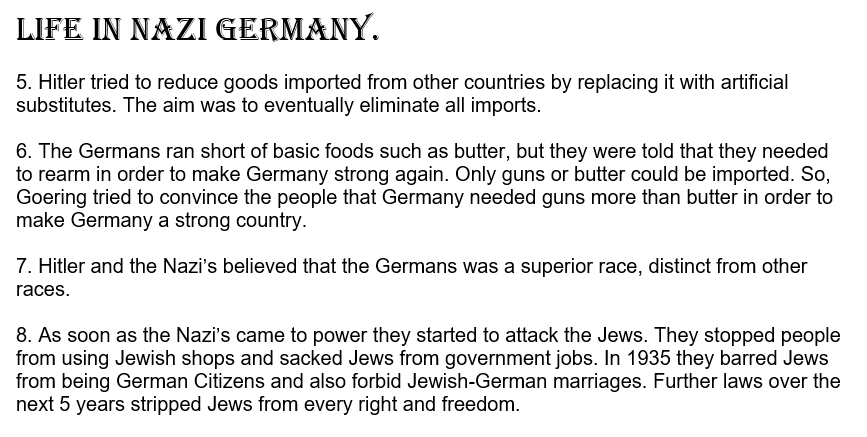
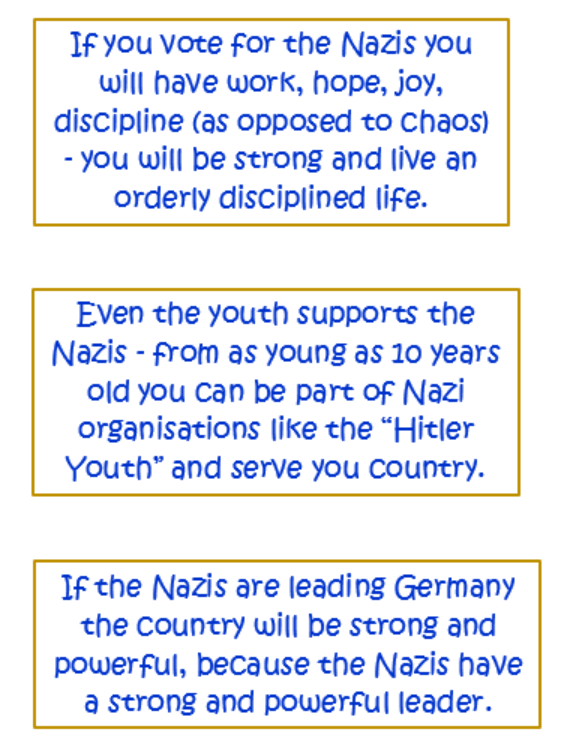
Take a picture of Q.1-4 of ”Life in Nazi Germany” (p.33), to send to me. (The picture must be clear because I will use it to assess your work and give you a mark.)
It is very important that you take good photos, from right above the work, so that I can read the writing better.
(The camera must be parallel with your work, and NOT at an angle.)
[If you still do not know how to send a photo in schoology, look at the document (in Schoology) on “How to send a photo”. ]
3.
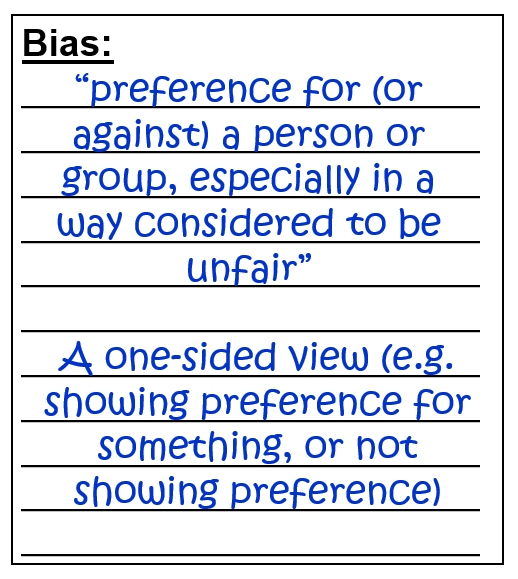
Watch the following video that explains two terms that you need to be familiar with in History: “Bias” and “Propaganda“. (1:43 minutes long)
4.
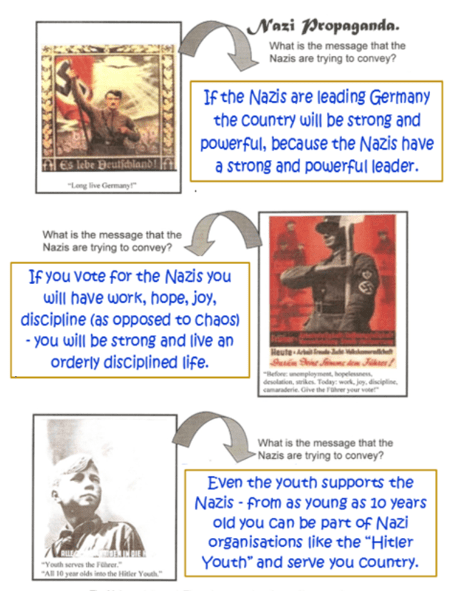
Fill in the Propaganda Task on p.36, in your Workbook.
Below are the answers, but you need to match them to the correct propaganda poster, by choosing the statement that best explains each of the propaganda posters’ messages. (Write the statement in the space provided on p.36 in your Workbook!)
5.
To finish off our topic on “Nazi Germany”, you are going to watch the entire History of Nazi Germany – from beginning to end (!!), as explained in this great animated video: (9:59 min long)
6.
Send me a private message on Schoology (use the SAME mail-thread!!!) to confirm that you have completed the tasks as instructed today AND attach the photo!
Today you are going to practise more Essay Writing!
1.
Look at the following video clip – as a brief analysis and plan for the following essay question:
“The League of Nations failed because of Britain and France.” How far do you agree with this statement? Explain your answer. (10)
10-mark League of Nations Question. (2:37 minutes long)
2.
So, previously you analysed questions and looked at / listened to revision material for “The Road to War”. Now you need to analyse and plan the answer to the following question:
How far was the outbreak of war in 1939 Hitler’s fault? (10)
Remember to give both sides of the argument!
3.
Write a really good essay answer to the above question. (Do this essay in Google Drive. Then share the link with me on Schoology, please.)
(Remember, all work you complete will, potentially, be used to determine your final grade!! So write an excellent essay!)
4.
Once completed, please send me a message in Schoology (use the SAME mail-thread…) to confirm that you have finished the work as set for today.
So, previously you analysed questions and looked at / listened to revision material for “The League of Nations”. Now you need to analyse and plan the answer to the following question:
“The League of Nations failed because of Britain and France.” How far do you agree with this statement? Explain your answer. (10)
Remember to give both sides of the argument!
3.
Write a really good essay answer to the above question. (Do this essay in Google Drive. Then share the link with me on Schoology, please.)
(Remember, all work you complete will, potentially, be used to determine your final grade!! So write an excellent essay!)
4.
Once completed, please send me a message in Schoology (use the SAME mail-thread…) to confirm that you have finished the work as set for today.
Today you are going to practise some Essay Writing!
It has now been confirmed that all GCSE and A’ level exams have been cancelled. The Exam Boards are in the process of drawing up a protocol to provide guidance for teachers on how grades are to be awarded. In History we will continue to analyse questions, but at the same time I want you to write essays for assessment purposes.
1.
Look at the following video clip. It is a brief explanation of how to answer 10-mark questions for IGCSE History – Paper 1:
(The example in this video is about a topic that you have not covered. However, the advise still applies to your 10-mark essay answers.)
IGCSE History – Paper 1: 10-mark Questions. (5:32 minutes long)
2.
So, previously you analysed questions and looked at / listened to revision material for “The Post-war Peace Treaties”. Now you need to analyse and plan the answer to the following question:
“The Treaty of Versailles was a fair settlement.” How far do you agree with this statement? Explain your answer. (10)
Remember to give both sides of the argument!
3.
Write a really good essay answer to the above question. (Do this essay in Google Drive. Then share the link with me on Schoology, please.)
Remember, all work you complete will, potentially, be used to determine your final grade!! So write an excellent essay!
4.
Once completed, please send me a message in Schoology (use the SAME mail-thread…) to confirm that you have finished the work as set for today.
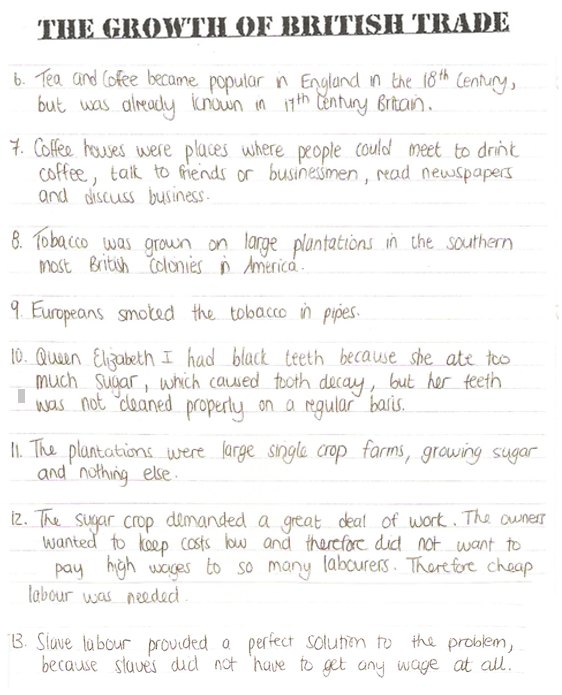
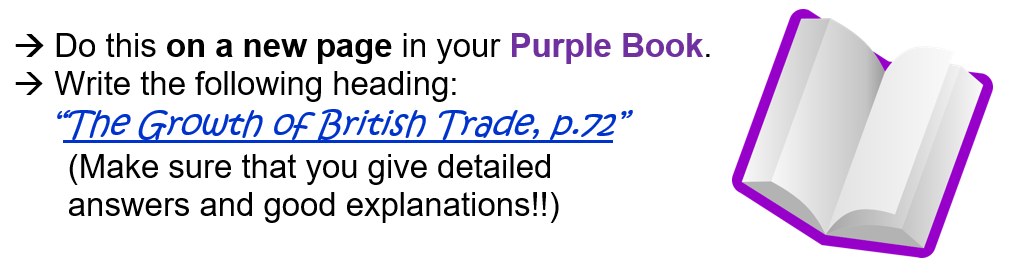
Take a picture of Q.1-5 of “The Growth of British Trade” (p.72), to send to me. (The picture must be clear because I will use it to assess your work and give you a mark.)
It is very important that you take good photos, from right above the work, so that I can read the writing better.
(The camera must be parallel with your work, and NOT at an angle.)
[If you still do not know how to send a photo in schoology, look at the document (in Schoology) on “How to send a photo”. ]
2.
Watch the following video clips on “Triangular Trade”:
Triangular Trade (2:49 minutes long)
Slave Triangle (1:51 minutes long)
3.
Do the following two tasks NOW (as classwork) in your Homework Book:
Please take note that this is CLASSWORK!!!
4.
Send me a private message on Schoology (use the SAME mail-thread!!!) to confirm that you have completed the tasks as instructed today AND attach the photo!
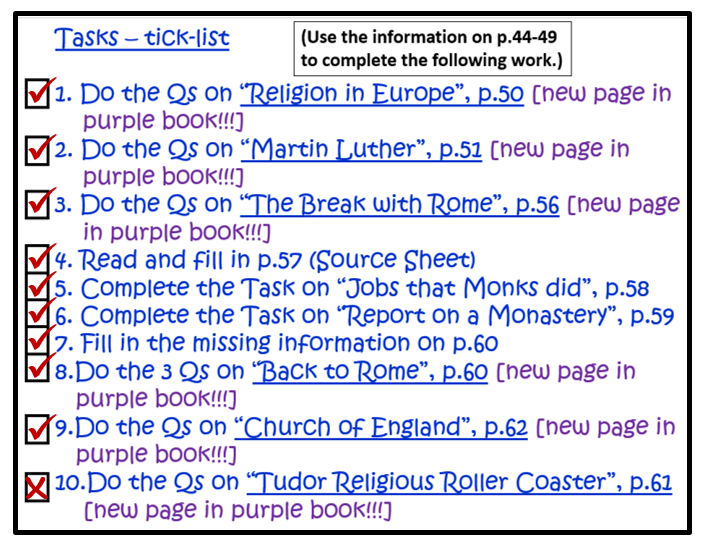
Make sure that the following tasks (on your tick-list) have been completed and ticked:
2.
Mark the following tasks with a pencil:
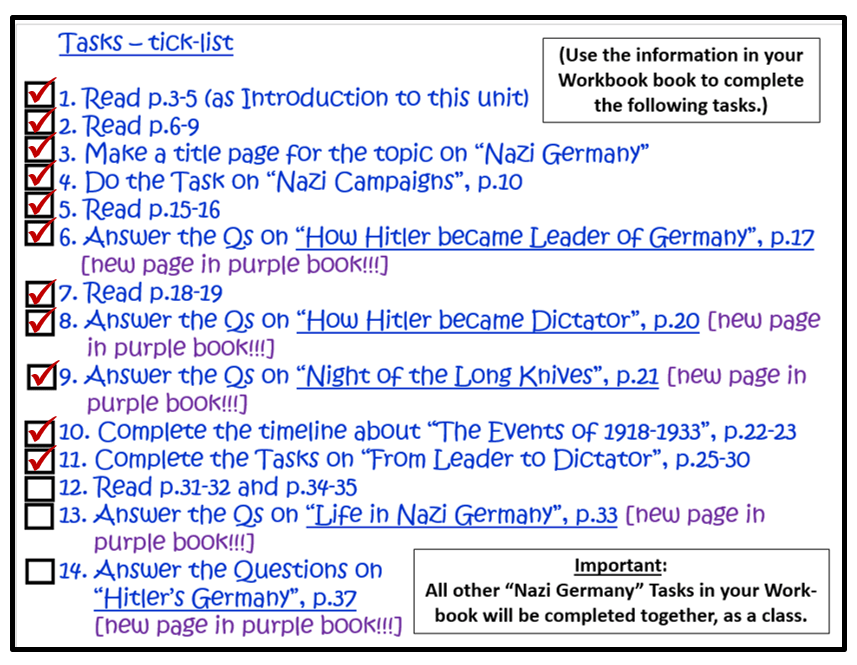
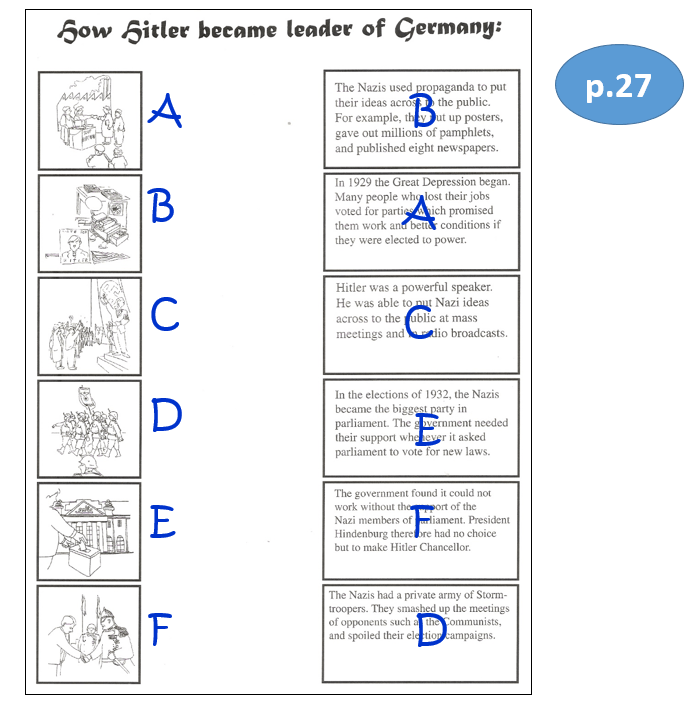
Page 27
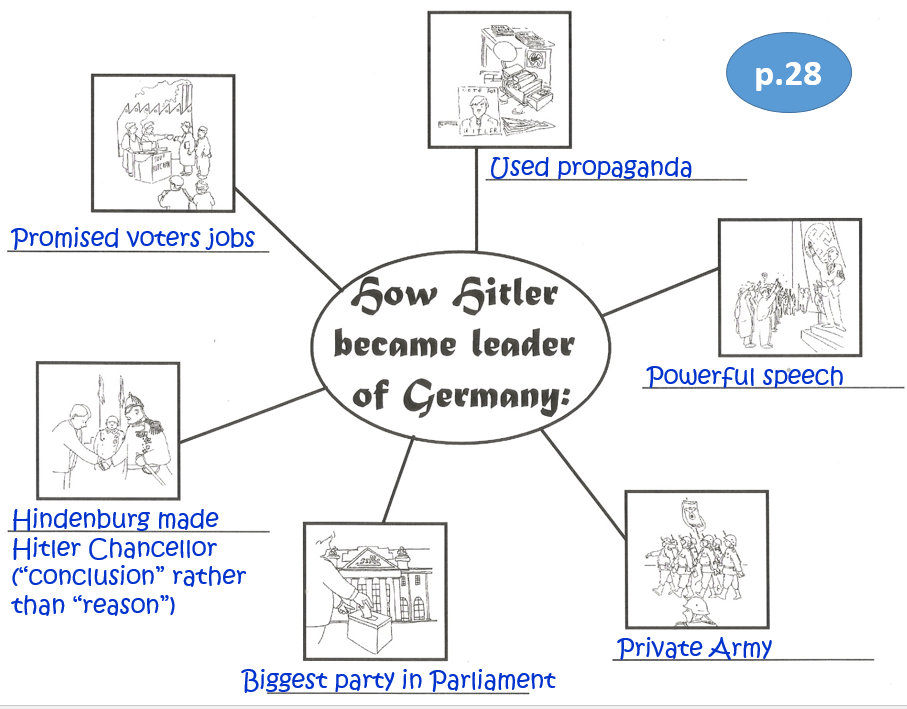
Page 28
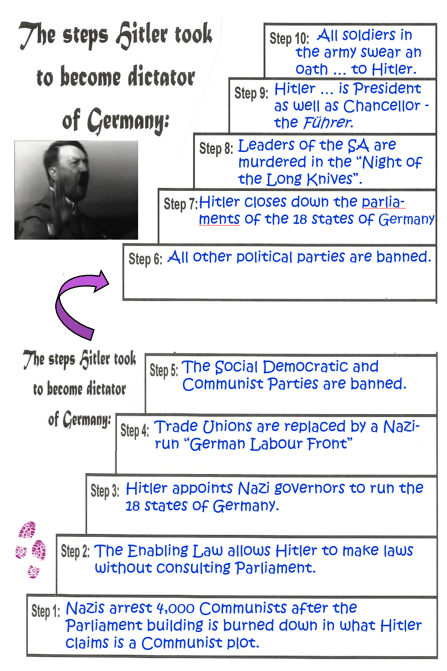
Page 30
Homework 3
3.
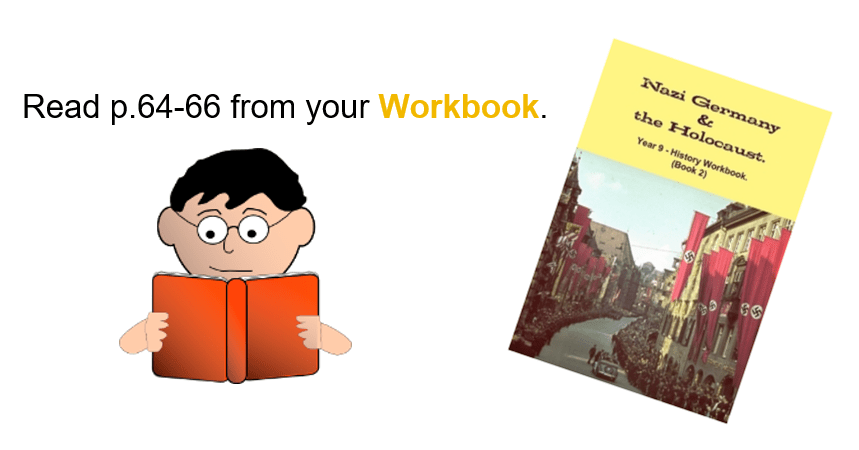
Read p.31-32 and p.34-35 to discover what it was like to live in Nazi Germany.
(Underline important information as you read.)
4.
Watch the following animated video clip on Life in Nazi Germany: (8:32 min long)
5.
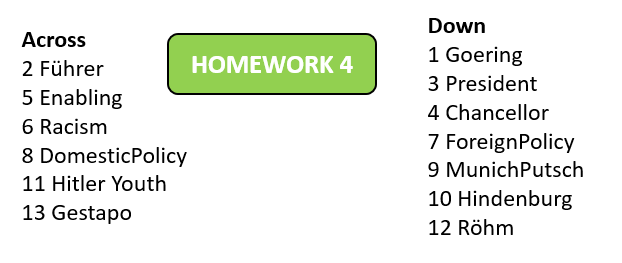
Finally, do Homework Task 4 (p.48-49) NOW in your Homework Book.
6.
Send me a private message on Schoology (use the SAME mail-thread that we have been using so far!!!) to confirm that you have completed the tasks as instructed today.
Make sure that the following tasks (on your tick-list) have been completed and ticked:
2.
Mark the following task with a pencil:
3.
Now we will start with a new topic:
“Britain and Trade”
4.
Watch the video on “Britain and Trade”: (2:08 minutes long)
5.
Fill in the missing information on p.68-69 in your Workbook.
6.
Watch the video on “Trading Goods”: (2:34 minutes long)
7.
Fill in the missing information on p.70-71 in your Workbook.
8.
Send me a private message on Schoology (use the SAME mail-thread that we have been using so far!!!) to confirm that you have completed all the tasks as instructed today.
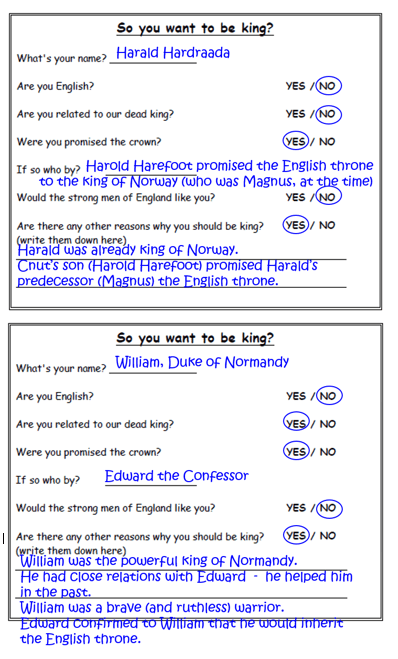
Before the Easter Holidays you looked at the king of England, Edward the Confessor, who died in January 1066 without an heir to the throne. That means that there was a succession crisis in England. Who should be the next king of England? Today, we will examine further the various claims to the throne.
Follow the order in which I give you instructions:
1.
Watch the following video clip about the “The Death of Edward the Confessor” – don’t worry too much about the dates! (2:53 min long)
2.
Read p.65
3.
Now watch this “Conversation” between Harold Godwineson [the one with the crown] & William Duke of Normandy”: (1:28 min long)
4.
Now watch this series of 8 short video clips about “The Succession Crisis & Claims to the Throne”:
Each of the 8 videos in this series will play automatically once you start watching this first video:
5.
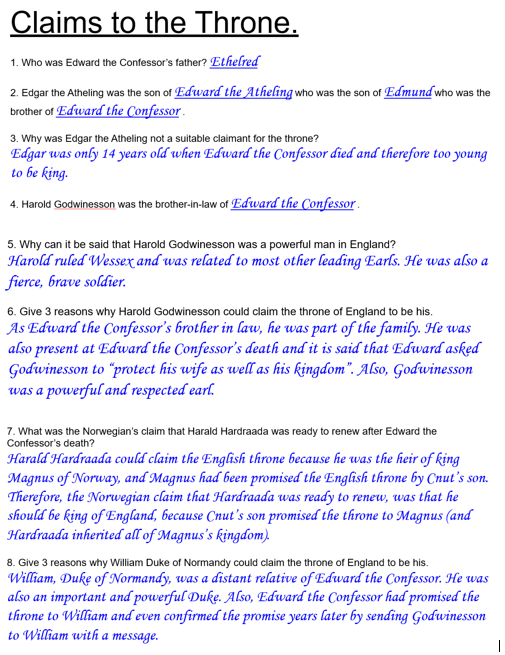
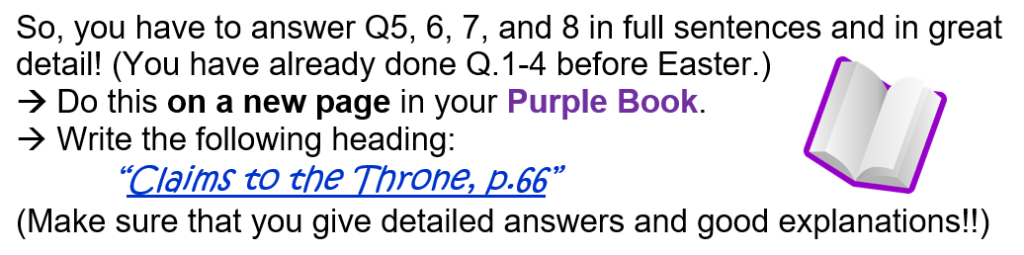
Do the rest of the Questions for the w/s “Claims to the Throne” (p.66).
6.
Send me a private message on Schoology (use the same mail-thread that we have been using previously!!!) to confirm that you have completed the tasks as instructed today.

































 Best study methods