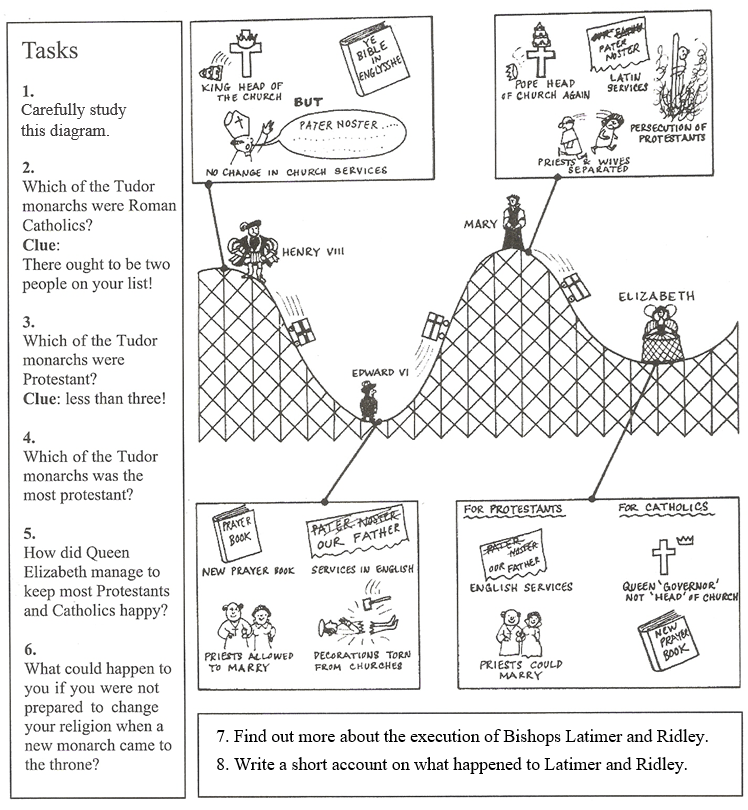
Elizabeth I’s reign was complicated by religious matters! It even posed a threat to her position as Queen of England, despite her efforts to please both Protestants and Catholics… Watch the video below to see why.
Elizabethan Religious Settlement. (3:49 minutes long)
3.
Elizabeth was advised to authorize the execution of Mary Queen of Scots in order to secure her reign. It appears that Elizabeth was plagued by her decision to have Mary Queen of Scots executed for the rest of her life…
FULL: Mary Queen of Scott’s Execution SceneThe Execution of Mary Queen of Scots. (3:50 minutes long)
4.
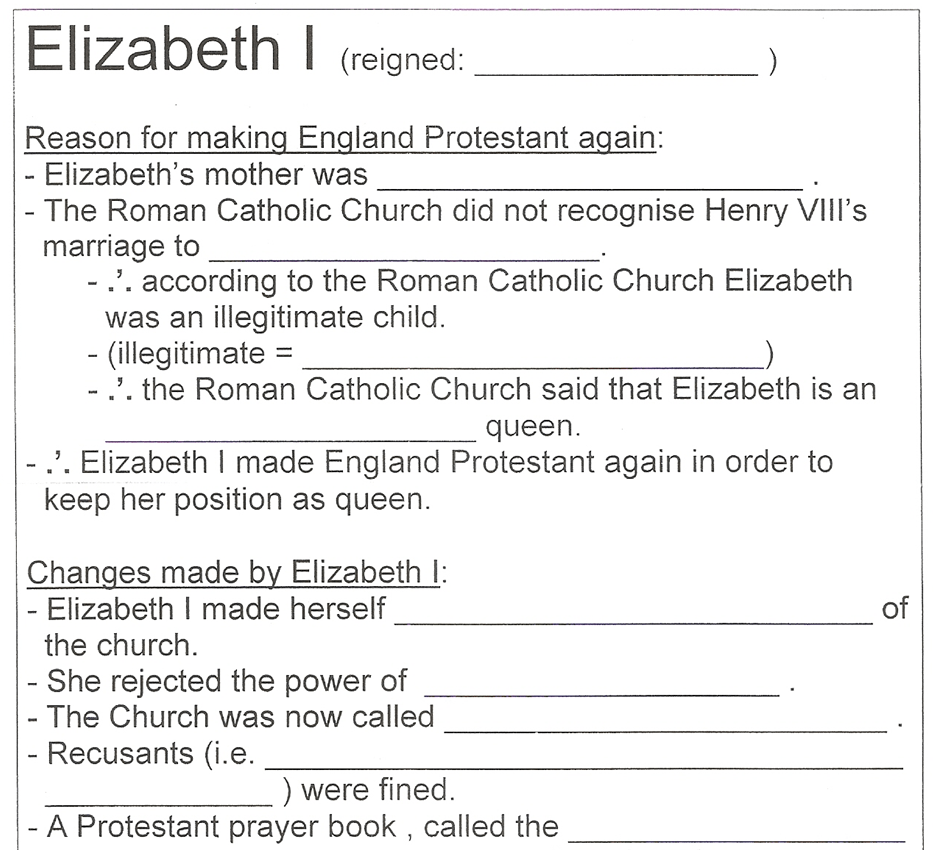
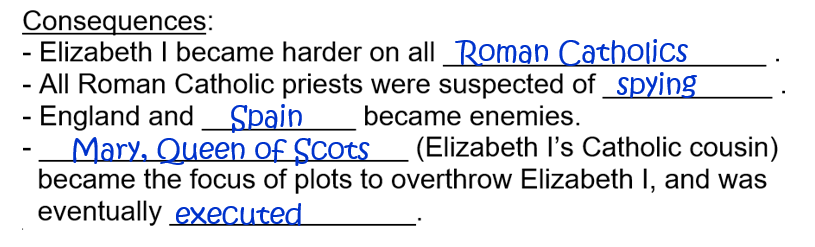
Fill in the missing information on the notes on Elizabeth I (p.55).
5.
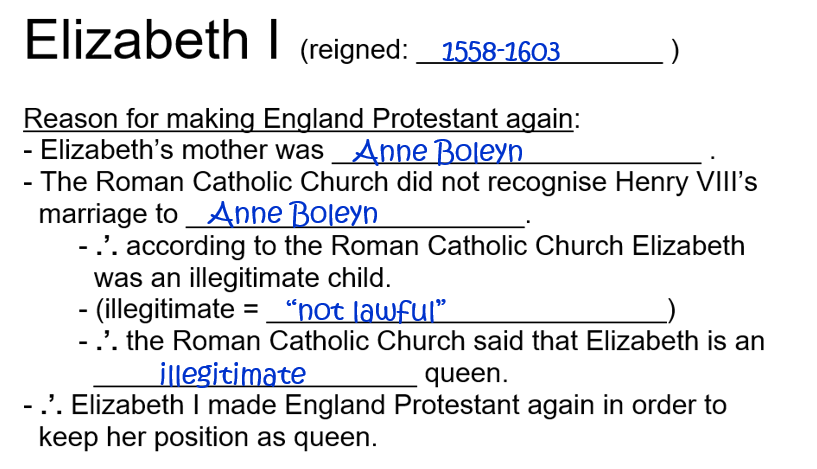
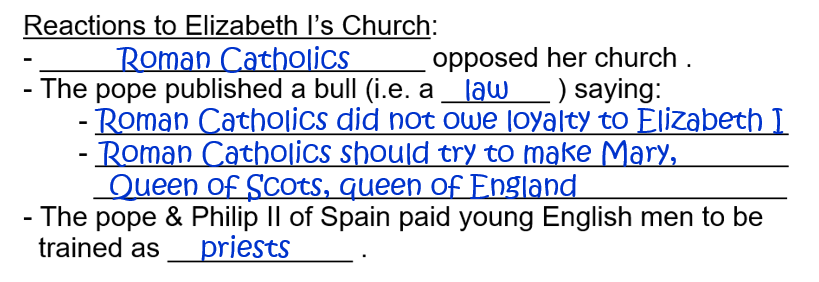
Mark your fill-in notes on Elizabeth I:
&
(2:11 minutes long)
6.
In an attempt to secure her position and at the same time please her subjects, Elizabeth I passed the Act of Supremacy and the Act of Uniformity. Together they are known as the Elizabethan Religious Settlement. Passing these laws was a difficult decision for Elizabeth…
Elizabethan Act of Uniformity. (3:00 minutes long)
7.
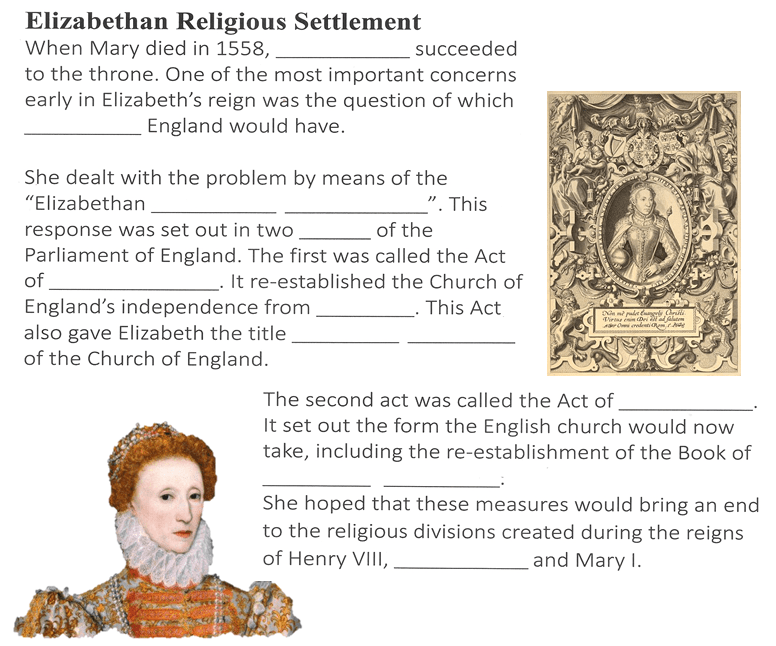
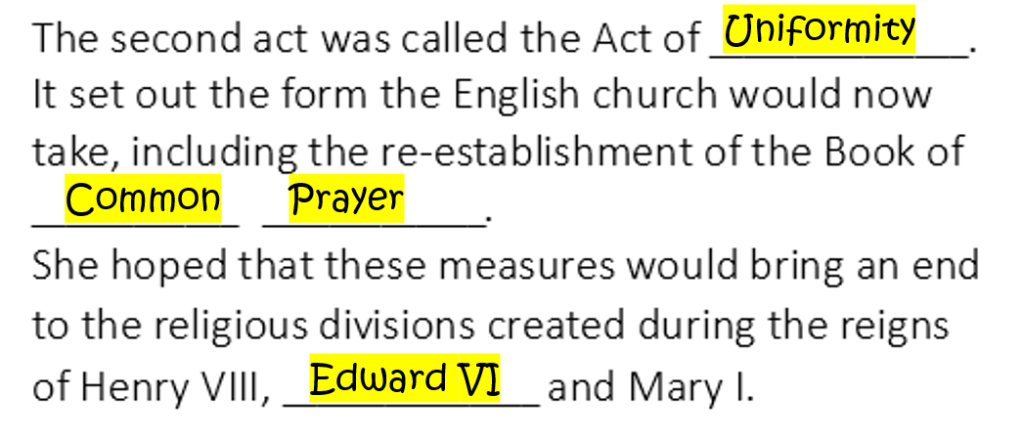
Fill in the missing information on the notes about the “Elizabethan Religious Settlement”, on p.60.
SOLUTION:
8.
Use the rest of the lesson to work on your assessment project…
9.
This one is not for the faint hearted…!!
Mary Stewart execution. (6:16 minutes long)
And here is an interesting account of the execution…
Mary Queen of Scots, a brutal beheading. (4:31 minutes long)
Elizabeth I (1533-1603) Queen of England. (3:59 minutes long)
The ElizabethanReligious settlement. (5:48 minutes long)
As an introduction, let’s see what we can learn about Henry VIII and his six wives…!!
The Six Wives of Henry VIII Explained 9 Minutes. (9:31 minutes long)
3.
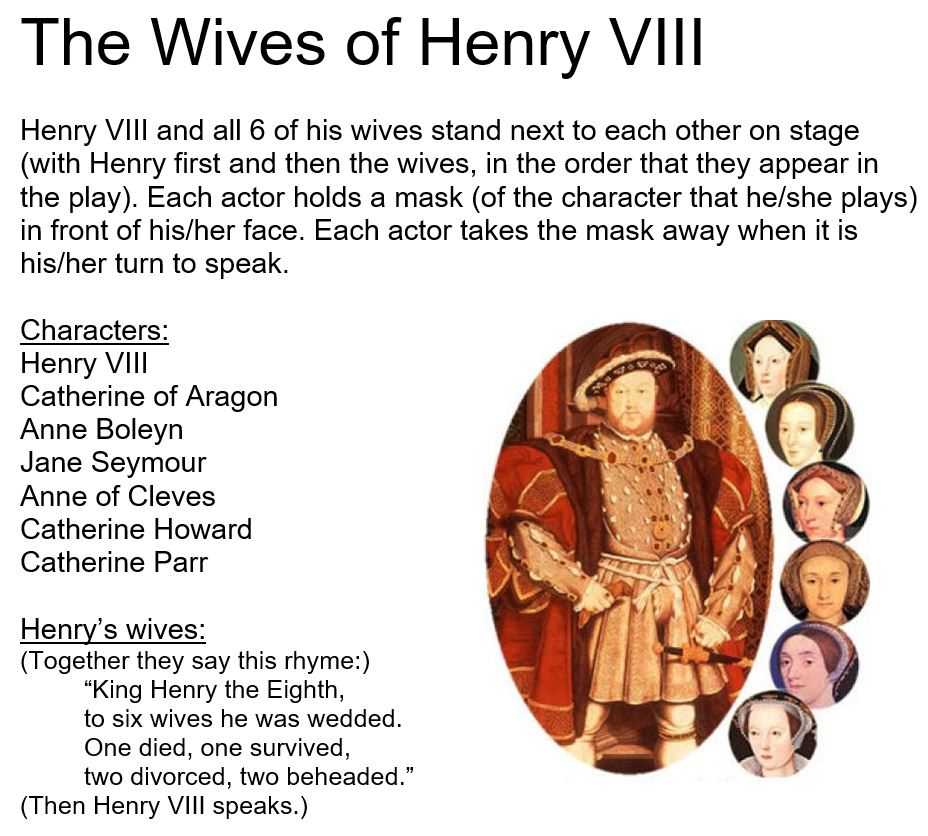
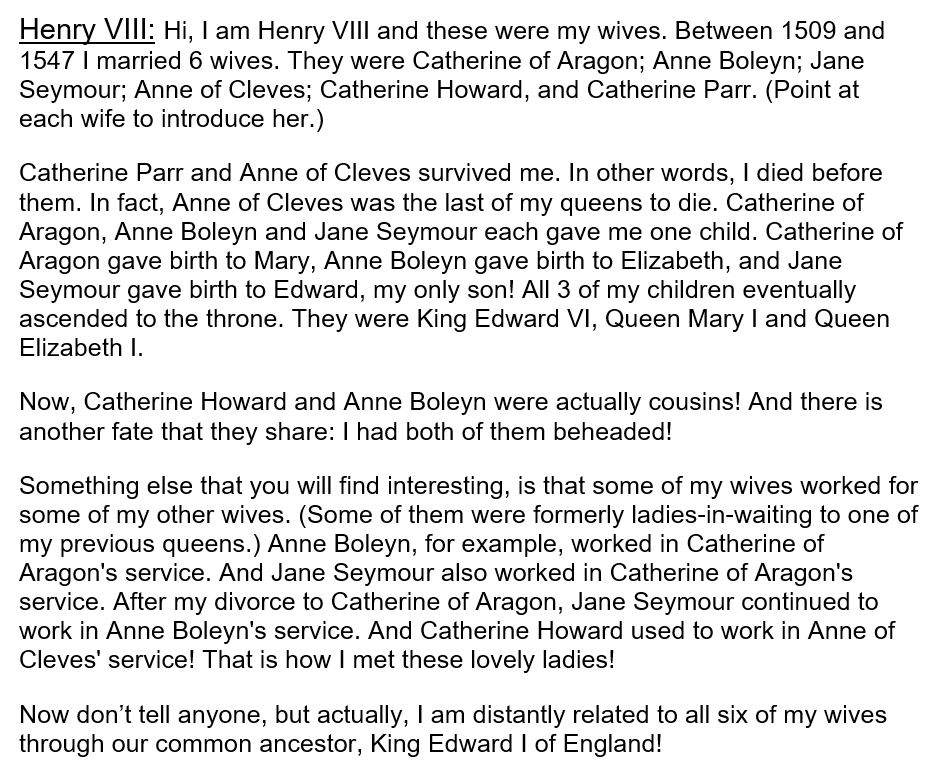
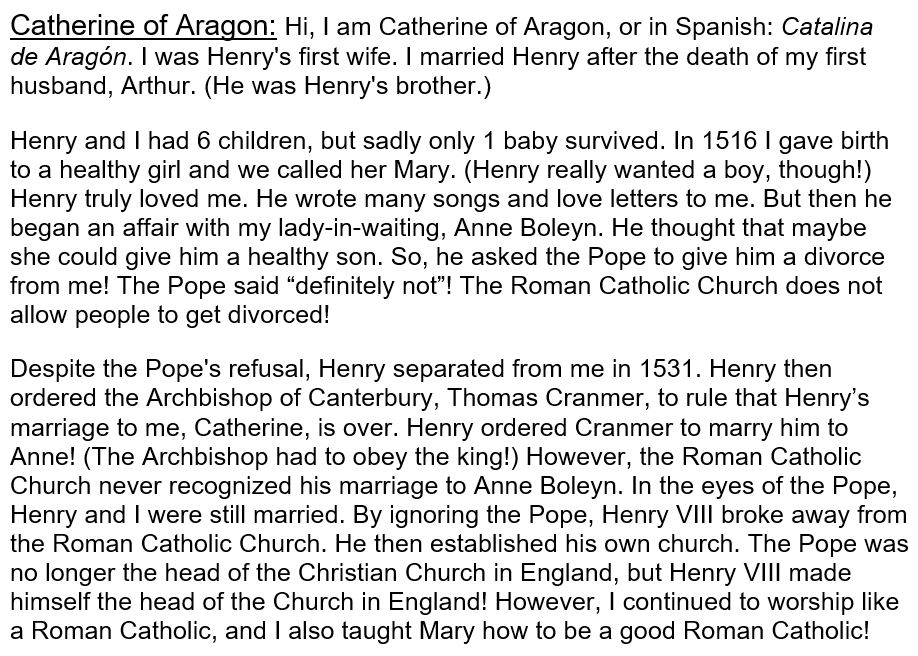
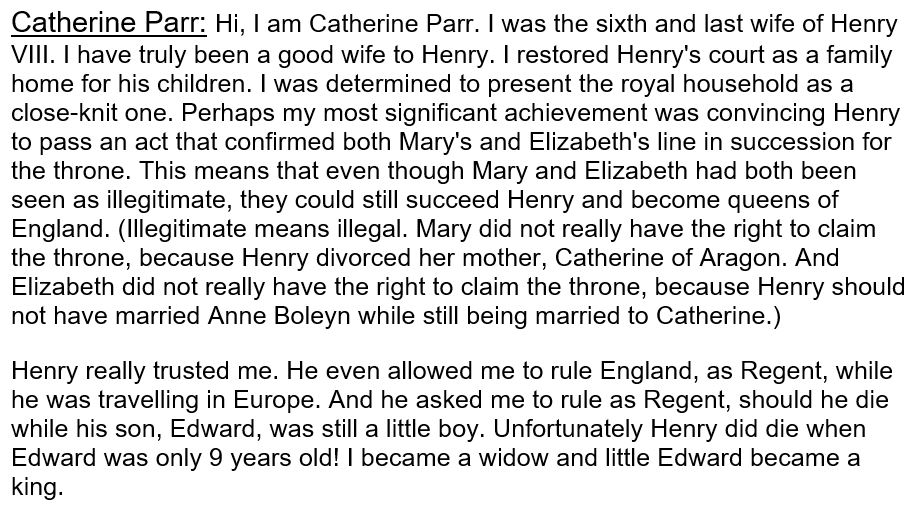
Let’s read the following play together, to learn more about the six wives of Henry VIII:
Henry VIII
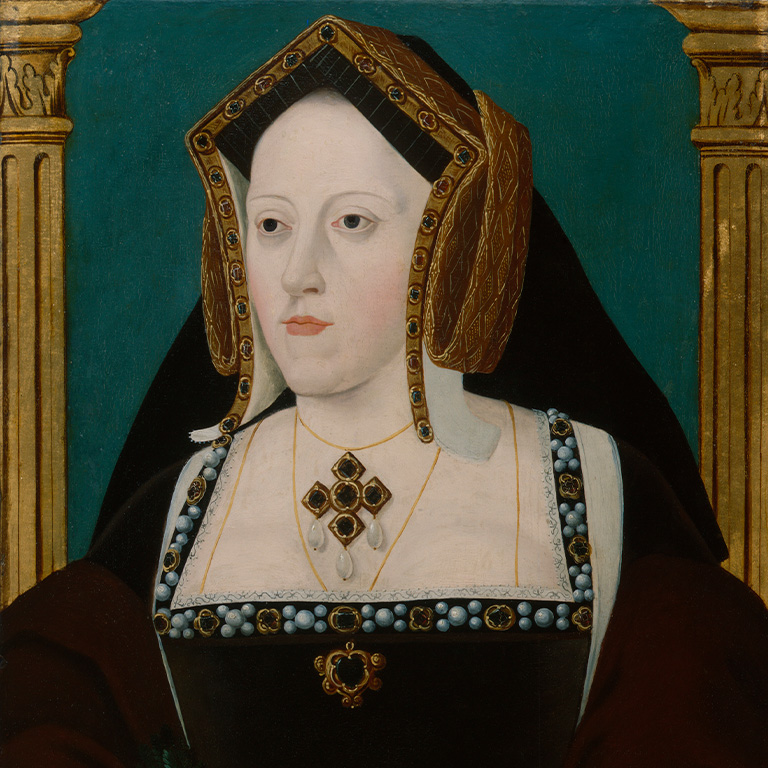
Catherine of Aragon
Anne Boleyn
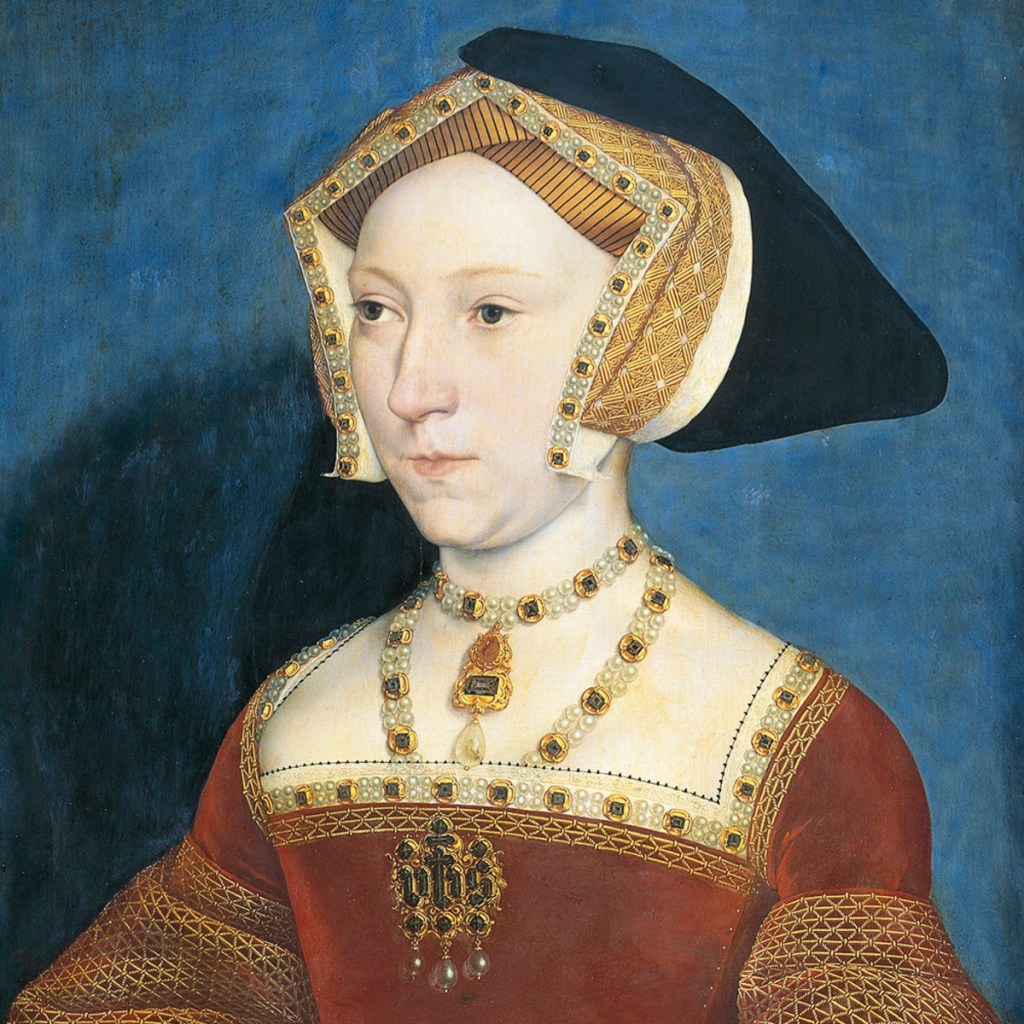
Jane Seymour
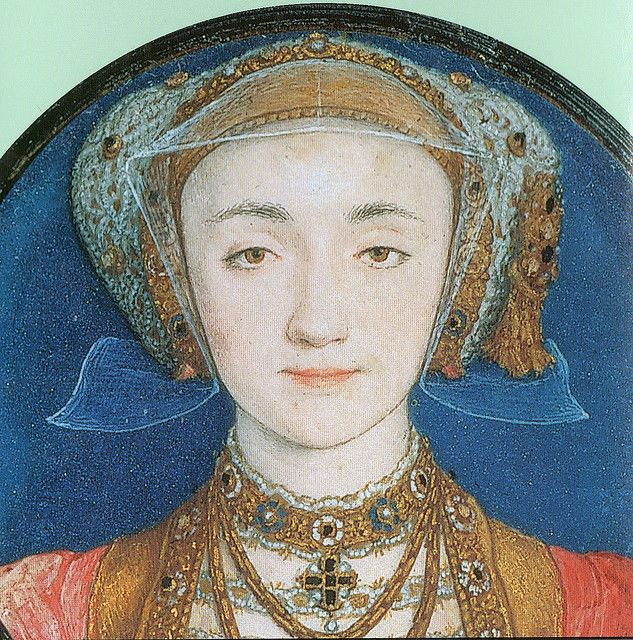
Anne of Cleves
Catherine Howard
Catherine Parr
4.
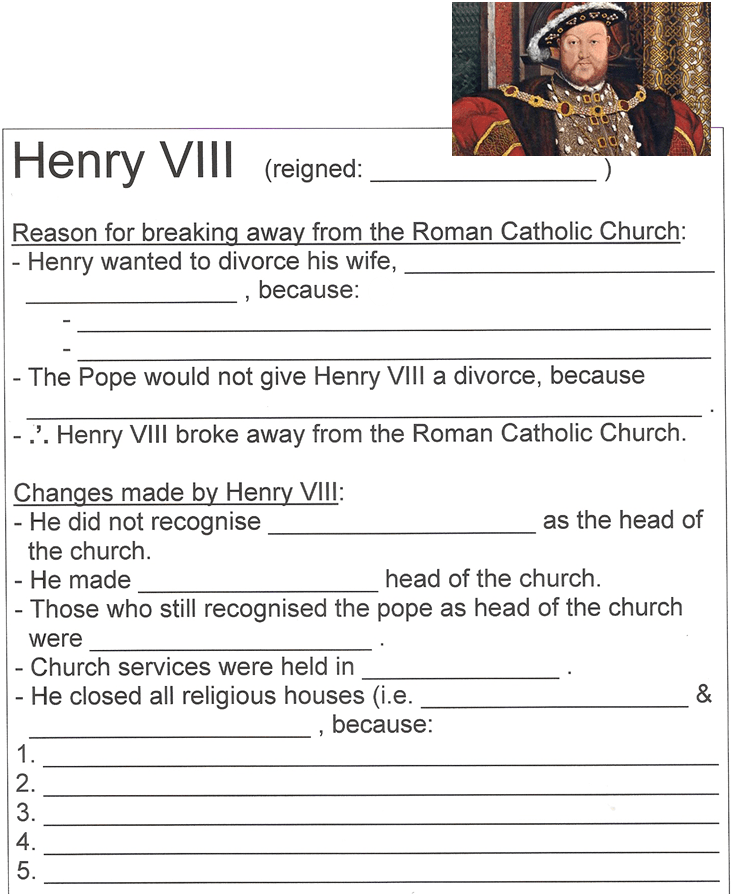
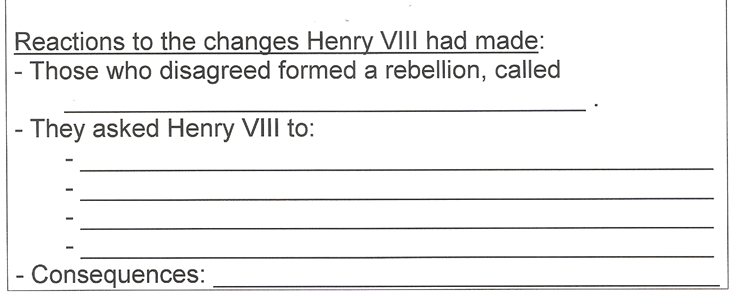
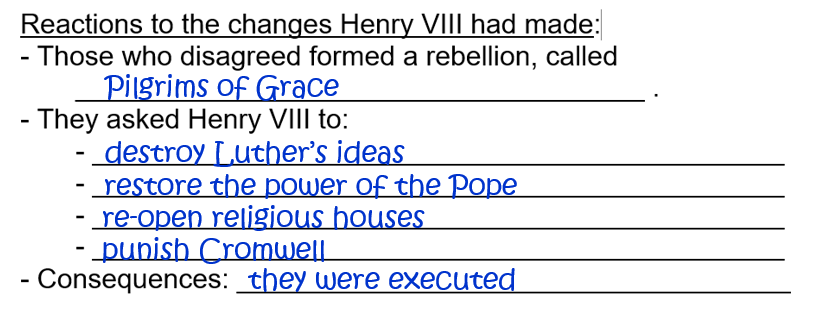
Fill in the missing information on the notes on Henry VIII (p.52).
5.
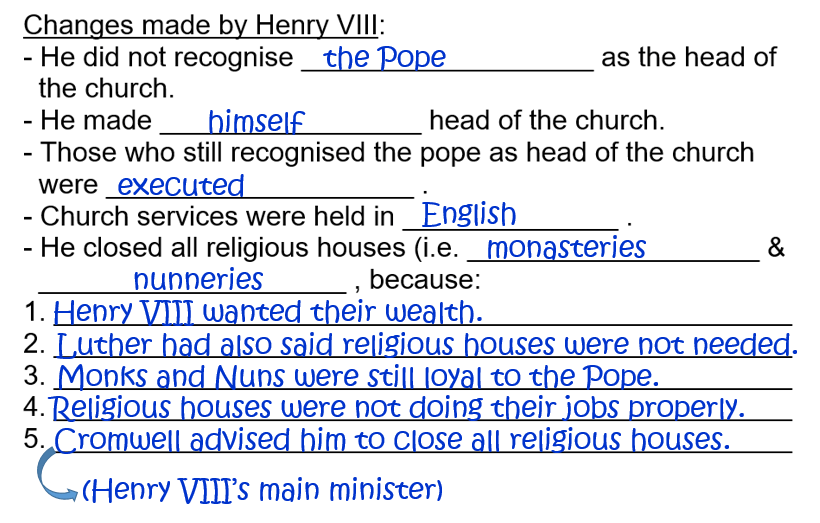
Mark your fill-in notes on Henry VIII:
&
(2:33 minutes long)
6.
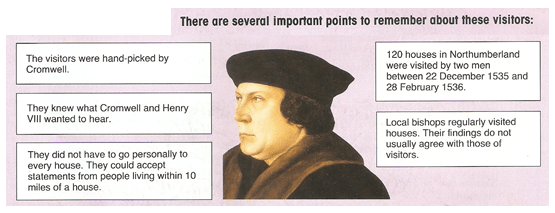
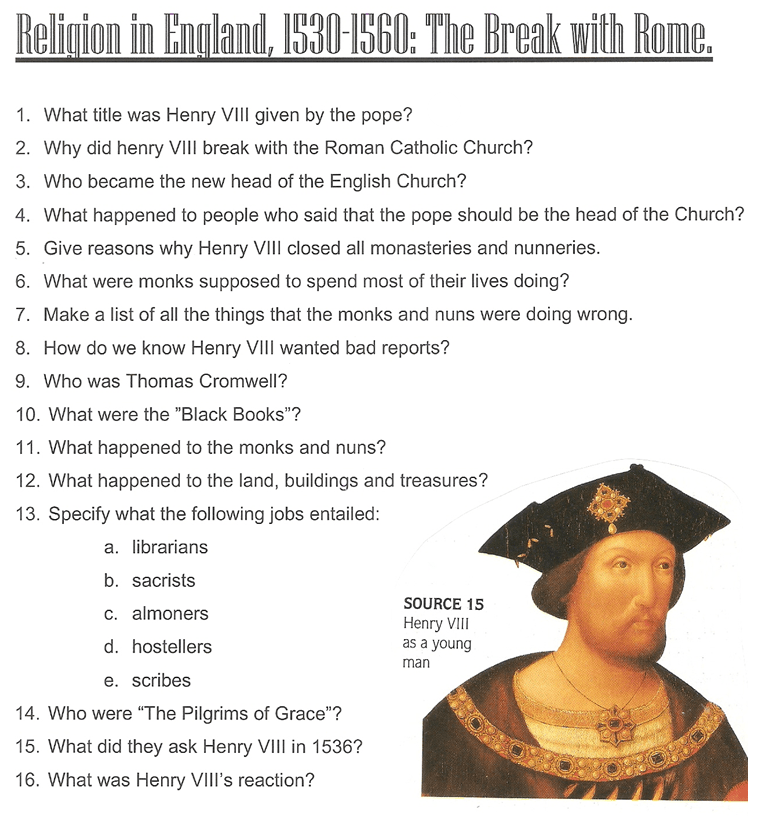
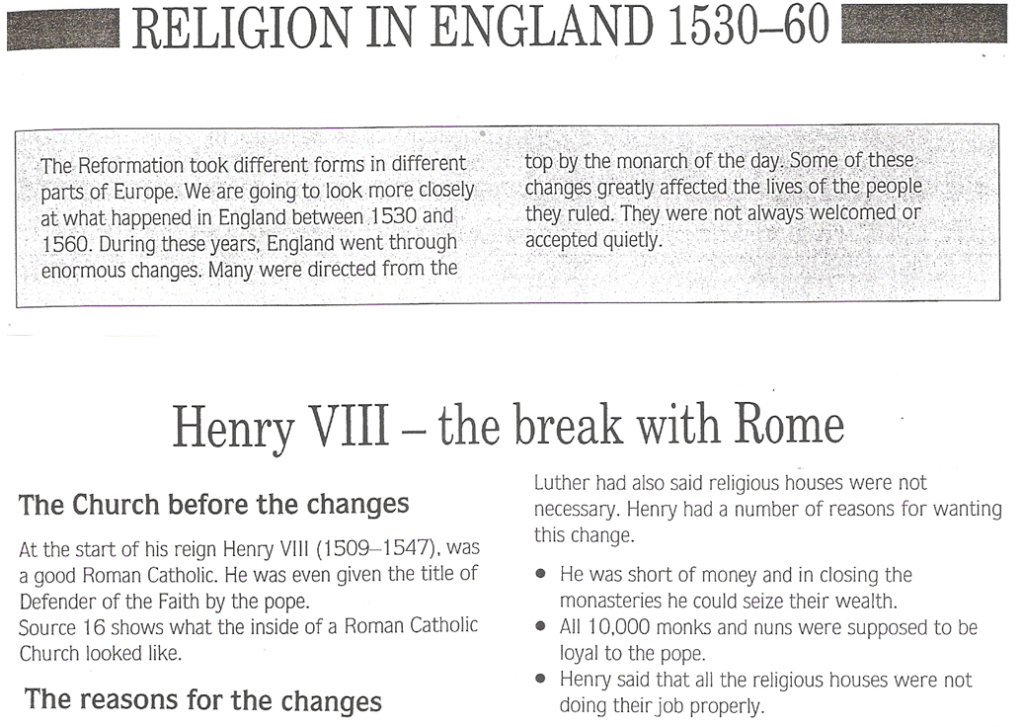
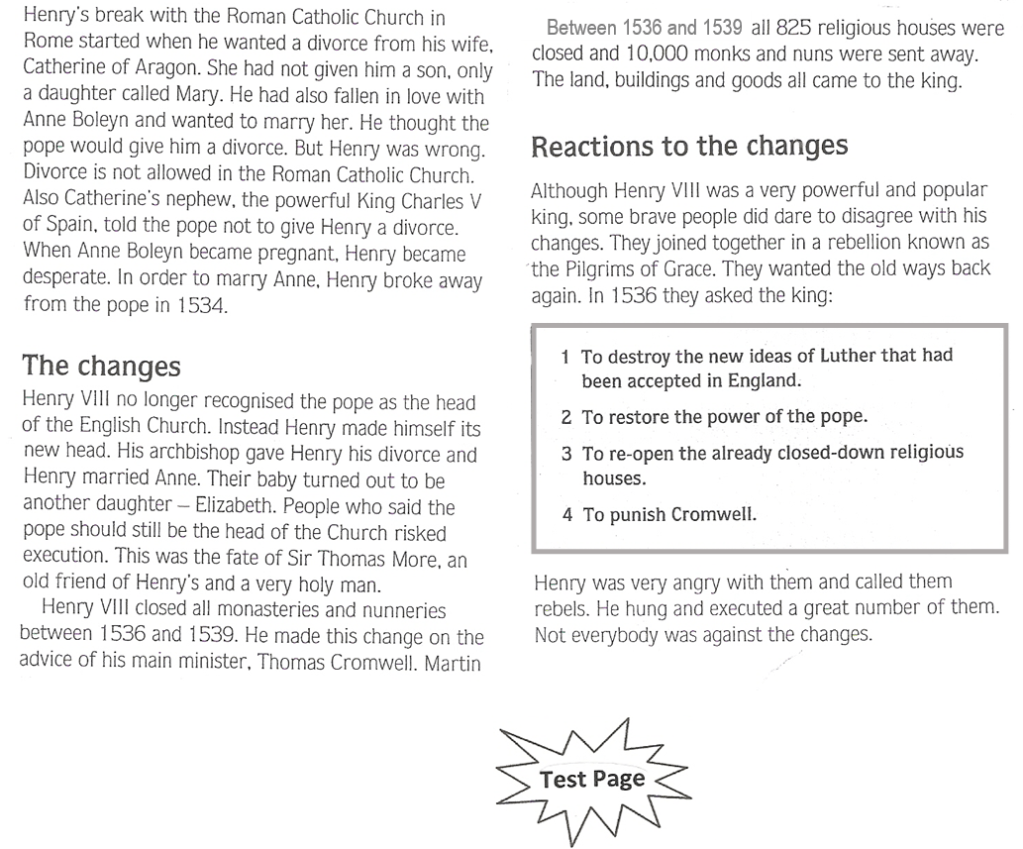
Henry VIII had all monasteries and nunneries closed. He broke away from the Roman Catholic Church and did not want these religious houses to still be loyal to the Pope. Moreover, by closing them, Henry VIII could take the wealth of the religious houses. Here are a few more details regarding the inspection and closure of religious houses during this time. (This information is also on p.59 in your workbook.)
7.
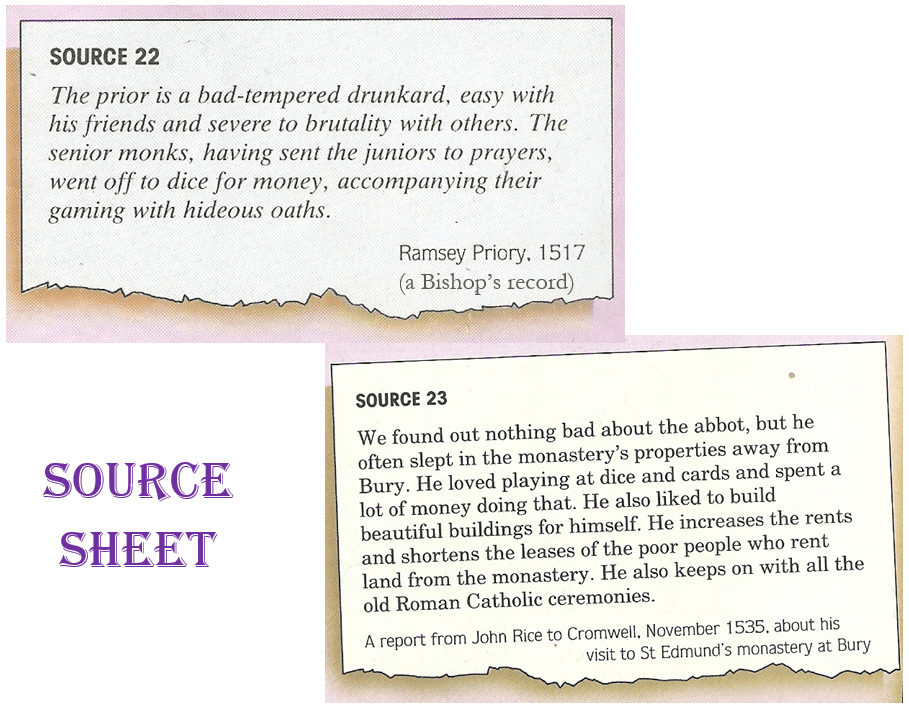
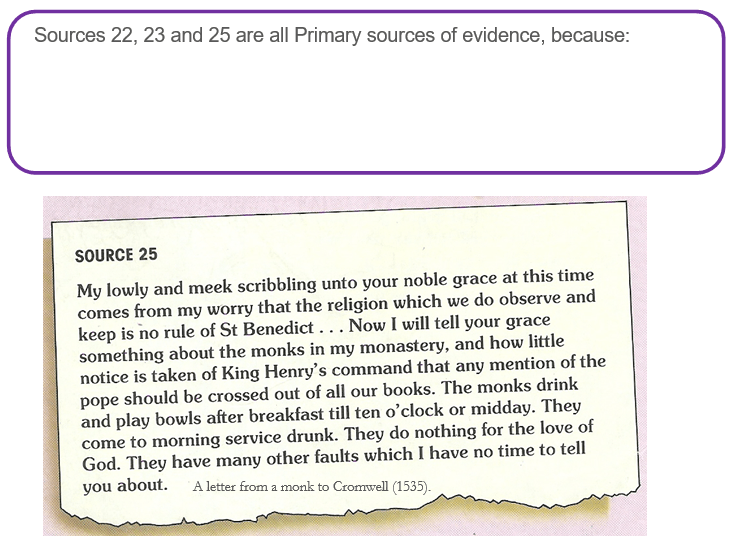
Read the sources on p.57 – they provide additional information about the religious houses. Then complete the box on p.57, to explain why these sources are all Primary sources of evidence.
SOLUTION:
Sources 22, 23 and 25 are Primary sources of evidence, because:these sources originate from the time of the Reformation in England. So, it is evidence gained from the period being studied.
8.
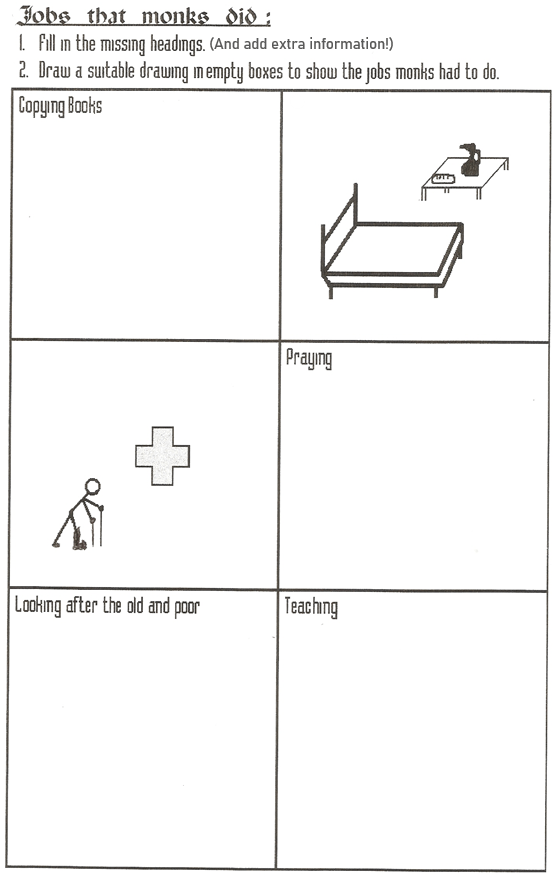
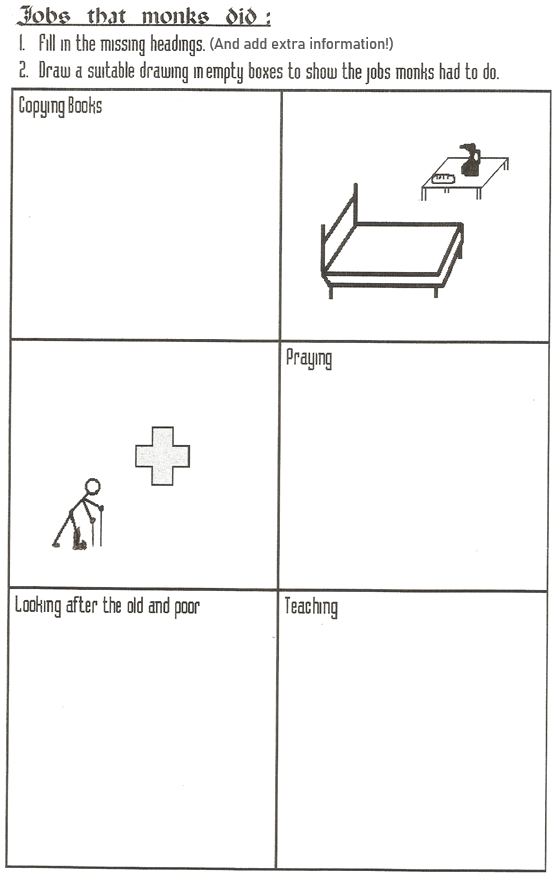
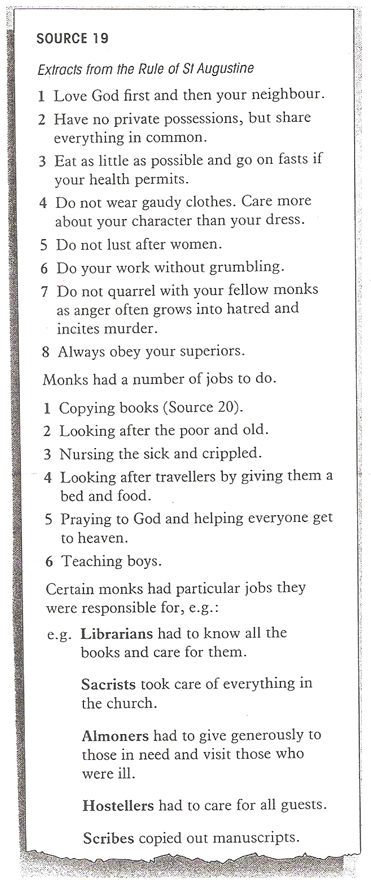
Do the task on “Jobs that monks did”, p.58.
Source 19 (p.48) may be useful in this task…
9.
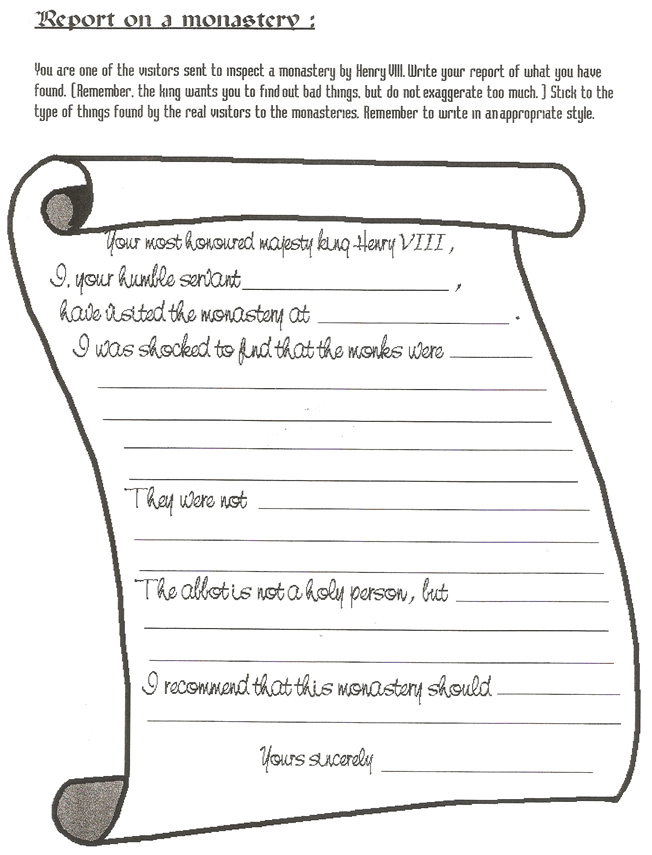
Do the task on a “Report on a monastery”, p.59.
10.
Read the following article about Henry VIII and the “break with Rome”.
Today you are going to learn more about the reformation in England…
Follow the instructions step by step:
1.
So, what about the Reformation in England? The following video tells you more about the reform of the church in England…
The Reformation in England. (2:16 minutes long)
2.
Read p.47
3.
Also…
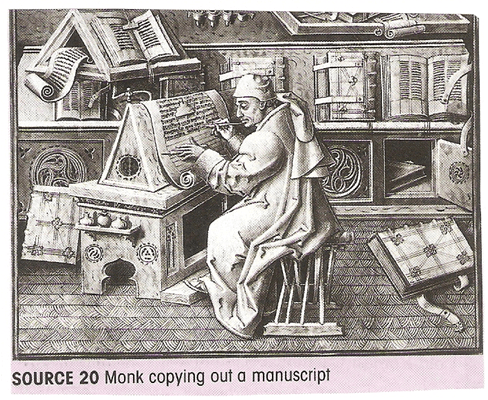
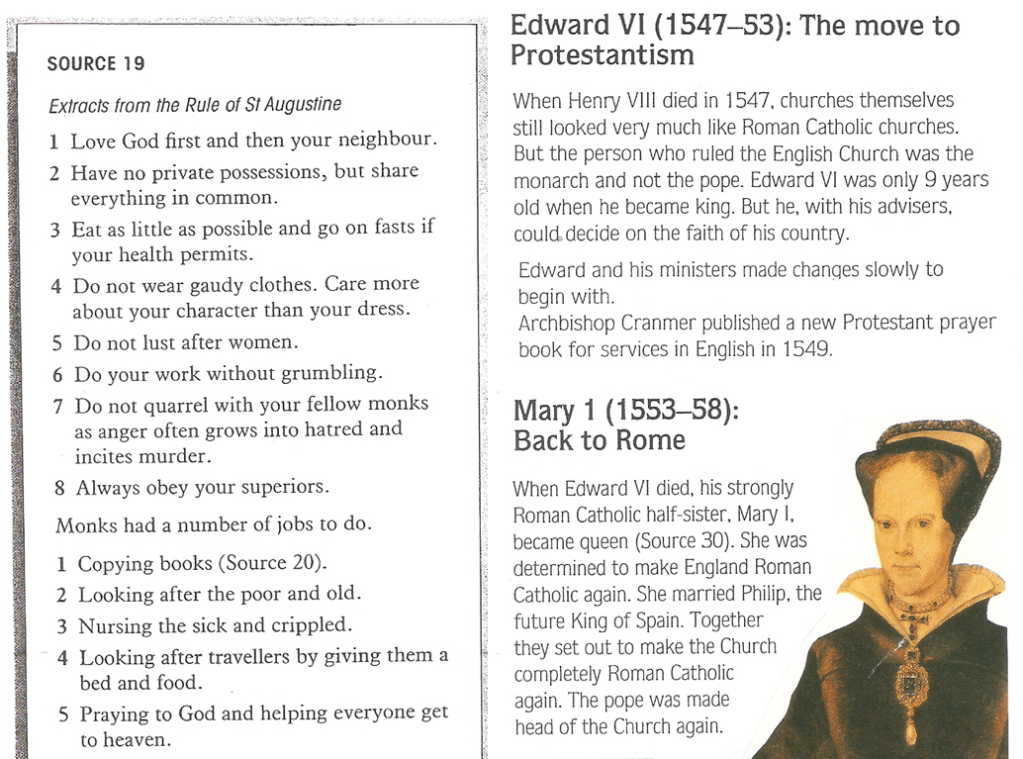
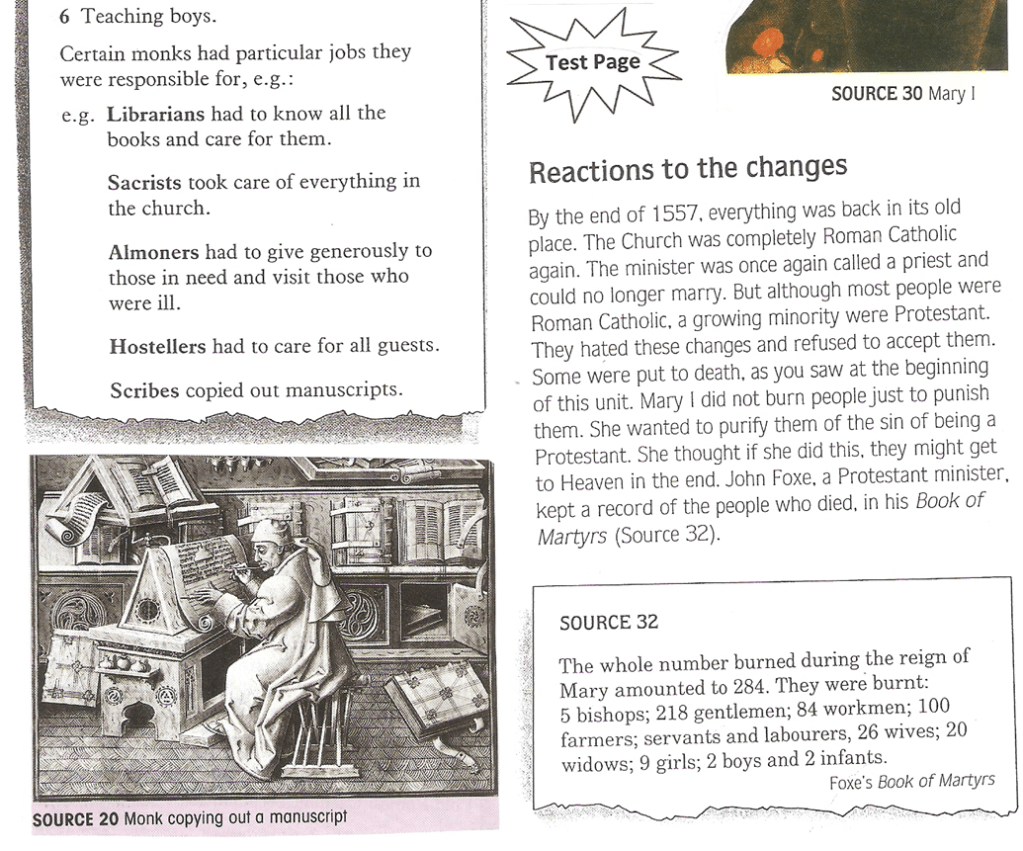
The sources about monks (Sources 19 & 20), p.48
4.
Henry VIII died on 28 January 1547.
On This Day: 28 January 1547 Death of Henry VIII. (2:58 minutes long)
5.
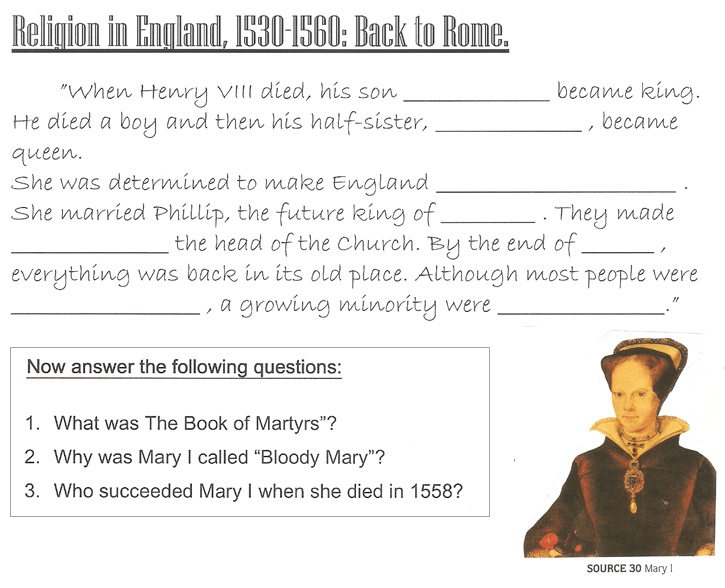
When Henry VIII died, his son Edward succeeded him as king. Here is a short biography of Edward VI…
Edward VI – 60 Second History. (0:59 minutes long)
6.
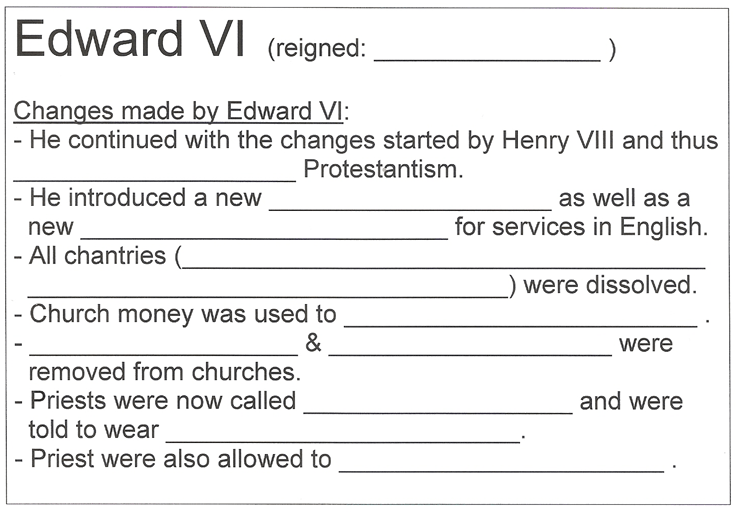
Edward VI…p.48
7.
The story of Lady Jane Grey is interesting… She never wanted to be queen in the first place! The following videos tell you a little more about Edward VI and also about Lady Jane Grey.
How Lady Jane Gray became Queen. (1:42 minutes long)
King Edward VI (1537-1553). (2:53 minutes long)
Story of Lady Jane Grey | Terrible Tudors | Horrible Histories. (2:48 minutes long)
8.
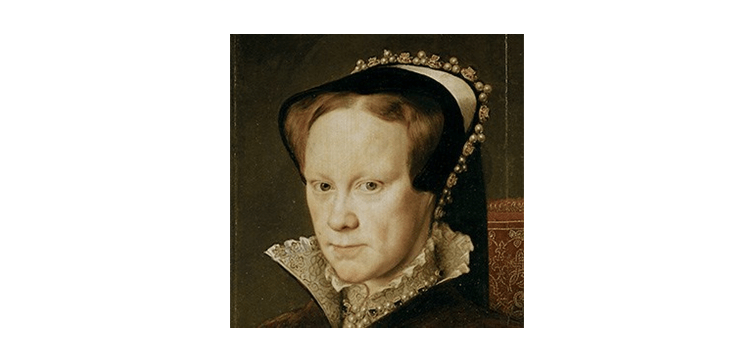
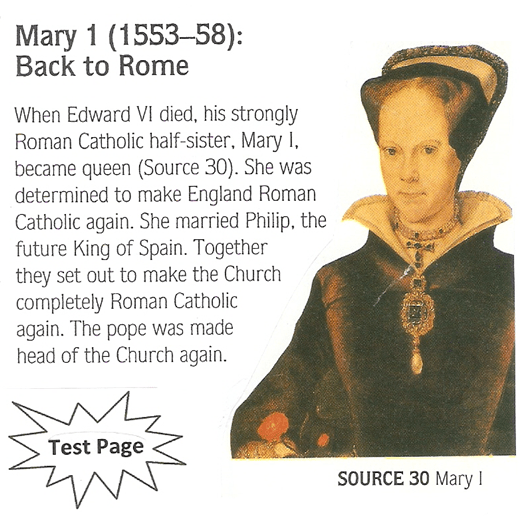
Even though Lady Jane Grey was nominated by Edward VI as his successor, it was Edward’s older sister, Mary, who was crowned as Queen. (Henry VIII nominated Mary as successor to Edward.)
Let’s see what we can learn about Mary Tudor, the eldest daughter of Henry VIII…
Mary Tudor – Queen of England | Biography. (3:08 minutes long)
9.
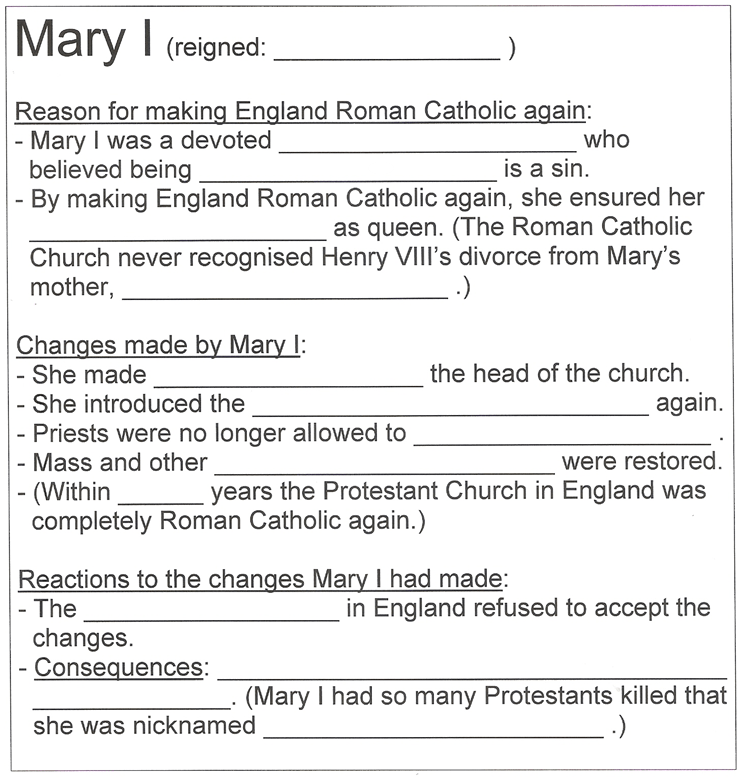
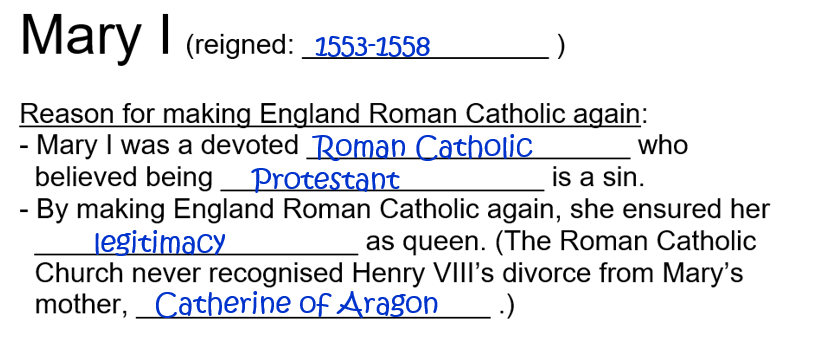
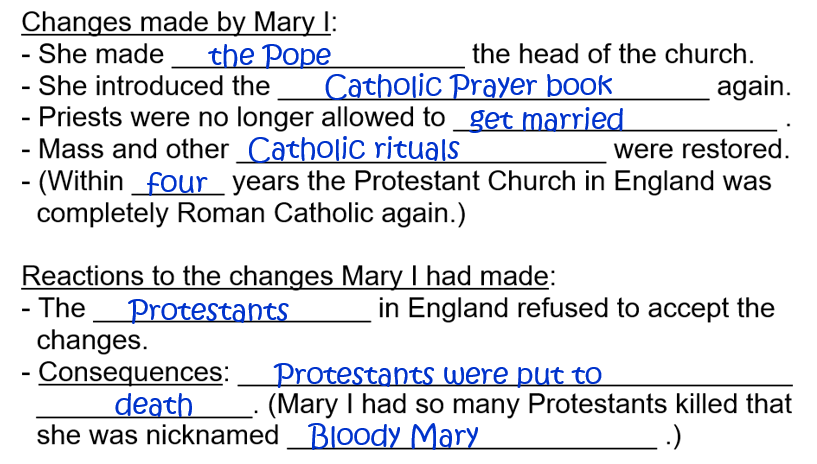
The information about Mary I, in the 2nd column on p.48
10.
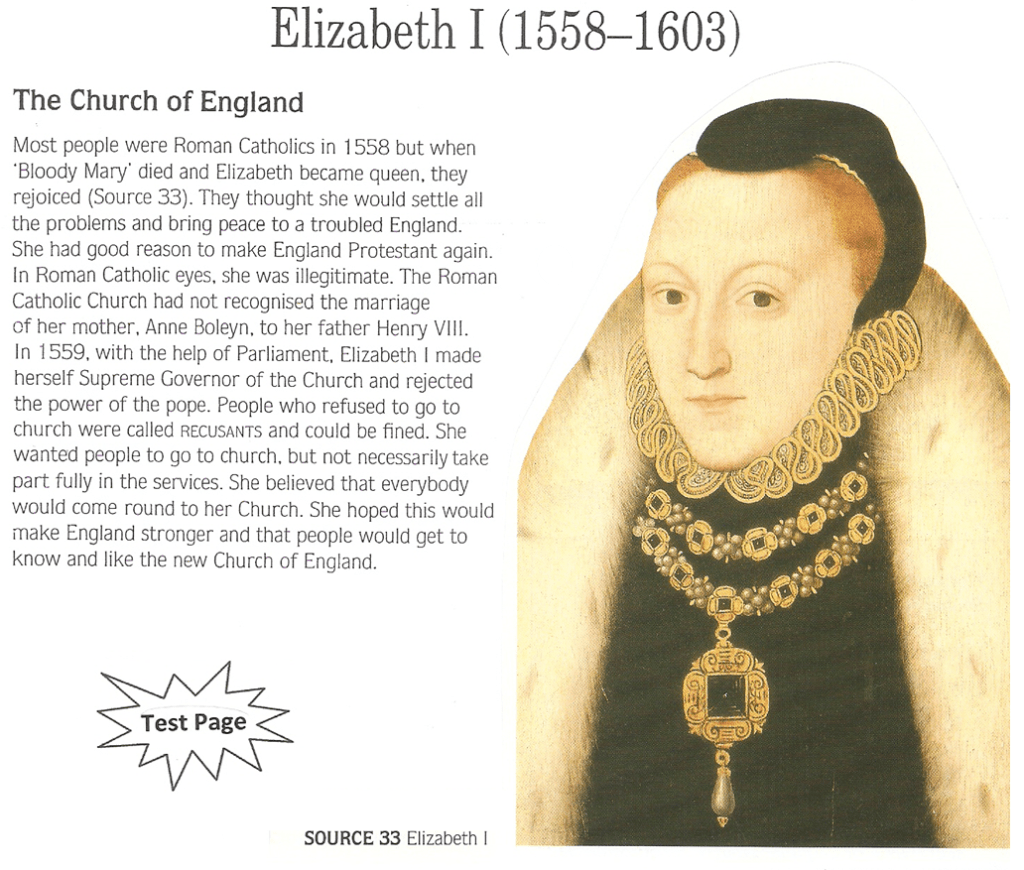
When Mary I died, Henry VIII’s youngest daughter Elizabeth succeeded her as Queen of England. Let’s see what we can learn about Queen Elizabeth…
On This Day: 15 January 1559 The Coronation of Elizabeth I. (2:52 minutes long)
11.
Elizabeth I’s reign was complicated by religious matters! It even posed a threat to her position as Queen of England, despite her efforts to please both Protestants and Catholics…At first Elizabeth allowed did not suppress Roman Catholic worship, but then it became apparent that catholics may pose a treat to her throne, as many Catholics preferred Elizabeth’s cousin as Queen! Her name was Mary Stuart, and she was the Queen of Scotland… Let’s look at a very brief History of Mary Stuart, also known as Mary Queens of Scots…
Mary, Queen of Scots – mini biography. (2:45 minutes long)
Today we will look at typical Paper 2 exam questions, in preparation for your Paper 2 examination…
We will:
analyse exam questions
analyse sources
plan essay answers
write essay answers
Your homework for today was to revise the “Soviet Control over Eastern Europe” topic…
1.
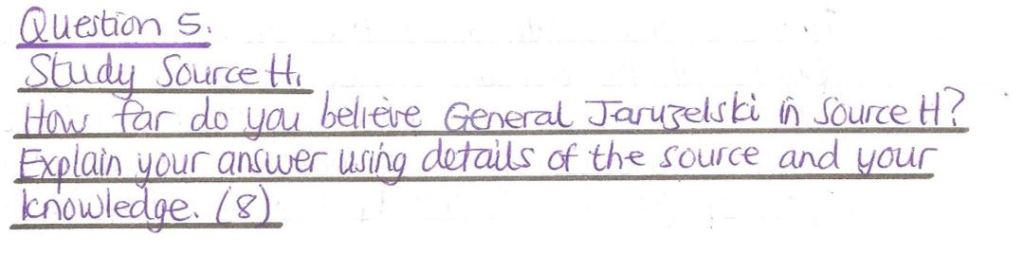
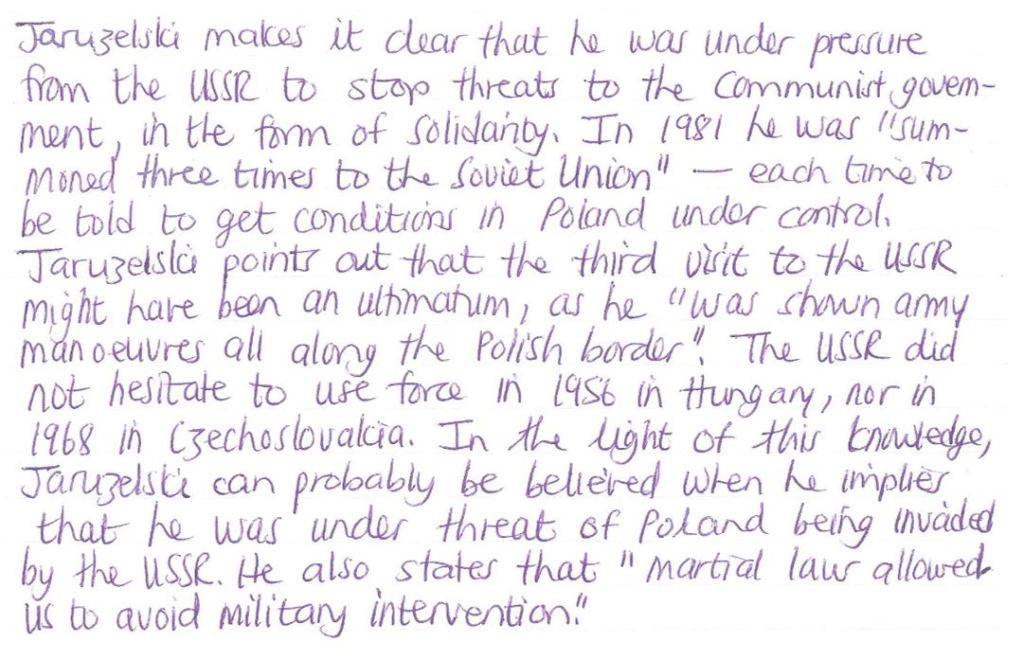
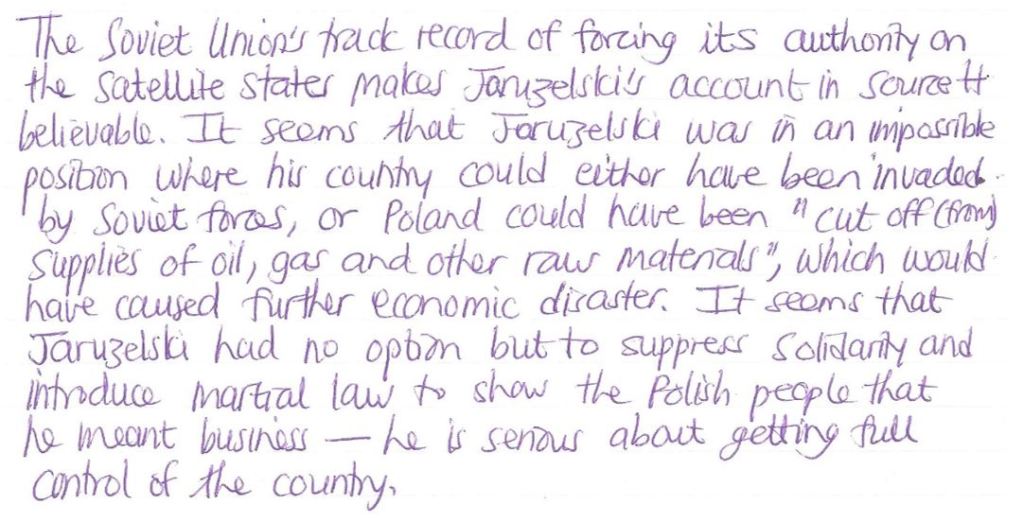
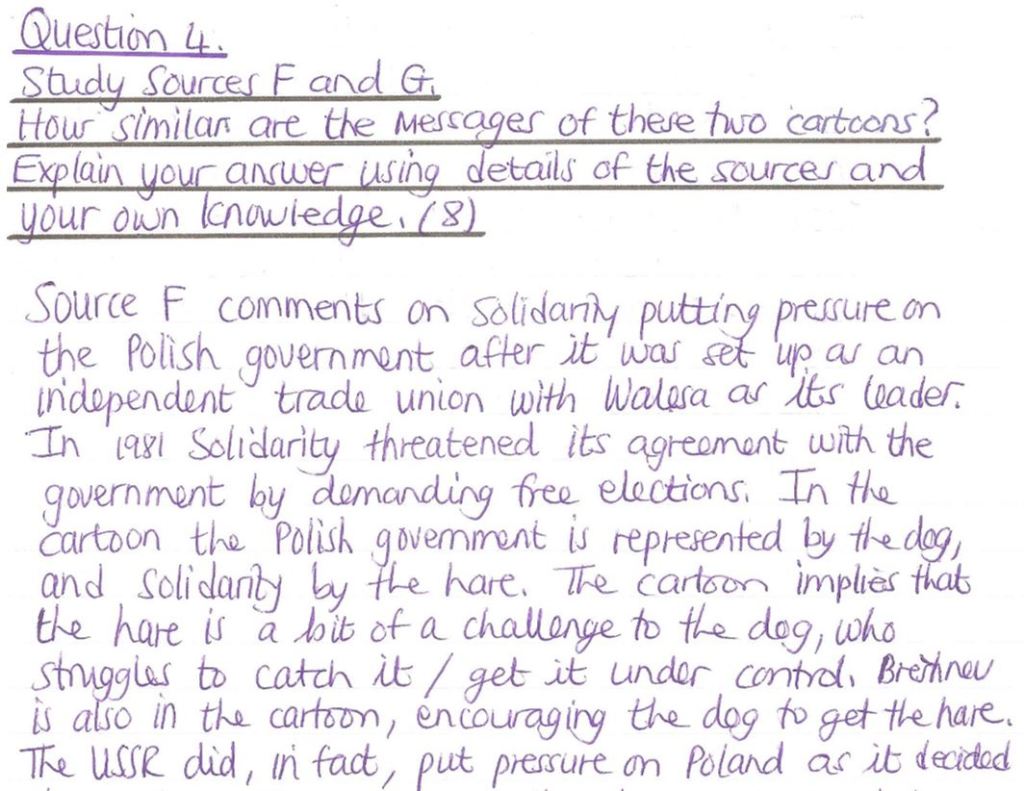
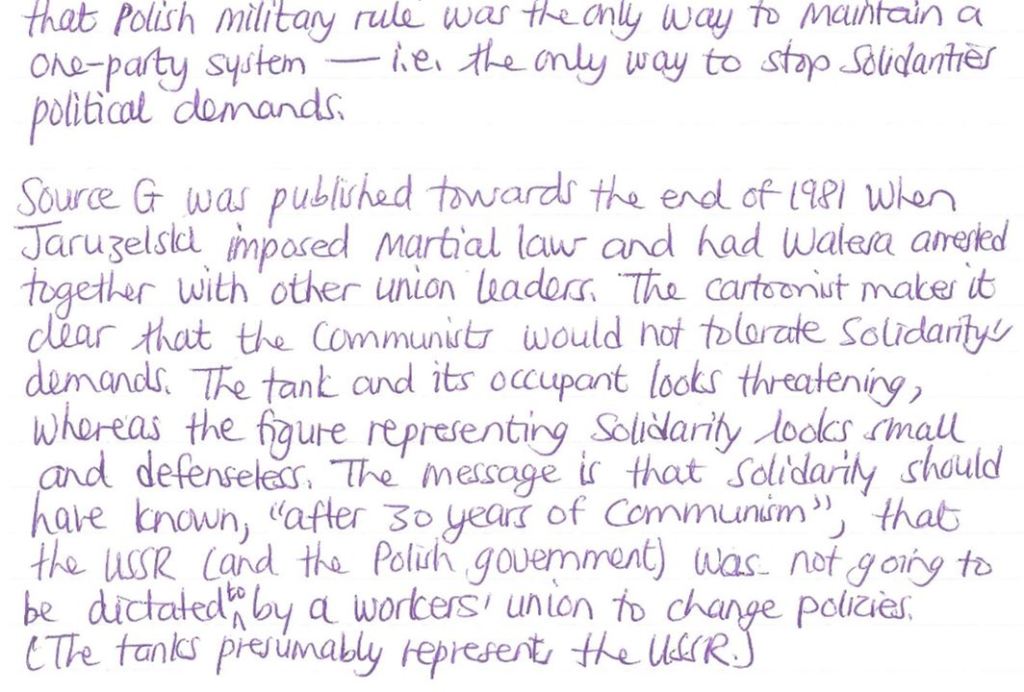
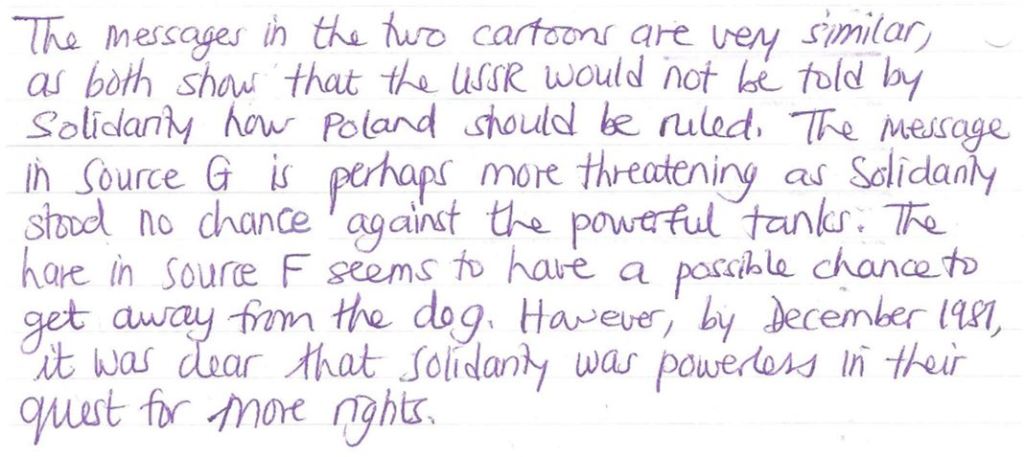
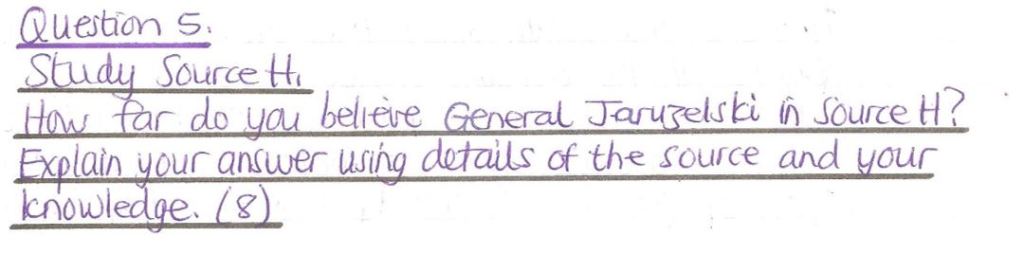
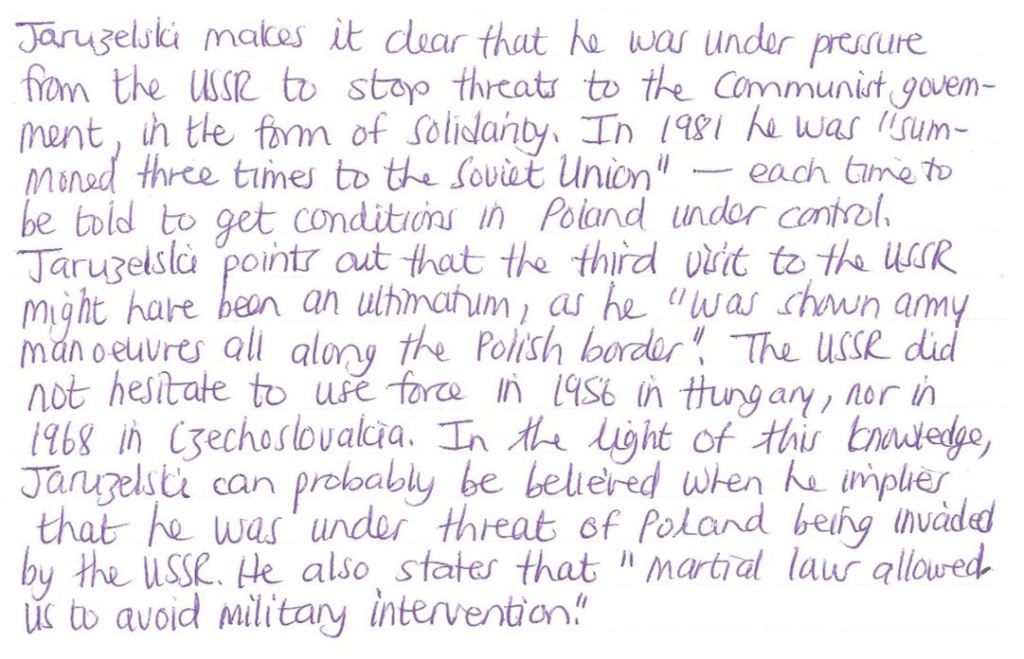
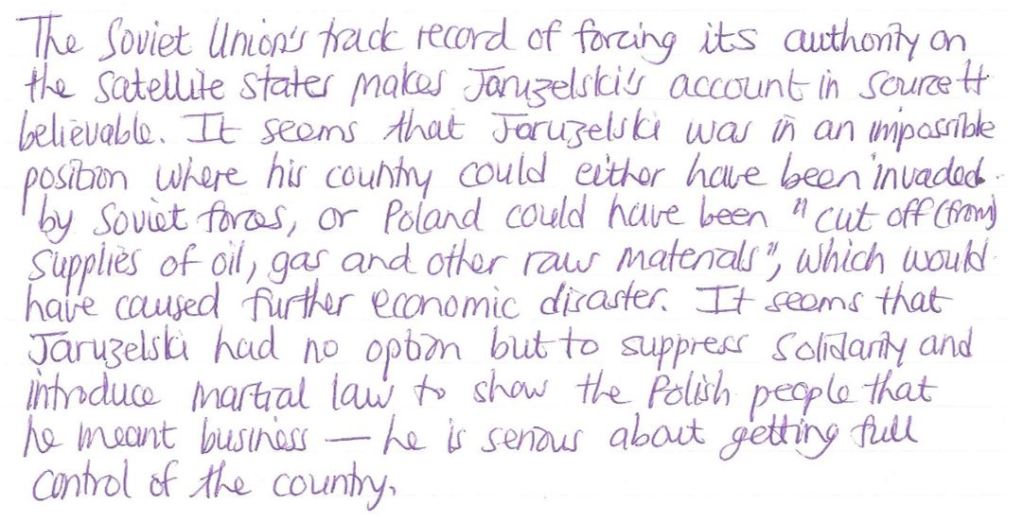
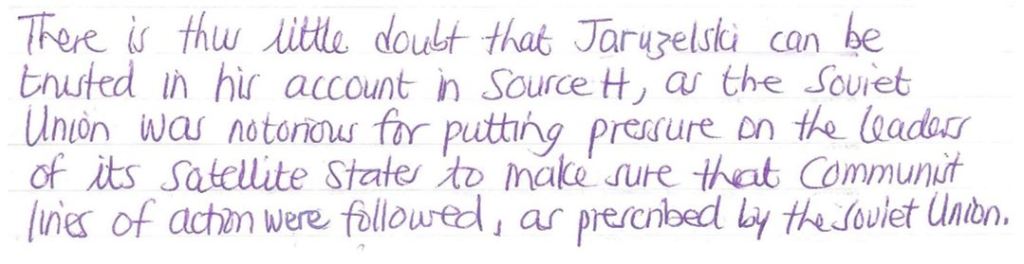
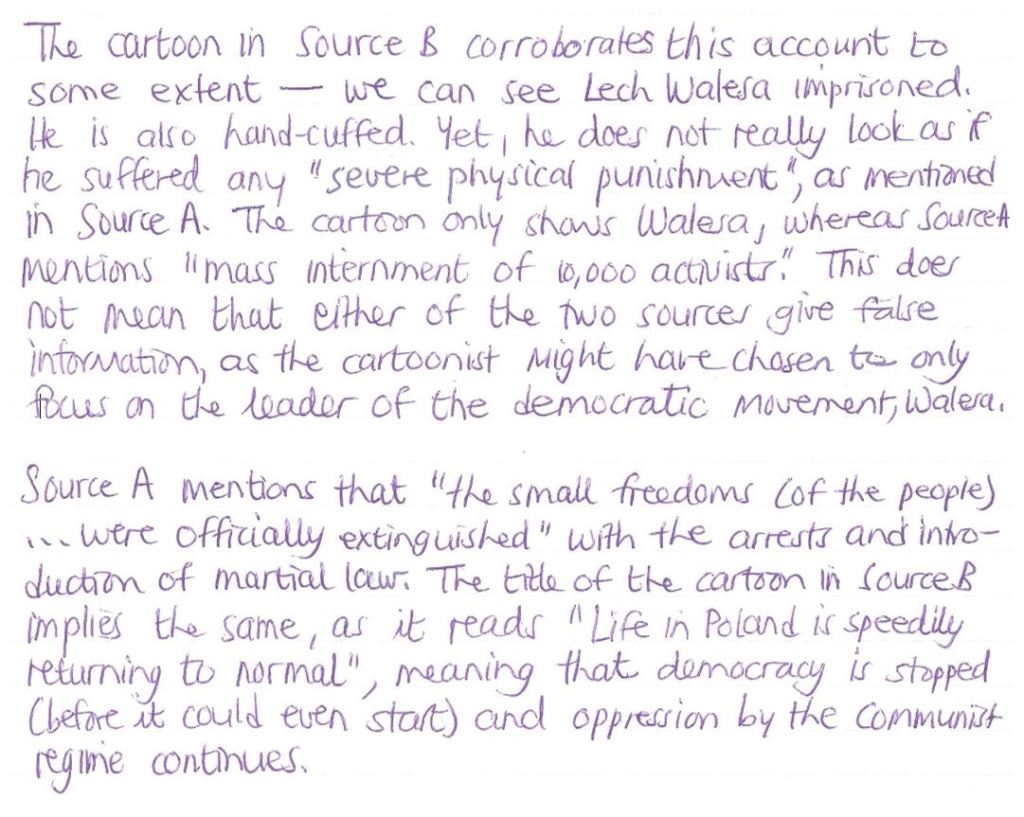
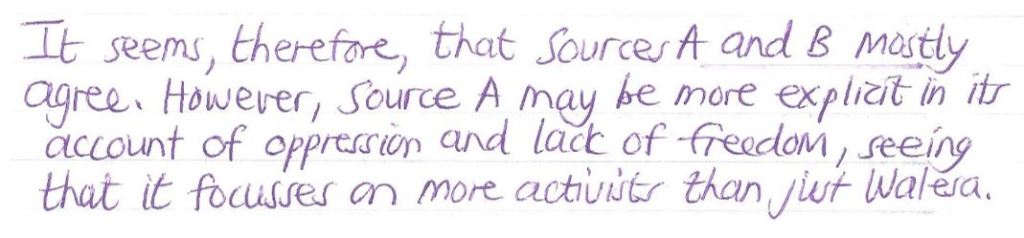
If not marked in the previous lesson, here is a possible answer to question 5:
2.
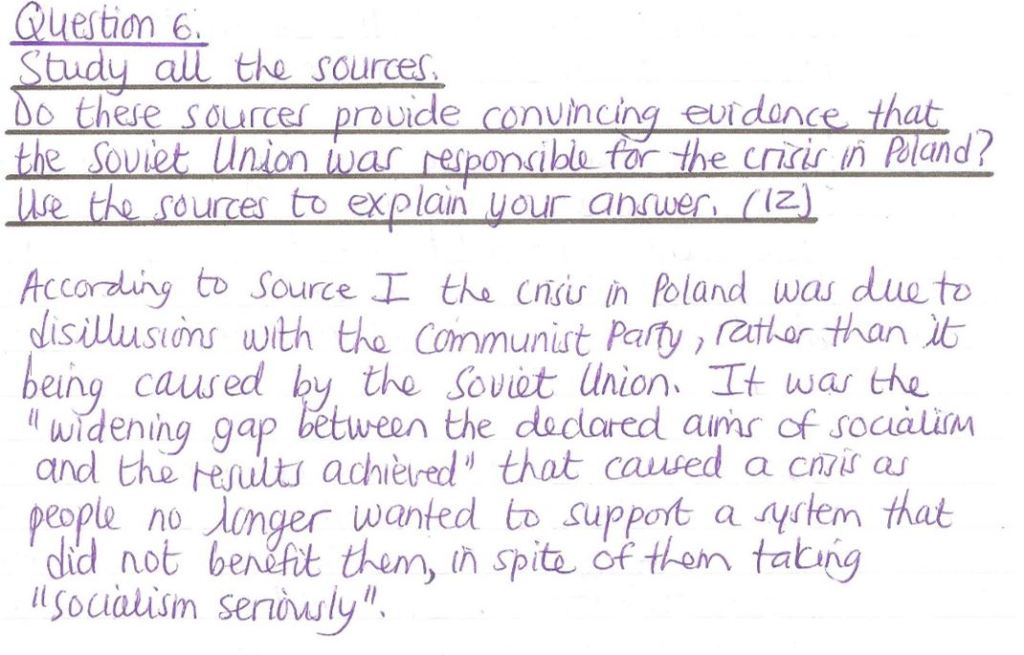
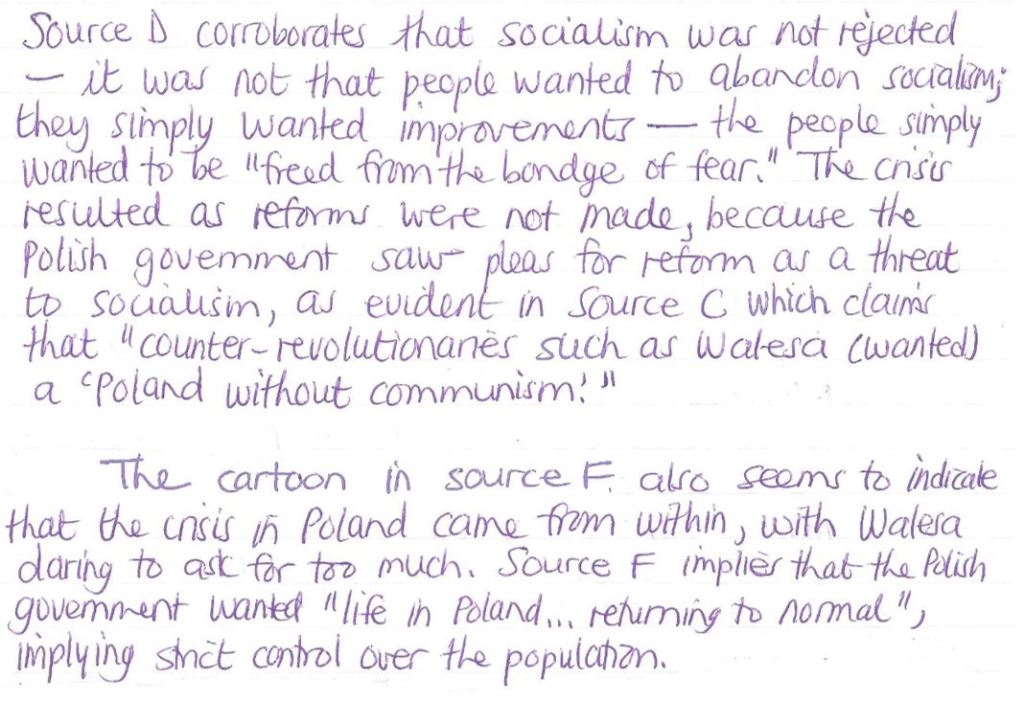
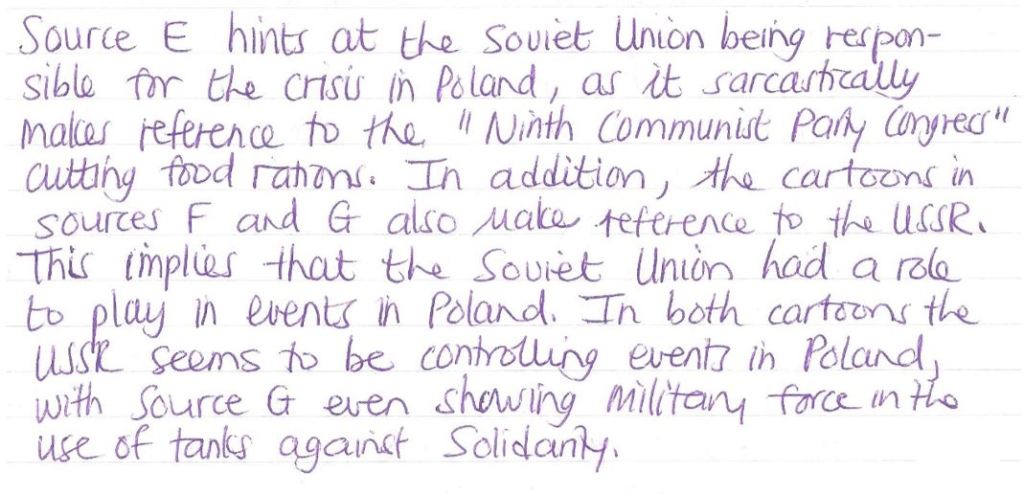
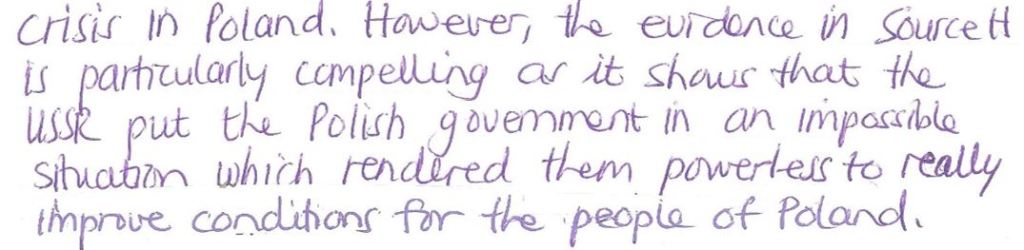
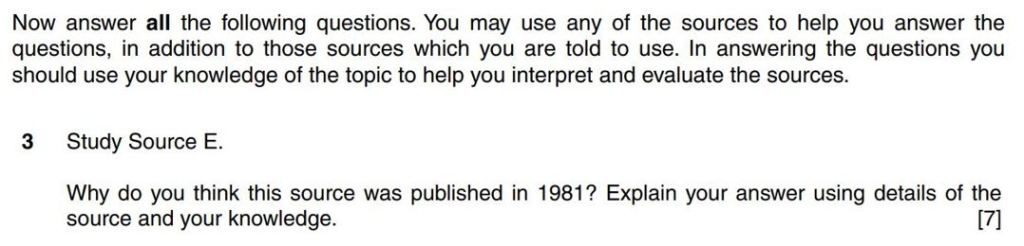
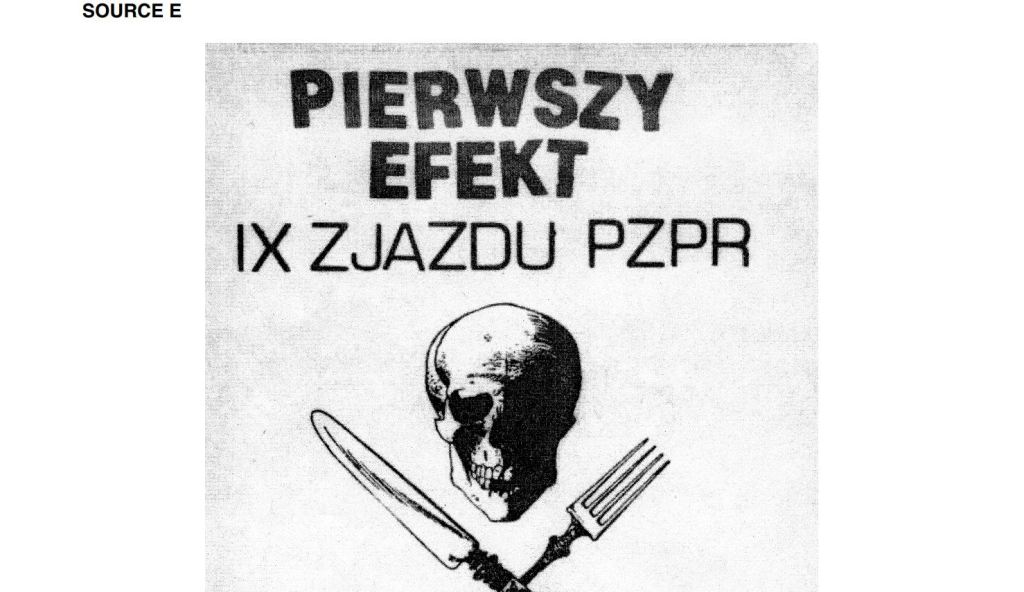
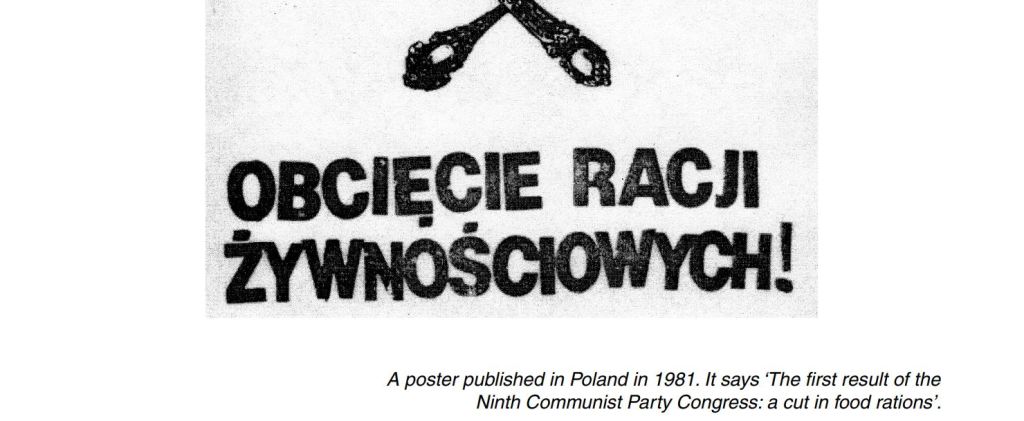
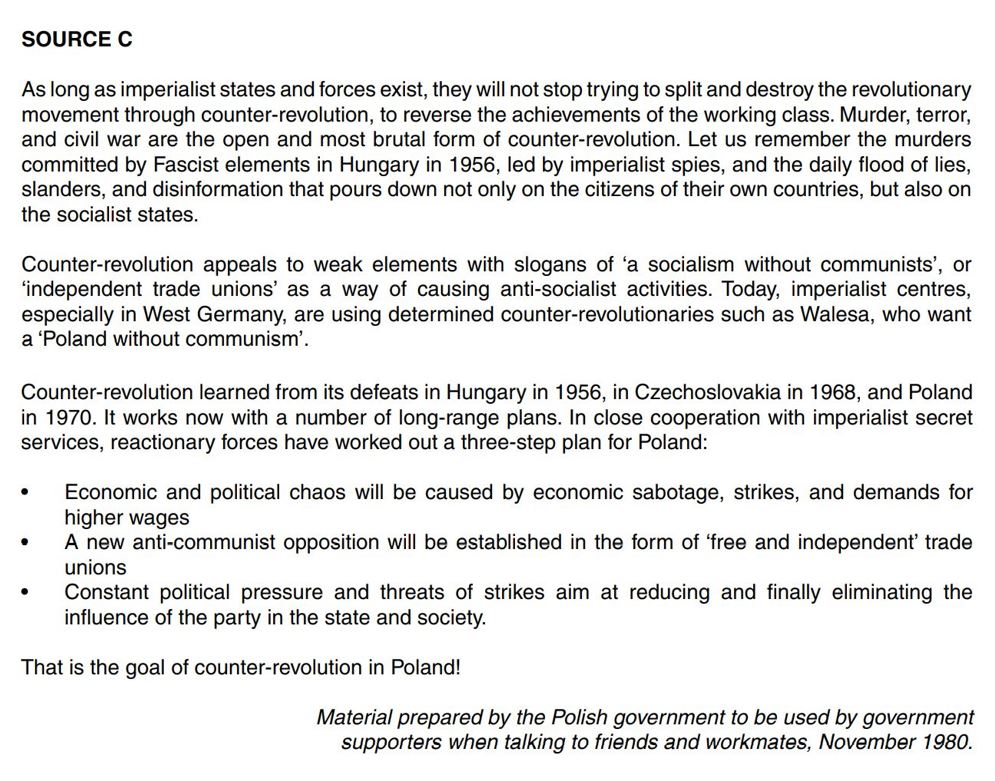
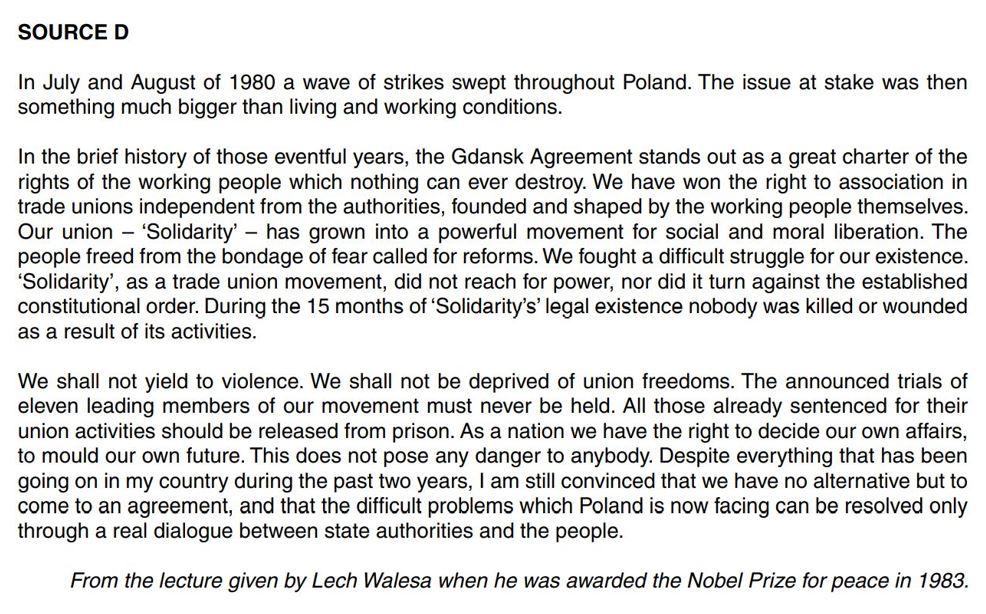
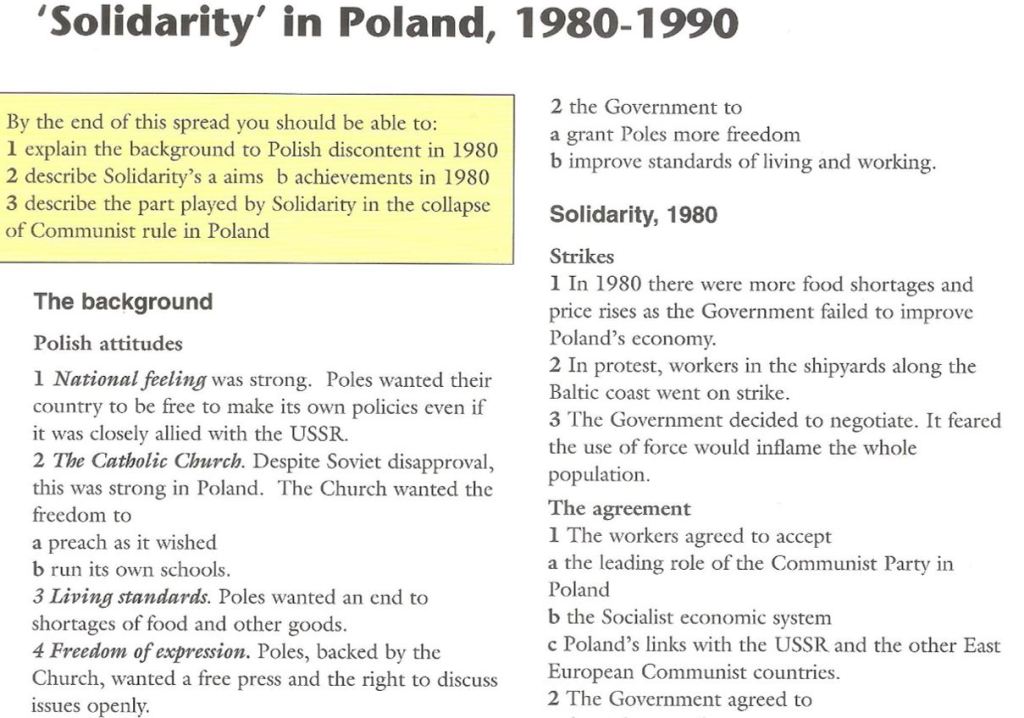
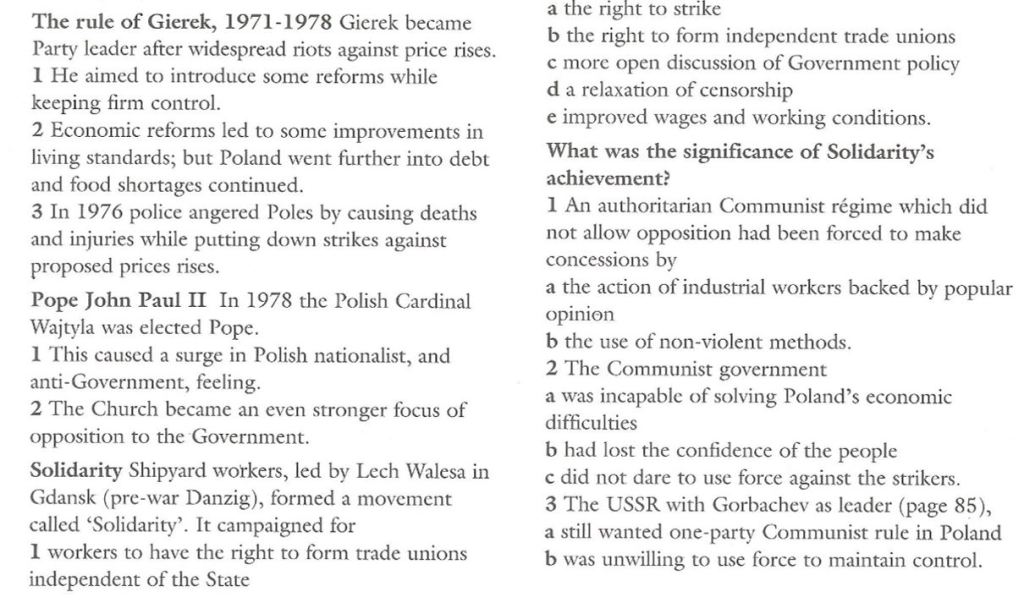
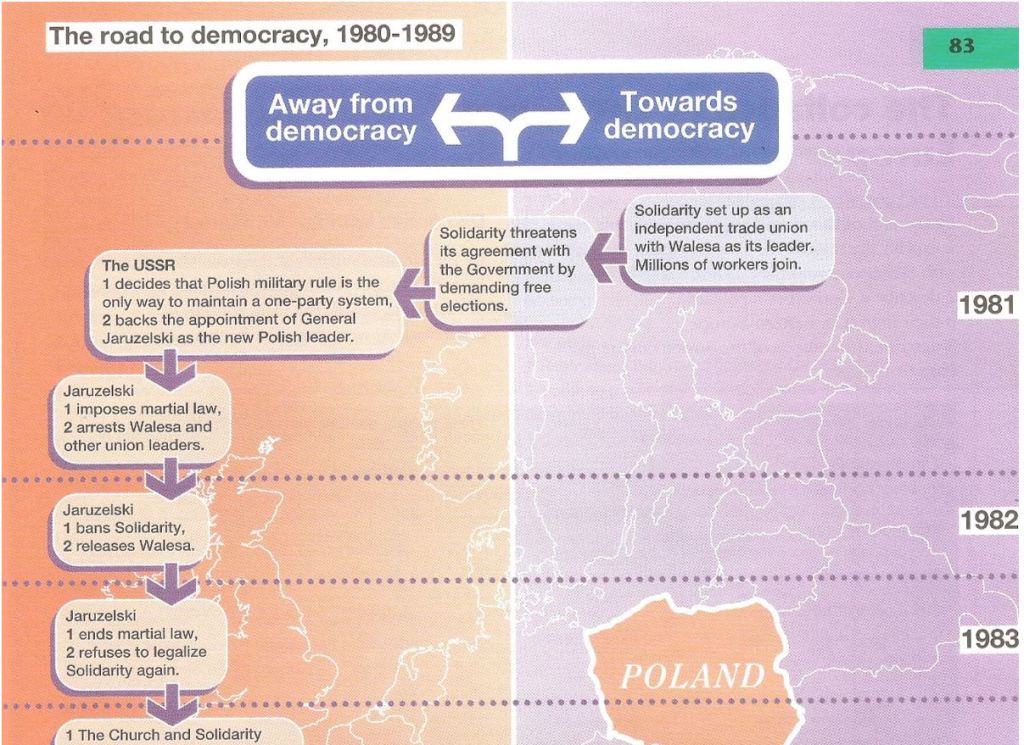
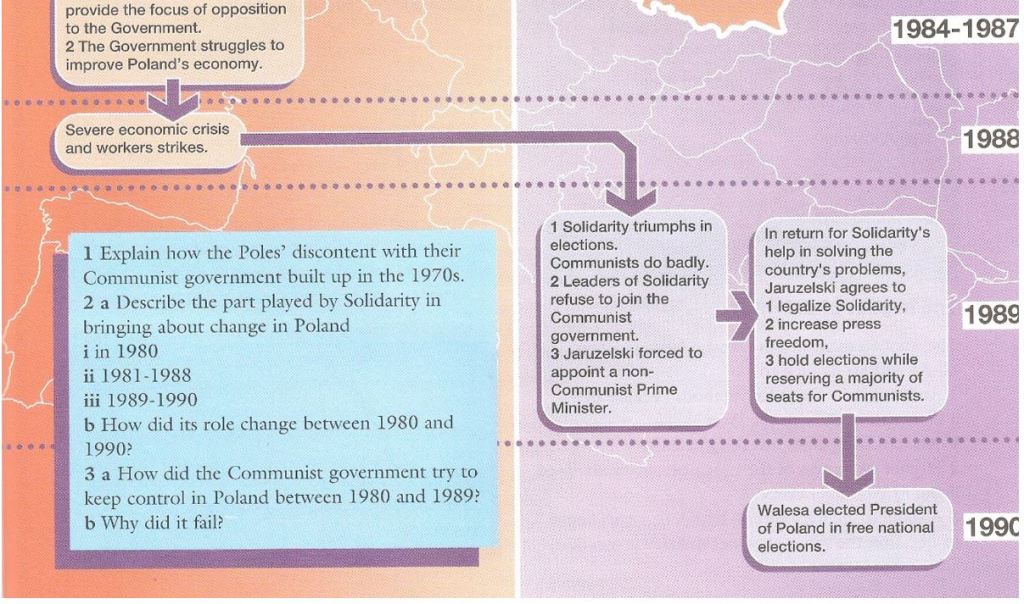
So, let’s work on the final Paper 2 exam question on Poland and Solidarity:
Question 6
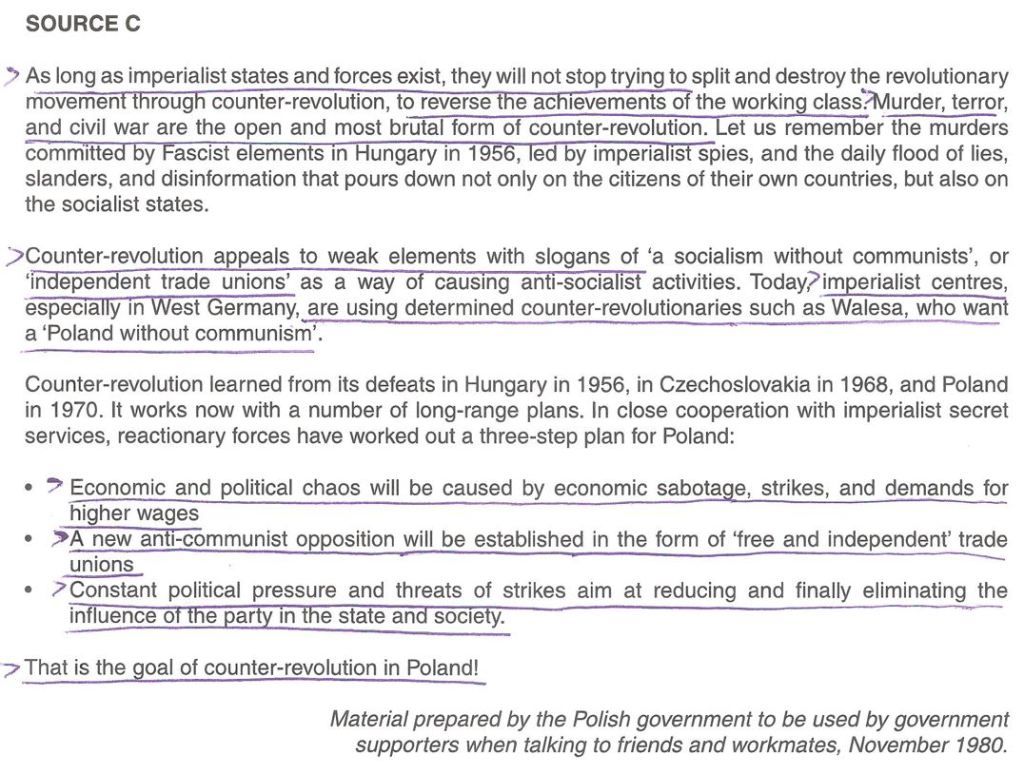
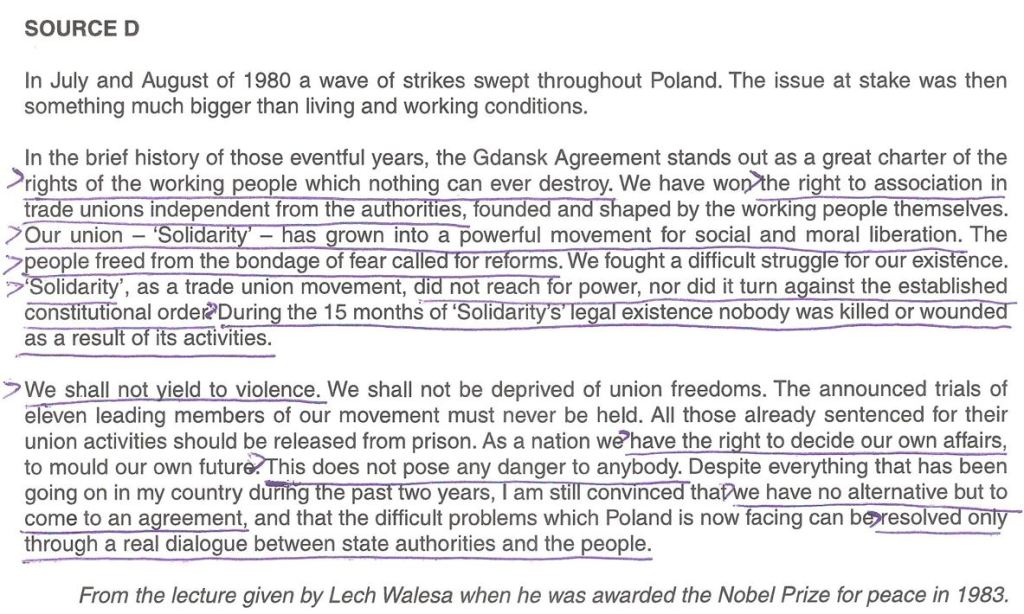
3.
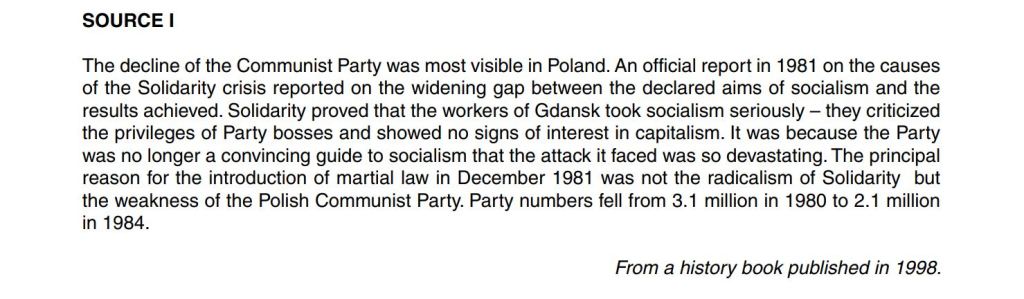
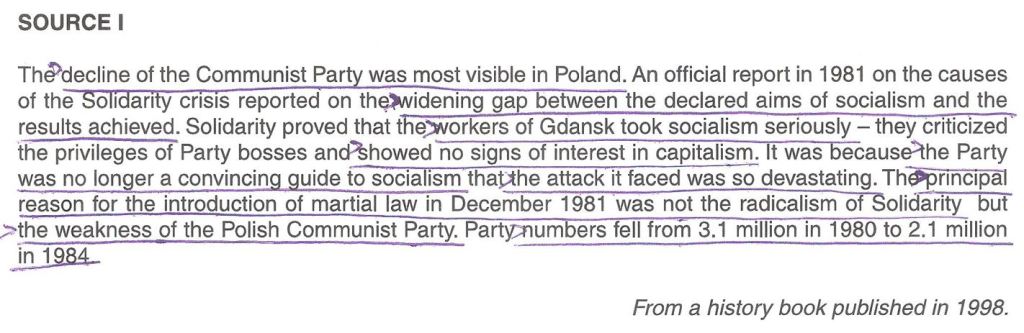
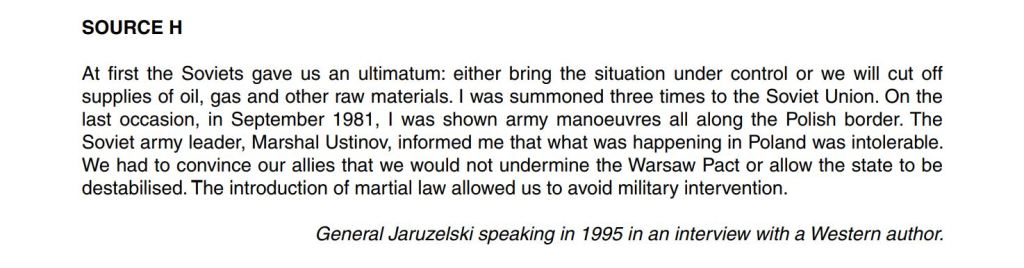
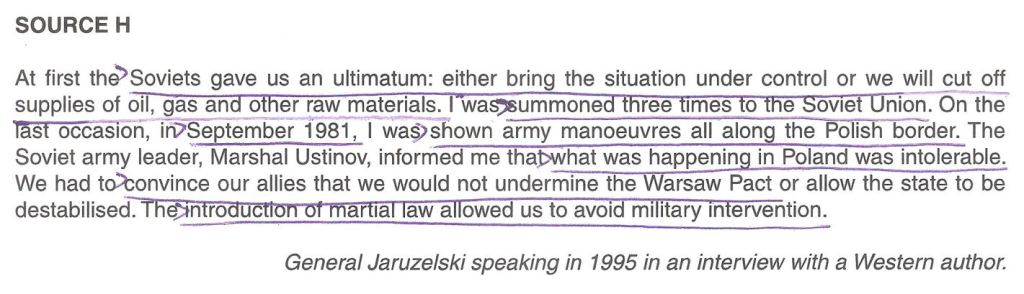
Source I has not been used in previous questions in this exam paper. So, here is a possible analysis of the information in Source I, with relevant points underlined.
4.
Look at the following video clip. It gives brief advice on how to answer this type of source question, that requires the use of all the sources in the Paper 2 exam paper:
Paper 2 Advice – Part 5. (2:26 minutes long)
5.
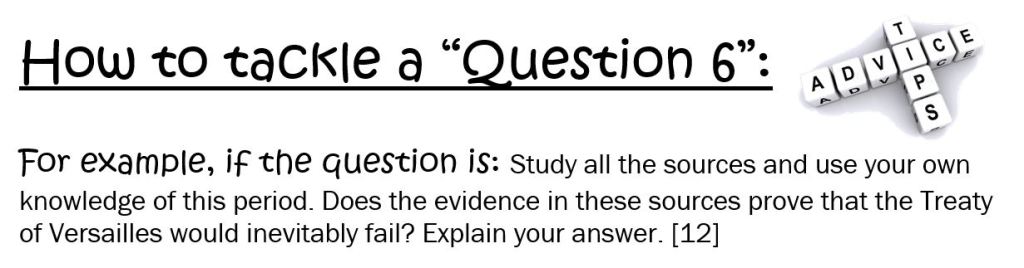
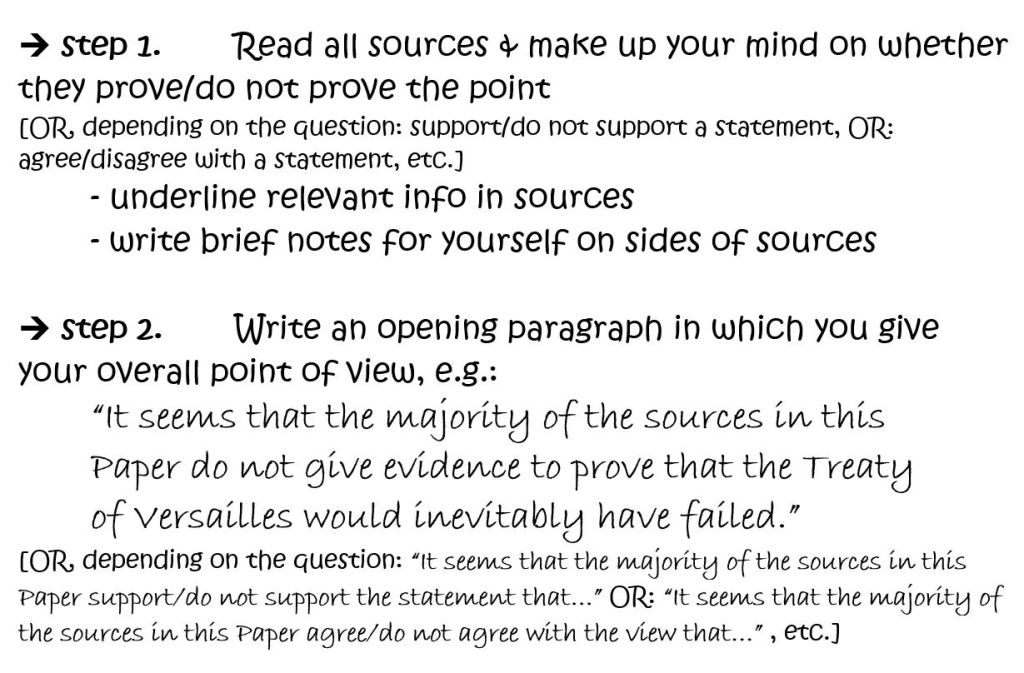
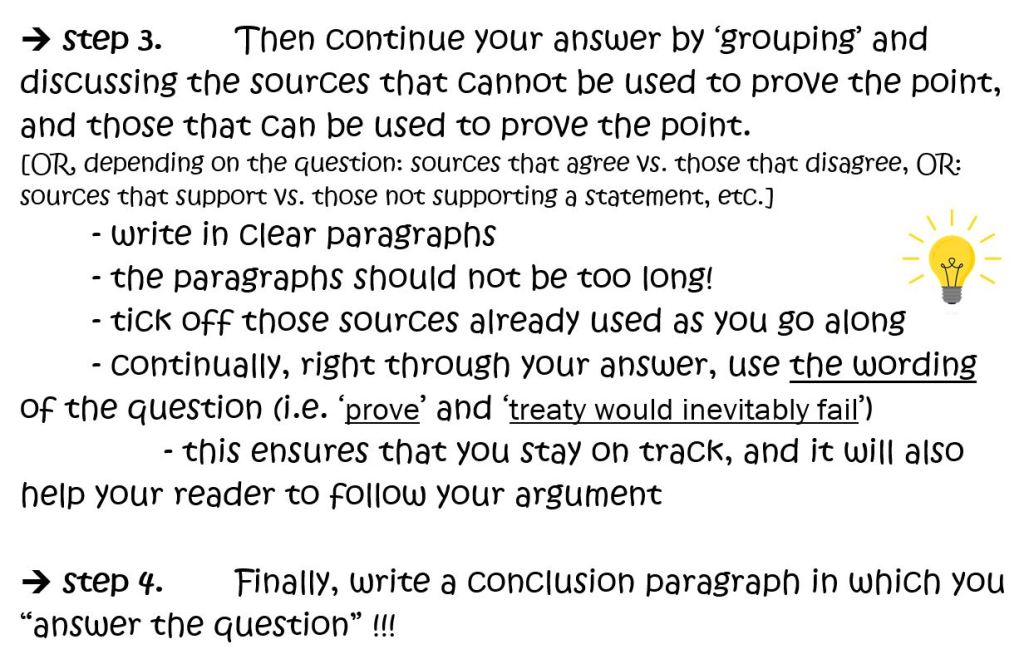
Here is further step by step advice for answering the final question of Paper 2:
6.
Now answer the question.
It should take you about 25 minutes to answer this question…
7.
Complete the above question at home, if necessary.
8.
9.
Complete Question 6 of this Paper 2 exam paper!
It is very important that you hand this question in on time for assessment. If not, I will not be able to give you feedback on your answer!
Today we will look at typical Paper 2 exam questions, in preparation for your Paper 2 examination…
We will:
analyse exam questions
analyse sources
plan essay answers
write essay answers
Your homework for today was to revise the “Soviet Control over Eastern Europe” topic…
1.
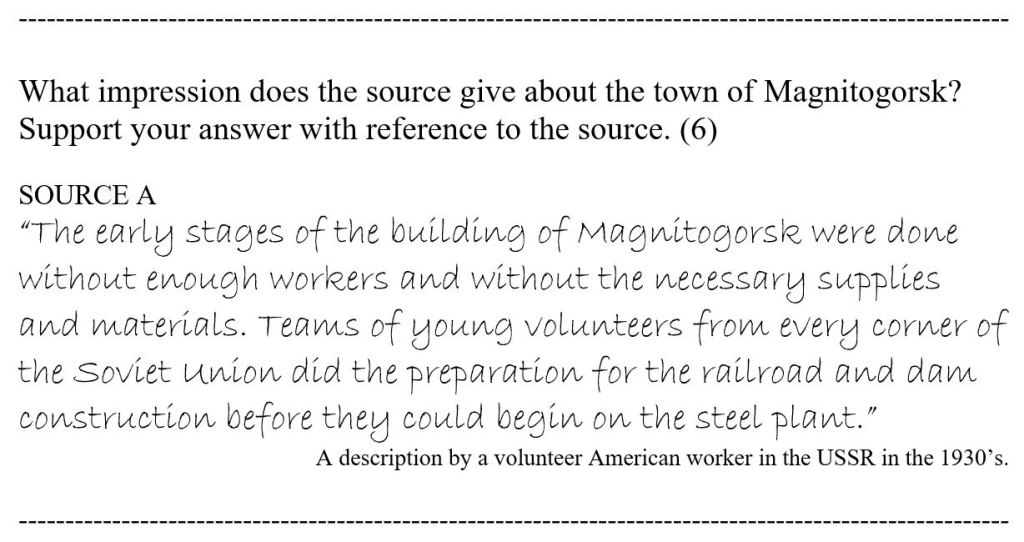
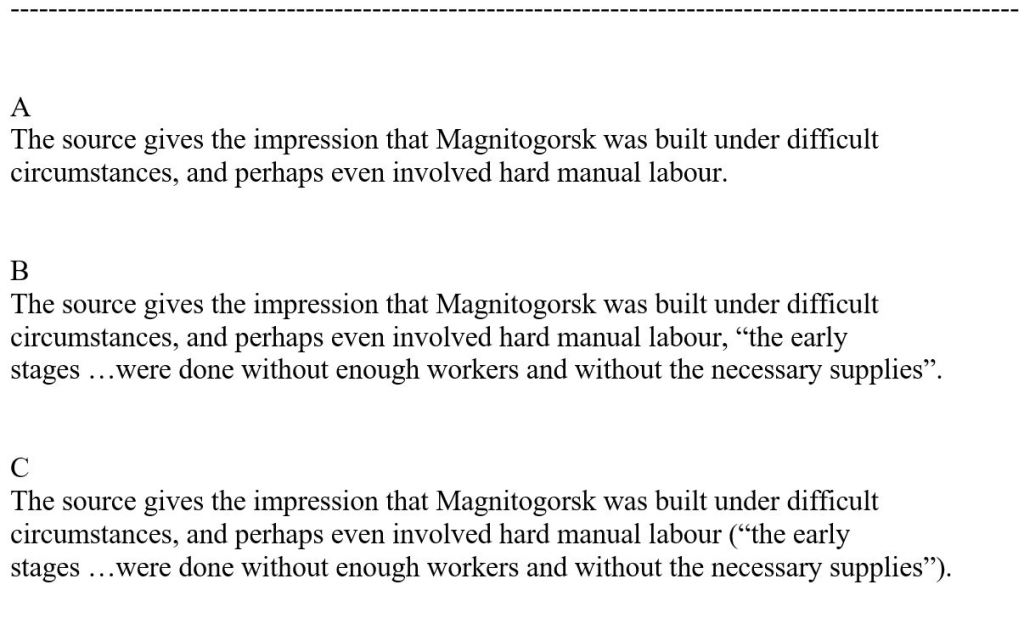
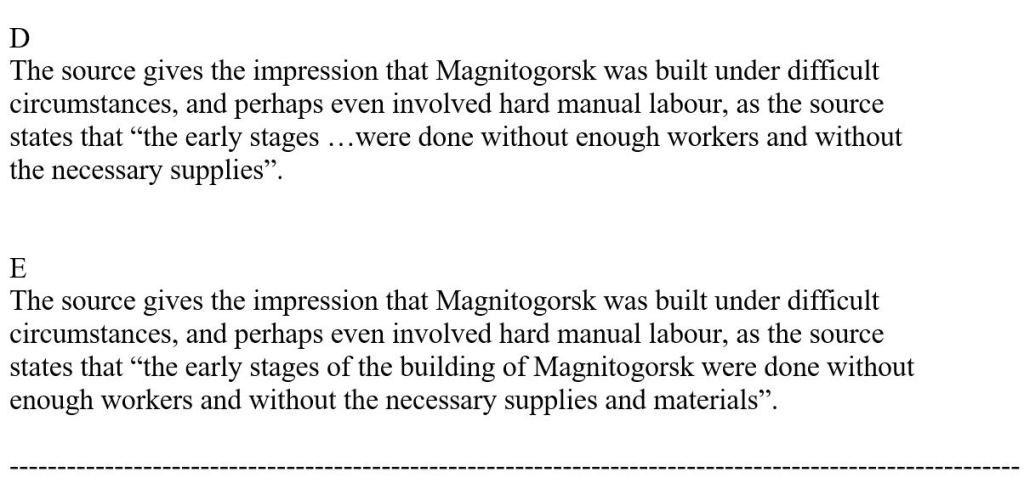
Giving evidence (when answering source questions) is crucially important… Below is an exercise to help you to know how to incorporate evidence in your answers.
Look at the following question and then put the possible answers in order of worst to best:
POSSIBLE ANSWERS
SOLUTION
A
This is a poor answer as it provides no evidence to back-up the statement.
E
This answer gives evidence, but the quote could be much shorter.
B
This answer gives evidence, but the quote does not “make sense” in the sentence, as it has just been added to the end of the statement.
C
This answer is good. It gives evidence, added to the end of the statement, but the way it is added is acceptablebecause the evidence is given in brackets.
E
This answer is the best. It gives evidence, in the form of a short quote, that forms part of the sentence. Therefore, it makes perfect sense.
2.
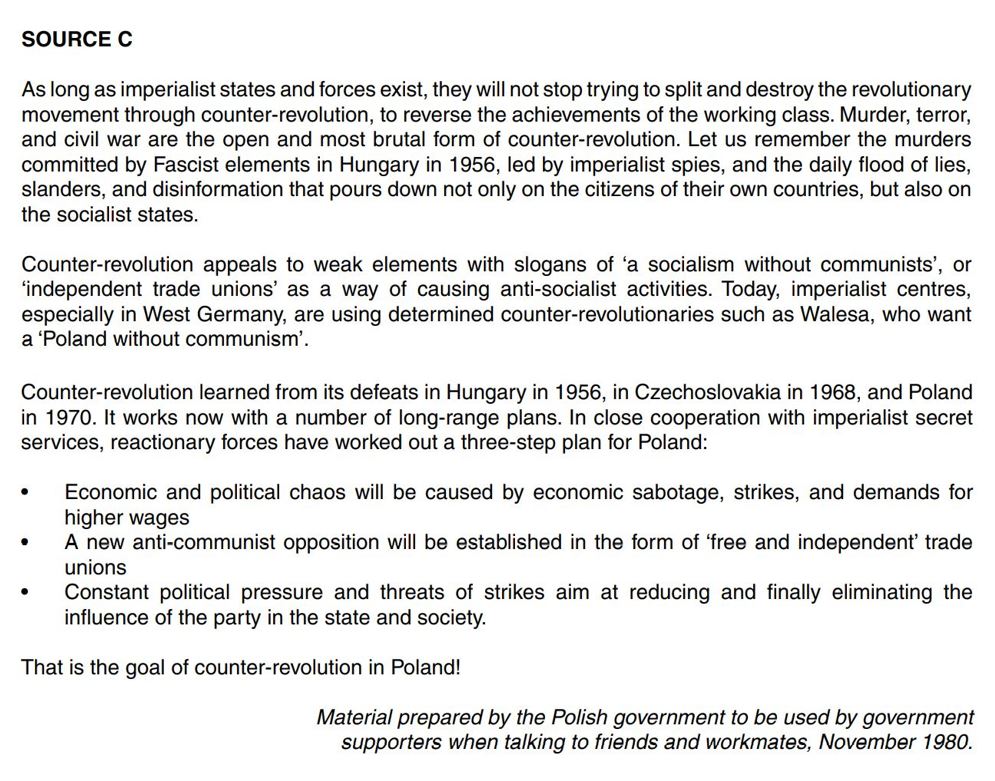
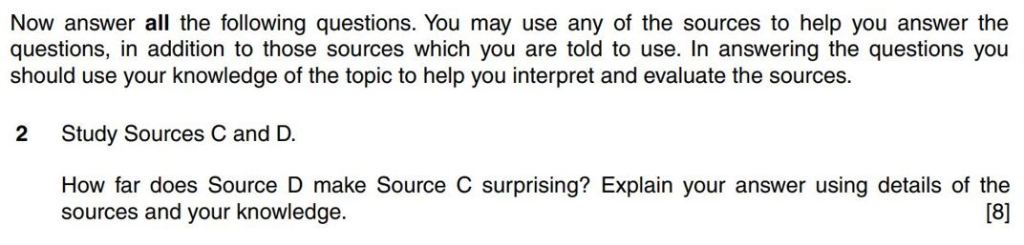
Let’s now work on another Paper 2 exam question on Poland and Solidarity:
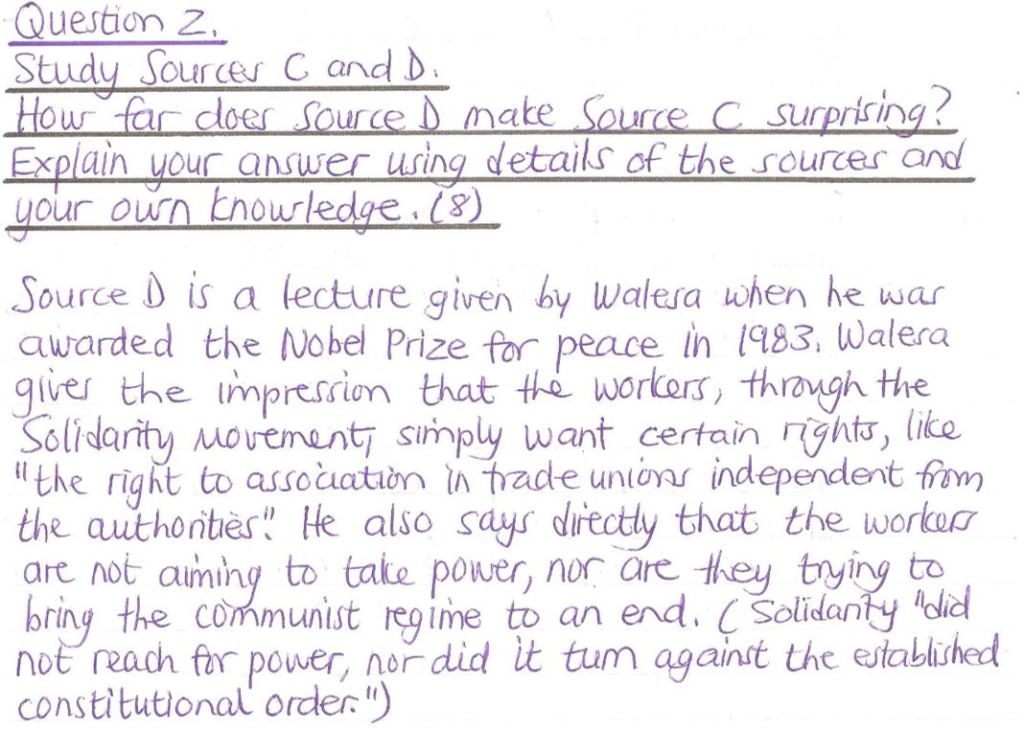
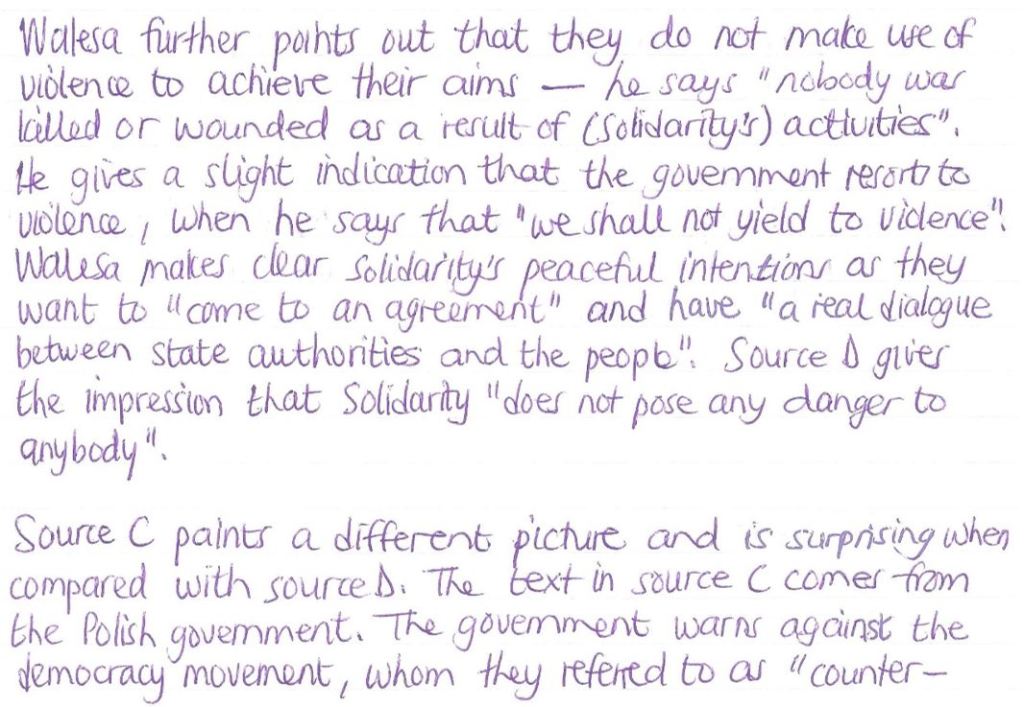
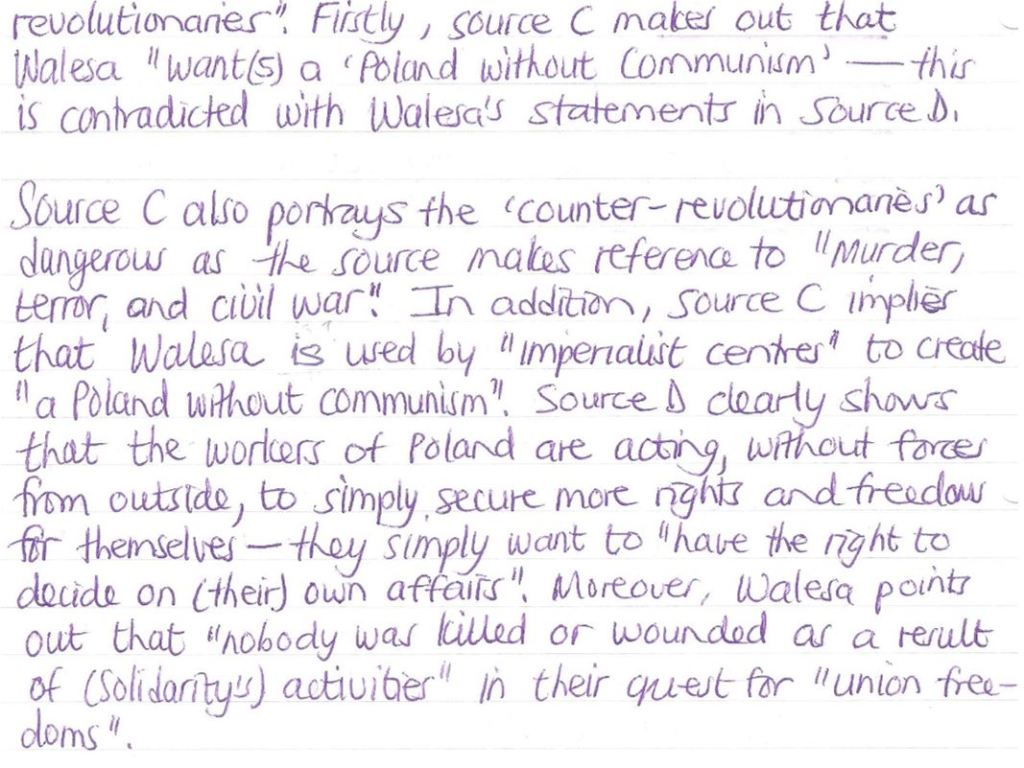
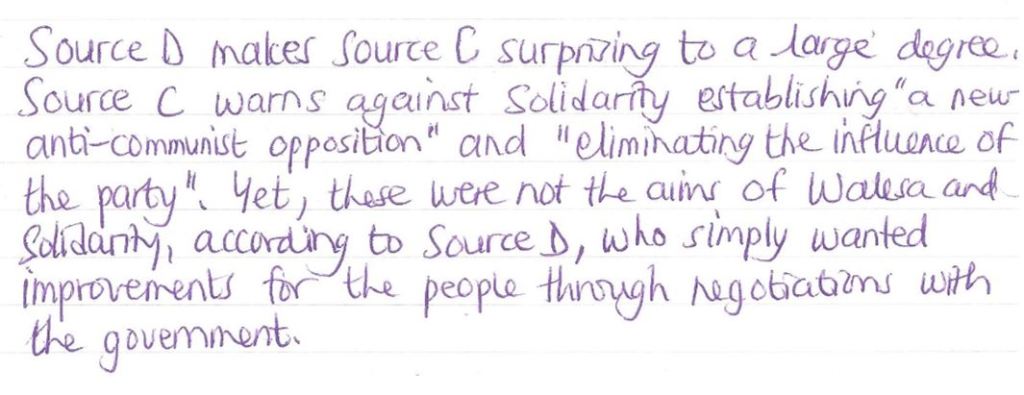
Question 2
3.
Before we proceed, here is a bit more advice on answering this type of question.
Paper 2 Advice – Part 3. (1:39 minutes long)
4.
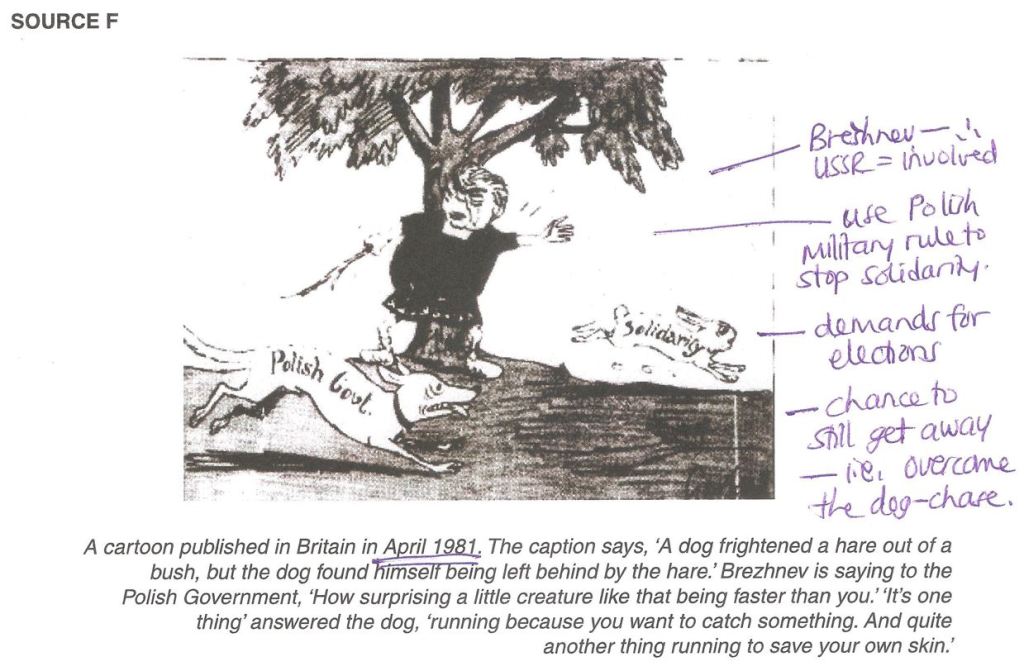
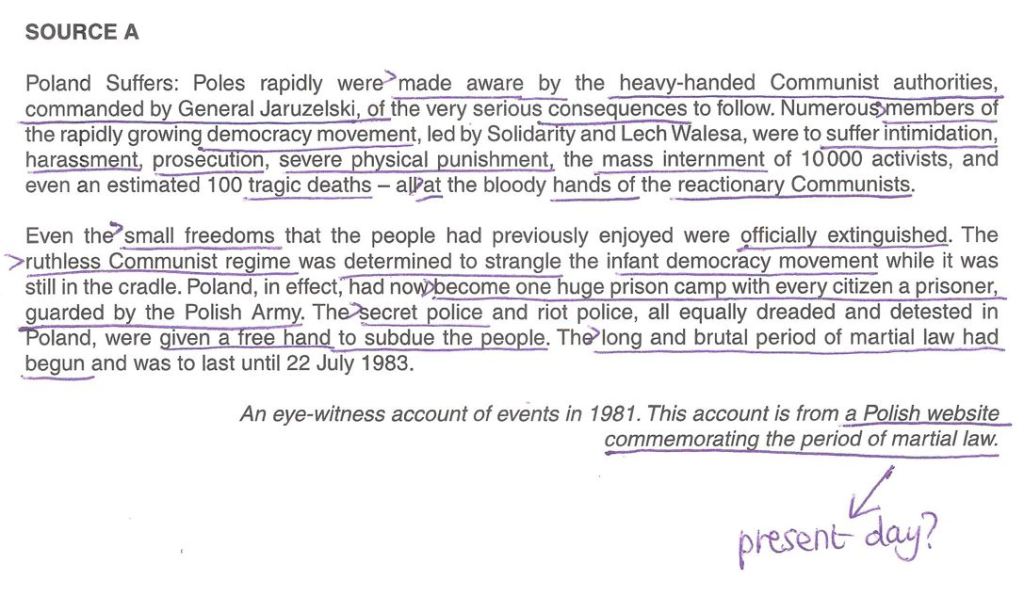
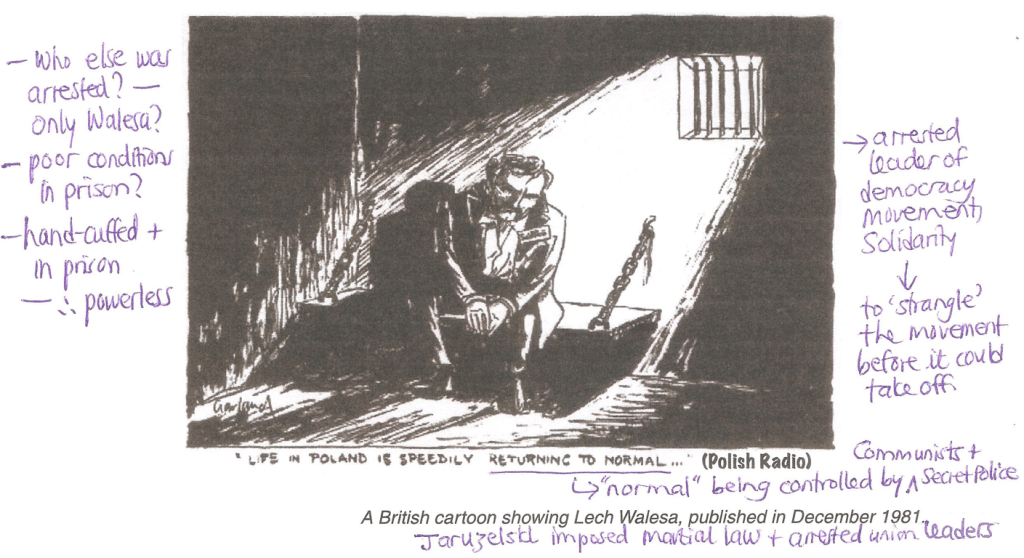
Carefully read and analyse the information. Also underline relevant points and make short annotations in the margin if necessary.
5.
Now answer the question.
It should take you about 16 minutes to answer this question…
6.
7.
Complete the following question at home:
It should take you about 16 minutes to answer this question…
8.
Before you proceed, here is a bit more advice on answering this type of question.
Paper 2 Advice – Part 4. (1:22 minutes long)
9.
Complete Question 2 of this Paper 2 exam paper!
It is very important that you hand this question in on time for assessment. If not, I will not be able to give you feedback on your answer!
Today we will look at typical Paper 2 exam questions, in preparation for your Paper 2 examination…
We will:
analyse exam questions
analyse sources
plan essay answers
write essay answers
Your homework for today was to revise the “Soviet Control over Eastern Europe” topic…
1.
Paper 2 is a 2-hour exam paper with 6 questions based on approximately eight sources.
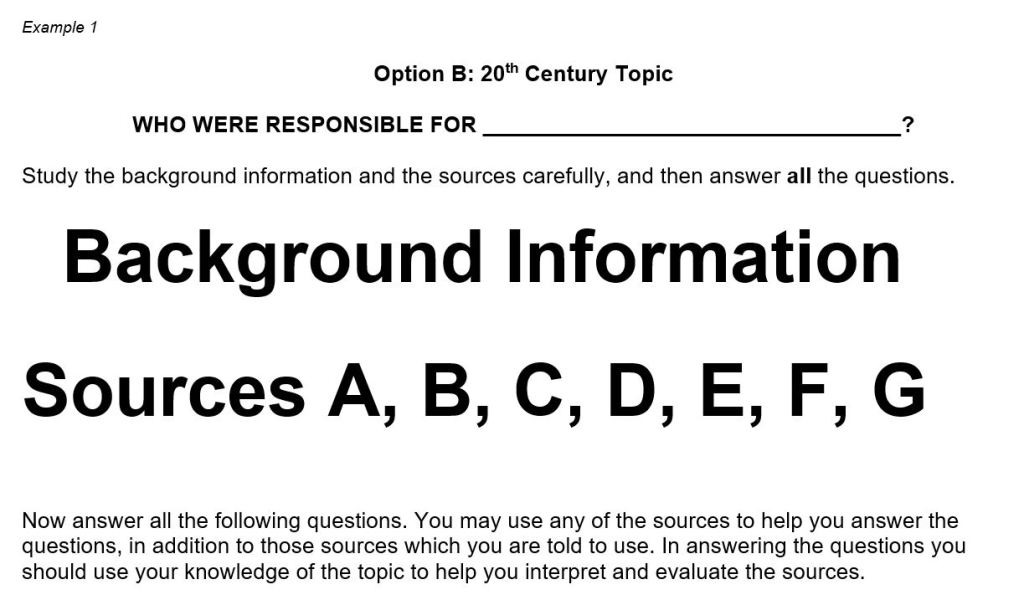
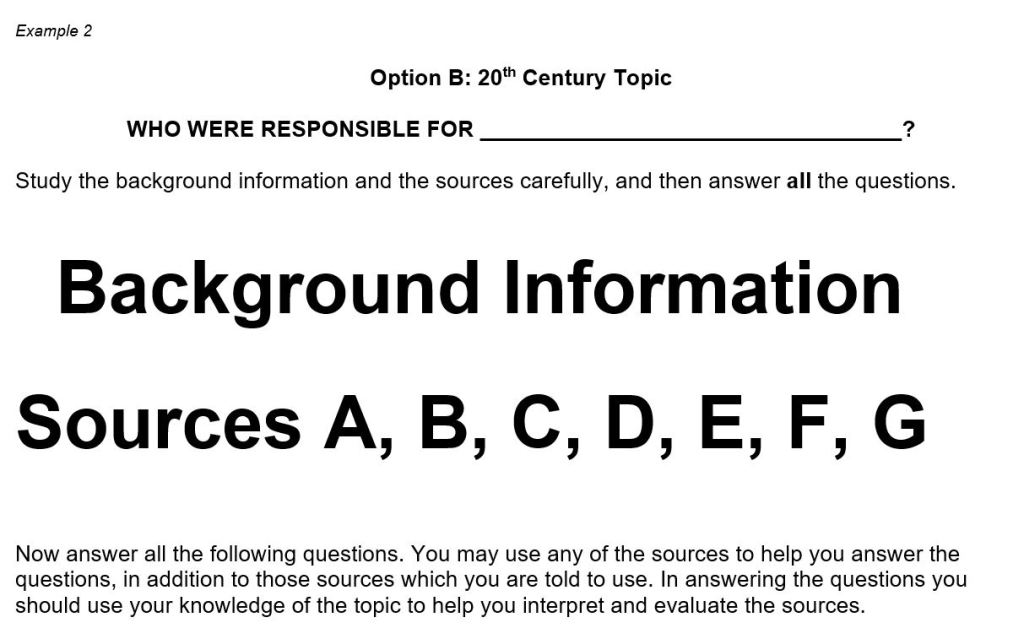
The typical layout for this exam paper is shown below. There is a title (posed as a question), followed by background information, sources and questions.
Here are two example of typical Exam Questions for Paper 2…
Example 1:
Example 2:
2.
Look at the following video clip. It gives brief advice on what is expected when answering the Paper 2 source questions for IGCSE History.
Paper 2 Advice – Part 1. (6:01 minutes long)
3.
There are two options in Paper 2: a 19th Century History option, and a 20th Century History option. Each option starts with a heading posed as a question, as well as some background information. The background information simply introduce the topic.
(Do not mistaken the “background information” for “Source A”!)
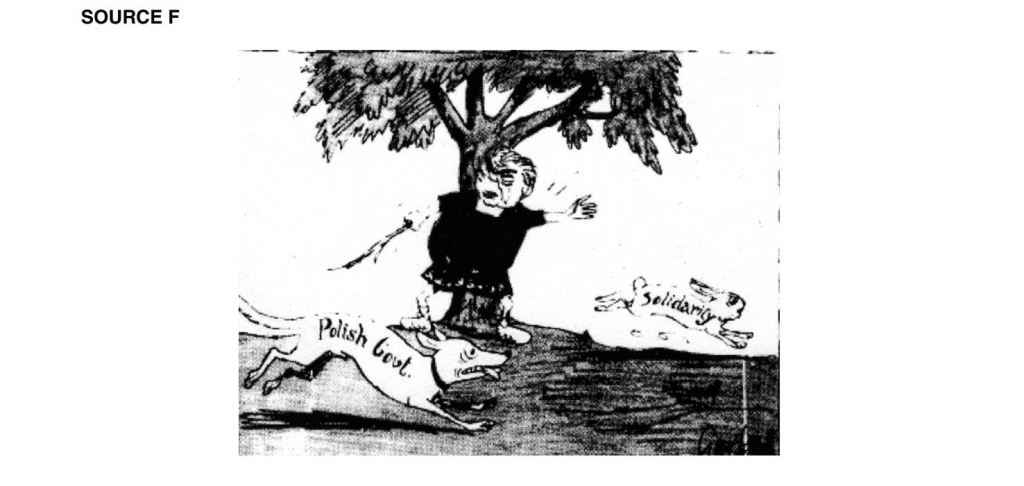
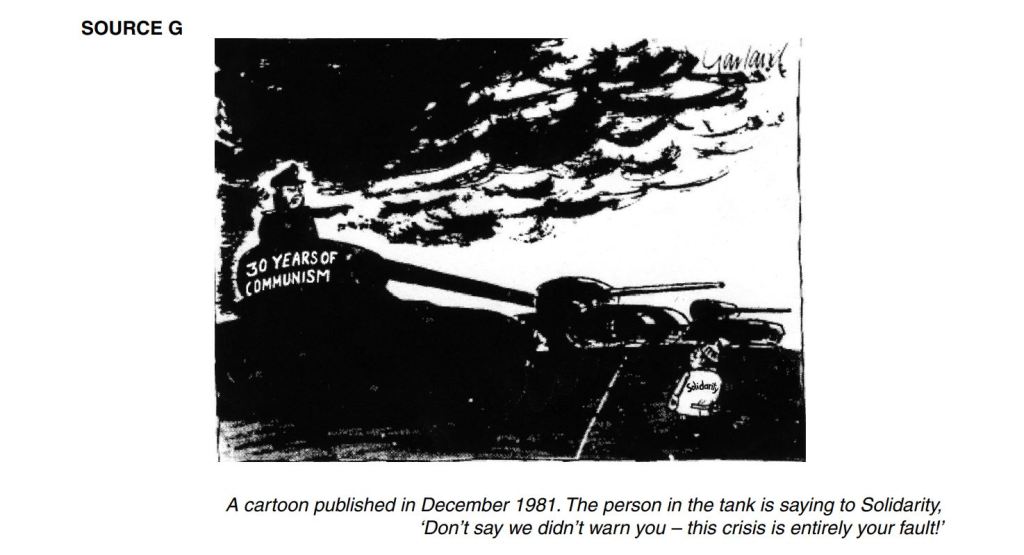
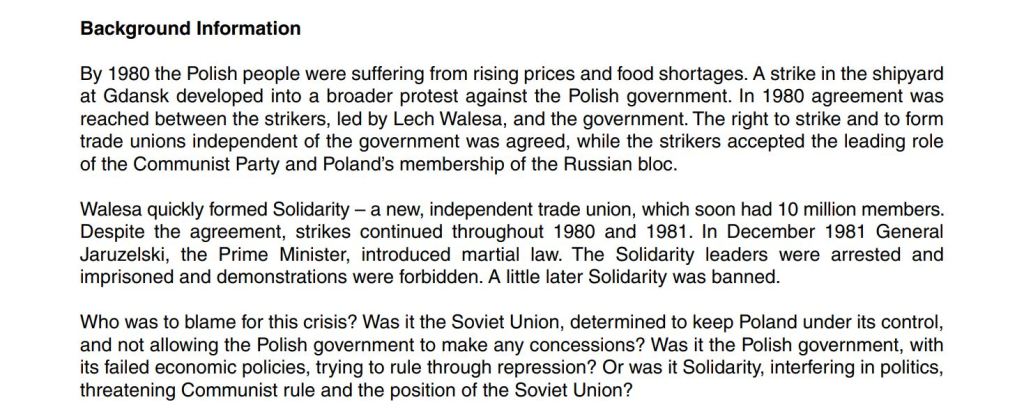
As out first example, we will look at an exam paper on Soviet control of Poland: Who was to blame for the crisis in Poland in the early 1980’s?
4.
A number of sources (usually Sources A to H) follow the background information. The questions that you have to answer are at the end of all the sources.
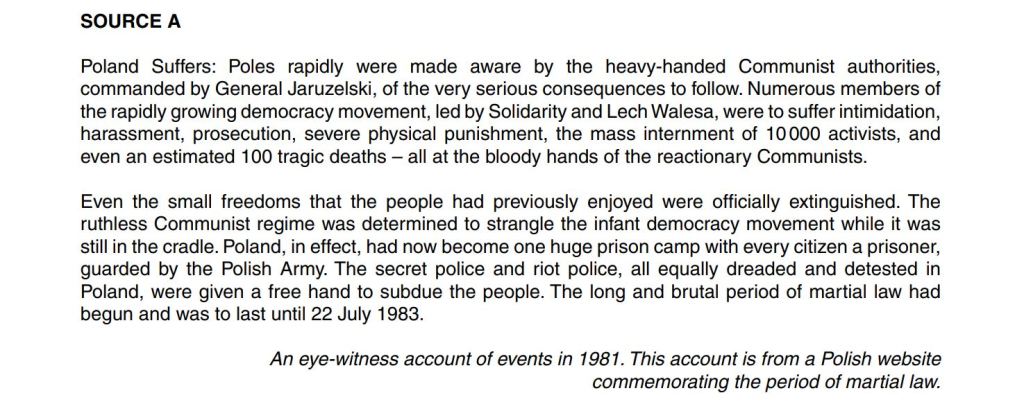
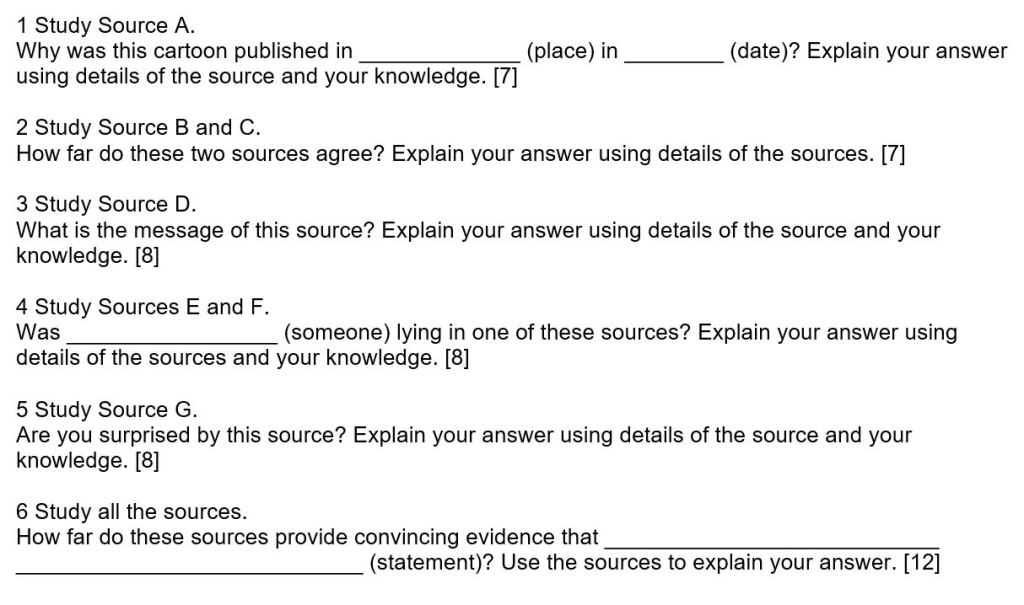
So, let’s work on the following Paper 2 exam question on Poland and Solidarity:
Question 1
5.
Before we proceed, here is a bit more advice on answering this type of question.
Paper 2 Advice – Part 2. (1:48 minutes long)
6.
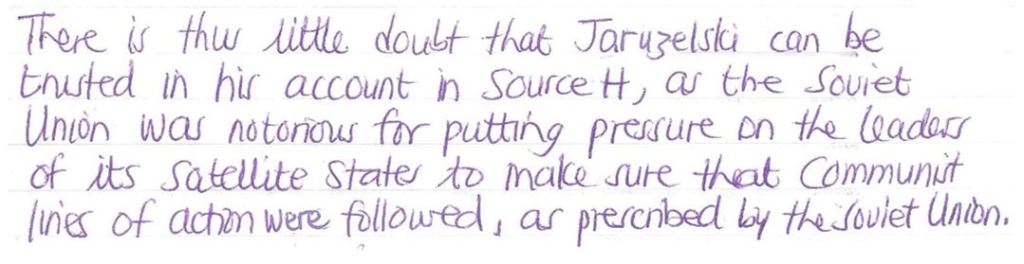
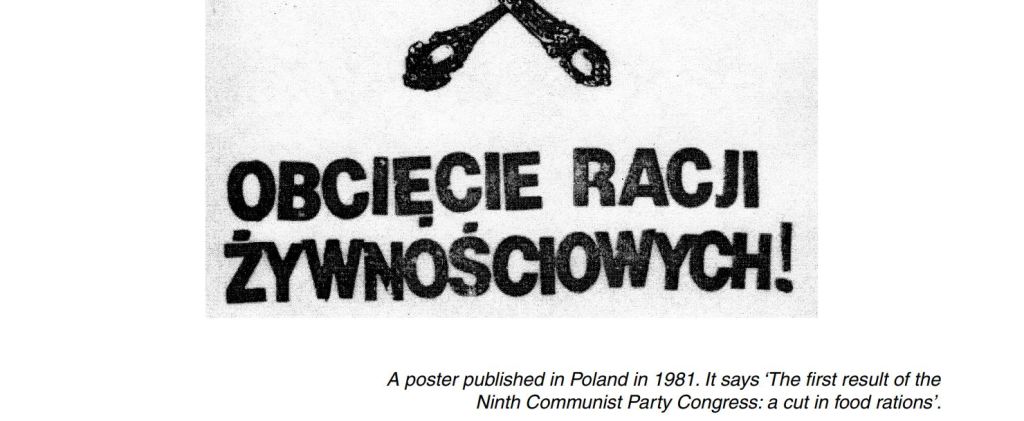
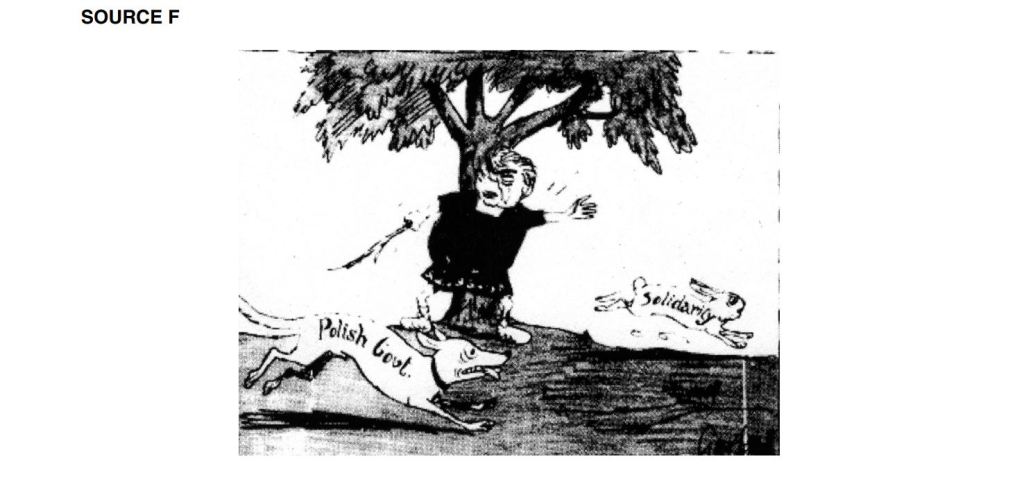
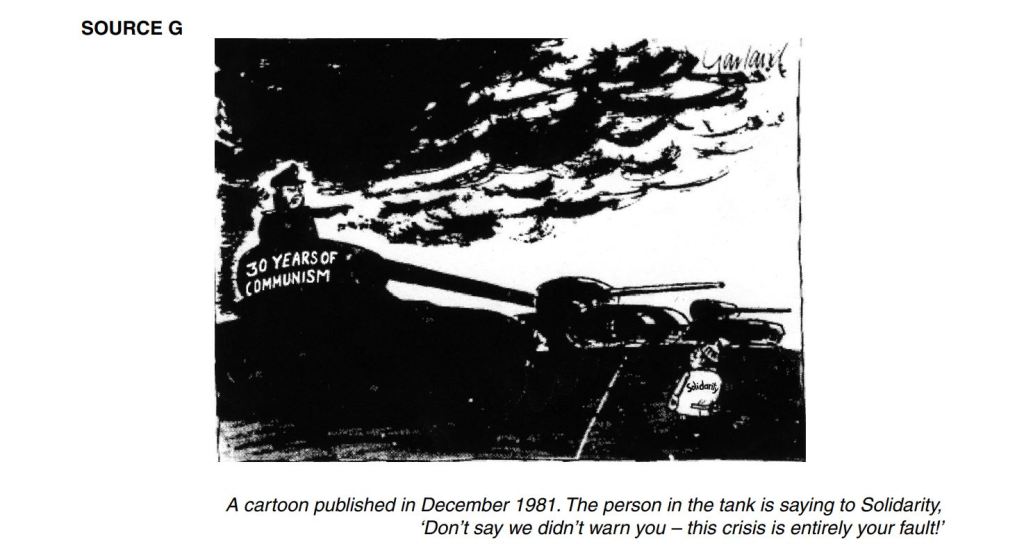
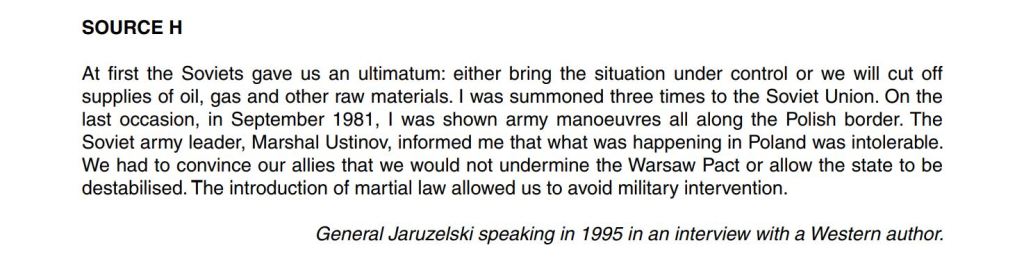
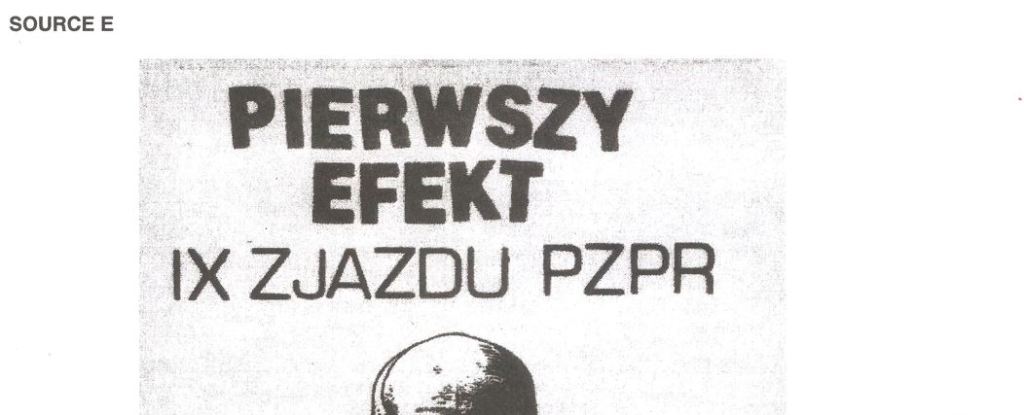
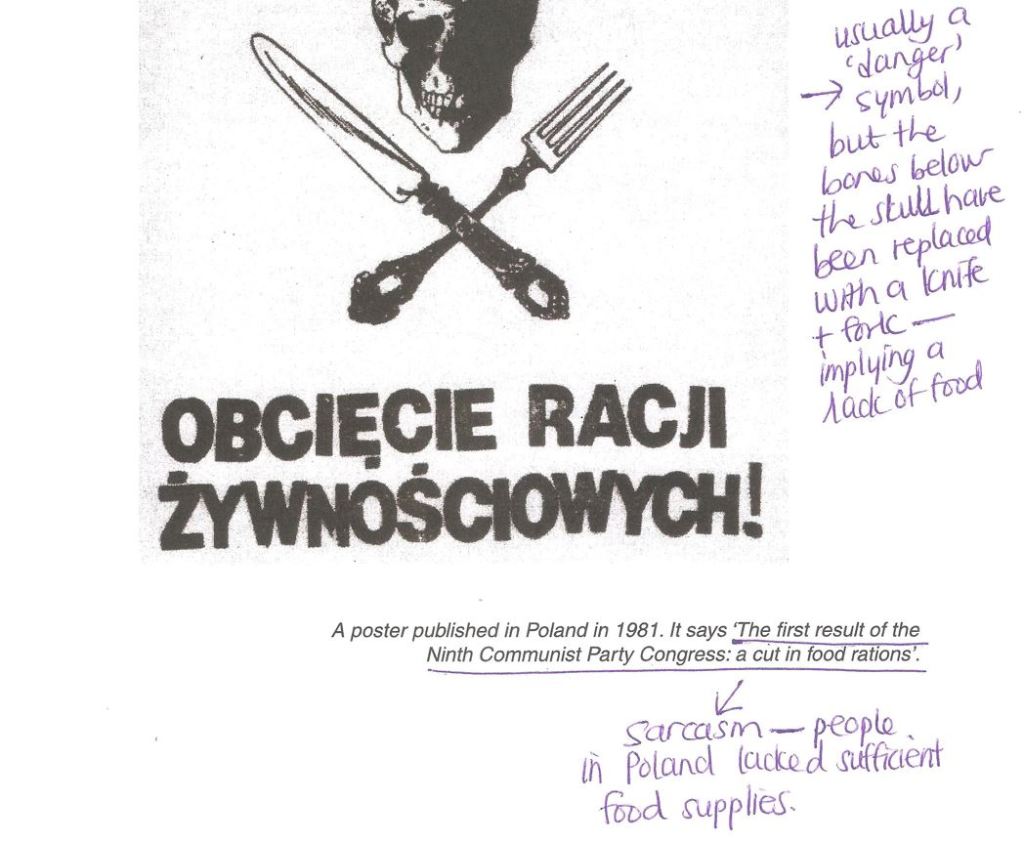
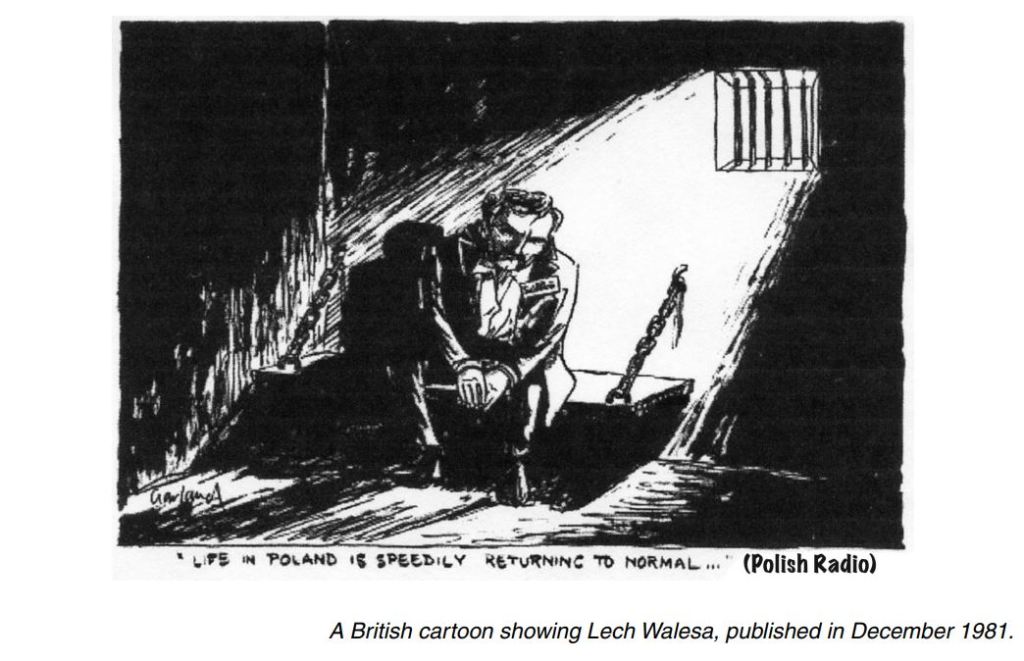
Carefully read and analyse the information. Also underline relevant points and make short annotations in the margin if necessary.
SOURCE B
7.
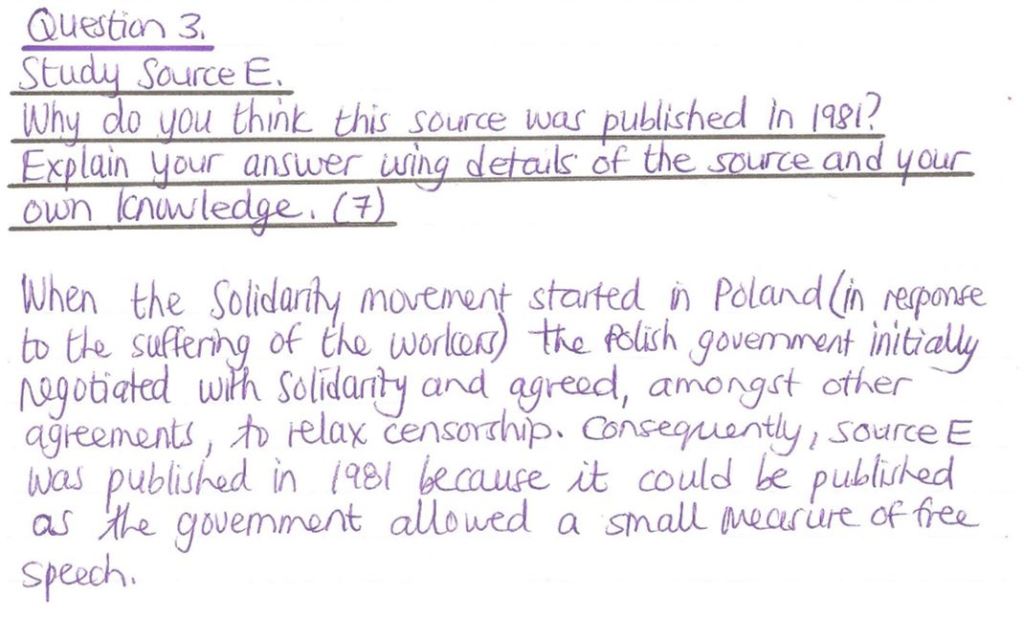
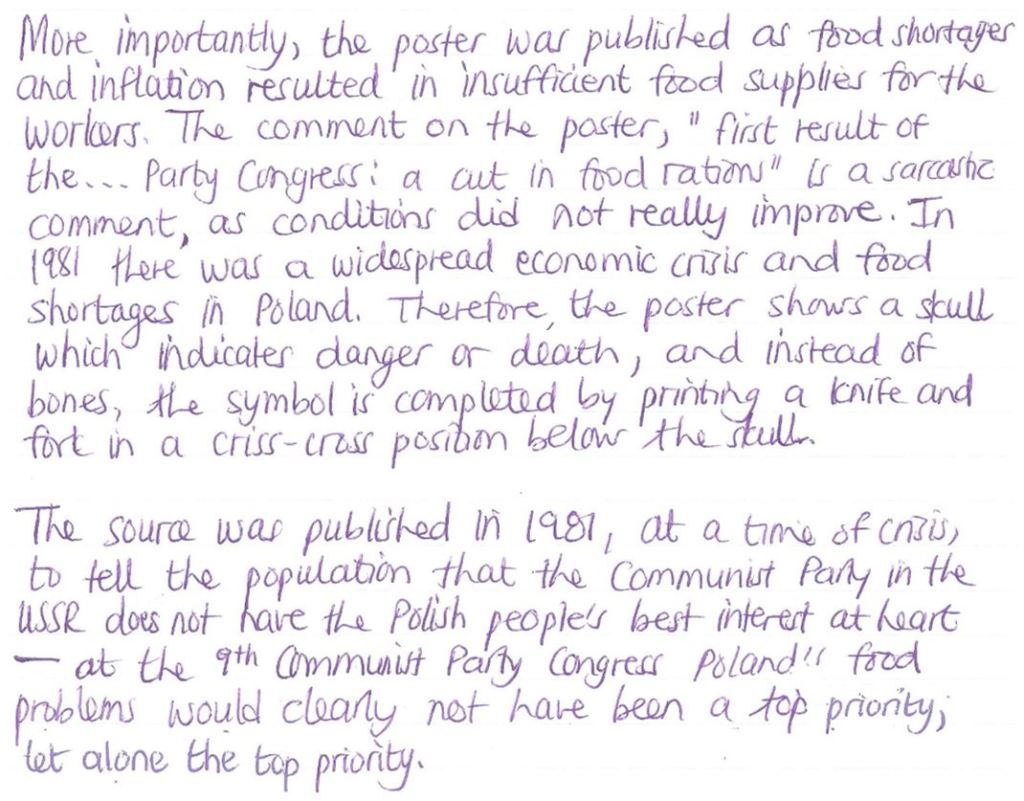
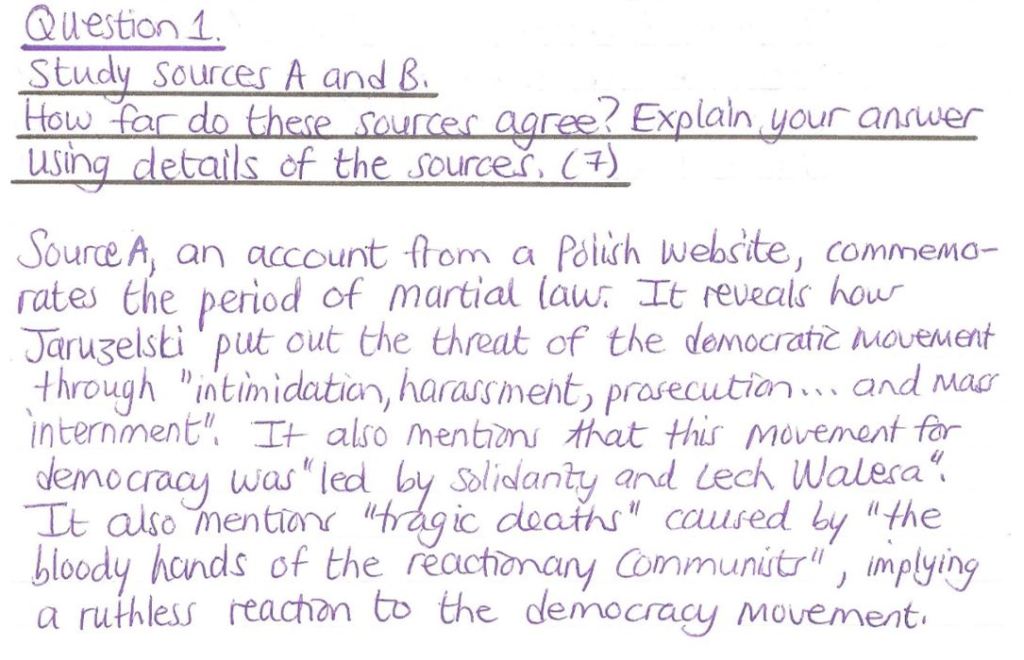
Now answer the question.
It should take you about 15 minutes to answer this question…
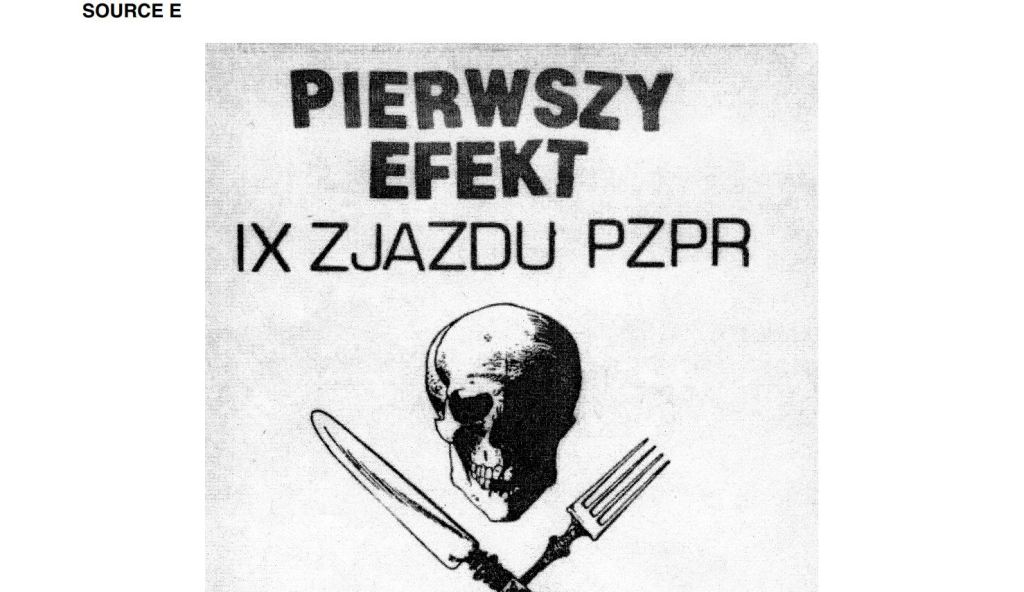
Remember that it is very important to give evidence for all the statement made in your answer! Provide evidence in the form of short quotes. If the source is an image / cartoon evidence must be given by referring to what can be seen in the image / cartoon.
8.
9.
Continue to revise the content for your Paper 2 exam topic!
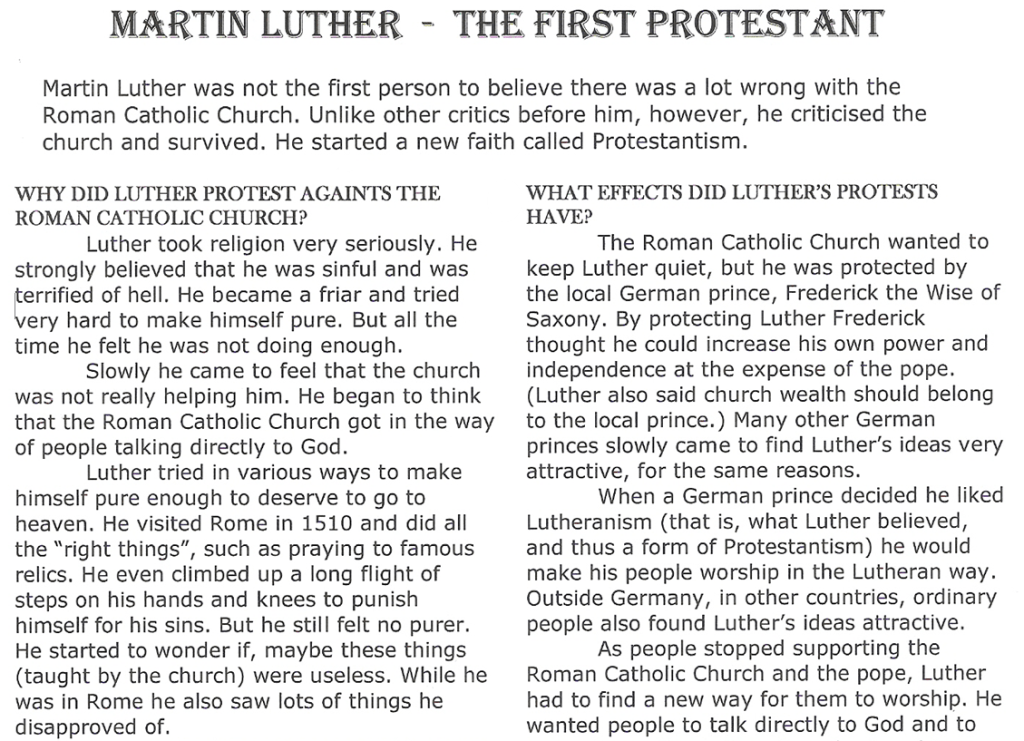
Now, let’s see what else we can learn about Martin Luther and the reformation of the Roman Catholic Church.
Animated History of Martin Luther and the Reformation. (4:29 minutes long)
Martin Luther Biography. (2:02 minutes long)
5.
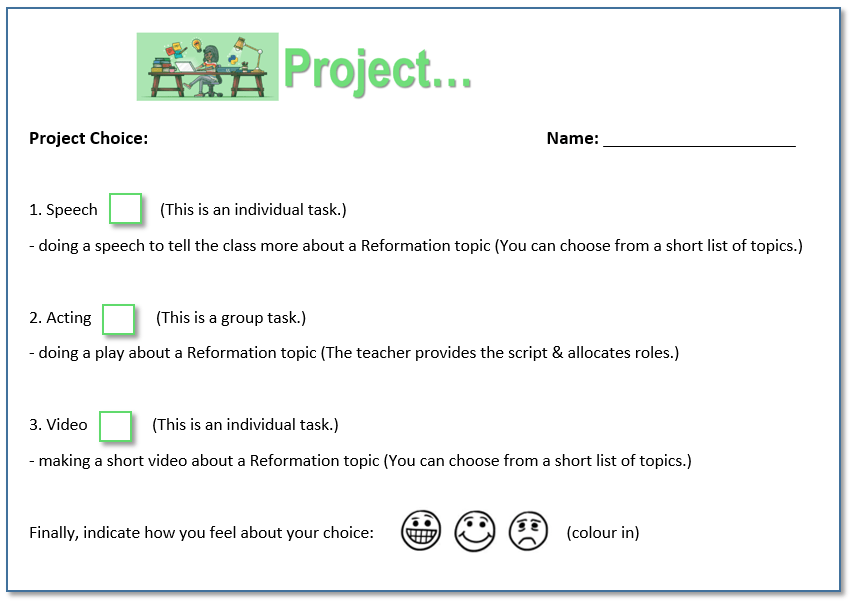
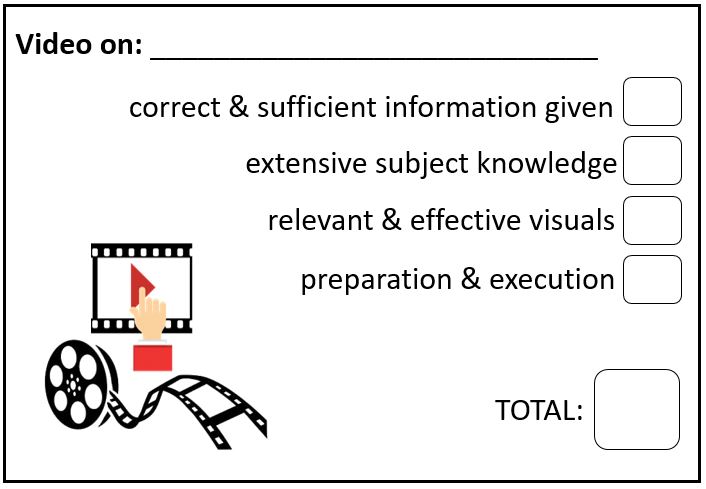
As part of your assessment for the topic on “The Reformation” you will do a project… Complete the form below to show what you will do for the assessment project – you need to choose between the following:
(More information / details will follow shortly.)
6.
This animated film tells the story of Martin Luther.
Martin Luther -The Animated Movie – English. (11:26 minutes long)
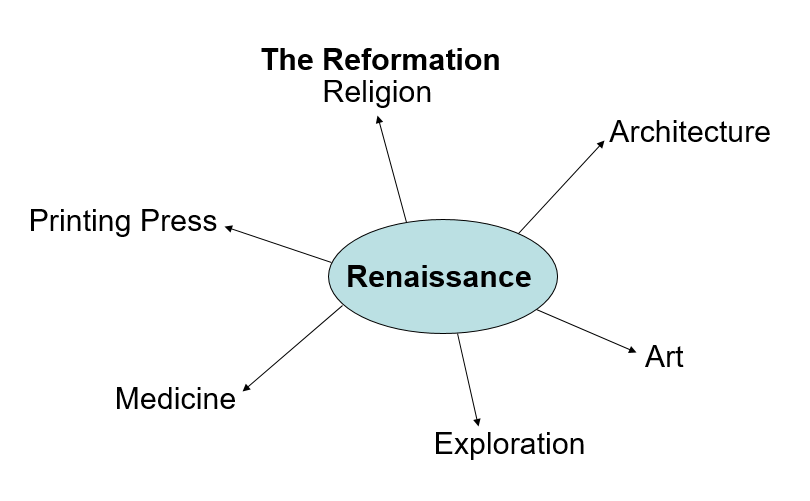
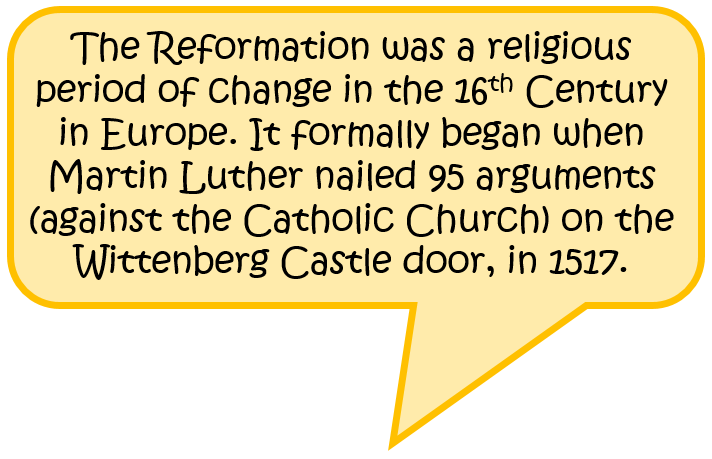
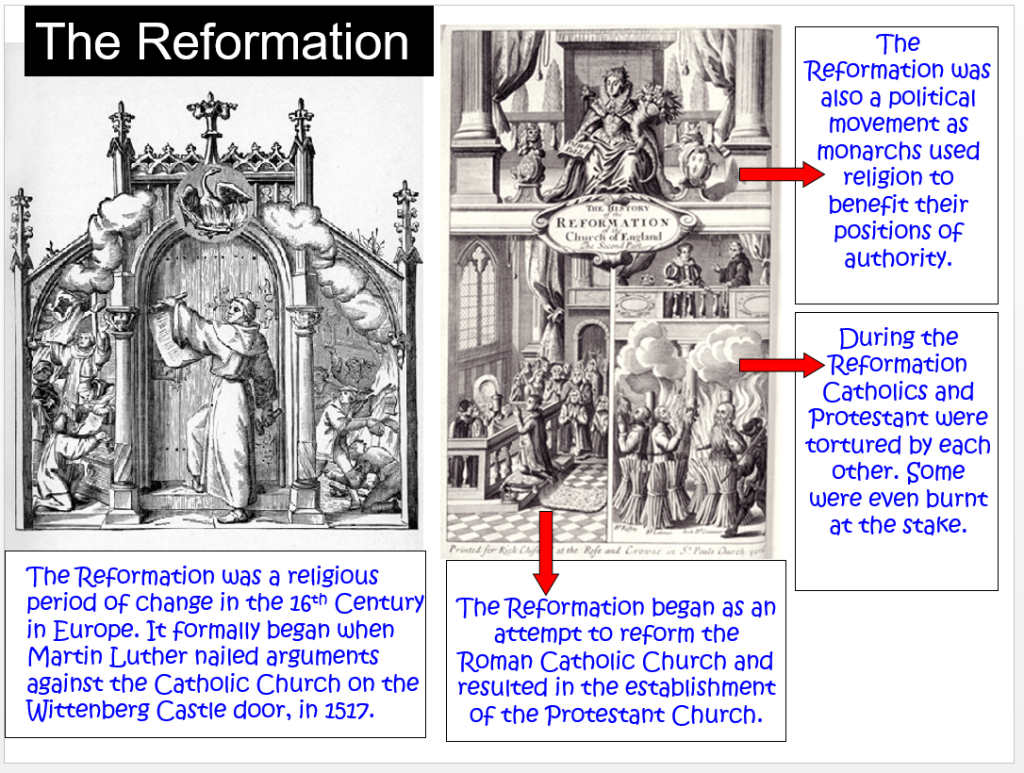
The Renaissance brought many changes – one of whom involved religious changes – the so-called Reformation.
3.
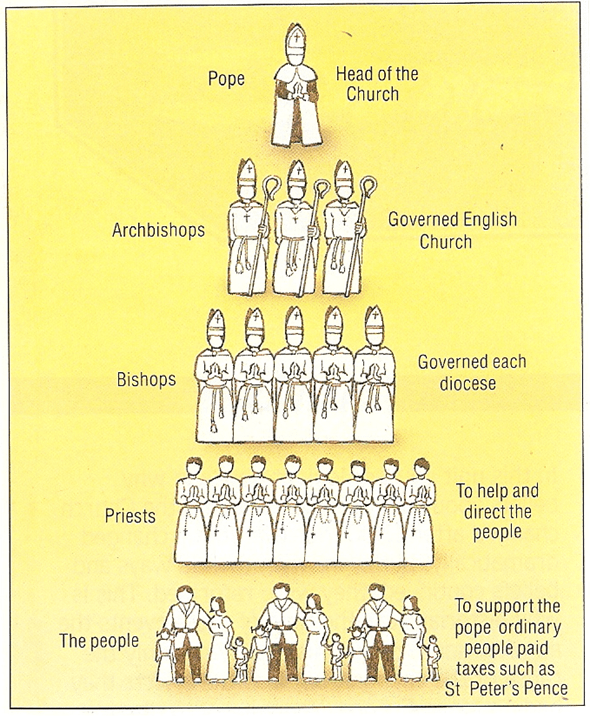
We will first familiarize ourselves with some background information about religion, simply because it will help us to understand this period of history better. Let’s start with a video about the history of the Christian church.
This is what some people thought about life in Stalin’s Russia, at the time…
Soviet Women Remember Socialism. (4:27 minutes long)
5.
It seems that these women were satisfied with their lives under Stalin’s rule. Let’s look at a bit more information about women in Soviet Russia.
The information about “Women in the Soviet Union” , p.53-56.
6.
Here is more useful insight into Women’s Rights in the USSR.
Women’s Rights under the Soviet Union. (5:01 minutes long)
7.
Your study ends with the German invasion of the USSR in June 1941. As you have seen, Stalin was perceived as a hero, saving the Russians from defeat by Nazi Germany. Stalin died on 5 March 1953.
The Death Of Stalin. (2:05 minutes long)
When Stalin did in 1953 there was again a struggle for power in the Politburo. A few years later Khrushchev emerged as leader of the USSR.
Stalin Dead (1953). (2:50 minutes long)
8.
As a short conclusion to our study on Stalin’s Russia, read the information indicated below as “extra reading”.
The information about “The USSR (1941-1964).” , p.59-60.
9.
What was Life Like for Women in the USSR? (14:31 minutes long)
What Life in the Soviet Union Was Like. (12:31 minutes long)
A New Soviet Woman: Myth and Reality. (18:05 minutes long)
Why International Women’s Day is so weird in Russia. (7:20 minuters long)
10.
An interesting account on Stalin’s death…
Who Killed Stalin? (46:44 minutes long)
11.
To conclude our study on Stalin’s Russia, here is a brief overview of Stalin’s life:
Joseph Stalin, Leader of the Soviet Union (1878-1953). (5:54 minutes long)
Today we are going to look at: The causes, course and consequences of the Gulf War, 1990–1991.
It has now been confirmed that all GCSE and A’ level exams have been cancelled. The Exam Boards are in the process of drawing up a protocol to provide guidance for teachers on how grades are to be awarded. In History we will continue to analyse questions, but at the same time I want you to write essays for assessment purposes.
Read the information about “The War with Japan” & the information about “Bloody Sunday”, p.5.
1.2. Cold War
Look at the following video clip. It is a brief explanation of how to answer 10-mark questions for IGCSE History – Paper 1:
(The example in this video is about a topic that you have not covered. However, the advise still applies to your 10-mark essay answers.)
IGCSE History – Paper 1: 10-mark Questions. (5:32 minutes long)
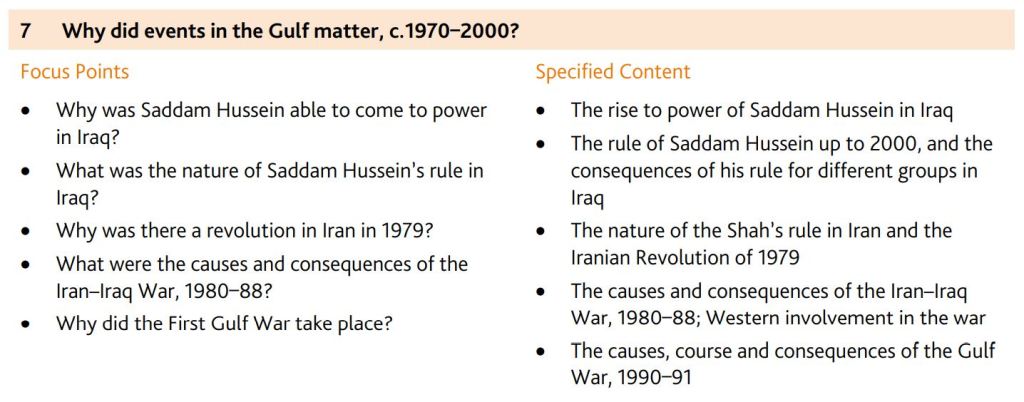
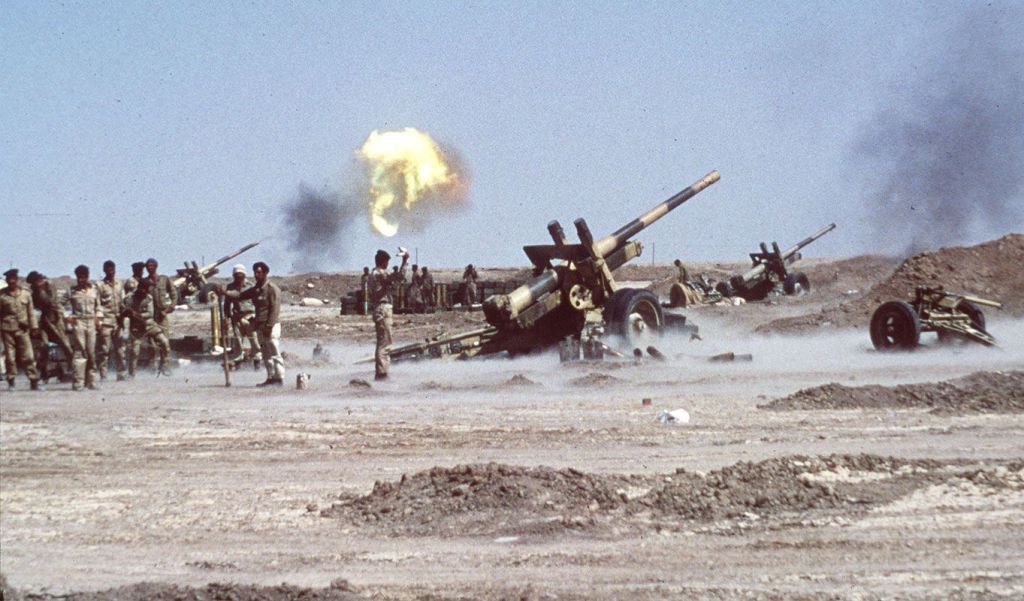
Today we are going to look at: The causes and consequences of the Iran–Iraq War (1980–1988) & Western involvement in the war.
It has now been confirmed that all GCSE and A’ level exams have been cancelled. The Exam Boards are in the process of drawing up a protocol to provide guidance for teachers on how grades are to be awarded. In History we will continue to analyse questions, but at the same time I want you to write essays for assessment purposes.
Read the information about “The War with Japan” & the information about “Bloody Sunday”, p.5.
1.2. Cold War
Look at the following video clip. It is a brief explanation of how to answer 10-mark questions for IGCSE History – Paper 1:
(The example in this video is about a topic that you have not covered. However, the advise still applies to your 10-mark essay answers.)
The Iran-Iraq War: The Original Gulf War | Documentary. (40:42 minutes long
Today we are going to look at: The nature of the Shah’s rule in Iran and the Iranian Revolution of 1979.
It has now been confirmed that all GCSE and A’ level exams have been cancelled. The Exam Boards are in the process of drawing up a protocol to provide guidance for teachers on how grades are to be awarded. In History we will continue to analyse questions, but at the same time I want you to write essays for assessment purposes.
Read the information about “The War with Japan” & the information about “Bloody Sunday”, p.5.
1.2. Cold War
Look at the following video clip. It is a brief explanation of how to answer 10-mark questions for IGCSE History – Paper 1:
(The example in this video is about a topic that you have not covered. However, the advise still applies to your 10-mark essay answers.)
IGCSE History – Paper 1: 10-mark Questions. (5:32 minutes long)
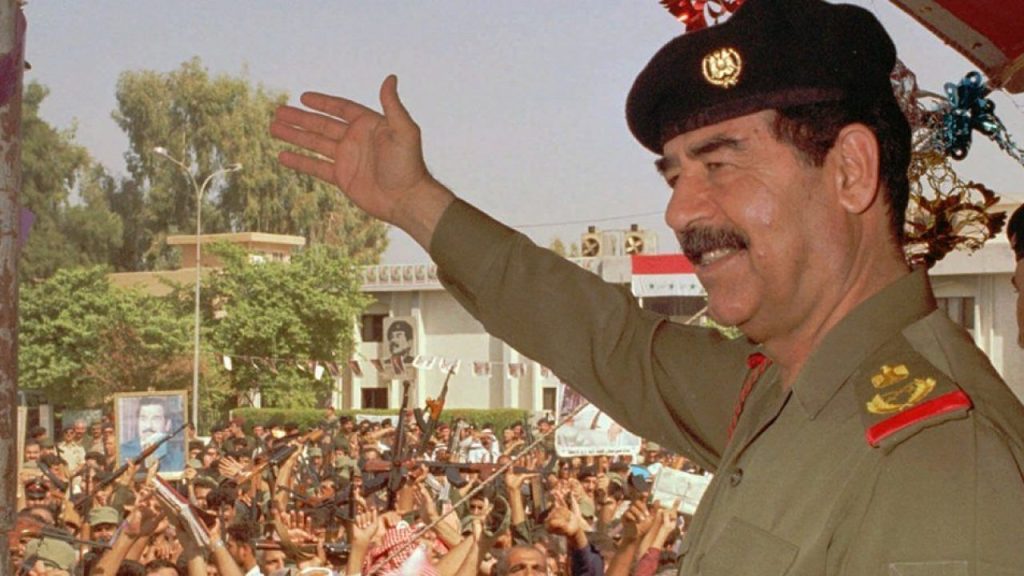
The rule of Saddam Hussein up to 2000, and the consequences of his rule for different groups in Iraq.
It has now been confirmed that all GCSE and A’ level exams have been cancelled. The Exam Boards are in the process of drawing up a protocol to provide guidance for teachers on how grades are to be awarded. In History we will continue to analyse questions, but at the same time I want you to write essays for assessment purposes.
Read the information about “The War with Japan” & the information about “Bloody Sunday”, p.5.
1.2. Cold War
Look at the following video clip. It is a brief explanation of how to answer 10-mark questions for IGCSE History – Paper 1:
(The example in this video is about a topic that you have not covered. However, the advise still applies to your 10-mark essay answers.)
IGCSE History – Paper 1: 10-mark Questions. (5:32 minutes long)
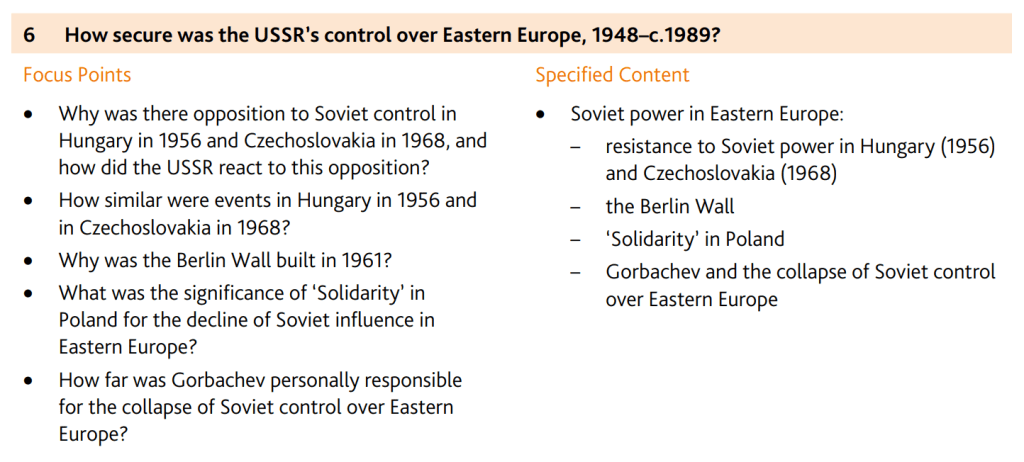
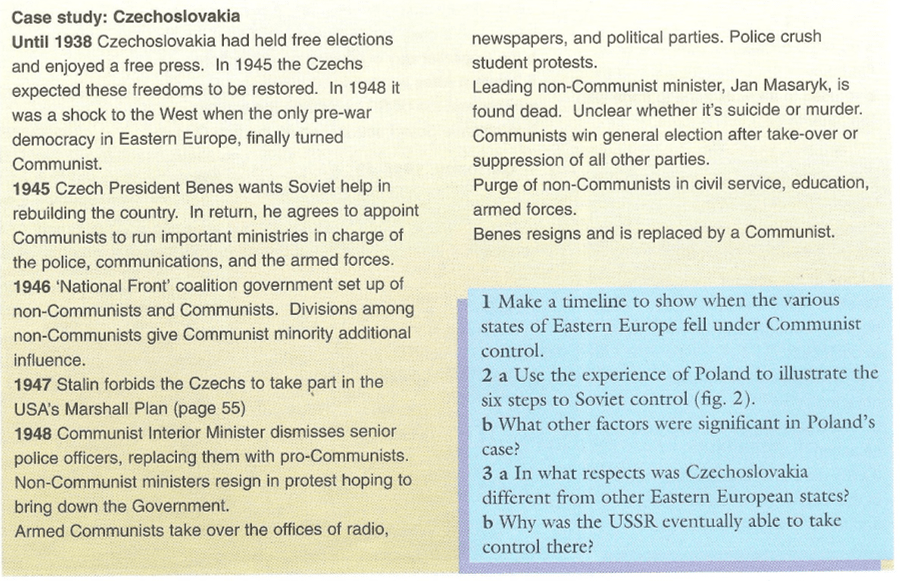
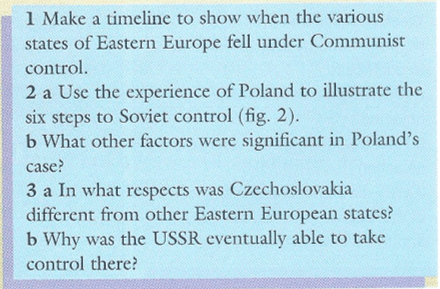
(HOW SECURE WAS THE USSR’s CONTROL OVER EASTERN EUROPE, 1948-c.1989?)
Today we are going to look at: The Berlin Wall.
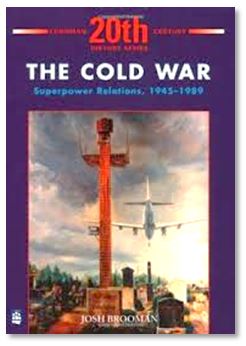
You need the following textbook information for this topic:
(Unfortunately this book is out of print – hence the online version.)
1.
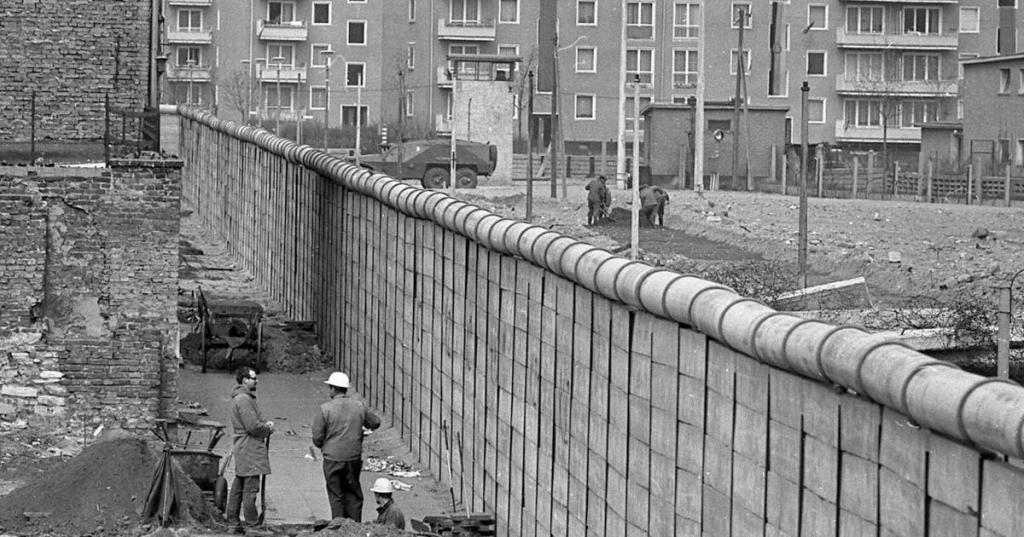
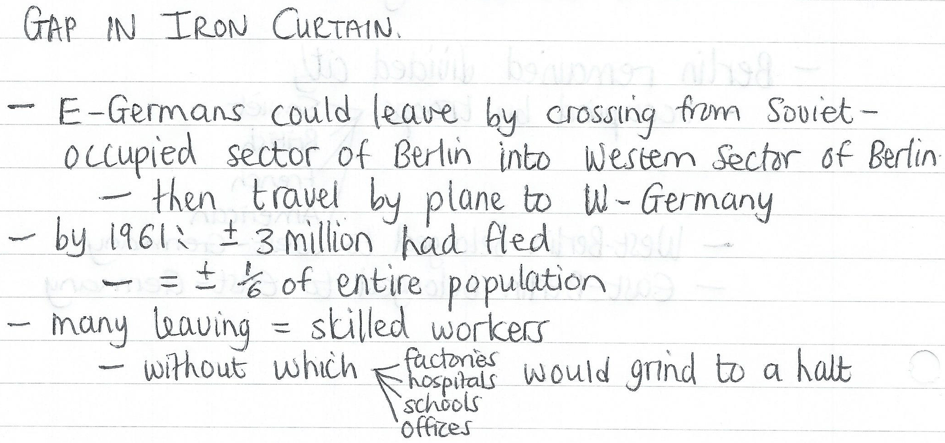
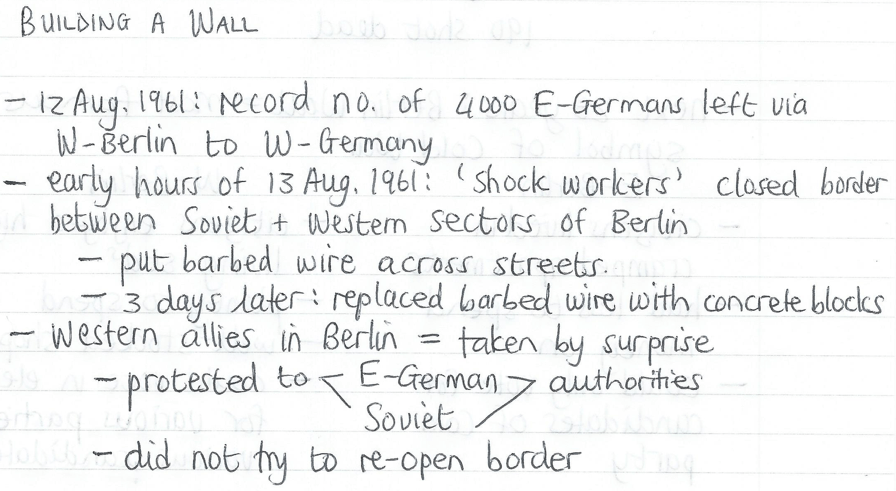
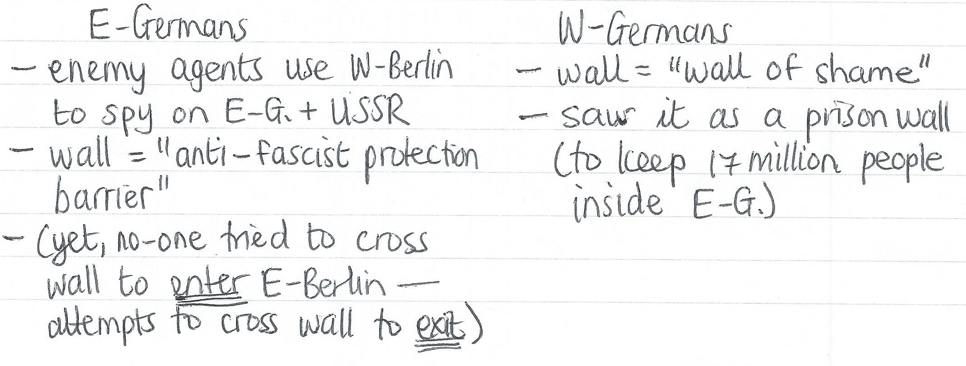
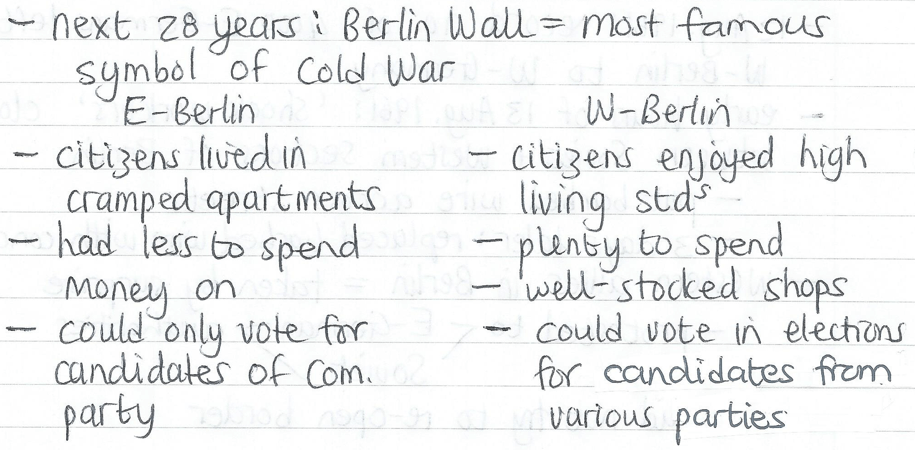
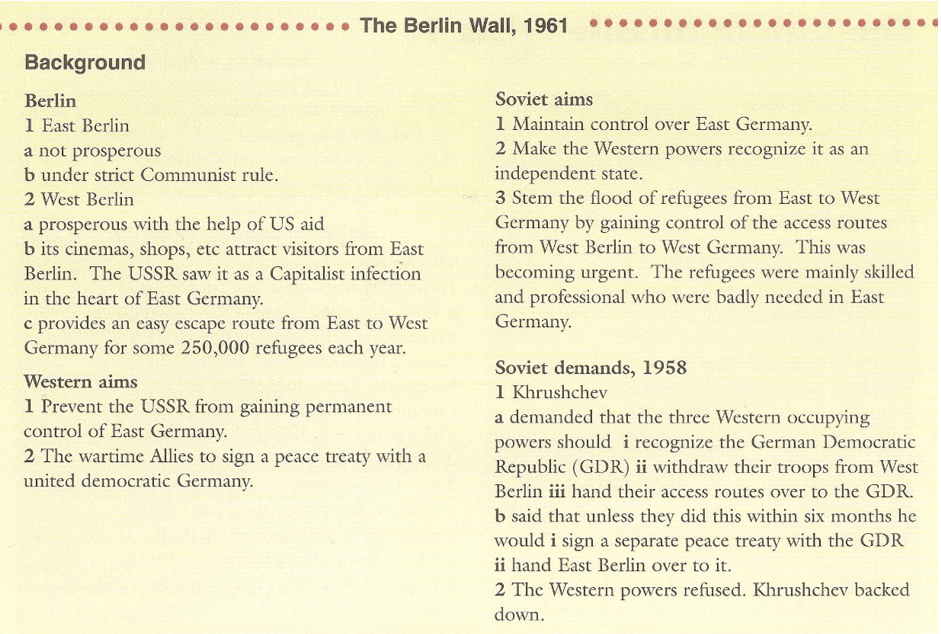
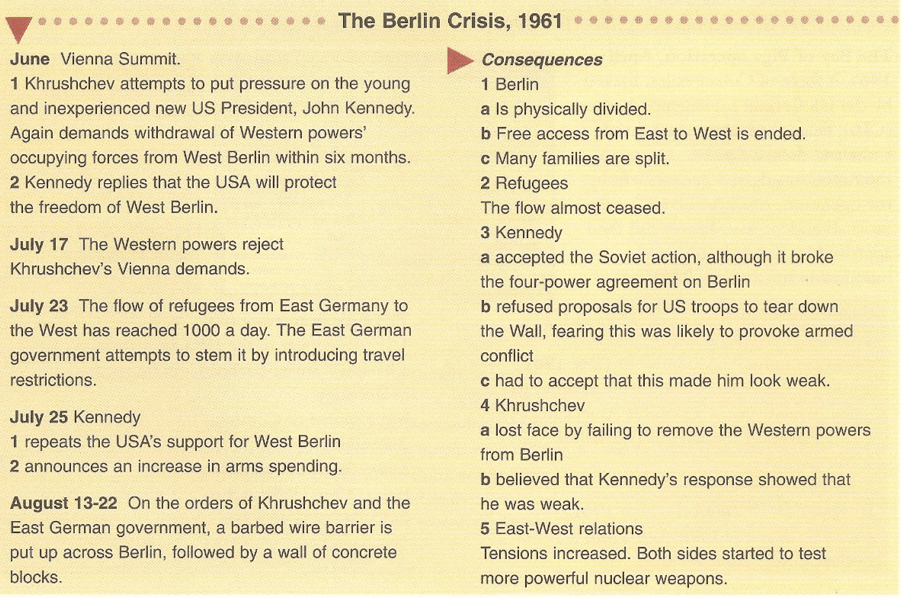
In the early hours of 13 August 1961 Soviet “shock-workers” closed the border between East Berlin and the Western sectors of Berlin by putting barbed wire across the streets. Three days later they began to replace the barbed wire with a wall of concrete blocks… This was the beginning of a heavily fortified barrier that would separate East Berlin from West Berlin for the next 28 years!
What happened?
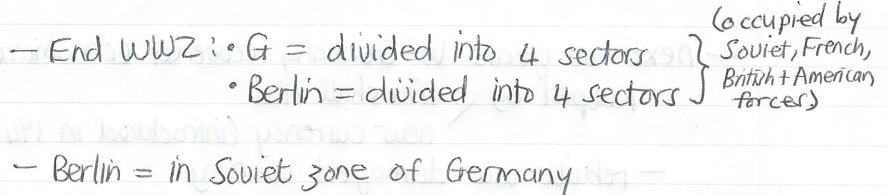
Berlin – background…
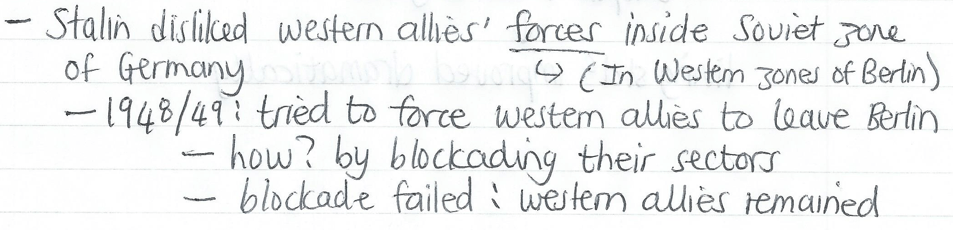
The Berlin Blockade
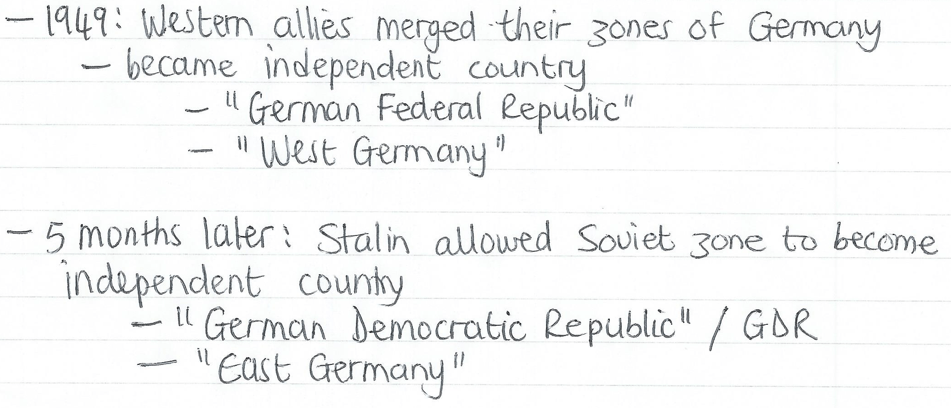
Two Germanies…
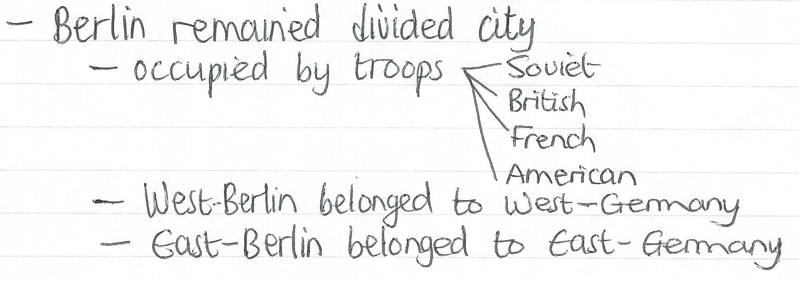
Berlin remained divided…
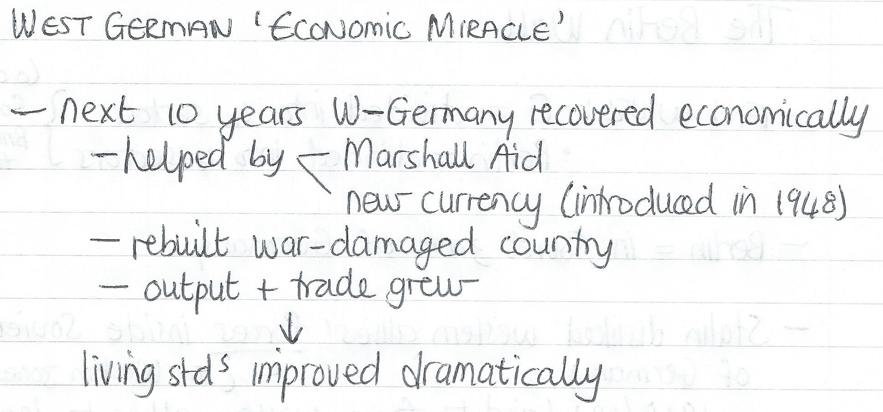
West Germany – economic recovery
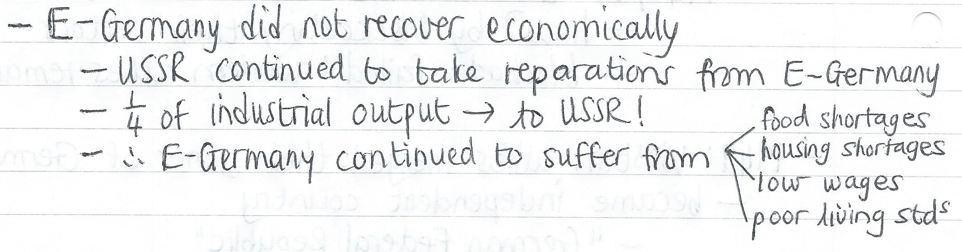
East Germany – economic recovery
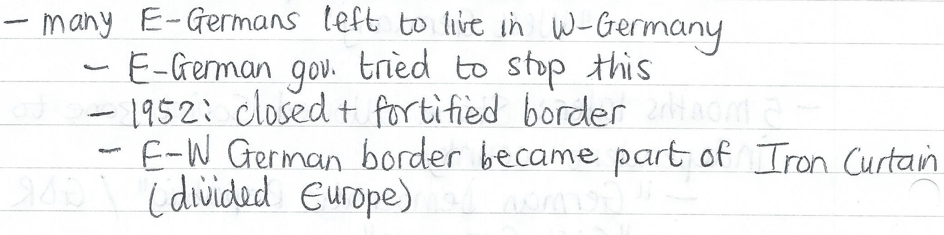
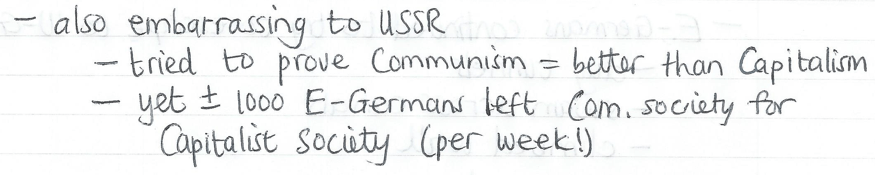
Gap in the Iron Curtain…
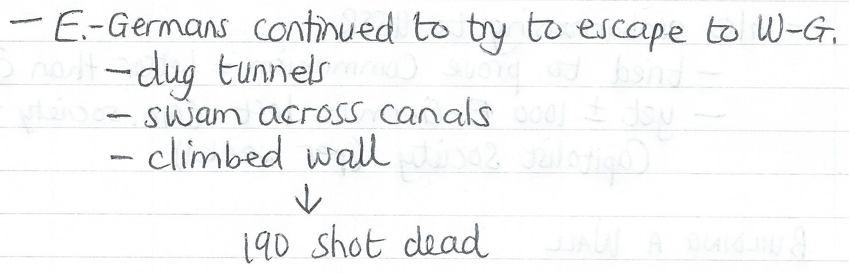
Building a Wall…
Contrasting Views of the Wall:
Contrasting Lives behind the Wall:
2.
USSR’s control over Eastern Europe – Berlin Wall. (12:00 minutes long)
3.
For more background information…
Berlin tensions 1945-1961. (5:04 minutes long)
The Berlin Crisis 1958 and the Berlin Wall 1961. (4:26 minutes long)
4.
Brooman
Pages 36 & 37 are relevant to this study.
5.
The following notes are relevant to this study…
Mason Notes
6.
Berlin Wall. (5:12 minutes long)
The rise and fall of the Berlin Wall. (6:25 minutes long)
(HOW SECURE WAS THE USSR’s CONTROL OVER EASTERN EUROPE, 1948-c.1989?)
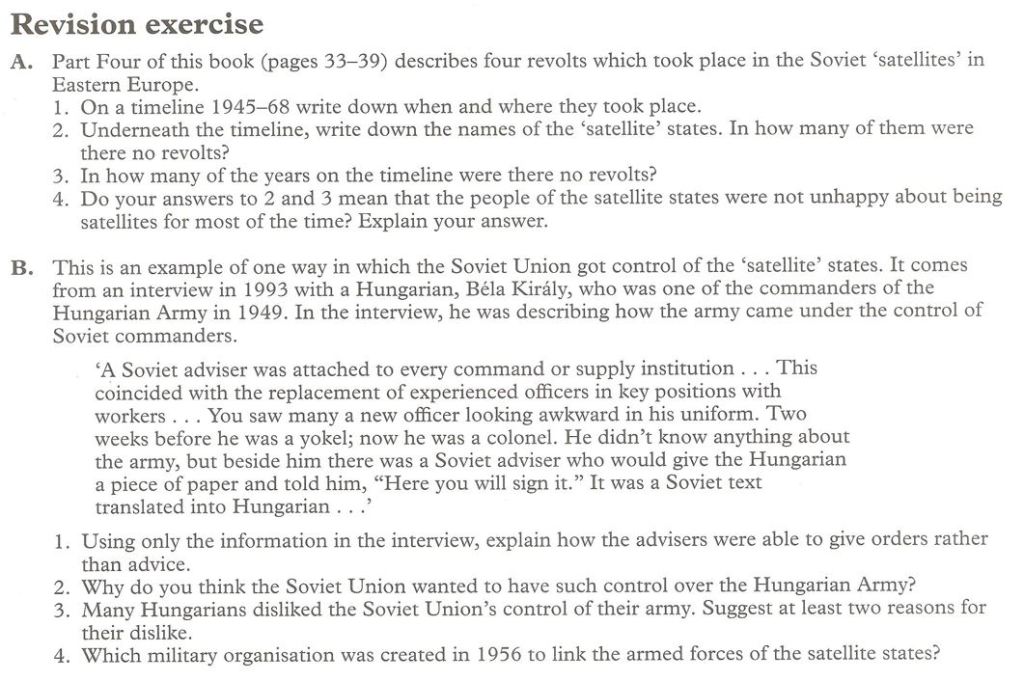
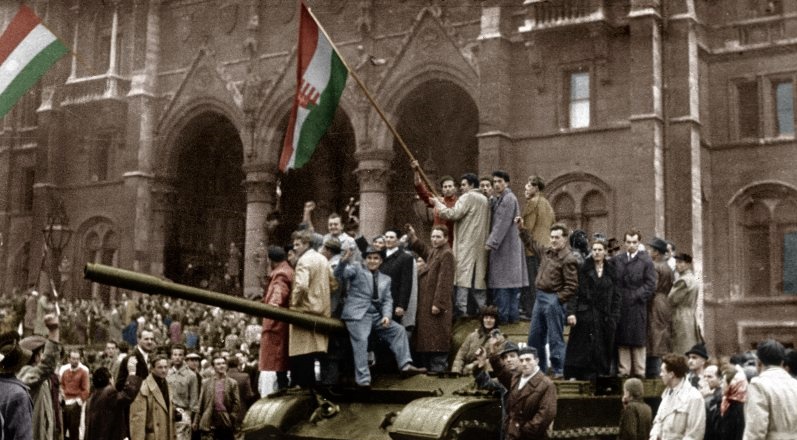
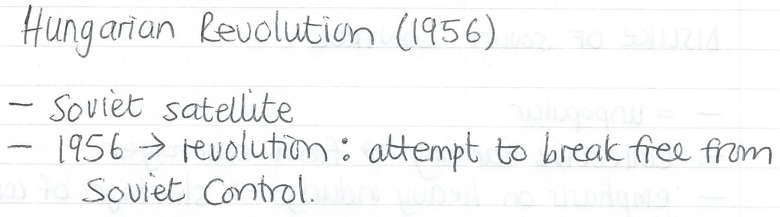
Today we are going to look at: Resistance to Soviet power in Hungary (1956).
You need the following textbook information for this topic:
(Unfortunately this book is out of print – hence the online version.)
1.
USSR’s control over Eastern Europe – Introduction. (8:00 minutes long)
2.
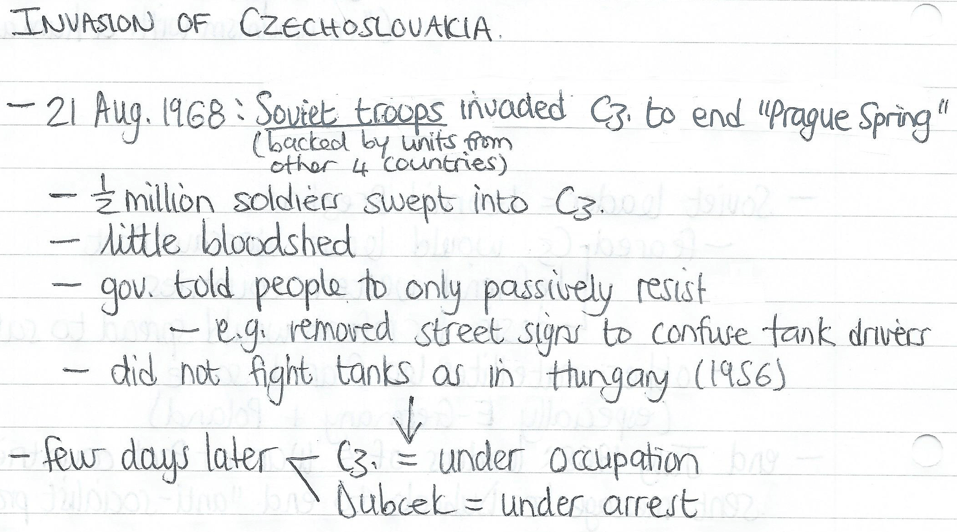
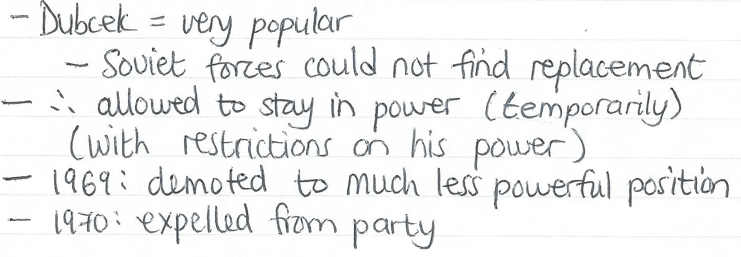
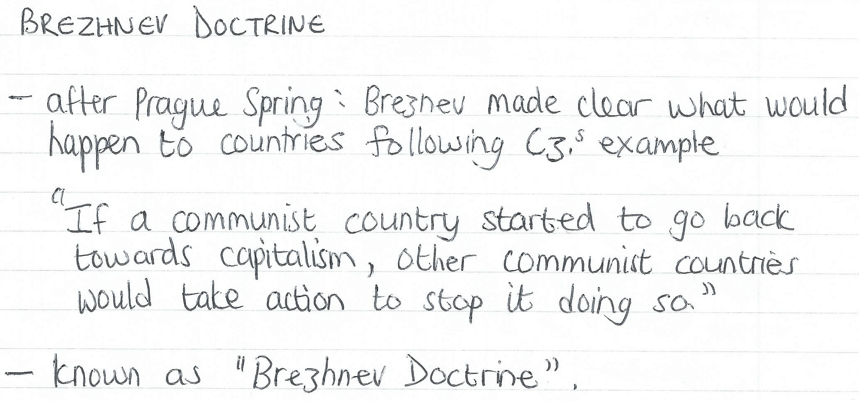
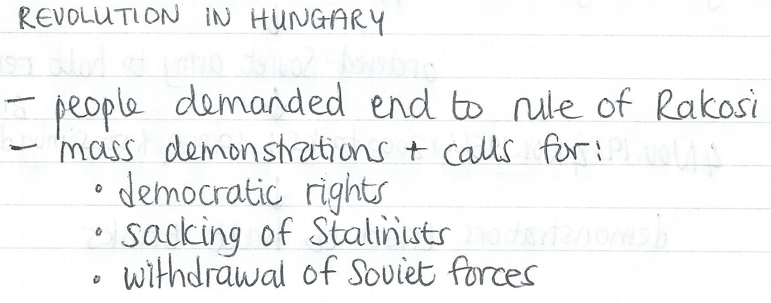
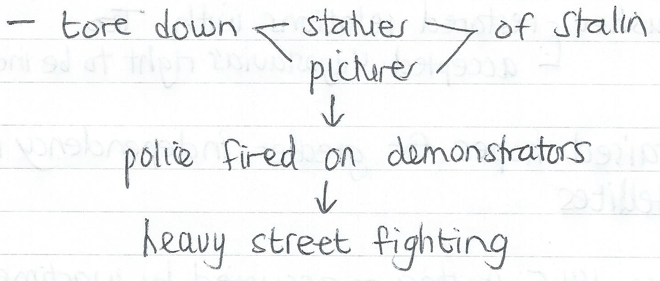
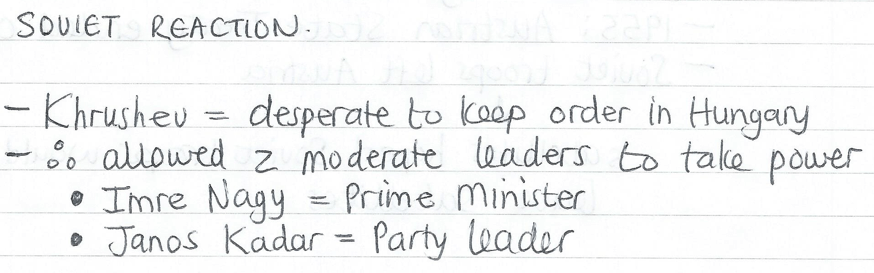
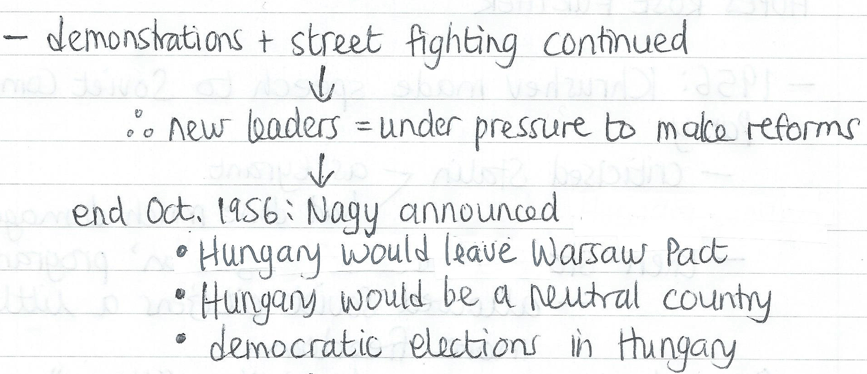
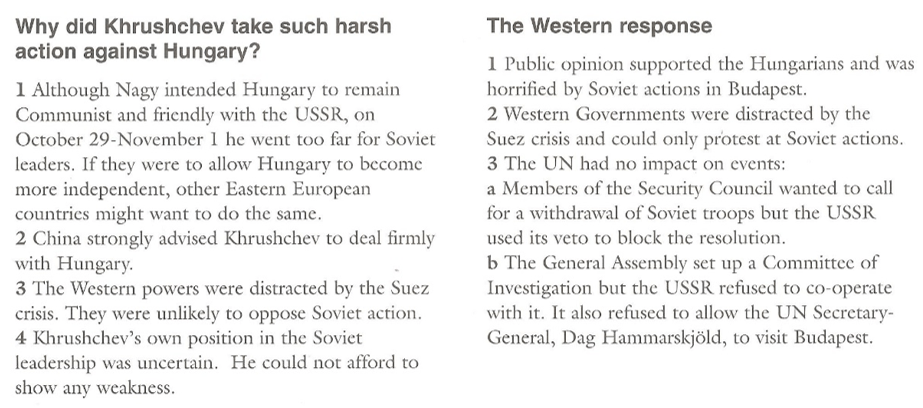
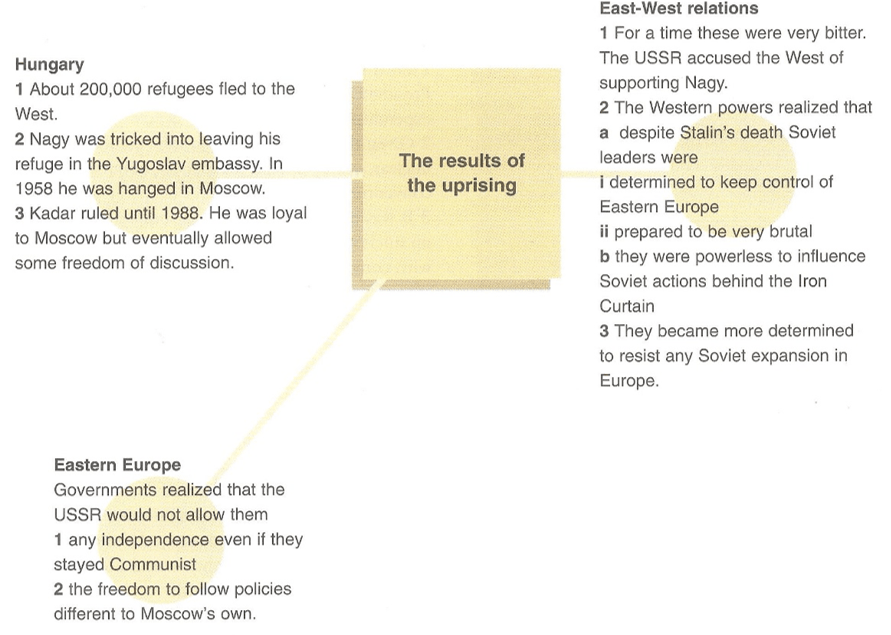
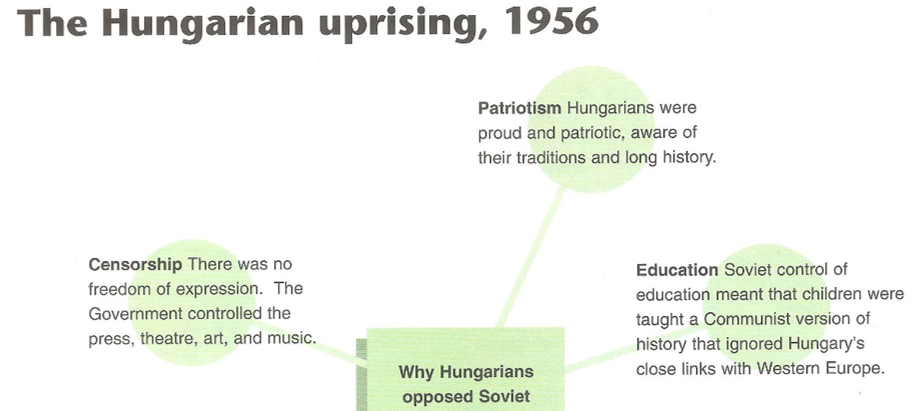
What happened?
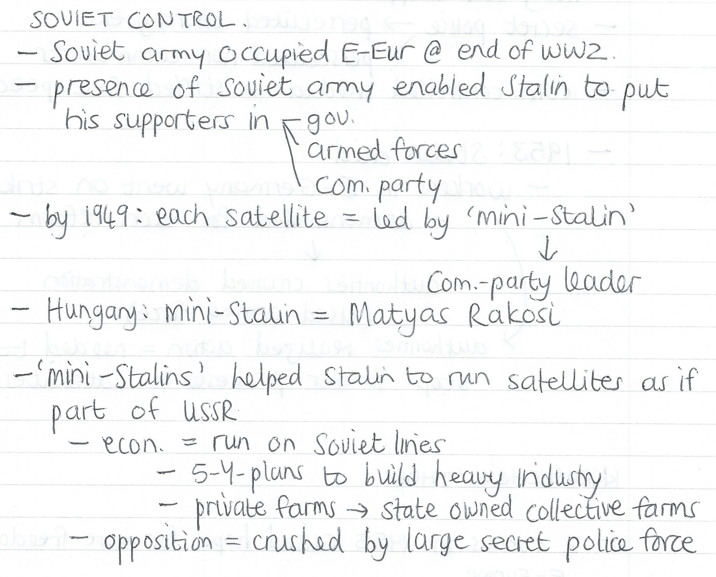
Soviet Control – background…
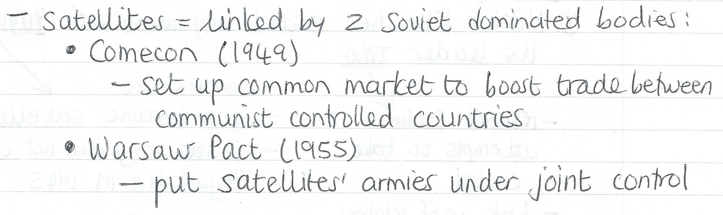
Comecon & Warsaw Pact
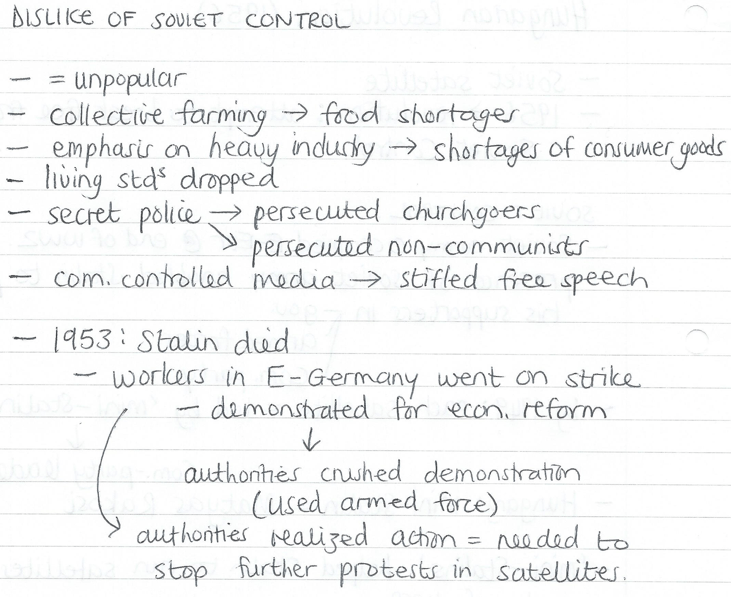
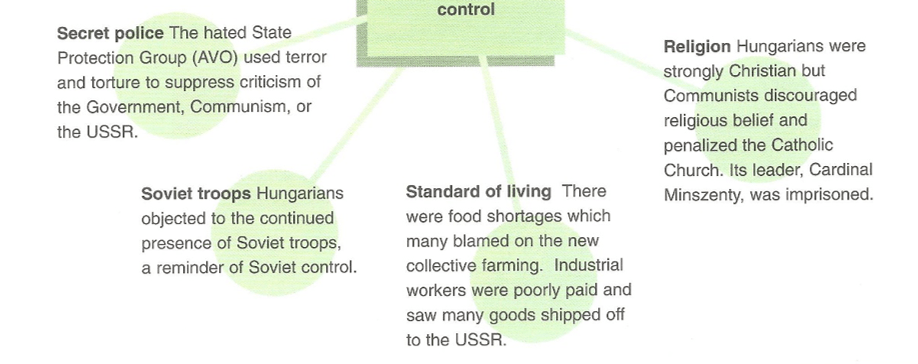
Dislike of Soviet Control
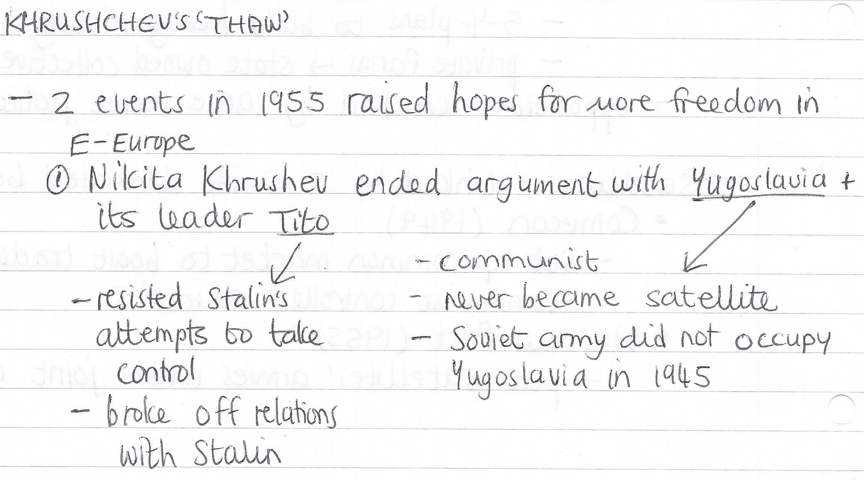
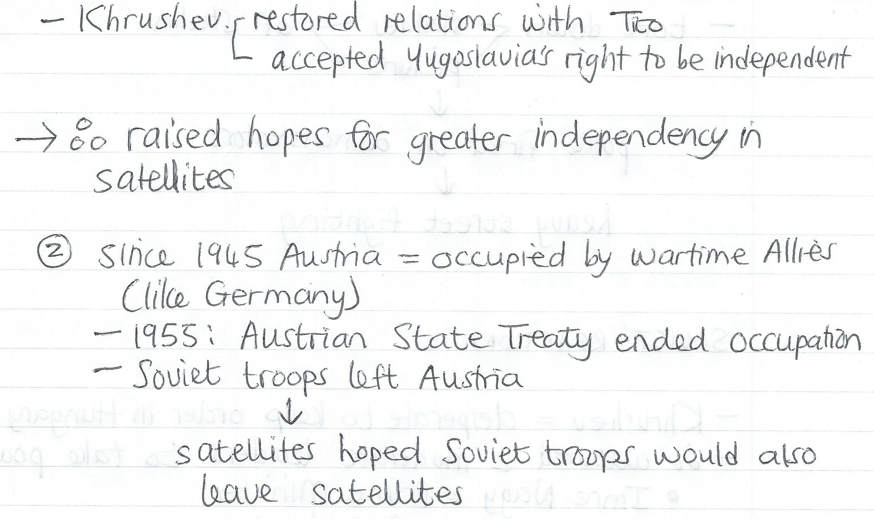
Hopes for reduced control
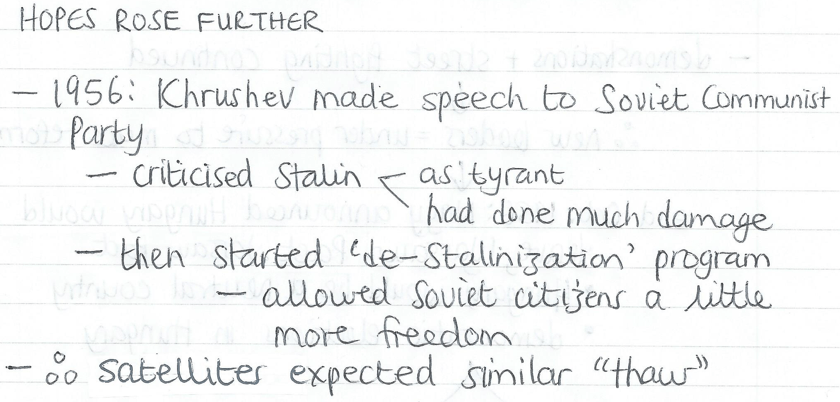
Hopes increased further…
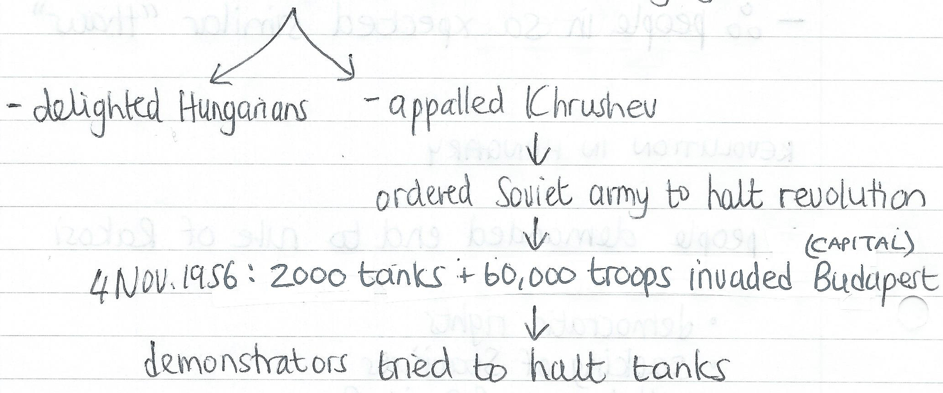
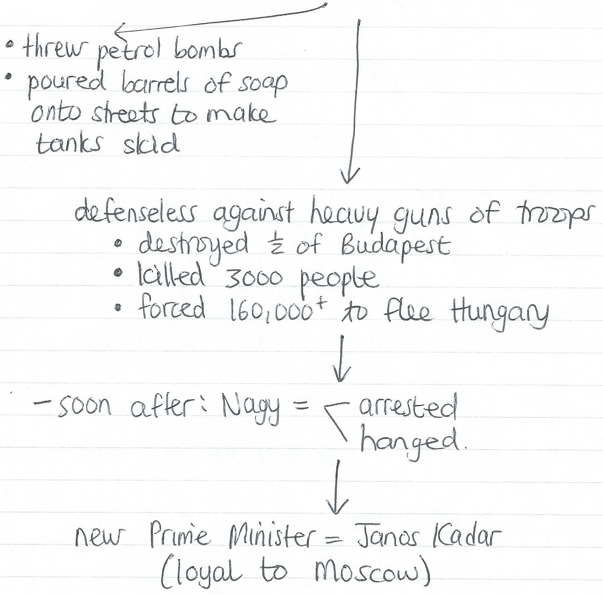
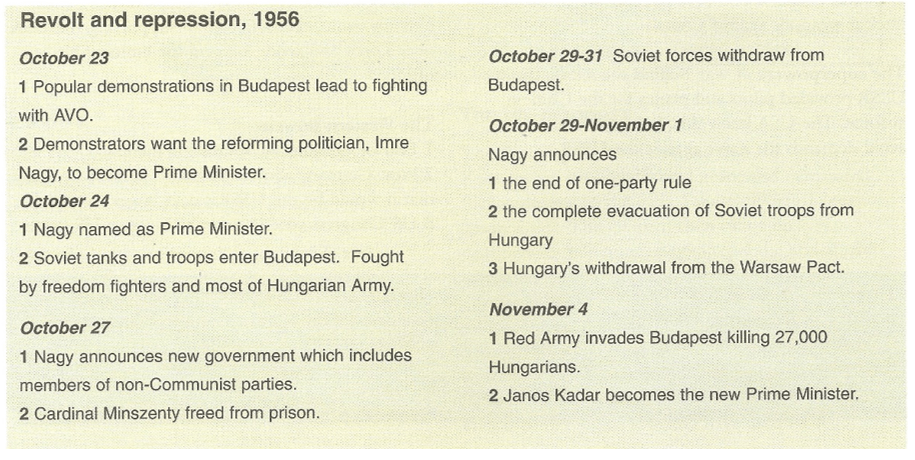
The Revolution began…
Soviet Reaction:
3.
Hungarian Uprising, Budapest (1956). (2:50 minutes long)
4.
Something else that may be relevant…
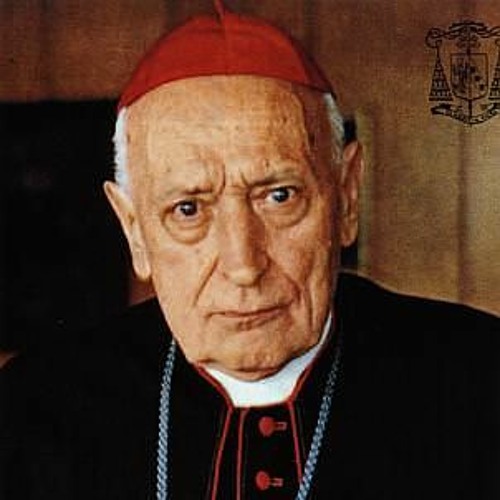
Cardinal József Mindszenty, the highest Catholic official in Hungary, was convicted of treason and sentenced to life imprisonment by the Communist People’s Court (Feb.1949). He was accused of anti-government activities. Outraged observers in Western Europe and the United States condemned both the trial and Mindszenty’s conviction as “perversions” and “lynchings.”
The case was significant in demonstrating the depth of the anticommunist movement in Hungary. In 1956, Mindszenty was released when a reformist government took power in Hungary. Shortly thereafter, Soviet troops entered Hungary to put down anticommunist protests. Mindszenty took refuge in the U.S. embassy in Budapest and stayed inside the embassy grounds until 1971. That year he was recalled by the Vatican and settled in Vienna, where he died in 1975.
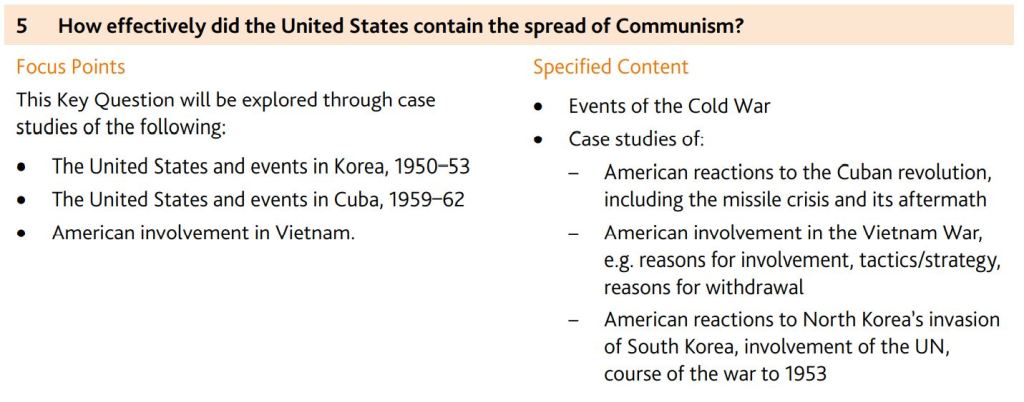
(HOW EFFECTIVELY DID THE UNITED STATES CONTAIN THE SPREAD OF COMMUNISM?)
This Post is under construction…
You need the following textbook information for this topic:
(Unfortunately this book is out of print – hence the online version.)
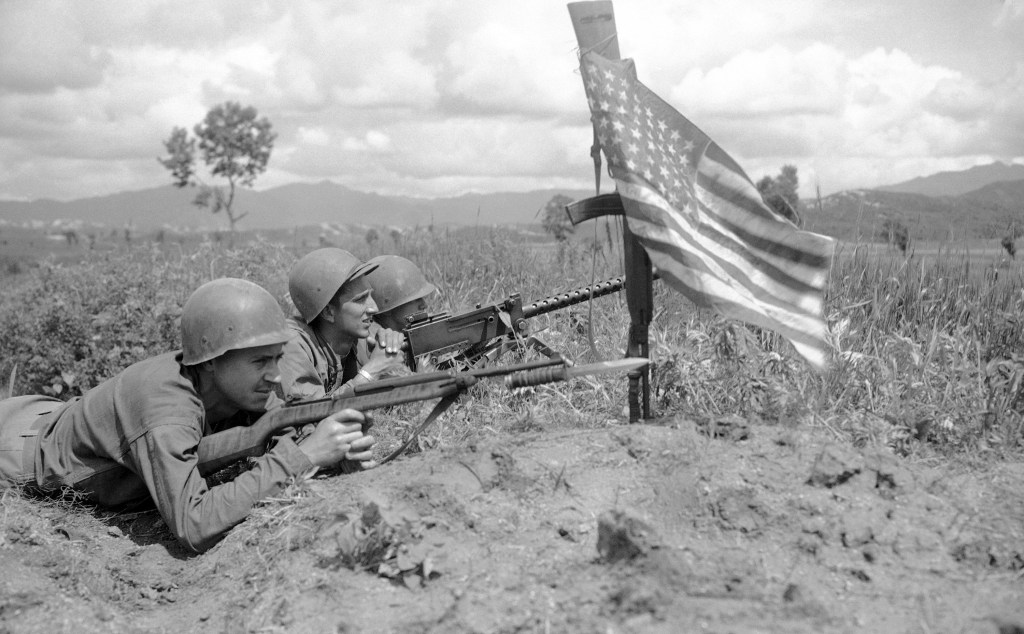
Today we are going to look at: American reactions to North Korea’s invasion of South Korea, involvement of the UN, course of the war to 1953.
It has now been confirmed that all GCSE and A’ level exams have been cancelled. The Exam Boards are in the process of drawing up a protocol to provide guidance for teachers on how grades are to be awarded. In History we will continue to analyse questions, but at the same time I want you to write essays for assessment purposes.
Read the information about “The War with Japan” & the information about “Bloody Sunday”, p.5.
1.
2. Cold War
Look at the following video clip. It is a brief explanation of how to answer 10-mark questions for IGCSE History – Paper 1:
(The example in this video is about a topic that you have not covered. However, the advise still applies to your 10-mark essay answers.)
The Korean War. (7:34 minutes long)
1.
The Korean War – Causes of the Korean War. (7:39 minutes long)
The Korean War – Events of the Korean War. (5:38 minutes long)
(HOW EFFECTIVELY DID THE UNITED STATES CONTAIN THE SPREAD OF COMMUNISM?)
This Post is under construction…
You need the following textbook information for this topic:
(Unfortunately this book is out of print – hence the online version.)
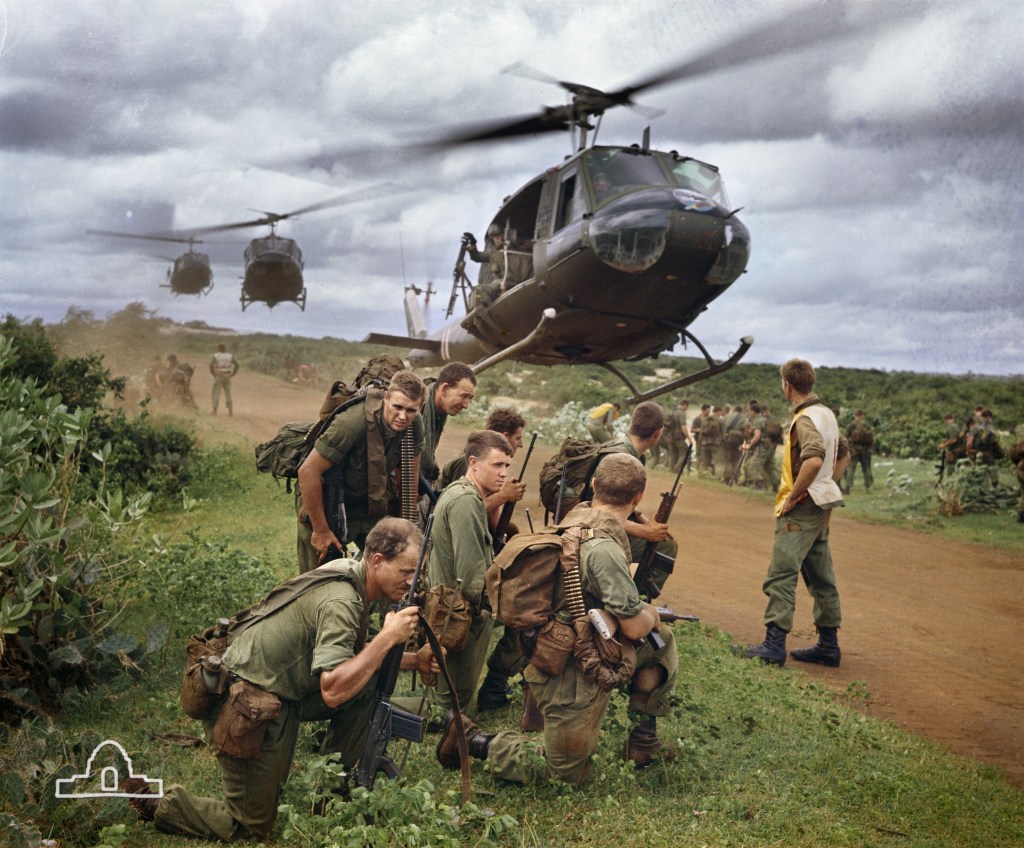
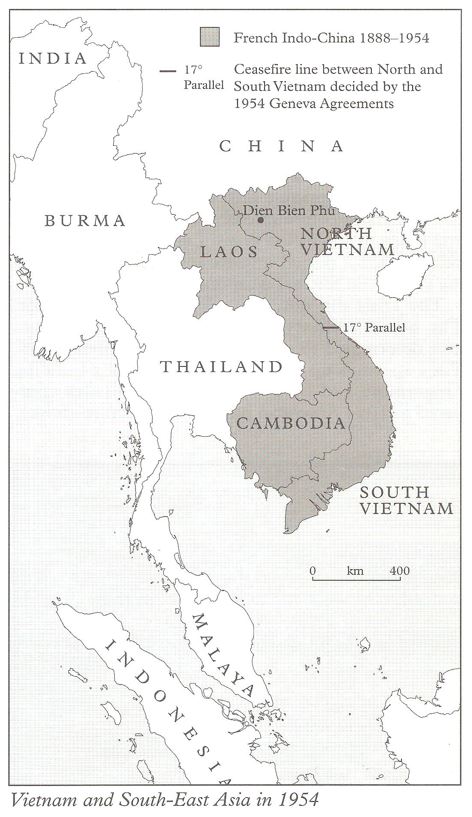
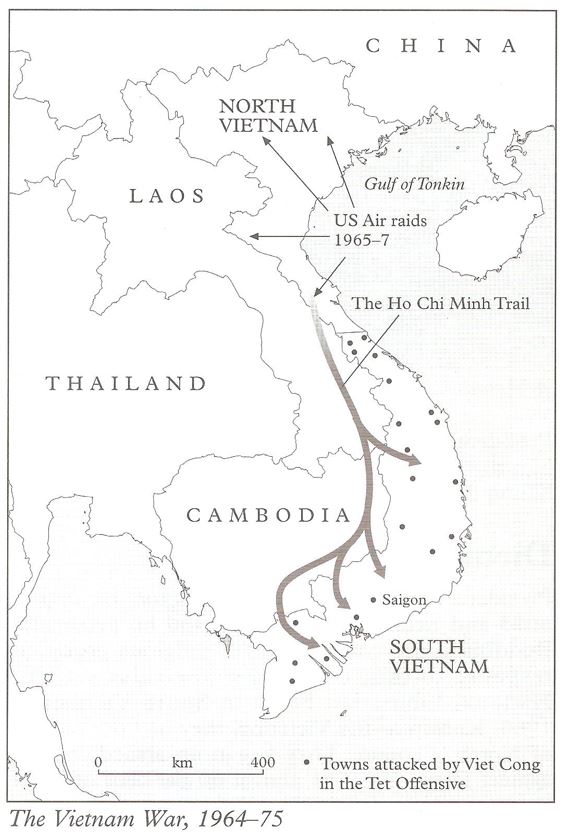
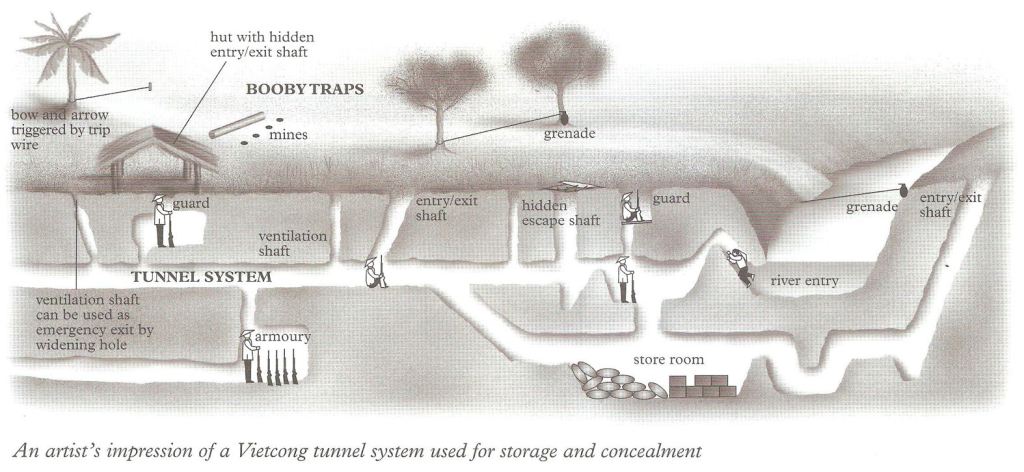
Today we are going to look at: American involvement in the Vietnam War, e.g. reasons for involvement, tactics/strategy, reasons for withdrawal.
It has now been confirmed that all GCSE and A’ level exams have been cancelled. The Exam Boards are in the process of drawing up a protocol to provide guidance for teachers on how grades are to be awarded. In History we will continue to analyse questions, but at the same time I want you to write essays for assessment purposes.
Read the information about “The War with Japan” & the information about “Bloody Sunday”, p.5.
1.
2. Cold War
Look at the following video clip. It is a brief explanation of how to answer 10-mark questions for IGCSE History – Paper 1:
(The example in this video is about a topic that you have not covered. However, the advise still applies to your 10-mark essay answers.)
The Vietnam War Begins. (5:05 minutes long)
Escalation in Vietnam. (9:18 minutes long)
Nixon and Vietnamization. (8:52 minutes long)
1.
North Vietnam and Ho Chi Minh. (3:58 minutes long)
Diem in South Vietnam – Hamlet Program, Buddhist Crisis & Assassination. (7:12 minutes long)
Lyndon Johnson and the Vietnam War. (5:08 minutes long)
Vietnam War – Strengths & Weaknesses of the US & North Vietnam. (6:39 minutes long)
Vietnam War – The Tet Offensive. (3:57 minutes long)
Nixon in Vietnam – Vietnamisation, Cambodia & Invasion of Laos. (7:26 minutes long)
Impacts of the Vietnam War – USA, Vietnam and Cambodia. (6:08 minutes long)
(HOW EFFECTIVELY DID THE UNITED STATES CONTAIN THE SPREAD OF COMMUNISM?)
This Post is under construction…
You need the following textbook information for this topic:
(Unfortunately this book is out of print – hence the online version.)
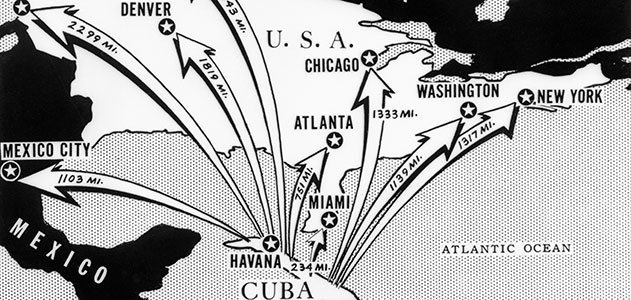
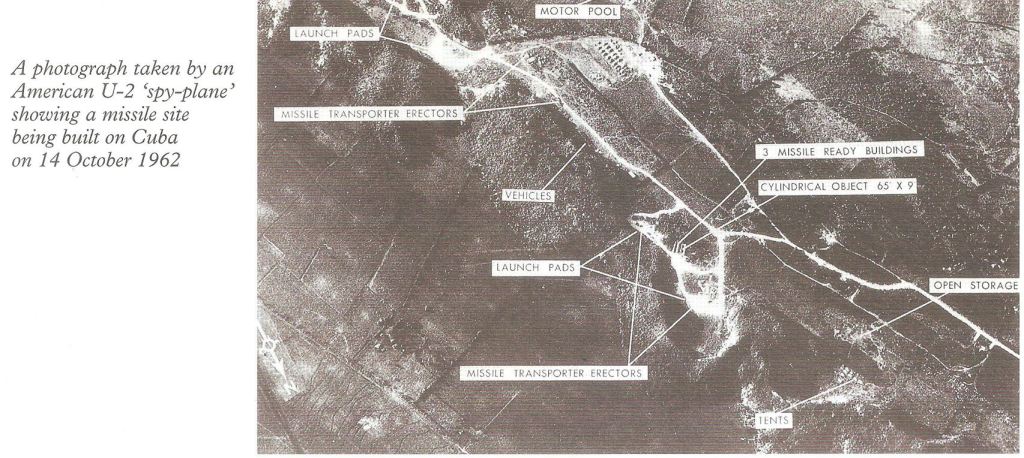
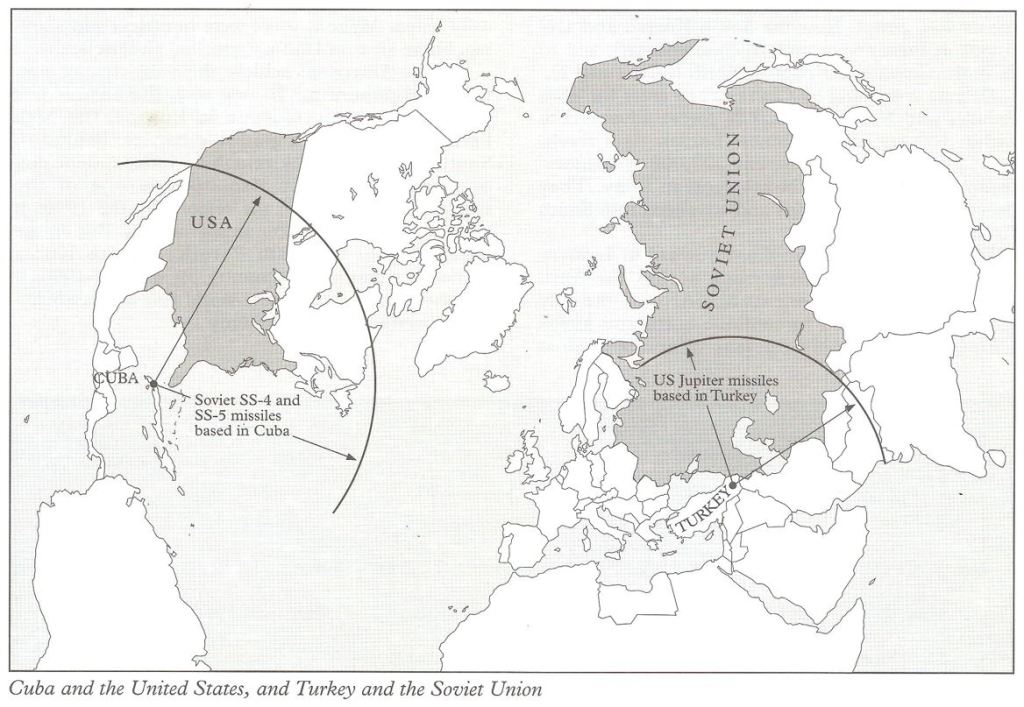
Today we are going to look at: American reactions to the Cuban revolution, including the missile crisis and its aftermath
It has now been confirmed that all GCSE and A’ level exams have been cancelled. The Exam Boards are in the process of drawing up a protocol to provide guidance for teachers on how grades are to be awarded. In History we will continue to analyse questions, but at the same time I want you to write essays for assessment purposes.
Read the information about “The War with Japan” & the information about “Bloody Sunday”, p.5.
1.
2. Cold War
Look at the following video clip. It is a brief explanation of how to answer 10-mark questions for IGCSE History – Paper 1:
(The example in this video is about a topic that you have not covered. However, the advise still applies to your 10-mark essay answers.)
The Cuban Missile Crisis. (6:25 minutes long)
1.
Causes of the Cuban Missile Crisis – Part 1. (7:19 minutes long)
Events of the Cuban Missile Crisis – Part 2. (7:57 minutes long)
(HOW EFFECTIVELY DID THE UNITED STATES CONTAIN THE SPREAD OF COMMUNISM?)
This Post is under construction…
You need the following textbook information for this topic:
(Unfortunately this book is out of print – hence the online version.)
Today we are going to look at: Containment and some events of the Cold War
Job 08-A2-294 Master Poster File 306-PPA-181
It has now been confirmed that all GCSE and A’ level exams have been cancelled. The Exam Boards are in the process of drawing up a protocol to provide guidance for teachers on how grades are to be awarded. In History we will continue to analyse questions, but at the same time I want you to write essays for assessment purposes.
Read the information about “The War with Japan” & the information about “Bloody Sunday”, p.5.
1.2. Cold War
Look at the following video clip. It is a brief explanation of how to answer 10-mark questions for IGCSE History – Paper 1:
(The example in this video is about a topic that you have not covered. However, the advise still applies to your 10-mark essay answers.)
You need the following textbook information for this topic:
(Unfortunately this book is out of print – hence the online version.)
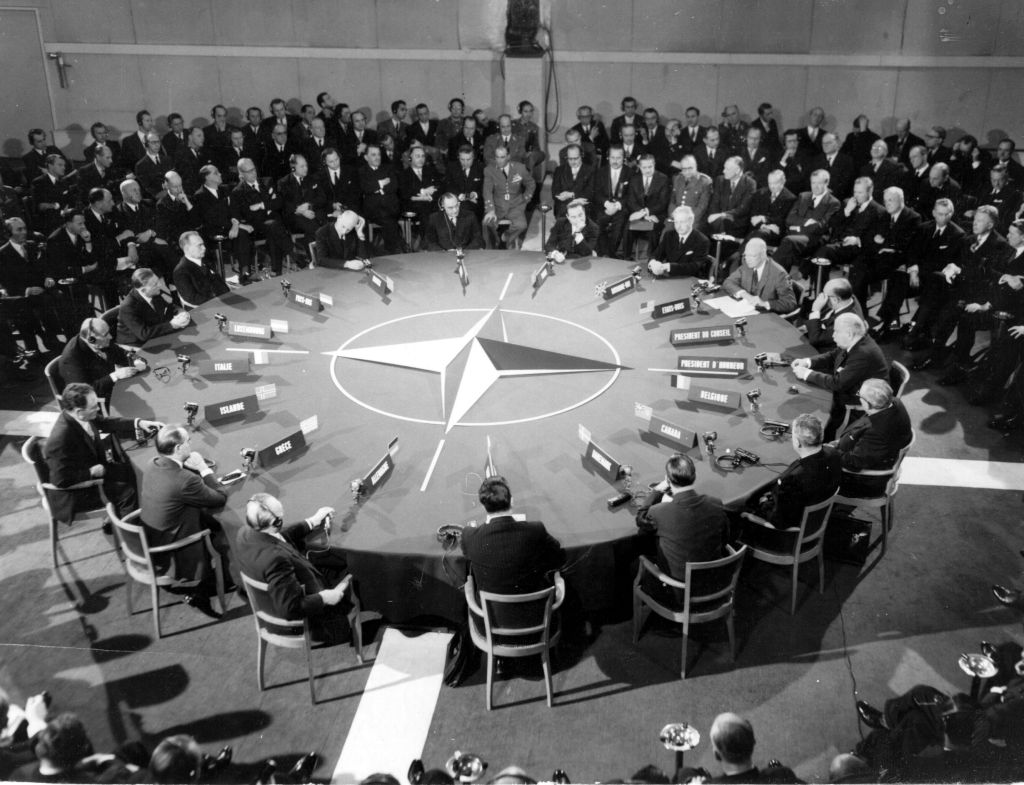
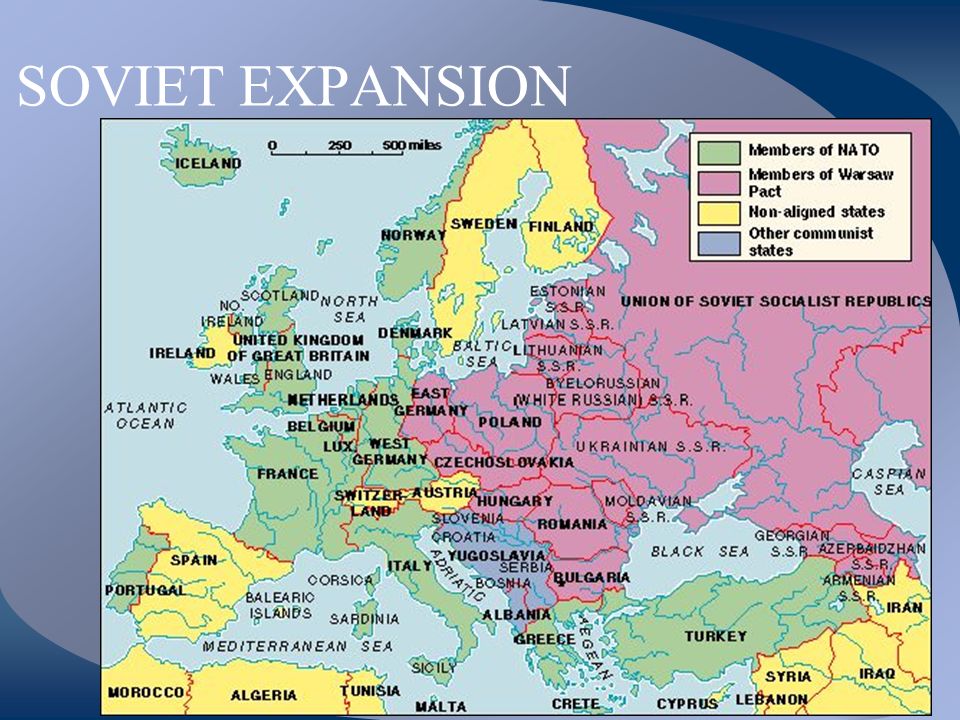
Today we are going to look at: NATO and the Warsaw Pact
14th December 1957: The opening speech at the NATO Summit talks in Paris. (Photo by Reg Birkett/Keystone/Getty Images)
It has now been confirmed that all GCSE and A’ level exams have been cancelled. The Exam Boards are in the process of drawing up a protocol to provide guidance for teachers on how grades are to be awarded. In History we will continue to analyse questions, but at the same time I want you to write essays for assessment purposes.
Read the information about “The War with Japan” & the information about “Bloody Sunday”, p.5.
1.2. Cold War
Look at the following video clip. It is a brief explanation of how to answer 10-mark questions for IGCSE History – Paper 1:
(The example in this video is about a topic that you have not covered. However, the advise still applies to your 10-mark essay answers.)
The Formation of NATO. (3:15 minutes long)
The. (7:77 minutes long)
1.
Complete
Who was to Blame for the Cold War?. (12:34 minutes long)
You need the following textbook information for this topic:
(Unfortunately this book is out of print – hence the online version.)
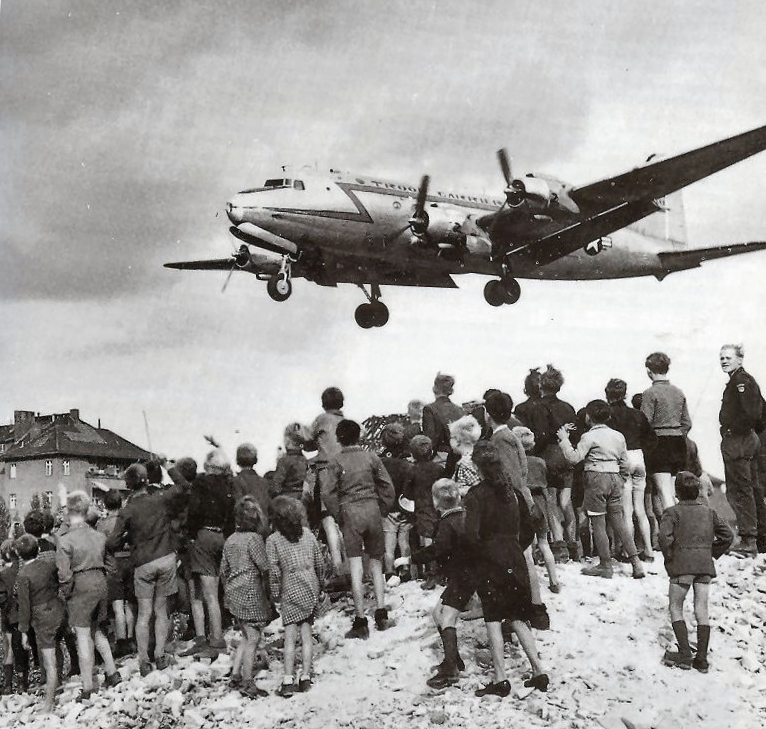
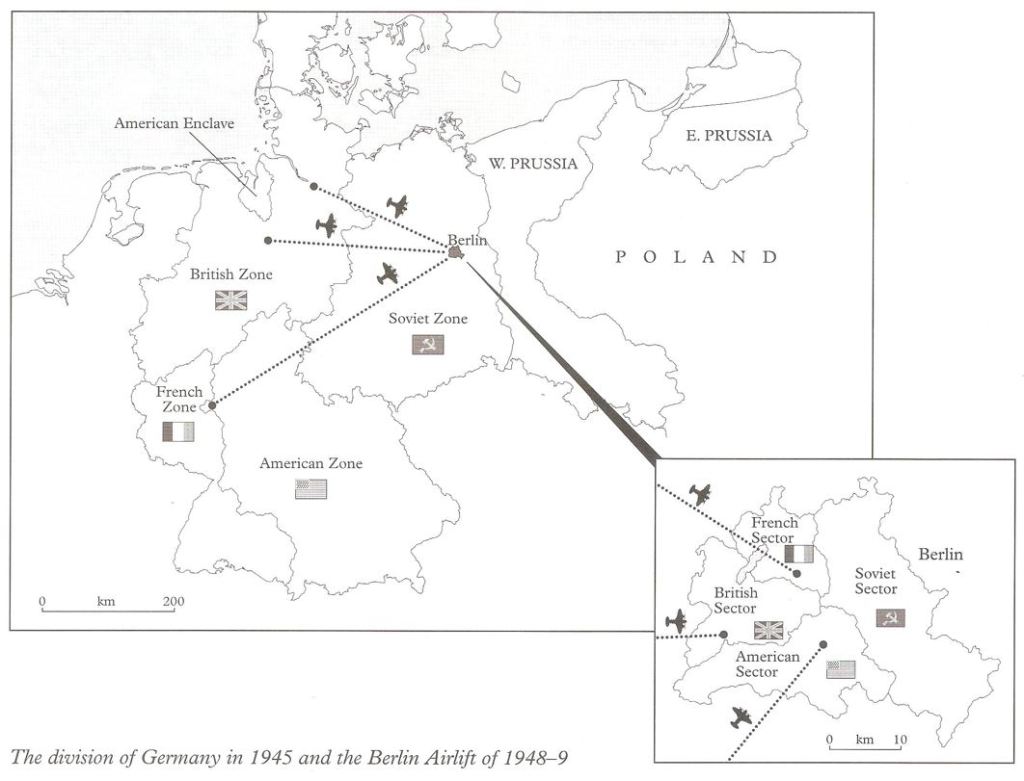
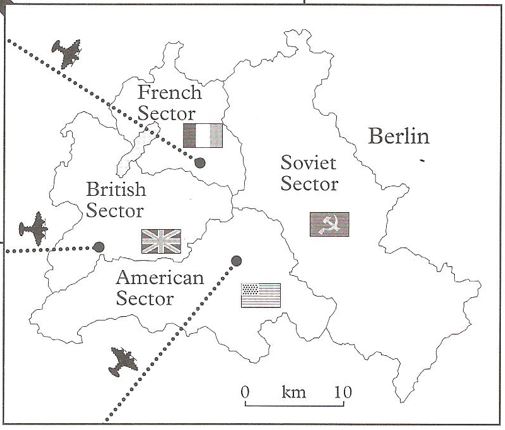
Today we are going to look at: The occupation of Germany and the Berlin Blockade.
It has now been confirmed that all GCSE and A’ level exams have been cancelled. The Exam Boards are in the process of drawing up a protocol to provide guidance for teachers on how grades are to be awarded. In History we will continue to analyse questions, but at the same time I want you to write essays for assessment purposes.
Read the information about “The War with Japan” & the information about “Bloody Sunday”, p.5.
1.
2. Cold War
Look at the following video clip. It is a brief explanation of how to answer 10-mark questions for IGCSE History – Paper 1:
(The example in this video is about a topic that you have not covered. However, the advise still applies to your 10-mark essay answers.)
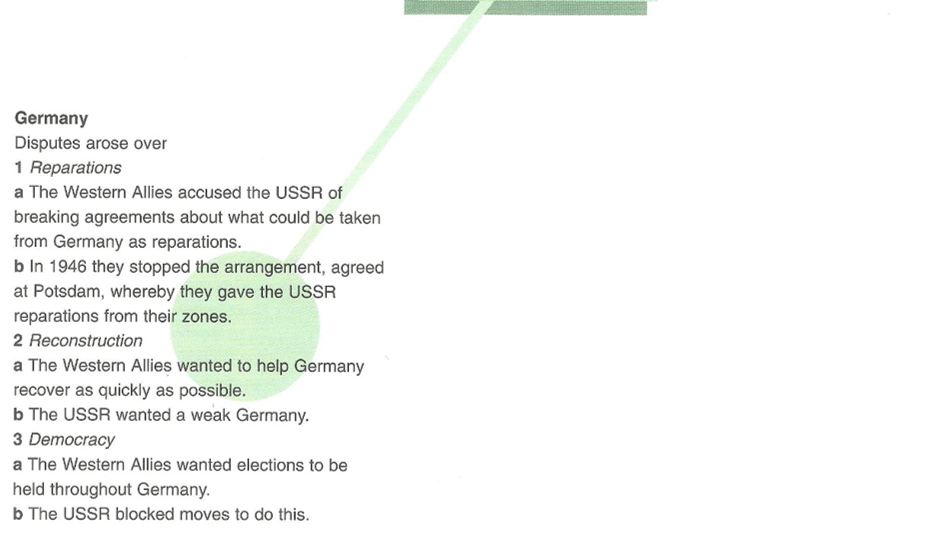
The Four Zones of Post-War Germany – Britain, America, France & USSR. (6:52 minutes long)
The. (5:45 minutes long)
The Berlin Blockade. (3:52 minutes long)
How to answer a 4 mark Cold War source question. (3:07 minutes long)
You need the following textbook information for this topic:
(Unfortunately this book is out of print – hence the online version.)
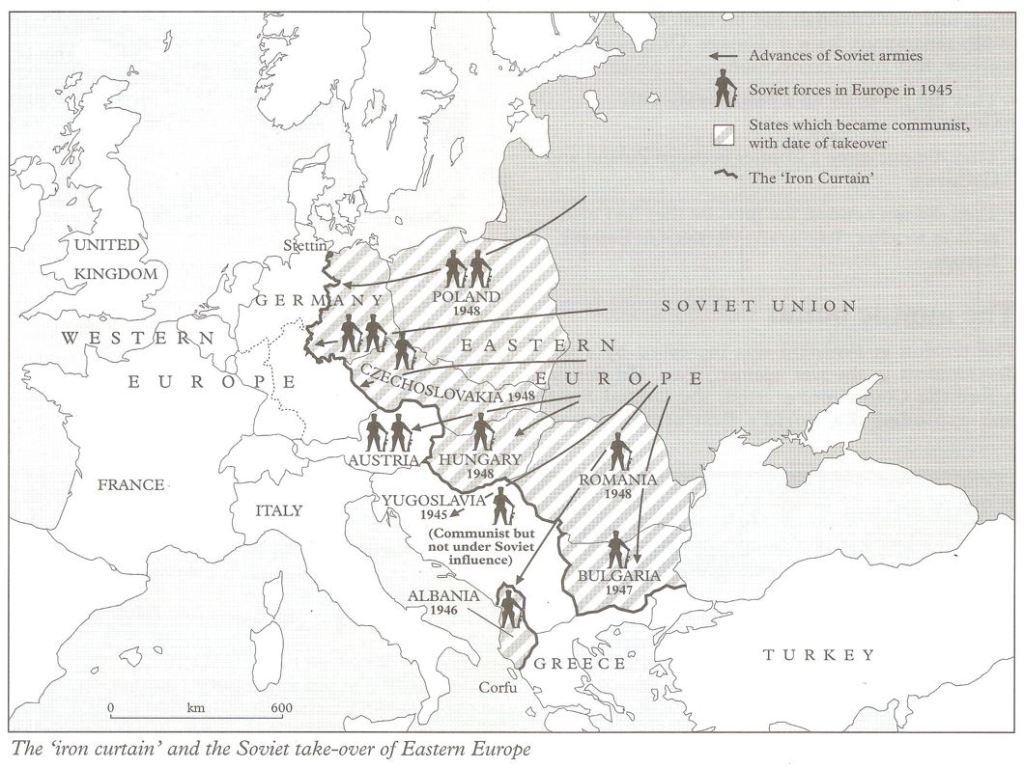
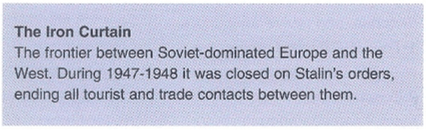
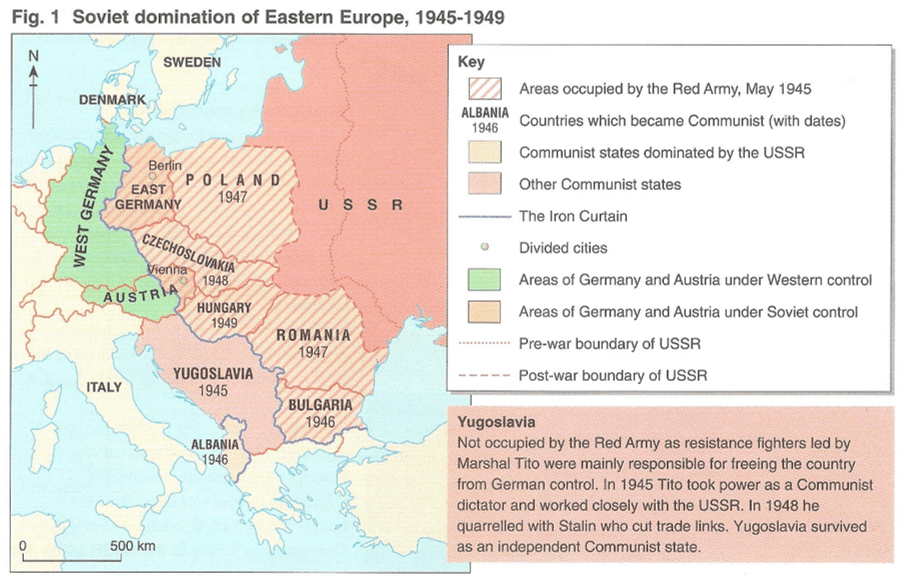
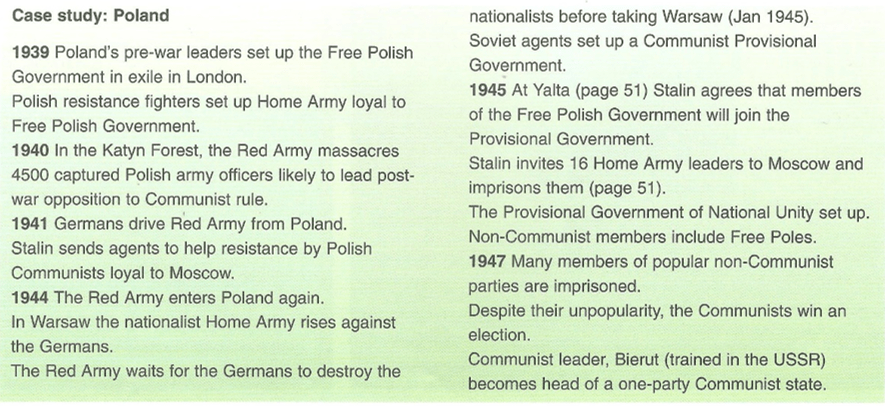
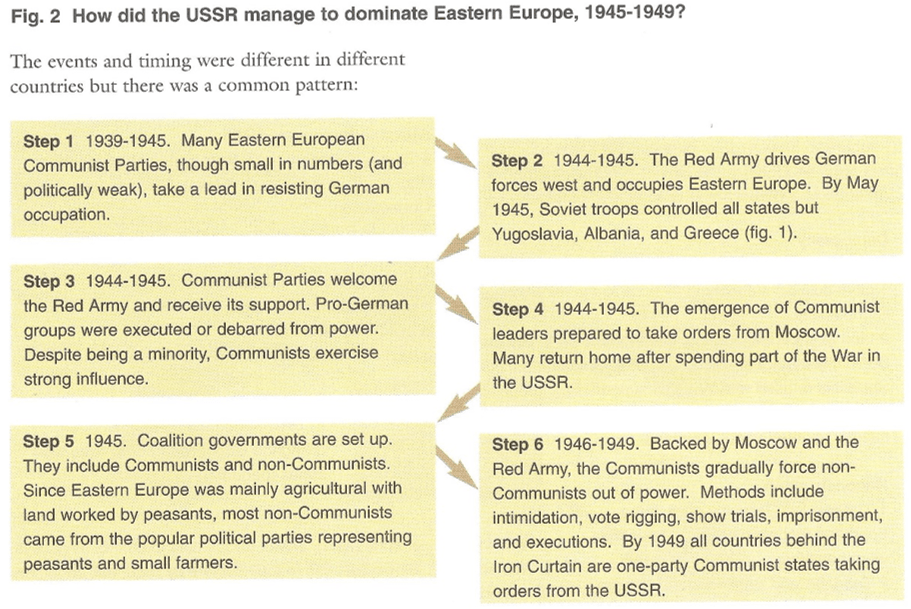
Today we are going to look at: Soviet expansion into Eastern Europe to 1948, and American reactions to it.
It has now been confirmed that all GCSE and A’ level exams have been cancelled. The Exam Boards are in the process of drawing up a protocol to provide guidance for teachers on how grades are to be awarded. In History we will continue to analyse questions, but at the same time I want you to write essays for assessment purposes.
Read the information about “The War with Japan” & the information about “Bloody Sunday”, p.5.
1.
Communist takeover of Eastern Europe 1945-48. (12:28 minutes long)
2. Cold War
Look at the following video clip. It is a brief explanation of how to answer 10-mark questions for IGCSE History – Paper 1:
(The example in this video is about a topic that you have not covered. However, the advise still applies to your 10-mark essay answers.)
Stalin’s Actions in Eastern Europe 1945-1948. (13:07 minutes long)
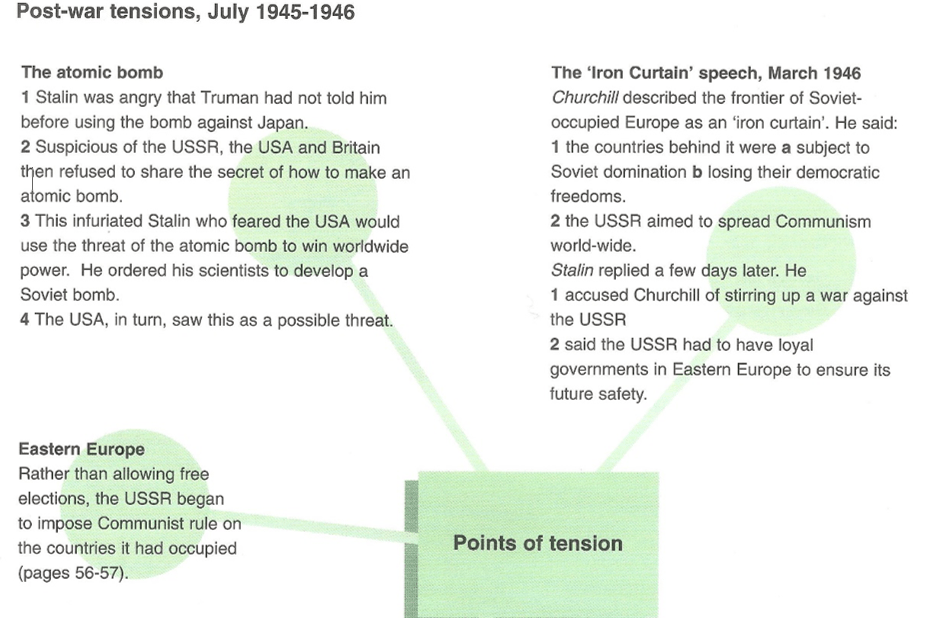
George Kennan’s Long Telegram & Churchill’s Iron Curtain Speech. (5:41 minutes long)
The. (7:77 minutes long)
1.
Complete
USSR control over Eastern Europe. (13:21 minutes long)
You need the following textbook information for this topic:
(Unfortunately this book is out of print – hence the online version.)
Today we are going to look at:
The Origins of the Cold War &
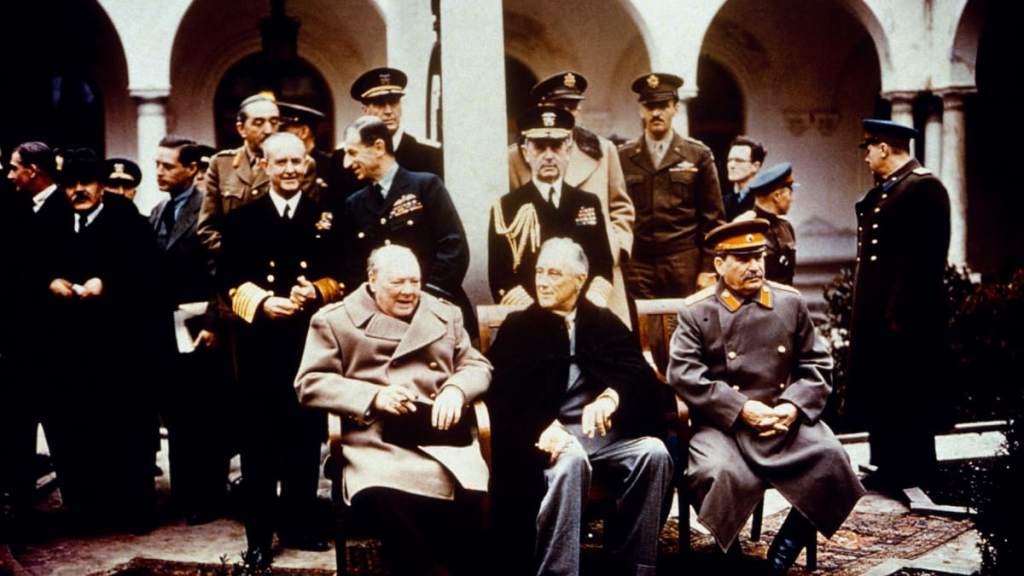
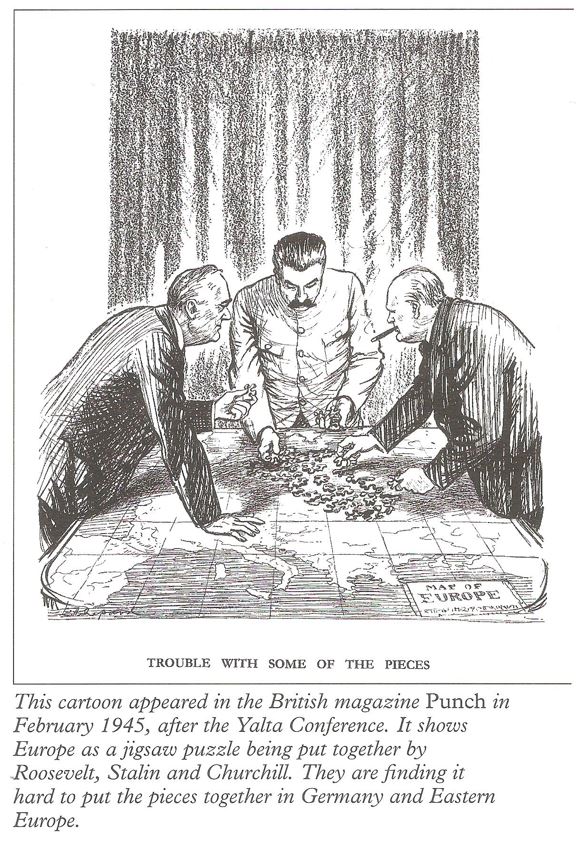
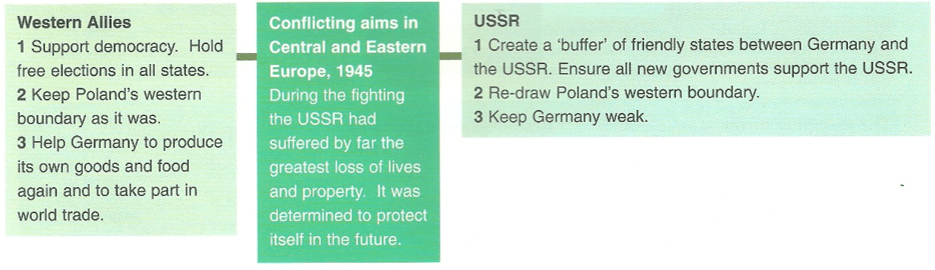
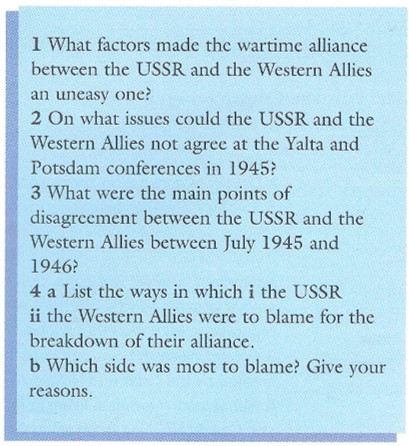
The 1945 summit conferences and the breakdown of the US-Soviet alliance in 1945-1946…
It has now been confirmed that all GCSE and A’ level exams have been cancelled. The Exam Boards are in the process of drawing up a protocol to provide guidance for teachers on how grades are to be awarded. In History we will continue to analyse questions, but at the same time I want you to write essays for assessment purposes.
Read the information about “The War with Japan” & the information about “Bloody Sunday”, p.5.
1
.2. Cold War
Look at the following video clip.
How did the cold war begin? (3:32 minutes long)
Objective 7.2- The Cold War Begins. (8:43 minutes long)
1.
The Yalta Conference. (11:26 minutes long)
The Potsdam Conference 1945 – Truman, Attlee and Stalin. (8:47 minutes long)











































































































































 Best study methods