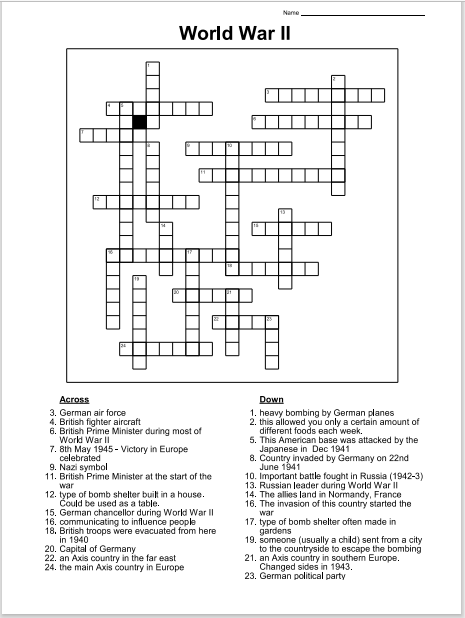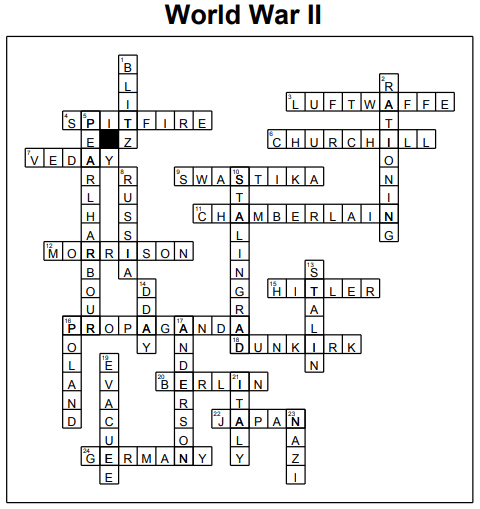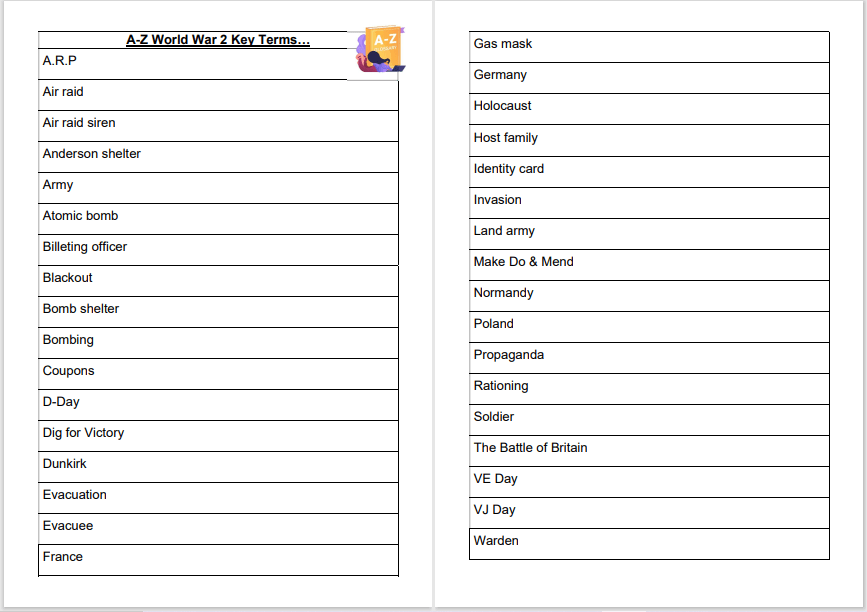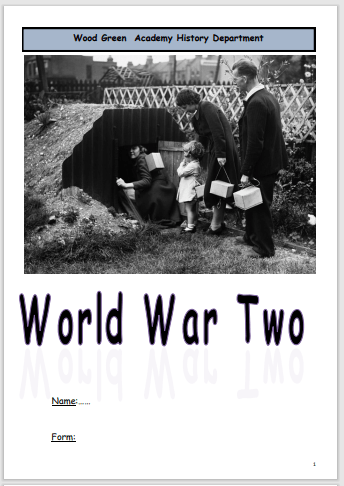
Y6: 2-13. Air Raid Shelters

POST IS STILL UNDER CONSTRUCTION

World War Two

Today we are going to ……

  • to …recap descriptive techniques
  • to …begin to plan & create descriptive language choices for our next task
  • to …record relevant information for Chapter 2

1.

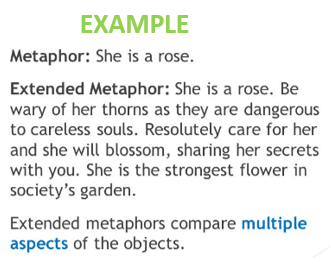
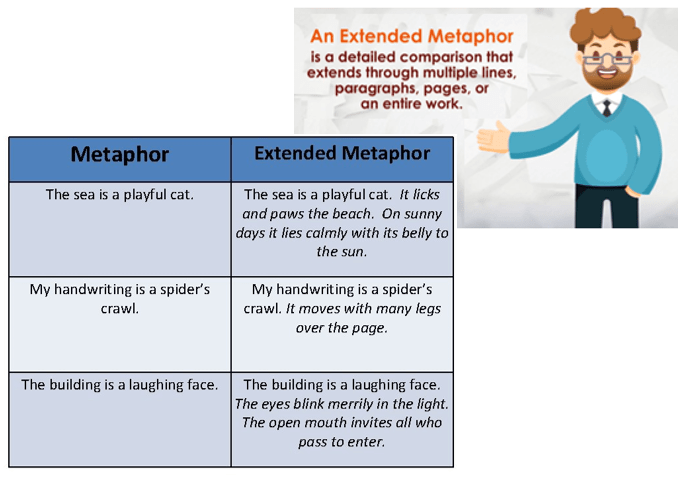
Here is a reminder:

2.

The instruction

3.

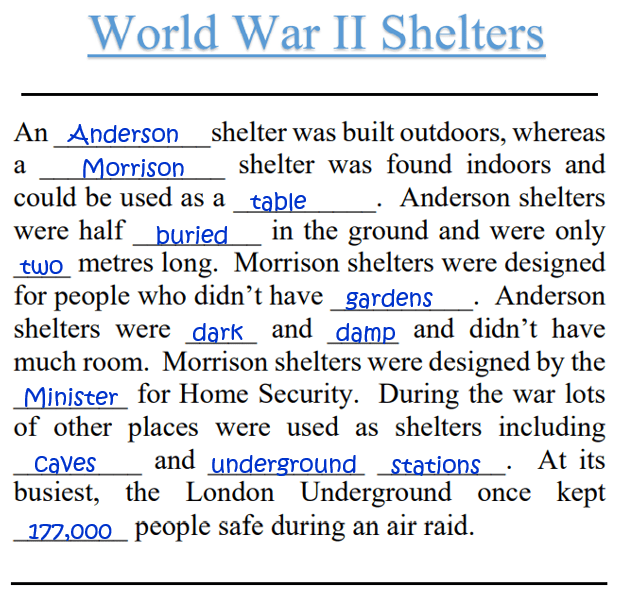
There were different types of shelters. We will first look at…

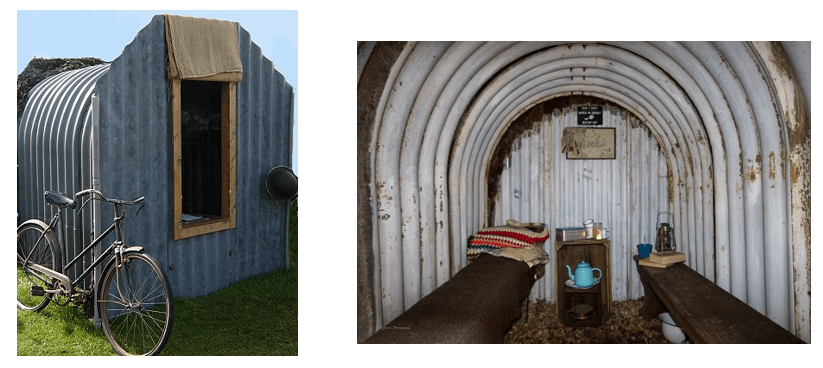
Anderson Shelters…

  • were half buried in the ground
  • were made from six corrugated iron sheets bolted together at the top
  • had steel plates at either end
  • measured 1.95m by 1.35m
  • had protected entrances’ (by a steel shield & an earthen blast wall)
  • had earth heaped on top for additional protection

Anderson Shelters were dark, damp, noisy, and unpleasant. However, the saved people’s lives!

4.

From the following videos you can learn more about Anderson shelters.

-1-

Your Anderson Shelter This Winter (1940). (2:15 minutes long)

-2-

Horrible Histories (Anderson Bomb Shelter). (1:13 minutes long)

5.

Let’s now look at…

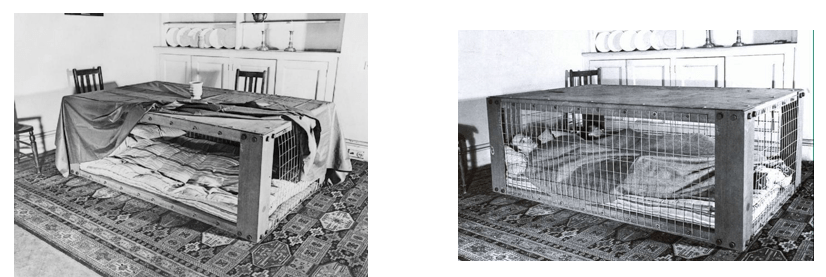
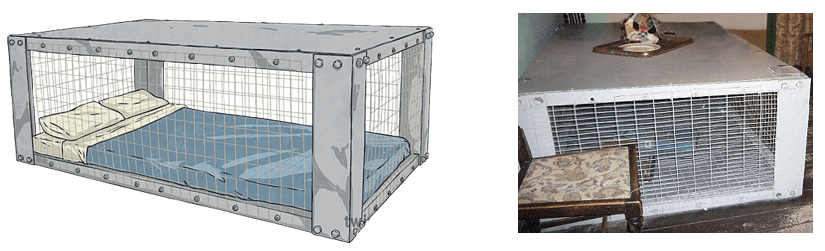
Morrison Shelters…

  • were for people without gardens
  • were made from heavy steel
  • were approximately 2m long, 1.2m wide & 0.75m high
  • could also be used as a table
  • were meant for people to sheltered underneath it during a raid

6.

From the following videos you can learn more about Morrison shelters.

-1-

Imperial War Museum Morrison shelter. (0:54 minutes long)

-2-

Morrison shelter & Anderson shelter compared… (0:41 minutes long)

7.

Finally, let’s look at…

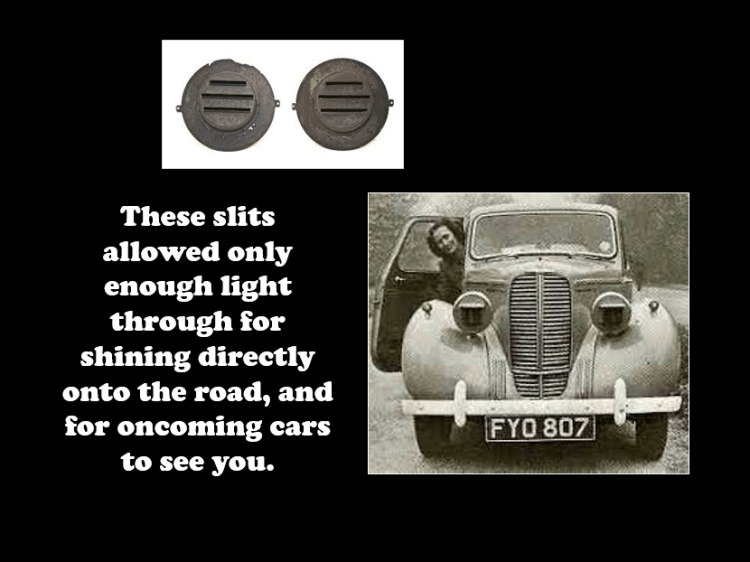
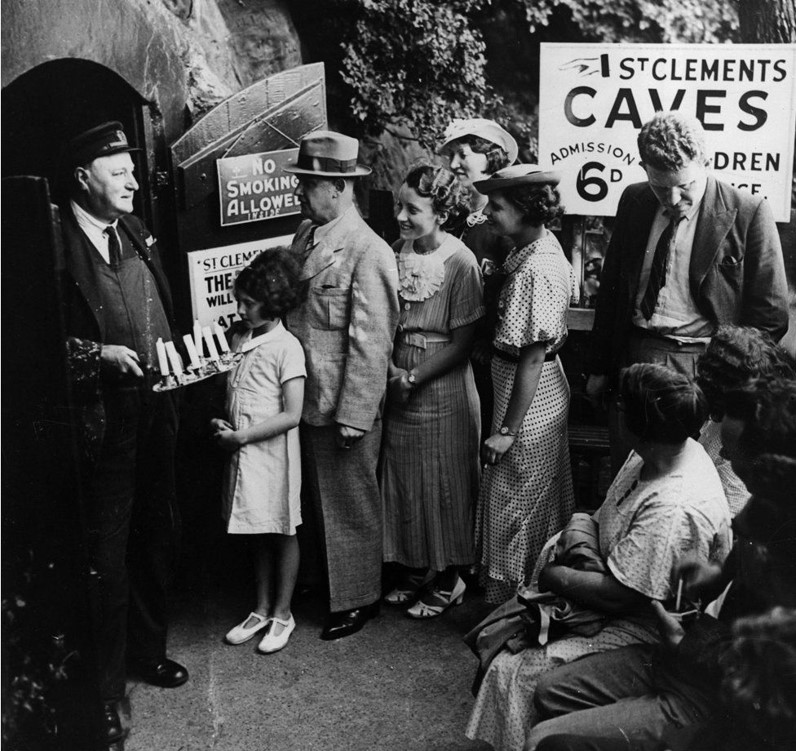
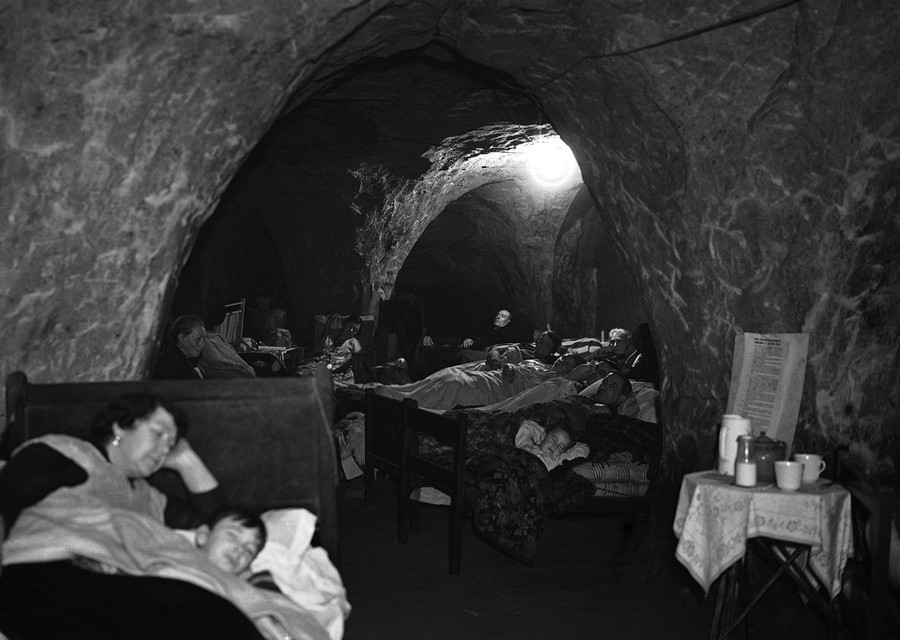
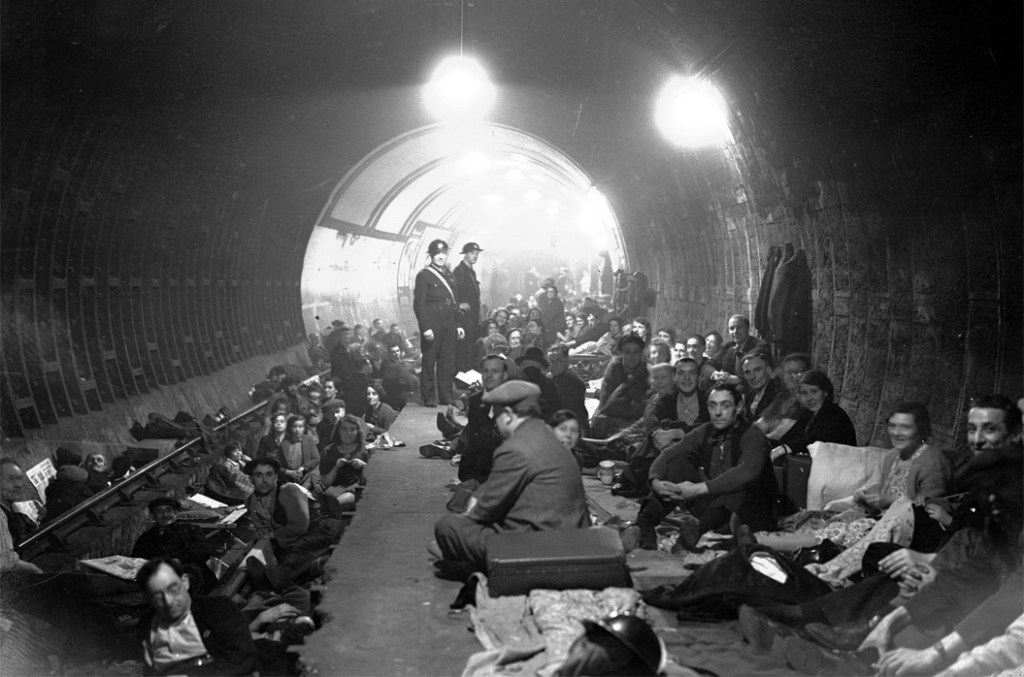
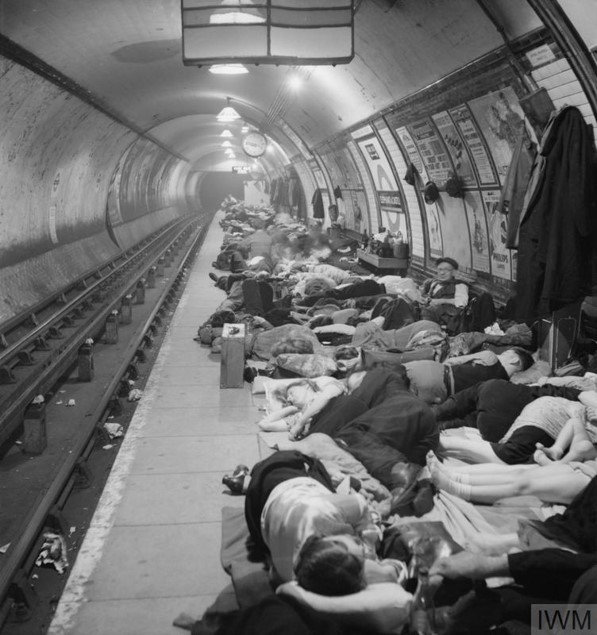
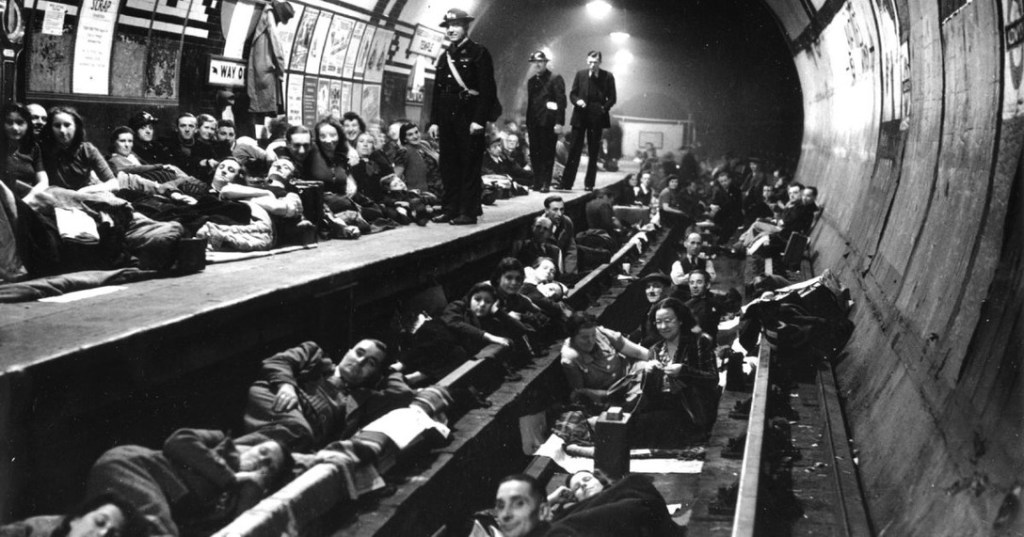
Anderson shelters & Morrison shelters did not always offer very good protection from high explosive bombs. Deeper shelters were needed, So, people also sheltered in:

8.

From the following videos you can learn more about alternative shelters during WW1.

-1-

Forgotten Secret Wartime Tube Station. (1:59 minutes long)

-2-

Bounds Green underground station… (2:14 minutes long)

-3-

Inside St Mary’s disused underground station. (3:40 minutes long)

-4-

Secret cabinet and bomb shelters… (2:04 minutes long)

9.

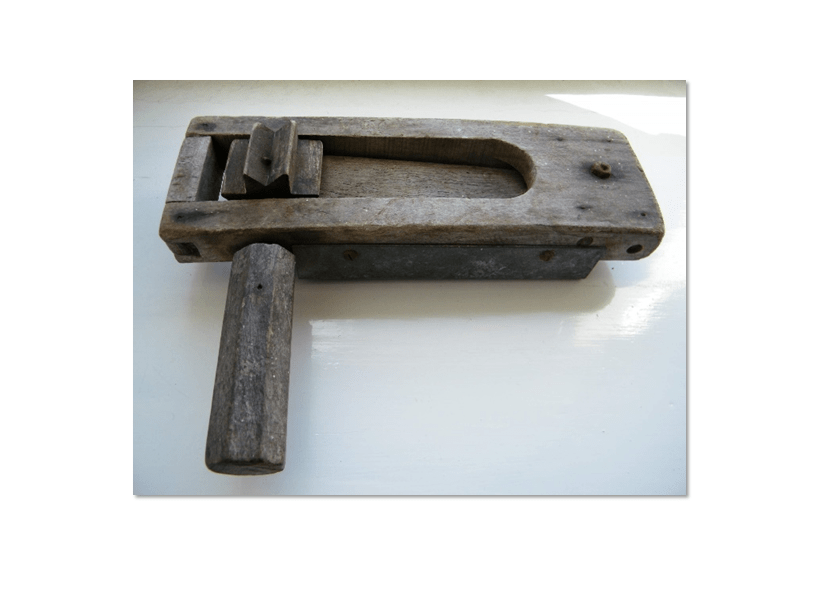
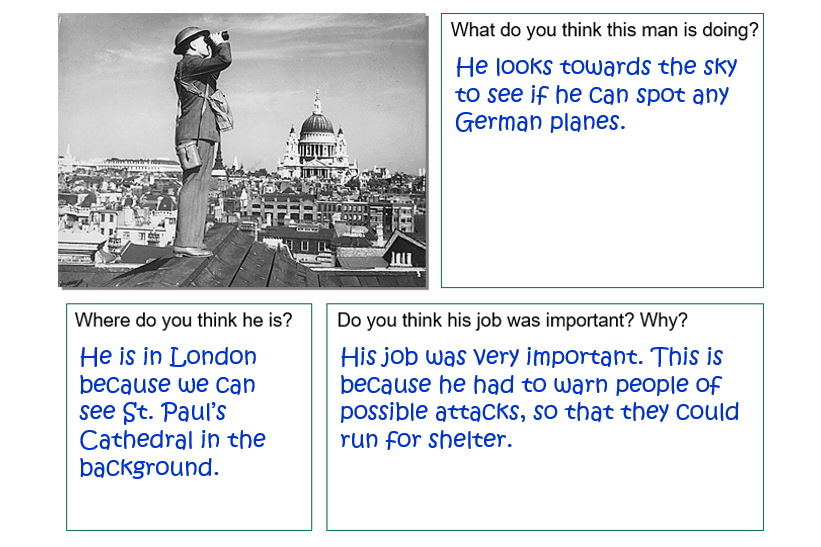
This is how people were warned to go into the bomb raid shelters…

1940’s Air Raid Siren. (0:47 minutes long)

10.

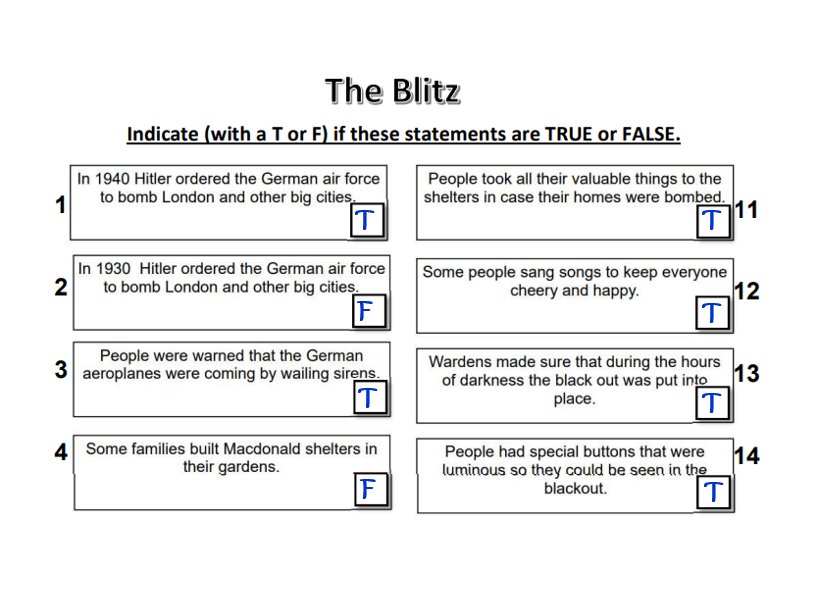
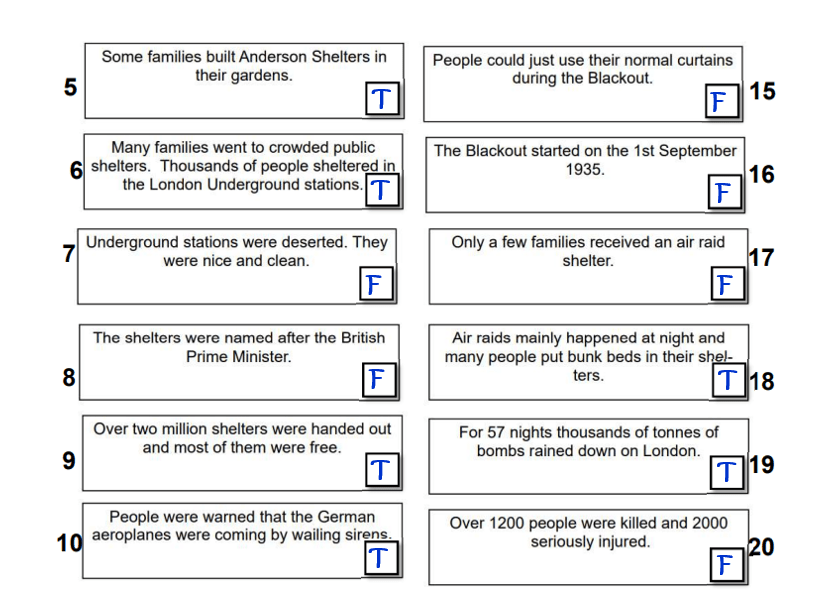
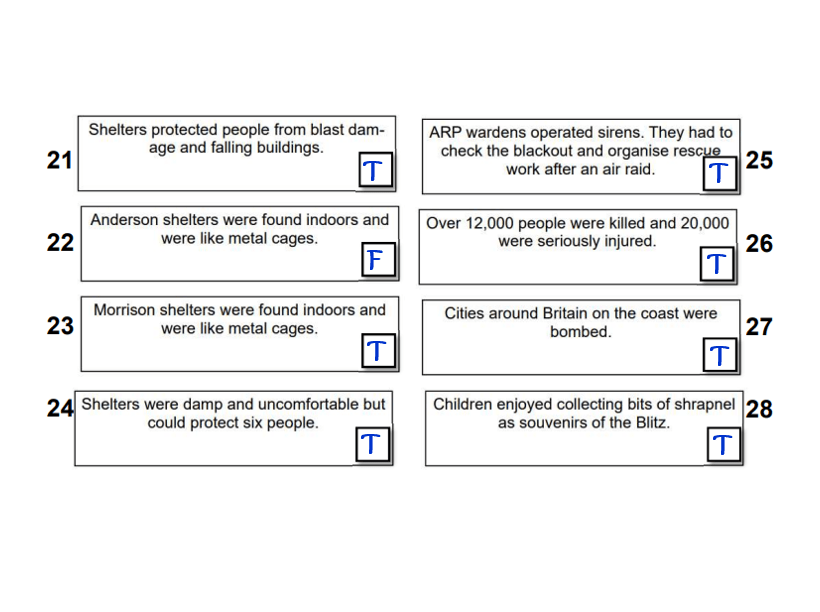
Complete the following worksheet to show what you have learnt about air raid shelters during WW2.

SOLUTION

11.

Useful Links for WW2:

—WORKBOOK—

Click on the book to access an online flip-book version of this workbook.

———-

—ADDITIONAL MATERIAL—

You may be asked to complete more tasks in your WW2 Workbook!

——-&——-

(WordPress advertisements may appear below.)

Y6: 2-12. Gas Masks

POST IS STILL UNDER CONSTRUCTION

World War Two

Today we are going to ……

  • to …recap descriptive techniques
  • to …begin to plan & create descriptive language choices for our next task
  • to …record relevant information for Chapter 2

1.

Here is a reminder…

2.

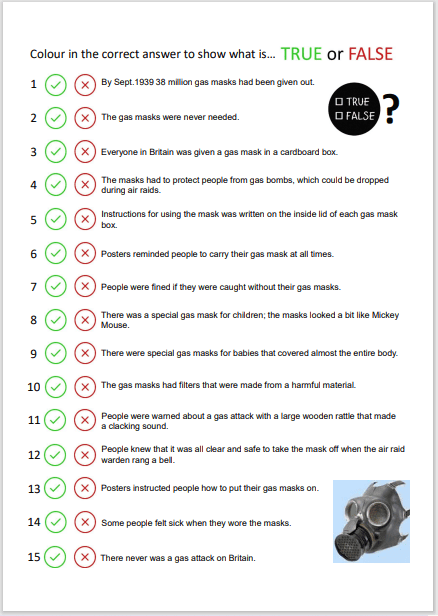
Complete the following worksheet by indicating which of the statements are true and which are false.

SOLUTION

All the statements are true!

Which statements do you find really hard to believe?

3.

4.

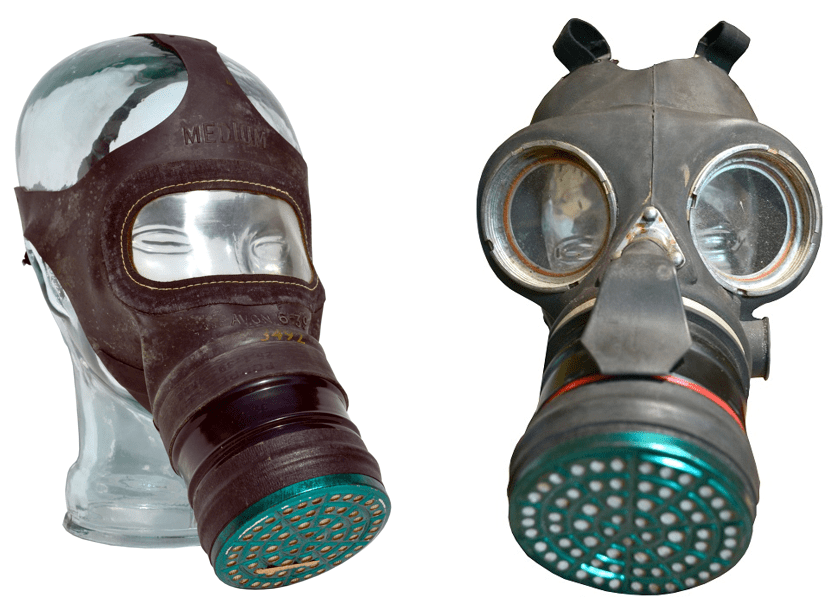
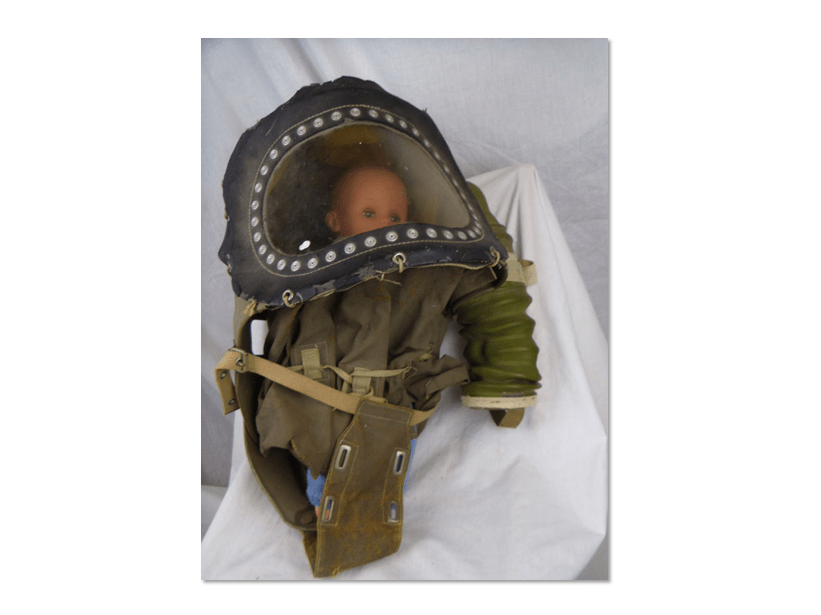
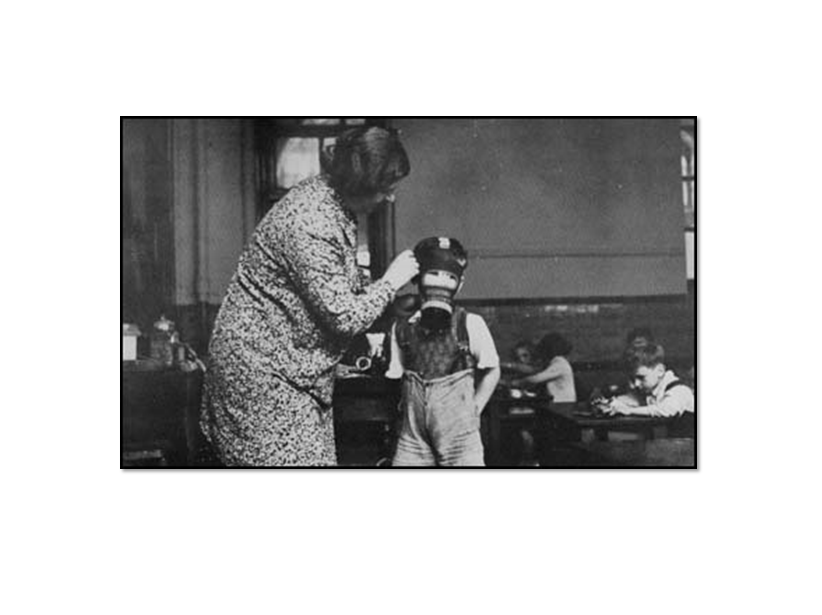
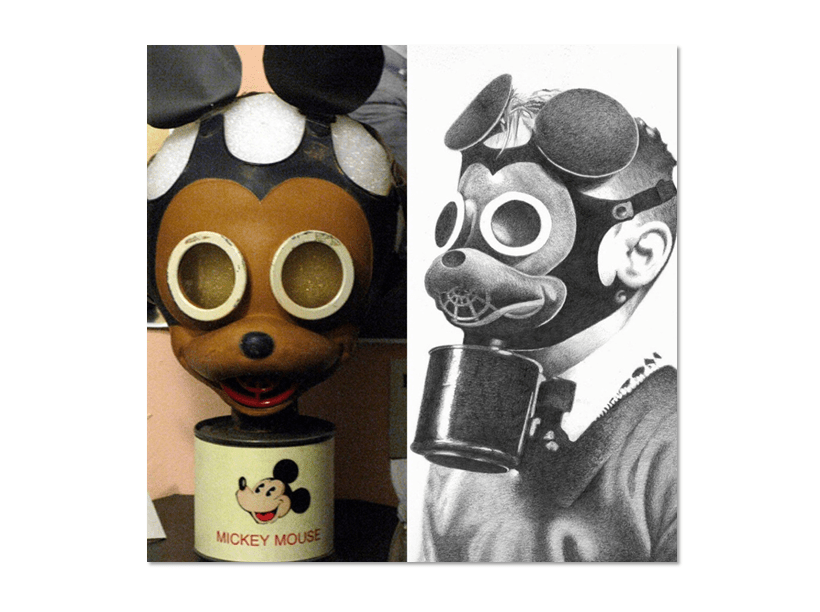
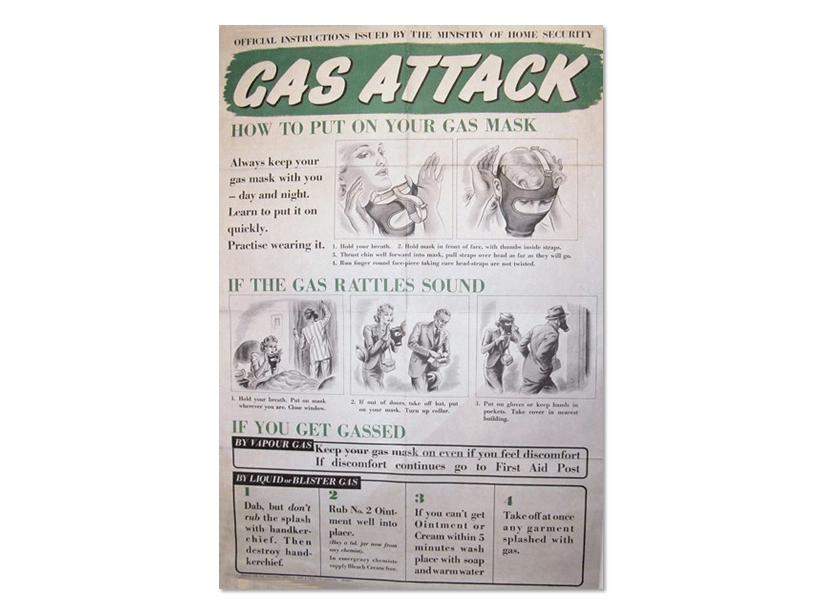
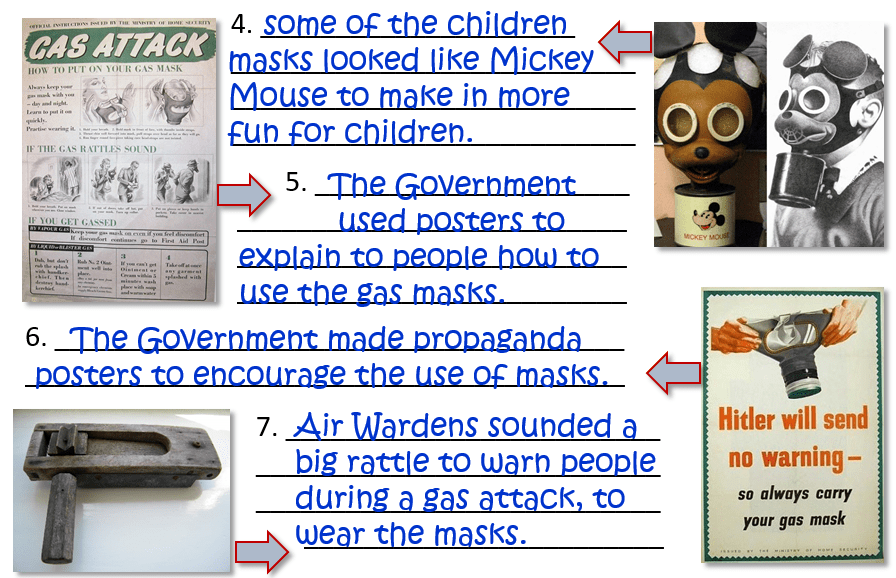
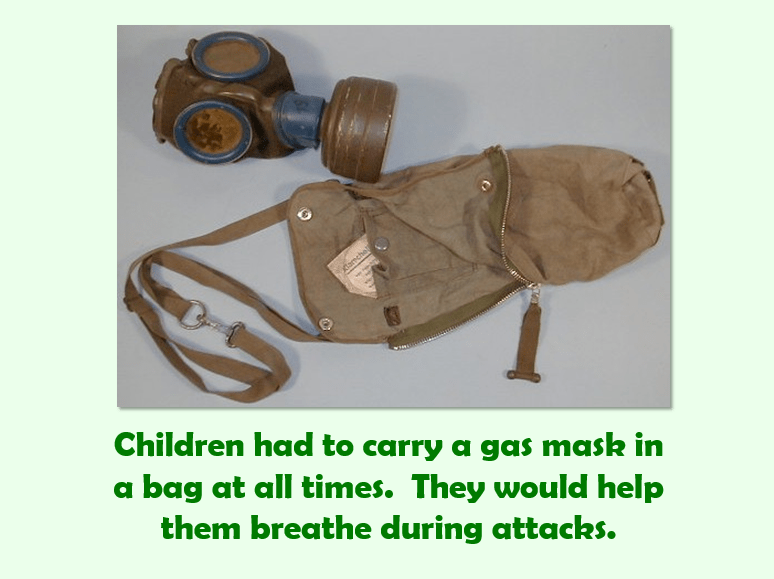
Here are examples of WW2 Civilian Gas Masks:

5.

This is what it was like to fit a gas mask on your face…

How to fit a gas mask (1939). (1:56 minutes long)

6.

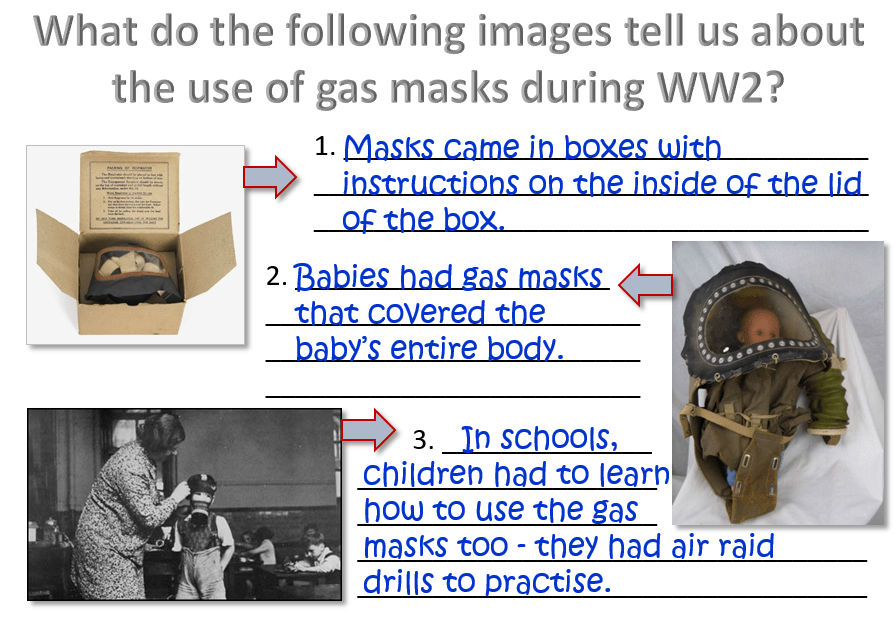
Let’s pretend that you are an expert on WW2 Gas Masks. Take us through the following slides explaining the images to the rest of the class…

7.

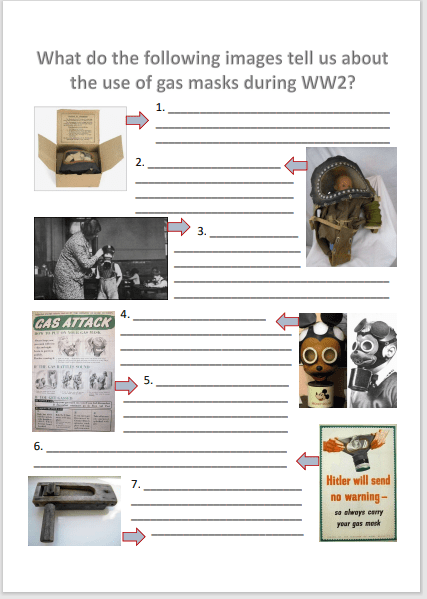
Complete the following worksheet to show your understanding of the use of masks during WW2.

SOLUTION

8.

If you feel creative, you can make your own “WW2 Gas Mask”, using one of the two methods below…

METHOD 1 – Follow the instructions given in the video.

(You need an adult to supervise this activity!)

Make a WW2 gas mask. (1:50 minutes long)

METHOD 2 – Follow the instructions given in the document below.

9.

Useful Links for WW2:

—WORKBOOK—

Click on the book to access an online flip-book version of this workbook.

———-

—ADDITIONAL MATERIAL—

You may be asked to complete more tasks in your WW2 Workbook!

——-&——-

(WordPress advertisements may appear below.)

Y6: 2-11. Evacuation – Part III

POST IS STILL UNDER CONSTRUCTION

World War Two

Today we are going to ……

  • to …recap descriptive techniques
  • to …begin to plan & create descriptive language choices for our next task
  • to …record relevant information for Chapter 2

1.

Let’s continue to examine evacuation during WWII.

The animation below will give us an idea of what it must have been like to be an evacuee during the war.

A Day in the Life Of A 10-Year-Old Evacuee. (2:30 minutes long)

2.

For parents evacuation was also a unique experience. Let’s see what we can learn about the evacuations from the perspective of a mother.

Mothers who waved goodbye: Evacuation in World War II. (6:09 minutes long)

3.

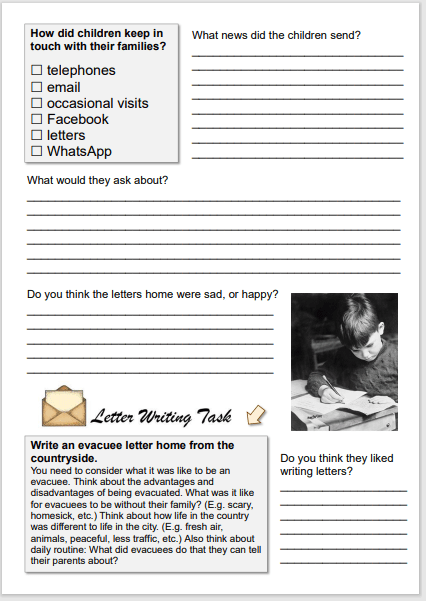
Now you are going to complete an assessment task. You may choose to either do Task 3 , or Task 4.

EITHER…

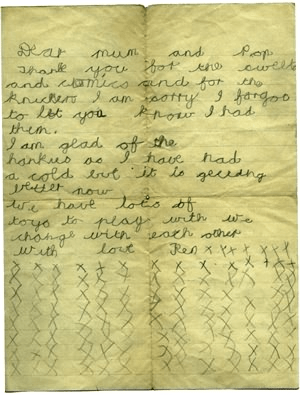
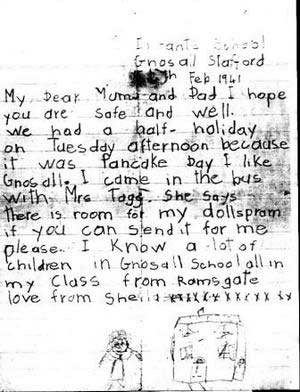
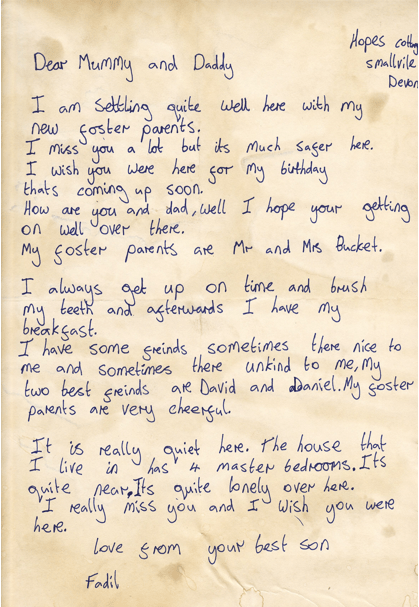
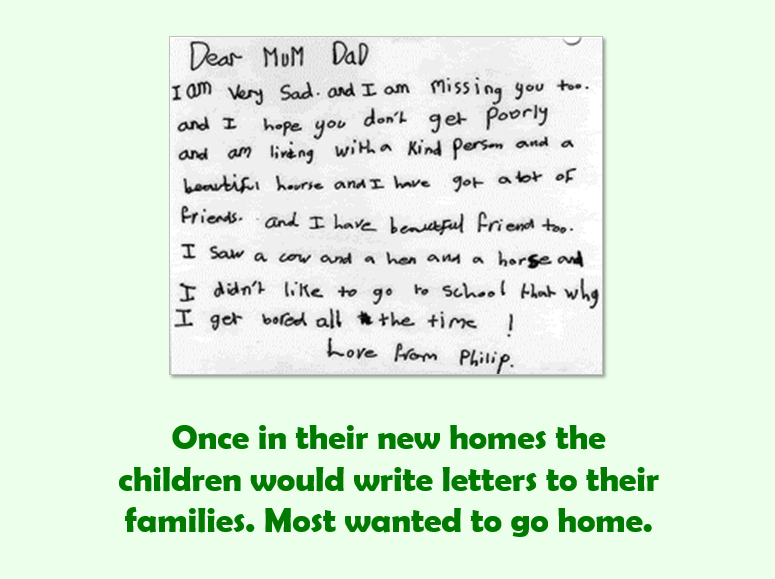
Complete the questions on the worksheet. Then write a letter home from an imaginary evacuee in the countryside.

EXAMPLES

-EXAMPLE 1-

-EXAMPLE 2-

-EXAMPLE 3-

-EXAMPLE 4-

OR…

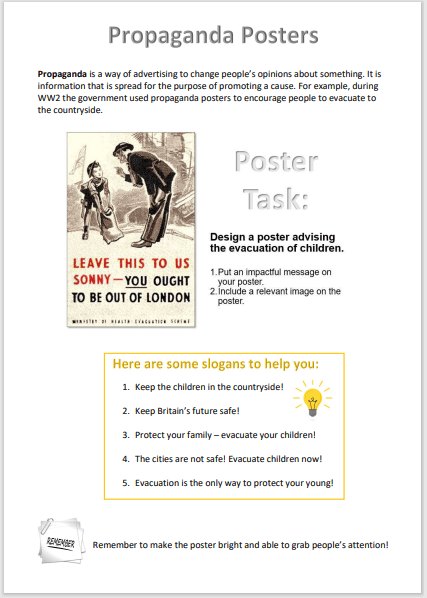
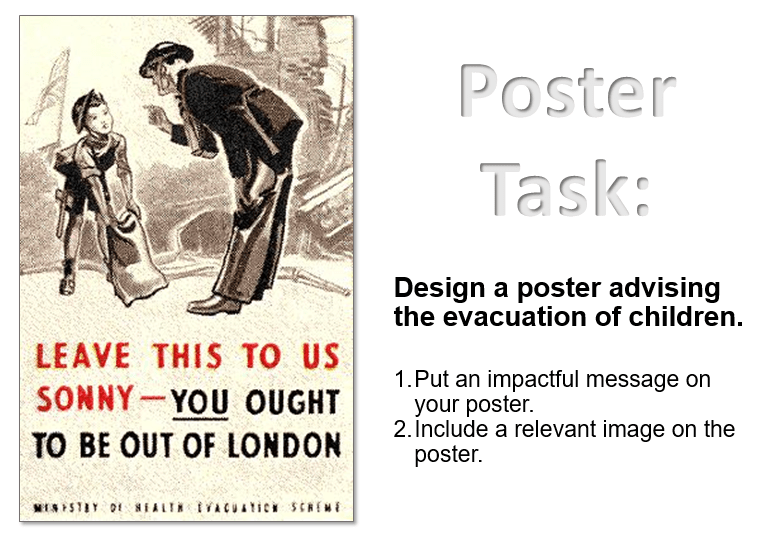
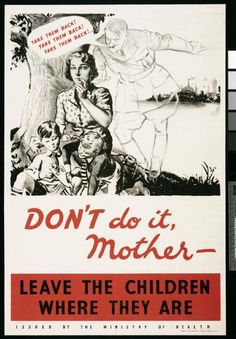
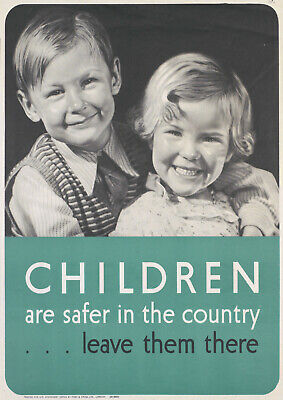
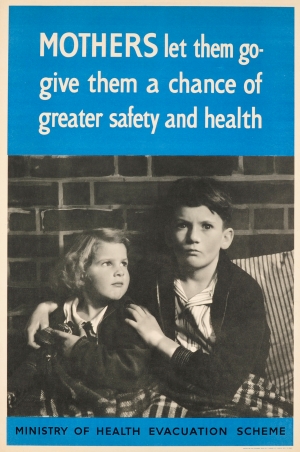
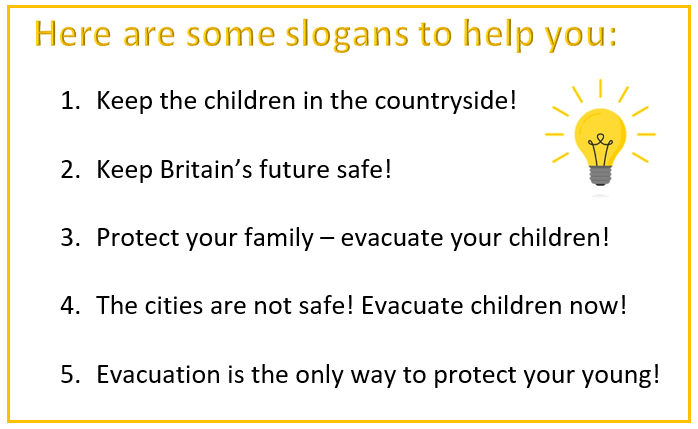
Design a poster (with a clever slogan) to encourage parents to send their children to the countryside. The poster must show your understanding of how important evacuation was. It must also be visually impressive!

Propaganda is a way of advertising to change people’s opinions about something. It is information that is spread for the purpose of promoting a cause. For example, during WW2 the government used propaganda posters to encourage people to evacuate to the countryside.

Read the information and instructions carefully. Then complete the task on A4 paper.

SOME IDEAS

4.

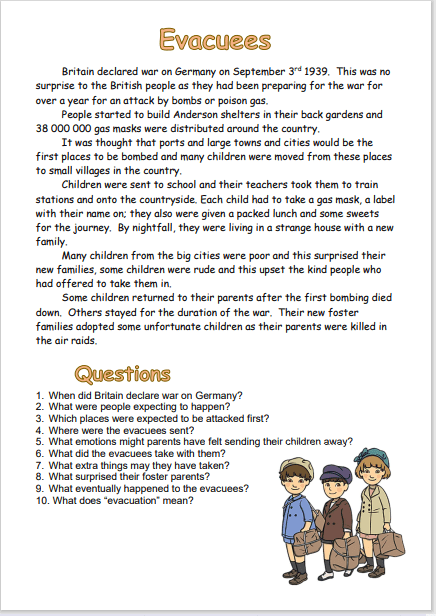
If there is still time, complete this short revision task on evacuation during WW2. You have to read the text and then answer the questions.

SOLUTION

5.

Useful Links for WW2:

—WORKBOOK—

Click on the book to access an online flip-book version of this workbook.

———-

—ADDITIONAL MATERIAL—

You may be asked to complete more tasks in your WW2 Workbook!

——-&——-

(WordPress advertisements may appear below.)

Y6: 2-10. Evacuation – Part II

POST IS STILL UNDER CONSTRUCTION

World War Two

Today we are going to ……

  • to …recap descriptive techniques
  • to …begin to plan & create descriptive language choices for our next task
  • to …record relevant information for Chapter 2

1.

A reminder…

2.

Let’s see what we can learn about the evacuations from the video below.

Evacuating The Children (1940). (1:13 minutes long)

3.

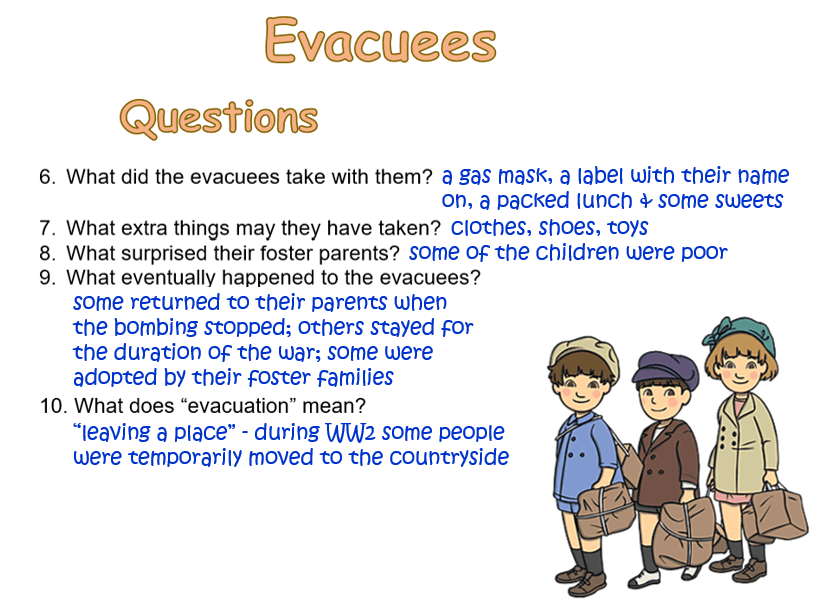
You will now do a short play involving an interview with some evacuees on their way to the countryside. First decide who will take which part in the play. Then read the script in your group. Finally, prepare to show the short dramatization to the rest of the class.

4.

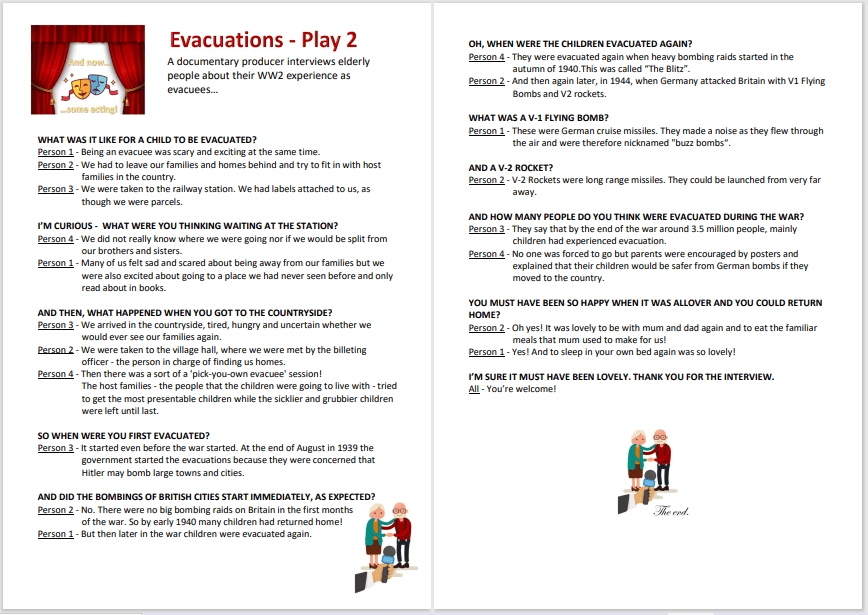
Let’s do another short play. This one is also an interview, but it involves elderly people who reflect on their experiences as evacuees. First decide who will take which part in the play. Then read the script in your group. Finally, prepare to show the short dramatization to the rest of the class.

5.

Now, let’s do a rap about Evacuation! The rap also reflects on the experiences of evacuees. First decide who will take which part in the rap. Then read the script in your group. Finally, prepare to perform the rap to the rest of the class.

Adapted from: http://www.primaryresources.co.uk/history/docs/evacuation_rap.doc

6.

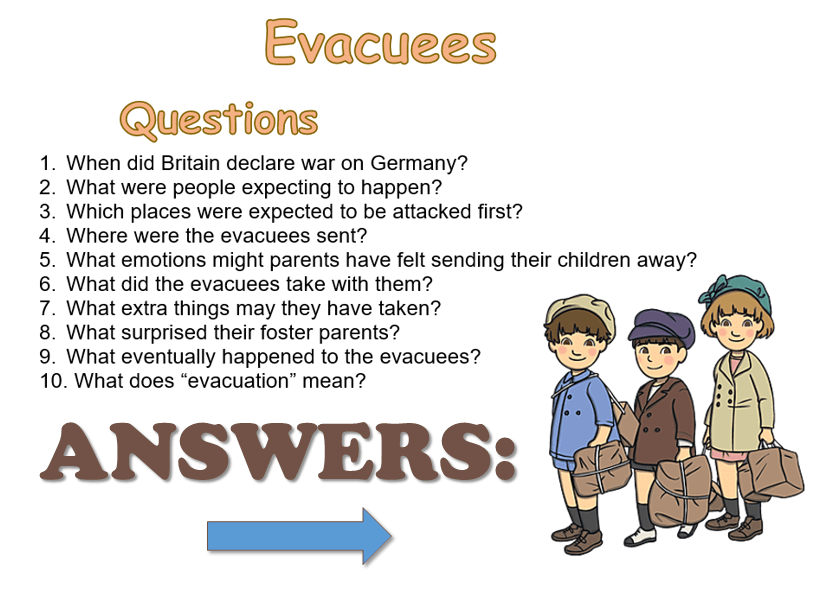
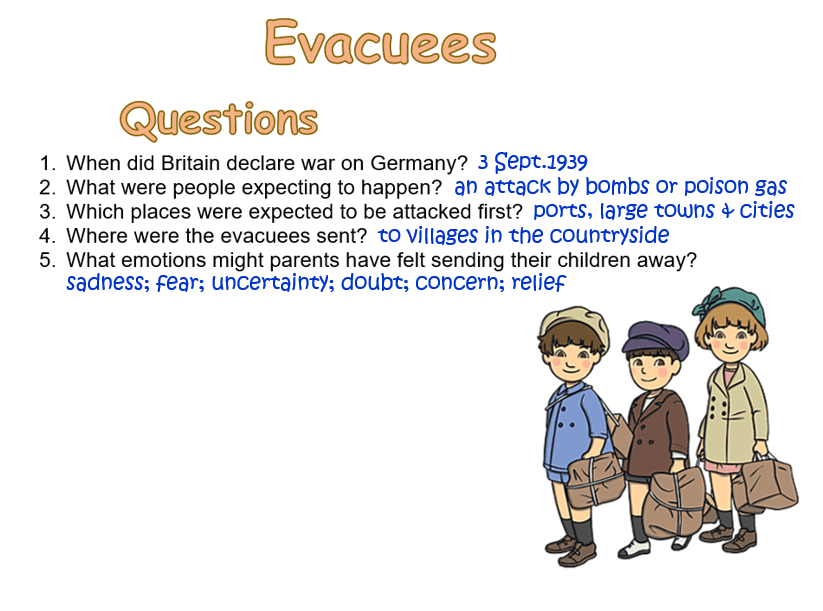
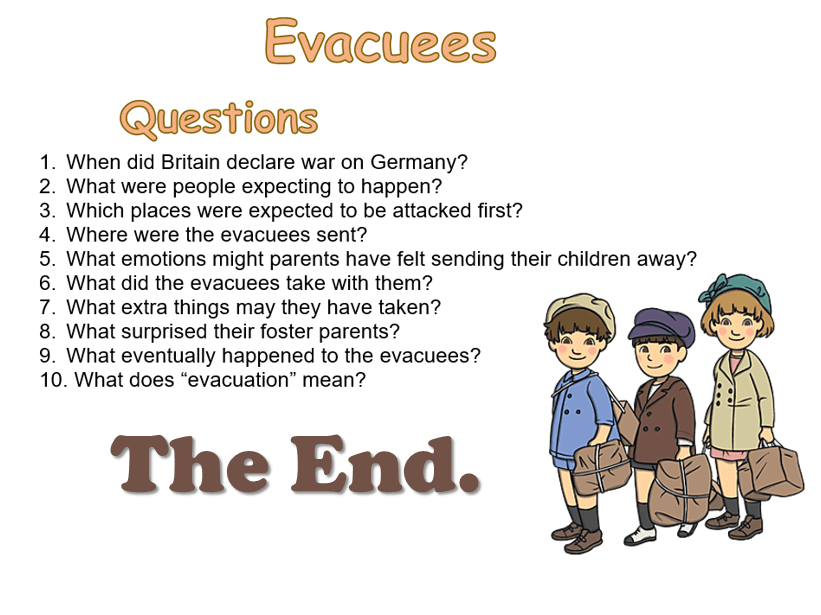
If not completed in the previous lesson, complete the following worksheet now to show your understanding of evacuation.

SOLUTION

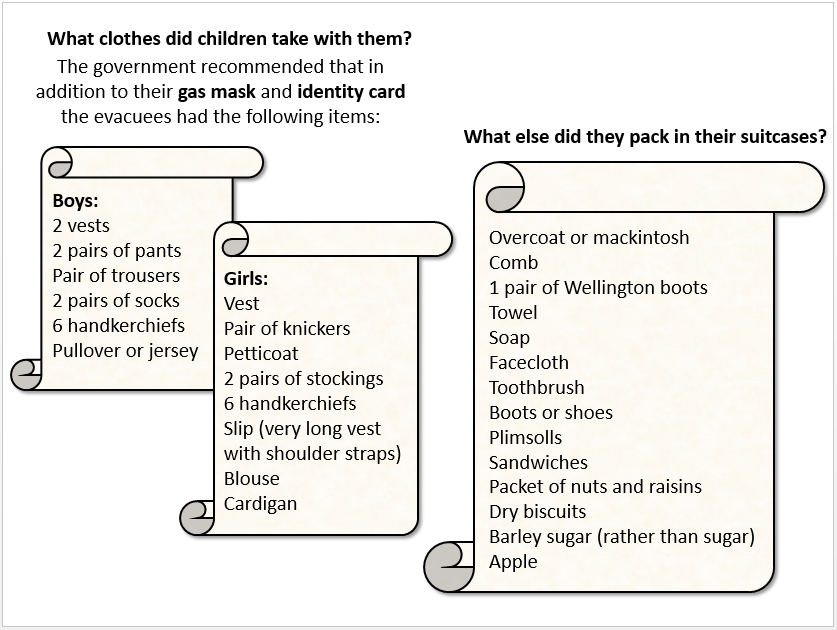
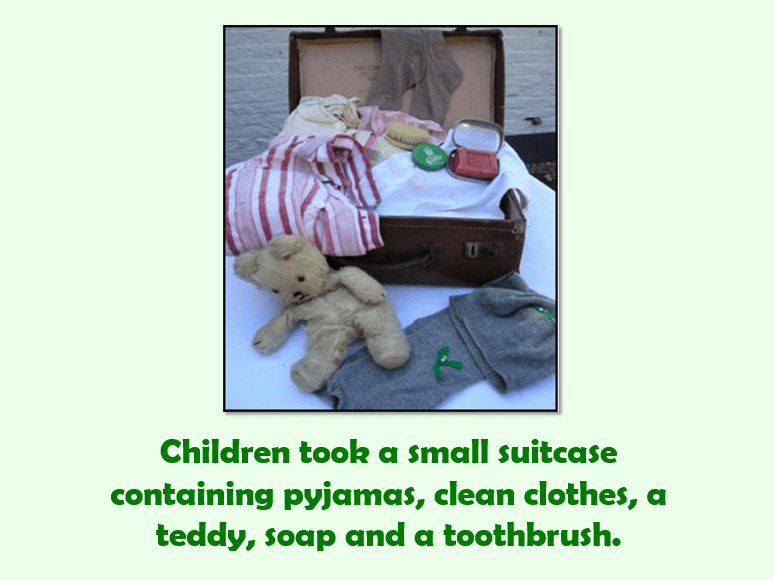
Here are some ideas for packing the bags…

7.

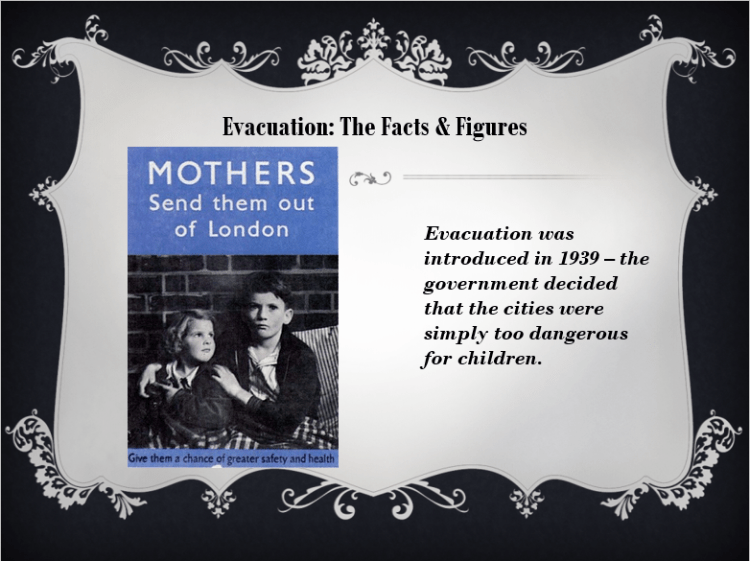
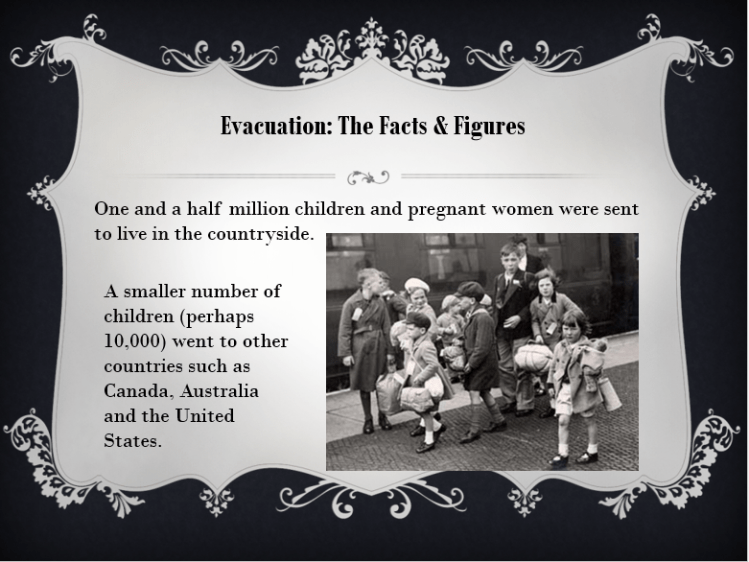
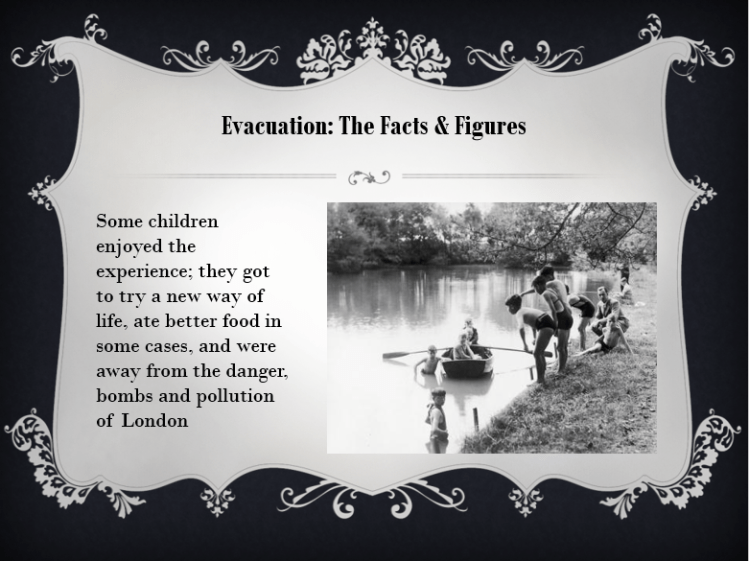
Go through the slides to revise what you have learnt about evacuation during WW2.

8.

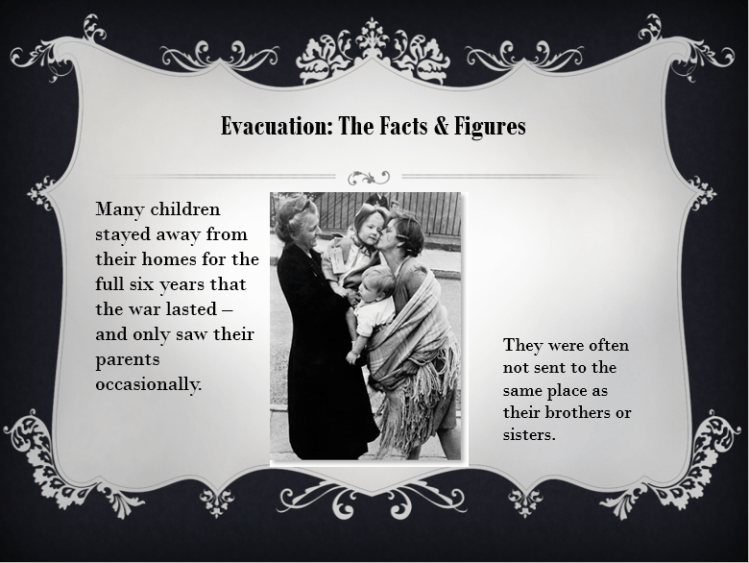
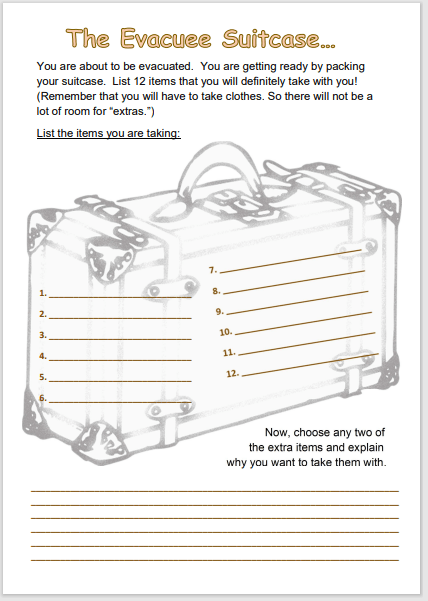
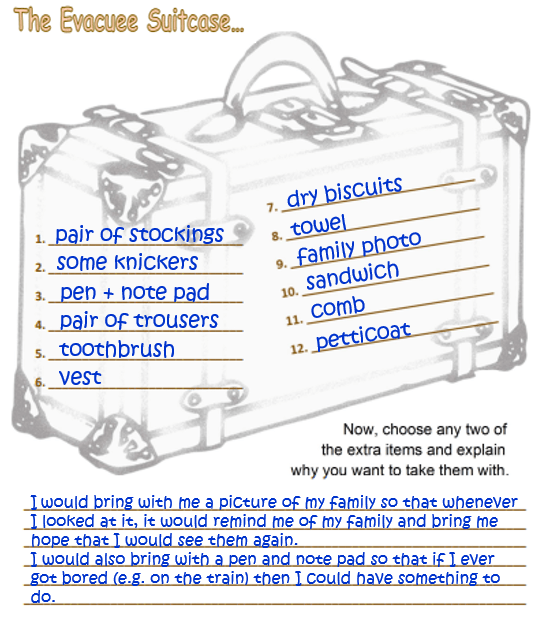
Complete the following additional worksheet about the suitcase of an evacuee, by putting yourself in their shoes…

SOLUTION

9.

Useful Links for WW2:

—WORKBOOK—

Click on the book to access an online flip-book version of this workbook.

———-

—ADDITIONAL MATERIAL—

You may be asked to complete more tasks in your WW2 Workbook!

——-&——-

(WordPress advertisements may appear below.)

Y6: 2-9. Evacuation – Part I

POST IS STILL UNDER CONSTRUCTION

World War Two

Today we are going to ……

  • to …recap descriptive techniques
  • to …begin to plan & create descriptive language choices for our next task
  • to …record relevant information for Chapter 2

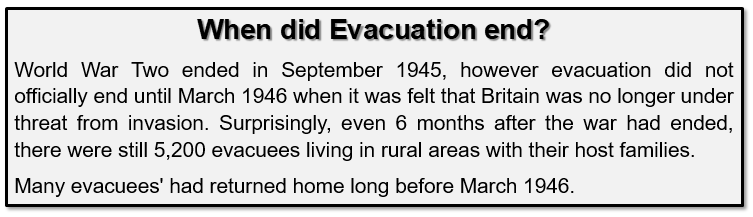
1.

2.

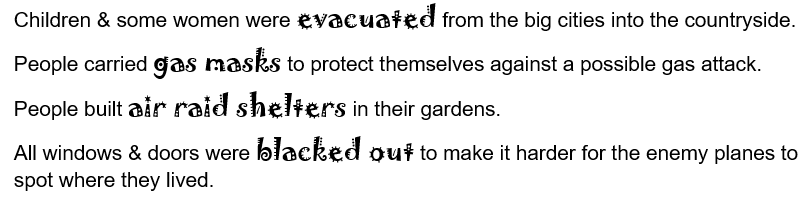
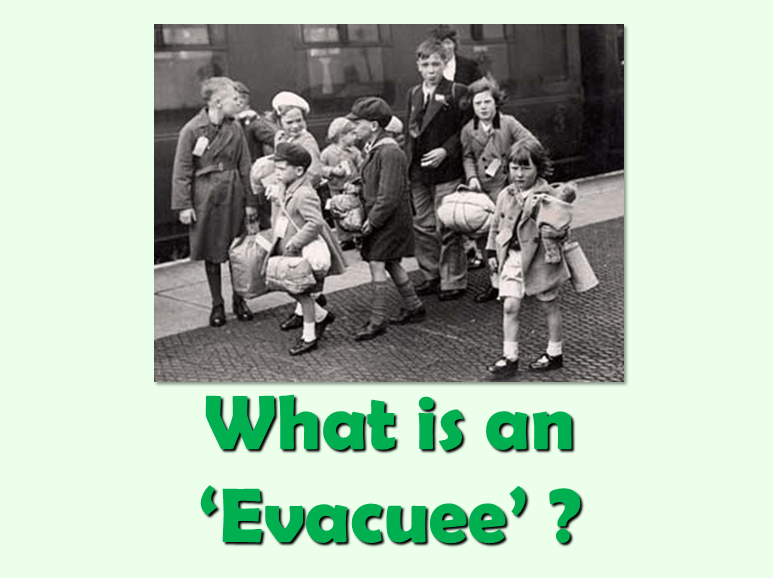
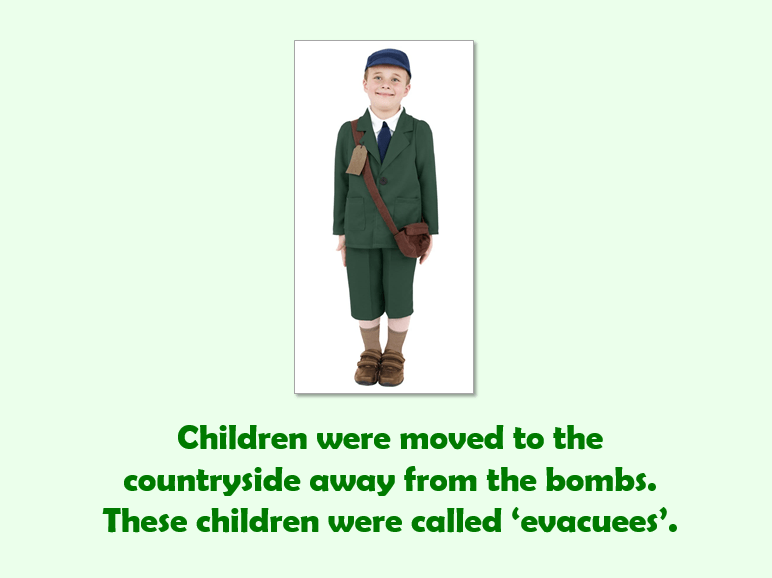
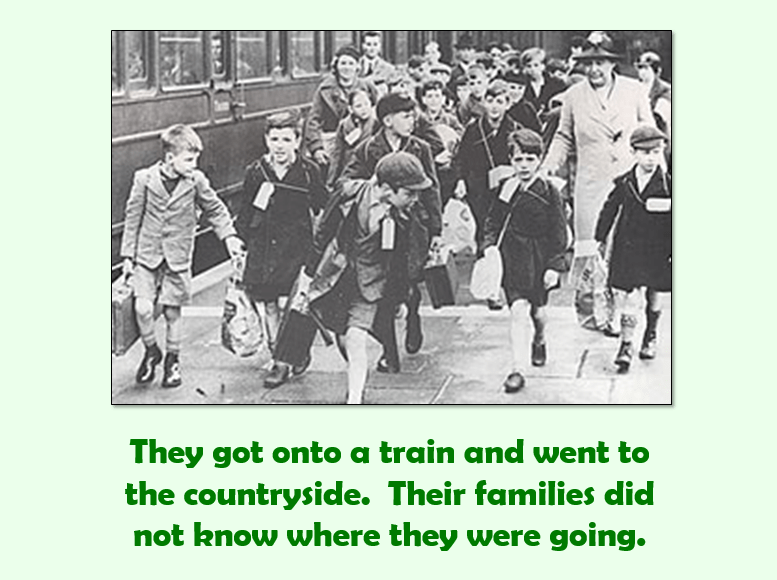
Here are some of the ways in which people protected themselves during WWII:

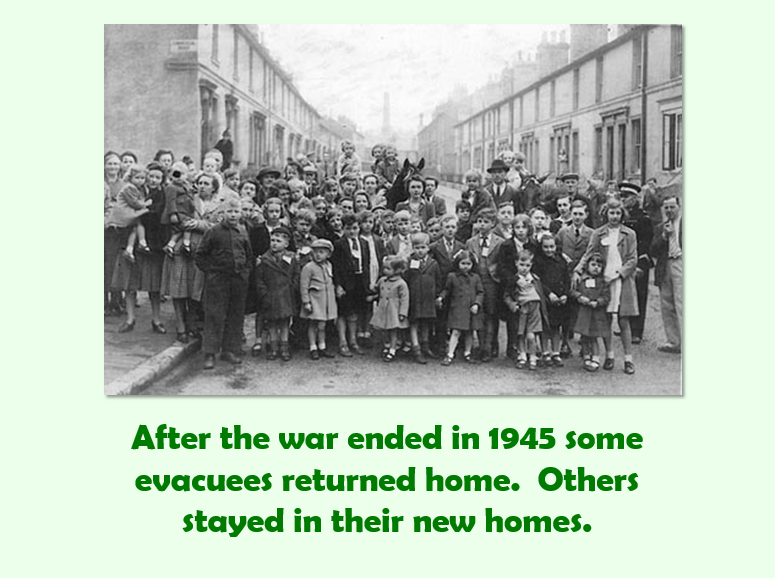
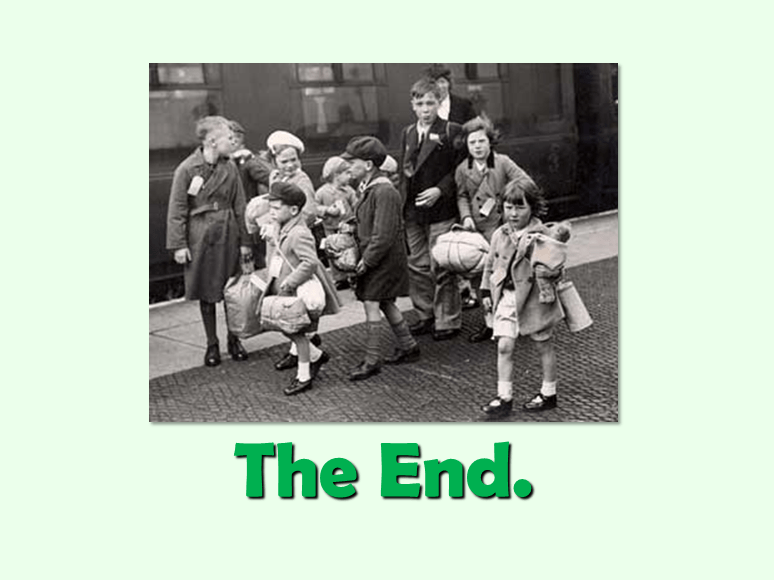
We will look at all of these measures in more detail over the next few lessons. Let’s start by looking at the evacuations.

3.

4.

Personal testimonies can give us great insight into the experiences of the evacuees. In the videos below you can meet some of the evacuees!

-1-

Meet the Evacuees. (4:47 minutes long)

-2-

WWII evacuee returns to wartime home. (1:49 minutes long)

-3-

A Family in Wartime: Evacuation. (2:57 minutes long)

5.

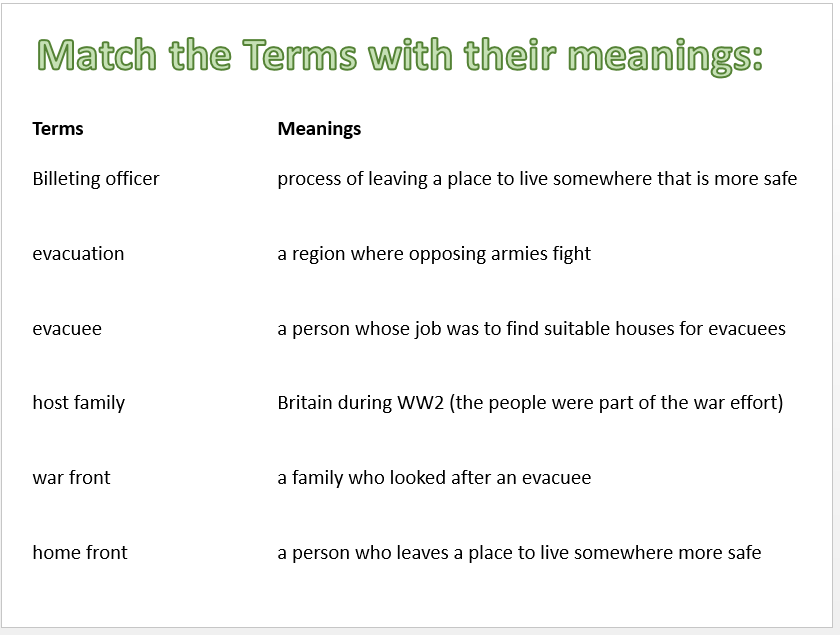
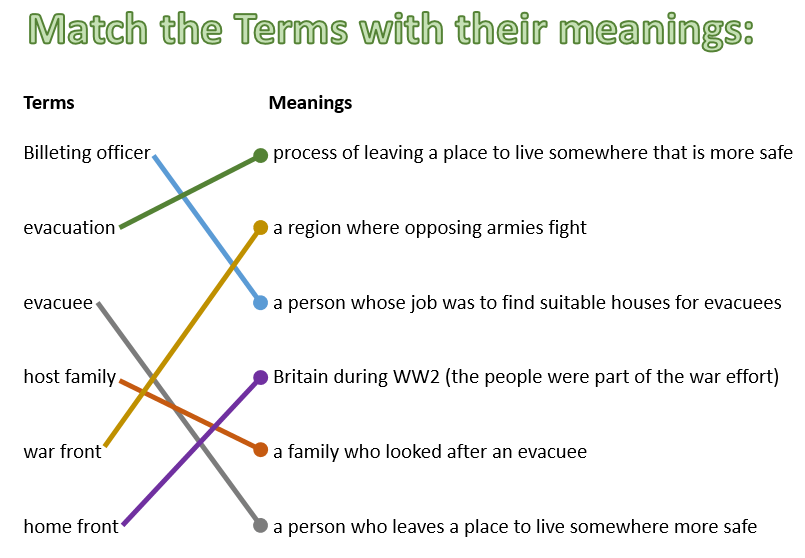
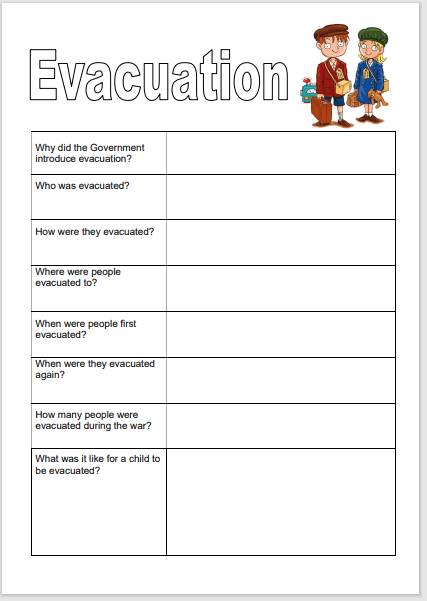
Match the words / terminology with their meanings to show your understanding of evacuation.

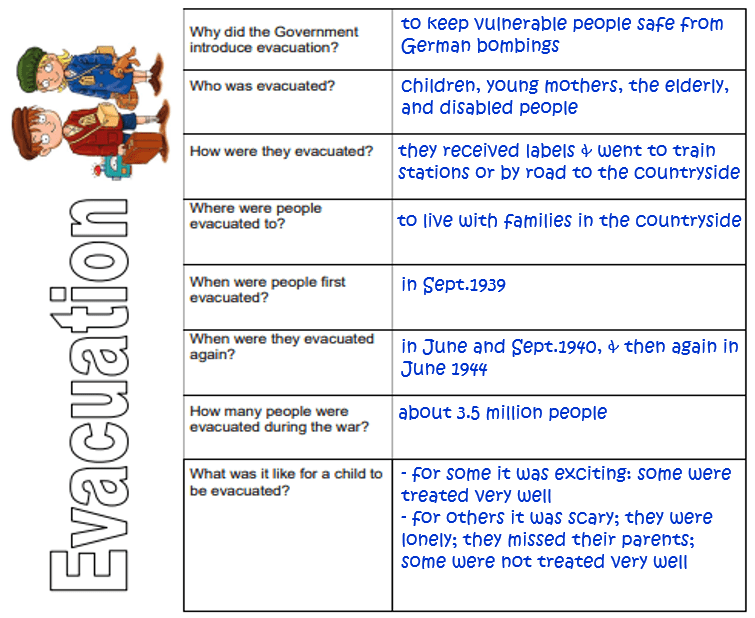
SOLUTION

6.

If there is still time in this lesson, complete the following worksheet to show your understanding of evacuation.

SOLUTION

Here are some ideas for packing the bags…

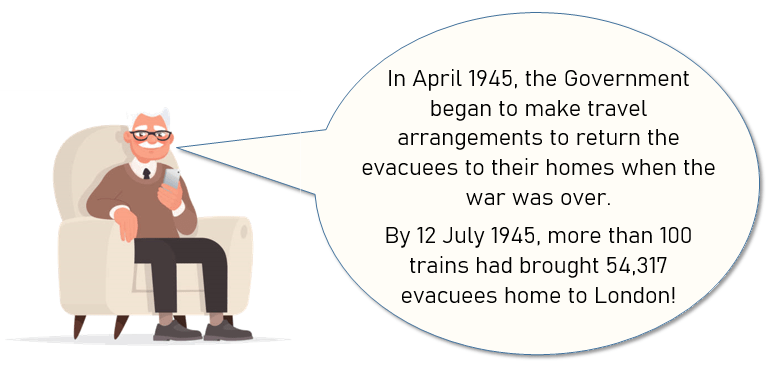
7.

Go through the slides to revise what you have learnt about evacuation during WW2.

8.

Complete the following worksheet to show what you know about evacuation during WW2.

SOLUTION

9.

Useful Links for WW2:

—WORKBOOK—

Click on the book to access an online flip-book version of this workbook.

———-

—ADDITIONAL MATERIAL—

You may be asked to complete more tasks in your WW2 Workbook!

——-&——-

(WordPress advertisements may appear below.)

Y6: 2-8. The Homefront

World War Two

Today we are going to look at the “home-front” in more detail…

  • to learn what the home-front was
  • to examine what sort of jobs people did back in Britain to help in the war effort

1.

One can easily think that the ‘Home Front‘ must have been a safe place, but it was not because bombing raids destroyed homes and killed many people.

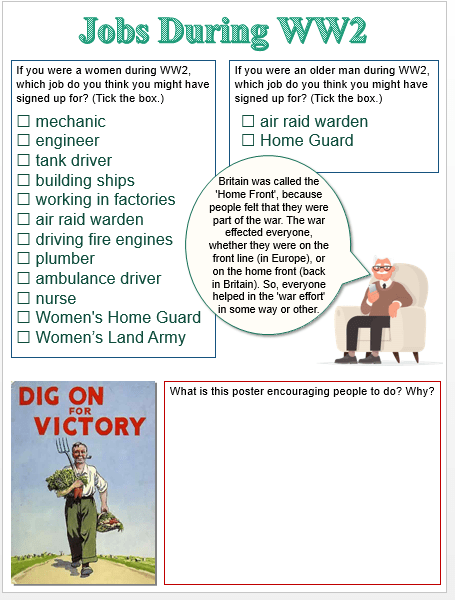
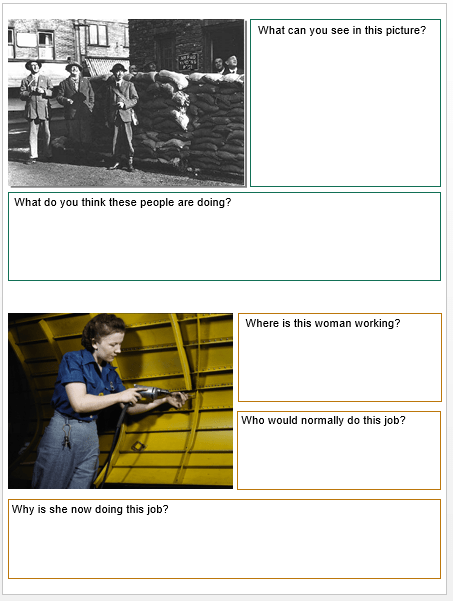
Everyone tried to help in the ‘war effort’. For example, because men were now fighting in the war, women helped to do a variety of jobs that would usually be done by men.

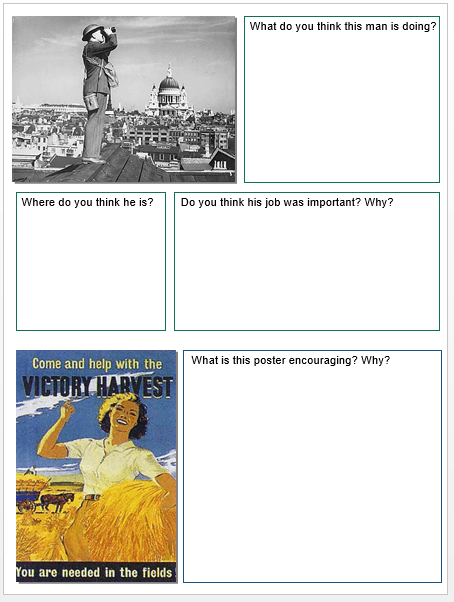
Men who were not fighting in battles on the main land did a variety of jobs on the home front. For example, some were ARP Wardens and other served in the Home Guard.

2.

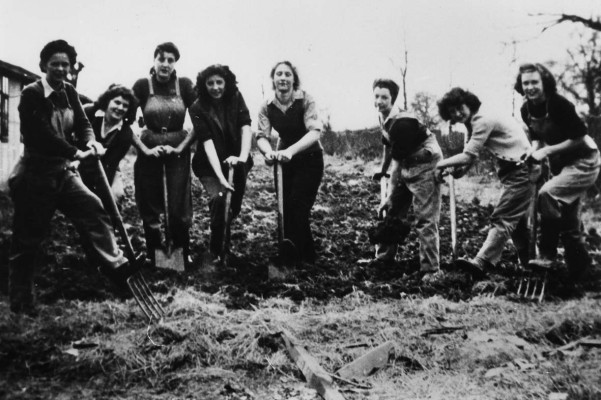
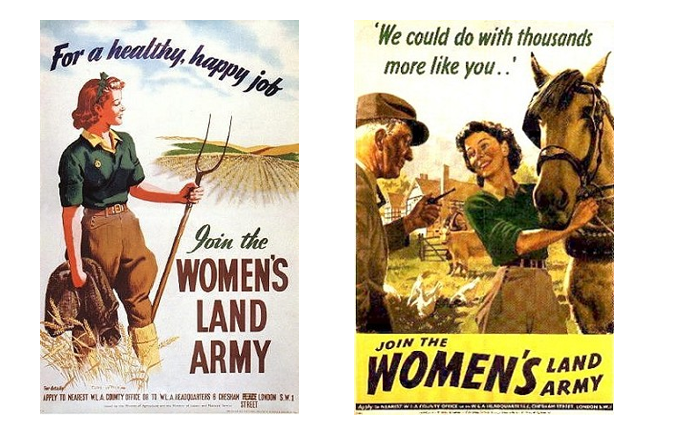
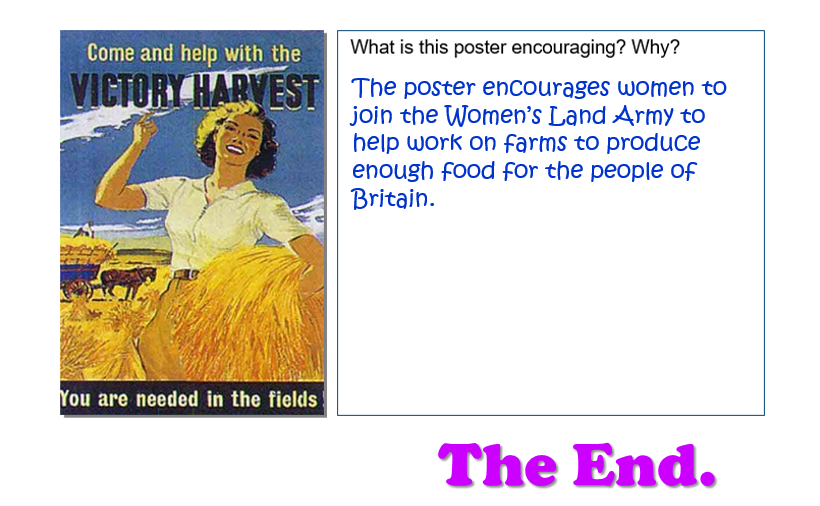
Let’s start by looking how women helped in the ‘war effort’ during WW2. Women help on the home front as “Land Girls”. This meant that they worked as farm workers.

With the men fighting on the battle fronts, more help was needed on farms in order to increase the amount of food grown within Britain. So, the government started what was called the Women’s Land Army.

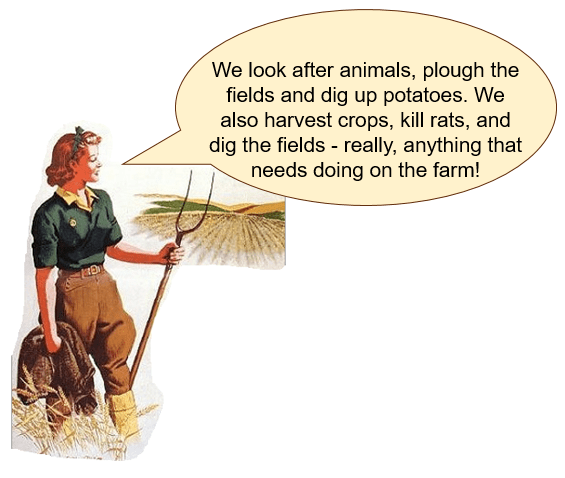
Here are some of the jobs the Land Army had to do:

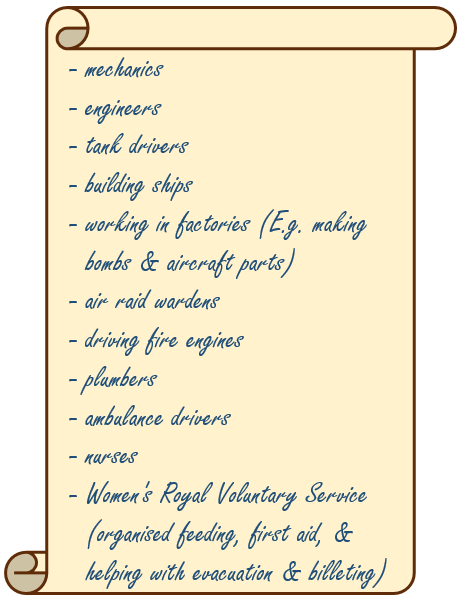
Women also had to do other important jobs. Here is a long list of some of the jobs women did during the war:

Before the war, job opportunities for women were limited, as most women were ‘housewives’. Those who were employed elsewhere were mainly nurses, domestic servants, or shop assistants.

However, as men joined the army to fight, women were called upon to fill their jobs.

3.

Let’s see what else we can learn about the role women played during the war.

How 80,000 women prevented… starving during WWII. (4:15 minutes long)

4.

And here is a fun song telling us more about women and WWII…

The WWII Girls Song. (2:16 minutes long)

5.

Let’s now also look at some of the jobs men did on the home front. For example, some men were ARP Wardens, and others were part of the Home Guard.

6.

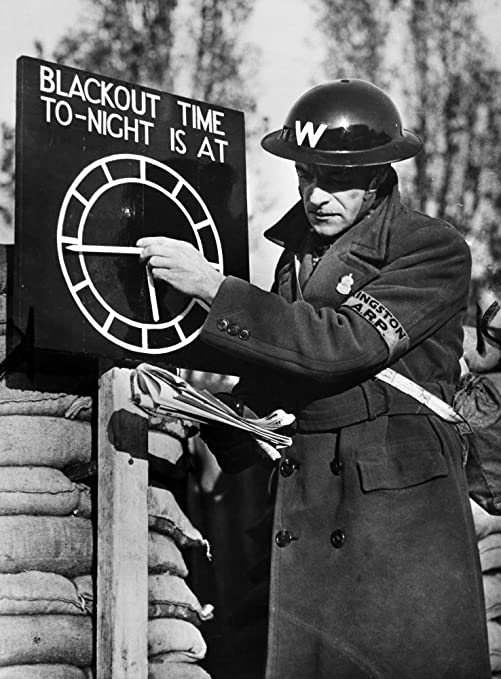
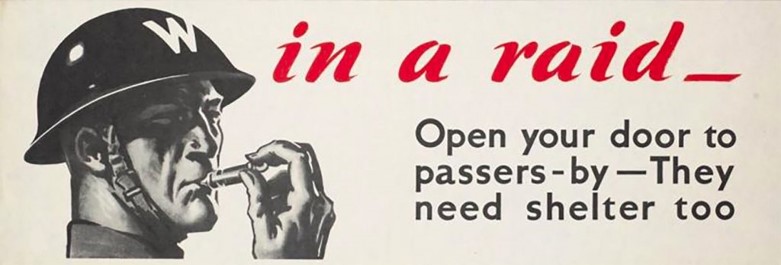
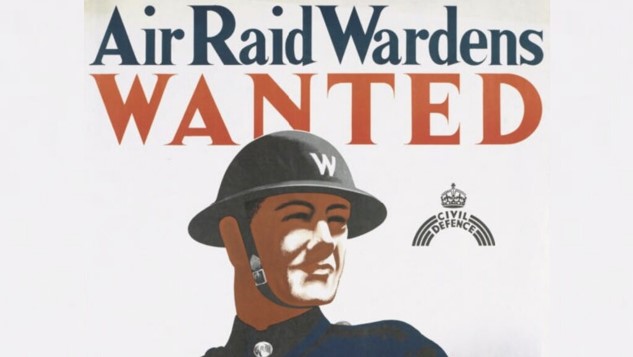
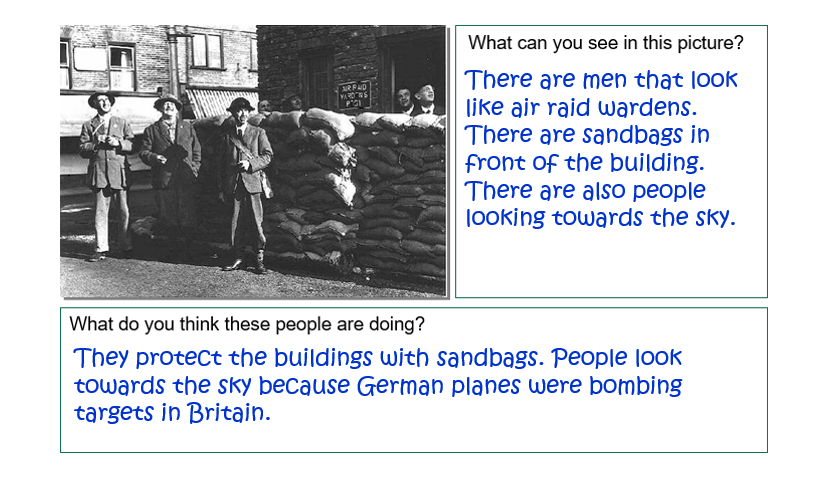
The ARP Wardens supervised the Blackout – they had to protect civilians from the danger of air-raids. (ARP stands for Air Raid Precaution.)

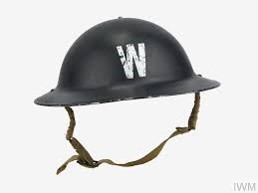
One could recognise an ARP Warden by the helmet: they wore helmets with a big W on the front.

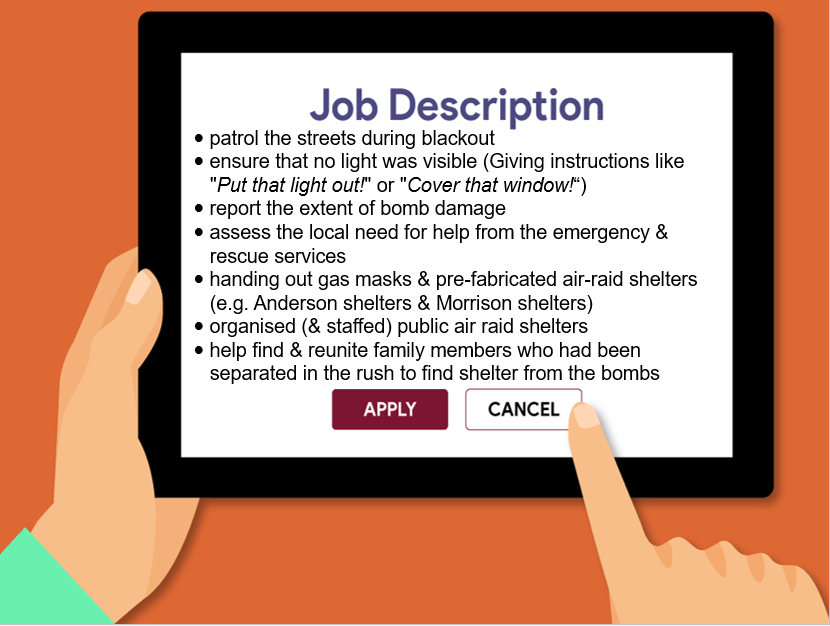
So, what exactly did ARP Wardens have to do?

Around 200,000 people volunteered to become ARP wardens. Some women were also ARP wardens. Eventually there were 1.4 million ARP wardens in Britain. Most ARP wardens were part time volunteers who had full time day jobs.

7.

Watch the following video clips to learn more about the ARP Wardens.

-1-

Liverpool ARP Warden. (2:16 minutes long)

-2-

Air Raid Warden. (3:50 minutes long)

8.

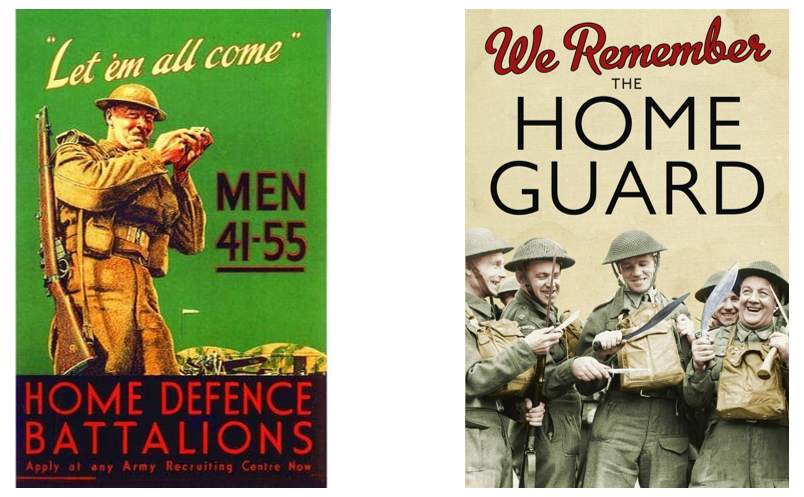
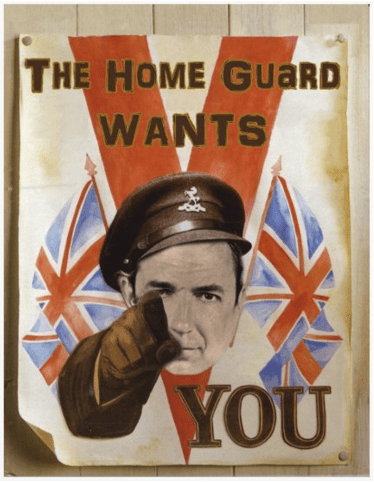
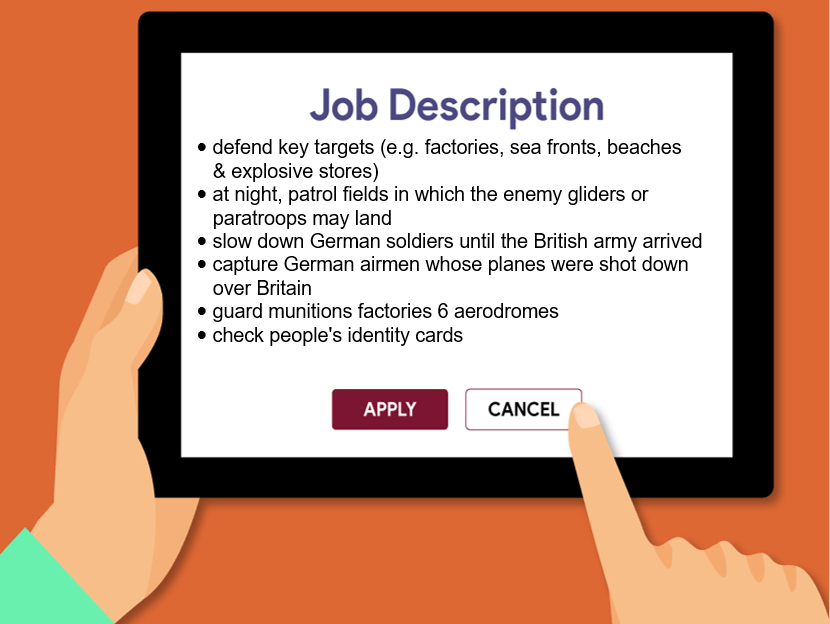
The Home Guard were volunteers who defended the five thousand miles of Britain coastline in case of invasion by Germany. Some of these men were in their sixties!

The men were given military style training. At first, they had no uniforms and little equipment. The public were invited to give their shotguns and pistols to the Home Guard and within a few months over 20,000 weapons were handed in. Many of the men made their own weapons too.

Who joined?

Many of the men who joined the Home Guard were those who could not join the regular army because their day time jobs were necessary to keep the country running. They included farm workers, bakers, teachers, grocers, bank staff and railway workers.

Other men who joined were either to young or too old to join the regular army.

In 1942 the Women’s Home Guard Auxiliaries were formed, and women were able to work with the Home Guard.

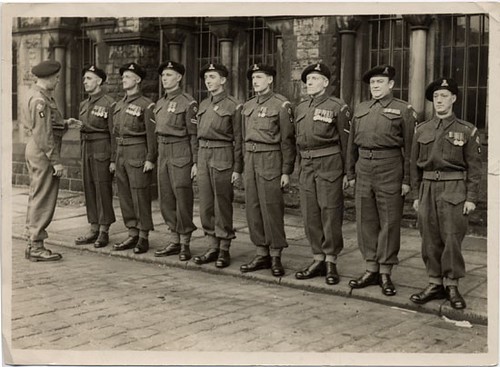
So, what exactly did the Home Guard have to do?

9.

Here are five top facts about the Home Guard!

The Home Guard – Top 5 Facts. (3:23 minutes long)

10.

Complete the following worksheet to test your understanding of jobs that people did on the Home Front during WWII.

SOLUTION

11.

Useful Links for WW2:

—WORKBOOK—

Click on the book to access an online flip-book version of this workbook.

———-

—ADDITIONAL MATERIAL—

You may be asked to complete more tasks in your WW2 Workbook!

——-&——-

(WordPress advertisements may appear below.)

Y6: 2-7. The Blitz

World War Two

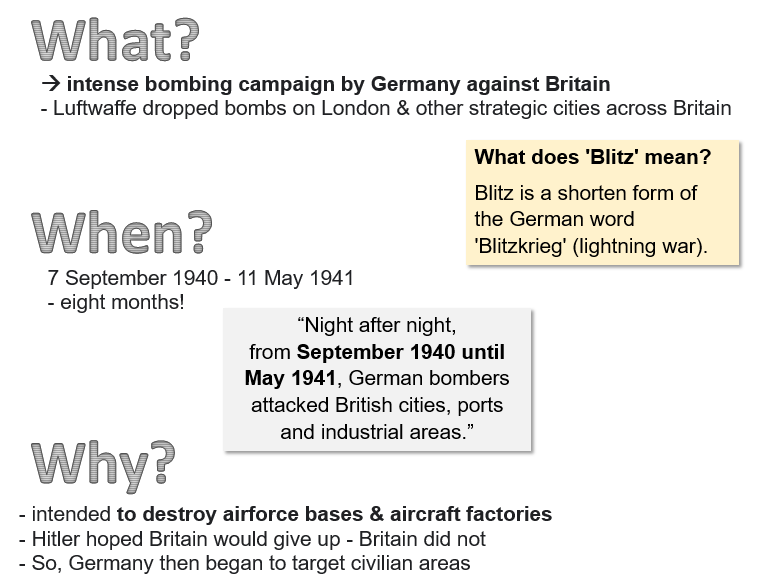
Today we are going to look at the Blitz in more detail.

  • to examine the Blitz in more detail
  • to look at the effects of the air raids
  • to discover how Britain dealt with the air raids

DID YOU KNOW…?

1.

So, what was the Blitz?

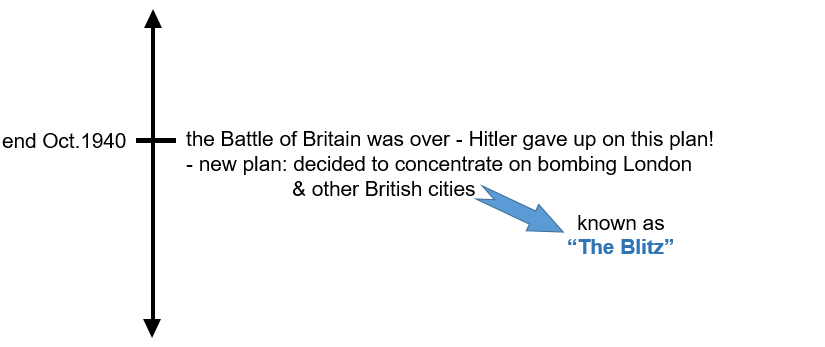
The Blitz was a change in strategy…

2.

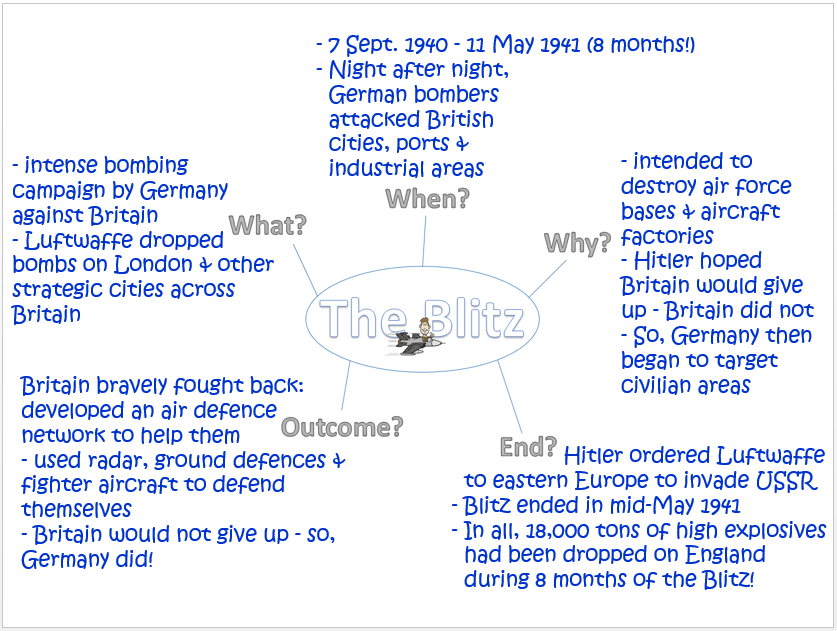
Complete the spider diagram as we discuss the Blitz.

Here is more information about the Blitz:

SOLUTION

3.

The explainer video below tells us a bit more about the Blitz.

The Blitz (1940-1941). (3:40 minutes long)

4.

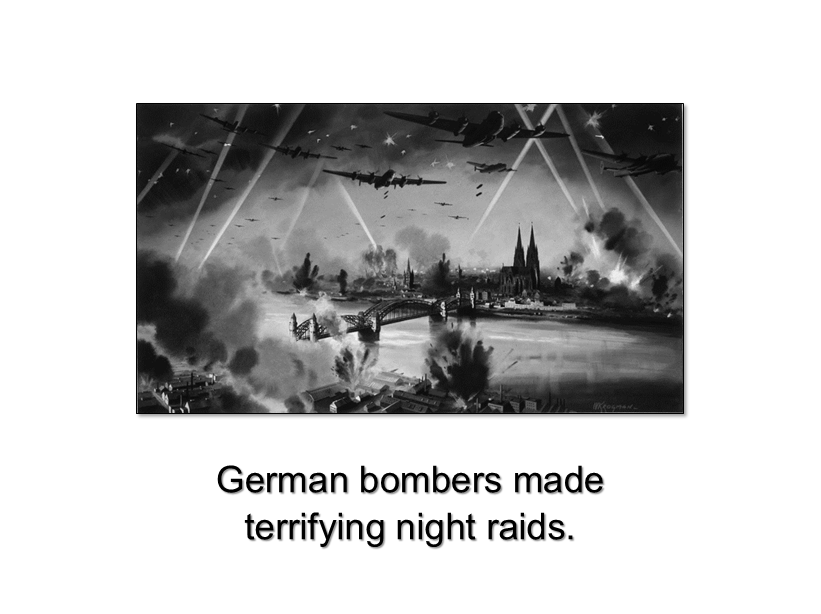
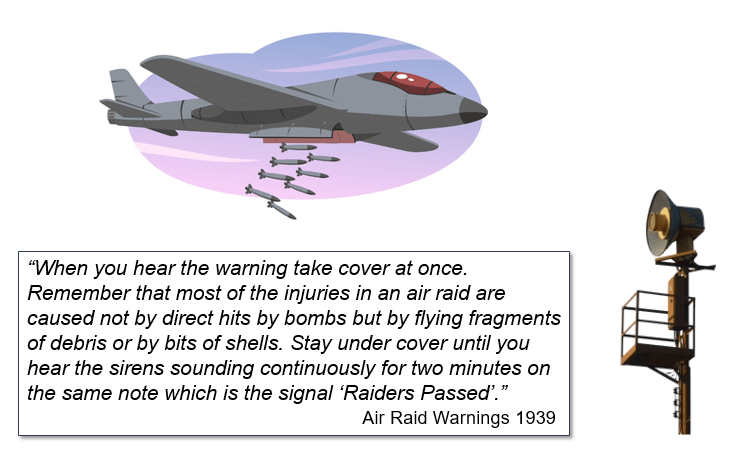
The attacks on the cities were called “air raids”.

5.

How did people protect themselves from the bombs during an air raid?

The box below explains what people had to do when there was an air raid…

6.

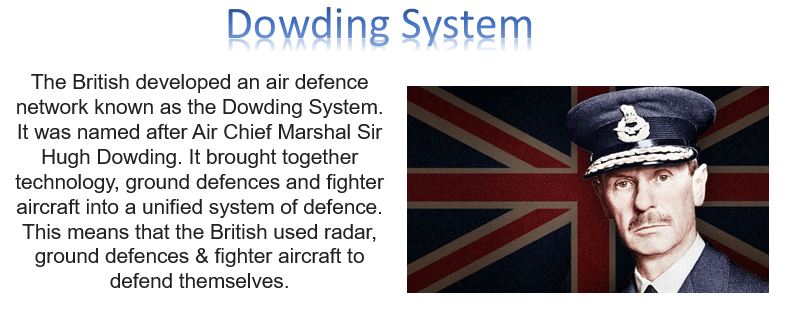
How did the government try to protect cities from being bombed?

The Government made use of Barrage Balloons, the Redsands Fort, and the Dowding System to protect cities.

7.

Let’s re-cap what you have learnt so far…

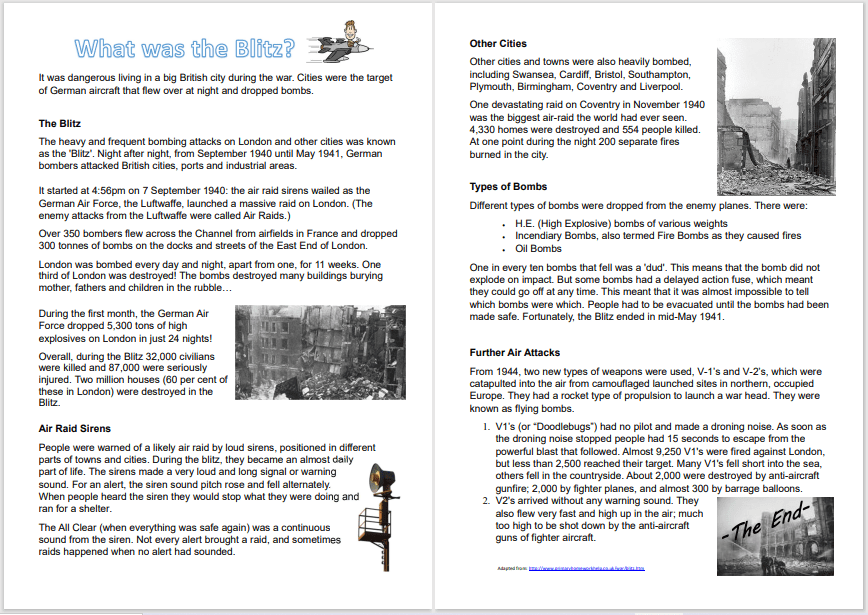
Read the article on “What was the Blitz?”

8.

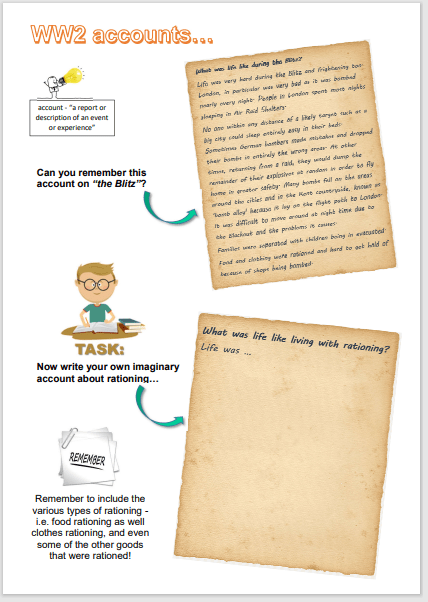
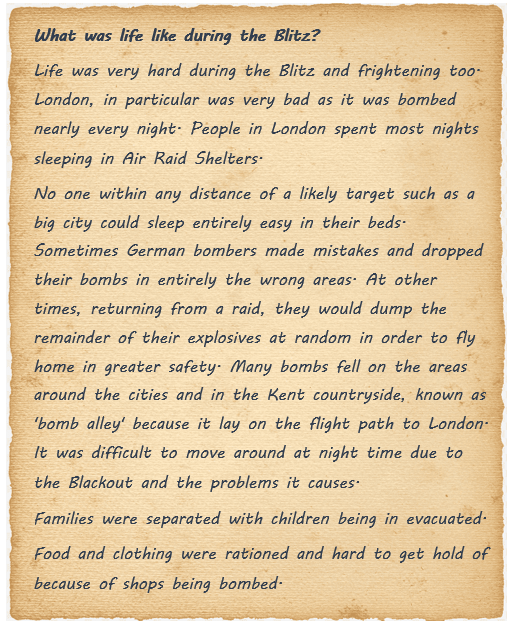
Finally, read the following account of what it was like to live during the Blitz.

Adapted from: http://www.primaryhomeworkhelp.co.uk/war/blitz.htm

9.

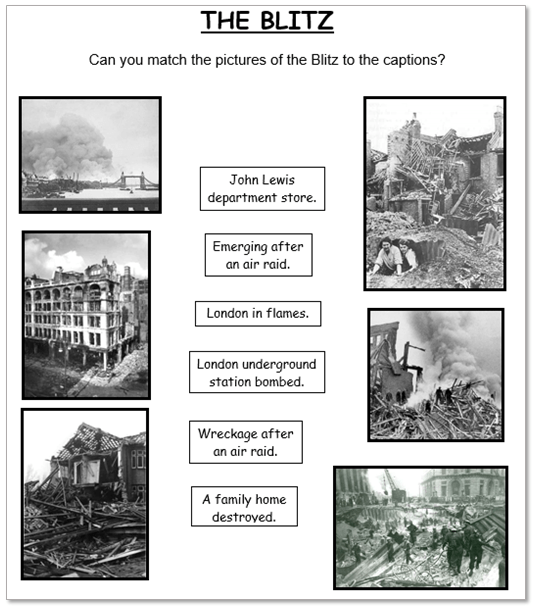
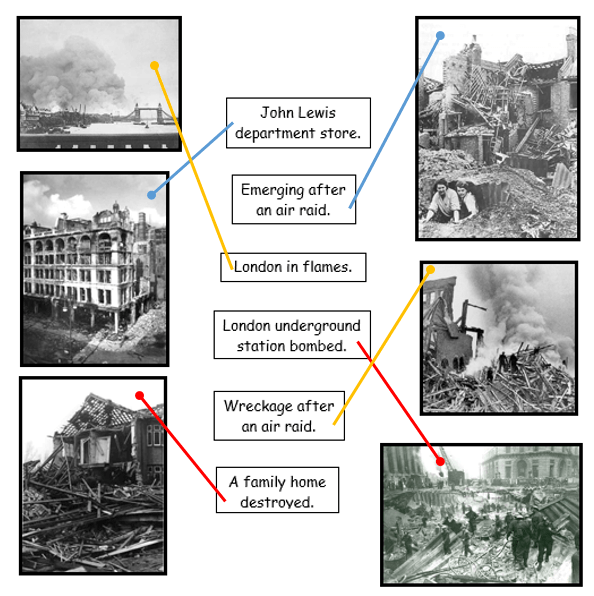
Complete the following task to get a visual impression of what it was like to live during the Blitz.

SOLUTION

10.

If you have not watched this in the previous lesson…

How was the Battle of Battle Won? (10:28 minutes long)

(This is a challenging animation…)

11.

Useful Links for WW2:

—WORKBOOK—

Click on the book to access an online flip-book version of this workbook.

———-

—ADDITIONAL MATERIAL—

You may be asked to complete more tasks in your WW2 Workbook!

——-&——-

(WordPress advertisements may appear below.)

Y6: 2-6. The Battle of Britain

World War Two

Today we are going to look at the Battle of Britain in more detail. WHY? Because our study will now focus more on Britain’s “home-front” involvement in the war.

  • to learn about Hitler’s plans to invade Britain
  • to examine the Battle of Britain in more detail
  • to introduce the Blitz

DID YOU KNOW…?

1.

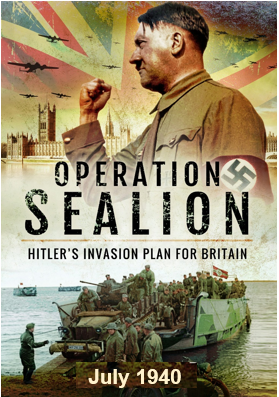
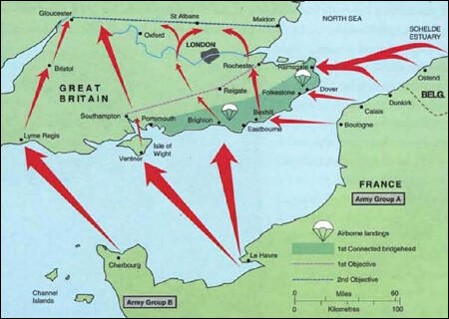
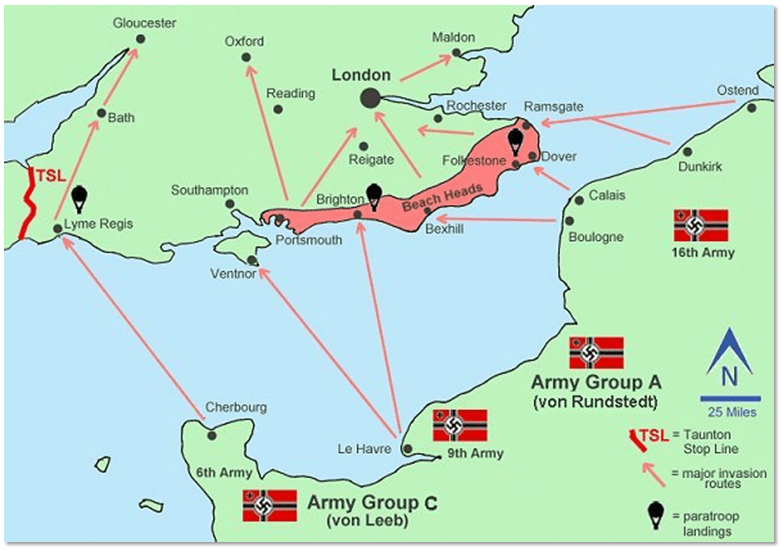
Hitler wanted to invade Britain. So he came up with a plan.

It was called….

This is what Hitler planned to do:

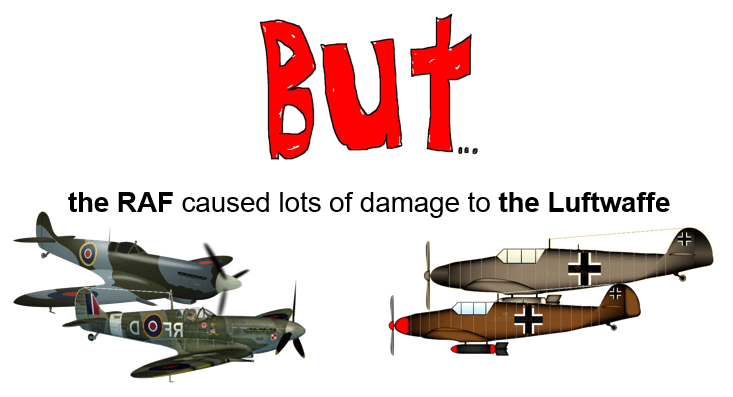
First: the Luftwaffe (German air force) would destroy the RAF (Britain’s Royal Air Force)

(The invasion of Britain would be much easier if the RAF has been destroyed.)

Then: Navy would invade Britain

SO…this was the plan:

destroy the British air force

thus stop it sinking the ships that would carry German soldiers across the Channel

Once the Luftwaffe had destroyed the Royal Air Force (RAF) a sea and airborne invasion of Britain would begin…

2.

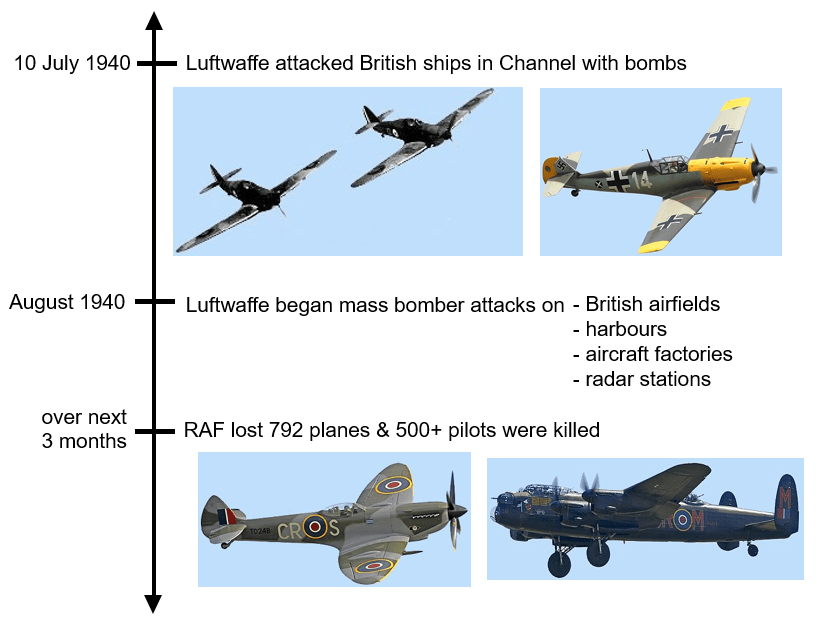
This is how the Battle of Britain developed:

3.

Let’s see what we can learn from the following videos about the Battle of Britain.

-1-

What was the Battle of Britain? (2:08 minutes long)

-2-

The Battle of Britain. (2:25 minutes long)

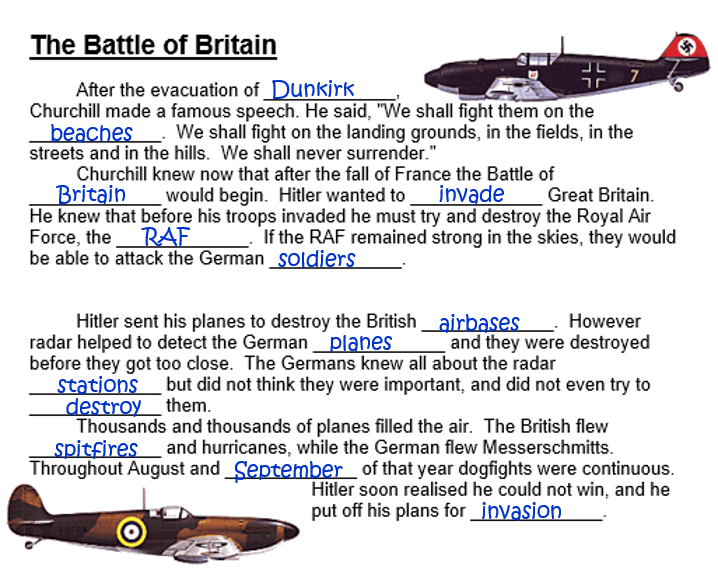
4.

Complete the following task to test your knowledge of the Battle of Britain.

SOLUTION

5.

So, what was the Blitz?

The Blitz was a change in strategy…

6.

If there is time…

How was the Battle of Britain Won? (10:28 minutes long)

(This is a challenging animation…)

7.

Useful Links for WW2:

—WORKBOOK—

Click on the book to access an online flip-book version of this workbook.

———-

—ADDITIONAL MATERIAL—

You may be asked to complete more tasks in your WW2 Workbook!

——-&——-

(WordPress advertisements may appear below.)

Y6: 2-5. 1944 – 1945

World War Two

Today we are going to continue looking at the main events of the war in more detail. We will now look at the last two years.

  • to recap who surrendered first
  • to look at the Normandy Invasion in more detail
  • to look at the Battle of the Bulge in more detail
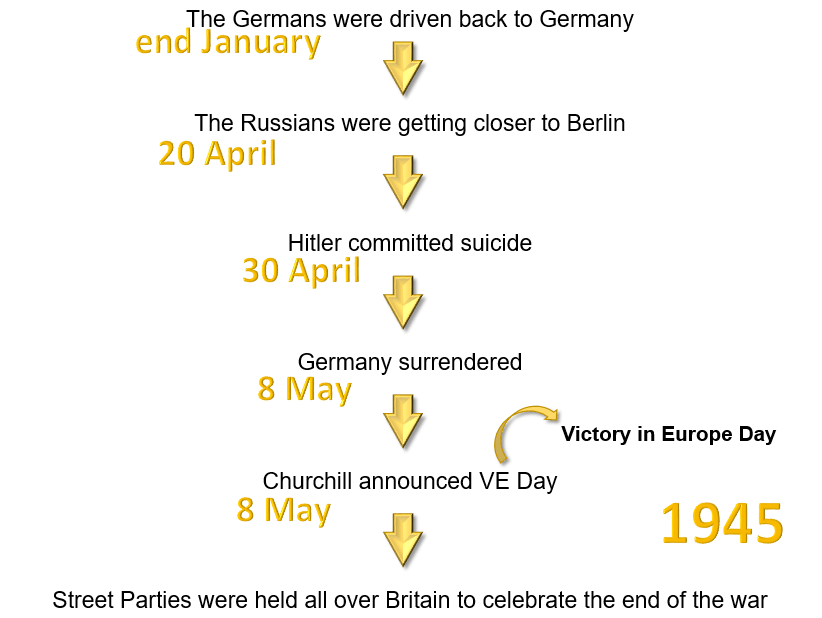
  • to discover how the war came to an end

1.

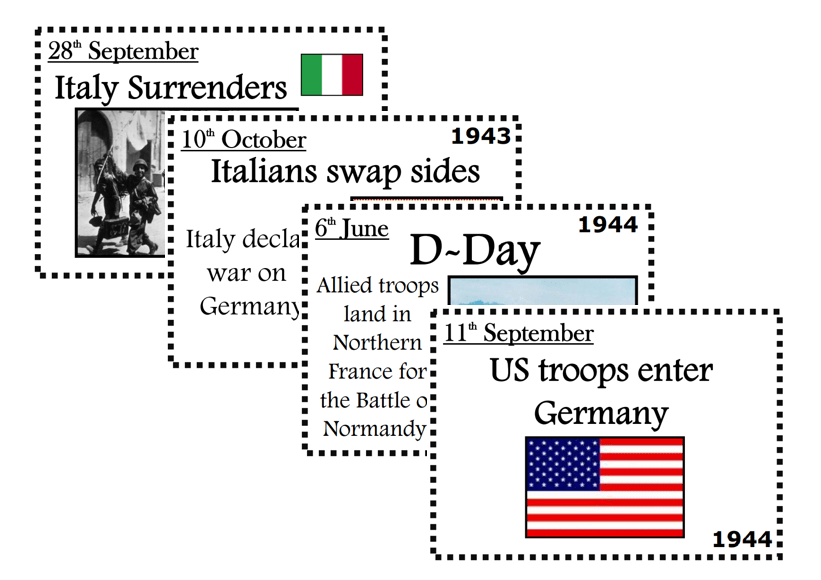
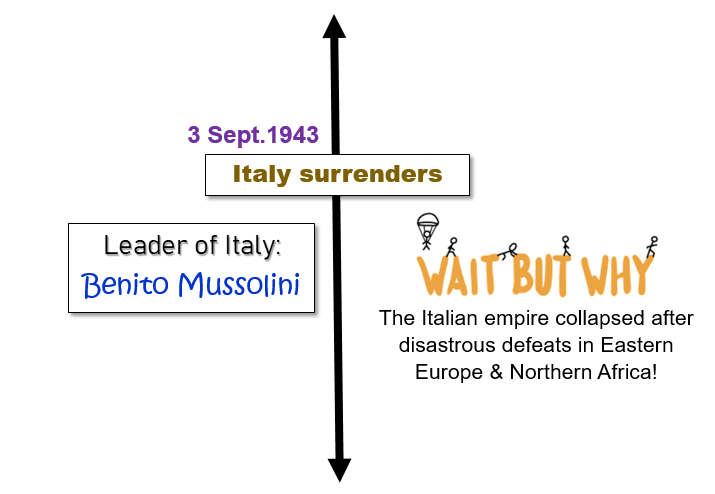
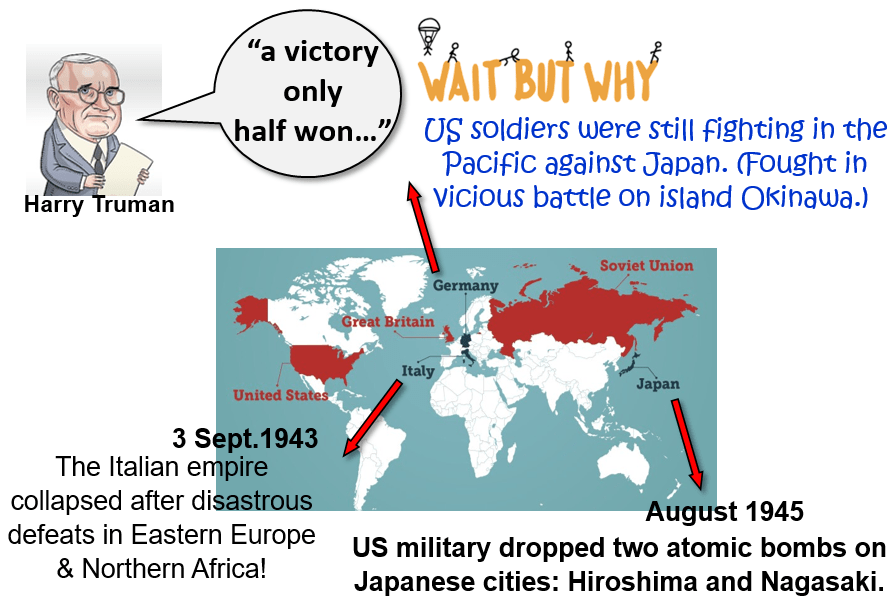
Previously we looked at Italy’s surrender to the Allies…

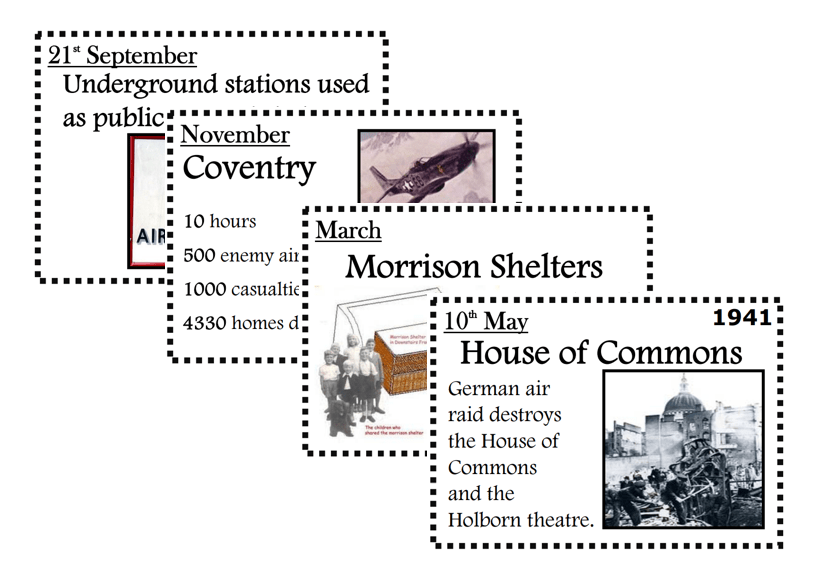
2.

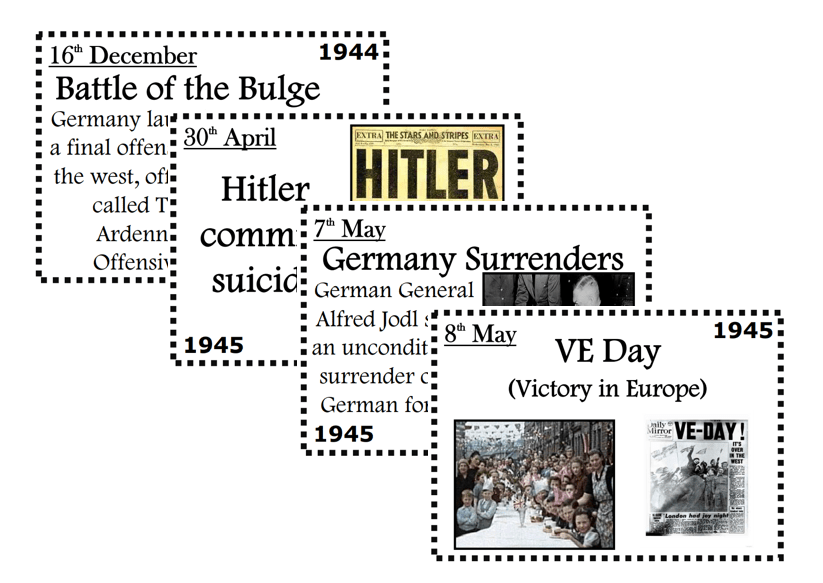
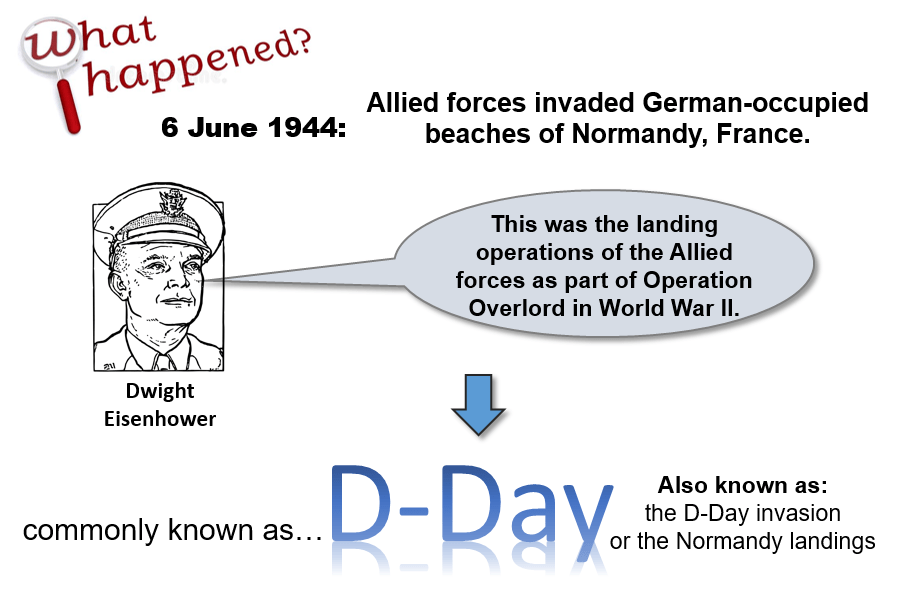
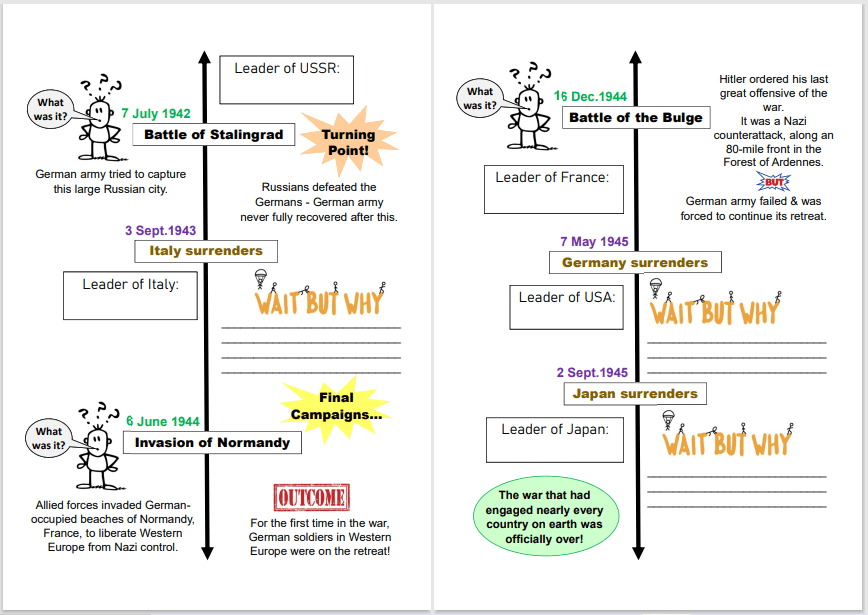
The timeline below shows you a very significant event that can be considered as one of the final campaigns of WW2.

Examine the diagram below for further details about the Invasion of Normandy:

3.

Look again at the information above and fill in the missing information on the worksheet on the Invasion of Normandy:

4.

You can learn more about the Invasion of Normandy by looking at the following film clips…

-1-

Invasion of Normandy (D-Day). (2:16 minutes long)

-2-

D-Day (1944). (3:13 minutes long)

5.

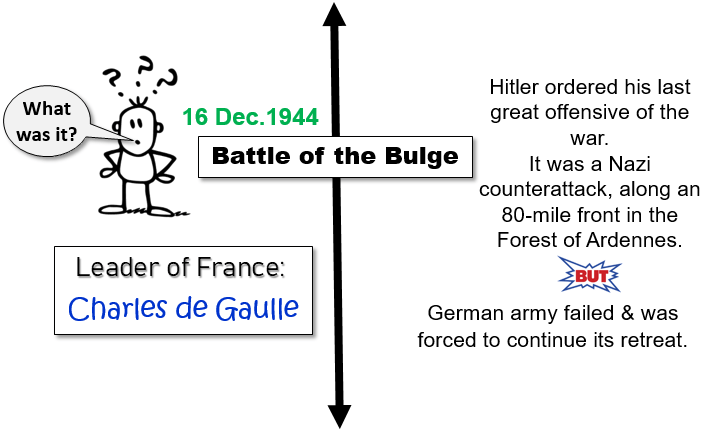
The timeline below shows that the Germans also came up with an offensive that they hoped would finally defeat the Allies…!

Examine the diagram below for further details about the Battle of the Bulge:

6.

Look again at the information above and fill in the missing information on the worksheet on the Battle of the Bulge:

7.

You can learn more about the Battle of the Bulge by looking at the following film clips…

-1-

Battle of the Bulge. (3:01 minutes long)

-2-

The Battle of the Bulge (1944-1945). (4:16 minutes long)

(Animation!)

-3-

Battle of the Bulge during Christmas of 1944. (3:45 minutes long)

8.

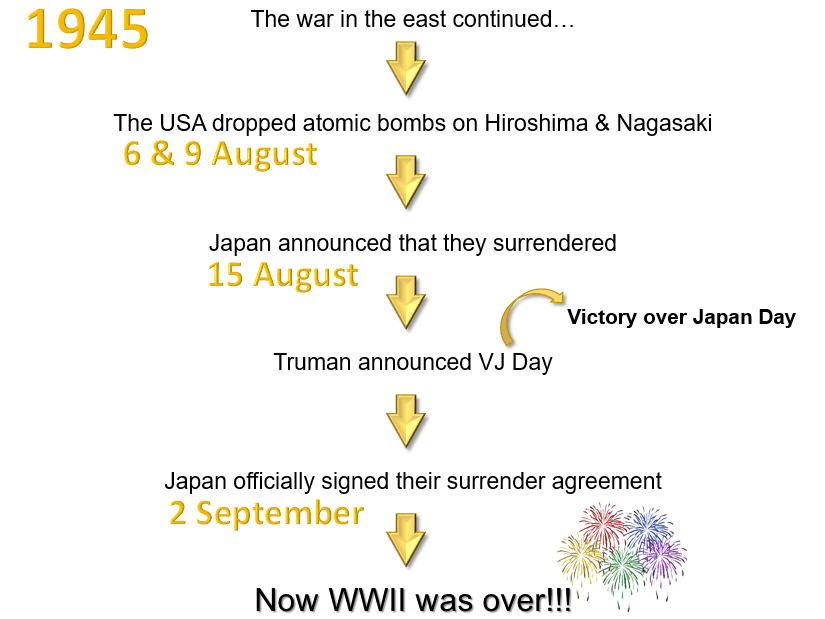
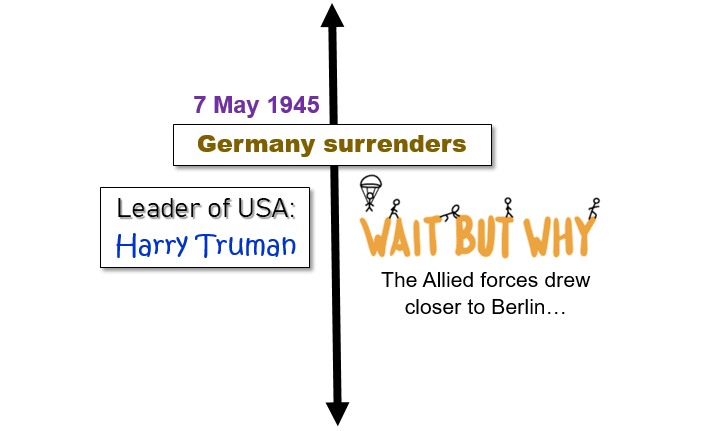
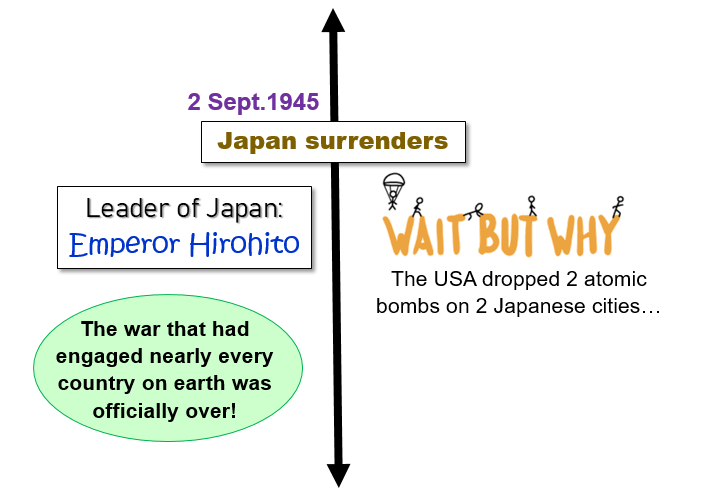
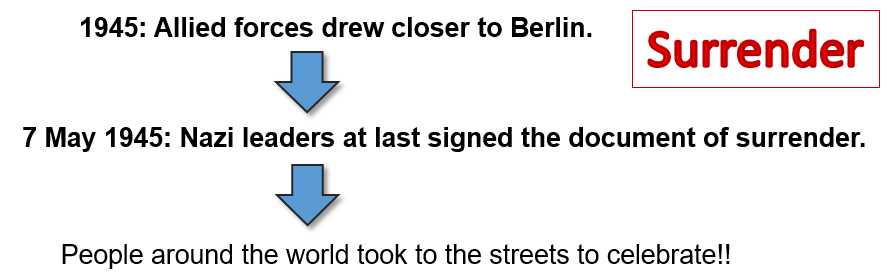
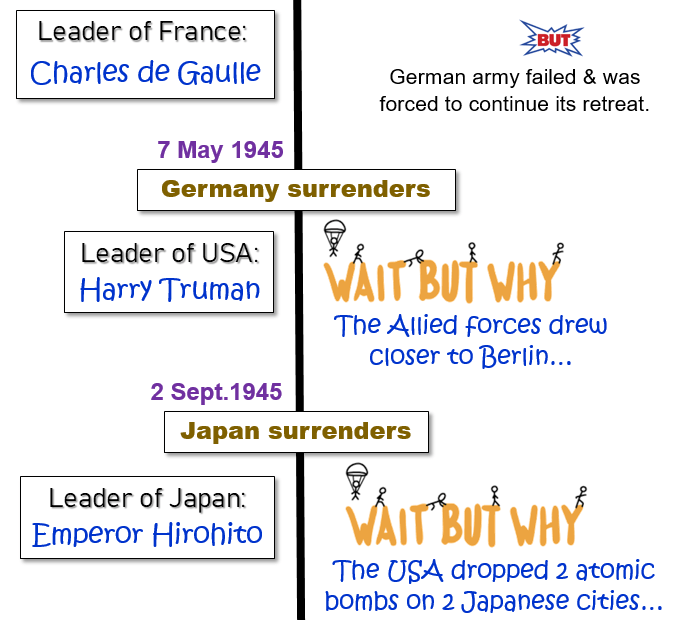
So what happened next? Germany surrendered!

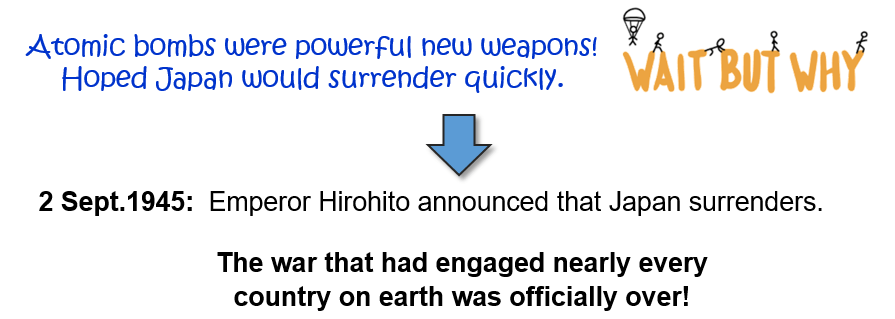
And 4 months later Japan also surrendered. WW2 was over!

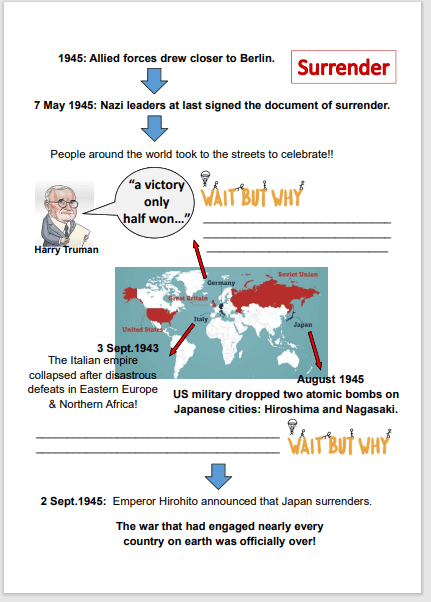
Let’s find out how this happened… Examine the information below for more details about how Germany and Japan surrendered.

9.

Look again at the information above and fill in the missing information on the worksheet on how Germany & Japan surrendered:

10.

-1-

You can learn more about the Battle on Okinawa by looking at the following film clip…

WWII: How did it end? (2:40 minutes long)

-2-

You can learn more about the End of the war by looking at this film clip…

WWII: How did it end? (2:59 minutes long)

11.

World War II Summary. (3:56 minutes long)

12.

See if you can guess which WW2 battle this video is about…

(Show this to the class but take care not to reveal the name of the video.)

The Battle of the Bulge. (2:22 minutes long)

13.

Fill in the missing information to test your general knowledge of WW2…

SOLUTION

14.

Useful Links for WW2:

—WORKBOOK—

Click on the book to access an online flip-book version of this workbook.

———-

—ADDITIONAL MATERIAL—

You may be asked to complete more tasks in your WW2 Workbook!

——-&——-

(WordPress advertisements may appear below.)

Y6: 2-4. 1942 – 1943

World War Two

Today we are going to continue looking at the main events of the war in more detail. We will now look at the next two years.

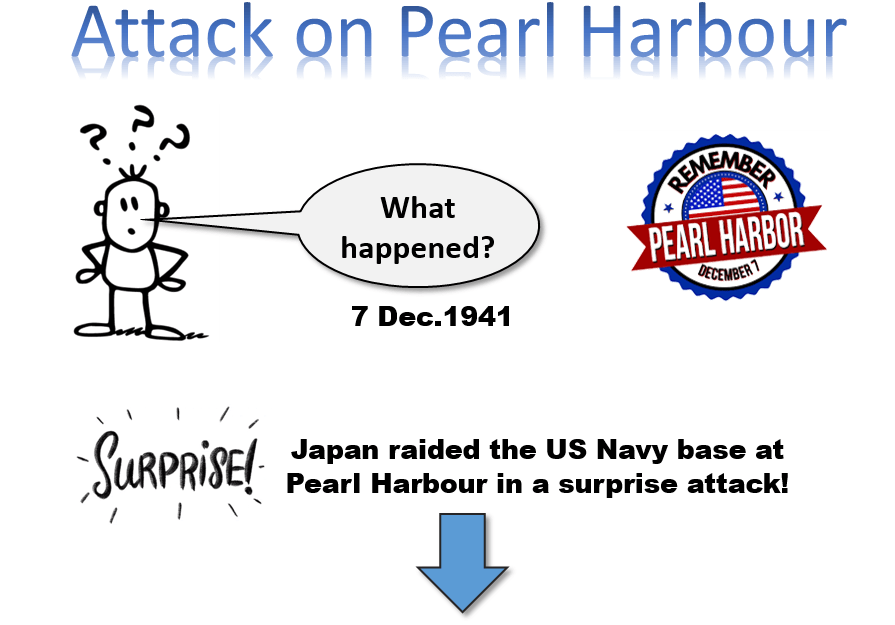
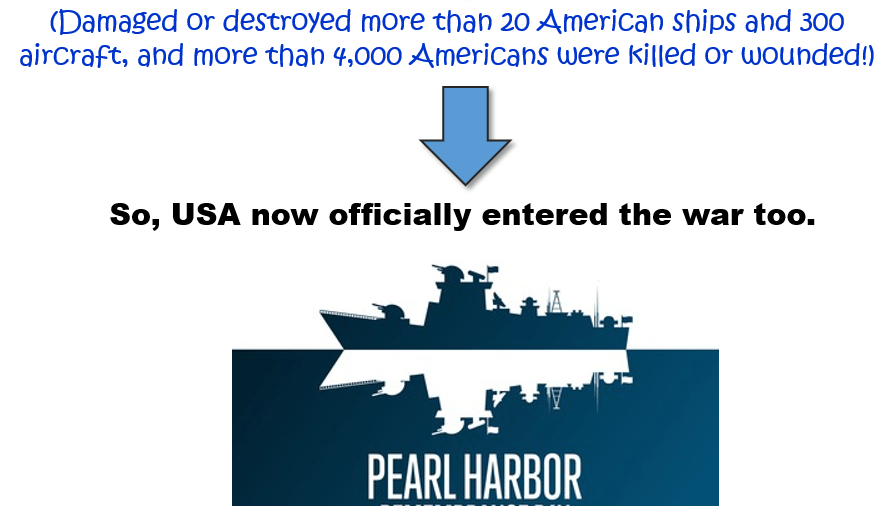
  • to recap the attack on Pearl Harbour
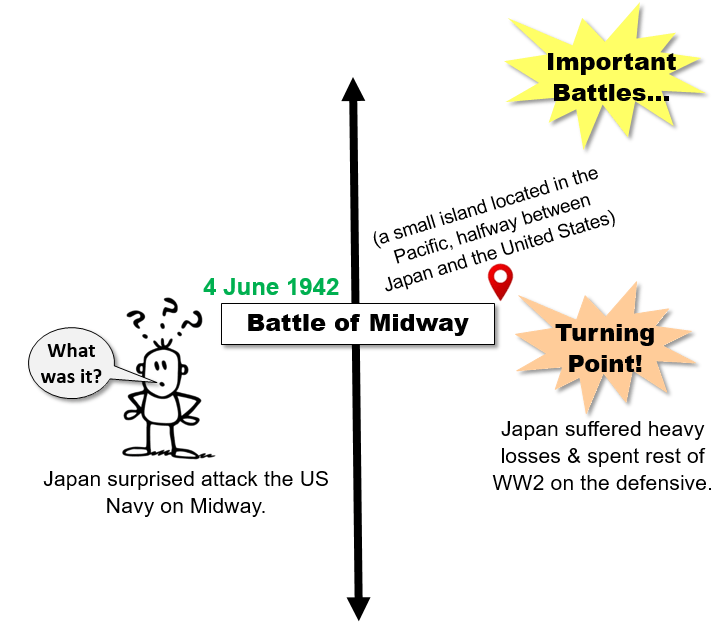
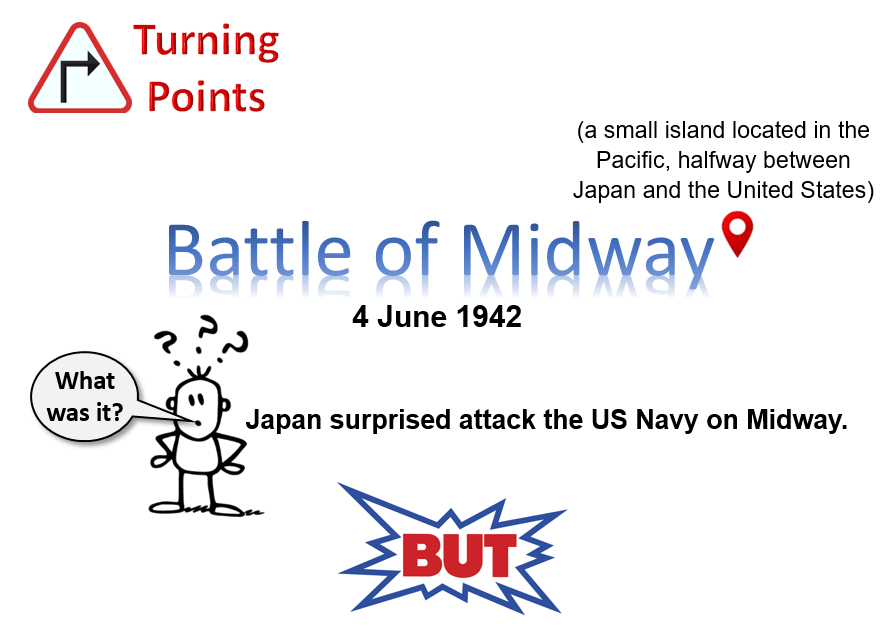
  • to look at the Battle of Midway (as a turning point) in more detail
  • to look at the Battle of Stalingrad (as a turning point) in more detail
  • to discover which country surrendered first

1.

Can you remember how the USA became involved in WW2…? Go over the details again:

2.

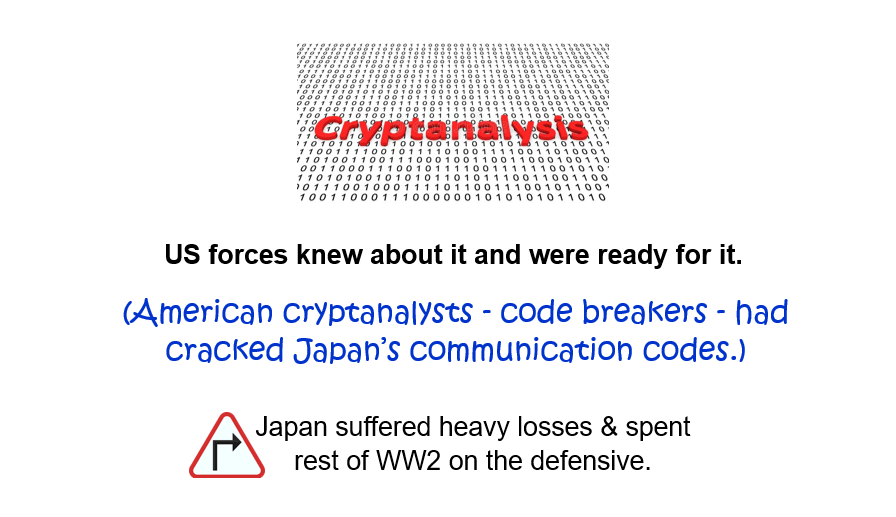
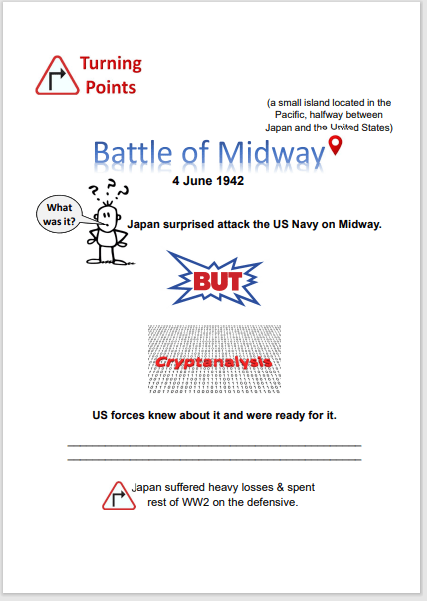
Six months after the attack on Pearl Harbour the USA and Japan fought in another significant battle. It was called the Battle of Midway.

Examine the image below to find out more about the Battle of Midway:

3.

Look again at the information above and fill in the missing information on the worksheet on the Battle of Midway:

4.

You can learn more about the Battle of Midway by looking at the following film clips…

-1-

The Battle of Midway. (2:01 minutes long)

-2-

Battle of Midway. (3:45 minutes long)

(Animation with toys – no talking…)

-3-

Anatomy of a Decisive WWII Victory. (4:01 minutes long)

(This video is a fun song!)

5.

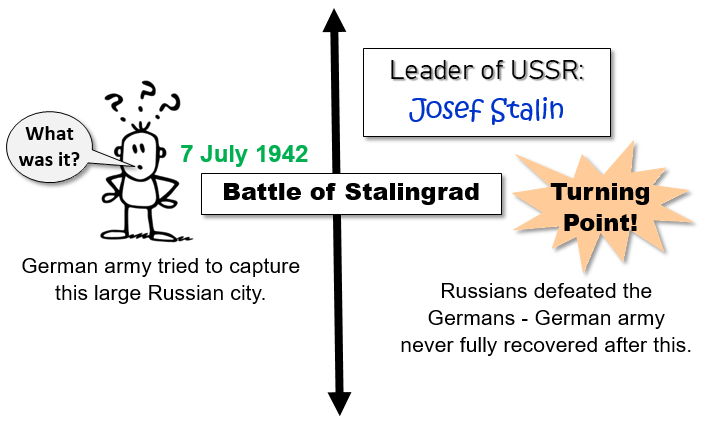
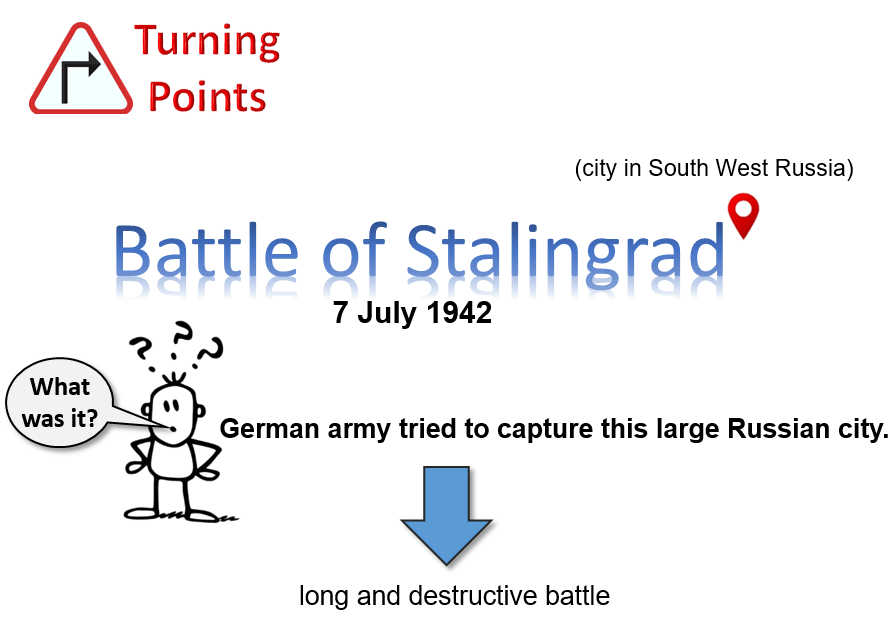
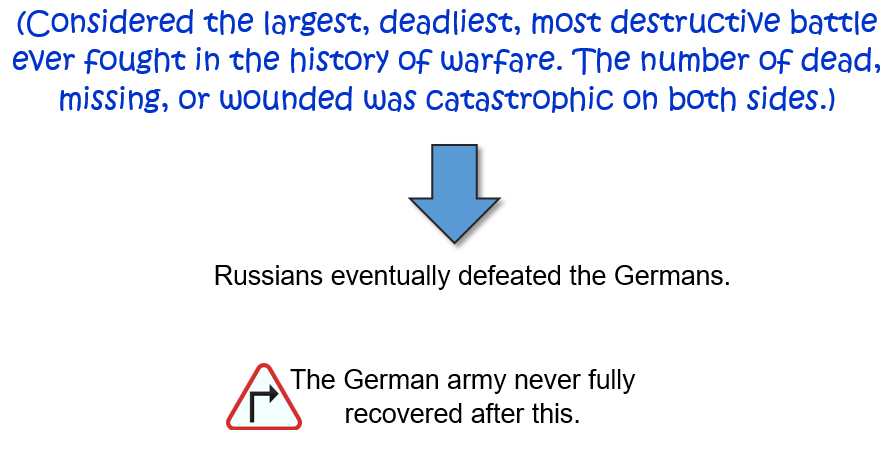
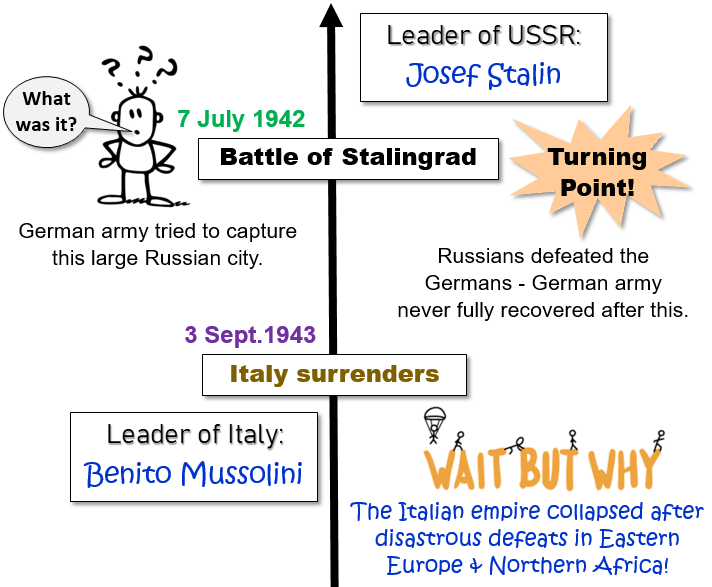
The Battle of Midway was a turning point in the war. So was the Battle of Stalingrad. The image below tells briefly what this was about…

Examine the image below to find out more about the Battle of Stalingrad:

6.

Look again at the information above and fill in the missing information on the worksheet on the Battle of Stalingrad:

7.

You can learn more about the Battle of Stalingrad by looking at the following film clip…

Battle of Stalingrad. (2:28 minutes long)

8.

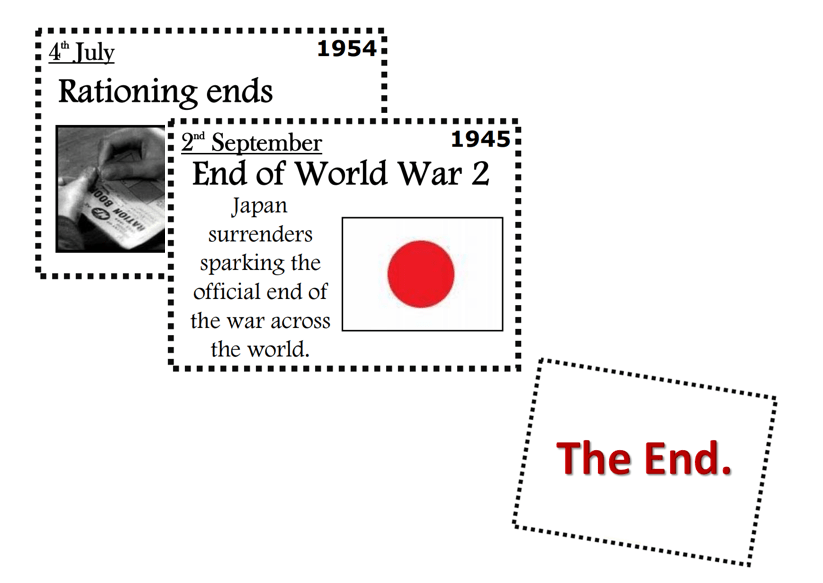
What happened next was perhaps the beginning of the end for the Axis powers. However, it would be two more years (almost to the day) before WW2 would be officially over!

9.

Here is a little bit about Italy’s defeat…

The World Wars – The Downfall of Mussolini and Italy’s defeat. (2:42 minutes long)

10.

Useful Links for WW2:

—WORKBOOK—

Click on the book to access an online flip-book version of this workbook.

———-

—ADDITIONAL MATERIAL—

You may be asked to complete more tasks in your WW2 Workbook!

——-&——-

(WordPress advertisements may appear below.)

Y6: 2-3. 1939 – 1941

World War Two

Today we are going to look at the main events of the war in more detail. We will start by looking at the first two years.

  • to recap how WW2 started
  • to look at the Battle for Britain in more detail
  • to discover how the USA became involved
  • to look at the attack on Pearl Harbour in more detail

1.

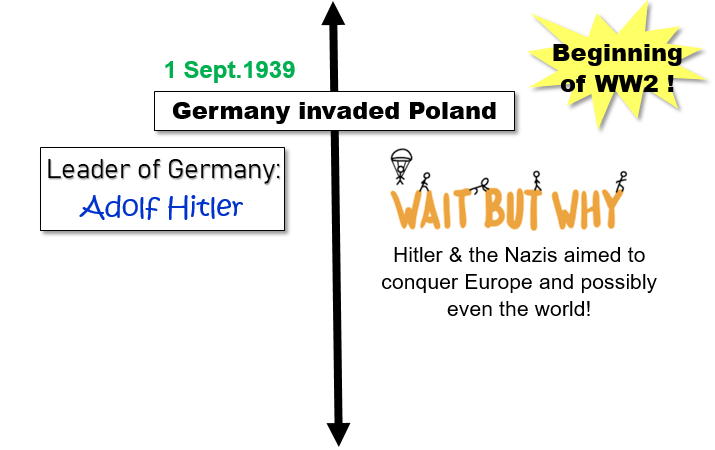
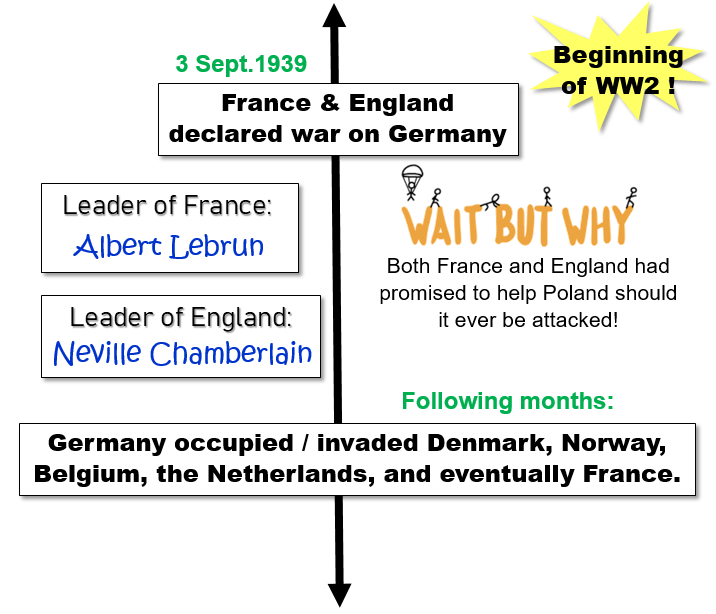
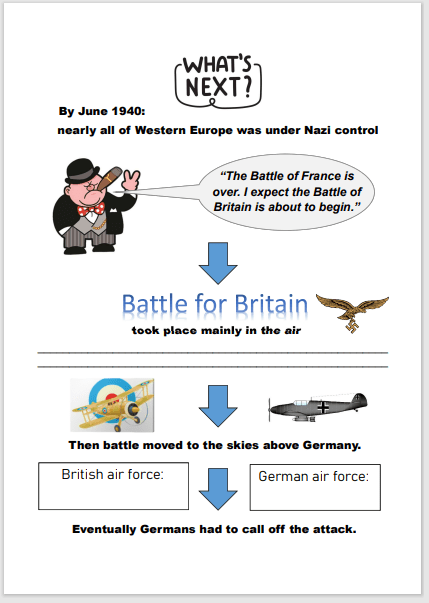
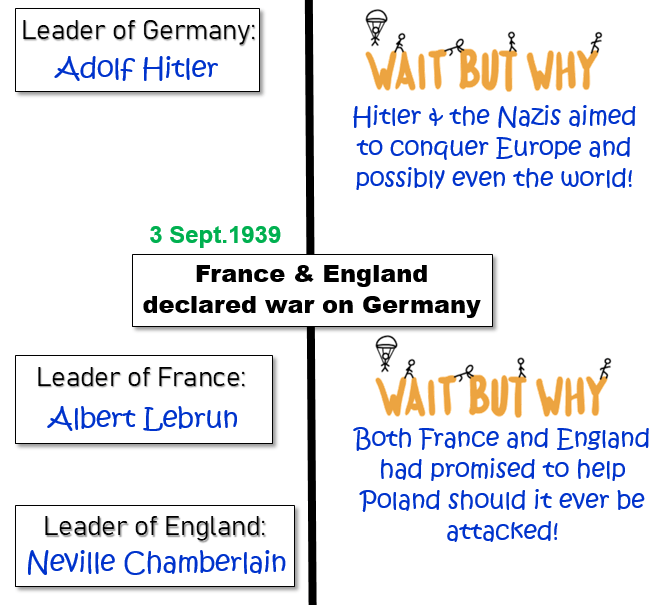
Can you remember how WW2 started? Here is a brief reminder:

AND THEN…

2.

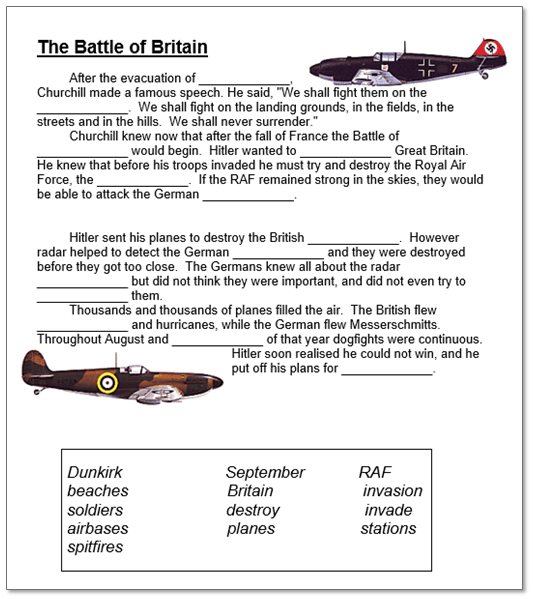
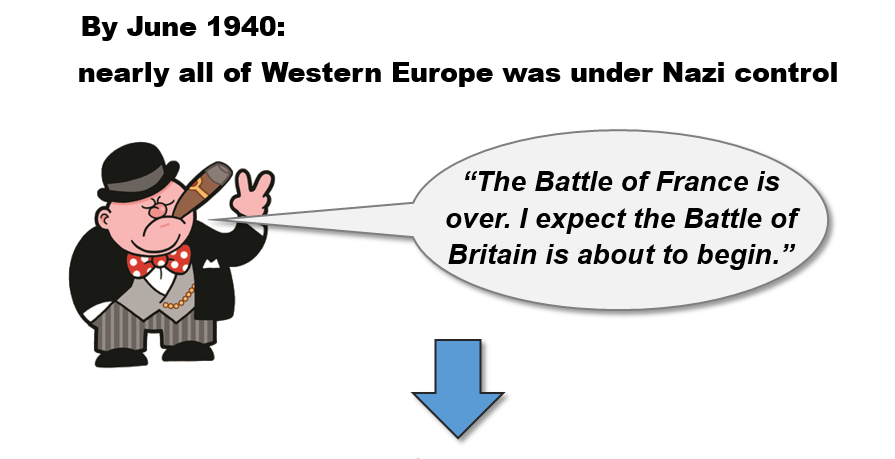
One of the major events of the war was the Battle of Britain.

Let’s look at the Battle of Britain in a bit more detail. Examine the image below the see what it was all about?

3.

Look again at the information above and fill in the missing information on the worksheet on the Battle for Britain:

4.

You can learn more about the Battle of Britain by looking at the following film clips…

-1-

The Battle of Britain Explained. (2:44 minutes long)

-2-

RAF Pilot Song. (2:47 minutes long)

-3-

The Battle of Britain. (2:25 minutes long)

5.

Can you remember who were Britain’s main allies?

France

the USSR

the USA

6.

Can you remember who were Germany’s main allies?

Italy

Japan

7.

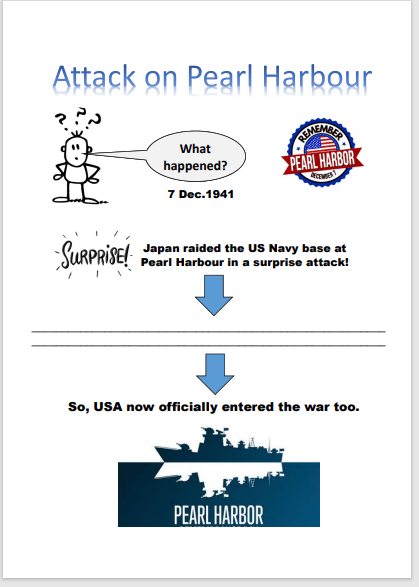
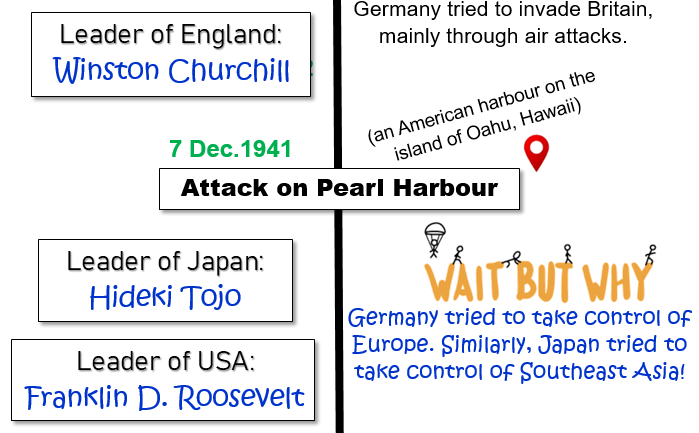
Right from the start the USA did not want to get involved with European conflict, but by the end of 1941 the USA was fighting on the Allies’ side, because Japan attacked the US Navy.

Examine the image below for more details about how the USA became involved:

8.

Look again at the information above and fill in the missing information on the worksheet on the attack on Pearl Harbour:

9.

You can learn more about the attack on Pearl Harbour by looking at the following film clips…

-1-

Pearl Harbour (1941). (1:34 minutes long)

-2-

The Attack on Pearl Harbour. (2:33 minutes long)

10.

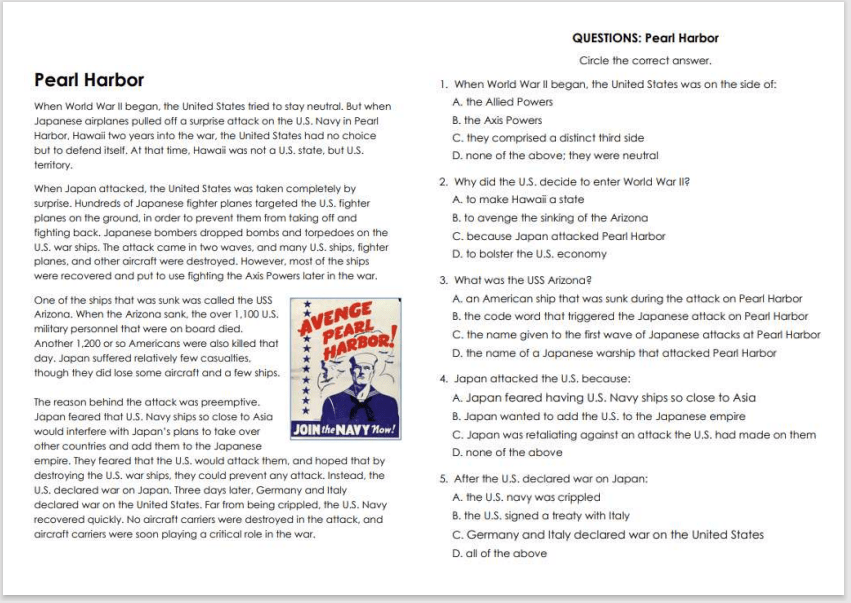
Read the article on Pearl Harbour and then complete the Quiz Questions.

Taken from https://www.easyteacherworksheets.com/

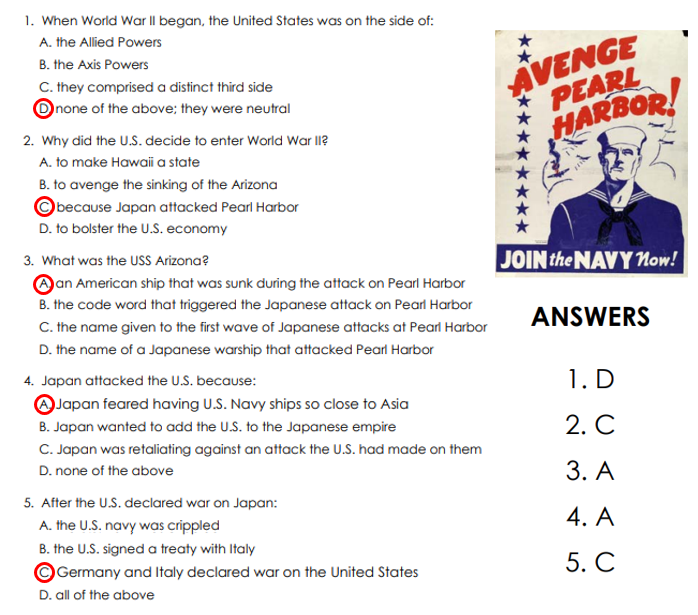
SOLUTION

11.

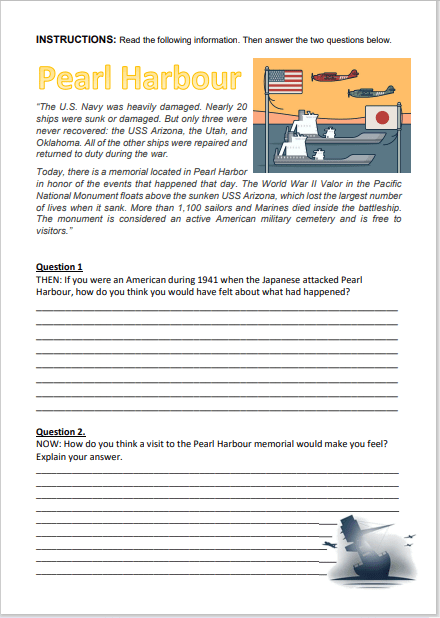
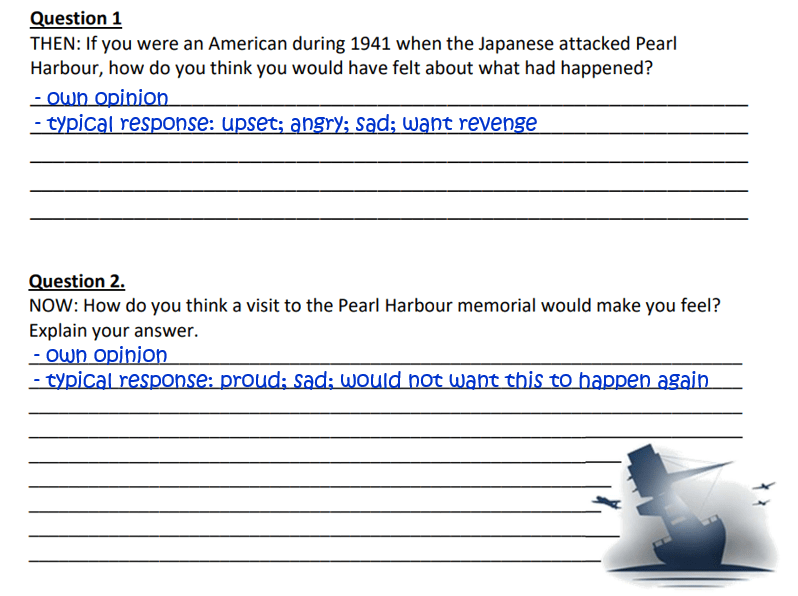
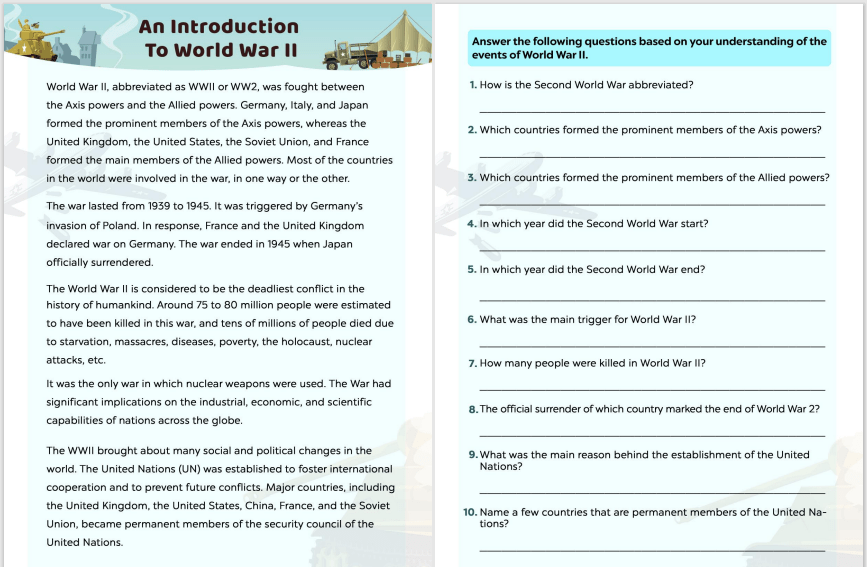
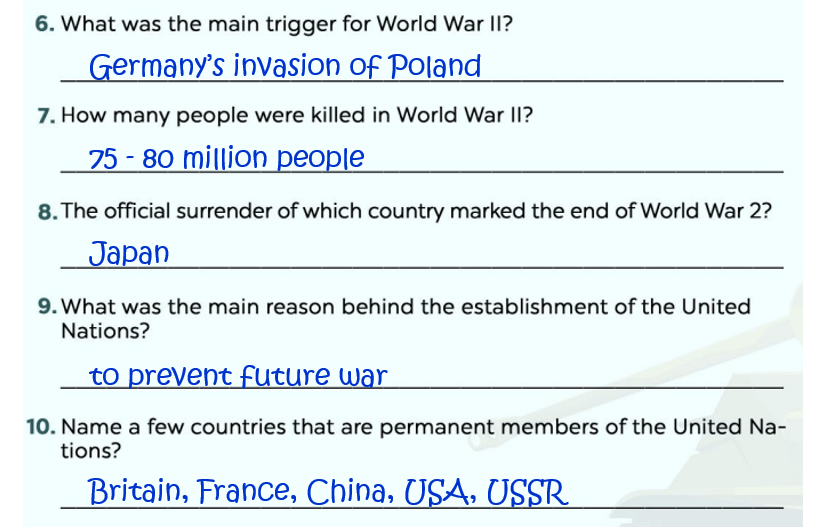
Read the short text on this worksheet. Then use your knowledge of the events to answer the two questions on the worksheet.

Adapted from https://www.woojr.com

POSSIBLE RESPONSES

12.

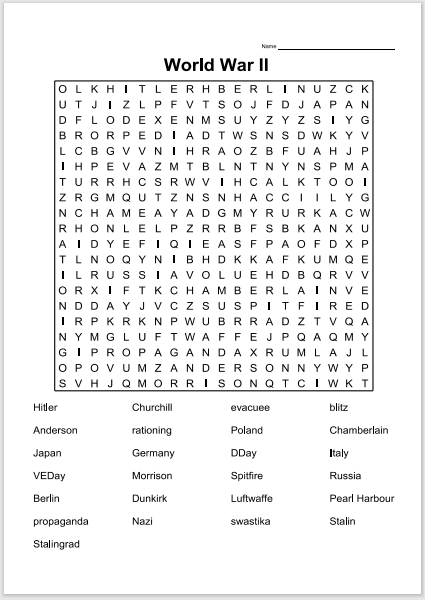
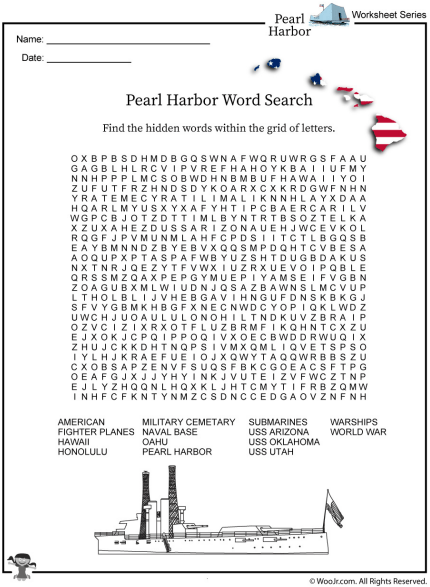
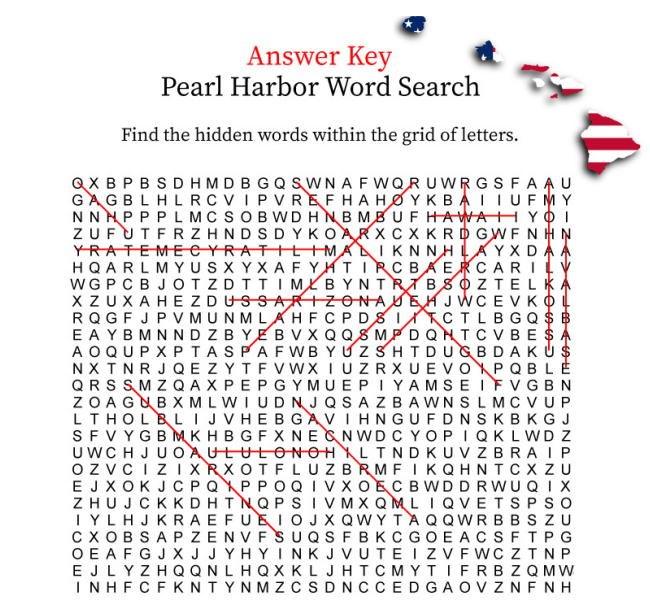
Complete the Word search…

Taken from https://www.woojr.com

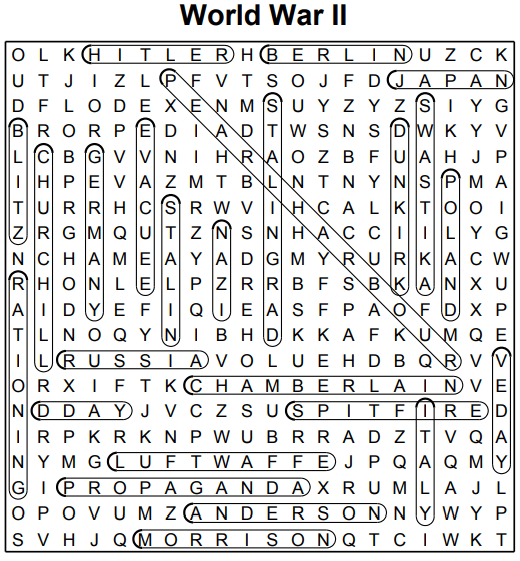
SOLUTION

13.

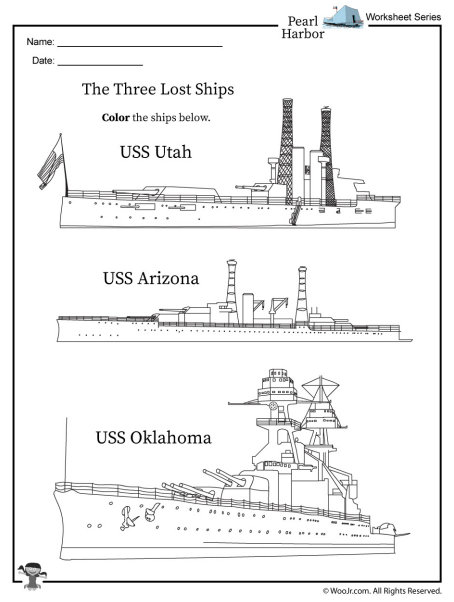
Colour in the three US Navy ships that were never recovered: the USS Arizona, the Utah, and Oklahoma…

Taken from https://www.woojr.com

14.

Useful Links for WW2:

—WORKBOOK—

Click on the book to access an online flip-book version of this workbook.

———-

—ADDITIONAL MATERIAL—

You may be asked to complete more tasks in your WW2 Workbook!

——-&——-

(WordPress advertisements may appear below.)

Y6: 2-2. Main WW2 events

World War Two

Today we are going to look at an overview of all the main World War 2 events.

  • to examine how the war developed
  • to get a sense of the timescale involved

1.

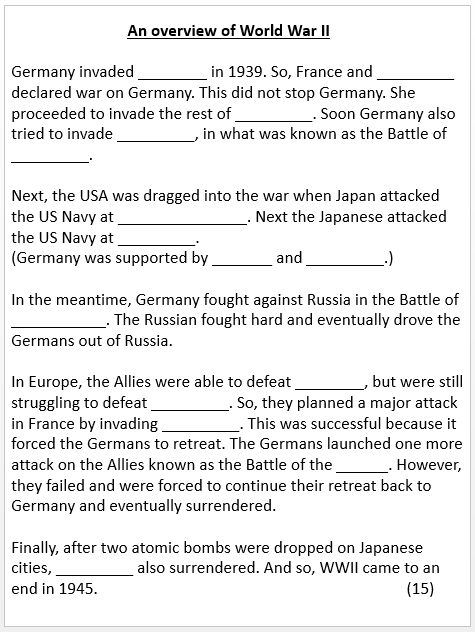
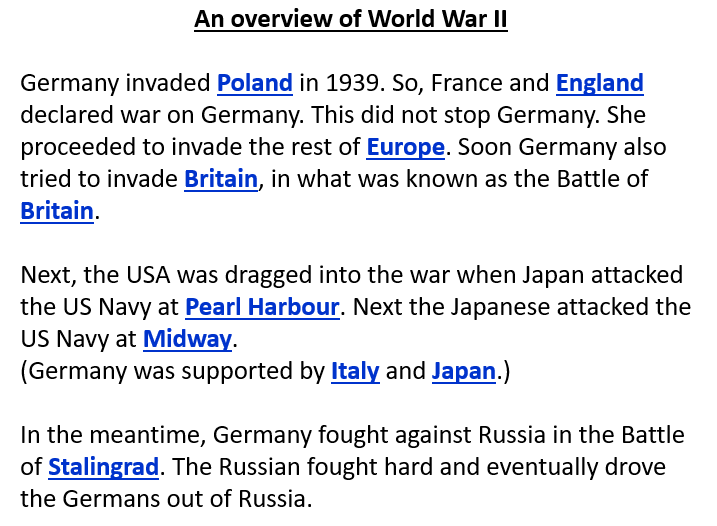
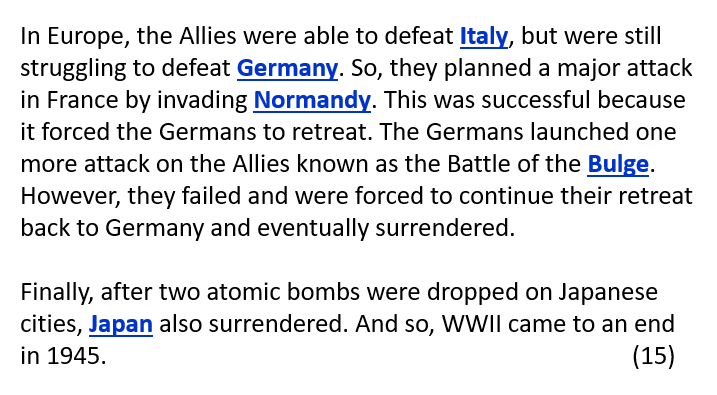
Read & recap…

This worksheet comes from: https://www.momjunction.com/worksheets/social-studies/world-war-2/

SOLUTION

2.

A lot happened during WW2! The video below takes you through the entire war, from 1939 to 1945.

Overview of WW2 on maps. (3:20 minutes long)

3.

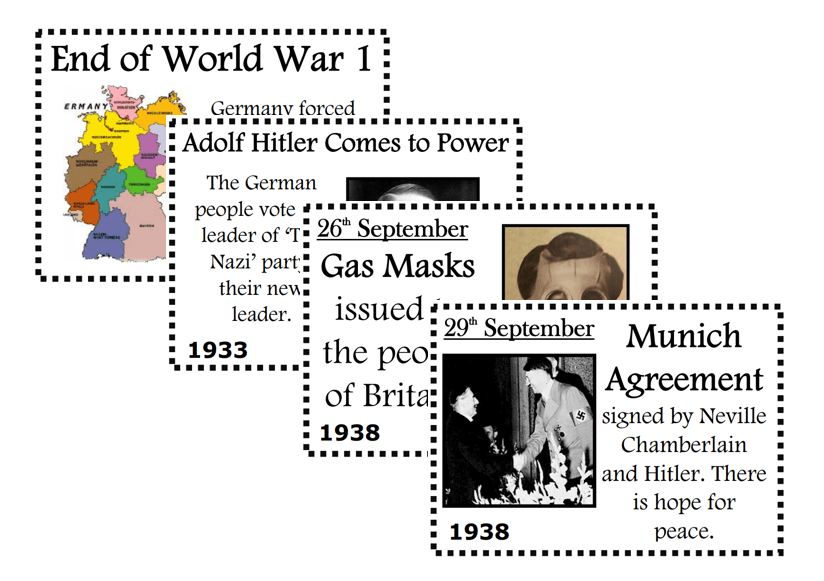
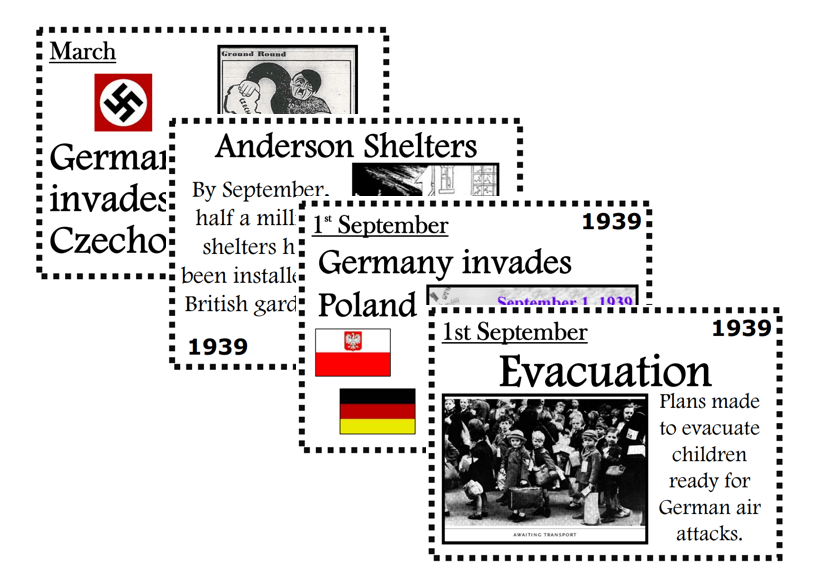
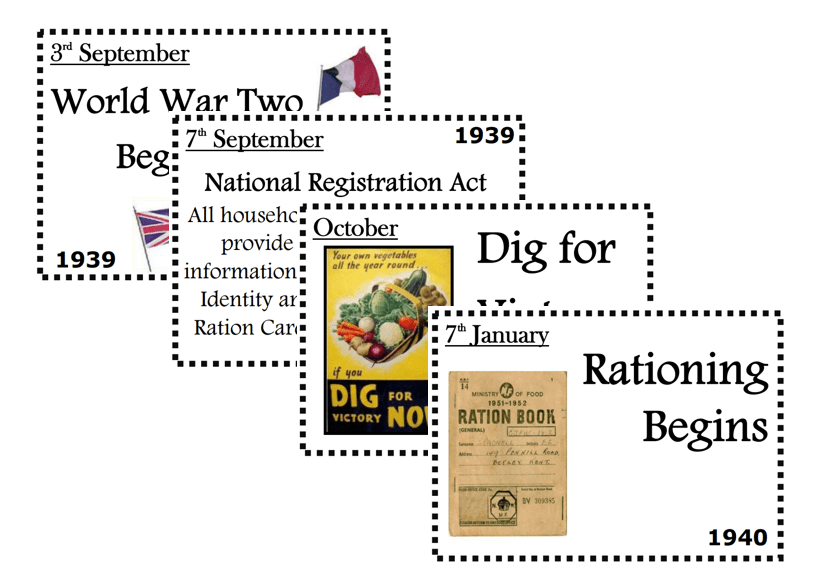
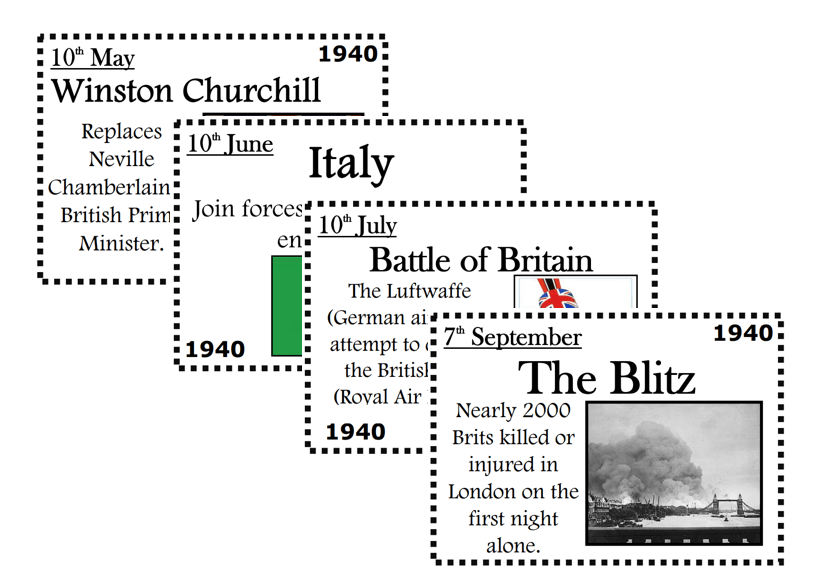
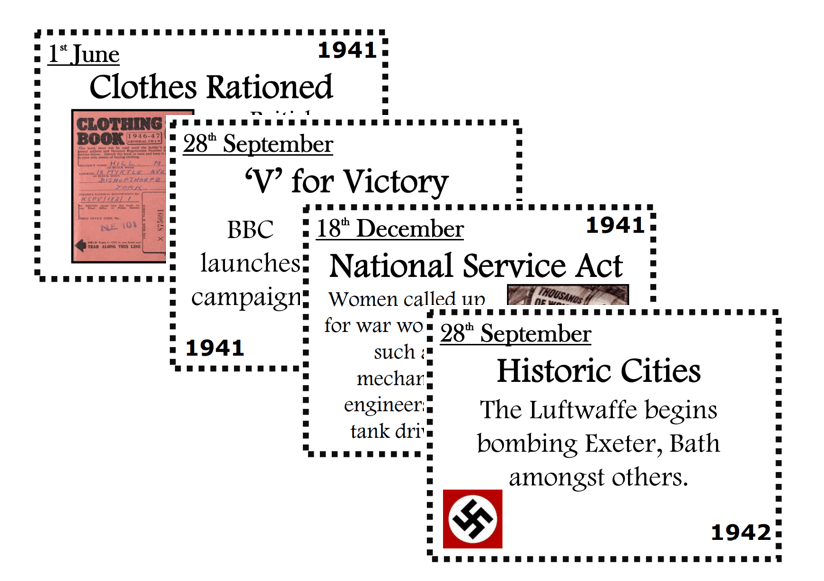
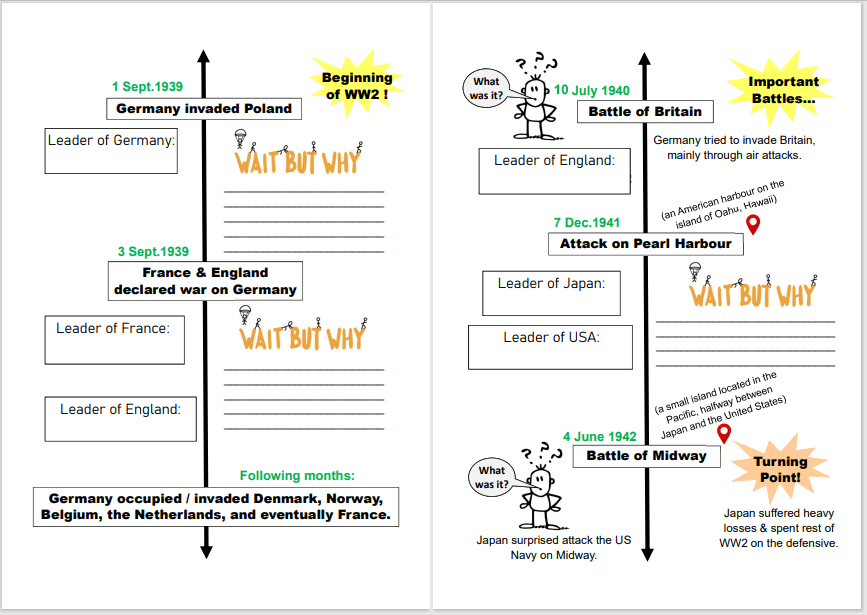
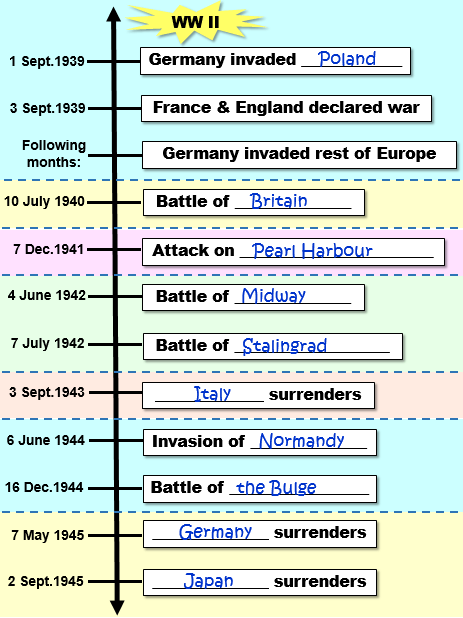
By means of a timeline we will go through the entire war, from 1939 to 1945. The timeline will give you a brief overview of some of the main events of WW2. It will fast-forward you through WW2…!

Read the following timeline about the main events of WW2:

4.

Now use your copy of the timeline to complete the missing information!

SOLUTION

Page 1

Page 2

Page 3

Page 4

5.

Let’s recap what we have learnt so far!

World War 2 for Kids. (4:20 minutes long)

6.

Test your knowledge by completing the timeline.

SOLUTION

7.

-1-

A brief Overview of WW2. (3:28 minutes long)

-2-

A brief Overview of WW2. (4:57 minutes long)

(This video is perhaps a bit complicated but it is a good introduction to WW2.)

8.

Useful Links for WW2:

—WORKBOOK—

Click on the book to access an online flip-book version of this workbook.

———-

—ADDITIONAL MATERIAL—

You may be asked to complete more tasks in your WW2 Workbook!

——-&——-

(WordPress advertisements may appear below.)

Y6: 2-1. Introduction to WW2

World War Two

Today we are going to see why and how WW2 started.

  • to see how and why WW2 started
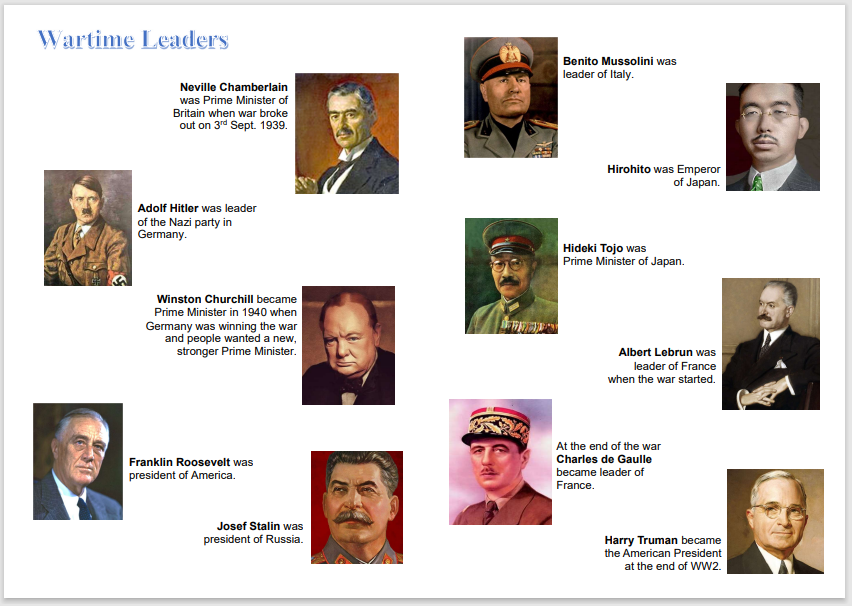
  • to learn who the WW2 wartime leaders were
  • to determine why WW2 broke out
  • to learn how to make point-form notes

1.

What do the following images tell us about WW2?

2.

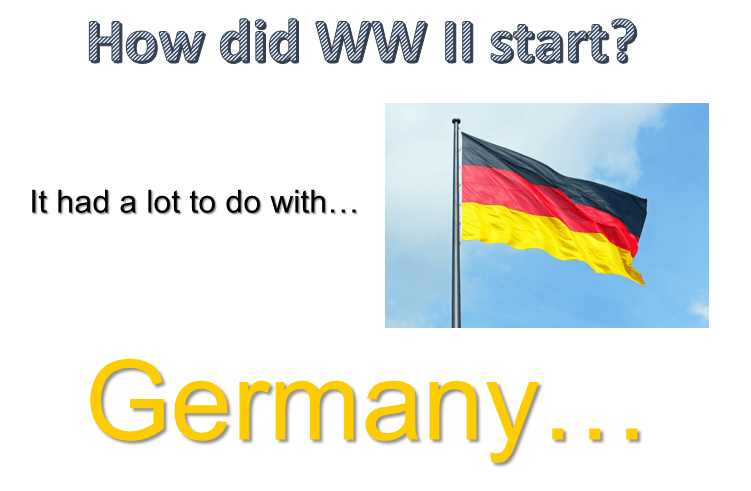
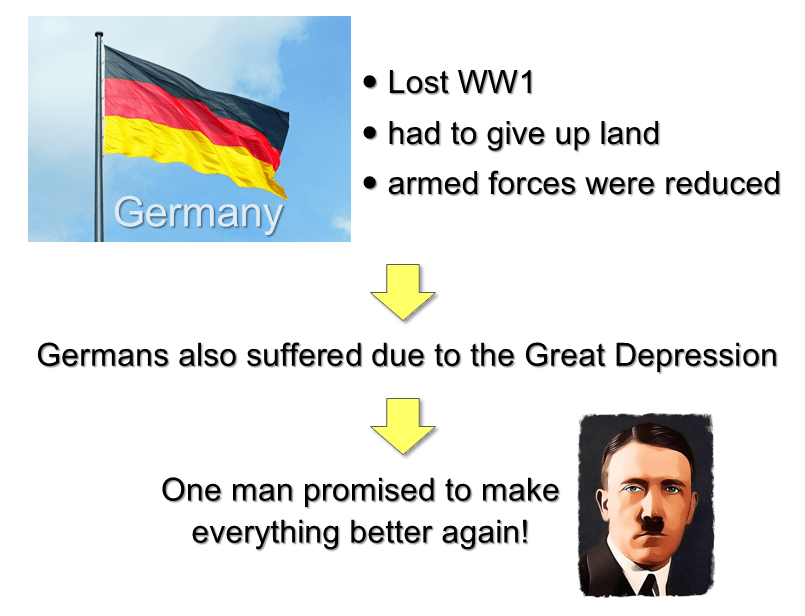
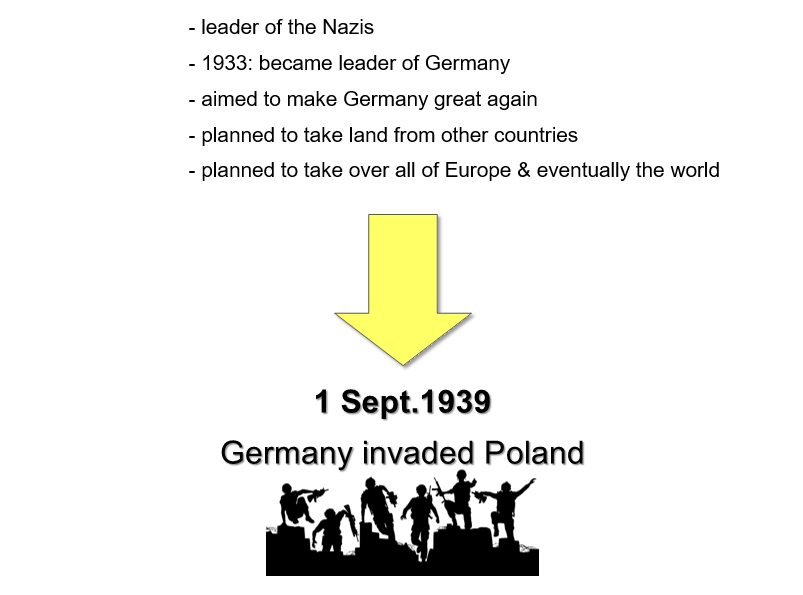
So, how did WW2 start?

The flowchart below shows how Germany had some grievances after WW-1, which eventually led to WW-2.

3.

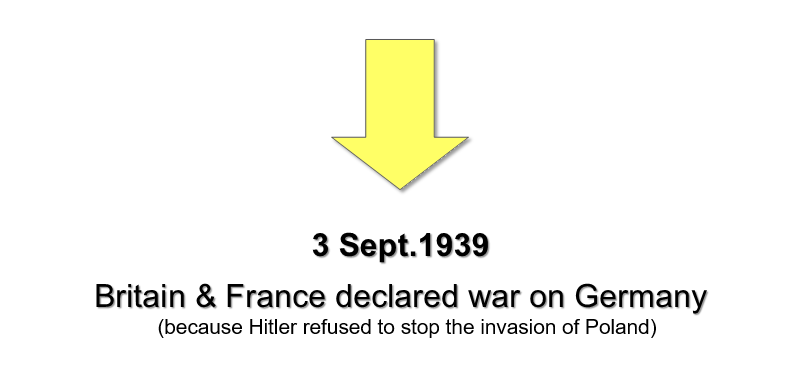
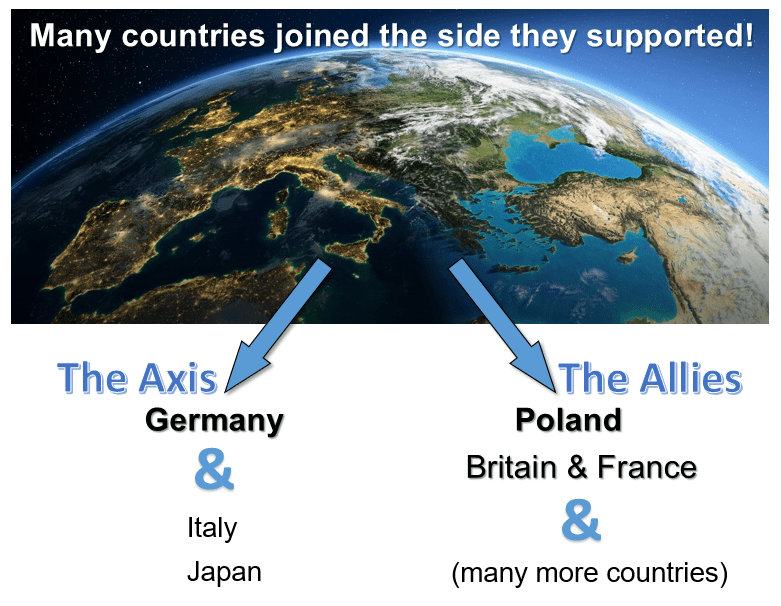
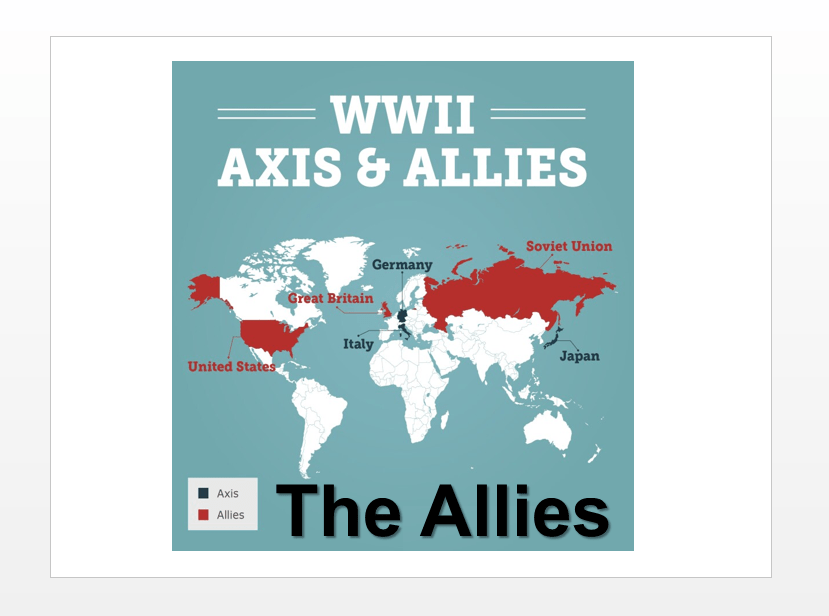
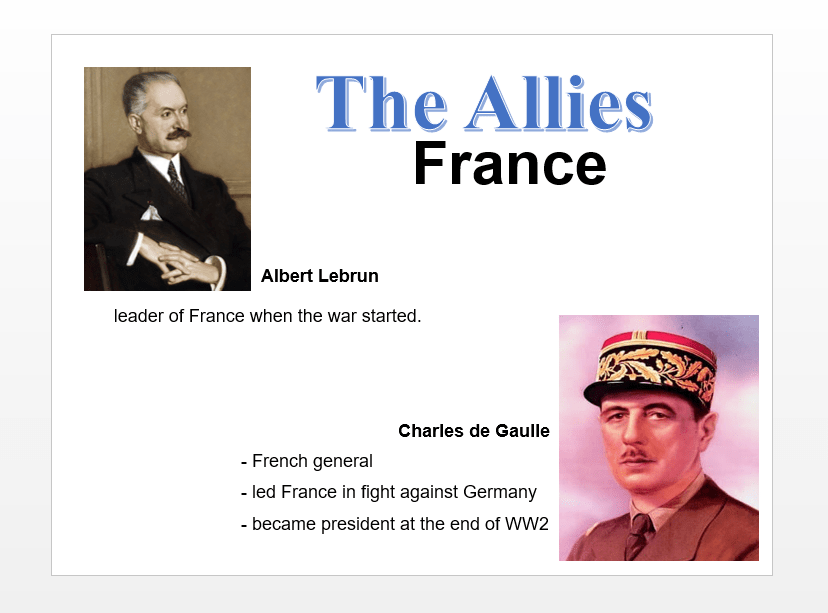
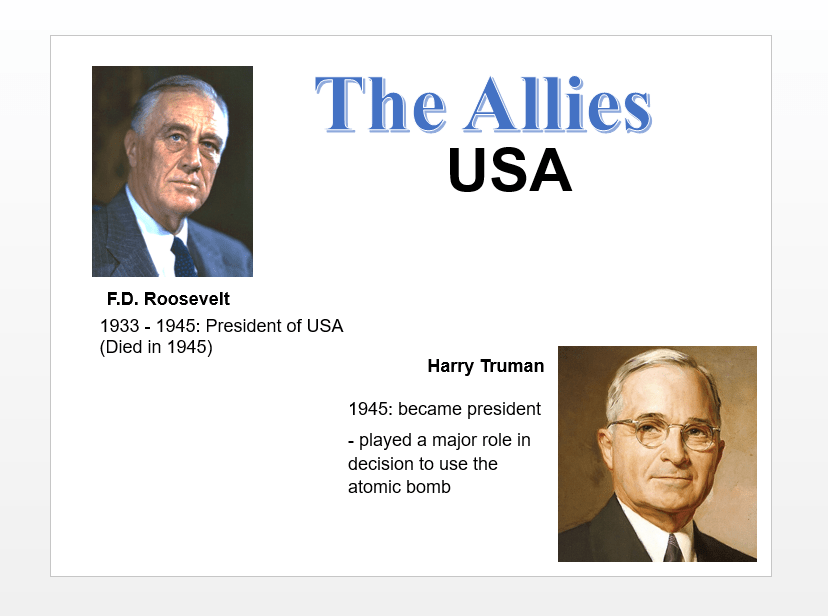
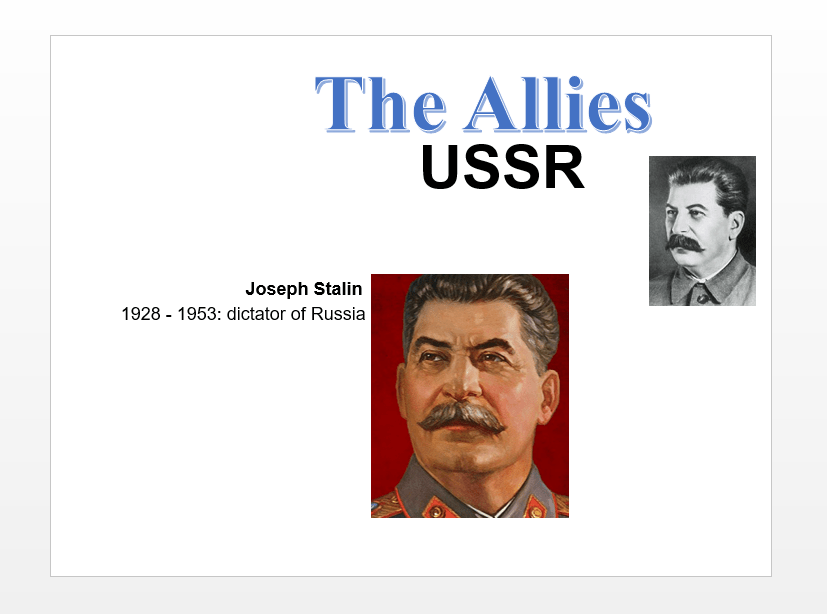
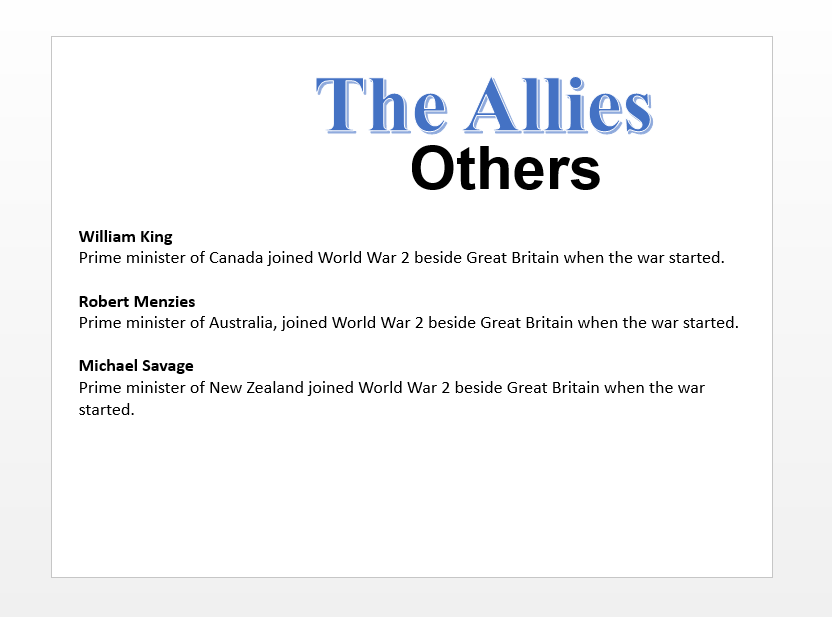
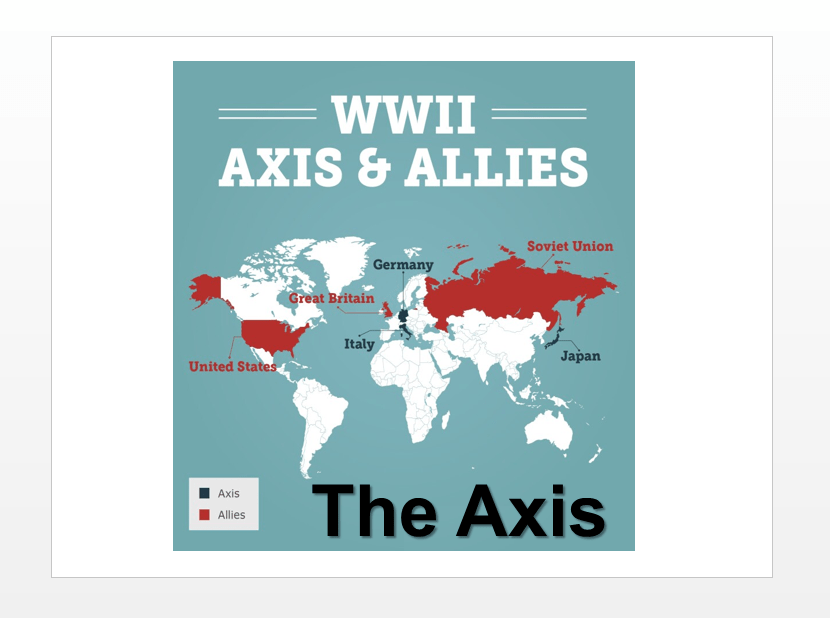
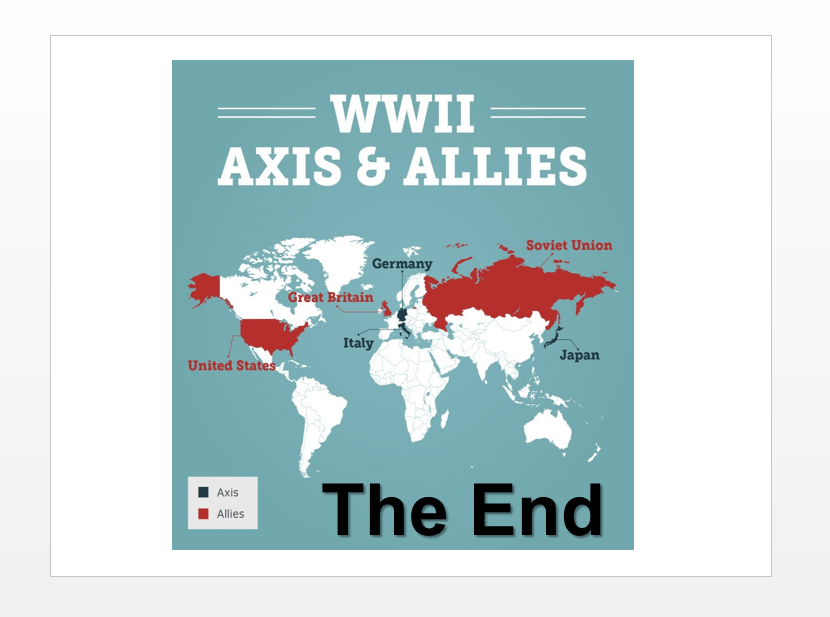
When Britain and France declared war on Germany, many more countries joined to help one of the two sides in the war. Here are the two sides that fought against each other:

4.

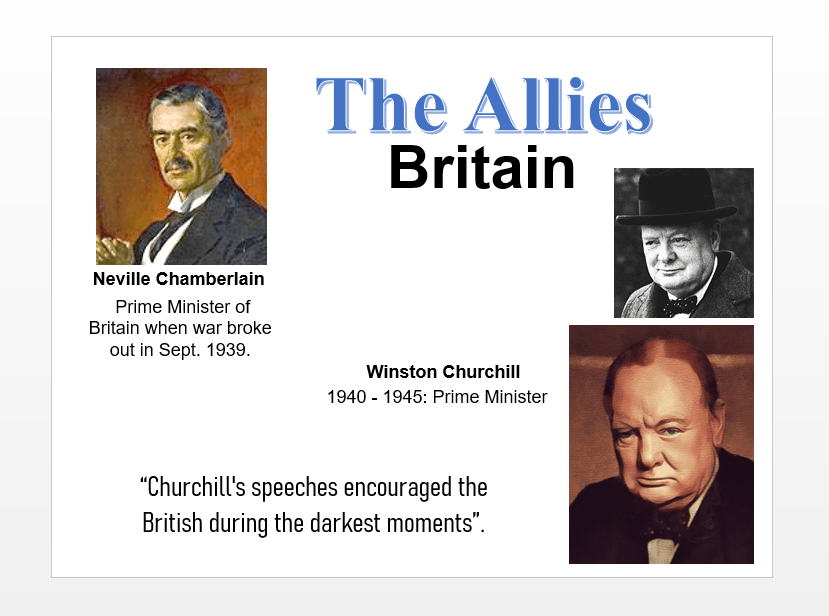
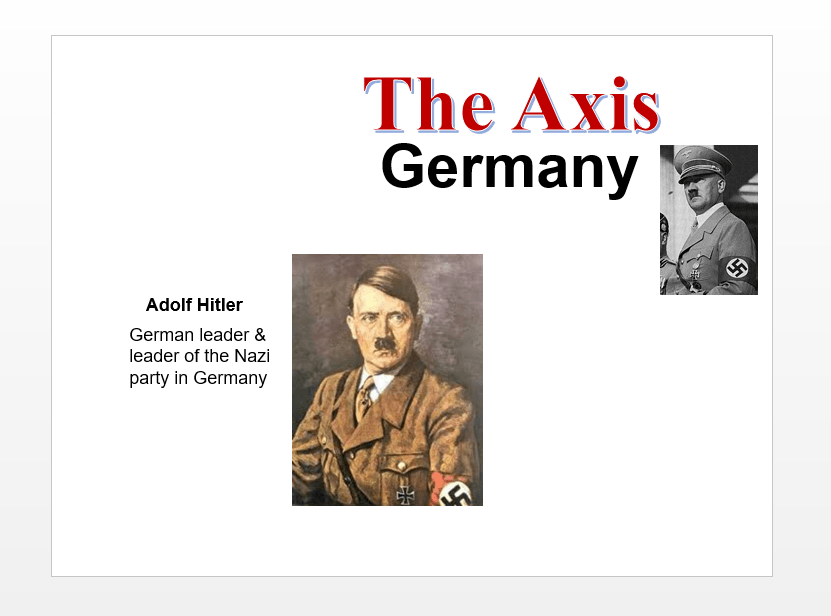
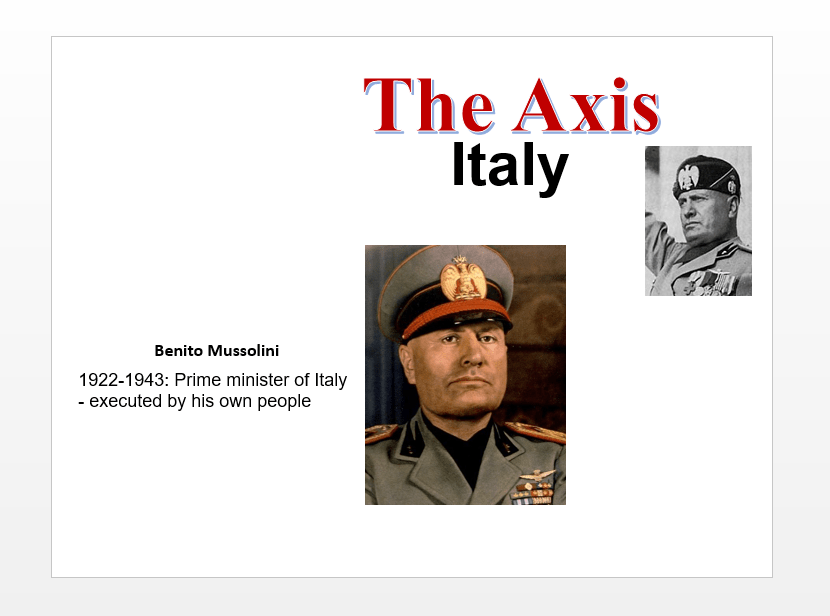
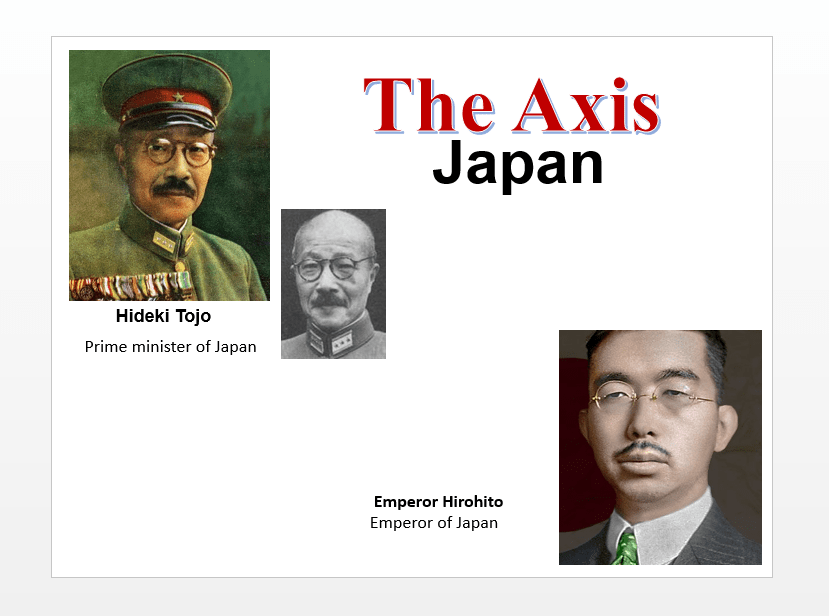
So, who were the leaders of these wartime countries? The videos below will give you an idea…

-1-

WW2 & WW1 Leaders singing. (0:30 minutes long)

-2-

Numa Numa WW2. (0:36 minutes long)

5.

To learn a little more about the wartime leaders, swipe through the slides below.

6.

Read again…

7.

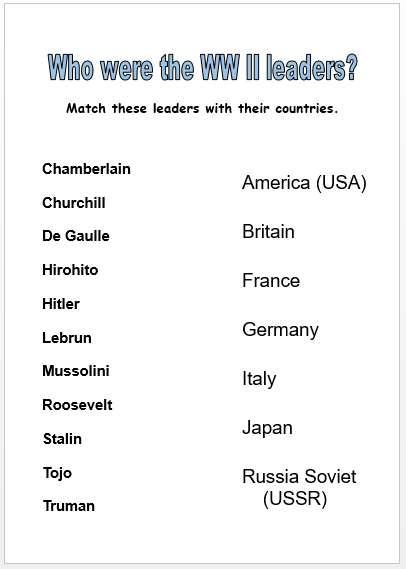
Complete the worksheet…

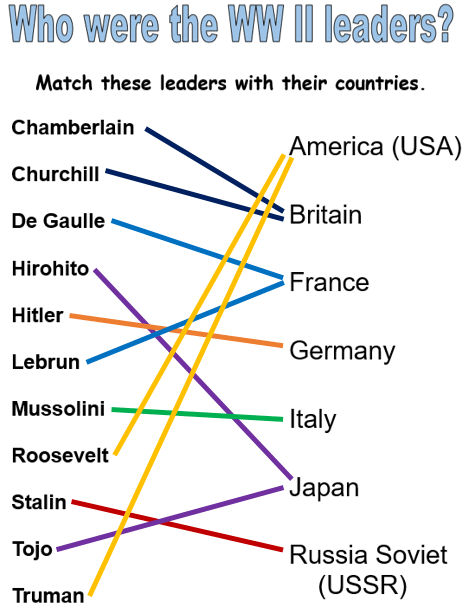
SOLUTION

8.

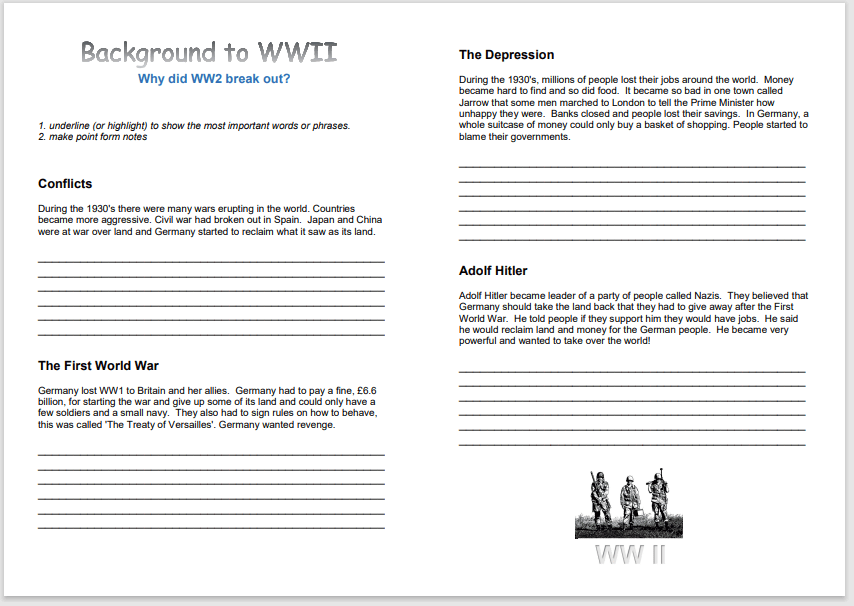
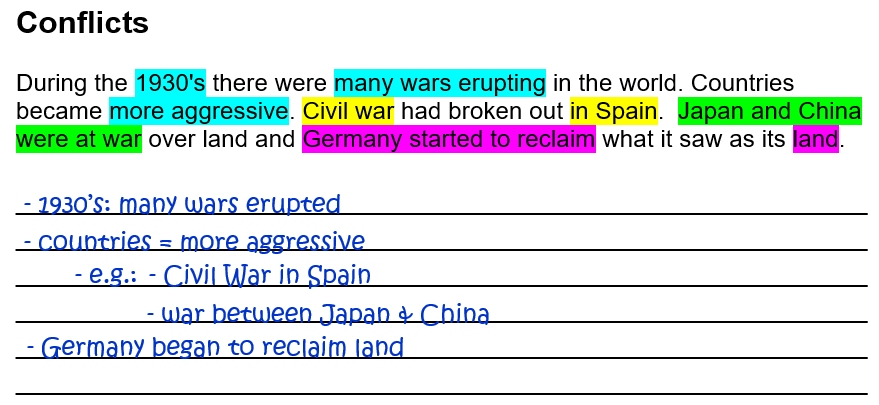
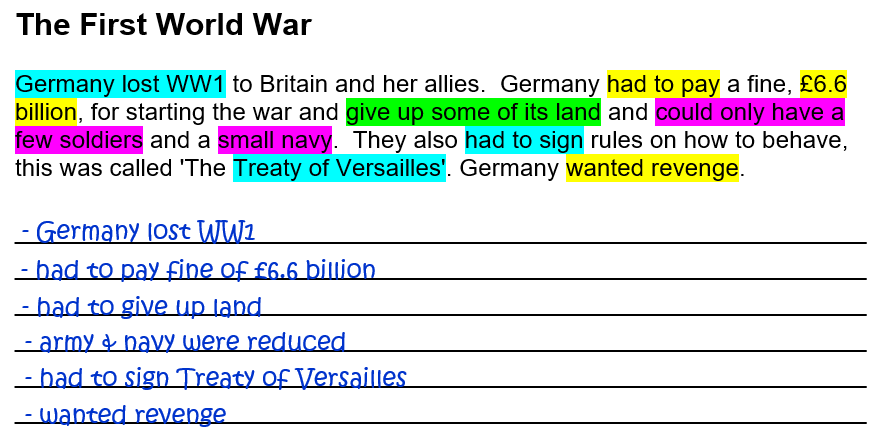
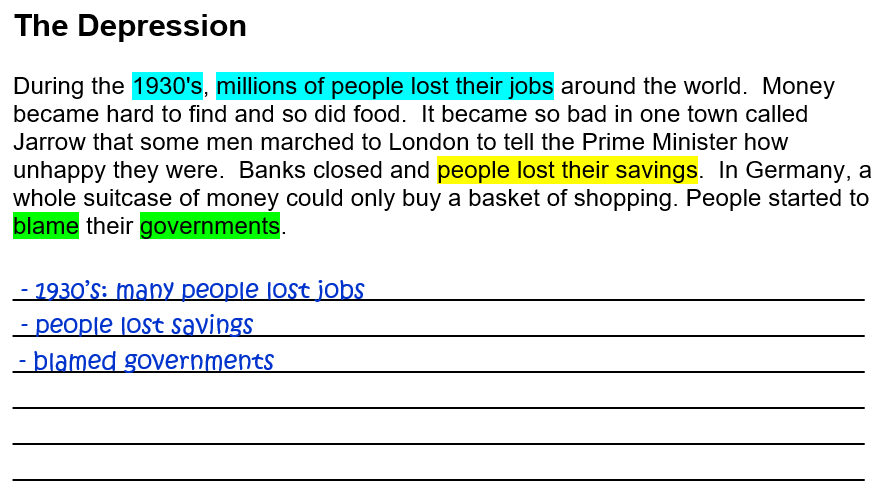
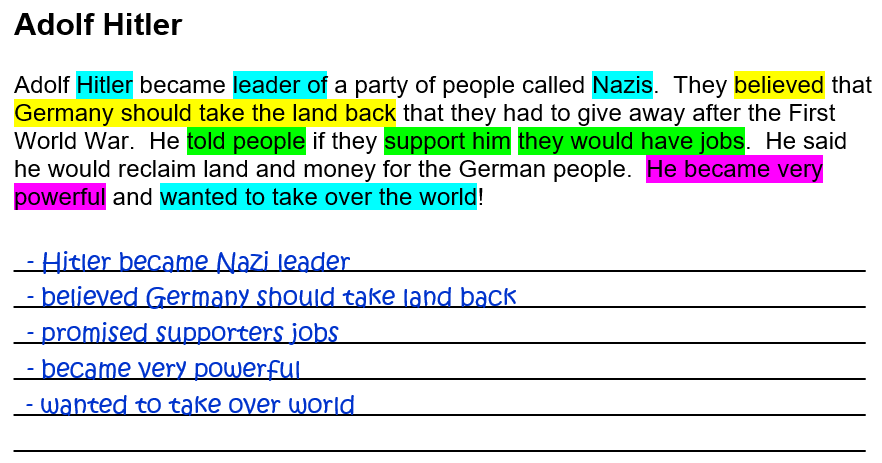
Let’s examine the reasons for WW2 in a bit more detail. Read the reasons given on the worksheet. Then highlight the most important points and make point-form notes.

SOLUTION

9.

(This video may be a bit challenging.)

World War II: How did it starts? (3:08 minutes long)

10.

Useful Links for WW2:

—WORKBOOK—

Click on the book to access an online flip-book version of this workbook.

———-

—ADDITIONAL MATERIAL—

You may be asked to complete more tasks in your WW2 Workbook!

——-&——-

(WordPress advertisements may appear below.)

Y6: 1-11. Victorian Christmas Traditions

The Victorians Lessons

Today we are going to look at Victorian Christmas Traditions.

  • to discover the origins of some Christmas Traditions
  • to compare the Victorian Christmas with modern Christmas celebrations
  • to make our own Victorian Christmas Cards!

1.

First we are going to watch a few videos…

Victorian Christmas Traditions

(1:27 minutes long)

2.

Odd Victorian Christmas Traditions

(1:34 minutes long)

3.

How The Victorians Made Christmas

(6:08 minutes long)

4.

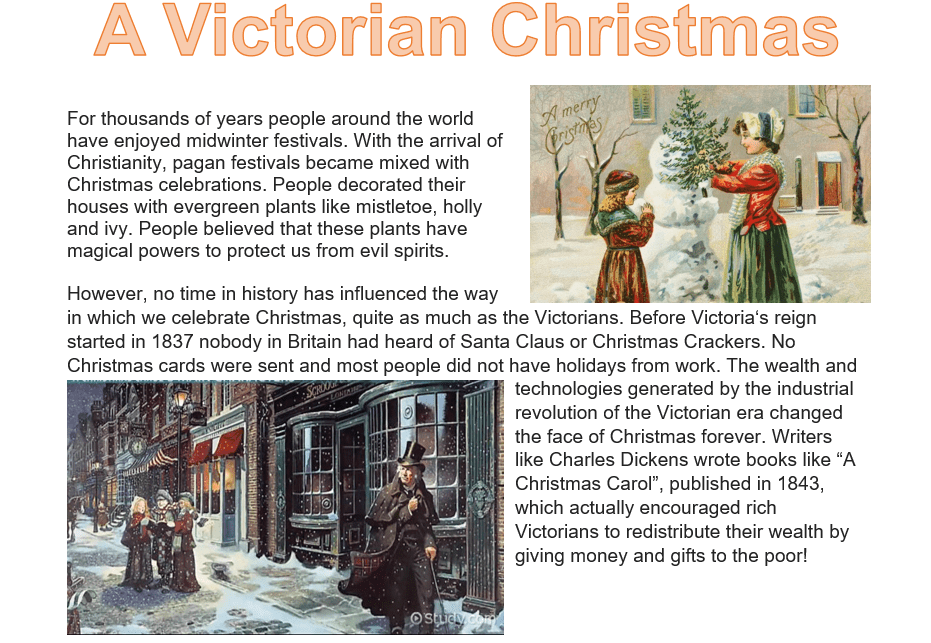
Read the article below to recap what you learnt so far about Victorian Christmas Traditions.

Pay attention, because you will do a task after the reading…

5.

SOLUTION

6.

We have already heard that Victorian Christmas cards were sometimes a bit weird…

Click on the card to see some really weird Victorian Christmas Cards!

7.

Now you are ready to make your own Victorian Christmas Card for someone special! Here is what you need:

  • Card
  • Pictures
  • Scissors
  • Glue
  • Colours

Here are some useful images of Victorian Cards. You can use them for inspiration, or print and cut them out to stick on your Christmas Card.

8.

-1-

(5:13 minutes long)

Victorians Had Really Weird Christmas Traditions!?

-2-

(6:12 minutes long)

Make Your Own Victorian Inspired Christmas Crafts

-3-

(14:56 minutes long)

Victorian Christmas Traditions

-4-

(25:00 minutes long)

A Christmas Carol 1971 ~ Animated ~

(Alastair Sim ~ Full Length ORIGINAL POST)

You can access the flipbook here.

(WordPress advertisements may appear below.)
16. Christmas Poem

Today we are going to look at the origins of Santa Claus!

  • to learn why where Santa Claus “really” comes from
  • to learn a little about conjunctions
  • to make a Christmas card for someone special

1.

So, what about Santa Claus? Let’s recap from the previous lesson.

Remember the video below? It gives information about the origins of the traditional Father Christmas, also known as Santa Claus.

Evolution of Santa Claus. (2:48 minutes long)

2.

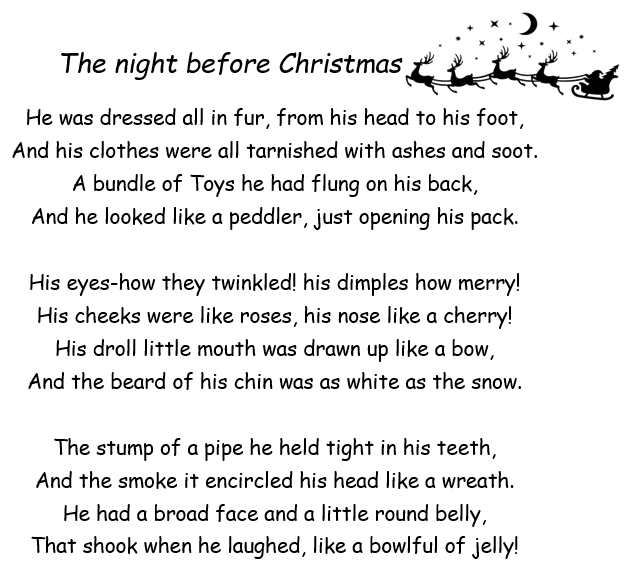
Previously we heard that a poem called “The Night before Christmas” inspired the creation of Santa Claus. Here is a full reading of the poem…

Twas the Night Before Christmas – as told by Perry Como. (4:05 minutes long)

(start watching at 0:20 minutes)

3.

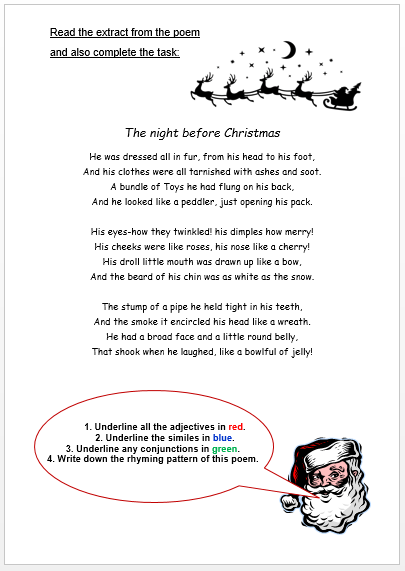
Read this extract, taken from the poem “Twas the Night before Christmas”.

4.

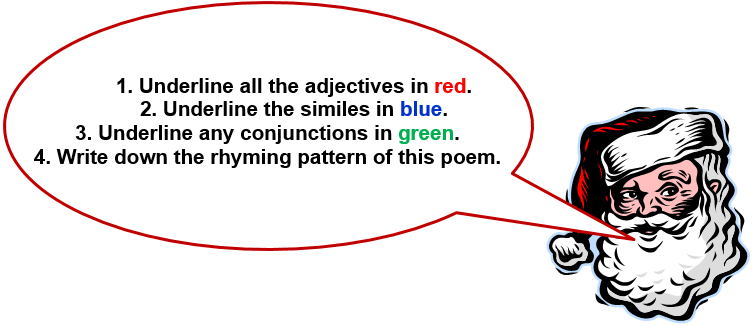
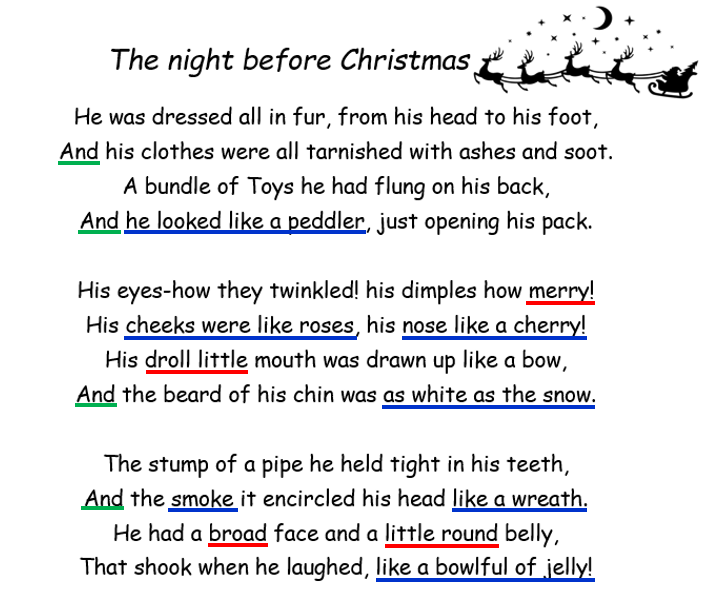
Follow the instructions below the extract.

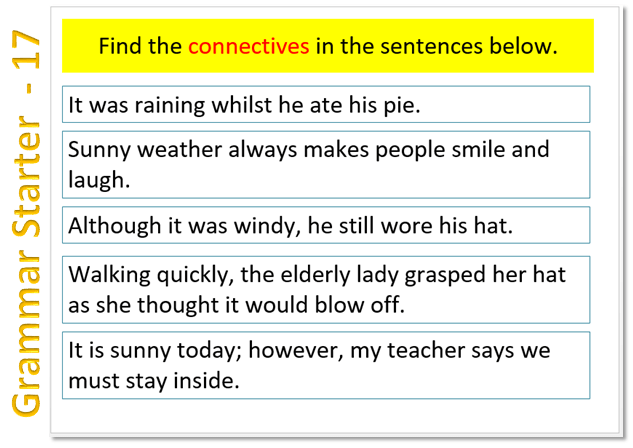
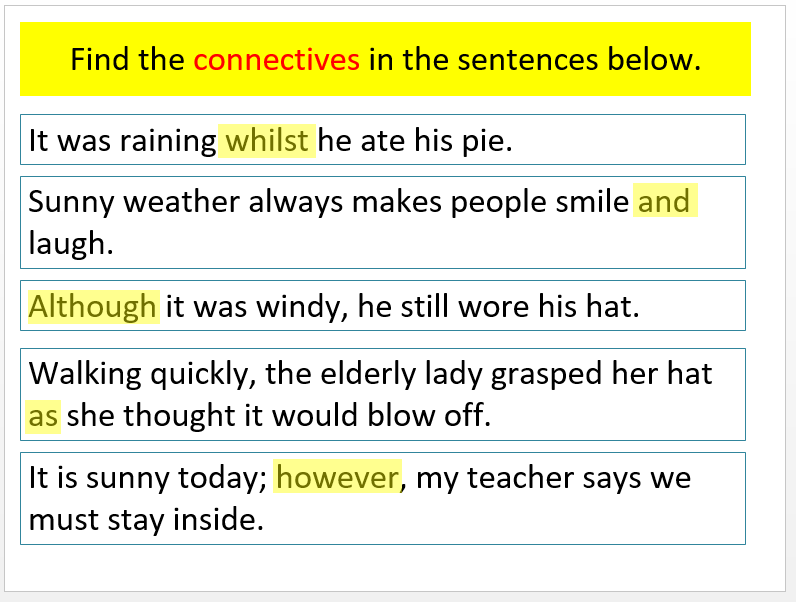
SOLUTION

5.

Do you know what a conjunction is?

Conjunctions. (2:38 minutes long)

6.

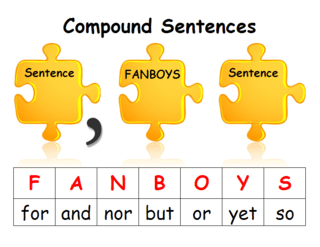
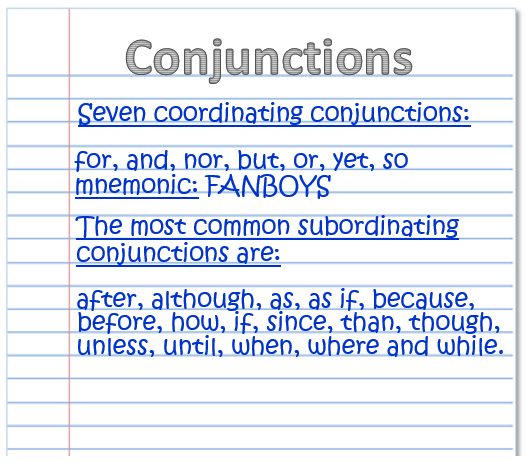
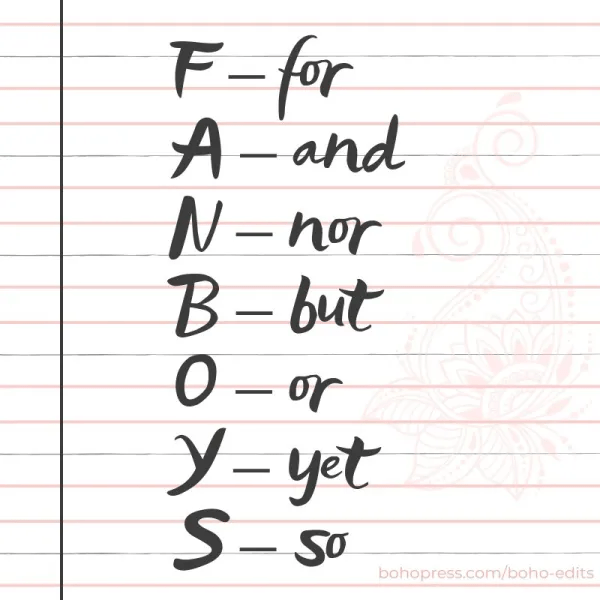
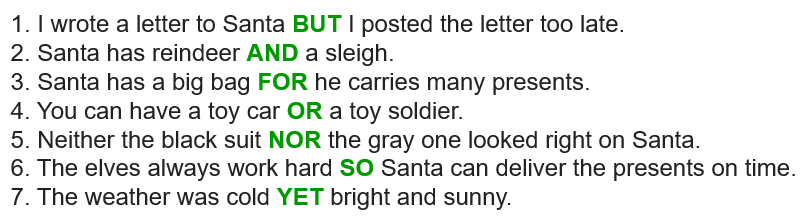
Remember this mnemonic from last year? It helps us to remember the seven coordinating conjunctions.

Copy the following notes about conjunctions into your book:

7.

8.

Use conjunctions to join the sentences below:

  1. I wrote a letter to Santa. I posted the letter too late.
  2. Santa has reindeer. Santa has a sleigh.
  3. Santa has a big bag. He carries many presents.
  4. You can have a toy car ____ a toy soldier.
  5. Neither the black suit ____ the gray one looked right on Santa.
  6. The elves always work hard ____ Santa can deliver the presents on time.
  7. The weather was cold. It was bright and sunny.

SOLUTION

9.

Here is more about conjunctions:

(This is a detailed tutorial.)

Conjunctions. (8:49 minutes long)

—TEXTBOOK—

You can access useful information in the Year 7 textbook!

—TEXTBOOK—

(WordPress advertisements may appear below.)
15. Christmas Time!

Today we are going to look at the origins of Christmas!

  • to learn why we celebrate Christmas
  • to recap our vocabulary task on Christmas

1.

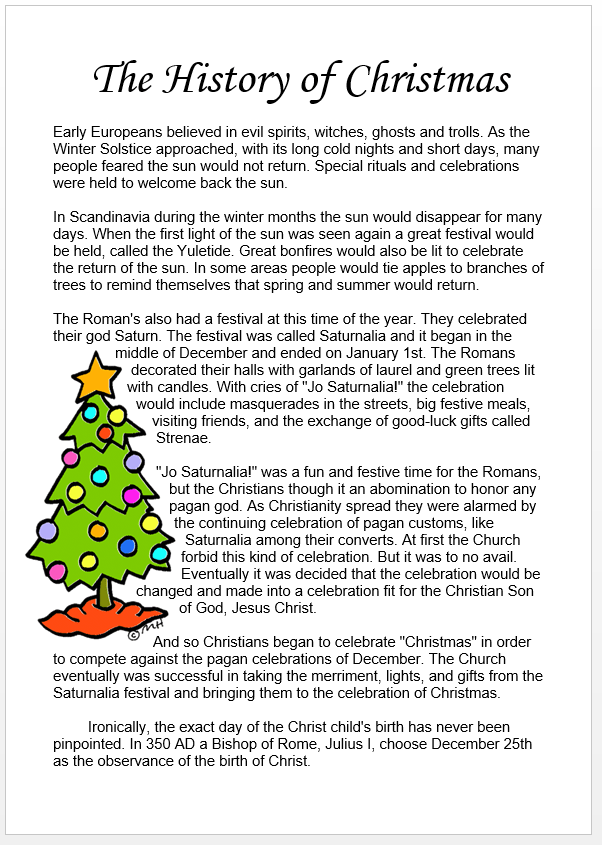
Why do people celebrate Christmas?

Read the article to find out more about the origins of Christmas.

2.

The origins of Christmas is explained in the video below.

Origins of Christmas. (3:03 minutes long)

3.

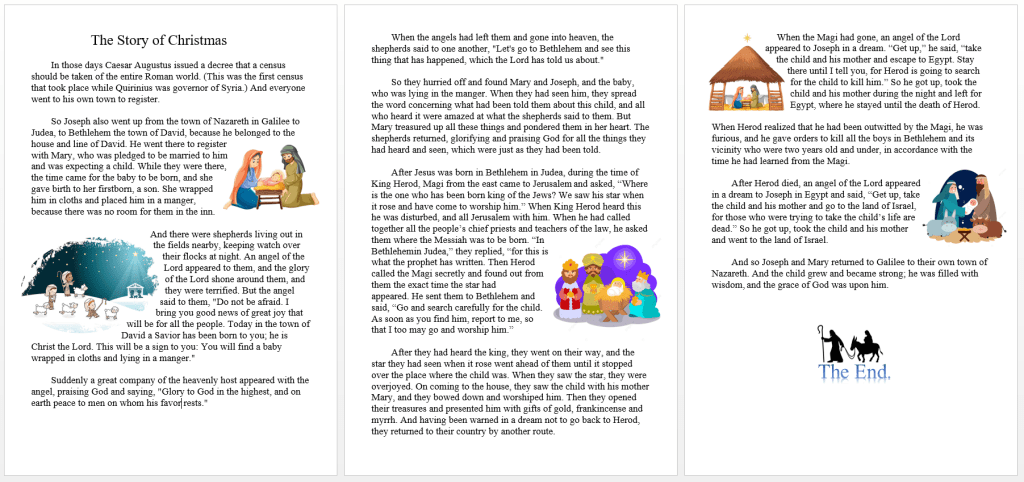
So, today Christmas is associated with the birth of Christ.

Let’s now also read the Christmas Story.

4.

The video below tells the story of Christmas!

The Christmas Story. (5:09 minutes long)

5.

So, what about Santa Claus?

The video below gives information about the origins of the traditional Father Christmas, also known as Santa Claus.

Evolution of Santa Claus. (2:48 minutes long)

6.

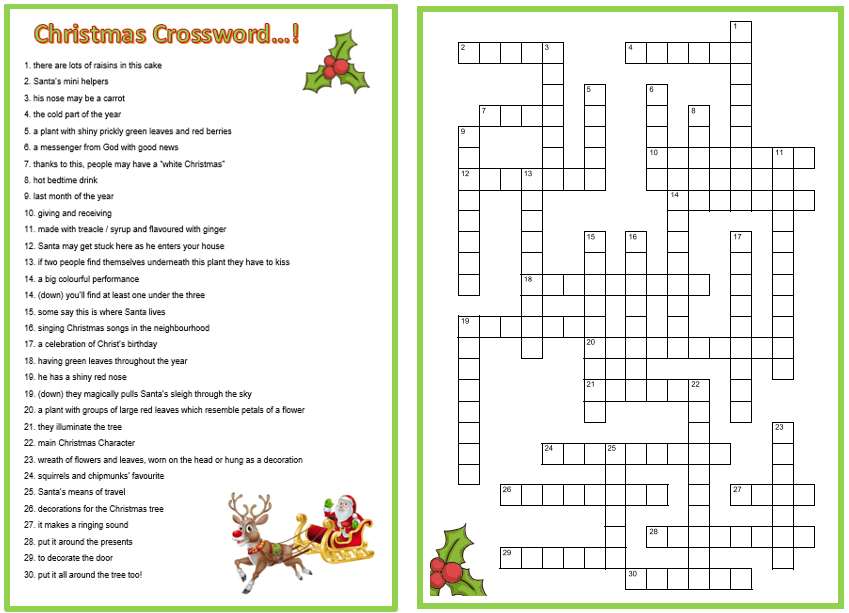
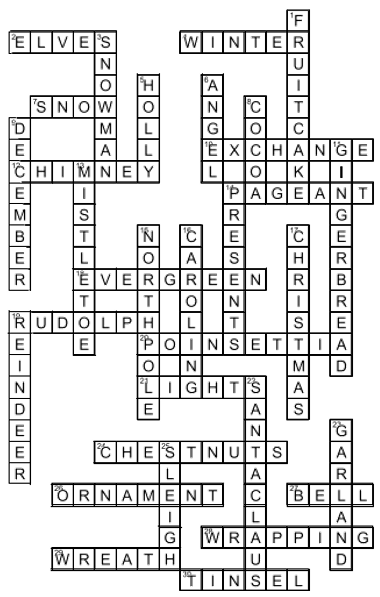
Finally, complete the Christmas crossword puzzle!

7.

Here is a fully animated reading of The Christmas Story…

The Christmas Story – The Fully Animated Reading. (9:34 minutes long)

—TEXTBOOK—

You can access useful information in the Year 7 textbook!

—TEXTBOOK—

(WordPress advertisements may appear below.)
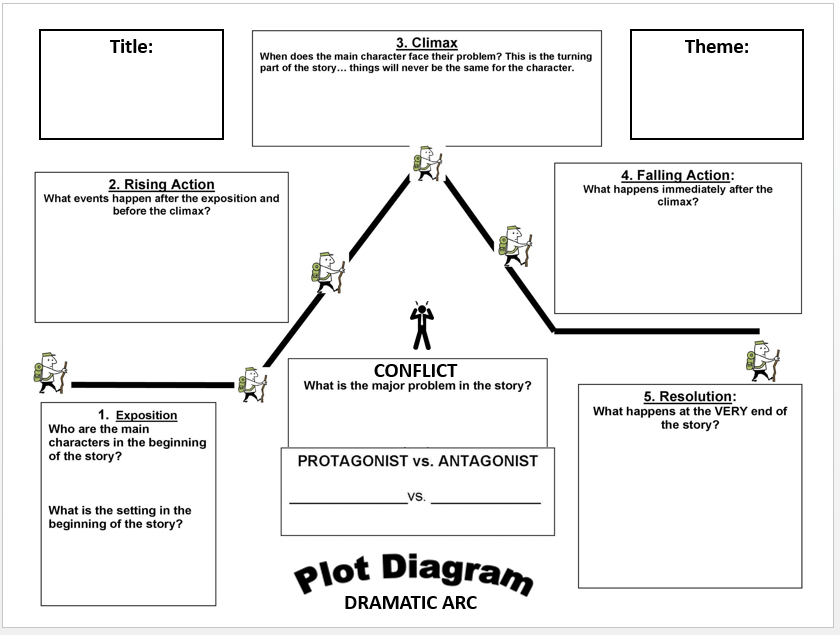
14. Urban Legends & Dramatic Arc

Today we are going to write Urban Legends…

  • to understand how the dramatic arc works
  • to use the dramatic arc to write an urban legend

1.

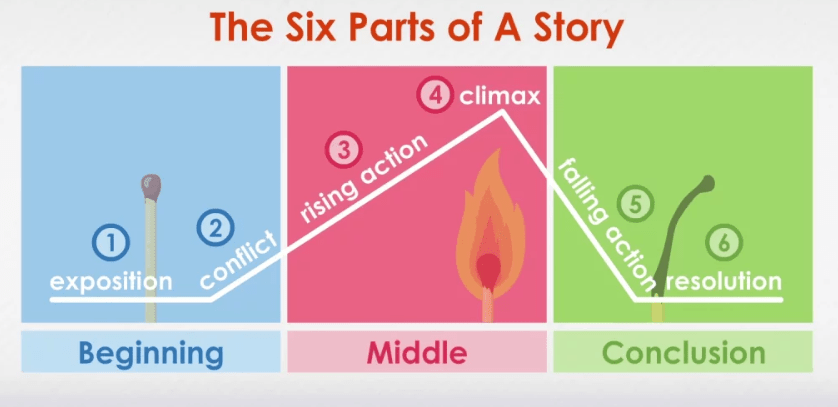
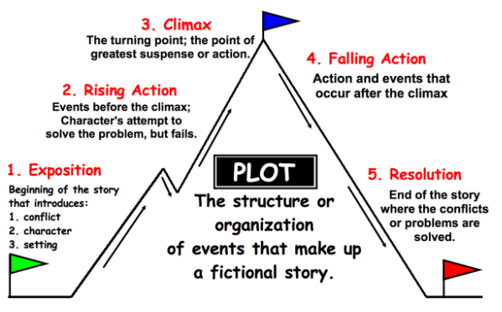
A good story often makes use of this structure:

This is also known as the “dramatic arc”. Here is a more detailed explanation of the dramatic arc:

2.

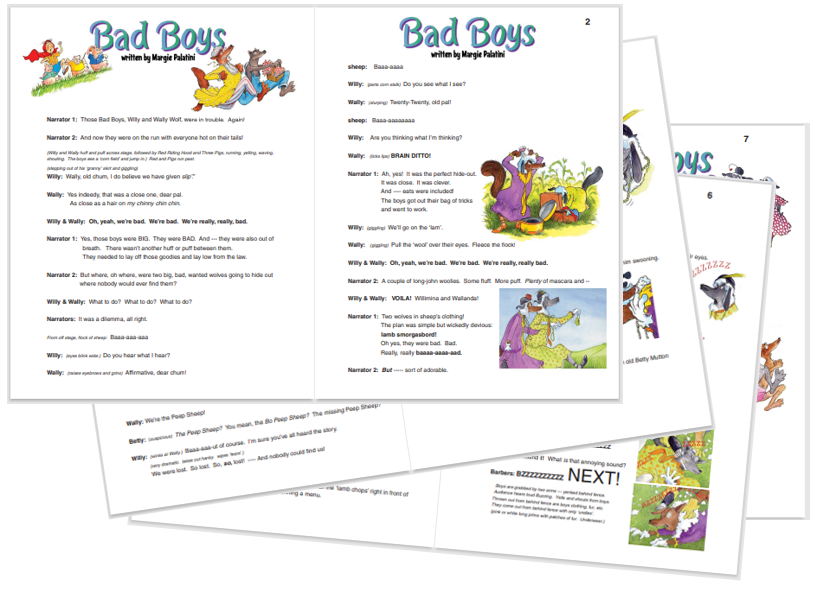
Let’s read a story to illustrate an example of Dramatic Arc. This story comes in the form of a play…

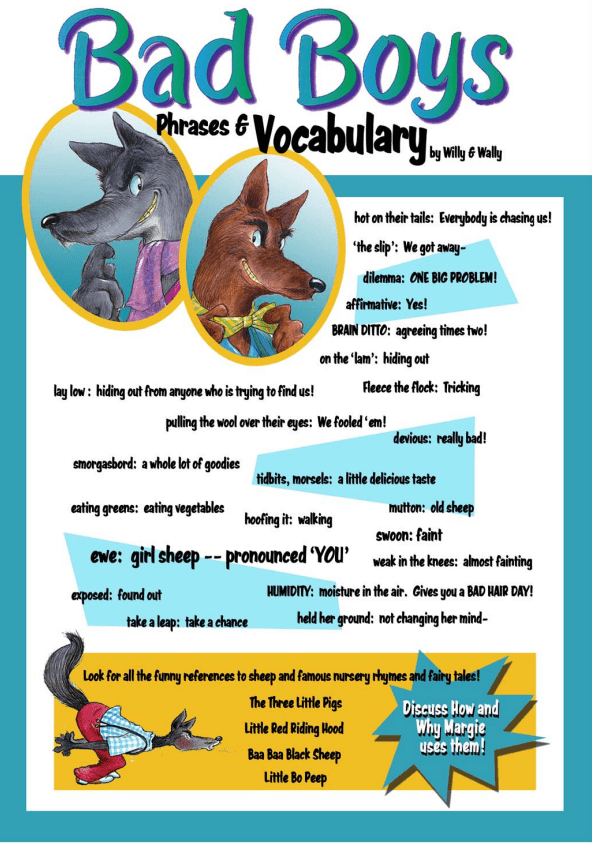
3.

Let’s make sure that you understood everything and know these words and phrases.

4.

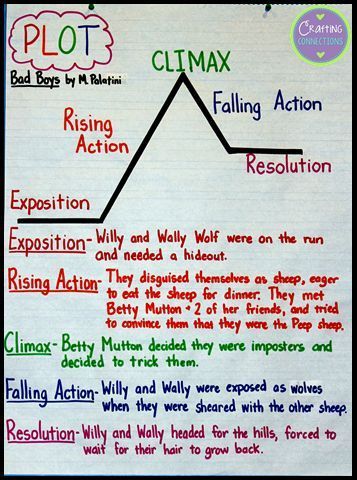
So, here is how we can identify the dramatic arc in this story:

5.

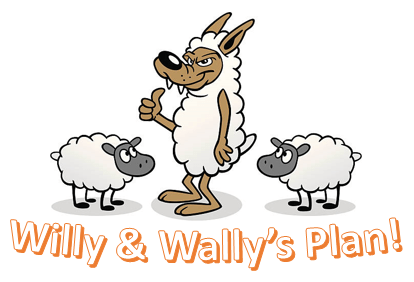
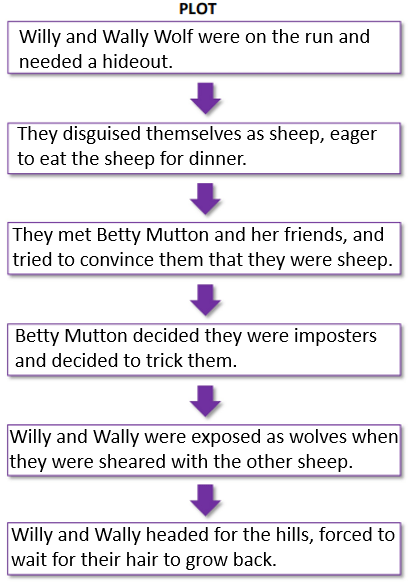
Imagine you are going to write a story about wolves disguised as sheep…

One can display the flow of the story like this:

6.

Can you identify the exposition, rising action, climax, falling action, and resolution?

SOLUTION

7.

The explainer video below shows how the dramatic arc works.

Using the Dramatic Arc. (2:40 minutes long)

8.

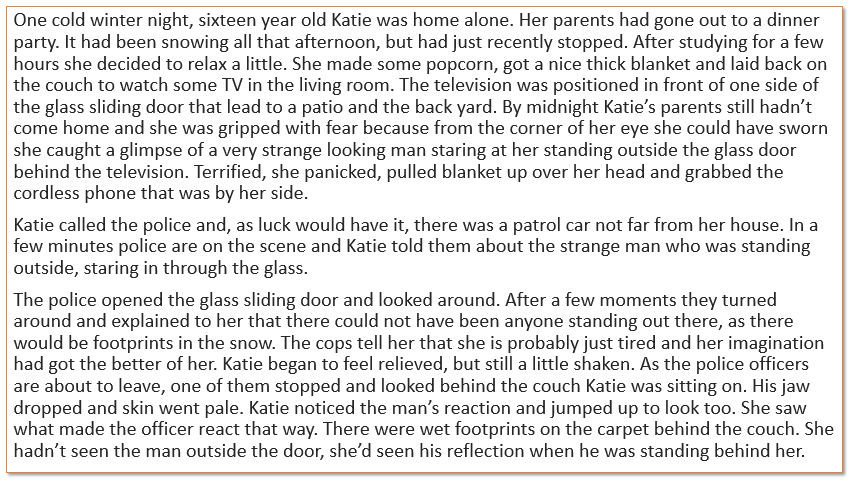
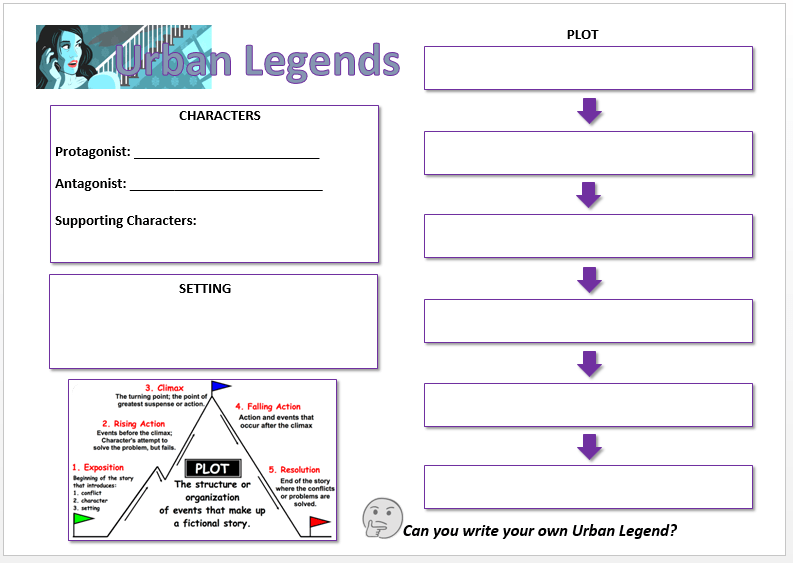
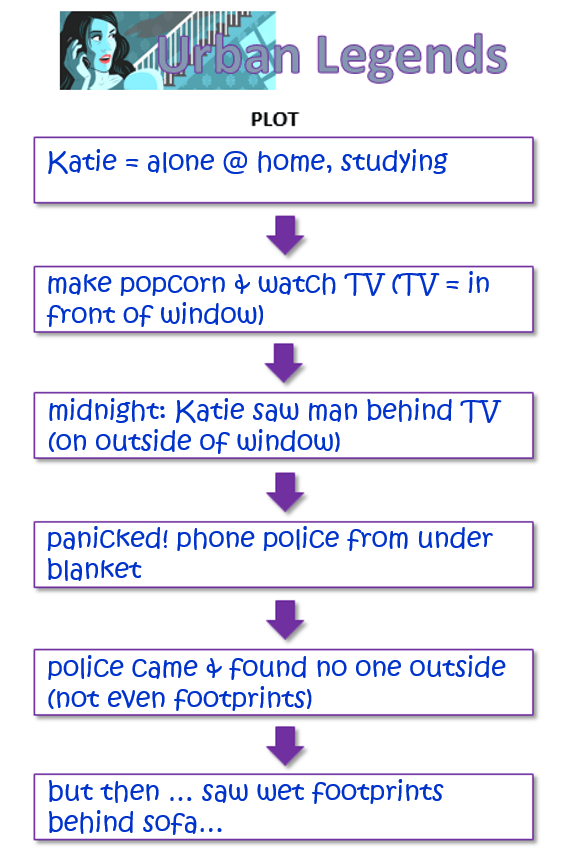
Read the first Urban Legend again and see if you can break it up into a plot flow-chart, according to the dramatic arch.

Use the flow-chart worksheet provided for this task.

SOLUTION

DRAMATIC ARC…?

If you want more examples of Dramatic Arc flow charts, look at the following examples from A Monster Calls:

The First Tale

The Second Tale

9.

Now plan and write your own Urban Legend!

  • Use the plot flow-chart for the initial planning.
  • Then use the Dramatic Arc Plot Diagram to finalise your planning.
  • Use lined paper to write the Urban Legend on. (For this task the Urban Legend must not be longer than one page!)

—TEXTBOOK—

You can access useful information in the Year 7 textbook!

—TEXTBOOK—

(WordPress advertisements may appear below.)

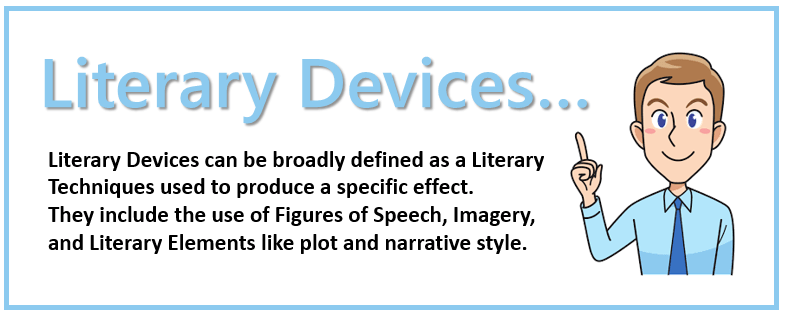
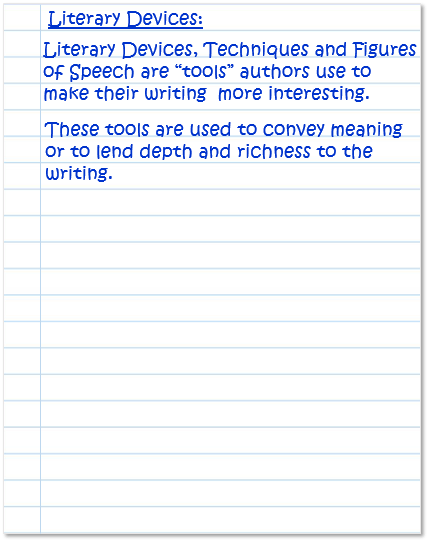
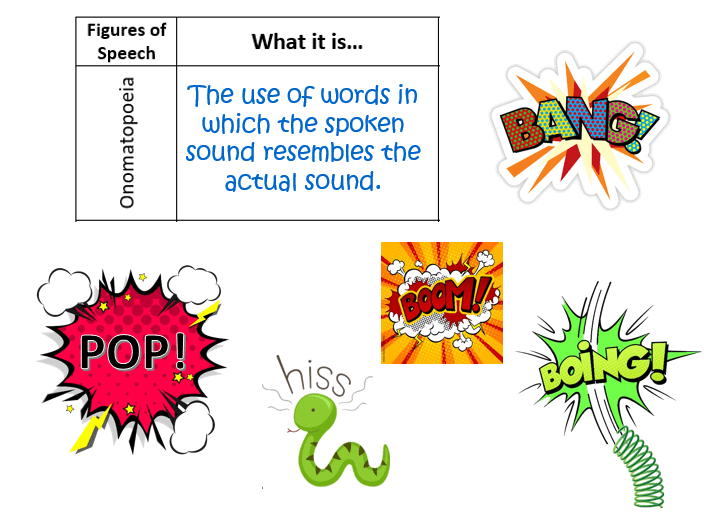
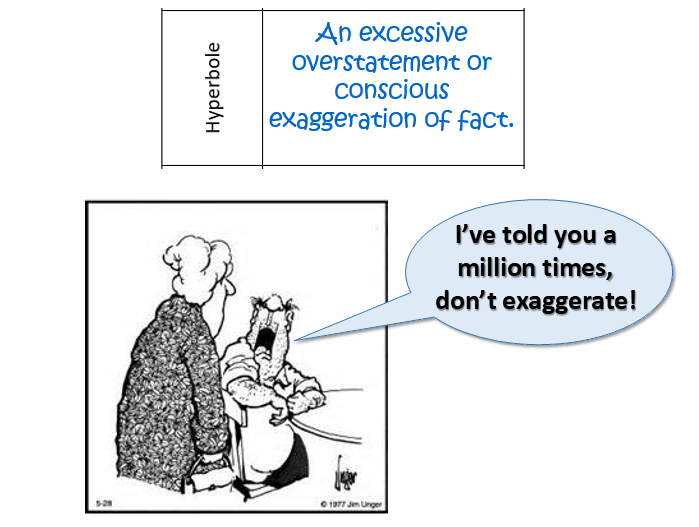
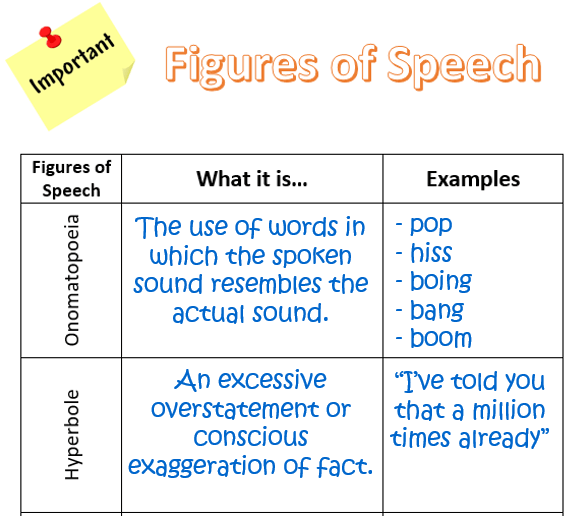
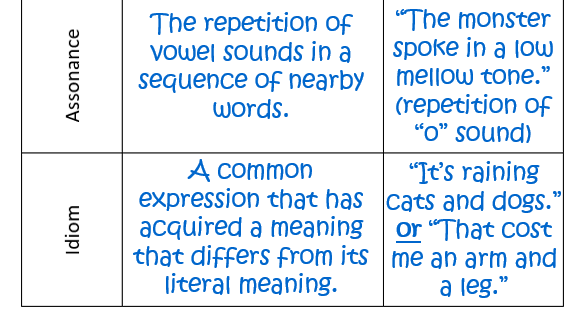
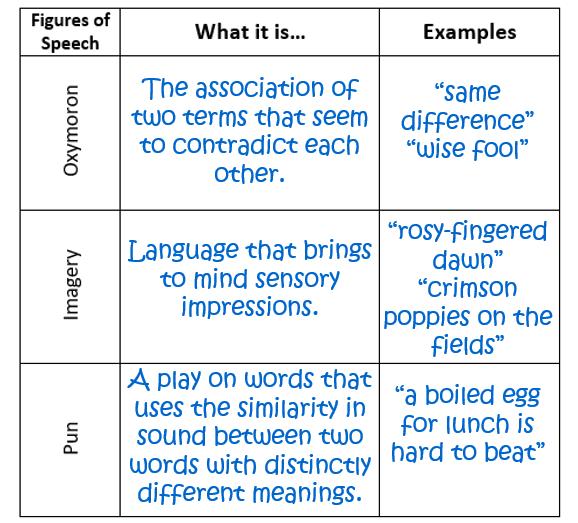
13. Figures of Speech

Today we are going to look at more figures of speech that can make our writing interesting!

  • to recap previously introduced figures of speech
  • to learn more figures of speech

1.

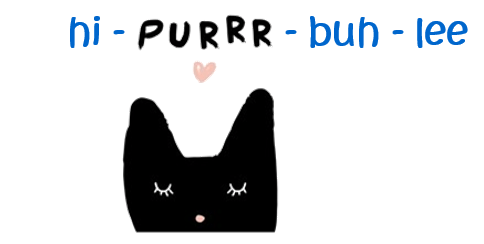
Onomatopoeia

2.

Hyperbole

3.

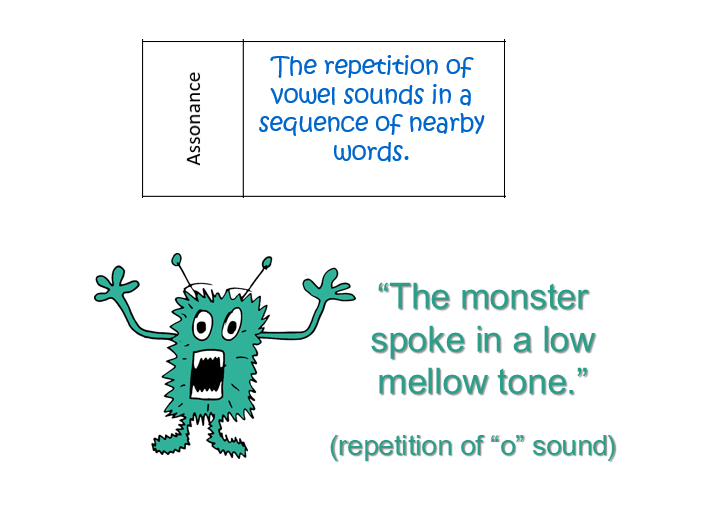
Assonance

4.

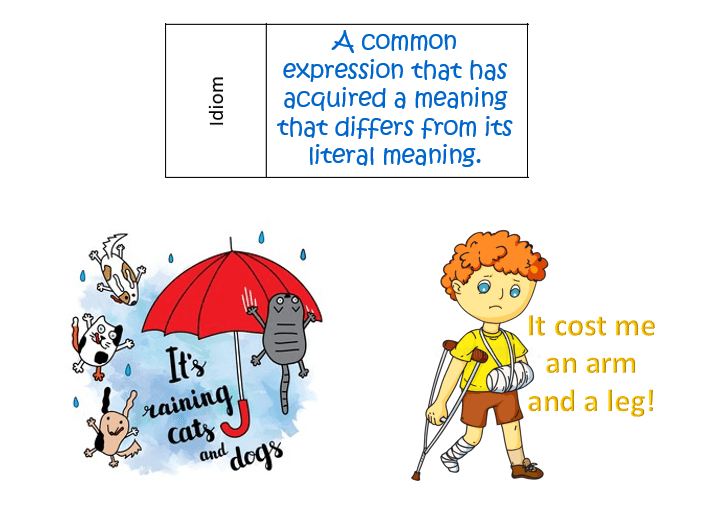
Idiom

5.

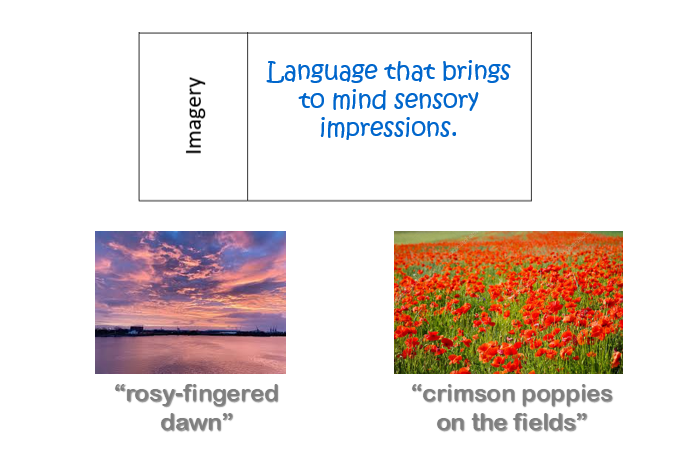
Imagery

6.

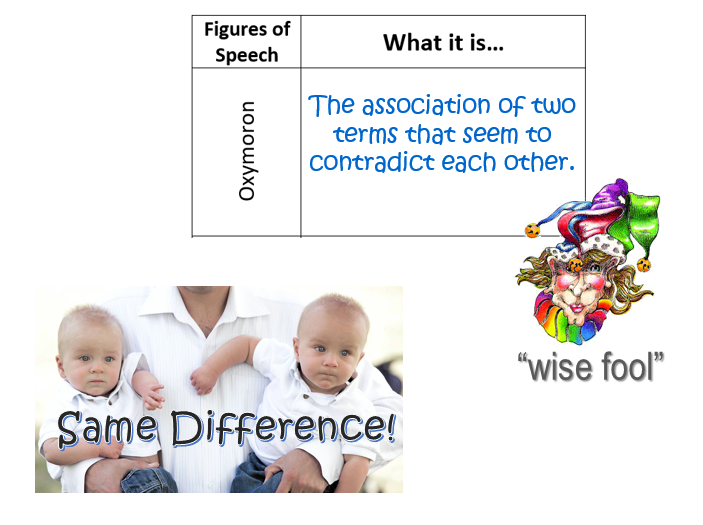
Oxymoron

7.

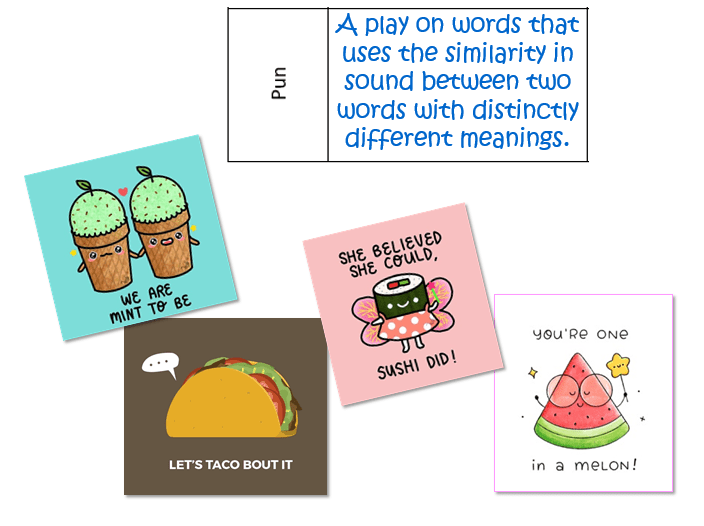
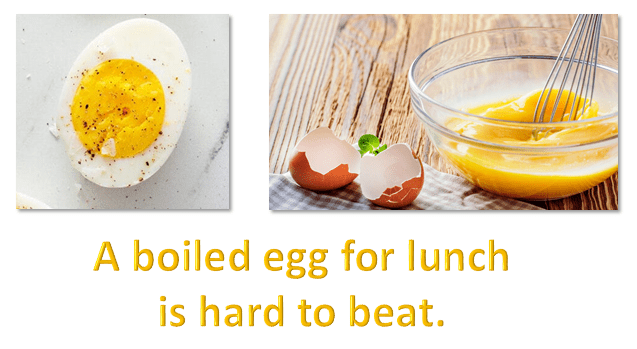
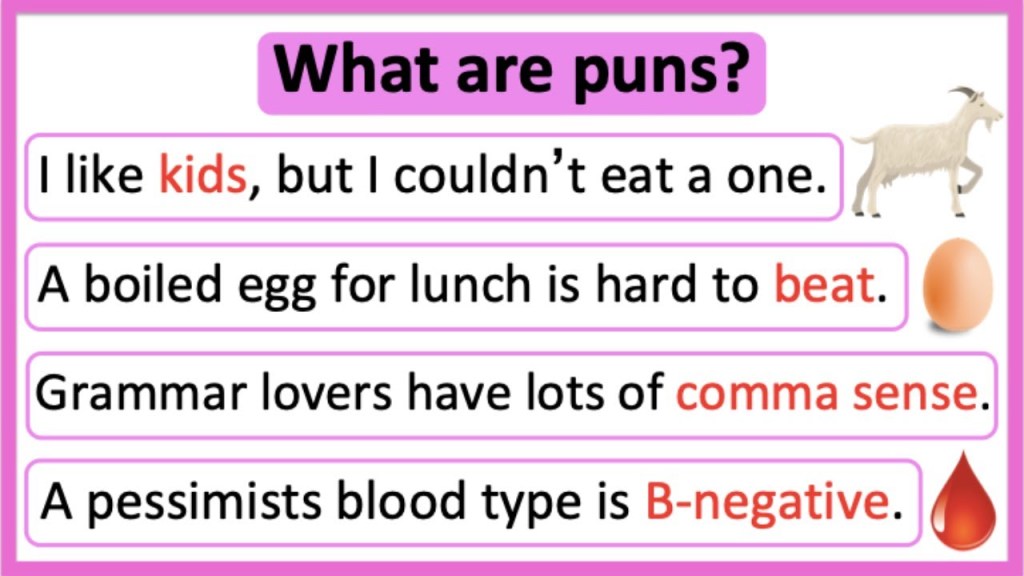
Pun

8.

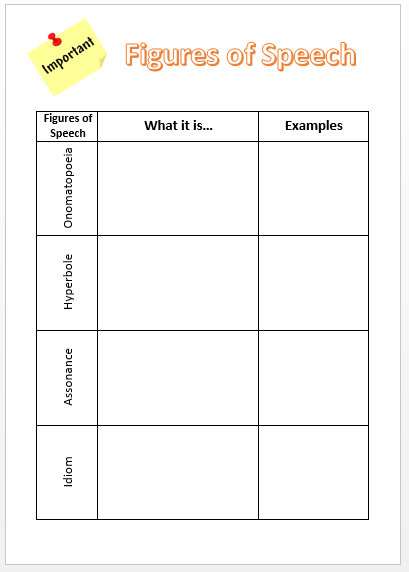
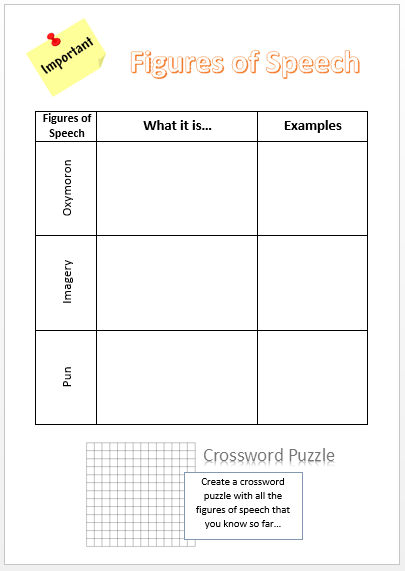
Complete the worksheets (provided) by making notes and giving examples of the figures of speech, as indicated.

SOLUTION

And:

9.

Now, let’s recap by watching a video or two on figures of speech!

Literary Devices. (12:11 minutes long)

Using Literary Devices to Enhance Storytelling. (2:41 minutes)

10.

Finally, make a crossword puzzle, as instructed on the worksheet…. You can make this manually, or use the button below to access an online crossword puzzle maker.

11.

Make a set of flash cards on the figures of speech… Then test your class mates to help them memorise the different figures of speech.

(Or use the class set to test each other.)

—TEXTBOOK—

You can access useful information in the Year 7 textbook!

—TEXTBOOK—

(WordPress advertisements may appear below.)
12. Discussing Urban Legends

Today we are going to have some group discussions about Urban Legends…

  • to select relevant evidence in order to make informed judgements about the urban legends
  • to get useful tips for group discussions
  • to use discussion skills to show an understanding of urban legends

1.

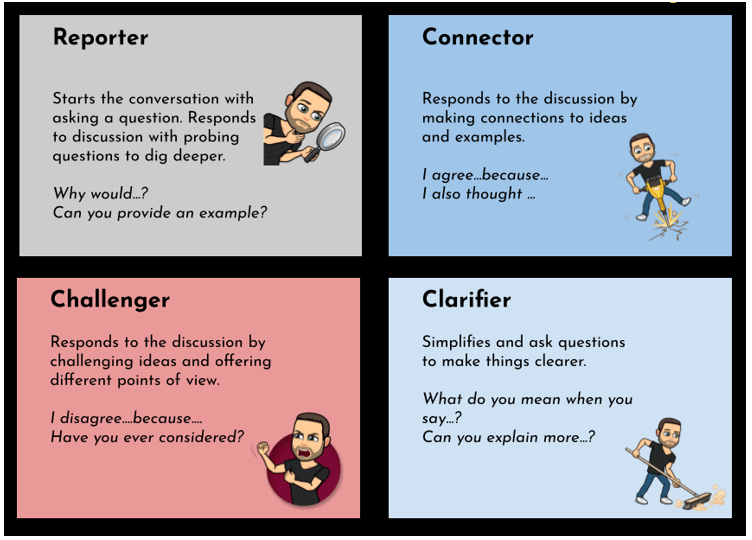
What different roles can we have during a discussion?

In discussions there are people with different roles – naturally. The video below shows the type of roles people may have in a discussion.

(You may find this clip to be a little complicated but it should, nevertheless, give you an idea.)

Discussion Techniques. (3:16 minutes long)

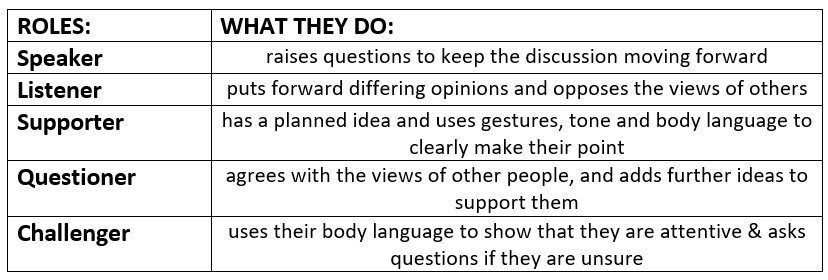
Below is a more simplified version of the different roles we can have during a discussion.

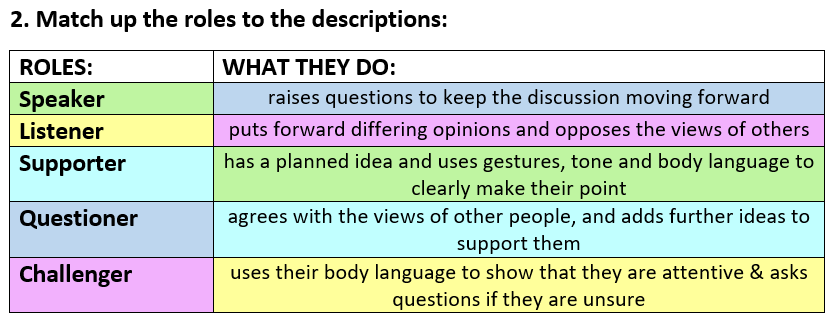
Or, we can put it this way: (Even more simplified…)

You need to match up the roles to the descriptions.

SOLUTION

2.

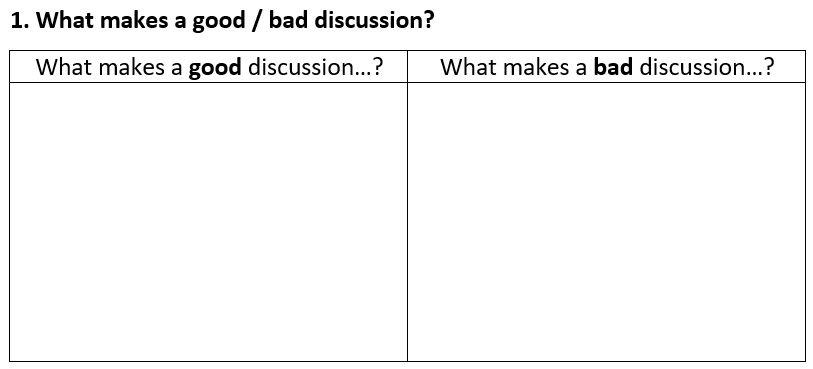
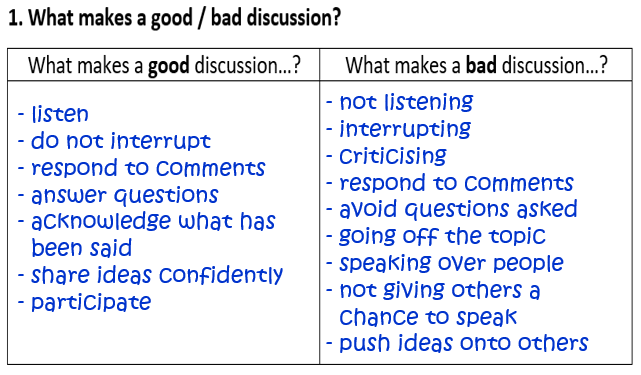
Now watch the video below and decide what makes a good / bad discussion. (On the sheet provided, write down what is good and what is bad. Think about this as you watch the video and write down ideas…)

Group Discussion Language. (5:45 minutes long)

SOLUTION

3.

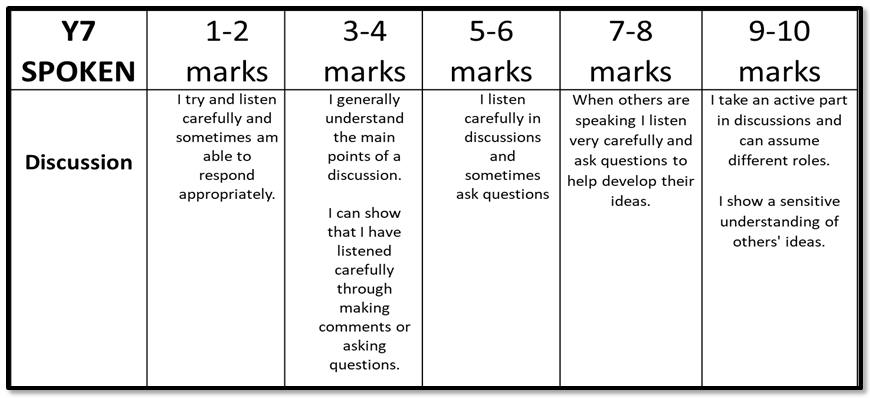
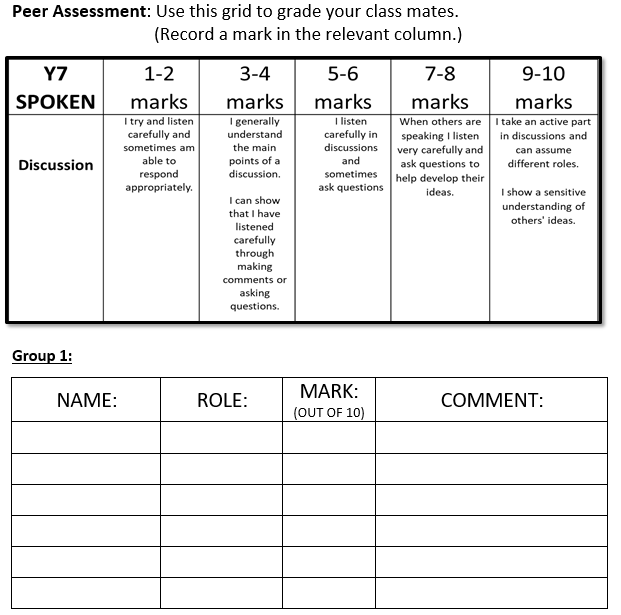
This is the Year 7 mark scheme for discussion.

(This is how you are marked for discussion.)

Who would you say is the most successful person in the discussion that you just watched? Why?

4.

Look at the following clip – it shows useful phrases to use when doing a discussion. (This video requires of you to listen and to read…)

Discussion Techniques. (2:49 minutes long)

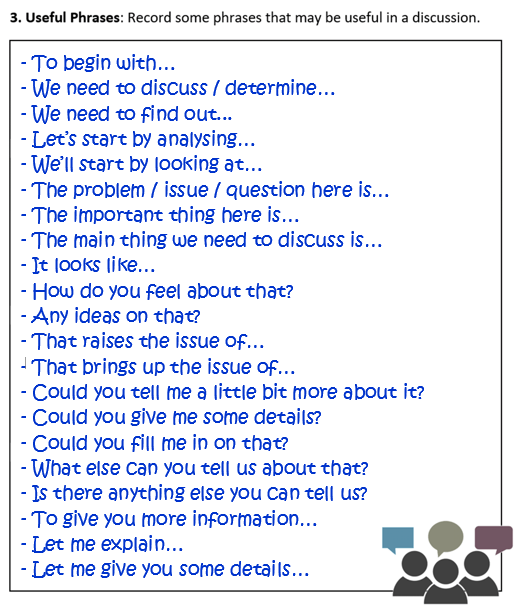
Copy useful phrases that you may need for the class discussion, using the relevant box on you worksheet.

SOLUTION

5.

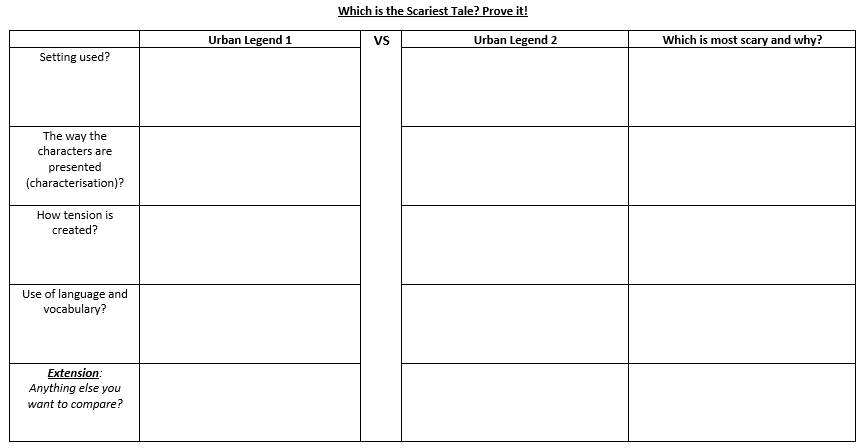
You now have three minutes to try to look over your notes (from the previous lesson) as to which Urban Legend you feel is scariest and why.

(Be prepared to discuss both tales and arguments for highest marks!)

6.

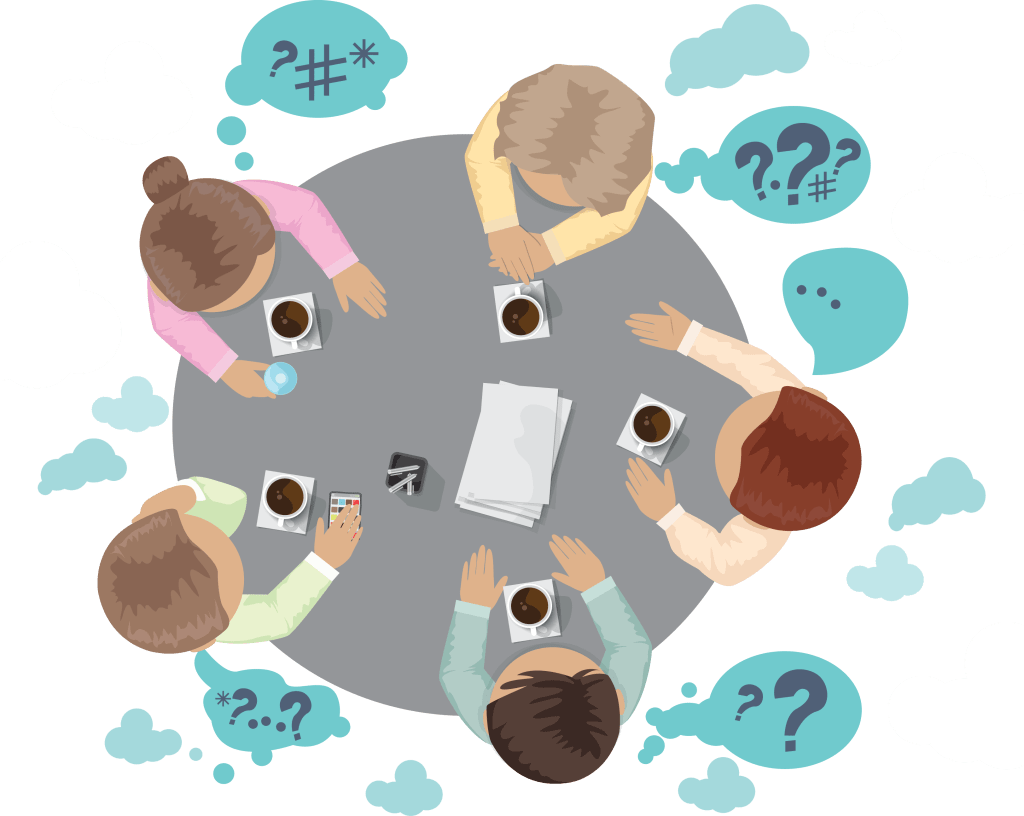
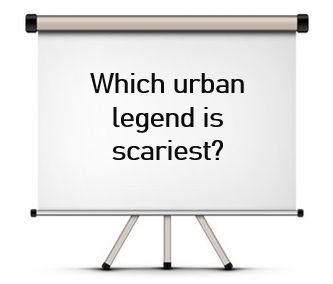
We will now have a group discussion on the following topic:

You will assess your class mates in this task. Use the grid and table to grade your class mates. (Record a mark in the relevant column.)

(This is how you will be marked for discussion.)

7.

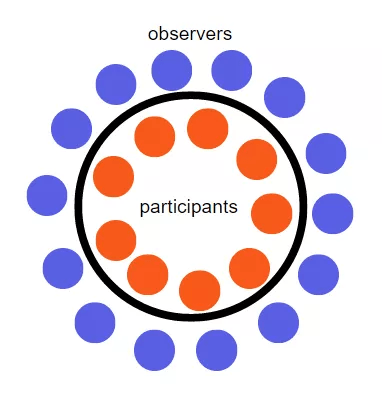
One group will go into the middle of the room to discuss the issue.

The people left around the outside will be listening carefully to peer assess the mark that they think that you deserve!

After the discussion, rotate groups so that everyone has a chance to observe as well as to discuss.

Then share the marks with your class mates.

8.

Write down the following:

What are your strength or weakness in a discussion?
Set yourself a target for the discussion today.

—TEXTBOOK—

You can access useful information in the Year 7 textbook!

—TEXTBOOK—

(WordPress advertisements may appear below.)
11. Urban Legends II

Today we are going to continue looking at Urban Legends.

  • to find out what an urban legend is
  • to evaluate urban legend texts
  • to prepare for an assessment task by selecting relevant evidence (in order to make informed judgements about the urban legends)

1.

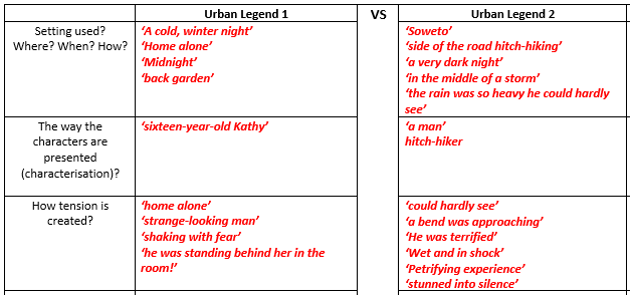
If not finished yet, complete the table by writing down your ideas about the two Urban Legends that we looked at in the previous lesson. Make sure that you support what you say with quotes from the text!

You will need this information for a discussion task in the next lesson…

SOLUTION

2.

Do you want to hear a few more Urban Legends? The video below tells more stories. Distinguish between which stories are true Urban Legends and which are simply ghost stories.

Unique Urban Legends. (9:26 minutes long)

(Start watching at 2:00 minutes)

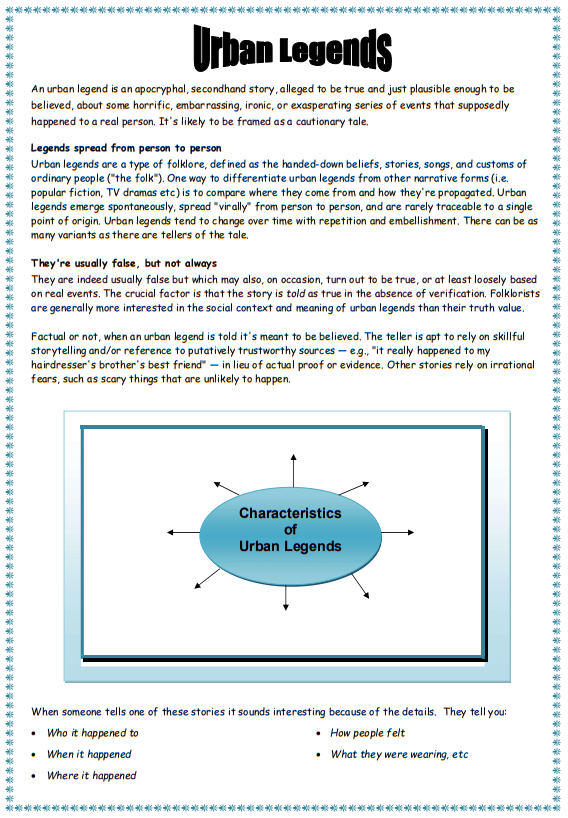
3.

Read the information explaining characteristics of Urban Legends.

4.

Consider the following words and their meanings. Then copy them down into your books.

  • alleged – “said, without proof, to have taken place”
  • plausible – “seeming reasonable or probable”
  • exasperating – “intensely irritating and frustrating”
  • folklore – “traditional beliefs and stories of a community, passed through the generations by word of mouth”
  • customs – “traditional way of behaving of a particular society or place”
  • propagated – “spread and promote an idea”
  • apocryphal – “of doubtful authenticity, although widely circulated as being true”
  • embellishment – “a detail, especially one that is untrue, added to a statement or story to make it more interesting”
  • verification – “the process of establishing the truth, accuracy, or validity of something”
  • apt – “having a tendency to do something”
  • putatively – “commonly accepted”
  • in lieu of – “in place of”
  • irrational – “not logical or reasonable”

5.

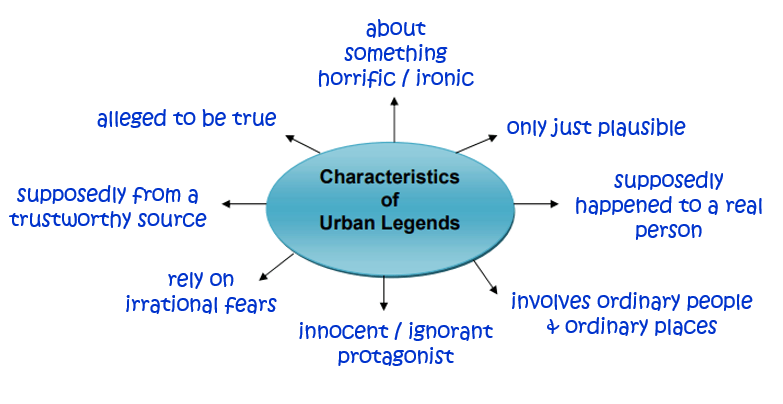
Read the information again and complete the spider diagram to show characteristics of Urban Legends.

SOLUTION

—TEXTBOOK—

You can access useful information in the Year 7 textbook!

—TEXTBOOK—

(WordPress advertisements may appear below.)

13. Chapter 13

Today we are going to read Chapter 13 of “A Monster Calls”.

  • to consider the plot of Chapter 13
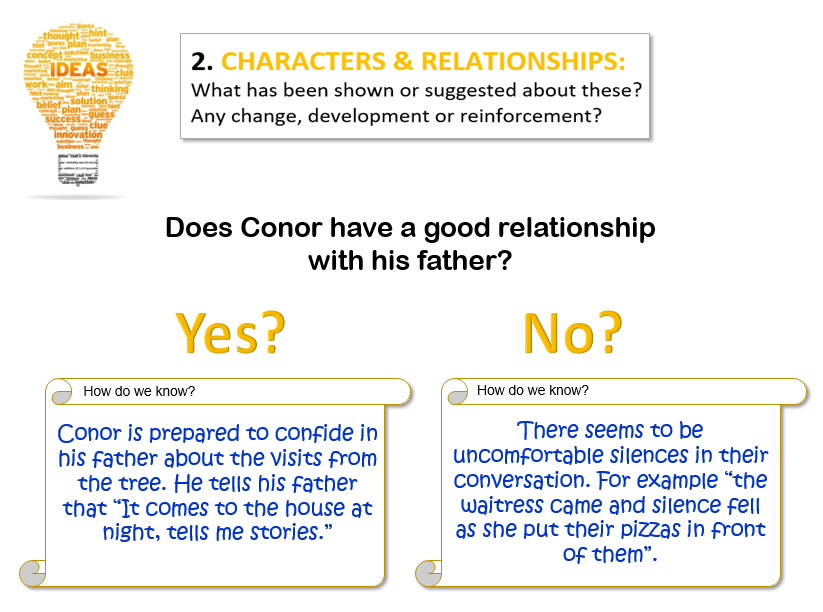
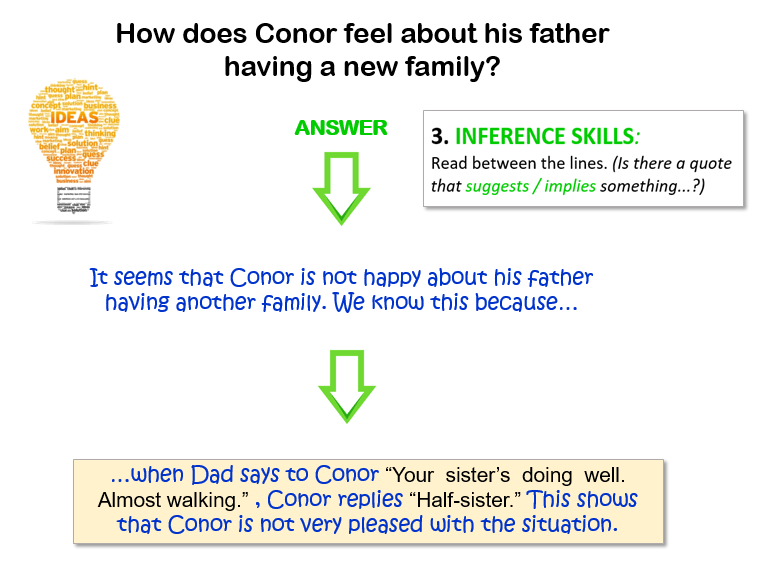
  • to consider Conor’s relationship with his father
  • to practise motivating statements

1.

“Champ.”

Read Chapter 13.

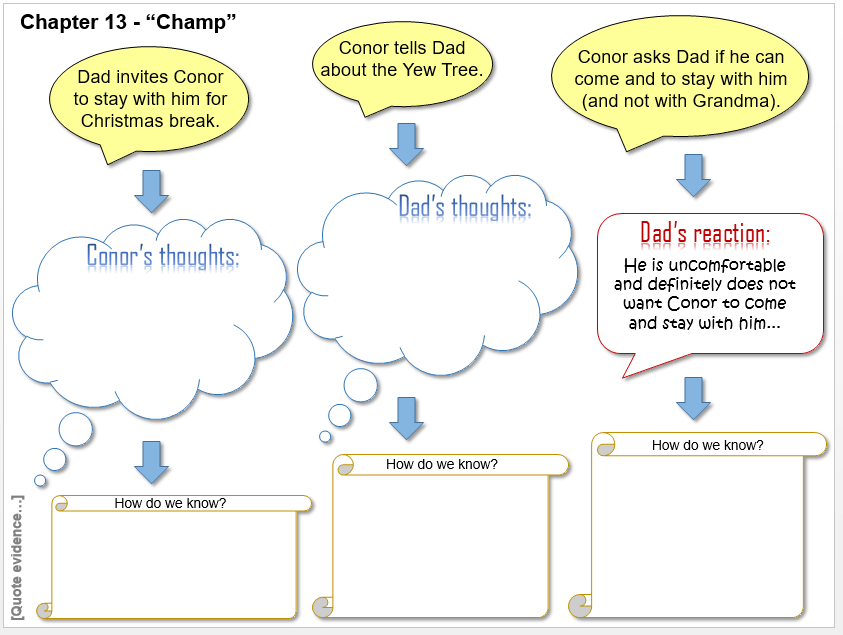
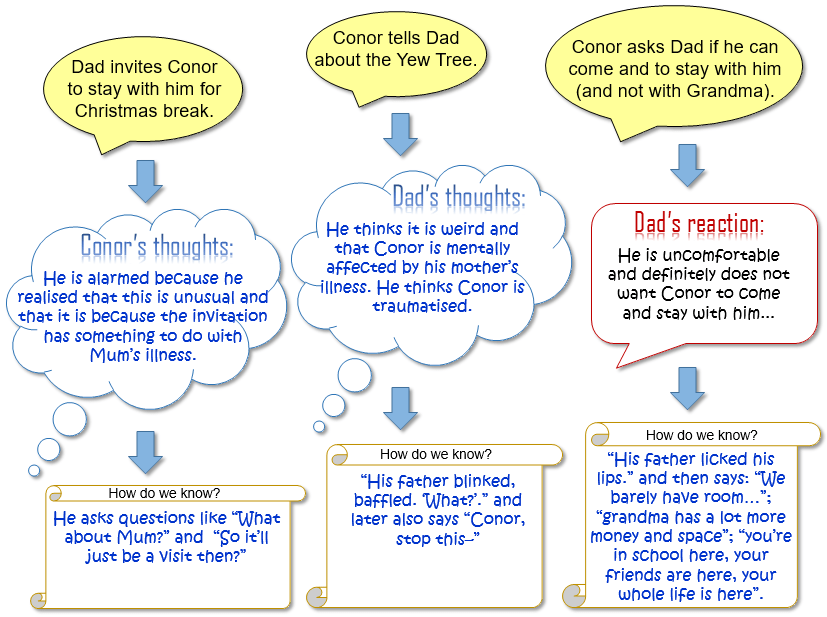
2.

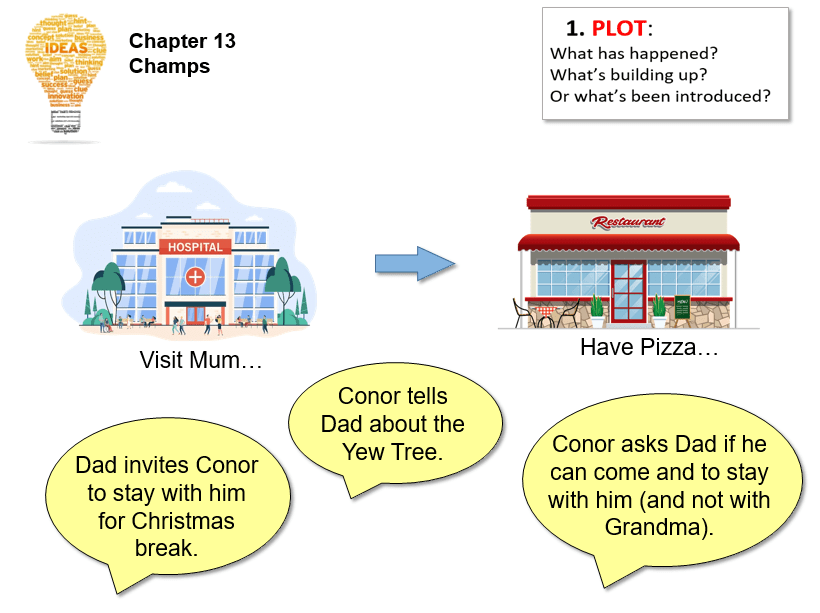
This is what we’ve read in Chapter 13

3.

In Literature, it is VERY important to ALWAYS motivate your statements. You should always answer the following question in your responses to questions in Literature:

You do so in the form of an explanation. However, your answer will be even better if you can also give a quote from the text, as evidence!

4.

So, let’s do a task to practise motivating statements. Complete the following worksheet about the events in Chapter 13:

SOLUTION

Mark your work with a pencil…

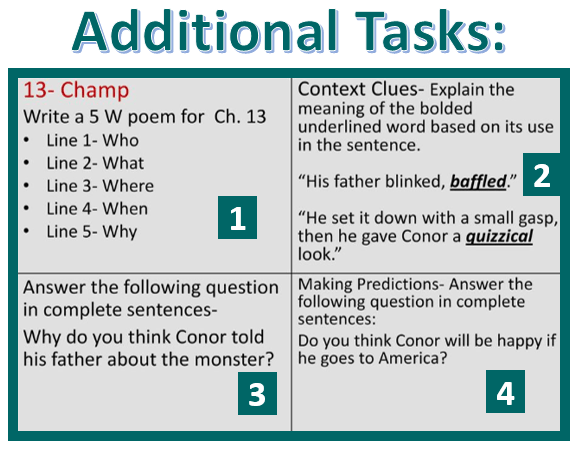
5.

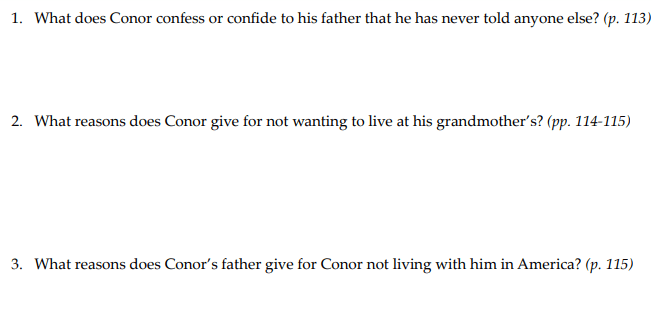
And now for a few questions…

Answer the following questions:

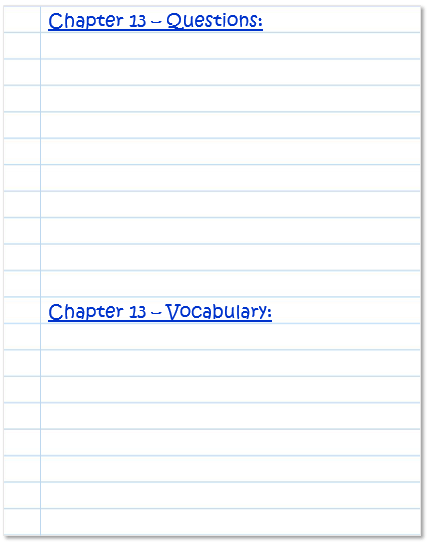
You need to use a new page in your book.

Write the headings as shown below.

(After this task you will also look at vocabulary.)

6.

Mark your work…

Are your answers more or less similar to these?

ANSWERS TO FOLLOW SOON

7.

The tasks in this section come from: A Monster Calls by Patrick Ness – ppt download (slideplayer.com)

8.

What do the words below mean? (Use a dictionary if you get stuck…)

Click on the image below to access the thesaurus / dictionary:

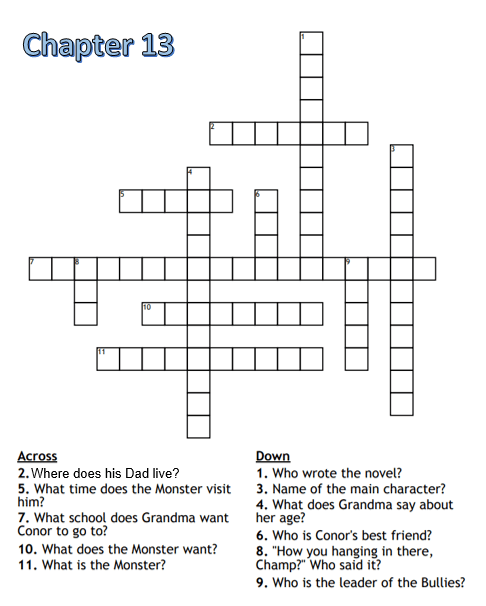
10.

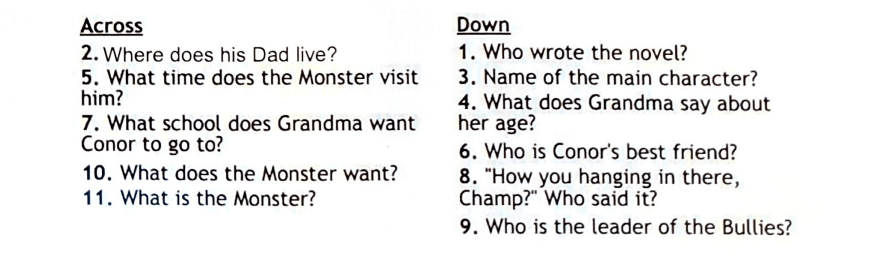
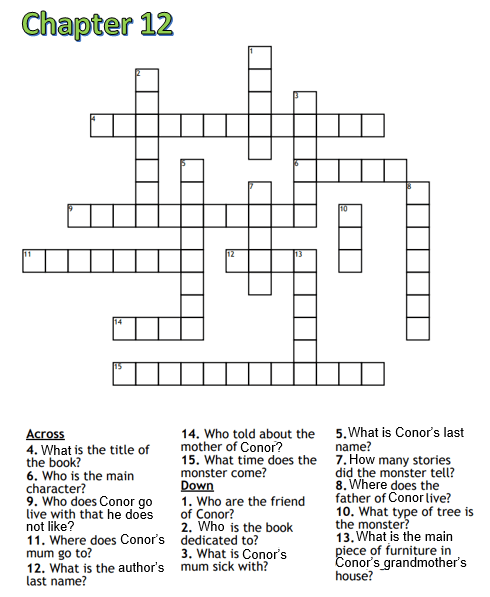
To test your knowledge, complete the crossword…

11.(alternative)

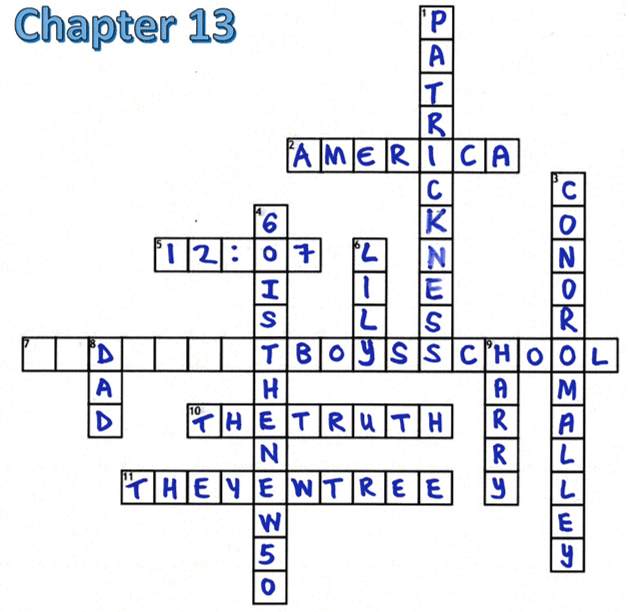
To test your knowledge, complete the crossword…

12.

Mark your work with a pencil…

Two of the clues seem to be problematic…

Number 4 down asks “What does Grandma say about her age?”

Grandma says things like ‘sixty is the new fifty’ when talking about her age…

Number 7 across asks “What school does Grandma want Conor to go to?”

In the chapter called ‘Grandma’, she talks about an “independent boy’s school” she wants Conor to go to, but she doesn’t mention it by name.

Neither of these solutions seem to fit the crossword…!

13.

Work on your vocabulary list.

OR:

Complete the Questions on the chapters that we read today.

Comprehension Questions (arkpriory.org)

— Useful Material —

(WordPress advertisements may appear below.)
12. Chapter 12

Today we are going to read Chapter 12 of “A Monster Calls”.

  • to consider the plot of Chapter 12
  • to consider Conor’s feelings so far
  • to learn how to write a monologue

1.

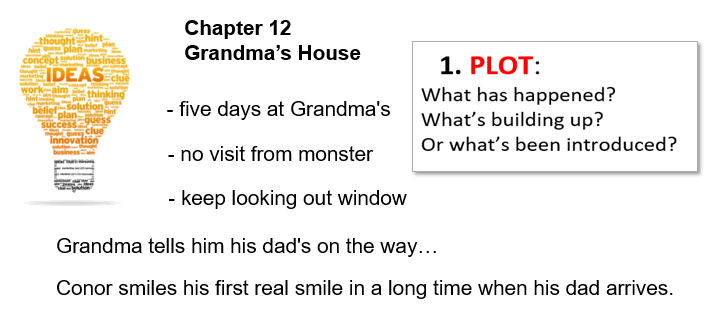
“Grandma’s House.”

Read Chapter 12.

2.

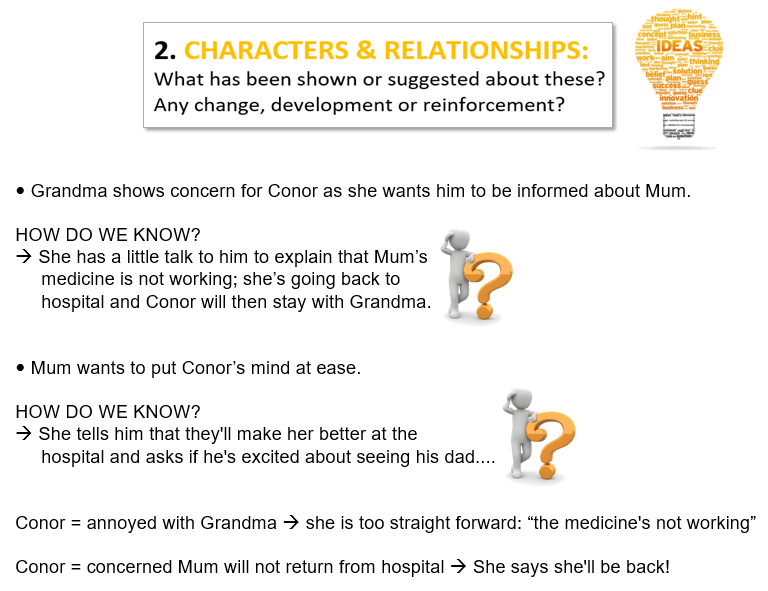
This is what we’ve read in Chapter 12

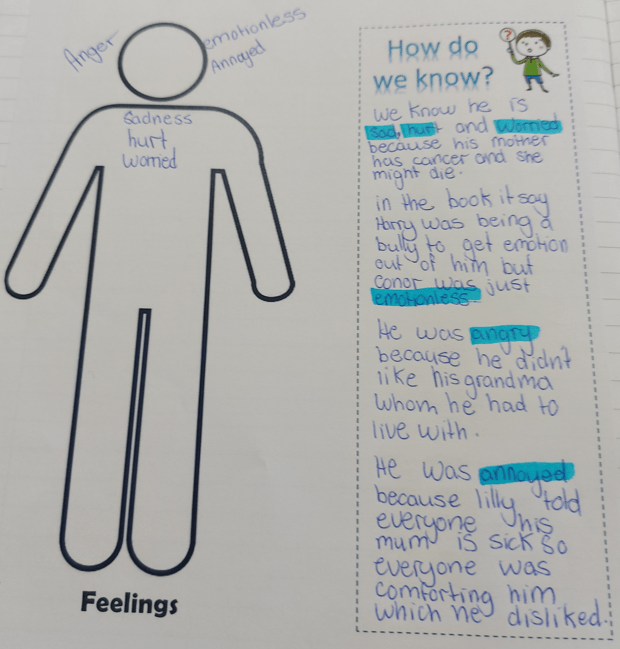
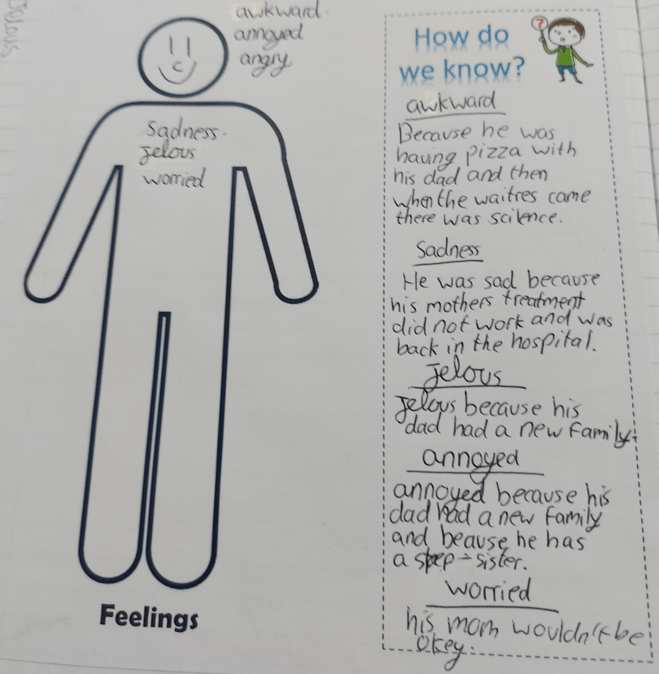
3.

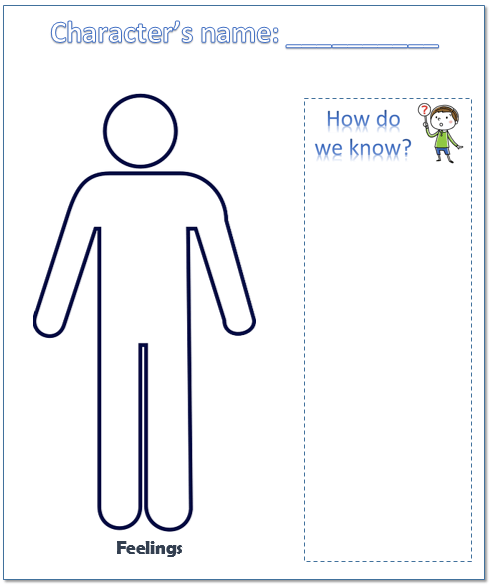
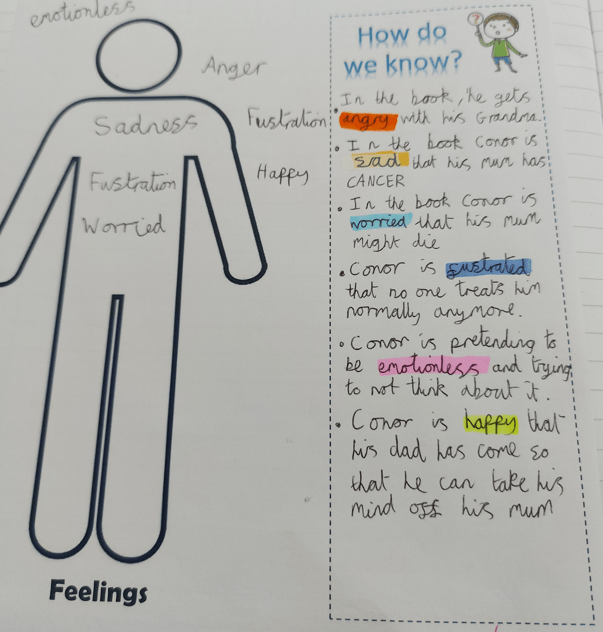
We’re going to reflect on Conor’s feelings in the whole story, so far.

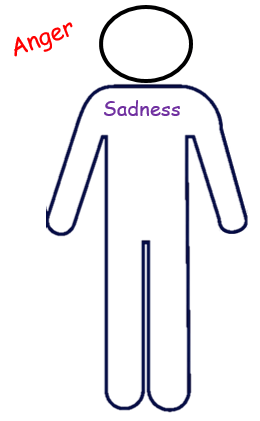
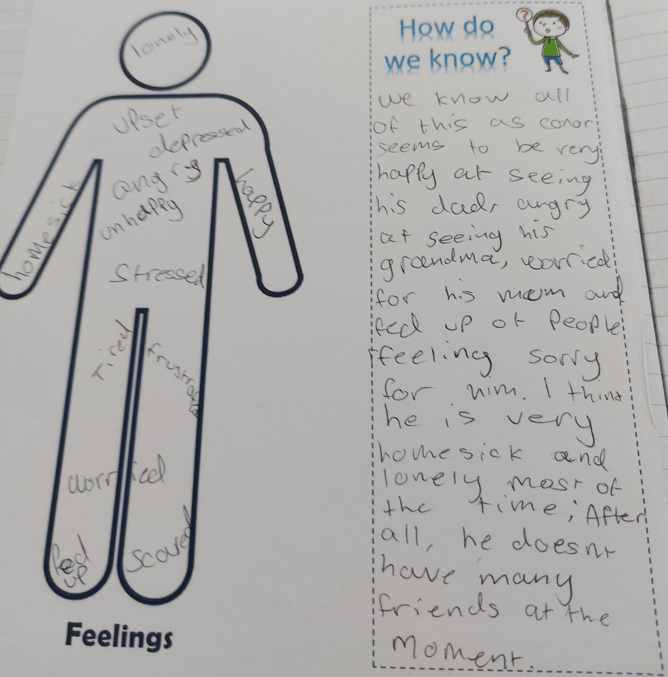
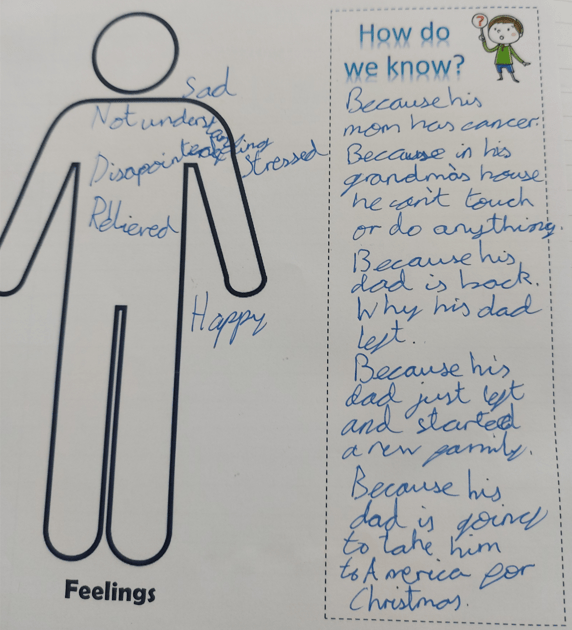
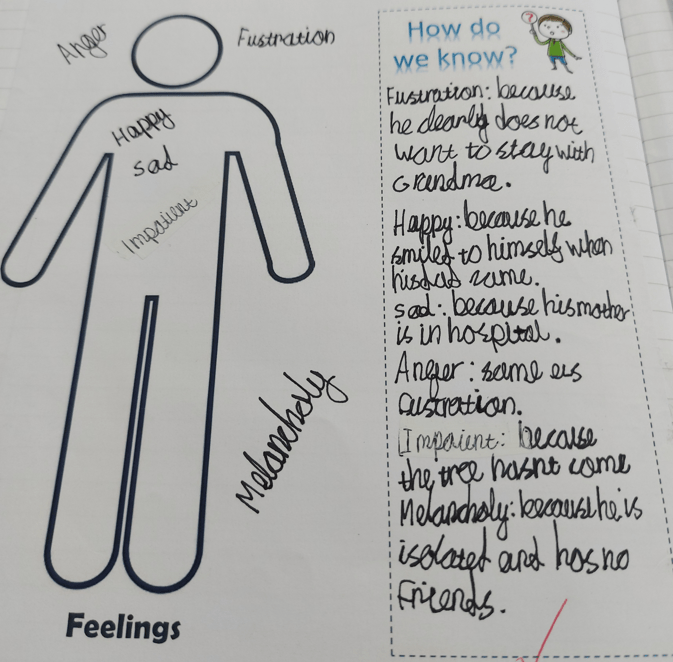
Imagine this is the character Conor

Use the worksheet provided to record Conor’s feelings.

(See below.)

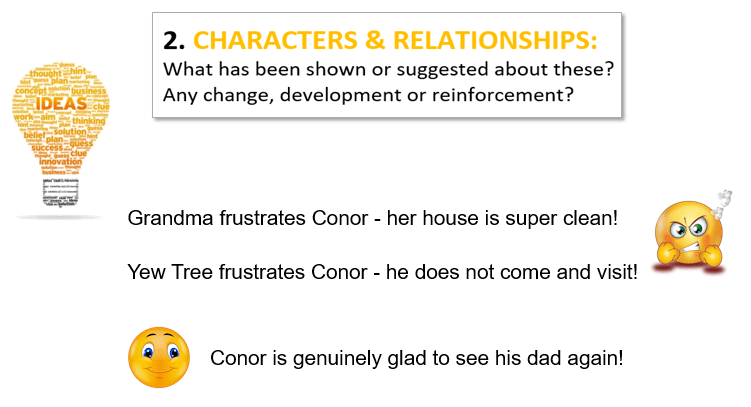
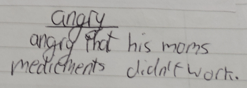
On the outside, write down all Conor’s feelings ‘on the outside’. (These are the feelings other people see.)

On the inside, write down all Conor’s feelings ‘on the inside’. (These are the feelings that people may not be aware of.) 

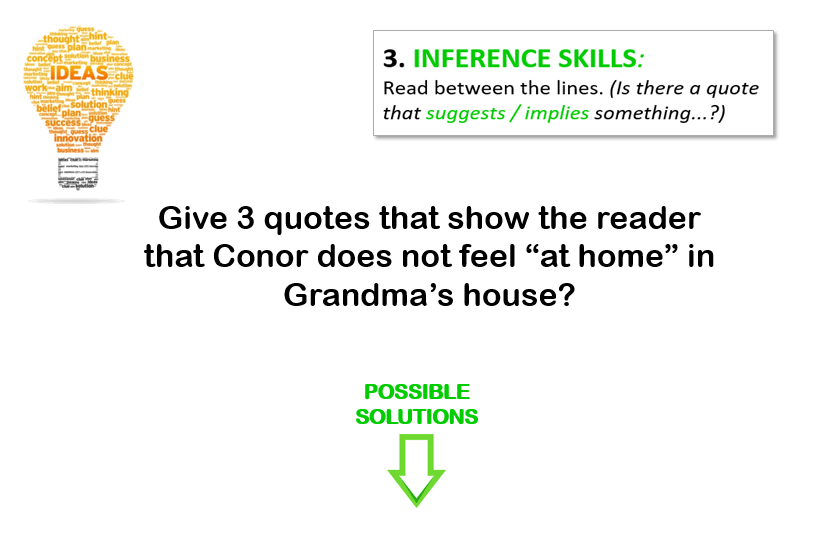
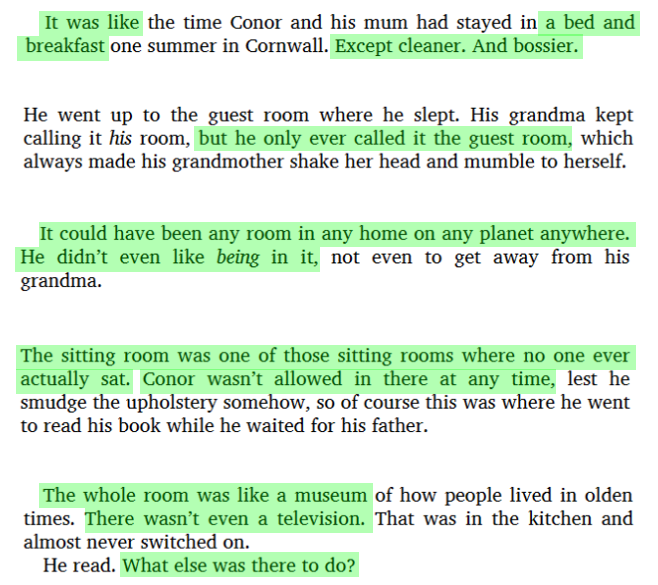
Can you find quotes to support your answer?

Below are possible answers… However, all of the answers lacks evidence! (Find evidence, in the form of quotes, to enhance the answers.)

4.

Authors use certain devices or techniques to communicate with their audiences. For example, in order to share a character’s feelings, an author may use a monologue.

What is a monologue?

“A monologue is a speech given by a single character in a story. In drama, it is the vocalization of a character’s thoughts; in literature, the verbalization. It is traditionally a device used in theater—a speech to be given on stage—but nowadays, its use extends to film and television.”

In the video below a director explains what a monologue is.

What is a monologue? (0:34 minutes long)

5.

Let’s look at a few examples of monologues:

-EXAMPLE 1-

This is a speech made by a frustrated teacher… It comes from a scene in a film called “School of Rock”.

The Man. (2:26 minutes long)

-EXAMPLE 2-

This is a speech made by a victim of racial discrimination… It comes from a scene in a film called “Hidden Figures”. It tells the story of a team of female African-American mathematicians who served a vital role in NASA during the early years of the U.S. space program.

Bathroom Speech Scene. (1:55 minutes long)

-EXAMPLE 3-

This is a speech made by Dory… It comes from a scene in the film “Finding Nemo”.

Dory Monologue. (0:48 minutes long)

6.

Write a short monologue to show the innermost thoughts and feelings of Conor..

(The previous task on Conor’s feelings can be very useful in writing this monolgue!)

Here is a little bit of advice…

Writing Tips. (1:52 minutes long)

7.

Will you be able to perform your monologue?

Here is a performance of Dory’s monologue.

Performance – Dory Monologue. (1:31 minutes long)

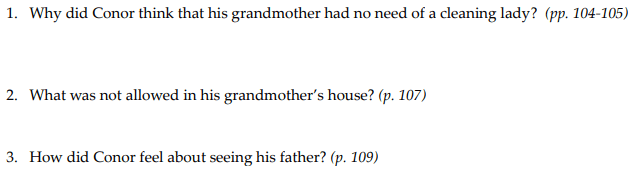
8.

And now for a few questions…

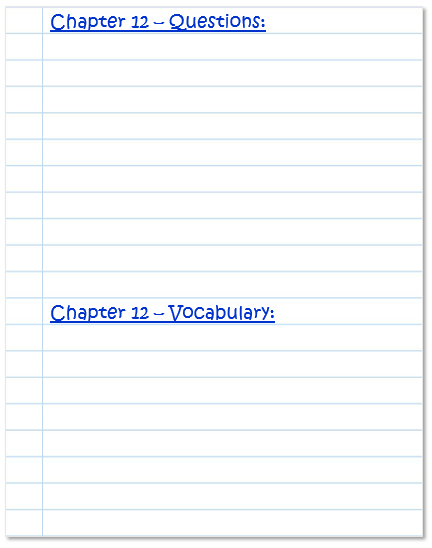
Answer the following questions:

You need to use a new page in your book.

Write the headings as shown below.

(After this task you will also look at vocabulary.)

9.

Mark your work…

Are your answers more or less similar to these?

ANSWERS TO FOLLOW SOON

10.

The tasks in this section come from: A Monster Calls by Patrick Ness – ppt download (slideplayer.com)

11.

What do the words below mean? (Use a dictionary if you get stuck…)

Click on the image below to access the thesaurus / dictionary:

12.

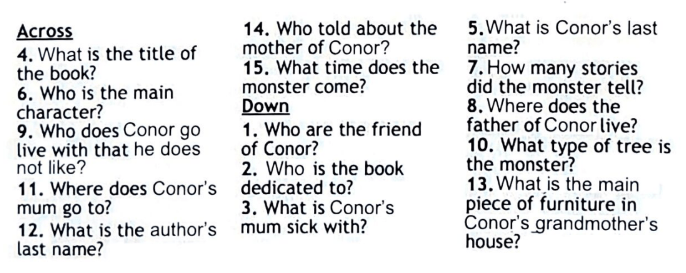
To test your knowledge, complete the crossword…

13.

Mark your work with a pencil…

14.

Work on your vocabulary list.

OR:

Complete the Questions on the chapters that we read today.

Comprehension Questions (arkpriory.org)

— Useful Material —

(WordPress advertisements may appear below.)

11. Chapter 11

Today we are going to practise using dialogue.

  • to consider the plot of Chapter 11
  • to look at how to write effective dialogue
  • to practise writing dialogue

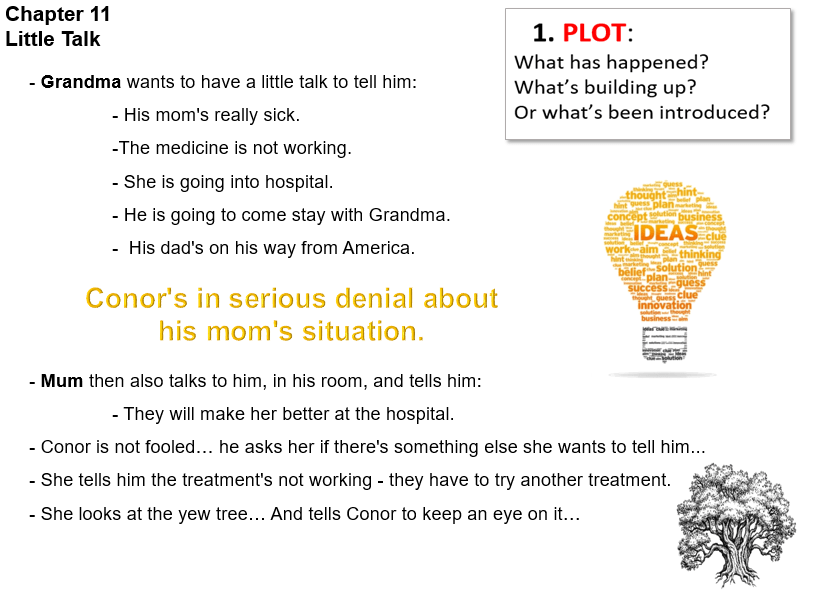
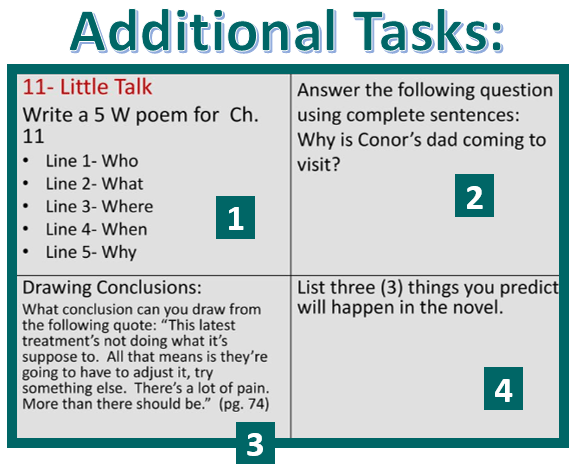
1.

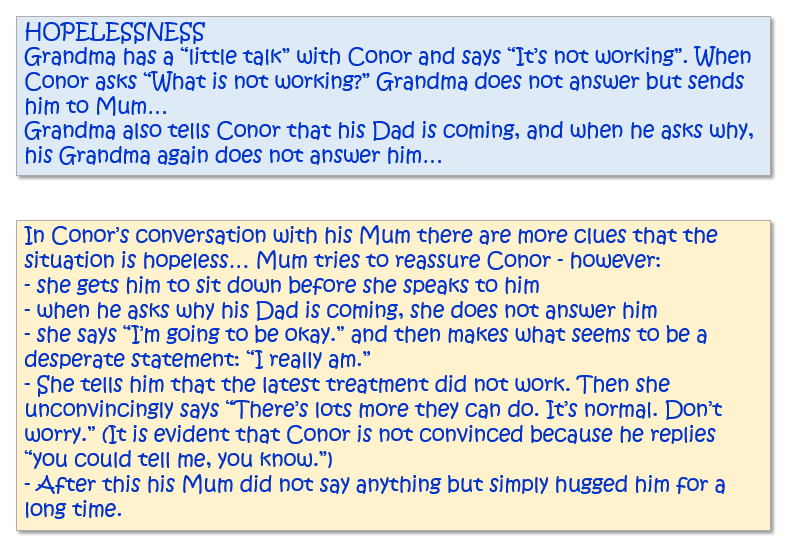
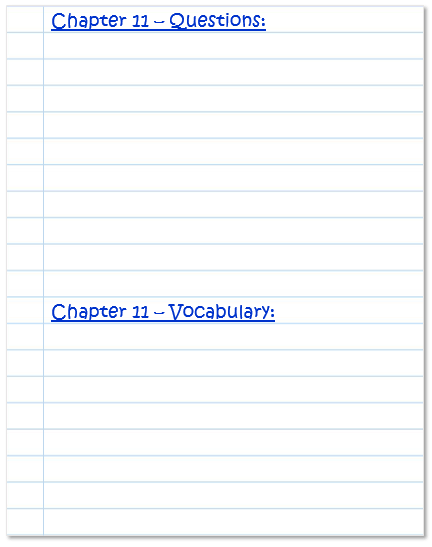
This is what we’ve read in Chapter 11

Chapter 11: “Little Talk”

2.

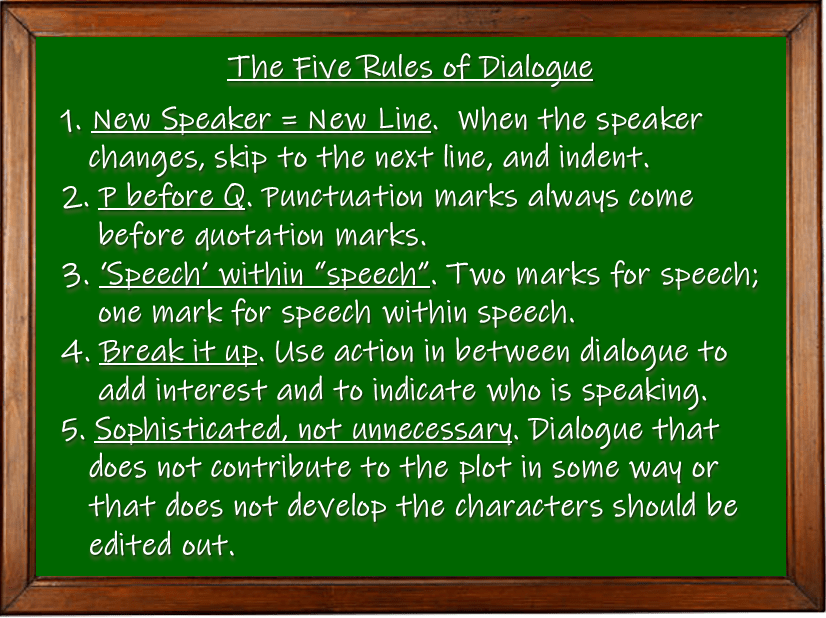
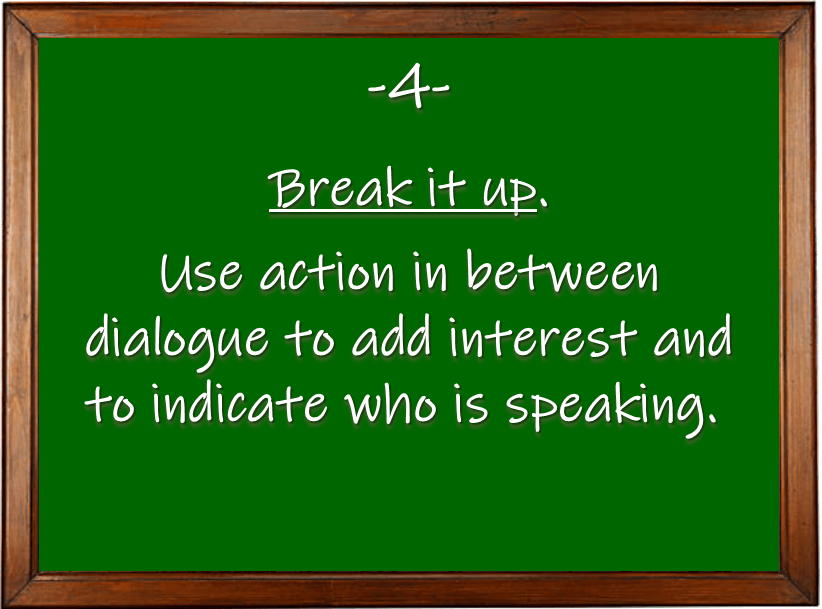
Below are five rules for using dialogue effectively:

3.

Let’s look at an example of how to apply each of these rules!

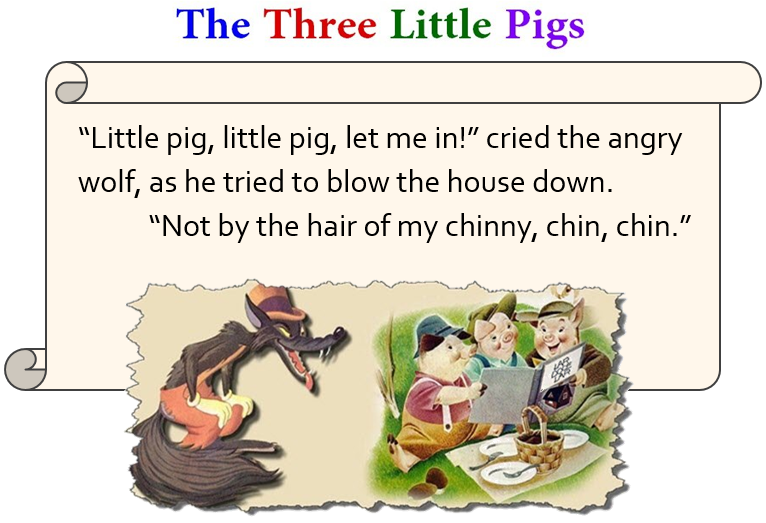
Rule 1

-EXAMPLE-

Rule 2

-EXAMPLE-

Rule 3

-EXAMPLE-

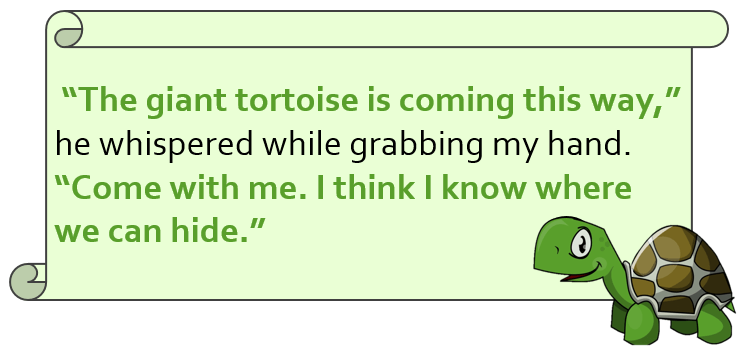
Rule 4

-EXAMPLE-

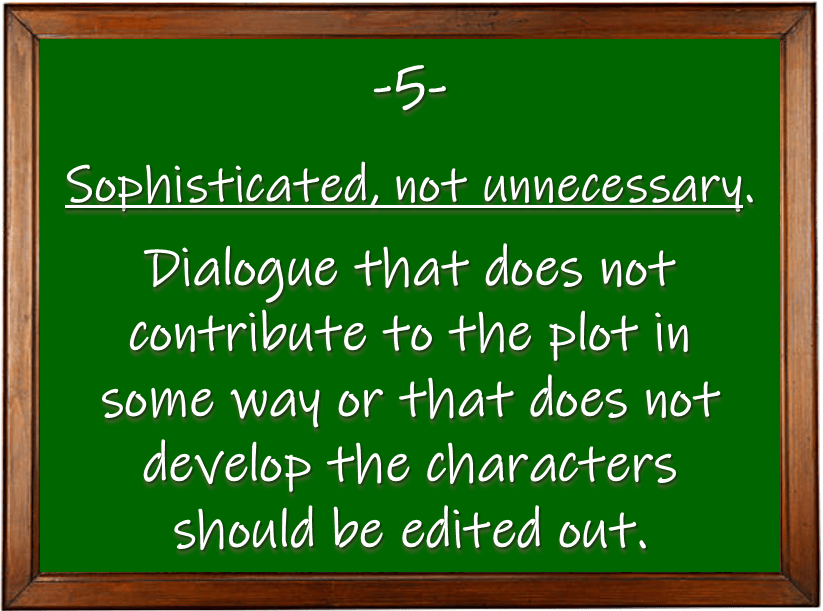
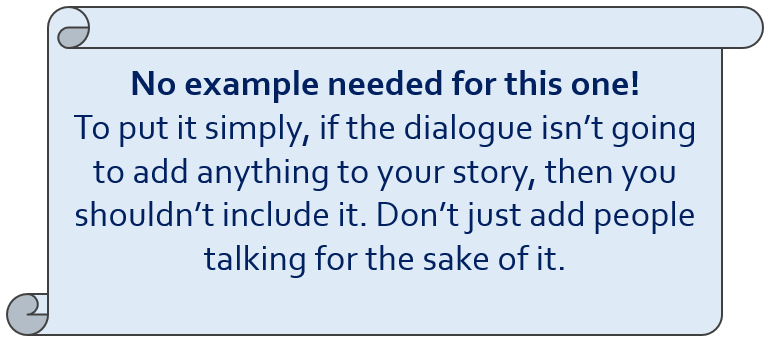
Rule 5

-EXPLANATION-

4.

It is important that you know how to write dialogue. Copy the rules into your books for study purposes.

5.

Previously we read Chapter 10 (Understanding) and Chapter 11 (Little Talk). You were asked to focus on how dialogue is set out in the book. Now you are going to practise writing your own dialogue…

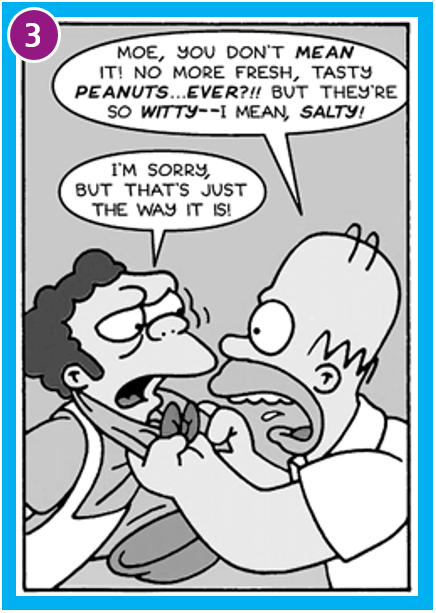
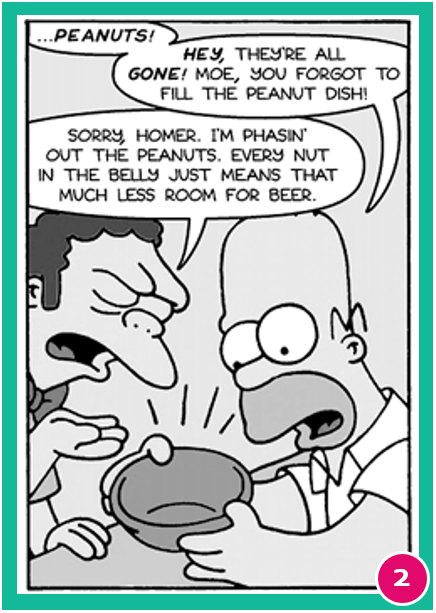
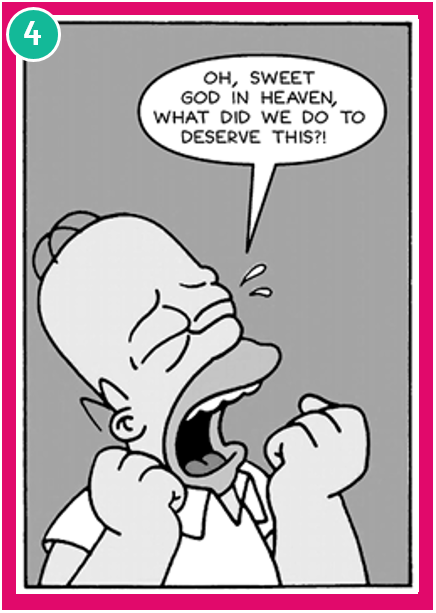
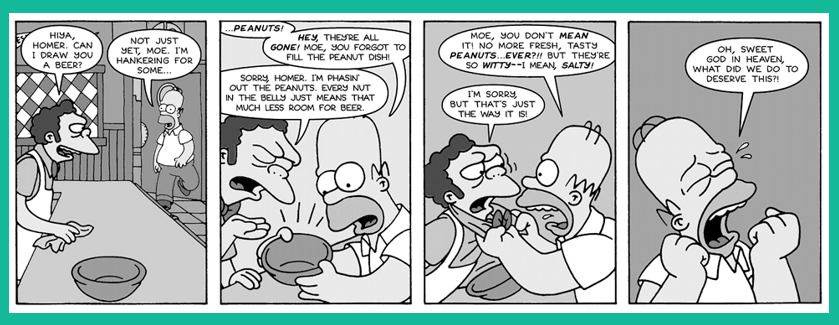
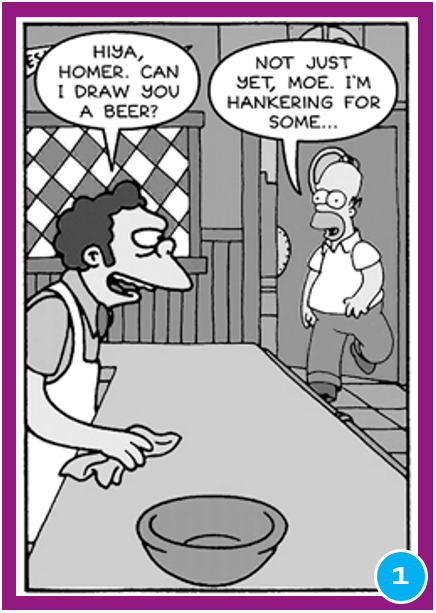
Look at the comic strip below:

This is a comic strip featuring a conversation between Homer and Moe from the Simpsons. The only information we have is what the characters say. We know their emotions because of the pictures, but in a novel, there are very rarely pictures, which means that it is down to your description to let the reader know that information.

6.

Look back in your books to when we found alternatives to the word ‘said’.

Turn this comic strip into a written narrative, by writing the speech out into dialogue. Remember to use the five rules that we have looked at today.

In this task the word ‘said’ is banned from your dialogue! Try to use a better range of vocabulary in your work.

ADVICE

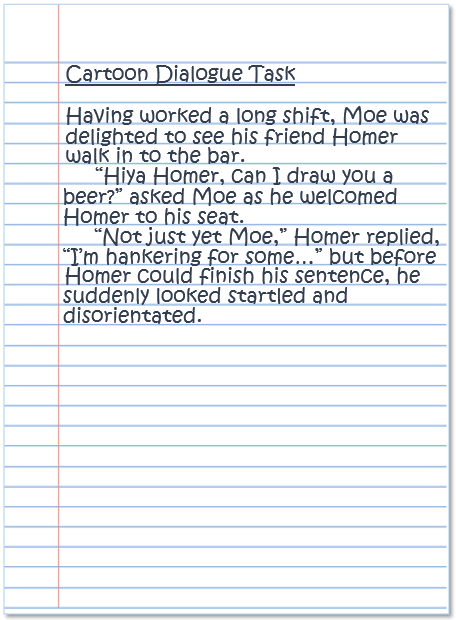
So you need to write the dialogue as shown in the cartoon, but with actions and attitudes.

Use the example below as a start (if you need to) and do the same for the rest of the comic strip. Use as much detail as you can to make it entertaining. Remember to NOT use the word ‘said’!

Dialogue Example:

7.

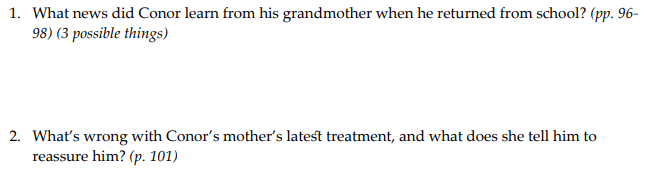
And now for a few questions…

Answer the following questions:

You need to use a new page in your book.

Write the headings as shown below.

(After this task you will also look at vocabulary.)

8.

Mark your work…

Are your answers more or less similar to these?

ANSWERS TO FOLLOW SOON

9.

The tasks in this section come from: A Monster Calls by Patrick Ness – ppt download (slideplayer.com)

10.

What do the words below mean? (Use a dictionary if you get stuck…)

Click on the image below to access the thesaurus / dictionary:

11.

Work on your vocabulary list.

OR:

Complete the Questions on the chapters that we read today.

Comprehension Questions (arkpriory.org)

— Useful Material —

(WordPress advertisements may appear below.)
10. Chapter 10

Today we are going to read Chapters 10 and 11 of “A Monster Calls”.

  • to consider the plot of Chapter 10
  • to answer some questions about Chapter 10
  • to see what happens next, in Chapter 11

1.

As we read Chapter 10 (Understanding) and Chapter 11 (Little Talk), focus on how dialogue is set out in the book…

“Understanding.”

&

“Little Talk”

Read Chapters 10 & 11.

2.

This is what we’ve read in Chapter 10

(We will recap Chapter 11 in the next lesson as most of today’s work is based on Chapter 10.)

Chapter 10: “Understanding”

3.

Complete the following Questions about Chapter 10:

SOLUTION

To be added

4.

What is Conor’s relationship with his Grandmother like?

(Support your ideas with evidence from the text!)

5.

And now for a few questions…

Answer the following questions:

You need to use a new page in your book.

Write the headings as shown below.

(After this task you will also look at vocabulary.)

6.

Mark your work…

Are your answers more or less similar to these?

ANSWERS TO FOLLOW SOON

7.

The tasks in this section come from: A Monster Calls by Patrick Ness – ppt download (slideplayer.com)

8.

What do the words below mean? (Use a dictionary if you get stuck…)

Click on the image below to access the thesaurus / dictionary:

9.

Work on your vocabulary list.

OR:

Complete the Questions on the chapters that we read today.

Comprehension Questions (arkpriory.org)

— Useful Material —

(WordPress advertisements may appear below.)
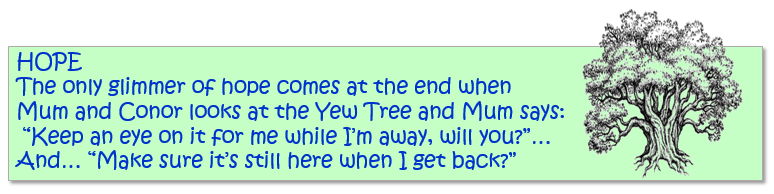
6. Answers to “Yew Tree Task”

Symbolism

Writers use symbolism to explain an idea or concept to their readers in a poetic manner without saying it outright. The use of symbolism allows writers to make their stories more complex. People often also use symbolism in everyday life.

The image of the yew tree is repeated throughout the novel, but what is significant about a yew tree and why is it being associated with the monster.

Complete the following task to determine why the author has chosen to use a yew tree to be associated with the monster. Use the diagram to write down interesting facts or ideas about yew trees. (You need to do research on this and complete the task at home!)

SOLUTION

— Useful Material —

(WordPress advertisements may appear below.)
9. Chapter 9 – continued

Today we are going to recap Chapter 9 of “A Monster Calls”.

  • to explore Chapter 9 further
  • to look at symbolism
  • to look at allegory

1.

In Chapter 9 the Monster tells the rest of the First tale.

Now make your own “plot flow chart” to show what happened in Chapter 9.

SOLUTION

Here is a “plot flow chart” of what happened in Chapter 9:

2.

Remember, this is how one can display what is happening in a story:

In the First Tale, the dramatic arc will look like this:

Make your own version of the flow chart above:

3.

Chapter 9: We learn more about the Conor through the following:

AND…

4.

Is the Monster trying to teach Conor a lesson?

Consider the following Inference Questions:

1) ‘Sometimes people need to lie to themselves most of all.’ Do you think the monster is just referring to the First Tale when he makes this statement?

2) ‘It is not her you need saving from.’ Speculate about what the monster believes Conor actually needs saving from.

5.

You learnt the following about symbolism …

Writers use symbolism to explain an idea or concept to their readers in a poetic manner without saying it outright. The use of symbolism allows writers to make their stories more complex. People often also use symbolism in everyday life.

What is symbolism in writing, and how does it work?

Symbolism is the use of words or images to symbolize specific concepts, people, objects, or events. Symbolism is a figure of speech that is used when an author wants to create a certain mood or emotion in a work of literature.

You already know that the yew tree is a symbol of …

6.

Writers also make use of Allegories to make their work more interesting…

An allegory is a story, poem, or picture which can be interpreted to reveal a hidden meaning, typically a moral one.

Allegory is a narrative, a poem or story, that can be interpreted to reveal a hidden meaning. A moral lesson is often presented in the form of an allegorical story.

Symbolism is a literary device that presents one particular item, like a dove, to represent something else (peace).

In other words, an allegory is a whole story, poem, or book. Symbolism can be just a part of the story, poem, or book.

7.

Here is an example of an allegory:

The Lion and the Mouse. (2:51 minutes long)

A kindness that is given is a future kindness returned.

How was ‘the first tale’ allegorical? (Consider this quote: “There was nowhere for the prince to run. His horse had been chased away while he slept. The yew tree was his only shelter.”)

What similarities can you make between the tale and Conor’s life?

So, what hidden meaning did the first tale have for Conor’s life?

Answer the following question in detail:

How is ‘The First Tale’ an allegory for Conor’s life?

Here is how one should tackle a question like this one!

This is how you teacher would mark this type of question:

8.

Let’s look a little deeper into symbolism in literature:

Here are more examples of symbolism, from well-known texts:

9.

Copy the information below into your book for study purposes:

Allegory is a narrative, a poem or story, that can be interpreted to reveal a hidden meaning. A moral lesson is often presented in the form of an allegorical story.

Symbolism is a literary device that presents one particular item, like a dove, to represent something else (peace).

In other words, an allegory is a whole story, poem, or book. Symbolism can be just a part of the story, poem, or book.

10.

Answer the following question:

If a character was wearing a red dress, what could that symbolise?

11.

And now for a few more questions…

Answer the following questions:

“Search and Locate” Questions:

a) What rumours surrounded the King’s illness? (P.72)

b) What was the Queen’s plan for retaining power? (P.74)

c) Who saved the Queen from the flames? (P.79)

d) Where did the monster take the Queen? (P.79)

e) Who murdered the farmer’s daughter? (P.81)

Summary Task:

Retell the First Tale in 3 chapters.

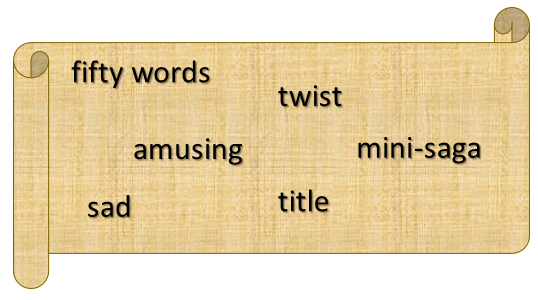
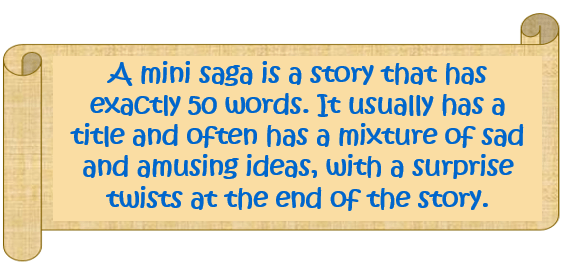
The first must contain exactly 75 words, the second exactly 50 words and the final chapter must contain exactly 25 words. (Be as specific as you can, and stay within the word count.)
Additional Questions on Symbolism:

b) Which character in the book could The King be a symbol for? Explain your answer.
a) Which character in the book could the Queen Regent be a symbol for? Explain your answer.

12.

And now for even more questions!

Answer the following questions:

You need to use a new page in your book.

Write the headings as shown below.

(After this task you will also look at vocabulary.)

13.

Mark your work…

Are your answers more or less similar to these?

ANSWERS TO FOLLOW SOON

14.

The tasks in this section come from: A Monster Calls by Patrick Ness – ppt download (slideplayer.com)
15.

That tree…! Think about this:

What is symbolic about a tree or a plant? Does it symbolise life, maybe? Or growth? Perhaps, but there is something more to a Yew tree in particular… We know that the leaves off a Yew Tree are used to create a medicine called Taxol, a medicine that is used in the treatment of Cancer!

Answer these questions in your book:

1. Is the Yew Tree Monster here to help or harm Conor?

2. Why has Patrick Ness chosen a Yew Tree specifically?

3. How can we link this to symbolism?

16.

SOLUTION

Mark your work…

17.

What do the words below mean? (Use a dictionary if you get stuck…)

Click on the image below to access the thesaurus / dictionary:

18.

Work on your vocabulary list.

OR:

Complete the Questions on the chapters that we read today.

Comprehension Questions (arkpriory.org)

— Useful Material —

(WordPress advertisements may appear below.)