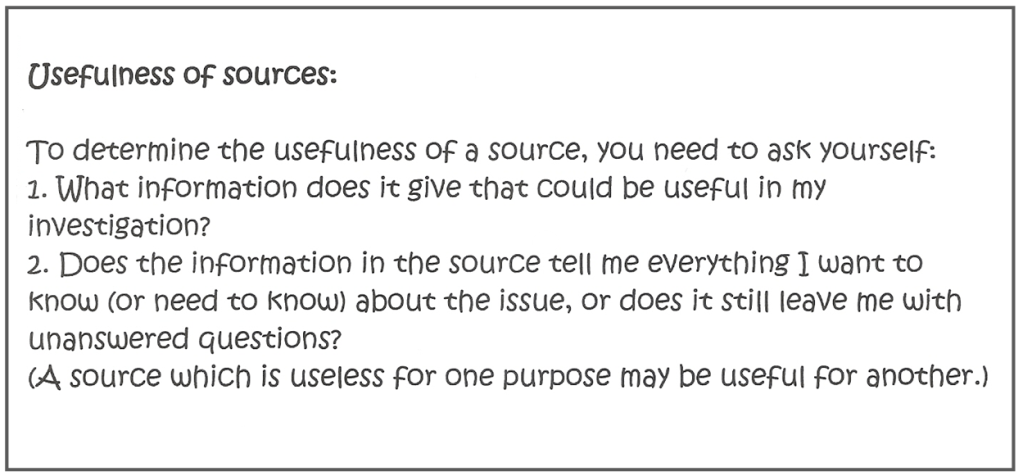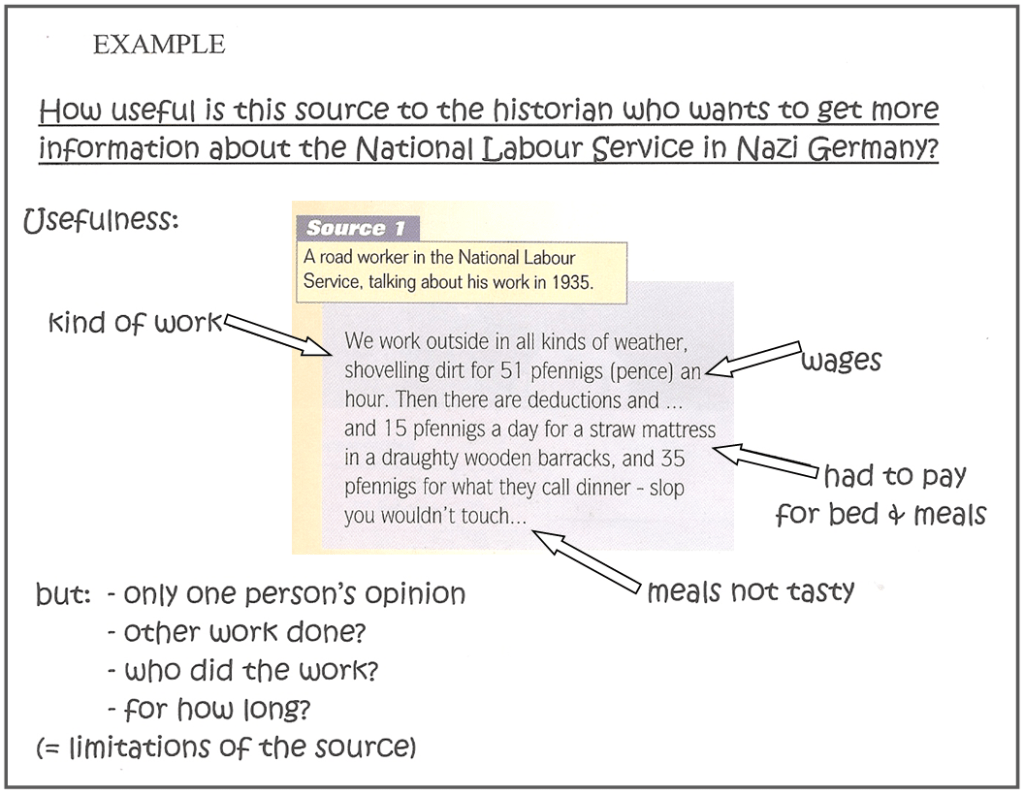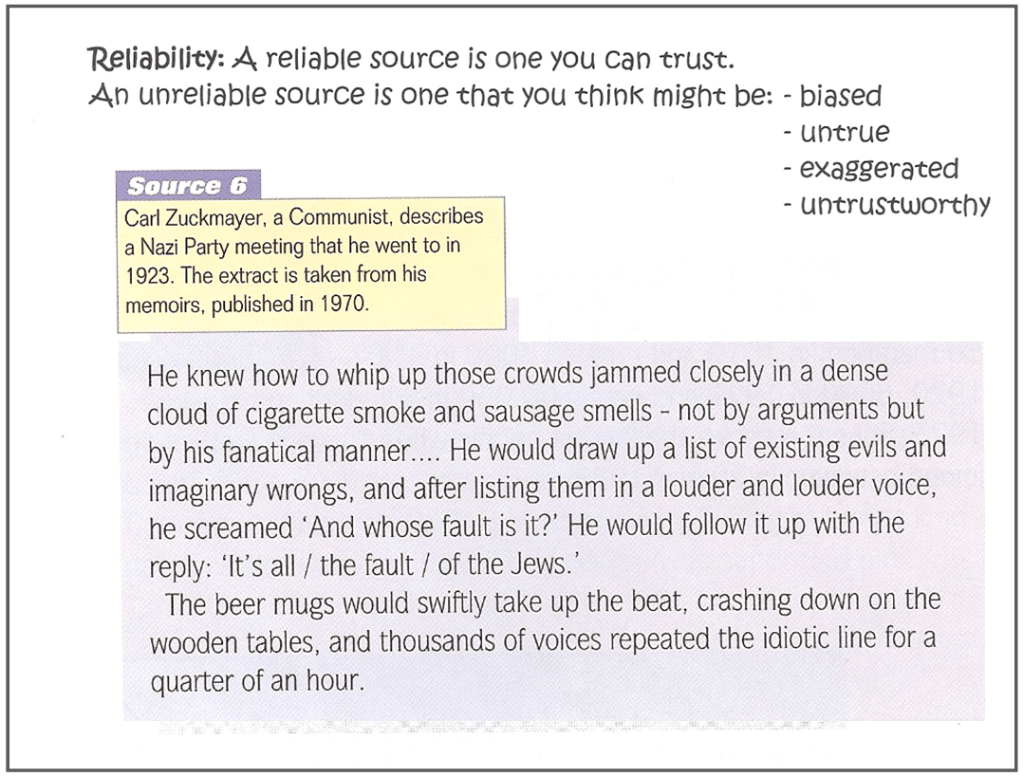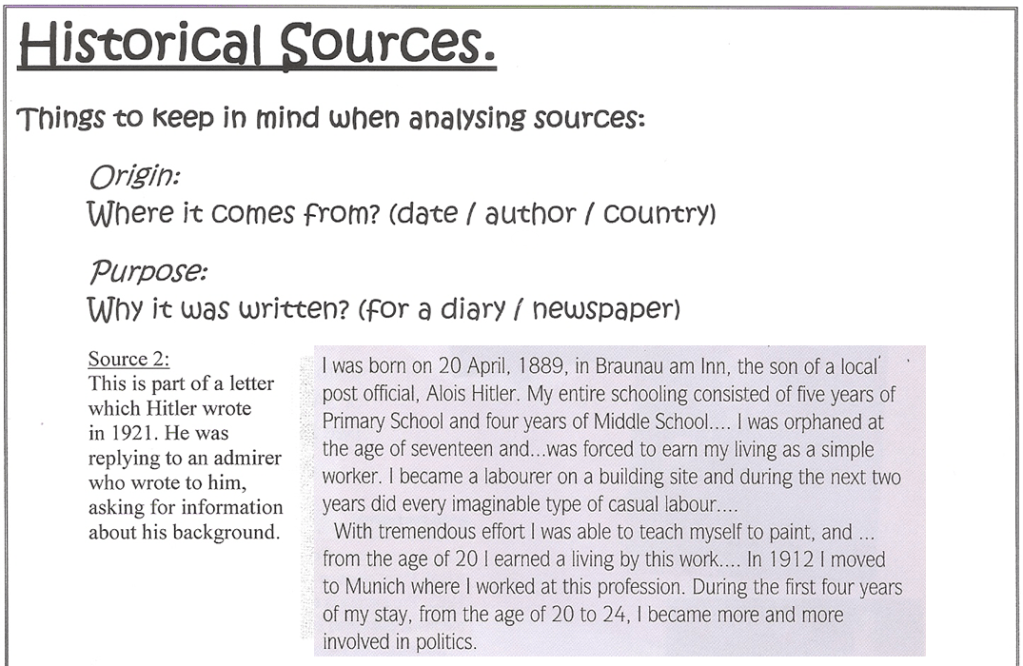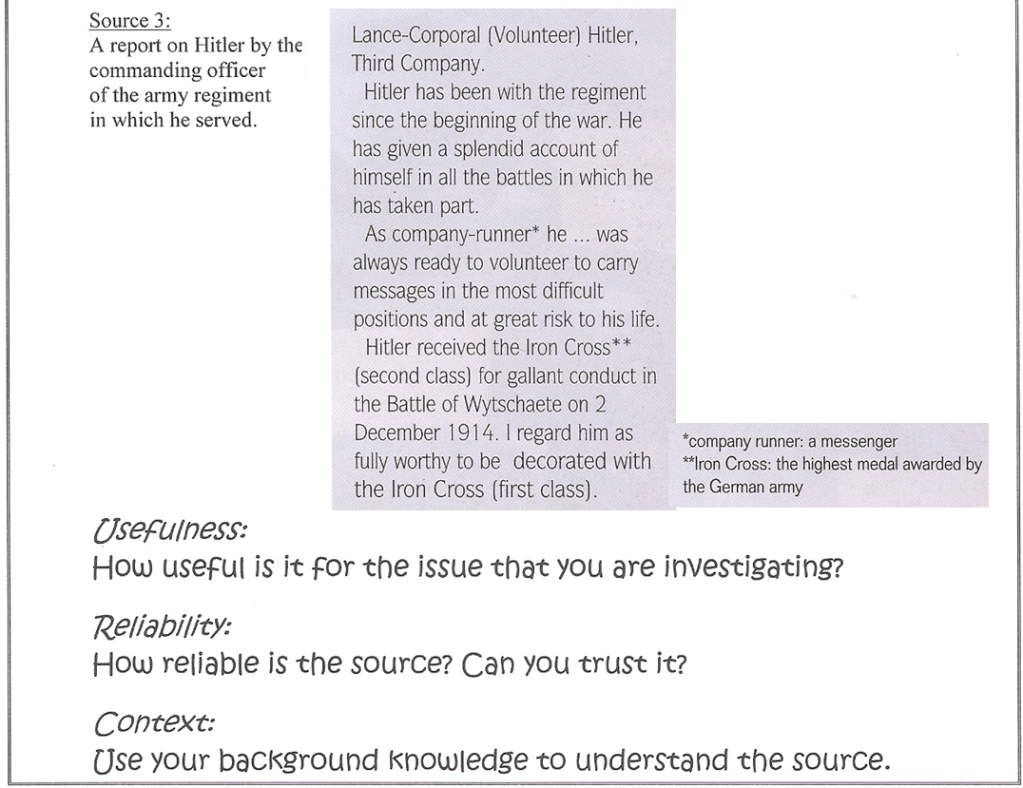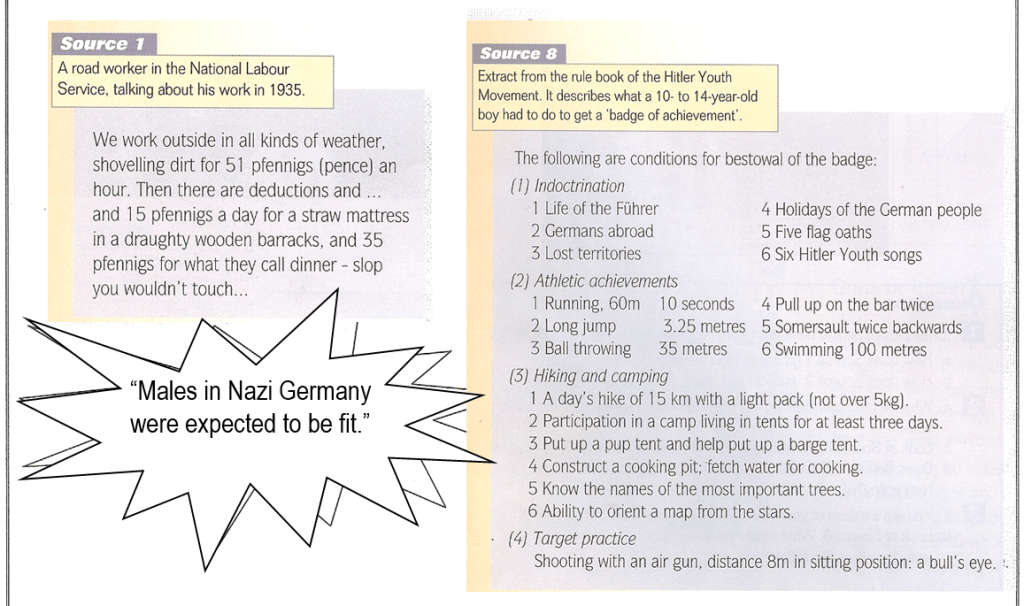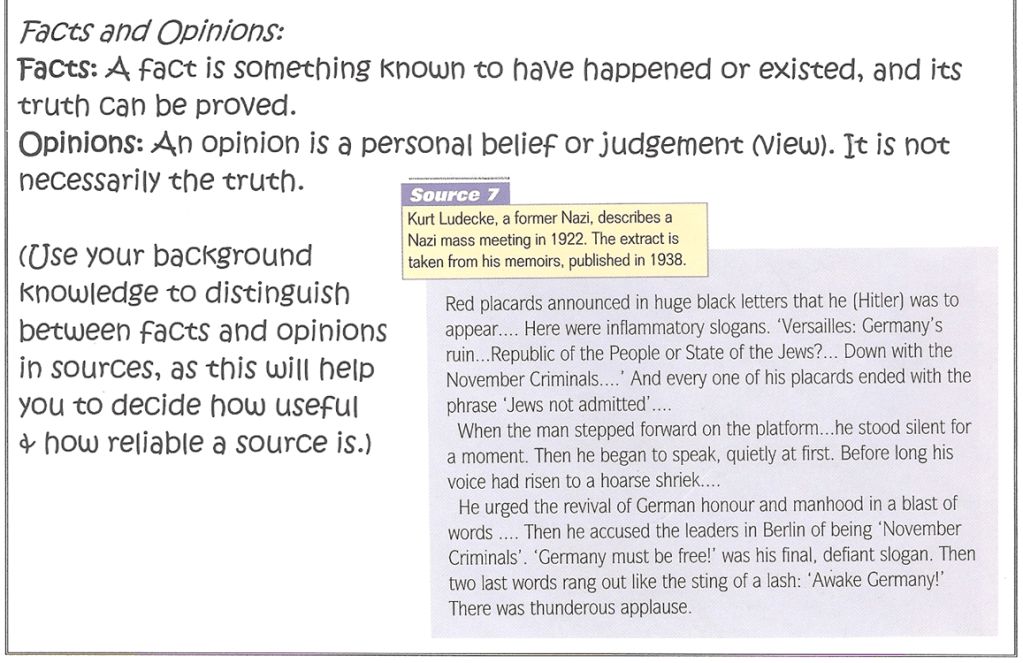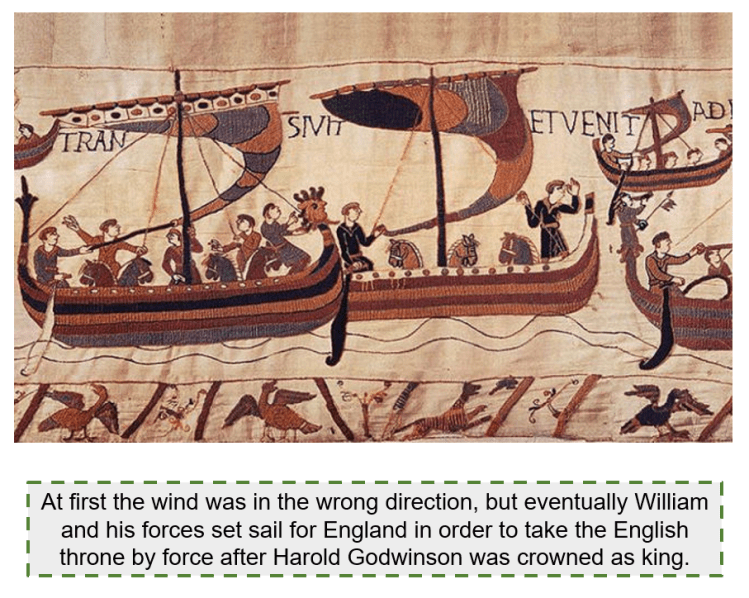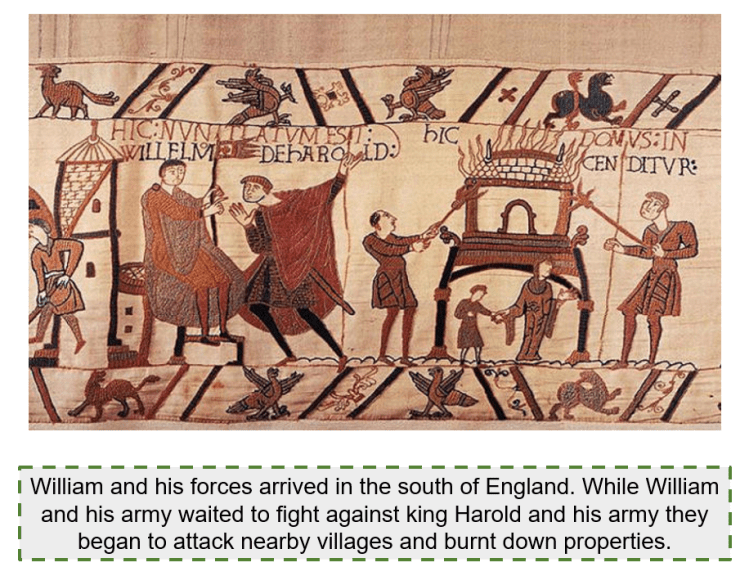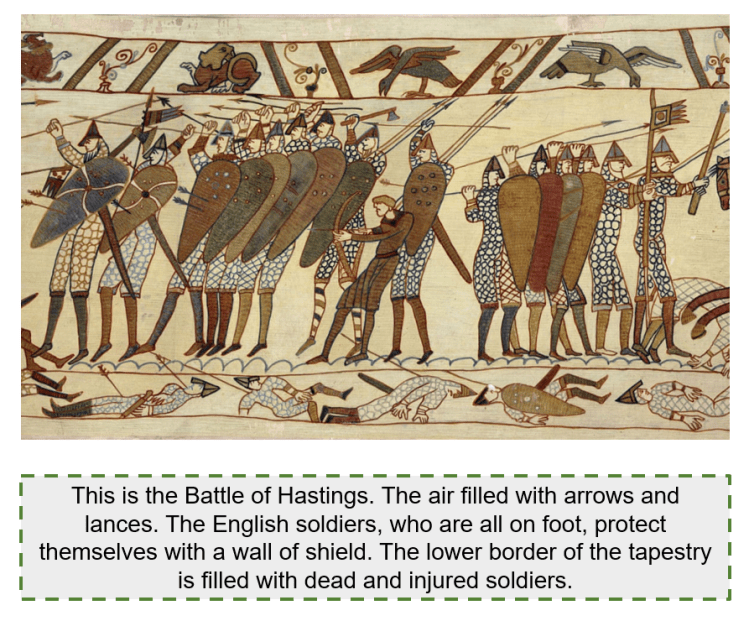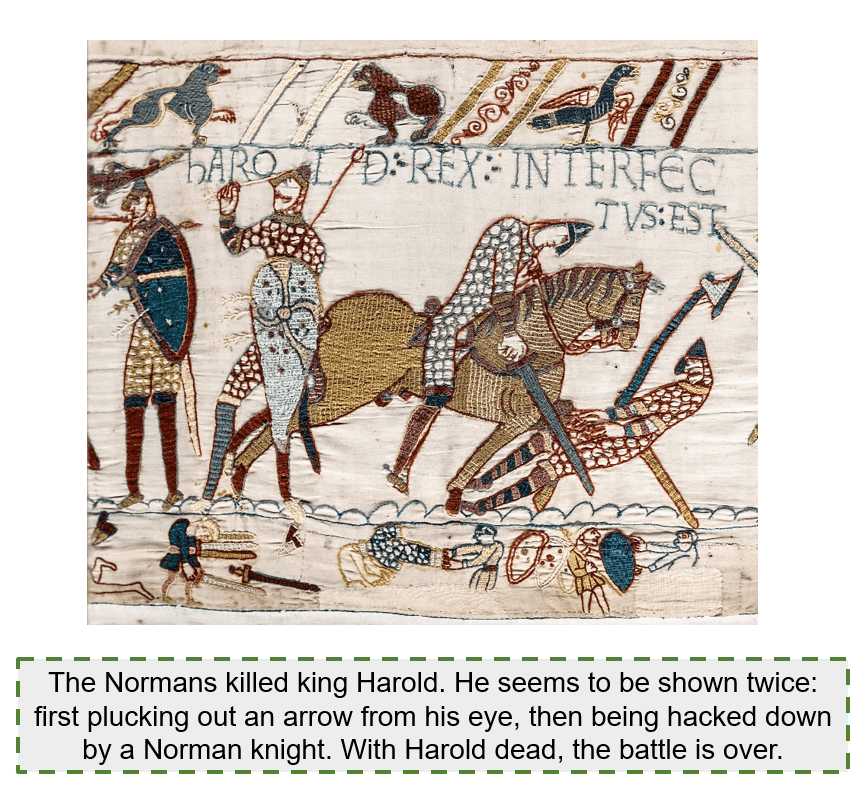
Today you are going to look at the “usefulness” and “reliability” of Sources.
Follow the instructions step by step:
1.
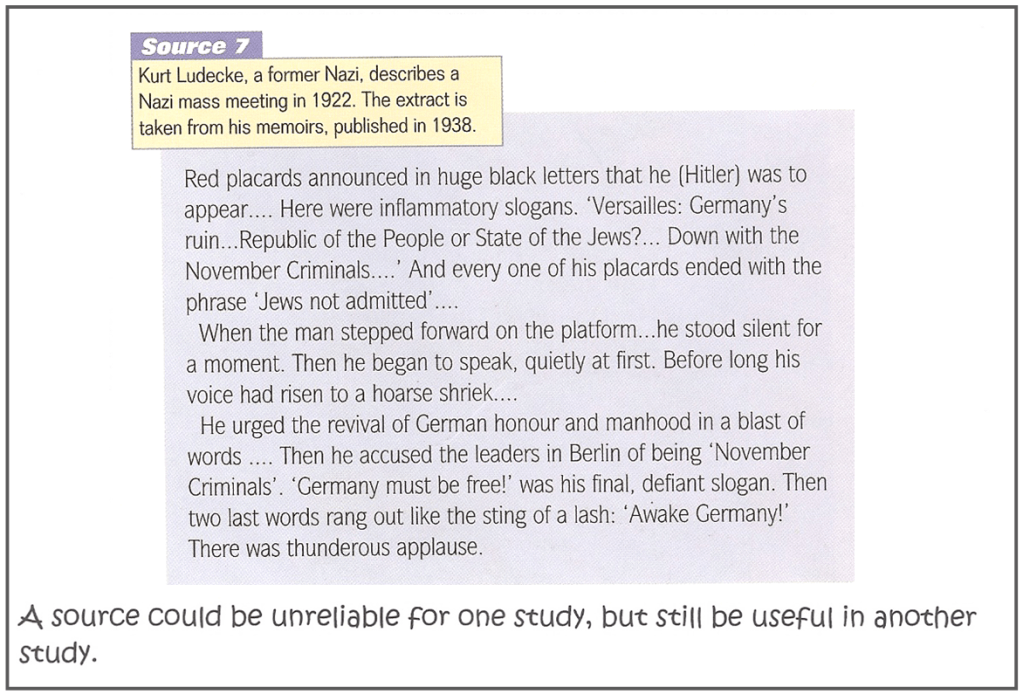
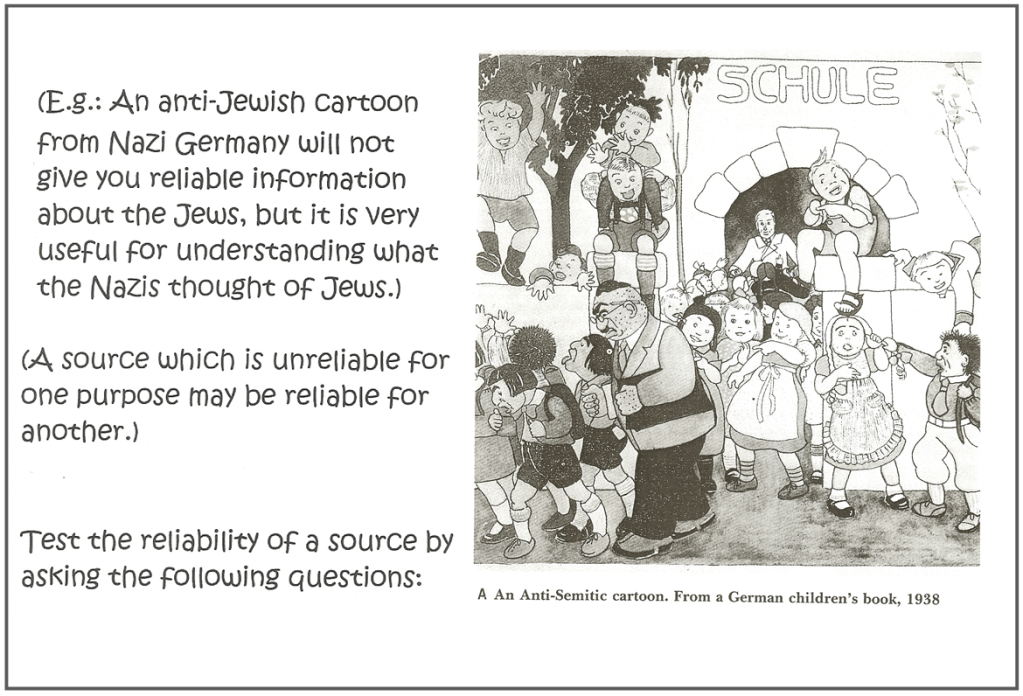
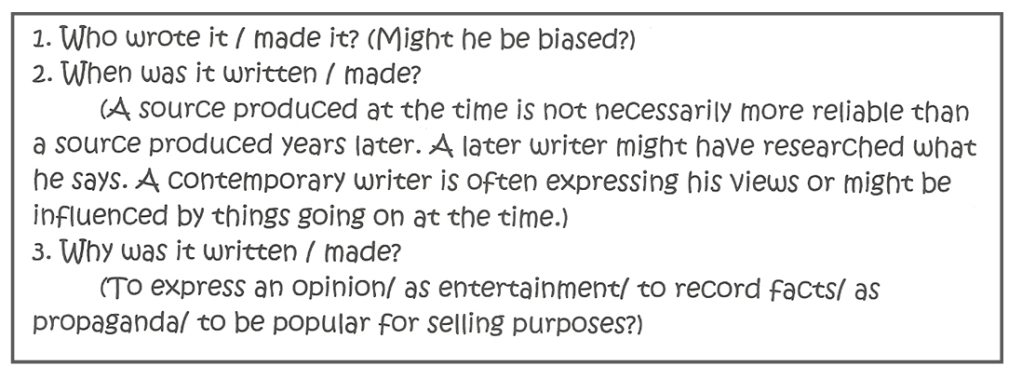
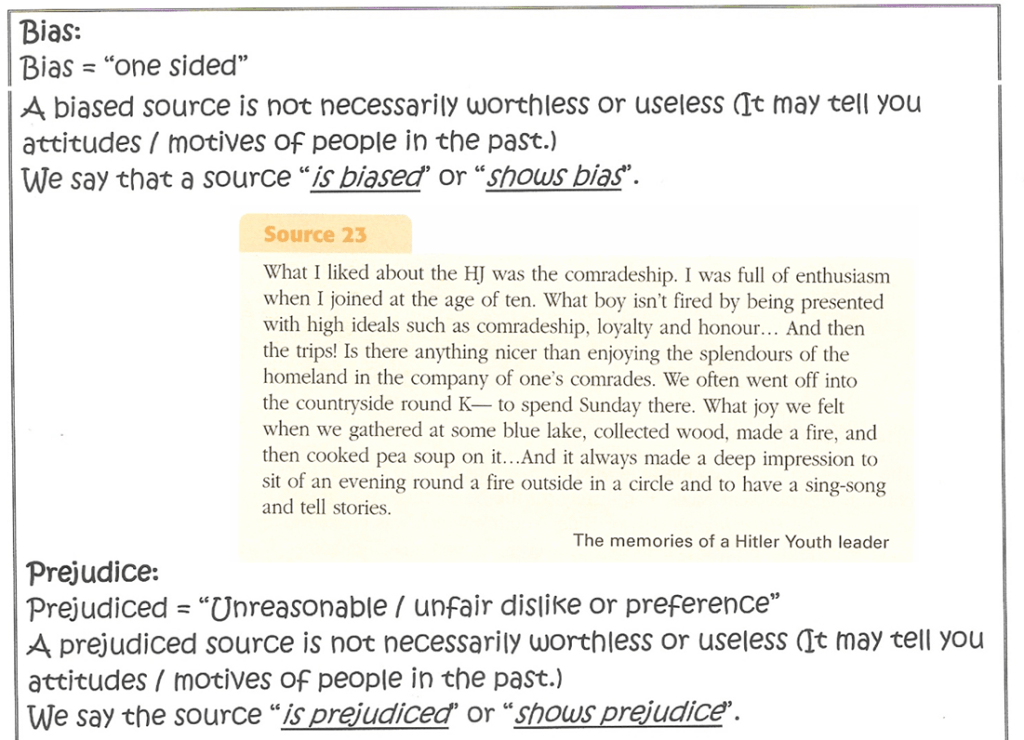
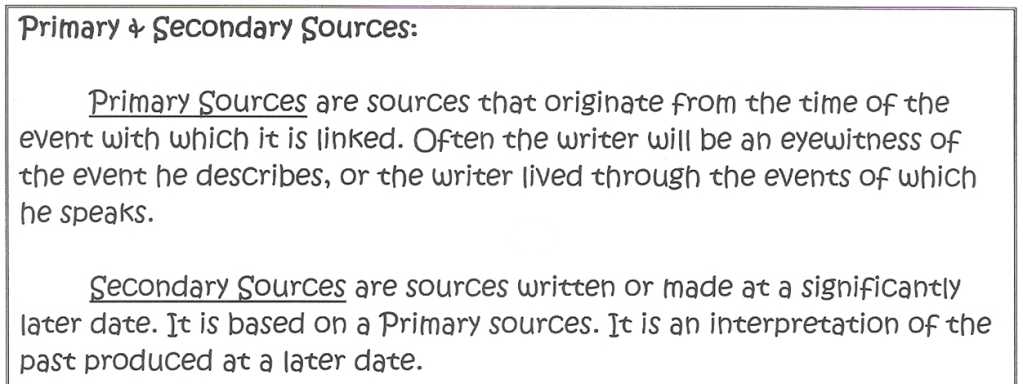
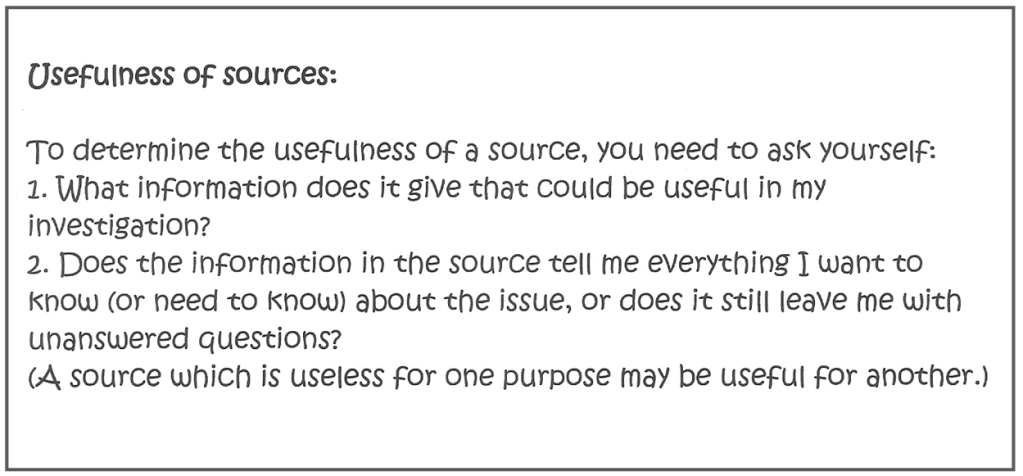
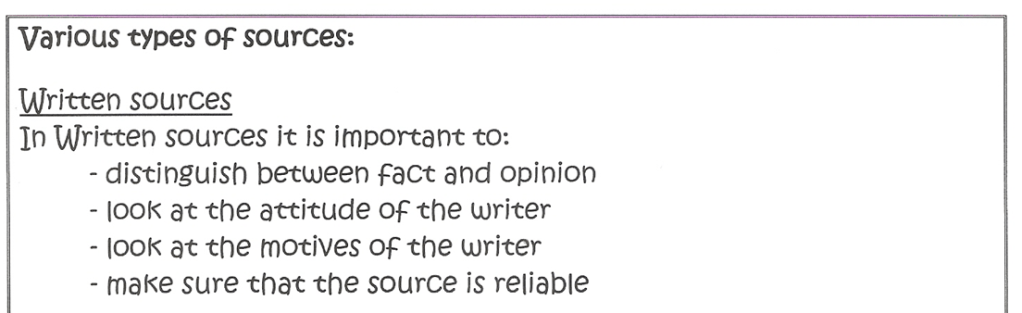
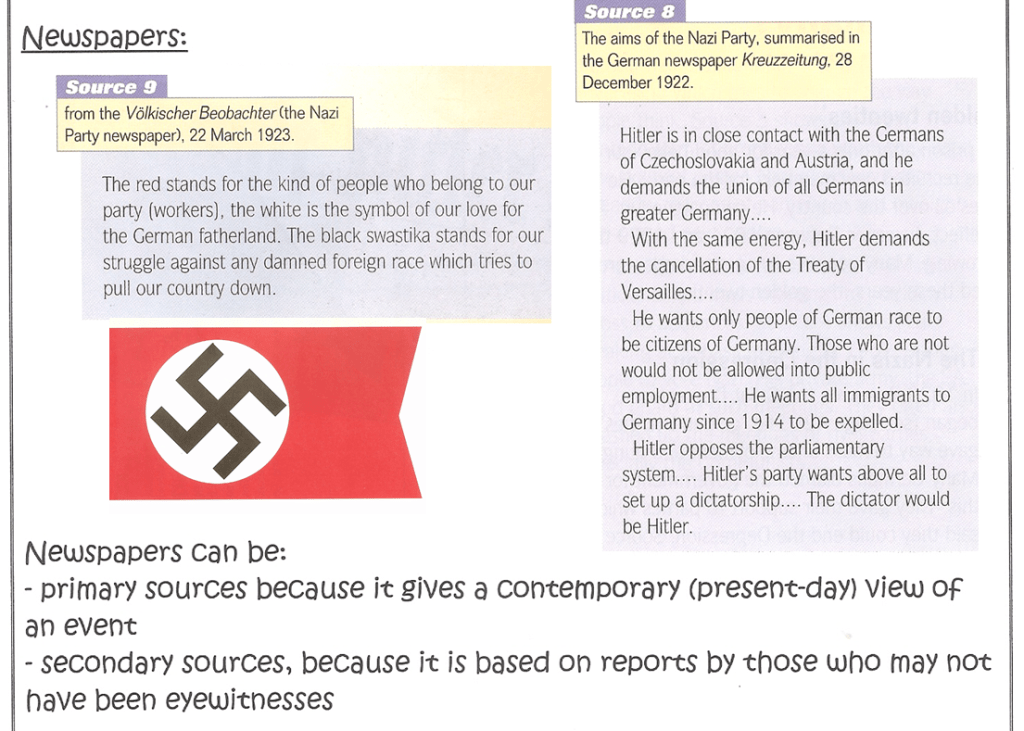
Read the information on Usefulness & Reliability of Sources from p.75-78.
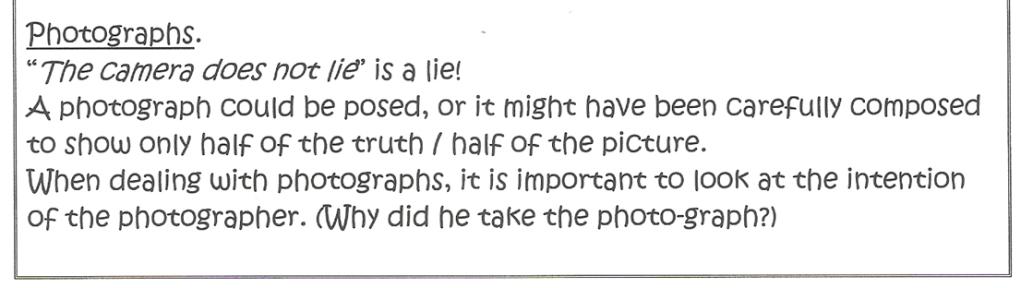
-Page 75-
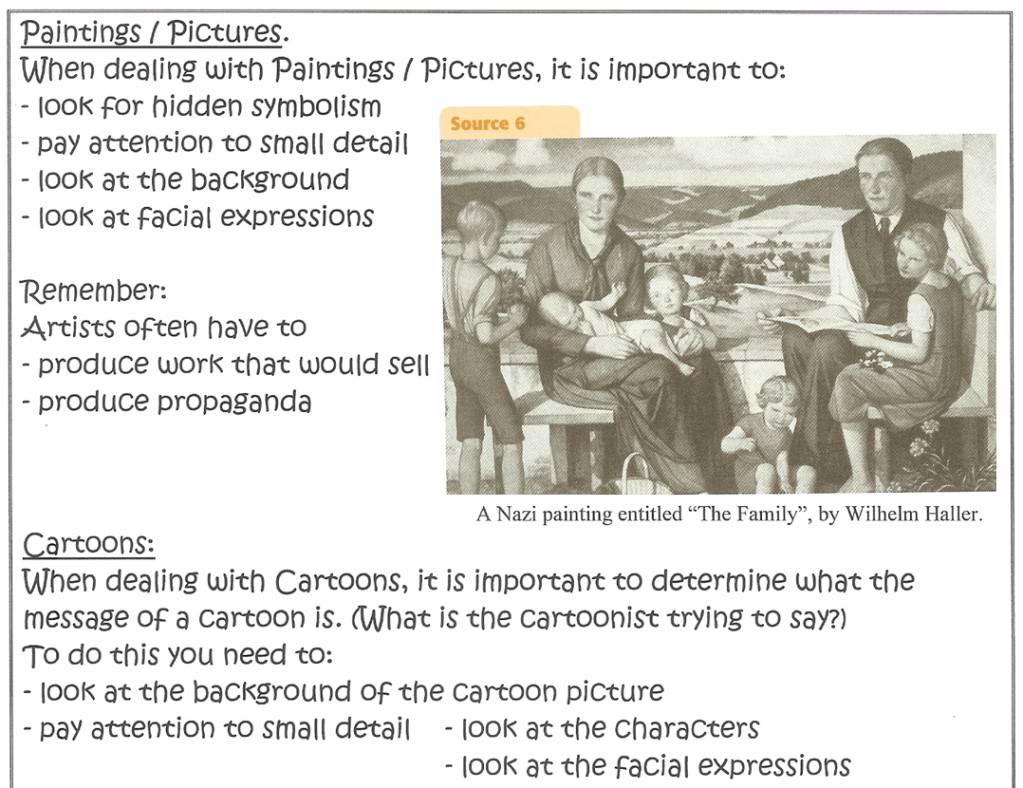
-Page 76-
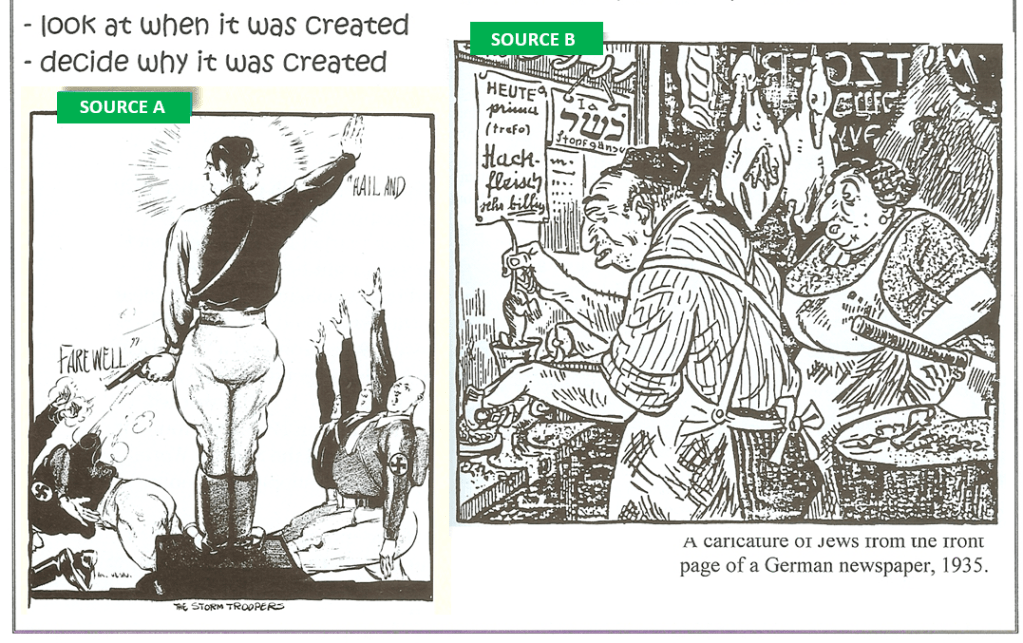
-Page 77-
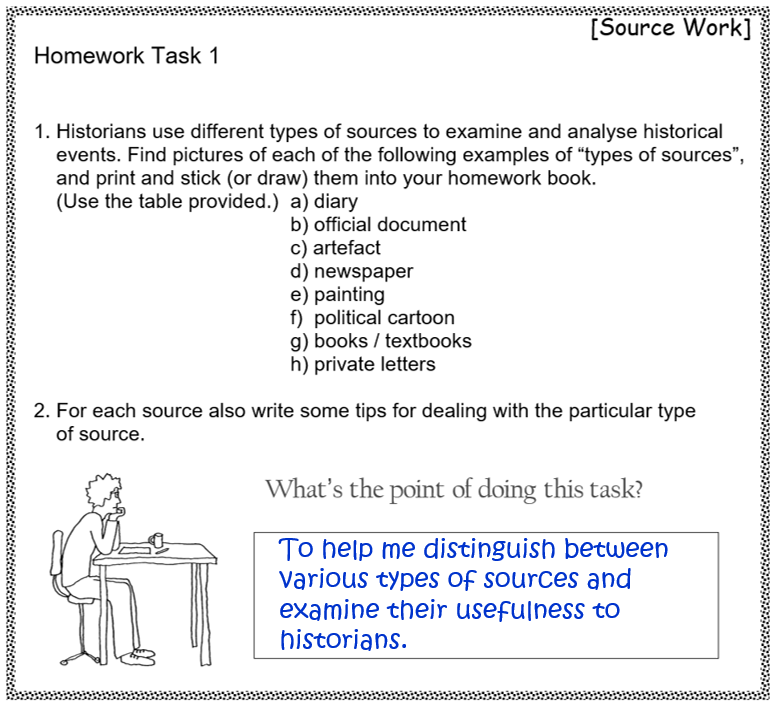
-Page 78-
2.
Watch the following video that explains usefulness, reliability and bias in source analysis. Pay careful attention!
Usefulness, Reliability and Bias. (5:04 minutes long)
3.
The video below tells you more about source analysis. (It also mentions some pages that you need to read – you may already have read the pages, so just watch the video.)
Analysing Sources. (4:49 minutes long)
4.
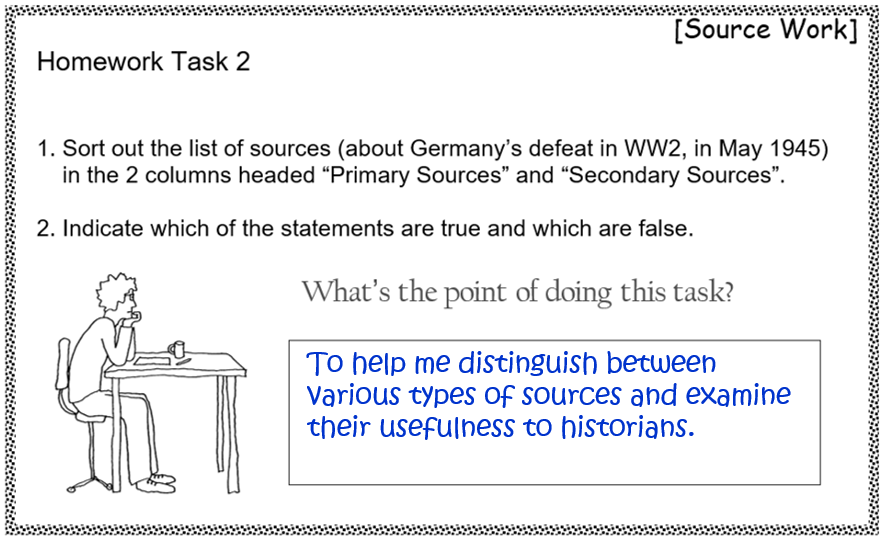
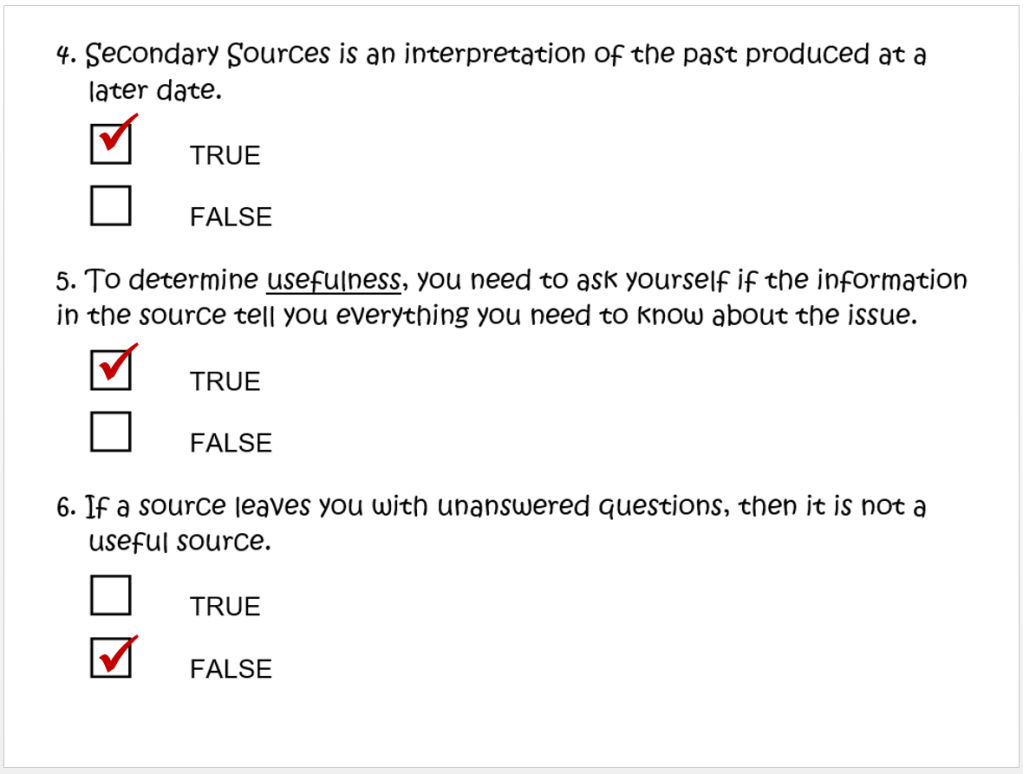
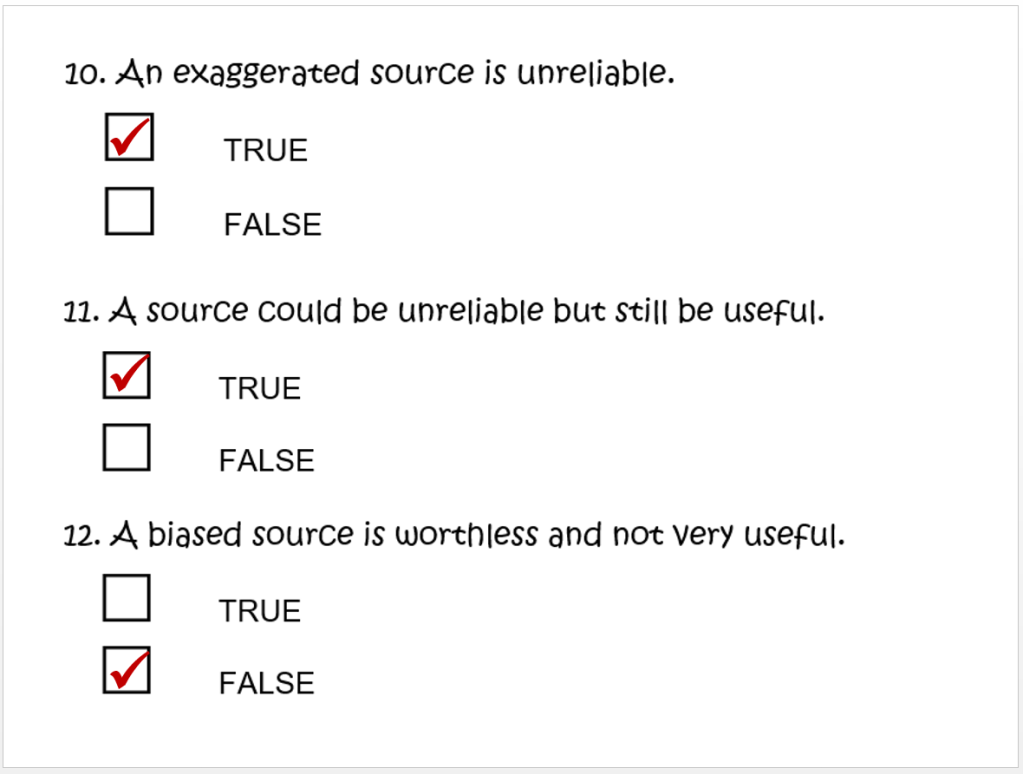
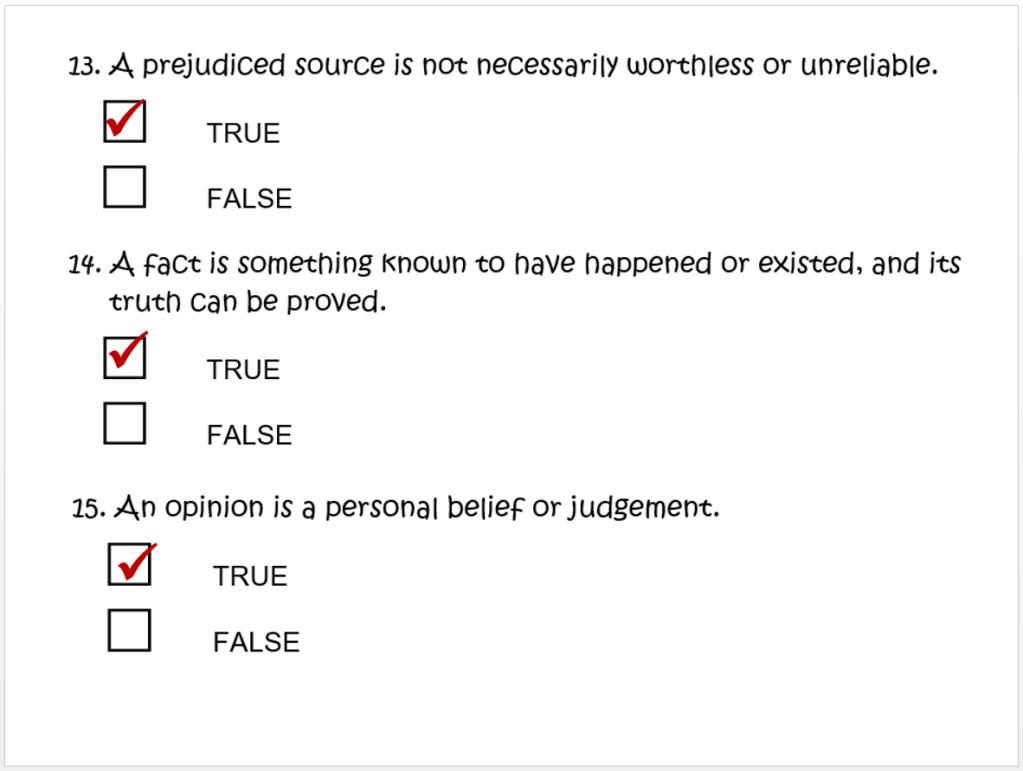
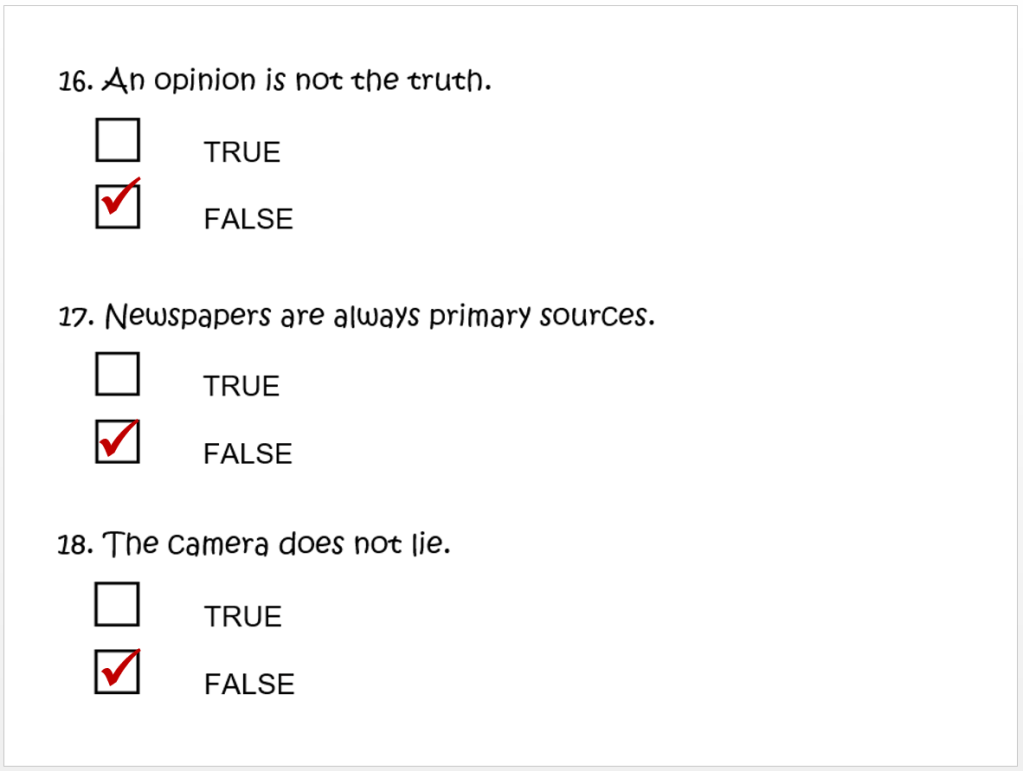
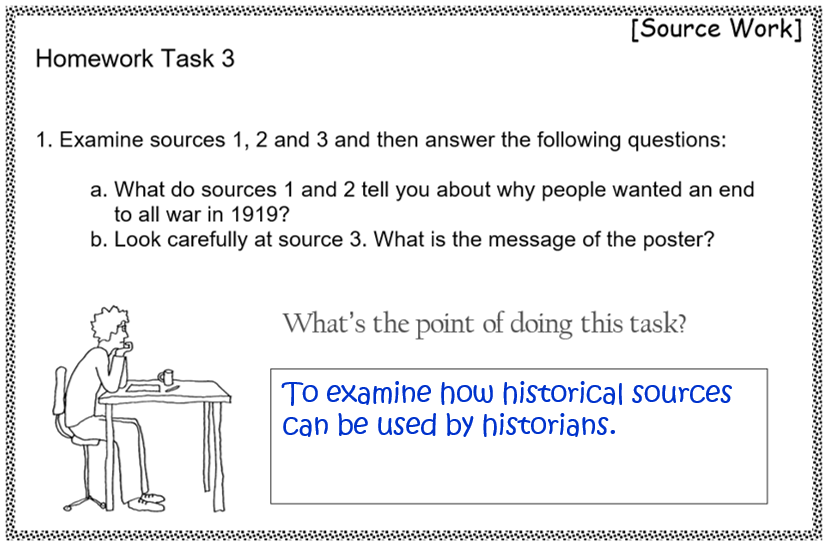
Now, complete the second part of Homework Task 2 (p.74-78) now in class.
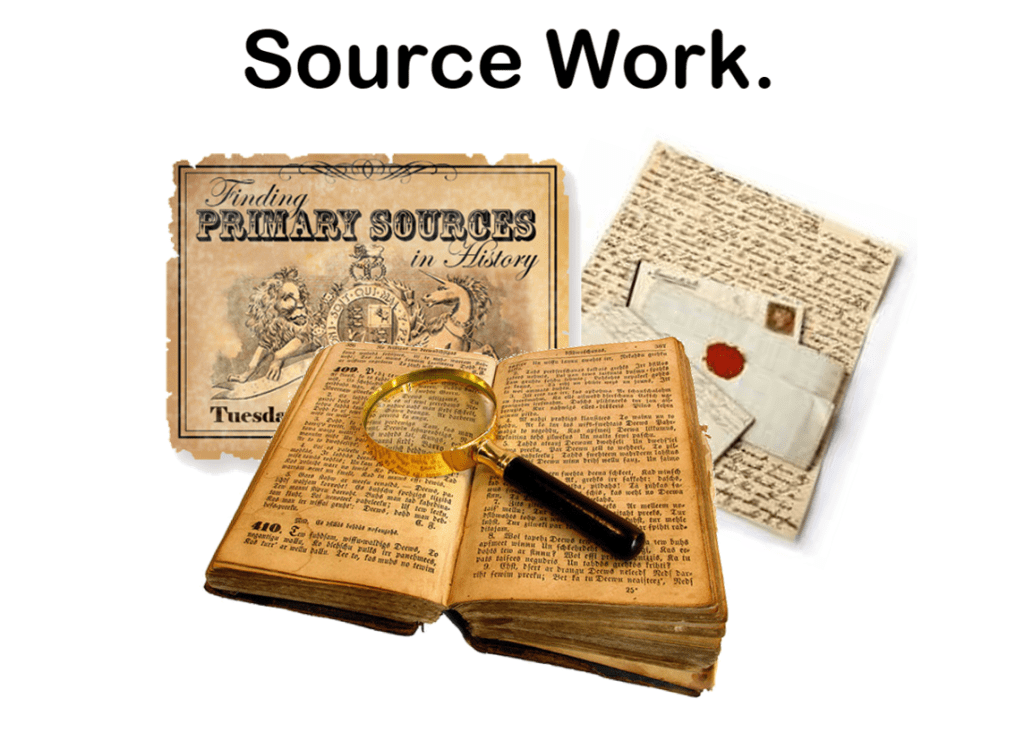
Today you are going to start our final “topic” in the Year 9 History course. We are going to look at The Use of Sources in History.
Follow the instructions step by step:
1.
First of all, let’s make sure that you know what is meant by “a source”.
What is a ‘source’?
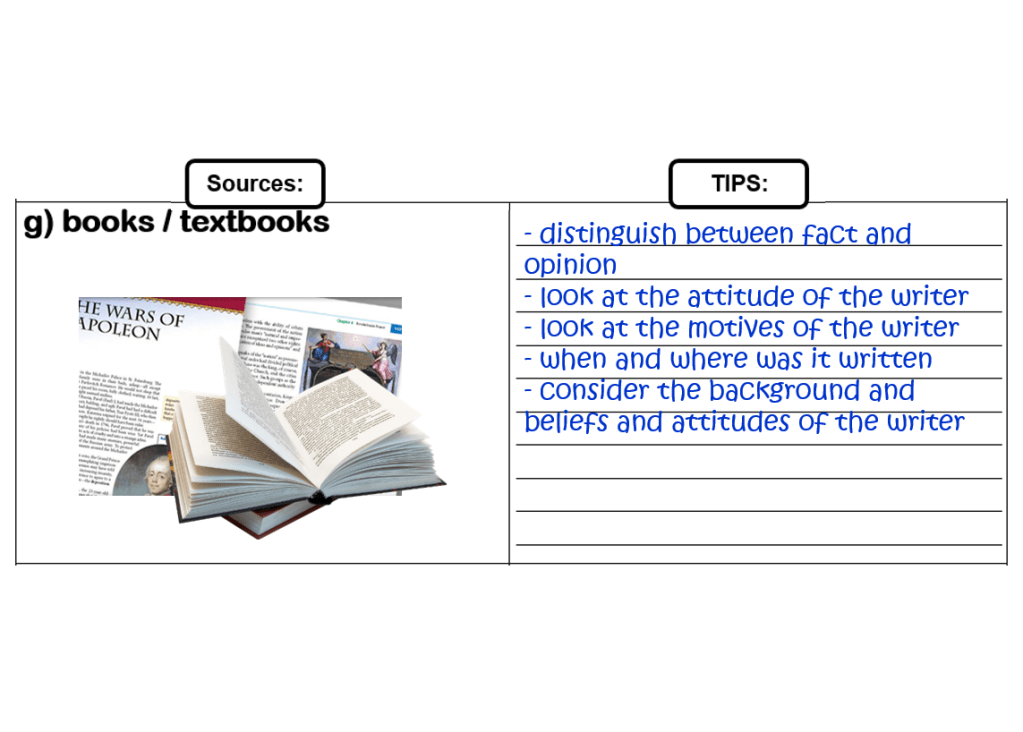
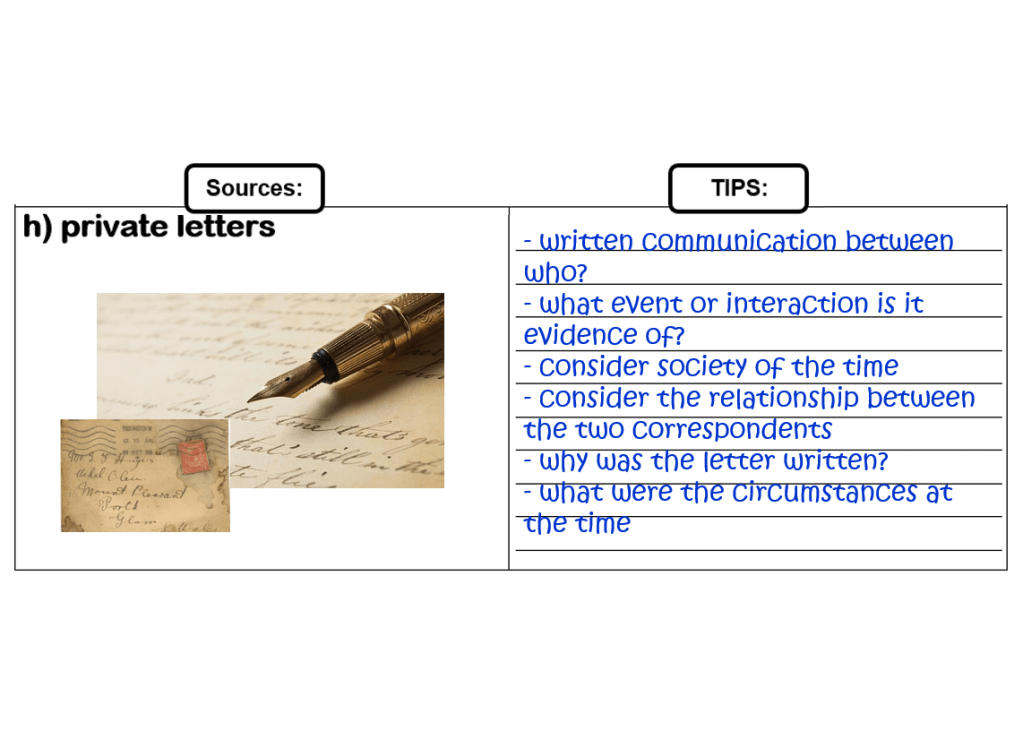
“A source is something that provides information about the historical topic you are studying. They can either be written (e.g. books or websites), or non-written (e.g. photographs or artefacts). No matter what you’re doing in History, you will use sources. This could be simply learning information from a textbook or website, or actually looking at ancient artefacts made in the past. Either way, they provide information about the past and are considered ‘sources of information’.”
2.
Read the information on Historical Sources from p.73-75.
-Page 73-
-Page 74-
-Page 75-
3.
Watch the following video to revise some of the source analysis theory that you need to be familiar with by now.
Primary and Secondary Sources. (3:30 minutes long)
4.
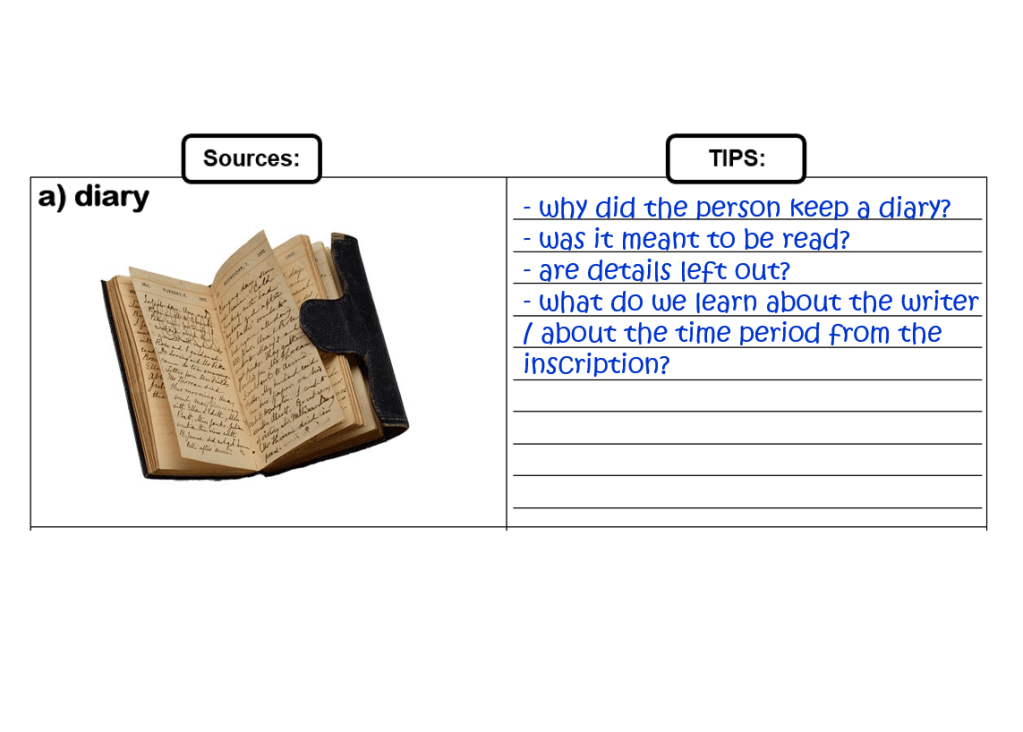
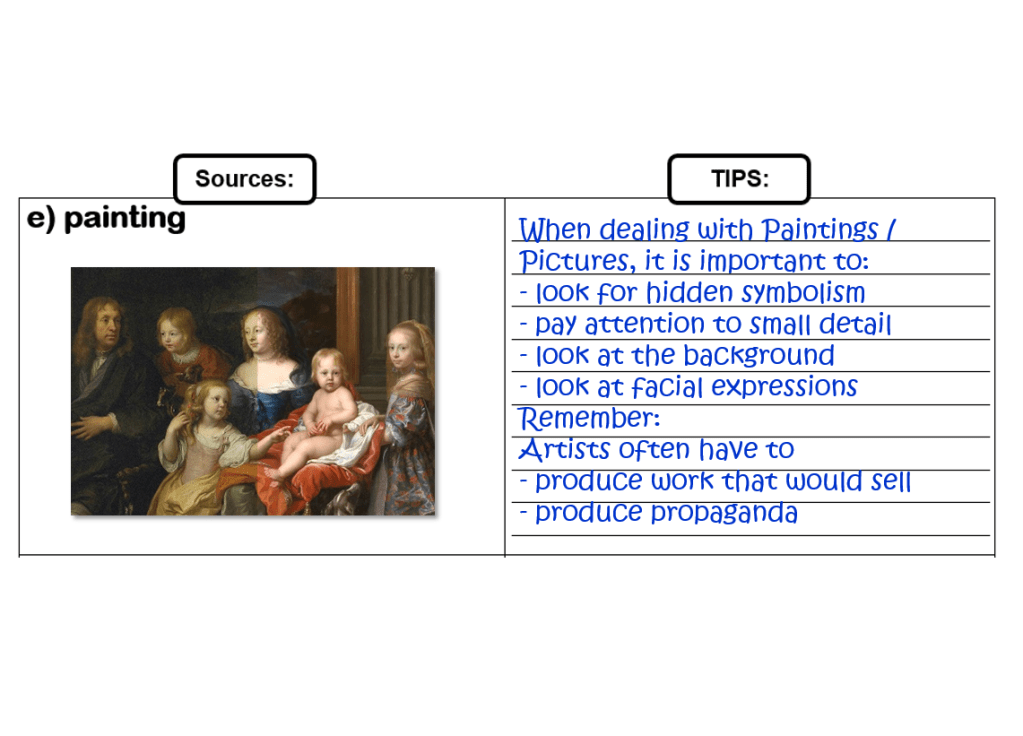
Now watch the following video about dealing with various types of Historical Sources.
Types of Sources. (3:38 minutes long)
5.
Read the information on Various types of Sources from p.79-80.
-Page 79-
-Page 80-
6.
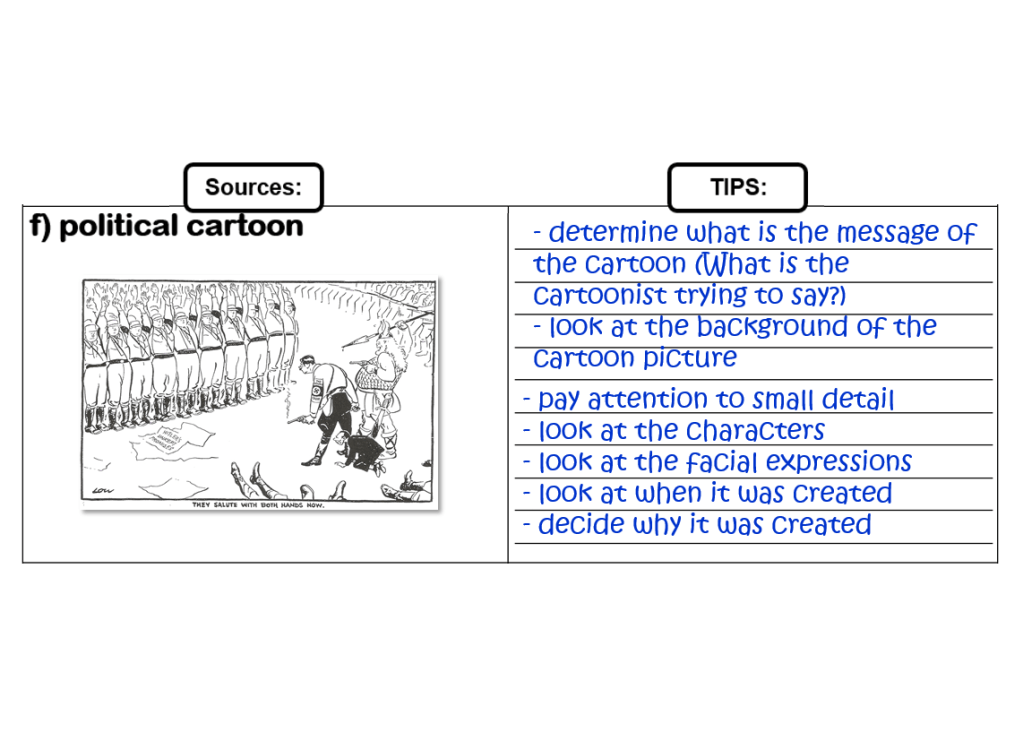
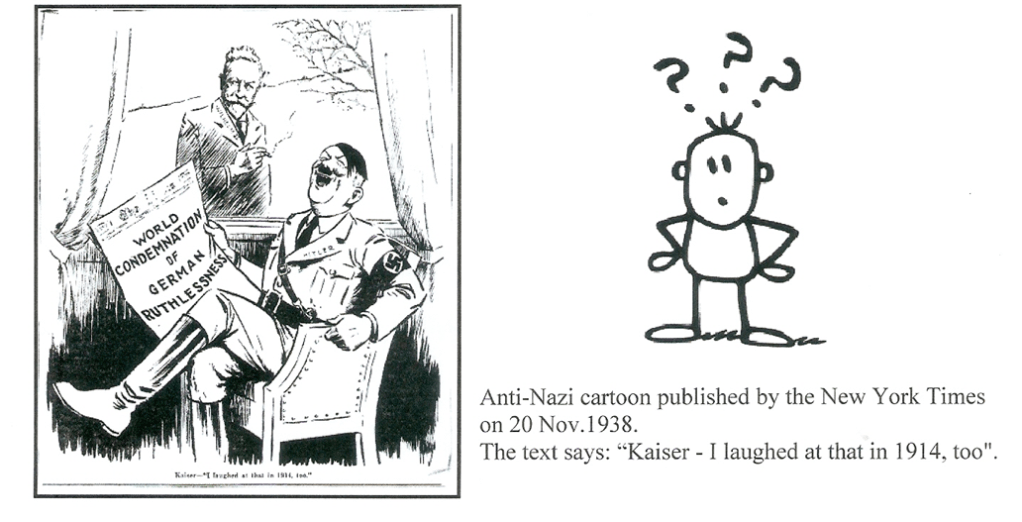
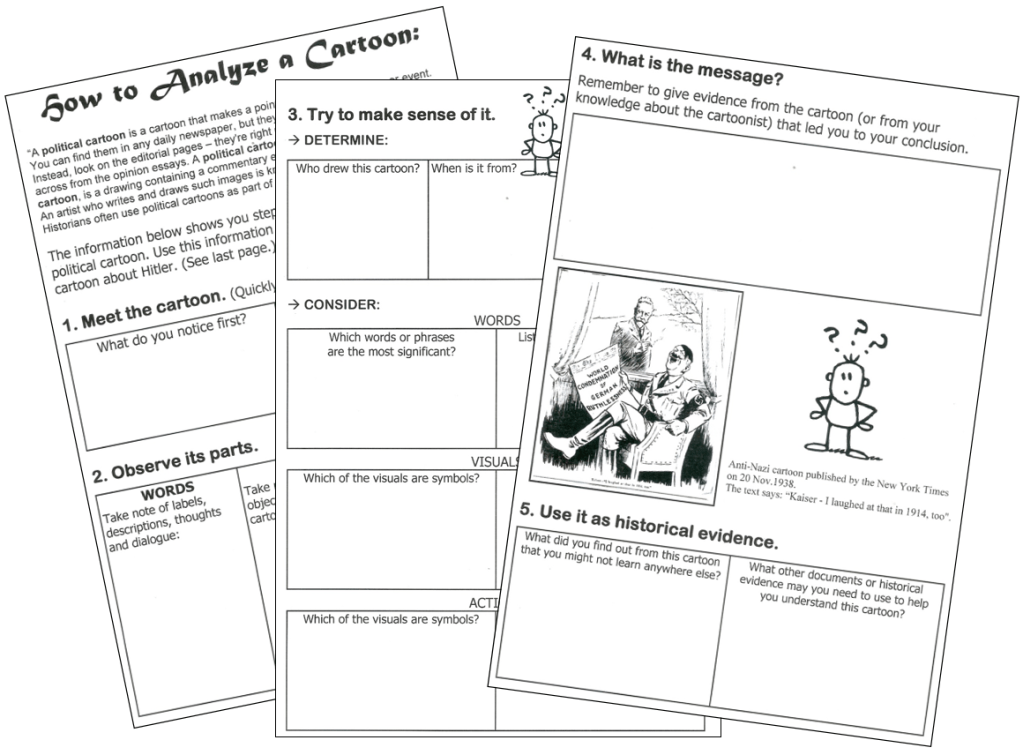
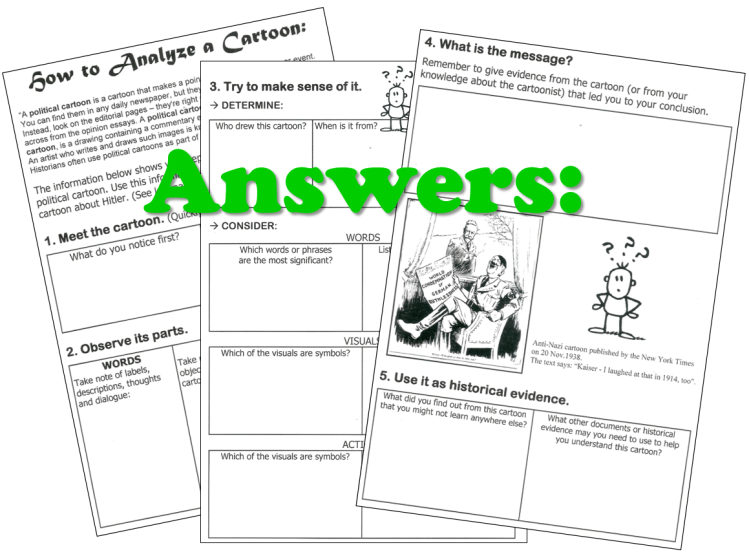
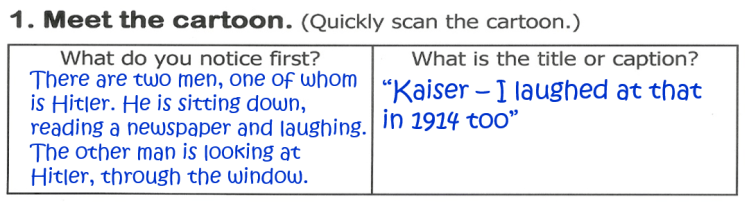
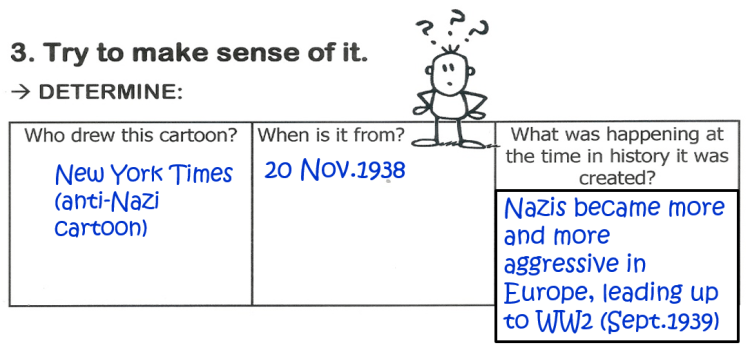
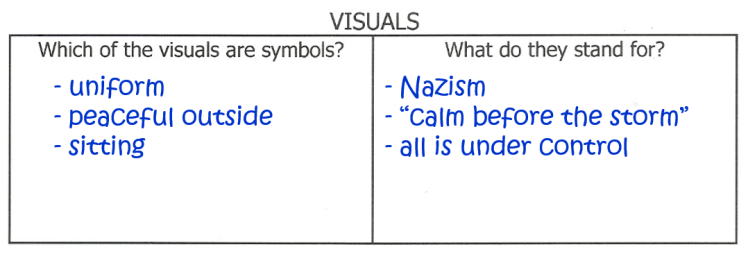
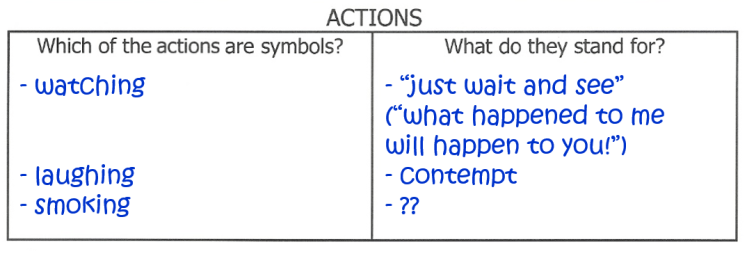
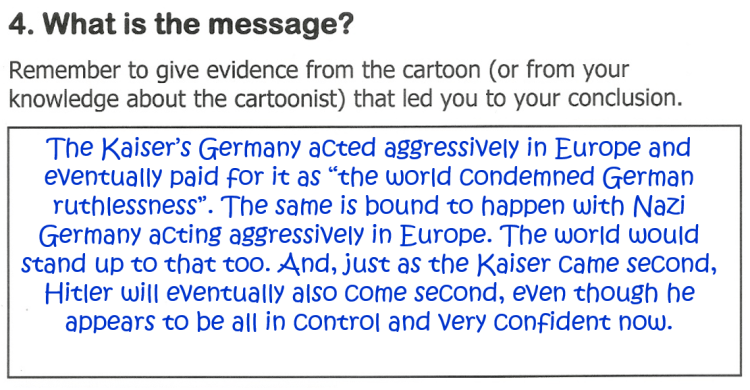
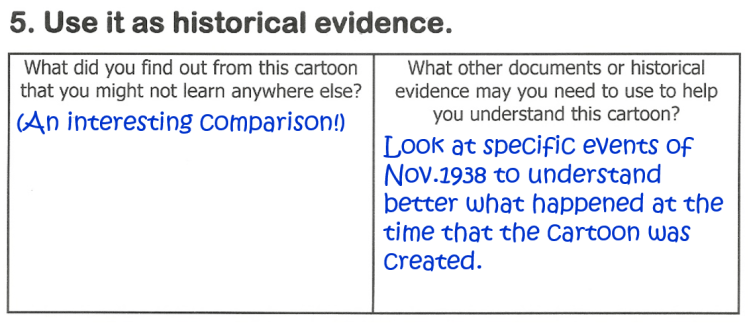
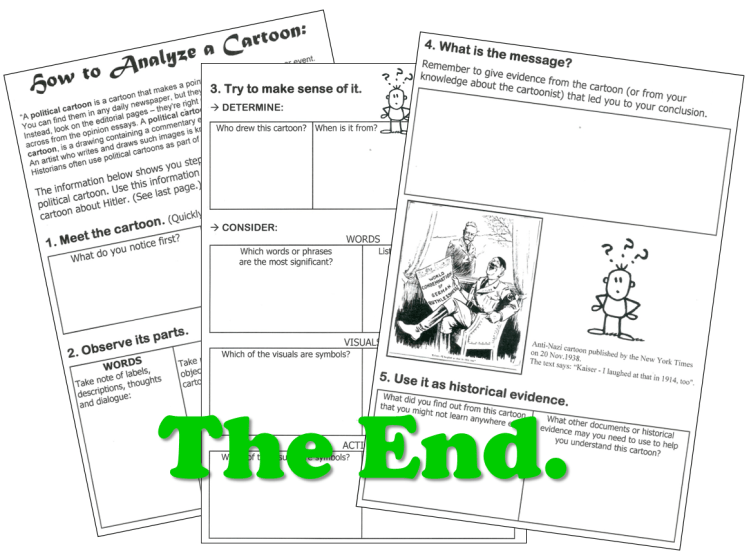
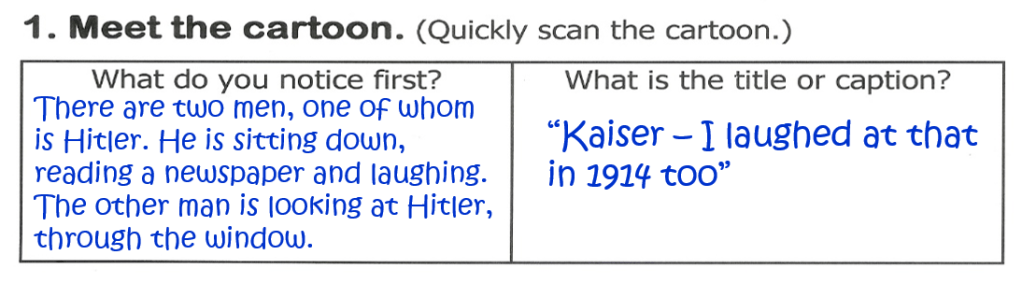
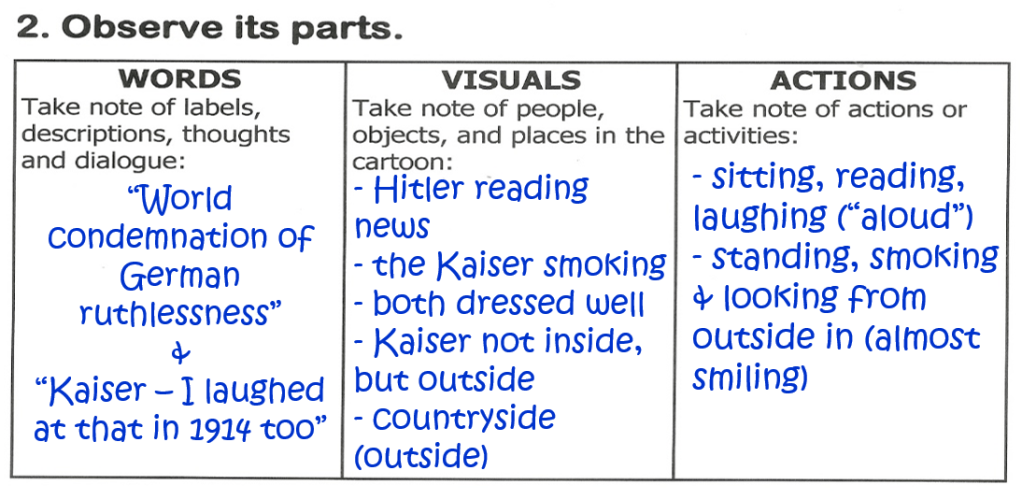
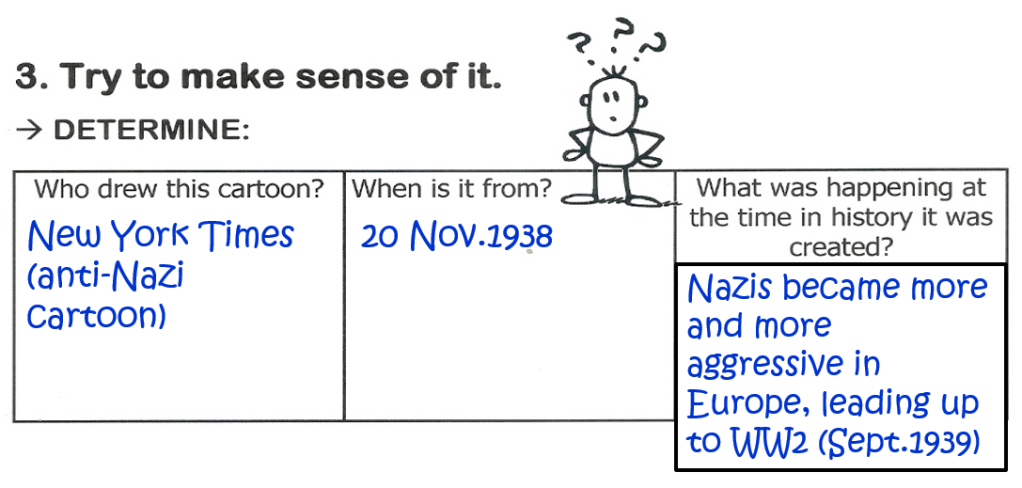
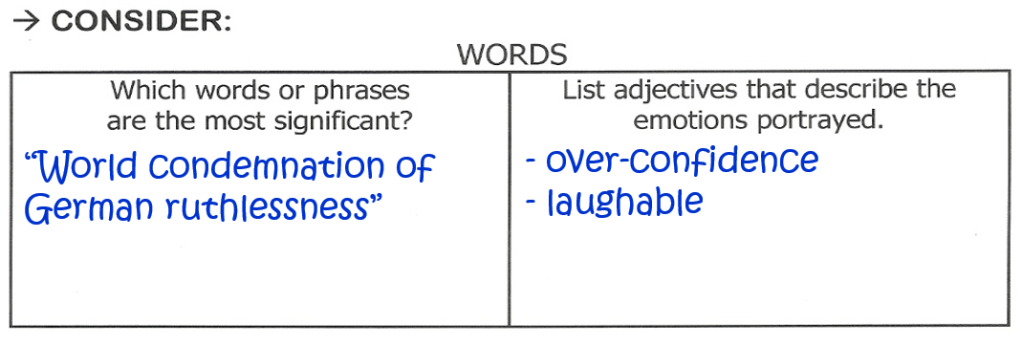
Look at the lesson on Nazi Cartoon analysis to remind yourself how to analyse a cartoon! You can access the lesson here.
7.
Complete Homework Task 1 (p.71-73) now in class.
8.
Task 1 on p.71-73.
9.
Also complete the first part of Homework Task 2 (p.74-75) now in class…
Today you are going to revise cartoon analysis, step by step…
Follow the instructions step by step:
1.
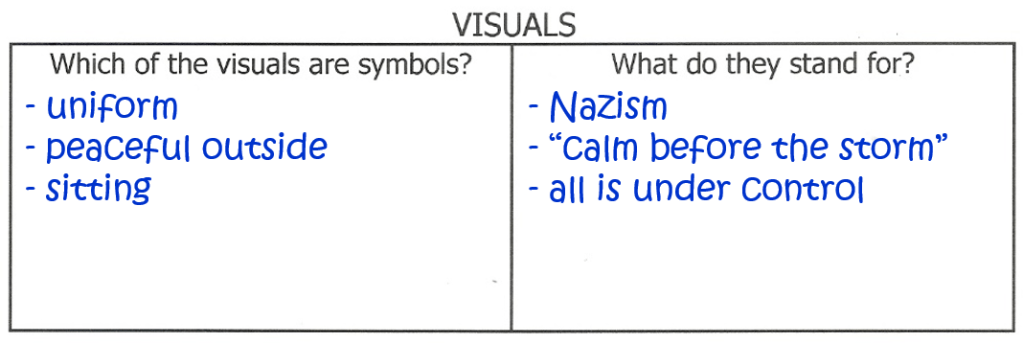
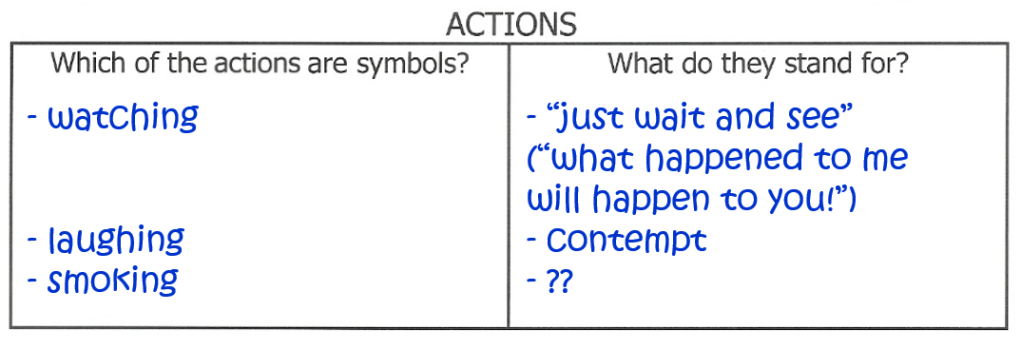
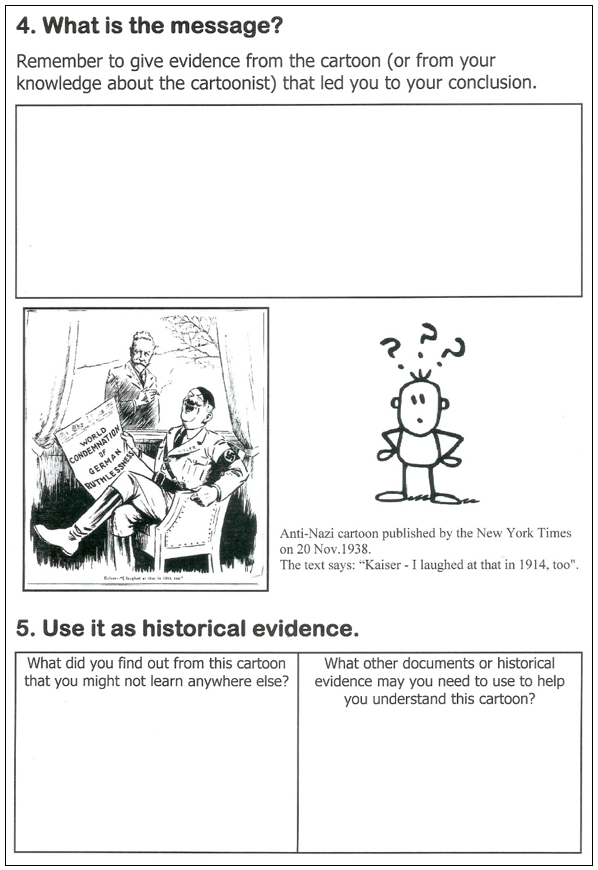
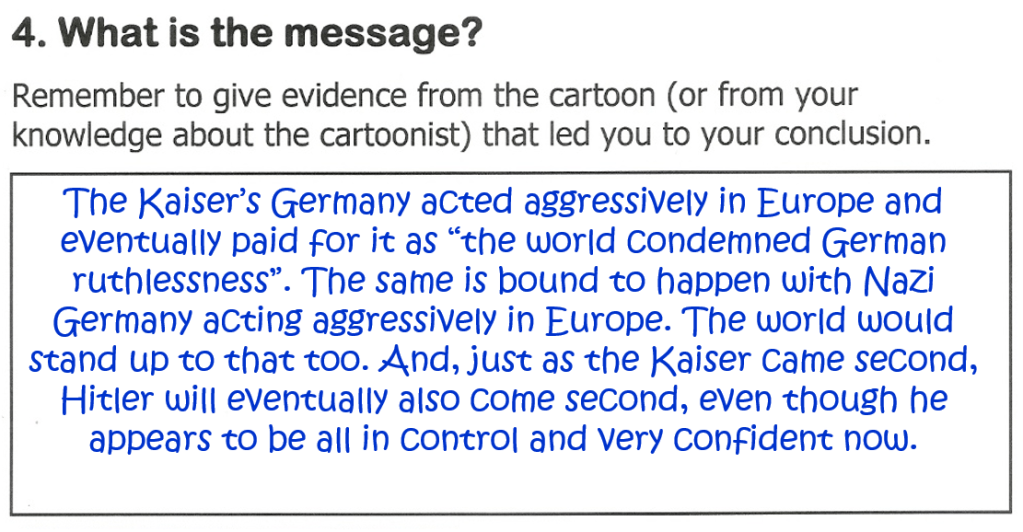
Carefully examine the cartoon on page 41.
2.
To be able to determine the meaning of this cartoon, complete the tasks on pages 39-41 of your workbook.
SOLUTION:
3.
Below are the same p.39-41 tasks, separated into pages with answers:
PAGE 39:
SOLUTION:
PAGE 40:
SOLUTION:
PAGE 41:
SOLUTION:
3.
To finish off our topic on “Nazi Germany”, you can watch the entire History of Nazi Germany – from beginning to end, as explained in this great animated video: (9:59 min long)
Today you are going to finish the video on Eva Clark….
Follow the instructions step by step:
1.
“Eva Clarke was one of three “miracle babies” who saw the light of day in KZ Mauthausen in Austria. Nine days after her birth, the Second World War ended. As a newborn, Eva’s chances of survival were extremely slim; against all odds, she lived, making her and her mother Anka the only survivors of their extended family.”
And now, we will watch the first 20 minutes of an incredible story… (We will finish watching the rest of the story in the next lesson.)
“What does it mean to be born in a concentration camp, arguably one of the most inhospitable places on earth? Eva Clarke was one of three “miracle babies” who saw the light of day in KZ Mauthausen in Austria. Nine days after her birth, the Second World War ended. As a newborn, Eva’s chances of survival were extremely slim; against all odds, she lived, making her and her mother Anka the only survivors of their extended family. In 1948, they emigrated from Prague to the UK and settled in Cardiff, Wales. Eva regularly addresses audiences, and her remarkable story has been featured in the British and American media. She and her mother are among the protagonists of Wendy Holden’s book ‘Born Survivors: Three Young Mothers and their Extraordinary Story of Courage, Defiance, and Hope’ (Harper, 2015).”
Watch the video below to revise the Norman Invasion and its consequences.
The Norman Conquest – an animated explained video. (11:16 minutes long)
4.
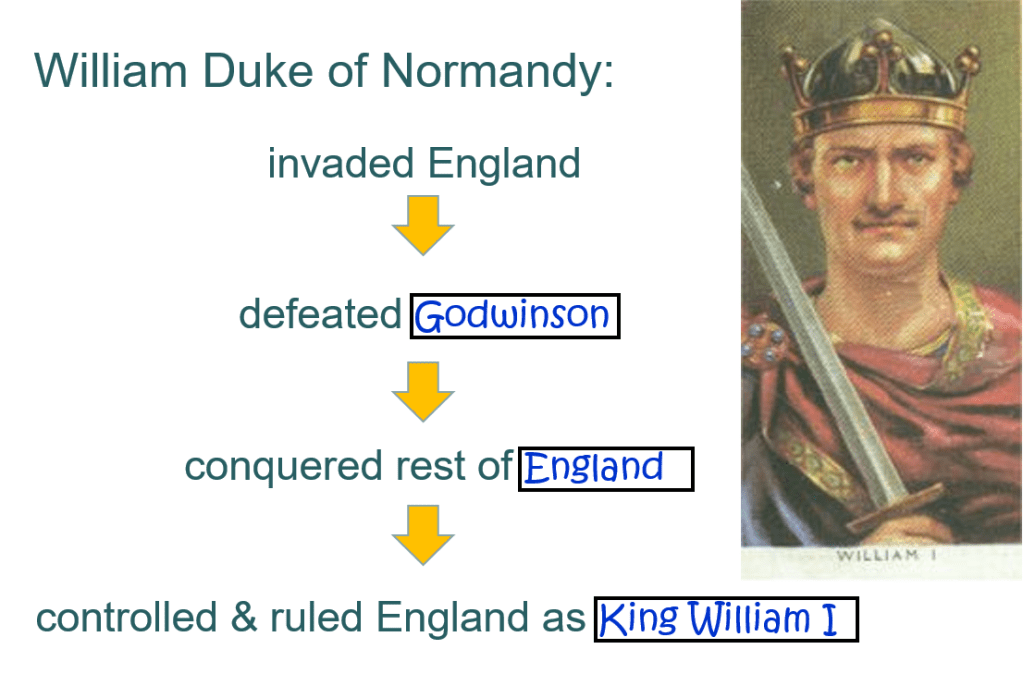
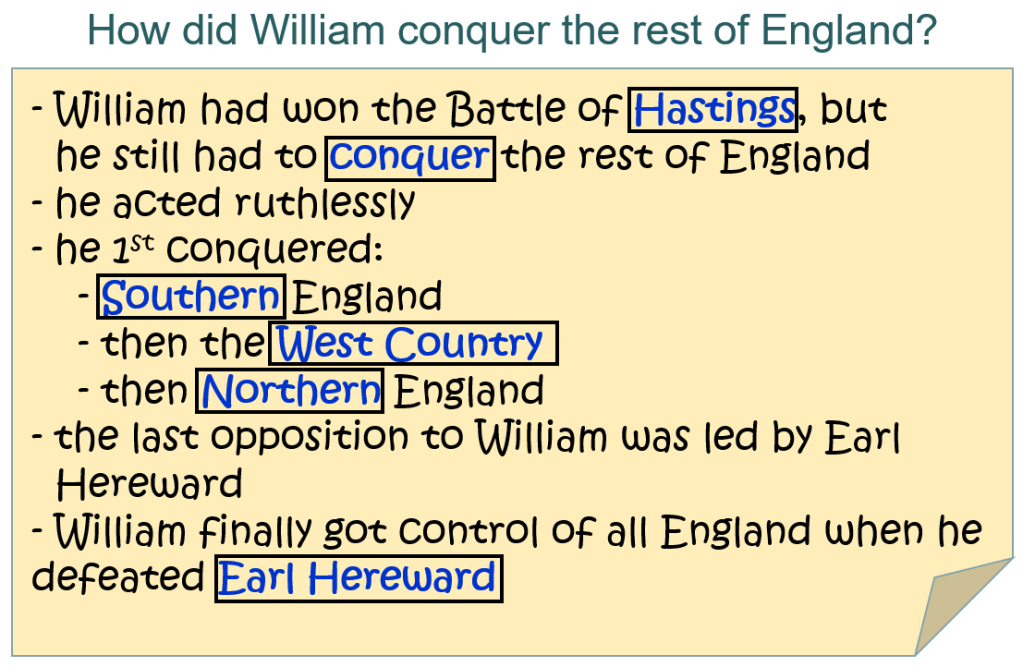
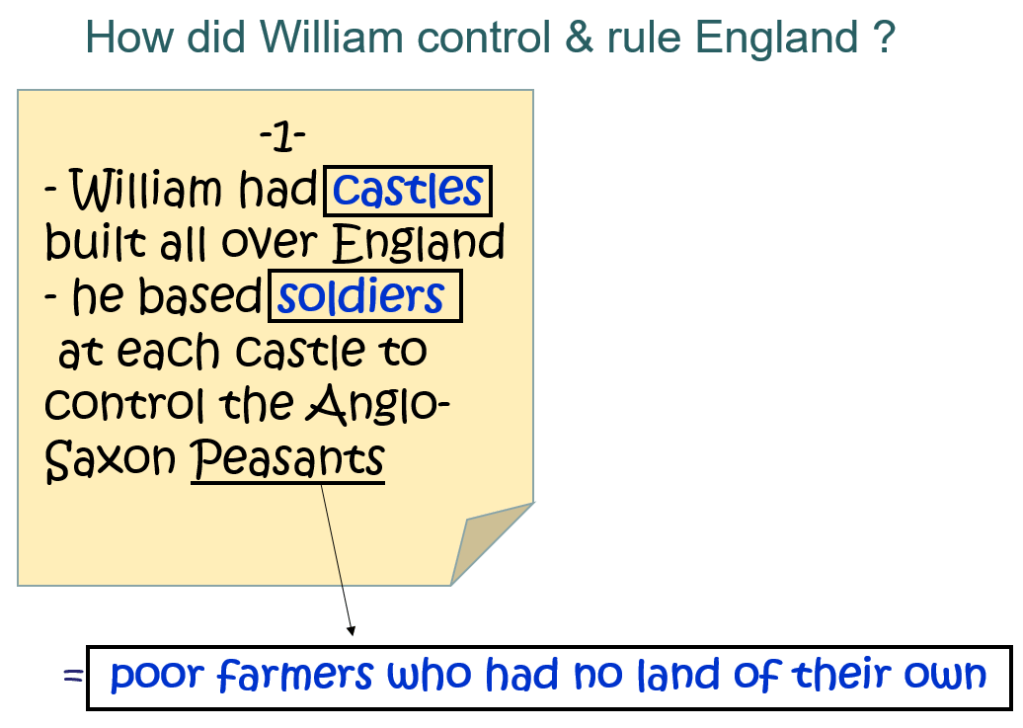
Here is a revision video about how William I conquered the rest of England and how he controlled and ruled his new kingdom.
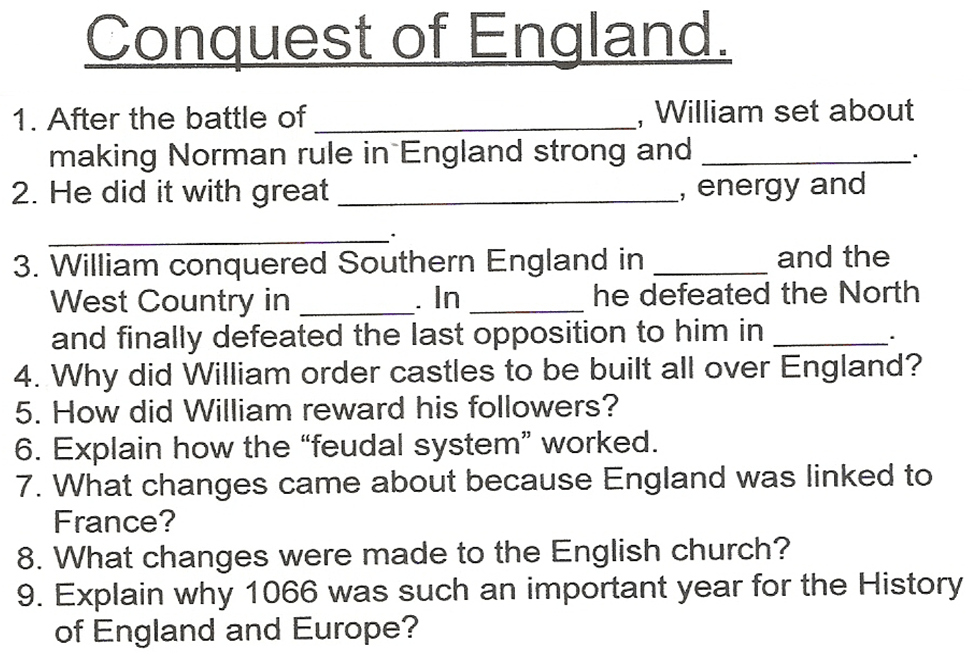
Conquest of England – fill-in notes. (2:05 minutes long)
5.
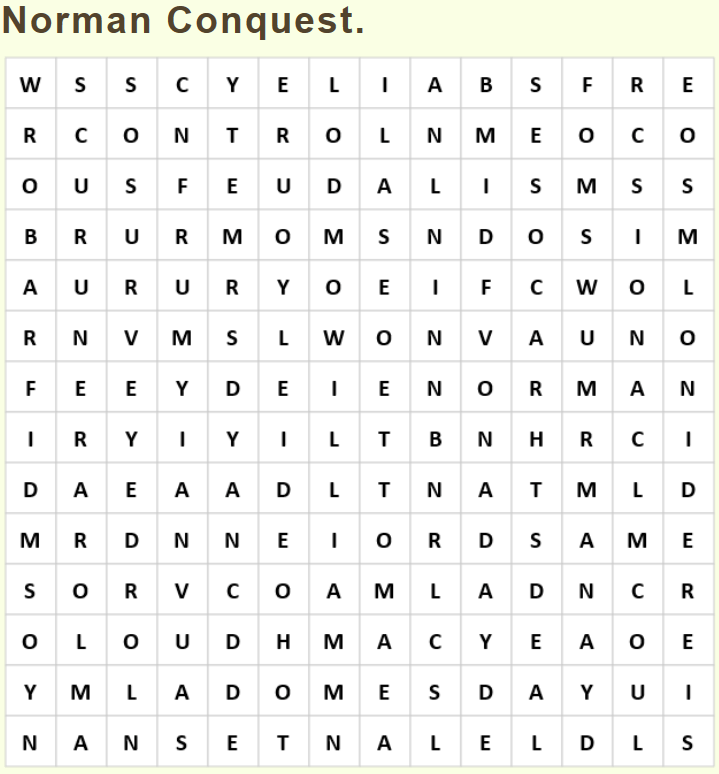
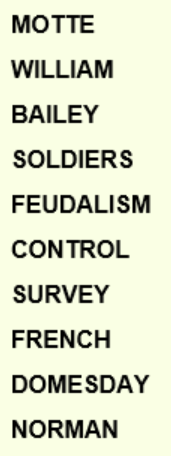
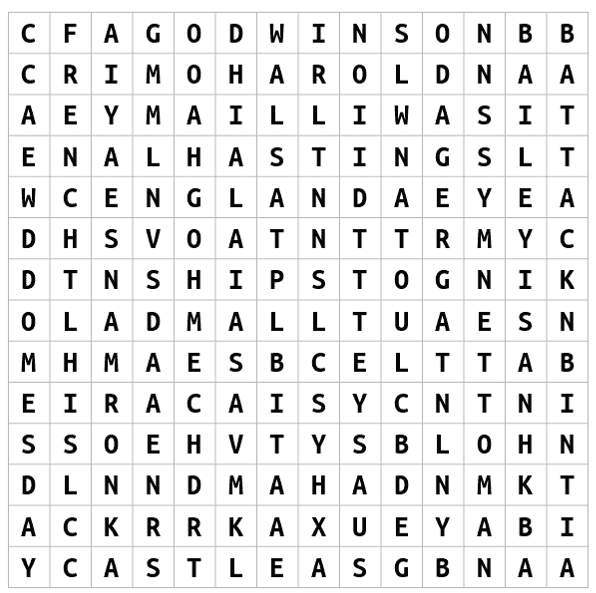
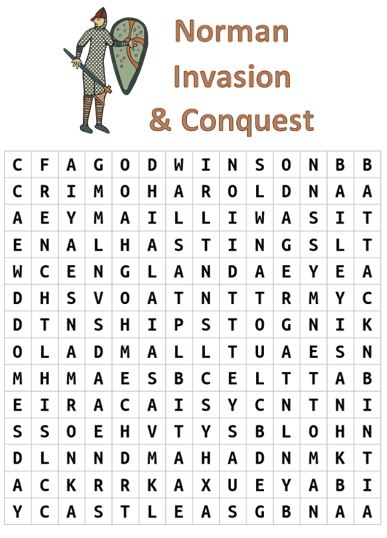
If you are interested, do the following word search ONLINE about the Norman Invasion and Conquest. (Or, ask your teacher for a paper copy.)
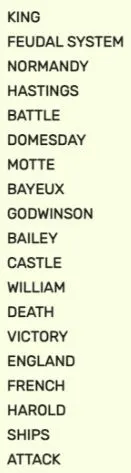
You need to look for 10 words that you would have to use if you want to describe changes that took place in England after the Norman Conquest. Click on the word search to be able do it online – you can then “highlight” the words with the cursor as you find them.
Click on the word search to be able do it online – you can then “highlight” the words with the cursor as you find them.
Today you are going to learn more about how William I ruled by means of the Feudal System.
Follow the order in which I give you instructions:
1.
As introduction, watch the following video on “How William controlled England”, with specific focus on some problems William faced…
How did William control England? (3:30 minutes long)
Some of the problems mentioned are:
having to reward the nobles who helped William
not knowing how wealthy the new kingdom was
having to control the peasants / to keep them in line
protecting the Norman soldiers
2.
This video mentions that William rewarded his followers with land: It also makes mention of armies… This is where the Feudal System came in. The video below explains the Feudal System in detail. It will reveal to you what the link between the land and the armies was…
Feudal System. (2:08 minutes long)
3.
The videos below are all on Feudalism.
(Ignore the quiz-questions instruction at the end of the video below.)
The feudal system – an introduction. (2:54 minutes long)
What Was Feudal System? – A Middle Ages feudal system story. (4:24 minutes long)
Feudalism Explained – A final summary of Feudalism… (3:03 minutes long)
4.
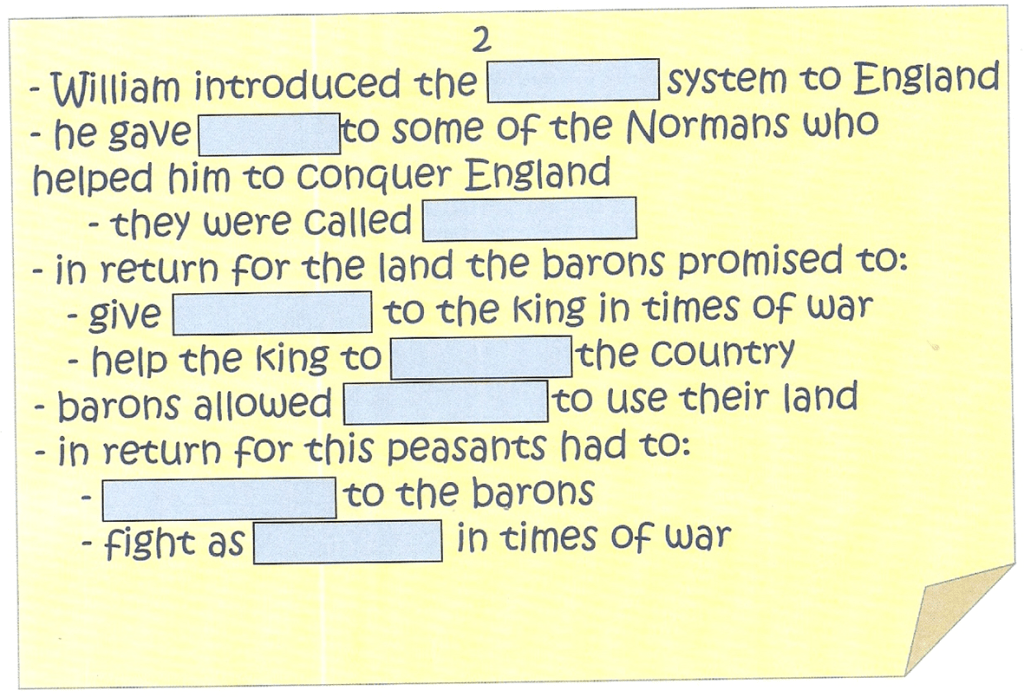
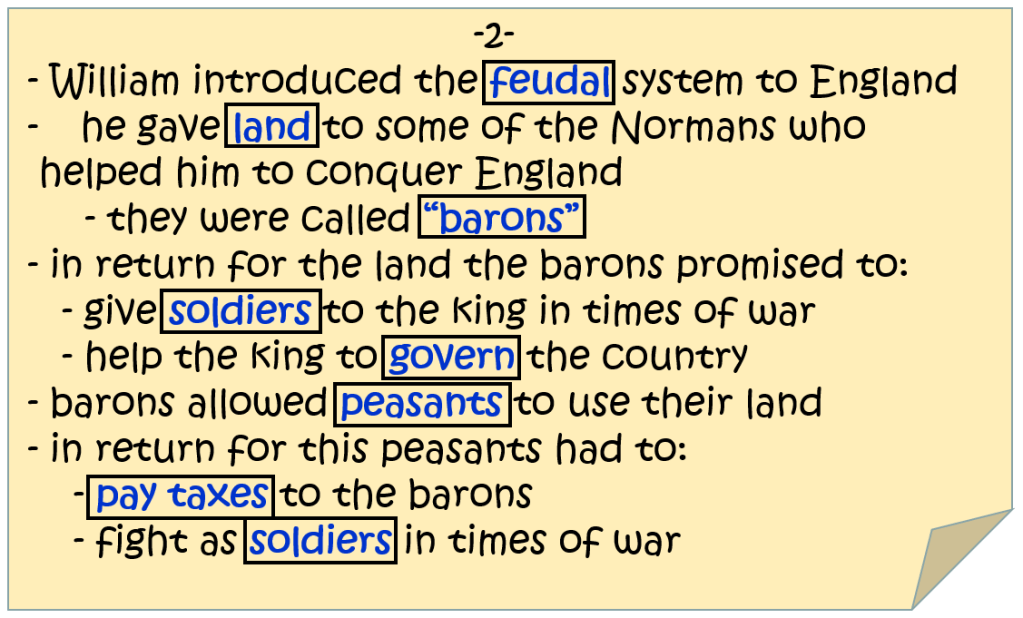
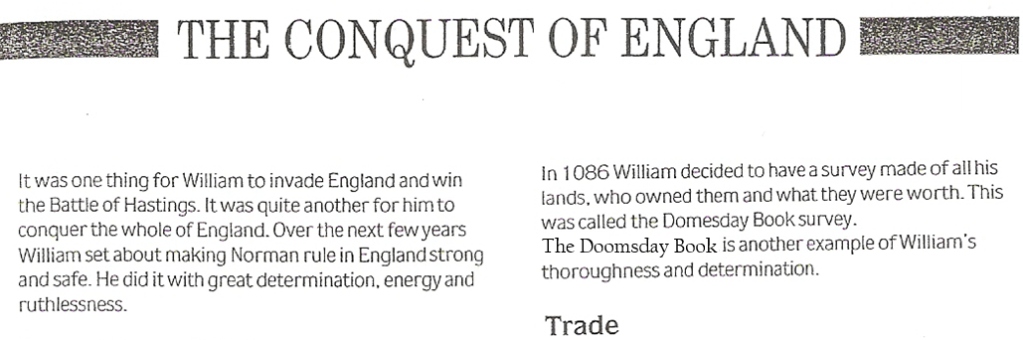
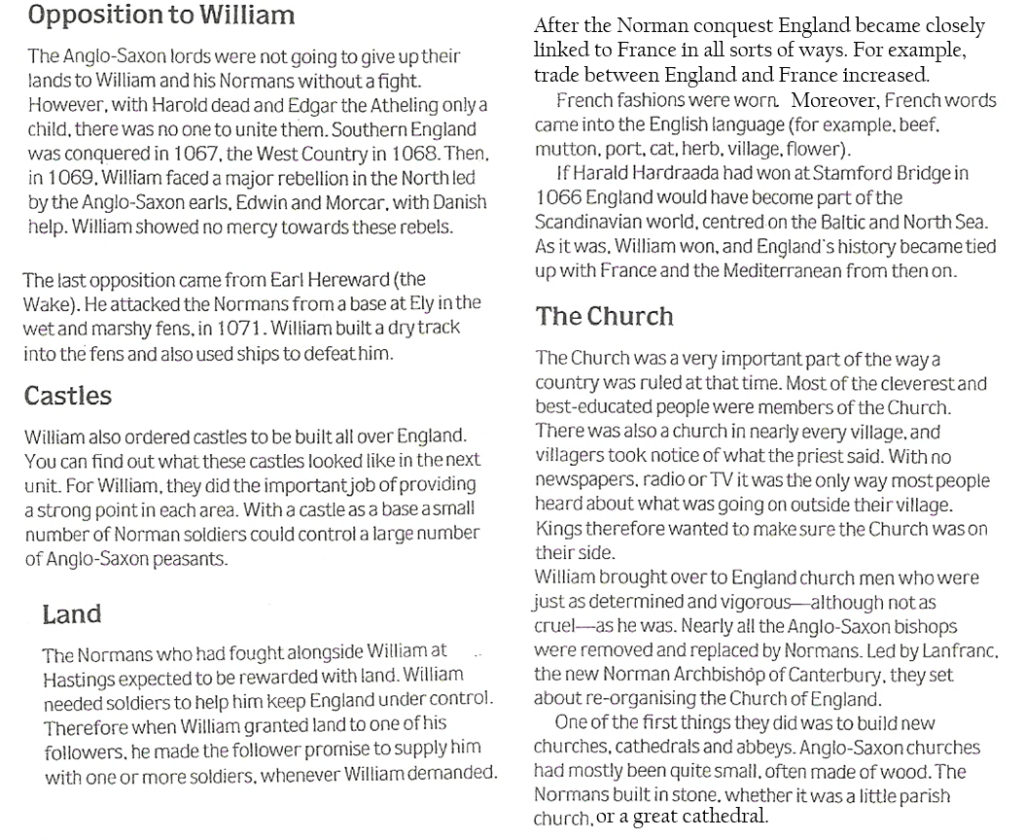
Conquest of England notes:
p.73-complete the notes on the 2nd half of the page
SOLUTION:
5.
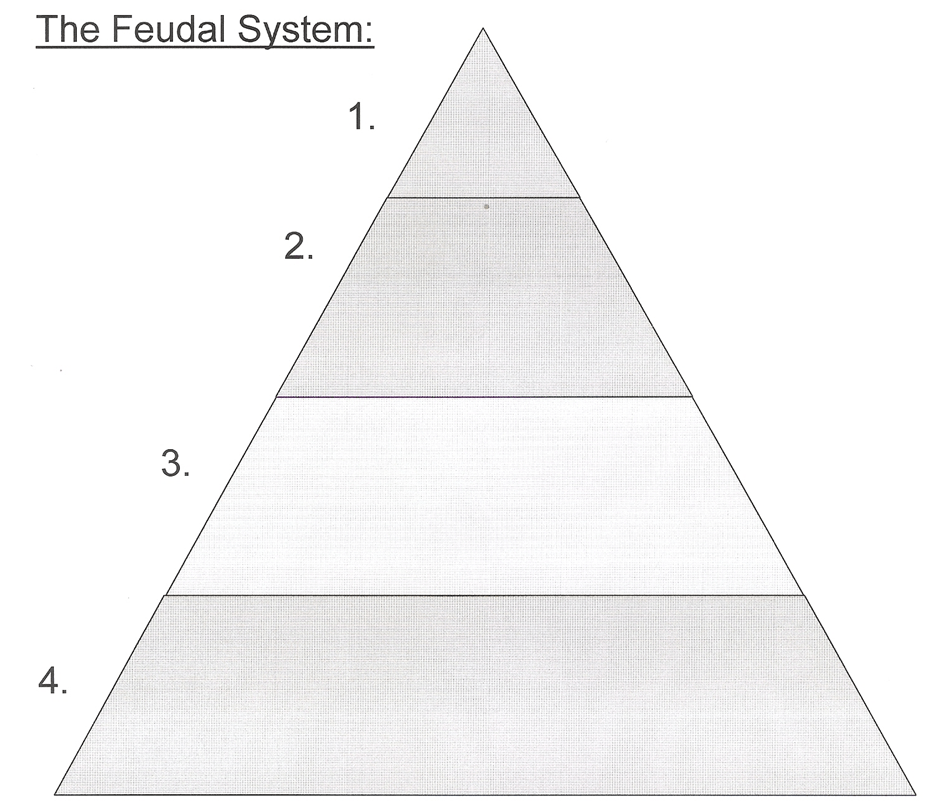
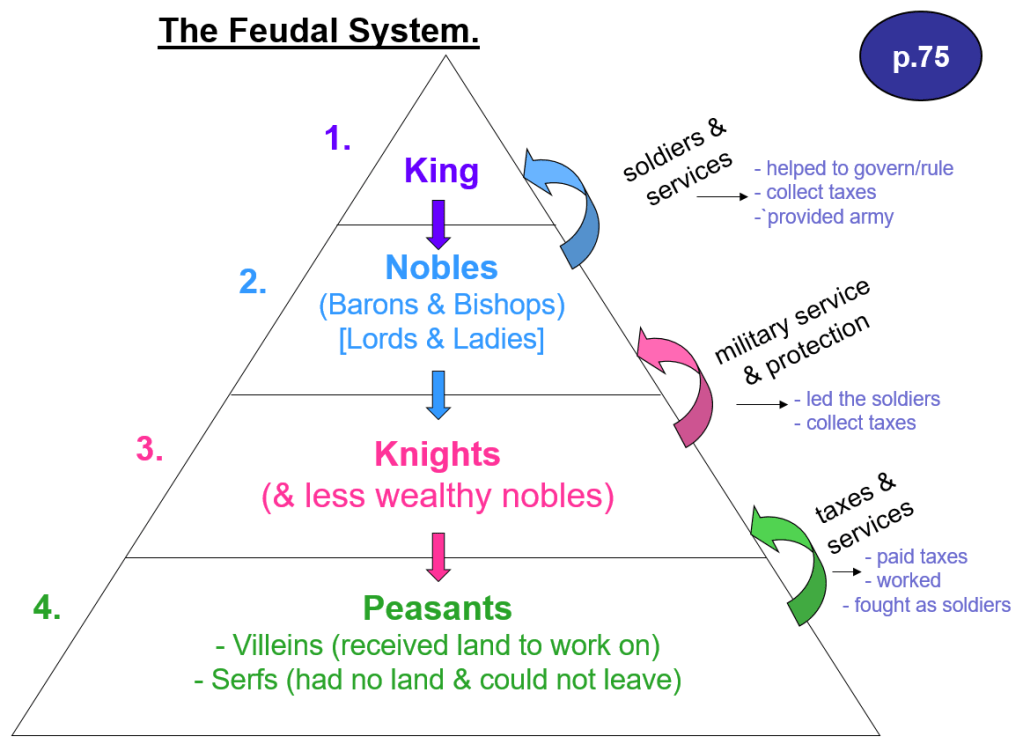
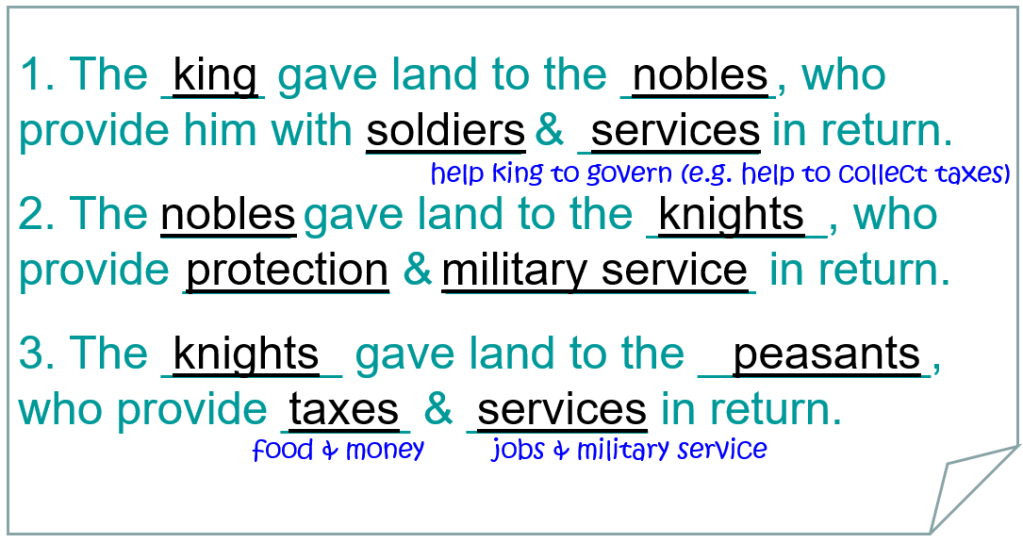
Complete the diagram and notes on p.75 in your Workbook.
SOLUTION:
6.
The videos below are all on Feudalism. The more we watch, the better – we learn through repetition! (All of these videos have been carefully selected for your learning purposes!)
The Feudal System – What it is and why it was used. (3:17 minutes long)
Feudalism. (2:11 minutes long)
Feudalism in Medieval Europe – a simple explanation. (4:35 minutes long)
7.
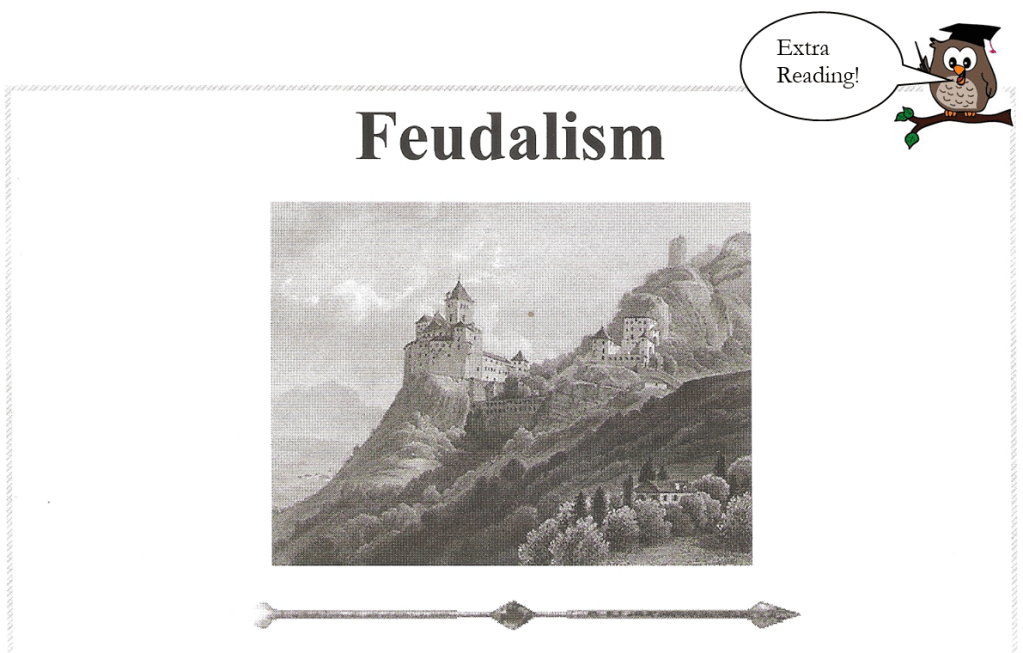
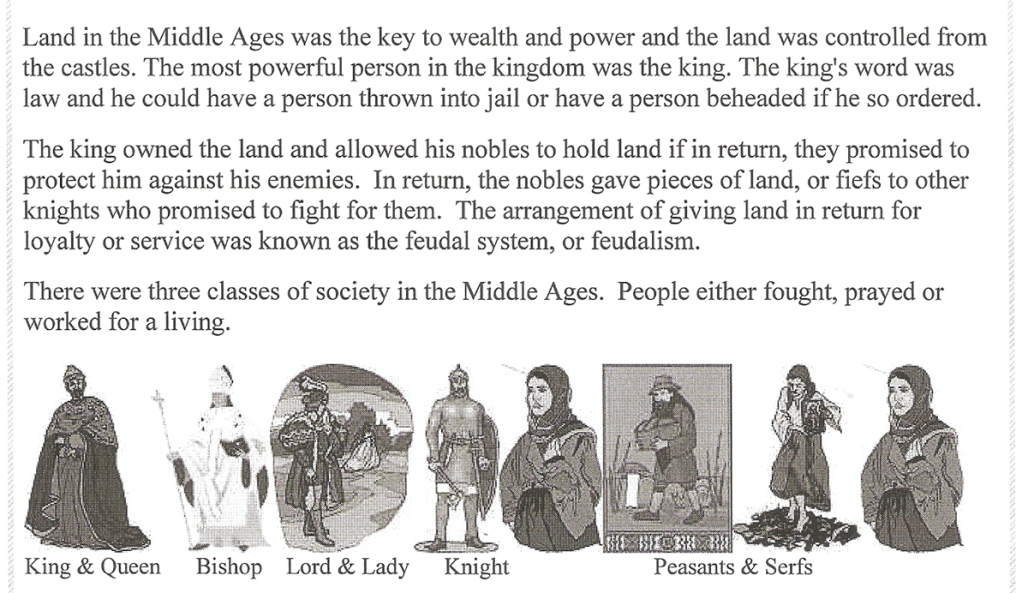
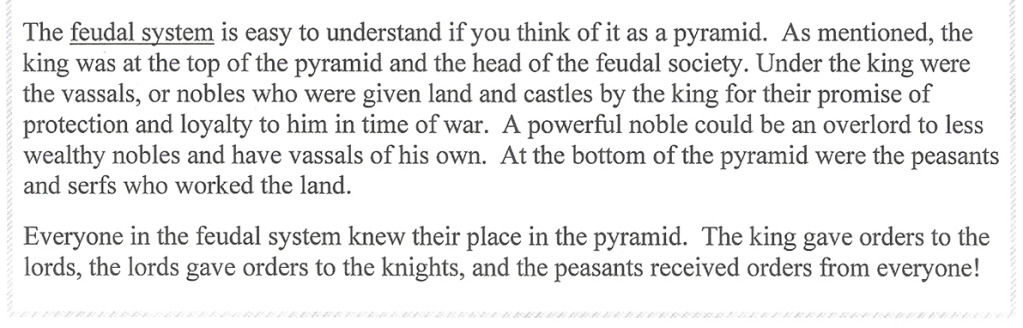
Read the following to find out more about…..Feudalism.
8.
This first video is an explanation of how William established his control over England.
Conquest of England – Part 1. (5:36 minutes long)
The second video is an explanation of how the Feudal System worked.
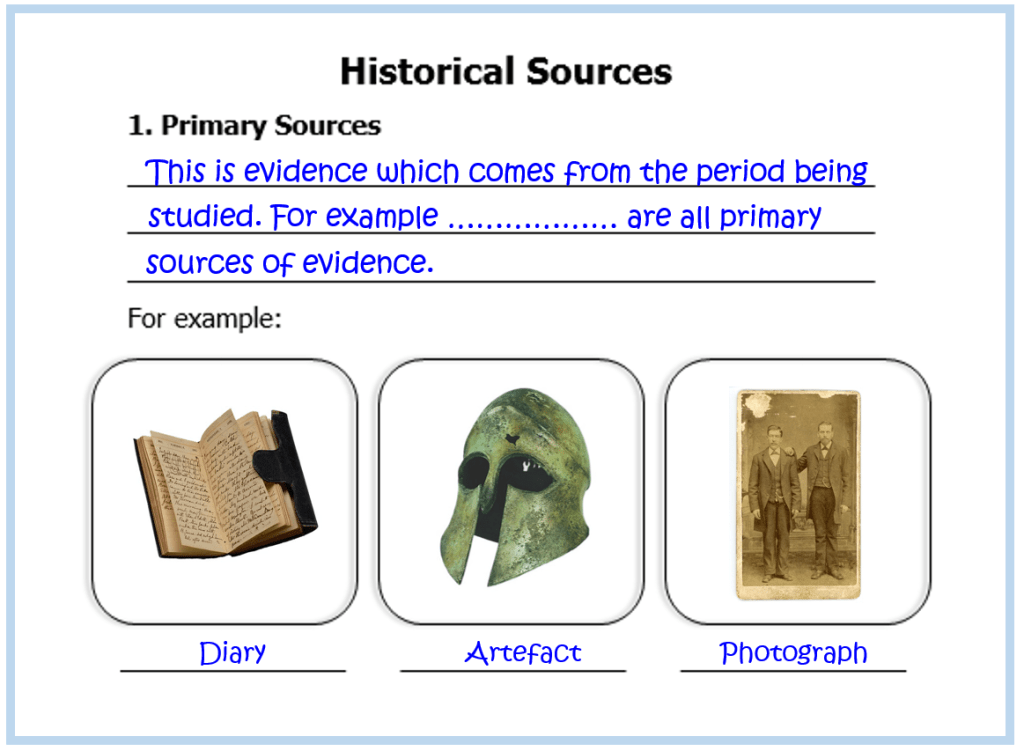
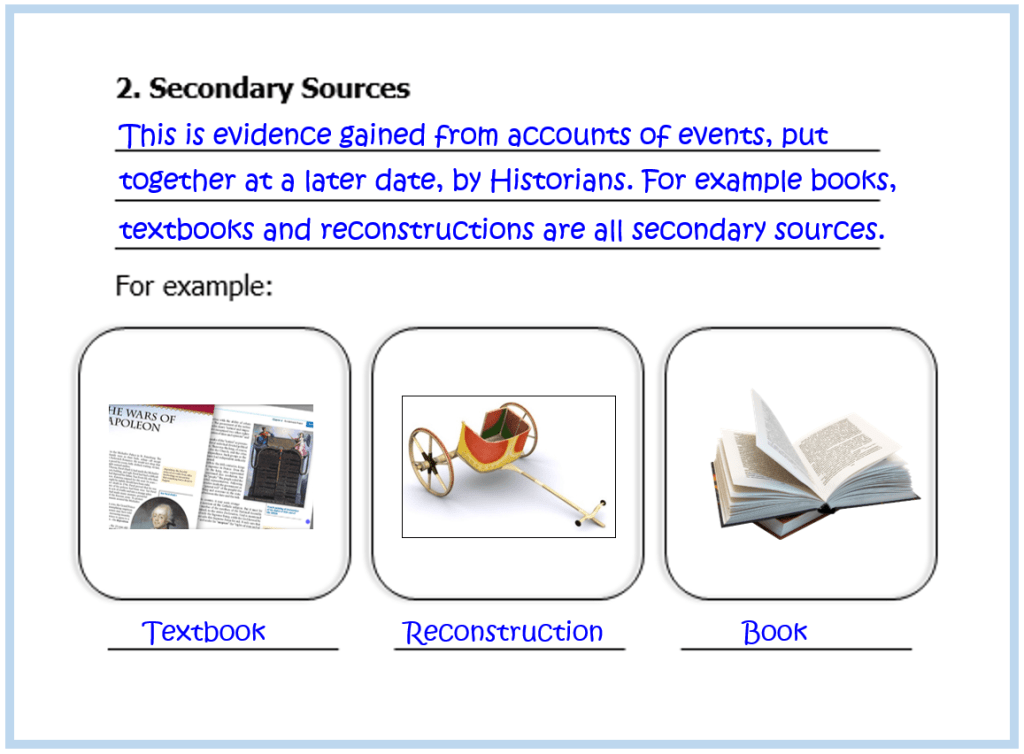
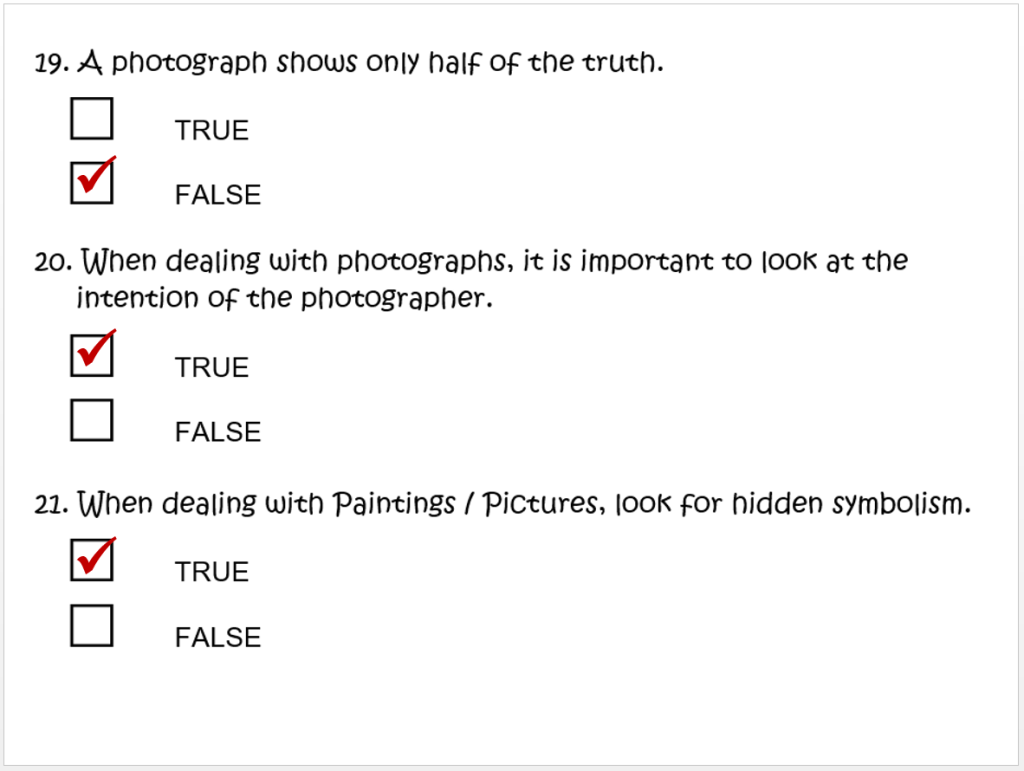
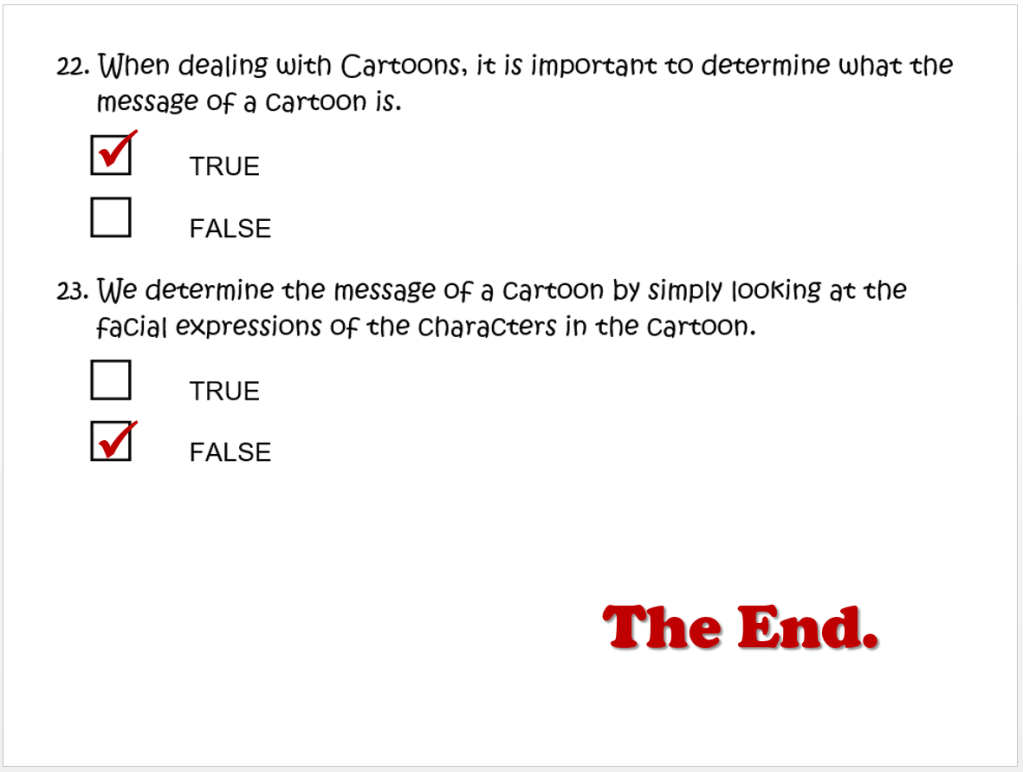
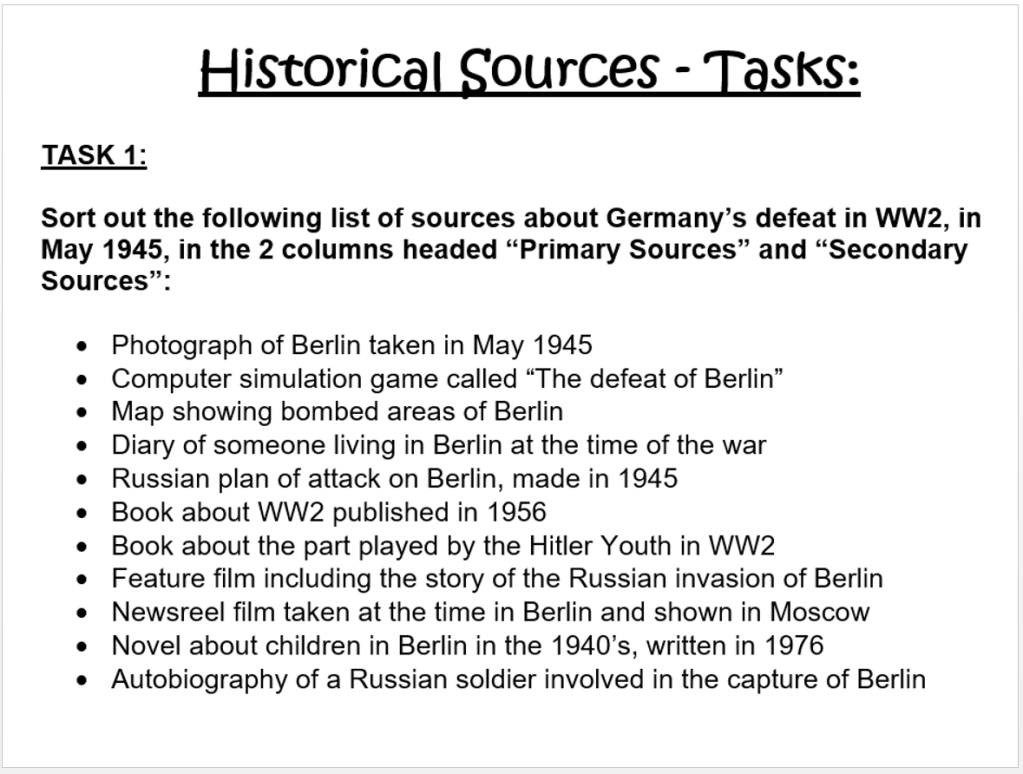
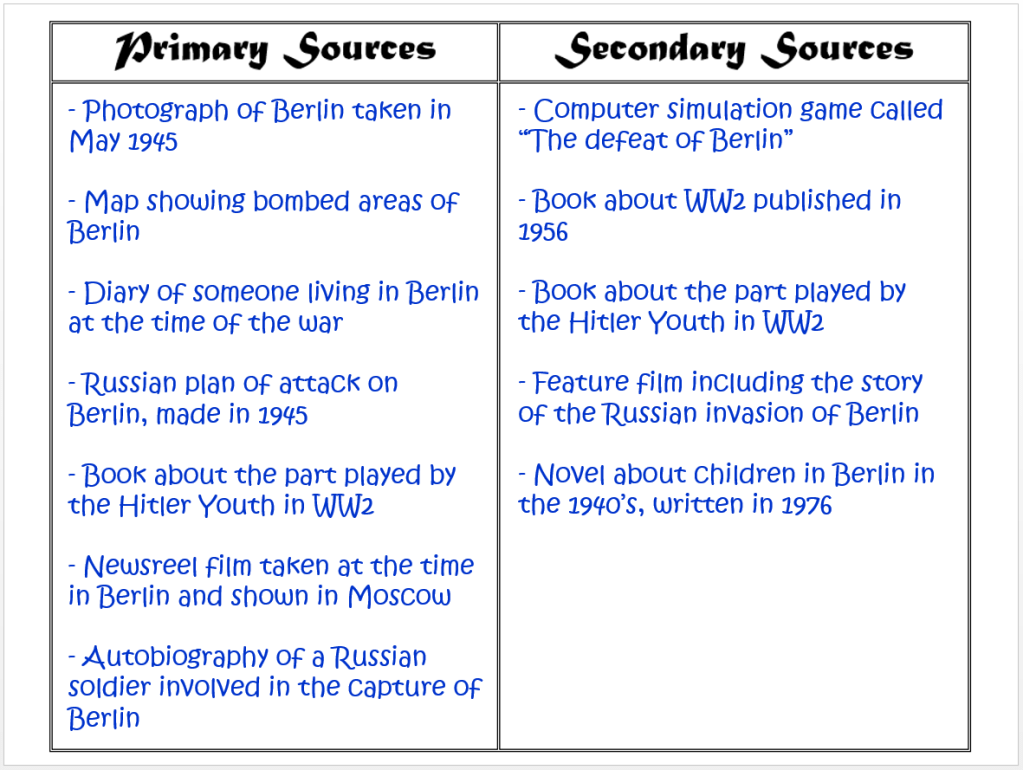
Can you remember how to determine if a source is a primary or a secondary source?
4.
Now, let’s see how William, Duke of Normandy defeated the rest of England after he won the Battle of Hastings…
A teacher explains “How William controlled England”. (7:28 minutes long)
5.
So, let’s see how William conquered the rest of England, after the Battle of Hastings…
Conquest of England. (2:30 minutes long)
6.
Conquest of England notes:
p.72-Complete all the notes
p.73-complete the notes on the first half of the page
SOLUTION:
SOLUTION:
SOLUTION:
7.
Watch the videos below – remember, the more we watch, the better, because we learn through repetition. (At the end of this lesson are more videos on castles – they have been carefully selected for your study purposes.)

A Mini Guide to Medieval Castles | Animated History. (1:54 minutes long)

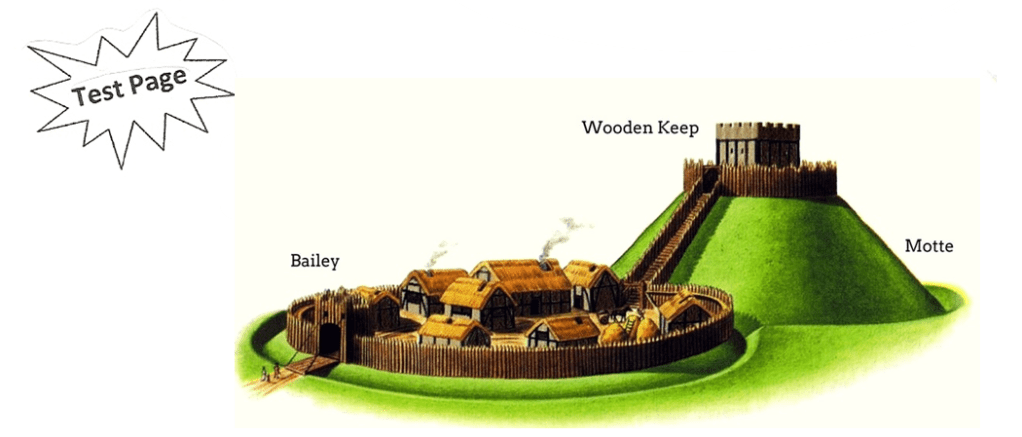
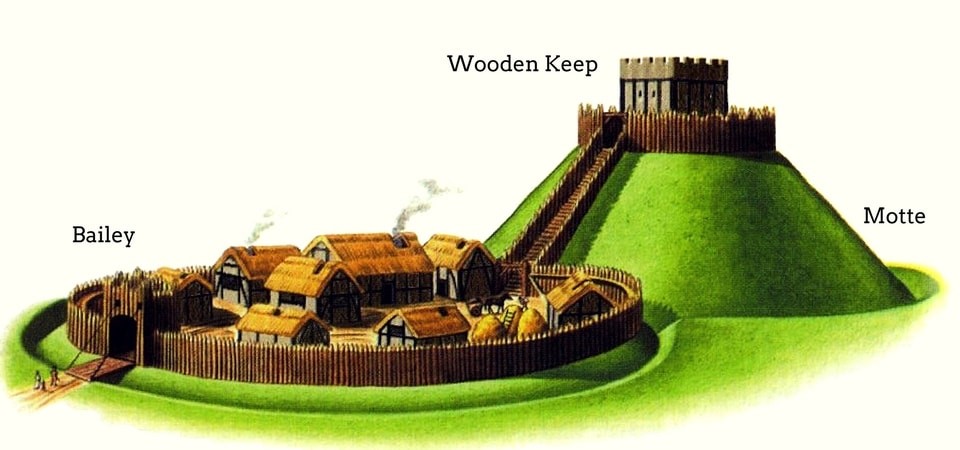
What were Motte and Bailey Castles? (4:55 minutes long)
8.
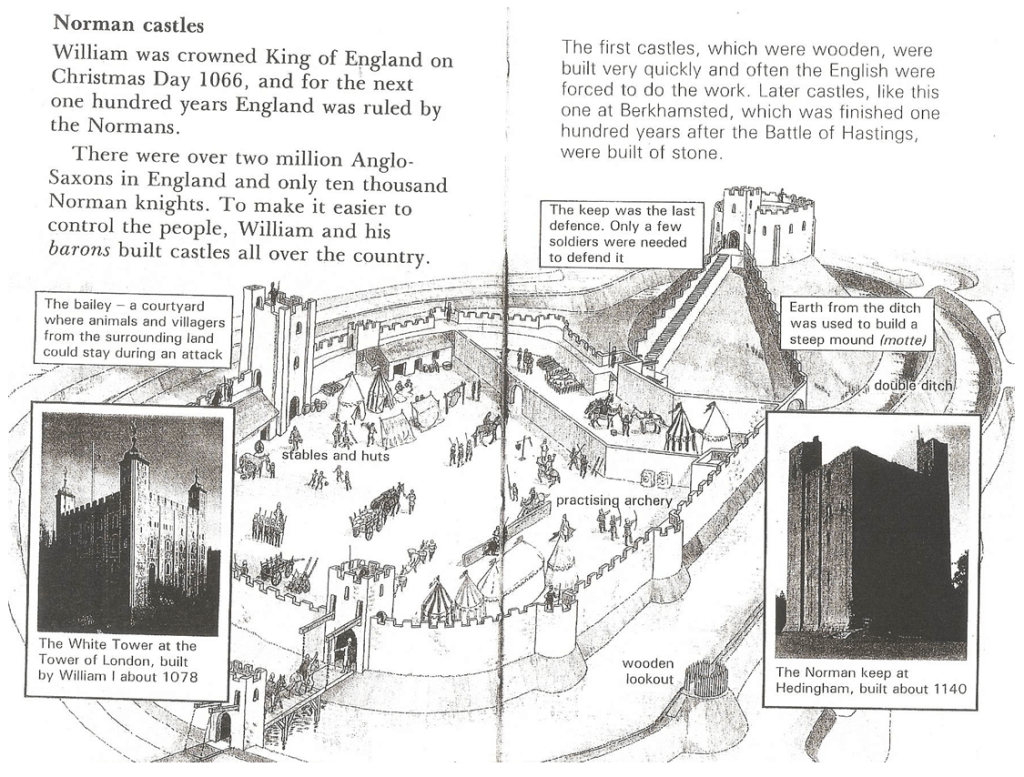
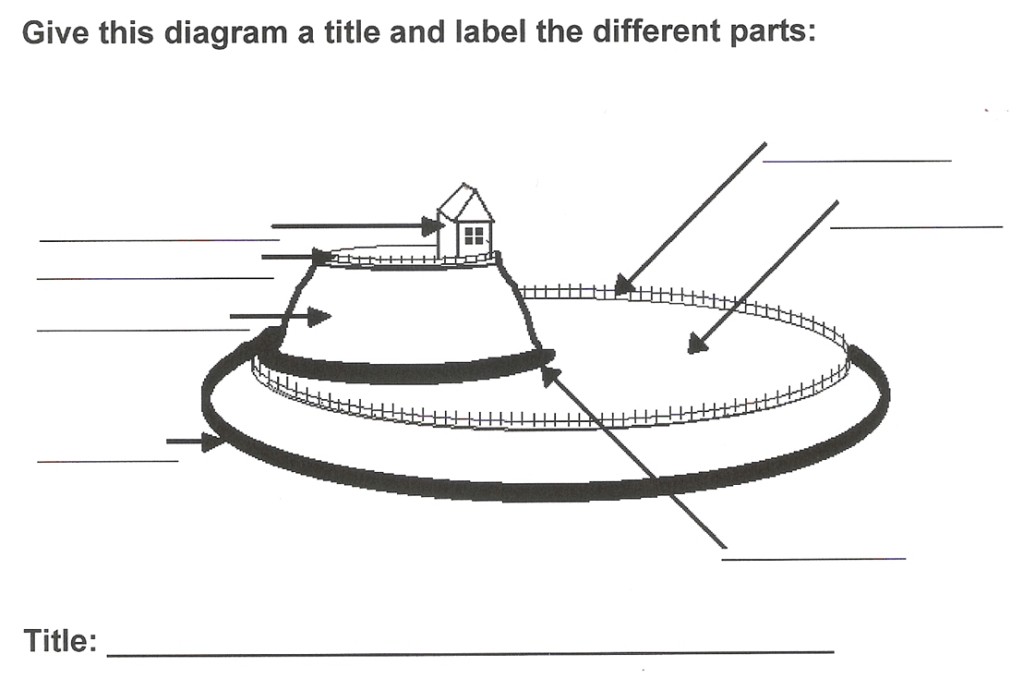
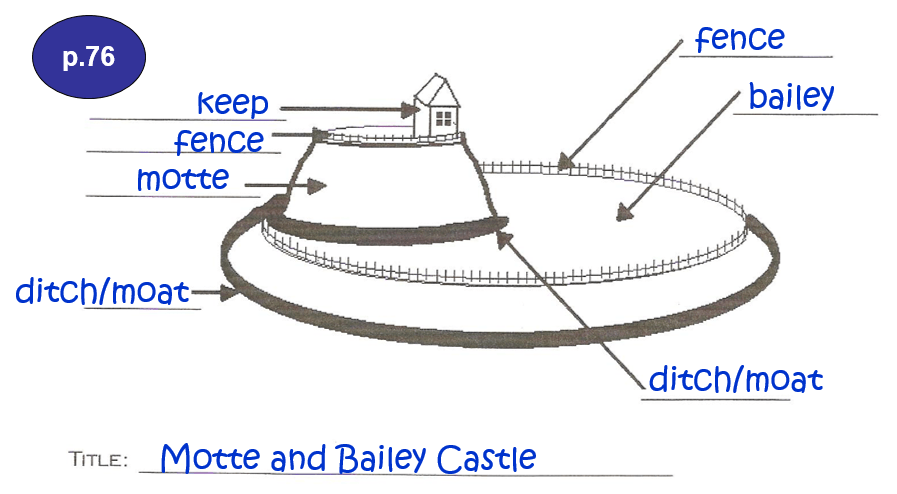
And now for a little bit of reading from your workbook, about Castles….
9.
WATCH CAREFULLY!! (You may need to play the following video on a slower speed…)
Motte and Baileys explained. (4:45 minutes long)
The following video explains Castles in detail – it is a complete overview of the rise and decline of Castles…
Castles for Kids: What is a Castle? (7:24 minutes long)
10.
If you are interested, do the following word search ONLINE about the Norman Invasion and Conquest:
Click on the word search to be able do do it online – you can then “highlight the words with the cursor as you find them.
(Alternatively, ask your teacher for a paper copy of the word search.)
Why did Britain become involved with the slave trade in the first place?
Why were the British involved in the Slave Trade? (1:48 minutes long)
Or, watch on YouTube by clicking on this YouTube button:
3.
Fortunately it came to an end… eventually! Watch the following videos on:
the abolition of slavery
the role that William Wilberforce played
William Wilberforce & the End of the African Slave Trade. (3:30 min long)
4.
What about abolition in America? The video below explains briefly how slavery came to an end in America.
American Civil War. (2:22 minutes long)
Here is a short summary of the relevant information in the above video clip:
The American Civil War was fought from 1861-1865. The Union States (of the North) were fighting against the Confederate States (of the South).
The Northern states were opposed to slavery whereas the Southern states wanted to continue making use of slave labour as there were labour-intensive plantations in the south. (The Northerners were also known as the Yankees, and the Southerners were known as the Rebels.)
In 1862 President Lincoln issued the Emancipation Proclamation. It was an executive order that declared “that all persons held as slaves” within the rebellious states “are, and henceforward shall be free” (from Jan 1863). The Southerners ignored this order, but in 1865 the Confederate Army surrendered and slavery became illegal!
5.
-1-
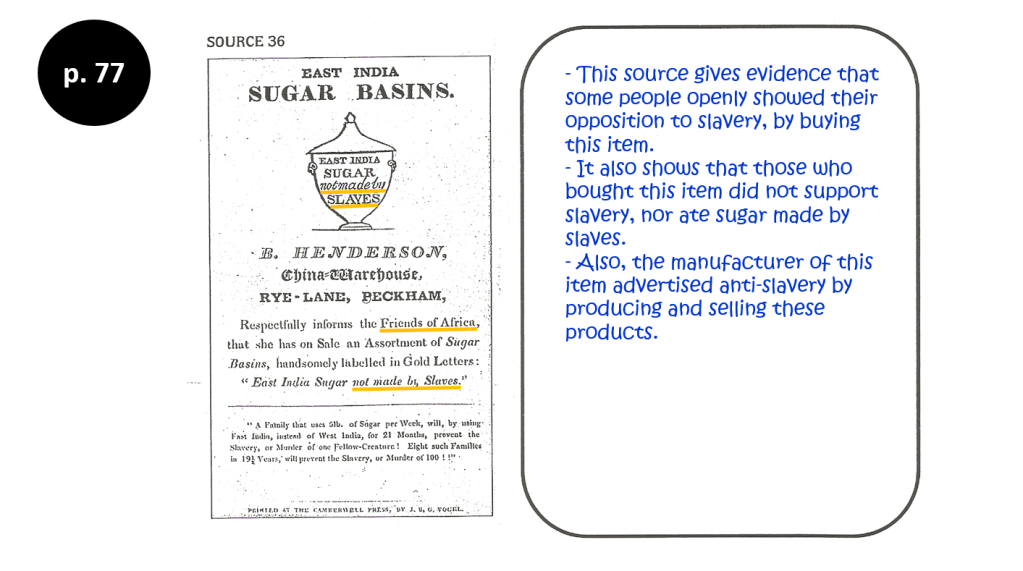
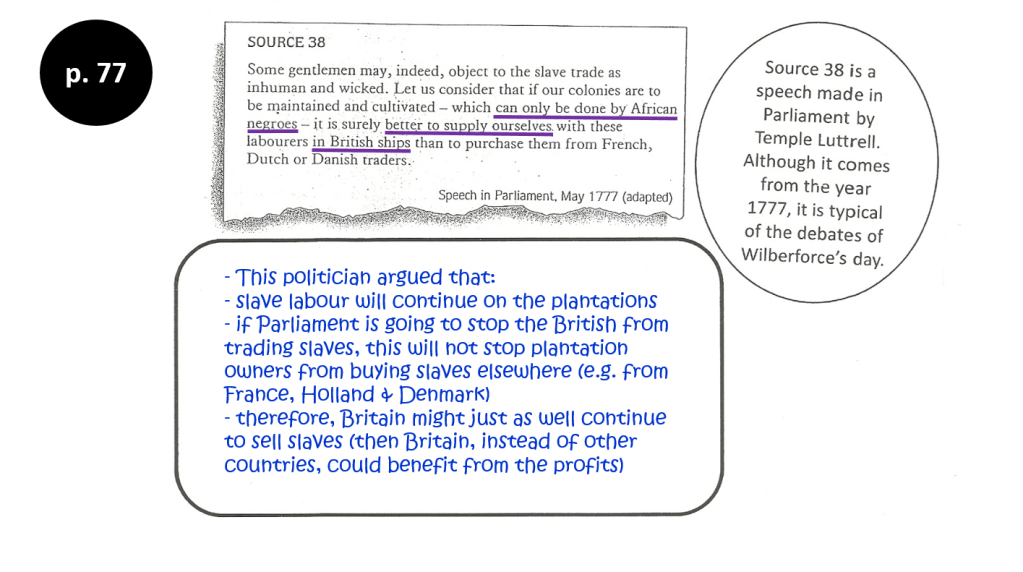
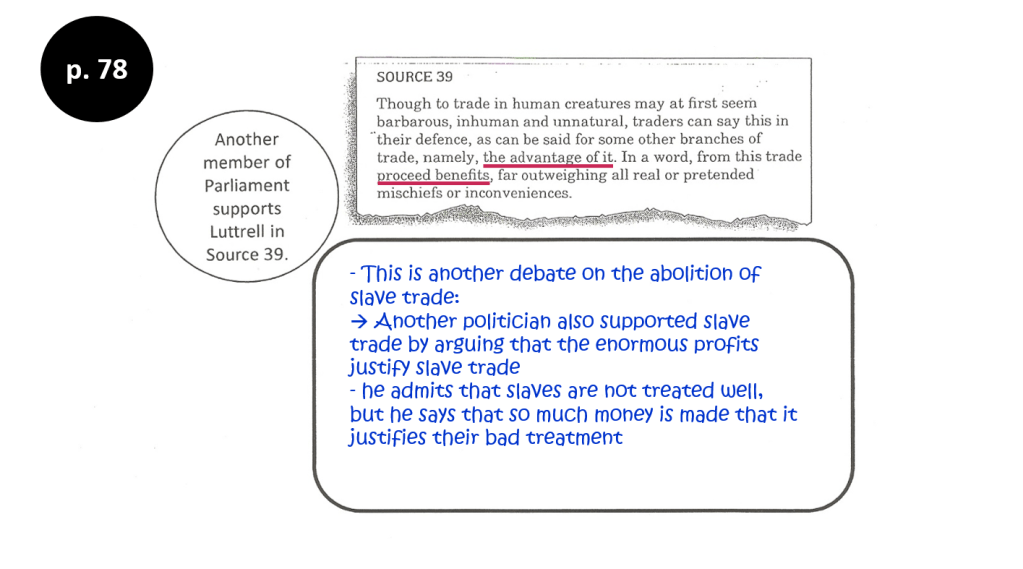
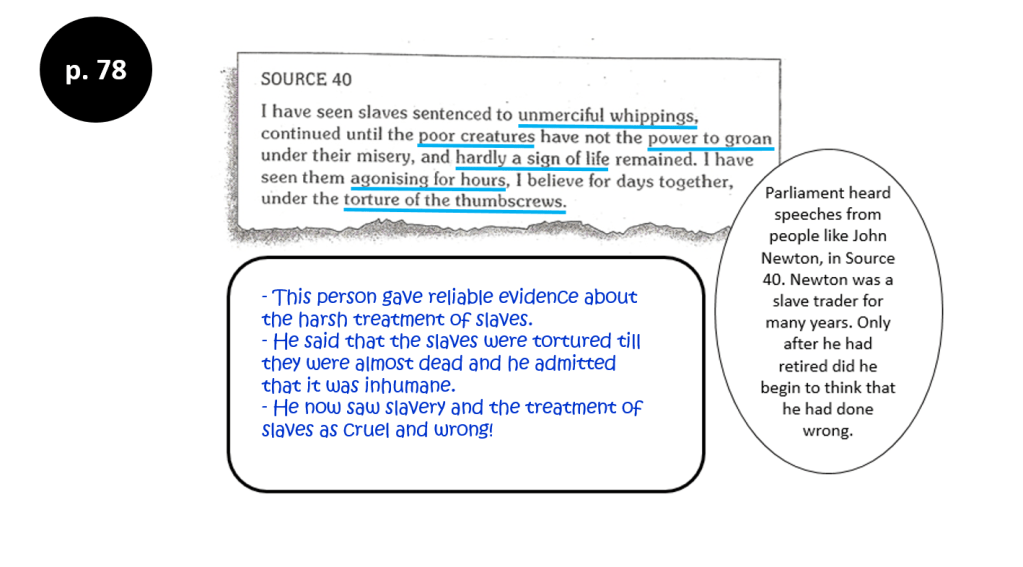
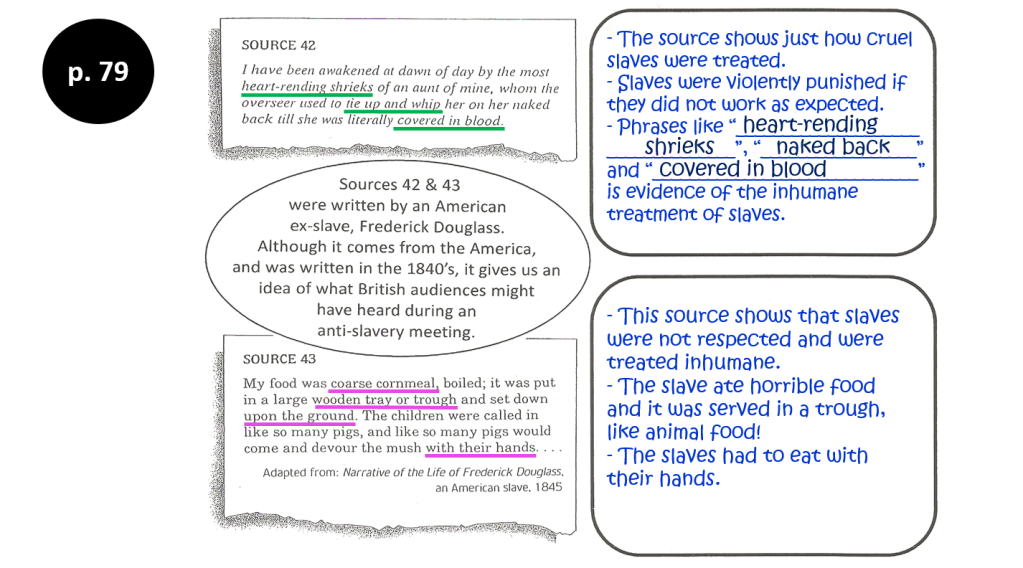
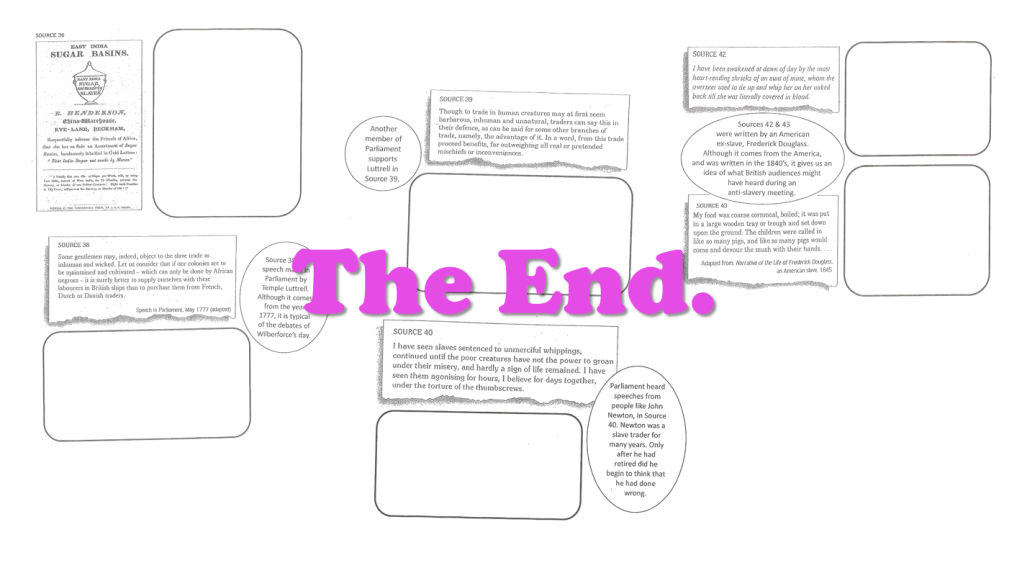
Read all the sources and their attributions carefully, p.77-79.
(These sources give information about the abolition of Slavery.)
-2-
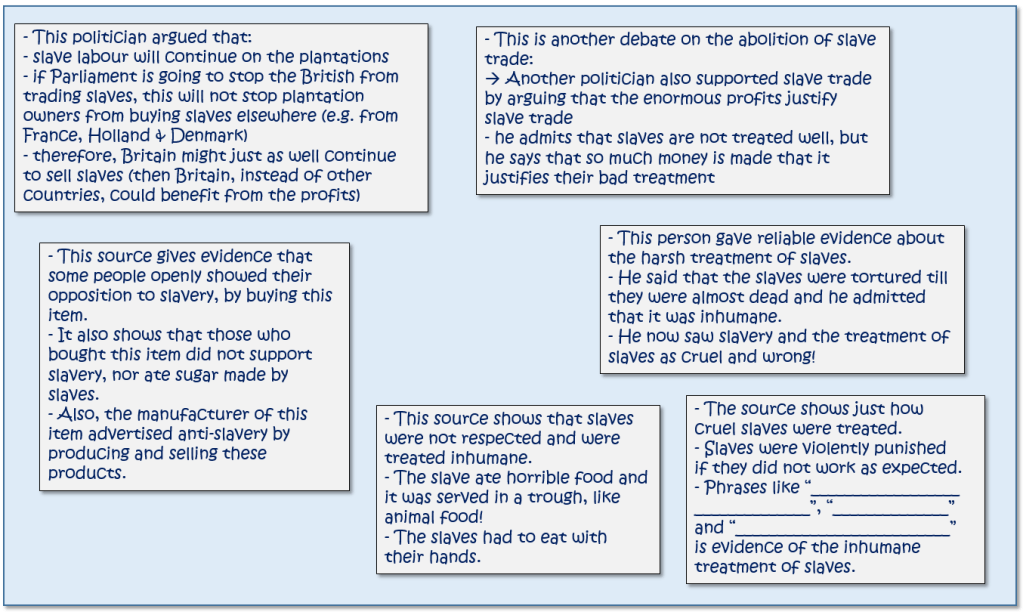
Stick the correct source explanation (provided) in the relevant source box to clarify the meaning of each source.
-3-
Underline evidence in each of the sources that will back-up the statements in the source boxes.
6.
Mark the task on sources, p.77-79.
7.
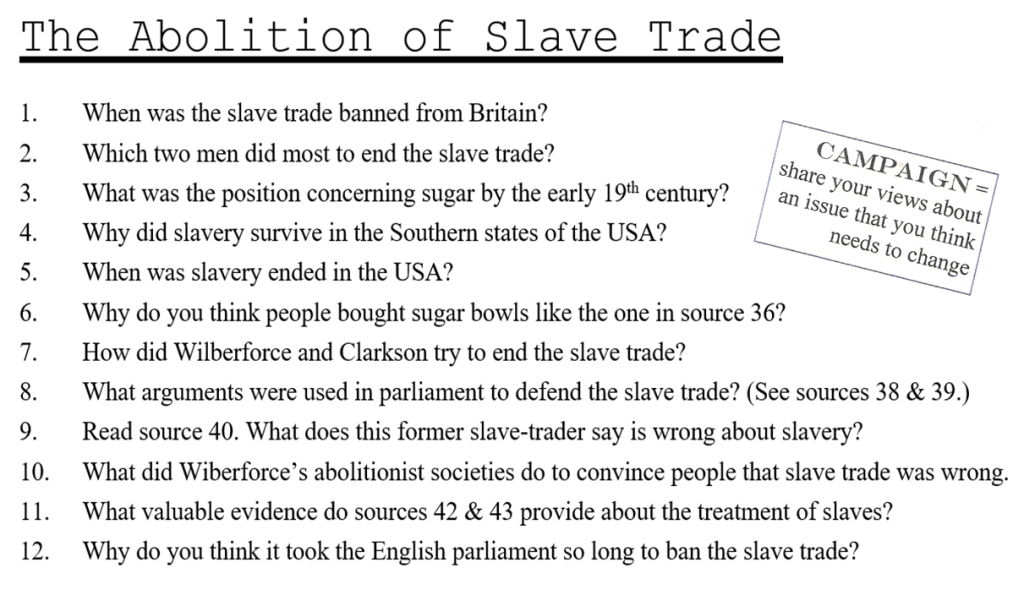
Now, let’s test your knowledge and understanding on the abolition of slave trade…
“The Abolition of Slave Trade, p.79”
Please take note:
You are required to answer six questions:
You may choose to complete EITHERthe odd numbers: 1,3,5,7,9 and 11,
OR: the even numbers: 2,4,6,8,10 and 12.
Read the questions carefully before you decide which ones to do.
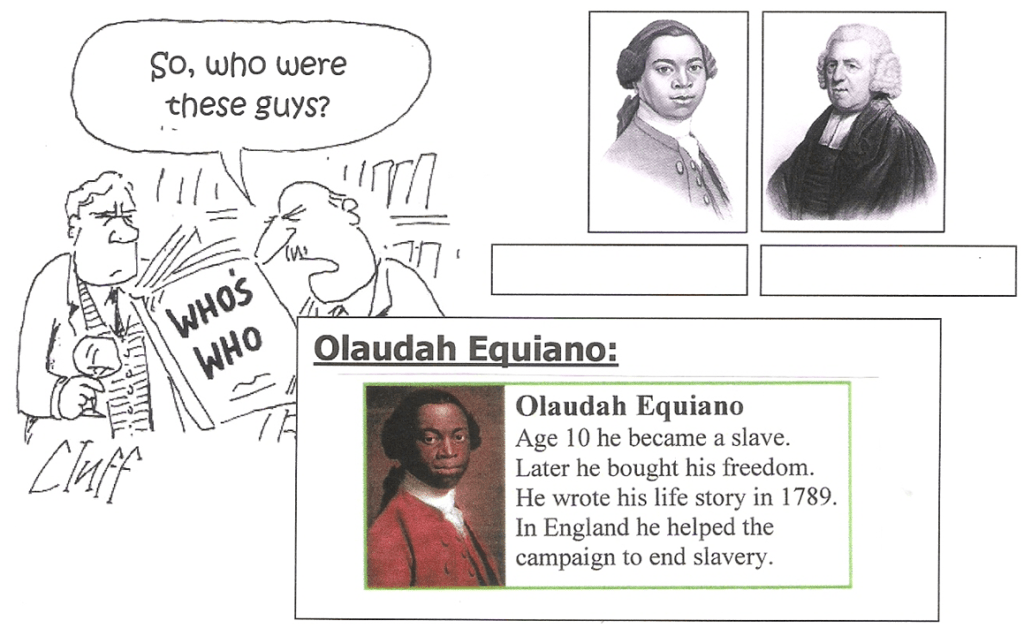
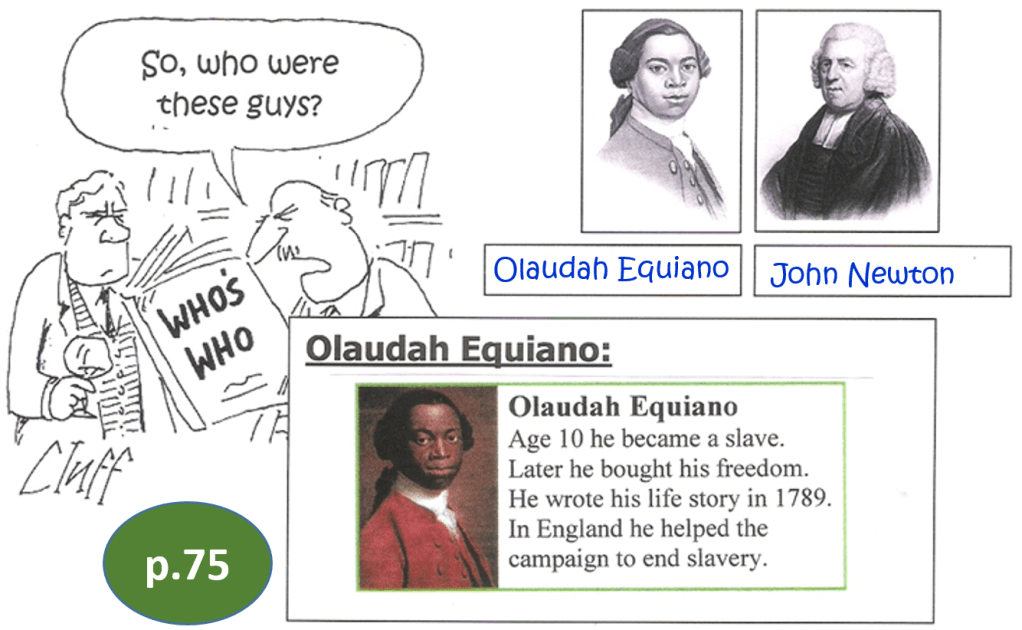
Various people and organisations campaigned for an end to slavery. Two examples of people who campaigned for an end to slavery are Olaudah Equiano and John Newton.
Watch the following videos to learn more about Olaudah Equiano…
Olaudah Equiano. (0:50 minutes long)
‘The Interesting Narrative of the Life of Olaudah Equiano’. (3:42 minutes long)
Below is a production for young kids, but this video is included in our lesson as it is a very clever song! We can admire the creativity of this production made for young kids!
Olaudah Equiano | Black History Month for Kids. (3:20 minutes long)
3.
Watch the following videos to learn more about John Newton…
John Newton and the story behind the song “Amazing Grace”. (3:16 min long)
Amazing Grace: John Newton’s. (6:50 min long)
4.
And now for a few tasks about Slavery & the abolition of Slavery from your Workbook…
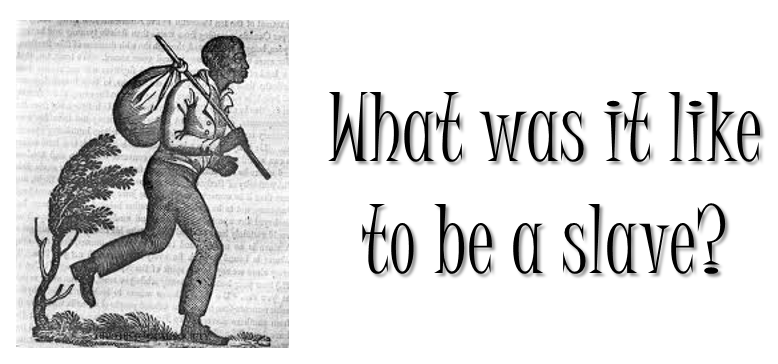
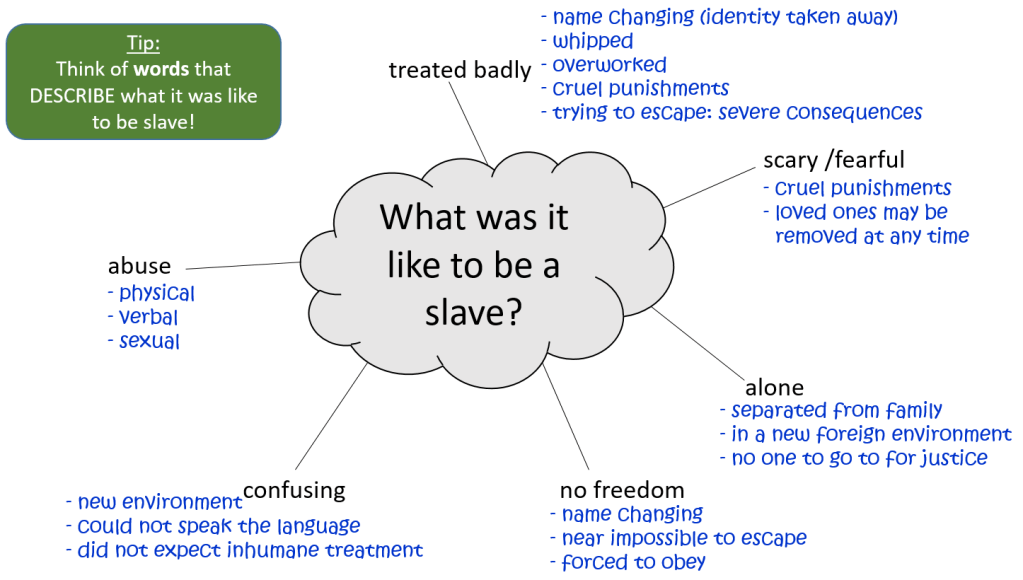
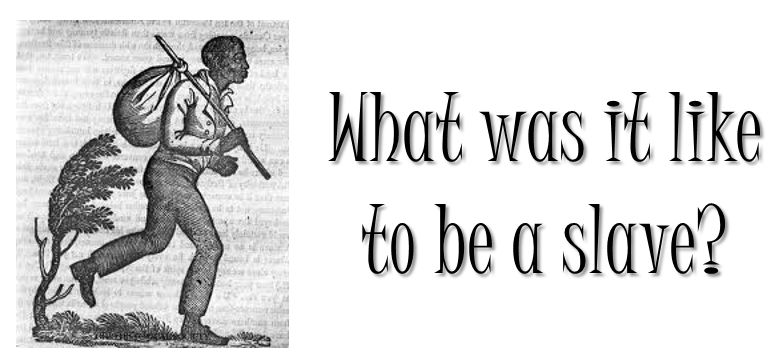
See if you can fill in brief information on the spider diagram on “what was it like to be a slave” (at the top of p.75).
SOLUTION
Mark your work
with a pencil.
5.
Fill in the names of the two people (in the middle of p.75).
SOLUTION
Mark your work
with a pencil.
6.
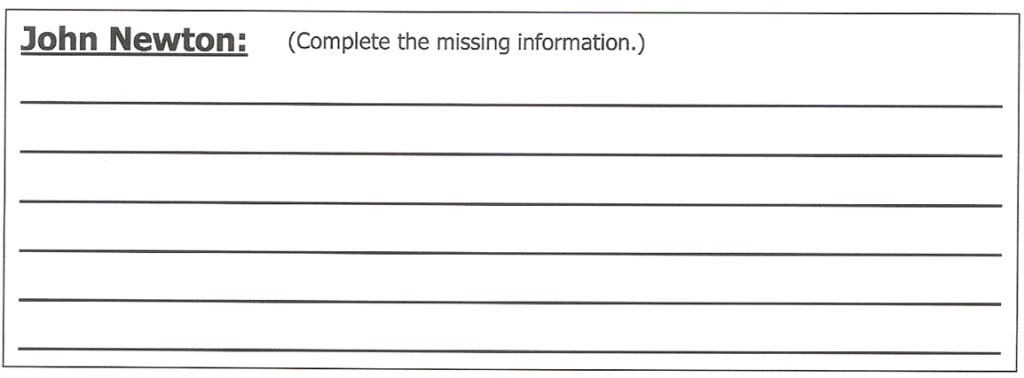
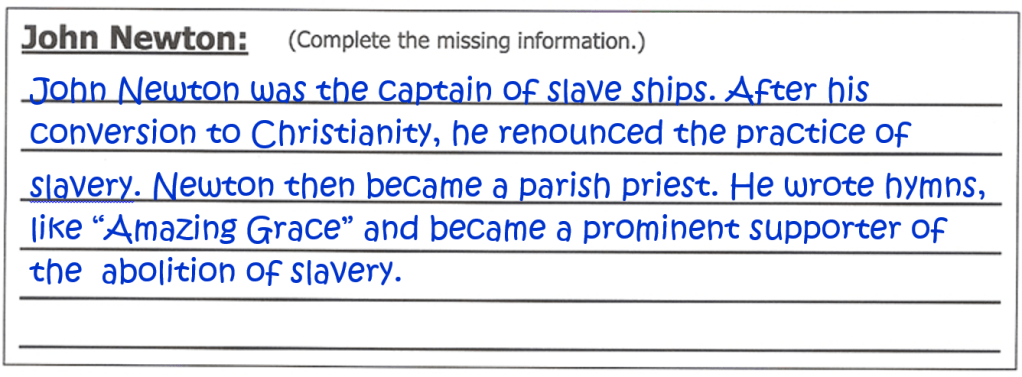
Write a short paragraph to say who John Newton was (at the bottom of p.75).
SOLUTION
Mark your work
with a pencil.
7.
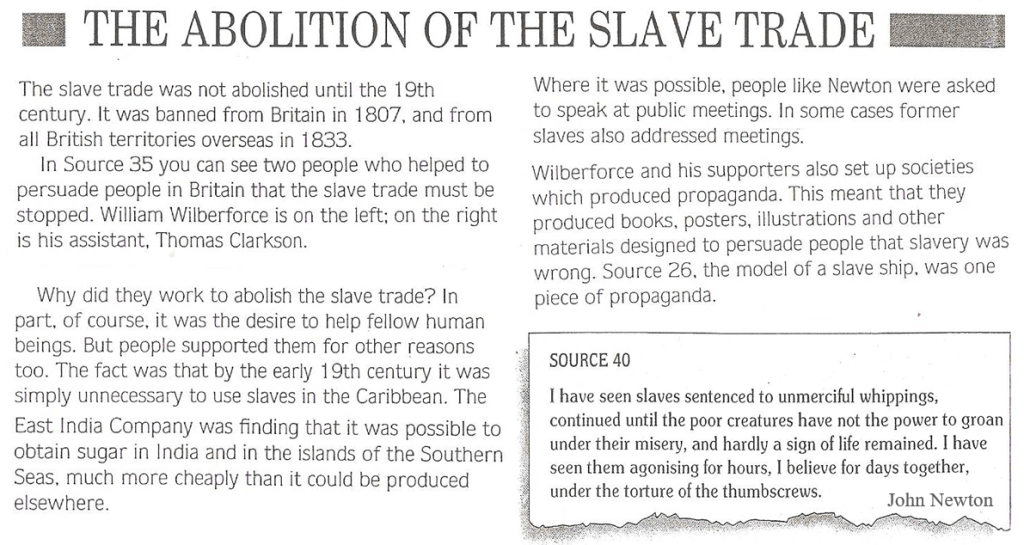
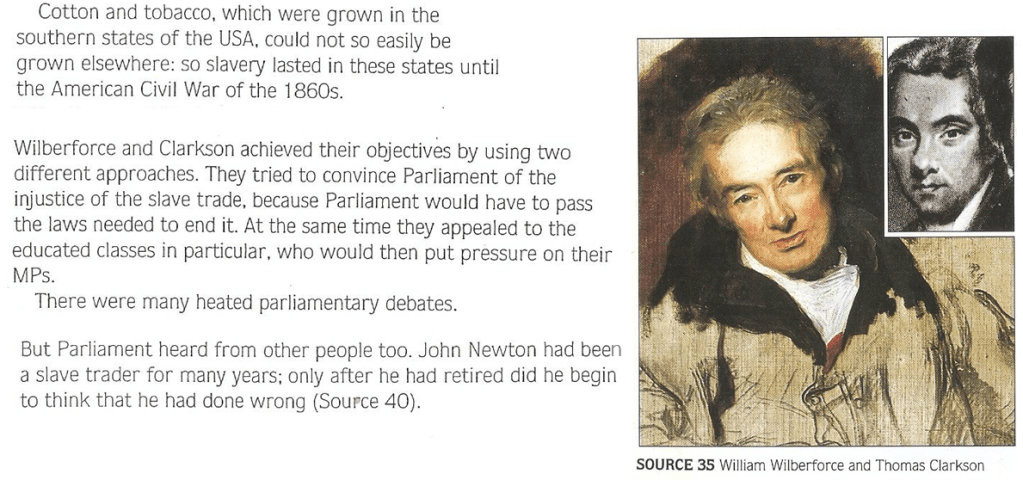
Next, you need to do a bit of reading, to see how slavery came to an end…. So, read p.76. In particular, look for ways in which abolitionists campaigned for an end to slavery.
“The Abolition of the Slave Trade”, p.76
8.
To conclude, use the box on p.76 of your Workbook to make a list of “ways in which abolitionists campaigned”. (In other words, what methods did they use to campaign against slavery?)
SOLUTION
Mark your work
with a pencil.
9.
Olaudah Equiano in 60 seconds. (1:22 minutes long)
Olaudah Equiano, The African – PodCast. (5:27 minutes long)
John Newton, The Former Slave Trader. (1:38 minutes long)
Once Blind – THE LIFE OF JOHN NEWTON. (2:33 minutes long)
Watch this rather sad story about a teenage girl who escaped the Nazis…
‘They’re taking us to our death’. (3:49 minutes long)
5.
Watch this video – it is an interesting survival story!
How My Grandma Survived The Holocaust.(6:14 minutes long)
6.
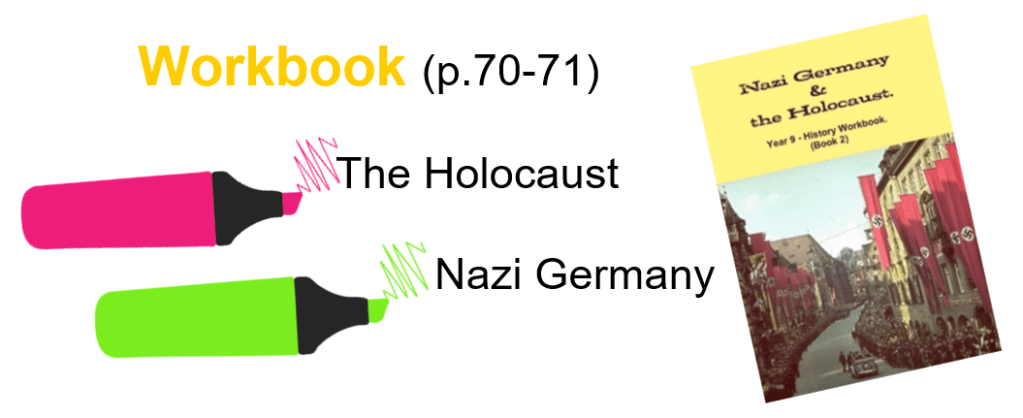
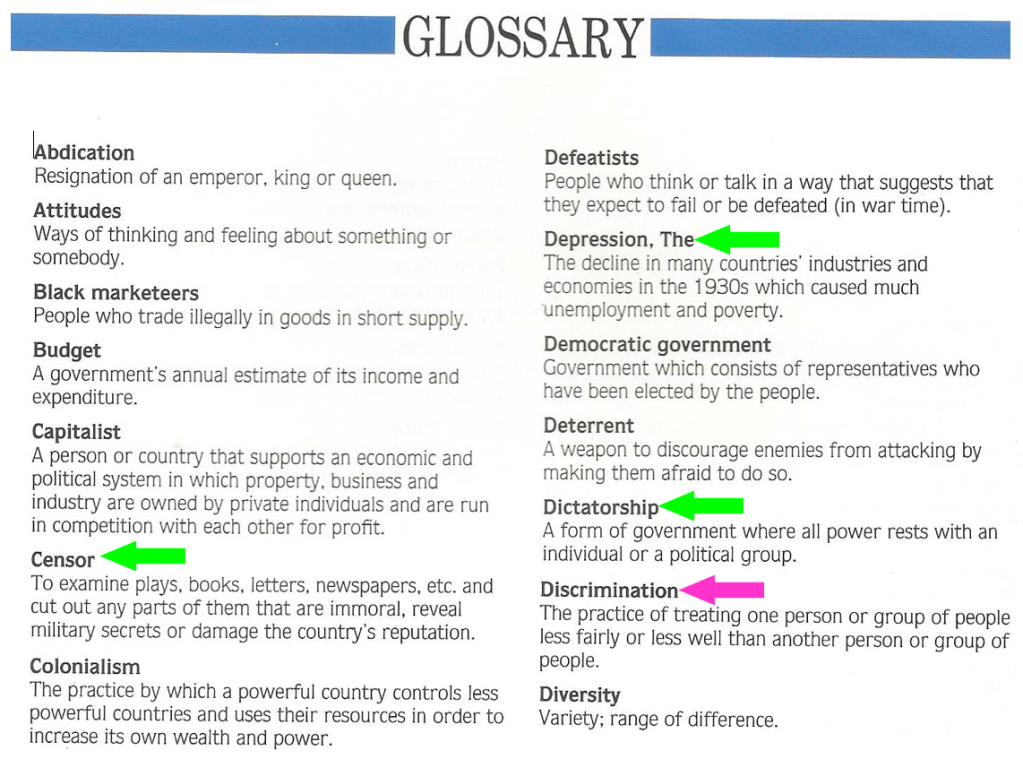
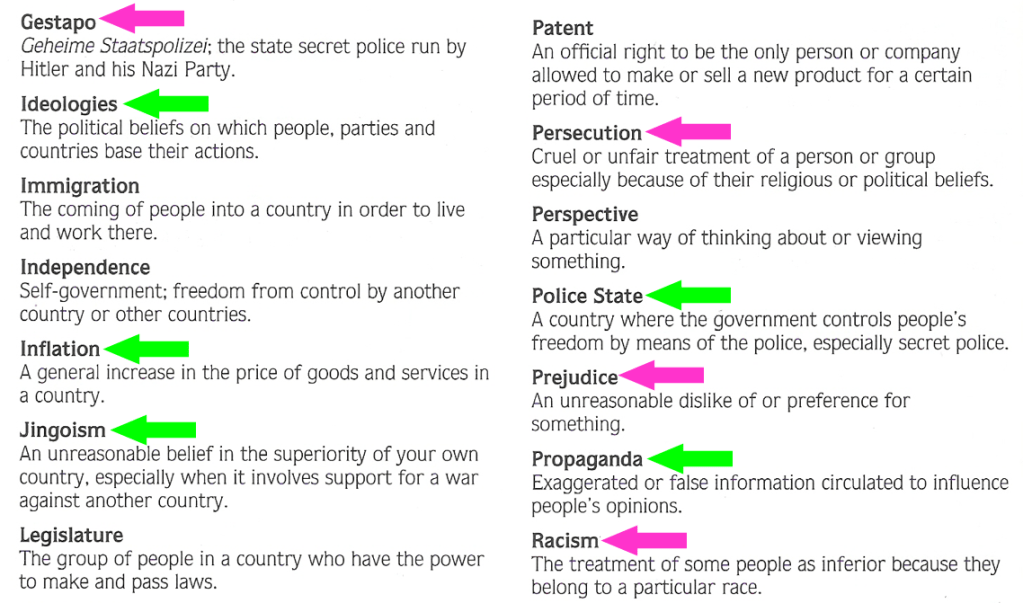
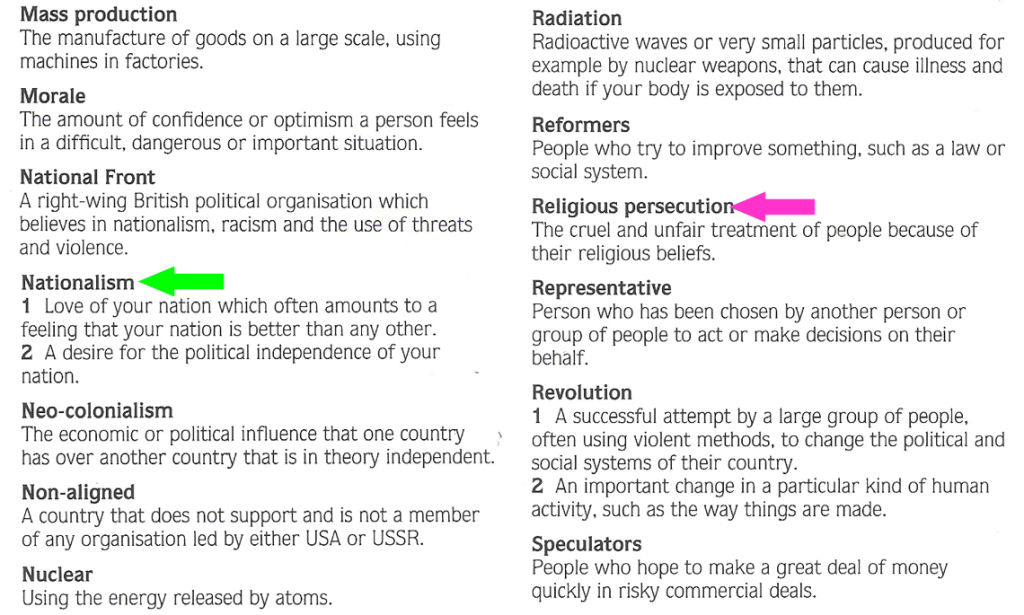
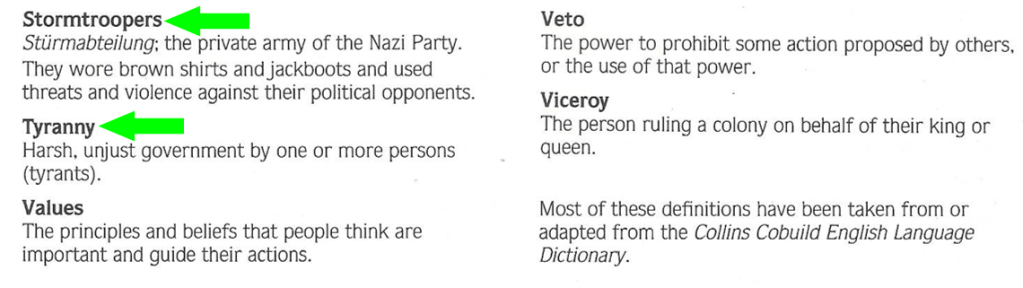
Look at the Glossary (on p.70-71, in your Workbook). Read the words and explanations and highlight words that relate to the Holocaust topic in one colour and words that relate to the Nazi Germany topic in a different colour.
Page 70
Page 71
SOLUTIONS:
Mark your work
with a pencil.
Mark the following task, with a pencil:
7.
Finally, finish the questions on the Holocaust (p.59) that you started in the previous lesson.
Now, listen to this song… You will never forget the date 1066! (You also need to look carefully at the words…)
William the Conqueror. (3:56 minutes long)
5.
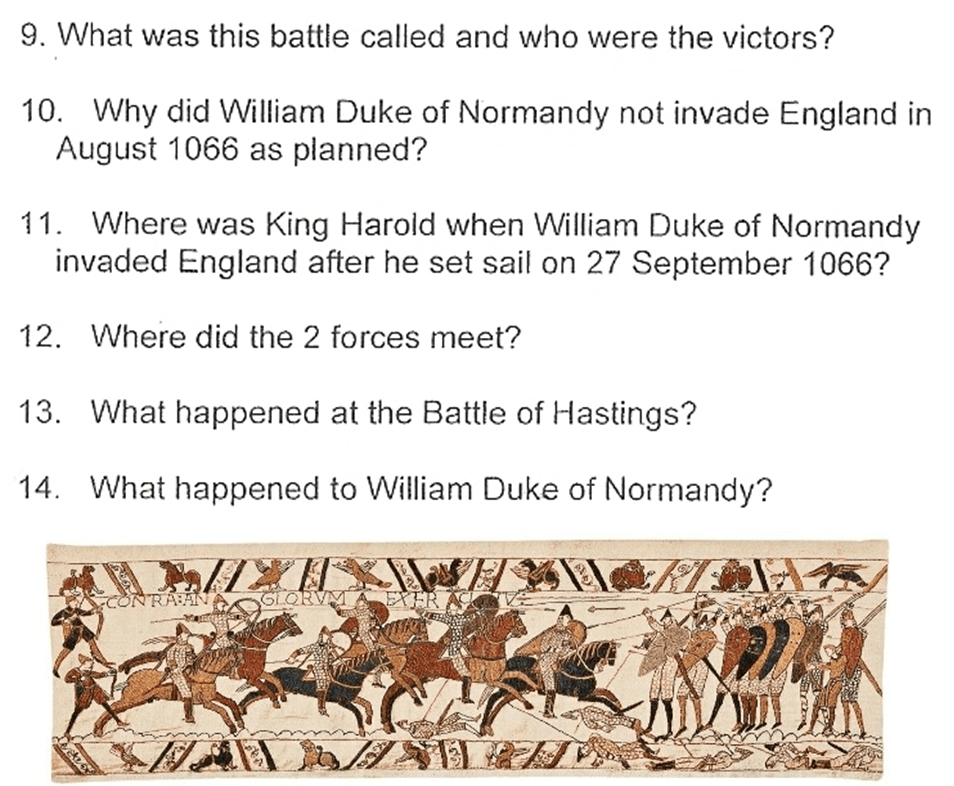
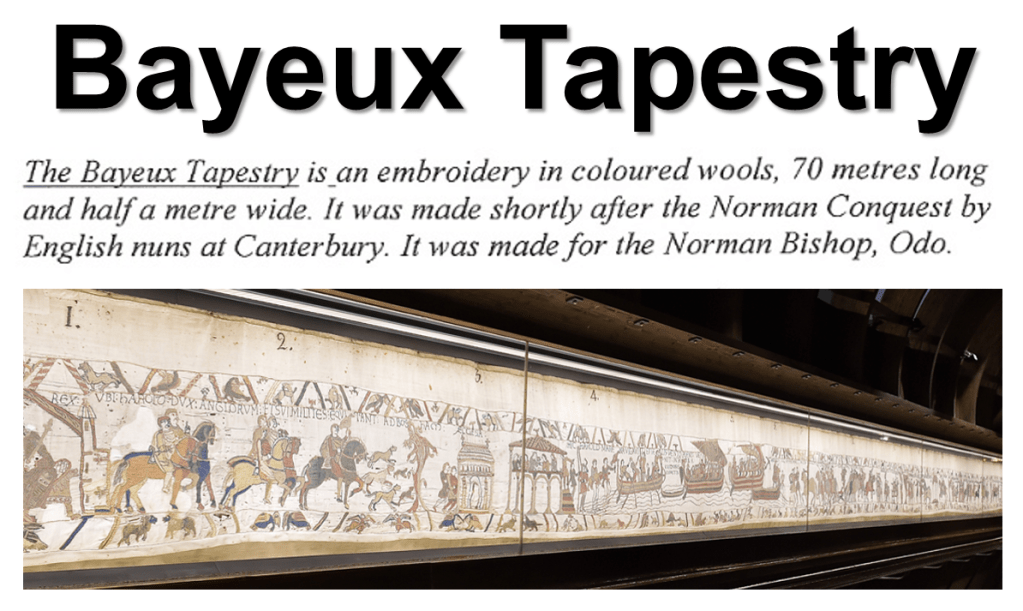
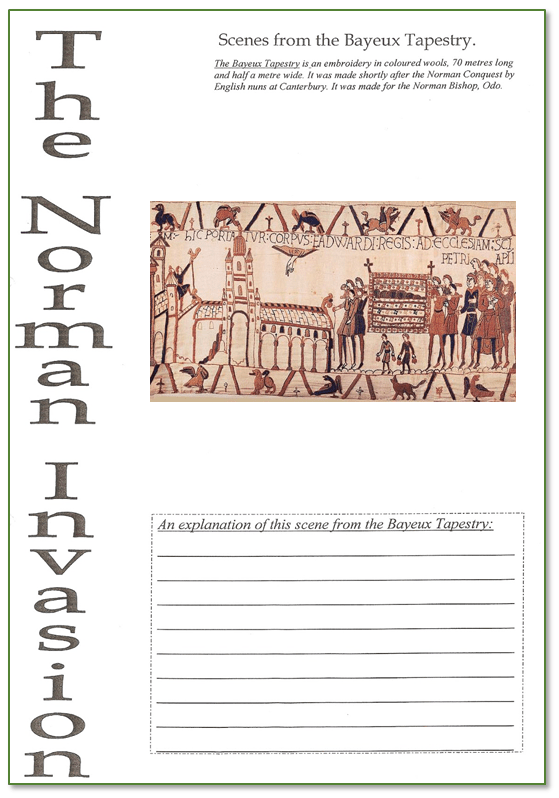
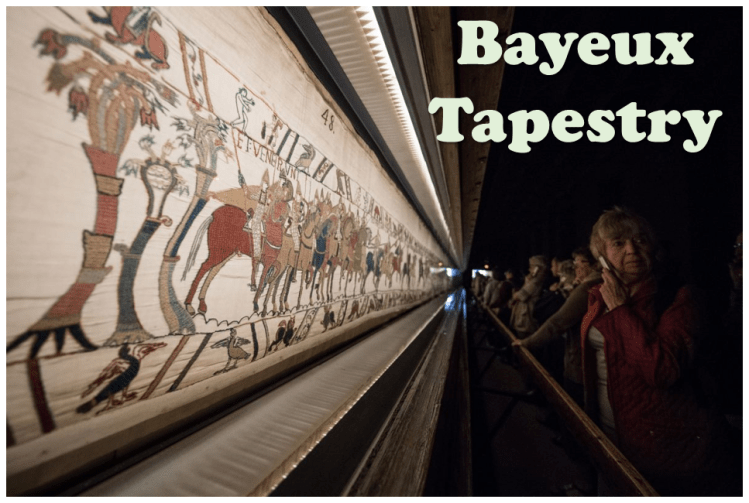
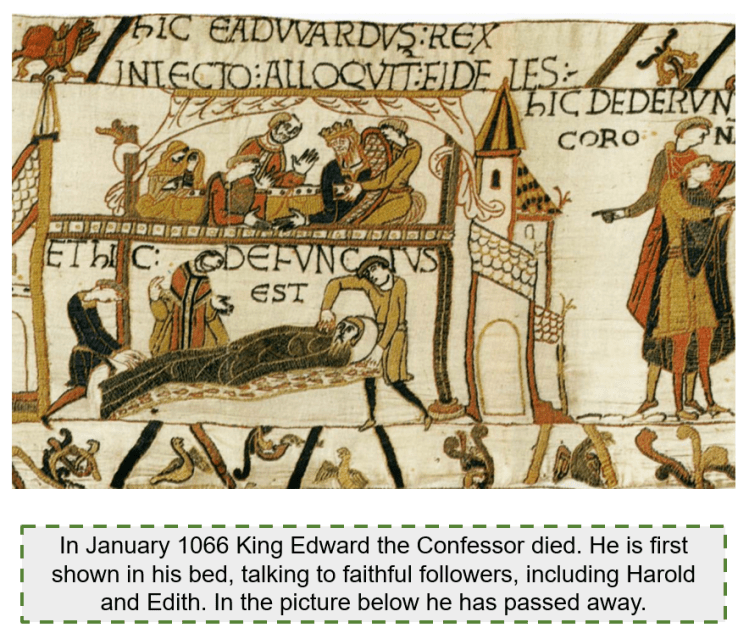
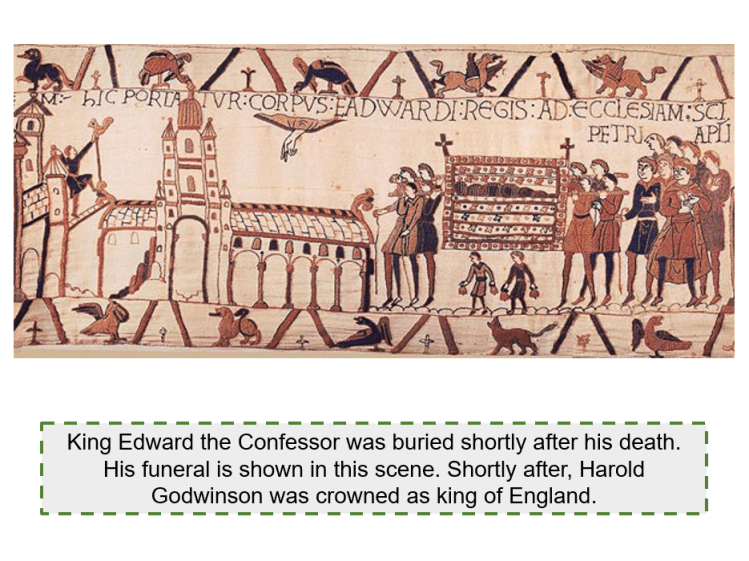
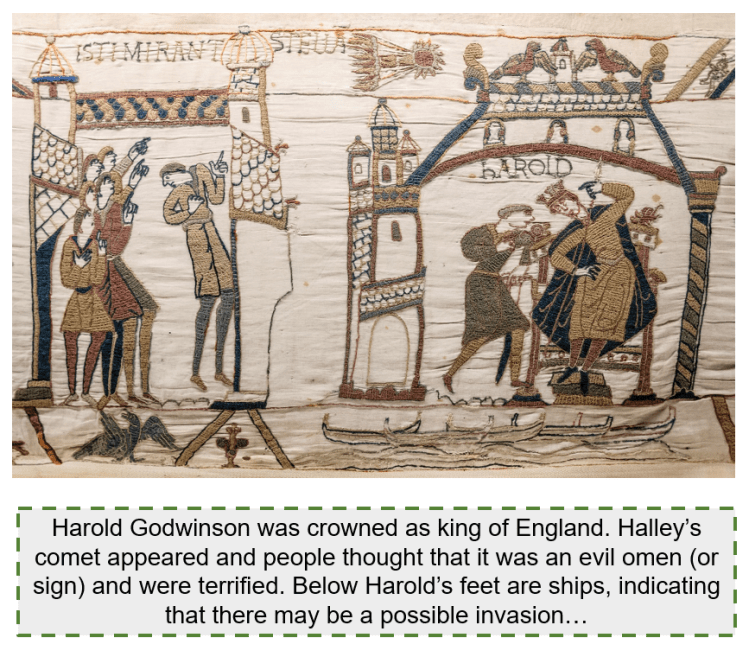
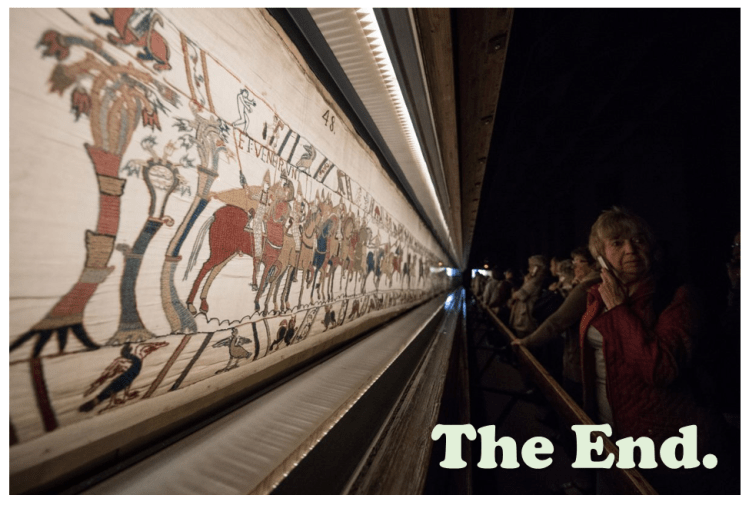
Your workbook tells you on page 64 what the Bayeux Tapestry is…
A Tapestry is a “heavy handwoven reversible textile used for hangings, curtains, and upholstery and characterized by complicated pictorial designs”.
And here is an example of modern-day children’s tapestries:
6.
The video clips below tell you more about the Bayeux Tapestry…
What is the Bayeux Tapestry? | Norman Conquest | 1066. (1:37 minutes long)
Bayeux Tapestry… England’s first comic strip. (2:48 minutes long)
The Bayeux Tapestry – Seven Ages of Britain – BBC One. (4:56 minutes long)
Animation without speaking…!
The Animated Bayeux Tapestry. (4:24 minutes long)
7.
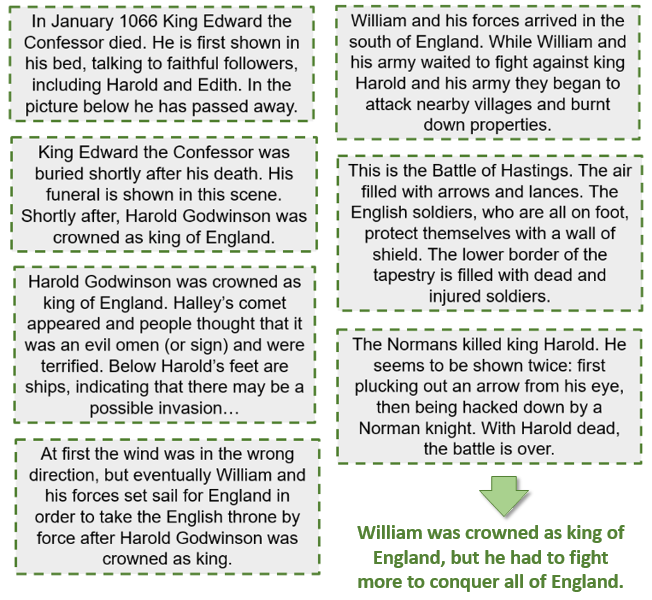
Stick the worksheet (provided) with the picture of the Bayeux tapestry into your purple book. Then try to determine what it shows you about the Norman Invasion. Then write your explanation in the box at the bottom of the page.
8.
If you get stuck, here is a little help: Choose a possible answer from the options given below. Then copy the correct description into the box on the Bayeux Tapestry worksheet.
9.
10.
Below are some useful links if you are interested in finding out more about the individual scenes in the Bayeux Tapestry…
Today you are going to look at, what the Nazis called, the “Final Solution to the Jewish Problem”…
Follow the instructions step by step:
1.
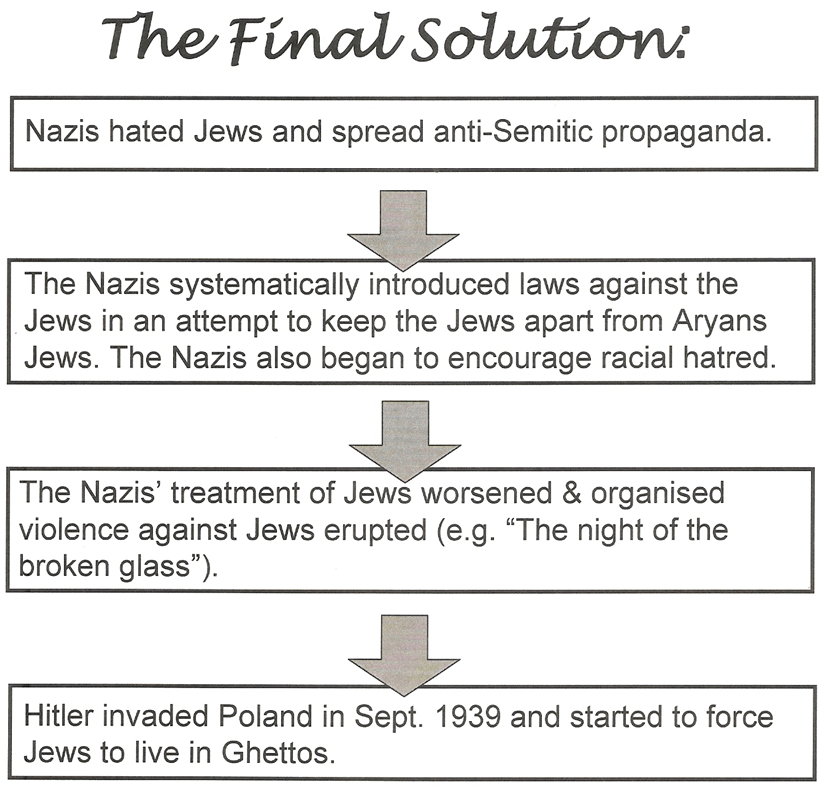
To refresh your memory, read the flow-chart (below) about Nazi treatment of Jews that culminated in what the Nazi’s called “the Final Solution to the Jewish Problem”.
(The “The Final Solution” flow chart is also on p.61 in your workbook.)
2.
Now, read this important information, about the treatment of Jews during WW2…
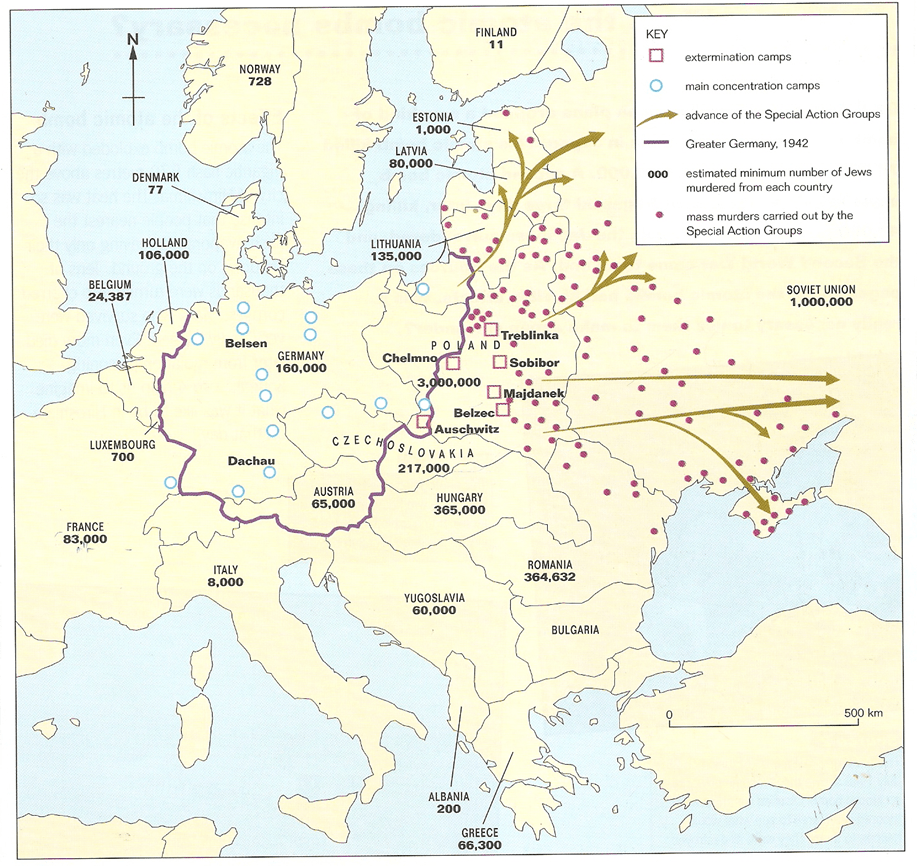
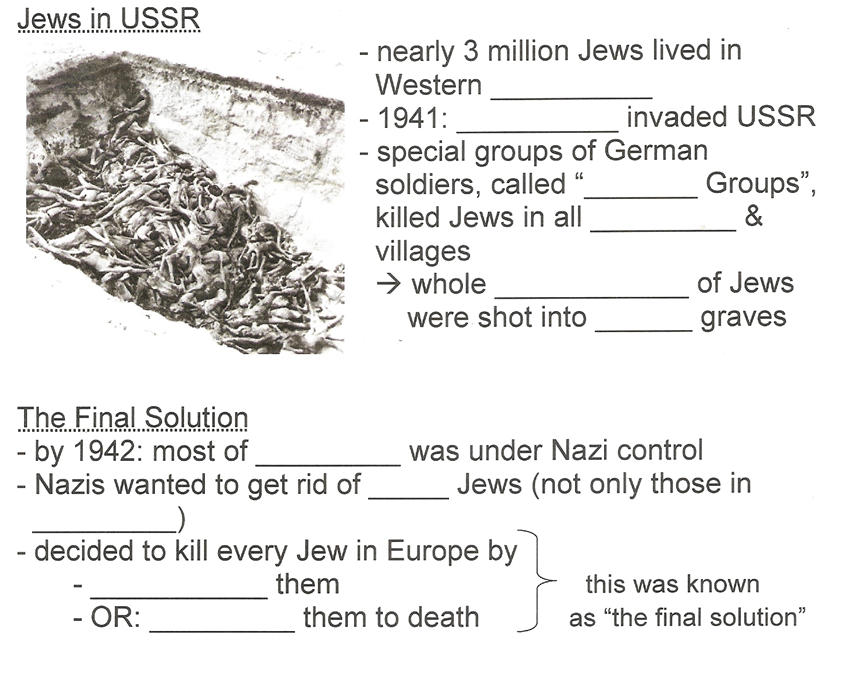
“Mass Murder in the Soviet Union” (p.58)
& “The Final Solution” (p.58)
3.
In the video below is a summary of the information about “Treatment of Jews during WW2”.
Treatment of Jews during WW2. (1:29 minutes long)
4.
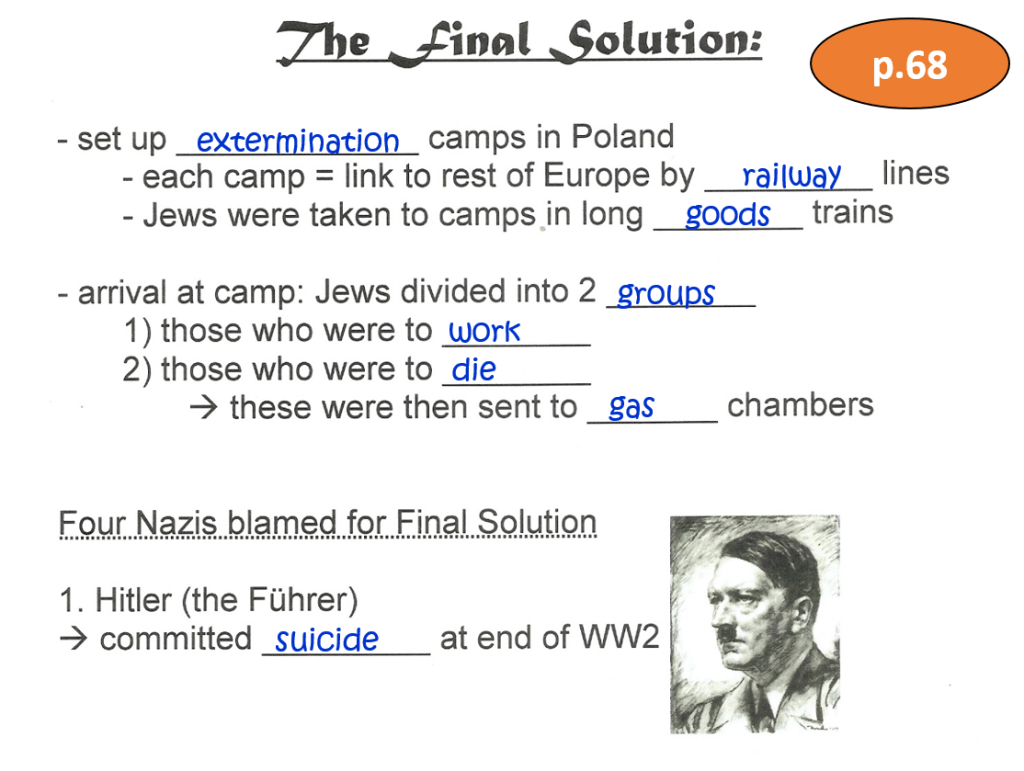
Fill in the missing words on the notes on p.60:
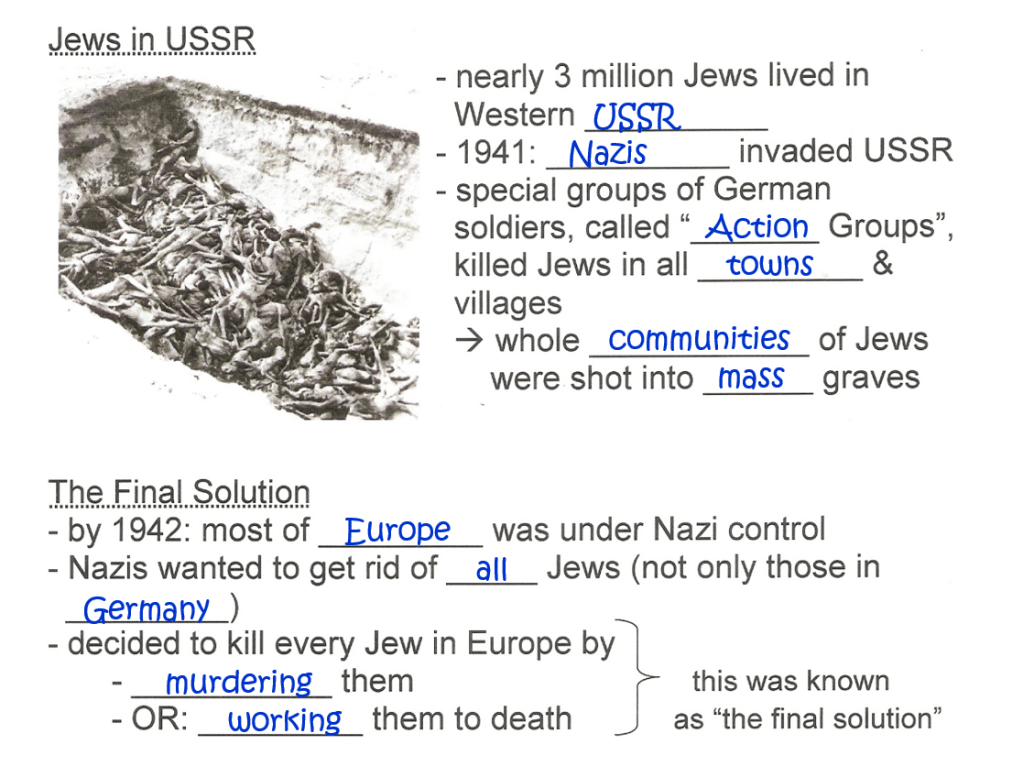
5.
Mark the fill-in task on p.60:
6.
In the video below is a summary of the information about “The Final Solution”.
The Final Solution. (2:13 minutes long)
7.
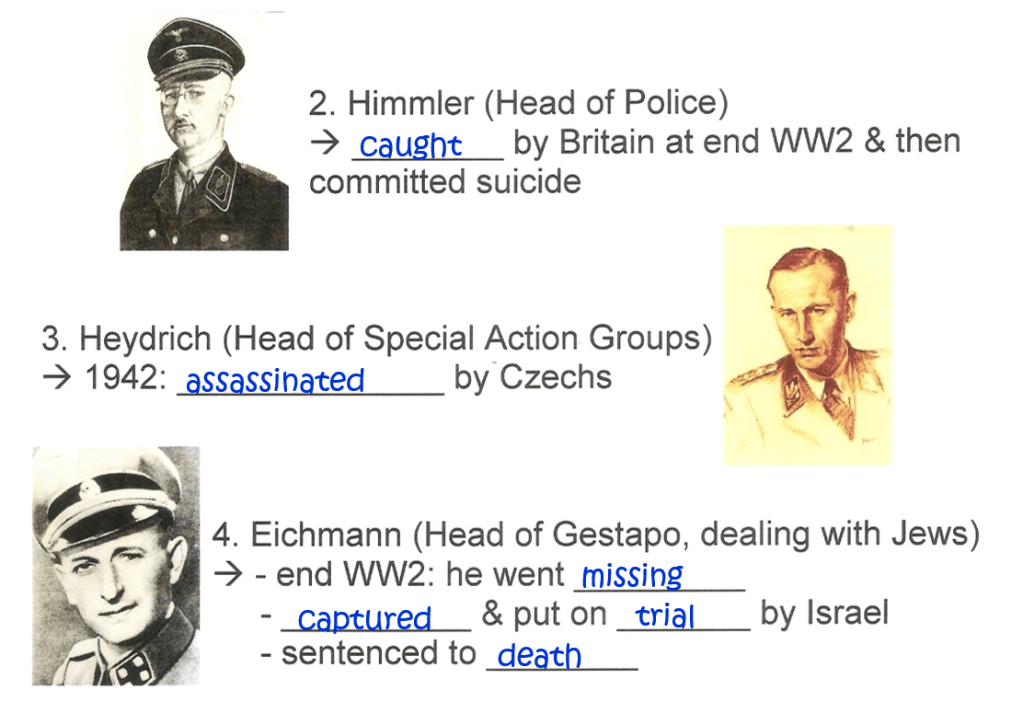
Fill in the missing words on the notes on p.68:
8.
Mark the fill-in task on p.68:
9.
Read the following information about “the Final Solution” from your Workbook:
10.
Let’s test your knowledge and understanding of some of the issues involved in the Holocaust…
Watch the following video which is an overview of “the Final Solution”: (You need to concentrate!)
The Development of the “Final Solution”. (11:45 minutes long)
12.
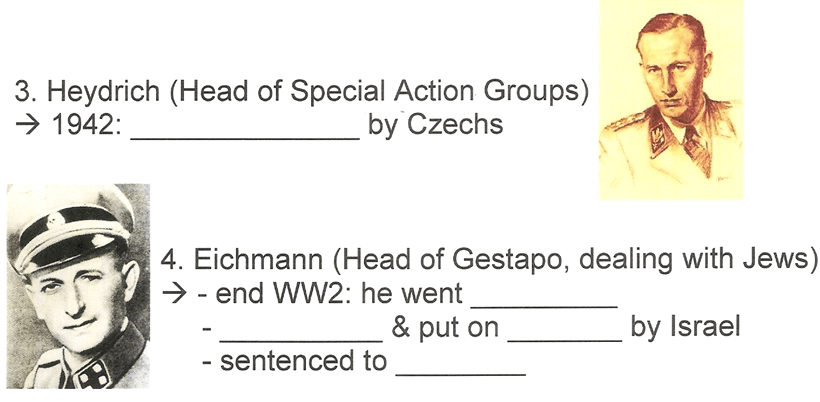
Watch this complete biography of Adolf Eichmann – as head of the Gestapo, Eichmann is seen as a Nazi leader that played a major role in the Final Solution.
The Architect of the Holocaust. (19:17 minutes long)
We have already looked at the middle passage – now, we will look at the rest of the ordeal: Auction and Plantation Life…
You are going to spend the first part of the lesson watching important video material. These videos will help you to do the second part of the lesson – so pay attention and concentrate as you watch the videos!
Slave Auction…
Roots: A History Revealed – The Slave Auction. (3:03 minutes long)
America’s Journey through Slavery: Life of an Enslaved Person. (3:04 minutes long)
Plantation Life…
Life of a Plantation Slave. (2:01 minutes long)
Plantation Life. (6:09 minutes long)
Life on an Southern Plantation. (3:17 minutes long)
4.
Some slaves rebelled and suffered the consequences. However, some were lucky enough to become free…
Forms of Rebellion…
Roots: A History Revealed: Forms of Rebellion. (3:01 minutes long)
The Maroons…
Runaway Slaves Built This Fort to Defend their Freedom. (2:40 minutes long)
5.
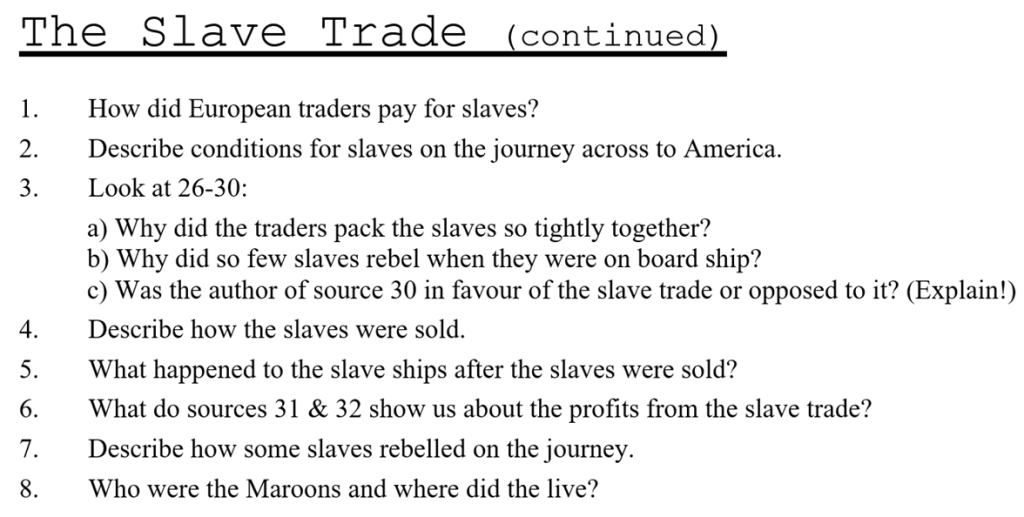
Do all the Questions on “The Slave Trade – continued”.
(These questions are at BOTTOM of p.73.) You can get the answers from the videos that you have just watched, or from your textbook. If you really get stuck, a little research on Google should help!
Let’s look at the shipping of slaves in a bit more detail. This part of the slavery ordeal is also known as “The Middle Passage”, or “the Transatlantic Slave Trade”. Below are various videos that explain what it was like to be transported to the Americas as a slave.
Transatlantic Slave Trade. (2:51 minutres long)
Here is a short summary of conditions on the slavers (or slave ships):
There are terminology that you need to be familiar with. Fill in the correct vocabulary in the table on p.69 of your Workbook.
solution:
p.69 – Vocabulary
3.
Complete the “Holocaust Steps” diagram on p.53 in your Workbook to show how the Nazis increasingly persecuted Jews.
You need to place the measures (below) in the year that they were introduced (on the diagram) – to show how Jews were systematically (“step by step”) more and more restricted and persecuted! You need to copy the information below into the relevantboxes on p.53.
Alternatively, write simply a brief note on each of the steps, choosing from the events below:
This information does not apply to the years 1937 and 1940 – leave 1937 and 1940 blank…
Today you are going to continue looking at Britain and the Triangular Trade…
Follow the order in which I give you instructions:
1.
Complete the test!
(This is a test on The Reformation in England, p.47-49)
2.
In the previous lesson you learnt about the “Triangular Trade”. Fill in the box (on p.65 to explain what Triangular trade is…
SOLUTION:
3.
Do you know the meaning of “bias” and of “propaganda”? These are terms that are often used in History. You may come across these words in our study on Britain and Trade. So, make sure that you understand the meaning of these words… Watch the video below that explains “bias” and “propaganda”.
Bias and Propaganda. (1:43 minutes long)
4.
Copy the definitions for “bias” & “propaganda” into the boxes on p.72.
5.
Finally, do all the Questions on “The Growth of British Trade” (p.72)
Today you are going to continue practicing Essay Writing!
We will:
analyse exam questions
plan essay answers
write essay answers
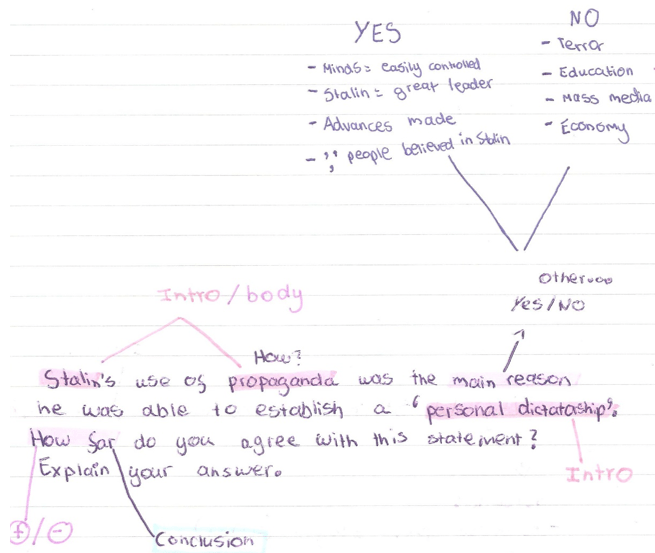
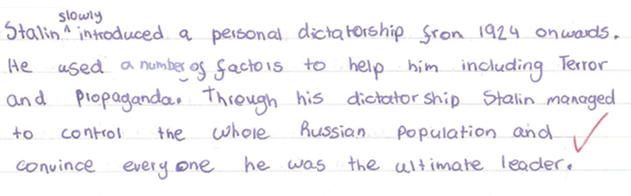
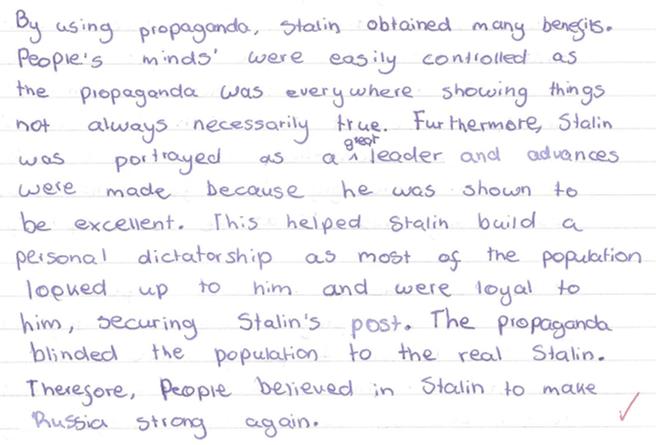
Your homework for today was to do Russia Q3 (c) in full, in your essay writing book…
1.
Let’s first look at the previous essay answers that you wrote on the Russian History (Russia, Q1). Stick your answers into your essay writing book. Then, navigate through the slides for feedback…
2.
Mark Russia Q.3 (c) in class.
OR: if not completed for today, do the following:
Copy the following question in the middle of a new page in your essay writing book:
“The Provisional Government fell in November 1917 because it continued to fight the war.” Do you agree? Explain your answer. (10)
3.
Now, analyse & plan Russia Q3 (c) very quickly… See what needs to be done and write down a few ideas…
4.
Navigate your way through the following slides to see if you planned and answered the question correctly…
5.
Copy the following question at the top of a new page in your essay writing book:
Describe the events that led to Rasputin’s death in Dec.1916? (4)
6.
Now answer Russia Q3 (a) in full (“timed”) in your book – you have 5 minutes to complete the answer…
7.
Navigate your way through the following slides to see if you answered the question correctly…
8.
Here are today’s questions (and solutions) in slide format…
9.
Finish today’s classwork (if necessary),
PLUS revise for your history exams,
PLUS bring your booklets on Russia as well as on the Peace Treaties to the next lesson!