

Homework Task 3 (p.50-51) is due:
(See Schoology.)
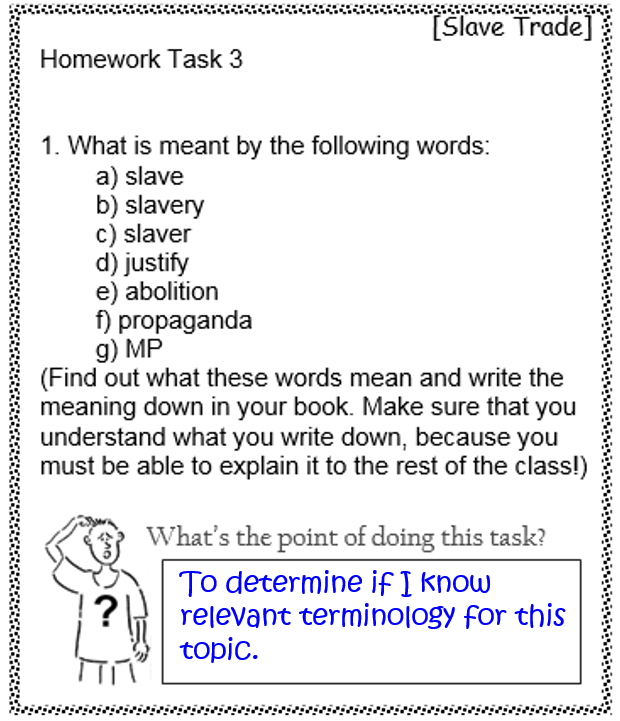

You may need to Google some of these terms… Make sure that your explanations are given in your own words and that they make perfect sense!!

(WordPress advertisements may appear below.)
Homework Task 3 (p.50-51) is due:
(See Schoology.)
You may need to Google some of these terms… Make sure that your explanations are given in your own words and that they make perfect sense!!
(WordPress advertisements may appear below.)
Year 8A & Year 8B
Today we are going to test your knowledge and understanding of what you know about the Slave Trade so far…
Follow the order in which I give you instructions:
1.

First, look at your test result (Homework-7) and also see where you have perhaps lost marks:
2.
To refresh your memory…

Atlantic Slave Trade. (5:38 minutes long)
The Atlantic Slave Trade. (6:58 minutres long)
3.
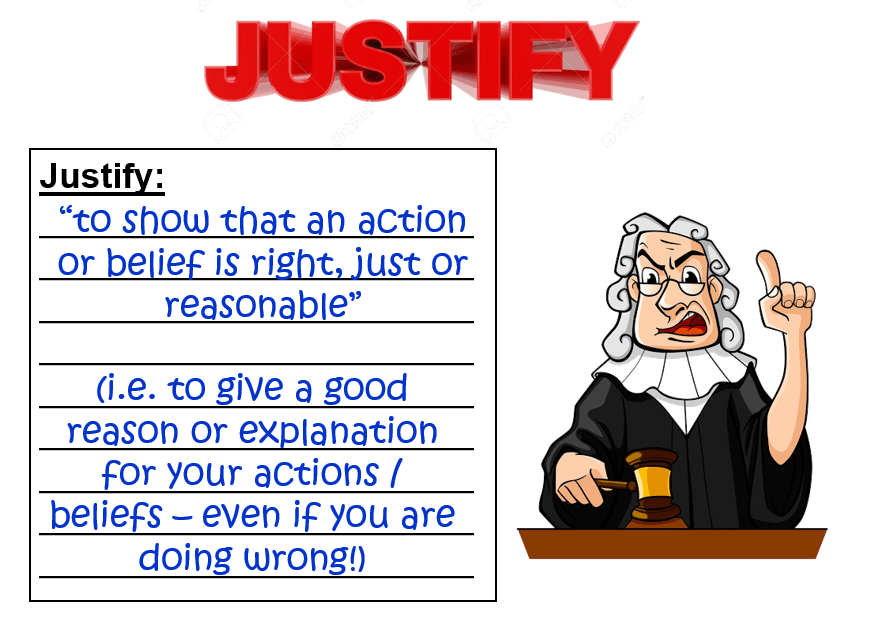
Before we start with a few questions, we need to make sure that you understand the word “justify”… So, below is a video that explains:

You may need to watch this a few times… CONCENTRATE!!
Explaining the word Justified. (0:55 minutes long)
4.

Copy the definition for “justify” into the box on p.73.
5.
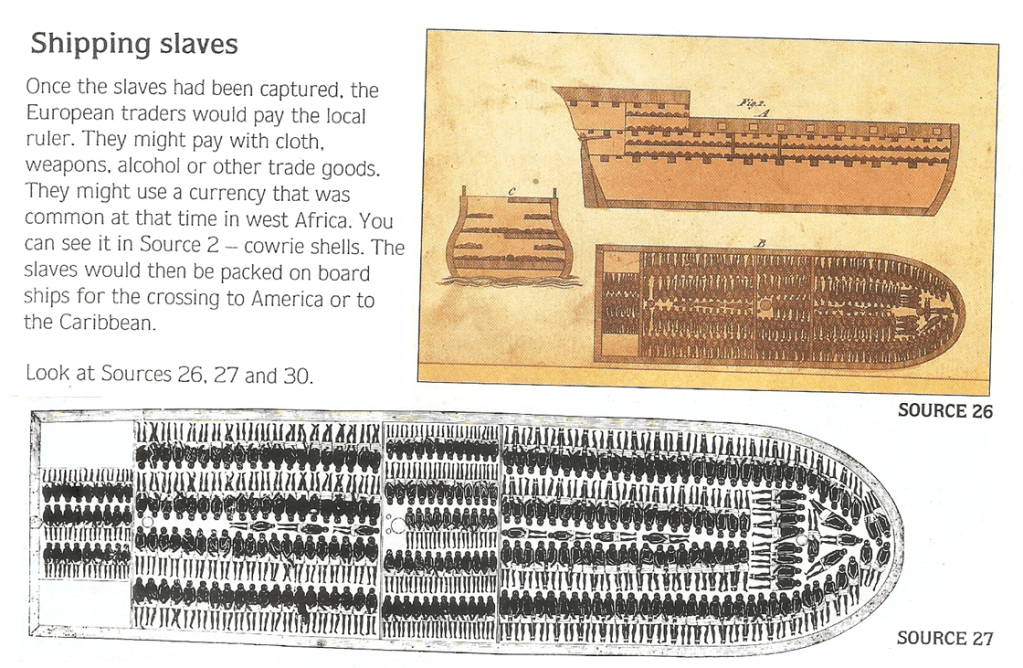
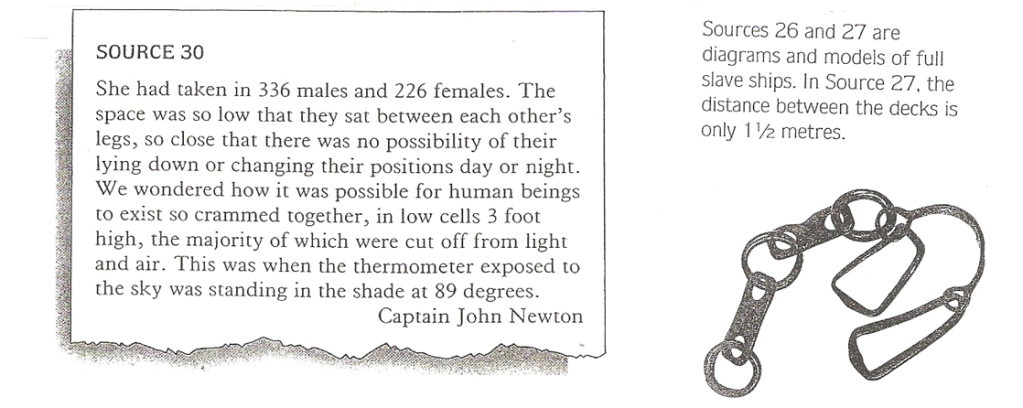
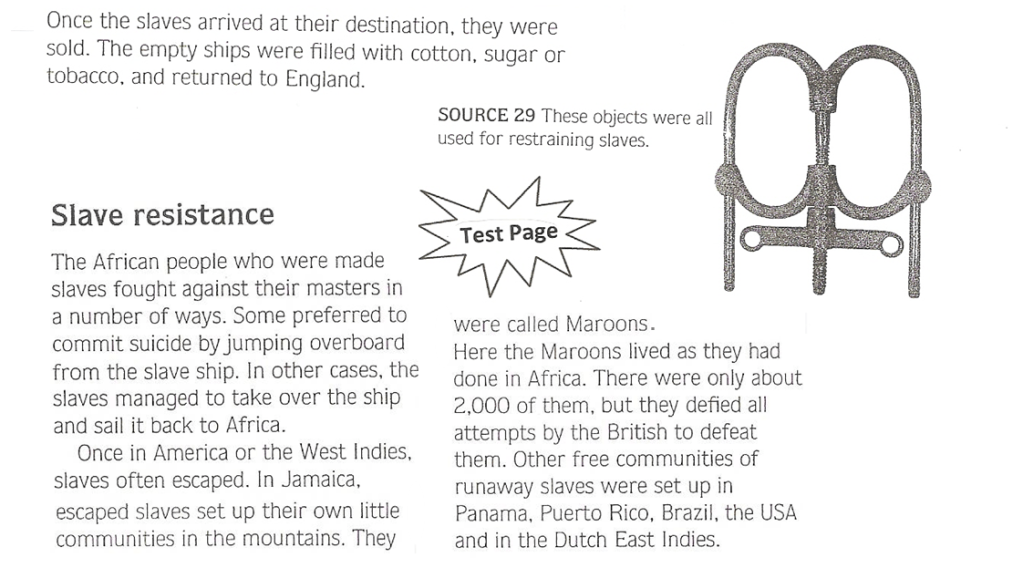
“Shipping Slaves”, p.74
6.
Now, let’s test your knowledge and understanding…
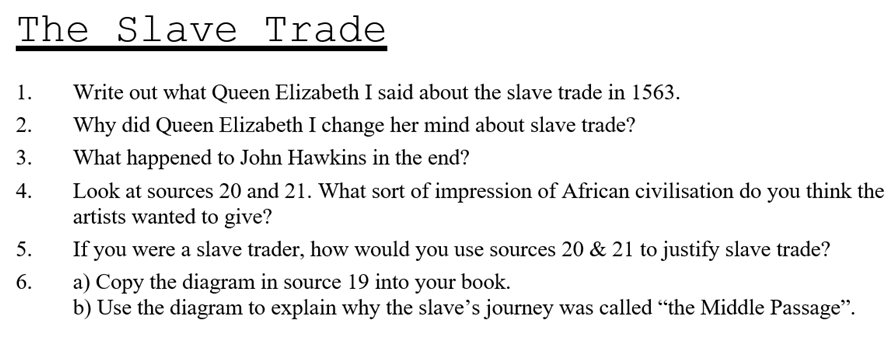
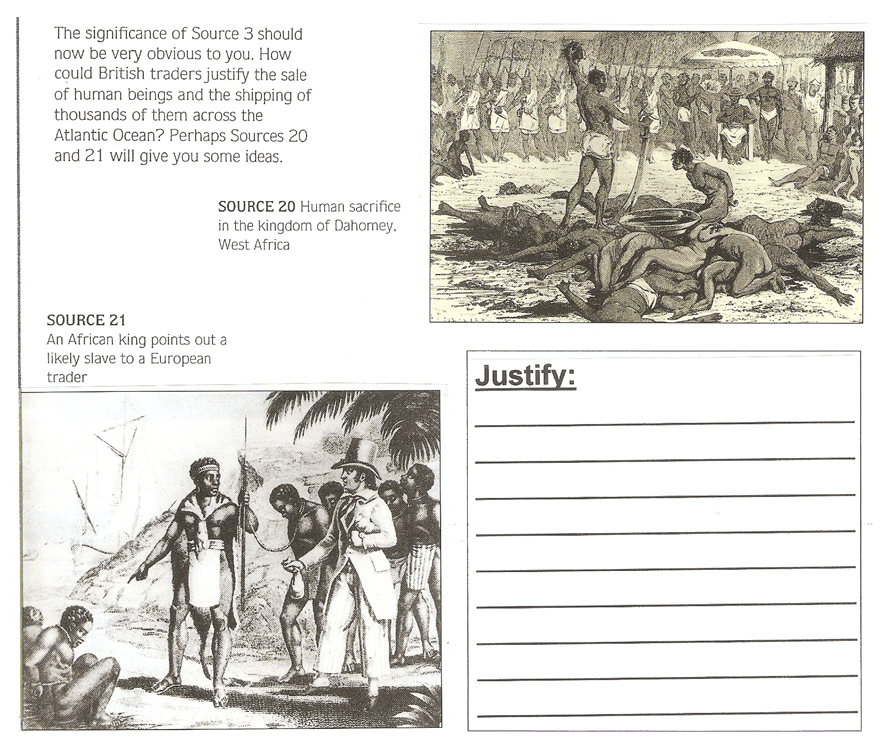
You need to answer Questions 1-6 on “The Slave Trade”. These questions are at the TOP of page 73.
Please take note:
“The Slave Trade, p.73”

(WordPress advertisements may appear below.)
Year 8A & Year 8B
Today you are going to investigate the Middle Passage in a bit more detail, by watching some video clips that explain the Atlantic crossing…
Follow the order in which I give you instructions:
1.

Task 1 on p.45-47.
2.
Task 2 on p.48-49.
3.
4.
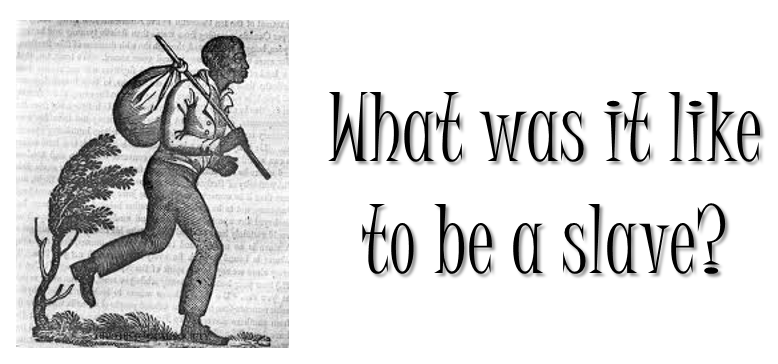
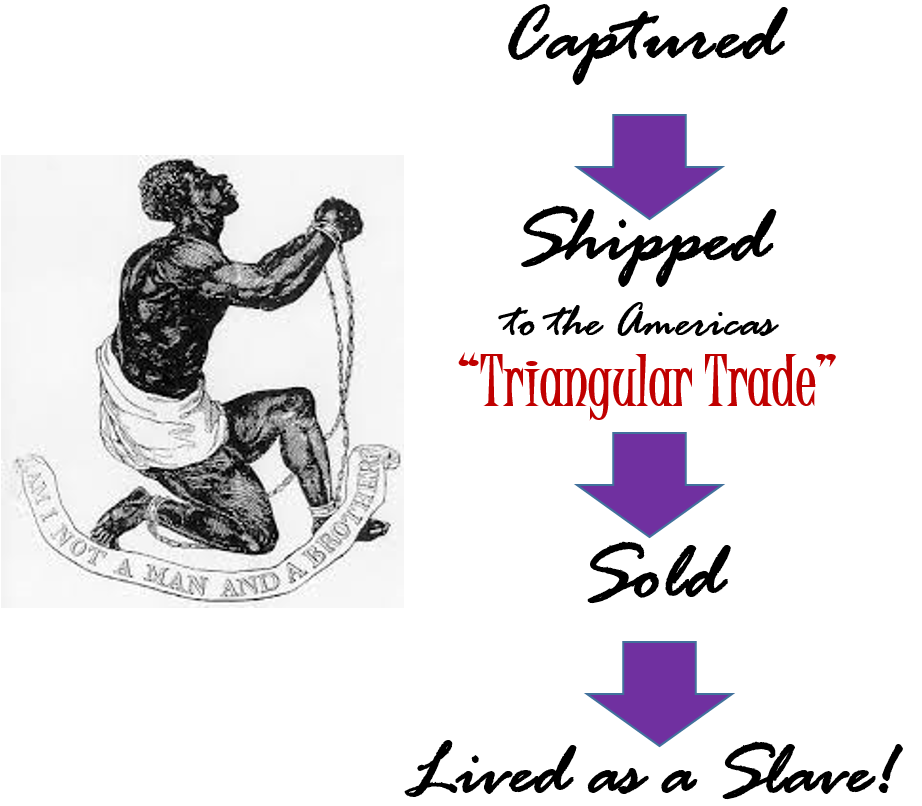
Let’s look at the shipping of slaves in a bit more detail. This part of the slavery ordeal is also known as “The Middle Passage”, or “the Transatlantic Slave Trade”. Below are various videos that explain what it was like to be transported to the Americas as a slave.

Transatlantic Slave Trade. (2:51 minutres long)
Here is a short summary of conditions on the slavers (or slave ships):
Slave Ship Conditions. (1:05 minutres long)
The Middle Passage. (1:54 minutes long)
More on the Middle Passage:
The Middle Passage. (2:34 minutes long)
Life Aboard a Slave Ship. (4:14 minutes long)
5.
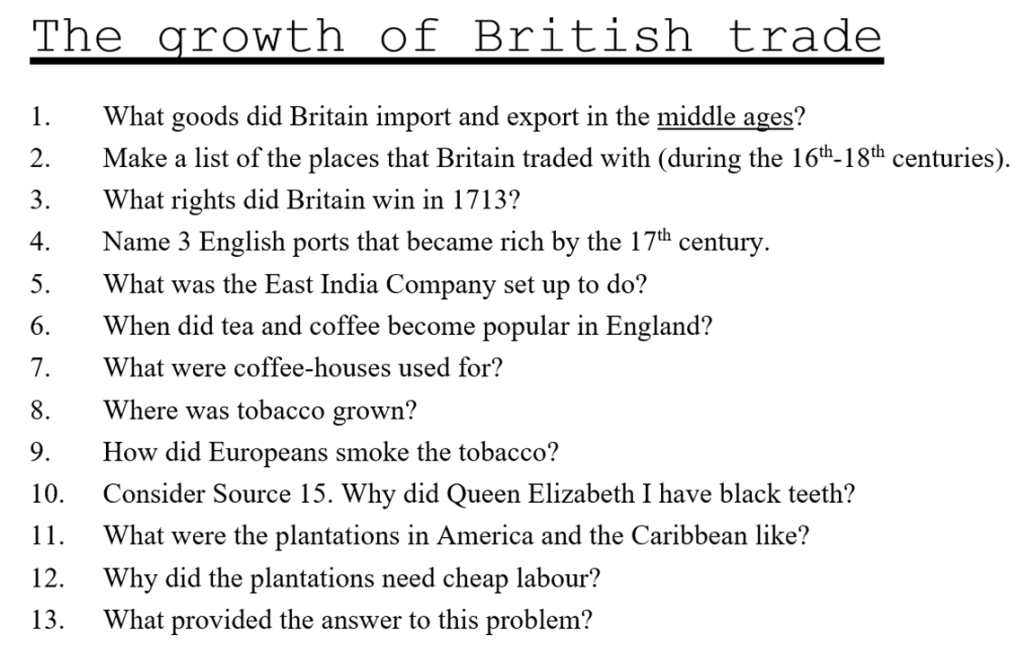
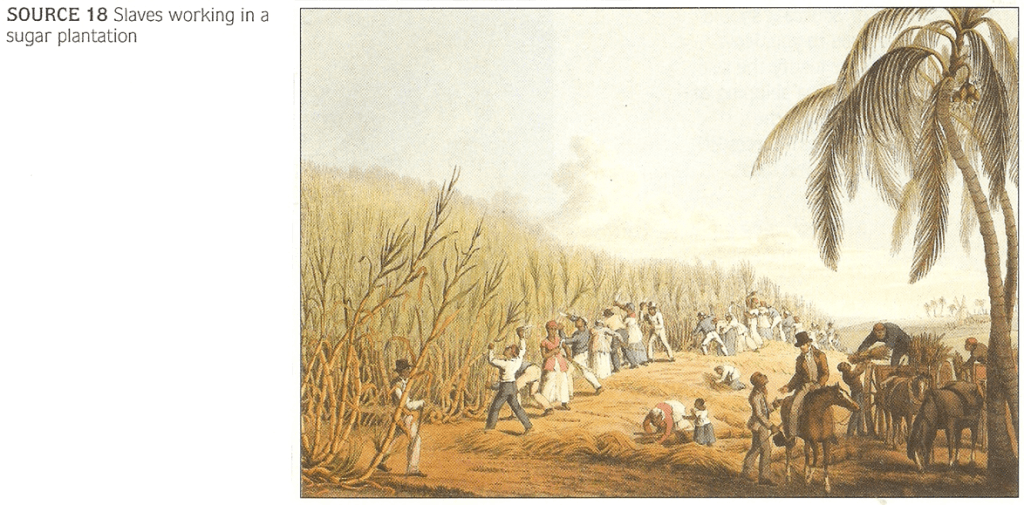
“The Growth of British Trade, p.72”
6.

1700’s Slave Trade: The Middle Passage. (5:05 minutes long)
10 Things you didn’t know about Trans-Atlantic Slave Trade. (10:16 minutes long)
(WordPress advertisements may appear below.)
Year 9A & Year 9B
Today we will consider how the Nazis increased the level of Jewish persecution, to the extent that it culminated in mass murder…
Follow the instructions step by step:
1.
Task 2 on p.58.
2.
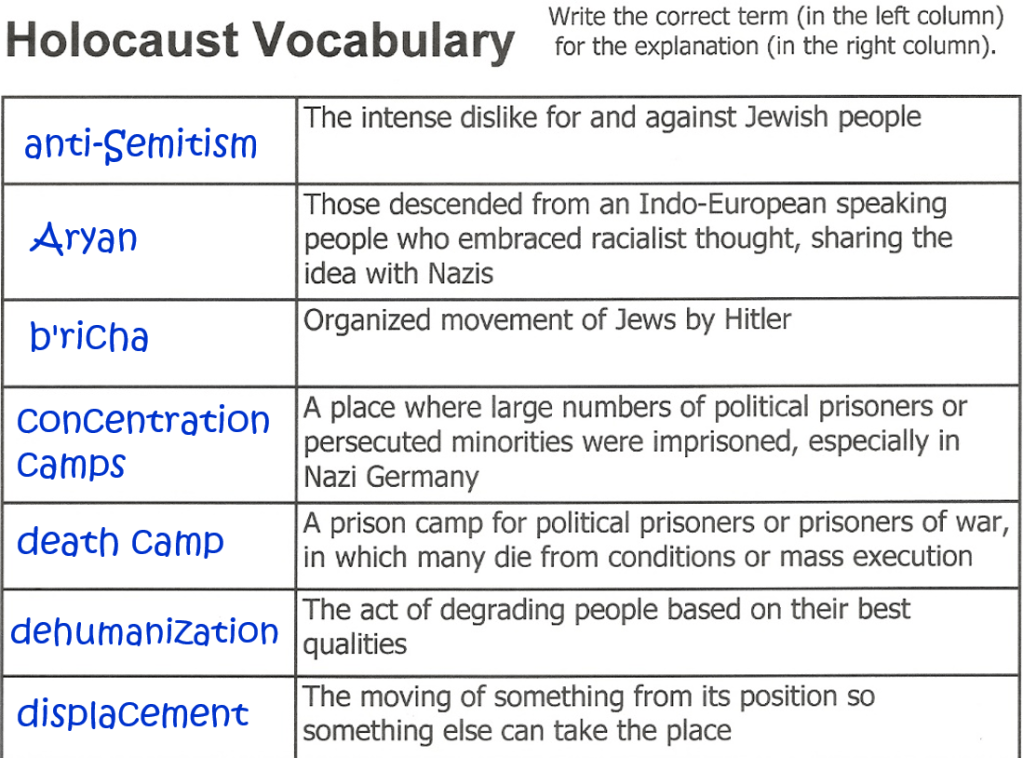
There are terminology that you need to be familiar with. Fill in the correct vocabulary in the table on p.69 of your Workbook.


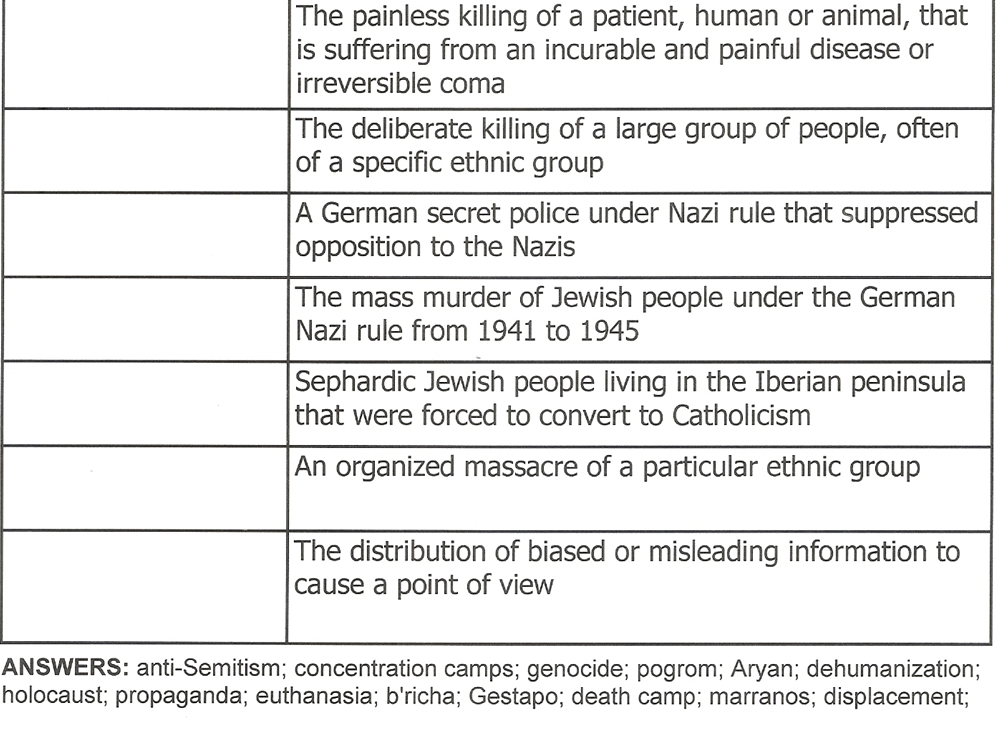
solution:


p.69 – Vocabulary

3.
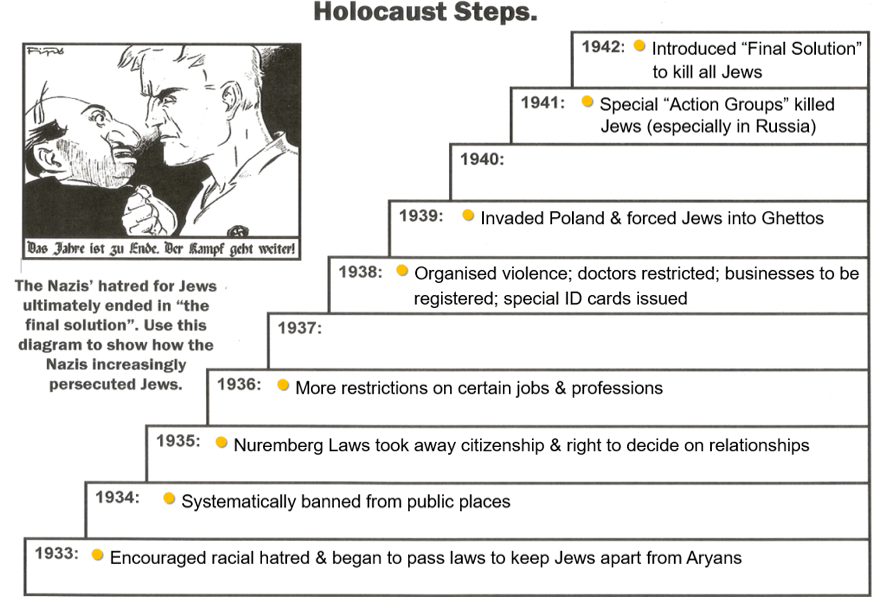
Complete the “Holocaust Steps” diagram on p.53 in your Workbook to show how the Nazis increasingly persecuted Jews.
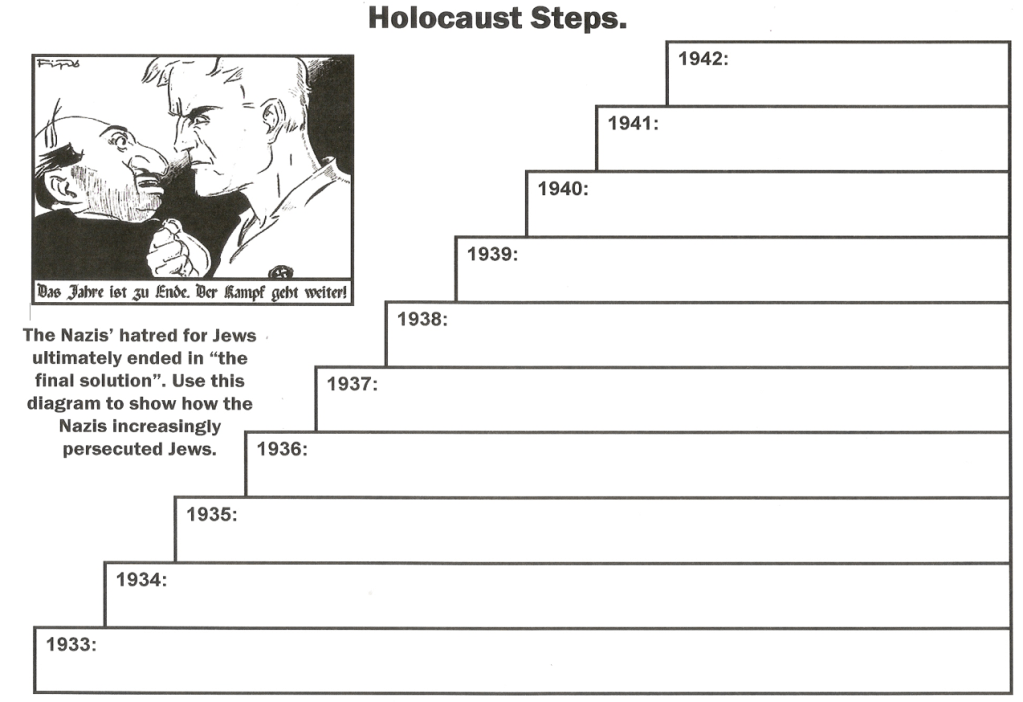
You need to place the measures (below) in the year that they were introduced (on the diagram) – to show how Jews were systematically (“step by step”) more and more restricted and persecuted! You need to copy the information below into the relevant boxes on p.53.


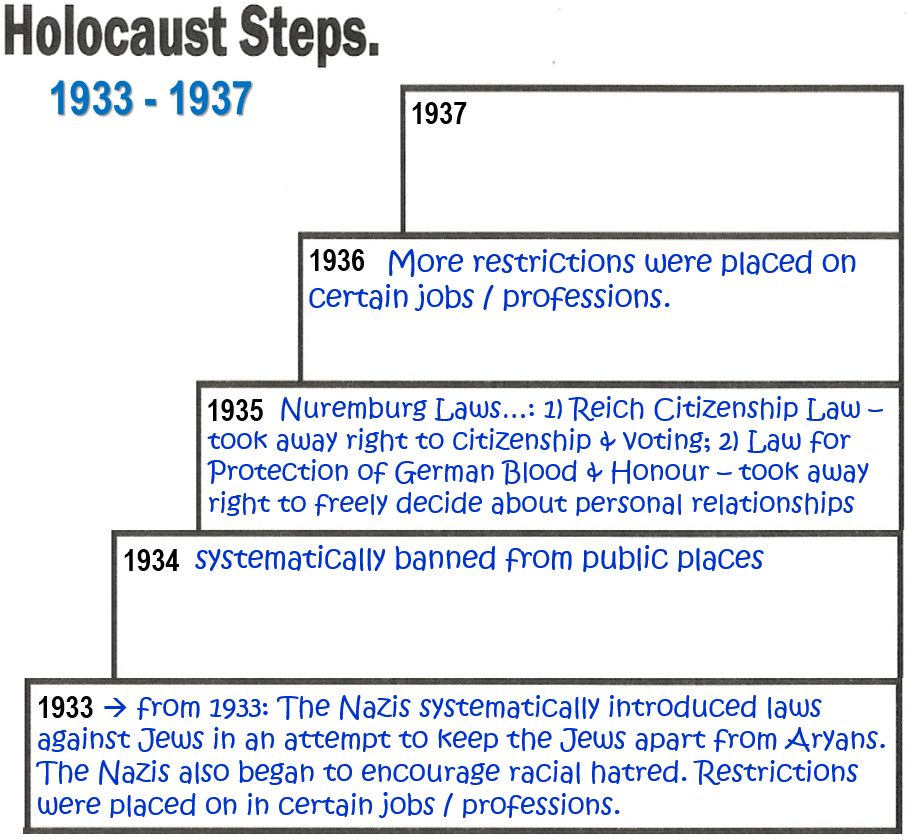
Alternatively, write simply a brief note on each of the steps, choosing from the events below:
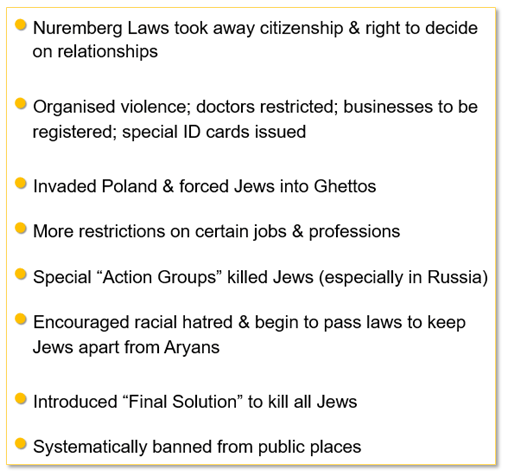

This information does not apply to the years 1937 and 1940 – leave 1937 and 1940 blank…
p.53 – “Holocaust Steps”
solution:
OR:


(WordPress advertisements may appear below.)

Homework Task 2 (p.48-49) is due:
(See Schoology.)

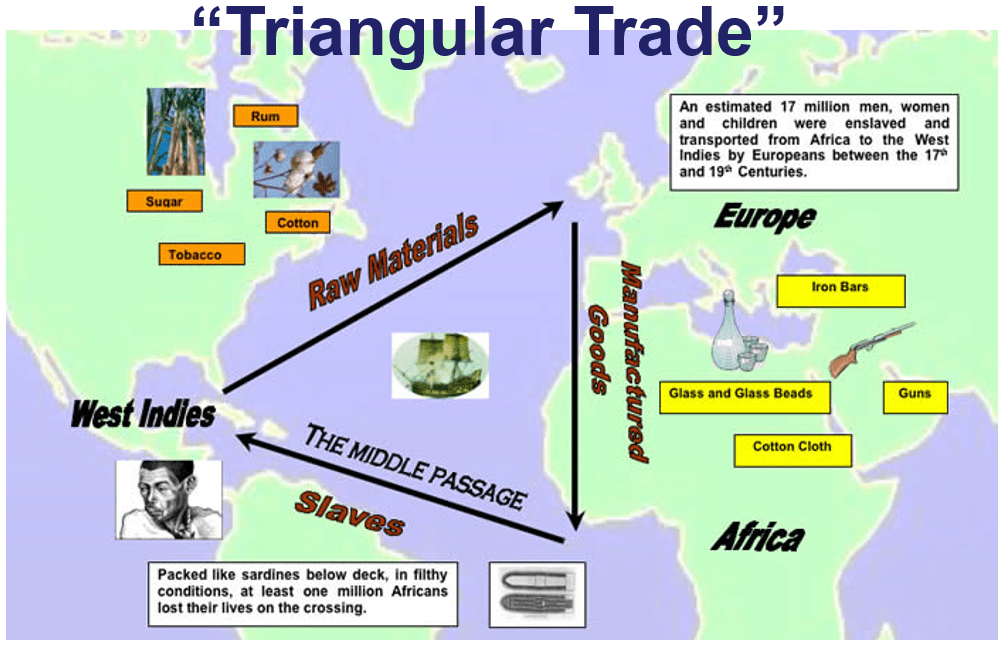
Look at the diagram on p.67 of your Workbook, as well as the lesson on “Triangular Trade” (on Schoology) for help…
(WordPress advertisements may appear below.)
Homework Task 1 (p.45-47) is due:
(See Schoology.)
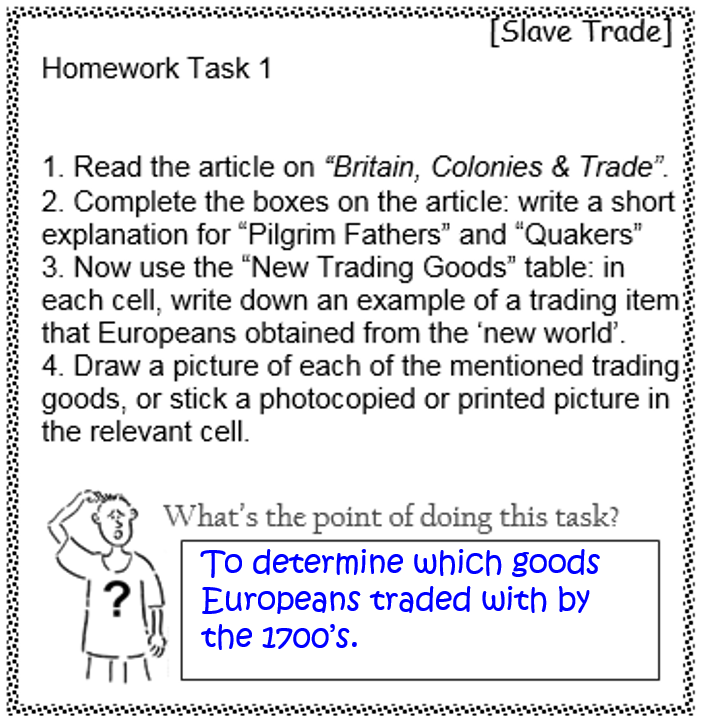
You may need to google the two definitions…! Or, look at the lesson on “Triangular Trade” (on Schoology) for help…
(WordPress advertisements may appear below.)
Today you are going to continue practicing Essay Writing!

We will:

Your homework for today was simply to revise for your History exam…
1.
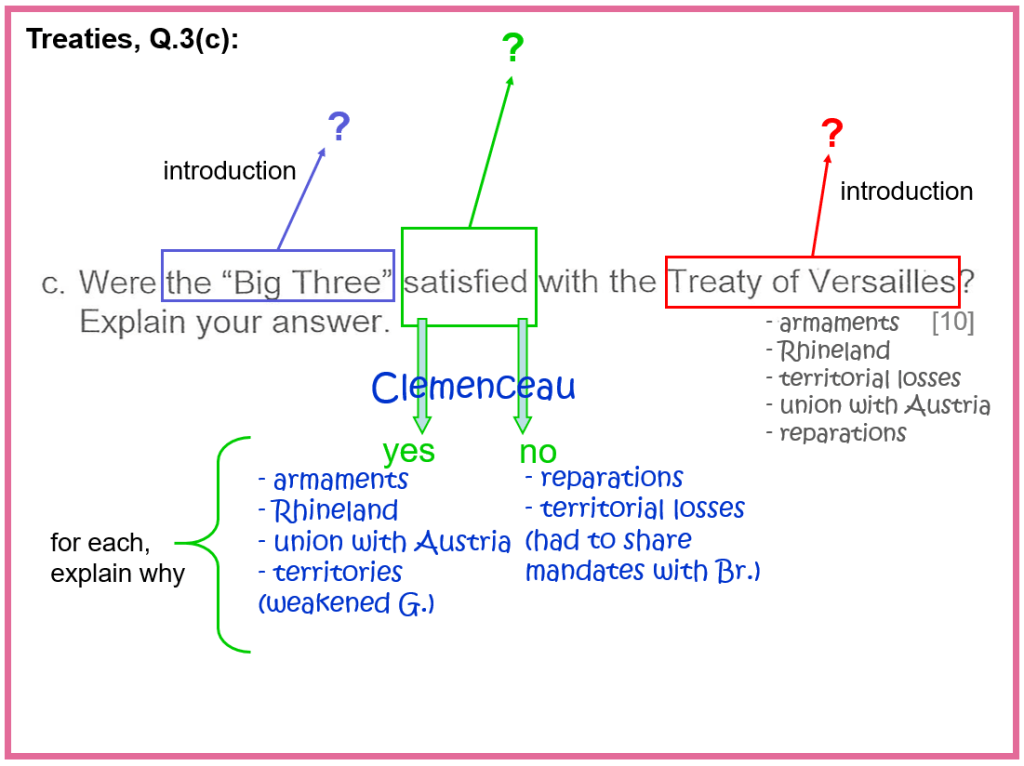
Copy the following question in the middle of a new page in your essay writing book:
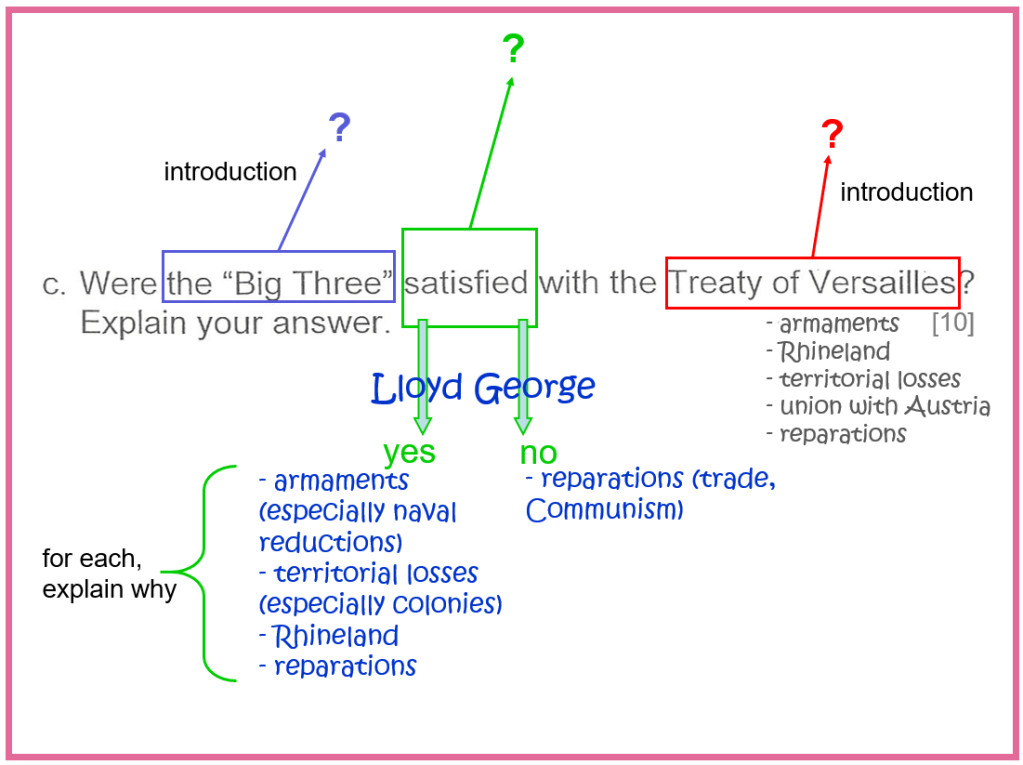
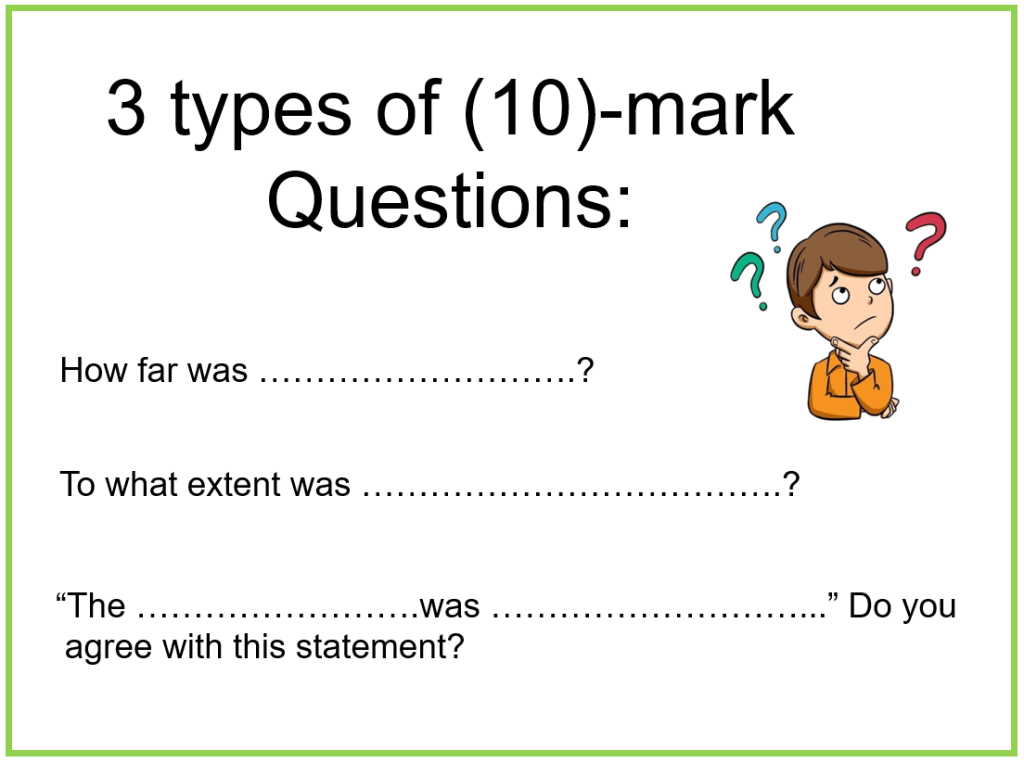
Were the big three satisfied with the Treaty of Versailles? Explain your answer. (10)
2.

Now, analyse & plan Treaties Q3 (c) very quickly… See what needs to be done and write down a few ideas…
3.
Copy the following question in the middle of a new page in your essay writing book:
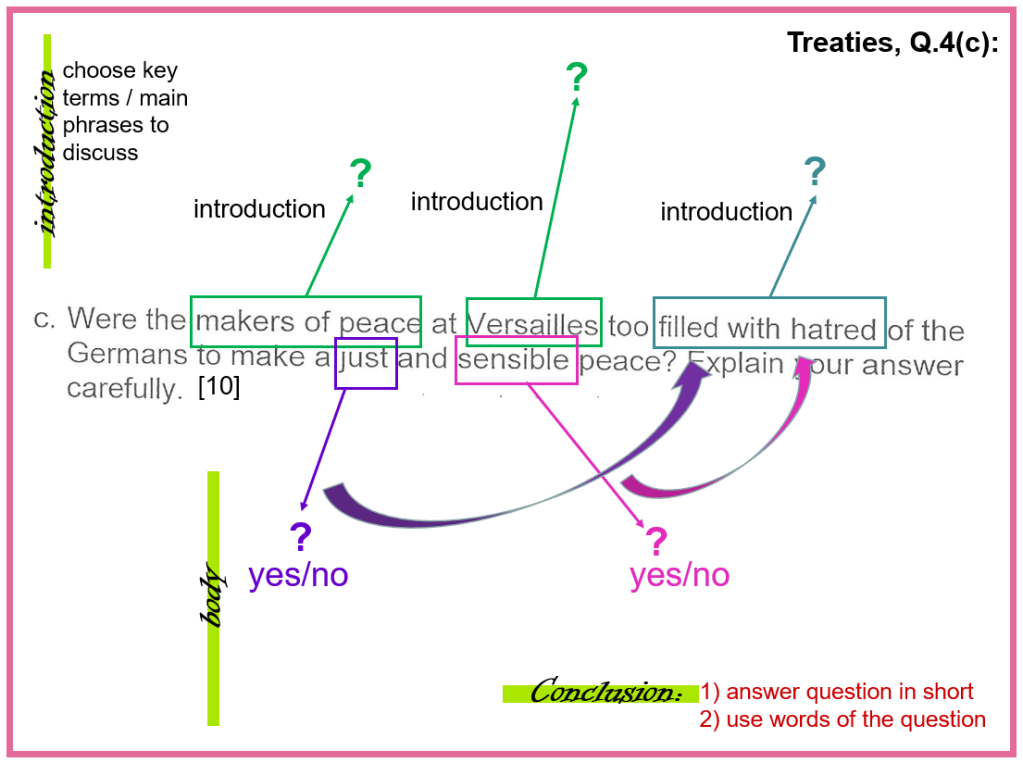
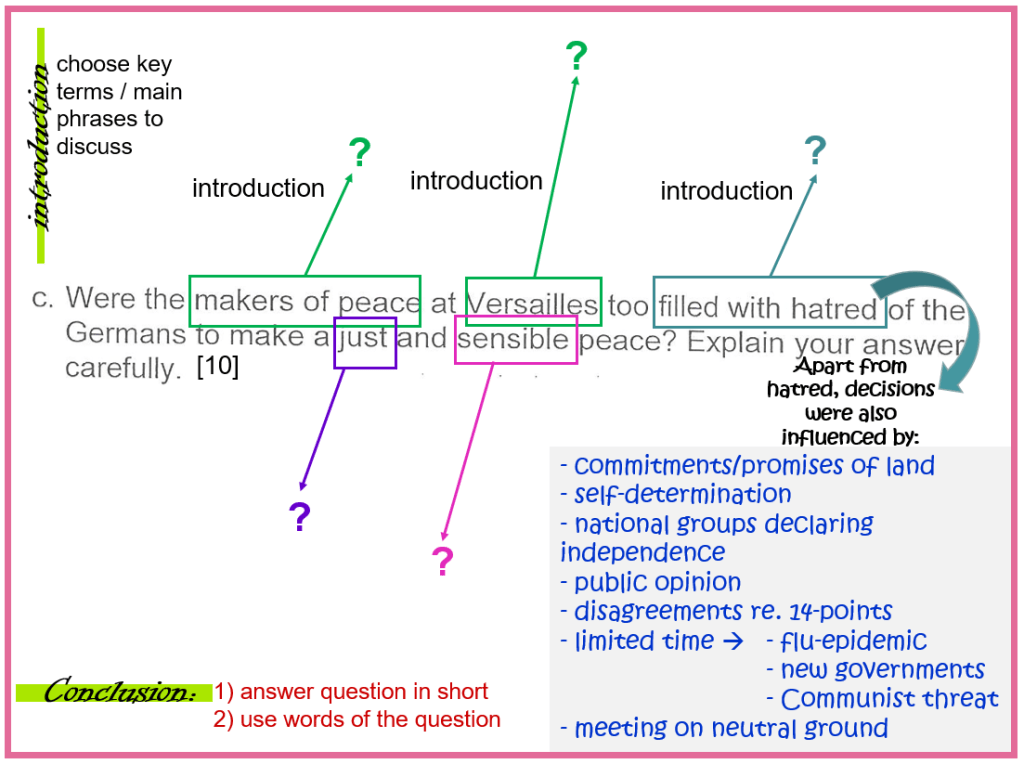
Were the makers of peace at Versailles too filled with hatred of the Germans to make a just and sensible peace? (10)
4.
Now, analyse & plan Treaties Q4 (c) very quickly… See what needs to be done and write down a few ideas…
5.
Navigate your way through the following slides to see if you analysed and planned the questions correctly…
6.
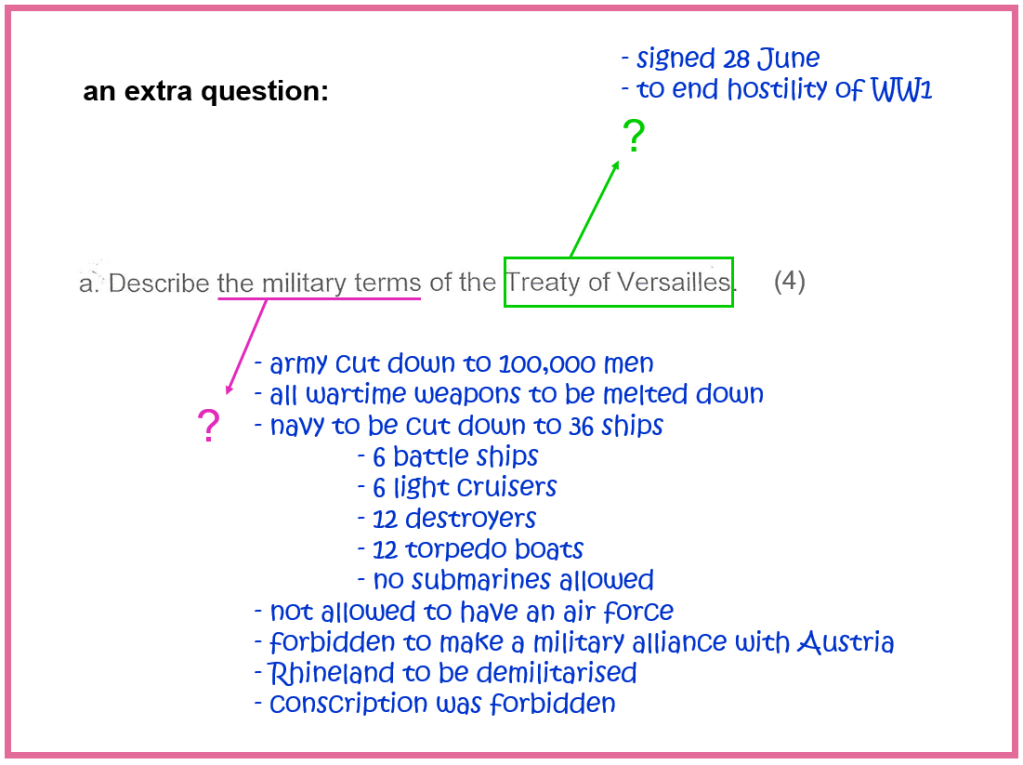
Here is a final question, if there is still time to do this…
Copy the following question at the top of a new page in your essay writing book:
Describe the military terms of the Treaty of Versailles… (4)
7.
Now, answer Russia Q2 (a) in full (“timed”) in your book – you have 5 minutes to complete the answer…
8.
Navigate your way through the following slides to see if you planned and answered the question correctly…
9.

Study for the Exams!!!
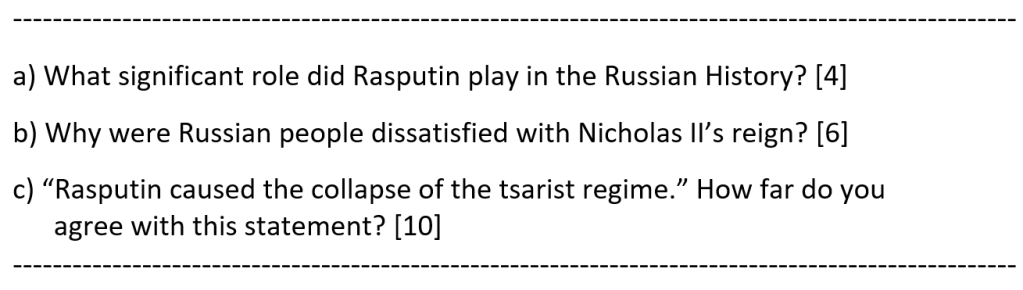
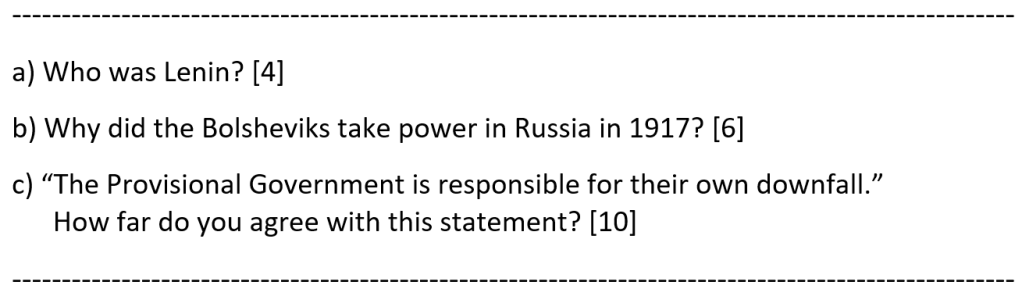
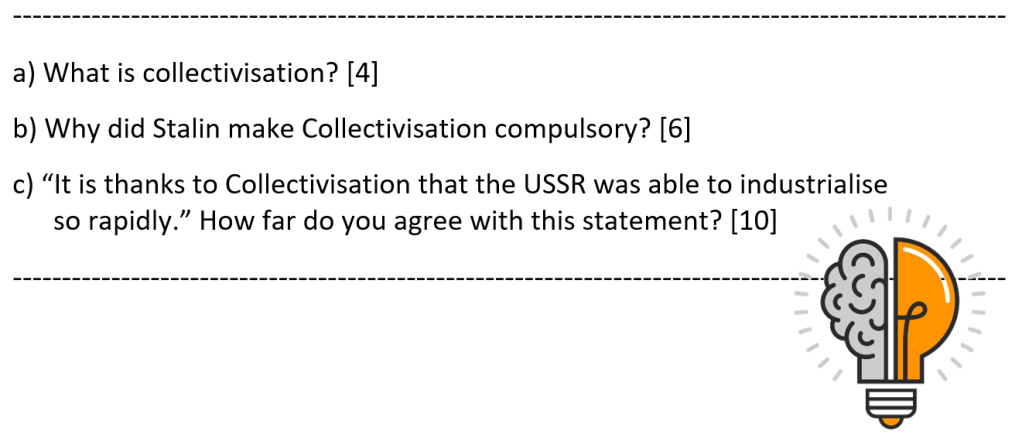
Here are more exam questions that you can use for exam preparation:

QUESTION 1
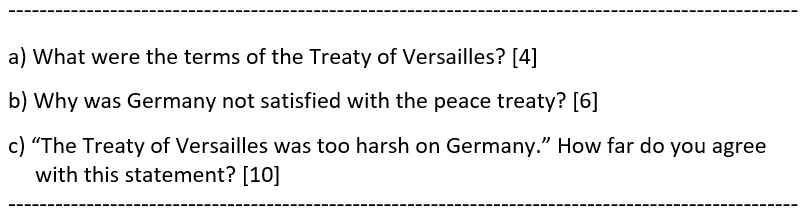
QUESTION 2
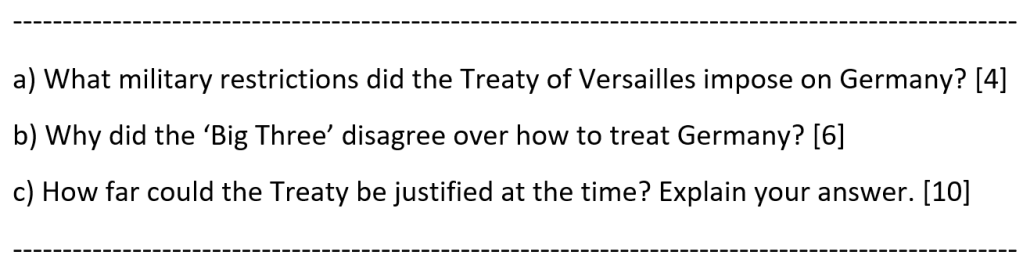
QUESTION 3
QUESTION 4
QUESTION 5
(WordPress advertisements may appear below.)
Year 8A & Year 8B
Today you are going to continue looking at Britain and the Triangular Trade…
Follow the order in which I give you instructions:
1.
Complete the test!
(This is a test on The Reformation in England, p.47-49)
2.
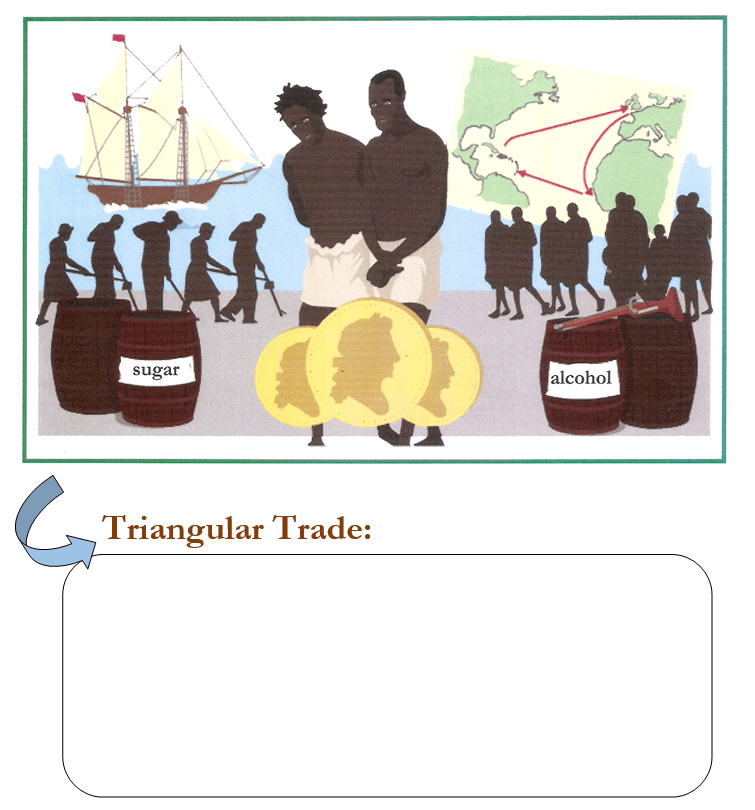
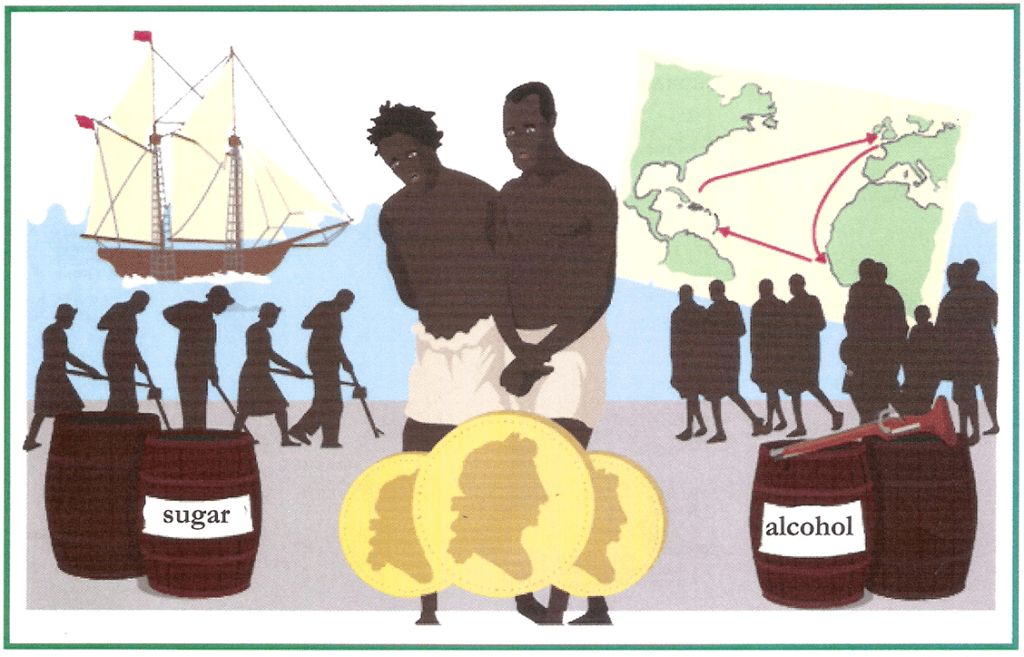
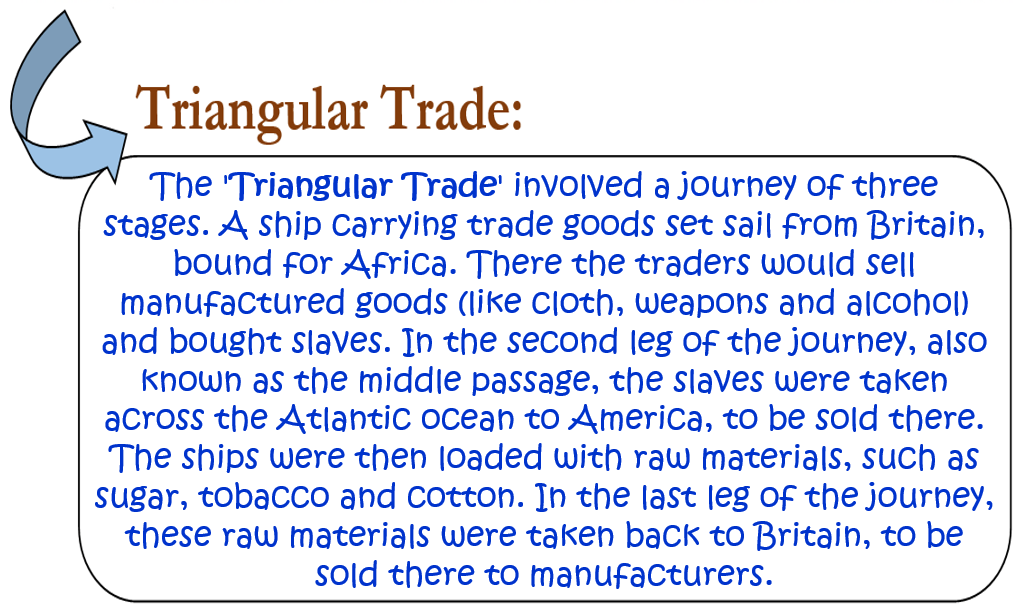
In the previous lesson you learnt about the “Triangular Trade”. Fill in the box (on p.65 to explain what Triangular trade is…
SOLUTION:

3.
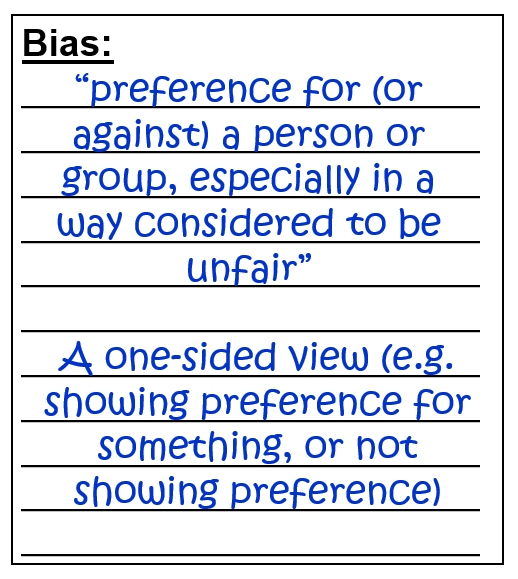
Do you know the meaning of “bias” and of “propaganda”? These are terms that are often used in History. You may come across these words in our study on Britain and Trade. So, make sure that you understand the meaning of these words… Watch the video below that explains “bias” and “propaganda”.
Bias and Propaganda. (1:43 minutes long)
4.


Copy the definitions for “bias” & “propaganda” into the boxes on p.72.

5.
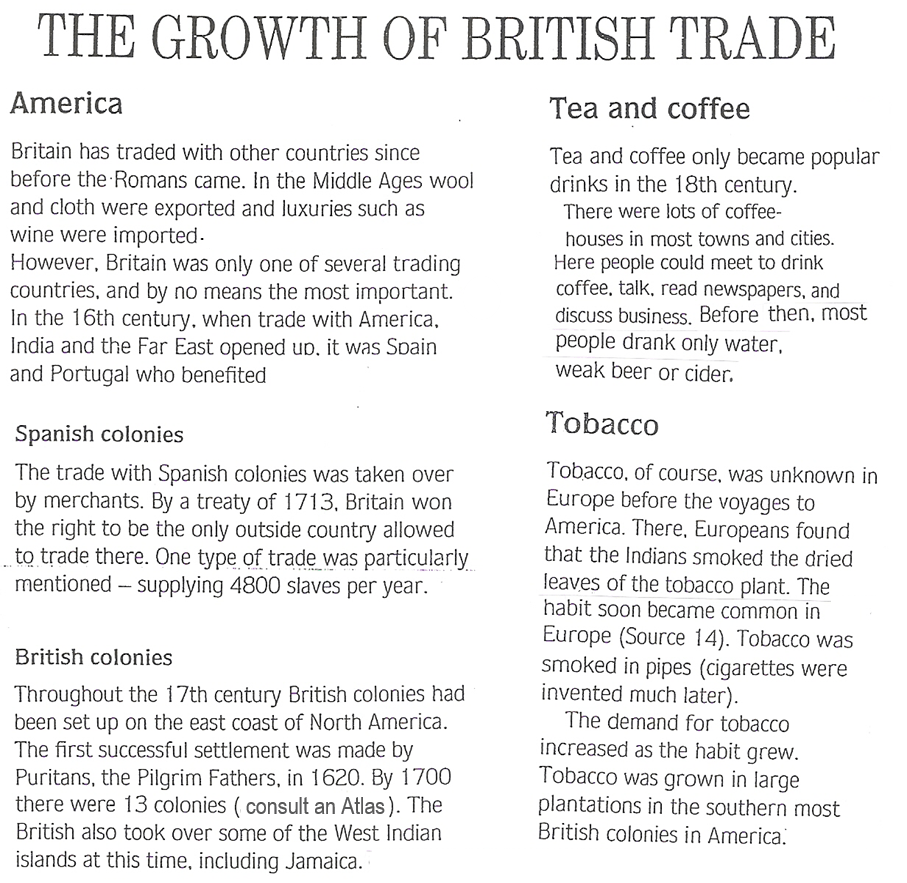
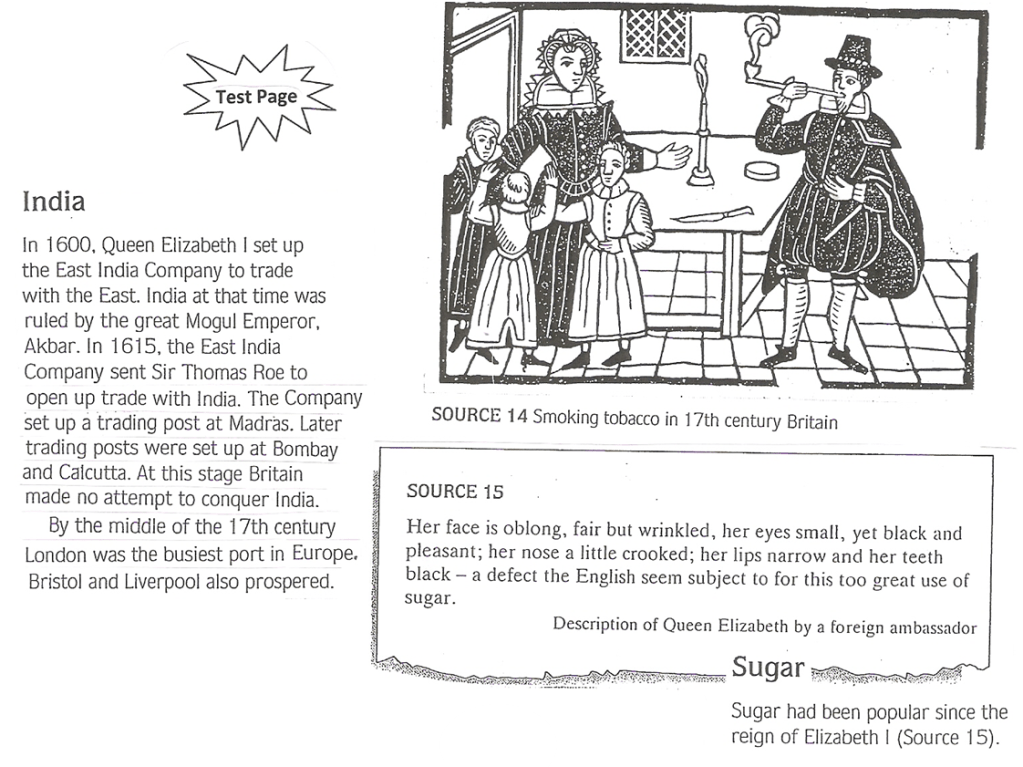
Finally, do all the Questions on “The Growth of British Trade” (p.72)
“The Growth of British Trade”, p.72.
(WordPress advertisements may appear below.)
Year 7A & Year 7B
Today you are going to learn more about the Battles that took place in 1066 AD.
Follow the order in which I give you instructions:
1.
Let’s first mark some work:
Task 3 on p.59-60.
2.
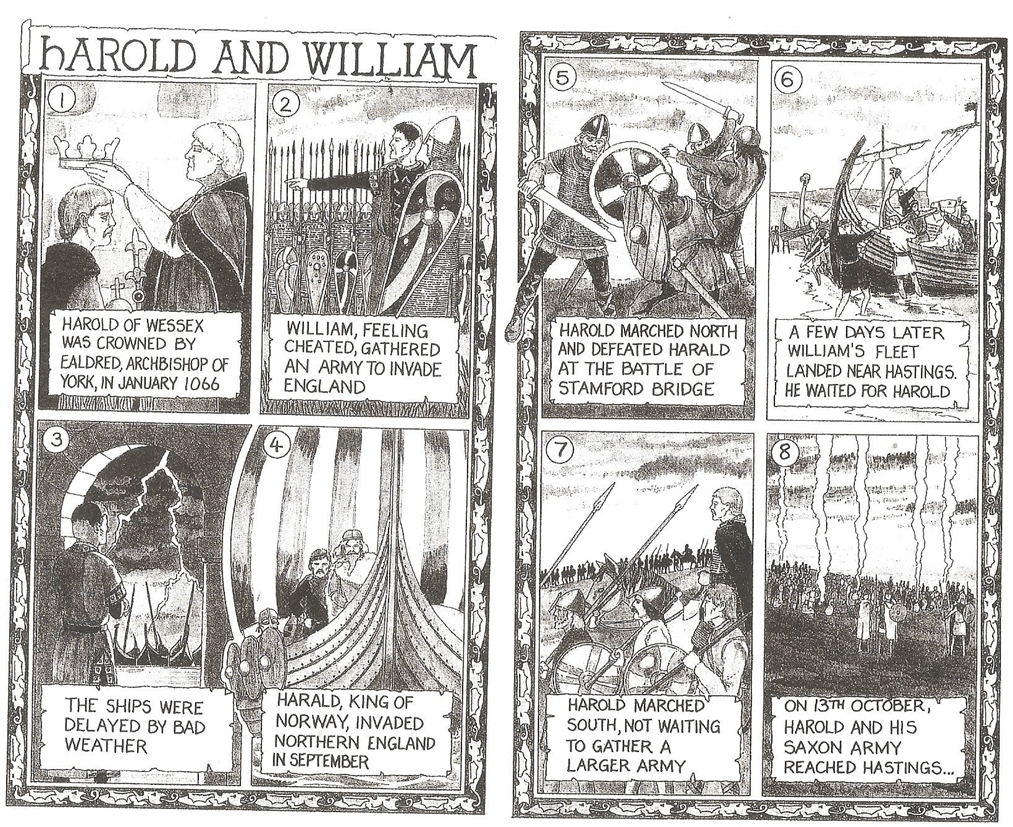
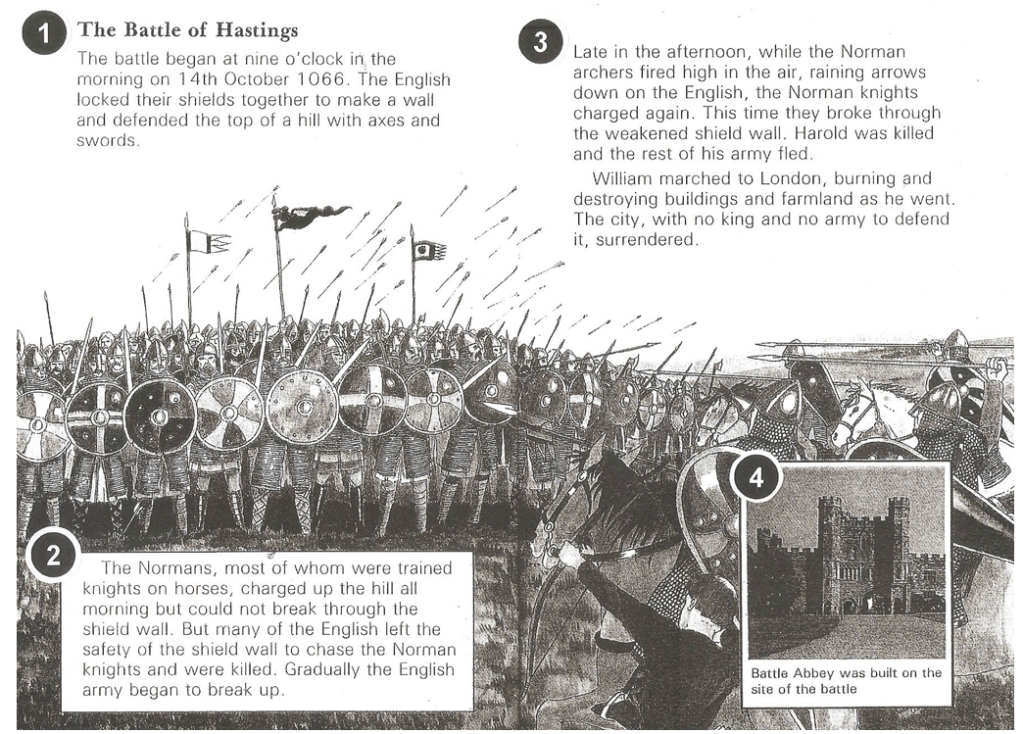
To revise the events of 1066, read the information below…
p.68
3.
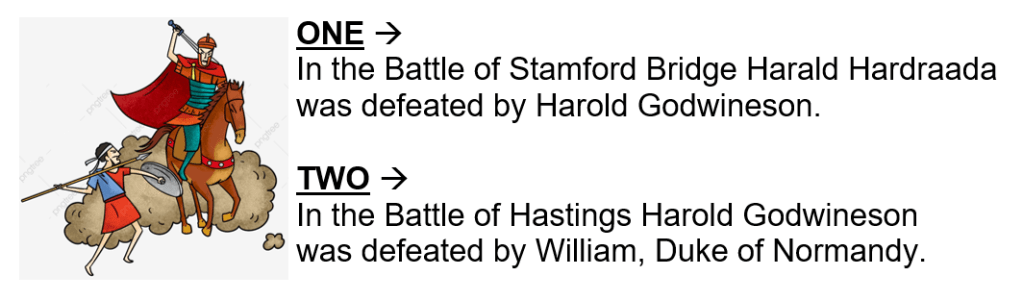
So, there were two major Battles in 1066:
Let’s watch two more videos to help you get a good understanding of the battles that took place in 1066.

Watch the following video clip that explains The Battle of Stamford Bridge: (increase speed to 1.25)
You need to concentrate!!!
The Battle of Stamford Bridge, 1066 AD. (10:15 minutes long)

Watch the following video clip that explains The Battle of Hastings: (increase speed to 1.25)
You need to concentrate!!!
The Battle of Hastings, 1066 AD. (11:36 minutes long)
4.
Now, let’s test your knowledge and understanding…
“Fight for the Throne, p.69”
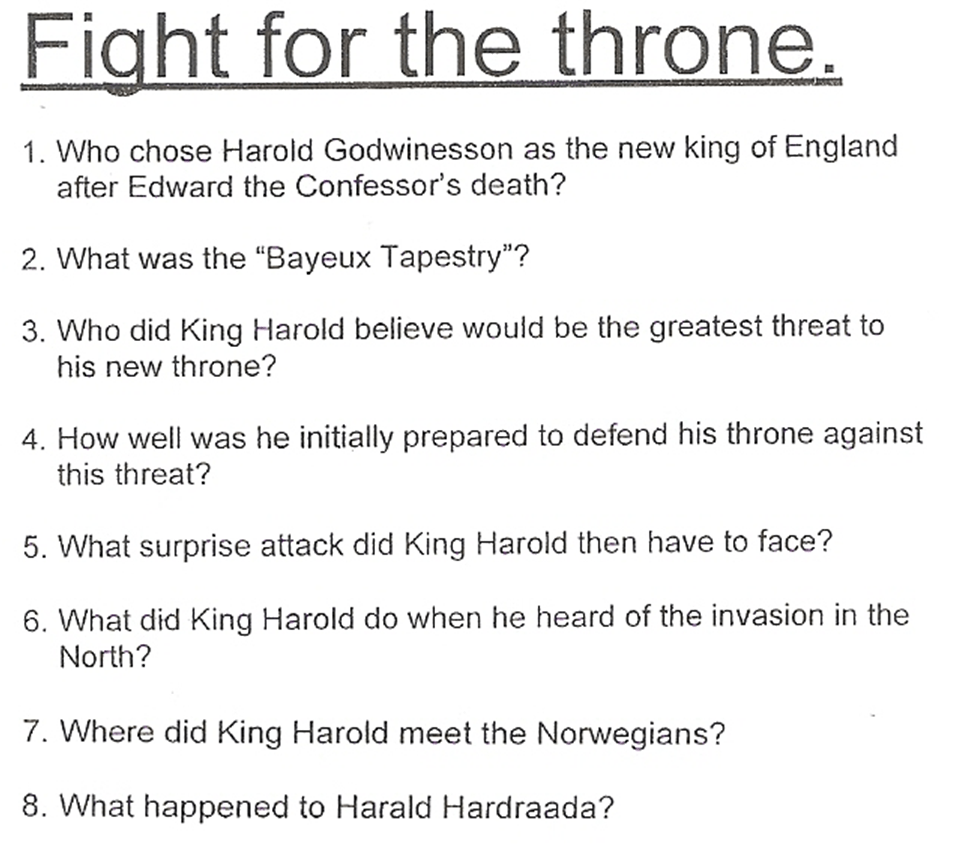
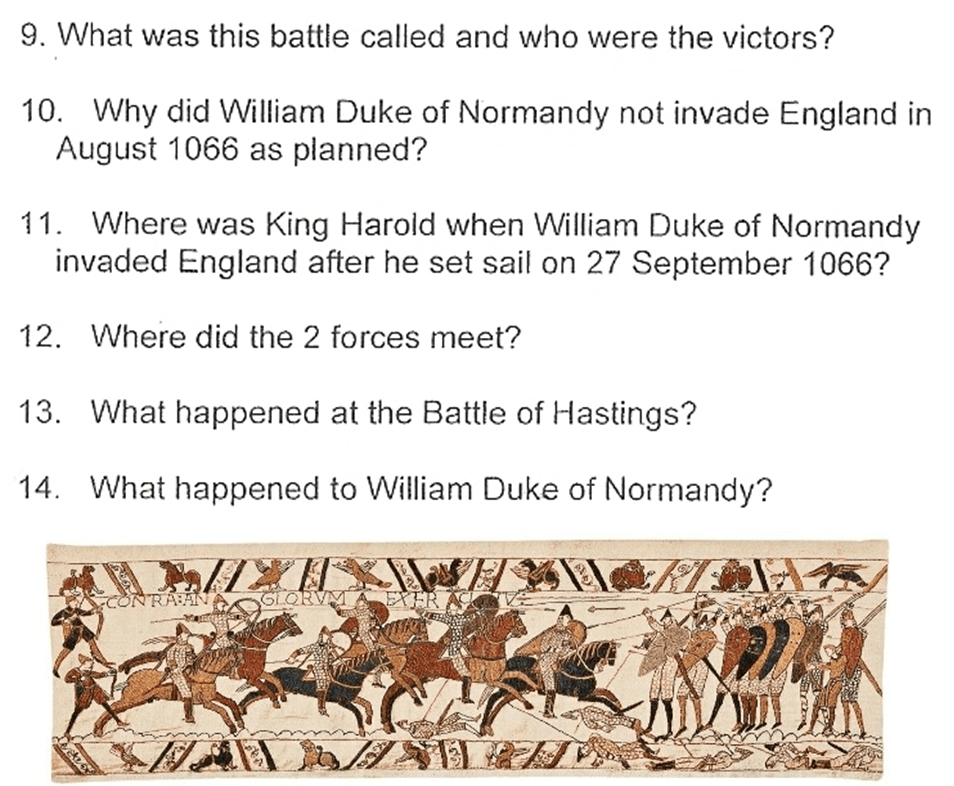
Please take note:
You may choose to complete EITHER questions 1 to 7,
OR: questions 8 to 14.
Read the questions carefully before you decide which ones to do.
5.

Below are two videos on the Battle of Stamford Bridge:
The Warrior on the Bridge. (3:12 minutes long)
The next video is not for the faint-hearted!
The Battle of Stamford Bridge, 1066 AD. (7:36 minutes long)
Below are two videos on the Battle of Hastings:
The Battle of Hastings – tactics. (3:34 minutes long)
This video is not for the faint-hearted!
Battle of Hastings, 1066 AD. (9:38 minutes long)

(WordPress advertisements may appear below.)
Today you are going to continue practicing Essay Writing!
We will:
Your homework for today was to do Russia Q3 (c) in full, in your essay writing book…
1.
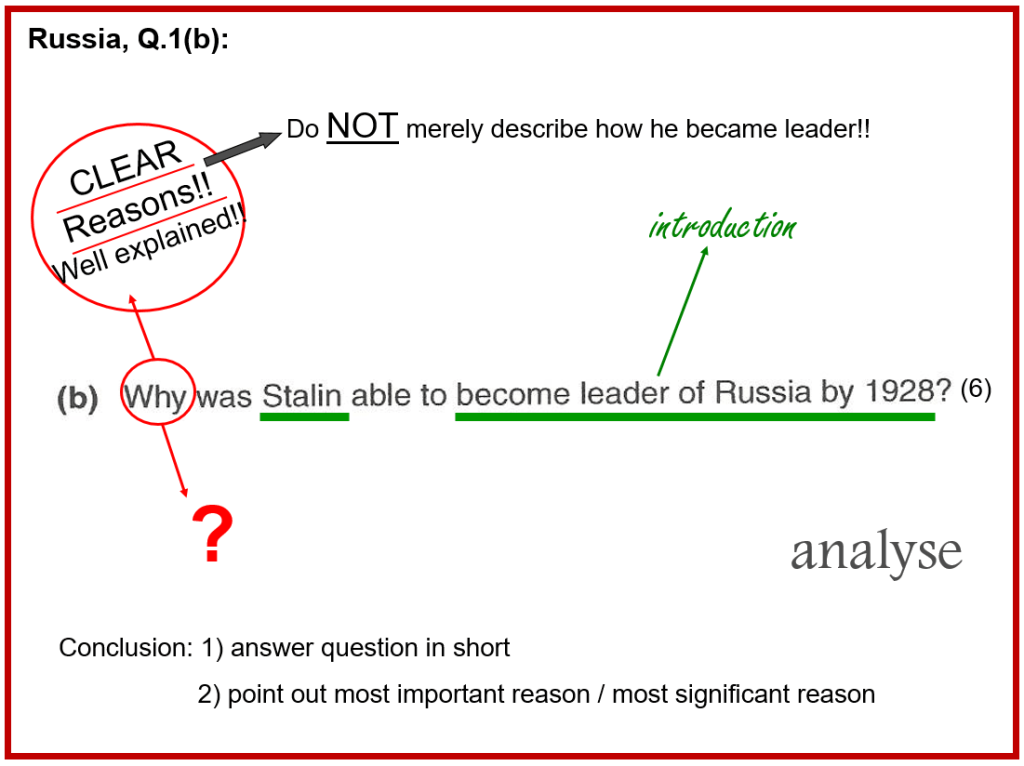
Let’s first look at the previous essay answers that you wrote on the Russian History (Russia, Q1). Stick your answers into your essay writing book. Then, navigate through the slides for feedback…
2.
Mark Russia Q.3 (c) in class.
OR: if not completed for today, do the following:
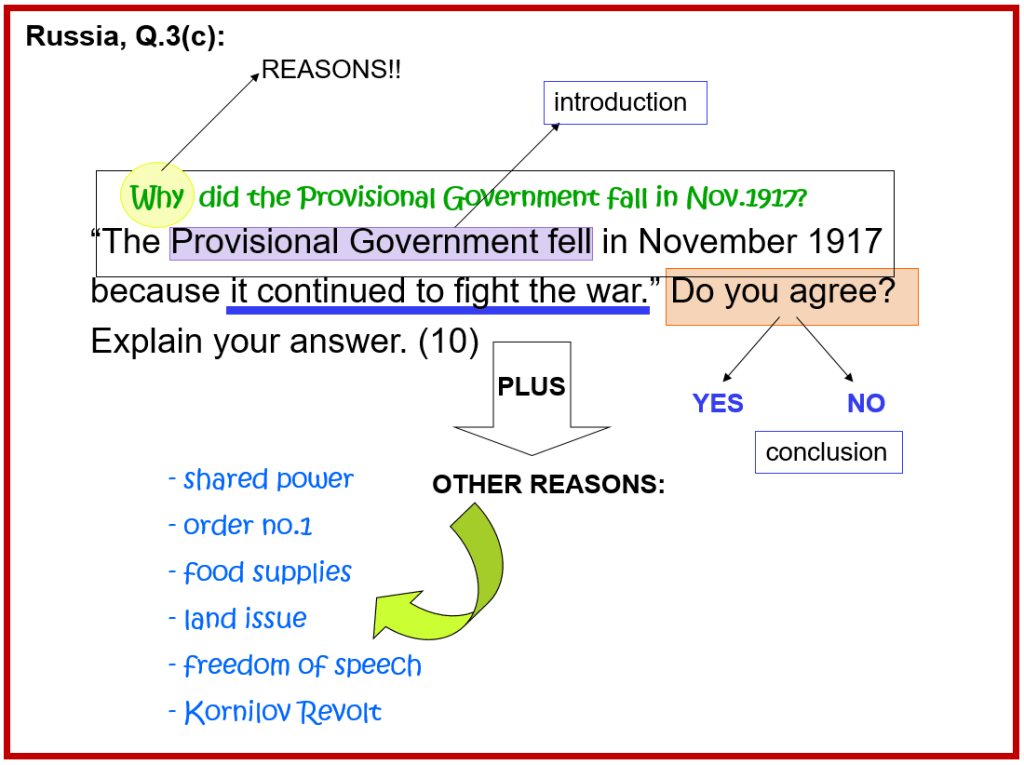
Copy the following question in the middle of a new page in your essay writing book:
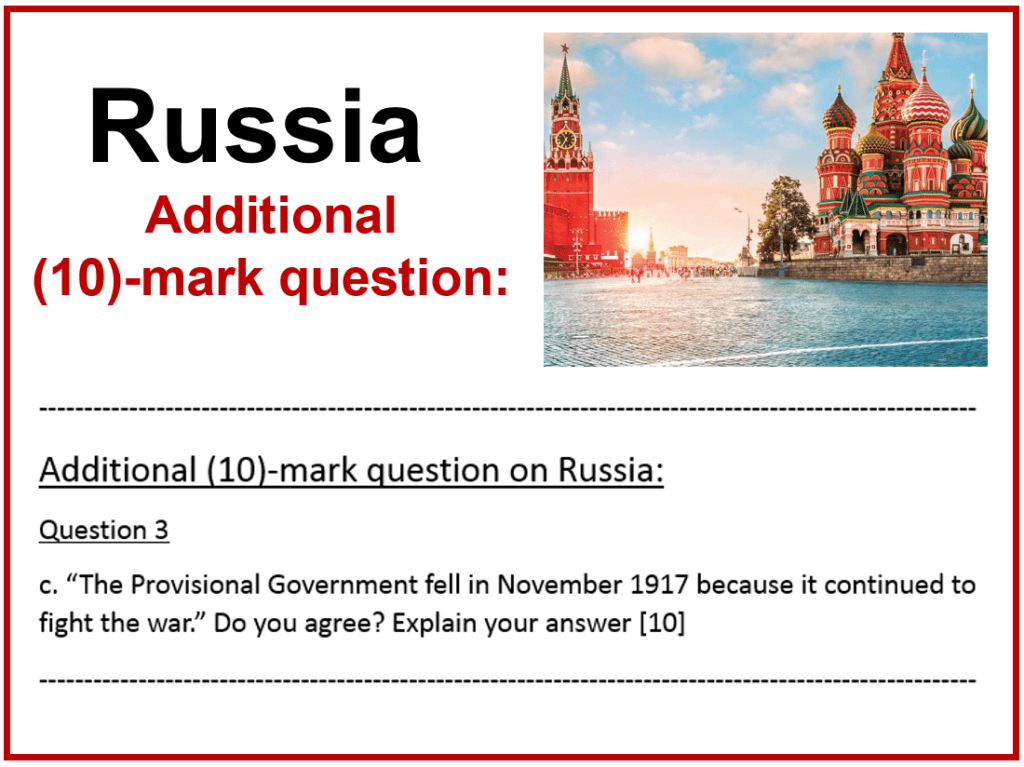
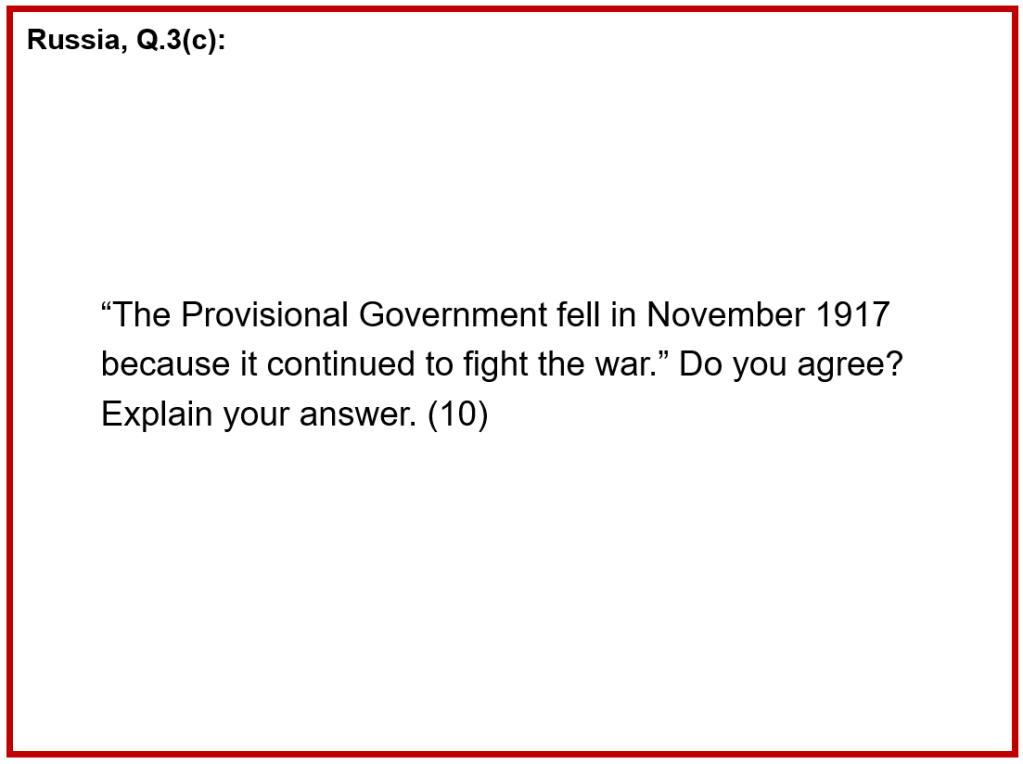
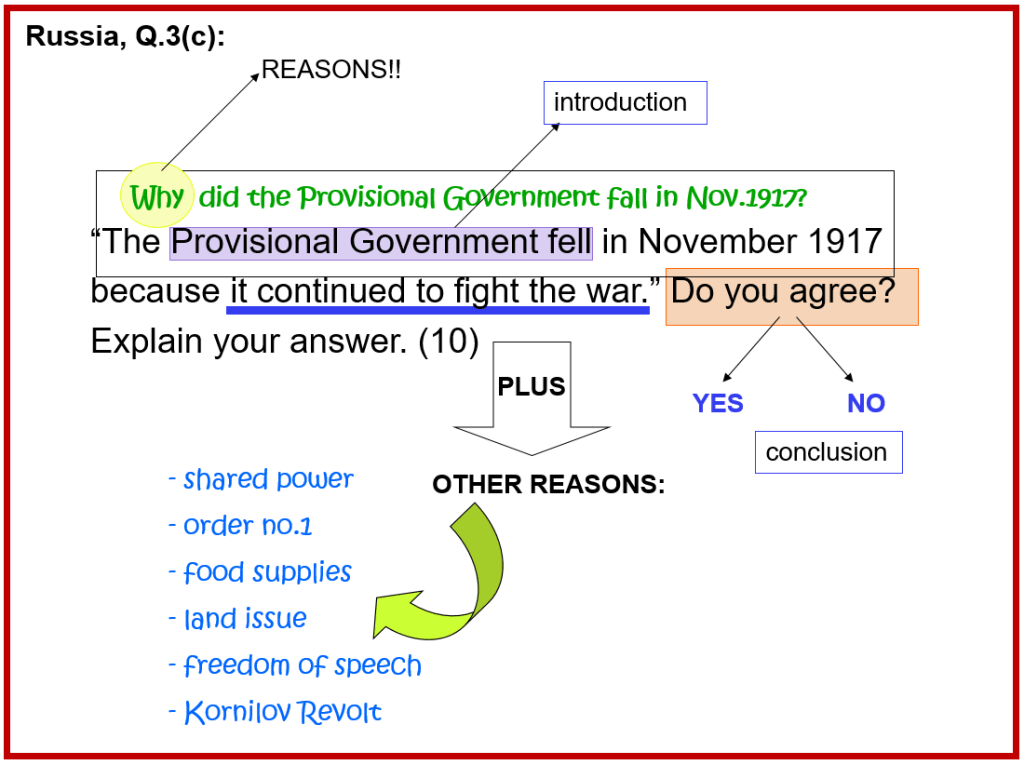
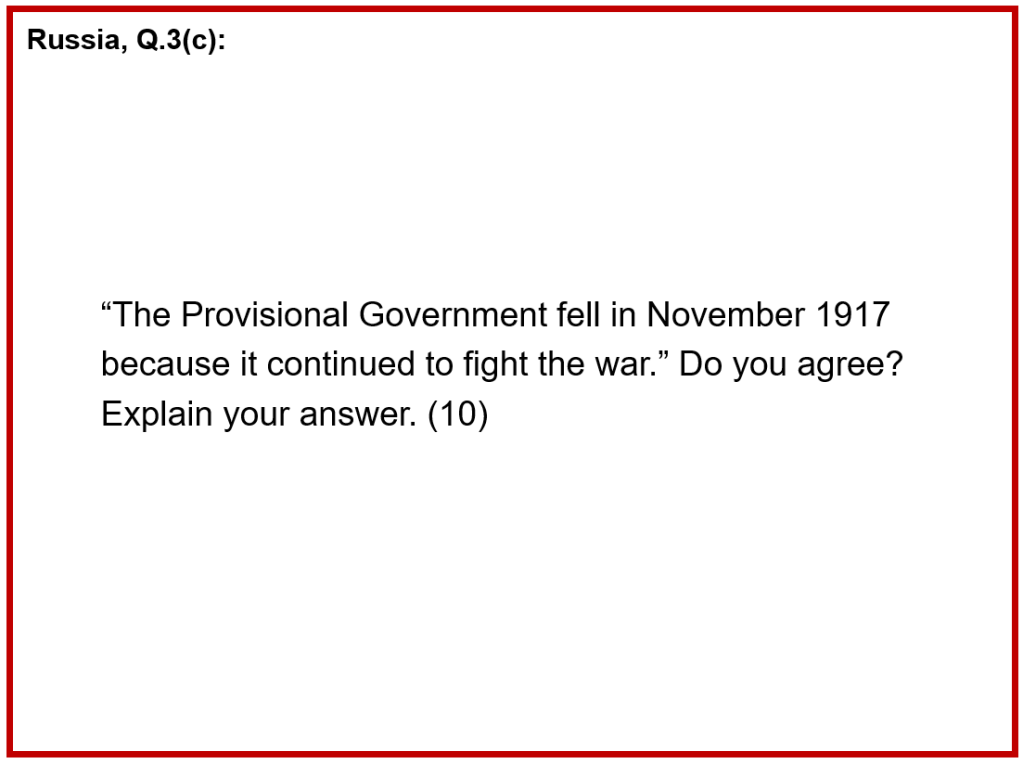
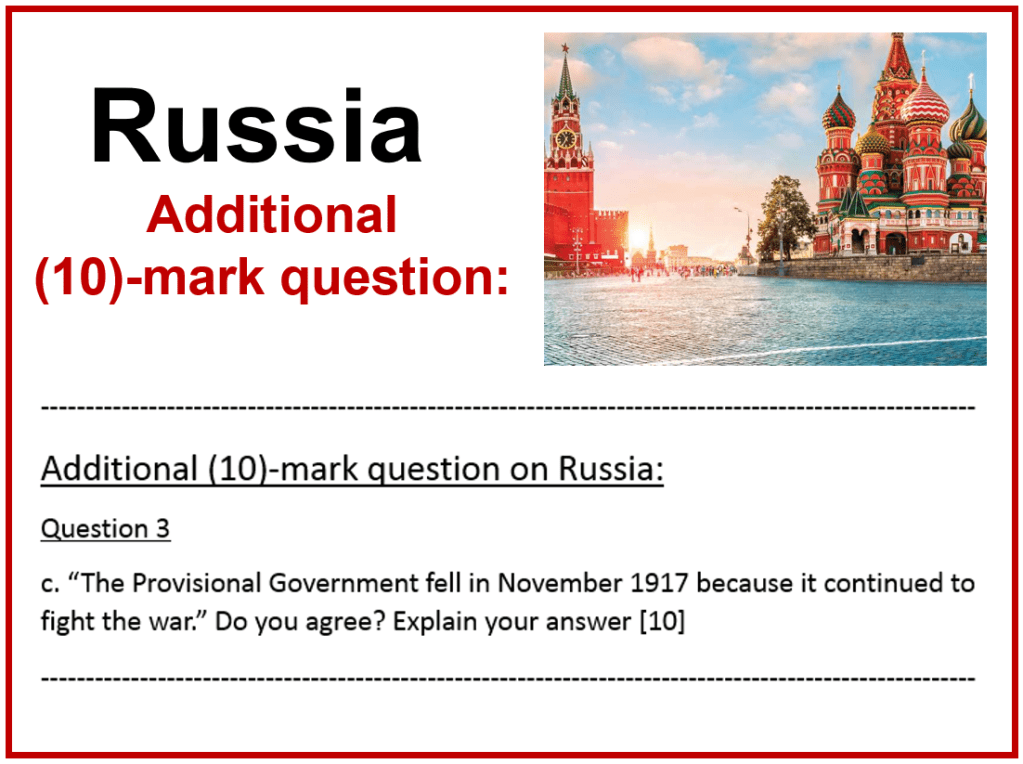
“The Provisional Government fell in November 1917 because it continued to fight the war.” Do you agree? Explain your answer. (10)
3.
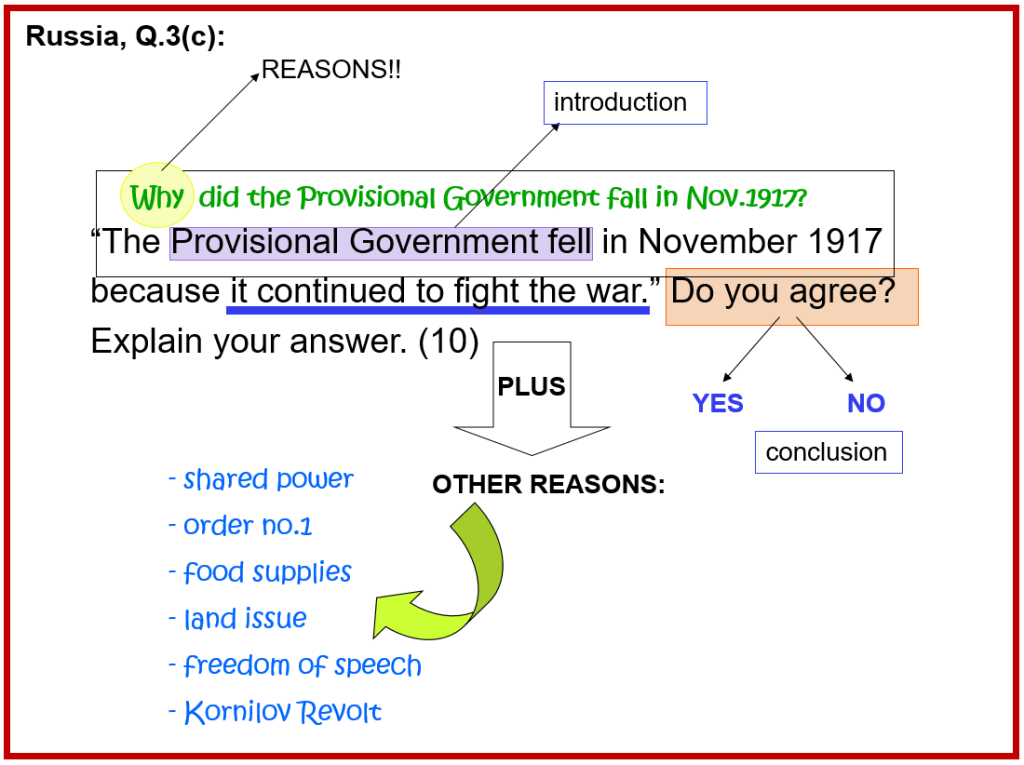
Now, analyse & plan Russia Q3 (c) very quickly… See what needs to be done and write down a few ideas…
4.
Navigate your way through the following slides to see if you planned and answered the question correctly…
5.
Copy the following question at the top of a new page in your essay writing book:
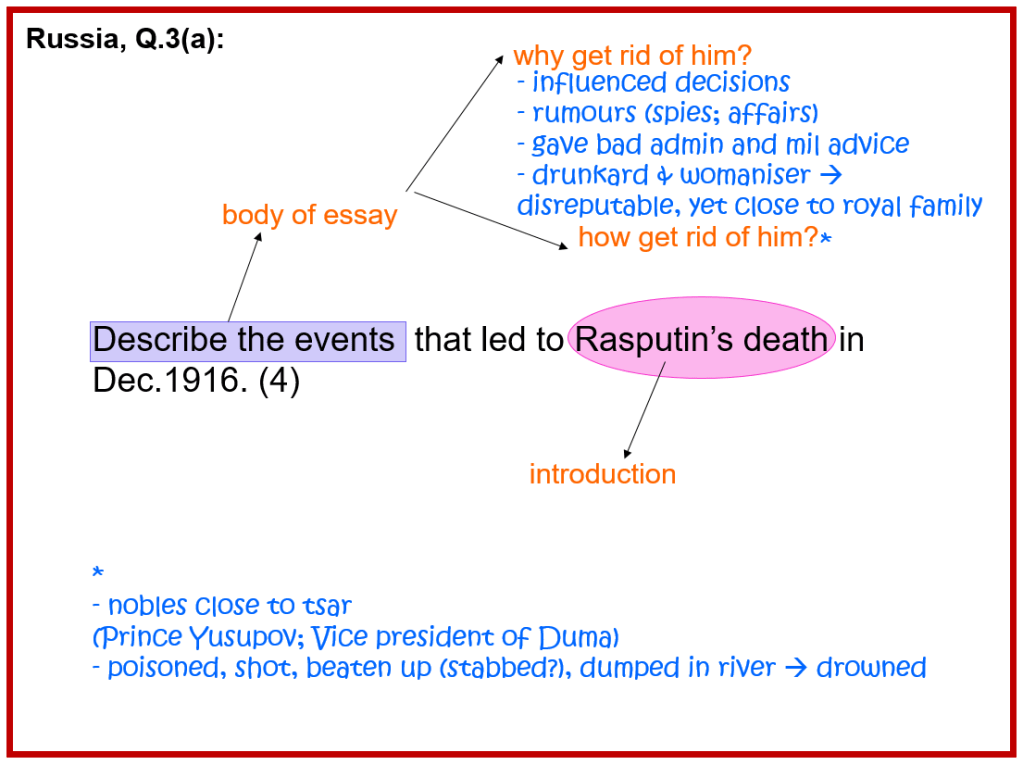
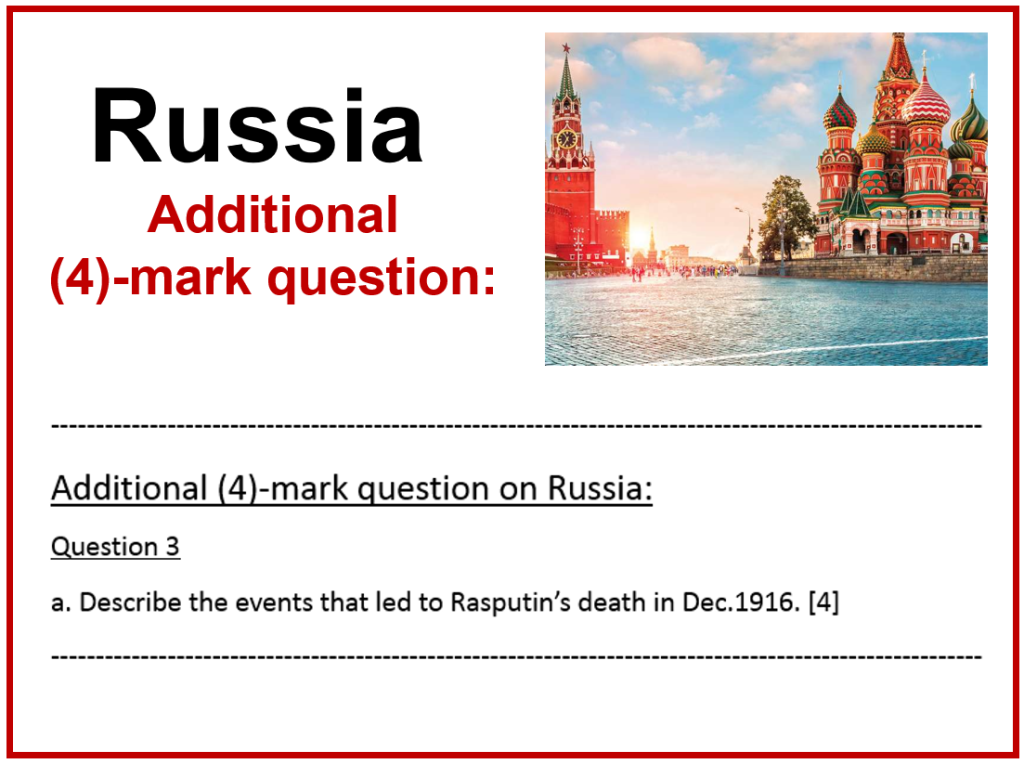
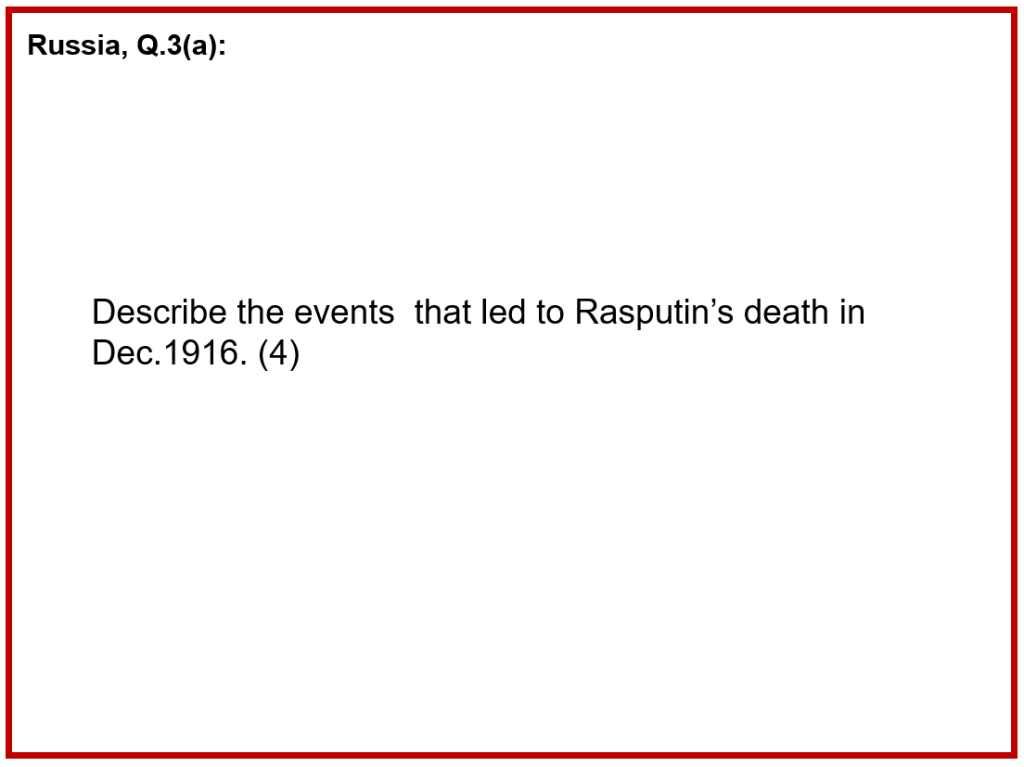
Describe the events that led to Rasputin’s death in Dec.1916? (4)
6.
Now answer Russia Q3 (a) in full (“timed”) in your book – you have 5 minutes to complete the answer…
7.
Navigate your way through the following slides to see if you answered the question correctly…
8.
Here are today’s questions (and solutions) in slide format…
9.
Finish today’s classwork (if necessary),
PLUS revise for your history exams,
PLUS bring your booklets on Russia as well as on the Peace Treaties to the next lesson!
(WordPress advertisements may appear below.)
Year 9A & Year 9B
Today you are going to look at how the Nazis increased the level of Jewish persecution, to the extent that it culminated in mass murder…
Follow the instructions step by step:
1.
First, look at your test result (Homework-6) and also see where you have perhaps lost marks:
2.
Complete and mark the task on Nazi Laws (p.56), if not already completed and marked in the previous lesson.
Mark the table on p.56.
3.
And now for a bit of extra reading, to refresh you memory on what you have learnt so far about the Holocaust…
“The Persecution of Minorities” (p.64-65)
4.
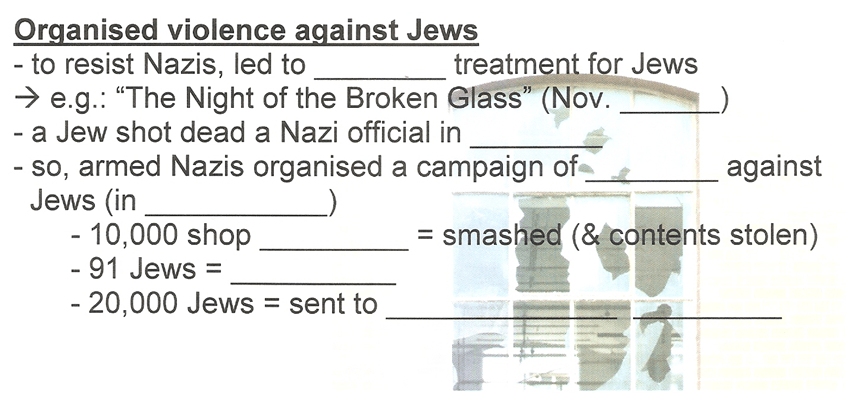
Racial Hatred led to increased persecution. In the video below you can learn more about the treatment of Jews and about organised violence.
Racial Hatred. (1:08 minutes long)
5.
The video below explains the Kristallnacht events in more detail…
Kristallnacht: Night Of Broken Glass. (4:51 minutes long)
6.
The video below gives us a glimpse of what it was like to live in the Ghettos…

The Warsaw Ghetto. (2:37 minutes long)
Everyday Life in the Warsaw Ghetto Part 2/7: Background. (2:29 minutes long)
7.
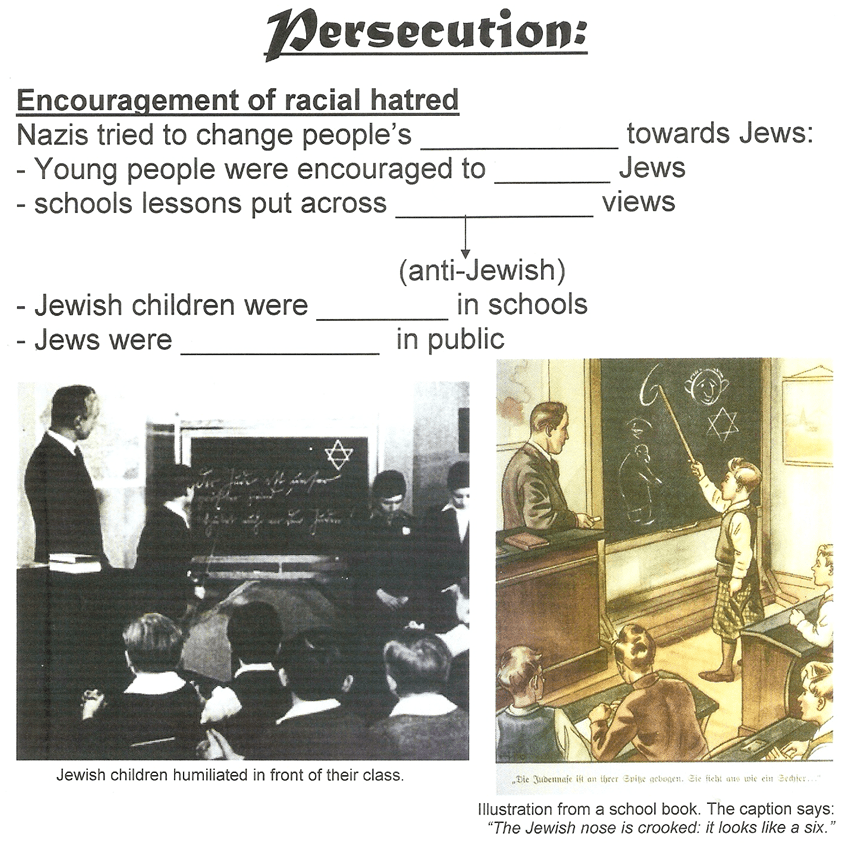
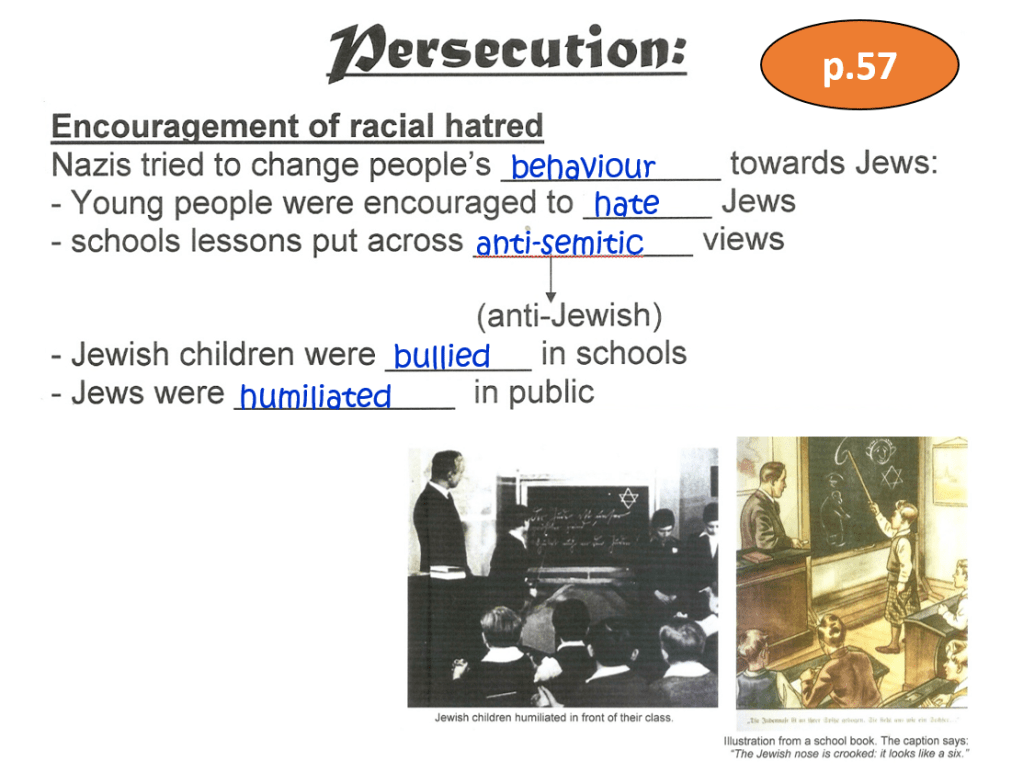
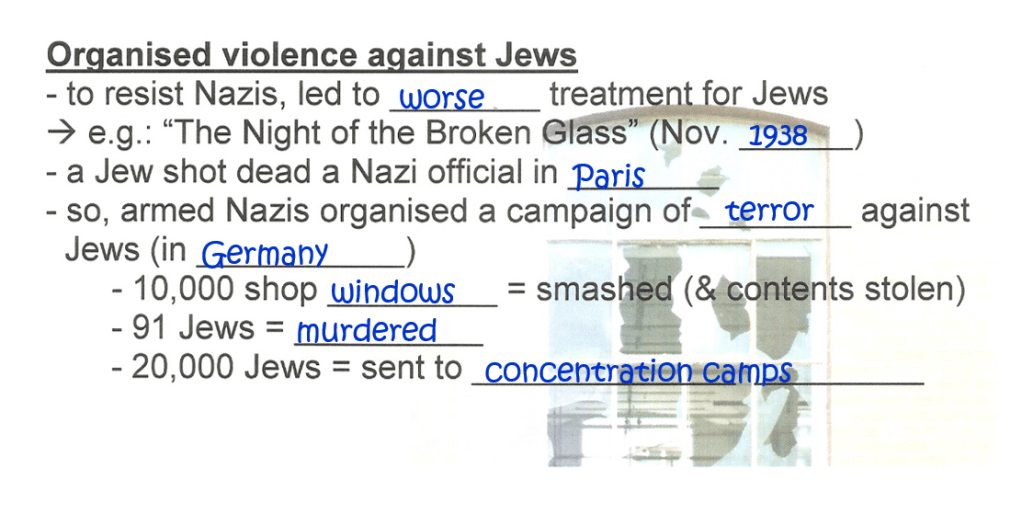
Fill in the missing words on the notes on “Persecution” (p.57)
SOLUTION:

Mark your work
with a pencil.

8.

The Ghettoes. (16:19 minutes long)
9.

(WordPress advertisements may appear below.)
Year 9A & Year 9B
Today you are going to finish off and mark your work on Life in Nazi Germany…
Follow the instructions step by step:
1.
Make sure that you have finished the questions on “Life in Nazi Germany” (p.33). Also complete your notes-task from a previous lesson on “Life in Nazi Germany” (p.38) and/or the questions on “Hitler’s Germany” (p.37).
2.

“Life in Nazi Germany”, p.33.
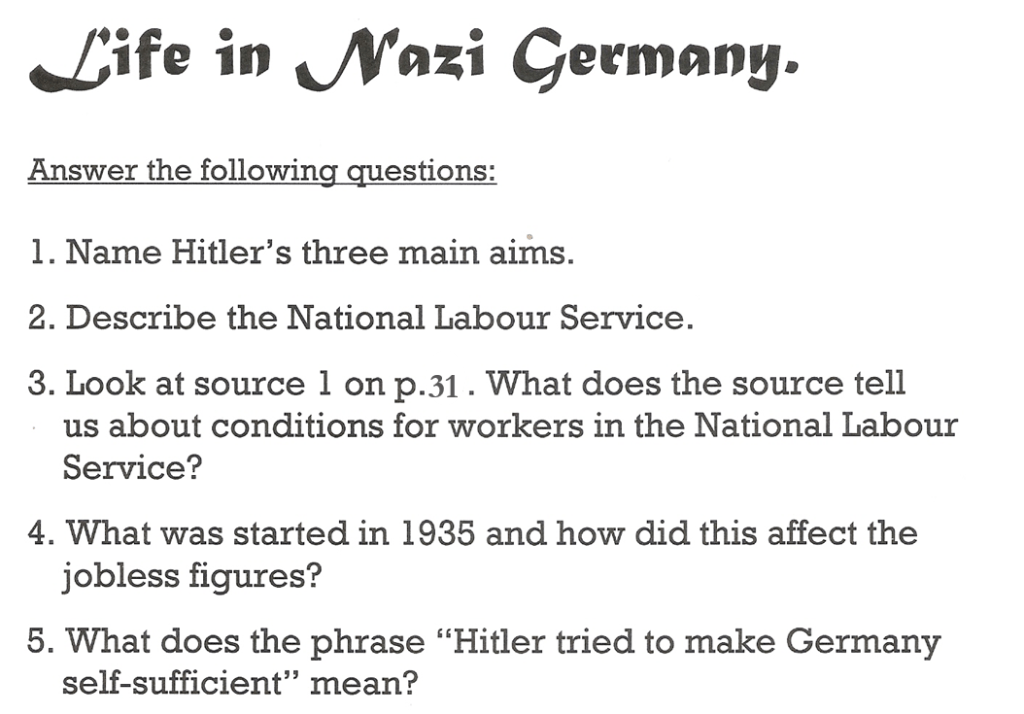
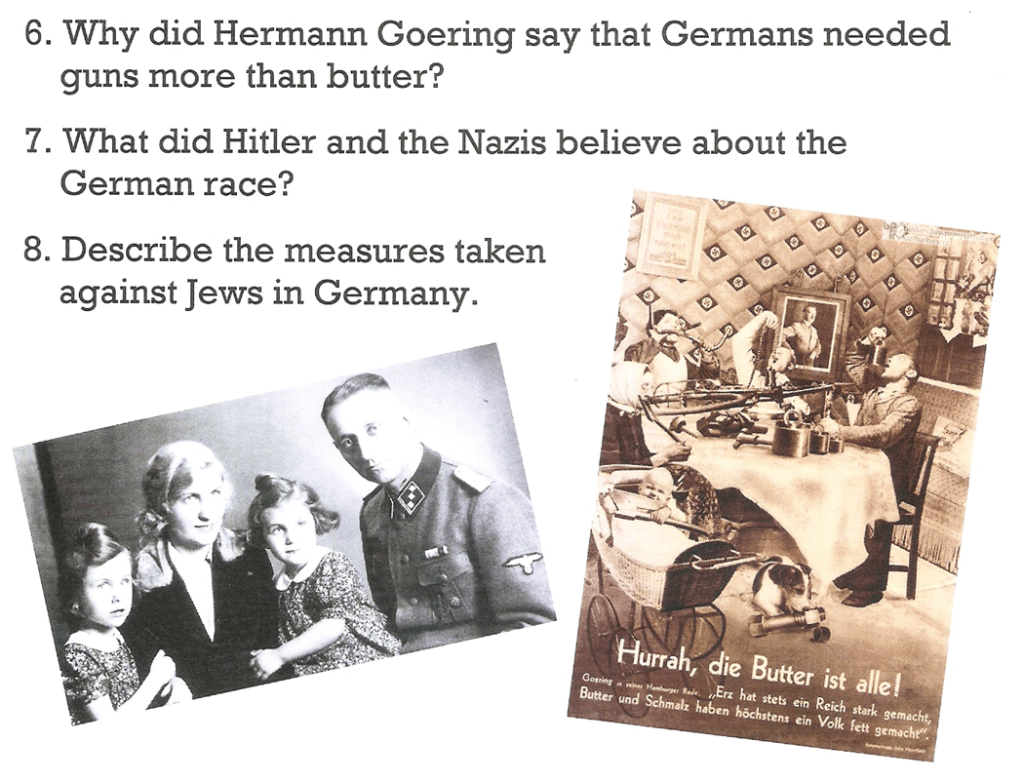
SOLUTION:

3.
“Hitler’s Germany”, p.37.
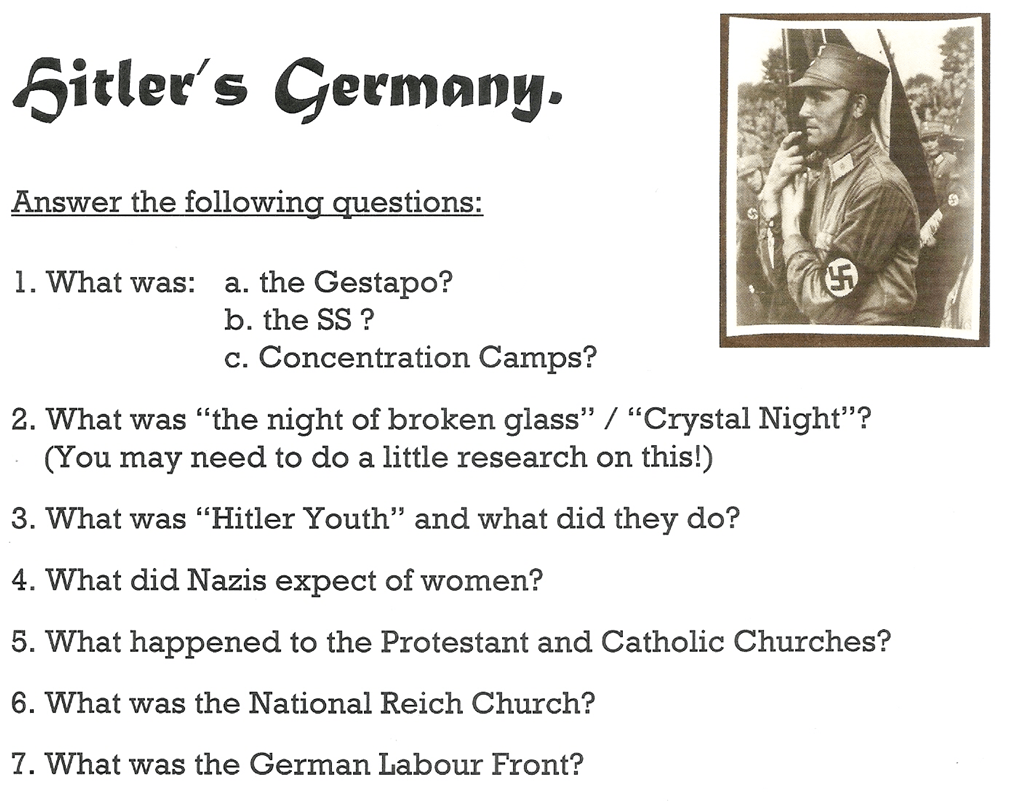
SOLUTION:
(WordPress advertisements may appear below.)

Homework Task 4 (p.61) is due:
(See Schoology.)

This is a Test!!
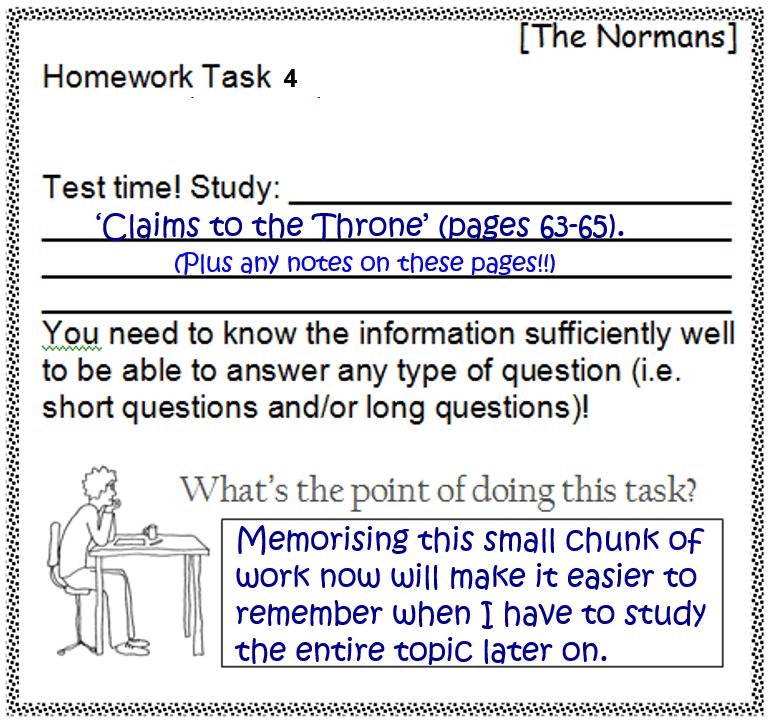
REMEMBER: Make notes and then study from your notes! Look again on pages 18 & 19 in your Workbook for advice on how to study!

(WordPress advertisements may appear below.)
Year 7A & Year 7B
Today you are going to the following…
Follow the order in which I give you instructions:
1.
Task 1 on p.54-55.
2.
Let’s now look at the fight that erupted over the throne of Edward the Confessor. You know already that there were four claimants to the throne. So, what happened? Who became king?

Norman Invasion. (3:06 minutes long)
3.
One tend to think that all these events took place in a short space of time. However, the events that you have just learnt about took place over the course of about twelve months! Let’s look at a calendar of the events of 1066.
Norman Invasion Calendar. (1:16 minutes long)
4.
Watch the following video clips to learn more about the Norman Invasion and conquest:
The Norman Conquest of England. (3:29 minutes long)
How the Normans Changed the History of Europe. (5:19 minutes long)
5.
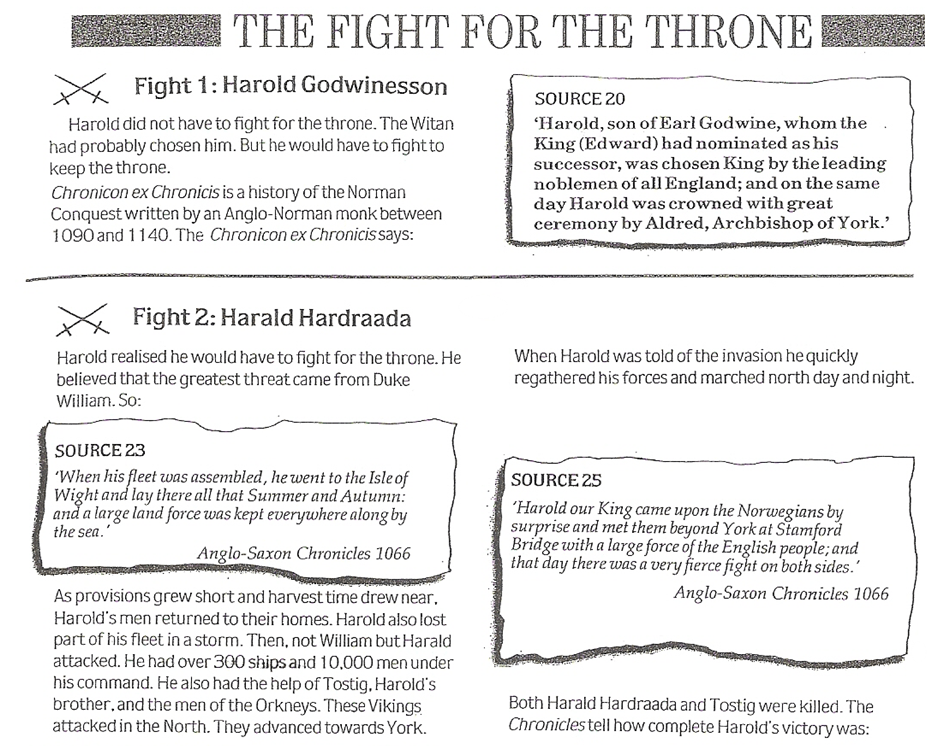
The Fight for the Throne, p.67

6.
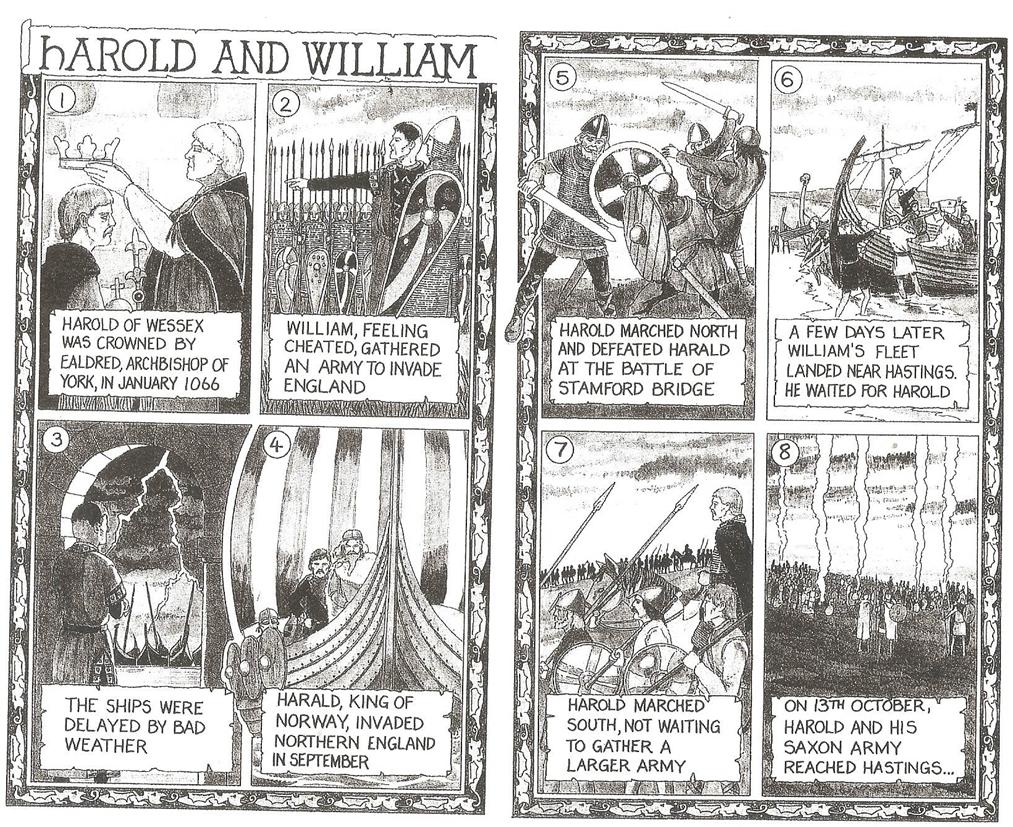
“Harold and William”, p.68
7.
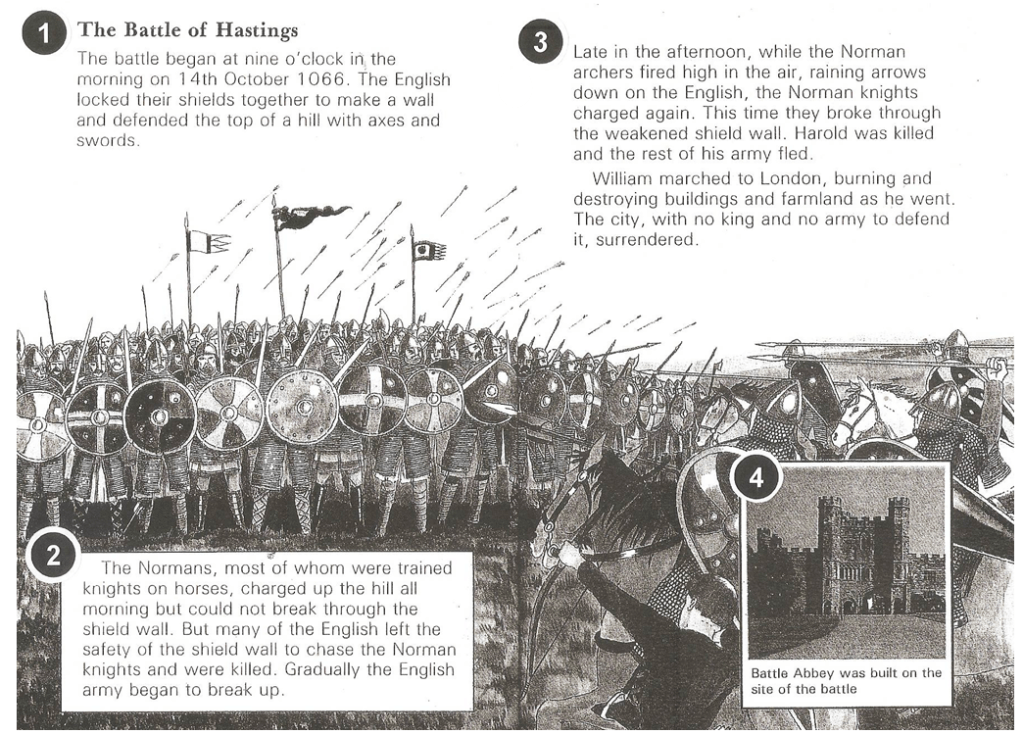
“The Battle of Hastings”, p.68
(WordPress advertisements may appear below.)

Homework Task 5 (p.69) is due:
(See Schoology.)
This is a Test!!
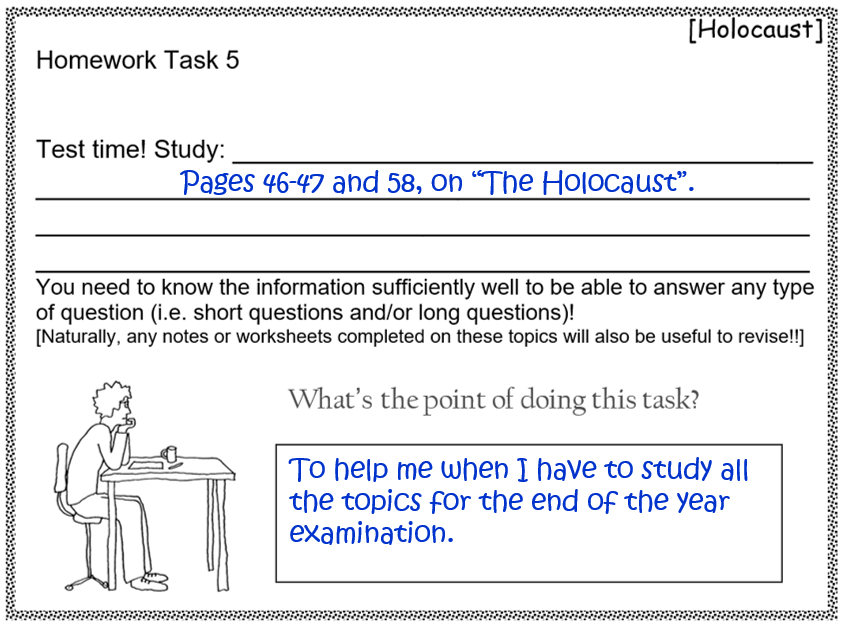
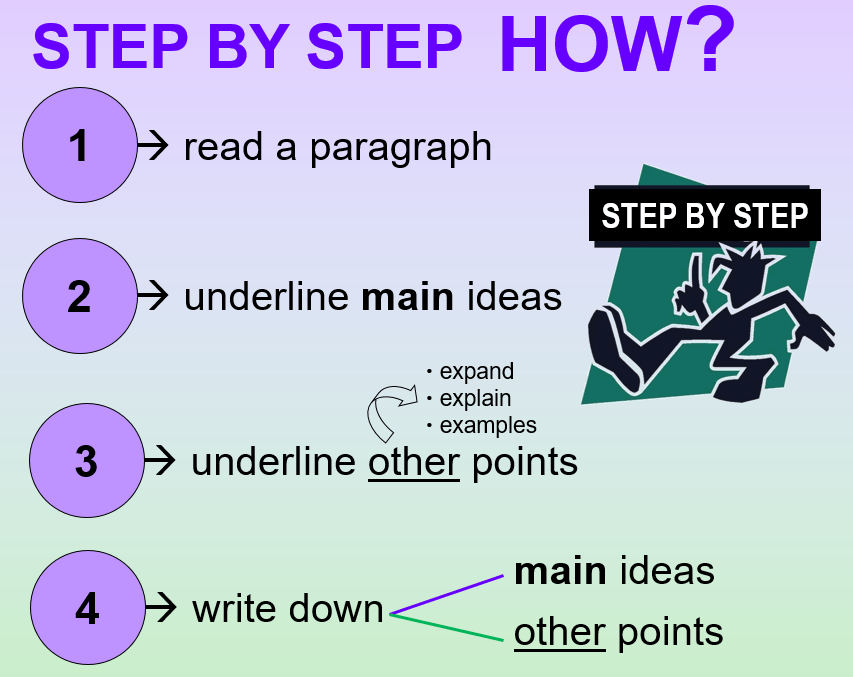
Read the info-gram below to remind yourself how to study…
(WordPress advertisements may appear below.)
Homework Task 4 (p.65-68) is due:
(Check with your teacher.)
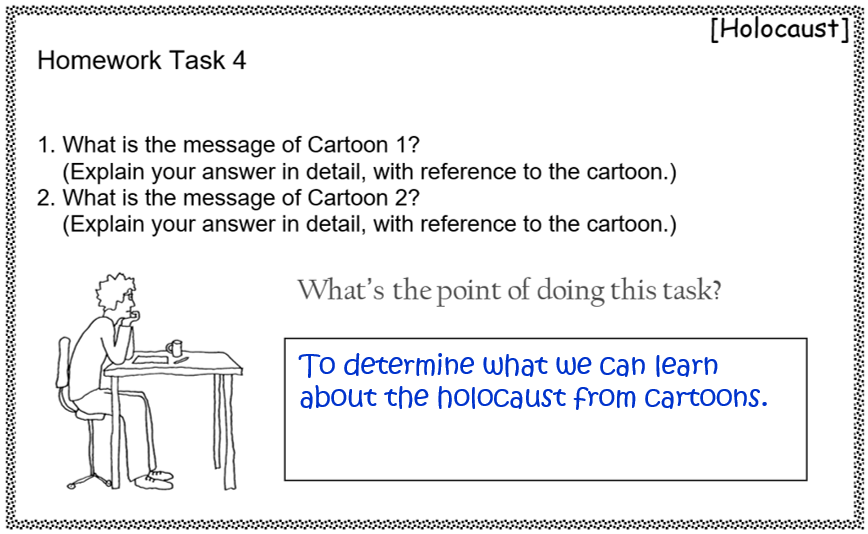
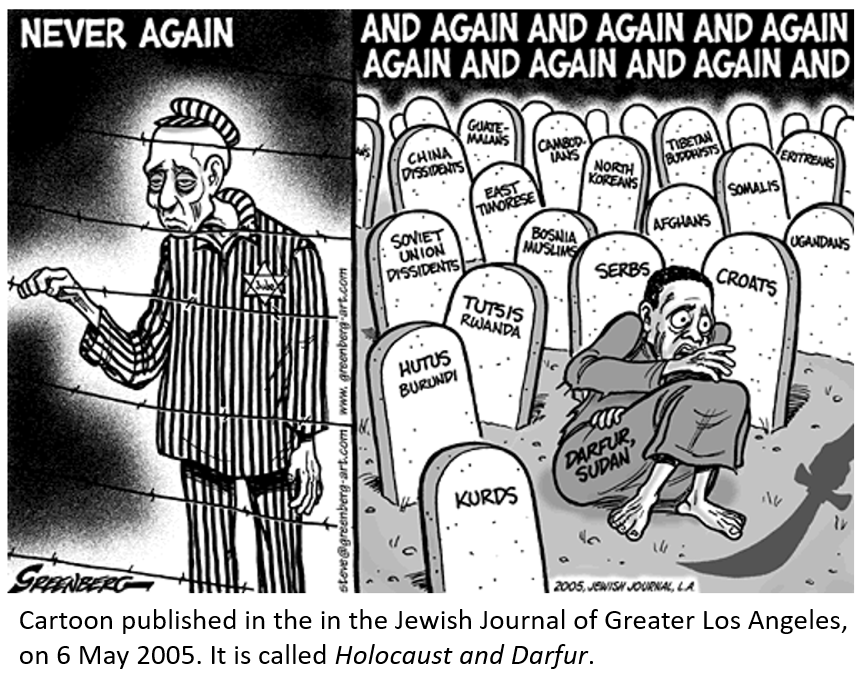
Read the cartoon analysis advice on p.80…
Also look at the reading material about these two cartoons…

(WordPress advertisements may appear below.)
Homework Task 3 (p.61-64) is due:
(See Schoology)

First try and answer the questions without any help… Then, google the ones that you did not know the answers of and write down their answers in a different colour.
Why? To distinguish between what you know and what you did not know.
(WordPress advertisements may appear below.)
Homework Task 2 (p.58-60) is due:
(Check with your teacher!)
An excellent film was made about the Bielski brothers’ story!
Name: Defiance
Meaning: “open resistance; bold disobedience”
Time: 2h 17min
Age rating: 15
Synopsis: “Jewish brothers in Nazi-occupied Eastern Europe escape into the Belarussian forests, where they join Russian resistance fighters, and endeavor to build a village, in order to protect themselves and about one thousand Jewish non-combatants. On the run and hiding in the deep forests of the then German-occupied Poland and Belorussia (World War II), the four Bielski brothers find the impossible task of foraging for food and weapons for their survival. They live, not only with the fear of discovery, contending with neighboring Soviet partisans and knowing whom to trust but also take the responsibility of looking after a large mass of fleeing Polish Jews from the German war machine. Women, men, children, the elderly and the young alike are all hiding in makeshift homes in the dark, cold and unforgiving forests in the darkest times of German-occupied Eastern Europe.” (source: Defiance (2008) – IMDb)
[You may not copy this synopsis for your homework task…!!]
Trailers:
(2:10 minutes long)
(2:02 minutes long)

If you plan to watch this film, make sure that your parents give their consent!
(WordPress advertisements may appear below.)
Year 9A & Year 9B
Today you are going to look specifically at anti-Semitic laws in Nazi Germany.
Follow the instructions step by step:
1.
Task 1 on p.55.
2.
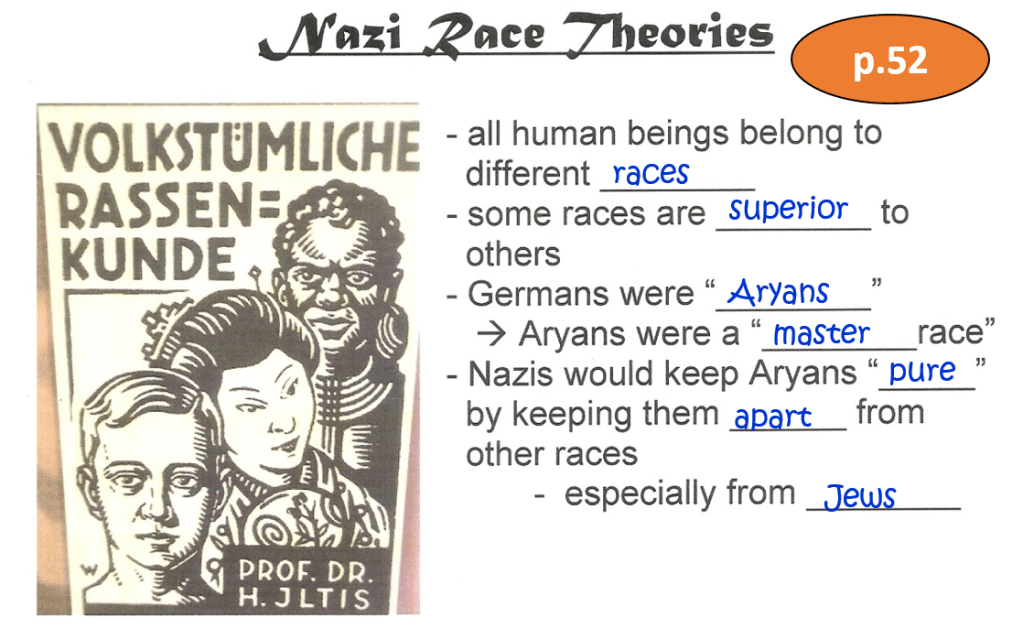
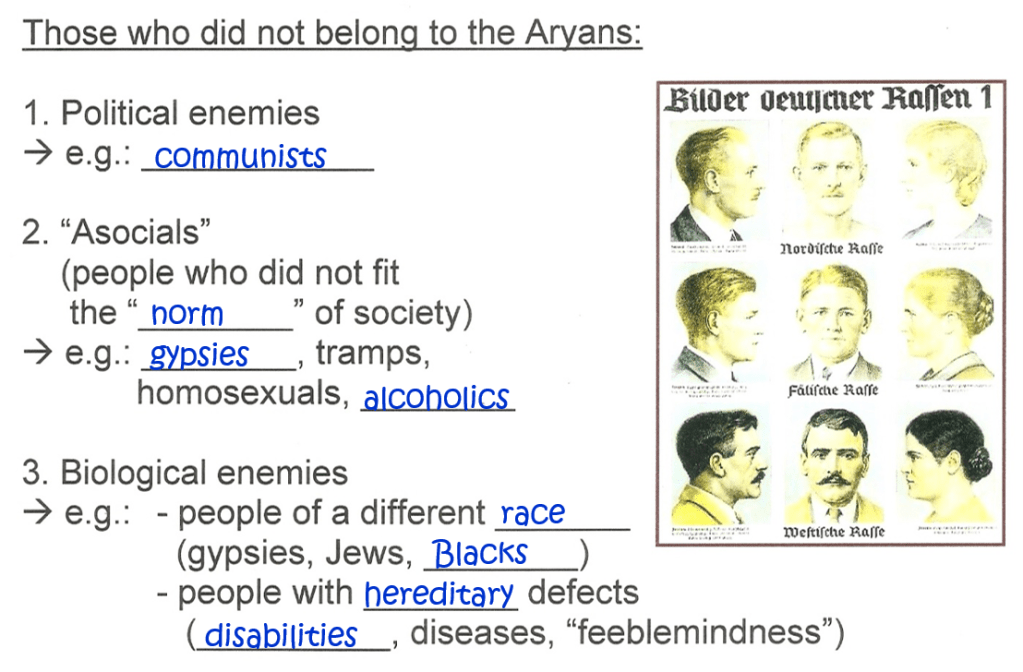
To review: watch the video about Nazi Race Theories, Nazi Laws against the Jews and Persecution.
Nazi Race Theories and Laws. (4:50 minutes long)
3.
If not completed already, read the following information on Nazi Laws from pages 48-51. Pay special attention to the laws on p.50 and p.51!
Persecution of the Jews, p.48-49.
Discrimination against Jews, p.49-51.
4.
Fill in the missing words on the notes on “Nazi Race Theories” (p.52)
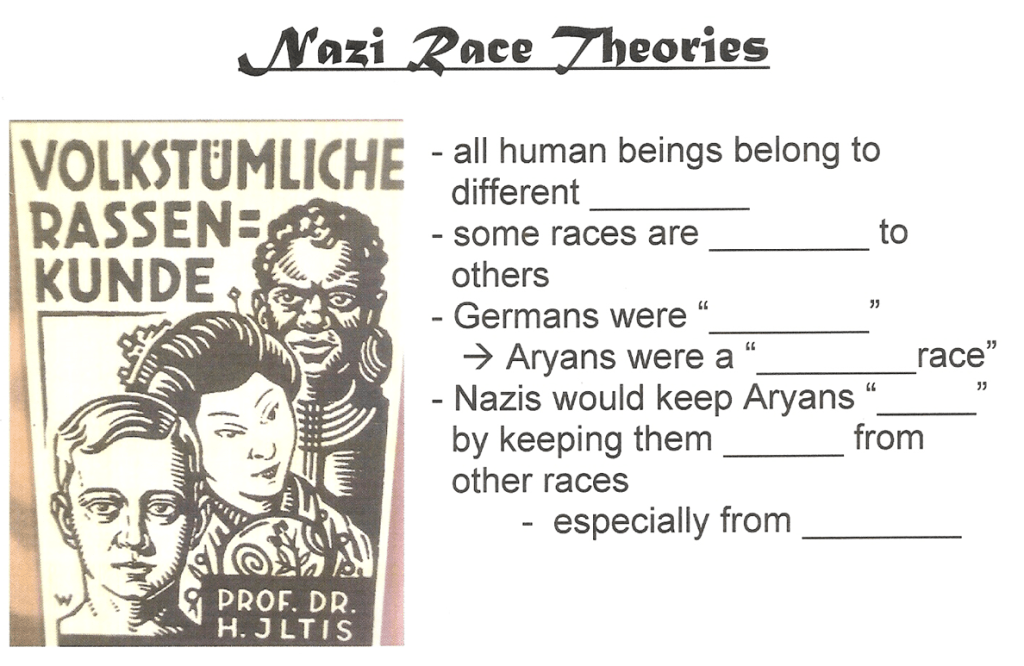
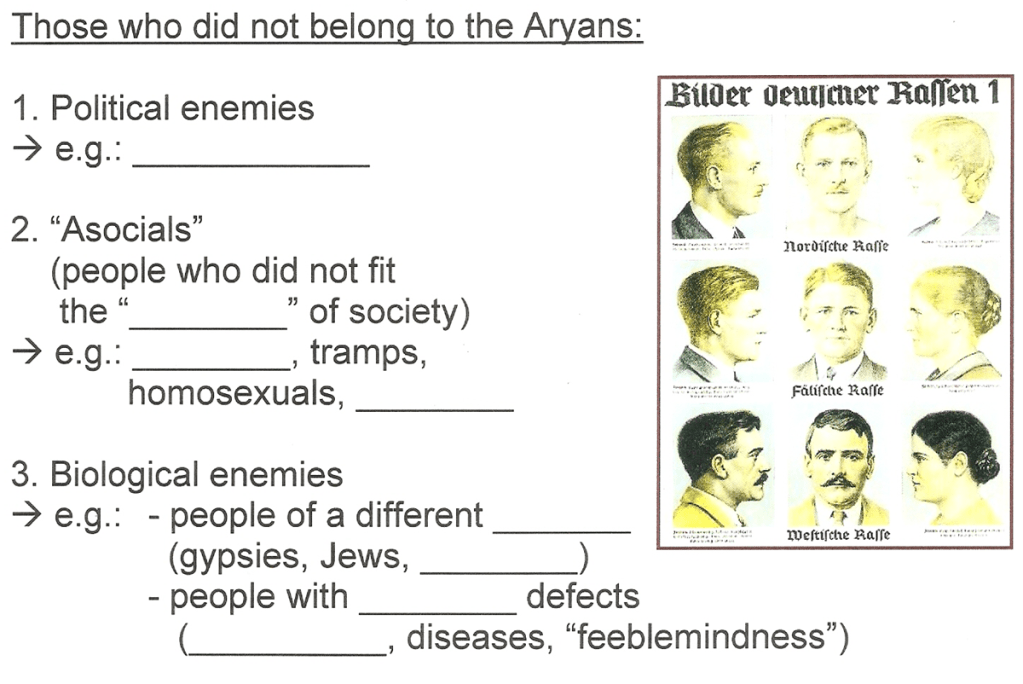
SOLUTION:
Mark your work
with a pencil.
5.
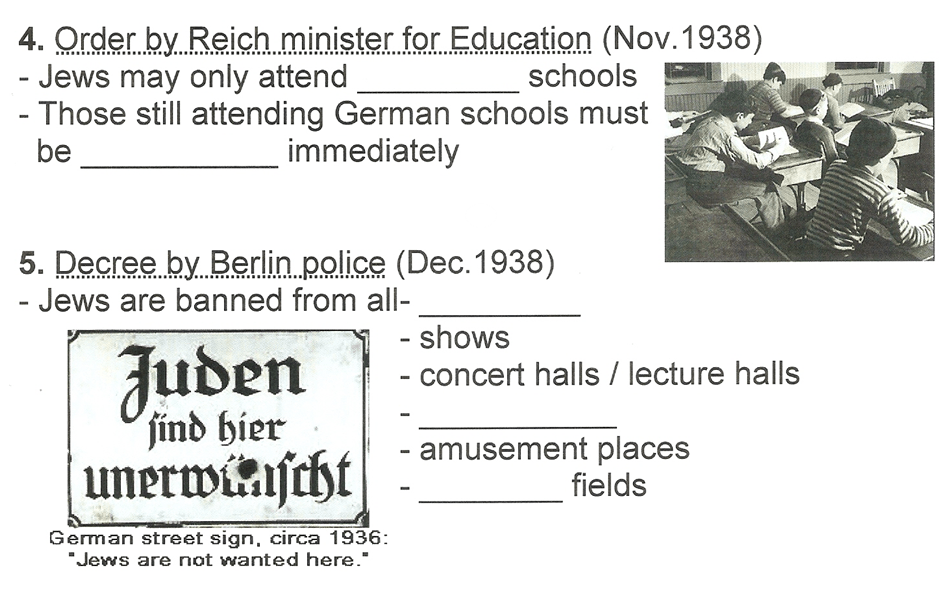
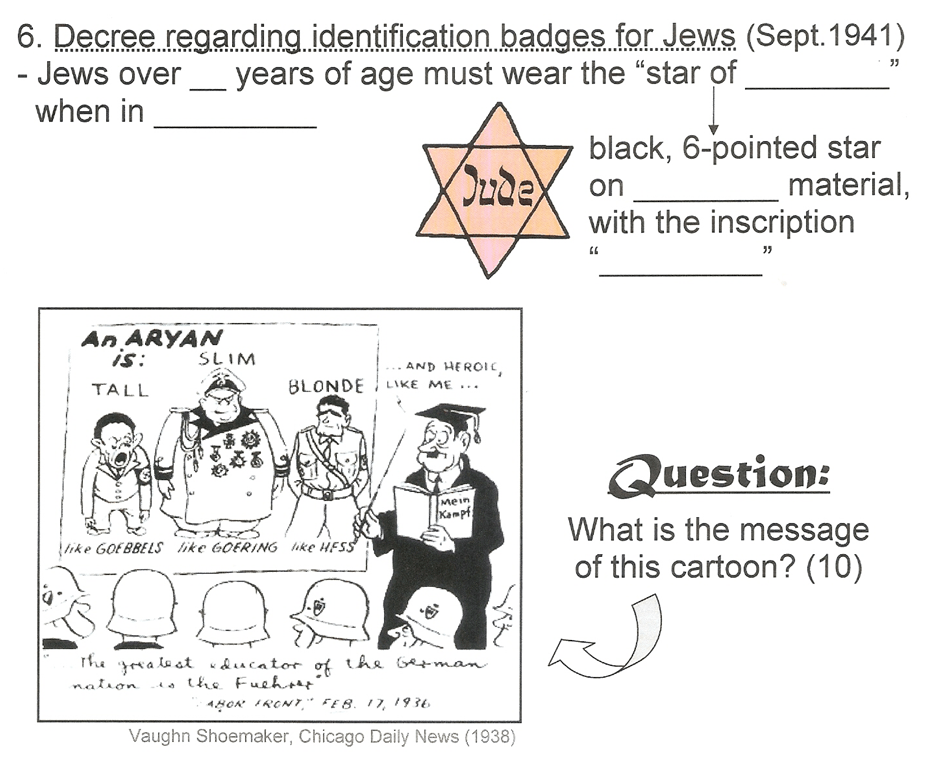
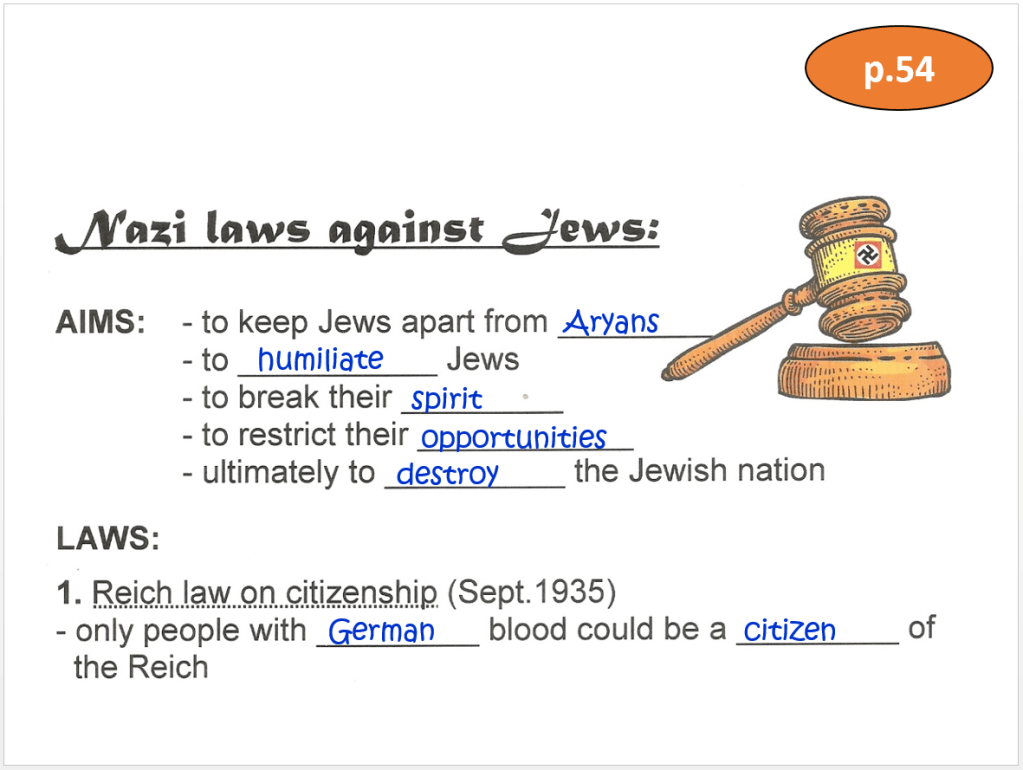
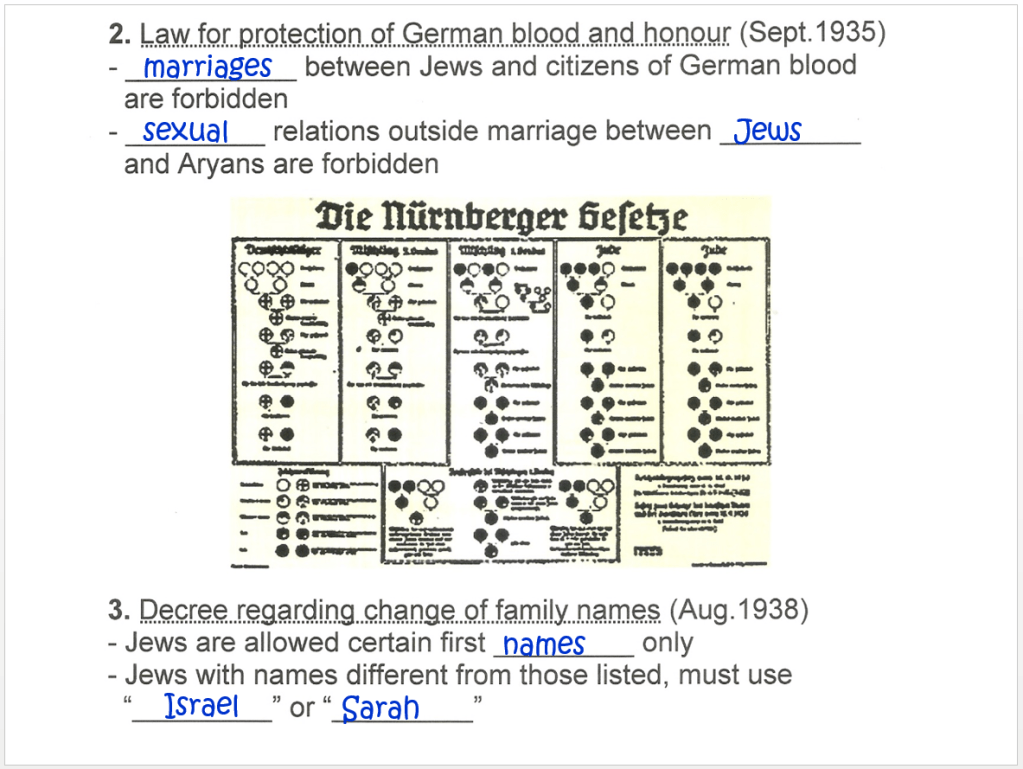
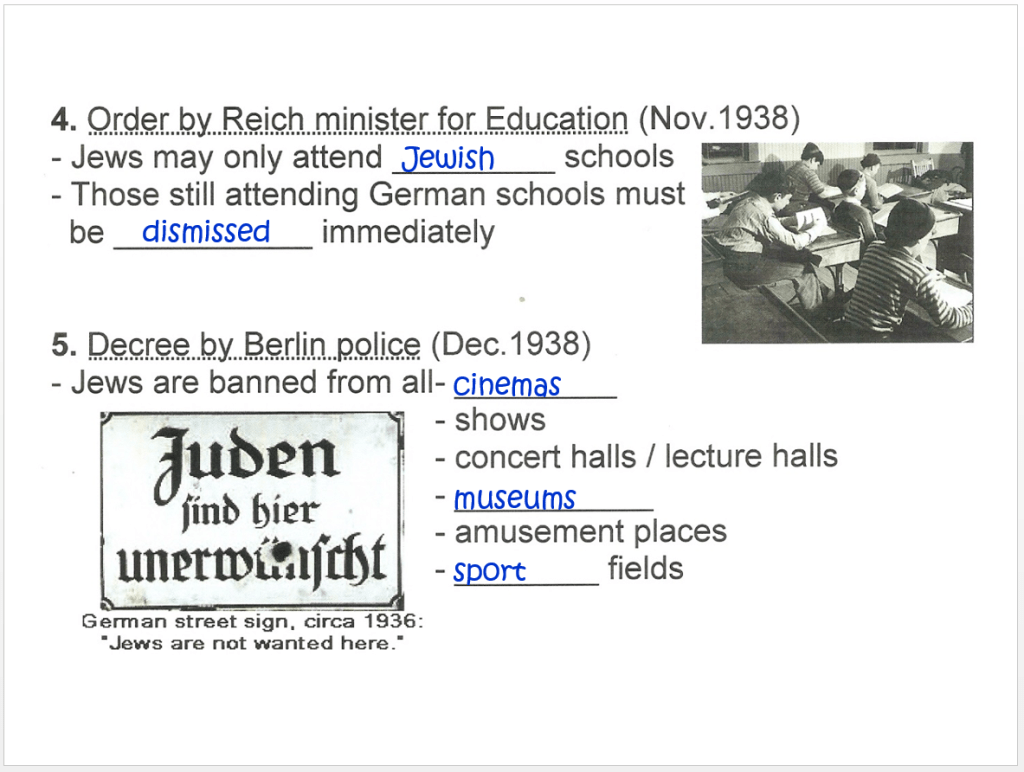
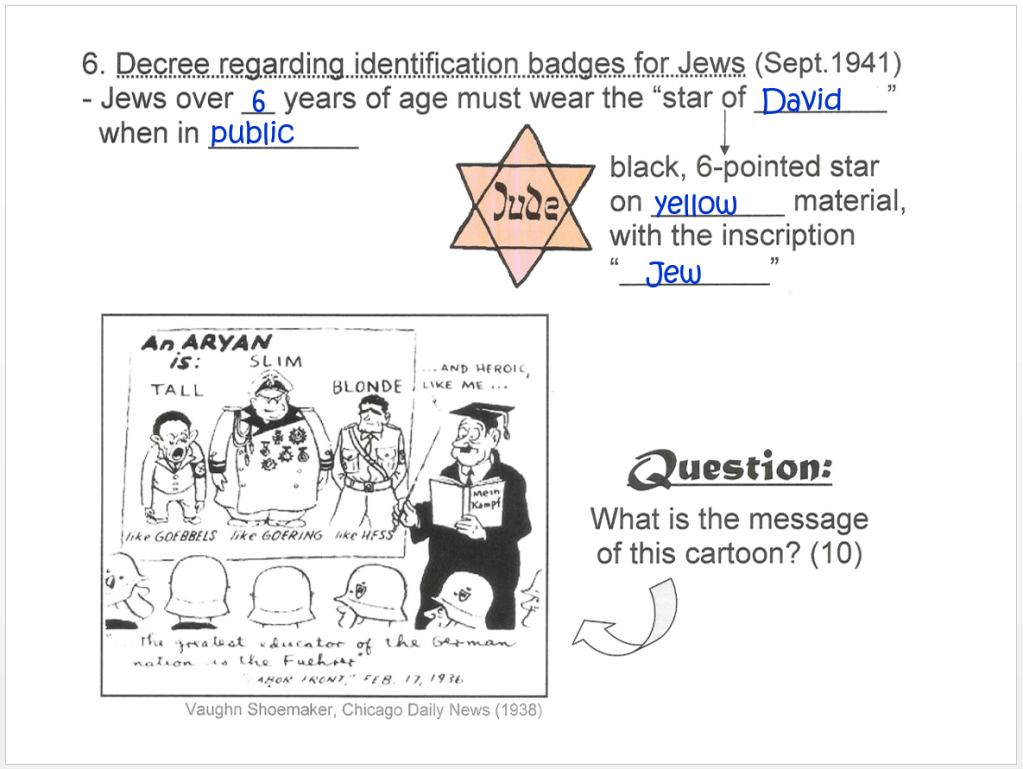
Fill in the missing words on the notes on on “Nazi Laws against Jews” (p.54-55)
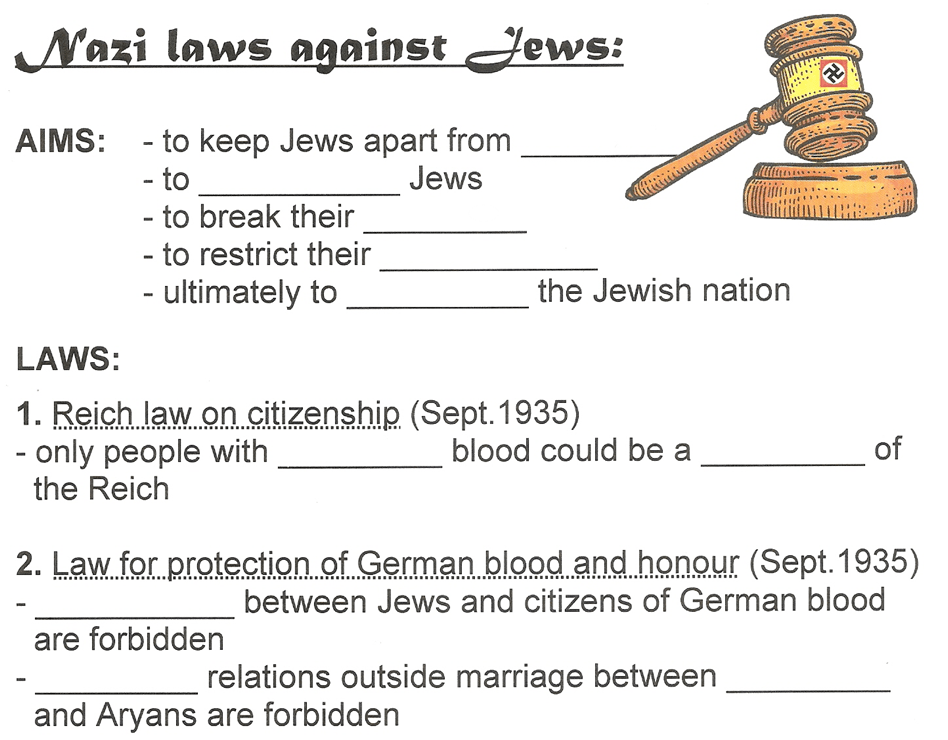
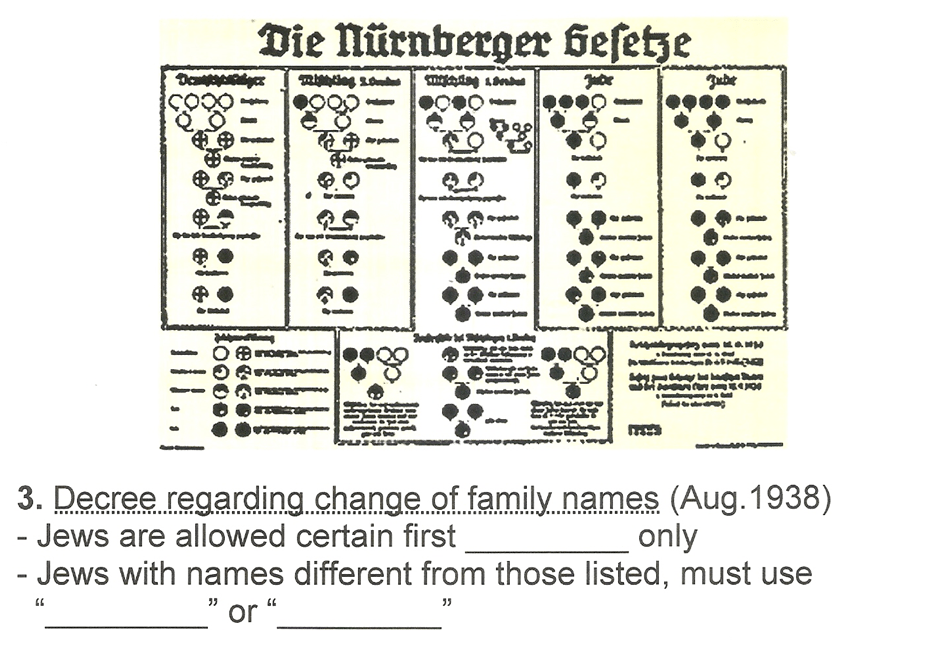
SOLUTION:
Mark your work
with a pencil.
6.
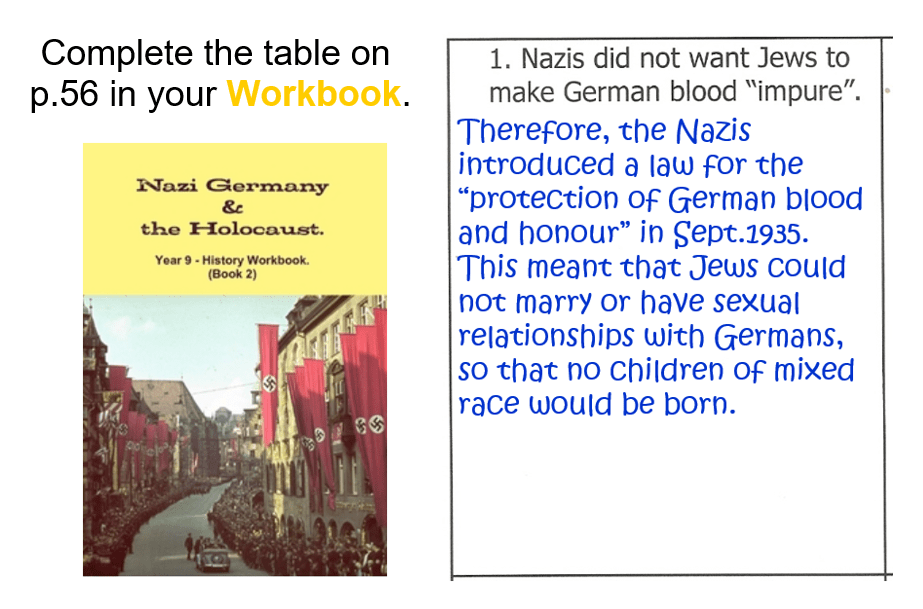
Now, complete the table on p.56 in your Workbook. You have to say how the Nazis used their anti-Jewish laws to achieve the aims mentioned in each of the 4 boxes.
Here is the first answer, as an example of what is expected of you:
SOLUTION:
Mark your work
with a pencil.
(WordPress advertisements may appear below.)
Year 9A & Year 9B
Today you are going to look at Nazi Race theories as well as anti-Jewish laws…
Follow the instructions step by step:
1.
First we are going to write a short test on “Hitler & the Nazi Party”
2.
The Nazis had very specific ideas about race. Let’s see what their race theories were…
Nazi Race Theories. (1:23 minutes long)
3.
Because of their strong anti-Semitic views the Nazis introduced various laws against Jews… The video below discuss some of these laws briefly.
Nazi Racial Laws. (2:12 minutes long)
4.
Let’s see what you book can tell you about Nazi ideas regarding race as well as their anti-Semitic Laws….
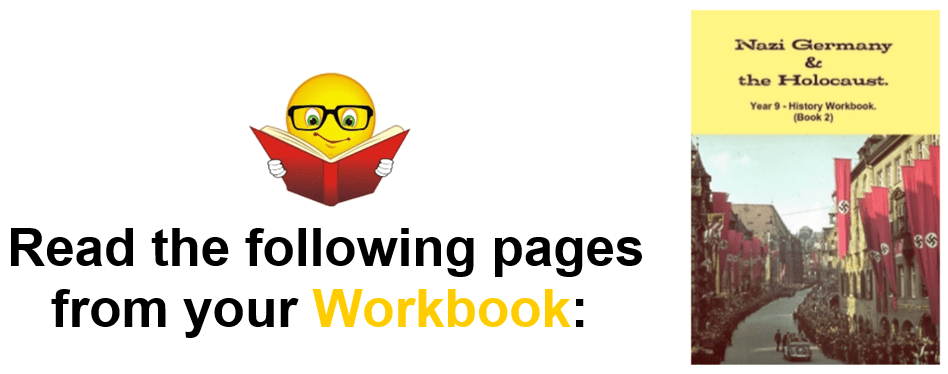
Pages 46-47
5.
There is additional information on Nazi Laws on pages 48-51. Also read these pages. Pay special attention to the laws on p.50 and p.51!
Persecution of the Jews, p.48-49.
Discrimination against Jews, p.49-51.
(WordPress advertisements may appear below.)
Year 8A & Year 8B
Today we are going to look at triangular trade in a bit more detail…
Follow the order in which I give you instructions:
1.
Mark the fill-tasks from the previous lesson, if you have not marked them yet.


Mark the fill-in task on p.68-69.

(2:18 minutes long)
Mark the fill-in task on p.70-71.
(1:51 minutes long)
2.
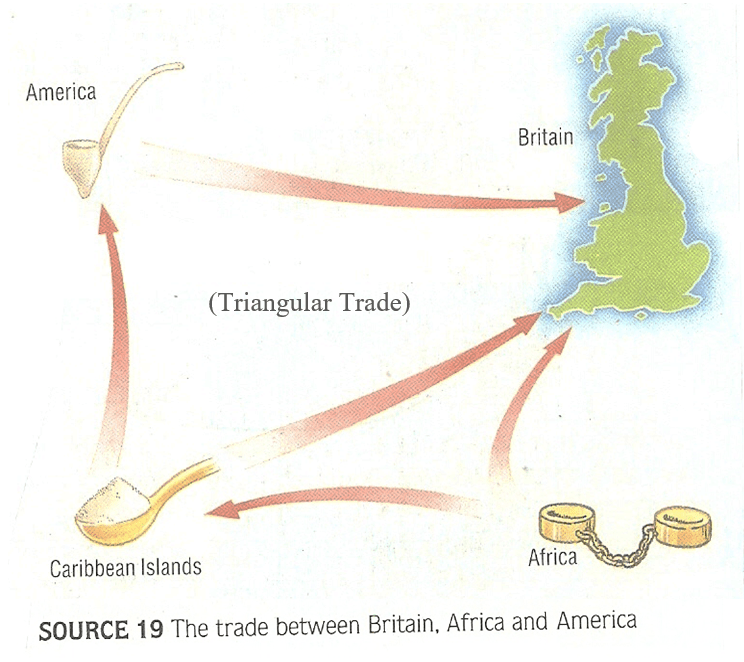
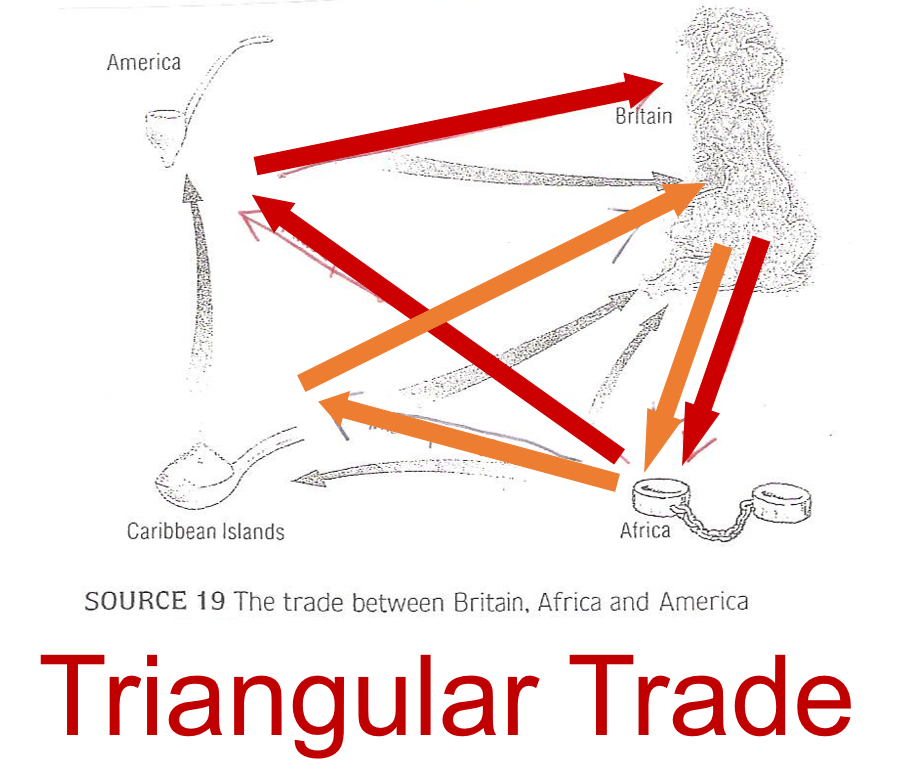
The video clips below explains “Triangular Trade” in a bit more detail…

Triangular Trade (2:49 minutes long)
Slave Triangle (1:51 minutes long)
3.
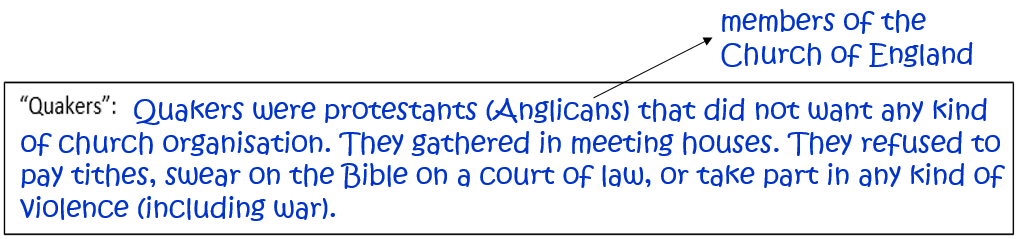
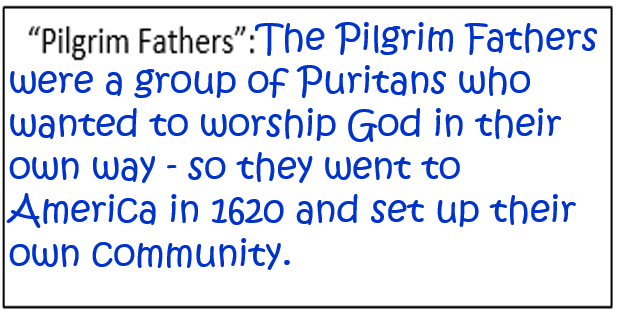
Carefully examine the diagrams below – they illustrate how the triangular trade worked, and may be useful in the next task.
4.
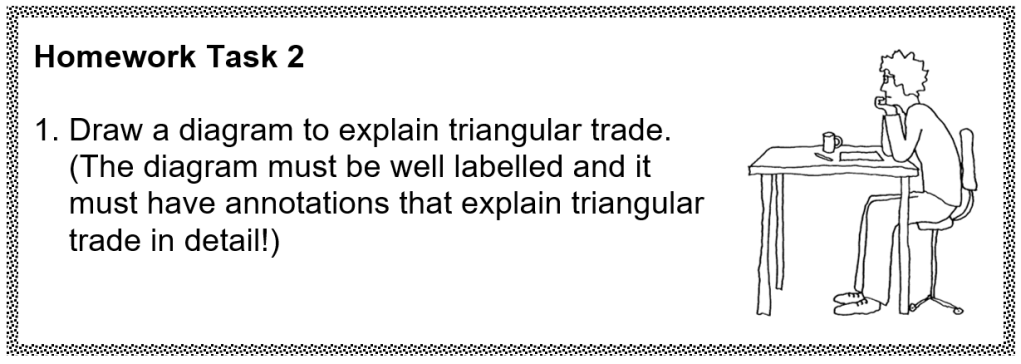
Finally, complete the following two Homework Tasks NOW (as classwork) in your Homework Book… (This must be completed for the next lesson – so make good use of your time!)
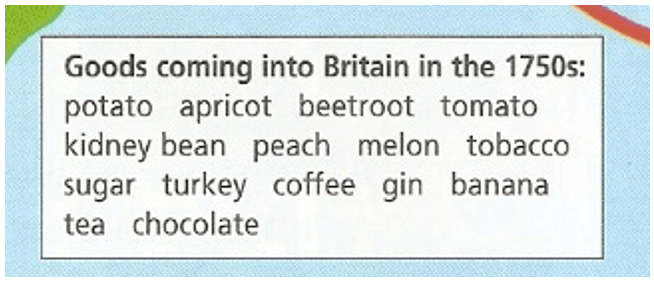
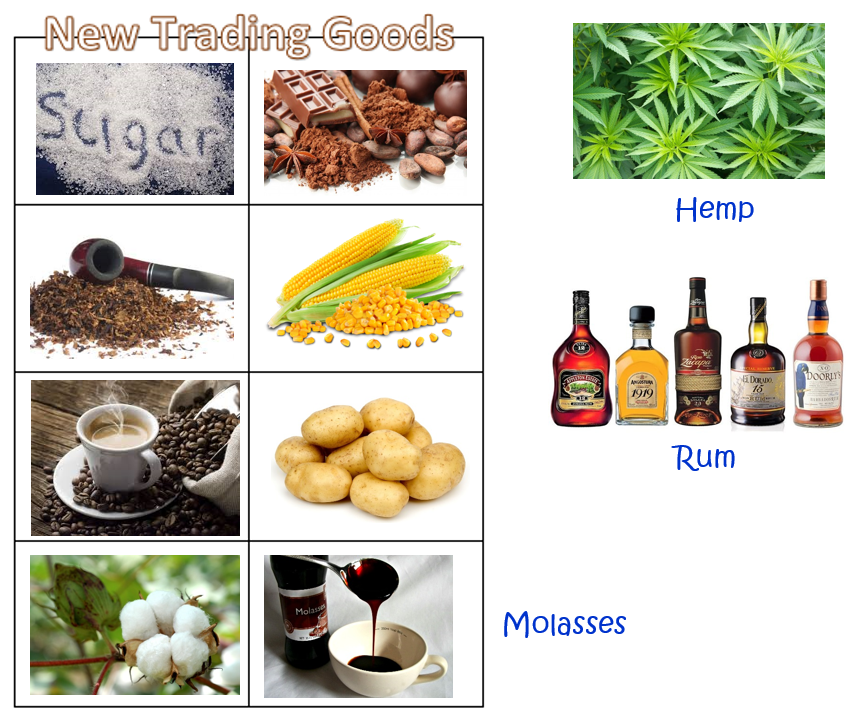
Task 1, on Trading goods (p.45-47)
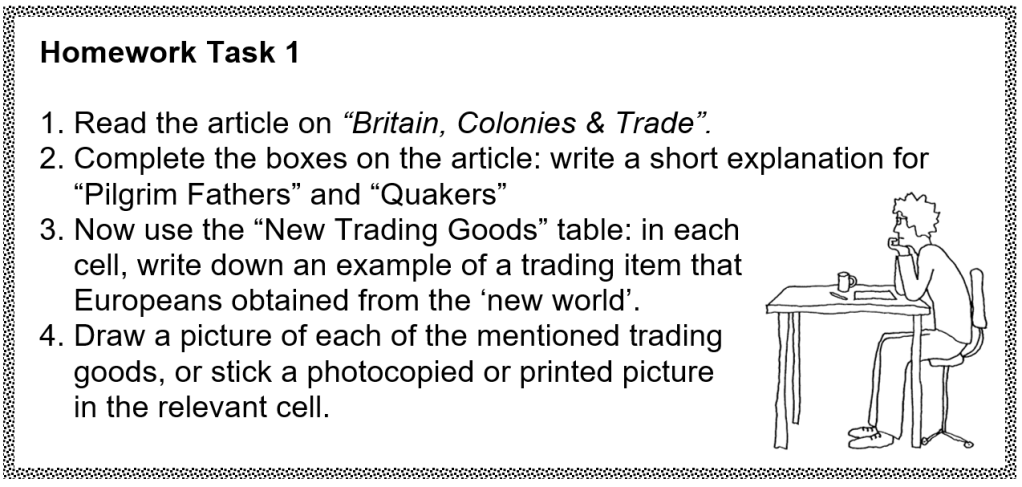

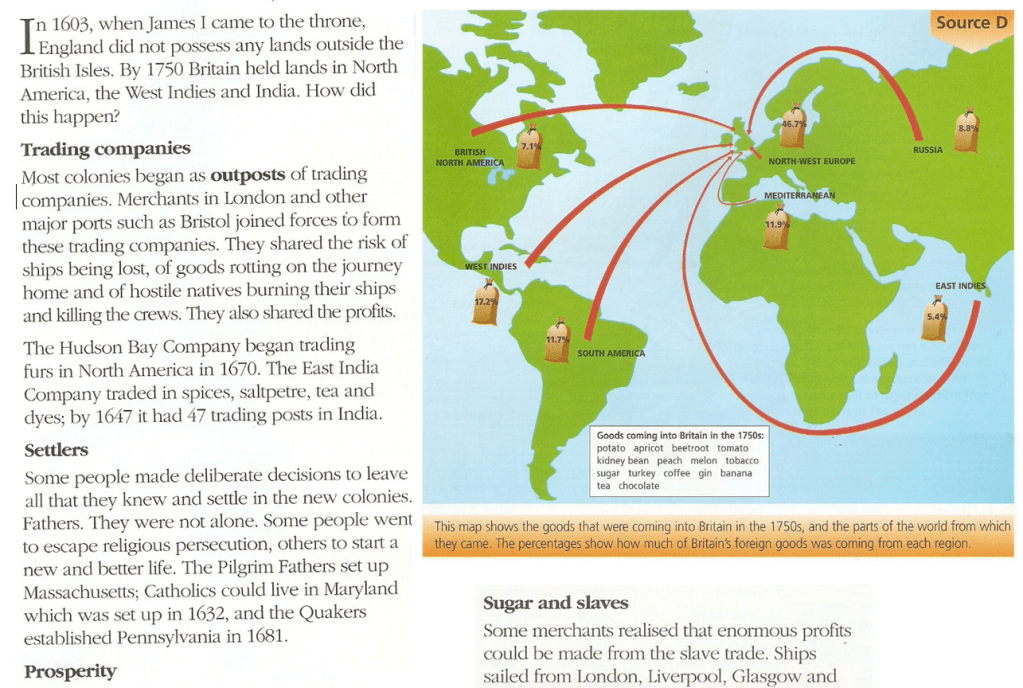
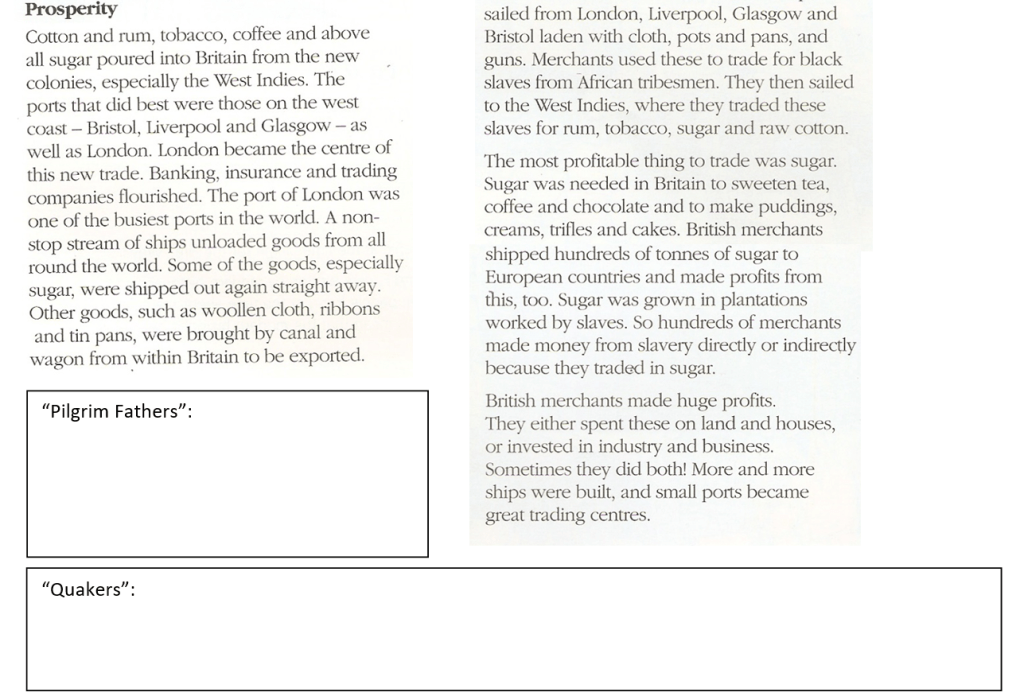


Task 2, on the Triangular Trade (p.48-49)
ASSISTANCE…
TASK 1…
Definitions
Trading Goods
TASK 2…
(WordPress advertisements may appear below.)
Today you are going to practise some Essay Writing!
We will:
Your homework for today was to complete (on paper) Question 1 of the “Russian History”…
1.
Hand in Russia Q1 (a,b,c) for assessment. You will get feedback on your answers as soon as possible.
2.
Read information about the Russian History from your booklet, as indicated below…
Pages 33333-77777 may be relevant for today’s tasks…
3.
Copy the following question at the top of a new page in your essay writing book:
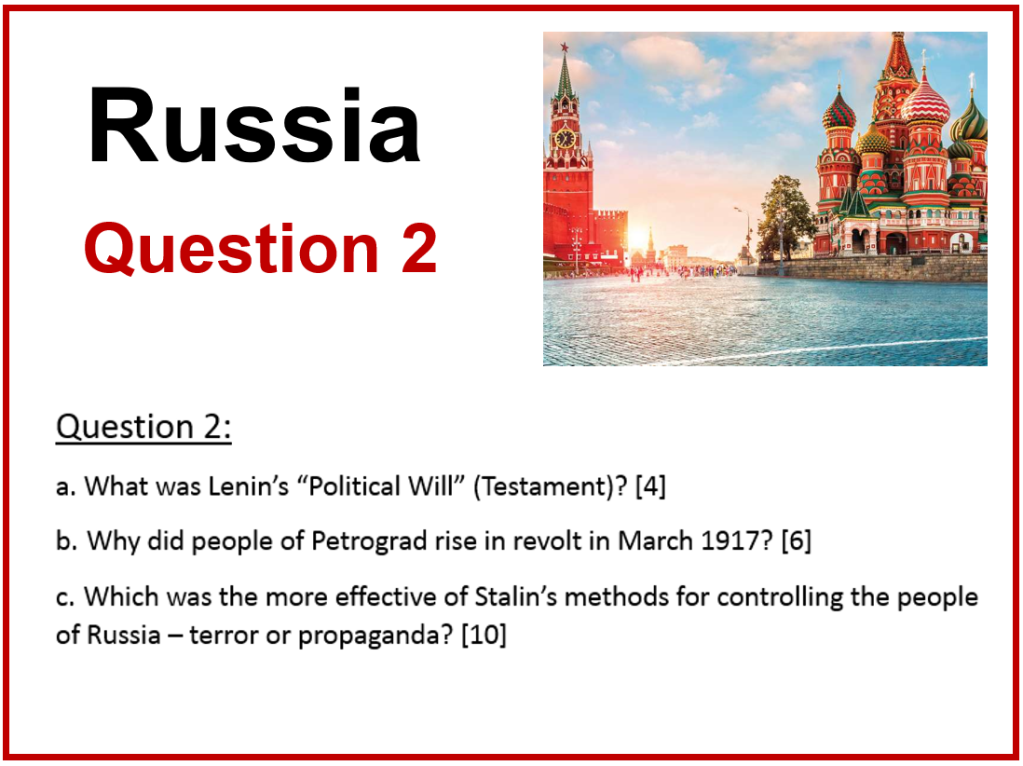
What was Lenin’s “Political Will” (Testament)? (4)
4.
Now answer Russia Q2 (a) in full (“timed”) in your book – you have 5 minutes to complete the answer…
5.
Copy the following question in the middle of a new page in your essay writing book:
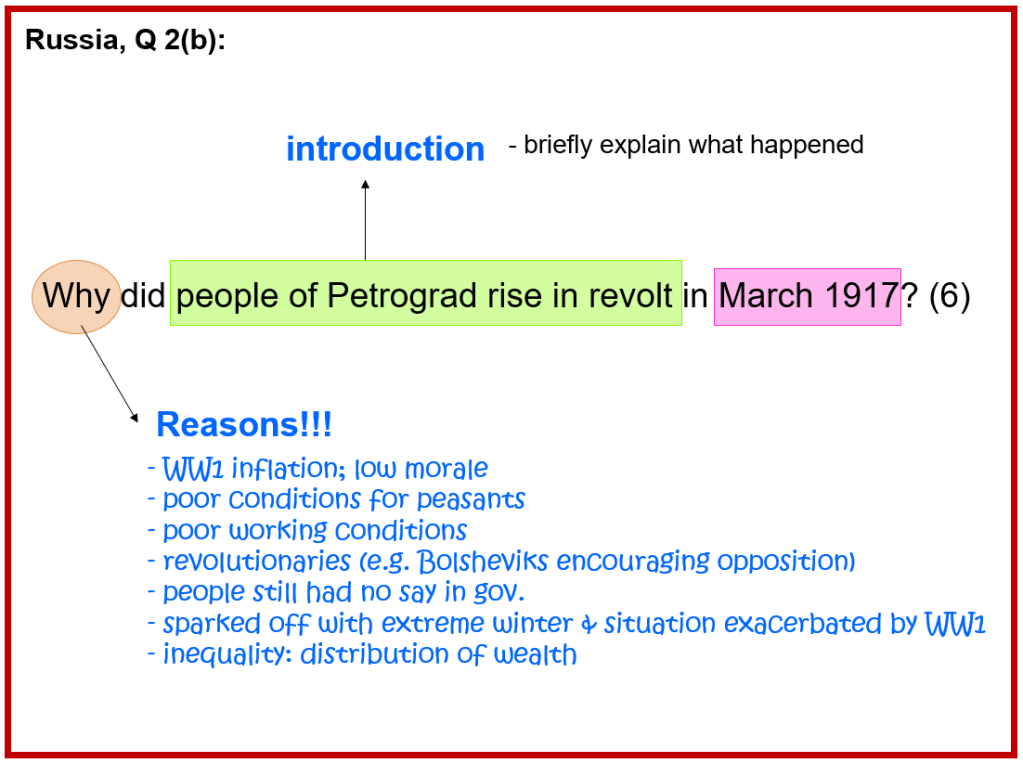
Why did people of Petrograd rise in revolt in March 1917? (6)
6.
Now, plan Russia Q2 (b) very quickly… See what needs to be done and write down a few ideas…
7.
Now answer Russia Q2 (b) in full (“timed”) in your book – you have 10 minutes to complete the answer…
8.
Copy the following question in the middle of a new page in your essay writing book:
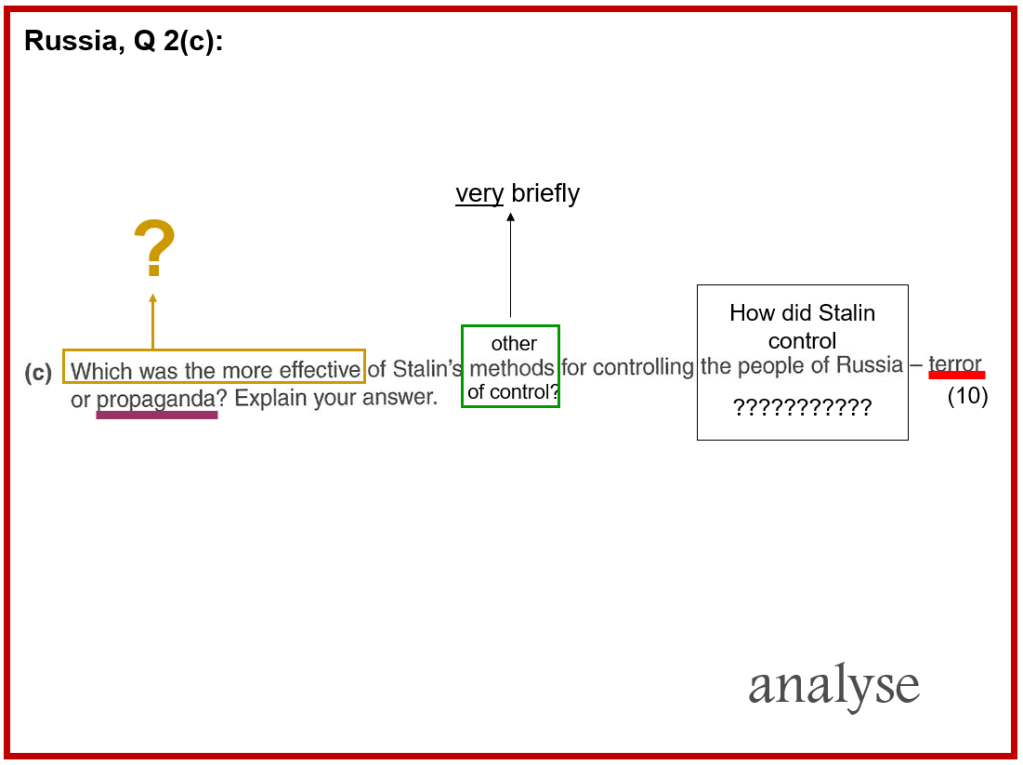
Which was the more effective of Stalin’s methods for controlling the people of Russia – terror or propaganda? (10)
9.
Now, analyse & plan Russia Q2 (c) very quickly… See what needs to be done and write down a few ideas…
10.
Navigate your way through the following slides to see if you planned and answered the questions correctly…
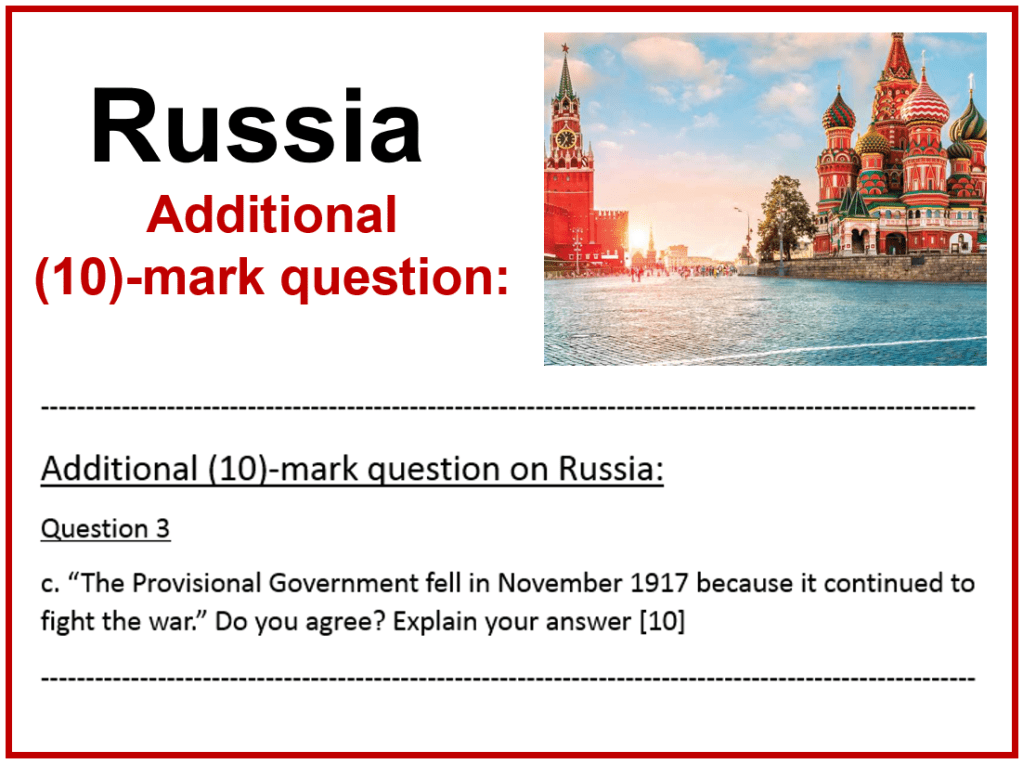
11.
Answer Russia Q3 (c) in full in your essay writing book, for the next lesson!
(WordPress advertisements may appear below.)
5.6.7.
Do Russia Question 3 (c) in full, in your essay writing book, for the next lesson!
5.
5.
Now, let’s see how the First World War affected Russia.
WW1 Impact on Russia. (3:20 minutes long)
SOLUTION

5.
The information about “The War with Japan” & the information about “Bloody Sunday”, p.5.
IGCSE History – Paper 1: 10-mark Questions. (5:32 minutes long)
5.
So, previously you … Now you need to …
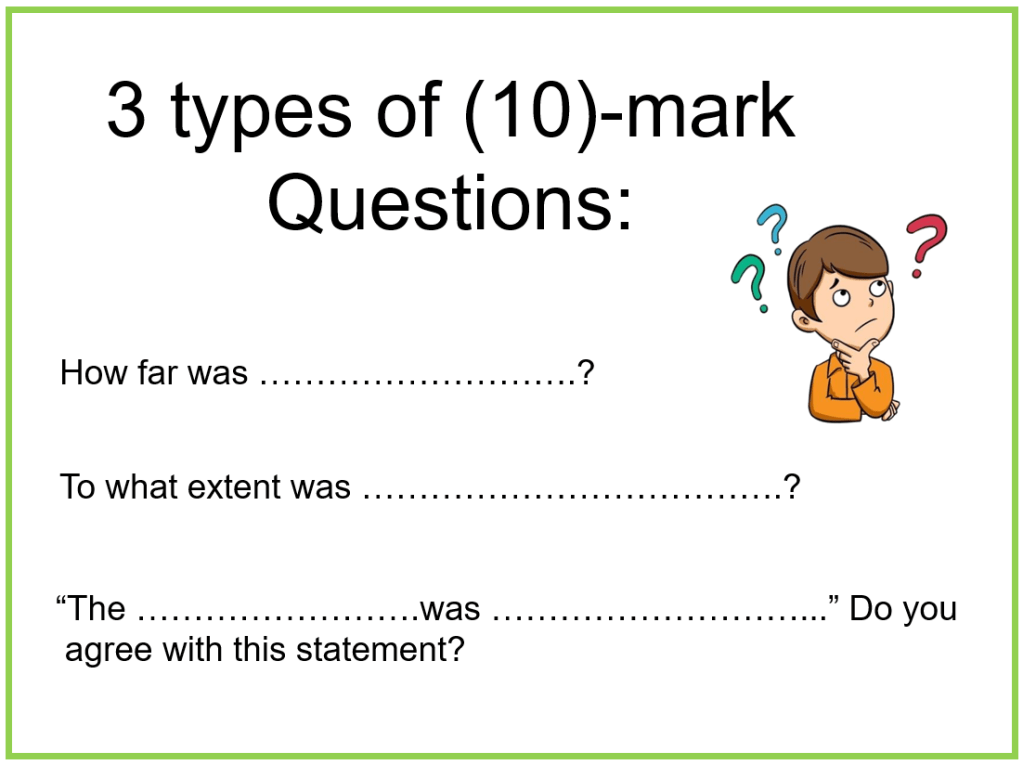
“The Treaty of Versailles was a fair settlement.” How far do you agree with this statement? Explain your answer. (10)
Remember to give both sides of the argument!!
5.5.
Once completed, please send me a message in Schoology (use the SAME mail-thread…) to confirm that you have finished the work as set for today.
(WordPress advertisements may appear below.)
Today you are going to practise some Essay Writing!
We will:
Your homework for today was to finish classwork (if necessary) PLUS revise Russian history for today’s lesson! …
1.
Let’s first look at the previous essay answer that you wrote on the Treaty of Versailles (Treaties, Q1). Stick your answers into your essay writing book. Then, navigate through the slides for feedback…
2.
Let’s also see if we have looked at all the previous lesson’s questions:
3.
Read information about the Russian History from your booklet, as indicated below…
Pages 4444-7777 may be relevant for today’s tasks…
4.
It is time to practice answering an exam question on the Post-War Peace Treaties… Navigate you way through the slides below and answer the questions given in the slides:
Here’s what you have to do:
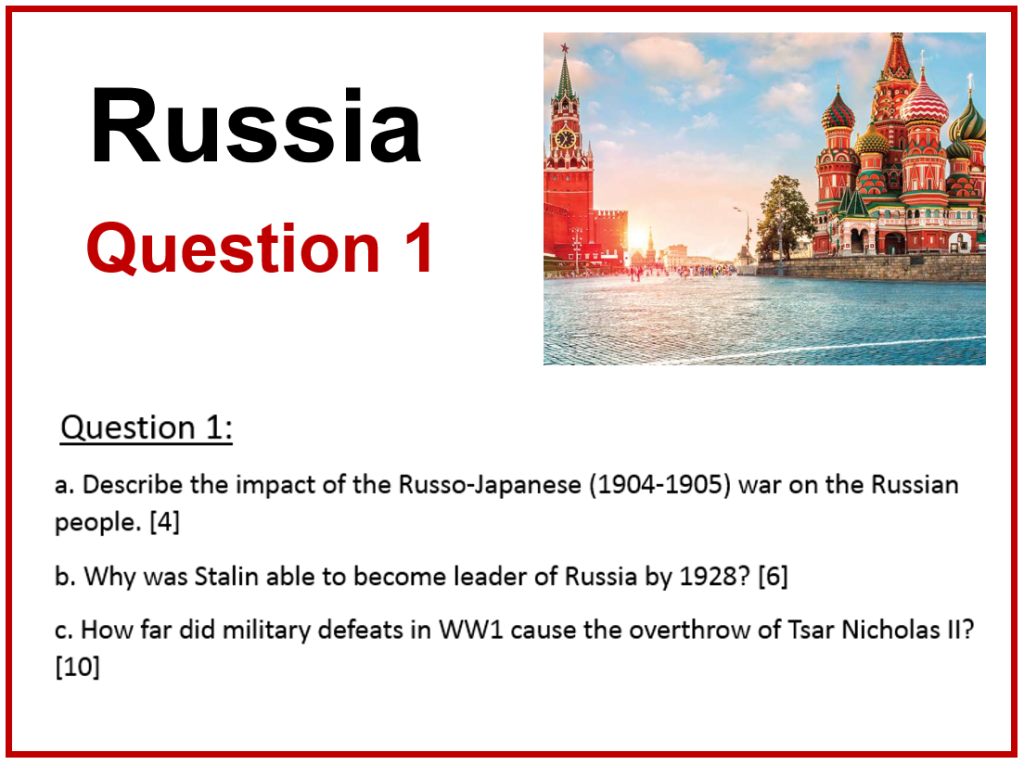
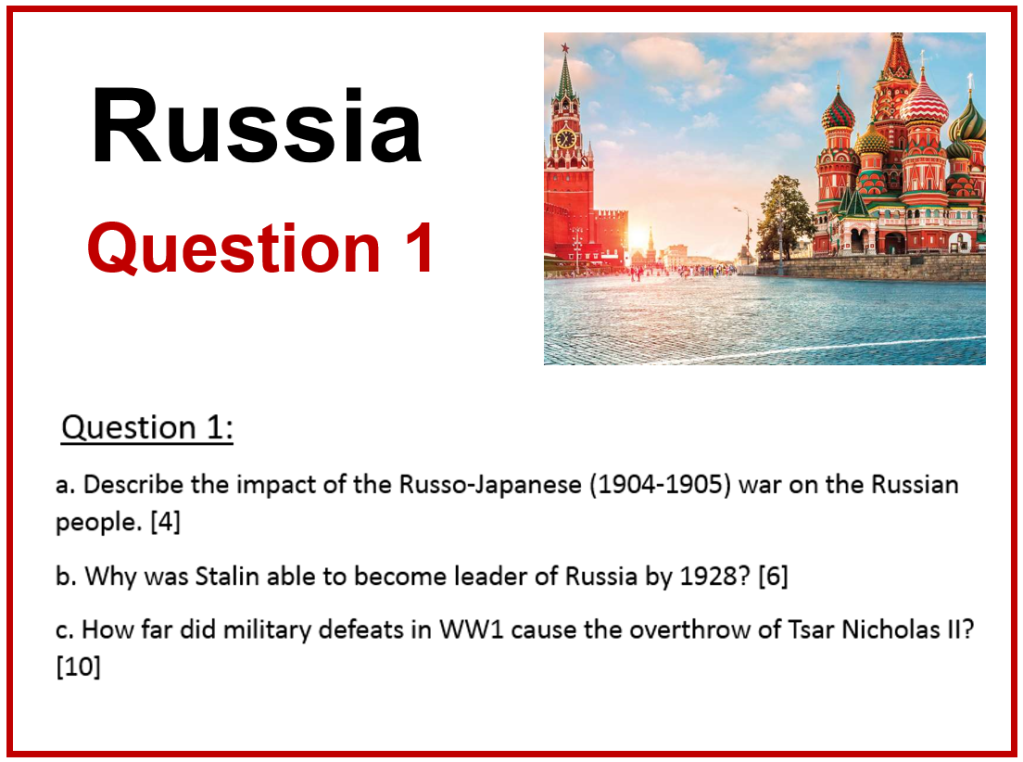
1. Copy Russia Q1 (a) at the top of the first paper sheet given to you in class:
Describe the impact of the Russo-Japanese War (1904-1905) on the Russian people. (4)
2. Copy Russia Q1 (b) at the top of the second paper sheet given to you in class. Then also copy the same question into your essay writing book, on the middle of a new page, so that you can plan the answer in your essay writing book:
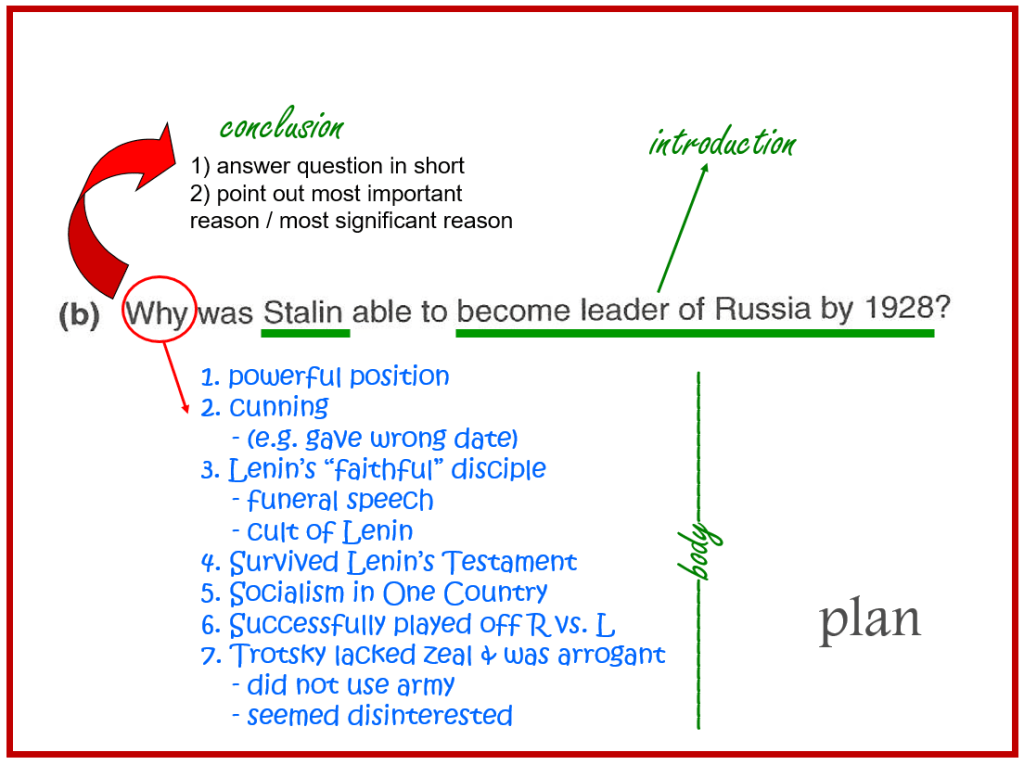
Why was Stalin able to become leader of Russia by 1928? (6)
3. Copy Russia Q1 (c) at the top of the third paper sheet given to you in class. Then also copy the same question into your essay writing book, on the middle of a new page, so that you can plan the answer in your essay writing book:
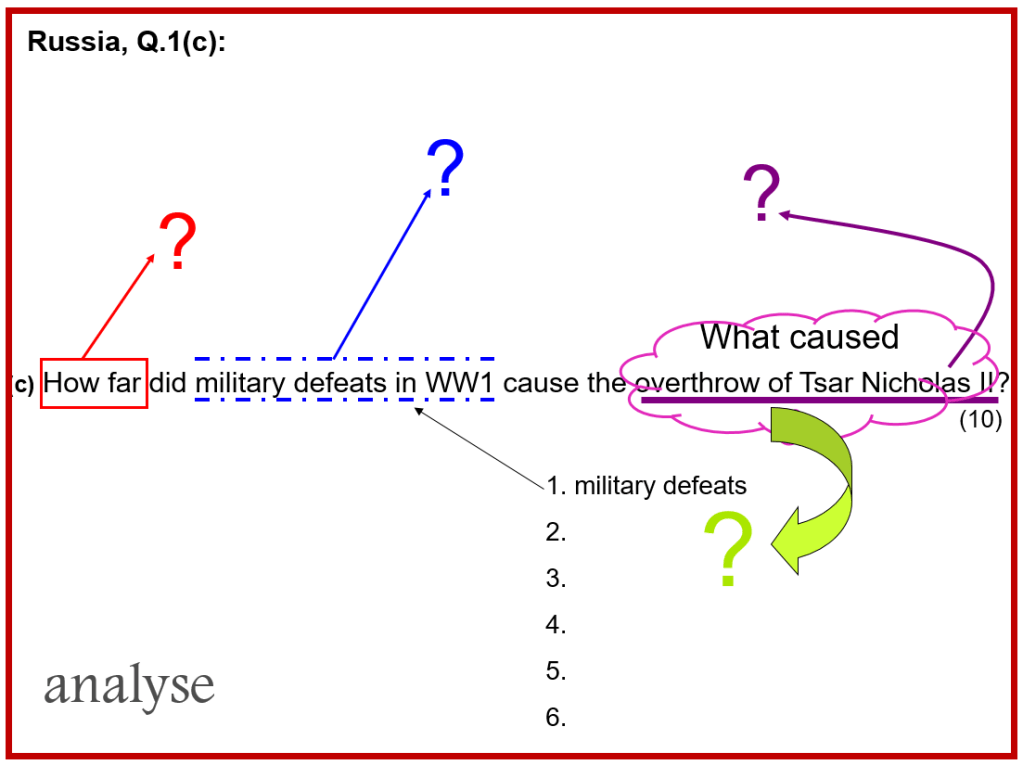
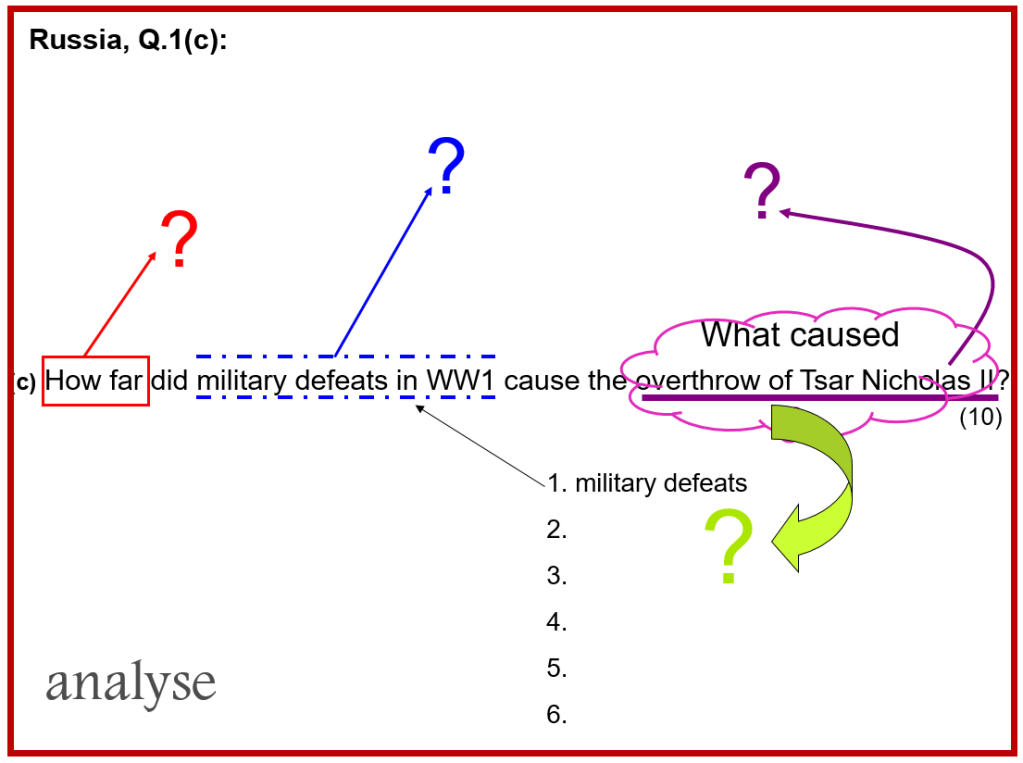
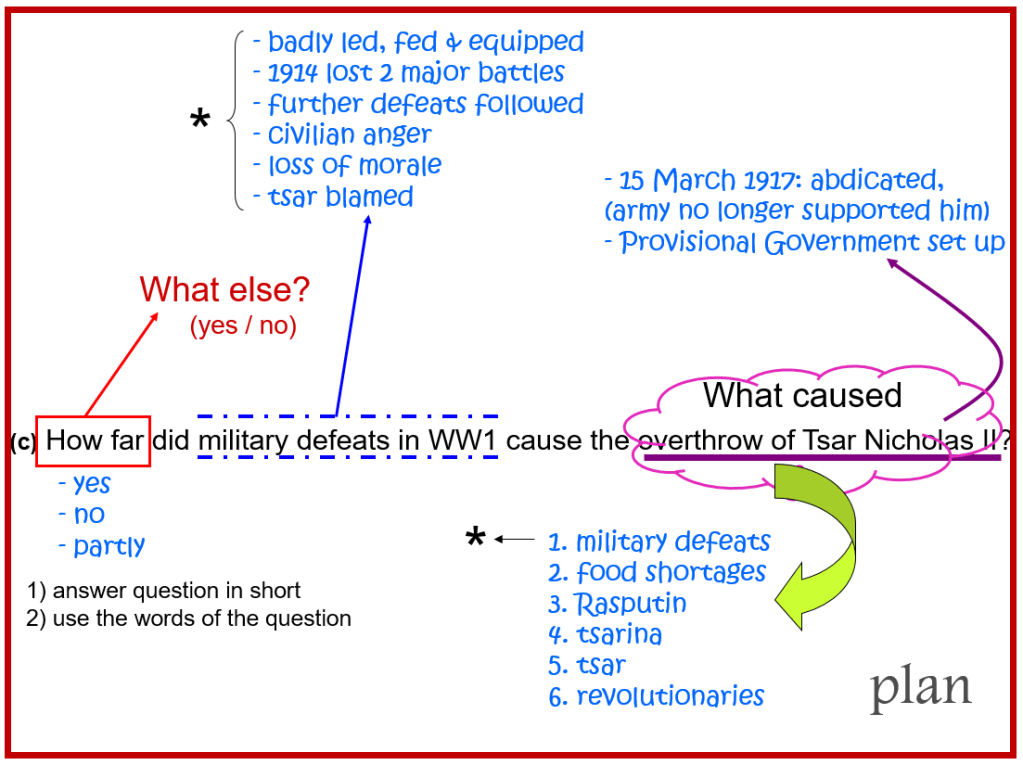
How far did military defeats of WW1 cause the overthrow of Tsar Nicholas II? (10)
5.
Now, analyse and plan Russia Q1 (b) and (c) very quickly… See what needs to be done and write down a few ideas…
6.
Finish Russia Question 1 (a,b,c), on paper for the next lesson!
It is very important that you hand this question in on time for assessment. If not, I will not be able to give you feedback on your answers!

(WordPress advertisements may appear below.)
Today you are going to continue practising some Essay Writing!
We will:
Your homework for today was to complete (on paper) Question 1 of the “Post-War Peace Treaties”…
1.
Hand in Peace Treaties Q1 (a,b,c) for assessment. You will get feedback on your answers as soon as possible.
2.
Read all about the Treaty of Versailles from your booklet, as indicated below…
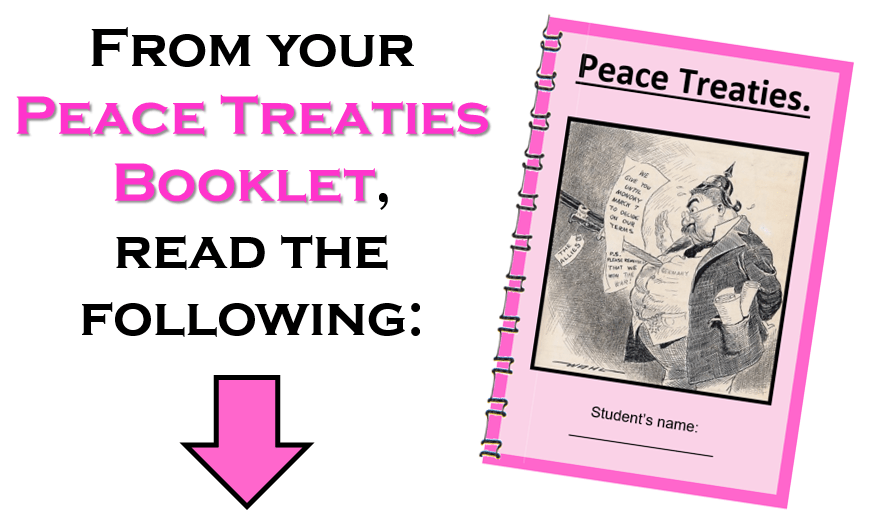
Pages 2-6; 11-14, 16; 24 may be relevant for today’s tasks…
3.
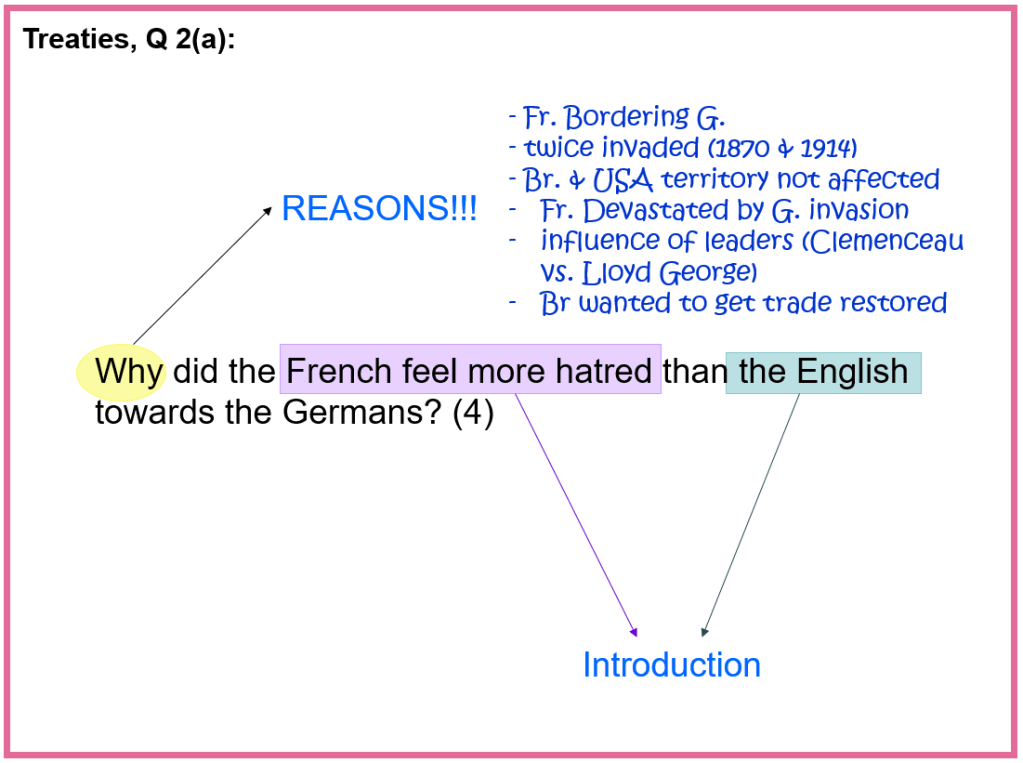
Copy the following question at the top of a new page in your essay writing book:
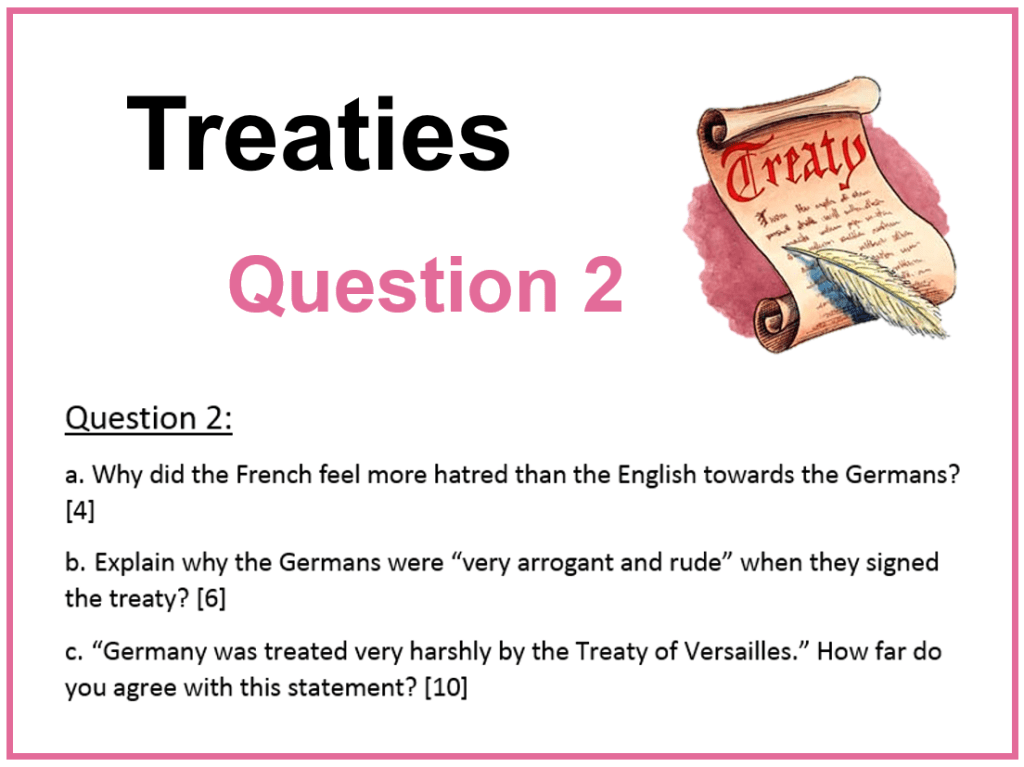
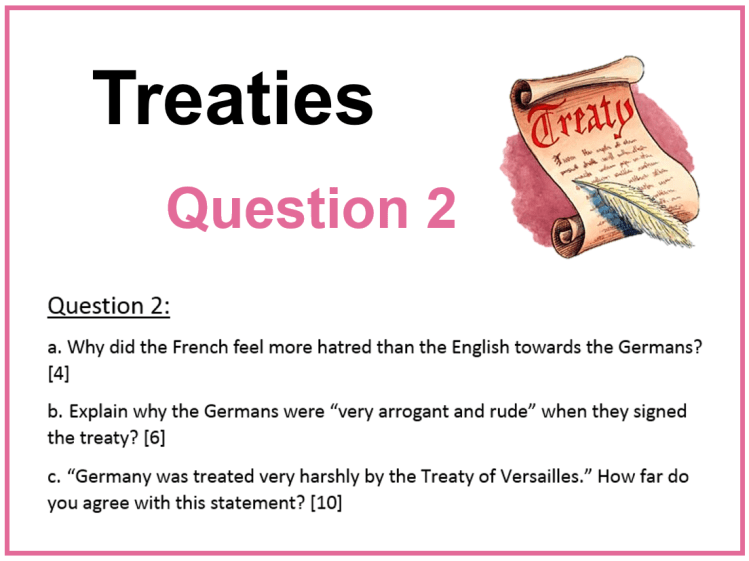
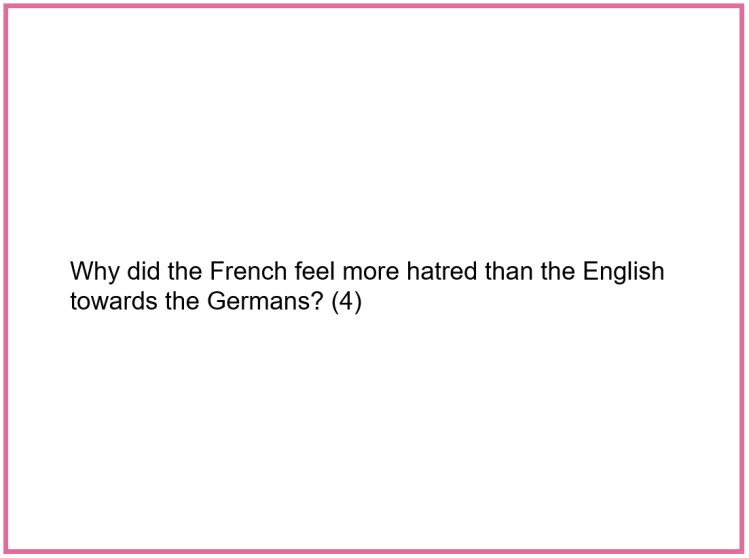
Why did the French feel more hatred towards the Germans than the English? (4)
4.
Now answer Treaties Q2 (a) in full (“timed”) in your book – you have 5 minutes to complete the answer…
5.
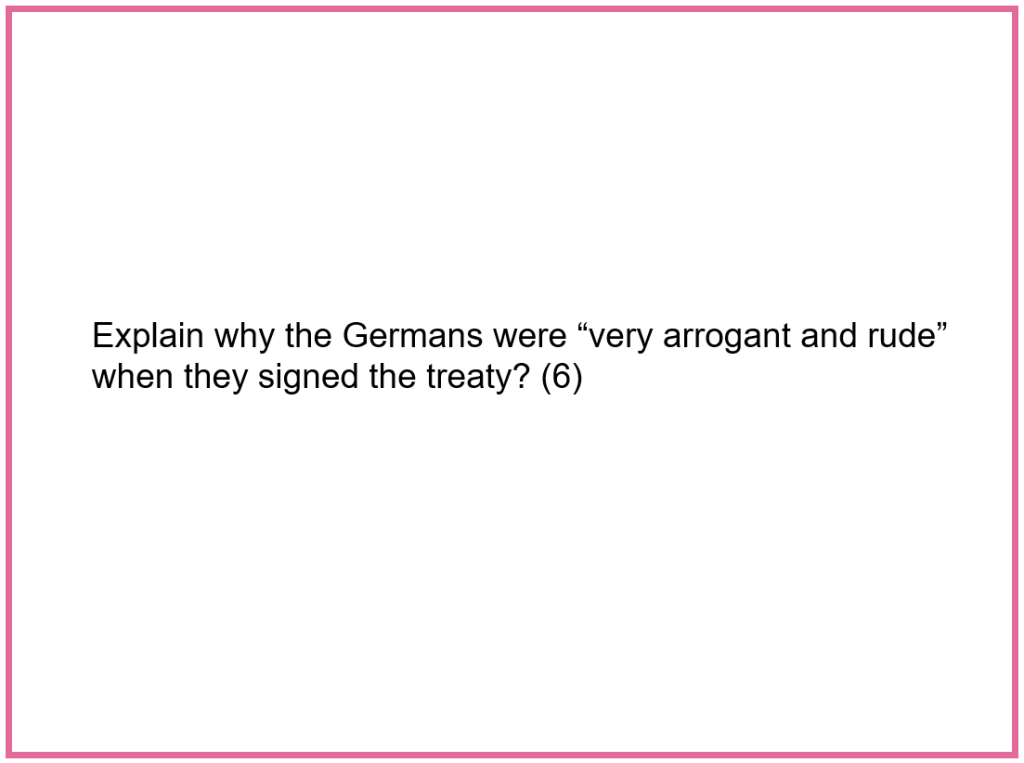
Copy the following question in the middle of a new page in your essay writing book:
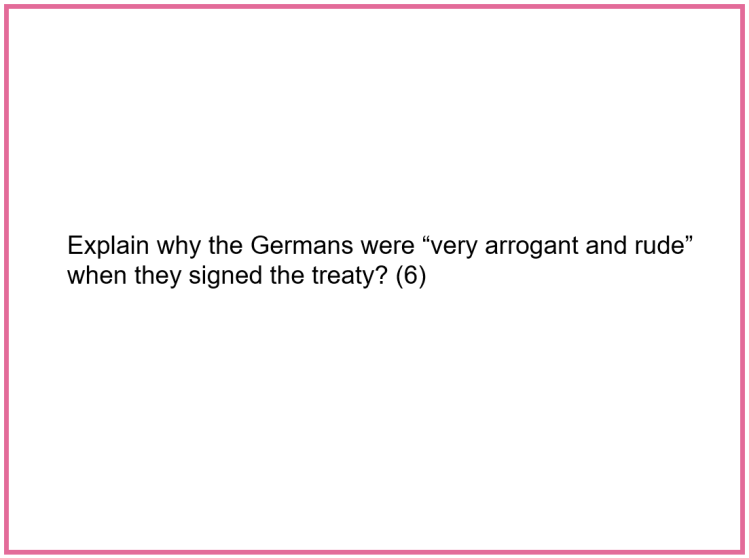
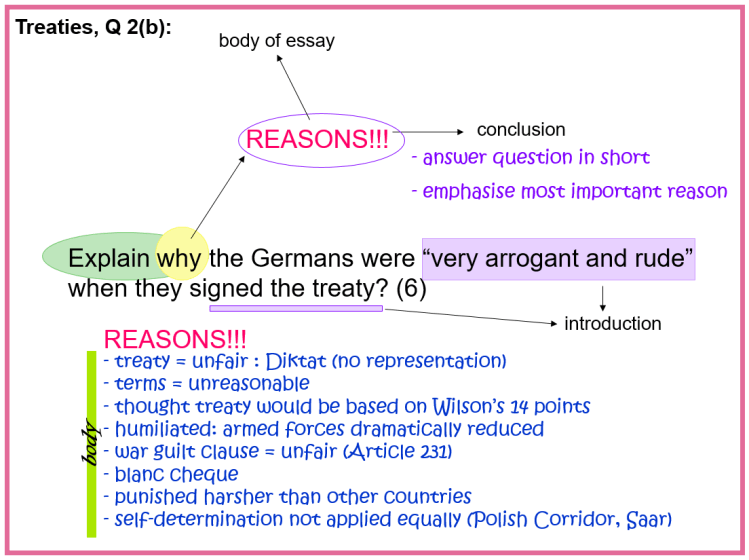
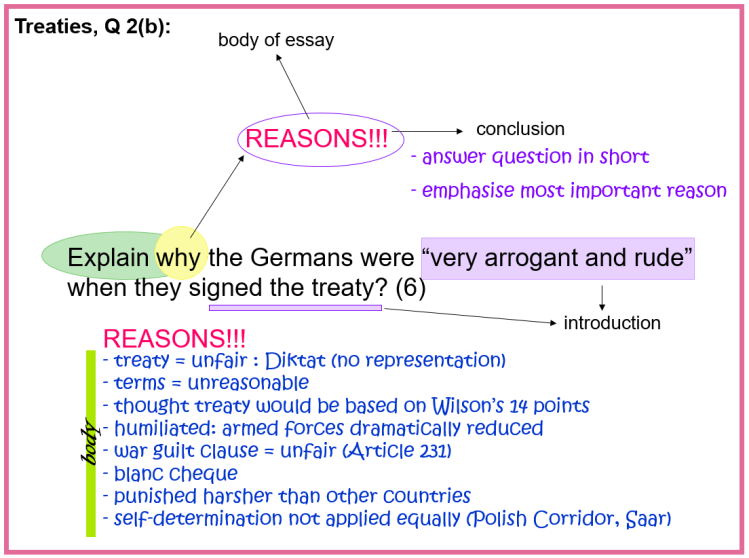
Explain why the Germans were “very arrogant and rude” when they signed the treaty. (6)
6.
Now, plan Treaties Q2 (b) very quickly… See what needs to be done and write down a few ideas…
7.
Now answer Treaties Q2 (b) in full (“timed”) in your book – you have 10 minutes to complete the answer…
8.
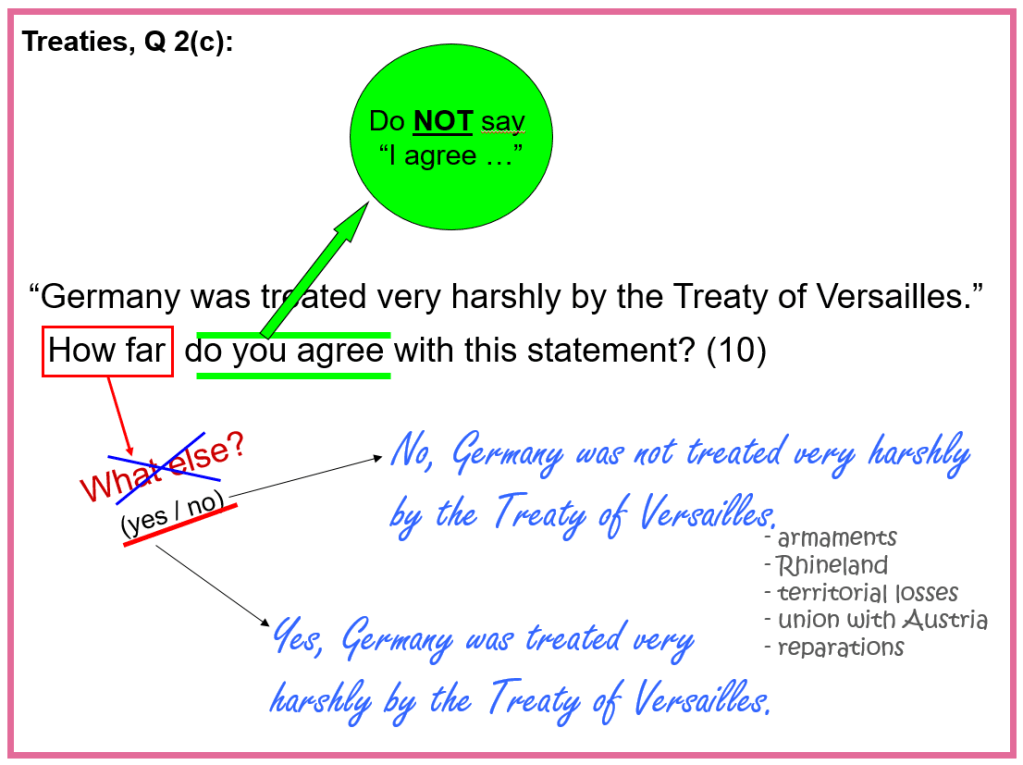
Copy the following question in the middle of a new page in your essay writing book:
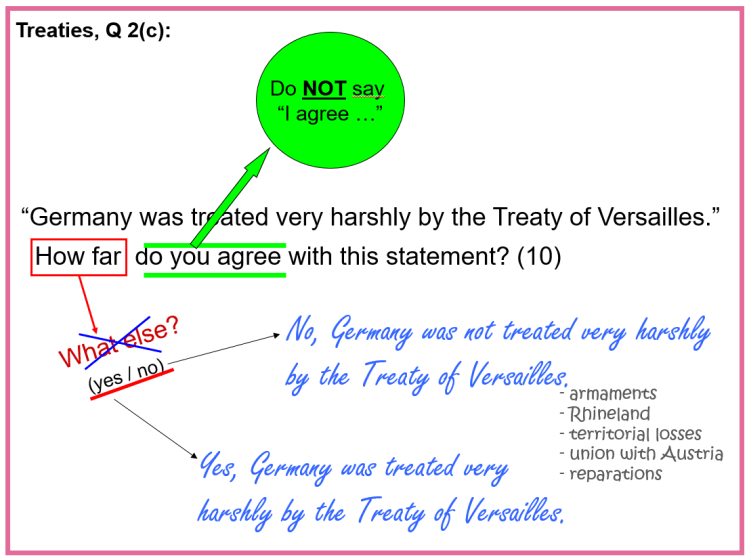
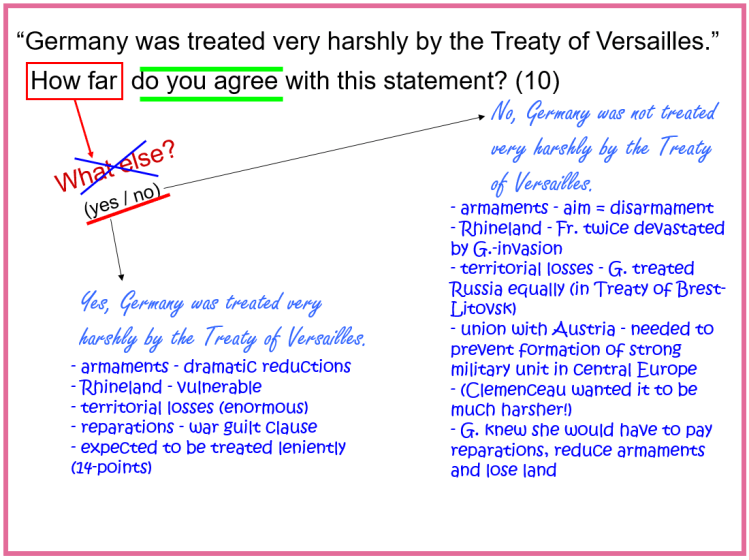
“Germany was treated very harshly by the Treaty of Versailles.” How far do you agree with this statement? (10)
9.
Now, analyse & plan Treaties Q2 (c) very quickly… See what needs to be done and write down a few ideas…
10.
Navigate your way through the following slides to see if you planned and answered the questions correctly…
11.
Finish today’s classwork (if necessary) PLUS revise Russian history for the next lesson!
(WordPress advertisements may appear below.)
Year 8A & Year 8B
Today we are going to start our new topic:
“Britain and Trade”
Follow the order in which I give you instructions:
1.
First, look at your test result (Homework-5) and also see where you have perhaps lost marks:
2.
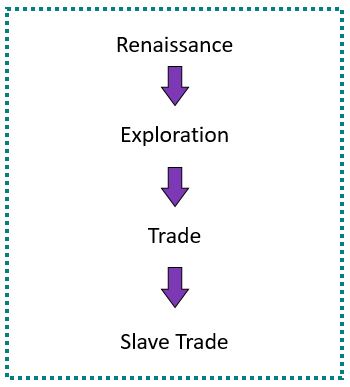
Here is a reminder of what we have done so far in Year 8 History. Apart from the Reformation, we also looked at the following (which leads up to our next topic, on “Slave Trade”).
3.
Pages 66-67.

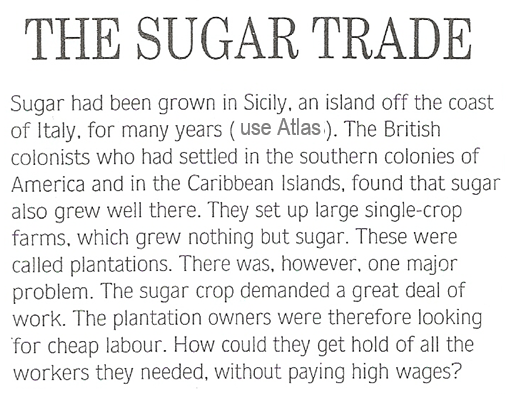
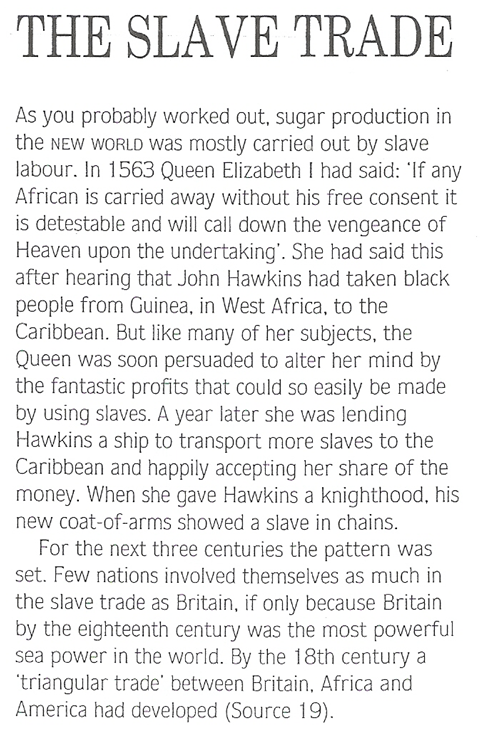
4.
Stick this title page into your purple book. Then see if you can complete the missing information.
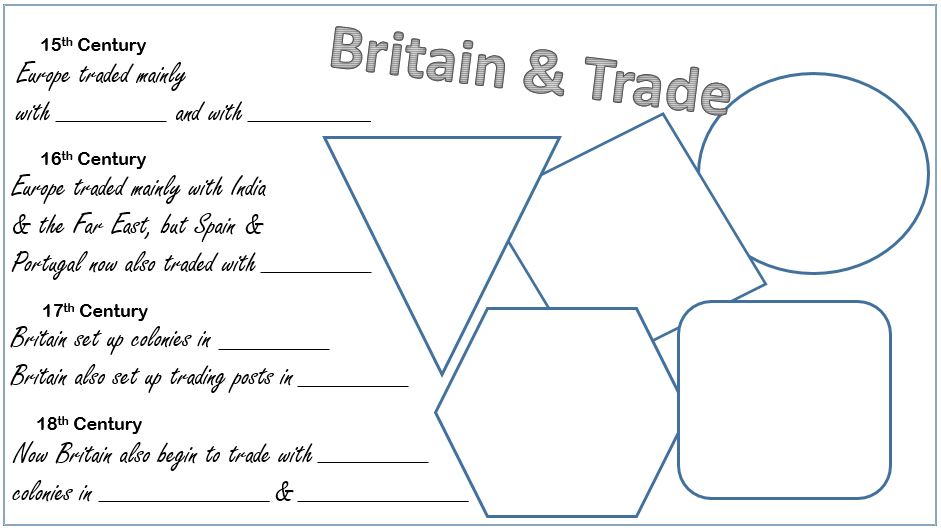
You may use the pictures below to stick into the boxes on the title page, to show which goods were traded with. (Alternatively, find and print your own pictures.) Or, you may draw the pictures.
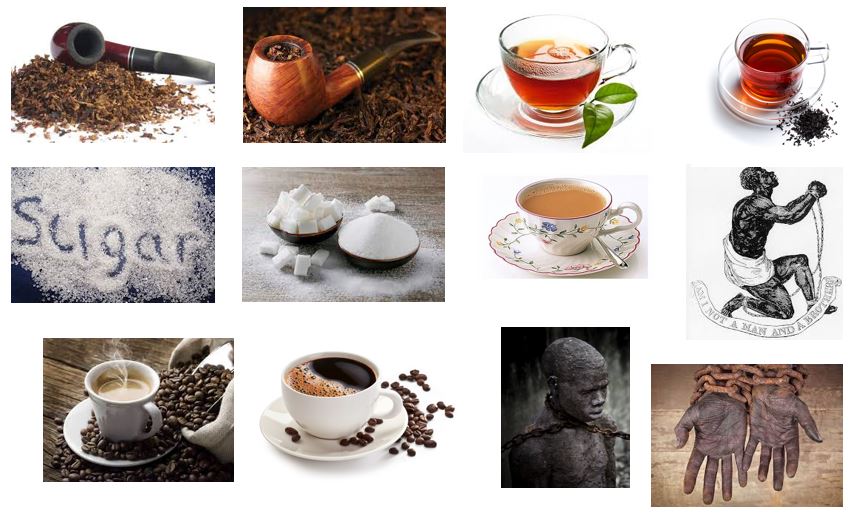
SOLUTION

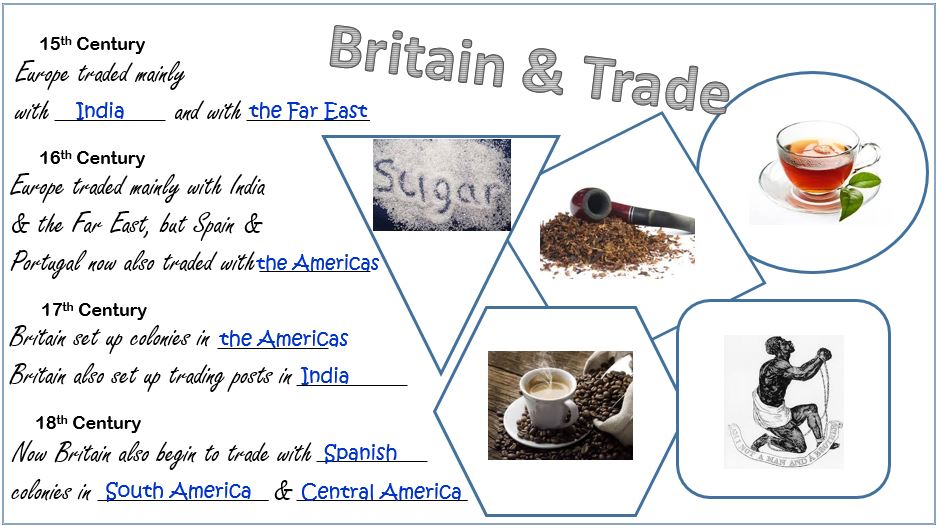
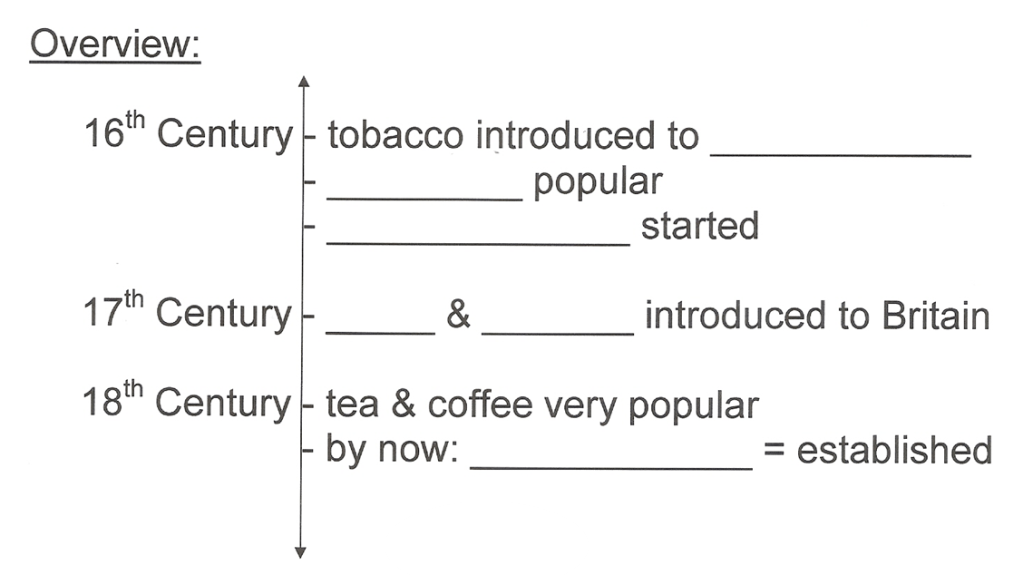
Alternatively, make your own title page for “Britain and Trade”. Make sure to include pictures of the trading goods as well as the timeline below:

5.
Watch the video below that explains where Britain traded from the 15th to the 19th centuries…
Britain and Trade. (2:08 minutes long)
6.
Fill in the missing information on p.68-69 in your Workbook.
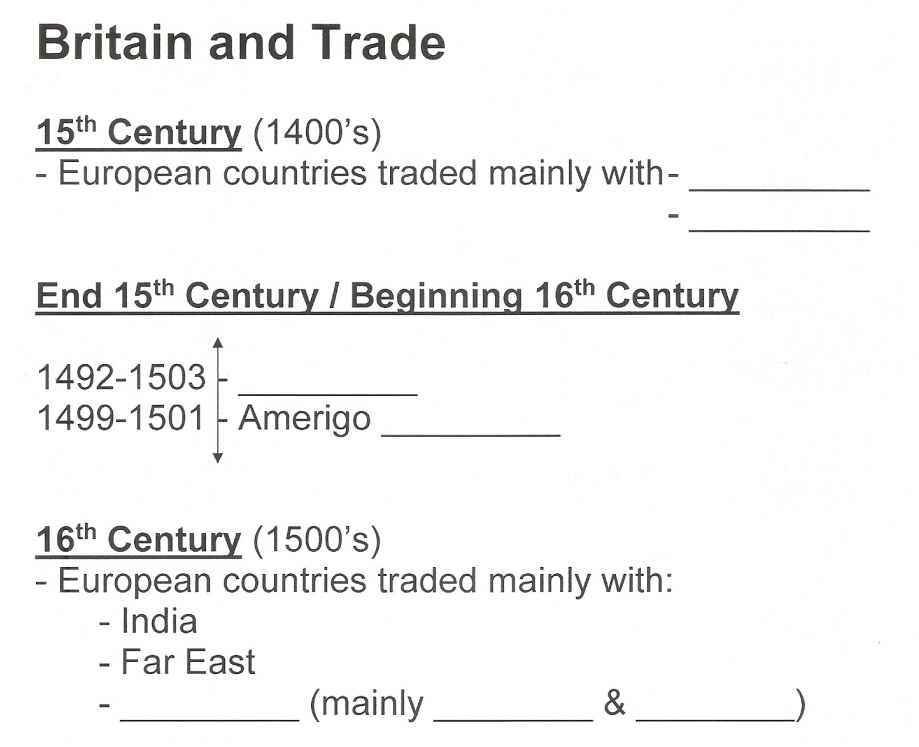
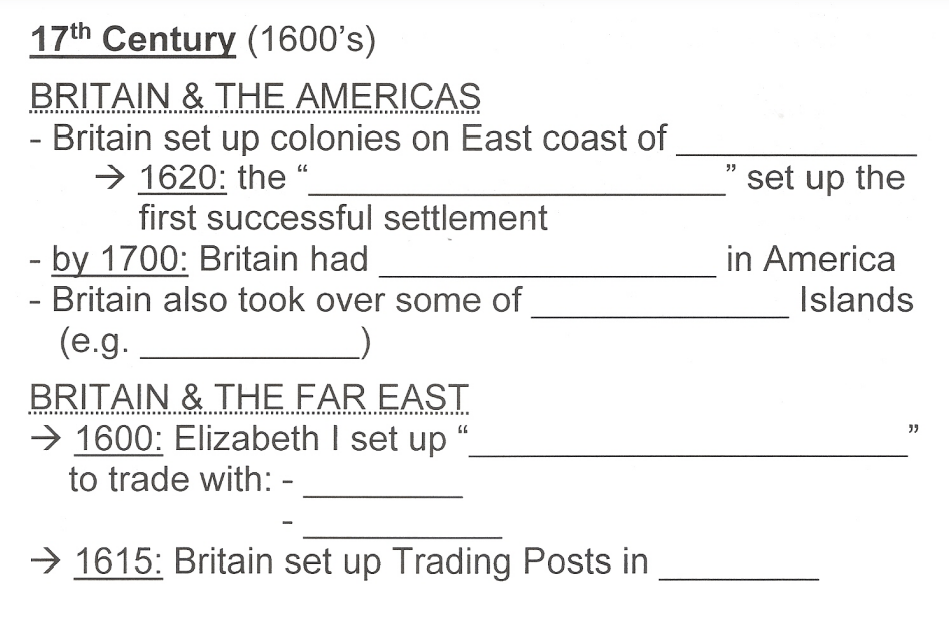
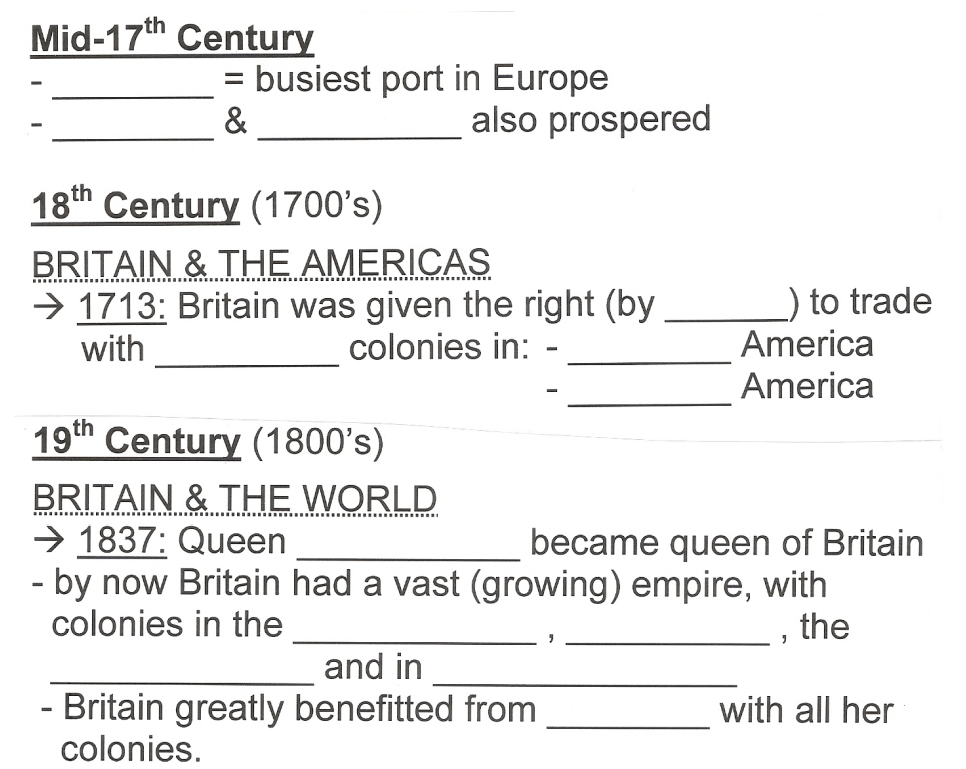
7.
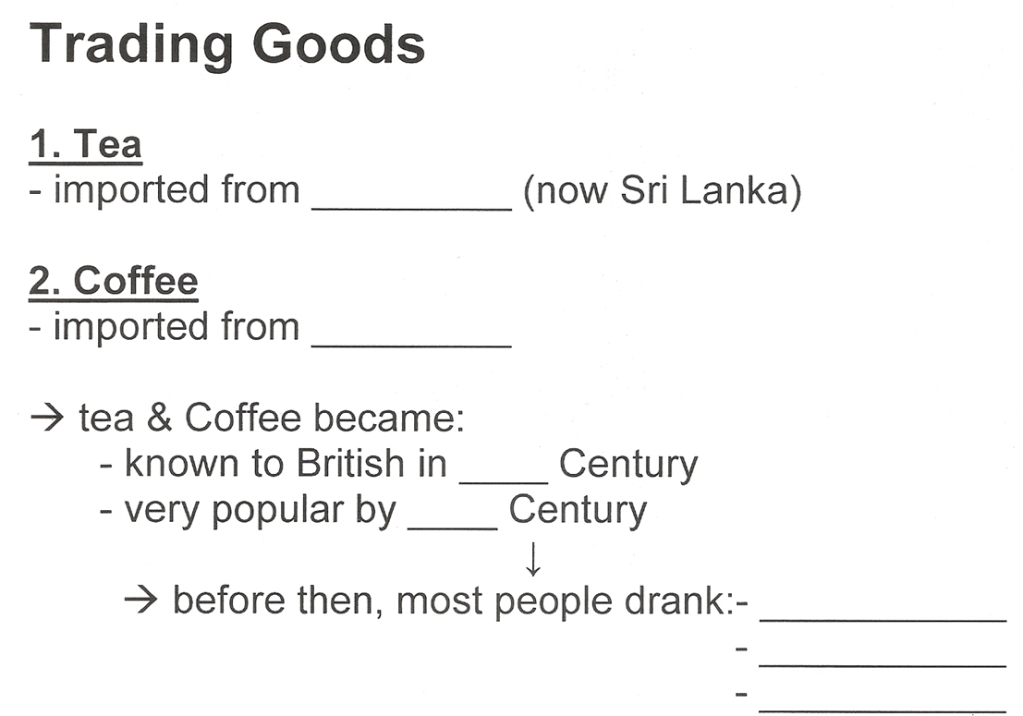
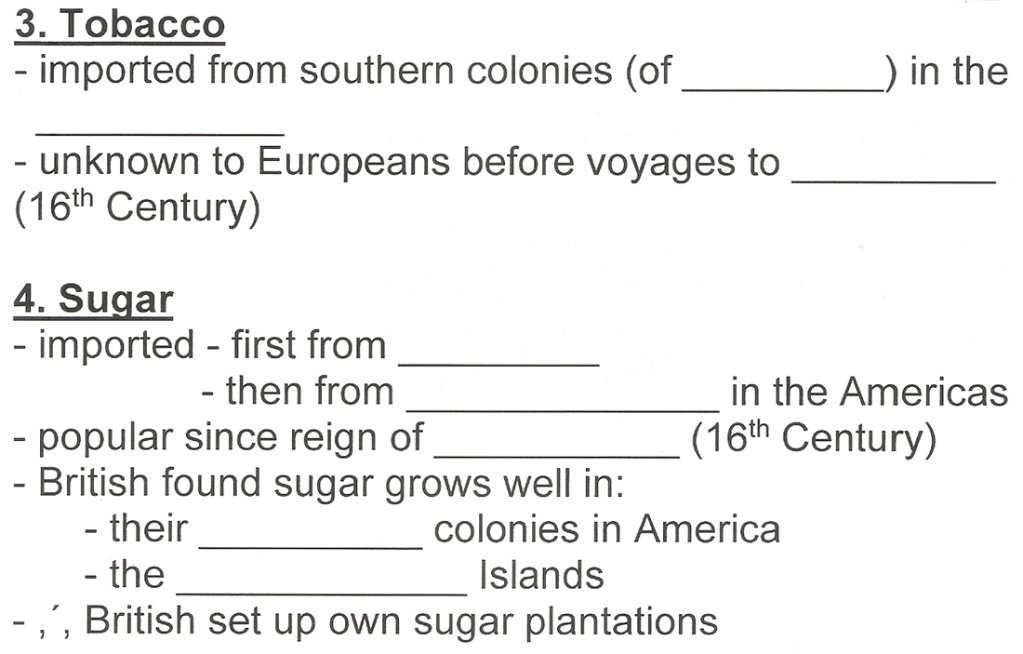
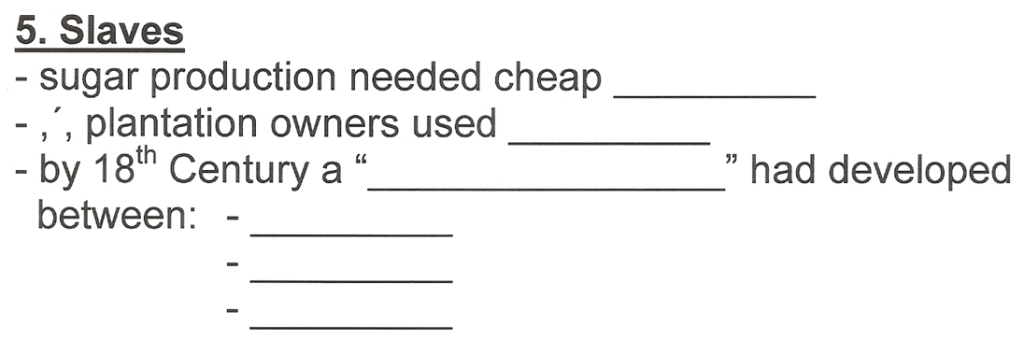
The video below explains what good Britain traded in….
Trading Goods. (2:34 minutes long)
8.
Fill in the missing information on p.70-71 in your Workbook.
(WordPress advertisements may appear below.)
Year 7A & Year 7B
Today you are going to continue looking at the claims to the throne…
Follow the order in which I give you instructions:
In the previous lesson we looked at the king of England, Edward the Confessor, who died in January 1066 without an heir to the throne. You learnt that there was a succession crisis in England. Who should be the next king of England? Today we will continue to look at the various claims to the throne, by means of a series of rather unique videos… But we will first mark some work.
1.
Task 2 on p.56-58.
2.
Watch this series of 8 short video clips about “The Succession Crisis & Claims to the Throne”:
When Edward died there was a succession crisis…
1. What was a succession crisis? (1:12 minutes long)

So, who would usually become the next king? This is not so simple to answer…
2. Saxon customs main. (2:18 minutes long)
William, Duke of Normandy claimed the throne….
3. William’s ambition. (2:06 minutes long)
Harald Hardrada claimed the throne….
4. Hardrada’s claim. (2:01 minutes long)
The fact that Edward did not have any children complicated matters even further…
5. Edwards lack of children. (0:39 minutes long)
Why did Edward not openly appoint someone to be heir to the throne?
6. Edward’s Capriciousness. (2:38 minutes long)
England was wealthy and a great prize for any king!
7. Wealth of England. (1:09 minutes long)
Harold Godewinsson’s claim to the throne….
8. Nature of Harold’s coronation. (1:21 minutes long)
3.
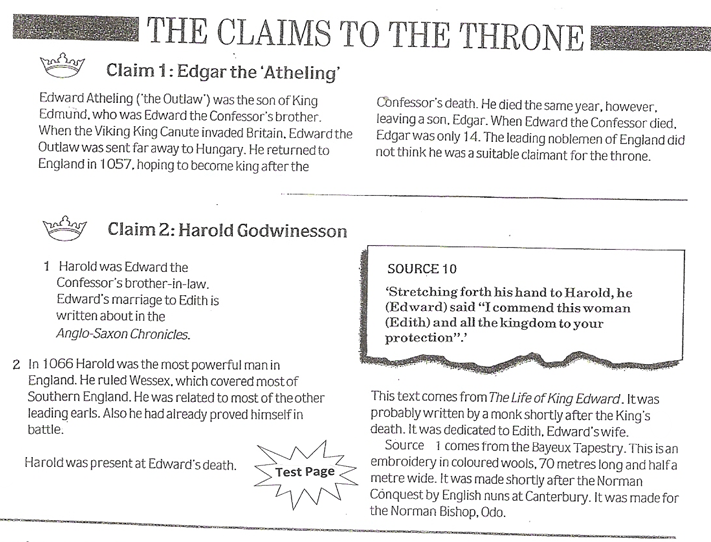
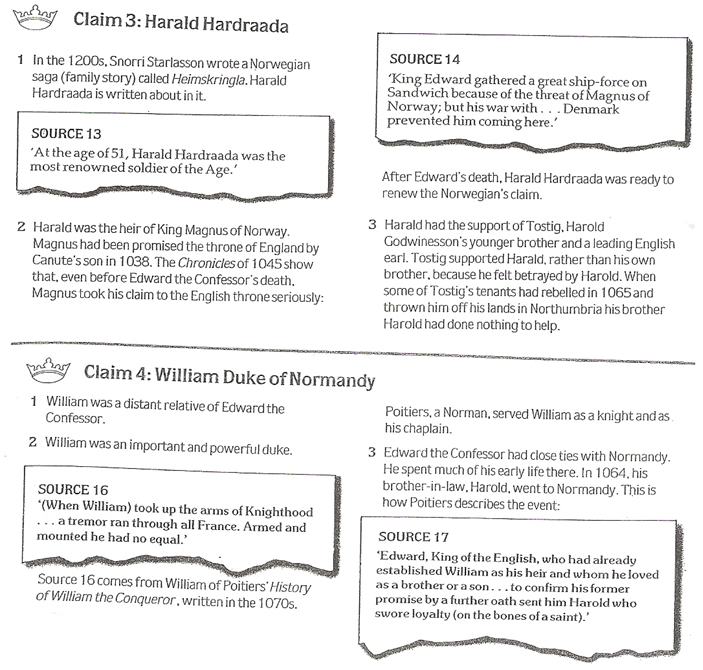
Refresh your memory…
“The Claims to the Throne”, p.64.
4.
Let’s consider the Scandinavian link to England once more, to determine what claim Scandinavian kings had on the English throne…
Claims of Scandinavian Kings. (1:47 minutes long)
5.
Now, let’s test your knowledge and understanding…
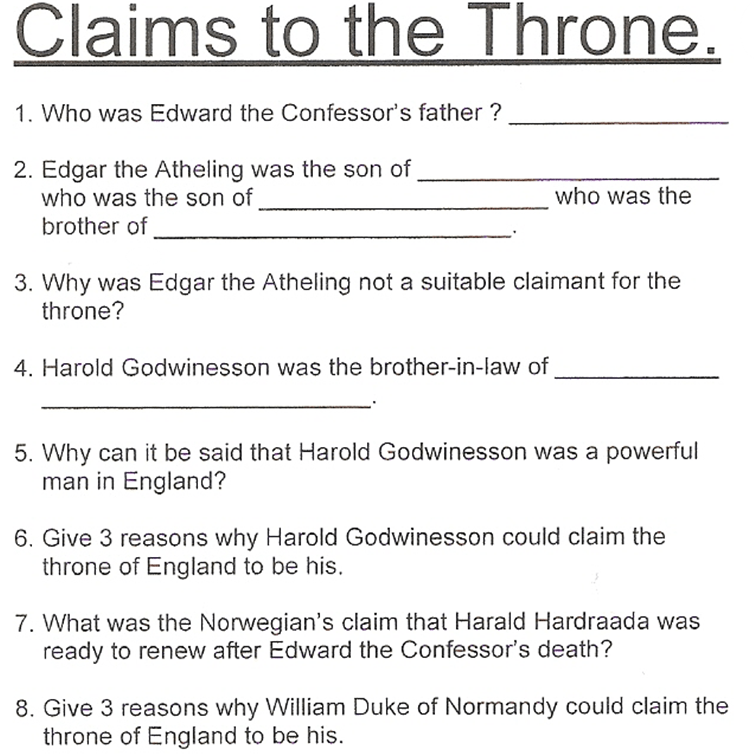
“Claims to the Throne”, p.66.
(You must do questions 1, 2 and 4 in your workbook – simply fill in the missing information.)
6.
Finally, watch the following video clip that gives good background information about the Anglo-Saxons, Vikings and Normans…
1066 – Part One – Anglo-Saxons, Vikings and Normans. (8:35 min long)
6.

Finally, if you still have time, or if you are more interested in the story, you may also watch the following. (This is optional!)
1066 – Part Two – Aethelred “Does Wrong Thing”. (7:49 min long)
1066 – Part Three – Cnut’s Colourful Family. (9:09 min long)
(WordPress advertisements may appear below.)
Year 7
Today you are going to investigate the succession crisis after Edward the Confessor’s death…
Follow the order in which I give you instructions:
1.
1.
Look at your test result:
First, look at your test result (Homework-7) and also see where you have perhaps lost marks:
2.
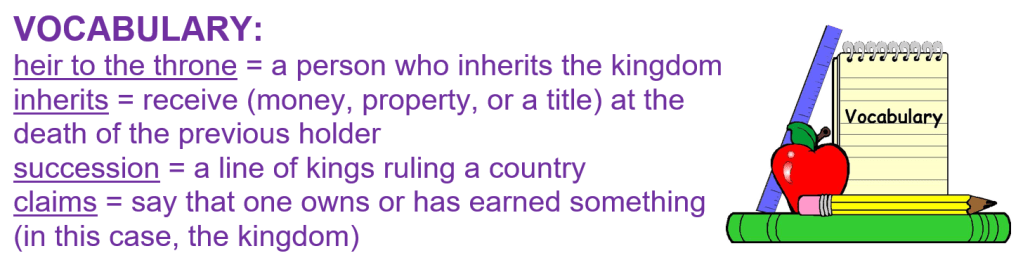
Here is a reminder of vocabulary that you need to be familiar with:
3.
What was the crisis? The crisis was that it was not sure who should succeed Edward the Confessor.
The succession crisis started with the death of Edward the Confessor. Watch the following video clip about the “The Death of Edward the Confessor” – don’t worry too much about the dates!
5th January 1066: Death of Edward the Confessor. (2:53 min long)
4.
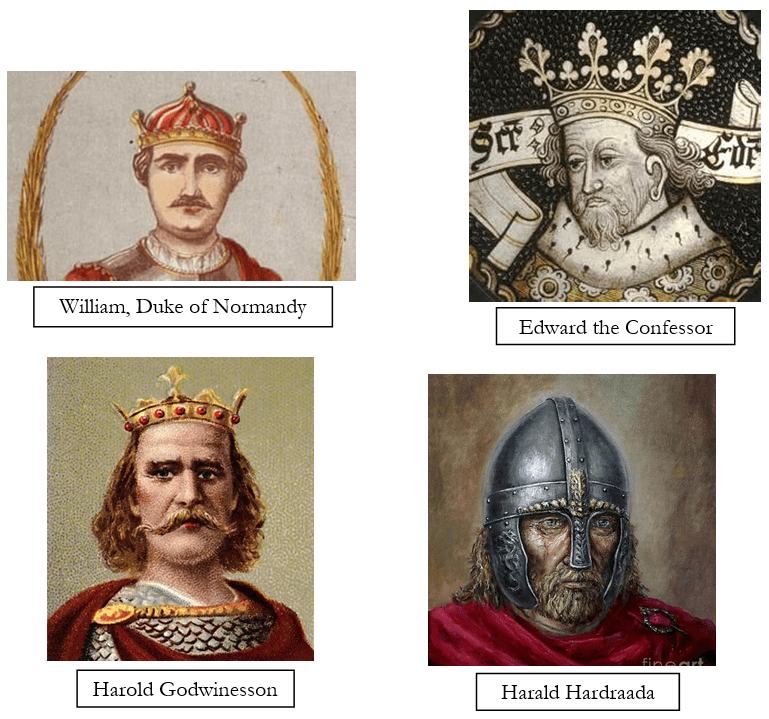
So, who should be the next king of England? There were four claimants to the throne, as explained in the video below…
Claimants to the throne in 1066 England. (5:37 min long)
5.
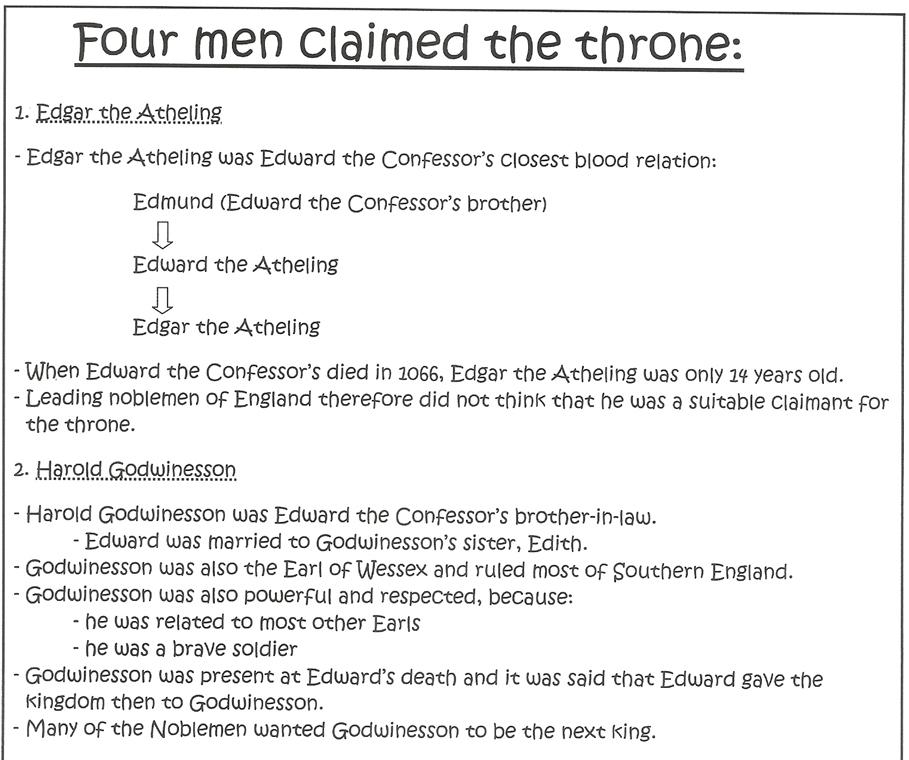
Now, let’s see what your book has to say about the four claimants to the throne…
“Four men claimed the throne”, p.65.
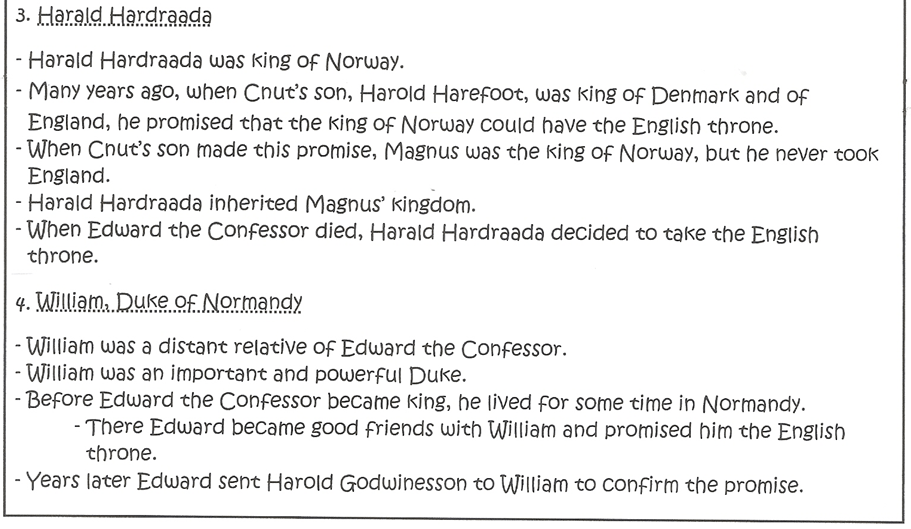
6.
Both Halold Godwineson and William, Duke of Normandy were determined to be king of England. Watch this animation: a “conversation” between Harold Godwineson [the one with the crown] & William Duke of Normandy [the one with the blue cloak]…
Harold vs William – Whose Crown? (1:28 min long)
7.
Finally, if there is still time…
“The Claims to the Throne”, p.64.
8.

On This Day: 5 January 1066 The Death of Edward the Confessor. (3:30 minutes)
(WordPress advertisements may appear below.)
(WordPress advertisements may appear below.)
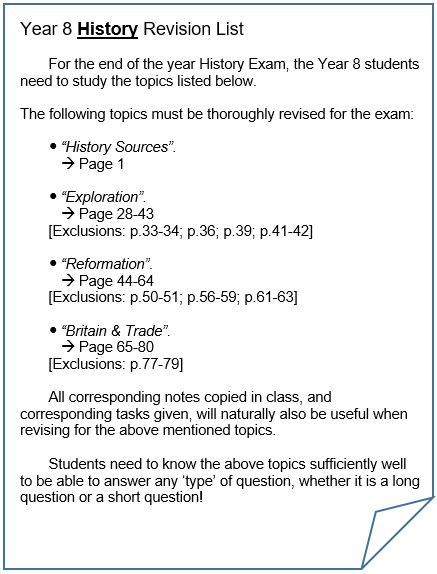
(WordPress advertisements may appear below.)

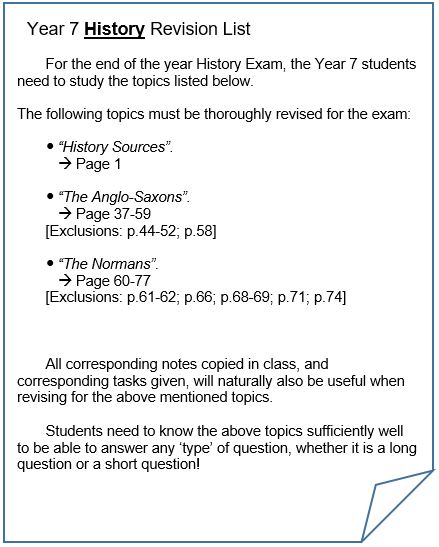
(WordPress advertisements may appear below.)
Homework Task 3 (p.59-60) is due:
(See Schoology.)
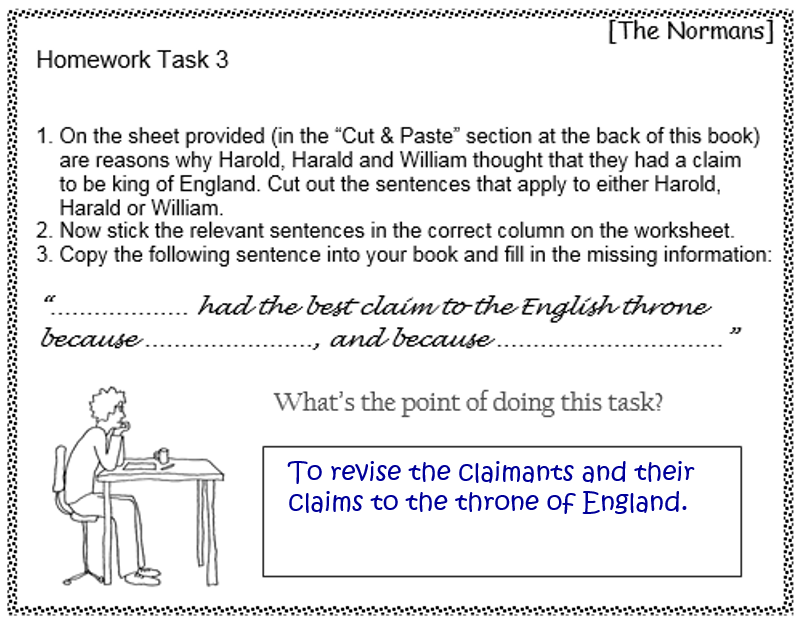
Read the pages about the claimants to the throne again…
(WordPress advertisements may appear below.)
Homework Task 2 (p.56-58) is due:
(See Schoology.)
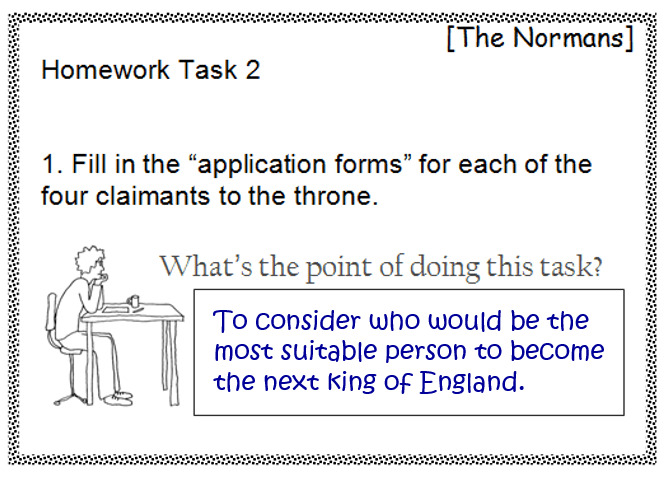
Read the pages about the claimants to the throne again…
(WordPress advertisements may appear below.)
Homework Task 1 (p.55-57) is due:
(See Schoology.)

You may need to ask Google to help you…
(WordPress advertisements may appear below.)
Year 8A & Year 8B
Today you are going to mark some work and finish the topic on the Reformation.
Follow the instructions step by step:
1.
&
Task 4 on p.38-39.
Edward VI – Crossword Puzzle. (1:01 minutes long)
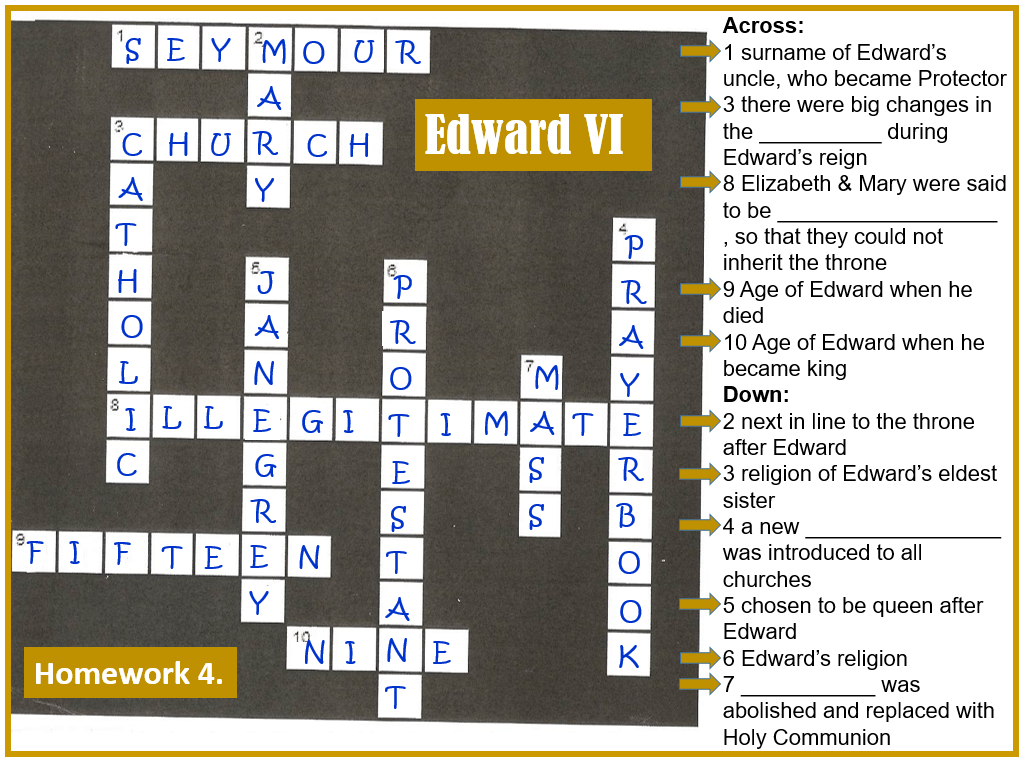
2.
Mark the questions on “Church of England, p.62”.
(You need to swipe the slides to the left to navigate through the answers.)
3.
Make sure you know these words well enough to explain their meanings… (This is on p.64 in your workbook.)
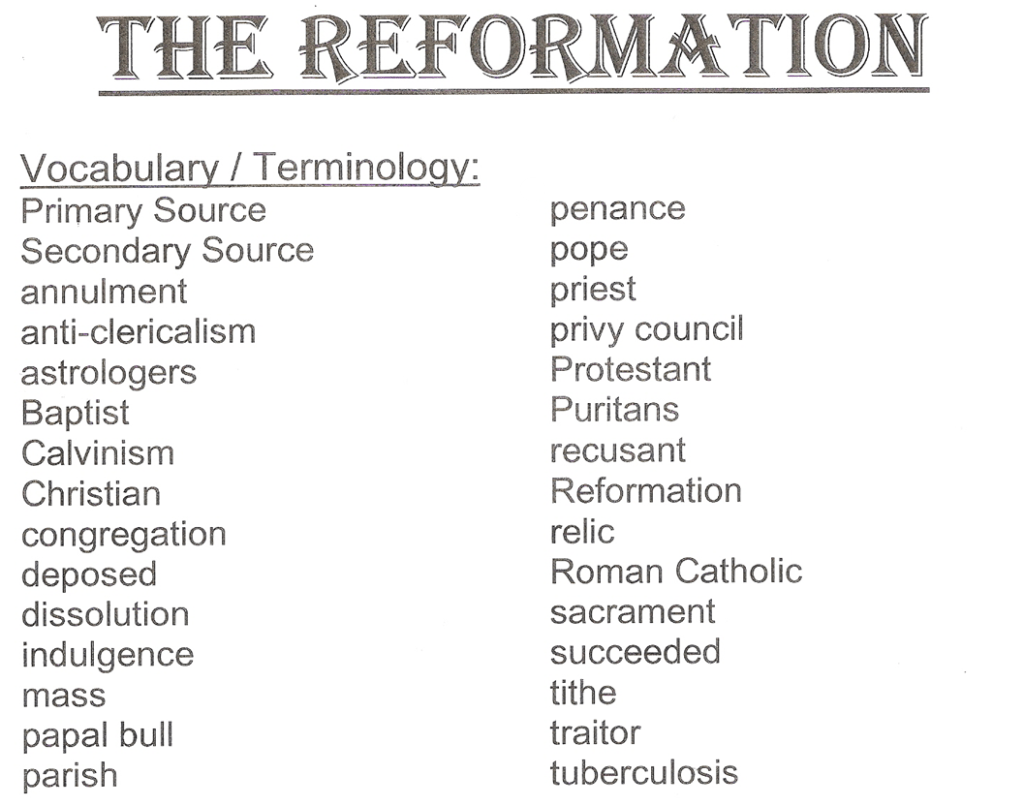
4.
Finally, complete the Mood-O-Metre on The Reformation, on p.64.
5.

Complete the task on p.61

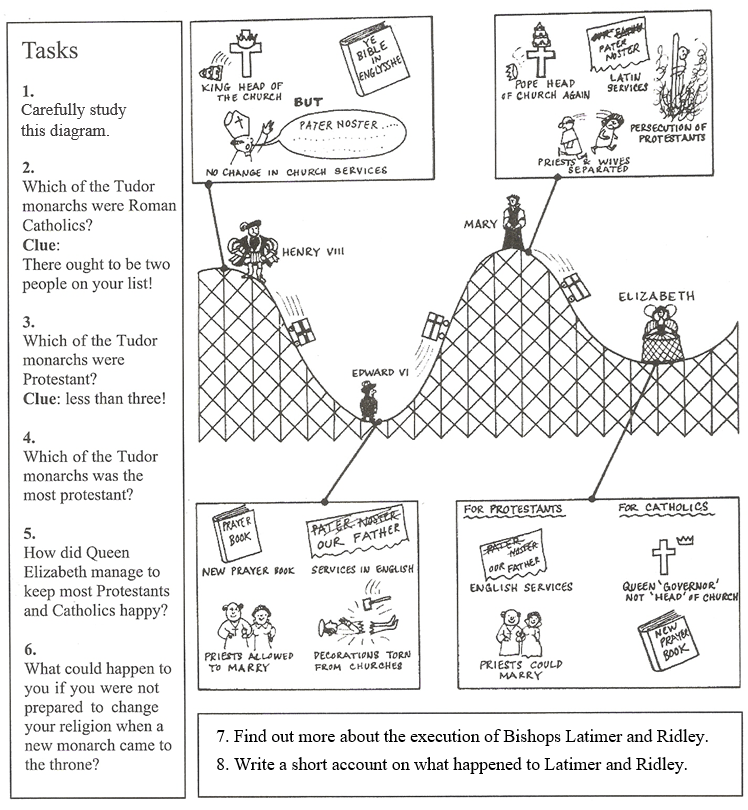
6.

(WordPress advertisements may appear below.)
Year 9A & Year 9B
Today we are going to start with a new topic:
“The Holocaust”
Follow the instructions step by step:
1.
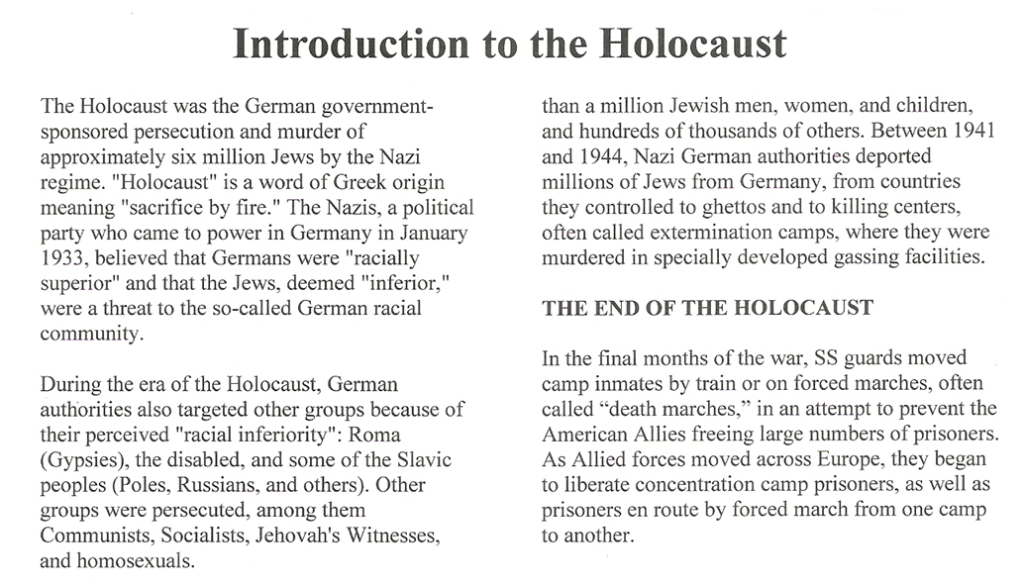
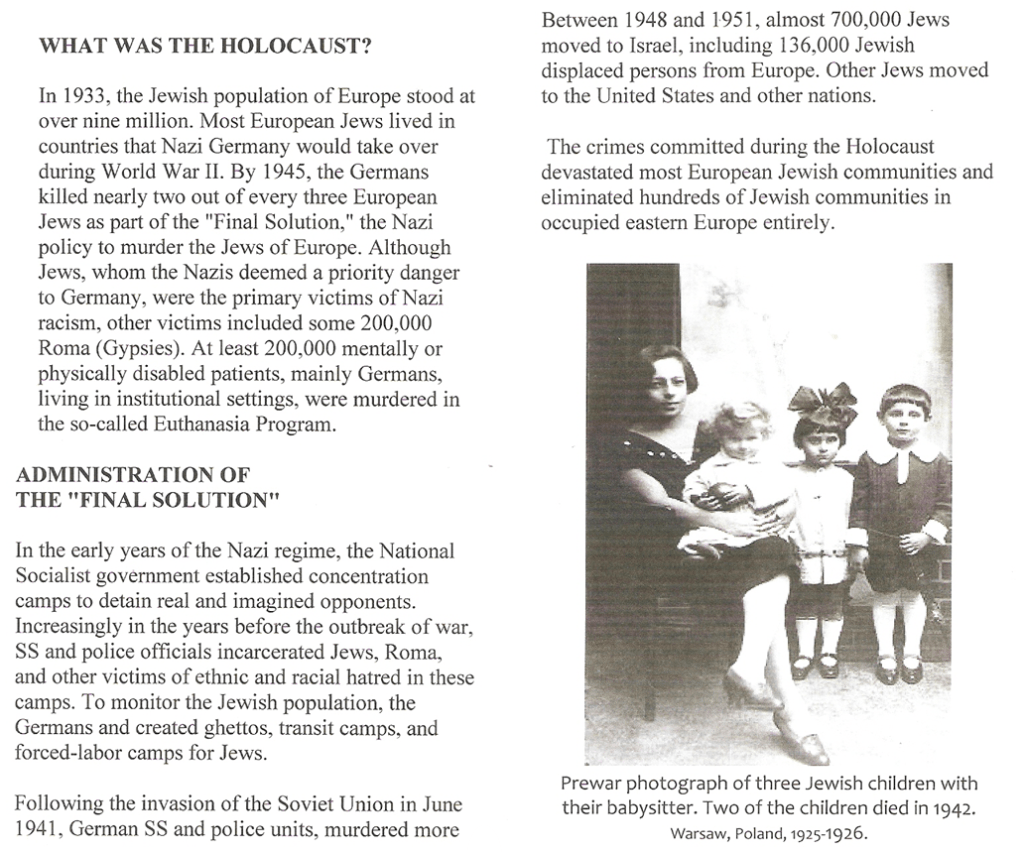
Let’s start with a brief explanation of what is meant by the word “holocaust“…
What is the Holocaust Part 1/7: Introduction. (0:57 minutes long)
2.
Page 44
3.
Let’s look at a detailed overview of the Holocaust…
The Holocaust,Genocides, and Mass Murder of WWII. (13:38 minutes long)
4.
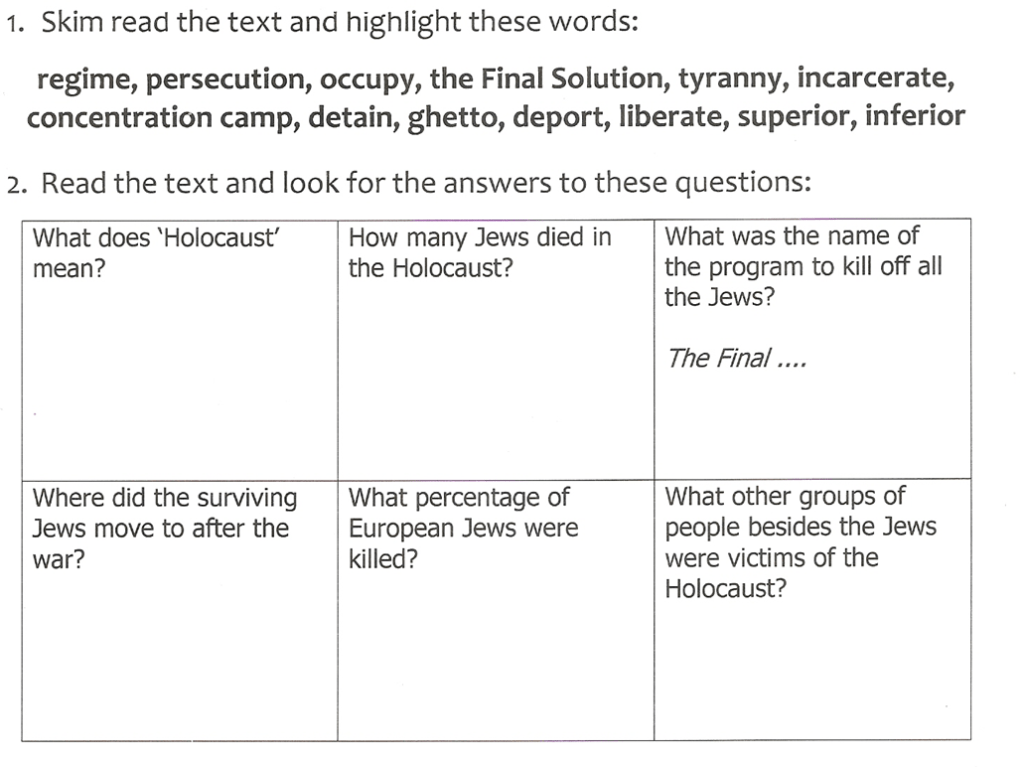
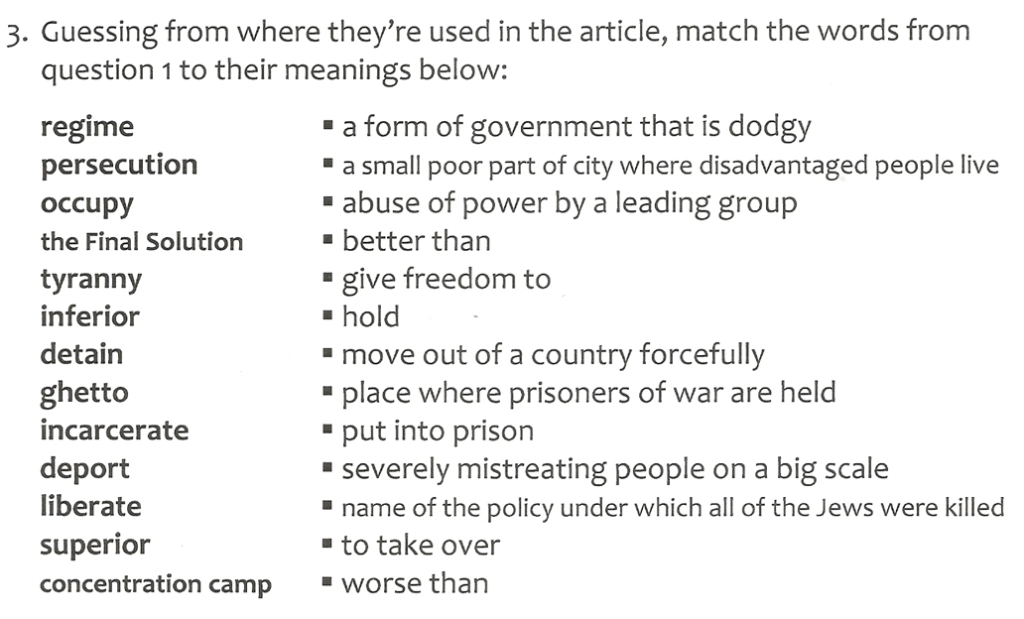
Do tasks 1-3 (p.45)
5.
Mark the task on p.45.
Introduction to the Holocaust – Task 1, p.44 & 45.

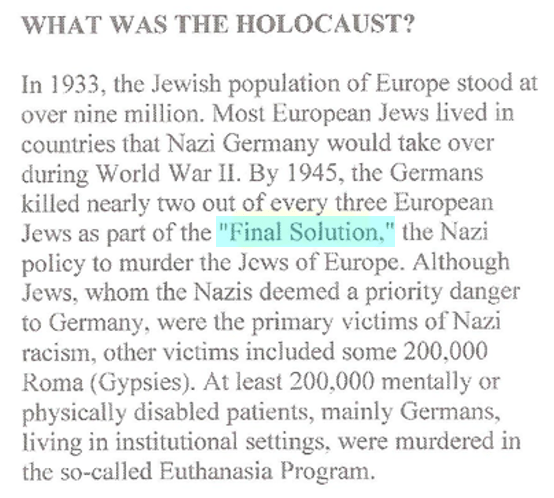

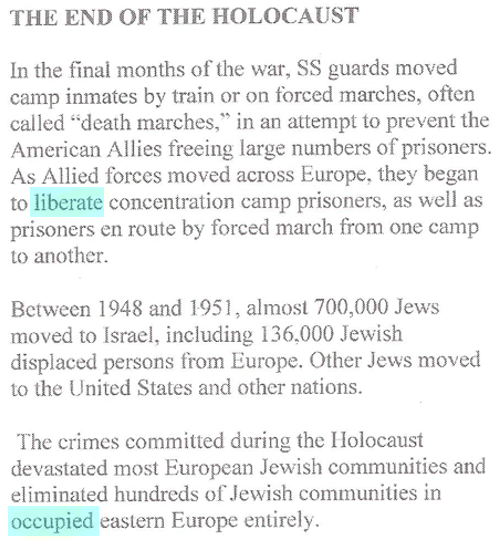
Introduction to the Holocaust – Task 2, p.45.
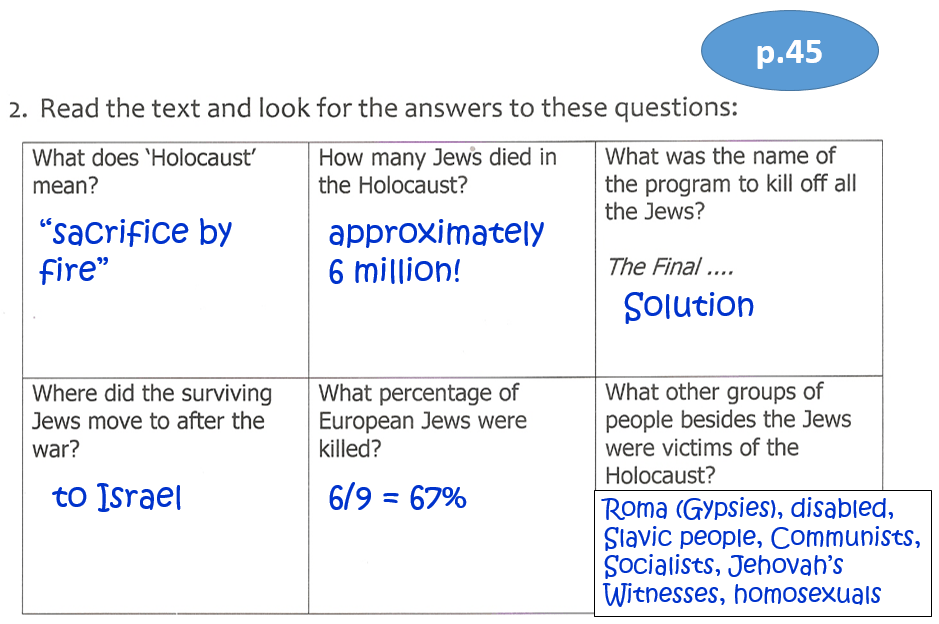
Introduction to the Holocaust – Task 3, p.45.

6.

When a former Nazi meets a Holocaust survivor. (7:54 minutes long)
7.
Now watch this very detailed explanation, an academic overview, of the Holocaust:
(You need to CONCENTRATE!)
The Holocaust. (9:43 min long)
(WordPress advertisements may appear below.)
Homework Task 7 (p.43) is due:
(See Schoology.)
This is a Test!!

Remember that you also have fill-in notes on each of the monarchs…
Read the info-gram below to remind yourself how to study…
(WordPress advertisements may appear below.)
Homework Task 6 (p.40-42) is due:
(See Schoology.)
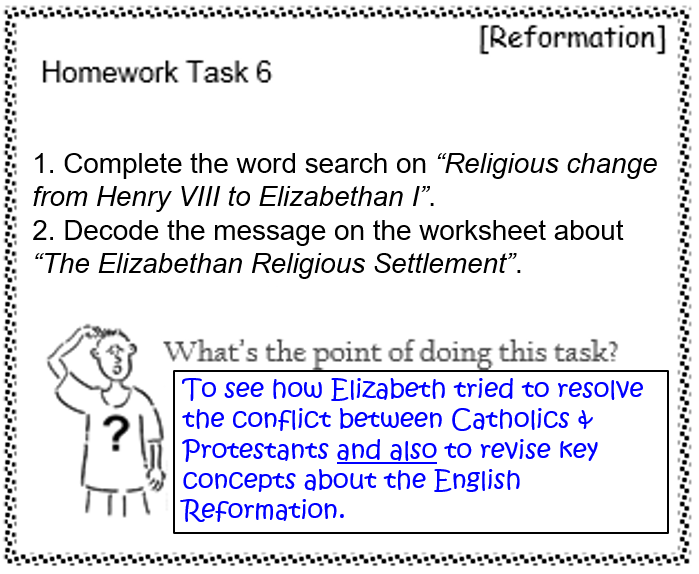
If you get stuck, pages 49 and 60 in your workbook may be useful…!
(WordPress advertisements may appear below.)
Today we are going to start a series of exam preparation lessons…
We will:

Your homework for today was to revise the “Post-War Peace Treaties” topic…
1.
Let’s first make sure that you know which exam papers you need to answer in the GCSE History course…
Exams Explained. (2:00 minutes long)
So, for this coming end of year exam (in Year 10) you will do the following Exam Papers:

2.
It is very important that you know how to manage your time in the exams. Here is useful time management advice…
Time Management. (1:34 minutes long)
3.
And, here are a few more bits of advice…
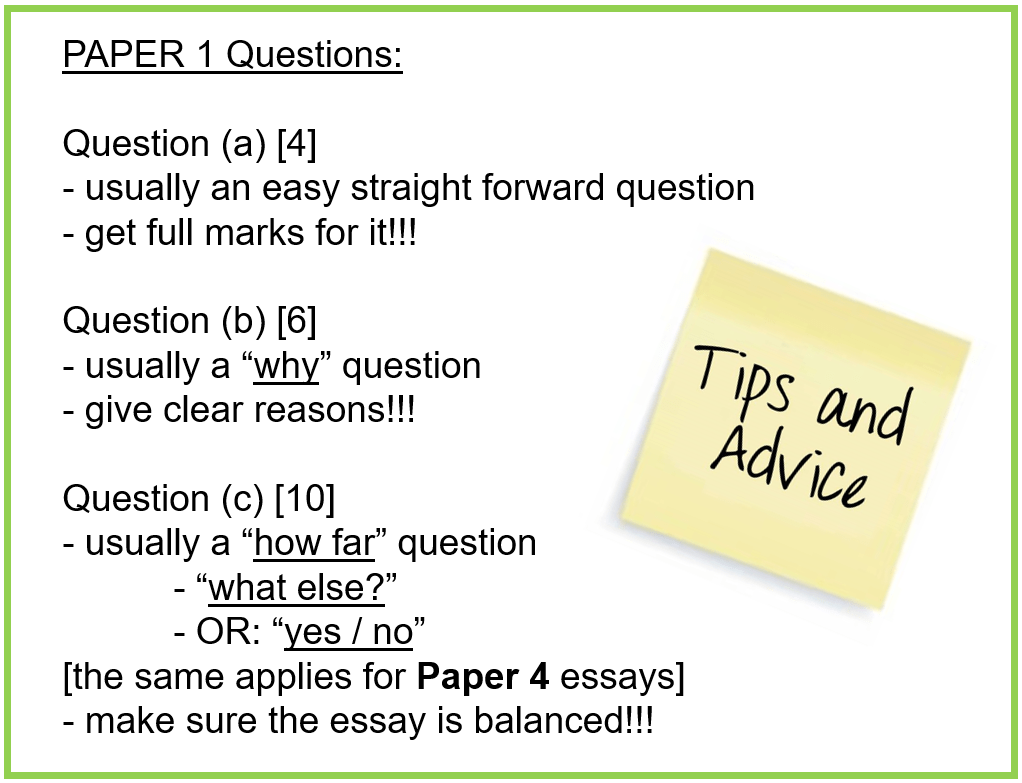
4.
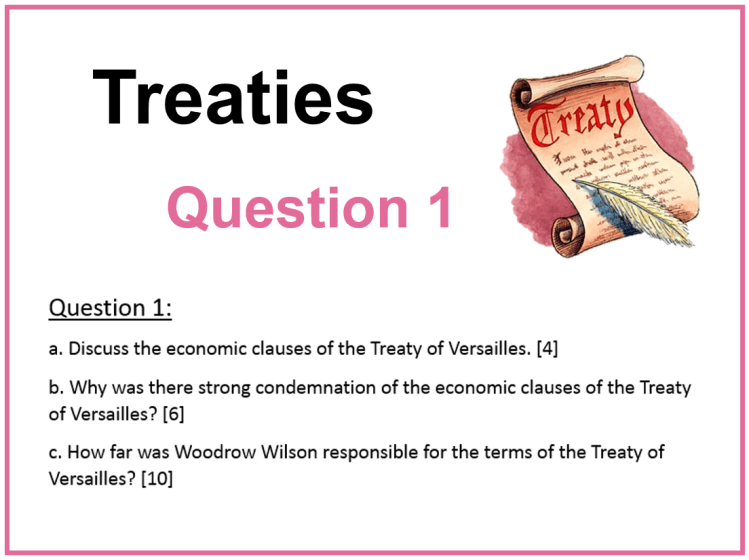
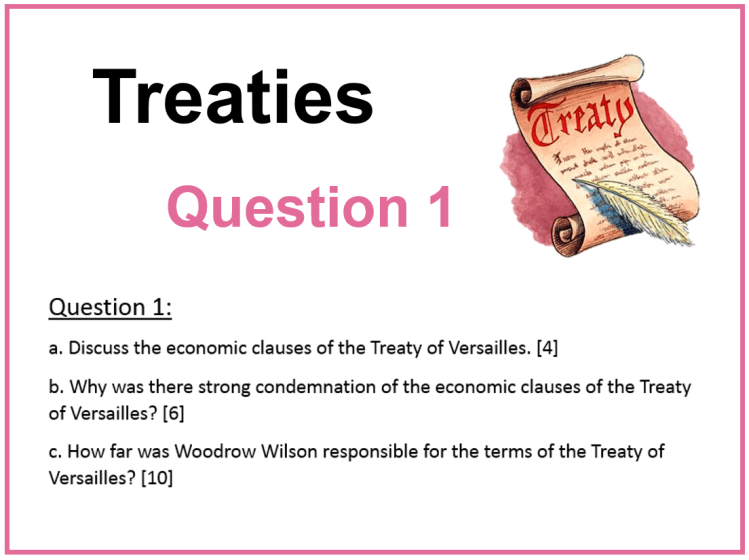
It is time to practice answering an exam question on the Post-War Peace Treaties… Navigate you way through the slides below and answer the questions given in the slides:
Here’s what you have to do:
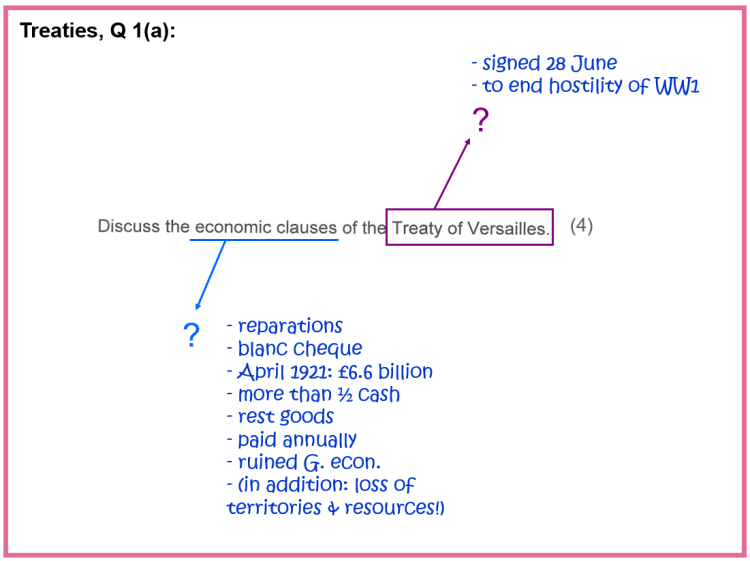
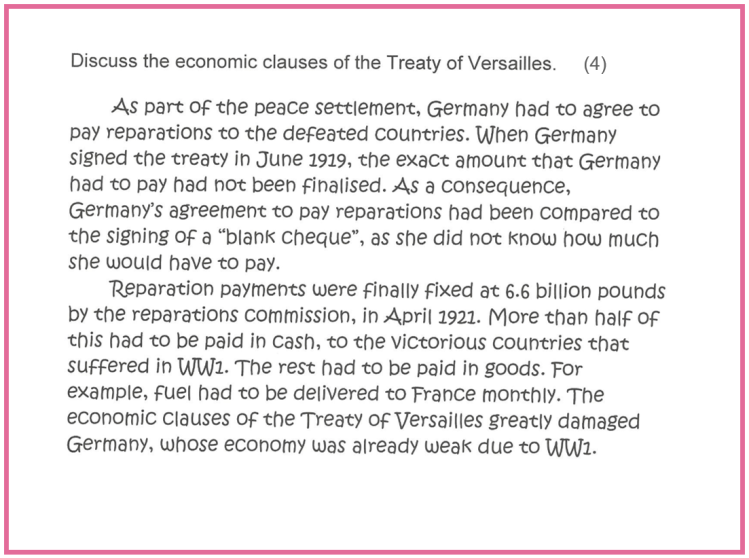
1. Copy Treaties Q1 (a) at the top of the first paper sheet given to you in class:
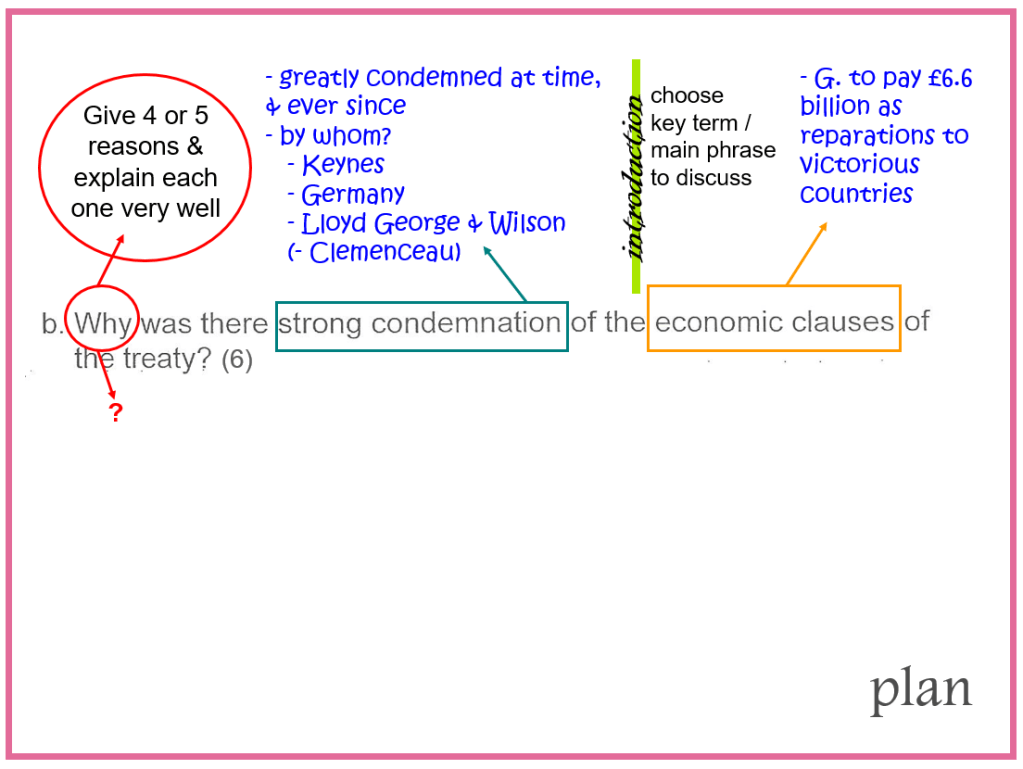
Discuss the economic clauses of the Treaty of Versailles. (4)
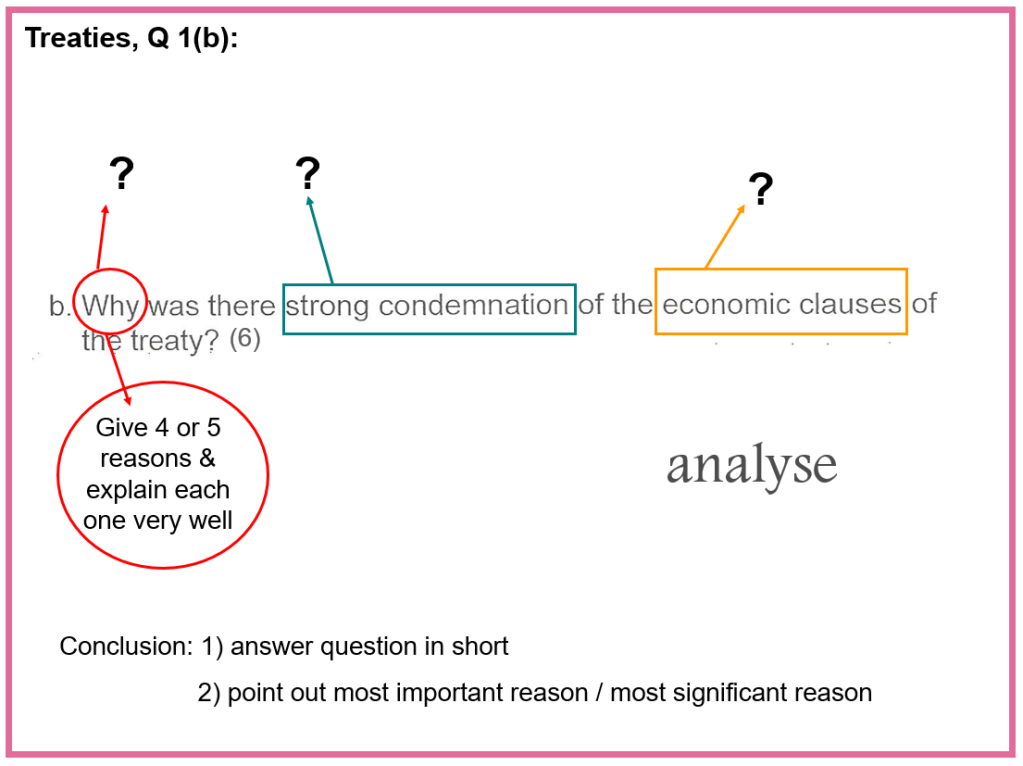
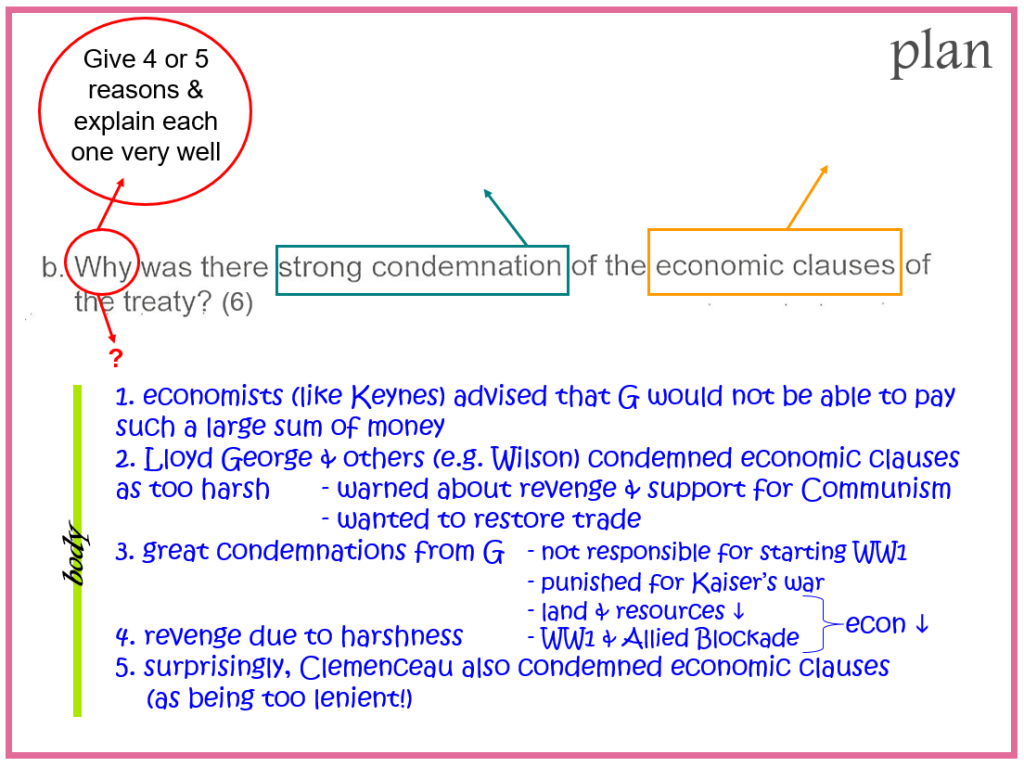
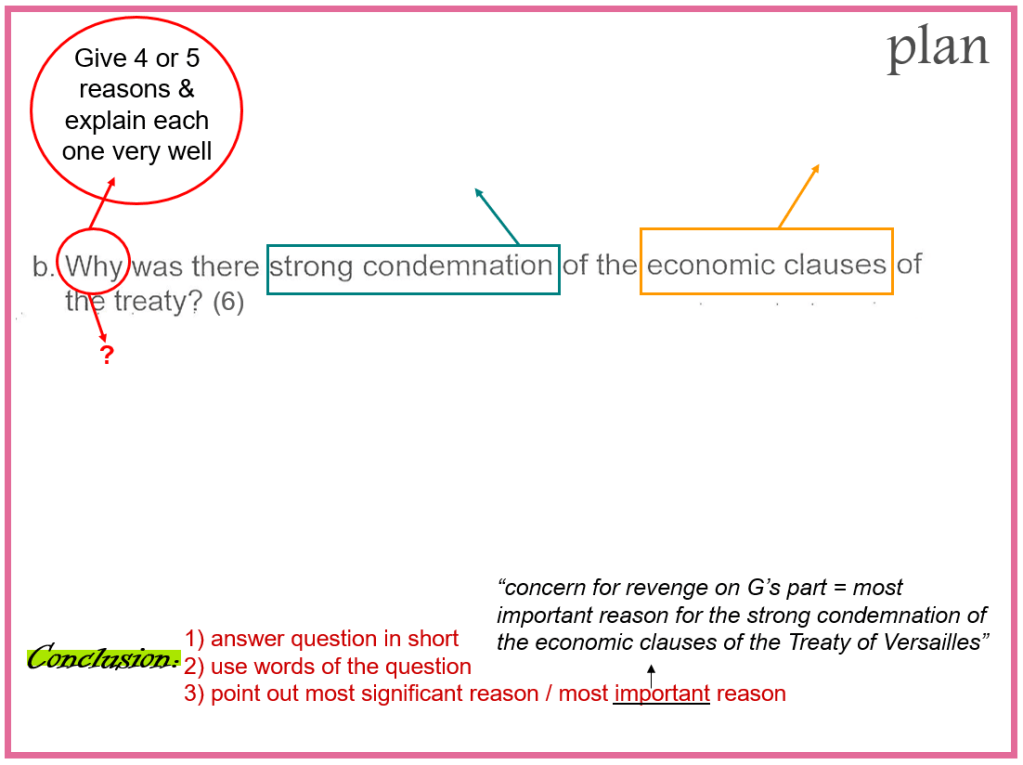
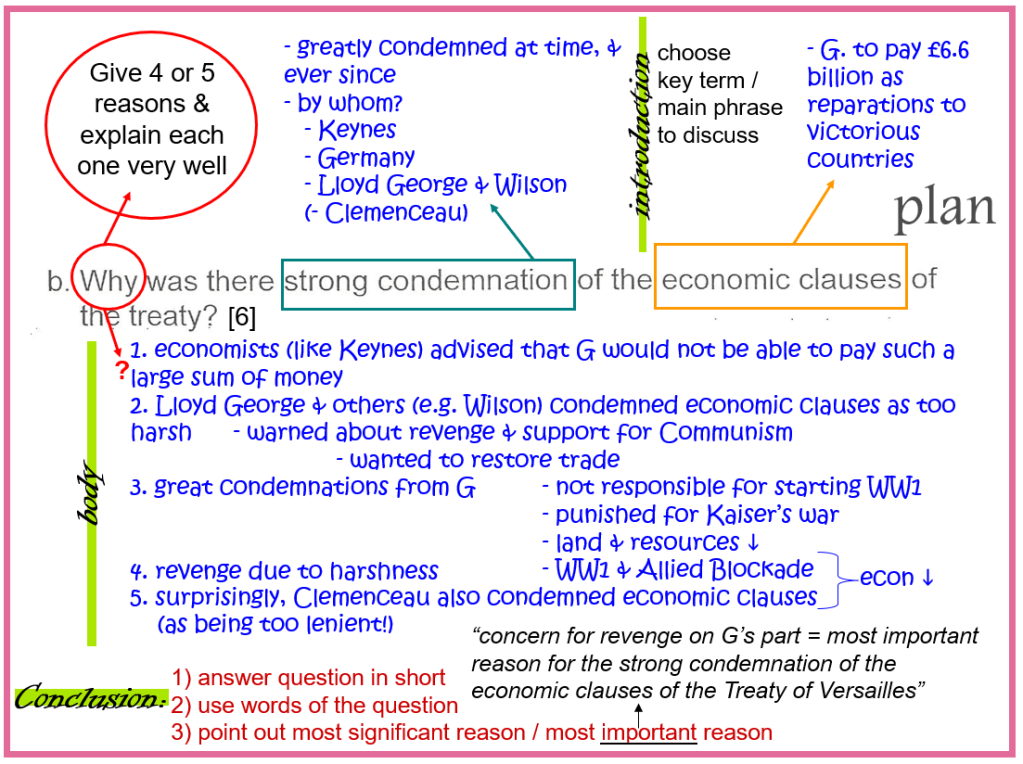
2. Copy Treaties Q1 (b) at the top of the second paper sheet given to you in class. Then also copy the same question into your essay writing book, on the middle of a new page, so that you can plan the answer in your essay writing book:
Why was there strong condemnation of the economic clauses of the Treaty of Versailles? (6)
3. Copy Treaties Q1 (c) at the top of the third paper sheet given to you in class. Then also copy the same question into your essay writing book, on the middle of a new page, so that you can plan the answer in your essay writing book:
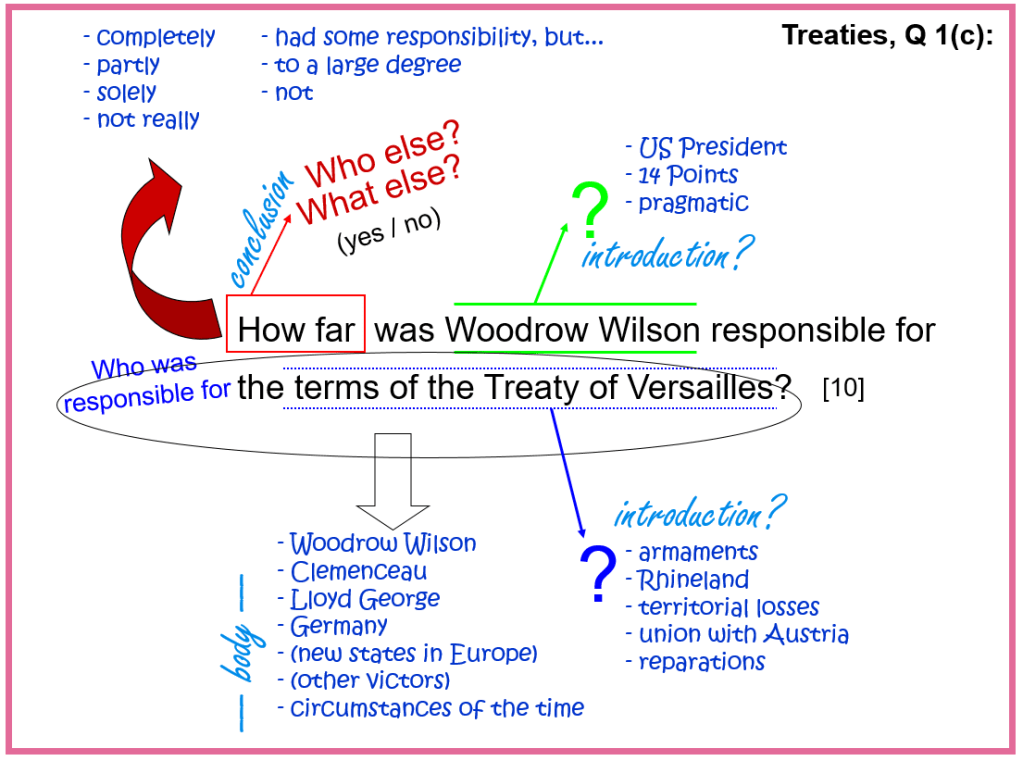
How far was Woodrow Wilson responsible for the terms of the Treaty of Versailles? (10)
5.
Now, analyse and plan Treaties Q2 (b) and (c) very quickly… See what needs to be done and write down a few ideas…
6.
Finish Treaties Question 1 (a,b,c), on paper for the next lesson!
It is very important that you hand this question in on time for assessment. If not, I will not be able to give you feedback on your answers!
(WordPress advertisements may appear below.)
Year 7A & Year 7B
Today you are going to learn a bit more about the Scandinavians, as they had close ties to Britain…
Follow the order in which I give you instructions:
1.
“Romans & Celtic Missionaries, p.58”
2.
Task 1 on p.54-55.
3.
In our topic on the Normans are some words that you need to know the meanings of. So, before we continue…

4.
In the previous lesson it was mentioned that:
When Edward the Confessor died, in January 1066, without an heir to the throne there was a dilemma. Why? Because there was now a succession crisis in England. Who should be the next king of England? Look at Edward the Confessor’s family tree to see who you think should be the next king of England…
Edward the Confessor’s Family Tree. (3:43 minutes long)
5.
page 63

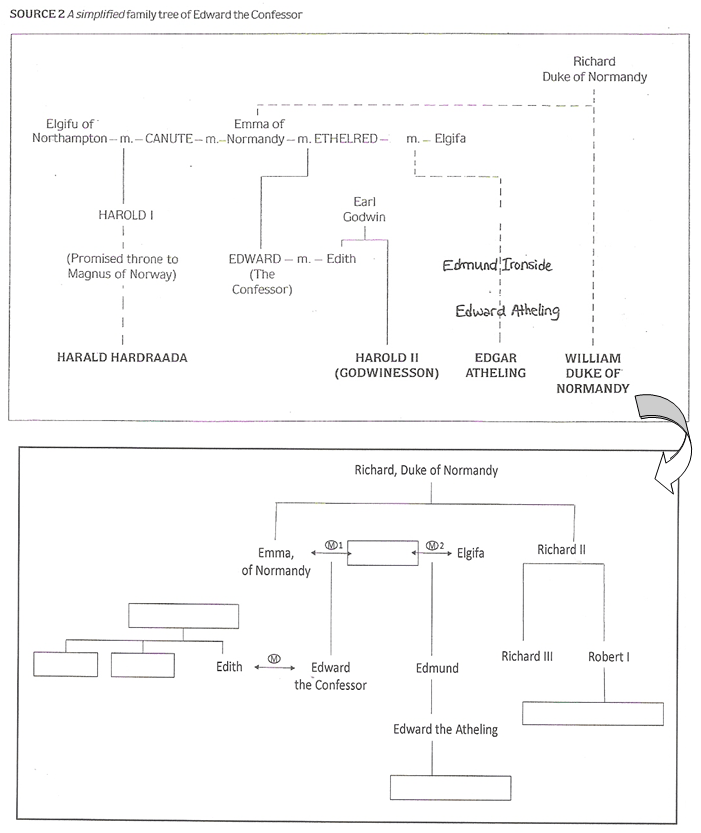
6.

Fill in the missing information on the family tree (p.63).

7.
When Edward the Confessor died without an heir to the throne there were some Anglo-Saxon kings who claimed the throne and there were also some Viking kings who claimed the throne. To understand this better, let’s look at the following story of the kings of England: (You will see how England had Scandinavian kings from time to time. This video has excellent background information – but you do not have to remember all the details!)
King Edward the Confessor’s England: Anglo Saxons, Viikings and Normans, why did Edward become king? (15:20 min long)
8.
Here is another short video clip that explains Edward the Confessor’s family background:
Edward the Confessor. (4:15 min long)
9.

(This is a complicated version of who Edward the Confessor was…)
What is Edward the Confessor?, Explain Edward the Confessor, Define Edward the Confessor. (2:25min long)
10.
Use the rest of the lesson to make sure that your books are up to date…
(WordPress advertisements may appear below.)

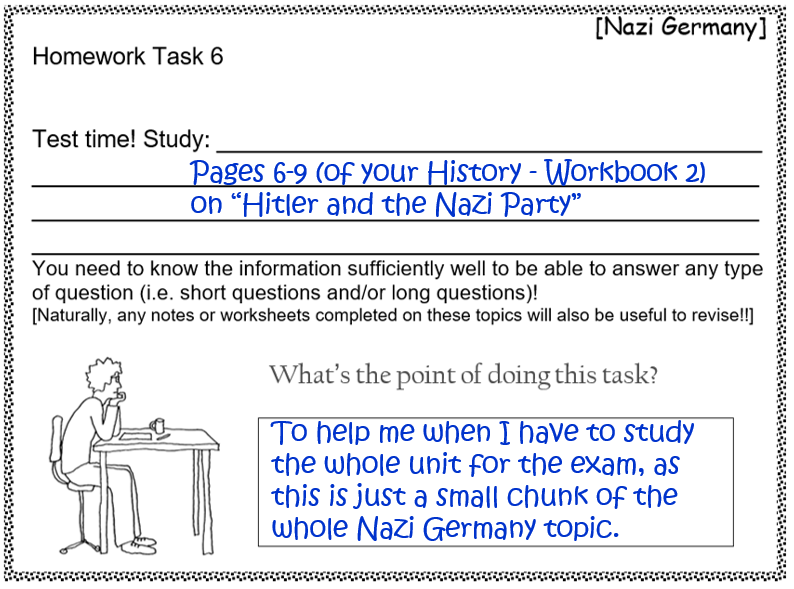
Homework Task 6 (p.53) is due:
(See Schoology.)
This is a Test!!
Option 1:
Option 2:
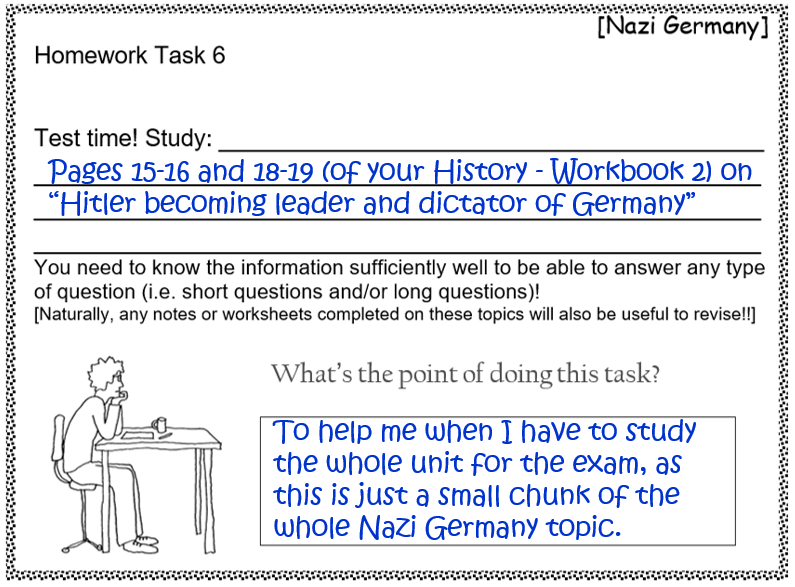
Option 3:
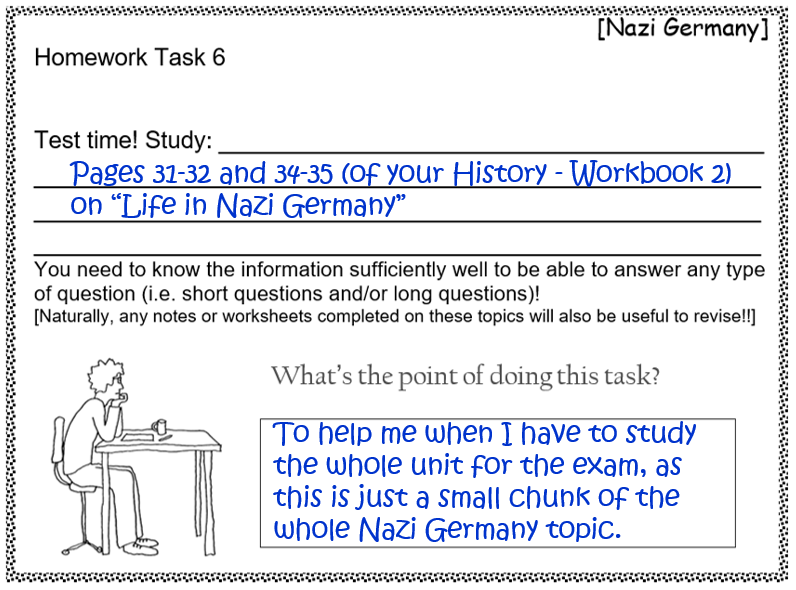
Read the info-gram below to remind yourself how to study…
(WordPress advertisements may appear below.)























 Best study methods