Today you are going to look at the impact that Rasputin’s involvement with the Royal family had on the tsarist regime…
1.
Let’s see what Rasputin connection to the royal family was.
Rasputin. (1:03 minutes long)
2.
The information about “The impact of Rasputin”, p.6.
3.
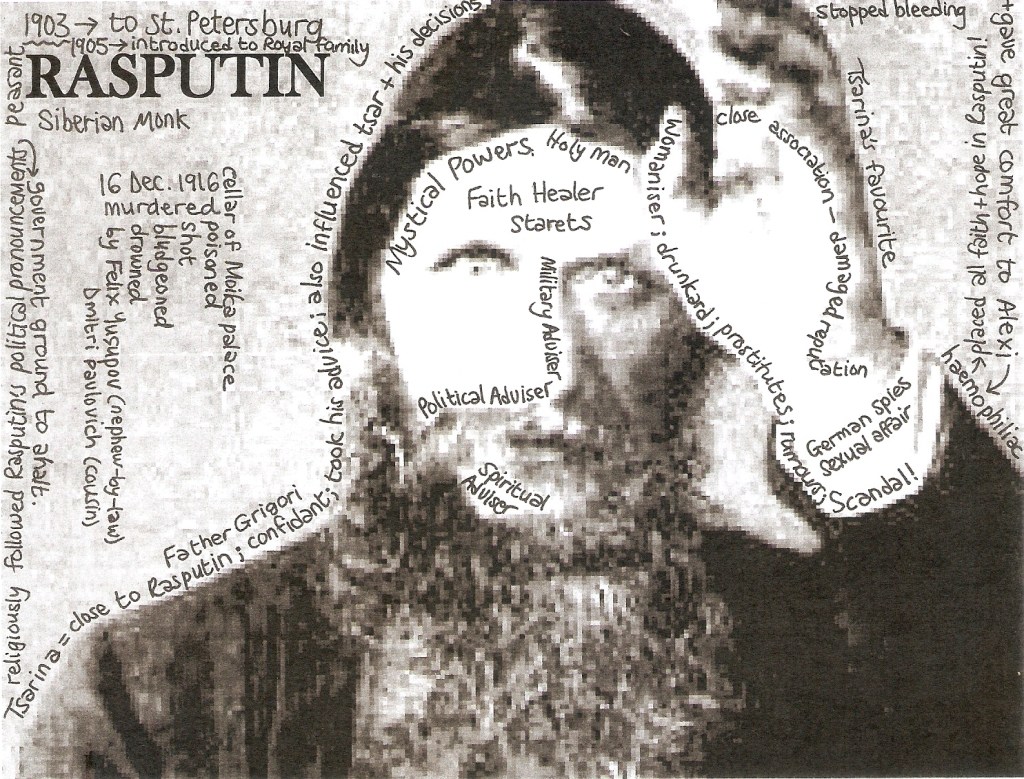
Let’s look at these ‘face-notes’ on Rasputin. By now you should more or less know the following information about Rasputin:
4.
The first part of the page, called “Rasputin”, p.8.
5.
Just for a bit of fun, look at the following video clip: the lyrics of the song cleverly tells the story of Rasputin…
Boney M – Rasputin. (3:40 minutes long)
OR…
Rasputin Boney M with Lyrics. (4:46 minutes long)
6.
The additional material on “Rasputin”, p.7.
7.
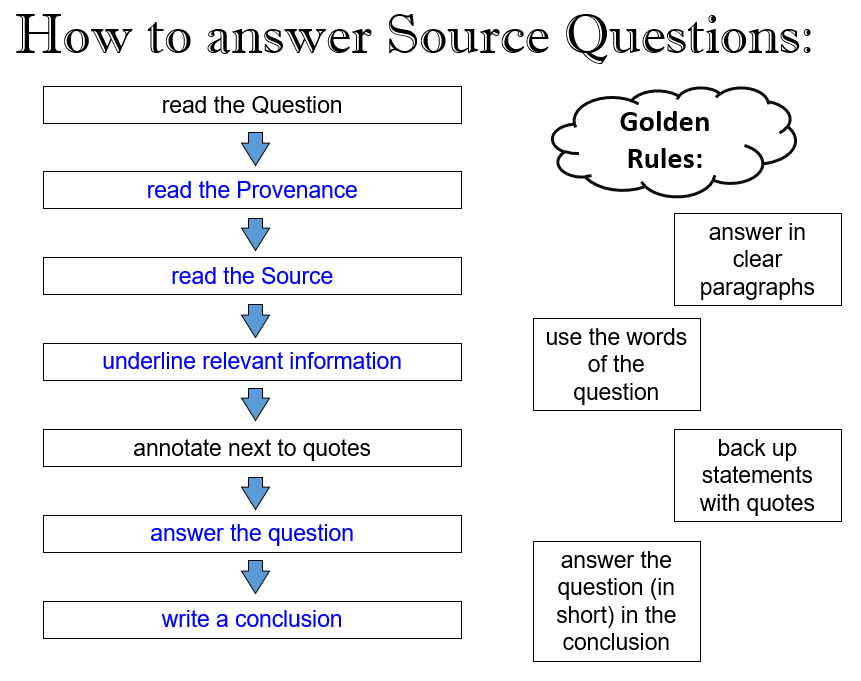
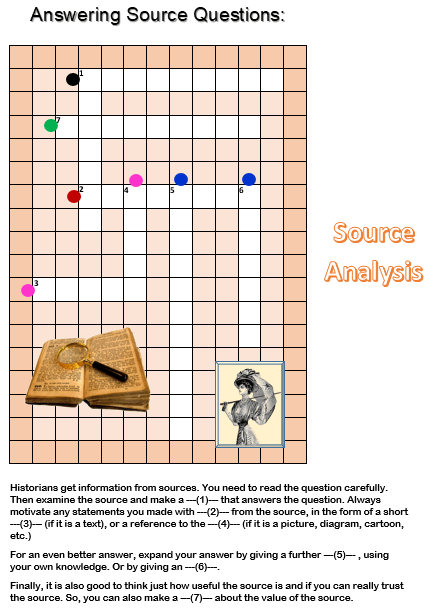
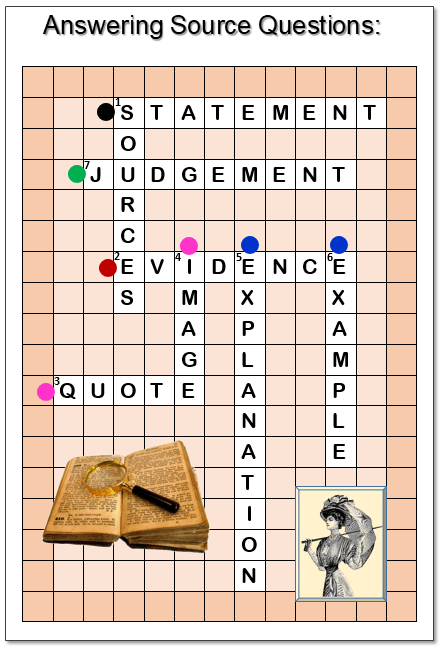
Previously you answered a source question on the coronation of Tsar Nicholas II. Now you are, again, going to practise answering a source question. Let’s first look at some guidance as to how one should approach this type of question. Watch the video below. It shows, by means of a flow-chart, “How to answer source questions”.
(0:54 minutes long)
8.
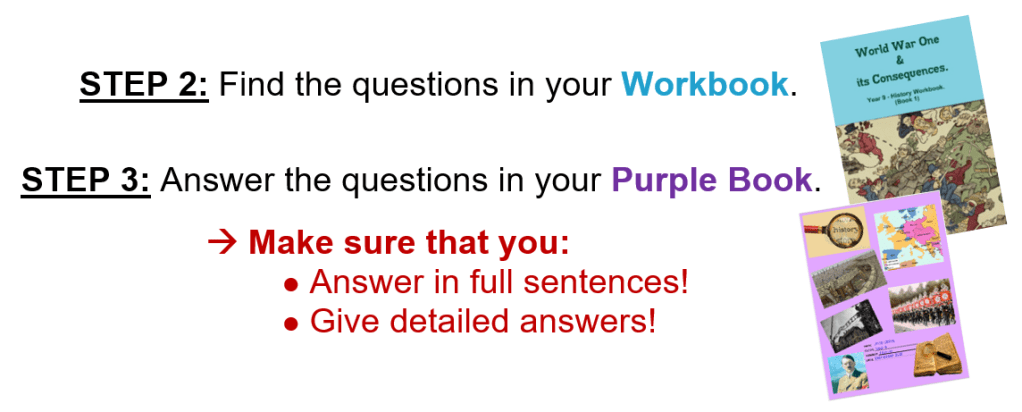
Now copy the information (provided in the slides) onto your copy of the flowchart about “Answering Source Questions”.
9.
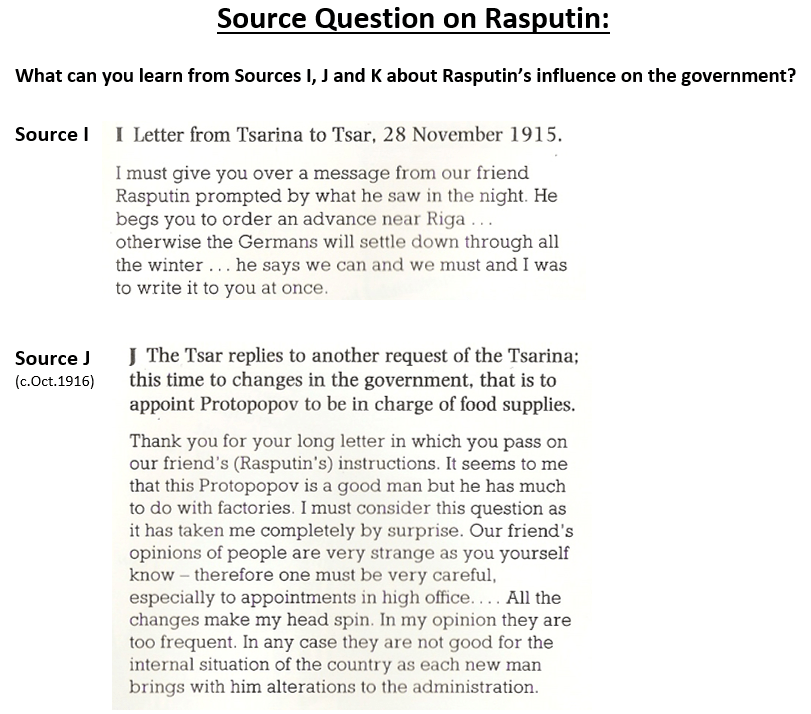
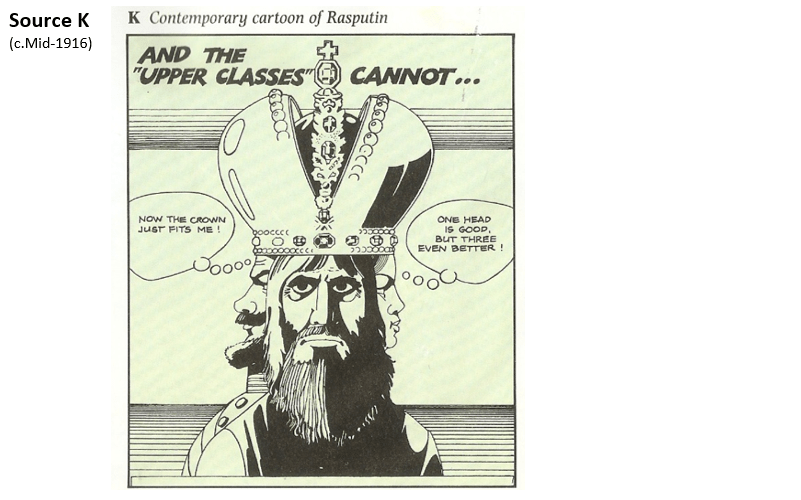
Finally, do the Source Question on Rasputin in your exercise book!
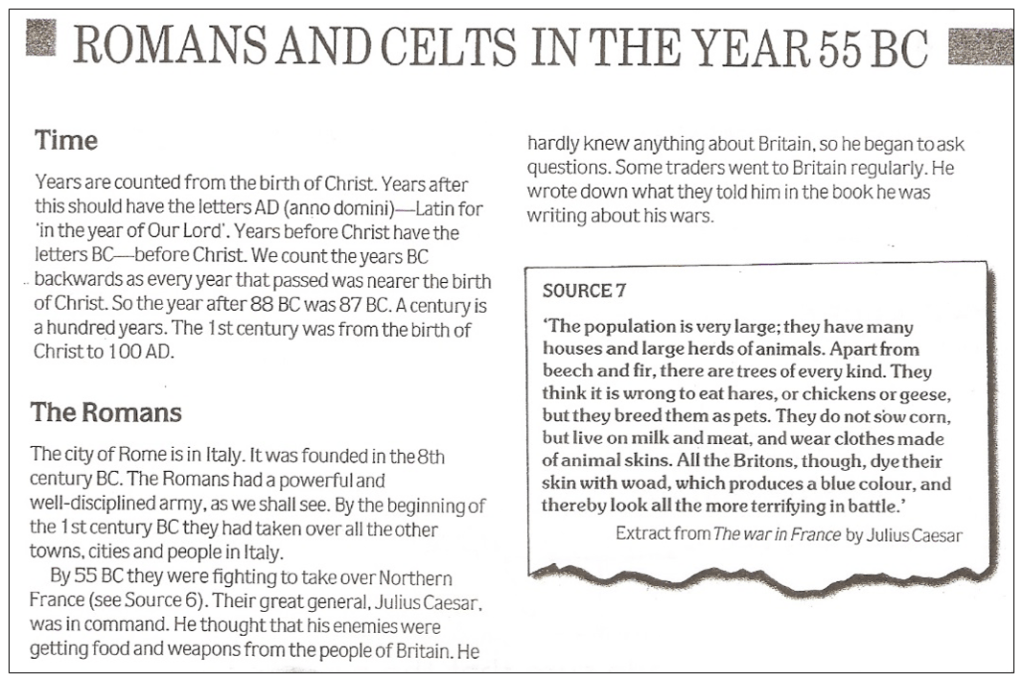
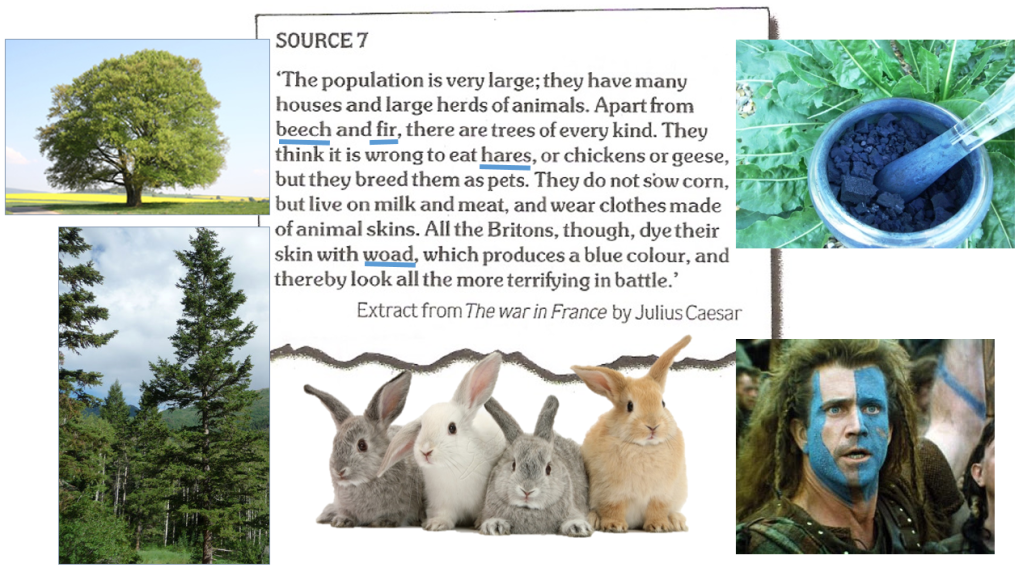
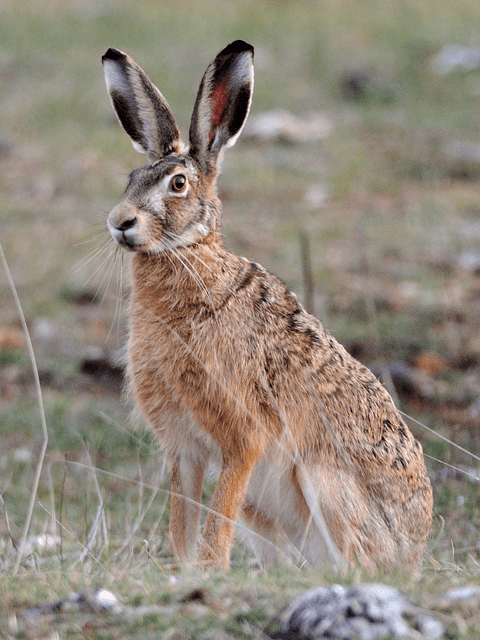
Let’s make sure that you understand the information in Source 7.
Beech and fir are types of trees.
A hare is a type of wild rabbit.
Woad is a cabbage-like plant that Celts used to make blue dye.
If there are more words that you do not understand, look up the meanings in this online Dictionary.
(Click on the dictionary…)
4.
The video explains how woad was used as blue dye.
Dying with Woad. (2:06 minutes long)
5.
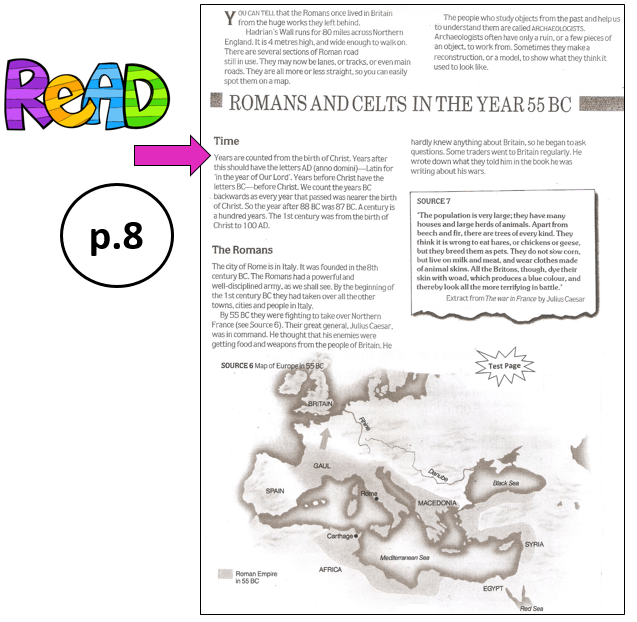
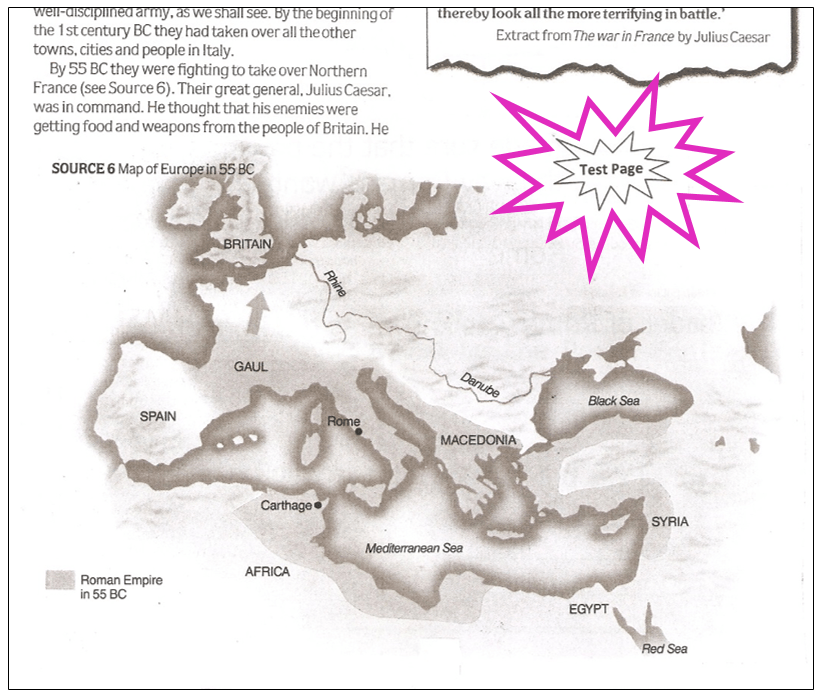
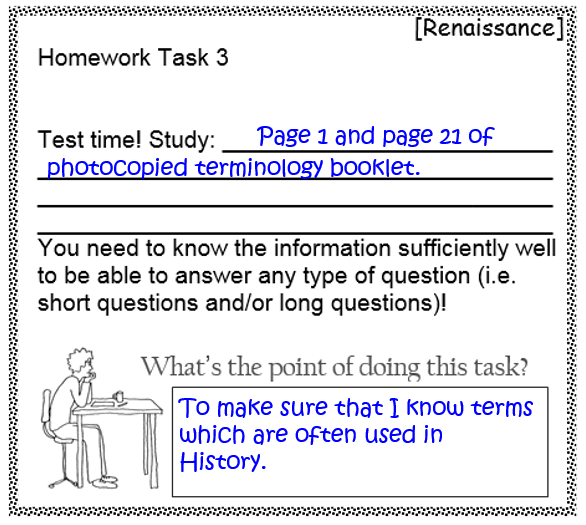
You will see that some pages in your Workbook are “test pages”. These are pages that you will have to study for a test, sometime during this course. The page below is an example:
When you see a “test page” in your book, highlight the words “test page” so that you can see very clearly that it is an important page that you will be tested on.
6.
And now for a bit of work…
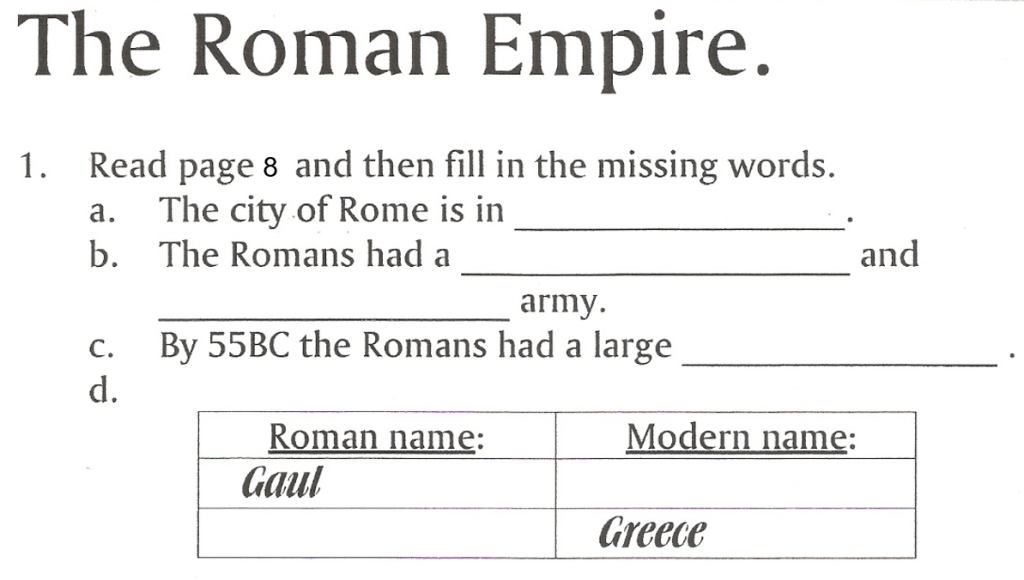
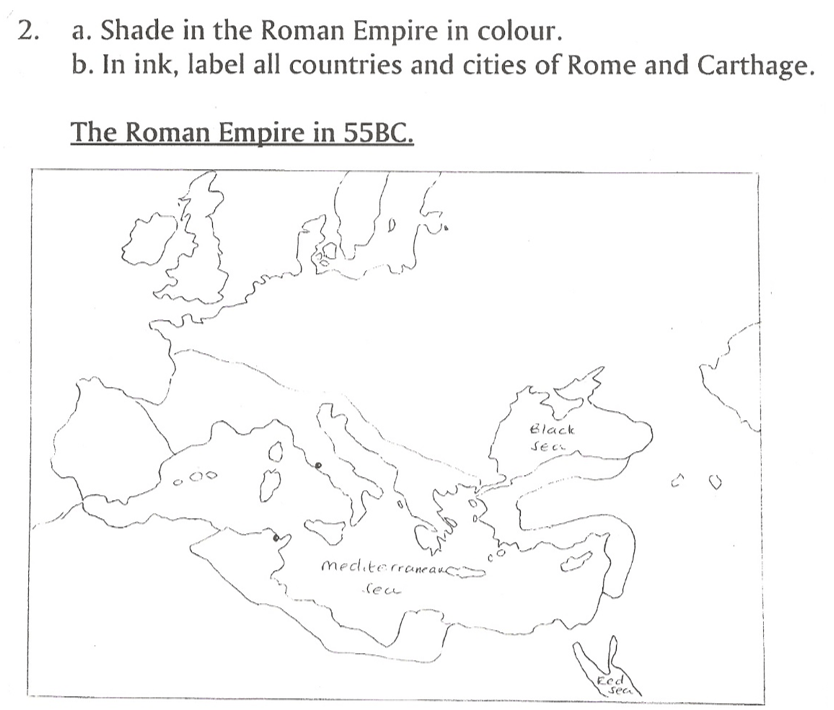
Complete the task on p.16.
7.
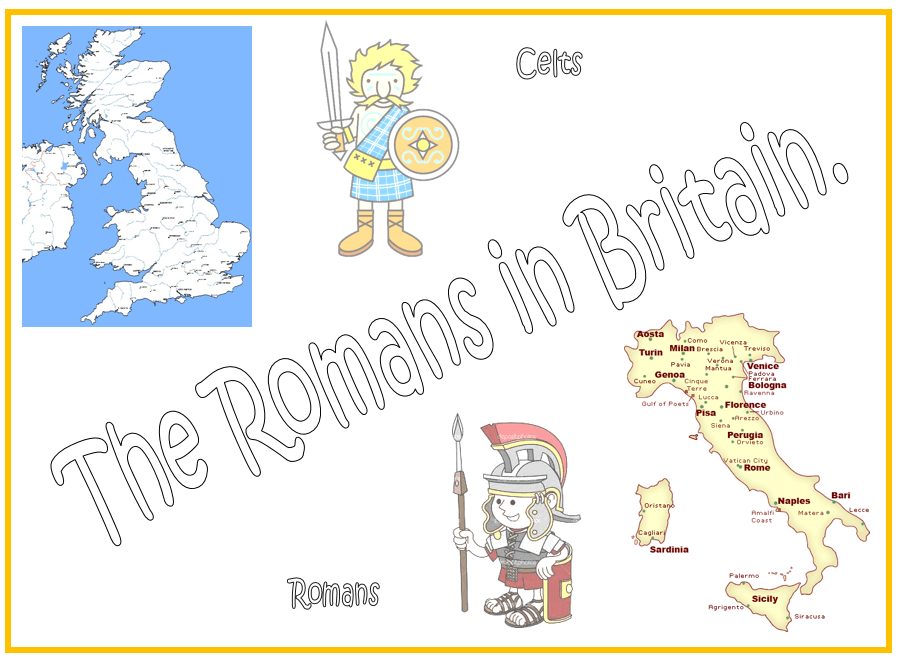
Finally, this is a “title page” for your topic on the Roman invasion of Britain. Stick the black and white copy into your purple book and then colour it in.
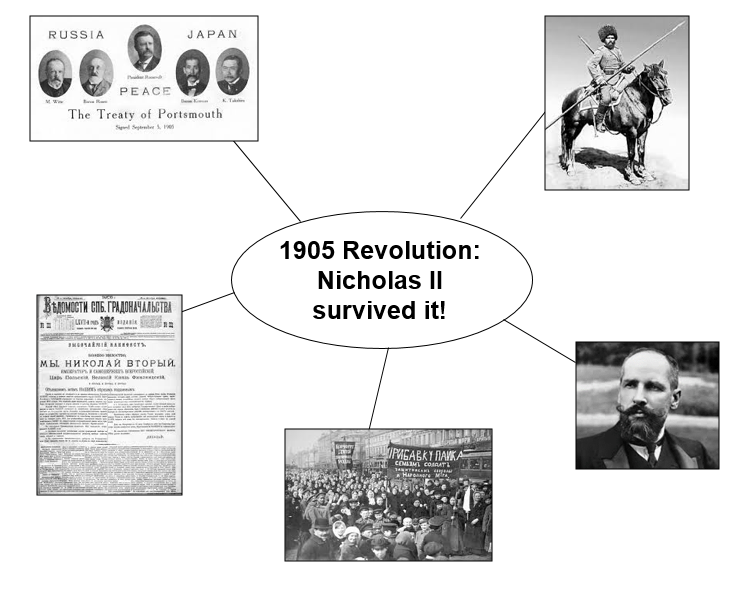
Today we will continue looking at why Nicholas II was able to survive the attempted revolution of 1905!
1.
Let’s look at the role that Stolypin played in the survival of Nicholas II as tsar of Russia.
Stolypin. (1:35 minutes long)
2.
The information about “The Rule of Stolypin”, p.6.
3.
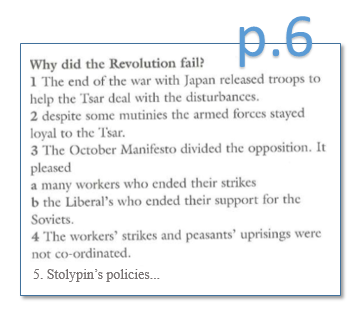
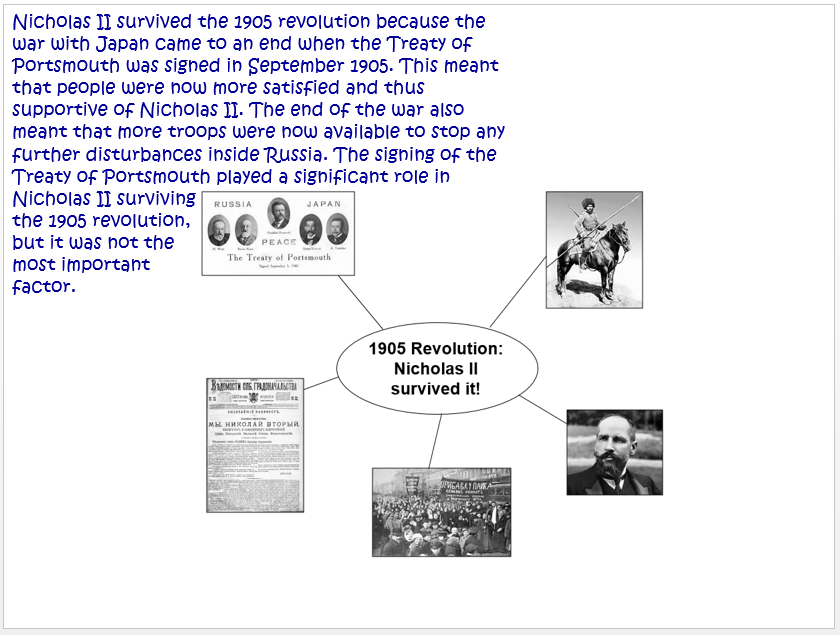
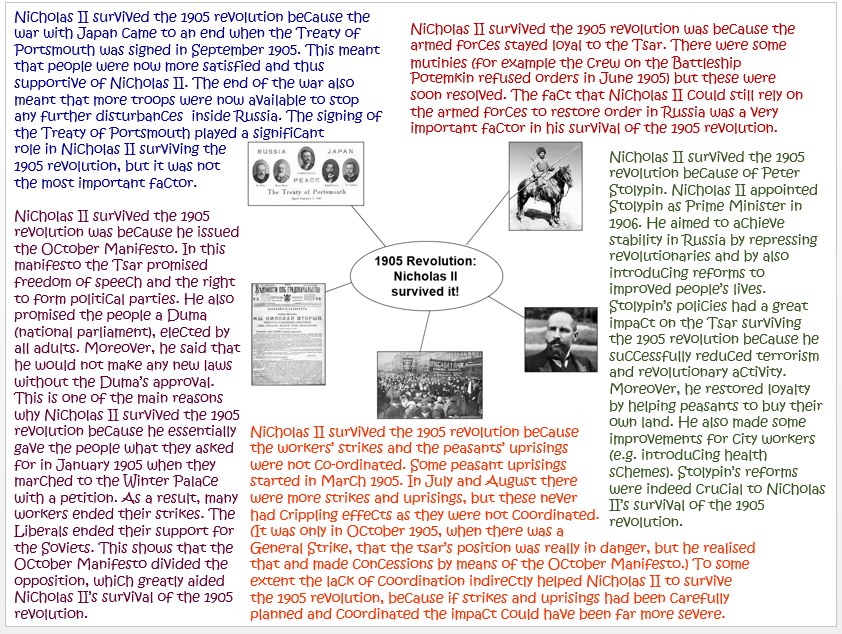
Finally, write a paragraph for each of the factors shown on the diagram below (“1905 Revolution: Nicholas II survived it!”) to explain how each factor helped Nicholas to hold on to power.
4.
Have you recognised that this is the relevant information for this task?
This could be an essay question…!
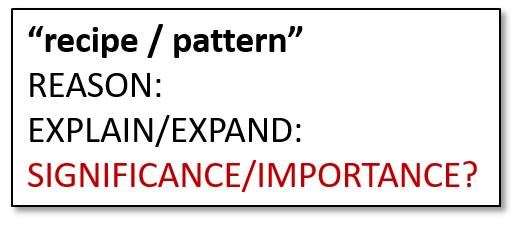
If this was an essay question you would have to make sure to write a paragraph for each reason. Each paragraph should include the following:
If there is still time, here is a rap that you may find interesting…
(I do not condone the swearing in this rap – it is rather unnecessary. However, if one looks past the few swearwords I am sure that you will appreciate the production.)
The cause of WW1 – Rap Battle. (4:44 minutes long)
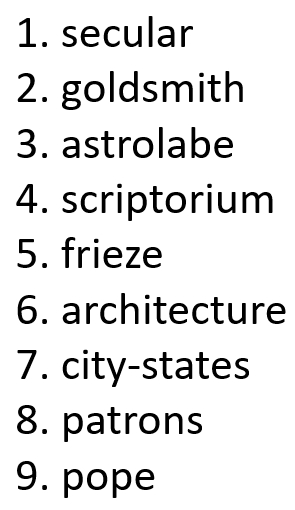
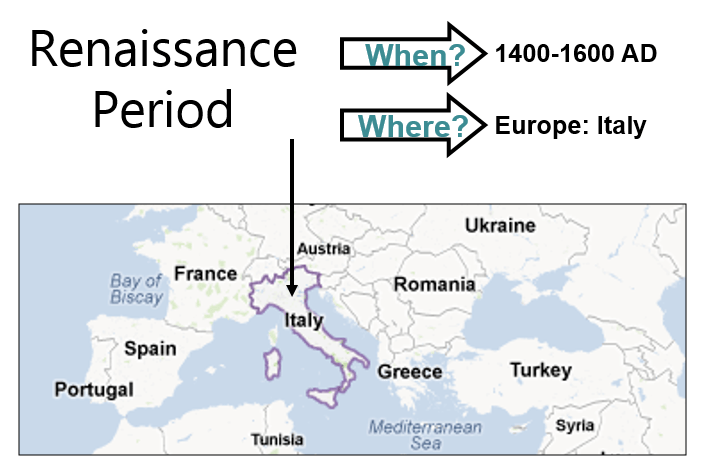
Today we are going to look at the start of the Renaissance. It started in Italy. But why…?
Follow the instructions step by step:
1.
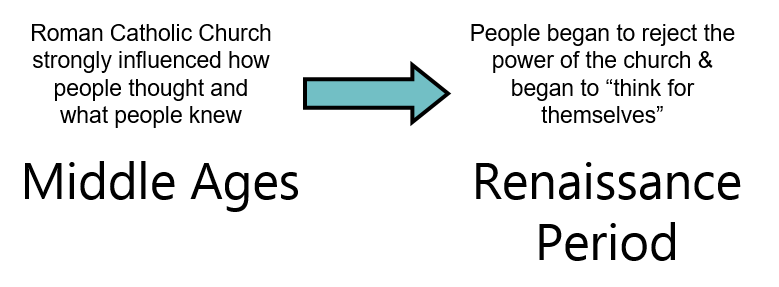
First, revise what you already know about the Renaissance:
2.
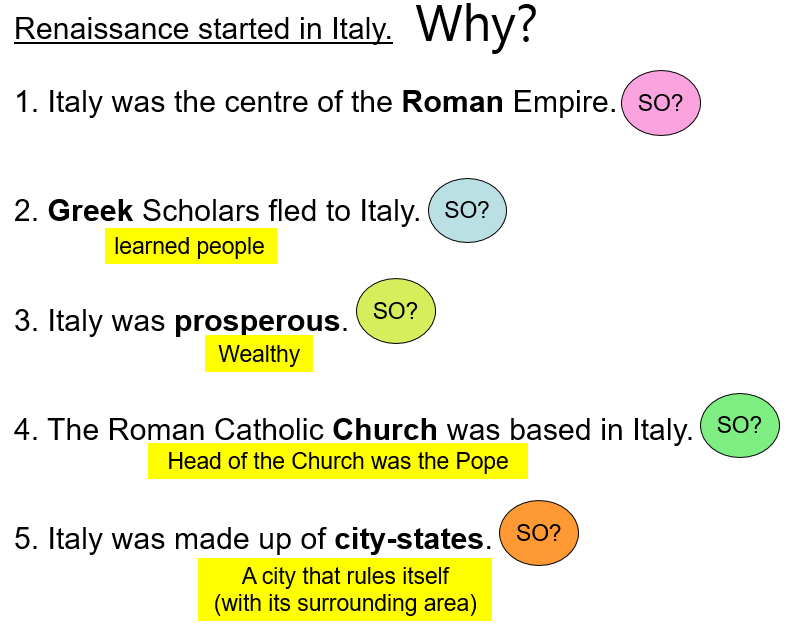
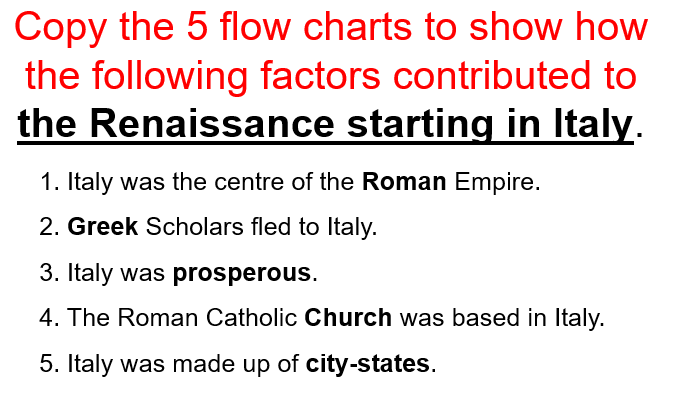
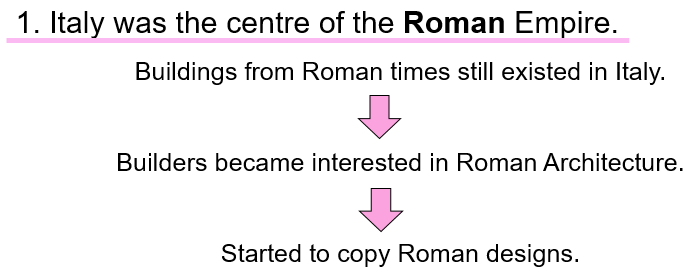
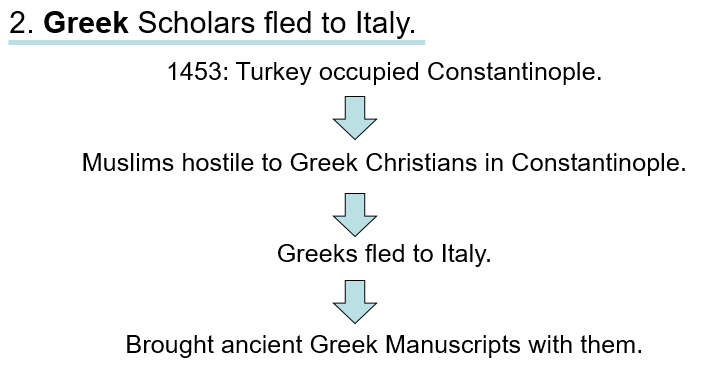
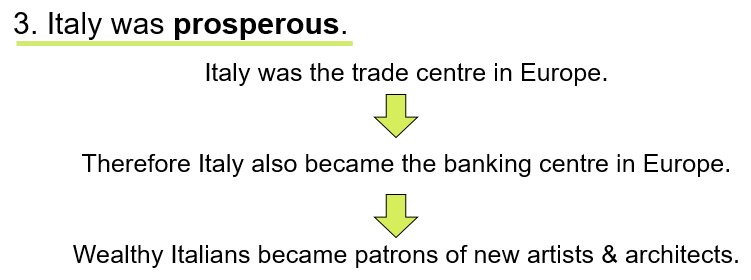
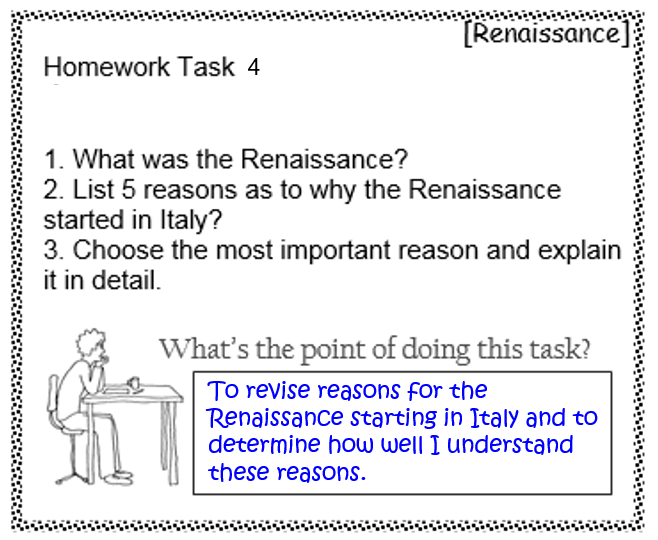
Now, let’s examine why the Renaissance started in Italy.
3.
It is not good enough to know the reasons… You are expected to understand and explain the reasons. Therefore, look at the following explanation and see if you will be able to use these slides to explain to someone why the Renaissance started in Italy.
4.
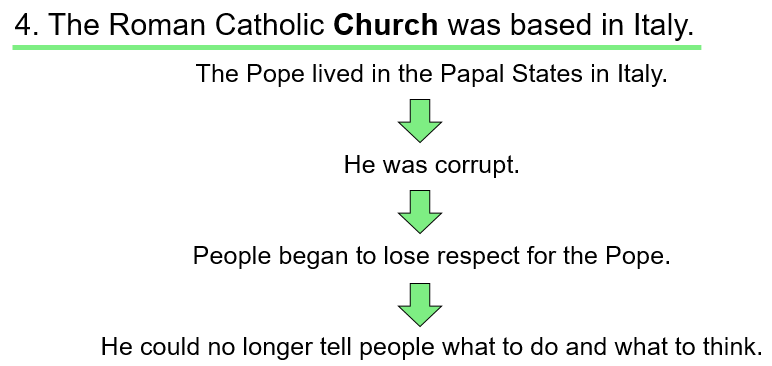
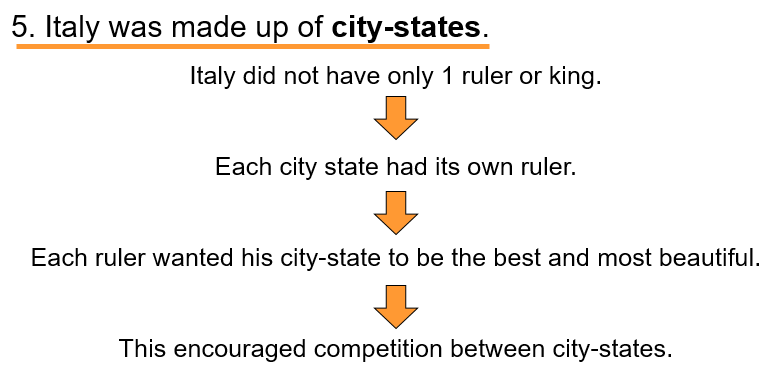
“Why the Renaissance started in Italy:”
5.
6.
Finally, complete the crossword puzzle on p.10 in your History Workbook.
To tests basic information about “The Renaissance starting in Italy”.
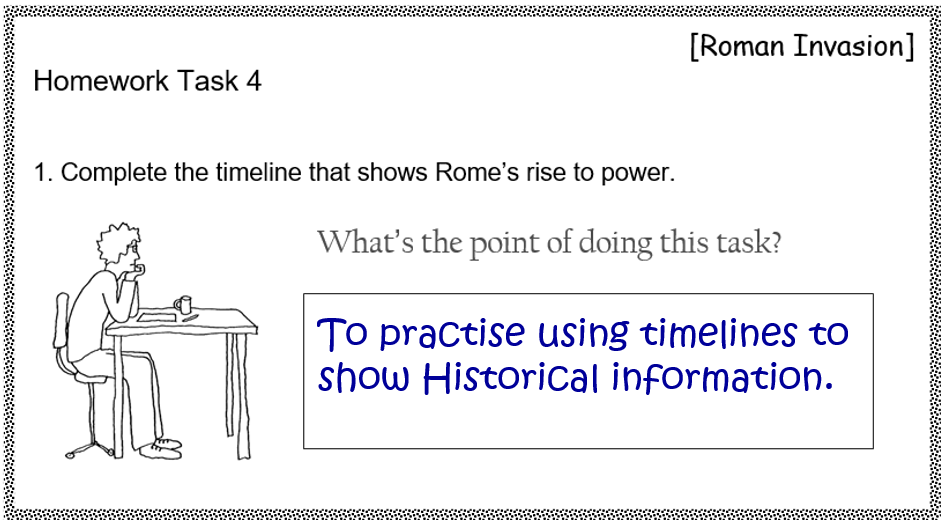
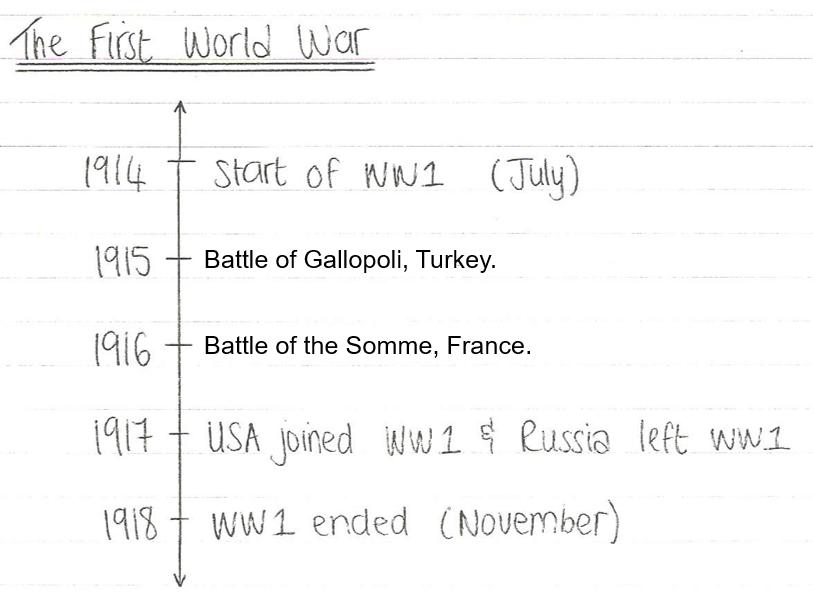
A Timeline is a visual organizer that helps us to arrange information in a way that is “easy to see”. Make sure that you keep the information on the timeline very brief.
This is your first official collage Homework Task. (Although, you had a taste of what is expected when you made the collage on “The story so far” for the documentary about “Russia’s Lost Princesses”….) Here is an example of what is expected of you: (You may not copy this example!)
And here is a further explanation of what is expected of you:
So, make sure to use different colours, images, drawings, graphs, symbols, abbreviations, examples, explanations and annotations!!
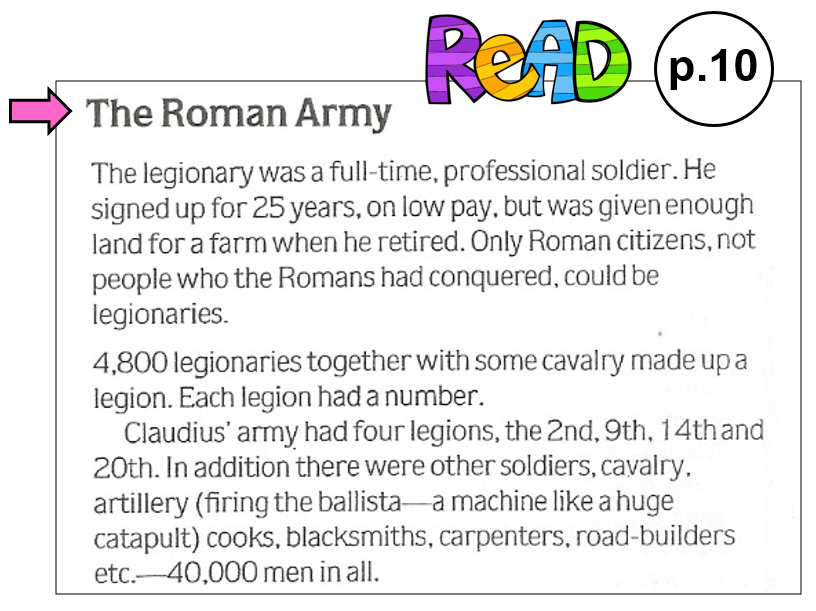
Today you are going to learn about the Roman Army ….
So, here is what you have to do today:
Follow the instructions step by step:
1.
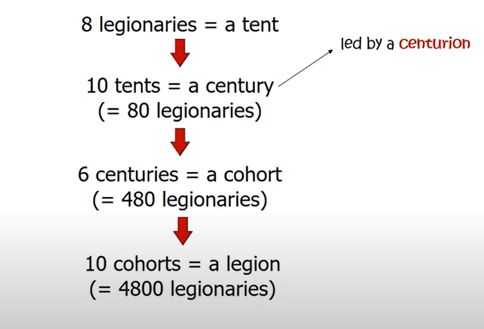
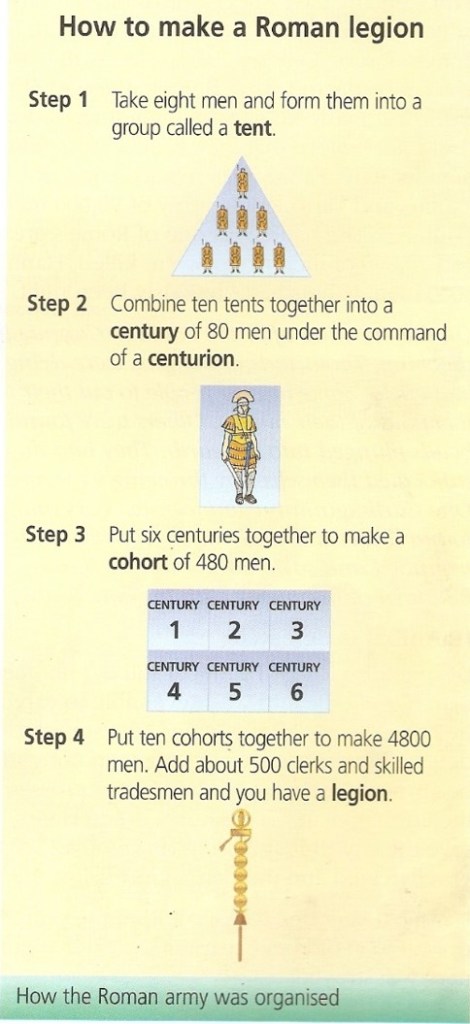
Let’s see how the Roman Army was structured…
The Roman Army. (3:00 minutes long)
2.
3.
The information about the “Roman Army” (in the video and in the text above) can be shortened by making notes on the information. Notes are very useful for study purposes. Here is an example of study notes on the the Roman Army. (Stick the notes into your book and use them as an example of what study notes should look like.)
4.
Let’s see what we can learn from these videos about the Roman Army:
A day in the life of a Roman soldier – Robert Garland. (4:59 minutes long)
The video below gives a lot of detail, that you do not have to remember…!!
Roman Army Structure | Vindolanda Museum. (3:07 minutes long)
5.
“Structure of the Roman Army“
6.
Also copy the following definitions:
Definitions
LEGIONARY: a full-time professional soldier (who was a Roman citizen)
AUXILIARY: a specialist soldier (who was not a Roman citizen, but came from the conquered lands of the Roman empire)
7.
And… for a bit of fun, let’s watch the Horrible Histories video clip too!
Horrible Histories (Surviving in the Roman Army). (1:06 minutes long)
8.
Here is another example of how the Roman Army was structured:
9.
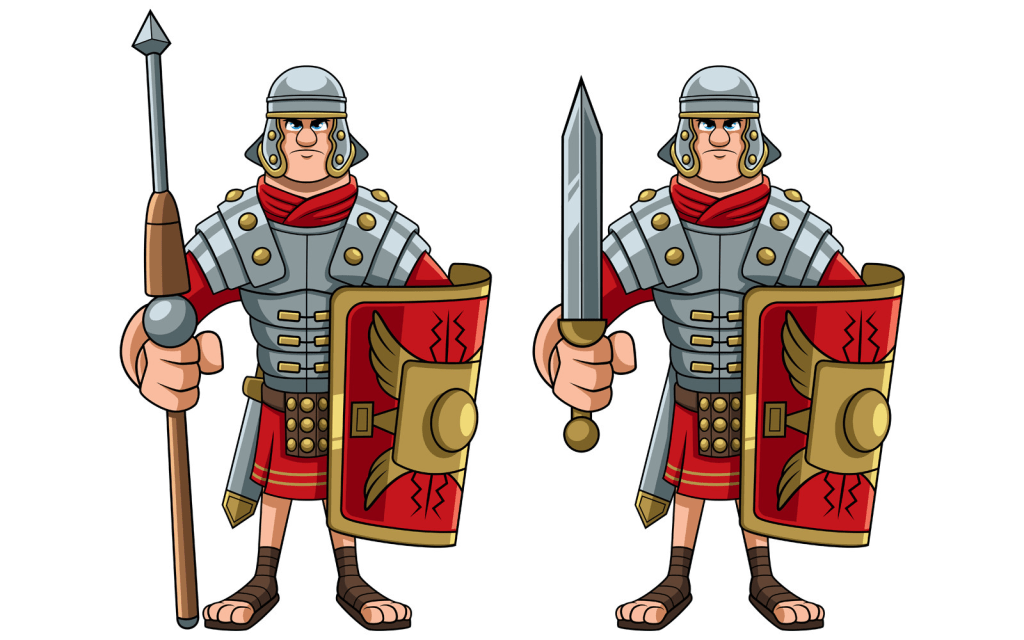
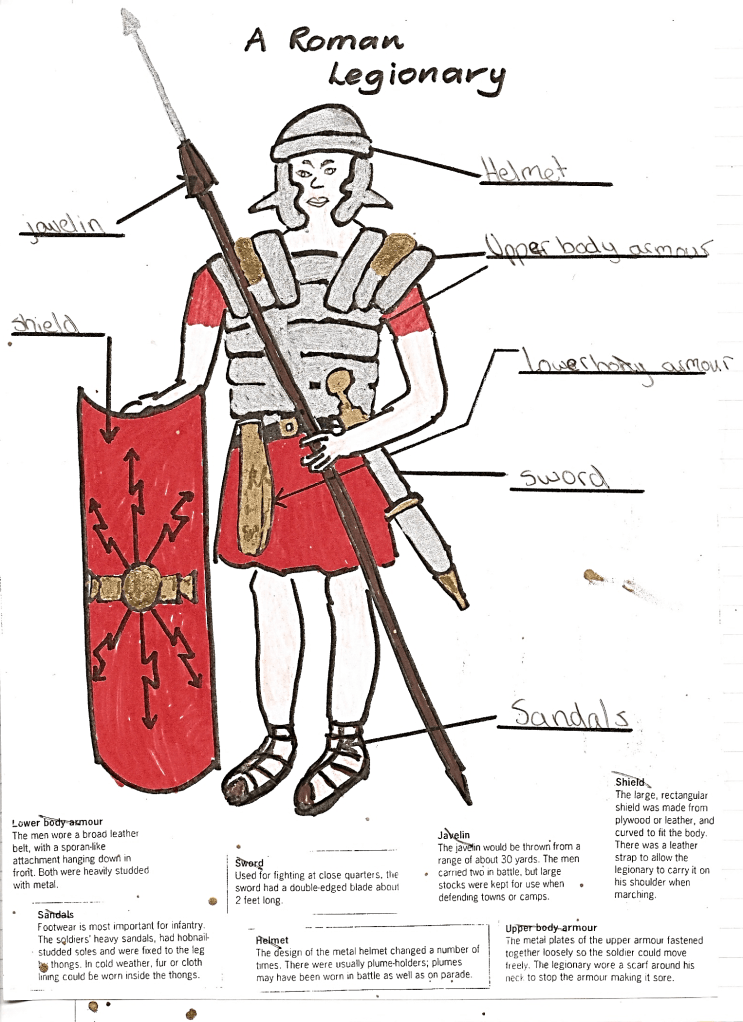
Stick the drawing of a Roman legionary into your book. Then label the drawing and also colour it in.
The answers are below… (Only look at the answers after you have labeled the drawing!)
Today you are going to continue with our topic on the Renaissance.
Follow the instructions step by step:
1.
REMEMBER: The Renaissance was a period in History when people began to show a keen interest in the great ideas of the Roman and Greek civilizations. This led to great new developments.
2.
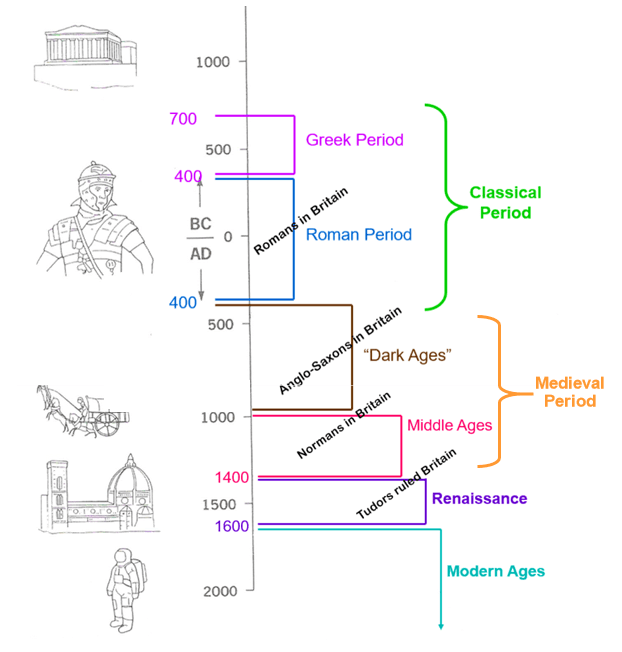
Let’s see where the Renaissance fits into past ages:
3.
Complete the timeline on page 3…
4.
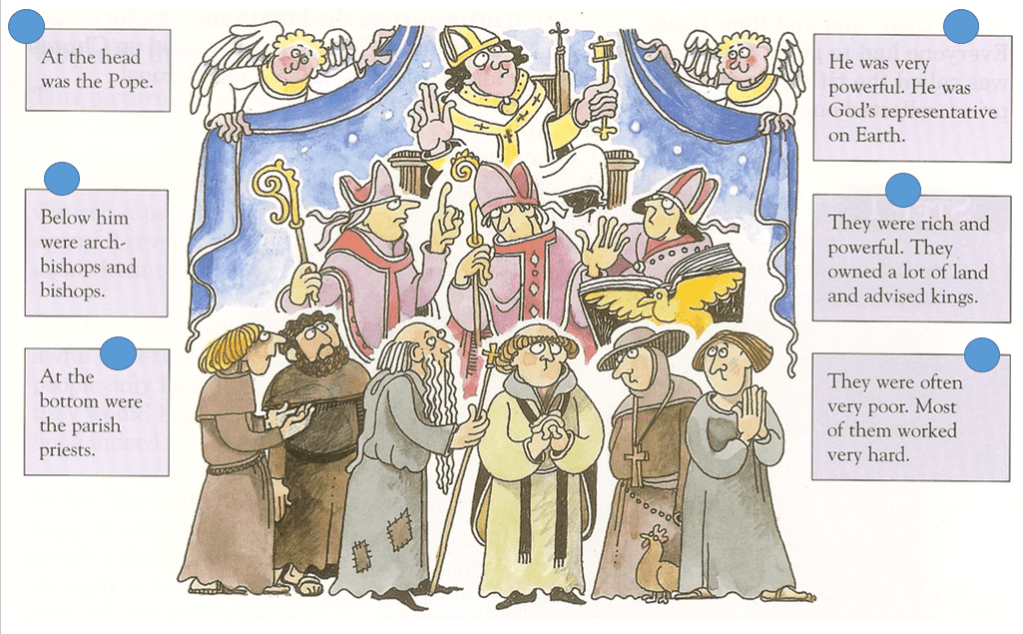
Let’s revise the important role that the church played during Medieval times:
The Role Church during the Middle Ages. (3:04 minutes long)
5.
Again revise the Church hierarchy if you are not yet familiar with it:
6.
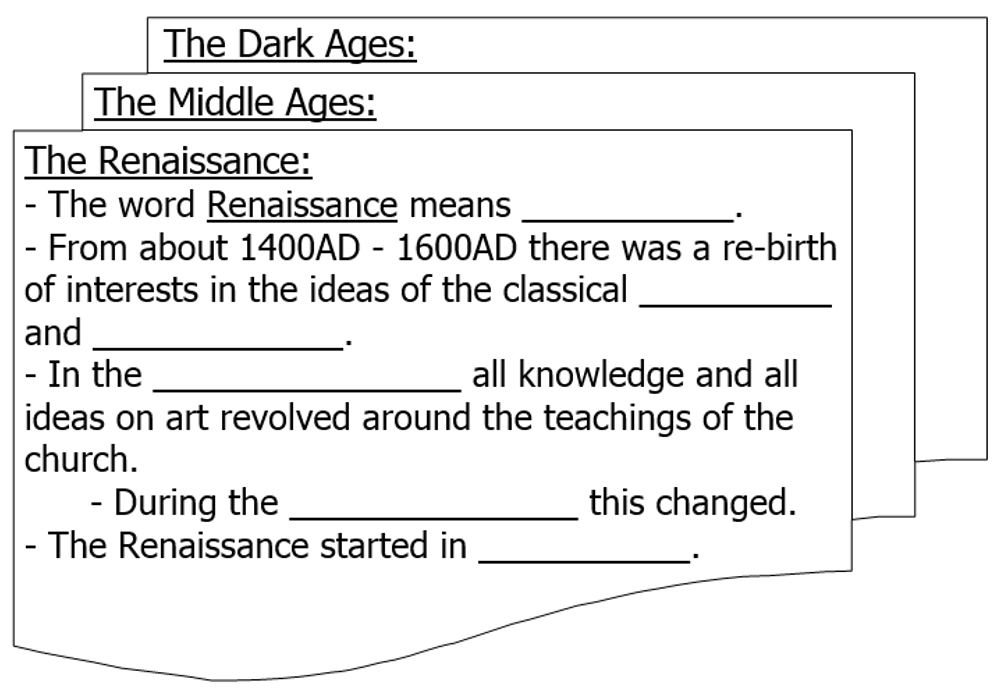
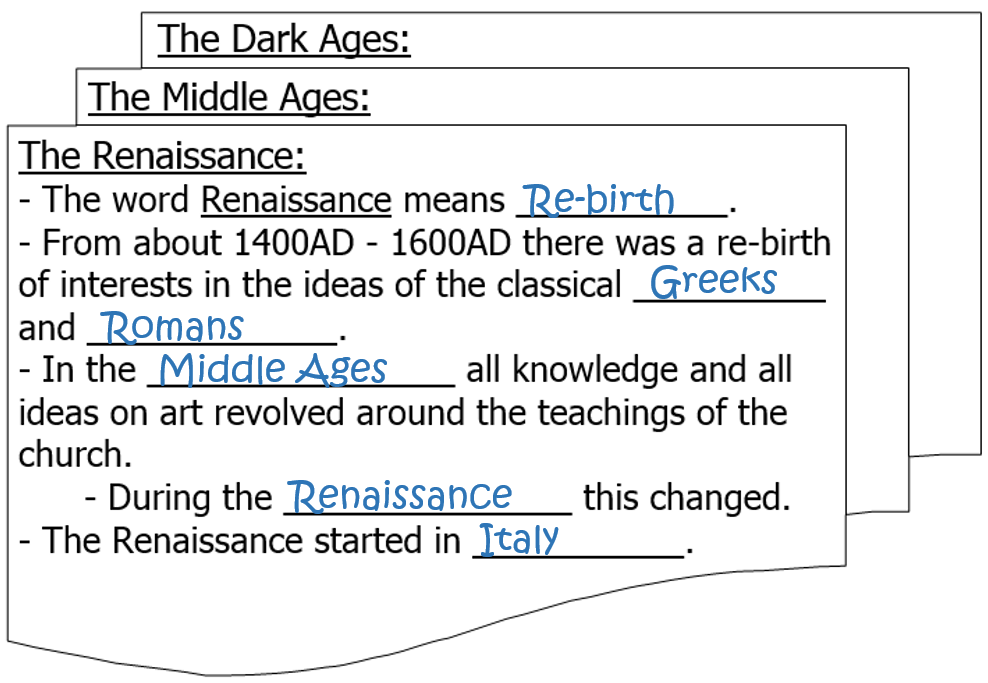
Go to page 4 and complete the missing information on these notes about the Renaissance:
7.
8.
The Renaissance Explained in 8 Minutes. (7:77 minutes long)
This is only extra reading. However, read the article carefully and make sure that you understand it. (If necessary google parts that you struggle to understand.)
Today we will finish the documentary on Russia’s Lost Princesses and highlight important events that were shown in the documentary.
1.
In the last “episode” we saw how the Romanov’s were overthrown in the February Revolution of 1917. Let’s watch the last 20 minutes of the documentary…
Tsarist Russia – Part VI. (18:42 minutes long.)
2.
Now, write a short film review (of 70-100 words), in your Exercise Book. Say how much you liked the documentary, how much you have learnt, what you think of the production, and if you would recommend it to future Year 10 students. (Use this heading: Film review for ‘Russia’s Lost Princesses’.)
3.
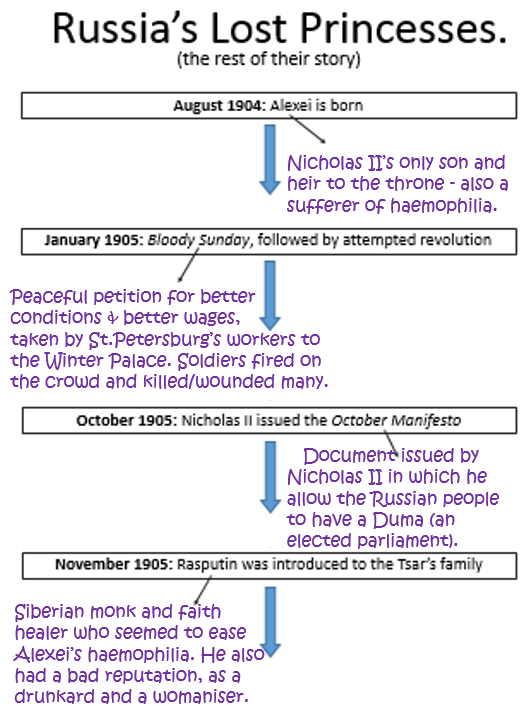
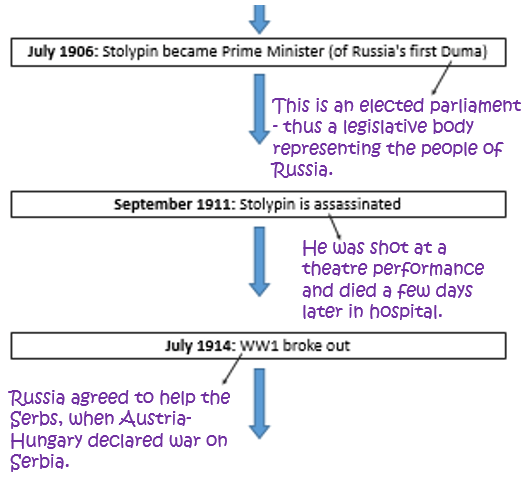
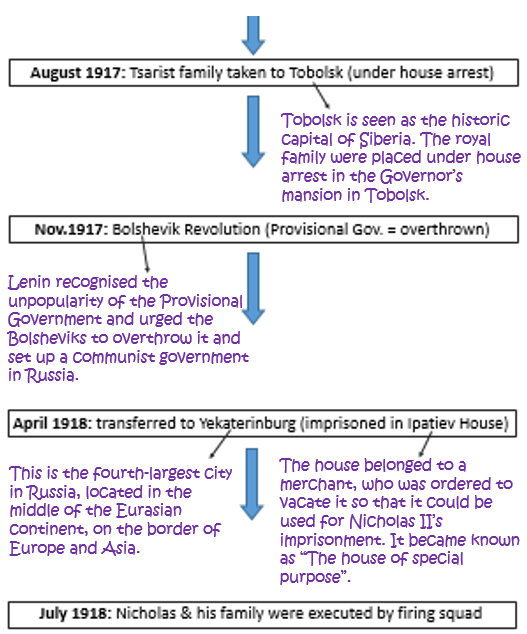
Let’s look at a “Timeline of Events” that is important to your study, as these events were shared in the documentary. (Or simply scroll down to 6, to see the timeline.)
Russia’s Lost Princesses flowchart. (5:16 minutes long)
4.
Now, copy the annotations onto your flowchart too!
Today we are going to continue with the documentary, plus we will look at opposition to Tsarist Rule.
1.
Let’s look at Opposition to tsarists rule in Russia.
Opposition to Tsarist Regime. (2:38 minutes long)
2.
The “Theory of Communism”, p.1
Alternatively, watch the video (below) that explains the Theory of Communism:
Theory of Communism explained. (2:03 minutes long)
3.
In case you are still unsure, here it is again…
The Theory of Communism – (text only). (1:50 minutes long)
4.
Here is a little more about Karl Marx…
Was Karl Marx right? | The Economist. (3:22 minutes long)
5.
The information about the Opposition to Tsarist Rule, p.4
6.
Make study notes (in your homework book) on Opposition to Tsarist Rule (p.4).
Do you know how to do this?
Here are examples of brief study notes:
(Take note: the leader of the Mensheviks was Martov, and NOT Martel, as mentioned in the notes above.)
7.
In the last “episode” of “Russia’s Lost Princesses” we saw Russia’s involvement in WW1 and how it caused a bit of an escape for the princesses from their very reclusive lives. Let’s watch the next 20 minutes…
Today we are going to start with our topic on “The Roman Invasion of Britain”. We are going to look how the Romans settled in Britain and how they influenced life in Britain.
Follow the instructions step by step:
1.
Let’s first start by learning a bit more about the Roman Empire…
The article “The Fall of Rome” tells you a bit about how the Roman Empire expanded and also briefly explains how it eventually came to an end.
p.4-5
2.
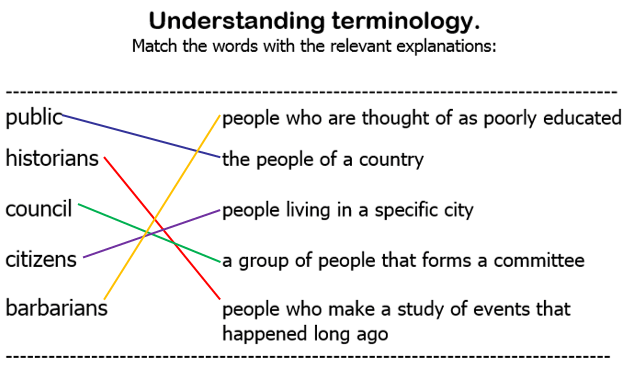
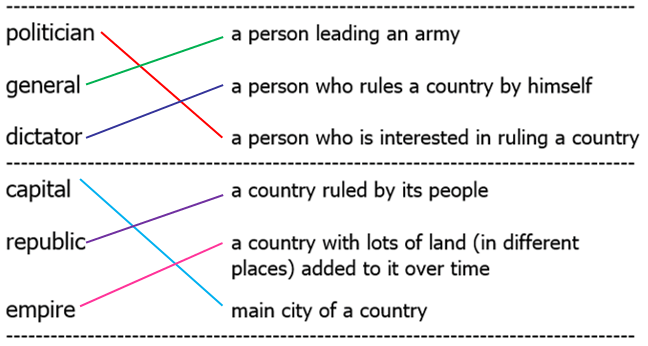
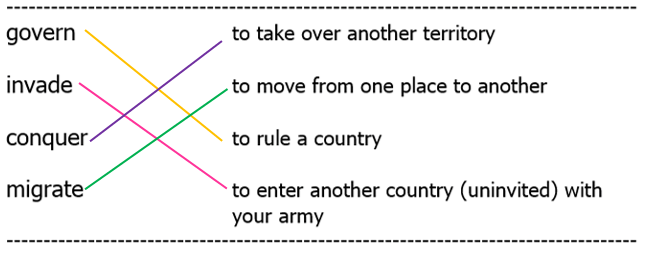
Now see if you understand the terminology used in the article by completing the “Understanding Terminology” matching-task, on p.5.
3.
Matching-task on “Understanding Terminology” (p.5).
4.
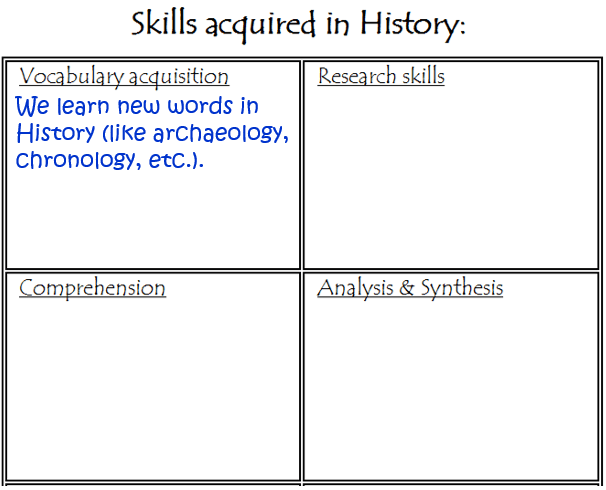
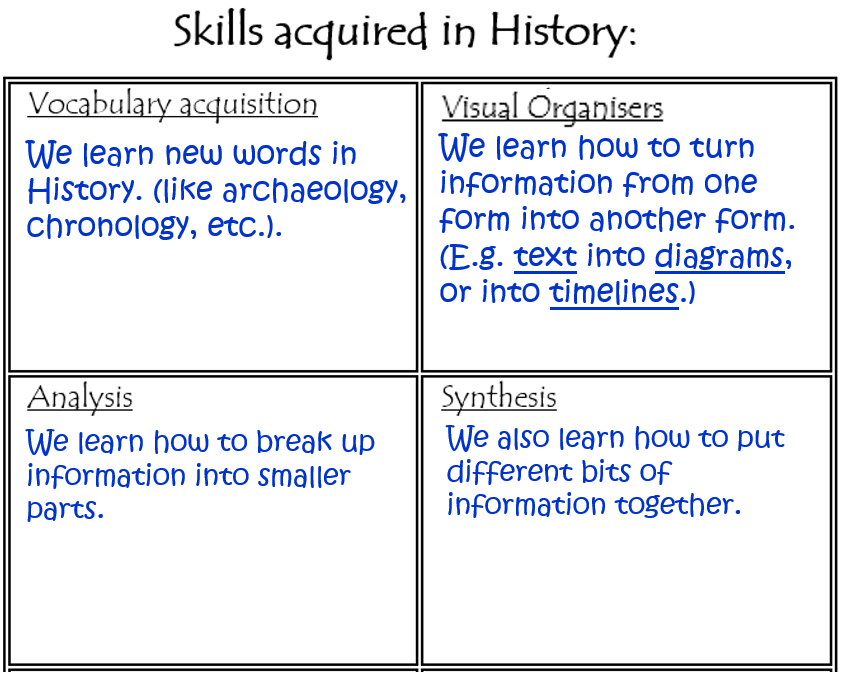
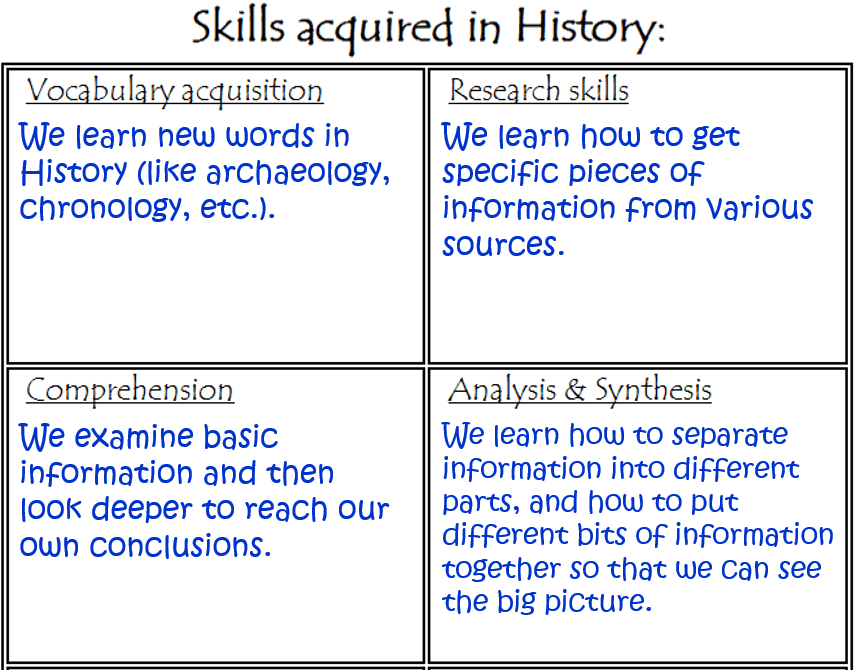
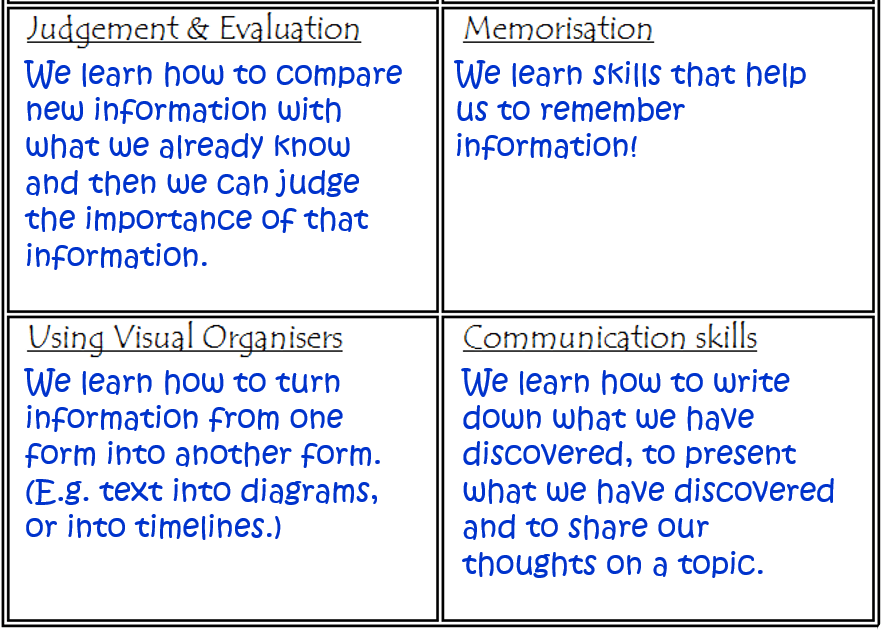
Also complete the first box on the “Skills acquired in History” table:
5.
In the video below you will learn the legend of how Rome was formed:
The Legend of Rome. (2:06 minutes long)
6.
Now let’s see how the Roman Empire expanded.
7.
Read the article below on “How Rome was Governed”:
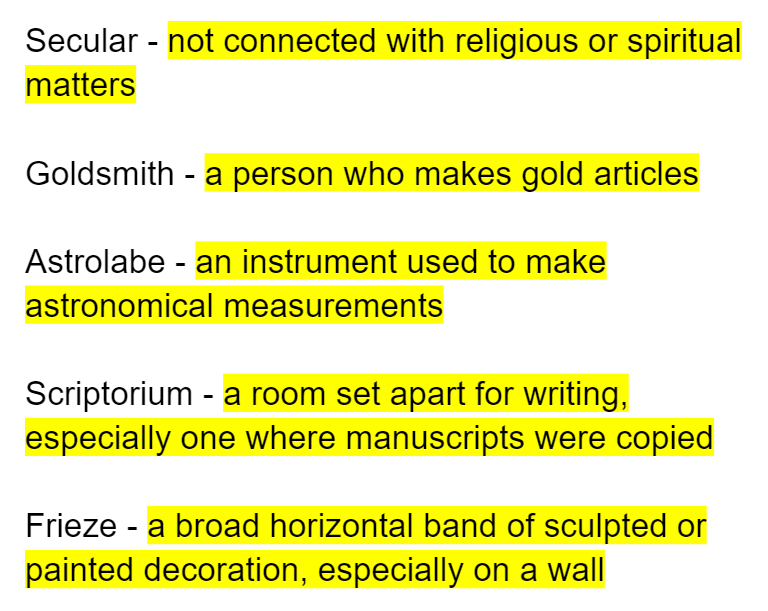
recap History terminology from the previous lessons
see how people’s attitudes changed during the Renaissance.
Follow the instructions step by step:
1.
(Depending on your progress, you may be asked to do the following in this lesson…)
Test
Time!
First we are going to write a short test on “History Terminology”!
Alternatively
(Depending on your progress, you may be asked to do this task in the lesson…)
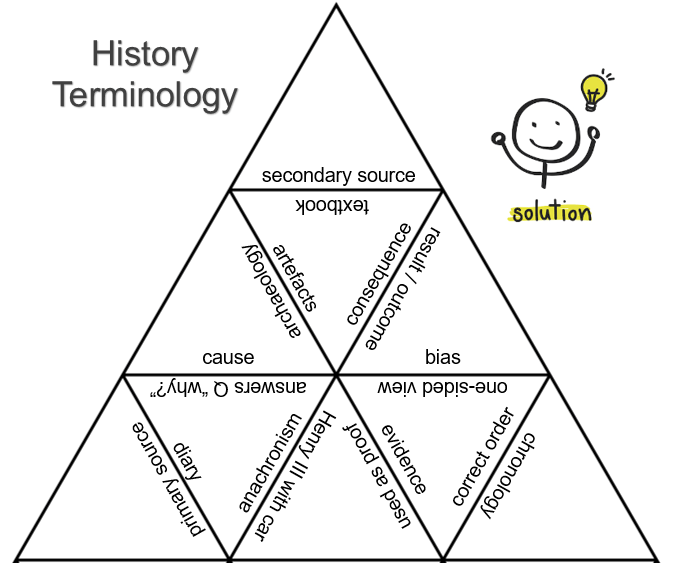
Test your knowledge of History Terminology by completing the Tarsia Puzzle. (The puzzle pieces will be handed out to you.)
SOLUTION
2.
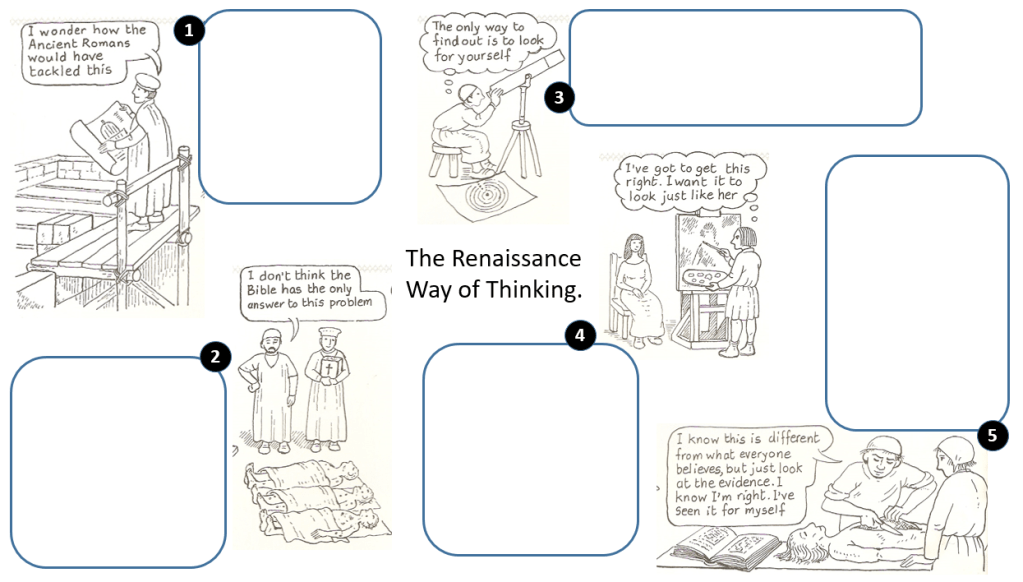
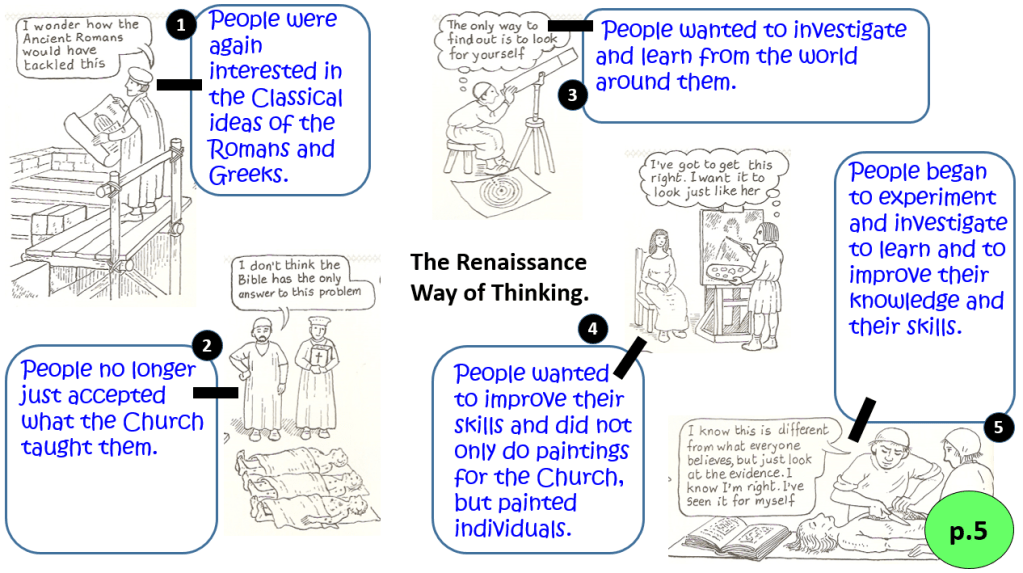
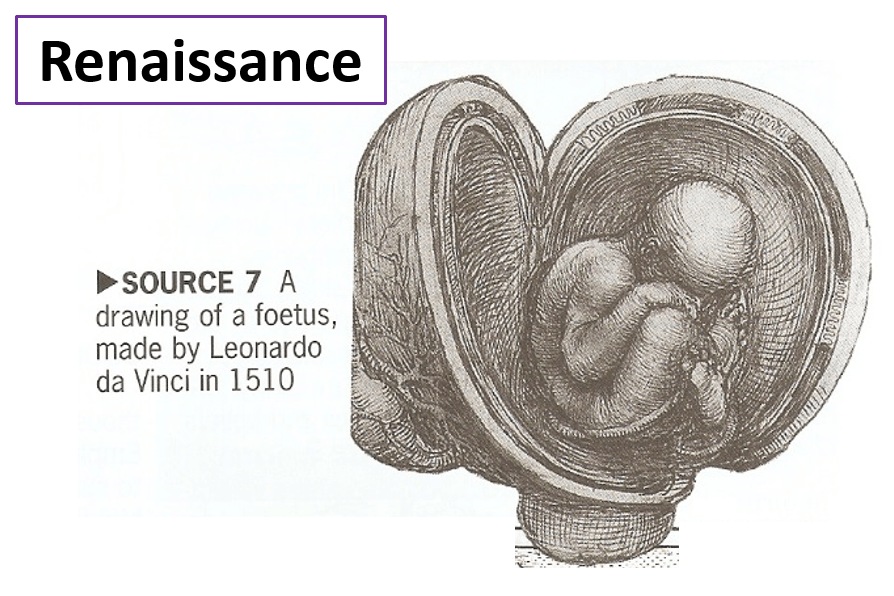
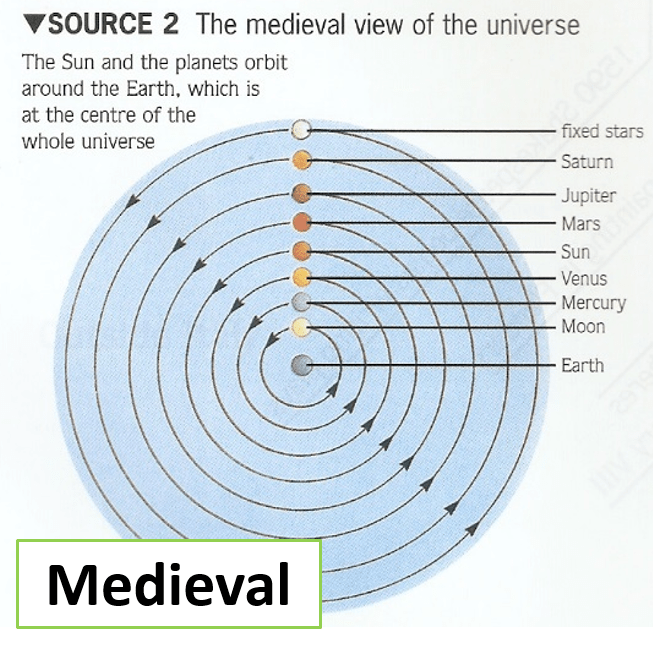
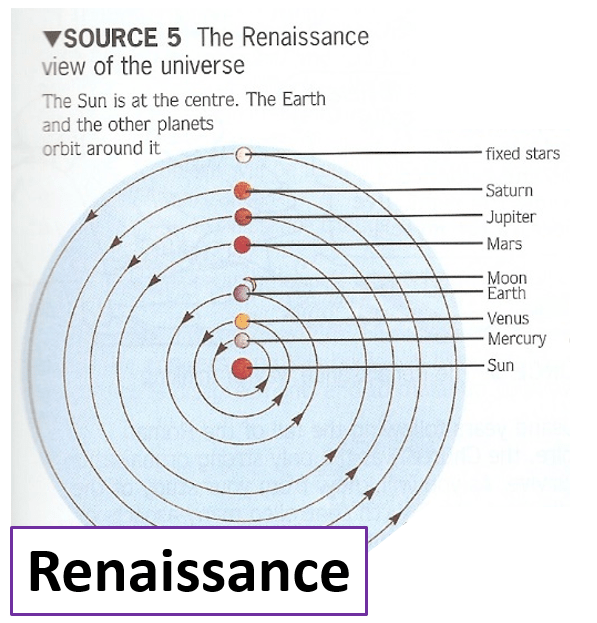
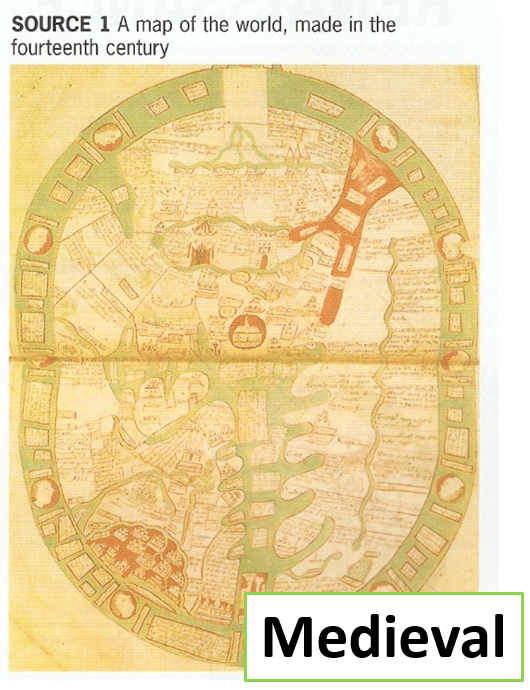
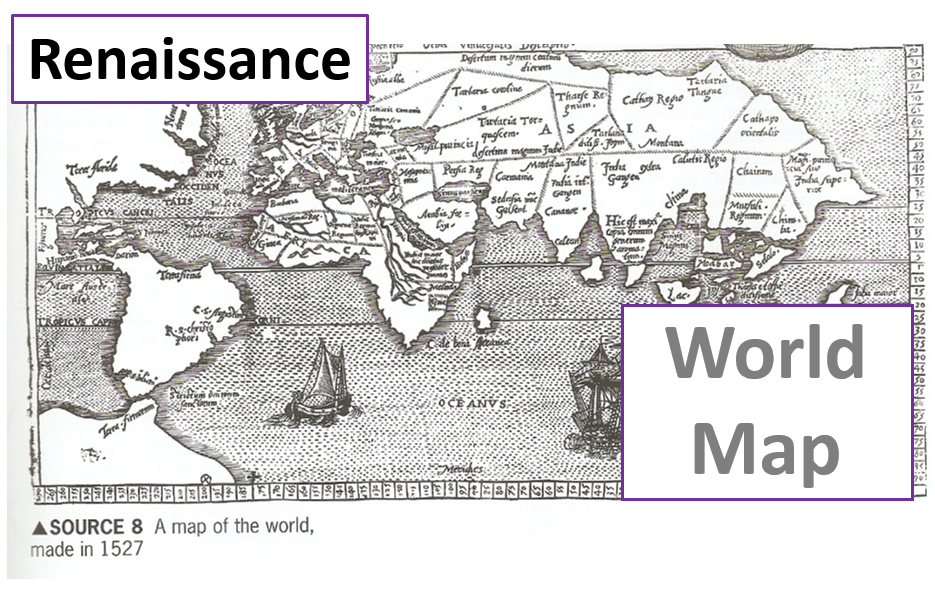
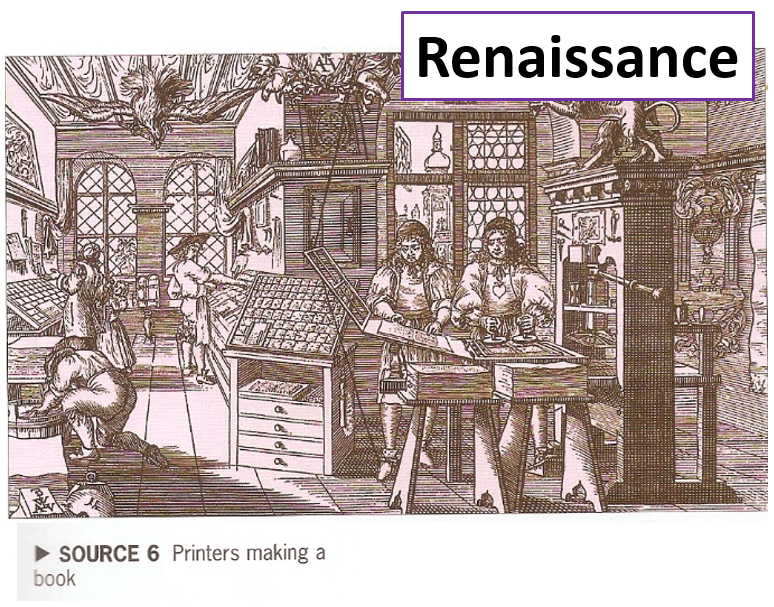
Look at the following attitude changes during the Renaissance period…
Discuss in pairs how people’s attitudes began to change during the Renaissance. (Each picture gives a clue as to what attitudes might have been like in Medieval times and how it have changed during the Renaissance.)
3.
Would you be able to use each of the pictures to explain how people’s attitudes began to change during the Renaissance? Give it a go!
4.
Now, copy the explanations into your book.
The worksheet is on page 5. Copy the notes into the empty boxes to explain Renaissance thinking according to the pictures.
Fill in the missing words on the notes on p.5.
5.
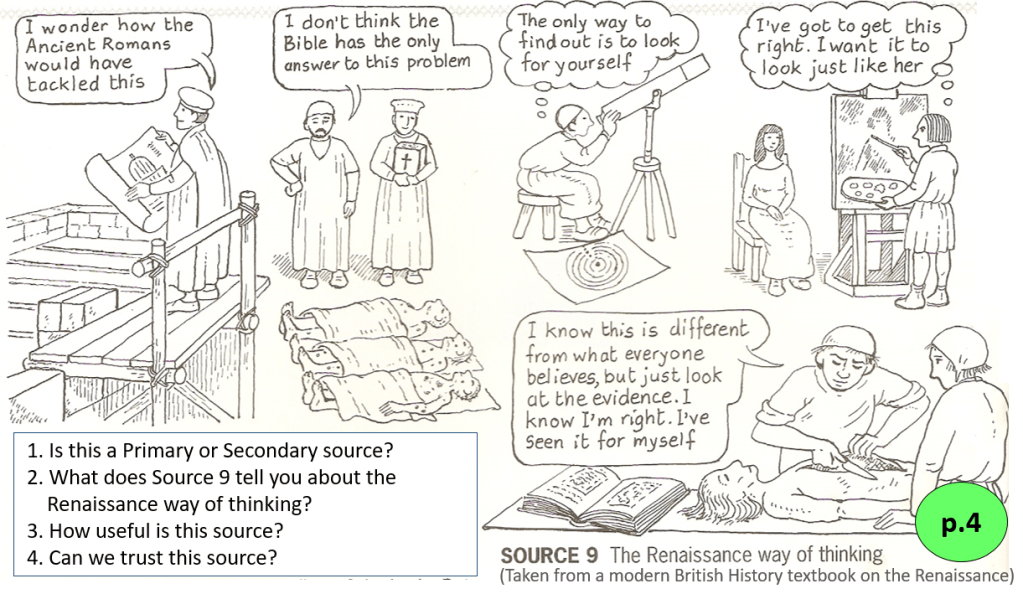
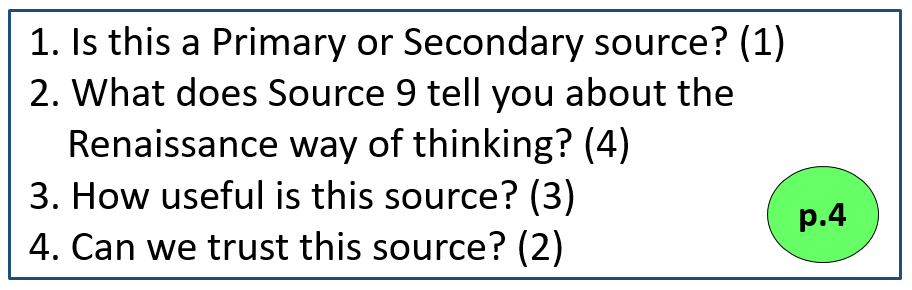
And now for some serious work… You are going to answer a few questions about the source that we used above!
“The Renaissance way of thinking, p.4.”
TAKE NOTE OF THE MARKS!!
(For example: for 4 marks, you need to write at least 4 sentences explaining your answer!)
Additional Advice:
Lets consider, for example, question 2…
For 4 marks you need to give a detailed answer!
Also, when answering source questions you always need to give evidence from the source!
The Renaissance was a period in History when people began to show a keen interest in the great ideas of the Roman and Greek civilizations. This led to great new developments.
The Renaissance: an introduction. (2:37 minutes long)
3.
Open your book on page 2 and copy the definition for the Renaissance.
4.
See how perspectives and knowledge have changed, from Medieval times to Renaissance times:
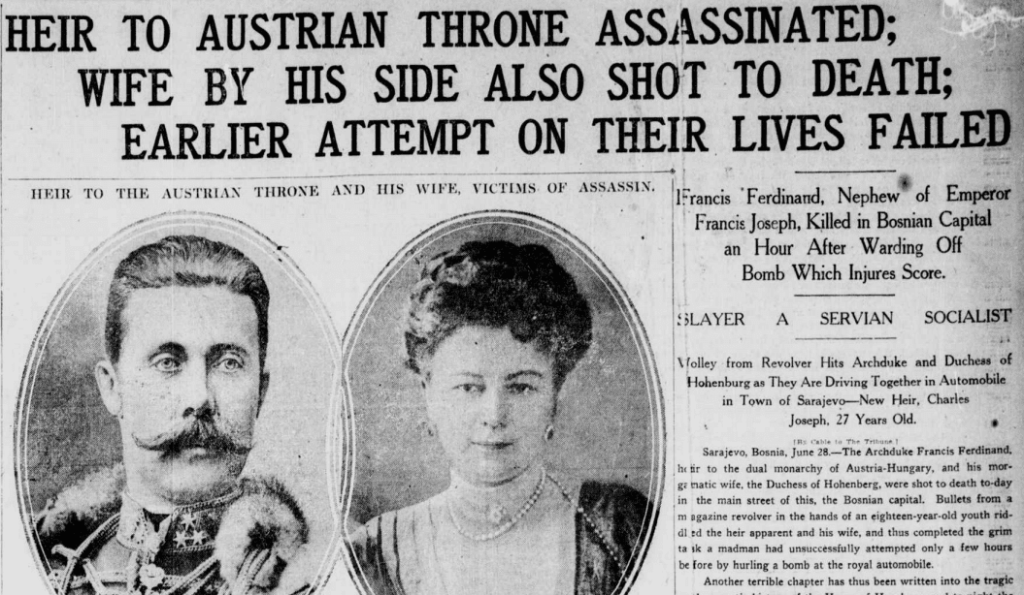
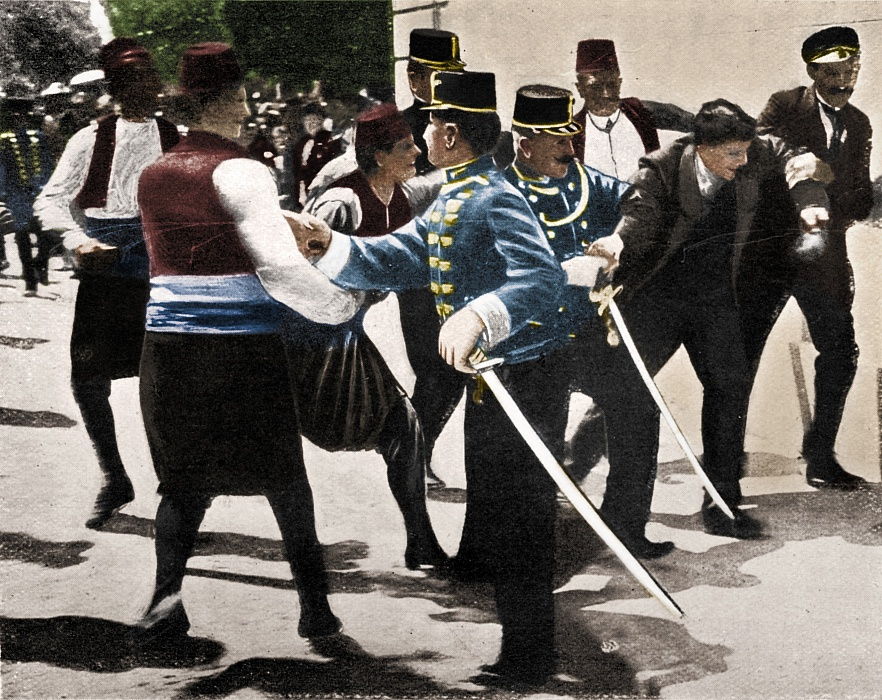
Let’s do a little bit of revision. The assassination of Franz Ferdinand triggered the start of WW1. Here is an interesting dramatization of the failed attempts made by the assassins… (If you do not have earphones in class, you need to watch this later at home.)
What Caused the First World War? (1:51 minutes long)
3.
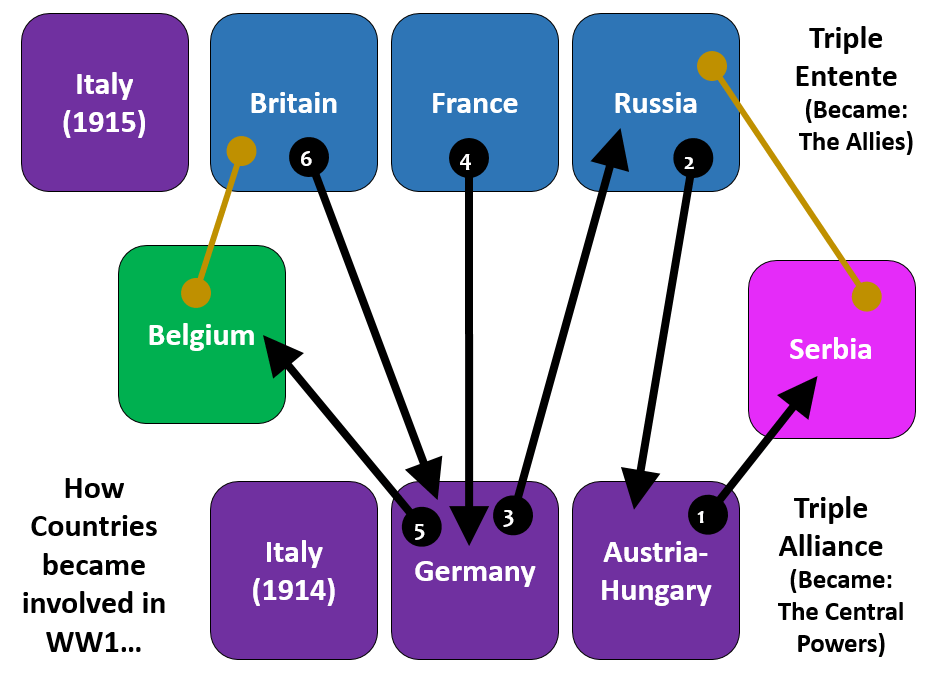
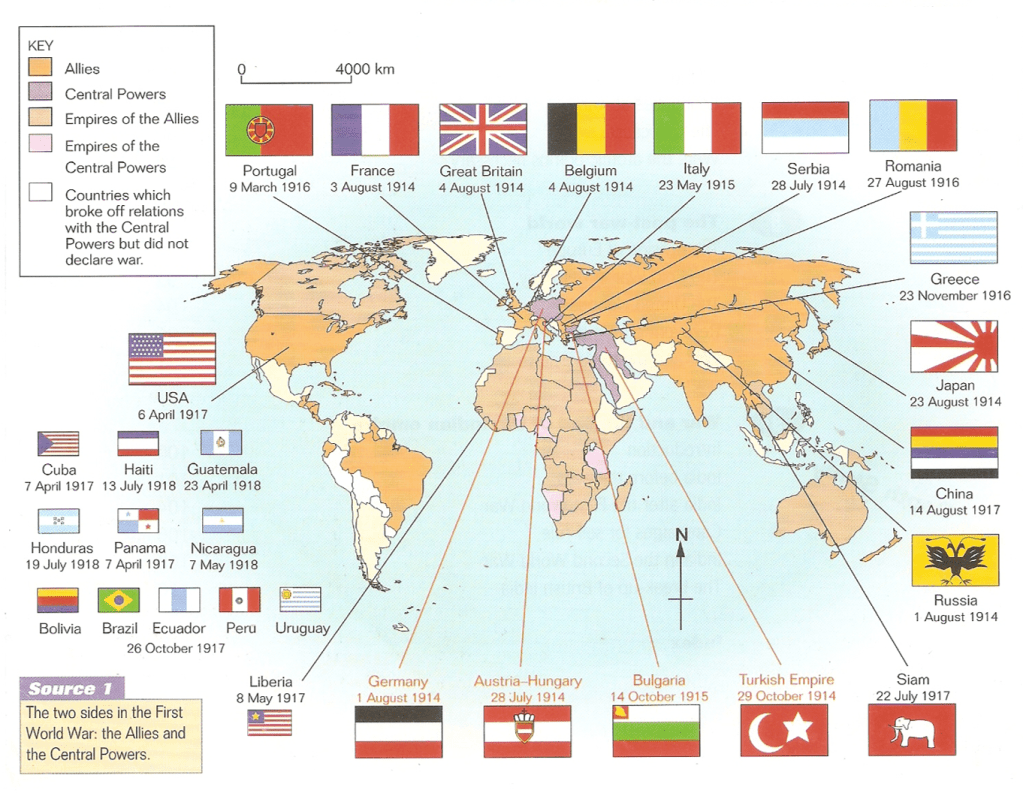
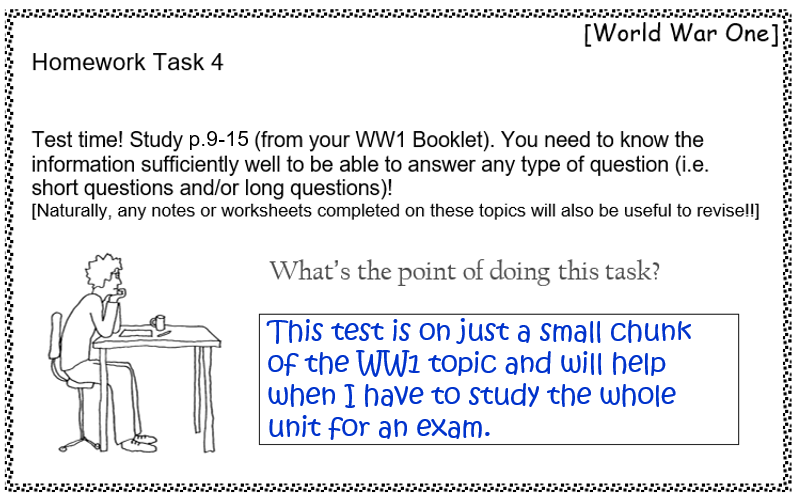
And now for a bit of reading: Pages 9-10 (in your Workbook) give you information that you need to be familiar with by now. Pages 11-12 explain how the first countries became involved in WW1.
p.9-12
4.
Finally, you are going to answer some questions… (Remember to answer in full sentences.) For now, only answer questions 1-9. (So, you do not have to do Q10, yet.)
Today you are going to complete the Father Time tasks….
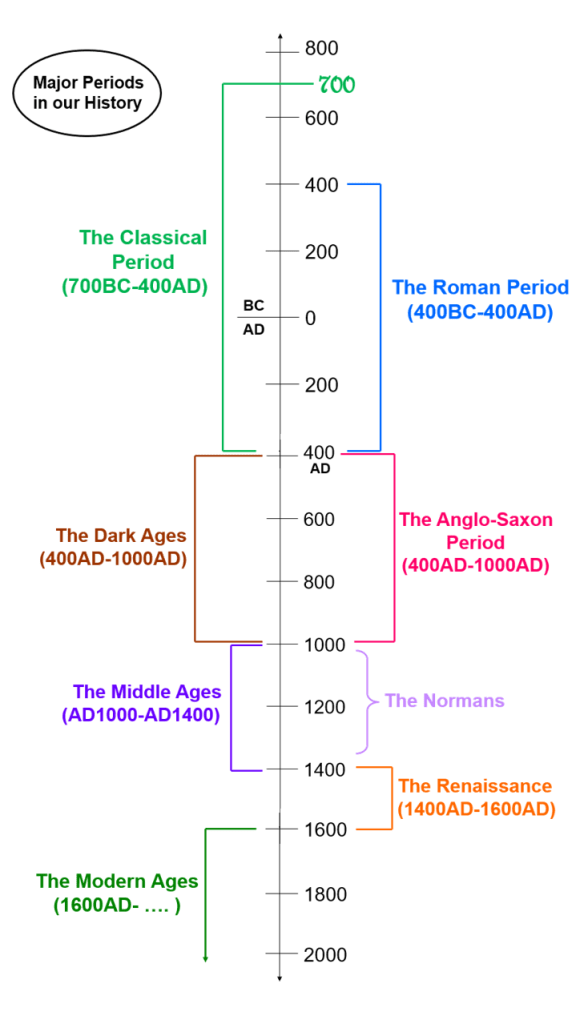
But first, we are going to look at some of the major periods in our History.
Follow the instructions step by step:
1.
We talked about “Father Time” (the article that we read in a previous lesson). It mentions “periods” and “ages” …..
This video shows the major periods in our History.
Father Time – Part 5. (1:22 minutes long)
2.
Copy the various periods in our History onto the timeline on p.2 of your History Workbook.
3.
1.
READ: “Father Time”
2.
Complete ALL three tasks
4.
Now, continue with the “Father Time” tasks!
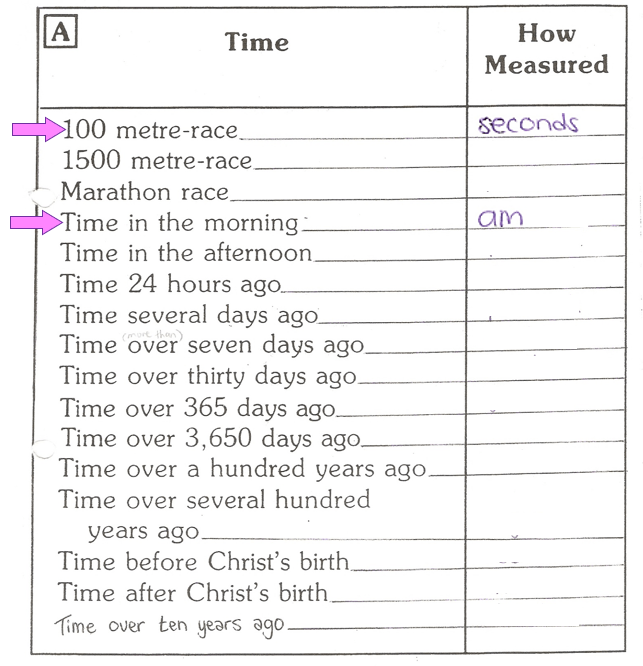
Complete the table to show how time is measured. (There are some clues in the “Father Time” article!) Here is an example of what you have to do:
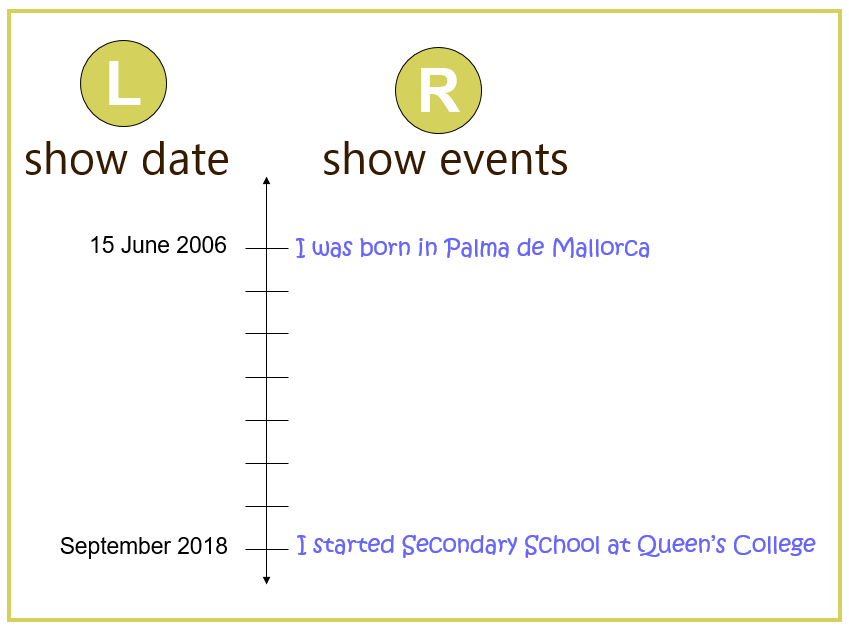
Make a timeline of your life so far…. (You may need to ask your parents to remind you about important events that took place in your life.) Remember that dates go on the left side of the line and events go on the right side of the line. Write in full sentences. Start at the top and write the events in chronological order.
Chronological order…….Chronological order refers to the arrangement of events following one after the another in the order that they took place.
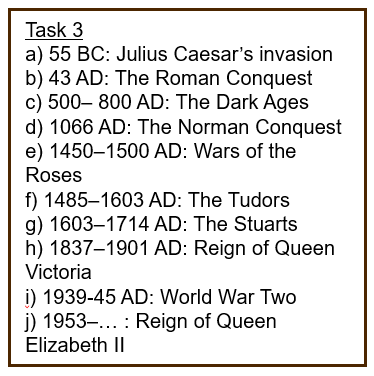
You need to write in which century each of the events happened. Also write a heading! Remember to answer in full sentences!
For example:
Complete the tasks in class.
If not – it must be completed at home for the next lesson!
Today we are going to start with Part III of “Russia’s Lost Princesses”!
In the previous “episode” the 1905 Revolution was mentioned. We will look at this attempted revolution in more detail. Lucky for Nicholas II, he was able to hold onto power for a few more years, as the 1905 Revolution did not succeed…
1.
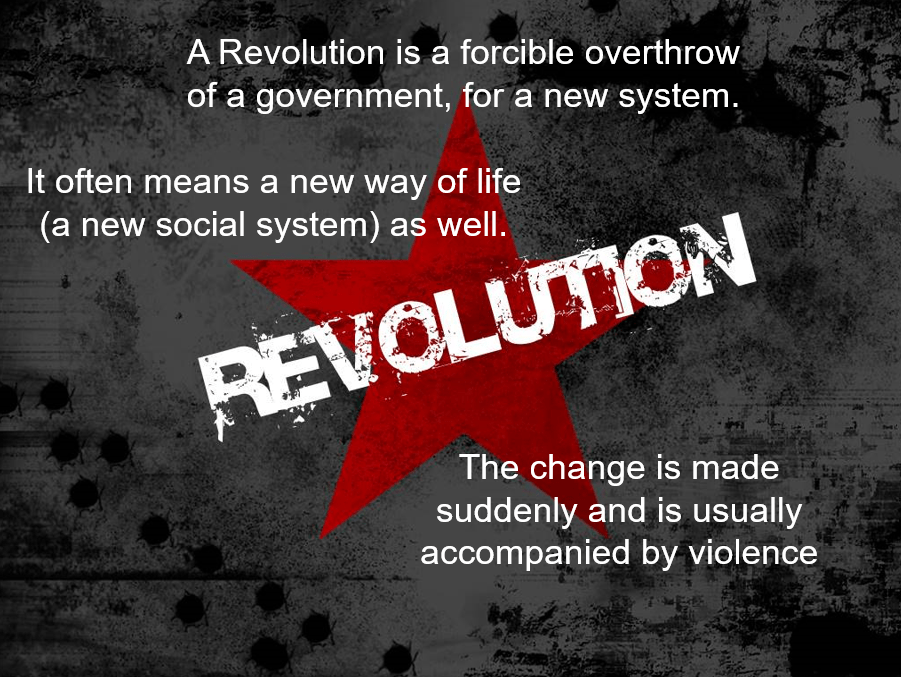
Here is a reminder of what a revolution is… a bit of revision!
2.
Watch the following video, as an introduction to today’s lesson.
Crisis & Revolution in Russia (1905). (5:55 minutes long)
3.
Now, let’s look at the causes of the “1905-Revolution”.
Causes of the 1905 Revolution. (2:05 minutes long)
4.
It is good to try and visualize the events. Here is Bloody Sunday, as portrayed in a movie…
History Bloody Sunday. (2:31 minutes long)
5.
The information about “The War with Japan” & the information about “Bloody Sunday”, p.5.
Remember to make study notes!
6.
In the last “episode” we were also introduced to Rasputin. In addition, saw the Tercentenary of Romanov Rule. Let’s watch the next 20 minutes…
Today we are going to continue watching the documentary and also finish the question on Nicholas’ coronation.
1.
In the last “episode” of the documentary we learnt more about the family life and children of Nicholas and Alexandra.
Let’s watch the next 20 minutes…
Tsarist Russia – Part III, 21:50 minutes long.
2.
In the previous lesson we looked at source questions on the Coronation of Nicholas II. Use the rest of the lesson to complete the question on Nicholas’ coronation.
Remind yourself of the importance of studying History.
Follow the instructions step by step:
1.
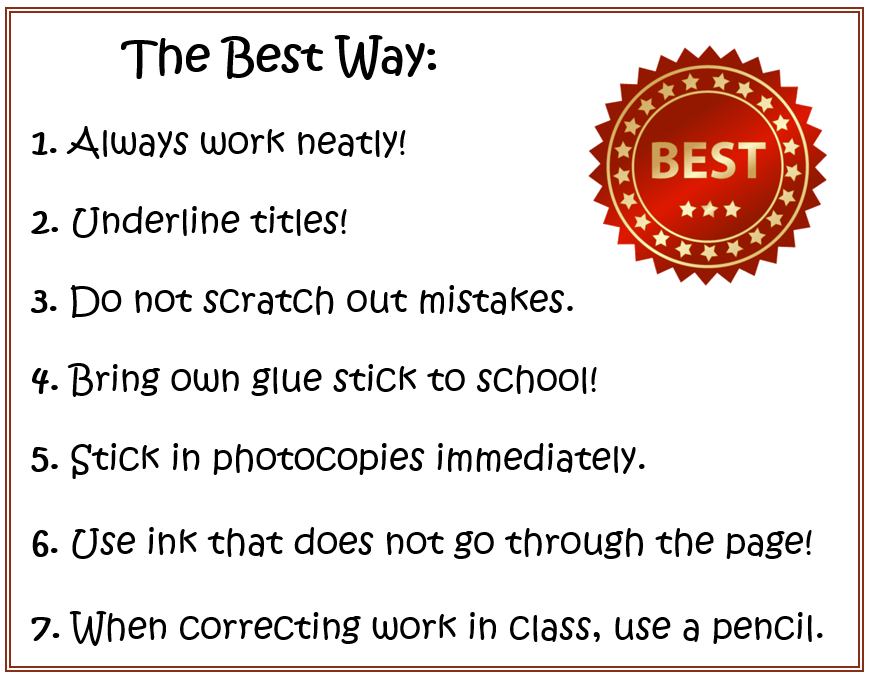
This is “the best way” to work in the History class:
2.
This video will remind you of some general rules to be followed in the classroom…
Classroom Rules. (4:26 minutes long)
3.
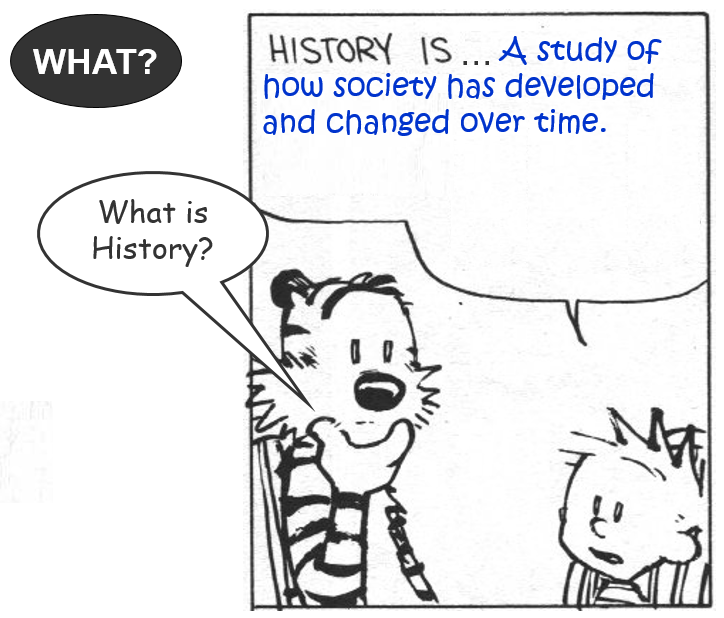
So, what exactly is History?
Society = a group of people living at a certain time, interacting with each other and sharing the same environment – in simple terms: “the people living on this earth”…
4.
Why do we study History?
Why History? (2:28 minutes long)
Why Do We Study History? (4:05 minutes long)
“We can learn how people in the past worked for the benefit of people in the future.”
History is a story. We are part of the story. We need to know out story…
WHY do we study History?
History has interesting stories.
There are also other benefits…
5.
Let’s look at the benefits of studying History:
“Sleep tight” means “sleep well”. This expression has an interesting history: During Shakespeare’s time, mattresses rested on bed frames with a mat-surface made with ropes. In order to make the bed firmer, one had to pull the ropes to tighten the mattress. If the ropes were not tight, the mattress would sag in the middle and one would not sleep very comfortably…
Here is another example:
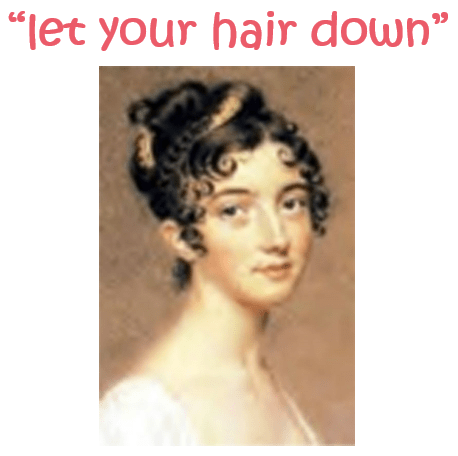
“Let your hair down” means “to relax or be at ease”. This expressions also has a historical origin: Parisian nobles appeared in public with an elaborate hairdo. Some of the more intricate styles required hours of work. So, of course it was a relaxing ritual for the aristocrats to come home at the end of a long day and let their hair down.
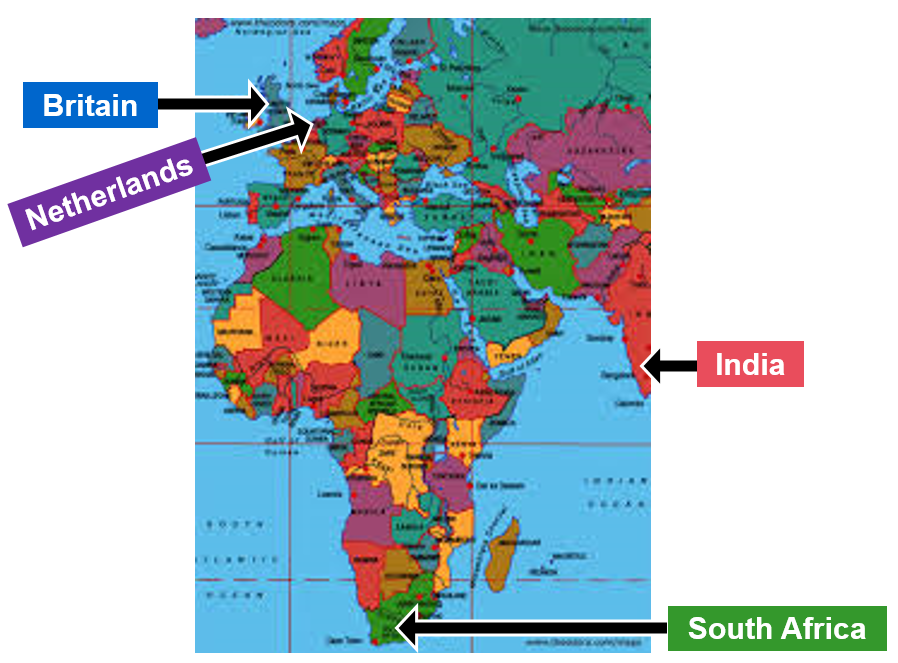
For example, there are Europeans living in Southern Africa because of colonization. In the 1600’s the Dutch traded with India by sailing around Africa to the east. The set up a halfway post at the tip of Africa to get fresh supplies for their sailors. These Dutch settlers are my ancestors! (That is also why I speak a language that is very similar to Dutch, called Afrikaans.) Today, some people in South Africa speak Afrikaans and some speak English. That is because the Dutch and the English were fighting in a war in the 1800’s and the English then took over the Dutch colony in Southern Africa.
Here are a few examples:
Animated History of Coca-cola. (5:31 minutes long)
The History of Football. (2:00 minutes long)
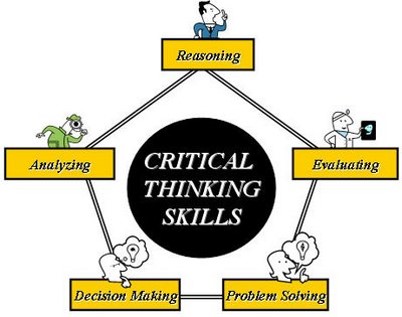
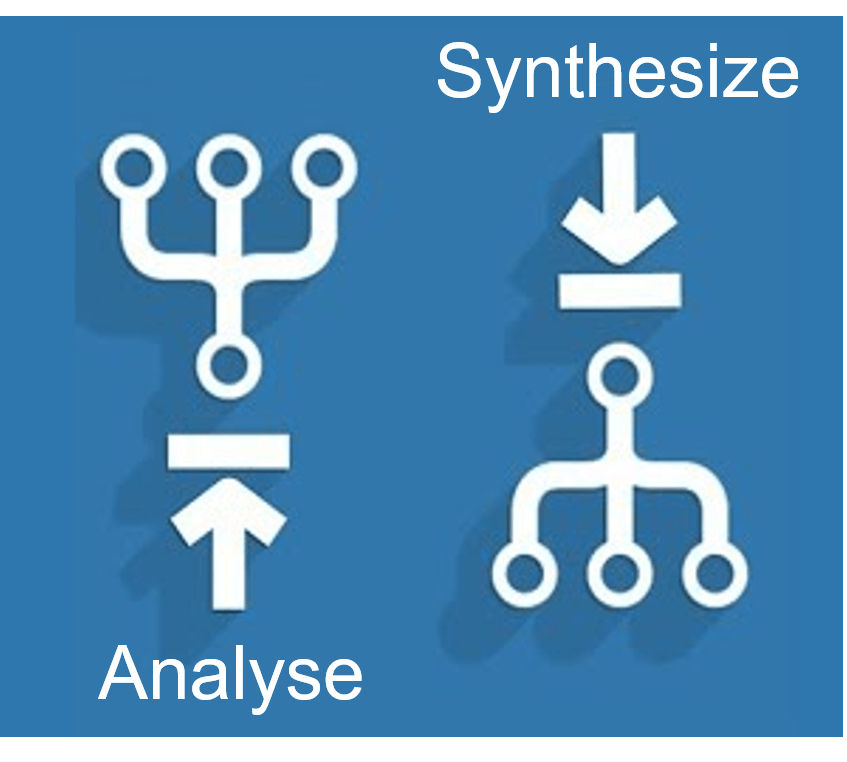
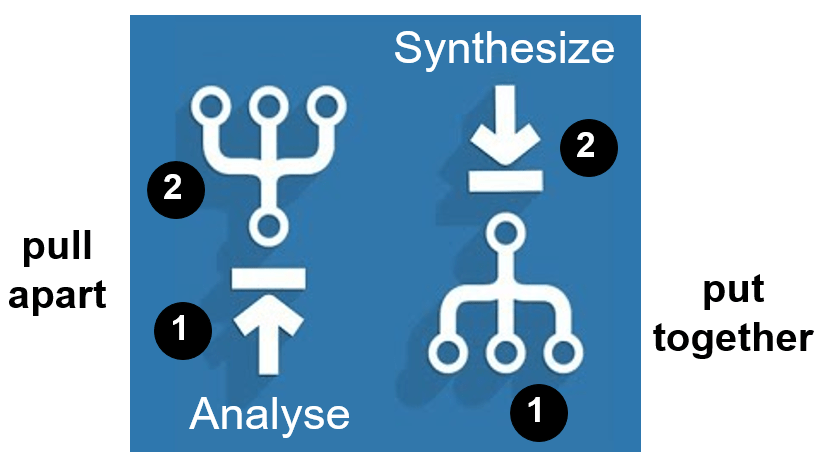
And also analyse skills and synthesize skills…
6.
Let’s look at the skills of analyse and synthesize in a bit more detail:
The Legend of the Teddy Bear. (1:57 minutes long)
7.
To analyse the information given in the above video, you need to separate it in the different parts of information given. For example:
Synthesize is the opposite… To synthesize the information given in the slides above, you need to put all the different bits of information together to form a single text (or in our example, a single video with all the information).
8.
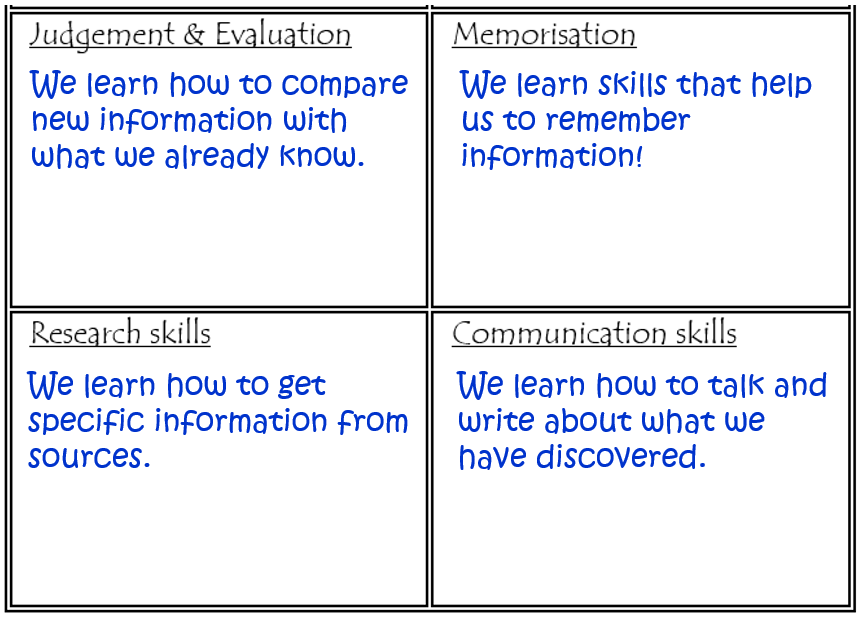
Carefully read the information in the table below to see which skills you will acquire by doing History as one of your school subjects.
Today we are going to continue with the Russian History by examining the Coronation tragedy… (We will interrupt the documentary briefly and continue watching it in the next lesson.)
But first we will look at what Russia and Russian Society was like in the early 1900’s.
1.
In the previous lesson you received a booklet with notes on the Year 10 Russian History topic. From this booklet, we already looked at the Tsarist Regime. Let’s now consider what the Russian Empire was like at the beginning of the 1900’s.
Russia in Early 1900. (2:15 minutes long)
2.
Let’s also look at Russian Society in the early 1900’s.
Early 1900 – Russian Society. (2:25 minutes long)
3.
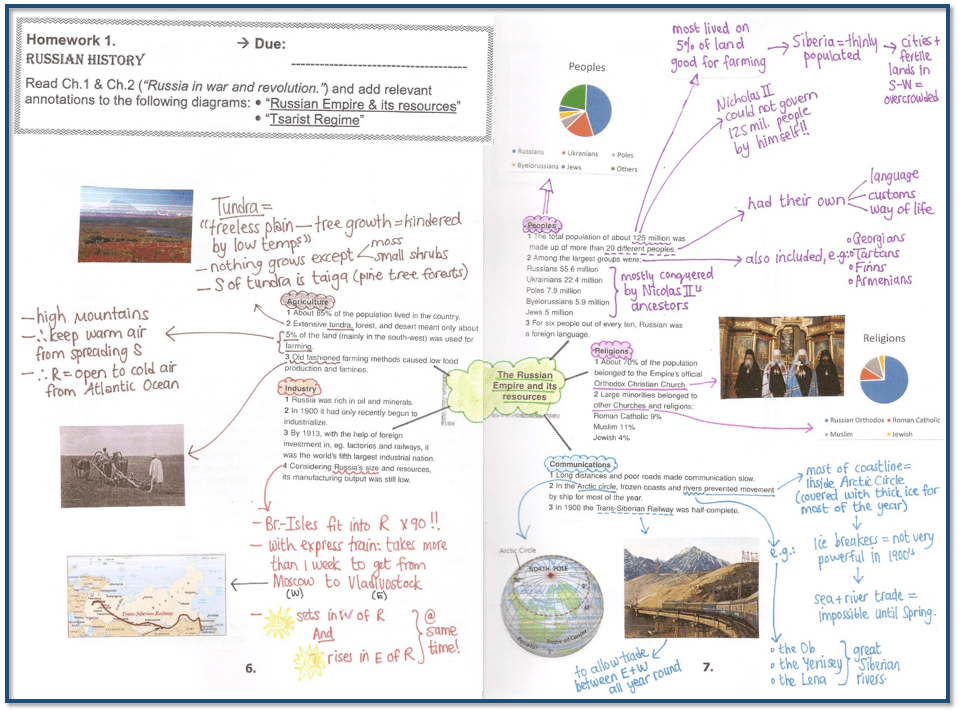
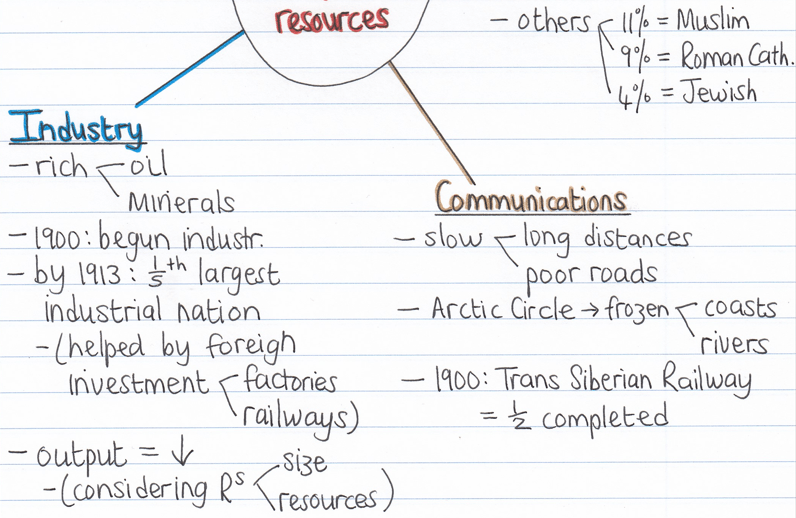
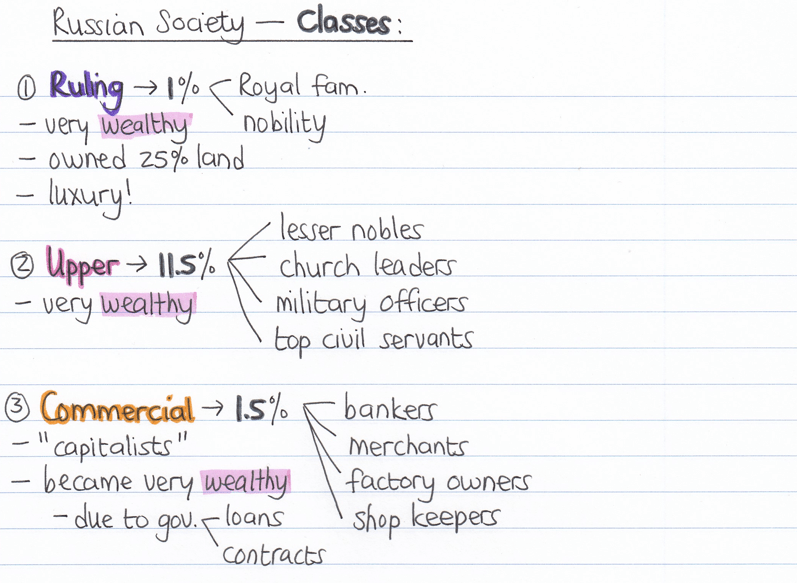
The diagram on “The Russian Empire and its resources“, and also the information on “Russian Society”, p.3.
4.
Remember to make study notes on Russia in the early 1900’s (p.3). So, you need to make notes on:
The Russian Empire & its resources
Russian Society
Do you know how to do this?
Here are examples of brief study notes:
And…
5.
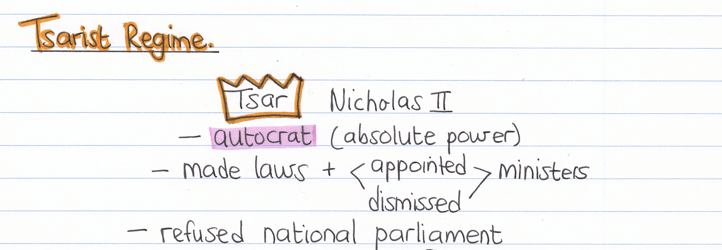
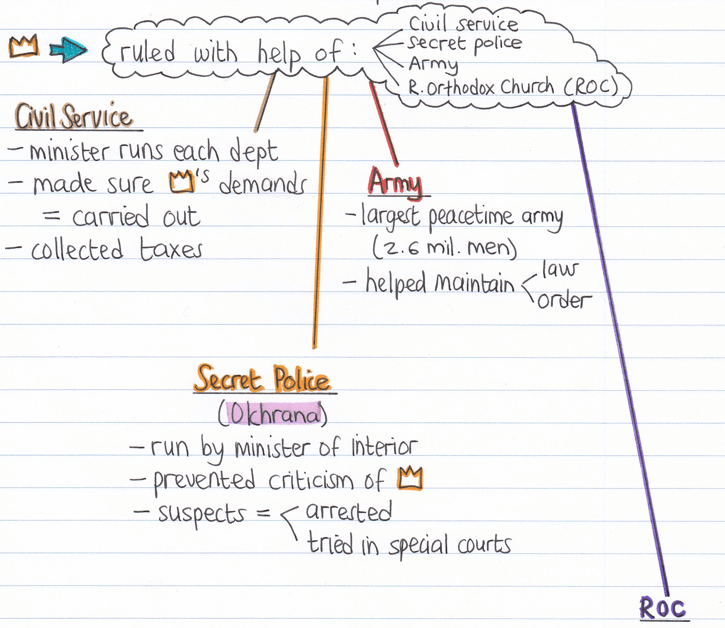
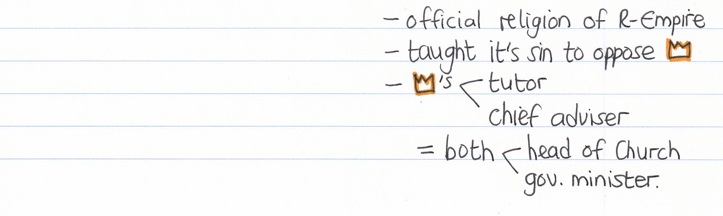
Also, make study notes on The Tsarist Regime (p.4).
Do you know how to do this?
Here are examples of brief study notes:
(Copy the notes below so that you have another good example of how to make study notes.)
6.
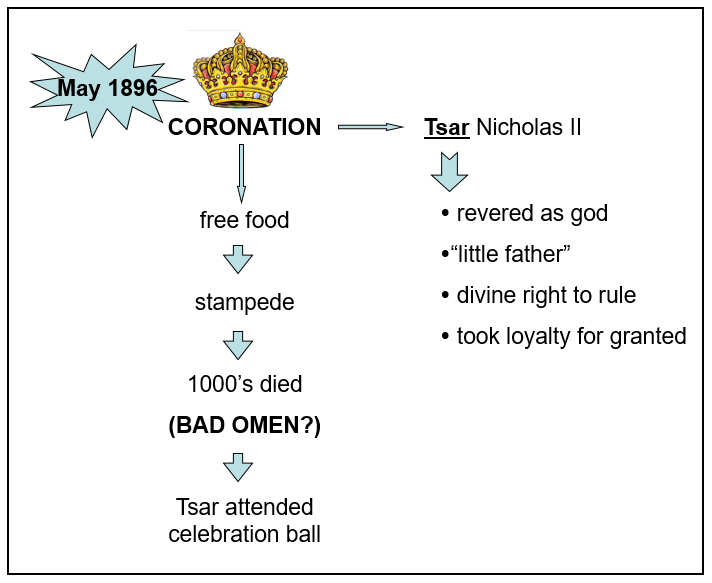
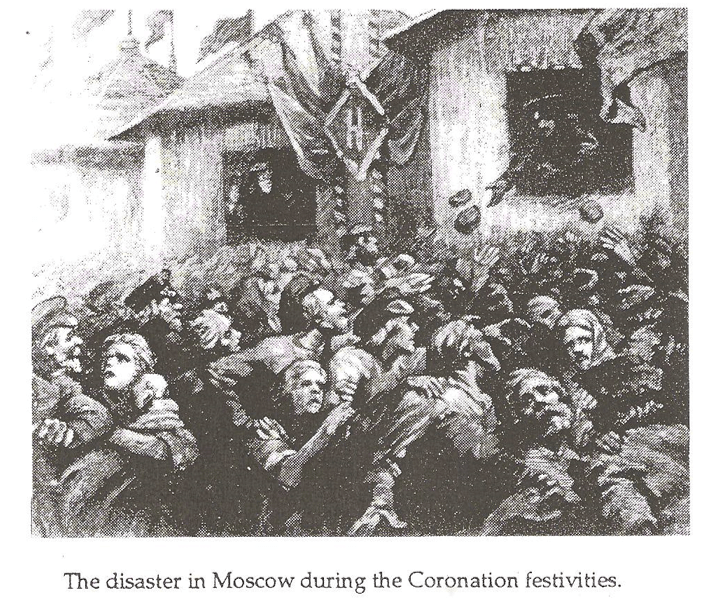
Previously you heard that there was a stampede at the coronation celebrations of Nicholas II.
7.
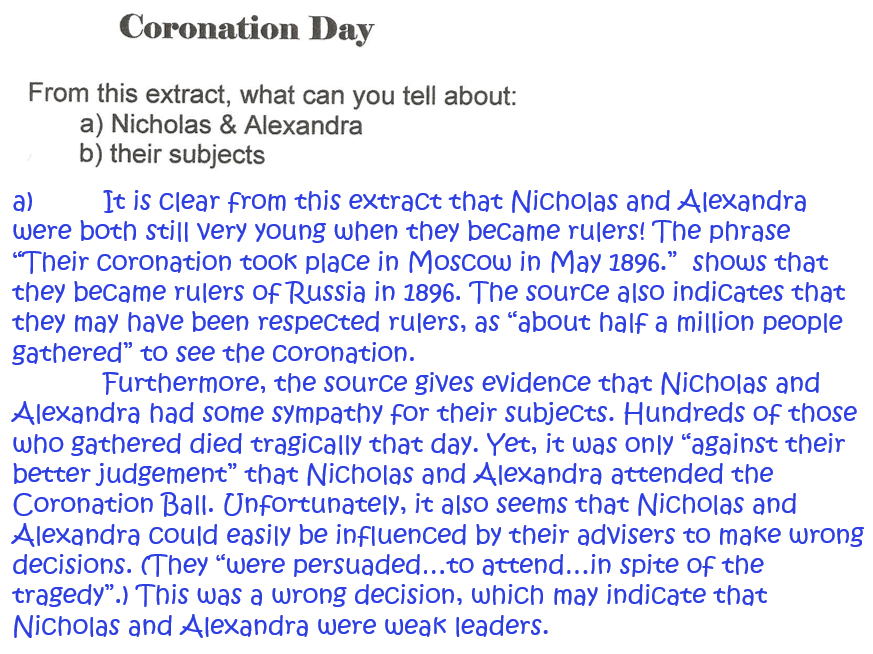
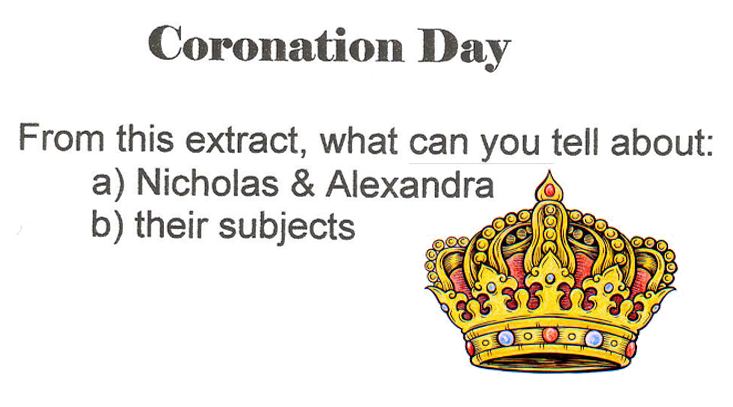
Do the following task about the Coronation of Nicholas II:
(You should have a handout of the worksheet stuck into your book.)
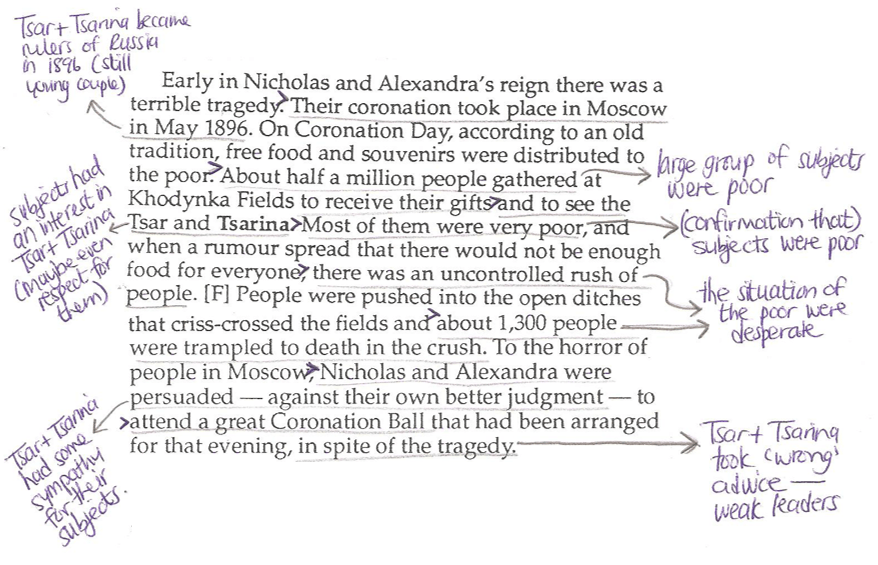
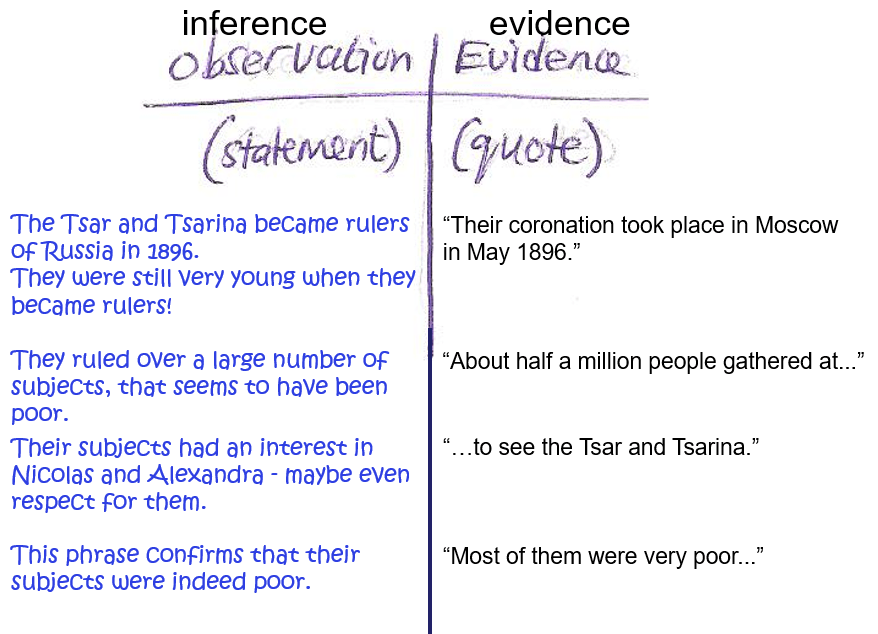
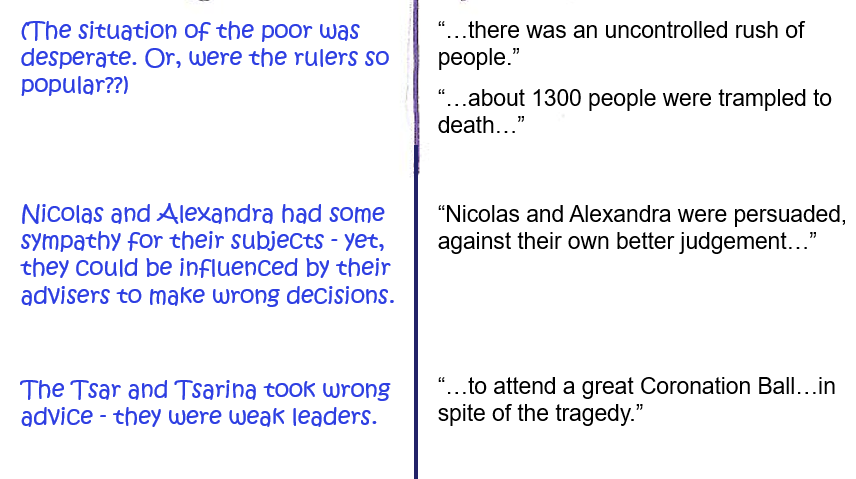
Here are examples of the information that is relevant to this task. (This is how you should have analysed the source.)
9.
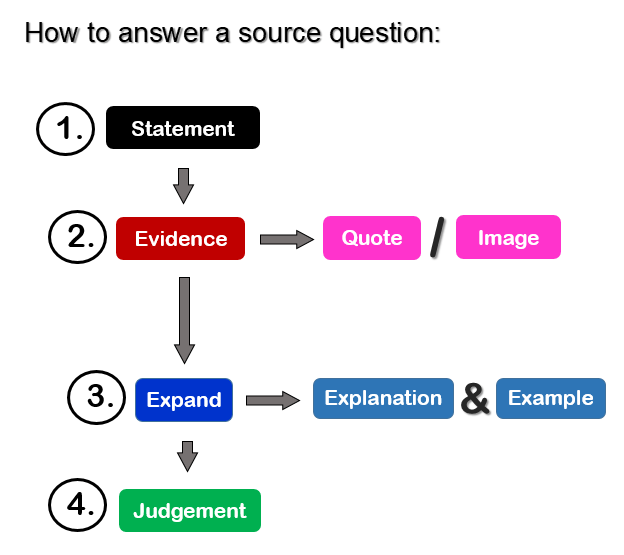
Here is a bit of advice (in the form of an example) on answering source questions. Each statement made needs some evidence…
Evidence Examples. (1:27 minutes long)
10.
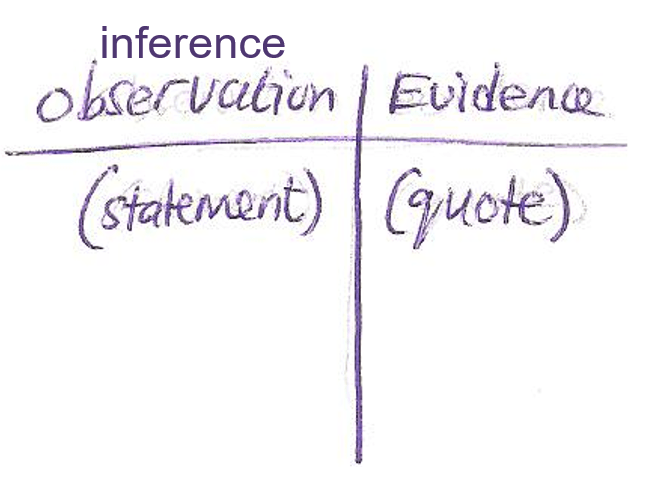
It is always a good idea to record your findings in the form of a table, with a column for inferences or statements and a column with evidence (in the form of quotes) to back up your statements. So, draw a table (with 2 columns) in your book and write down some statements and quotes to answer the question “What can you tell about Nicholas, Alexandra, and their subjects?”.
11.
Watch the following slides to see if you have taken more or less the relevant information from the source.
12.
13.
Now, write at least two paragraphs to answer the question “What can you tell from this extract about Nicholas and Alexandra and about their subjects?”
1. Remind ourselves about the best way to work in the History class
2. Look at the benefits of studying History.
Follow the instructions step by step:
1.
This is “the best way” to work in the History class:
2.
So, what exactly is History again…?
A bit of revision:
3.
What do we study History again…?
Why is it important to study history? (2:45 minutes long)
Why Study History? (2:10 minutes long)
Why study history? (2:20 minutes long)
4.
The above video gives… “Four Reasons why studying History benefits one’s future”.
History tells us about the future.
History helps us to see the bigger picture.
Study History gives you loads of skills.
History leads to loads of careers.
Can you explain each of these statements?
5.
“We can learn how people in the past worked for the benefit of people in the future.”
History is a story. We are part of the story. We need to know out story…
We study History because…
History has interesting stories.
There are also other benefits…
Let’s look at the benefits of studying History:
For example:
Bite the bullet
“Bite the bullet” means “to accept something difficult or unpleasant”. This expression has an interesting history: “In the olden days, when doctors were short on anesthesia or time during a battle, they would ask the patient to bite down on a bullet to distract from the pain.”
Here is another example:
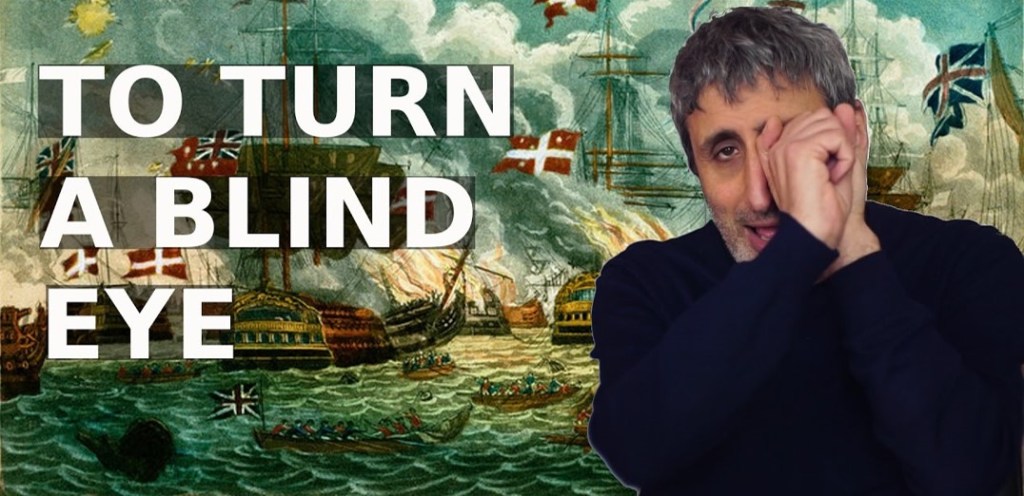
Turn a blind eye
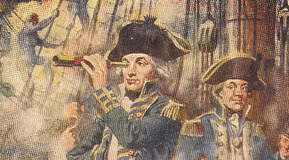
“Turn a blind eye” means ” to ignore situations, facts, or reality”. It, apparently has its origin in the following incident: “The British Naval hero, Admiral Horatio Nelson, had one blind eye. Once when the British forces signaled for him to stop attacking a fleet of Danish ships, he held up a telescope to his blind eye and said, “I do not see the signal.” He attacked, nevertheless, and was victorious.”
And here is another example:
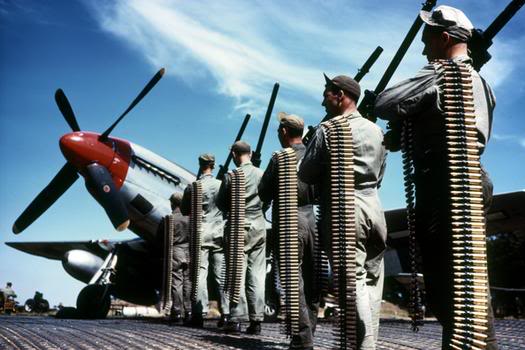
Go the whole nine yards
“Go the whole nine yards” means “to try your best at something”. This expression also has an unexpected history: “During World War II, the fighter pilots were equipped with nine yards of ammunition. When they ran out, it meant that they had tried their best at fighting off the target with the entirety of their ammunition.”
For example, there are Europeans living in Southern Africa because of colonization. In the 1600’s the Dutch traded with India by sailing around Africa to the east. The set up a halfway post at the tip of Africa to get fresh supplies for their sailors. These Dutch settlers are my ancestors! (That is also why I speak a language that is very similar to Dutch, called Afrikaans.) Today, some people in South Africa speak Afrikaans and some speak English. That is because the Dutch and the English were fighting in a war in the 1800’s and the English then took over the Dutch colony in Southern Africa.
Carefully read the information in the table below to remind yourself of the skills that you acquire by doing History as one of your school subjects.
7.
And just in case you STILL do not know why we study History…
WHY DO WE LEARN HISTORY? | The Song. (2:59 minutes long)
8.
In the next lesson we will start with your first topic in the Year 9 History course: “World War One”… In preparation for this, you need to know what the following mean:
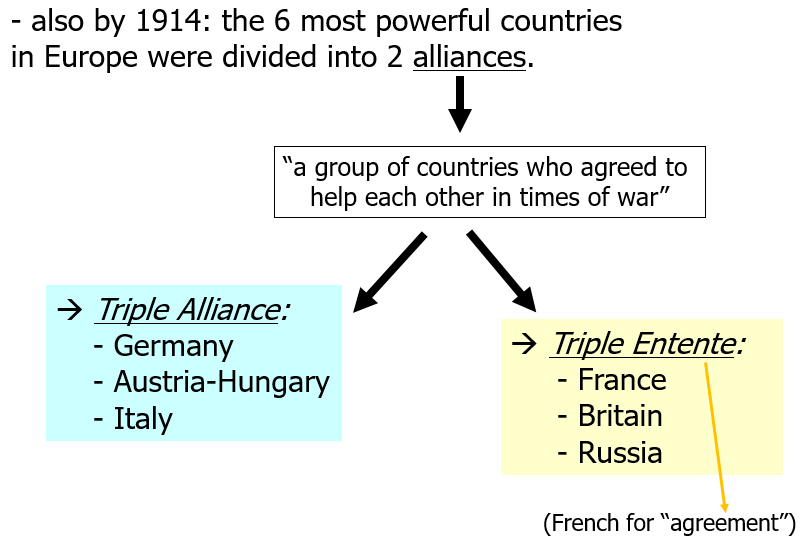
Alliance = “the act of allying or state of being allied; a formal agreement or treaty between two or more nations to cooperate for specific purposes; a merging of efforts or interests by persons, families, states, or organizations….”
9.
To clarify even further…
Alliance Definition. (1:36 minutes long)
What is “Alliance”? (3:03 minutes long)
10.
Finally, a few lies told in History – just for interest’s sake…
10 Biggest Lies Ever Told In History. (11:46 minutes long)
















































































































 Best study methods